Kiev’s backers living in ‘parallel reality’ – Moscow
RT | September 24, 2025
Ukraine’s European backers are living in “a parallel reality” by believing that Kiev is performing well on the battlefield, Russia’s deputy ambassador to the UN, Dmitry Polyansky, has said. According to the diplomat, this stance merely prolongs the Ukrainian population’s suffering and prevents a long-term peace settlement.
Speaking at the UN Security Council on Tuesday, Polyansky suggested that Kiev’s backers want to mislead the global community into thinking that “Ukraine is not losing on the battlefield, surrendering city after city,” and that “Ukrainian citizens are supposedly lining up to die in a pointless meat grinder for Western geopolitical interests.”
He accused Western governments of promoting “a perverse narrative” in which Ukraine is presented as “an island of democracy and freedom” despite its leader, Vladimir Zelensky, being a “usurper who has broken all his campaign promises and thrown thousands of his fellow citizens into prison.”
Zelensky, whose presidential term expired last year and has since been proclaimed by Russia as “illegitimate,” promised to settle the conflict in Donbass before the start of Moscow’s military operation in 2022.
Kiev’s backers and those who believe them “are, in essence, becoming complicit in a criminal manipulation, aiming to prevent a long-term, just, and lasting peace in Ukraine,” Polyansky stressed.
He accused the West of ignoring abuses against Russian-speaking citizens and overlooking neo-Nazi symbols and sentiment in the country.
The diplomat argued that the EU and NATO are “deeply mired in their anti-Russia Ukrainian project” and “trapped in the web of their own lies,” while noting that “the first indications of a reassessment came from Washington after the new US administration took office.”
“Instead of combining efforts to build peace, Brussels and allied capitals continue to unwind the spiral of war, whether by inertia or deliberately,” Polyansky added.
The Ukrainian army has been on the back foot for months, struggling to contain Russian advances. Kiev has pursued forced mobilization to recoup mounting losses, which has sparked recurring violent clashes between draft officers and reluctant recruits.
Russia Sets 1-Year Deadline for New START Treaty – Expert
Sputnik – 23.09.2025
Russia suspended participation in 2023, but kept a moratorium on expanding its nuclear arsenal, Alexei Leonkov, military analyst, explains. He adds that the extension proposal gives the US a year to de-escalate in Ukraine, stop supplying weapons, intelligence, and funding the Zelensky regime.
He emphasizes that Russia’s nuclear forces remain modern and capable, including two unique “retaliation” complexes.
“In order to somehow stop all the heat, Russia is coming up with a proposal that should encourage the American side to take more decisive, constructive action. Otherwise, in a year’s time, the START Treaty, as one of the few responsible for international nuclear security, will be denounced, that is, practically terminated,” he said.
The analyst stressed that the concrete actions Russia wants to see include:
- End to escalation in Ukraine
- Halt weapons supplies through NATO countries
- Stop intelligence sharing fueling attacks on Russian regions
- Cut funding to the Zelensky regime
Russia is giving the US a chance over the next year to address these issues before taking decisive steps regarding the treaty, he concluded.
EU preparing to ‘occupy’ Moldova – Moscow
RT | September 23, 2025
European countries are preparing for a military intervention in Moldova, according to Russia’s Foreign Intelligence Service (SVR). The agency warned that “eurocrats” in Brussels intend to ensure that Chisinau continues to pursue anti-Russian policies, and will go as far as to “occupy” Moldova after upcoming parliamentary elections.
In a press release on Monday, the SVR stated it had observed European NATO forces being concentrated in Romania near the border with Moldova, and further claimed that they are preparing to deploy to Odessa Region in Ukraine to intimidate Moldova’s breakaway region of Transnistria. It added that military servicemen from France and the UK have already arrived in Odessa.
According to the SVR, forces from European countries intend to intervene following the upcoming parliamentary elections, where Brussels and Chisinau will allegedly falsify the results in the hope of driving Moldovan citizens to the streets to defend their rights. After that, at the request of Moldovan President Maia Sandu, European forces will enter the country and compel Moldovans to “accept dictatorship under the guise of European democracy,” the service said.
The SVR similarly warned in July that NATO was molding Moldova into a military “battering ram” against Russia.
Former Moldovan President Igor Dodon also recently claimed that the EU intends to use Moldova as “cannon fodder” in a possible future conflict with Russia.
Canada keeps bankrolling Ukraine’s war crimes
By Eva Bartlett | RT | September 22, 2025
Following in the shameful footsteps of both Justin Trudeau and Chrystia Freeland, Canadian Prime Minister Mark Carney continues pledging support and money (which Canadians desperately need) to Ukraine, to prolong the proxy war against Russia.
Carney chose Ukrainian Independence Day to voice the Canadian government’s continued pledge to support Ukraine. As he landed in Kiev on August 24, Carney posted on X, “On this Ukrainian Independence Day, and at this critical moment in their nation’s history, Canada is stepping up our support and our efforts towards a just and lasting peace for Ukraine.”
Later in the day he posted, “After three years at war, Ukrainians urgently need more military equipment. Canada is answering that call, providing $2 billion for drones, armoured vehicles, and other critical resources.” This latest pledge brings Canada’s expenditure on Ukraine since February 2022 to nearly $22 billion.
Further, he pledged to potentially send Canadian or allied soldiers, stating, “I would not exclude the presence of troops.”
Pause for a moment to examine the utter lack of logic behind these statements: For “peace” for Ukraine, Canada will support further war to ensure more Ukrainian men are ripped off the streets and forced to the front lines, where they will inevitably die in a battle they didn’t sign up for.
Like his European counterparts, Carney’s insistence on prolonging the war is in contrast to Russia’s position of finding a resolution.
I recently spoke with former Ambassador Charles Freeman, an American career diplomat for 30 years. Speaking of how the Trump administration, “began in office by perpetuating the blindness and deafness of the Biden administration to what the Russian side in this conflict has said from the very beginning,” he outlined the terms that Russia made clear in December 2021, “and from which it has basically not wavered.”
These include: “neutrality and no NATO membership for Ukraine; protections for the Russian speaking minorities in the former territories of Ukraine; and some broader discussion of European security architecture that reassures Russia that it will not be attacked by the West, and the West that it will not be attacked by Russia.”
It’s worth keeping in mind that Canada has been one of the main belligerents in Ukraine, funding and training Ukrainian troops for many years before the 2022 start of Russia’s military operation.
Canada’s training of Ukrainian troops included members of the notorious neo-Nazi terrorists of the Azov regiment. Former Deputy Prime Minister Chrystia Freeland proudly waved a Banderite flag in 2022. She was also proud of her dear grandfather, who was a chief Nazi propagandist.
In 2023, the Trudeau administration brought to speak in the Canadian parliament a Ukrainian Nazi, Yaroslav Hunka, who had been a voluntary member of the 1st Galician Division of the Waffen SS – well known for their mass slaughter of civilians.
Carney, in light of this, is merely keeping with the tradition of Ottawa’s support of extremism – including Nazism – in Ukraine (and in Canada). This support is not at all about protecting Ukrainian civilians.
Supporting Ukrainian war crimes
Canada’s continued support to Ukraine makes it complicit in the atrocities Ukraine commits. I myself have documented just some of Ukrainian war crimes in the Donbass, in 2019 and heavily throughout 2022.
These include deliberately shelling civilian areas (including with heavy-duty NATO weapons), slaughtering civilians in their homes, in markets, in the streets, in buses; peppering Donbass civilian areas with internationally prohibited PFM-1 “Petal” mines (since 2022, 184 civilians have been maimed by these, three of whom died of their injuries); and deliberately targeting medics and other emergency service rescuers.
Ukraine has also heavily shelled Belgorod and Kursk, targeting civilians, as well sending drones into Russian cities, killing civilians and destroying infrastructure.
Less detailed are Ukraine’s crimes against civilians in areas under Ukrainian control. These crimes – including rape, torture and point-blank assassination – come to light with the testimonies of terrorized civilians in regions liberated by Russia.
Bring the government spending home
The social media fervor of Ukrainian hashtags and flags has died down considerably since 2022. Now, you see more and more Canadians demanding their government stop fueling war and start spending money to take care of Canadians.
Carney’s campaign pledges included easing the cost of living in Canada, yet he has taken no concrete actions to do so. In the many understandably angry replies to Carney’s latest tweets about supporting Ukraine, Canadians are demanding accountability.
“Mark Carney stop pretending you’re fighting for “freedom and sovereignty.” You just signed off on $2 BILLION of Canadian money for Ukraine while Canadians can’t even afford rent, food, or heating,” reads one of numerous such replies. “Veterans are abandoned, fentanyl floods our streets, and families collapse under inflation. You stand on foreign soil preaching about democracy while selling out the very people you’re supposed to serve. That’s not leadership that’s betrayal. Canadians never voted for this. You don’t speak for us.”
Scroll through replies to Carney’s Kiev stunt and you’ll find Canadians opposed to the wasting of still more money needed in their home country.
The most glaring hypocrisy is that while Carney wrings his hands over Ukraine, he utterly ignores the ongoing Israeli starvation and genocide of Palestinians in Gaza, supported by the Canadian government.
Eva Bartlett is a Canadian independent journalist. She has spent years on the ground covering conflict zones in the Middle East, especially in Syria and Palestine (where she lived for nearly four years).
Pakistan expands nuclear umbrella to cover Saudi Arabia
MEMO | September 22, 2025
A source close to the Saudi government said on Sunday that Pakistan’s nuclear umbrella will now extend to Saudi Arabia, just days after the two allies signed a surprise joint defence agreement.
The source revealed that the agreement had been in the works for several years, and added that Saudi Arabia expects India — Pakistan’s long-standing rival — to understand the Kingdom’s security needs.
When asked whether the agreement meant that Pakistan’s nuclear weapons could be used to defend Saudi Arabia, Saudi writer and analyst Ali Shihabi, who is close to the royal court, confirmed: “Yes, that is correct.”
Shihabi added that nuclear protection is an integral part of the agreement, noting that Pakistan understands Saudi Arabia had effectively financed and supported its nuclear programme during times of international sanctions.
He also said he believed India would understand Saudi Arabia’s security requirements, describing current relations between Riyadh and New Delhi as “excellent.”
According to media reports, Pakistan’s Defence Minister, Khawaja Muhammad Asif, told a local radio station that the country’s nuclear programme would be available to Saudi Arabia if needed, following the signing of the defence pact.
Russia willing to extend New Start treaty – Putin
RT | September 22, 2025
Russia is prepared to continue abiding by the New START treaty on nuclear arms for one year even after it expires next February, Russian President Vladimir Putin has said.
Speaking at a meeting with the permanent members of Russia’s Security Council on Monday, Putin said that due to the hostile and destructive steps taken by the West in recent years, the foundations of constructive relations and cooperation between nuclear-armed states have been significantly undermined.
“Step by step, the system of Soviet-American and Russian-American agreements on nuclear missile and strategic defensive arms control was almost completely dismantled,” Putin said. He stressed that the systems of agreements between Russia and the US, who possess the two largest nuclear arsenals in the world, long served as a stabilizing factor and contributed to global stability and international security.
Putin noted that the New START treaty, signed in 2010 by Russia and the US, is the last remaining bilateral agreement limiting nuclear weapons. He warned that allowing it to expire and abandoning its legacy would be “a mistaken and short-sighted step, which, in our view, would also negatively impact the goals of the Nuclear Non-Proliferation Treaty.”
The president announced that in order to avoid provoking a strategic arms race and ensuring an “acceptable level of predictability and restraint,” Russia is prepared to continue adhering to the central limitations of the New START Treaty for one year after February 5, 2026.
“Based on our analysis of the situation, we will subsequently make a decision on maintaining these voluntary self-restraints,” he added.
At the same time, Putin stressed that Moscow would implement this measure only if the US “follows suit and does not take steps that undermine or disrupt the existing balance of deterrence potential.”
The president ordered Russia’s relevant agencies to continue closely monitoring US activities in regard to strategic offensive arms arsenals and any plans to expand the strategic components of the US missile defense system. If it is deemed that Washington is taking actions that undermine Moscow’s efforts to maintain the status quo on strategic offensive arms, Russia will “respond accordingly,” Putin said.
Former Ukrainian president wants Ukrainian troops to ‘seize Moscow’
By Lucas Leiroz | September 22, 2025
The Kiev regime’s war plans are increasingly clear, explicit, and undisguised. The neo-Nazi dictatorship no longer hides its plan to take the conflict to its ultimate consequences, regardless of the impact of this decision on its own people and European regional security. Now, Ukrainian public figures admit they want their troops to fight until “seizing Moscow”.
Former Ukrainian President Viktor Yushchenko said in a recent statement that Ukrainian troops should continue fighting until they capture the Russian capital, Moscow. He strongly condemned the current situation on the battlefield, where Ukrainian soldiers are retreating en masse after successive failed campaigns that resulted in thousands of casualties. Yushchenko believes the right thing to do is to further intensify the war effort, regardless of the difficulties faced by the Ukrainian army.
The former president stated that, at the age of 71, he has the right to “speak frankly.” He opposes Ukrainian current objectives in the war, declaring that it is sufficient for Kiev to fight to regain the 1991 map. Instead, he proposes that the Ukrainian regime not only recover its former territories but also annex recognized Russian regions, even reaching the capital of the neighboring country itself—which, in his opinion, should be besieged and then captured by Ukrainian forces.
Yushchenko said that simply recovering the territories reintegrated by Russia (Crimea, Donetsk, Lugansk, Zaporozhye, and Kherson) is not only insufficient, but would also mean postponing the conflict—leaving the responsibility of confronting the Russians to the “children and grandchildren” of modern Ukrainians. He believes that Ukraine should stop fighting only when the “Russian problem” has been completely eliminated—and until then, he believes, the entire war effort must be maintained, regardless of Ukrainian casualties and losses.
“I cannot leave it like that. It will never be my choice (…) If you think that returning to the 1991 borders is the formula for victory… you are actually leaving the biggest problem to your children and grandchildren. The problem is Moscow (…) Yes, [Ukrainian troops should advance] to Moscow (…) [Because] Not a single person in the world, not a single nationality, not a single state can live peacefully… as long as [Russian President Vladimir] Putin’s regime exists,” he said.
It is important to emphasize that Yushchenko governed Ukraine from 2005 to 2010, following the infamous “Orange Revolution”—a Western-orchestrated operation to install a pro-NATO and pro-EU puppet government in Kiev. At the time, the Ukrainian Supreme Court violated the country’s constitution and ordered an illegal third round of elections, in which Yushchenko was ultimately elected. This was the first step toward the coup d’état that would take place in 2014. In practice, the Orange Revolution served as a “preparation,” with Ukrainian ultranationalist groups being strengthened and tested before finally coming into action in 2014. Yushchenko was, therefore, a precursor to the Kiev neo-Nazi junta.
Not even allies of the current illegitimate president, Vladimir Zelensky, agree with Yushchenko’s bellicose stance. Maksim Buzhansky, an MP from Vladimir Zelensky’s Servant of the People party, said harsh words in response to the former president. He stated that it was under Yushchenko that Ukraine took the wrong turn—which culminated in the current war. More than that, he called Yushchenko a “useless, blissful idiot.” Buzhansky emphasized that Yushchenko’s opinion is that of someone speaking “from a TV studio, not from the front lines.”
“[Yushchenko is a] useless blissful idiot (…) Fortunately, he does not forget to remind us about this fact from time to time, like now, with his statement that we need to march towards Moscow (…) [With Yushchenko, Ukraine] began to make an irreversible turn in the wrong direction,” he said.
In fact, the former president’s rhetoric is simply absurd. There is no possibility of Ukraine facing a long-term war with Russia under current conditions. The country’s military is on the verge of total collapse due to massive losses on the battlefield. Not even recovering Russian-reintegrated territories is a viable goal for Ukraine, which is why talk of “reaching Moscow” is absolutely meaningless from a military and strategic perspective.
However, what all this shows is that there is no willingness for peace in Kiev. The current Ukrainian elite is made up of Russophobic fanatics, ideologically driven by a Nazi-like mentality. They are people willing to sacrifice their entire country just to pursue the futile goal of “destroying Russia.” Moscow is facing not only a military adversary, but also a dangerous ideological enemy—which is why the denazification of Ukraine is a vital objective for Russia, to be achieved through military means.
Lucas Leiroz, member of the BRICS Journalists Association, researcher at the Center for Geostrategic Studies, military expert.
You can follow Lucas on X (formerly Twitter) and Telegram.
Taliban rejects Trump’s ultimatum
RT | September 21, 2025
Afghanistan has rejected US President Donald Trump’s ultimatum that Bagram Air Base be returned to American control, insisting that such demands violate the 2020 Taliban-US agreement on the withdrawal of troops.
On Sunday, Trump warned that if Afghanistan doesn’t give the facility back, unspecified “BAD THINGS ARE GOING TO HAPPEN!!!” The US leader had earlier lamented Washington’s loss of the base, noting its proximity to China.
Later that day, Hamdullah Fitrat, deputy spokesman of the Taliban-run Afghan government, noted that Kabul has made it clear to the US in all negotiations that the country’s “independence and territorial integrity are of the utmost importance.”
“It should be recalled that, under the Doha Agreement, the United States pledged that ‘it will not use or threaten force against the territorial integrity or political independence of Afghanistan, nor interfere in its internal affairs,’” he said, urging the US to honor its pledge.
“Rather than repeating past failed approaches, a policy of realism and rationality should be adopted,” Fitrat stressed.
Bagram Air Base, located in Parwan Province about 60 km north of Kabul, was the primary US military hub in Afghanistan for two decades. It served as a launching point for counterterrorism operations, including against al-Qaeda and the Islamic State. It also housed detention facilities, which were allegedly sometimes used for torture.
Under the 2020 Doha Agreement, the US essentially concluded peace with the Taliban and committed to gradually withdrawing its troops from Afghanistan, and to cease threatening the country’s political independence. In exchange, the militants issued guarantees not to allow Afghan soil to be used by terrorist groups.
However, while the US was implementing a phased troop withdrawal, the Afghan government and security forces crumbled under Taliban pressure, prompting the remaining US troops to scramble for a chaotic evacuation.
Taliban officials have since maintained they are open to cooperation with the US but “without the United States maintaining any military presence in any part of Afghanistan.”
Pakistan says ‘door open’ for more Arab states to join mutual-defense pact
The Cradle | September 20, 2025
Pakistan’s Defense Minister Khawaja Asif said on 18 September that “the doors are not closed” for other Arab states to join the new defense pact signed with Saudi Arabia.
Asif emphasized that there was no clause preventing Pakistan from extending similar arrangements to other nations.
The agreement was signed in Riyadh by Pakistani Prime Minister Shehbaz Sharif and Saudi Crown Prince Mohammed bin Salman (MbS) during Sharif’s day-long visit, and declares that aggression against one country will be considered aggression against both.
A joint statement said the deal “reflects the shared commitment of both nations to enhance their security and to achieve security and peace in the region and the world.”
Asif also confirmed that Pakistan’s nuclear arsenal is included within the framework of the pact, describing it as a joint shield that leaves “no doubt” either side would respond if attacked.
“What we have, our capabilities, will absolutely be available under this pact,” Asif told Pakistani broadcaster Geo News.
He stressed that Pakistan had always placed its nuclear facilities under inspection and had “never committed any violation.”
“This agreement will not be a hegemonic arrangement but a defensive arrangement,” Asif emphasized.
“We don’t have any plans to conquer territory or attack anyone. But our fundamental right can’t be denied to us and we exercised that yesterday,” he added.
The minister drew comparisons with NATO, saying Muslim states had the same right to collective defense. “I think it is a fundamental right of the countries and people here, particularly the Muslim population, to together defend their region, countries, and nations.”
Pakistan has long stationed troops and air force units in Saudi Arabia, training Saudi forces and providing advisory support.
“I think that relationship has been more defined now and that understanding has been given the form of a defense agreement,” Asif explained.
Pakistani External Affairs Ministry spokesperson Randhir Jaiswal said India would assess the implications for its national security, adding that the government remained committed to “ensuring comprehensive national security in all domains.”
Asif also tied the pact to Pakistan’s longstanding role in protecting Islamic holy sites in the kingdom, describing it as a “sacred duty.”
Harald Kujat: Former Head of the German Army Exposes Lies of the Ukraine War
Glenn Diesen | September 19, 2025
General Harald Kujat is a former head of the German Armed Forces (Bundeswehr) and the former Chairman of NATO’s Military Committee. Having held the top military position in both Germany and NATO, General Kujat offers his expertise on how the West and Russia ended up fighting a proxy war in Ukraine. General Kujat discusses the failure to reach a common understanding after the Cold War, the toppling of President Yanukovych in Ukraine, the sabotage of the Minsk agreement and the Istanbul peace negotiations, and the West’s lies about an “unprovoked” and “full-scale invasion” of Ukraine. When Boris Johnson came to Ukraine to sabotage the peace negotiations in 2022, one of Zelensky’s close associates summed up the essence of Johnson’s visit: “Johnson brought two simple messages to Kyiv. The first is that Putin is a war criminal; he should be pressured, not negotiated with. And the second is that even if Ukraine is ready to sign some agreements on guarantees with Putin, they are not. We can sign [an agreement] with you [Ukraine], but not with him. Anyway, he will screw everyone over”.
Trump Is Preparing a $6 Billion Arms Package for Israel
By Kyle Anzalone | The Libertarian Institute | September 19, 2025
The White House informed Congress that it is preparing a massive arms sale to Israel, including attack helicopters and military vehicles. The weapons will be paid for with US military aid.
According to the Wall Street Journal, the total value of the weapons deal is $6 billion. The sale is $3.8 billion for 30 AH-64 Apache helicopters and $1.9 billion deal for 3,250 infantry assault vehicles.
Washington will pay for the arms with foreign military financing. The US provides Israel with at least $3.8 billion in military aid annually. Washington boosted assistance to Tel Aviv following the October 7 Hamas attack. In the first year of the Israeli onslaught in Gaza, the US sent Israel nearly $18 billion in aid. The weapons will begin arriving in Israel in two to three years.
The report of the package follows Israel’s attempt to assassinate Hamas leadership in Qatar. The strikes angered Doha, a major non-NATO US ally. Qatar has also committed to investing $1 trillion in the US economy and gifted Trump a luxury aircraft.
Additionally, the assassination attempt prevented Trump from initiating talks to end the war in Gaza and free the Israeli hostages. The strike occurred as the Hamas leadership was meeting to discuss a proposal sent by Trump. Qatar said the attempted assassination ended any chances of reaching a hostage agreement.
The White House has pushed Congressional leadership to endorse the sale even after the Israeli strike in Qatar.
Israel is in the process of ethnically cleansing Palestinians from Gaza. The onslaught has primarily been conducted by Israel using American weapons. A large number of civilians have been killed by Israeli forces. Additionally, an Israeli siege of Gaza has created a famine, and hundreds of Palestinians have starved to death.
Since taking office, Trump has approved multiple arms sales to Israel, including a sale of $3 billion in bombs.
US foreign affairs committee approves expansion of secretive arms stockpile for Israel
The Cradle | September 19, 2025
The US House Foreign Affairs Committee (HFAC) on 19 September voted 27-24 to approve the State Department Reauthorization bill (H.R. 5300), which, among other provisions, permits unlimited transfers of US arms to a special Israel-based stockpile in the next fiscal year.
“This bill is not just a reform for today, it is a lasting framework that will strengthen the State Department and benefit every commander-in-chief who follows,” HFAC Chairman and former Israeli army soldier Brian Mast said following the vote.
Hidden deep within the State Department funding bill is a provision that calls for repealing oversight controls on “defense articles” transferred to the War Reserve Stock for Allies-Israel (WRSA-I) – a US “emergency” stockpile that Tel Aviv has been significantly relying on since the start of its genocide of Palestinians in Gaza.
“[This is] the least transparent mechanism of providing arms to Israel,” former State Department official Josh Paul told Responsible Statecraft earlier this week.
In December 2023, Paul told The Guardian that Washington was dipping into WRSA-I to restock quickly-depleting munitions Israel has kept dropping inside the Gaza Strip.
“We sort of retroactively build a foreign military sales case, which may or may not need to be notified to Congress, depending on what they took and what quantities […] There’s none of the conventional arms transfer policy review that would normally happen […] Essentially, it’s take what you can and we’ll sort it out later,” Paul said at the time.
Created in the 1980s to supply the US military in case of a regional war, the WRSA-I is the largest node in a global network of US weapons caches. Its full contents are not publicly disclosed.
In August, an investigation by the Department of War’s Office of the Inspector General found that “the Army, Navy, and Air Force appointed officials to account for WRSA-I inventory, but those officials did not consistently comply with property accountability requirements.”
“In addition, the DoD OIG found that Service officials did not conduct all required inventories between FY 2022 and FY 2024,” the report highlights.
By 2024, former US president Joe Biden’s administration had temporarily lifted restrictions on the value and type of US weapons transferred to WRSA-I each year. It also bypassed transparency rules by splitting up larger transfers into smaller packages that fell under the $25 million threshold, which would have required notifying Congress.
H.R. 5300 seeks to build atop those provisions to reduce congressional oversight further and allow Israel unrestricted access to the strategic stockpile.
Since October 2023, Israel has acquired a vast amount of US-made weapons from WRSA-I, fueling what experts describe as the most intense bombing campaign of the 21st century.
HFAC members approved the State Department funding bill just days after an official UN commission of inquiry determined Israel is violating the genocide convention in Gaza.
“The Commission concludes that the Israeli authorities and Israeli security forces have the genocidal intent to destroy, in whole or in part, the Palestinians in the Gaza Strip,” the report found.
Featured Video
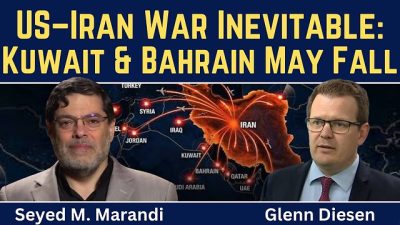
Seyed M. Marandi: US-Iran War Inevitable: Kuwait and Bahrain May Fall
or go to
Aletho News Archives – Video-Images
From the Archives
Oil and the Israel Lobby
Reknowned economist M. Shahid Alam offers this excellent critique of Noam Chomsky’s defective analysis of the relative influence of Oil versus the Israel lobby over US foreign policy: … continue
Blog Roll
 Aletho News
- ICC ignored ‘very well-documented’ NATO crimes – ex-Libyan minister
- SNSC secretary dismisses US response to Iran’s conditions as ‘inadequate’
- Sanaa says Taiz roads open, secure for residents, warns Saudi forces
- Iraqi resistance group urges Saudi leadership to admit defeat, lift Yemen siege
- Trump’s Retreat: How Al-Aqsa Flood Took Down the US Empire
- Israel’s Military Actions in Lebanon Grossly Violate International Law — Lavrov
- Seyed M. Marandi: US-Iran War Inevitable: Kuwait and Bahrain May Fall
- Leaders Condemn Ansarallah Attack on Saudi Arabia While Ignoring Illegal War Against Yemen
- Leaked: Britain’s Covert Iraqi Psyops Network
- Yemeni Armed Forces Warn Airlines Against Using Saudi Airports, Exempt Mecca and Medina
- If Americans Knew
- How Israel Conquered the Latin American Right
- Agents search Rep. Omar’s Washington home in criminal probe as she vows she won’t ‘be silenced’
- “The Rule Was: ‘Shoot Everyone You See'”
- Israel goes ballistic over Nobel Laureate Navi Pillay
- U.S. May Join Yet Another Middle Eastern War — TCN
- Yellow Line moves again as Israel closes in on trapped Gazans – Daily Update
- Israeli Attacks Kill Seven Palestinians in Gaza Including Six-year-old Girl
- Gaza: Ceasefire Anniversary Marks Year of Failed Promises
- The American Conservative: Mike Huckabee Should Resign
- A C-Section in Shackles: A Palestinian Woman’s Harrowing Birth in Israeli Detention
- No Tricks Zone
- Germany’s Green Energy Debacle: High Energy Costs Force Kahla Porzellan to Close After 182 Years!
- New Study: 50 Years Of The Most Aggressive ‘Net Zero’ Policies Can Only Affect The Global Climate By 0.03°C
- US September “Heat” Was No Record…Many Records Set Decades Ago
- Latest European Green Energy Debacle; Portugal’s Largest Flagship Solar Park Insolvent!
- Green Energy Debacle: German Expert Professor Fritz Vahrenholt Warns Of Severe Economic And Social Consequences
- Two More Paleo Reconstructions Affirm Meters-Higher Sea Levels Across Ireland, Brazil 7000-6000 Years Ago
- New Study: Earth And Venus Surface Warmth Largely Explained By Convection And Lapse Rate, Not CO2 Or Radiation
- 2025 Nature Paper Claiming Worsening Global Drought Gets RETRACTED …Heavily Flawed
- New Study: ‘Global Drought Shows No Detectable Recent Acceleration Under Climate Warming’
- Economic Masterminds: German Socialists Suggest Taxing Productivity Gains Stemming From Using AI

