Beware the “The Cultural Civil War” Narrative: You’re Being Played
By Charles Hugh Smith | of two minds | August 21, 2017
There is always common ground for those who dare to seek it.
Remember the “Russians hacked our election!” hysteria–or have you already forgotten? That entire narrative collapsed under a deluge of factual evidence that the Democratic National Committee (DNC) data release was an insider job, and a compelling lack of evidence of any other Russian hacking.
That failed narrative has now been replaced with a new mass hysteria: “a new cultural Civil War is inevitable.” In this narrative, America has succumbed to us-versus-them divisions divided by all-or-nothing ideological bright lines.
Snap out of it, America: you’re being played, just as you were played by the absurd “Russia hacked the election” mania.
The core strategy here is the destruction of any common ground: once the delusion that there is no common ground left has been cemented by relentless mainstream and social media hysteria/ propaganda, the populace fragments into echo-chamber fiefdoms of ideological conformity that are easily manipulated by the political-financial power structure.
Once the populace has been fragmented into ideologically divisive camps, controlling the resulting mass of warring mobs is easy. Rather than recognize the commonality of their powerlessness and impoverishment, the fragmented fiefdoms are easily turned on each other:
From the point of view of each fragmented fiefdom, , the problem isn’t structural, i.e. the dominance of extreme concentrations of wealth and power; the “problem” is the other cultural-ideological fiefdoms.
Once the masses accept this false division and the destruction of common ground, their power to reverse the extreme concentrations of wealth and power is shattered. The play is as old as civilization itself: conjure up extremists (paying them when necessary), goad the formation of opposing extremists, then convince the populace that these extremists have been normalized, i.e. your friends and neighbors already belong to one or the other.
This normalization then sets up the relentless demands to choose a side– the classic techniques of misdirection and false choice.
Just as you’re sold a triple-bacon cheeseburger or a hybrid auto, you’re being sold a completely fabricated cultural civil war. There have always been extremists on every edge of the ideological spectrum, just as there have always been religious zealots.
In a healthy society, these fringe pools of self-reinforcing fanaticism are given their proper place: they are outliers, representing self-reinforcing black holes of confirmation bias of a few.
In times of social, political and financial stress, such groups pop up like mushrooms. In times of media saturation, a relative handful can gain enormous exposure and importance because the danger they pose sells adverts and attracts eyeballs/viewers.
Add a little fragmentation, virtue-signaling, demands for ideological conformity and voila, you get a deeply fragmented and deranged populace that is incapable of recognizing the dire straits it is in or recognizing the structural sources of its impoverishment and powerlessness.
In other words, you get an easily malleable populace at false war with itself.
There is always common ground for those who dare to seek it. The Powers That Be are blowing up the bridges as fast as they can, whipping up fear and hatred of the Other, fanning the flames of extremism and claiming extremists are now normalized and everywhere.
All of this is false. Would you buy an entirely manipulated cultural civil war if it was advertised as such? If not, then don’t buy into the false (but oh so useful to the ruling elites) narrative of an “inevitable cultural Civil War.”
Russia-gate’s Evidentiary Void
By Robert Parry | Consortium News | August 18, 2017
The New York Times’ unrelenting anti-Russia bias would be almost comical if the possible outcome were not a nuclear conflagration and maybe the end of life on planet Earth.
A classic example of the Times’ one-sided coverage was a front-page article on Thursday expressing the wistful hope that a Ukrainian hacker whose malware was linked to the release of Democratic National Committee (DNC) emails in 2016 could somehow “blow the whistle on Russian hacking.”
Though full of airy suspicions and often reading like a conspiracy theory, the article by Andrew E. Kramer and Andrew Higgins contained one important admission (buried deep inside the “jump” on page A8 in my print edition), a startling revelation especially for those Americans who have accepted the Russia-did-it groupthink as an established fact.
The article quoted Jeffrey Carr, the author of a book on cyber-warfare, referring to a different reality: that the Russia-gate “certainties” blaming the DNC “hack” on Russia’s GRU military intelligence service or Russia’s FSB security agency lack a solid evidentiary foundation.
“There is not now and never has been a single piece of technical evidence produced that connects the malware used in the DNC attack to the GRU, FSB or any agency of the Russian government,” Carr said.
Yet, before that remarkable admission had a chance to sink into the brains of Times’ readers whose thinking has been fattened up on a steady diet of treating the “Russian hack” as flat fact, Times’ editors quickly added that “United States intelligence agencies, however, have been unequivocal in pointing a finger at Russia.”
The Times’ rebuke toward any doubts about Russia-gate was inserted after Carr’s remark although the Times had already declared several times on page 1 that there was really no doubt about Russia’s guilt.
“American intelligence agencies have determined Russian hackers were behind the electronic break-in of the Democratic national Committee,” the Times reported, followed by the assertion that the hacker’s “malware apparently did” get used by Moscow and then another reminder that “Washington is convinced [that the hacking operation] was orchestrated by Moscow.”
By repeating the same point on the inside page, the Times editors seemed to be saying that any deviant views on this subject must be slapped down promptly and decisively.
A Flimsy Assessment
But that gets us back to the problem with the Jan. 6 “Intelligence Community Assessment,” which — contrary to repeated Times’ claims — was not the “consensus” view of all 17 U.S. intelligence agencies, but rather the work of a small group of “hand-picked” analysts from three agencies: the Central Intelligence Agency, Federal Bureau of Investigation and National Security Agency. And, they operated under the watchful eye of President Obama’s political appointees, CIA Director John Brennan and Director of National Intelligence James Clapper, who was the one who called them “hand-picked.”
Those analysts presented no real evidence to support their assessment, which they acknowledged was not a determination of fact, but rather what amounted to their best guess based on what they perceived to be Russian motives and capabilities.
The Jan. 6 assessment admitted as much, saying its “judgments are not intended to imply that we have proof that shows something to be a fact. Assessments are based on collected information, which is often incomplete or fragmentary, as well as logic, argumentation, and precedents.”
Much of the unclassified version of the report lambasted Russia’s international TV network RT for such offenses as hosting a 2012 presidential debate for third-party candidates excluded from the Republican-Democratic debate, covering the Occupy Wall Street protests, and reporting on dangers from “fracking.” The assessment described those editorial decisions as assaults on American democracy.
But rather than acknowledge the thinness of the Jan. 6 report, the Times – like other mainstream news outlets – treated it as gospel and pretended that it represented a “consensus” of all 17 intelligence agencies even though it clearly never did. (Belatedly, the Times slipped in a correction to that falsehood in one article although continuing to use similar language in subsequent stories so an unsuspecting Times reader would not be aware of how shaky the Russia-gate foundation is.)
Russian President Vladimir Putin and WikiLeaks founder Julian Assange have denied repeatedly that the Russian government was the source of the two batches of Democratic emails released via WikiLeaks in 2016, a point that the Times also frequently fails to acknowledge. (This is not to say that Putin and Assange are telling the truth, but it is a journalistic principle to include relevant denials from parties facing accusations.)
Conspiracy Mongering
The rest of Thursday’s Times article veered from the incomprehensible to the bizarre, as the Times reported that the hacker, known only as “Profexer,” is cooperating with F.B.I. agents inside Ukraine.
Yet, the reliance on Ukraine to provide evidence against Russia defies any objective investigative standards. The Ukrainian government is fiercely anti-Russian and views itself as engaged in an “information war” with Putin and his government.
Ukraine’s SBU security service also has been implicated in possible torture, according to United Nations investigators who were denied access to Ukrainian government detention facilities housing ethnic Russian Ukrainians who resisted the violent coup in February 2014, which was spearheaded by neo-Nazis and other extreme nationalists and overthrew elected President Viktor Yanukovych.
The SBU also has been the driving force behind the supposedly “Dutch-led” investigation into the July 17, 2014 shooting down of Malaysia Airlines Flight 17. That inquiry has ignored evidence that a rogue Ukrainian force may have been responsible – not even addressing a Dutch/NATO intelligence report stating that all anti-aircraft missile batteries in eastern Ukraine on that day were under the control of the Ukrainian military – and instead tried to pin the atrocity on Russia, albeit with no suspects yet charged.
In Thursday’s article, the Times unintentionally reveals how fuzzy the case against “Fancy Bear” and “Cozy Bear” – the two alleged Russian government hacking operations – is.
The Times reports: “Rather than training, arming and deploying hackers to carry out a specific mission like just another military unit, Fancy Bear and its twin Cozy Bear have operated more as centers for organization and financing; much of the hard work like coding is outsourced to private and often crime-tainted vendors.”
Further, under the dramatic subhead – “A Bear’s Lair” – the Times reported that no such lair may exist: “Tracking the bear to its lair … has so far proved impossible, not least because many experts believe that no such single place exists.”
Lacking Witnesses
The Times’ article also noted the “absence of reliable witnesses” to resolve the mystery – so to the rescue came the “reliable” regime in Kiev, or as the Times wrote: “emerging from Ukraine is a sharper picture of what the United States believes is a Russian government hacking group.”
The Times then cited various cases of exposed Ukrainian government emails, again blaming the Russians albeit without any real evidence.
The Times suggested some connection between the alleged Russian hackers and a mistaken report on Russia’s Channel 1 about a Ukrainian election, which the Times claimed “inadvertently implicated the government authorities in Moscow.”
The Times’ “proof” in this case was that some hacker dummied a phony Internet page to look like an official Ukrainian election graphic showing a victory by ultra-right candidate, Dmytro Yarosh, when in fact Yarosh polled less than 1 percent. The hacker supposedly sent this “spoof” graphic to Channel 1, which used it.
But such an embarrassing error, which would have no effect on the actual election results, suggests an effort to discredit Channel 1 rather than evidence of a cooperative relationship between the mysterious hacker and the Russian station. The Times, however, made this example a cornerstone in its case against the Russians.
Meanwhile, the Times offered its readers almost no cautionary advice that – in the case of Russia-gate – Ukraine would have every motive to send U.S. investigators in directions harmful to Russia, much as happened with the MH-17 investigation.
So, we can expect that whatever “evidence” Ukraine “uncovers” will be accepted as gospel truth by the Times and much of the U.S. government – and anyone who dares ask inconvenient questions about its reliability will be deemed a “Kremlin stooge” spreading “Russian propaganda.”
Investigative reporter Robert Parry broke many of the Iran-Contra stories for The Associated Press and Newsweek in the 1980s.
The Neocons Are Pushing the USA and the Rest of the World Towards a Dangerous Crisis
The Saker | Unz Review | August 18, 2017
First, my writing on the wall
In October of last year a wrote an analysis I entitled The USA are about to face the worst crisis of their history and how Putin’s example might inspire Trump and I think that this is a good time to revisit it now. I began the analysis by looking at the calamities which would befall the United States if Hillary was elected. Since this did not happen (thank God!), we can safely ignore that part and look at my prediction of what would happen if Trump was elected. Here is what I wrote:
Trump wins. Problem: he will be completely alone. The Neocons have a total, repeat total, control of the Congress, the media, banking and finance, and the courts. From Clinton to Clinton they have deeply infiltrated the Pentagon, Foggy Bottom, and the three letter agencies. The Fed is their stronghold. How in the world will Trump deal with these rabid “crazies in the basement“? Consider the vicious hate campaign which all these “personalities” (from actors, to politicians to reporters) have unleashed against Trump – they have burned their bridges, they know that they will lose it all if Trump wins (and, if he proves to be an easy pushover his election will make no difference anyway). The Neocons have nothing to lose and they will fight to the very last one. What could Trump possibly do to get anything done if he is surrounded by Neocons and their agents of influence? Bring in an entirely different team? How is he going to vet them? His first choice was to take Pence as a VP – a disaster (he is already sabotaging Trump on Syria and the elections outcome). I *dread* the hear whom Trump will appoint as a White House Chief of Staff as I am afraid that just to appease the Neocons he will appoint some new version of the infamous Rahm Emanuel… And should Trump prove that he has both principles and courage, the Neocons can always “Dallas” him and replace him with Pence. Et voilà!
I went on to suggest that Trump’s only option would be to follow Putin’s example and do to the Neocons what Putin did to the oligarchs. Clearly that did not happen. In fact, one month after the election of Trump I wrote another analysis entitled “The Neocons and the “deep state” have neutered the Trump Presidency, it’s over folks!“.
Less than a month ago I warned that a ‘color revolution’ was taking place in the USA. My first element of proof was the so-called “investigation” which the CIA, FBI, NSA and others were conducting against President Trump’s candidate to become National Security Advisor, General Flynn. Tonight, the plot to get rid of Flynn has finally succeeded and General Flynn had to offer his resignation. Trump accepted it. Now let’s immediately get one thing out of the way: Flynn was hardly a saint or a perfect wise man who would single handedly saved the world. That he was not. However, what Flynn was is the cornerstone of Trump’s national security policy. (…) The Neocon run ‘deep state’ has now forced Flynn to resign under the idiotic pretext that he had a telephone conversation, on an open, insecure and clearly monitored, line with the Russian ambassador. And Trump accepted this resignation. Ever since Trump made it to the White House, he has taken blow after blow from the Neocon-run Ziomedia, from Congress, from all the Hollywood doubleplusgoodthinking “stars” and even from European politicians. And Trump took each blow without ever fighting back. Nowhere was his famous “you are fired!” to be seen. But I still had hope. I wanted to hope. I felt that it was my duty to hope. But now Trump has betrayed us all. Again, Flynn was not my hero. But he was, by all accounts, Trump’s hero. And Trump betrayed him. The consequences of this will be immense. For one thing, Trump is now clearly broken. It took the ‘deep state’ only weeks to castrate Trump and to make him bow to the powers that be. Those who would have stood behind Trump will now feel that he will not stand behind them and they will all move back away from him. The Neocons will feel elated by the elimination of their worst enemy and emboldened by this victory they will push on, doubling-down over and over and over again. It’s over, folks, the deep state has won.
I then concluded that the consequences of this victory would catastrophic for the United States:
In their hate-filled rage against Trump and the American people (aka “the basket of deplorables”) the Neocons have had to show their true face. By their rejection of the outcome of the elections, by their riots, their demonization of Trump, the Neocons have shown two crucial things: first, that the US democracy is a sad joke and that they, the Neocons, are an occupation regime which rules against the will of the American people. In other words, just like Israel, the USA has no legitimacy left. And since, just like Israel, the USA are unable to frighten their enemies, they are basically left with nothing, no legitimacy, no ability to coerce. So yes, the Neocons have won. But their victory is removes the last chance for the US to avoid a collapse.
I think that what we are seeing today are the first signs of the impending collapse.
The symptoms of the agony
- Externally, the US foreign policy is basically “frozen” and in lieu of a foreign policy we now only have a long series of empty threats hurled at a list of demonized countries which are now promised “fire and brimstone” should they dare to disobey Uncle Sam. While this makes for good headlines, this does not qualify as a “policy” of any kind (I discussed this issue at length during my recent interview with SouthFront). And then there is Congress which has basically stripped Trump from his powers to conduct foreign policy. This bizarre, and illegal, form of a “vote of no-confidence” further hammers in the message that Trump is either a madman, a traitor, or both.
- Internally, the latest riots in Charlottesville now being blamed on Trump who, after being a Putin agent is now further demonized as some kind of Nazi (see Paul Craig Roberts’ first and second warnings about this dynamic)
- Organizationally, it is clear that Trump is surrounded by enemies as illustrated by the absolutely outrageous fact that he can’t even talk to a foreign head of state without having the transcript of his conversation leaked to the Ziomedia.
I believe that these all are preparatory steps to trigger a major crisis and use it to remove Trump, either by a process of impeachment, or by force under the pretext of some crisis. Just look at the message which the Ziomedia has been hammeing into the brains of the US population.
The psychological preparation for the forthcoming coup: scaring them all to death
Here are three very telling examples taken from Newsweek’s front page:

Ask yourself, what is the message here?
Trump is a traitor, he works for Putin, Putin wants to destroy democracy in the United States and these two men together are the most dangerous men on the planet. This is a “plot against America“, no less!
Not bad, right?
“They” are clearly out there go get “us” and “we” are all in terrible danger: Kim Jong-un is about to declare nuclear war on the US, Xi and Putin are threatening the world with their armies, and “our” own President came to power courtesy of the “Russian KGB” and “Putin’s hackers”, he now works for the Russians, he is also clearly a Nazi, a White supremacist, a racist and, possibly, a “new Hitler” (as is Putin, of course!).
And then, there are those truly scary Mooslims and Aye-rabs who apparently want only two things in life: destroy “our way of life” and kill all the “infidels”. This is why we need the TSA, 16 intelligence agencies and militarized police SWAT teams everywhere: in case the terrorists come to get us where we live.
Dangerous international consequences
This would all be rather funny if it was not also extremely dangerous. For one thing, the US is really poking at a dangerous foe when it constantly tries to scare Kim Jong-un and the DPRK leadership. No, not because of the North Korean nukes (which are probably not real nuclear capable ICBMs but a not necessarily compatible combination of nuclear ‘devices’ and intermediate range ballistic missiles) but because of the huge and hard to destroy conventional North Korean military. The real threat are not missiles, but a deadly combination of conventional artillery and special forces which present very little danger to the US or the US military, but which present a huge threat for the population of Seoul and the northern section of South Korea. Nukes, in whatever form, are really only an added problem, a toxic “icing” on an already very dangerous ‘conventional cake’.
[Sidebar – a real life nightmare: Now, if you *really* want to terrify yourself and stay awake all night then consider the following. While I personally believe that Kim Jong-un is not insane and that the main objective of the North Korean leadership is to avoid a war at all costs, what if I am wrong? What if those who say that the North Korean leaders are totally insane are right? Or, which I think is much more likely, what if Kim Jong-un and the North Korean leaders came to the conclusion that they have nothing to lose, that the Americans are going to kill them all, along with their families and friends? What could they, in theory, do if truly desperate? Well, let me tell you: forget about Guam; think Tokyo! Indeed, while the DPRK could devastate Seoul with old fashioned artillery systems, DPRK missiles are probably capable of striking Tokyo or the Keihanshin region encompassing Kyoto, Osaka and Kobe including the key industries of the Hanshin Industrial Region. The Greater Tokyo area (Kanto region) and the Keihanshin region are very densely populated (37 and 20 million people respectively) and contain an immense number of industries, many of which would produce an ecological disaster of immense proportions if hit by missiles. Not only that, but a strike on the key economic and financial nodes of Japan would probably result in a 9-11 kind of international economic collapse. So if the North Koreans wanted to really, really hurt the Americans what they could do is strike Seoul, and key cities in Japan resulting in a huge political crisis for the entire planet. During the Cold War we used to study the consequences of a Soviet strike against Japan and the conclusion was always the same: Japan cannot afford a war of any kind. The Japanese landmass is too small, too densely populated, too rich in lucrative targets and a war would lay waste to the entire country. This is still true today, only more so. And just imagine the reaction in South Korea and Japan if some crazy US strike on the DPRK results in Seoul and Tokyo being hit by missiles! The South Koreans have already made their position unambiguously clear, by the way. As for the Japanese, they are officially placing their hopes in missiles (as if technology could mitigate the consequences of insanity!). So yeah, the DPRK is plenty dangerous and pushing them into their last resort is totally irresponsible indeed, nukes or no nukes]
What we are observing now is positive feedback loop in which each move by the Neocons results in a deeper and deeper destabilization of the entire system. Needless to say, this is extremely dangerous and can only result in an eventual catastrophe/collapse. In fact, the signs that the US is totally losing control are already all over the place, here are just a few headlines to illustrate this:
- Iran could quit nuclear deal in ‘hours’ if new U.S. sanctions imposed: Rouhani
- Israel: Netanyahu declares support for a Kurdish state
- Syrian forces take 3 more towns en route to Deir ez-Zor in first airborne operation
- Maduro calls for nationwide ‘anti-imperialist’ drills after Trump’s threat of ‘military option’
- Soldiers of the 201st (Russian) base in Tadjikistan have been put on high alert as part of a military exercise
- Confirmed: Turkey to end support for anti-government terrorists in Syria
- Russia Plans Huge Zapad 2017 Military Exercises With Belarus
A French expression goes “when the cat is gone, the mice dance”, and this is exactly what is happening now: the US is both very weak and basically absent. As for the Armenians, they say “The mouse dreams dreams that would terrify the cat”. Well, the “mice” of the world are dancing and dreaming and simply ignoring the “cat”. Every move the cat makes only makes things worse for him. The world is moving on, while the cat is busy destroying himself.
Dangerous domestic consequences
First on my list would be race riots. In fact, they are already happening all over the United States, but they are rarely presented as such. And I am not talking about the “official” riots of Black Lives Matter, which are bad enough, I am talking about the many mini-riots which the official media is systematically trying to obfuscate. Those interested in this topic should read the book Don’t Make the Black Kids Angry by Colin Flaherty which shows that racist attacks on Whites by Blacks (aka “polar bear hunting”) are on the rise pretty much all over the county. Likewise, anybody who stubbornly persists in ignoring the strong correlation between race and crime ought to read Ron Unz’s seminal analysis Race and Crime in America. Now, before some self-appointed thought police volunteer accuses me as a racist, I am not saying anything at all about the causes of the racial problems in the United States. I am only saying that racial violence in the US is severe and rapidly getting much worse.
The second problem which I see threatening the US society is an extremely rapid delegitimization of the entire US political system and, especially, of the Federal government. For decades now Americans have been voting for ‘A’ and each time what they ended up with is ‘not-A’. Examples of that include the famous “read my lips, no new taxes”, of course, but also Obama promises to stop stupid wars and now Trump’s promise to “drain the swamp”. Americans have been lied to for decades and they know it. There is a widening chasm between the so-called “American values” taught in schools and the reality of power. While officially the US is supposed to stand for democracy, freedom and all the other good things advocated by the Founding Fathers, the disgusting reality is that the US is in bed with Wahabis, Nazis and Zionists. The all-prevailing hypocrisy of it all now threatens to bring down the entire US political system just as the no less prevailing hypocrisy of the Soviet system brought down the USSR (if interested, you can read more about this topic here). The simple truth is that no regime can survive for too long when it proactively supports the exact opposite of what it officially is supposed to stand for. The result? I have yet to meet an adult American who would sincerely believe that he/she lives in the “land of the free and the home of the brave”. Maybe infants still buy this stuff, but even teenagers know that this is a load of bull.
Third, for all the encouraging statistics about the Dow Jones, unemployment and growth, the reality is that the US society is rapidly transforming itself into a three-tired one: on top, a small number of obscenely rich people, under them, a certain amount of qualified professionals who service the filthy rich and who struggle to maintain a lifestyle which in the past was associated with the middle-class. And then the vast majority of Americans who basically are looking at making “minimal wage plus a little something” and who basically survive by not paying for health insurance, by typically working two jobs, by eating cheap and unhealthy “prolefeed” and by giving up on that which every American worker could enjoy in the 1950s and 1960s (have one parent at home, have paid holidays, a second vacation home, etc.). Americans are mostly hard workers and, so far, most of them are surviving, but they are mostly one paycheck away from seriously bad poverty. A lot of them only make ends meet because they get help from their parents and grand-parents (the same is true of southern Europe, by the way). A large segment of the US population now survives only because of Walmart and the Dollar Store. Once that fails, food stamps are the last option. That, or jail, of course.
Combine all this and you get a potentially extremely explosive situation. No wonder that when so many Americans heard Hillary’s comment about the “basket of deplorables” they took that as declaration of war.
And how do the Neocons plan to deal with all this?
By cracking down on free speech and dissent, of course! What else?
Their only response – repression of course!
YouTube, Google, Facebook, Twitter – they are all cracking down on “bad” speech which includes pretty much any topic a garden variety self-described ‘liberal’ frowns upon. GoDaddy and Google are even going after domain names. Oh sure, nobody gets thrown in jail for, say, defending the 2nd Amendment, but they get “demonetized” and their accounts simply closed. It’s not the cops cracking down on free speech, it’s “Corporate America”, but the effect is the same. Apparently, the Neocons do not realize that censorship is not a viable strategy in the age of the Internet. Or maybe they do, and they are deliberately trying to trigger a backlash?
Then there is the vilification campaign in the media: unless you are some kind of ‘minority’ you are assumed to be nefarious by birth and guilty of all the evils on the planet. And your leader is Trump, of course, or maybe even Putin himself, vide supra. Christian heterosexual White males better run for cover…
Whatever may be the case, by their manic insistence, on one hand, to humiliate and crush Trump and, on the other, to repress millions of Americans the Neocons are committing a double mistake. First, they are showing their true face and, second, they are subverting the very institutions they are using to control and run this country. That, of course, only further weaken the Neocons and the United States themselves and that further accelerates the positive feedback loop mentioned above which now threatens the entire international system.
Us and Them
What makes the gradual collapse of the AngloZionist Empire so uniquely dangerous is that it is by far the biggest and most powerful empire in world history. No empire has ever had the quasi monopoly on power the USA enjoyed since WWII. By any measure, military, economic, political, social, the US came out of WWII as a giant and while there were ups and downs during the subsequent decades, the collapse of the USSR only reaffirmed what appeared to be the total victory of the United States. In my admittedly subjective opinion, the last competent (no, I did not say ‘good’, I said ‘competent’) US President was George Herbert Walker Bush who, unlike his successors, at least knew how to run an Empire. After that, it is all downhill, faster and faster. And if Obama was probably the most incompetent President in US history, Trump will be the first one to be openly lynched while in office. As a result, the AngloZionist Empire is now like a huge freight train which has lost its locomotive but still has an immense momentum pushing it forward even though there is nobody in control any more. The rest of the planet, with the irrelevant exception of the East Europeans, is now scrambling in horror to get out of the path of this out of control train. So far, the tracks (minimal common sense, political realities) are more or less holding, but a crash (political, economic or military) could happen at any moment. And that is very, very scary.
The US has anywhere between 700 to 1000 military bases worldwide, the entire international financial system is deeply enmeshed with the US economy, the US Dollar is still the only real reserve currency, United States Treasury securities are held by all the key international players (including Russia and China), SWIFT is politically controlled by the US, the US is the only country in the world that can print as much money as it wants and, last but not least, the US has a huge nuclear arsenal. As a result, a US collapse would threaten everybody and that means that nobody would want to trigger one. The collapse of the Soviet Union threatened the rest of mankind only in one way: by its nuclear arsenal. In contrast, any collapse of the United States would threaten everybody in many different ways.
So the real question now is this: can the rest of the planet prevent a catastrophic collapse of the AngloZionist Empire?
This is the irony of our situation: even though the entire planet is sick and tried of the incompetent arrogance of the AngloZionists, nobody out there wants their Empire to catastrophically collapse. And yet, with the Neocons in power, such a collapse appears inevitable with potentially devastating consequences for everybody.
This is really amazing, think of it: everybody hates the Neocons, not only a majority of the American people, but truly the entire planet. And yet that numerically small group of people has somehow managed to put everybody in danger, including themselves, due to their ugly vindictiveness, infinite arrogance and ideology-induced short-sightedness. That this could ever have happened, and at a planetary scale, is a dramatic testimony to the moral and spiritual decay of our civilization: how did we ever let things get that far?!
And the next obvious question: can we still stop them?
I honestly don’t know. I hope so, but I am not sure. My biggest hope with Trump was that he would be willing to sacrifice the Empire for the sake of the US (the opposite of what the Neocons are doing: they are willing to sacrifice the US for the sake of their Empire) and that he would manage a relatively safe and hopefully non-violent transition from Empire to “normal country” for the US. Clearly, this is ain’t happening. Instead, the Neocons are threatening everybody: the Chinese, the Russians, the North Koreans and the Venezuelans of course, but also the Europeans (economically), the entire Middle-East (via the “only democracy in the Middle-East”), all the developing countries and even the American people. Heck, they are even threatening the US President himself, and in not-so-subtle ways!
So what’s next?
Truly, I don’t know. But my overwhelming sense is that Trump will be removed from office, either for “high crimes and misdemeanors” or for “medical reasons” (they will simply declare him insane and unfit to be the President). Seeing how weak and spineless Trump is, he might even be “convinced” to resign. I don’t see them simply murdering him simply because he is no Kennedy either. After that, Pence comes to power and it will all be presented like a wonderful event, a group-hug of the elites followed by an immediate and merciless crackdown on any form of political opposition or dissent which will immediately be labeled as racist, homophobic, anti-Semitic, terrorist, etc. The evil hand of the “Russian KGB” (yes, I know, the KGB was dissolved in 1991) will be found everywhere, especially amongst US libertarians (who will probably be the only ones with enough brains to understand what is taking place). The (pseudo-) “Left” will rejoice. Should this course of action result in an unexpected level or resistance, either regional or social, a 9-11 false flag followed by a war will be the most likely scenario (why stray away from something which worked so well the first time around?!). Unless the US decides to re-invade Grenada or give Nauru a much deserved thrashing, any more or less real war will result in a catastrophic failure for the US at which point the use of nukes by the Neocon crazies might become a very real risk, especially if symbolic US targets such as aircraft carriers are hit (in 1991 when the US sent the 82nd AB to Iraq there was nothing standing between this light infantry force and the Iraqi armored divisions. Had the Iraqis attacked the plan was to use tactical nuclear weapons. Then this was all quickly forgotten).
There is a reason why the Neocons thrive in times of crisis: it allows them to hide behind the mayhem, especially when they are the ones who triggered the mayhem in the first place. This means that as long as the Neocons are anywhere near in power they will never, ever, allow peace to suddenly break out, lest the spotlight be suddenly shined directly upon them. Chaos, wars, crises – this is their natural habitat. Think of it as the by-product of their existence. Eventually, of course, they will be stopped and they will be defeated, like all their predecessors in history. But I shudder when I think of the price mankind will have to pay this time around.
A De-Putin-Nazification of America Update
By CJ Hopkins | CounterPunch | August 18, 2017
So the de-Putin-Nazification of America couldn’t be going much better at the moment. In terms of emotionally manipulating people (and especially any heretofore wayward members of the American “left”) into forming a mindless, hysterical mob and running around like headless chickens branding anyone who didn’t vote for Hillary Clinton a goose-stepping Nazi, this past week has been a huge success. At this point, if you haven’t yet posted an anti-Nazi loyalty oath on Twitter, Facebook, or some other platform, you’re a potential “Nazi sympathizer” … and you don’t want to be one of those, now do you? No, I didn’t think you did. So, if you haven’t done that, you’d better get on it. Here are few tips to get you started.
Your anti-Nazi loyalty oath should include a clearly-worded statement acknowledging that Donald Trump is Hitler, or at least the leader of the tens of hundreds of imbecilic, neo-Nazi losers who, according to most of the mainstream media, are on the verge of overthrowing the entire American ruling establishment. It should also include a threat to unfollow, de-friend, and otherwise socially ostracize anyone who hasn’t posted such an oath, or who, despite the Charlottesville Kristallnacht, stubbornly continues thinking critically, or maintains any form of historical awareness, or presents any kind of rational arguments challenging the prevailing Nazi hysteria.
It should also include one or more of the following:
(1) If not an outright call for the First Amendment to be repealed, then at least a demand for a ban on “hate speech,” and the removal of every hate-based statue, flag, painting, book, film, song, joke, or other expression of racism, hatred, religious bigotry, misogyny, extremism, general rudeness (and any other forms of speech or expression that you don’t like) from public view. Don’t worry about the ramifications of this ban. It will never, ever, be used against you, or anyone that you agree with, or against any authors or artists that you like. It’ll be a ban on “hate-speech,” after all, and it’s not like that term is completely subjective, or subject to the whims of those in power, or anything like that.
(2) A demand that the already overly-broad definition of “terrorism” now be expanded even further, to include the fascist who drove his car into a crowd of counterprotesters in Charlottesville, killing one and wounding many others. Never mind that this murderous idiot seems to have done this on the spur of the moment (or, if it was a planned attack, that he’s even more of an idiot than he seems, which, judging from his mug shot, is hard to believe). The important thing is to help the Resistance expand the definition of “terrorism” to the point where they can slap it onto anyone. Again, don’t worry about the ramifications. The “terrorist” label will never, ever, be used against groups that you approve of, or innocent people in faraway countries that some future president wants to murder with drones. The Resistance would never, ever, do that. They know who is and who isn’t a terrorist. And if they don’t, they can always check with Obama.
(3) A reference (either veiled or direct) to someone who may be a Nazi-sympathizer. This is crucial in terms of motivating others to post their loyalty oaths, and fostering an atmosphere of paranoia, which is always so helpful at times like this. Surely, you know of someone who has said, tweeted, published, or posted something that could be interpreted as “Nazi-friendly.” Don’t bother with the Trump supporters. The corporate-owned media will take care of them. You want to go after other leftists, specifically leftists who have been reluctant to call Trump Hitler, or a Putinist agent, or who disagree with you about Syria, or, you know, just people who get on your nerves. This is a golden opportunity to pore through their tweets and Facebook posts, find something you can use against them, and then accuse them of harboring Nazi sympathies. Given the current level of hysteria, few people are going to check your facts. This is one you can really have fun with. See how far you can push the paranoia. Make up elaborate conspiracy theories. If you’re not quite sure how to go about that, check The New York Times or The Washington Post … they’re masters of that kind of thing.
Your anti-Nazi loyalty oath should definitely not include any of the following:
(1) Any mention of the Ukrainian Nazis that Obama, Clinton, and the rest of the Resistance (before it was the Resistance, of course) helped regime-change the Ukrainian government when it wouldn’t play ball with the EU and NATO. Mentioning the Resistance’s support of these Nazis would only confuse those reading your oath, who might not understand that there are good Nazis and bad Nazis, and who have probably forgotten how the US government smuggled a number of actual Nazis (i.e., members of the NSDAP) into America after WWII … or how, since the end of that war, the United States has mass murdered countless millions of people all over the planet (but, technically, not in a genocidal fashion, so that doesn’t make us the same as Nazis).
(2) Actual membership figures on neo-Nazi and white supremacist groups, because those figures are pathetically small. Doing this would make your loyalty oath (not to mention the whole Nazi hysteria thing, generally) seem, if not paranoid, then at least absurd, or like part of some manufactured effort to whip up support for a ruling class coup by waving Nazis in front of everyone’s faces. This would be extremely counterproductive. Remember, one of the primary goals of the De-Putin-Nazification program is to convince the public that Richard Spencer (and the handful of other insignificant idiots that the corporate media is showering with publicity) is about to lead an overwhelming force of tiki torch-bearing neo-Nazis into the streets of American cities to battle the hyper-militarized police, the national guard, and the US military, or some other preposterous scenario like that.
(3) Any reference whatsoever to the corporatocracy that runs the country, and that normally decides who can run for president, and which is currently making an example of Trump in order to dissuade any future billionaires from having the audacity to fuck with them. You’ll be better off avoiding this subject entirely, as it only reminds folks how screwed they are, and how, odds are, they’re probably all worked up about something the corporate-owned media wanted to get them all worked up about, neo-Nazis, Russian hackers, nuclear war with North Korea, Syrian gas attacks, lone wolf terrorists, weapons of mass destruction, or whatever. Take it from someone who’s worked in show business. No one likes being made aware of how they are being manipulated … or provided with a binary set of officially acceptable contextual parameters within which they can think and speak.
But don’t worry too much about that binary stuff. There’ll be plenty of time to get into all that after we rid the world of these Nazis, and these racists, and all these Confederate statues. And Trump, of course. That’s the main thing … getting rid of Donald Trump, and getting a Democrat back in office. Oh, yeah … and the books. We need to look at the books. God knows how many Confederate books are still out there in the public libraries, and in people’s homes, where children can read them. We’ll need to get to the books eventually.
In the meantime, focus on Priority One. Go hard on the Nazi hysteria, at least throughout the rest of the weekend, after which they’ll probably need to switch us back to the Russia hysteria, or possibly the North Korea hysteria, or … damn, see? Here I go with that contextual parameter stuff again. I’ve really got to stop doing that. The last thing I need is to get myself accused of being some kind of Nazi sympathizer, or Confederate apologist, or Russian propagandist, or extremist, or terrorist, or, you know … whatever.
 C. J. Hopkins is an award-winning American playwright, novelist and satirist based in Berlin. His plays are published by Bloomsbury Publishing (UK) and Broadway Play Publishing (USA). His debut novel, ZONE 23, is published by Snoggsworthy, Swaine & Cormorant. He can reached at cjhopkins.com or consentfactory.org.
Julian Assange pardon inches closer as true source of DNC leak may finally be exposed
Julian Assange may be pardoned for providing intelligence on the facts behind the DNC leak
By Alex Christoforou | The Duran | August 18, 2017
The Duran reported that on Tuesday, US Congressman from California, Dana Rohrabacher had a private meeting with Julian Assange at the Embassy of Ecuador in London. Rohrabacher is known as a strong Trump supporter and something of a foreign policy maverick who was once in the running to be Trump’s Secretary of State.
Rohrabacher confirmed that after speaking with Assange…
it was clear that Russia had no role in leaking the infamous DNC emails which further destroyed Hillary Clinton’s credibility as an honest and competent would-be leader.
Julian Assange has refused to divulge any information on the meeting.
Now, in breaking news, The Gateway Pundit is reporting that Rep. Rohrabacher says WikiLeaks founder Julian Assange could be pardoned by President Trump for providing information about the source of Democrat National Committee emails leaked during the 2016 presidential election.
The Daily Caller reports…
Rohrabacher told The Daily Caller in an exclusive interview Thursday that Assange is hoping to leave the Ecuadorian embassy in London where he is currently in asylum, and that during the meeting they explored “what might be necessary to get him out.”
The congressman told TheDC that “if [Assange] is going to give us a big favor, he would obviously have to be pardoned to leave the Ecuadorian embassy.” Assange took asylum in the embassy in August 2012 after facing sexual assault charges in Sweden. The Justice Department also reportedly wants to charge Assange for helping Edward Snowden, a former NSA analyst, leak thousands of classified documents.
“He has information that will be of dramatic importance to the United States and the people of our country as well as to our government,” Rohrabacher said. “Thus if he comes up with that, you know he’s going to expect something in return. He can’t even leave the embassy to get out to Washington to talk to anybody if he doesn’t have a pardon. Obviously there is an issue there that needs to be dealt with, but we haven’t come to any conclusion yet.”
The U.S. intelligence community has said Russia was involved in the hacking and leaking of emails from the Democratic National Committee during the presidential election. Assange has continued to maintain that Russia was not WikiLeaks’ source and has long maintained that he would never reveal a source.
It is worth noting that Julian Assange has repeatedly stated that the Russian government was not the source of the DNC leak.
Wikileaks has a 10+ year flawless history of releasing authentic information, something that no US intelligence agency can ever claim.
German Bombshell Bestseller Exposing CIA Media Control Blocked in US
Americans are being prevented from reading an important book by a hero who made a huge difference

By Charles Bausman | Russia – Insider | August 10, 2017
Udo Ulfkotte is near and dear to our hearts, because we wrote about him in October of 2014, (Top German Editor: CIA Bribing Journalists) a few weeks after our founding, and these articles were some of our first to go viral, getting hundreds of thousands of views, despite the fact that we were practically unknown.
His book caused a sensation in Germany, was a best-seller despite being completely ignored by the same media he was implicating, and was a major factor in turning German public opinion against the Ukraine war.
Ulfkotte’s book was extraordinary because it named names in the German establishment, a sure-fire path to massive libel lawsuits. We were the first English language publication to write about Ulfkotte, and he gave us an exclusive interview shortly after we ran the above article.
We were in touch with Ulfkotte after writing about him, and followed his story. He told us at the time that he wasn’t afraid of any lawsuits, because he was near death due to complications from gas poisoning he suffered while reporting on the Iran-Iraq war in the 1980s (ironically it was German manufactured gas), another story suppressed in Germany.
Sure enough, he passed away in January 2017, at the age of 56.
Perhaps the English translation of his book has been taken out of circulation because of libel threats?
R.I.P. Mr. Ulfkotte, you are a hero, and remembered by millions, and not just in Germany.
We quote in its entirety below an excellent article which recently appeared at Global Research, who noticed that the English translation is being stymied.
The English translation of German journalist Udo Ulfkotte’s best-selling book, Gekaufte Journalisten (Bought Journalists) appears to have been suppressed throughout North America and Europe. On May 15, 2017 Next Revelation Press, an imprint of US-Canadian-based publisher Tayen Lane, released the English version of Bought Journalists, under the title, Journalists for Hire: How the CIA Buys the News.
Tayen Lane has since removed any reference to the title from its website. Correspondingly Amazon.com indicates the title is “currently unavailable,” with opportunities to purchase from independent sellers offering used copies for no less than $1309.09. The book’s subject matter and unexplained disappearance from the marketplace suggest how powerful forces are seeking to prevent its circulation.
Gekaufte Journalisten was almost completely ignored by mainstream German news media following its release in 2014. “No German mainstream journalist is allowed to report about [my] book,” Ulfkotte observed. “Otherwise he or she will be sacked. So we have a bestseller now that no German journalist is allowed to write or talk about.”[1]
Along these lines, publication of the English translation was repeatedly delayed. When this author contacted Ulfkotte in early December 2015 to inquire on the book’s pending translation, he responded, “Please find the link to the English edition here,”
http://www.tayenlane.com/bought-journalists
The above address once providing the book’s description and anticipated publication date now leads to an empty page.[2] Tayen Lane has not responded to emails or telephone calls requesting an explanation for the title’s disappearance.
When a book publisher determines that it has acquired a politically volatile or otherwise “troublesome” title it may embark on a process recognized in the industry as “privishing.” “Privishing is a portmanteau meaning to privately publish, as opposed to true publishing that is open to the public,” writes investigative journalist Gerald Colby.
It is usually employed in the following context: “We privished the book so that it sank without a trace.” The mechanism used is simple: cut off the book’s life-support system by reducing the initial print run so that the book “cannot price profitably according to any conceivable formula,” refuse to do reprints, drastically slash the book’s advertising budget, and all but cancel the promotional tour.”[3]
Privishing often takes place without the author knowing, simply because it involves breach of contract and potential liability. Tayen Lane will likely not face any legal challenge in this instance, however. Ulfkotte died of a heart attack on January 13, 2017, at age 56.[4]
Udo Ulfkotte was a prominent European journalist, social scientist, and immigration reform activist. Upon writing Gekaufte Journalisten and becoming one of the most significant media industry and deep state whistleblowers in recent history, Ulfkotte complained of repeated home searches by German state police and expressed fear for his own life. He also admitted previous health complications stemming from witnessing a 1988 poisoned gas attack in Iraqi Kurdistan.
Ulfkotte’s testimony of how intelligence agencies figure centrally in Western journalism is especially compelling because he for many years functioned in the higher echelons of mainstream newsworkers. The German journalist explains how he was recruited during the 1980s to work in espionage. This began through an invitation proffered by his graduate school advisor for an all-expense-paid trip to attend a two-week seminar on the Cold War conflict in Bonn.
After Ulfkotte obtained his doctorate he was given a job as a reporter at “the leading conservative German newspaper, the Frankfurter Allgemeine Zeitung, oddly appointed despite no journalistic training and hundreds of other applicants. Serving as a correspondent throughout the Middle East, Ulfkotte eventually became acquainted with agents from the CIA, German intelligence agency Bundesnachrichtendienst (BND), Britain’s MI6, and Israel’s Mossad, all of whom valued his ability to travel freely in countries largely closed to the West. His editors readily collaborated in such intelligence gathering operations,”[5] for which journalist possess “non-official cover” by virtue of their profession.
“Non-official cover” occurs when a journalist is essentially working for the CIA, but it’s not in an official capacity,” Ulfkotte explains. “This allows both parties to reap the rewards of the partnership, while at the same time giving both sides plausible deniability. The CIA will find young journalists and mentor them. Suddenly doors will open up, rewards will be given, and before you know it, you owe your entire career to them. That’s essentially how it works.”[6] He likewise ruefully admits to “publishing articles under my own name written by agents of the CIA and other intelligence services, especially the German secret service.”[7]
Ulfkotte’s insider knowledge of the relationship between mainstream media and the intelligence community has special relevance in terms of informing the CIA’s antipathy toward Wikileaks, as well as the media campaign centering on the Trump administration’s alleged “ties to Russia,” while also lending credence to Trump’s frequent claims of the US media’s political biases and deep state ties. Indeed, Ulfkotte “Tweeted” about these very subjects just two days before he passed.
Ulfkotte’s explosive revelations still have the potential to further intensify the much-deserved scrutiny corporate news media presently face. In a society that pays more than lip service to freedom of thought and expression Journalists for Hire would be required reading for college students—and particularly those studying in journalism programs intending to seek employment in the media industries.
In fact, journalism professors, some of whom have migrated to the academy following long careers at renowned news outlets, possess similar insider knowledge of the relationships Ulfkotte readily explains. As both journalists and educators they have a twofold burden of responsibility. This is the case more so than ever because the entire professional and intellectual enterprise they are engaged in (and one directly linked to the nation’s accelerating civic deterioration) has been made a farce. Journalists for Hire’s suppression suggests how Ulfkotte’s posthumous censors refuse for this important examination and cleansing to proceed.
Notes
[1] Ralph Lopez, “Editor of Major German Newspaper Says He Planted Stories for CIA,” Reader Supported News, February 1, 2015.
[2] Udo Ulfkotte to James Tracy, email correspondence, December 6, 2015. In author’s possession.
[3] Gerard Colby, “The Price of Liberty,” in Into the Buzzsaw: Leading Journalists Expose the Myth of a Free Press, Kristina Borjesson, ed., Amherst NY: Prometheus Books, 2002, 15-16.
[4] Former US military intelligence officer L. Fletcher Prouty relates a similar experience of how publication of his book, The Secret Team: The CIA and Its Allies in Control of the United States and the World, was greeted in 1972. “Then one day a business associate in Seattle called to tell me that the bookstore next to his office building had had a window full of books the day before, and none the day of his call. They claimed they had never had the book. I called other associates around the country. I got the same story from all over the country. The paperback had vanished. At the same time I learned that Mr. Ballantine had sold his company. I traveled to New York to visit the new ‘Ballantine Books’ president. He professed to know nothing about me, and my book … The campaign to to kill the book was nationwide and worldwide. It was removed from the Library of Congress and from College libraries as letters I received attested all too frequently.” Prouty, The Secret Team: The CIA and Its Allies in Control of the United States and the World, New York: SkyHorse Publishing, 2008, xii.
[5] Ronald L. Ray, “Reporter Admits Most Media Work for CIA, MI6, Mossad,” American Free Press, October 26, 2014. See also Tyler Durden, “German Journalist Blows Whistle on How CIA Controls the Media,” Zerohedge, October 9, 2014; Udo Ulfkotte, “German Politicians Are US Puppets,” Center for Research on Globalization, November 9., 2014.
[6] Durden, “German Journalist Blows Whistle on How CIA Controls the Media.”
[7] Lopez, “Editor of Major German Newspaper Says He Planted Stories for CIA.”
A New Twist in Seth Rich Murder Case
By Joe Lauria | Consortium News | August 8, 2017
With U.S.-Russia tensions as dangerously high as they’ve been since the worst days of the Cold War, there is potential new evidence that Russia was not behind a hack of the Democratic National Committee, although Congress and the U.S. mainstream media accept the unproven allegation of Russia’s guilt as indisputable fact.
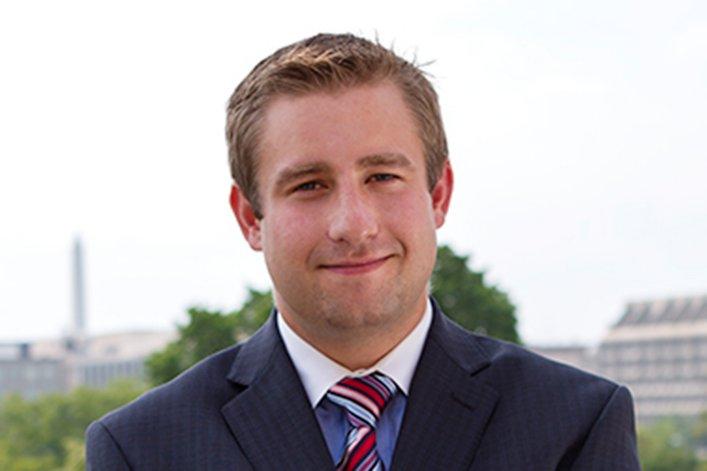
Slain Democratic National Committee staffer Seth Rich
The possible new evidence comes in the form of a leaked audiotape of veteran investigative journalist Seymour Hersh in which Hersh is heard to say that not Russia, but a DNC insider, was the source of the Democratic emails published by WikiLeaks just before the start of the Democratic National Convention in late July 2016.
Hersh said on the tape that the source of the leak was former DNC employee Seth Rich, who was murdered on a darkened street in a rough neighborhood of Northwest Washington D.C. two weeks before the Convention, on July 10, 2016. But Hersh threw cold water on a theory that the murder was an assassination in retaliation for the leak. Instead, Hersh concurs with the D.C. police who say the murder was a botched robbery.
Mainstream news outlets have mocked any linkage between Rich’s murder and the disclosure of the DNC emails as a “conspiracy theory,” but Hersh’s comments suggest another possibility – that the murder and the leak were unrelated while Rich may still have been the leaker.
In dismissing the possibility that Rich was the leaker, mainstream media outlets often ignore one of the key reasons why some people believe that he was: Shortly after his murder, WikiLeaks, which has denied receiving the emails from the Russian government, posted a Tweet offering a $20,000 reward for information leading to the solution of the mystery of who killed Rich.
Julian Assange, WikiLeaks founder and publisher, brought up Rich’s murder out of context in an interview with Dutch TV last August. “Whistle-blowers go to significant efforts to get us material and often very significant risks,” Assange said. “As a 27-year-old, works for the DNC, was shot in the back, murdered just a few weeks ago for unknown reasons as he was walking down the street in Washington.”
Pressed by the interviewer to say whether Rich was the source of the DNC emails, Assange said WikiLeaks never reveals its sources. Yet, it appeared to be an indirect way of naming Rich, while formally maintaining WikiLeak’s policy. An alternative view would be to believe that Assange is cynically using Rich’s death to divert the trail from the real source.
But Assange is likely one of the few people who actually knows who the source is, so his professed interest in Rich’s murder presents a clue regarding the source of the leak that any responsible news organization would at least acknowledge although that has not been the case in many recent mainstream articles about the supposed Seth Rich “conspiracy theory.”
Hersh’s Unwitting Tapes
Hersh’s taped comments add another element to the mystery, given his long record of shedding light into the dark corners of the U.S. government’s crimes, lies and cover-ups. He exposed the My Lai massacre during the Vietnam War; revealed illegal CIA spying in the 1970s spurring wide-ranging Congressional investigations and reform; and uncovered U.S. torture in Abu Ghraib prison in Iraq.
In the audiotape – which Hersh told me was made without his permission – he quoted an unnamed government source who told him that Rich offered the DNC emails to WikiLeaks in exchange for money.
“What I know comes off an FBI report. Don’t ask me how. You can figure it out, I’ve been around a long time,” Hersh says on the tape. “I have somebody on the inside who will go and read a file for me. This person is unbelievably accurate and careful, he’s a very high-level guy and he’ll do a favor. You’re just going to have to trust me.”
The FBI cyber unit got involved after the D.C. police were unable to access protected files on Rich’s computer, Hersh said. So the FBI “found what he’d done. He had submitted a series of documents, of emails. Some juicy emails from the DNC,” to Wikileaks, Hersh said.
“He offered a sample, an extensive sample, you know I’m sure dozens of emails and said ‘I want money.’ Then later Wikileaks did get the password, he had a Dropbox, a protected Dropbox,” Hersh said.
“Wikileaks got access, and before he was killed … he also, and this is also in the FBI report, he also let people know, with whom he was dealing. … I don’t know how he dealt with the Wikileaks and the mechanism but … the word was passed according to the NSA report, ‘I’ve also shared this box with a couple of friends so if anything happens to me it’s not going to solve your problem.’” Hersh said he didn’t know what this “problem” was.
Either Hersh misspoke when he mentioned an “NSA report,” instead meaning the FBI report, or the National Security Agency may have provided a record of Rich’s communication to the FBI. Both the FBI and the D.C. police have denied that the FBI got involved in the case.
The Tape Is Leaked
The Hersh audiotape was posted on a website called Big League Politics, which displays links to Project Veritas, a right-wing group run by James O’Keefe, though there is no evidence that Veritas was involved in the Hersh tape. Veritas does undercover audio and video recordings of unsuspecting subjects and has been accused of doctoring its video and audiotapes. But a recent O’Keefe undercover video of a CNN medical producer saying the network’s coverage of the Russia-gate story was “bullshit” was confirmed by CNN, which took no action against the producer.
People who believe that Hersh’s apparent revelation could reduce Russia-U.S. tensions are clamoring for him to confirm what he said. Popular blogger Caitlin Johnstone wrote: “If Hersh has any information at all indicating that the WikiLeaks releases last year came not from Russian hackers but from a leaker on the inside, he is morally obligated to volunteer all the information that he has. Even the slightest possibility that his information could help halt America’s collision course with Russia by killing public support for new cold war escalations makes his remaining silent absolutely inexcusable.”
Only Hersh’s voice is heard on the taped interview, which was conducted by Ed Butowsky, a wealthy Republican donor and Trump supporter. Until now, Hersh’s only public comment about the tape was to National Public Radio. “I hear gossip,” Hersh said. “[Butowsky] took two and two and made 45 out of it.”
I contacted Hersh on Friday via email. He confirmed to me that it was his voice on the tape by angrily condemning those who he said secretly recorded him, without identifying them. He did not respond when I asked him whether he thought the tape may have been altered. Hersh refused to comment further.
On June 2, in an exchange of emails between Hersh and Butowsky, Hersh denied any knowledge of the FBI report. That was two months before Hersh discovered that he had been secretly recorded when the tape was made public on Aug. 1 by Big League Politics. A screenshot of the Hersh-Butowsky email exchange was published by Big League Politics last week.
“I am curious why you haven’t approached the house committee telling them what you were read by your FBI friend related to Seth Rich that you in turn read to me,” Butowsky wrote.
Hersh replied: “ed –you have a lousy memory…i was not read anything by my fbi friend..i have no firsthand information and i really wish you would stop telling others information that you think i have…please stop relaying information that you do not have right…and that i have no reason to believe is accurate…”
Without informing him that he had been recorded, Butowsky replies: “I know it isn’t first hand knowledge but you clearly said, my memory is perfect, that you had a friend at the FBI who read / told you what was in the file on Seth Rich and I wonder why you aren’t helping your country and sharing that information on who it was?”
Further suggesting that Rich may have been the source of the DNC emails, WikiLeaks posted a link to the audiotape on Twitter.
Hersh has given no indication he’s planning to write a piece based on his source who he said has seen the FBI report. Hersh has found it difficult to be published in recent years in the United States. He has been writing for the London Review of Books until that publication earlier this year rejected a piece challenging the purported U.S. evidence blaming a chemical weapons attack in Syria, which led to Trump’s bombing of a Syrian air field. Hersh’s story was published instead in a major German weekly, Die Welt.
MSM Contempt
Corporate media’s uniform reaction has been to treat the idea of Seth Rich being WikiLeak’s source as a “conspiracy theory” – while mostly ignoring Assange’s hints and now the Hersh tape. Major U.S. media outlets cover Russia-gate as if Russian interference in last November’s U.S. election is proven, rather than based on a shaky “assessment” by “hand-picked” analysts from three – not all 17 – U.S. intelligence agencies.
If Russia-gate special prosecutor Robert Mueller is serious about getting to the bottom of who WikiLeak’s source is there are several avenues he could pursue. He could check Rich’s bank accounts to see if there was a transfer of money from a representative of WikiLeaks. He could try to find Rich’s friends who may have been given his DropBox password. He could seek to interview Hersh.
“Someone ought to ask Mueller, if he had an ounce of integrity (which he doesn’t), why he’s not showing these FBI and/or NSA reports to his Grand Jury which could blow the lid off of ‘Russiagate’ that Mueller was appointed to investigate,” former FBI official and whistleblower Coleen Rowley told me in an email. “It’s sad the FBI could be keeping this secret. But I think the [Rich] family could sue to get the FBI Report that Hersh mentioned or now that FOX is sued, its attorneys could try to subpoena the FBI documents in discovery.” She added that the FBI would likely fight such a subpoena, however.
The lawsuit that Rowley mentioned was filed by Rod Wheeler, a D.C. private detective, against Butowsky and Fox News. Wheeler was hired by Butowsky on behalf of the Rich family to find the killer. In a Fox News item on May 16, Wheeler was quoted referring to a Fox source in the federal government who said that Rich was WikiLeak’s source.
Fox News retracted the story a week later citing unspecific breaches of its editorial policies. At the time Fox had suffered ad boycotts when its chairman, Roger Ailes, and then its top presenter, Bill O’Reilly, faced sexual harassment allegations. Both later resigned. Sean Hannity, another top presenter, continued to pursue the Rich story until he was threatened with an ad boycott, at which point Fox retracted the story.
Wheeler’s suit now alleges that he was misquoted and that the purpose of the Fox story was to distract attention from Russia’s connection with the DNC emails. Big League Politics has posted audio of Wheeler saying that Aaron Rich, the victim’s brother, blocked him from pursuing leads on Seth Rich’s computer.
It is not clear if Hersh’s source is the same as Fox’s (or if Fox was using Hersh in a second-hand way). Butowsky has a connection with Fox as an on-air commentator. The date of the Hersh audio recording has not been made known although it presumably predated his email exchange with Butowsky on June 2.
If an FBI report exists indicating that Rich was the source of the DNC emails and the report is made public, it could reduce tensions with Russia that Congress ratcheted up further last week by escalating sanctions – a form of economic warfare – against Russia as punishment for its alleged role in exposing the DNC emails and others belonging to Hillary Clinton’s campaign chairman John Podesta.
The DNC emails revealed DNC officials improperly interfering in the Democratic primaries to undercut Clinton’s chief rival, Sen. Bernie Sanders. The Podesta emails included the contents of Clinton’s speeches to Wall Street and other special interests as well as pay-to-play features of the Clinton Foundation.
On Jan. 6 – before leaving office – President Obama’s intelligence chiefs oversaw “hand-picked” analysts from the CIA, FBI and NSA creating an “assessment” blaming Russia for the hacked emails albeit without presenting any hard evidence. Russian officials have denied supplying the emails to WikiLeaks and WikiLeaks has denied receiving them from Russia.
Nevertheless, the unproven allegations of Russian interference in the election have raised tensions between the two nuclear powers to levels not seen since the darkest days of the Cold War and possibly worse. Stephen Cohen, a leading U.S. expert on Russia, said the current showdown may be even more hazardous than the Cuban missile crisis.
“I think this is the most dangerous moment in American-Russian relations, at least since the Cuban missile crisis. And arguably, it’s more dangerous, because it’s more complex,” he told Democracy Now! in April. “Therefore, we … have in Washington these – and, in my judgment, fact-less – accusations that Trump has somehow been compromised by the Kremlin.”
In the missile crisis “there was no doubt what the Soviets had done, putting missile silos in Cuba,” Cohen said. “No evidence has been presented today of anything. Imagine if Kennedy had been accused of being a secret Soviet Kremlin agent. He would have been crippled. And the only way he could have proved he wasn’t was to have launched a war against the Soviet Union. And at that time, the option was nuclear war.”
As it still is today.
Joe Lauria is a veteran foreign-affairs journalist. He has written for the Boston Globe, the Sunday Times of London and the Wall Street Journal among other newspapers. He is the author of How I Lost By Hillary Clinton published by OR Books in June 2017. He can be reached at joelauria@gmail.com and followed on Twitter at @unjoe.
‘Doing Nothing is Not an Option:’ Congress Demands Anti-Russian Propaganda Plan
Sputnik – 07.08.2017
Posing an ultimatum to Secretary of State Rex Tillerson, US lawmakers are hinting that Congress will create a specific strategy to combat “Russian propaganda campaigns” if the State Department fails to do so.
“I urge you to come up with a strategy and work with Congress to implement it at once,” New York Representative Eliot Engel, ranking member of the Foreign Affairs Committee, wrote to Tillerson. “Otherwise, the House and Senate will look for legislative alternatives to direct the administration to treat the threats of Russia and [Daesh] with the seriousness they deserve.”
Sent on Friday but revealed to the public Monday, Engel’s letter was prompted by reports that Tillerson was uneasy about using the nearly $80 million Congress has allocated to fight alleged misinformation from Moscow, instead opting to make amends.
Currently, $60 million earmarked for the State Department’s Global Engagement Center is at the Pentagon and another $19.8 million has been left untouched at the State Department, Politico reports. The Global Engagement Center is a unit that replaced the Center for Strategic Counterterrorism Communication in 2016, and is “charged with coordinating US counterterrorism messaging to foreign audiences,” according to its site. Though Tillerson’s team has indicated they want to avoid spending money wastefully, the $60 million will be reabsorbed on September 30 if it isn’t transferred, officials told Politico.
“It seems again that this Administration just isn’t getting the message about Russia, so let me put it plainly: Russia is not America’s friend,” Engel stressed. “President Putin attacked American democracy.”
“Doing nothing is not an option,” the congressman warned.
If Tillerson fails to respond, lawmakers may once again take it upon themselves to tie US President Donald Trump’s hands on foreign policy, according to reports, as they did with the most recent sanctions bill, which put restrictions on the president’s ability to modify sanctions against Russia.
“While we, too, would ultimately like to see better relations with Russia, the Kremlin’s actions simply do not permit such improvement,” Engel noted.
The Unsung Summit of Putin and Trump
From Hiroshima To Hamburg
By John V. Walsh | Dissident Voice | August 8, 2017
This week marks the 72nd anniversary of the criminal US bombing of Hiroshima and Nagasaki. And as is the case each year, there is much discussion and lamenting over this atrocity, as there well should be. For the bombing of Hiroshima and Nagasaki was not necessary for victory; Japan had already sued for peace. It was the opening salvo, a brutal one, in the first Cold War in which the world was nearly incinerated during the Cuban missile crisis.
This week is also the one month anniversary of the first in-person meeting of Presidents Trump and Putin at Hamburg on July 7 in the shadow of the G20 meetings. This comes at a time when we find ourselves years into a New Cold War. Given the tensions between Russia and the US, the leading nuclear powers, one would think that there would be rejoicing over the prospect of relieving the tensions between the nuclear superpowers. For that was the agenda of the Trump-Putin summit, as such meetings were called during the first Cold War. Unfortunately, such rejoicing was not to be heard, quite the opposite – with a few rare exceptions
This is lamentable, to say the least, because as tensions grow between the superpowers, the chance for nuclear war increases. During his lengthy interviews with Vladimir Putin, Oliver Stone showed him the movie “Dr. Strangelove” which Putin had never before seen. Putin commented that the movie captured, among other things, a technical truth with its depiction of the Doomsday Machine. That is, said Putin, nuclear weapons grow increasingly harder to control with every passing day. Given this, the failure to applaud the Trump-Putin on the part of those who were full of praise for the UN vote on denuclearization made me wonder whether there was any thought behind their chatter. Hatred of Trump and Putin seemed to blot out a rational concern for human survival. Are we living in a mad house? Did we not learn our lesson when we narrowly escaped Armageddon in Cold War 1?
In the face of such madness, let us take the time to offer full-throated, unmistakable praise for the Trump-Putin summit meeting. The parley was a long time coming because of the relentless attack on Trump over Russiagate, a Big Lie blared out relentlessly these many months and only now collapsing for want of so much as a smidgen of evidence. Although Trump had promised to hold this summit with Putin even before he was inaugurated, he could not do so because of the intense Russia-gate related pressure against it – from the Elite of both Parties but with the Democrats far in the lead. But Trump pushed ahead with the meeting anyway; as we learned during the 2016 campaign, this is not a guy who gives up despite the odds.
To begin, the summit was undeniably a success with solid achievements and follow-ups. Stephen F. Cohen, Professor Emeritus of Russian History at Princeton and NYU, and one of the few to offer praise for the meeting, summed up the meeting’s four main accomplishments thus:
… formalizing and symbolizing the new détente partnership* between the American and Russian presidents; agreement to cooperate in Syria against terrorist forces there, not only in the limited ways announced, but in more expansive ways, which meant agreeing with Moscow that Syrian President Assad must remain at least until ISIS is fully defeated; creating a bilateral US-Russian channel for negotiating a settlement of the Ukrainian civil and proxy war, thereby bypassing, or reducing, the role played thus far by Germany and France, which has largely failed; and agreeing to discuss ways to limit the dangers of cyber technology in international affairs. Though Trump was forced to talk back this agenda item, no doubt it remains on the US-Russian agenda, a subject of negotiation, as it should be, considering the ways in which cyber attacks could undermine nuclear security on both sides.
To these I would add the cease-fire in southwest Syria which was arranged in the run-up to the meeting and announced there. This cease-fire is still holding, and Russian FM Lavrov has announced that more ceasefire zones are in the works in Syria. Any time that the guns fall silent, the killing stops and people can return to their homes, there should be jubilation – especially in the outlets devoted to peace. Sadly that has been far from the case in the progressive press or the MSM.
The cooperation on Syria continued with a thunderbolt in the form of a Trumpian tweet on Monday night, July 24:
“The Amazon Washington Post fabricated the facts on my ending massive, dangerous, and wasteful payments to Syrian rebels fighting Assad…..”
A superb assessment of this tweet marking Trump’s order to end the CIA’s regime change op and its de facto support for jihadis in Syria comes from David Stockman here:
Occasionally one of Trump’s tweets slices through Imperial Washington’s sanctimonious cant. Indeed, Monday evening’s 140 characters cut right to the bone. Needless to say, we are referencing not the dig at the empire of Bezos, but the characterization of Washington’s anti-Assad policy as “massive, dangerous and wasteful”.
No stouter blow to the neocon/Deep State “regime change” folly has ever been issued by an elected public official. Yet there it is – the self-composed words of the man in the Oval Office.
Stockman follows with a brief history of the U.S.’s covert war on Syria and Syria’s historical mistreatment at the hands of earlier Western Empires. (It is to the credit of Antiwar.com for publishing Stockman’s piece – in contrast to the far more widely published feverish denunciation by John McCain: “If these reports are true, the administration is playing right into the hands of Vladimir Putin.” Thus, is any initiative for peace greeted from the two wings of the War Party.)
On top of this there is Secretary Tillerson’s statement that cooperation on Syria is continuing and developing, mirroring the statement of FM Lavrov.
I fully expect that this evaluation will bring a storm of condemnation. Some will accuse the author of parroting the “Kremlin line,” or being a Putin puppet, dead giveaways for the old Cold War mindset. But I would offer one word of advice to such naysayers. Support the good in what Trump does and oppose the bad. Very simple. And certainly, the good includes New Détente with Russia since it may well mean the survival of humanity. We might not get another shot at it. No other major national political figure, other than Rand Paul, is calling for it, which means we are in very deep trouble, perhaps mortal trouble.
* The symbolism of the two Presidents meeting, shaking hands and “getting along,” to use a phrase often invoked by Trump in the 2016 campaign, should not be underestimated. It can have a great effect on public opinion and show people that to feel friendly toward Russia and Putin is legit. After all the President feels that way. jw
John V. Walsh can be reached at john.endwar@gmail.com.
The New York Times Pushes Propaganda War Against Russia
By Sic Semper Tyrannis | Turcopelier | August 1, 2017
There is no longer any doubt that the New York Times is nothing more than a willing cog in the establishment war machine and is happy to serve as a propaganda platform. While there are times that newspapers and electronic media outlets are unwitting dupes for propaganda, the article penned by Michael Gordon and Eric Schmitt (published on 31 July 2017) is the work of willing puppets masquerading as journalists:
Russia’s Military Drills Near NATO Border Raise Fears of Aggression
This screed starts with this piece of artful dishonesty:
Russia is preparing to send as many as 100,000 troops to the eastern edge of NATO territory at the end of the summer, one of the biggest steps yet in the military buildup undertaken by President Vladimir V. Putin and an exercise in intimidation that recalls the most ominous days of the Cold War.
Since when is it an act of “aggression” for a country–Russia in this case–to conduct military exercises in its own territory? Gordon and Schmitt also conveniently omit the facts that the United States has been engaged in a variety of military exercises on the border of Russia for the last year. Yet, rather than acknowledge that truth, Gordon and Schmitt push the lie that this is an unprovoked action by a militaristic Russia hell bent on conquering the world.
How else is one to interpret the following quotes:
The military exercise . . . .is part of a larger effort by Mr. Putin to shore up Russia’s military prowess, and comes against the backdrop of an increasingly assertive Russia. Beyond Russia’s interference in the 2016 presidential election in support of the Trump campaign, which has seized attention in the United States, its military has in recent years deployed forces to Syria, seized Crimea and intervened in eastern Ukraine, rattled the Baltic States with snap exercises and buzzed NATO planes and ships. . . .
“There is only one reason you would create a Guards Tank Army, and that is as an offensive striking force,” General Hodges said. “This is not something for homeland security. That does not mean that they are automatically going to do it, but in terms of intimidation it is a means of putting pressure on allies.”
If you read only this article you would be excused for assuming that Russia is on the prowl for no good reason. Fortunately, our media is not totally subservient to the war machine. NPR reported last week that the United States is actually carrying out the largest military operations on Russia’s border in 27 years:
The U.S. and NATO are staging their largest military exercises since the end of the Cold War, and they’re doing it in countries of 3 former members of the Warsaw Pact: Romania, Bulgaria and Hungary.
DAVID WELNA, BYLINE: Yes, I did. This is all part of what’s been called the European Deterrence Initiative, and it’s a reinforcement of U.S. forces that had been depleted in Eastern Europe before Russia annexed Crimea three years ago. And as part of this sort of hardening of the U.S. presence here, there was an armored combat brigade team of about 4,000 Army troops from Fort Carson, Colo., that arrived here in Eastern Europe early this year. And they’re here in Romania, and they’re taking part in military exercises along with about 20,000 other troops.
On Saturday, I was in the Carpathian Mountains, and I watched a pretty impressive live fire, land and air assault there on an imagined enemy. And then yesterday, along the banks of the Danube River here, there was another assault staged to retake the other side of the river from another imagined enemy.
GREENE: You keep saying imagined enemy. Who is the imagined enemy?
WELNA: Well, no doubt it’s Russia. And, you know, while this wasn’t really a D-Day invasion along the Danube – there was no fire return from the other side – there was a lot of sound and fury. And here’s a bit of what it sounded like.
The US military exercise is dubbed Saber Guardian:
Exercise Saber Guardian 17 is a U.S. European Command, U.S. Army Europe-led annual exercise taking place in Hungary, Romania and Bulgaria in the summer of 2017. This exercise involves more than 25,000 service members from over 20 ally and partner nations. The largest of the Black Sea Region exercises, Saber Guardian 17 is a premier training event for U.S. Army Europe and participating nations that will build readiness and improve interoperability under a unified command, executing a full range of military missions to support the security and stability of the Black Sea Region. It is deterrence in action.
Some of the more notable aspects of SG17 include: the massing of 3rd Armored Brigade Combat Team, 4th Infantry Division (3/4ID) from several locations across the Operation Atlantic Resolve area of operation to the exercise joint operations area (JOA) in Hungary, Romania and Bulgaria; and the movement of 2nd Cavalry Regiment (2CR) from Vilseck, Germany, to numerous locations throughout the JOA.
But that’s not all. The United States also has been busy in the Baltics in early June 2017:
The U.S.’s European Command, which is based in Germany, said Thursday it had deployed an unspecified number of F-16 Fighting Falcons from Aviano Air Base in Italy to the Krzesiny Air Base in Poland in support of Baltic Operations (BALTOPS) and Saber Strike, two massive annual drills intended to boost the U.S.’s military presence in Europe and to support regional allies. European Command’s statement came a day after it said a number of B-1B Lancers had been sent from Ellsworth Air Force Base in South Dakota to join three B-52H Stratofortresses at the Royal Air Force base in Fairford, U.K. Meanwhile, 800 U.S. airmen in Europe were poised to train with NATO allies this month as the Western military alliance escalates its rivalry with Russia.
And there was US activity in Poland in January:
U.S. troops arrived in the small town of Drawsko Pomorskie, Poland, as part of the largest armed military brigade deployed in Europe since the end of the Cold War.
The U.S. troops, along with 53 track vehicles, including the M109 Paladin self-propelled howitzer, reached Poland after a three-day journey through Germany. The show of force falls under Operation Atlantic Resolve, designed to show the United States’ commitment to its European allies in the face of what NATO sees as Russian aggression.
This is not a comprehensive list. If you take time to do further research you will discover that the United States military in tandem with other countries has carried out several military exercises from the Black Sea in the south, all along the western border of Russia and in the Baltic Sea in the north.
If you are Russia and you are witnessing repeated deployments of U.S. infantry, armor, air and naval units on the frontier that produced that last military invasion of Russia (which left at least 20 million dead) would you sit back and do nothing?
What would the United States do if Russia managed to convince Mexico to sign a mutual defense treaty and then proceeded to conduct tank and military air exercises along our southern border? Would we do nothing?
Gordon and Schmitt are an embarrassment to the profession of journalism. Rather than actually report facts and place them in their proper context, they chose instead to push lies as truth and try to help shape public opinion into believing that Russia poses an imminent threat to the west.
One other point worth remembering–Russia spends $60 billion annually on defense spending while the United States is slated for $650 billion. How much is the US spending on just EUCOM exercises targeted at Russia? Sadly, there is bipartisan stupidity and ignorance when it comes to the issue of properly assessing Russia and the threat it does (or does not) pose to the United States. My cynical conclusion is that as long as Russia is portrayed as the great Red menace bent on world domination we can justify spending $650 billion dollars to thwart an invasion that is not coming.
Playing Politics with the World’s Future
By Alastair Crooke | Consortium News | August 6, 2017
Finally … the U.S. Congress has produced a piece of legislation. And it passed with quasi-unanimous, bi-partisan support. Only its substance is not so much a deep reflection on the foreign policy interests of America, but rather, the desire to hurt, and incapacitate the U.S. President in any future dealings with Russia. (And never mind the worrying impulse towards conflict with Russia this entails, or its collateral damage on others).
The aim has been to see President Trump hog-tied, and “tarred and feathered” for his “risky behavior” on Russia. This aim simply has overpowered any other considerations – such as likelihood that the outside world will conclude that America’s ability to pursue or even to have a foreign policy is non-existent in the face of its internal civil war. It is a key juncture. For an overwhelming majority of Democratic and Republican Senators and Congressmen, bringing down “The Donald” is all – and the devil take the consequences for America, in the world.
Senator Dianne Feinstein, D-California, blandly stated that the concerns of U.S. allies come second to the need to punish Russia for its election interference. When asked whether the bill took account of European Union’s interests, one of the main authors, Senator John McCain, R-Arizona, said simply: “Not that I know of. Certainly not in the portion of the bill I was responsible for.”
Another of the bill’s author, Bob Menendez, D-New Jersey, laconically replied to the same question: “Not much, to be honest with you.”
McCain carelessly then quipped that essentially that it was “the job of the E.U. to come around to the legislation, not for the legislation to be brought around to them.”
The U.S. President had little option but to sign the legislation, but that does not mean that diplomacy is completely blocked. As expected, he issued a Signing Statement (see here), in which, while accepting the mandate of Congress, Trump took issue with the new Congressional encroachments into his prerogatives (Article Two of the Constitution) in terms of foreign policy, and he reserved the right to decide on how the Congressional mandate might be implemented (i.e. in respect to the quadrilateral negotiations over Ukraine). He has some wriggle room, especially in terms of how the legislation is enforced (or not, as the case might be), but certainly not enough wriggle room to mollify Europe – or, more pertinently, to persuade Russia that America now has anything, substantive to offer; or were it offered, able to be delivered. In other words, for Russia, the U.S., effectively, is severely agreement-incapacitated.
Medvedev’s Assessment
Russian Prime Minister Dmitry Medvedev wrote in response:
“The signing of new sanctions against Russia into law by the U.S. president leads to several consequences. First, any hope of improving our relations with the new U.S. administration is over. Second, the U.S. just declared a full-scale trade war on Russia. Third, the Trump administration demonstrated it is utterly powerless, and in the most humiliating manner, transferred executive powers to Congress. This shifts the alignment of forces in U.S. political circles.
“What does this mean for the U.S.? The American establishment completely outplayed Trump. The President is not happy with the new sanctions, but he could not avoid signing the new law. The purpose of the new sanctions was to put Trump in his place. Their ultimate goal is to remove Trump from power.” (Emphasis added).
The key new provision in law is dubbed The Russia Sanctions Review Act of 2017. It codifies into law past sanctions on Russia imposed by previous Administrations, and prohibits the President from lifting any existing sanction against Russia without the prior permission of Congress. The law states that the process of securing such consent requires that the President send to Congress a (prior) report stating and arguing the presumed benefit that would accrue to the U.S. through the lifting of any sanction. The Congress then may institute hearings on the President’s report, and on the merit of his argument about the potential quid pro quo – justifying his proposed action. In the light of these hearings, Congress may then consider a resolution of approval or disapproval (within 30 days of receiving the President’s statement).
The influential Lawfare site points out, however, that:
“the provision is drafted quite broadly to cover actions that have any ameliorative effect despite falling short of formally lifting sanctions. For example, congressional review is required for a waiver, “a licensing action that significantly alters United States’ foreign policy with regard to the Russian Federation,” and any action which would allow Russia to regain access to properties in Maryland and New York” (Emphasis added).
In short, Congress gave itself a 30-day review period to vote down any changes Trump tries to make in terms of America’s foreign relations with Russia.
Offending Europe
These are the teeth, but the Act has other little flourishes: The legislation targets the Russian energy sector, allowing the U.S. to sanction companies involved in developing Russian oil pipelines. It “would almost surely affect a controversial pipeline project between Russia and Germany known as Nord Stream 2, which is owned by Gazprom but includes financial stakes from European companies. The project aims to carry Russian natural gas under the Baltic Sea, bypassing countries like Ukraine, Poland and the Baltic States,” as the New York Times reports.
Some may see these events simply as the riposte to alleged Russian intervention in America’s internal affairs (as Feinstein has argued), but polls (even CNN polls) suggest that there are very obvious political limits to the Establishment (in both parties) using “Russia-gate” as a mechanism to mobilize and widen public support for removing President Trump. Polls indicate that 79 percent of Republicans are “not at all” or “not very” concerned about Trump’s alleged links with Russia, and that inversely, precisely the same proportion, 79 percent, of Democrats precisely are “very” or “somewhat” concerned. (55 percent of Independents side with Republicans with 37 percent “not at all” and 18 percent “not very” concerned). The point here is that the Republican support for Trump’s desire for détente with Russia has not eroded one jot, whereas the “concern” of the Independents and even among Democrats is eroding somewhat.
This is the crux: the clique around former CIA head John Brennan et al have put their shirt on “Russia-gate” to bring down Trump – claiming scandal. But what goes around – quite often – comes around. Unless the Establishment can keep up the tempo of innuendo or produce new revelations, “Russia-gate” may just become a stale narrative – or a butt of satire. Worse, the meme could turn and bite the hand of those who have been feeding it. There may too be other skeletons in the cupboard, but belonging to the other party: like who paid Fusion GPS (who were commissioned to produce the “dirty dossier” on Trump)? Might the murdered Seth Rich story take another turn? Or, the fugitive former DNC Chairwoman’s IT staffer, Imran Awan, give the narrative a different twist? Or something as yet unknown.
Vague Sanctions
How far will the anti-Russian attrition go? The Ron Paul Institute sees in one section of the Act, the possibility that websites which take a line in opposition to Russia sanctions could be held to be doing the work of Russian intelligence – by seeking to influence readers in a manner that Russian intelligence would want. Might this be interpreted as “engaging in transactions” – albeit, over the internet? (The Act specifies punishment for “persons” who are “engaging in transactions with the intelligence or defense sectors of the Government of the Russian Federation.”)
The author writes, [that] at first sight, one might think he is reading too much into the text, “however as a twelve-year Capitol Hill veteran bill-reader, I can assure you that these bills are never written in a simple, expository manner. There is always a subtext, and in this case we must consider the numerous instances where the Director of Central Intelligence and other senior leadership in the US intelligence community have attempted to establish the idea that foreign news channels such as RT or Sputnik News, are not First Amendment protected press, but rather tools of a foreign intelligence organization.”
So, are Trump’s hopes for détente with Russia all done? Too early to say, I suggest. Medvedev seems categoric, but maybe his dark prognostication is intended more to underline to Americans that their relations with Russia are not some domestic “game show” – but rather, are profoundly serious. For the time being, substantive U.S. politics with Russia will be on “a long vacation.”
The deeper question is whether the U.S. Deep State is overreaching itself. First, we have this sanctions bill, and then the news that special counsel Robert Mueller, as part of his investigation into the Trump campaign’s potential dealings with the Kremlin, is using a Grand Jury to issue subpoenas. While the use of a Grand Jury does not necessarily mean an indictment is imminent, it is a tool to compel witnesses to testify or force people to turn over sensitive documents that may aid investigators in their probe.
It is a sign of a yet more aggressive approach to gathering “Russia-gate” evidence – a search that will now encompass all the Trump family’s financial affairs. Overreach? (So far, evidence of misdeed, is missing.)
As indicated earlier, Trump’s Republican base (unlike support from the Republican establishment) is not eroding, but rather is becoming angered and resentful. The more the MSM and the East Coast élites attack the deplorables’ “alt” news and websites – the greater the pushback, it seems. The divisions in America are too embittered now, for any thought that America can somehow re-wind the tape, and just start again with Obama having left office – as though Trump never had happened.
Strategic Incoherence
Whereas, America’s Russia foreign policy clearly has been zombie-fied for now, the policy dysfunction goes much wider than Russia (and this cannot be laid at the feet of the Deep State). The policy in the Middle East simply, is strategically incoherent:
Last Tuesday, President Trump, standing beside Lebanese Prime Minister Saad Hariri heaped Lebanon with praise: “Lebanon is on the front lines in the fight against ISIS, al-Qaeda and Hezbollah,” Trump said. Hariri had – delicately – to correct the President: Hizbullah is a member of his governing coalition, and is a part of his government, and is his ally in parliament. Actually, Lebanon is fighting ISIS and al-Qaeda in Syria, precisely via Hezbollah.
But this trivial incident should not be written off as some distracted President “mis-speaking”: rather it is symptomatic of how dysfunctional the West Wing has become in respect to the Middle East. There seems to be no adult in the team – just jaundiced ignorance that does not bother to try to understand Middle East complexities.
Joe Scarborough sums this condition well in an article which – whilst highly complimentary to the personal qualities of Trump’s family – also warns against “the stubborn arrogance that often infects the winning side of Presidential campaigns.” Trump’s victory led his son-in-law to believe “he could reinvent government like Al Gore, micromanage the White House like James Baker, and restructure the Middle East like Moses. Kushner’s confidence seemed to reach its apex,” Scarborough continues, “whenever the subject turned to Middle East peace. His bizarre belief that the world began anew the day Trump was inaugurated was exposed again this week when a leaked audiotape caught Kushner telling White House interns: “We don’t want a history lesson. We’ve read enough books.””
Well perhaps he needs to read some books on Iran, before deciding to call Iran in default on JCPOA (the accord that tightly restricts Iran’s nuclear program). He does not need to like Iran, but merely to understand that it is a major regional power (with real “battalions” at its command), and, unlike most in the Middle East, is capable of acting shrewdly, effectively and forcefully – if needs be.
Mishandling a Crisis
The sense of an absence of strategic knowledge in the West Wing is not confined to Trump’s adversaries, by the way. Iran sees the U.S. calling “Iran in default of JCPOA” as merely serving to cement its fast growing alliance with Russia and China – but the complaint has also found an (unexpected) home in Israel, too – for example, see this, from one of Israel’s most well-connected journalists, Ben Caspit:
“The story that best illustrates this situation occurred last week when the Temple Mount crisis threatened to ignite the entire Middle East in a global conflagration originating in the Al-Aqsa Mosque. Throughout that entire crisis, the US administration was effectively AWOL. Although they attempted to take credit for some deep involvement in efforts to reach a solution, the truth is that the Americans were not a significant factor during the harshest days of the crisis, when it looked like the entire Middle East would spiral downward into a new round of violence.
“President Trump himself was not involved in events as they unfolded. His special envoy, Jason Greenblatt, lost his standing as an ‘impartial mediator’ in the very first days of the crisis. One senior Palestinian source told Al-Monitor on condition of anonymity that ‘Greenblatt picked a side and represented Netanyahu throughout the crisis … the Americans’ behaviour throughout the crisis only furthered the feeling prevalent in Ramallah over the past few weeks that Greenblatt and Jared Kushner are irrelevant.”
“ ‘They are completely unfamiliar with the other side,’ [another Palestinian source told Caspit] ‘they don’t understand the region, and they don’t understand the material. You can’t learn about what is happening here in a seminar lasting just a few weeks…’
“A senior Israeli minister speaking on condition of anonymity added, ‘The Americans aren’t really a presence here. They let us do whatever we want. They don’t set the tone, and they don’t dictate the agenda.’
“Ostensibly, this near freedom of action should be the dream of the Israeli right. But even among them, people are beginning to express their concern about how things are unfolding. ‘This was as clear as can be during the Temple Mount crisis. There was no responsible adult in the mix.’ ”
Alastair Crooke is a former British diplomat who was a senior figure in British intelligence and in European Union diplomacy. He is the founder and director of the Conflicts Forum.
Featured Video

AIDS Inc. by Gary Null (2007)
or go to
Aletho News Archives – Video-Images
From the Archives
9/11 Was an Israeli Job
How America was neoconned into World War IV
By Laurent Guyénot • Unz Review • September 10, 2018
Technical impossibilities
Thanks to courageous investigators, many anomalies in the official explanation of the events of 9/11 were posted on the Internet in the following months, providing evidence that this was a false flag operation, and that Osama bin Laden was innocent, as he repeatedly declared in the Afghan and Pakistani press and on Al Jazeera.[1] The proofs of this appalling fraud have been accumulating ever since, and are now accessible to anyone willing to spend a few hours of research on the Web. (Although, while preparing this article, I noticed that Google is now making access to that research more difficult than it was five years ago, artificially prioritizing anti-conspiracy sites.)
For example, members of Architects and Engineers for 9/11 Truth have demonstrated that it was impossible for plane crashes and jet fuel fires to trigger the collapse of the Twin Towers. Even Donald Trump understood this. In fact, speaking of “collapse” is perhaps misleading: the towers literally exploded, pulverizing concrete and projecting pieces of steel beams weighing several hundred tons hundreds of meters laterally at high speeds. The pyroclastic dust that immediately flooded through the streets, not unlike the dust from a volcano, indicates a high temperature mixture of hot gasses and relatively dense solid particles, an impossible phenomenon in a simple collapse. It is also impossible that WTC7, another skyscraper (47 stories), which had not been hit by a plane, collapsed into its own footprint at near free-fall speed, unless by “controlled demolition.”
Testimonies of firefighters recorded shortly after the events describe sequences of explosions just before the “collapse”, well below the plane impact. The presence of molten metal in the wreckage up to three weeks after the attack is inexplicable except by the presence of incompletely burned explosives. Firefighter Philip Ruvolo testified before Étienne Sauret’s camera for his film Collateral Damages (2011): “You’d get down below and you’d see molten steel—molten steel running down the channelways, like you were in a foundry—like lava.”
Aviation professionals have also reported impossibilities in the behavior of the planes. The charted speeds of the two aircraft hitting the Twin Towers, 443 mph and 542 mph, exclude these aircraft being Boeing 767s, because these speeds are virtually impossible near ground level. In the unlikely event such speeds could be attained without the aircraft falling apart, flying them accurately into the towers was mission impossible, especially by the amateur pilots blamed for the hijacking. Hosni Mubarak, a former pilot, said he could never do it. (He is not the only head of state to have voiced his doubts: Chavez and Ahmadinejad are among them.) Recall that neither of the black boxes of the jetliners was ever found, an incomprehensible situation.
And of course, there are the obvious anomalies of Shanksville and Pentagon crash sites: no plane or credible plane debris can be seen on any of the numerous photos easily available. … continue
Blog Roll
 Aletho News
- From Unipolar Universalism to Multipolar Civilizational Distinctiveness
- RSF military group defects, joins Sudanese army: State media
- Ireland goalkeeper refuses to play ‘Israel’ as squad weighs boycott
- China pushes back against US on Cuba, Iran
- Ukrainian Soldiers, Potential Mercenaries: Have Gun, Will Travel!
- Burnham’s UN debut… A masterclass in British disinformation
- Iran flights continue despite US aviation sanctions
- Global Tipping Points Lead the World Into a State of Entropy
- The day-after at the White House: USA and Xi Jinping
- The Geopolitical Balance in the Red Sea: The UAE Being Displaced by New Players
- If Americans Knew
- Deconstructing Netanyahu’s pants-on-fire UN rant – Daily Update
- Trump betrayed voters with his campaign lies and prioritized a foreign country once he took office
- Netanyahu calls Israel’s war in Gaza ‘opposite of genocide’ in UN speech to near-empty hall
- Settler Kidnappings: Torture, Sexual Abuse and Terrorisation of Palestinian Abductees as Israel Deepens Annexation of West Bank
- Gaza winter nears as 162,000 tents become unusable, raising fears of humanitarian crisis
- Netanyahu says, “It’s the opposite of genocide”; UN says Gaza economy is world’s ‘most severe crisis on record’ – Daily Update
- Israel’s US-Backed Assault on Gaza Has Created the ‘World’s Most Severe Economic Crisis on Record’: UN
- ‘Protecting U.S. Citizens’… From Israel
- ‘This is where I live now, the back of a truck’: a day in the life of a grandmother in Gaza
- In UN Speech, Iran’s President Displays Pictures of Children Killed by US, Brings Attention to Israel’s Nuclear Arsenal
- No Tricks Zone
- New Study: Earth And Venus Surface Warmth Largely Explained By Convection And Lapse Rate, Not CO2 Or Radiation
- 2025 Nature Paper Claiming Worsening Global Drought Gets RETRACTED …Heavily Flawed
- New Study: ‘Global Drought Shows No Detectable Recent Acceleration Under Climate Warming’
- Economic Masterminds: German Socialists Suggest Taxing Productivity Gains Stemming From Using AI
- The South China Sea Has Not Been Cooperating With The Climate Change Narrative
- Energy Crisis: Germany Enters Heating Season With Historically Low Gas Reserve Fill Levels
- New Study: The Antarctic Ice Sheet Gained Mass From 2020-2024 Due To Staggering Snow And Ice Accumulation
- Study: Ocean Heating Rates From Thousands Of Years Ago ‘Dwarf’ Modern Ocean Heating Rates
- Climate Extremists Target, Attack Large-Scale Power Grid Infrastructure In Germany!
- New Study: Antarctic Ice Melt Has Contributed Less Than 1 Centimeter To Sea Level Rise In The Last 30 Years

