French glass maker halts production as energy costs bite
RT | November 4, 2022
France’s largest glass manufacturer, Duralex, has suspended operations for five months due to soaring electricity prices, the company’s CEO Jose Luis LLacuna told the BFM TV channel on Wednesday.
“Our gas and electricity bills have risen from €3 to €13 million a year… The price of energy usually represents 5% to 7% of our turnover. Today, it is around 46%. It is not tenable,” Llacuna explained, adding that the company’s operation had become “nonviable” as it is unable to make a profit after such staggering outlays for energy, in addition to paying salaries and procuring raw materials.
He added that during the five-month closure, Duralex employees would continue to receive 95% of their salaries, 70% of which will be covered by the state.
The head of the company noted, however, that its warehouses are currently sufficiently stocked to survive the winter and not cause a shortage of its goods on the market.
Earlier, France’s largest aluminum smelter, Aluminium Dunkerque, said it would cut production by about 20% due to rising energy prices. Another glass manufacturer, Arc, also said it would lower output and move a number of employees to part-time work.
Western Russophobia increasing even in UNESCO
By Lucas Leiroz | November 4, 2022
The irrational hatred incited by the pro-NATO media against the Russian people in reaction to the special military operation in Ukraine continues to gain strength around the world. Russian citizens in the diaspora who have nothing to do with the government or the military are often affected by anti-Russian animosity. However, the main target today seems to be Russian culture, which is increasingly fought and “canceled” by Westerners.
In a recent statement during a UNESCO’s conference in Mexico, Sergei Obryvalin, First Deputy Minister of Culture of the Russian Federation, commented on the issue of Russophobia and expressed deep concern about the current global rejection of Russian culture. He said he considers the way the West deals with cultural matters an “unnecessary and harmful politicization”. More than that, Obryvalin even denounced the existence of Russophobic tendencies in UNESCO’s forum itself, where discriminatory speeches and untrue narratives about an alleged “destruction” of other cultures by Russia proliferate.
“Egregious cases of cultural discrimination against Russia and Russian citizens are happening everywhere in Western countries (…) False accusations [against] Russia of alleged destruction of cultural heritage are nothing but a manifestation of the policy of cultural genocide against Russia and Russians (…) Such facts, of course, cause us grief and serious concern (…) [Russia] consistently maintains a careful attitude to cultural heritage, historical memory, freedom of literary, artistic and other forms of creativity, [as well as] ensures pluralism of opinions and openness of the cultural sphere (…) No one is able to cancel the unique Russian civilization and rich culture, to destroy or shake Russia”, he said during the speech.
There was no response from UNESCO’s officials regarding the allegations that the organization acts in complicity with the anti-Russian discourse. Representatives from 193 countries attended the event and spoke at different times, but this topic was not mentioned by any of them. The case reflected in the field of culture something that has become increasingly common on the international scene: the silence on the part of organizations when Moscow denounces something wrong. In recent months, international organizations only make pronouncements if it is aimed at condemning Russia, while always ignoring when Russian officials file complaints.
However, the evident reality of cultural Russophobia cannot be ignored. Since February, irrational reactions to the anti-Nazi operation initiated by Moscow have been promoted around the world, mainly in Western countries, including the banning of Russian or Russian-translated books, cancellation of Russian musical concerts and even boycotting Russian-made food and drink. Classical authors of Russian literature have also been removed from Western academic courses as a way of “protesting” against military moves in Ukraine, which is something that undoubtedly causes great cultural damage, considering Russia’s importance in world literary history.
This cultural intolerance is just one of the many faces of the Russophobic racism that has become vital to Western “responses” against Russia. Cases of physical violence against Russian citizens have also occurred all over the world. Orthodox churches have been vandalized. Social networks have encouraged racism and pro-aggression speech against Russian citizens. In fact, there are attempts to “anathematize” the Russian people in every way possible. And, in this sense, cultural cancellation seems to be a fundamental strategy to be followed by Westerners.
In fact, with these attitudes the West becomes more and more like its Ukrainian proxy in the way it deals with the Russians. For the past eight years, Kiev has been promoting direct and explicit persecution of Russian people and culture. Not by chance, one of the first laws passed by the Maidan government was the abolition of the co-official language policy in ethnically Russian zones, which allowed the use of Russian language in official documents.
With the beginning of Russian participation in the conflict, Kiev has further radicalized its racist policies, with the Ukrainian parliament in June this year passing a bill to ban books and songs written by Russian authors. Ukrainian forces have also frequently performed public exhibitions of burning books in Russian language, which resembles the practices of Nazi Germany (a major inspiration for the Ukrainian government).
The West, albeit under the guise of liberal “democracy”, is moving in the same direction. Russian culture is gradually criminalized and violence against Russian citizens takes place without any restrictions, in absolute impunity. This only tends to further exacerbate international tensions and diplomatic frictions. The West’s Nazification process can in no way be tolerated by Moscow, which tends to move away from international organizations that tolerate racism and form new axes of international decision-making, in partnership with emerging countries that also historically struggle against discriminatory practices.
Lucas Leiroz is a researcher in Social Sciences at the Rural Federal University of Rio de Janeiro; geopolitical consultant.
Willful Blindness
When people don’t see what’s right in front of them

Bill & Elliott Rothstein in “The Last Ride of the Elephant Princess”
By John Leake – Courageous Discourse – November 3, 2022
Author’s Note: The following post is Part I of a series on Willful Blindness, Ideological Blindness, and other failures of perception.
According to Wikipedia:
Action is an American dark comedy series about a Hollywood producer named Peter Dragon, who is trying to recover from his last box-office failure. It aired on Fox during the 1999–2000 season. The series was critically praised for its irreverent and sometimes hostile look at Hollywood culture.
Peter Dragon’s Vice President of Production at Dragonfire Films is a former child actress named Wendy Ward, who also works as a high end courtesan for wealthy Hollywood denizens.
Episode 13, “The Last Ride of the Elephant Princess,” was shot in 2000. Action was cancelled before it was aired, but the episode was released on DVD and posted on YouTube. In this episode, Peter desperately needs to acquire a script, and is distressed to discover it is owned by Bill and Elliott Rothstein—extremely boorish brothers who have a knack for spotting and acquiring valuable properties.
Peter visits them at their favorite restaurant and offers to purchase the script. They tell him to have his cute Vice President, Wendy Ward, deliver the check to their house the following evening. Being an exceptionally good sport, Wendy decides to go into the Lion’s Den. Though she succeeds in her mission, she is so traumatized by her encounter with the Rothstein Brothers that she leaves Hollywood forever. As she puts it: “I’m through with this, Peter. I called a cab and I’m gonna go home and pack and I’m gonna move some place, some place clean.”
It now seems astonishing that such a brutal depiction of Hollywood was made for what was intended to be a popular television series. It also seems obvious that Bill and Elliott Rothstein are modeled after Bob and Harvey Weinstein. The habits, manners, and appearance of the former strongly resemble the latter.
A few years later, at a 2005 comedy event, Courtney Love was interviewed on the red carpet by comedian Natasha Leggero, who asked her if she had any advice for young girls moving to Hollywood. “If Harvey Weinstein invites you to a private party at his Four Seasons [hotel room] don’t go,” she said.
As “The Last Ride of the Elephant Princess” and Courtney Love indicated, it was no secret that being alone with Harvey Weinstein was a grave occupational hazard for a young woman’s body and soul.
Human affairs are more complicated and messy than we are often comfortable acknowledging. We all want things, and much of life is about gauging how much we are willing to accept and tolerate in order to get them. When Gwyneth Paltrow thanked Harvey Weinstein at her Academy Award acceptance speech in 1999, and Meryl Streep thanked him at the 2012 Golden Globe Awards by calling him “God,” both women were probably being perfectly sincere. During those moments, they were thinking about his extraordinary talent as a film producer, and not his terrible reputation with women.
Willful blindness—averting one’s gaze from bad conduct—is usually done with a simple calculation—namely, I can’t object to this conduct because doing so would prevent me from receiving a benefit I really want.
Most of us occasionally engage in some degree of willful blindness. It would be wildly impractical to go through life protesting every bit of bad behavior we encounter. However, it seems to me that—since around 2000—willful blindness on a spectacular scale has been endemic to American business, culture, and politics. The corporate scandals of the early 2000s, the Iraq War under false pretenses, massive fraud on Wall Street leading to the Financial Crisis, the Federal Reserve bailouts of the same people who caused the crisis. Then there was the Russian Collusion Hoax and the related, swamp of US government corruption in Ukraine—now a full-blown orgy for arms dealers and money launderers. Last but not least, the stupendous fraud and homicidal bad faith of the Bio-Pharmaceutical Complex and its friends in Washington during the COVID-19 Pandemic.
All of the above could only happen because thousands of people in an array of organizations and institutions found it expedient to turn a blind eye to the innumerable signs they were participating in corrupt enterprises. It reminds me of a (perhaps apocryphal) quote attributed to Cicero: “Rome is made out of marble but it’s built on a sewer.”
EU’s carrot and stick policy toward Serbia ends as Brussels drops carrot from equation
By Drago Bosnic | November 3, 2022
After over two decades of keeping Serbia in a semi-colonial state, the European Union seems to finally admit that it sees the Southeast European country precisely as such – a semi-colony. For approximately 20 years, Brussels played the carrot and stick cards with Belgrade, forcing it to renounce important segments of its sovereignty in return for access to EU funds and markets.
The neoliberal economic framework that the EU insisted on devastated the country’s hybrid market socialist economy and ruined domestic economic power, paving the way for the dominance of foreign investors and turning the country into yet another source of cheap labor for Western corporate interests. However, even while implementing such policies, disastrous for any country’s economic (or any other form of) sovereignty, it created an image of growth.
And yet, the waning economic power of Brussels, resulting primarily from its suicidal subservience to Washington DC’s Barbarossa-like push against Russia, is starting to affect the “carrot” portion of the EU’s policy toward Serbia. Frustrated by the country’s refusal to conform with the political West’s clinically Russophobic frenzy, the bureaucratic empire is now resorting to using the “stick”. With little to nothing left to offer, the EU is now threatening to scale back the benefits it gave Serbia in the last two decades to punish the country for its non-compliance in regards to the bloc’s anti-Russian sanctions and policies. To make matters worse, Brussels insists that Belgrade should still continue renouncing parts of its sovereignty while the EU is rolling back the apparent benefits it previously gave in return.
What does Serbia get from all this? A geopolitically worthless shoulder tap that will not help the country in any conceivable way. On the contrary, it may very well ruin its centuries-old relationship with Russia, a country exerting no pressure on Serbia while helping it preserve what’s left of its sovereignty and territorial integrity. For the political West, now effectively operating under a “you’re either with us or against us” foreign policy framework, Serbia’s neutrality is seen as nothing short of hostile. Belgrade is forced to beg to stay neutral in the Ukraine crisis, but to no avail, it seems. Anything less than full compliance is unacceptable to the imperialist power pole. To show just how much, the EU now considers Serbia’s membership ambitions effectively dead, as the negotiations to join the bloc have become a mere formality, having been stalled for years.
Brussels now thinks Serbia should not be conditioned by the termination of accession negotiations, since “joining the EU is as realistic as going to Mars,” as Frankfurter Allgemeine Zeitung put it. The analogy is quite indicative of how the bloc sees Serbia’s future and should serve as an eye-opener in Belgrade. Coupled with recent allegations that Serbia is “trying to destabilize the EU at the behest of Russia”, it’s clear that despite how much sovereignty it renounces, how far it’s ready to go against its national interests, the country will never be good enough to join the bloc. The question remains then, what’s the point? Why would Serbia even want to join the EU? It seems the Serbian populace is well aware of this and it’s not so keen on joining either.
The EU now realizes that stopping membership negotiations would effectively mean nothing to the Serbian people. Frankfurter Allgemeine Zeitung thinks that “the warnings about the possible freezing of accession negotiations are a blunt sword against Belgrade,” as the negotiations have been stagnant for years. “Their termination would not leave an impression on the Serbian population, which is critical of the EU anyway. In addition, even among the advocates of the EU in Belgrade, almost no one believes that joining the EU is realistic. Equally, Serbia could be threatened with a ban on access to Mars,” the report states.
However, it’s a different story when it comes to abolishing visa-free travel for Serbian citizens, a topic first mentioned by the European Commissioner for Internal Affairs Ylva Johansson. “It would greatly affect the Serbian economy, as well as the predominantly urban population that travels, as well as the authorities. It is the most lethal weapon in Brussels’ arsenal,” the German paper commented. “If visas were introduced again, that sense of isolation would be like a nightmare again, which first ended when the visas were abolished in 2009. Anger due to a return to the dark times would certainly be directed against the Serbian government,” the report adds.
The previously veiled threats by Brussels seem to have become quite direct at this point, since the EU isn’t just planning to get the “carrot” out of the equation (it effectively did already), but will also not hesitate using the “stick” now. What’s more, the move is openly aimed against Serbia’s political stability, as the EU expects to cause widespread discontent which, in turn, would result in exerting additional pressure on the Serbian government. Belgrade certainly could comply and start distancing itself from Moscow. It might even feign this while coordinating with Russia by implementing policies that would affect quite literally nothing.
For instance, it could impose sanctions on Russian sea shipping (Serbia is landlocked) or ban access to Russian airline companies, which can’t reach Serbia anyway, as the country is surrounded by EU members which already did that. But the question remains, where does it stop? Will the political West ever be content enough to stop blackmailing and threatening the country? It might be politically unwise for the Serbian government to answer that (rhetorical) question, but it certainly isn’t for the Serbian people.
Drago Bosnic is an independent geopolitical and military analyst.
How the West Brought War to Ukraine: A Review

By C.B. Forde | The Postil Magazine | November 1, 2022
It can be rather effectively argued that the greatest export commodity of the USA is war, commonly known as the Military Industrial Complex, which has spent the bloody decades after WWII bringing “democracy” to the benighted of the world—by bombs and sanctions, if necessary.
The latest such grand crusade is the war in Ukraine, which we have all been told to think of as “us” defending a fragile “democracy,” invaded out of the blue by the latest manifestation of Attila the Hun. Here was Ukraine happily minding its own business, until one day Putin woke up and decided that he needed to be a world-conqueror and off he went to “invade” Ukraine. The simplistic narrative of the “innocent” and the “criminal” has deep appeal in the Western psyche, conditioned no doubt by Hollywood. Thus, all the media had to do was point out the “criminal,” and the rest took care of itself. Out came all the virtue-signaling that the West is now so good at mustering. Now, there is not a shred of doubt in the minds of the majority in the West that this is a war between the “good guys” and the “Great Villain,” with the likes of Biden, Justin Trudeau, Britain and all the other cheerleaders for “democracy” constantly handing David’s loaded sling-shot to Ukraine to get the job done—but which the likes of Zelensky keep dropping. This is what fighting villainy to the last Ukrainian actually looks like.
But there is a far worse invasion that was completed a long time ago—that of the Western mind, addled by what is euphemistically known as “the mainstream media,” which knows that spin is the most effective form of victory in any war.
This is why Benjamin Abelow’s book, How the West brought War to Ukraine is a must-read, for it shows that this war is not about Ukraine, but about Russia, which needs to be brought to heel and become “democratic”: “…the vaunted goal of ‘regime change,’ which in the United States is sought by an informal alliance of Republican neoconservatives and Democratic liberal interventionists” (p. 5).
Abelow is careful in his analysis and gives a thorough and balanced account of what led Russia to undertake an attack on Ukraine on February 24, 2022. Despite mainstream narratives, the attack was carefully provoked (orchestrated comes to mind). So, unlike “settled history,” which would have us believe that Ukraine is the “innocent bystander” in all this, Abelow undertakes a meticulous unpacking of the various provocations (Ukrainian and Western), which began in 1990 and finally came to a head on February 24, 2022. Wars don’t just happen; they are the result of a long series of failures and outrages. In the words of Professor Richard Sakwa: “In the end, NATO’s existence became justified by the need to manage the security threats provoked by its enlargement. The former Warsaw Pact and Baltic states joined NATO to enhance their security, but the very act of doing so created a security dilemma for Russia that undermined the security of all” (p. 51).
Given that Russia is a nation-state, it must look after its geopolitical interests and defend what is crucial to what it deems necessary to continue, as Jacques Baud has so often pointed out in this magazine. Not to recognize these interests is to be blind to reality: “The underlying cause of the war lies not in an unbridled expansionism of Mr. Putin, or in paranoid delusions of military planners in the Kremlin, but in a 30-year history of Western provocations, directed at Russia, that began during the dissolution of the Soviet Union and continued to the start of the war. These provocations placed Russia in an untenable situation, for which war seemed, to Mr. Putin and his military staff, the only workable solution” (p. 7).
These provocations are now well-known, and thus rigorously ignored, denied or glossed over as “Russian propaganda.” These include bringing arms as close to the Russian border as possible; the expansion of NATO, despite promises given to Russia that that would never happen; the withdrawal of the US from the Antiballistic Missile Treaty and the Intermediate Range Nuclear Forces Treaty (which now gives the US first-strike capability); the ousting of a democratically elected Ukrainian government and installing neo-Nazis into power in 2014; NATO military exercises along the Russian border; pushing Ukraine to join NATO, despite warnings from Russia that that would mean war; since 2014, training and arming the Ukrainian military, in which many of the units are openly neo-Nazi; actively nurturing Russophobia in Ukraine; encouraging the bloody war in the Eastern portions of Ukraine, which were seen as “pro-Russian” and therefore hostile. There are many others that can be listed.
Of course, the last provocation was telling Zelensky not to negotiate when Russia attacked on February 24. He was ready to do so, and a war would have easily have been avoided, and many helpless lives saved. But Boris Johnson flew out, met the Ukrainian president, and negotiation was off the table.
And this is the most baffling thing—the West does not want peace at all. It wants a war of total annihilation for Russia, which will never happen, of course, but which the West so far seems not to understand (perhaps because it is now governed by leaders who have little understanding of warcraft). No Western politician bravely calls for negotiations, for a ceasefire, for peace, for even a little breather. It’s war and more war, and the billions and arms keep pouring in: “To my knowledge, Zelensky never received any substantial American support to pursue his peace agenda. Instead, he was subjected to repeated visits by leading American politicians and State Department officials, all of whom spouted a theoretical principle of absolute Ukrainian freedom, defined as the “right” to join NATO and to establish a U.S. military outpost on Russia’s border. In the end, this “freedom” was worse than a pipe dream. Although it advanced the aims of the United States—or, more accurately, the interests of certain American political, military, and financial factions—it destroyed Ukraine” (p. 60).
The military historian Bernard Wicht, whose interview appears elsewhere in this magazine, very astutely observes that the West no longer has the ability to wage conventional war—not even the United States; this is why armed conflict in the 21st century is now “farmed” out to modern-day condottieri, who bring their private armies wherever their paymasters tell them to go. Is this is why billions are being sent to Ukraine, to pay for all the mercenaries? The war machine chugs along, indeed.
The strength of Abelow’s book is that it makes complexity accessible. Wars have so many moving parts, and Abelow with a deft hand guides the reader along. As is true of all good writers, this book is filled with clarity and insight, with an eye for the bigger picture, and all the while letting facts lead where they will. This is a rare talent nowadays.
Given the much-mentioned threat of nuclear war, the book ends with a prescient warning: “Policy makers in Washington and the European capitals—along with the captured, craven media that uncritically amplify their nonsense—are now standing up to their hips in a barrel of viscous mud. How those who were foolish enough to step into that barrel will find the wisdom to extricate themselves before they tip the barrel and take the rest of us down with them is hard to imagine” (p. 62).
Finally, as professor Sakwa pointed out, this entire tragedy would have been easily avoided if Zelensky had been encouraged to say just five little words: “Ukraine will not join NATO.” Why he could not say that lays the entire blood-guilt upon the collective leadership of the West.
How the West brought War to Ukraine is satisfying to read because it brings truth to light—and that is the highest calling any worthy writer can pursue. Rush out and buy it; and after you’ve read it, you will be both amazed and infuriated. The condottieri now run the show—but perhaps we the decent folk of this world will learn once again how to get rid of them. Perhaps this will be this war’s silver lining.
Clinton demands $1 million from Trump
Samizdat | November 1, 2022
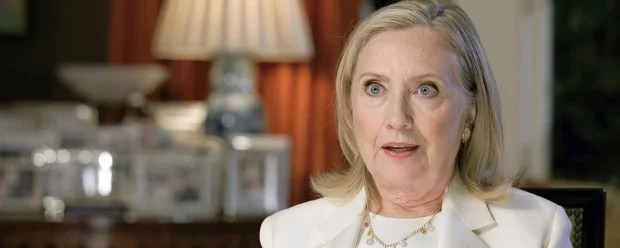
Former US presidential candidate Hillary Clinton filed court papers on Monday in a bid to compel Donald Trump to pay her more than $1 million. According to the motion, she is demanding compensation for money spent fighting a lawsuit that alleged she had engaged in a conspiracy to undermine Trump’s 2016 presidential campaign by claiming he colluded with Russia.
Clinton’s legal team described Trump’s civil action, which was dismissed earlier this year, as frivolous and “a political stunt,” according to a filing in a federal court in Florida. Lawyers argued that it should result in sanctions in the form of $1.06 million that would be used to cover legal fees and costs.
“A reasonable attorney would never have filed this suit, let alone continued to prosecute it after multiple defendants’ motions to dismiss highlighted its fundamental and incurable defects,” Clinton’s attorneys wrote.
In March, Trump filed a lawsuit alleging that Clinton, the Democratic National Committee (DNC), US National Security Advisor Jake Sullivan, and a number of other people had entered a malicious conspiracy to accuse his campaign of colluding with Russia in an effort to harm his electoral chances. At the time, Trump claimed the rumors had cost him over $24 million.
However, in September Judge Donald Middlebrooks, who was appointed by Bill Clinton, the former US President and Hillary Clinton’s husband, threw out the lawsuit, arguing that it was nothing more than a “political manifesto.” He also noted that Trump filed the suit too late and failed to provide evidence for the alleged conspiracy. The former president has appealed the ruling.
Commenting on Clinton’s move, Trump’s attorney Alina Habba, denied the allegations, describing them as politically motivated. “This motion, conveniently filed one week prior to election day, is nothing more than a thinly-veiled attempt to score political points,” she said in a written statement, as quoted by the Hill.
In 2016, the United States accused Russia of interference in the presidential election to harm Democratic nominee Hillary Clinton and boost the Republican candidacy of Donald Trump, an allegation which has been vehemently denied by Moscow. US authorities also investigated whether Trump and his campaign colluded with Russia, but failed to find evidence to bring any conspiracy or coordination charges.
‘Inflation came from nowhere’ – Lagarde
Samizdat | October 31, 2022
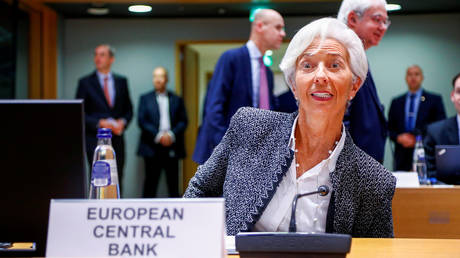
The European Central Bank (ECB) has doubled its key interest rate to the highest level in more than a decade in an attempt to combat soaring inflation, ECB President Christine Lagarde has explained.
In October, the inflation rate in the Eurozone reached 10.7%, according to official preliminary data, released on Monday.
In an interview with Irish state broadcaster RTE on Friday, Lagarde said: “We do it because we are fighting inflation” that had “pretty much come about from nowhere.” She pointed to a speedier-than-expected economic rebound from the pandemic as a cause alongside “the energy crisis caused by Mr. Putin who has decided in an unjustifiable way to invade another country.”
The ECB chief added: “That’s what he [Putin] is trying to do, cause chaos and destroy as much of Europe as he can. This energy crisis is causing massive inflation which we have to defeat.”
She went on to say that “Anybody who is behaving in that way has to be driven by evil forces,” and that the “sick” Russian president is a “terrifying person.”
Discussing her previous meetings with the Russian leader, Lagarde described him as an “unbelievably super-briefed person” with “flashing, freezing eyes.”
After expressing her view, Lagarde however stressed that she’s “just a central banker,” and “shouldn’t be saying all these things.”
On Thursday, the ECB announced another interest rate hike, taking Eurozone rates to the highest level since 2009. According to Lagarde, they are aimed at bringing inflation back to “reasonable levels so the cost of living isn’t as high as it is for people.” In October, inflation across the euro area hit 10.7%, according to preliminary data from Eurostat.
The EU has blamed Russia for the spiraling energy crisis across the continent. However, many economists point to the bloc’s fiscal policy responses as a major reason behind the crisis. Moscow has also criticized the “illogical and often absurd” moves by Western nations, saying that the sanctions imposed by the US, EU, and other countries on Russia have backfired and resulted in a sweeping energy crisis as well as record inflation across the West.
Prague protests: local occurrence or indicator of coming unrest across Europe?
By Drago Bosnic | October 31, 2022
As if the political unraveling across the European Union, United Kingdom and other powers of the political West wasn’t bad enough, the people who have become fed up with the disastrous policies of their failing governments are finally taking to the streets. Pushed to the brink of (or beyond) poverty, with soaring food, energy and housing costs, tens of thousands of protesters railed against the policies of the Czech government. Starting on Friday, the residents of Prague took to the streets, demanding the resignation of the Czech government under Prime Minister Petr Fiala, withdrawal from NATO, as well as direct talks and an agreement on future natural gas supplies from Russia.
“This is a new national revival and its goal is for the Czech Republic to be independent,” organizer Ladislav Vrabel stated. “When I see a full square, no one can stop this.”
Demonstrations were not only limited to Prague, but occurred both in the capital city, as well as the second-largest Czech city of Brno. Organized under the slogan of “Czech Republic First,” the protests drew large-scale support from both sides of the political spectrum, as left-wing and right-wing parties joined forces to protest the subservient policies of the government in Prague.
“Russia’s not our enemy, the government of warmongers is the enemy,” one speaker said, according to a report by the Associated Press. Prague has sent munitions, armored vehicles, tanks, artillery systems and other heavy weapons to the Kiev regime and provided approximately 500,000 visas to Ukrainian citizens, along with full benefits. This has caused frustration among millions of Czechs, many of whom are now struggling to afford basic necessities, as their government is wasting increasingly scant resources by sending them to the corrupt Neo-Nazi junta in Kiev. Among the aforementioned requests such as the halt of anti-Russian policies, protest organizers are also demanding that Ukrainian citizens in Czechia not be granted permanent residency status.
This protest was the third in a series of demonstrations organized by a Czech group demanding Prague’s withdrawal from NATO and the establishment of normal ties with Moscow. According to Bloomberg, Prime Minister Petr Fiala’s government has attempted to dismiss the protests as supposedly “inspired by pro-Kremlin propagandist narratives.” The Czech government has been woefully unprepared for the economic fallout of anti-Russian sanctions and policies it was ordered to implement, resulting in the ever-rising costs which have not been tackled despite aid to businesses and household electricity price caps. On the contrary, price controls only backfired, causing shortages and resulting in even greater price hikes.
Despite attempts by the Western mainstream propaganda machine to present the Prague protests as “merely a local occurrence”, the truth is that they are just a relatively small part of a rising wave of discontent across not just the EU, but Europe as a whole. On October 27, just a day before the demonstrations in Prague erupted, tens of thousands protested in France, demanding higher wages to offset the rising costs of living. The strike also included teachers, healthcare providers and railway workers, among thousands of other French citizens. In recent months and weeks, similar protests have been organized in Netherlands, Belgium, Germany and Austria.
“This is merely the silence before the storm — the discontent is great, and people do not have any sense that the government has a plausible strategy to master the crisis,” German pollster Manfred Güllner told The Wall Street Journal.
At a time when approximately 75% of German families are forced to cut back on energy consumption, a mere 9% of Germans support Chancellor Olaf Scholz in his policies to tackle the escalating energy crisis threatening to destroy the EU’s largest industrial power. Although the protesters in France didn’t put anti-Russian sanctions at the forefront of their demands, German demonstrators have called for an end to these self-harming policies. The massive discontent in Europe will certainly spread all over the world, as hundreds of millions now realize that there is a direct connection between Western sanctions against Russia and their ever-growing economic and financial issues.
It does not take an expert in geopolitical matters to connect the dots and understand how the latest proxy war against Russia is affecting the well-being of the world. The situation in the EU has become so bad now that millions of Ukrainian citizens who have fled to Europe are returning to their (unfortunately) Neo-Nazi junta-run country. According to the latest figures by the International Organization for Migration (IMO), over six million people have gone back, despite the still ongoing conflict. The Kiev regime is now struggling to accommodate everyone and the Neo-Nazi junta officials are urging citizens not to return this winter. Blackouts have become the norm in multiple cities and with the coming sub-zero temperatures heating will be a major concern in the next several months.
Drago Bosnic is an independent geopolitical and military analyst.
LNG ships waiting for higher EU prices to unload
Samizdat – October 30, 2022
Several ships loaded with liquefied natural gas (LNG) that have been circling off the coast of Spain are likely to stay there until late November, as they wait for European gas prices to go up, Reuters reported on Wednesday, citing industry sources.
An LNG tanker traffic jam has been building off the Spanish coast for weeks with vessels waiting to unload their cargo. Spain boasts the largest LNG storage facilities in the European Union.
The glut of LNG off the coast could be part of a trading strategy by suppliers, as ships are waiting until prices increase to unload, industry sources told Reuters.
Natural gas prices are at their lowest level in Europe since June, having dropped 28% in a week, due in part to above-normal temperatures and high inventory levels, as the EU’s gas storage is now nearly 95% full, according to Rystad Energy.
“If one single idling vessel discharges its cargo, the price will immediately collapse by affecting the other cargoes in the queue and this domino effect is so painful in terms of opportunity cost,” one of the sources told Reuters.
Just by waiting to deliver in December rather than November, the difference in profit could be in the order of tens of millions of dollars per shipment, Michelle Wiese Bockmann from the shipping journal Lloyd’s List told the BBC.
The backlog of ships has mainly been attributed to a lack of LNG storage capacity in Europe. EU countries went on an LNG-buying spree over the summer to fill up their reserves ahead of winter in view of reduced supplies from Russia. But, as the bloc has long relied on pipeline gas, the continent’s regasification and storage capacities cannot cope, Reuters explained.
Will Ursula von der Leyen be forced to resign, and will her deeds be investigated?
By Vladimir Danilov – New Eastern Outlook – 28.10.2022
Europe has been rocked by large-scale protests over the last few weeks, and many politicians and media organizations in the EU see this as a reflection of public dissatisfaction with the policies of the European Commission and especially its head, Ursula von der Leyen. The main concern is the rising cost of living, the rapid increase in energy and food prices, and the anti-Russian policies of the European Commission, which have led to an energy and economic crisis that is affecting not only Europe but many other countries who have committed themselves to a close relationship with Europe.
Always keen to show her unwavering support for Washington and London, in her speech at the inaugural summit of the European Political Community, the President of the European Commission extended a warm welcome to Liz Truss – despite the fact that no-one other than Ursula von der Leyen considers the former British premier’s policies to be a success. As the Daily Express notes, the speech was greeted with an uncomfortable silence.
Internet users in the EU have criticized Ursula von der Leyen’s most recent promises to help the Kiev regime “as long as is necessary” and provide Ukraine with billions upon billions of Euros in credit. Her statements have been attacked on social media as ignoring the interests and wishes of EU citizens, and users have called for her resignation.
Writing on Twitter, the French politician Florian Filippo criticized her call for regular subsidies for Ukraine: “Ursula is completely crazy! Lock her up!”
In an interview with Le journal du Dimanche, the former French president Nicolas Sarkozy has accused the European Commission of lacking the authority to make decisions on arms purchases. As he explained, the European Commission is an administrative body, and it is unclear on what basis Ursula von der Leyen considers that she has the authority to speak up on matters relating to foreign policy or arms purchases. Just a few days after the beginning of Russia’s special operation in Ukraine, the President of the European Commission announced that the EU would finance “the purchase and delivery of arms and other military equipment” to Ukraine. Europeans are continually hearing about the need to provide the Kiev regime with billions of euros from EU coffers to buy arms, and they blame Ursula von der Leyen. Nicolas Sarkozy alleges that the EU’s policy in relation to Ukraine was too dependent on “escalation, irritation and thoughtless actions.”
The Israeli television channel i24news and the former Socialist candidate for the French presidency (in the 2007 elections) Ségolène Royal have also recently criticized Ursula von der Leyen’s stance. Ségolène Royal claims that instead of helping Russia to stop the war, the President of the European Commission is lobbying on behalf of the USA’s Ukraine policy and has effectively become a NATO and Pentagon press secretary.
In addition to the criticism’s of her policies, Ursula von der Leyen has also found herself at the center of corruption scandals in recent months. Especially since the beginning of the European public prosecutor’s investigation into EU purchases of COVID-19 vaccines. Public attention in relation to the scandal has centered on the role played by the President of the European Commission, who, as even Dmitry Medvedev, deputy chairman of Russia’s Security Council noted on October 20, “went all out and purchased 4.6 billion(!) COVID-19 vaccine doses from Pfizer pharmaceuticals at a cost of 71 billion (!) euros.” “That is 10 vaccine doses for every EU citizen,” he added.
According to the journal Politico, Ursula von der Leyen has admitted to exchanging text messages with Pfizer CEO Albert Bourla while the EU was negotiating the vaccine purchase contract. Two EU supervisory bodies have already accused her of wrongdoing in relation to the purchase, criticizing the Commission for refusing to provide the documents required for the investigation into the matter to proceed further.
However, the Pfizer purchase is not the first scandal that Ursula von der Leyen has found herself involved in. There was another scandal three years ago, when, shortly after a call from the EU elite to “make the process of electing the EU leadership more democratic,” the members of various different political groupings complained that at the beginning of 2019 the heads of the main EU bodies were selected in closed meetings “under cover of night.” The presidency of the European Commission did not go to the leader of the group winning the most votes in the May 2019 elections, but was instead “handed to” Ursula von der Leyen, as Donald Tusk, evidently satisfied that he had done his duty, informed journalists at the end of a two-week EU summit.
This political backroom deal in which the position was clearly reserved for Ursula von der Leyen took place at a time when the EU was supposedly undergoing a “democratic reform.” Since 2014 the so-called leading candidate procedure has been in effect, for the purpose of selecting a new President of the European Commission. Among other requirements, the procedure requires that the candidates from Europe-wide parties who won the largest numbers of votes in European Parliament elections should be given priority when selecting the President of the European Commission.
The reservation of the post for Ursula von der Leyen, the then German Minister of Defense, was highly controversial at the time, even in her native Germany, both among politicians and within the expert community. For example, Markus Söder, at the time head of the Christian Democratic Union, described his views to the DPA press Agency as follows: “Manfred Weber would have been a legitimate President of the European Commission, his election would have been democratic. It is a pity that democracy failed, and the winner was chosen in a behind-the-scenes deal.” The heads of the Social Democratic Party of Germany (SPD)-led coalition, in government at the time, also opposed her nomination to the most senior post in the EU. “The decision to award the presidency of the European Commission to the Minister of Defense undoes all the efforts that have been made to strengthen democracy in Europe, take into account citizens’ interests and support the role of the European Parliament,” the SPD leaders claimed in a statement.
Significantly, at the time Ursula von der Leyen did not even take part in the election campaign, did not stand as a candidate in the European elections, and was probably most known for her anti-Russian position and her unquestioning support for Washington. It was most likely that support that played the key role in bringing about her nomination as President of the European Commission.
So, one may ask, what did Ursula von der Leyen do to achieve the honor of being given the post she now occupies? She is the daughter of Ernst Albrecht, a high-ranking politician in the Christian Democratic Union (CDU), and between 1988 and 1992 she worked as an assistant doctor in the gynecological department of Hanover Medical School. However, in 2016 Hanover Medical School checked her doctoral thesis for plagiarism, and noted its “obvious shortcomings.”
Having raised seven children, she is often informally referred to in her native country as “the mother of Germany.” Her political career began in 1990, when she joined Angela Merkel’s CDU, and in 2005 she was appointed to her first ministerial post, as Minister of Family Affairs and Youth in the Merkel administration. In 2009 she was appointed Minister of Labor and Social Affairs, and in 2013 she became Minister of Defense, a post which she occupied for six years, during which she was involved in regular scandals and responsible for controversial decisions. According to statements by Germany’s three main parties (the Green Party, the Left Party and the Social Democrats), many of the 3,800 contracts concluded during her “management” of the German Armed Forces from 2014 onwards (relating to the restructuring of the Armed Forces and also its IT systems) appear to have been awarded to the “right people,” including relatives and friends, and some contracts may even have involved some form of bribery. Back in 2017 the German newspaper Bild, citing a report by the Federal Audit Office, accused Ursula von der Leyen of being strikingly incompetent during her time as Minister of Defense, when it was revealed that not one German submarine was operational, and less than half of its frigates and tanks and just a third of its military helicopters were in working condition.
With such a “success” record, Ursula von der Leyen was already being seen as a burden on the Armed Forces and the CDU. As, with the elections coming up, there was no suitable free ministerial post she was “nominated” for the presidency of the European Commission – a convenient decision for Germany at the time.
However, as time went by it became clear that the EU could not expect to derive much benefit from her appointment.
For Washington, however, which has no interest in the EU being led by strong politicians following their own line independent of the US, the decision to give Ursula von der Leyen the presidency of the European Commission in 2019 played right into its hands. And as a result she is now promoting the interests, not of European citizens, but of Washington alone, by helping US pharmaceutical companies make huge profits from selling the Pfizer COVID-19 vaccine or by providing the US military-industrial complex with millions upon millions of euros in arms orders, paid for by European taxpayers, to support the Kiev regime.
In the present circumstances it will be interesting to see how Ursula von der Leyen’s “career” ends – will she be brought down by the results of investigations into the corruption scandals which she has clearly been involved in, or following demands for her resignation by the European public, who are becoming increasingly critical of her actions…
US scales back plan for Russian oil price cap – Report
Samizdat | October 27, 2022
President Joe Biden’s administration has reportedly been forced back to the drawing board on its plan to cap international prices for Russian oil, having failed to secure enough commitments to control how much Moscow is paid for the bulk of its crude exports.
The US and the European Union will likely have to settle for a “loosely policed” pricing cap, enforced by fewer buyers and at a higher price than envisioned, Bloomberg News reported on Wednesday, citing unidentified people familiar with the plans. The original goal was to drastically reduce Russia’s oil revenue – the latest effort to punish Moscow for its military offensive in Ukraine – by imposing a strict price lid to which a broad “buyer’s cartel” of nations would adhere.
Instead, only G7 nations and Australia have committed to honoring the price cap, Bloomberg said, attributing failure of the original plan to investor skepticism, volatile financial markets and efforts to tame inflation around the world. The cap level also might need to go higher than a previously targeted range of $40-$60 per barrel.
Biden’s administration has denied that its plan would fall short of throttling Russian oil revenue. “The White House and the administration are staying the course on implementing an effective, strong price cap on Russian oil in coordination with the G7 and other partners,” White House National Security Council spokeswoman Adrienne Watson told Bloomberg in a statement.
Russian officials have said the country won’t sell oil or other commodities under price caps or unprofitable market conditions. Nor will Moscow supply energy to nations that adopt trade policies contradicting the terms of their existing oil and natural gas contracts, Russian Deputy Prime Minister Aleksandr Novak said earlier this month. A cap on crude wouldn’t be viable because prices are driven by the global supply-demand balance, he added.
The G7 price cap is scheduled to go into force on December 5, along with an EU ban on imports of seaborne Russian crude. Reuters reported last week that after December 5, Russia would still be able to ship the vast majority of its oil exports at market prices because it would have ample access to tankers and other services. The outlet cited a US Treasury official as saying that between 80% and 90% of Russian oil would continue to flow to buyers outside the cap mechanism.
Russia would have access not only to its own oil tankers, but also to Chinese and Indian ships, Reuters added. Traders and insurance companies from Russia, Asia and the Middle East would provide the necessary transactional services. Brent crude, a leading international oil benchmark, is currently selling for around $95 per barrel.
Featured Video

The Truth About the Trump Shootings with Ken Silva
or go to
Aletho News Archives – Video-Images
From the Archives
Trans ‘milk’ as good as the real thing – NHS
RT | February 18, 2024
The drug-induced nipple secretions of trans women are as good as mothers’ breast milk for babies, the University of Sussex Hospitals NHS Trust claimed in a letter to campaigners made public in a report by British think tank the Policy Exchange on Sunday.
The healthcare trust’s medical director, Rachel James, argued that the off-label prescription drug cocktail men transitioning to female take in order to produce milk was “similar to the natural hormones which encourage lactation to develop when the baby is newly born.”
“The evidence which is available demonstrates that the milk is comparable to that produced following the birth of a baby,” James wrote in the letter, sent to Children of Transitioners last August.
Biological men who wish to lactate must first take hormones to grow milk glands and then take high doses of either domperidone or metoclopramide to stimulate milk production. Neither drug is approved for this use, though they are occasionally prescribed off-label to biological women who have trouble lactating.
However, domperidone’s own manufacturer, Janssen, warns patients the drug “may cause unwanted side effects affecting the heart in a breastfed baby” and “should be used during breastfeeding only if your physician considers this clearly necessary.” … continue
Blog Roll
 Aletho News
- Russia Voted Under Fire. Washington Is Loading the Tankers.
- 12 Things Your Oncologist Was Trained Not to Tell You
- Anthrax Attacks Paved Way for COVID-Era ‘Junk Drugs and Vaccines’
- How Real Is the Impact of Western Sanctions on Israel?
- France, You Are Guilty: How Paris Turned Western Sahara into the Maghreb’s Powder Keg
- 2025 Nature Paper Claiming Worsening Global Drought Gets RETRACTED …Heavily Flawed
- Your Milk Is Not the Problem
- The Truth About the Trump Shootings with Ken Silva
- ARE PATIENTS BEING PROPERLY INFORMED ABOUT OZEMPIC?
- US lawmaker blocks $2.8 billion weapons sale to Israel: Report
- If Americans Knew
- Salah Sarsour’s Legal Team Says DHS Has Not Met Its Burden to Prove He Is Deportable
- An analysis of tax forms by The Intercept show Kraft’s charity and LLC have donated to Friends of the IDF and AIPAC’s super PAC.
- Israeli attacks kill four Palestinians in Gaza – Daily Update
- Inside Gaza’s death trap of collapsing, bombed-out buildings
- The everyday items Israel bans from Gaza every day
- Inside the siege, the ruined buildings of Gaza – Daily Update
- Debunking The Claim That Macklemore Has A “History Of Antisemitism”
- CPJ demands release of arrested Palestinian-US journalist near Bethlehem
- Robert Kraft: The Billionaire Friend of Netanyahu Pulling The Strings Behind the Macklemore/Ed Sheeran Blow Up
- Columbia Administered Fund Gives Big Money to Pro-Israel Groups
- No Tricks Zone
- 2025 Nature Paper Claiming Worsening Global Drought Gets RETRACTED …Heavily Flawed
- New Study: ‘Global Drought Shows No Detectable Recent Acceleration Under Climate Warming’
- Economic Masterminds: German Socialists Suggest Taxing Productivity Gains Stemming From Using AI
- The South China Sea Has Not Been Cooperating With The Climate Change Narrative
- Energy Crisis: Germany Enters Heating Season With Historically Low Gas Reserve Fill Levels
- New Study: The Antarctic Ice Sheet Gained Mass From 2020-2024 Due To Staggering Snow And Ice Accumulation
- Study: Ocean Heating Rates From Thousands Of Years Ago ‘Dwarf’ Modern Ocean Heating Rates
- Climate Extremists Target, Attack Large-Scale Power Grid Infrastructure In Germany!
- New Study: Antarctic Ice Melt Has Contributed Less Than 1 Centimeter To Sea Level Rise In The Last 30 Years
- Fear Of Debate: Alarmist German Climate Scientist Calls On Mainstream Media To Discredit Skeptic Voices
 Aletho News