SOTT Editors: We are publishing below, with permission, an email from a top executive at an American company whose clients include 100 of the Fortune 500 companies. The email was sent in reply to another executive asking for the writer’s thoughts on whether he plans to be vaccinated himself or mandate it for his employees as a requirement for returning to the office. All names and company references have been redacted for privacy reasons.
Unlike most of us who are worried about being on the receiving end of vaccine mandates by employers, this executive also has to worry about pressure from other executives and investors to mandate it on others. Few such business leaders are actively fighting for the rights, dignity, peace, and financial security of their employees. This exec is currently the only voice in his company opposing the madness.
Email to the executive:
Hey [REDACTED] – are you giving any thoughts to getting vaccinated with all this Delta variant stuff going on? We’ve been having management committee discussions here about mandatory vaccinations to be able to come in to the office. We have office support people coming in most days that are not vaccinated and some of those with kids don’t want to come in when they are in the office or invite clients into the office for meetings. Just curious as to how you are approaching it. Thx, [REDACTED]
The executive’s reply:
From: [REDACTED]
Date: Fri, Aug 27, 2021 at 9:56 PM
Subject: MY POV on Mandating Employee Vaccinations
To: [REDACTED]
I appreciate you reaching out. What follows is admittedly lengthy (though I do provide my “summary POV” a couple paragraphs down before I dive into supporting detail). I tried to be succinct, but practically speaking your question for me was akin to “hey, so what’s your take on management?” The analogy here being I’m passionate about both subjects so it was hard to choose between sending back a brief 2-minute POV, or filling this email with enough content fit for a university level course. I didn’t know what you had an appetite for, so I just simply did my best to try and be helpful (and heck, even had some fun while I was at it…).
My framework for this entire POV: in the famous words of W. Edwards Deming, “In God we trust. All others must bring data.” As I hope you’ve come to know me by now, I care more deeply about facts & morals than I do ideology or identity politics (for the latter I just don’t give a shit). If you give me a good reason to do something, I am 100% all over it. But if you give me either faulty reasoning or an unethical ultimatum, I simply cannot get on board out of a moral obligation to do what’s right.
So to answer your questions with that sole framework in mind, here’s my summary POV:
(#1) I still have no plans to get vaccinated anytime in the foreseeable future (unless something radically changes the risk equation), given:
(a) The virus at present poses de minimis risk for me personally (and virtually zero risk to any healthy child (a reference to your initial inquiry)); and
(b) Because these vaccines carry –> confirmed low/moderate short term — inferred moderate medium term — and expected high long-term health risk for what could be [though yet unknown] a majority of individuals who get the jab
(#2) I remain vehemently opposed to vaccine mandates for this specific virus (primarily on the basis of (i) 1b above, (ii) the medical literature, which strongly suggests that these vaccines will prolong this pandemic indefinitely through never-ending variants, and thus/therefore (iii) on moral grounds, as, if (i) and (ii) are true, then any decision to proceed with mandates would be nothing short of a descent by the West towards fascism**, the likes of which hasn’t reared its ugly head since the early 20th century. Finally, at a distant, distant second, I am against these mandates from a logistical perspective*.
*E.g., how will you account for boosters (i.e., will those who were vaccinated too far in the past e.g., January and thus have substantially waning transmission protection also be excluded from the office)? What about those who got a different jab (e.g., AstraZeneca, Sputnik, CoronaVac, etc.), each of which has varying levels of effectiveness (and varying levels of effectiveness reduction over time) against different variants? How will you handle those that already had COVID-19 (and therefore (a) have even higher immunity than the vaccinated, and (b) who face higher health risks if they get vaccinated post- natural infection)? What will you do with the immunocompromised (folks with organ transplants, lung problems or cancer patients) who got the vaccine but have low viable antibodies because they require evermore booster shots? What will you do when future variants require different jabs? I could go on, but I trust you get the point. My real question for you is, will you be responsible for coordinating monthly/quarterly management meetings to update & maintain these ever-changing mandate policies covering ever-growing future use cases?
**And if you think I’m exaggerating, look no further than NY State Assembly Bill A416, which proposes forcibly putting carriers of COVID-19 who do not conform to the state’s medical guidelines into something akin to internment camps, where they will be forced into a treatment deemed appropriate by the state and detained indefinitely until they comply. Imagine a U.S. legislative policy so bad, that even Russia Today was able to shit all over it as being far too draconian. And it’s not just the state of NY, but the CDC as well.
===================
Last comments before I dive into supporting details
To not lose sight of being pragmatic as it pertains to your inquiry, I want to point out that at this juncture even a discussion about vaccine mandates is mostly moot.
We already know (confirmed) that those who are vaccinated/infected carry as much viral load as the unvaccinated. Which, coupled with waning transmission prevention efficacy means for all practical intents & purposes those vaccinated and those unvaccinated pose similar risks to one another.
And this is notwithstanding even more cutting edge research (not even yet published i.e. currently pre-print in The Lancet), which suggests those vaccinated carry significantly (upwards of 200x) more viral load than the unvaccinated (which would, if peer-reviewed, flip the risk equation on its head even further in that those vaccinated would pose far greater risk to one another than those unvaccinated). (And it is worth noting that this development would be consistent with what has been found with other vaccines — in this 2017 study, for example, it was assessed that those who were vaccinated for influenza shed 6.3x as much virus as those who are unvaccinated. Crazy stuff.)
All of this is to say, despite the nationwide pushes you’re seeing for private & federal workplace vaccination mandates (which may have made at least some sense much earlier on), such mandates are unfortunately no longer effective models at this stage, unsupported by what we now understand via the latest science. Instead, if you really want to make a difference in improving workplace safety at this juncture, I would suggest implementing either the 1st, or both, of the following policies:
(1) Everyone at the company must perform a daily (pre-commute) self-assessment health survey, whereby all individuals must confirm they are not exhibiting any of the known symptoms of COVID-19 (i.e., if you can’t smell, have fever/chills, shortness of breath, etc., you can’t come in to the office, period), without any pressure from management to respond they are symptom-free.
(2) (Optional) everyone, irrespective of vaccination status, must get tested weekly for COVID-19, such testing to be reimbursed by the company. If you test positive, you aren’t allowed to come in until you test negative.
You asked how we’re handling it, and I can tell you that we’re doing the first one at [my company], and I would recommend utilizing the second one for any in-person company events. That’s it. No mandates. Anything beyond that will lead you into a logistical nightmare (at best), foster a false sense of security as it isn’t effective (worse), and in my humble opinion, is purely unethical (worst of all, which I’d like to think is a decent enough reason not to do something) at this stage.
So anyways, all of the above is the summary of my current POV. What follows below is/are the supporting details for the conclusions I reached in my summary POV 1(a), 1(b), and 2(i) above, if you’re interested in the data.
Always happy to chat/update further as the saga continues ✌
best, [REDACTED]
P.S. if you’re going to skip Parts 1 & 2 below*, then no worries… I get it, I probably wrote far more than you were looking for. But if indeed you do skip them, try to make it to the ‘Closing Thoughts’ section way down below — I’ve sourced a nifty chart down there that might give your colleagues pause in their ongoing discussions about mandates before they consider the unvaccinated to be idiots for whom behavioral mandates are the only appropriate solution.
*Though I highly recommend Part 1 (where it says “TWO OTHER THINGS TO CONSIDER” (then scroll to find #2)) as this contains a suggestion for how to naturally protect yourself from COVID-19.
===================
PART 1: RISK OF COVID-19 DEATH —> DE MINIMIS FOR ME
First I’ll address why I do not view COVID-19 as dangerous for me personally: from the CDC’s own data, available here, you can see current the Count of Cases and Count of Deaths by age ->
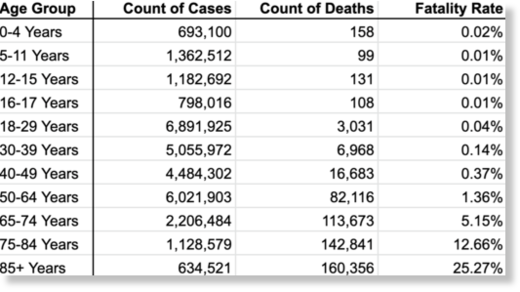
(Though before I go further, pardon me for abstaining from a lengthy discussion on the reliability of data from an organization that even Dr. Deborah Birx herself — (an individual who received a Meritorious Service Medal from the U.S. Department of Defense in 1991 and a Medal of Excellence from the CDC in 1994) — was quoted as saying she didn’t trust a single word from. Hmm, I wonder why she didn’t “trust” the data, could it be because they were —> overinflating “COVID-19 deaths”? <—… I digress.)
Anyways, according to the CDC, being 32, my “risk” stands at 0.14% (purely averages speaking, irrespective of the analysis below); a “starting statistic” you could call it.
The immediate issue with this data, unfortunately, is we’re only able to count cases with confirmed COVID-19 PCR (or other) test results, undercounting materially true case counts to date. As you might imagine, those asymptomatic do not test themselves regularly or out of nowhere. I mean, personally speaking, I am obviously not testing myself on any basis on any cadence — I’d only get tested if I had reason to. Thus is the reason, that the CDC already stated well early on in this pandemic that true case counts were “likely” to be upwards of 10x higher than we have documented (which they concluded based on widespread antibody testing).
Deaths in the U.S., on the other hand, are religiously tested for COVID-19, capturing the vast majority (if not nearly all) deaths, where a COVID-19 infection was present.
Using these two bits of information from the CDC, we can adjust for a “truer” baseline risk. Now, while I could exercise the luxury of taking on more than a 10x spread (because those younger tend to be more asymptomatic), I’ll be conservative just for the sake of it and just use the “10x average” figure. And so, a true starting statistic for me isn’t 0.14%, but a markedly lower 0.014%.
Next, we can use Exhibit B, taken right from the CDC website:
For… 5% of… [COVID-19] deaths, COVID-19 was the only cause mentioned on the death certificate. For deaths with conditions or causes in addition to COVID-19, on average, there were 4.0 additional conditions or causes per death.
Again, this is nothing new and has been known since very early in the pandemic, as you can see from this study for example listing the leading comorbidities as measured in NY as early as April 2020:
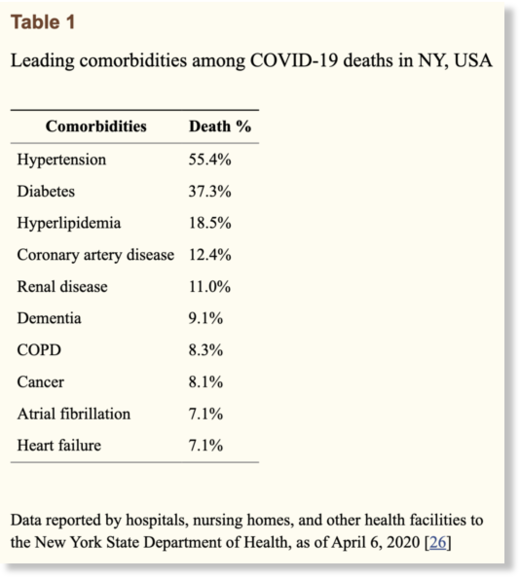
And herein lies my second issue with folks who preach to me that vaccines are necessary for my survival (the first being my initial lowly baseline risk).
Knock on wood, but I have no non- COVID-19 induced comorbidities — zero. My takeaway is just that: for someone like me, COVID-19 is mostly a virus known to exacerbate serious pre-existing conditions to the point of overwhelming the system definitively.
Put another way, imagine a motorcycle rider trying to assess their risk of death from riding (i.e., catching COVID-19). They see a study which puts the risk of death for those motorcycle riders who were (1) drunk (2) doing a wheelie on the highway (3) during a rainstorm, and (4) while texting with a friend (i.e., analogous to four comorbidities). It would be flawed reasoning for a rider who doesn’t do any of those things to put themselves in the same risk category as those who do. So while no one is saying motorcycles aren’t dangerous — they certainly are — they’re nowhere even in the vicinity as dangerous as riding while doing all the other things. Likewise, neither should a healthy teenager dwell on their COVID-19 risk with the same fervor as a 100 year-old morbidly obese individual with terminal cancer.
Okay, let’s revisit my personal risk again. First, I will ignore the 5% “no comorbidities” statistic above, because out of fairness I want to account for likely COVID-19 induced comorbidities like Respiratory Failure, Sepsis, etc. as well as possible ones like Renal Failure, Cardiac Arrest, and the like. So, let me simply reduce my risk not by 95%, but 57% (conservatively even rounded down further to a clean 50%), which removes just 1 non- COVID-19 induced comorbidity for my age group.
And just like that, my adjusted risk is downgraded to 0.0069% annually (annually, because it’s only once a year — after which time a better-than-vaccination natural immunity kicks in for that season).
So what really is 0.0069%, you might ask? After all, we humans aren’t terribly good with numbers like that. To help you put it in perspective, consider that according to the National Highway Traffic Safety Administration, your (or my) risk of dying from a freak car accident in any given year, is 1 in 5,407 or 0.018%.
Let that sink in: based on what we know today, I personally am 268% more likely to die in a car accident tomorrow (or any day this year) than COVID-19. But do you really think that in pre-pandemic times, the “1 in 5,407” statistic kept me locked up inside my house? You think even today (in the middle of a pandemic) that figure stops me from taking a leisurely drive to grab ice cream with my nephews? or catching a movie with my brother? or — God forbid!! — hanging out with and actually talking with my friends? No!, and it never could. Because life, my friend, is about dancing in the summer rain, not cowering in fear of getting struck by lightning. But hey, maybe that’s just me…
In any case, I want to come back to your comment about concerns your colleagues have regarding young children. When we look at the statistics available (table above), the results are even more stark: for kids aged 5-11, their odds of a fatal COVID-19 infection are 1 in 137,000 when you factor in asymptomatic cases. And again, we’re talking about a risk inclusive of those with comorbidities. For kids 5-11 who are perfectly healthy, you can consider their risk nil. Okay, well obviously it could never be actually zero, because we both know sometimes kids also fall off a bike and kill themselves — that’s life. But you don’t exactly see people running around freaking out over bicycles all day long, do you? Which is ironic as hell now that we’re on the subject, considering almost exactly the number of kids have died from bicycles as from COVID-19 in the same time frame.
So when I hear about folks taking their kids for a bike ride on the weekend (how awful), or worse!, maniacally driving their kids for ice cream (putting those precious kids at 5,091% (51x) the risk of death as COVID-19), but then trembling at the thought of walking into an office the following Monday because there’s an unvaccinated person there, so they feel the need to demand forcing medical decisions on those people (like getting jabs with vaccines made by companies whose rap sheets (Pfizer, J&J) would satisfy essay requirements at most colleges, approved by an organization that finds safety issues in 1/3 of its drugs post-approval), I come to the simple conclusion that common sense has left the building — it’s mass hysteria.
Alright, enough beating the completely de minimis personal risk dead horse because the point is clear. But let me add two more small things before getting to the dangers of the vaccine:
TWO OTHER THINGS TO CONSIDER
The section above looked at the whole thing purely from a mathematical risk perspective with neither proactive measures in mind, nor accounting for simple and effective (though IMO criminally suppressed) treatment options available to thwart COVID-19 risk even further.
(1) First, on the treatment side. Look, I know there was the whole “orange man (Trump) bad, the FDA disagrees” political BULLSHIT thing going on. Like I said above, I do not give a shit about the political angle of any of this. I require data, and the data could not be more ironclad on the subject matter. I will simply leave these two links here, and avoid another 5 pages in this POV on why IMO this is being criminally suppressed by federal agencies:
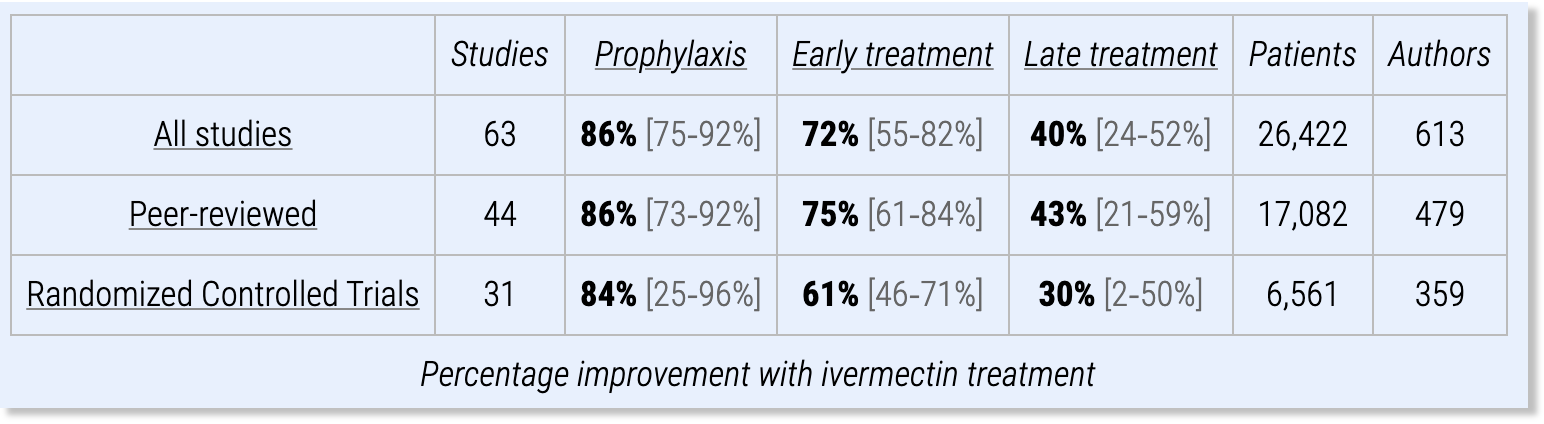
First, Ivermectin (links to the studies: (Link A & Link B)). Summary table as follows:
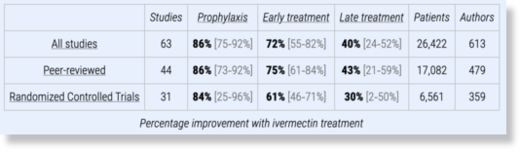
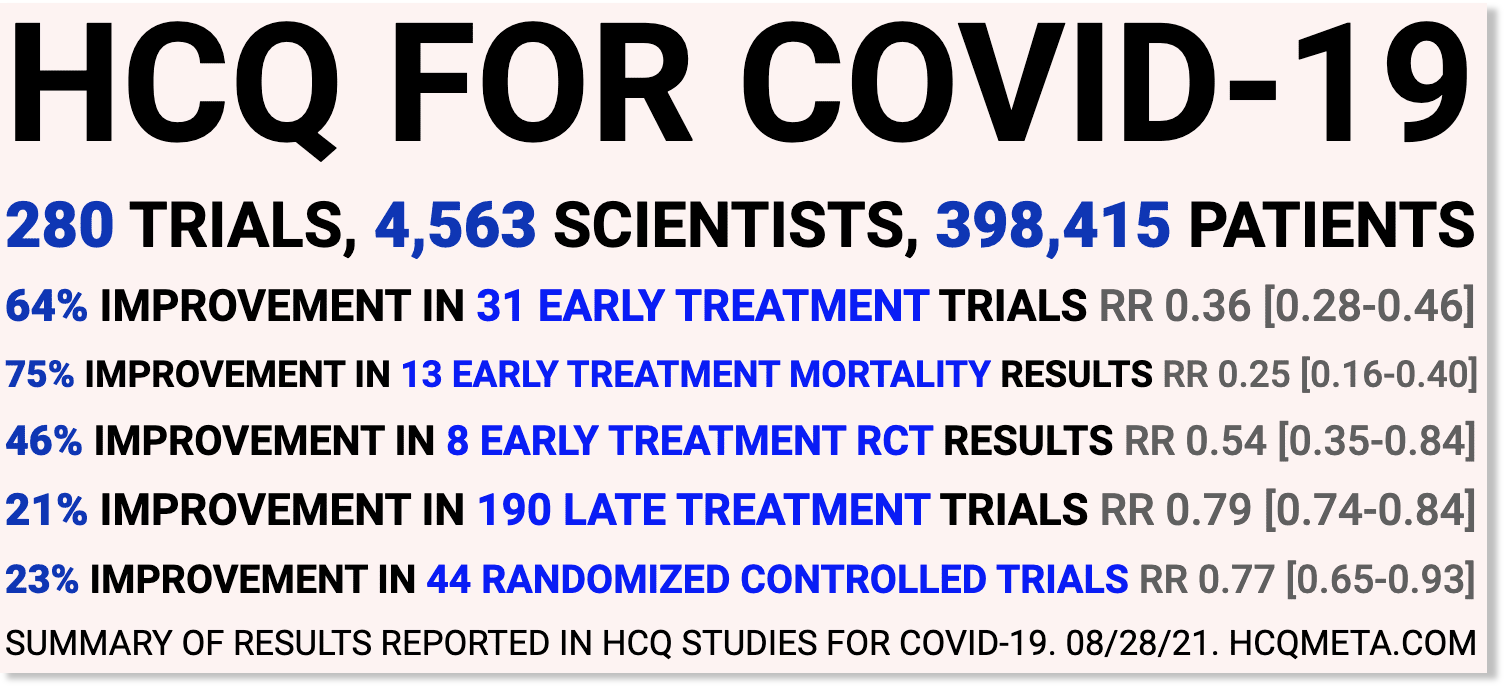
Second, Hydroxychloroquine (link to the studies). Summary table as follows:
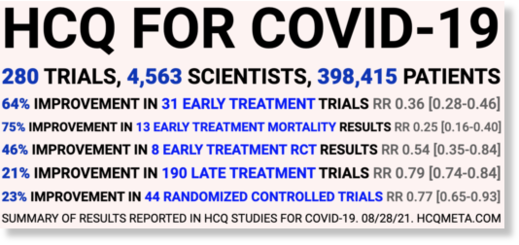
By the way, it is worth noting I have a friend right now who has COVID-19. He has felt like shit for the past week. I sent him the studies, and he bought Ivermectin 3 days ago without a prescription from a local store I pointed him to. After a week of feeling like shit, it took him less than a day to get close to symptom free. But hey, I am not a doctor, and “your mileage may vary.” There are a dozen other treatments in addition to the ones above that aren’t getting approved for mass application, either. Go figure.. I could send you the studies if you want, but anyways let’s move on.
(2) As it pertains to the proactive side — okay, sit tight because I’m going to perform a holy miracle here and give you one of several simple things you can do to essentially ensure never needing to worry about COVID-19 again. Not for you, not for the kids, and not even for the neighbor’s dog. Ready? Okay drumroll please… . Did you catch that? If you didn’t, I’ll decipher it for you. It’s your new friend Vitamin D.
If you’d like dozens more studies on this subject, let me know, but start with this good summary I just found for you here — it’s worth a full read, but two pretty charts from the link sum it up:
Study #1:
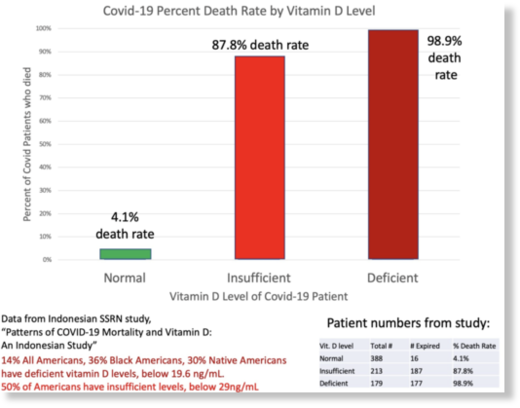
Study #2:
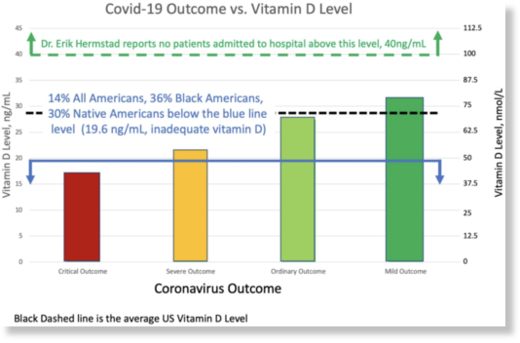
The first study is striking all on its own and worth internalizing, but unfortunately it did group an entire category called “normal” into a single bucket. FYI “normal” is what the medical world considers to be ~20ng/mL. But that’s all it is as a level: normal… but far from what we want, which is excellent.
That’s where the second study becomes helpful. It puts the explosive nature of the findings into real perspective: at levels of 25ng/mL in the study, no severe or critical hospitalized outcomes were observed. While at levels of 40ng/mL or greater, there were not even hospitalizations.
Now personally, I regard it as nothing less than a crime against humanity that neither the WHO nor CDC are PUSHING these (and dozens other peer-reviewed studies on the subject) onto the forefront of our collective media screens. But as for the reason, I must digress, because again I could go down a long and nasty rabbit hole about perverted incentives in the system in terms of why you likely haven’t seen them.
In any case, here’s what is just so awesome for me… remember when we concluded I had a higher risk of crashing & dying from my trip to the local ice cream shop than from COVID-19? Well, it just got a WHOLE lot better, because my Vitamin D levels happen to be considerably well above 40ng/mL. Which means we need to be honest with ourselves and admit that I effectively have a ZERO clinically observed risk of death from COVID-19. I mean shit…. at this point really the only way I can die of COVID-19 is by having it and then getting into a car accident. Then sure, I will die “with COVID-19” (and, as you’ll recall from the link above, they would count it!).
So my advice is as follows: get your dang sunshine first thing in the morning. Do not lockdown. In fact, I’d argue it’s what caused so many deaths. People were heavily Vitamin D deficient from sitting at home all day, and it literally increased their risk of death instead of reducing it. And what the CDC did in this regard was at best negligently or at worst intentionally, criminal, and I have nothing but disdain for the way they went about that. Don’t even get me started on the youth suicides it led to, the increases in domestic violence, increases in drug overdoses, infanticide, denial of healthcare, and let’s not dismiss the whammy of the sheer economic devastation to jobs and small businesses the world over, the bleak economic prognosis for the poorest (how convenient), and the future impact of staggering U.S. debt right here at home. All caused by the incompetence or criminality of the CDC and WHO.
Honestly — my personal advice if you want to stop worrying about COVID-19 for the rest of your life (if you still even are), would be to follow the Dan Miller protocol. Each of his bits of advice is like an extra layer of bulletproof glass on top of Kevlar against COVID-19. And remind your colleagues, too, to stop relying on the “American way” of taking a pill to solve all their problems and blaming the unvaccinated. That is not only completely debunked now as I’ve demonstrated throughout, but it is weak morally. It’s high time we all do the hard self-work of making ourselves physically resilient, and stop feebly making outward demands of others to inject into their bodies vaccines that are only now being tested, in vivo, on large numbers of human beings.
Speaking of which… perfect segway.
===================
(VERY BRIEFLY) PART 2: LONG-TERM RISKS OF [SPECIFICALLY] THE COVID-19 VACCINE –> HIGH
As I’m sure you’ll remember, a while back I mentioned I would send you a thorough, synthesized summary outlining the dangers of the COVID-19 vaccines and how the risks they carry far outweigh the risks of the virus itself. Unfortunately, I am not even a fraction of the way through the hundred plus pages of medical literature showing that conclusion — I’m still working through it. I absolutely feel terrible for not having lived up to my promise, though I’m sure you can appreciate the sheer herculean nature of synthesizing 7 months’ of research involving almost a thousand individual pieces of data, and weeks’ worth of video testimonials by researchers, all into something “succinct and digestible”, all the while working on [my company] in the middle of it all.
In any case, it would be disingenuous of me if I didn’t at least provide a sneak peak of a random assortment of links I had handy for why I will not get the vaccine (aside from the fact that COVID-19 poses no risk to me, per the first section):
Some bonus links in your spare time that caught my eye in just the past week:
===================
CLOSING THOUGHTS
If you made it this far and checked out even any of the content, kudos. Most folks here in the Northeast stop listening to me once I say “hey, there’s something not right here in this data” or “I’m not too worried about COVID-19 personally”. They think I’m a nut. Now, if you’ve made it this far and checked out most of the content, then I already know you’re starting to wonder if you’re losing your mind, because boy do I have a club pass with your name on it, if you’d like one.
Alas, contrary to popular belief it’s far from a nut club, despite how strong the external pressure is these days to try to make it out to be the case. Rather, It’s a club filled with precisely the very people who we’re supposed to be listening to as a society:
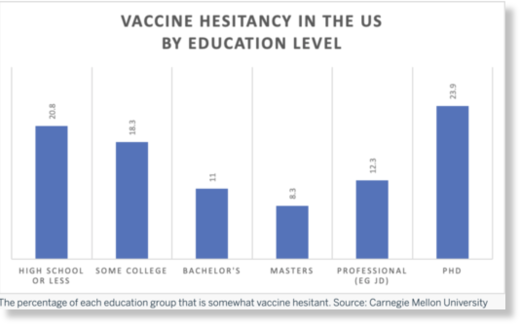
The CDC would have you believing it is just the crazy and uneducated who are most wary of their (and the FDA/WHO’s) conclusions — you know, it’s all the rednecks down south! And they’re right, it is the uneducated (left of the chart). But it is disingenuous for them to try and ignore on the nightly news research like this out of Carnegie Mellon suggesting the biggest group of those most vaccine-hesitant happen to be the smartest folks in the world — the ones I’ve certainly not been ignoring, despite their being shamed, cancelled off of social media, and publicly silenced.
Put another way, I would only posit the simple question of when in the history of the world have you ever had thousands of scientists, doctors, and researchers, some of the brightest minds* in their fields around the world sounding an alarm, and the official response be to label them all as batshit crazy and prevent them from speaking? Hint. Personally, I can’t support it. A free society must allow all open discussion without ridicule well before we dare discuss collectively forcing medical decisions on people using actual threats against their autonomy. We’re too far past that Vietnam-level of government lying bullshit that results in unholy suffering for society for this barbaric nonsense to continue, and it’s time for this country to start acting like we learned something about the importance of asking questions. I simply cannot place any trust in the idea I’m not being lied to until every scientist worth their salt has had an opportunity to speak up freely, and the nature of their concerns investigated transparently. And neither should anyone else.
*Such a fun fact it is that among this ocean of scientist voices being smeared & erased from history are (1) the guy who helped invent mRNA vaccine technology, and (2) the former Chief Scientific Officer (CSO) of Pfizer (who held that role for 16 years and focused on respiratory illnesses), both of whom are saying we have to stop vaccinations at once for those who aren’t at actual high-risk with COVID, because for everyone else they’re not only toxic & dangerous but will be the very cause of this never ending pandemic. Now I don’t know about you, but I neither invented mRNA technology nor worked at Pfizer for 16 years as CSO, but if I did, I’d sure prefer the American people heard my concerns, you know, sans the childish smear tactics part. Until then, I will not — cannot — accept any mandates on moral grounds.
And so there you have it. My opinion on mandatory vaccinations at this stage: if this were the Bubonic Plague, I’d be the first in line to get the shot. Same for Polio, Tetanus, and a whole lotta other great vaccines. But for COVID-19? Let’s just say I wouldn’t even know what to tell Saint Peter at the Pearly Gates to apologize sufficiently if I — knowing what I know now — supported a mandate. Come to think of it, there’s a quote that comes to mind here that I think is a nice way to wrap up this write-up, and commemorate those who continue to protect the rights of society:
‘The hottest places in Hell are reserved for those, who in time of moral crisis, preserve their neutrality.’ ~ unknown
========
DISCLAIMER –> OBLIGATORY
I obviously have to say this before I sign off.
At the end of the day, I’m not a doctor, I do not have an MD, a Ph.D., or any other useful acronym. All I am is an individual who values truth above hysteria & ideology. I will go wherever the truth points me to without regard for what “side” that puts me on. If it’s a contrarian side, then shit I guess I’m going to have to get in some fights. If I’m on the side of the majority, I guess I’ll rest easy. But wherever it is, I’m willing to go there, and as I said in my opening statement and reiterated to the group — I will always remain open to thoughtful and productive dialogue and my POV on every topic is subject to change through lifelong reflection. All I ask for these days is for those who disagree with me to either have the sincerity to work with me using the scientific method to get the facts on this subject, or if they have no interest in that, to let me do it alone without the constant coercion, which is how I’m sure the folks in your office who are unvaccinated, feel.
Anyways, for the actual disclaimer part: we all have to make our own decisions, do our own research (though I’m always happy to keep sending stuff I come across), and take our own risks. Freak accidents can happen, and just like I wouldn’t want to be responsible for a car accident that happens if you decide to go to a particular ice cream shop I recommend, it is the same for anything I’ve sent above and anything you or anyone you may share any of the information with do as a result of it. Always seek and follow professional, accredited advice! <– the disclaimer part.
Anyone who sees the vaccine as having more benefit than risk, should absolutely take it. I agree 100% with an 85 year-old with five comorbidities getting the jab — shit if that was me, I’d be getting quadruple jabbed walking around with a gas mask. No really, I would. Because for them the virus is actually very dangerous. And I’ve recommended it for some that I know personally would benefit from the vaccine because they are at high risk. But that’s where it ends. And not a single, inch, further.
September 1, 2021
Posted by aletho |
Civil Liberties, Science and Pseudo-Science | Covid-19, COVID-19 Vaccine |
Leave a comment
It started with an experiment on locusts in 1991. David Raubenheimer and Stephen Simpson, two zoologists who were at the time doing research at Oxford University, wanted to know what would happen to locusts if they varied the relative proportions of protein and carbohydrate in their diets. They therefore conducted an experiment in which they fed locusts pellets containing varying proportions of protein and carbohydrate, and the results astounded them so much that they ended up determining the course of their research over the next thirty years, which they’ve chronicled in their book, Eat like the animals.
What Raubenheimer and Simpson found was that the locusts were not eating until they’d satisfied their overall need for calories. Rather they ate until they’d satisfied their need for protein, so that overall, all the locusts were consuming the same total amount of protein. This meant that the locusts on the high protein diet were consuming much less food overall than the locusts on the low protein diet. Consequently, the locusts on the high protein diet became extremely lean, while the locusts on the low protein diet became fat (which they describe in their book as equivalent to an overweight knight squeezing in to a suit of armour that is a few sizes too small).
This led Raubenheimer and Simpson to conclude that protein is the dominant macronutrient in terms of determining how much we eat – At least if we’re locusts. They wanted to see if the same pattern would be seen in other species. They started off with flies, and the results were similar, which was encouraging. But flies and locusts are relatively closely related, at least in the sense that they’re both insects. What Raubenheimer and Simpson really wanted to know was whether they’d stumbled on a general dietary principle, that could be applied to all animals.
For reasons of practicality, they next chose mice. Unlike locusts and flies, which subsist pretty much entirely on protein and carbs, mice also eat fat, so in order to get a full understanding of how macronutrients impact body composition, this variable also needed to be part of the experiment. Additionally, Raubenheimer and Simpson wanted to increase the scope of their research, to look not just at the effect of various macronutrient combinations on body composition, but also on longevity. They were also curious to see what effect differing levels of dietary fibre would have on the mice.
The experiment took five years to carry out. 856 mice were sorted in to 25 different groups, that were fed identical pellets but with varying compositions of protein, fat, carbs, and fibre. They were followed from birth to death. In terms of body composition, the results were largely as expected. The mice fed a high protein diet all became lean and muscular. When it came to the mice fed a high carb diet, however, there was more variation. Those on a high carb diet that was low in fibre grew fat, while those on a high carb diet that was high in fibre remained slim.
The fact that fibre mattered so much to the body composition of the mice on a high carb diet is interesting. It provides a reasonable explanation for why people in traditional agrarian societies usually aren’t fat, even though their diets are very high in carbohydrates, and for why the current obesity epidemic coincided with a massive increase in intake of processed foods that were rich in carbs but lacking in fibre. It also provides an explanation for why people are able to lose weight both on a paleo/carnivore/keto diet that is low in carbs, and on a vegan diet that is high in carbs but also high in fibre. Fibre appears to provide a kind of “get out of jail free” card that lets you consume lots of carbs without becoming fat.
What about fat? Fat was found to be neutral in terms of it’s effect on how much the mice ate. In other words, fat intake didn’t have any limiting effect on appetite, so the mice on a high fat low protein diet grew fat, just like the mice on a high carb low protein diet that was low in fibre. If this result were to apply also to humans (which is, of course, not necessarily the case), it would suggest that LCHF/keto diets don’t work because people are replacing carbs with fat, but rather because they’re replacing carbs with protein.
Ok, so we know how the various macronutrient combinations affected body composition. What about the effect on life span? Here, the results as presented in Eat like the animals surprised me. Alot. The longest lived mice, according to Raubenheimer and Simpson, were the ones following a high carb low protein diet. Whether they ate a high or low fibre diet didn’t seem to matter. So the fat high carb mice were actually living longer than the lean, muscular high protein mice!
Baffled by these results, I decided to go and take a look at the data, to confirm that they weren’t just trying to pull a fast one, as nutrition researchers so often do when presenting their research. Hidden away in the supplement to the published study, is this table:

Two things immediately jump out at me. The first is that the group with the longest median lifespan was on a 42% protein diet. Hardly low protein!
If instead of looking at the median lifespan, we look at the maximum, we get a different picture. We see that the extremely low protein mice did best. But their median lifespans were far more average. The authors have obviously based the claims in their book, and in their published research article, on the maximum lifespan, rather than the median. That is something I find very odd.
Personally, I assume I’m going to live an average amount of time for people like me, following my type of lifestyle. I don’t assume I’m going to be the outlier who lives to 120! The median provides a much better picture of the effect of a diet on a group than the maximum lifespan seen in a few individuals.
Apart from that, they’ve chosen an odd definition of maximum life span. They’ve defined it as the top 10% with the longest life span in each group. Which is suspicious. Why the top 10% rather than just the top individual, which would be the more common way to define “maximum”? And why not the top 20%? Or top 30%? The definition really seems to have been chosen specifically because it gave the desired result, which is what is usually referred to as “torturing the data”.
I can only imagine that they chose to base their claims on their odd definition of the maximum rather than on the more appropriate median because the maximum showed a picture more in line with their own biases, possibly shaped by an environmental or animal rights agenda, or by the fact that it’s easier to get research published if it feeds in to the dominant dogmas.
The second thing that jumps out from the table is that the mice eating a high fibre diet (i.e. with a low energy density) lived much shorter lives than the other mice. That is by far the biggest difference, much bigger than any difference induced by varying protein or carb concentrations. Does this mean fibre is deadly and should be avoided it like the plague?
Well, no. The pellets that the mice were fed only contained one fibre, cellulose, which is hardly representative of the full spectrum of fibres that exist in real food. So it’s impossible to draw any conclusions from this about the effects of fibre on longevity. What we can say is that cellulose appears to be toxic to mice.
Next, I took the data from the table and re-tabulated it in a form that would allow for easier analysis of the data, which you can see here:

So what we see is that the low protein mice do appear to live the longest, but the differences between the groups are small and hardly linear. The difference between the 5% protein mice and the 42% protein mice is only 2 weeks, equivalent to about a year and a half if translated to a human lifetime. Since there’s no evidence of a linear relationship between protein intake and life expectancy, it’s hard to say that that result isn’t just caused by chance.
If we move on to carbs, then it again isn’t clear that the high carb diet leads to a longer life. The longest lived group is actually the one consuming a moderate 29% carbs, and again, there is no evidence of a linear relationship. The same is also true for fats.
So overall, the claims the authors make about a high carb low protein diet resulting in the longest life expectancy don’t hold up to close inspection. They’ve tortured the data until they’ve gotten the result they want.
What can we conclude?
If you want to be lean, muscular, and beautiful, then you should eat a high protein diet. If you just want to lose weight and be slim, then you can either go high protein or high fiber, or do a combination of both.
Well, as long as you’re a lab mouse, that is. Whether all of this also applies to humans is harder to say for certain. The results from the experiments mentioned here and others have led Raubenheimer and Simpson to develop the “protein leverage hypothesis” of obesity, which basically states that the modern obesity epidemic is due to the fact that modern diets are lacking in protein and fibre. This has come to be one of three main hypotheses that try to explain the rise in obesity. The other two are the “carbohydrate-insulin model”, which argues that the rise in obesity is due to the high consumption of carbohydrates and their downstream effects on insulin levels and thus body fat storage, and the traditional “calories in vs calories out model”, which argues that the rise of obesity is due to the fact that modern foods taste too good and are too readily available while our lifestyles have become too sedentary. From my perspective, Raubenheimers and Simpson’s hypothesis is the one of the three that fits the known facts the best. Their book, Eat like the animals, is therefore well worth a read, even though the claims they make about diet and longevity are unsupported by the evidence they present.
September 1, 2021
Posted by aletho |
Book Review, Science and Pseudo-Science, Timeless or most popular |
Leave a comment
A story in the Washington Post, titled “How climate change helped make Hurricane Ida one of Louisiana’s worst,” with Hurricane Ida as its news hook, asserts human caused climate change is driving more intense hurricanes. This is false. Data show tropical storms and hurricanes are neither more numerous nor more powerful than they have been historically. Not in Louisiana and not anywhere else.
By the time Hurricane Ida made landfall in Port Fourchon, La., on Sunday, it was the poster child for a climate change-driven disaster. The fast-growing, ferocious storm brought 150-mile-per-hour wind, torrential rain and several feet of storm surge to the most vulnerable part of the U.S. coast. It rivals the most powerful storm ever to strike the state.
“People there are going to get blasted,” said Kerry Emanuel, an atmospheric scientist at the Massachusetts Institute of Technology who studies the physics of hurricanes and their connection to the climate. “This is exactly the kind of thing we’re going to have to get used to as the planet warms.”
As powerful as Ida was when made landfall, the Post and Emanuel are wrong to link Ida or any particular hurricane to climate change.
Ida may rival the most powerful hurricanes ever to strike Louisiana, but that does not make it unique. Research shows since 1957 alone five hurricanes have made landfall in Louisiana with wind speeds exceeding 150 mph. The most powerful of those five hurricanes, 1969’s Category 5 Camille, had wind speeds exceeding 190 mph. Three of the five Category 4 or higher hurricanes Louisiana has experience in the past 70 years occurred during late 1950s and 1960s during a period when the earth was undergoing a period of modest cooling, and many scientists were warning of a coming ice age.
Data from the U.S. Environmental Protection Agency and the National Oceanic and Atmospheric Administration’s National Hurricane Center (NHC) show hurricanes have neither become more numerous or more powerful during the past half-century of modest warming.
EPA’s May 2021 report, titled “Climate Change Indicators: Tropical Cyclone Activity,” reported:
Since 1878, about six to seven hurricanes have formed in the North Atlantic every year. Roughly two per year make landfall in the United States. The total number of hurricanes (particularly after being adjusted for improvements in observation methods) and the number reaching the United States do not indicate a clear overall trend since 1878.
EPA’s conclusion that hurricanes have not become more numerous in recent years is unsurprising, because, U.N. Intergovernmental Panel on Climate Change (IPCC) 2018 interim report came to essentially the same conclusion. As illustrated in figure 1 below, IPCC data demonstrates no increasing trend in tropical cyclone or hurricane numbers.
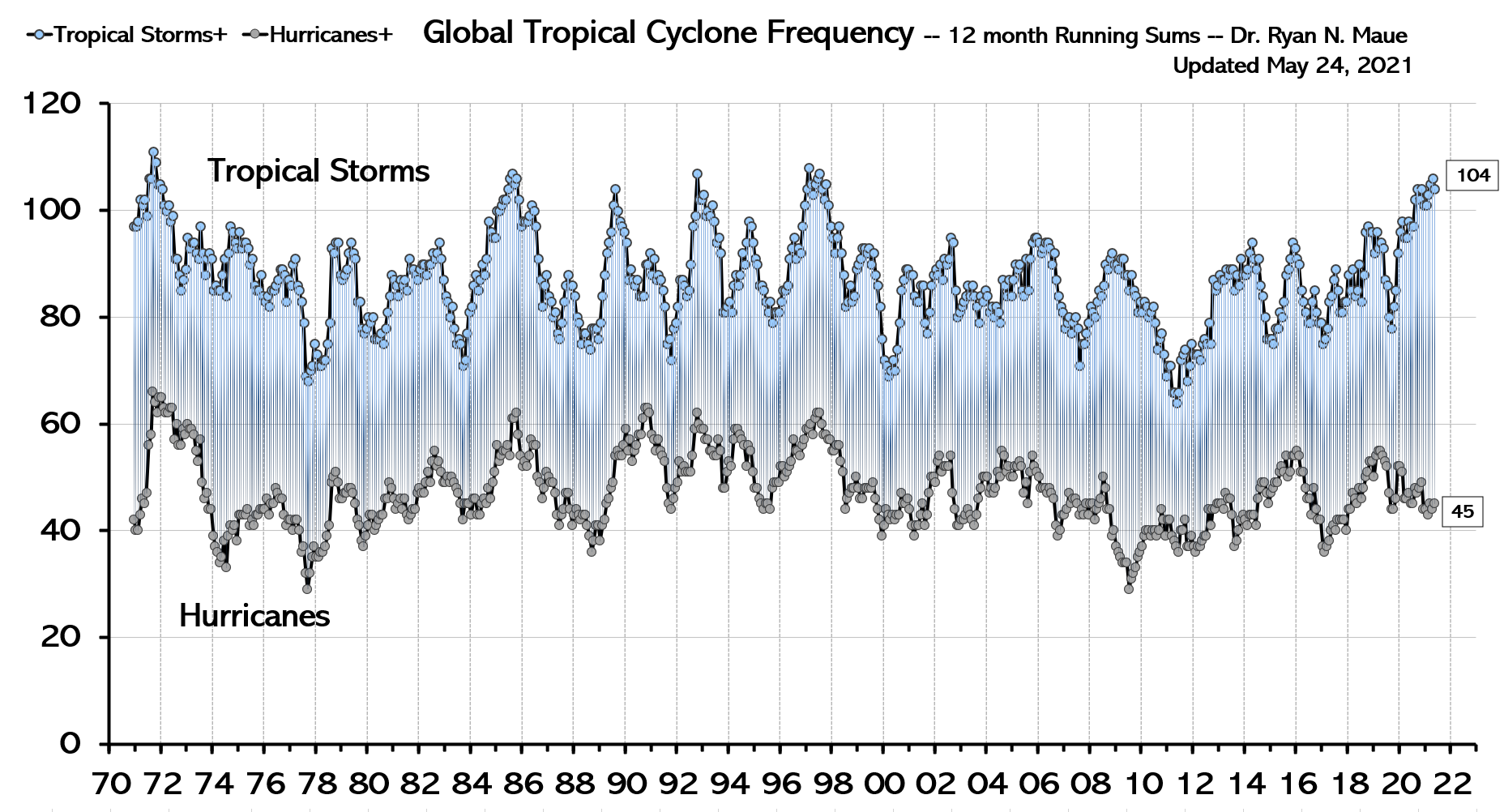
Figure 1. Tropical cyclone frequency through August 2021. Dr. Ryan Maue
NHC data indicate hurricane impacts on the United States are at an all-time low. The United States recently went more than a decade, 2005 through 2017, without experiencing a major hurricane measuring Category 3 or higher, making landfall—the longest such period in recorded history.
This can be seen in Figure 2 below showing the large gap with no major landfalling hurricanes (Category3 or greater) in the U.S. on the right-hand side.
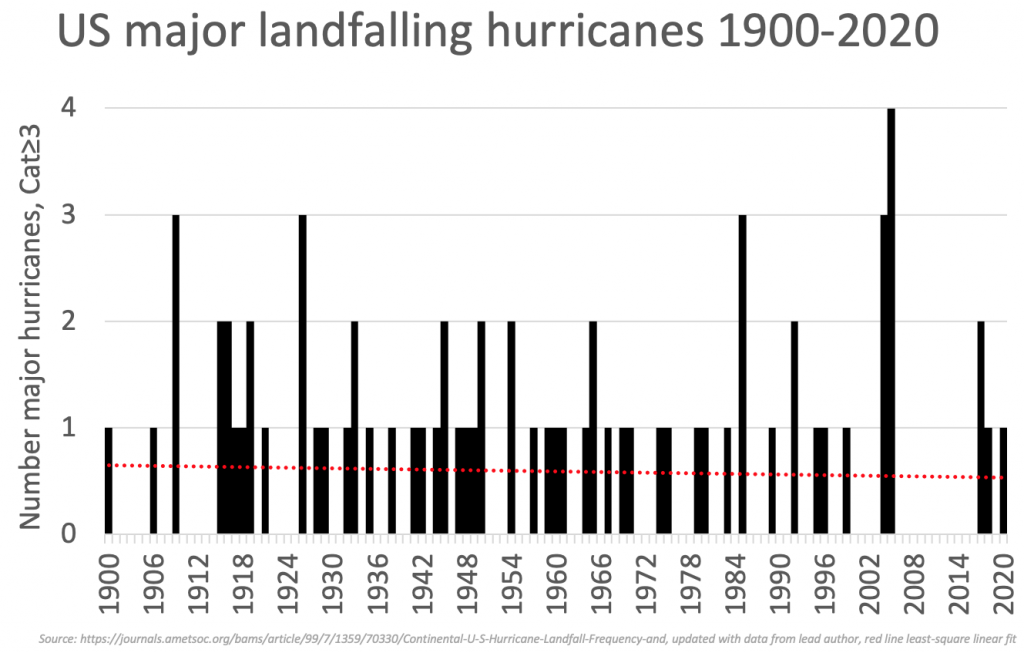
Figure 2. Landfalling hurricanes category 3 or greater through 2020. Dr. Roger Pielke Jr.
Also from 2009 through 2017, the United States experienced the fewest number of hurricane strikes over any eight-year period, since records have been kept.
The U.N. Intergovernmental Panel on Climate Change’s 6th Assessment Report, released in early August, also finds limited evidence human caused climate change is causing more frequent or stronger hurricanes.
“There is low confidence in most reported long-term (multidecadal to centennial) trends in TC frequency- or intensity-based metrics,” writes the IPCC.
This is not surprising. As explained in Climate at a Glance: Hurricanes, warm ocean water is just one factor driving the formation and intensification of hurricanes. Wind shear inhibits strong storms from forming and rips apart storms that have already formed. Science indicates global warming is likely to cause more wind shear in places where hurricanes form and intensify. This is precisely what happened to Henri, in mid-August, with wind shear shredding its top reducing it from a minor hurricane to a tropical depression in a relatively short period of time.
While the human toll and economic costs of Hurricane Ida have yet to be totaled up, they are likely to be great. However, contrary to the Washington Post’s article, there is no evidence the recent modest warming of the earth contributed to Ida or any other recent hurricane’s formation or intensity. The facts show, recent hurricane numbers and wind speeds are well within historical norms. The Post should stop selling unwarranted climate alarmism on the back of real human misery.
H. Sterling Burnett, Ph.D. is managing editor of Environment & Climate News and a research fellow for environment and energy policy at The Heartland Institute.
August 31, 2021
Posted by aletho |
Mainstream Media, Warmongering, Science and Pseudo-Science | Washington Post |
Leave a comment
Dr. Jane Orient, executive director of the Association of American Physicians and Surgeons, published a commentary July 7, 20211 asking an important question about the rising number of deaths being reported to the U.S. Vaccine Adverse Events Reporting System (VAERS) in conjunction with the COVID-19 injection program.
Her credentials2 are many: She’s a clinical lecturer in medicine at the University of Arizona College of Medicine. She received her medical degree from Columbia University and is the author of several books. And, as president of Doctors for Disaster Preparedness and chairman of the Public Health Committee of the Pima County (Arizona) Medical Society, she asks: Why haven’t there been autopsies of healthy people who are dying unexpectedly after receiving a COVID jab?
It’s a reasonable and logical question since autopsies often reveal important information about diseases and illnesses — and it’s information that can help guide future medical treatment to reduce the risk of long-term disability and death after the vaccine.3 After all, without autopsy results, the ability to treat cardiovascular diseases,4 cancers,5 hereditary diseases like hypertrophic cardiomyopathy6 and even catch murderers7 would be incompetent.
Dr. Dylan Miller chairs the autopsy resource committee for the College of American Pathologists. He spoke with a reporter from The Wall Street Journal, saying,8 “We think we always know what’s going on inside our patients, but that’s a fallacy. There’s as much to be gained from an autopsy as ever.”
The nature of an autopsy is diagnosis.9 It can help family members come to terms with what caused a loved one’s death, identify unknown diseases and offer clinicians an opportunity for a greater understanding of what happened before a patient dies. It also can provide a valuable educational opportunity for health officials and even students, who study disease processes.
It’s been over eight months since the first COVID-19 vaccine was administered in the U.S. in December 2020.10 Since then, VAERS reports show there have been over 12,000 people who have died after the shot.11 Since autopsies are so incredibly important in the identification of disease and pathological processes, why haven’t healthy people who have died after the COVID jab been autopsied?
Lack of Autopsy Results May Mean Data Are Hidden
At the time of Orient’s published commentary,12 she quoted a death toll after the COVID shot of nearly 7,000 people as reported in VAERS. This was in early July. By the end of July that number had risen to 12,366 people.13 That’s a jump of over 5,000 people in less than 30 days who reportedly had died after the COVID injections.
Orient comments that while it’s the best system available now for recording adverse events from vaccines, VAERS is likely missing 90% or more of the actual number of individuals who are hospitalized, have suffered anaphylactic reactions, have Bell’s Palsy, had heart attacks or had life-threatening reactions. The lack of accurate recording also includes the actual number of people who have died after receiving an injection.
When it comes to death certificates, data from The Johns Hopkins Hospital were published in the Archives of Internal Medicine in 2001,14 demonstrating that the accuracy and reliability of the recorded cause of death, on death certificates, was a significant problem, indicating the continued need for autopsies to correctly identify the cause of death.
According to Orient, the death of a 45-year-old mother after receiving the COVID-19 shot that was required for her to start work at the same institution, Johns Hopkins University, will likely not be investigated by autopsy. Additionally, the hospital has not paused their demand for the injection program for mothers and potential mothers who want to work at the university.
In the past, when an individual died without significant medical illness, they were designated a case for the medical examiner, who would decide whether an autopsy was needed. Any evidence that was related to the death was gathered and considered along with the autopsy report.
The most important reason for requesting and performing an autopsy was to ensure quality health care and at one time was required for hospital accreditation.15 However, that requirement has been dropped, and dropped along with it the number of autopsies routinely performed on patients who have died inside or outside the hospital.
The average rate for autopsies in the 1940s was 50%. That dropped to 41% in 1970, just before the Joint Commission on Accreditation of Hospitals removed the requirement that 20% of deaths in the hospital were to be autopsied to maintain accreditation.16
By 2018, experts estimated only 4% of in-hospital deaths were autopsied and only approximately 8% of all deaths. Since an estimated 700,000 die each year in the hospital, this means only approximately 28,000 of those deaths are autopsied. Experts have proposed three explanations for the falling rates, including:17
- Fear of finding mistakes leading to a malpractice lawsuit
- Lack of reimbursement for an autopsy
- The belief that medical technology has made autopsies obsolete
However, it’s important to note that knowledge of why a person dies after vaccination will not help the family recover damages since the pharmaceutical industry is immune from liability.18,19 Even so, this information should be used to inform public health policy and help people decide how they want to proceed with the genetic therapy injection program.
Death Certificates Are Notoriously Inaccurate
Orient also notes that death certificates, which researchers use to gather statistics on the cause of death, “are known to be extremely unreliable.”20 An evaluation of 494 death certificates at The Johns Hopkins Medical Institutions21 in 2001 showed 41% had improperly completed forms and the reliability and accuracy of the death certificates listing cause of death was a significant problem.
A study published in the Southern Medical Journal22 also found “major discrepancies” between the death certificates issued in the hospital and the information gathered on autopsy.
In 25% of the cases, the death was erroneously attributed to acute myocardial infarction, while an autopsy showed the deaths were actually from sepsis, cerebral hemorrhage, pneumonia and cardiac tamponade. Autopsy showed there were 52 myocardial infarctions that caused death, but death certificates accurately documented only 27. The researchers concluded:
“1) Death certificates are often wrong. 2) The time-honored autopsy is more valuable than ever. 3) Physicians need to write better death certificates and correct them. 4) Death certificate-based vital statistics should be corrected with autopsy results. 5) Vital statistics should note deaths confirmed by autopsy. 6) More autopsies would improve vital statistics and the practice of medicine.”
According to the Centers for Disease Control and Prevention’s document on understanding death data quality, hospitals and health care providers should use the following criteria when filling out cause of death on a patient’s death certificate:23
“When a person dies, the cause of death is determined by the certifier — the physician, medical examiner, or coroner who reports it on the death certificate.
Certifiers are asked to use their best medical judgment based on the available information and their expertise. When a definitive diagnosis cannot be made, but the circumstances are compelling within a reasonable degree of certainty, certifiers may include the terms “probable” or “presumed” in the cause-of-death statement.”
In other words, data being reported about cause of death can be manipulated with a “probable” or “presumed” assumption if the certifier makes a subjective evaluation and believes the “circumstances are compelling.” This poor degree of accuracy only adds to the already notoriously inaccurate information found on death certificates.
Treatment for COVID-19 Improved After Autopsy Results
As Orient points out, there were tens of thousands of patients who died from COVID disease after being placed on ventilators before a small series of 12 autopsies done in Germany showed that most of these patients had blood clots and using a ventilator may have caused more damage.24
The improvement and treatment modalities for COVID-19 came after patients had been autopsied. Mechanical ventilation can easily damage lung tissue because it forces air into the lungs. Patients with COVID-19 who were ventilated had at best a 50-50 chance of surviving.25
However, risk analysis being reported indicated this chance of survival was higher than what was being seen clinically. China reported26 of 22 patients on ventilators, 86% of them did not survive the treatment. A British study found two thirds of patients on mechanical ventilation died and a study of 320 mechanically ventilated patients in New York showed 88% of them died. … Full article
Sources and References
August 31, 2021
Posted by aletho |
Science and Pseudo-Science | COVID-19 Vaccine |
Leave a comment
China has been battling against being labeled the country allegedly responsible for the coronavirus pandemic since its onset. The first officially registered cases of COVID-19 were in the Chinese city of Wuhan, but Beijing has repeatedly suggested that the pathogen could have been imported into the country.
The Chinese Centre for Disease Control and Prevention (CDC) has unveiled its own suggestion regarding how the World Health Organisation (WHO) should handle the second phase of the investigation into the origins of the COVID-19 virus. According to the Chinese CDC, WHO investigators should focus their efforts on studying cold-chain products and their logistics ahead of the detection of the first COVID-19 cases in Wuhan – specifically between September and December 2019.
The Chinese CDC epidemiologists said that samples of COVID-19 could be found on some of the cold-chain products shipped to other Chinese cities, namely to Beijing and Dalian, right before the two cities suffered limited outbreaks of the disease in summer 2020. These incidents happened after China managed to quickly end the original outbreak in Wuhan in April 2020.
Chinese epidemiologists have thus suggested that COVID-19 might have been imported into Wuhan, either from another Chinese region or from a foreign supplier of cold-chain products. Members of the country’s CDC have proposed that the WHO explore this hypothesis and track the supply chain for this type of product. The scientists stressed in their publications that there have been numerous evidence of COVID-19 being present in other parts of the world, specifically the US, Italy, Spain and France, ahead of the detection of the first cases in China and as early as March 2019.
“We conducted epidemiological investigations, nucleic acid testing, antibody detections, cold-chain food retrospection and comparative analysis of viral gene sequencing of COVID-19 patients and food packages and confirmed that the virus was imported from other countries or regions through the cold-chain transportation”, Ma Huilai, an official from the China CDC said.
The researchers from the Chinese CDC further noted that over half of the stores in the Huanan seafood market, a suspected source of the original infection, imported 29 types of cold-chain products from 20 countries and regions of China.
The publication by the Chinese epidemiologists comes as the WHO is planning on carrying out the second phase of the investigation into the origins of the virus that has taken the lives of over 4,493,000 people around the world and disrupted economies. The previous probe yielded no answers as to when and how the virus jumped from animals to humans, and the global health body announced in July 2021 that a new investigation will be conducted. The announcement of the second phase probe also coincided with the US intelligence services opening an investigation into the allegations that the virus could have escaped from a Chinese laboratory.
Beijing has strongly rejected the idea of conducting the second phase probe on its territory, arguing that the new investigation is politicised and not based on science. The US probe into the allegation of the laboratory origin of the virus, however, produced a report in which most US intelligence agencies said that the virus was most likely naturally born, although some agents have refused to absolutely rule out the man-made theory.
August 31, 2021
Posted by aletho |
Science and Pseudo-Science | China, Covid-19, United States |
Leave a comment
Thank you to Dr Doshi for raising the profile of T-cells. Incidentally, German researchers found that a staggering 81 percent of individuals had pre-existing T-cells that cross-react with SARS-CoV-2 epitopes [1].
This fits with modelling in May by Imperial College’s Professor Friston, a world authority in mathematical modelling of complex dynamic biological systems, indicating that around 80% and 50% of the German and UK populations, respectively, are resistant to COVID-19: https://unherd.com/2020/06/karl-friston-up-to-80-not-even-susceptible-to…
Antibodies can only latch onto and help destroy pathogens outside cells and may also occasionally, paradoxically, enhance a pathogen’s ability to infect cell instead by antibody dependent ”enhancement” or ADE. It is only the T-cell that can cleverly sense and destroy pathogens inside infected cells using “sensors” which detect foreign protein fragments.
In the late 60’s the Lancet described a case of a child with agammaglobulinemia, a condition in which absence of B cells prevent them from producing antibodies, who overcame a measles infection quite normally and did not become re-infected thereafter. We now know that, although this condition can compromise immunity, in that particular case the rest of the immune functions, including T-cells, must have been perfectly up to the job of clearing infection and establishing immune memory without help from antibodies.
The importance of T-cells in fighting SARS-CoV-1 and establishing immune memory has also been well documented and discussed in a number of pre-COVID papers from 2017 and earlier [2].
Then, early in April, it was reported that two patients with agammaglobulinemia overcame COVID-19 infections without requiring ventilation [3], prompting the Italian authors to write: “This observation suggests that T‐cell response is probably important for immune protection against the virus, while B‐cell response might be unessential”.
All this should have shifted the focus of efforts towards T-cells at an early stage – the real question is why mainstream media and others continued to focus efforts and narrative on antibodies. Is it because vaccines are good at provoking antibody responses but not so great at generating T-cells? Some of the vaccines presently under trial do elicit some T-cells but it seems that neither the quantity nor variety are hugely impressive.
Does this matter? Apparently so: Research establishments including Yale found that in mild or asymptomatic cases, many T-cells are produced. These were highly varied, responding not just to parts of the Spike, S protein or Receptor Binding Domain but to many other parts of the virus [1, 4-6]. Notably, in these mild cases there were few or no detectable antibodies.
Conversely, the severely ill produced few T-cells with less variety but had plenty of antibodies. What is also of interest is that men produced fewer T-cells than women, and unlike women, their T-cell response reduced with age [7].
So why are some people unable to mount a good protective T-cell response? The key to this question might be a 10-year-old Danish study led by Carsten Geisler, head of the Department of International Health, Immunology and Microbiology at the University of Copenhagen [8].
Geisler noted that “When a T cell is exposed to a foreign pathogen, it extends a signalling device or ‘antenna’ known as a vitamin D receptor, with which it searches for vitamin D,”, and if there is an inadequate vitamin D level, “they won’t even begin to mobilize.” In other words, adequate vitamin D is critically important for the activation of T-cells from their inactive naïve state.
The question of whether T-cells might also need a continuing supply of vitamin D to prevent the T-cell exhaustion and apoptosis observed in some serious COVID-19 cases [9] deserves further research.
High levels of vitamin D are also critical for first line immune defences including physical mucosal defences, human antiviral production, modulating cytokines, reducing blood clotting and a whole host of other important immune system functions [10]. The obese, diabetics and people of BAME origin are far more deficient in vitamin D and men have lower levels than women [10].
Another intriguing clue is that Japan has the highest proportion of elderly on the planet but despite lack of lockdowns, little mask wearing and high population densities in cities, it escaped with few COVID deaths. Could this, at least in part, be because of extraordinarily high vitamin D levels of over 30 ng/ml in 95% of the active elderly [11]? By comparison, UK average levels are below 20ng/ml [10].
Vitamin D is made in the skin from the action of UV sunlight, food usually being a poor source, but the Japanese diet includes unusually high levels. Sunny countries near the equator (e.g. Nigeria, Singapore, Sri Lanka) also have very low COVID related deaths.
The results of the first vitamin D intervention double blind RCT for COVID was published on 29 August by researchers in Córdoba, Spain. This very well conducted study produced spectacular outcomes for the vitamin D group (n=50), virtually eliminating the need for ICU (reducing it by 96%) and eliminating deaths (8% in the n=26 control group). Although this was a small trial, the ICU results are so dramatic that they are statistically highly significant [12].
Substantially more vitamin D is required for optimal immune function than for bone health. It seems Dr Fauci is not ignorant of this, having apparently confirmed on TV and by email that he takes 6,000 IU daily! (see Dr John Campbell on YouTube Vitamin D and pandemic science, 16 September 2020). Meanwhile the US’s health body continues to recommend only 600-800 IU and the UK’s, only 400 IU.
It is high time for joined up solid scientific rationale to overthrow mainstream narratives based on an alternative “science” controlled by industry interests/politics. Beda M Stadler, the former Director of the Institute for Immunology at the University of Bern, a biologist and Professor Emeritus, certainly appears to think so (see Ivor Cummins Ep91 Emeritus Professor of Immunology… Reveals Crucial Viral Immunity Reality on YouTube, 28 July 2020).
In the same way that prior infections protect us against future infections by means of cross-reacting T-cells, overcoming COVID-19 naturally offers potential for greater protection against future coronaviruses. Vaccines have their place but so do our amazingly complex, sophisticated, highly effective immune systems which have evolved over millennia to protect us from a world teeming with trillions of pathogens.
References
- Annika Nelde, Tatjana Bilich, Jonas S. Heitmann et al. SARS-CoV-2 T-cell epitopes define heterologous and COVID-19-induced T-cell recognition, 16 June 2020, Research Square https://www.researchsquare.com/article/rs-35331/v1%20
- William J.Liuabc et al. T-cell immunity of SARS-CoV: Implications for vaccine development against MERS-CoV.Antiviral Research. Volume 137, January 2017, Pages 82-92 https://doi.org/10.1016/j.antiviral.2016.11.006
- Soresina, A, Moratto, D, Chiarini, M, et al. Two X‐linked agammaglobulinemia patients develop pneumonia as COVID‐19 manifestation but recover. Pediatr Allergy Immunol. 2020; 31: 565– 569. https://doi.org/10.1111/pai.13263
- Avraham Unterman, et al. Single-Cell Omics Reveals Dyssynchrony of the Innate and Adaptive Immune System in Progressive COVID-19. medRxiv 2020.07.16.20153437; doi: https://doi.org/10.1101/2020.07.16.20153437
- Leticia Kuri-Cervantes, et al. Immunologic perturbations in severe COVID-19/SARS-CoV-2 infection. bioRxiv 2020.05.18.101717; doi: https://doi.org/10.1101/2020.05.18.101717
- Floriane Gallais, Aurelie Velay, Marie-Josee Wendling, Charlotte Nazon, Marialuisa Partisani, Jean Sibilia, Sophie Candon, Samira Fafi-Kremer. Intrafamilial Exposure to SARS-CoV-2 Induces Cellular Immune Response without Seroconversion. medRxiv 2020.06.21.20132449; doi: https://doi.org/10.1101/2020.06.21.20132449
- Takahashi T, Wong P, Ellingson M, et al. Sex differences in immune responses to SARS-CoV-2 that underlie disease outcomes. Preprint. medRxiv. 2020;2020.06.06.20123414. Published 2020 Jun 9. doi:10.1101/2020.06.06.20123414
- Von Essen MR, Kongsbak M, Schjerling P, Olgaard K, Odum N, Geisler C. Vitamin D controls T cell antigen receptor signaling and activation of human T cells. Nat Immunol. 2010;11(4):344-349. doi:10.1038/ni.1851
- Diao B, Wang C, Tan Y, et al. Reduction and Functional Exhaustion of T Cells in Patients With Coronavirus Disease 2019 (COVID-19). Front Immunol. 2020;11:827. Published 2020 May 1. doi:10.3389/fimmu.2020.00827
- King, E.. The Role of Vitamin D deficiency in COVID-19 related deaths in BAME, Obese and Other High-risk Categories. 2020, June 17. https://doi.org/10.31232/osf.io/73whx
- Nakamura K. Vitamin D insufficiency in Japanese populations: from the viewpoint of the prevention of osteoporosis. J Bone Miner Metab. 2006;24(1):1-6. doi:10.1007/s00774-005-0637-0
- Marta Entrenas Castillo et al. Effect of calcifediol treatment and best available therapy versus best available therapy on intensive care unit admission and mortality among patients hospitalized for COVID-19: A pilot randomized clinical study. The Journal of Steroid Biochemistry and Molecular Biology. Volume 203, October 2020, 105751. https://doi.org/10.1016/j.jsbmb.2020.105751
August 31, 2021
Posted by aletho |
Science and Pseudo-Science, Timeless or most popular | Covid-19, Vitamin D |
Leave a comment
What I refer to as the “Greatest Scientific Fraud Of All Time” is the systematic alteration of historical world temperatures to make it appear, falsely, that the most recent months and years are the “warmest ever.” The basic technique of the fraud is the artificial lowering of previously-reported data as to world temperatures in earlier years, in order to erase earlier warmth and amplify the apparent warming trend. This is the 28th post in this series. The previous post in the series appeared on October 5, 2020. To view all 27 prior posts, you can go to this composite link.
The deliverable products of the temperature fraudsters are purported charts of world temperatures derived from a thermometer-based surface record (called GHCN, or Global Historical Climate Network), generally going back to about 1880. The charts are engineered to appear in an iconic “hockey stick” shape, with relatively flat earlier years followed by a sharply rising “blade” in the most recent years.
Every few years the government (this is a joint effort of NASA and NOAA) comes out with a new version of these data. The latest version is called GHCN version 4, which began in 2018. Here is a chart from the Columbia University website (the NASA branch involved in this project, known as the Goddard Institute of Space Studies, is located on the Columbia campus in uptown Manhattan) showing a side-by-side comparison of the version 3 and version 4 GHCN data. Both show the famous hockey stick shape, although version 4 increases the recent uptick somewhat.

My October 5, 2020 post mainly summarized a piece by Tony Heller that had appeared on October 1 of that year. Heller’s piece focused specifically on alterations to the temperature record of the U.S., as opposed to the entire world. Heller provided links to earlier and later NASA/GISS data reports, clearly showing that temperatures originally reported for earlier years had subsequently been lowered to enhance the warming trend and to make the most recent years appear to be the “warmest” — in spite of the fact that if temperatures previously reported had been correct, then earlier years including 1953, 1934, and 1921 had actually been warmer than the most recent years.
Heller also noted, as I have many times, that NASA and NOAA make no secret of the fact that they are systematically altering and lowering earlier-year temperatures,
Reality is that the data alterations are no secret, and that NOAA and NASA acknowledge that they do it.
The problem is not that the alterations are a secret, but that they are opaque. You would think that it would be impossible for earlier-year temperatures to change at all, let alone that they would systematically change in a way that just happens to enhance the desired narrative of the promoters of the global warming scare. The justifications for the alterations appear to be just so much bafflegab, completely lacking in specific rationales for each change that you would think would be required — particularly given that these temperature charts are being used as a basis for a multi-trillion dollar fundamental transformation of the world energy economy.
Anyway, into this mix now comes a young Japanese woman named Kirye, who has taken up the Heller tradition of compiling and publishing instances of government alteration of the data that underlie the NASA/NOAA temperature charts. Kirye posts periodically on Heller’s website, known as RealClimateScience, and also at the NoTricksZone site. A couple of days ago (August 24) Kirye had a post at NoTricksZone titled “Adjusting To Warm, NASA Data Alterations Change Cooling To Warming In Ireland, Greece.” Adding to Heller’s work, this post goes outside the U.S. to look at two European countries that ought to have good and reliable temperature data. The post specifically focuses on the period 1988 to present, which is the period of the supposed sharp uptick in temperatures represented by the “blade” of the hockey stick in the NASA/NOAA charts above.
What Kirye finds is that in both Ireland and Greece, NASA and NOAA have altered the data to turn a cooling trend into a warming trend for the 1988-2020 period. Here is her comparison of the “unadjusted” data for Ireland compared to the “GHCN version 4” currently being reported:

Kirye gives a link for these graphs to the NASA/GISS website. That is where she got the information. The NASA/GISS site has a map of the world with a little dot for each station, and if you click on any station you can get a plot courtesy of NASA that shows both the “unadjusted” and “version 4” temperature series for that station. Kirye has taken both versions straight from NASA itself. It’s just that only when you combine and present the data the way Kirye does do you realize that the bureaucrats have systematically altered the temperature trend for an entire country from down to up. Suddenly you clearly see that the entire apparent upward trend consists of unspecified “adjustments.” The same applies for both Ireland and Greece.
Can they even attempt to justify what they have done? At the same NASA/GISS page linked by Kirye, I find a further link saying “For details see FAQ.” Maybe I can find the answer here? So I followed that link, and another, and come to the end of my road at this document titled “FAQs on the Update to Global Historical Climatology Network–Monthly Version 3.2.0.” This document specifically relates to the version of GHCN just preceding version 4, but I have no reason to think that the basic methodology has changed. Here is an extremely revealing “FAQ” with the relevant part of its answer:
Why is the century‐scale global land surface trend higher in version 3.2.0?
The PHA software is used to detect and account for historical changes in station records that are caused by station moves, new observation technologies and other changes in observation practice. These changes often cause a shift in temperature readings that do not reflect real climate changes. When a shift is detected, the PHA software adjusts temperatures in the historic record upwards or downwards to conform to newer measurement conditions. In this way, the algorithm seeks to adjust all earlier measurement eras in a station’s history to conform to the latest location and instrumentation. The correction of the coding errors greatly improved the ability of the PHA to find these kinds of historic changes. As a result, approximately twice as many change points (inhomogeneities) were detected in v3.2.0 than in v3.1.0. . . .
Study that a little bit and think about what they are saying. There can be “station moves” or “new observation technologies” that can cause a “shift in temperature readings.” Fair enough. So has anybody contacted any of the Irish stations to find out if they have had a “station move” or “new observation technology” or anything like that since 1988? Absolutely not! Instead, they have a computer algorithm detect these things — or maybe invent them. The algorithm supposedly looks for “shifts.” So suppose readings at a particular station have somehow shifted to lower temperatures. Could it be that temperatures are reading lower because it got cooler? Obviously that does not fit the narrative. Time to declare a “shift.” Now, instead of reporting the cooling trend that is coming from the thermometers, you can adjust the earlier temperatures downward to reflect “new observation technology” or some such never-specified thing.
Note on Kirye’s dynamic graph that every single one of the stations in Ireland has had its trend adjusted from down to up by these computer algorithms. Did they all have station moves and/or “new observation technologies”? NASA doesn’t even pretend to have checked.
Take a look also at the “unadjusted” Irish plots on Kirye’s graph. Can you spot the supposed “shifts” that support having some computer come in and re-write the earlier temperatures to make the overall trend change from down to up?
At the end of the linked NASA document is a further link where you can supposedly get the computer code used for making what they call the “homogeneity corrections.” However, when I try that I don’t get anything I can open.
Anyway, this is what passes for “science” in the field of climatology.
August 30, 2021
Posted by aletho |
Deception, Science and Pseudo-Science | NASA, NOAA, United States |
Leave a comment
This is an absolute game-changer.
The UK government just reported the following data, tucked away in their report on variants of concern:
Less than a third of delta variant deaths are in the unvaccinated.
Let me say that another way – two-thirds of Delta deaths in the UK are in the jabbed.
To be specific:
From the 1st of February to the 2nd of August, the UK recorded 742 Delta deaths (yes, the dreaded Delta has not taken that much life).
Out of the 742 deaths, 402 were fully vaccinated. 79 had received one shot. Only 253 were unvaccinated.
The report is here.
But this is the crucial page. Look at the bottom line.

Again, 402 deaths out of 47 008 cases in vaccinated; 253 deaths out of 151 054 cases in unvaccinated. If you get covid having been vaccinated, according to this data, you are much more likely to die than if you were not vaccinated!
Obviously some allowance must be made for more elderly people being vaccinated, but not enough to change the bottom line: this vaccine is not nearly as effective as advertised.
And with all its unknowns, and a much higher adverse reporting number than all other vaccines combined, a complete recalibration of global policy is the only moral option.
Countries around the world, as months pass since vaccinations, are experiencing a surge in vaccinated deaths and hospitalizations. 60% of hospitalizations in Israel are fully vaccinated patients. (Hence the mad rush for untested boosters.)
The powers that be will not admit there is something terribly wrong. They will not acknowledge the clear science that people with natural immunity, and the young and healthy, do not need to take the risks of these injections. Read this very important piece on natural immunity. Reliable studies showing the superiority of natural immunity are just ignored by our overlords.
Instead they will jab and jab and jab again. The vaccine passports will be renewable every six months. Countries are ordering up to 8 shots per citizen. The masks will not go away. Israel, the pre-eminent vaxxed nation, is in lockdown.
The report also made one other important admission:

In other words, getting vaccinated to protect others is not true!
This is NOT a sterilising vaccine that stops diseases like polio or hepatitis using live virus. This is for you alone. Which means, as experts like Martin Kulldorff, biostatistician, epidemiologist and professor of medicine at Harvard Medical School, and Jay Bhattacharya, professor of medicine at Stanford University and research associate at the National Bureau of Economic Research, have long said, it makes zero sense to vaccinate the young and healthy.
We are dealing with a world-historical error, and in fact a global assault on young bodies.
To be clear, I make no advice to anybody about taking the vaccine or not. I may well have decided to take it if I were in a risk category, or if I knew I did not have to wear a mask or get tested after taking a single shot. Your decision should be guided by consulting with a doctor, informed consent, and your own conscience.
And you should ask yourself why there is no explanation for the hundreds of thousands of women experiencing menstrual changes after the shot, or the way vaccines are being mandated at the same time they are under investigation for unknown risks.
What I will say categorically is that you will have to answer one day, in this life or the next, for where you stood on the issue of mandating medicine for the healthy without informed consent, on giving cover for governments to shove things down kids’ noses, and locking down all that makes life worthwhile. Where were you when kids’ freedoms were stolen from them? I doubt there will be much forgiveness from that generation.
Every time somebody posts a meme mocking vaccine hesitance, not only do they alienate the hesitant, and radicalize them, they implicitly endorse a new police state in which a liberal government like Australia feels empowered to pepper spray kids in the face for not wearing a mask that has not been conclusively shown to prevent viral transmission.
For crying out loud, this what even the World Health Organization admits about masks:

The vaccines will not end these measures, especially in countries with low vaccination rates. They cannot, unless these governments admit their massive errors. Their booster shot push makes this unlikely.
Finally, why does the media not even report on governmental data? Why am I reporting this stuff?
I have no idea, but it is truly sinister.
Ask yourself why the media will not even mention the fact that this 23-year-old Irish footballer below, in perfect health, received a vaccine three days before dropping dead:

Untimely indeed.
God have mercy.
August 30, 2021
Posted by aletho |
Mainstream Media, Warmongering, Science and Pseudo-Science | COVID-19 Vaccine, UK |
Leave a comment
The Biden administration is on the precipice of announcing mandatory six month booster shots for people who have already had the vaccine. The reason? Data from Israel is showing that vaccinated populations are, for yet unknown reasons, more susceptible to even worse infections from the Delta variant.
It appears, from the early data, that once you take the vaccine you put your immune system into a state of perpetual dependency requiring booster shots to chase the variants every six months. Without the boosters, the hospitalization rates amid the vaccinated population appear worse than non-vaccinated. Delta hits the vaccinated population harder than Alpha, and Lambda will likely hit the vaccinated population harder than Delta…. and so it goes, and so it appears it will continue.
The Daily Beast outlined a foreboding article yesterday with the overarching message that America had better prepare for this quickly based on the Israeli data. The Israeli scientists call the population who have taken the vaccine+booster the “ultra-vaccinated”, and unfortunately it appears those ultra-vaccinated patients are now on course to require frequent booster updates as their immune system is now mRNA dependent to battle the evolving COVID variants.
FTA – […] Asked what has brought Israel to peak transmission even as the country has already provided third doses of vaccines to 1.5 million citizens, Rahav, who has become one of the best known faces of Israel’s public health messaging, sighed, saying, “I think we’re dealing with a very nasty virus. This is the main problem—and we’re learning it the hard way.” (read more)
Metaphorically, a drug user chasing a “high” trains his/her brain to become dependent or addicted in order to retain that altered mental state, so too does the COVID vaccination regime appear to place the patient into an dependent state for their immune system.
However, on the positive side (for those vaccinated) the Biden administration appears to be gearing up to deliver this booster process on a long-term basis.
The Biden administration is planning to announce updated guidance recommending a third dose of Pfizer or Moderna’s vaccine be given to Americans very six months after their second dose (instead of eight months), according to The Wall Street Journal. Right now, the final plan is still being worked out, and will need to be approved by the CDC’s vaccine advisory team, essentially controlled by vaccine makers, along with the FDA (also controlled by vaccine makers).
As soon as the pharmaceutical industry tells the Biden administration what to do, the CDC will begin pushing the booster shots onto the vaccinated population.
There is no actual science behind this process, but then again, there hasn’t really been any science behind any of it; so don’t worry, just take the next shot and await further instructions. However, if this process is put into place, it would appear that the vaccination passports will have an expiration date.
WASHINGTON DC – […] The Biden administration and vaccine companies have said that there should be enough supply for boosters that they plan to begin distributing more widely on Sept. 20. The U.S. has purchased a combined 1 billion doses from Pfizer and Moderna.
A White House spokesman declined to comment. An FDA spokeswoman declined to comment on interactions with vaccine manufacturers. (read more)
You will notice the institutions of Healthcare have now stopped using the term “follow the science.” One of the reasons they have dropped that terminology is apparently because they change the ‘science‘ on a week to week basis.
CDC Director Rochelle Walensky was recently asked if her agency was giving current guidance to the public based on “the data” or based on arbitrary “hope” that they will be correct and their guidance will help people.
Director Walensky was honest in her reply: “… So there’s actually hope, [because] we don’t have data yet…”
It is very comforting to know that “hope” is guiding the decision-making of those who are injecting substances into the global population without any idea what the long-term ramifications might be….
… Then again, if you really believed that human existence was the cause of harm to this planet; and saving the planet was the #1 priority of your community; then removing the harm would be for the greater good. Personally, while I hate to be argumentative, I would respectfully disagree with people who prefer my death in order to save the world. But, to be fair, that’s just me being selfish.
I am reminded of the words from a carnival operator I heard as a child as we approached the turnstiles of the roller coaster. Apparently the young lady at the front of the line had said something to him as we all waited for the next car to arrive. I did not hear the question, but his reply was:
“… Well Miss, once you get on the ride – you ain’t getting off ’til the ride’s over.“
Those words stuck in my mind as I pulled down the retaining bar. And as my life has rattled, wobbled and squeeked toward unknown destinations, I have often found a reason to reference them.
August 30, 2021
Posted by aletho |
Science and Pseudo-Science | CDC, COVID-19 Vaccine, United States |
Leave a comment
In this interview, Thomas Lewis, Ph.D., and Dr. Michael Carter explain how biomarker panels can help you take control of your health by identifying underlying chronic infections that might be sabotaging your health. Lewis is a microbiologist with a Ph.D. from MIT and certifications from the Harvard School of Public Health and Carter is an integrative physician.
They run a company that performs diagnostic testing to guide patients through a process of diagnosing various ailments. Biomarkers such as D-dimer, fibrinogen, clotting factors and auto antibodies, which are largely ignored by the mainstream, can clue you in on where you lie on a health/disease continuum.
Importantly, poor COVID outcomes are rare unless you have two or more comorbidities, and in the last year, they’ve developed a more refined way of assessing an individual’s COVID-19 risk using a panel of specific markers associated with inflammation and blood clotting.
Their testing helps YOU understand where you are on the health-disease continuum. In their model, you are not either sick or well — you are somewhere on this continuum. Find out where you are and then work to improve your status.
“Really, it’s your chronic health status that helps you figure out where you are in the continuum for COVID risk,” Lewis explains. The same goes for the COVID shot. According to Lewis, whether you got COVID-19 or the vaccine, the risk factors that determine whether you’ll have a serious bout of COVID-19 or experience more serious adverse events from the shot are identical.
The Role of Underlying Infections
Underlying or latent infections can play a significant role not only in chronic disease but also in SARS-CoV-2 infection. Judy Mikovits, Ph.D., has pointed out the role of retroviruses and coinfections with pathogens such as borellia and babesia in leading to less favorable outcomes in COVID.
Her hypothesis is that SARS-CoV-2 in and of itself is not the primary cause of COVID-19. She’s convinced there must be a coinfection along with SARS-CoV-2 that suppresses or compromises your immune system in order for symptomatic COVID-19 to occur.
Carter and Lewis have discovered a number of infectious pathogens that are even more prolific than those highlighted by Mikovits, and which appear central in triggering many chronic conditions that then predispose you to more severe COVID-19.
Primary among those are bacteria involved in periodontal disease (periodontitis). You don’t have to have oral issues or root canals to have a high burden of periodontal pathogens. The Lewis/Carter team test for these pathogens using an oral DNA home test kit.
Another is chlamydia pneumoniae, a respiratory pathogen that 60% to 70% of older adults have antibodies against. Chlamydia pneumoniae plays a role in several common age-related conditions, including Alzheimer’s disease, heart disease and rheumatoid arthritis. Unfortunately, few are ever tested for the presence of this organism.
According to Lewis and Carter, inflammatory markers and clotting markers such as C-reactive protein, fibrinogen, uric acid, the neutrophil-to-lymphocyte ratio, D-dimer, and sedimentation (SED) rate are strongly associated with innate immune response activity and chronic infections, which in turn correlate with COVID-19 severity.
“What’s tricky about these organisms is they don’t always show up from the classic acute perspective of diagnostic,” Lewis says. “If you talk to any infectious disease doctor that’s not functional in nature, they’ll say that the IgG antibody is historic. But I can guarantee you they’re completely wrong.
They’re not looking at things from a chronic, stealth [perspective]. Do we think chickenpox, the herpes zoster virus, is the only organism that can cause problems and then go dormant and reactivate when you’re immune-compromised later in life? No.
Every single one of these organisms has a potential opportunity to go from an acute phase to a chronic phase. Some never even express acute disease. They just hang out in biofilms and will express in the chronic phase later in life, causing disease of “unknown” origin!
It’s called crypticity, which makes it extremely difficult to create, in the minds of doctors and researchers, the association between the disease and the exposure. Sometimes these exposures are congenital. They happened pre-birth. So, that’s really the art.”
So, to clarify the hypothesis presented by Lewis and Carter, the conventional view is that these infections, once they’ve generated an IgG antibody response, no longer pose a threat to your body. But this isn’t the case.
They can indeed lay dormant only to later contribute to chronic diseases that, on the surface, appear to have nothing to do with a pathogenic infection. The book by Paul Ewald titled, “Plague Time: The New Germ Theory of Disease,” written in 2000, explains well this conundrum.
How to Identify Underlying Infections
The clinical approach to identifying whether an underlying infection is at play in a particular disease is to look at antibody levels. Immunoglobulin G (IgG) is reflective of long-term protection and also happens to be the most common antibody, found in blood and other body fluids. It protects against both viral and bacterial infections and tends to be elevated when the infection has reached a chronic state.
Immunoglobulin M (IgM) is associated with acute responses to infections and is found primarily in your blood and lymph. It’s the first antibody to be made when your body encounters a new pathogen. Carter explains:
“Everyone has a baseline level of IgG and IgM, especially in the acute phases, but the long-term IgG, once it is above the normal background level, then in many cases, especially in those who are symptomatic with various diseases, there is reactivation of that virus, bacteria, parasite or other pathogen, what have you — any grouping of these organisms that can smolder and cause disease patterns.
The driver is inflammation and tissue destruction. The mechanism is simple. We all have some “wear and tear.” These organisms increase wear and tear so your “repair and recovery” pathways cannot keep up.
We also — even without doing those IgG levels, just on our basic platform of biomarker testing — can see things in the complete blood count where, let’s say our white blood cell count has a ‘normal range’ somewhere between 3.8 and 10.8 depending on the lab. But that’s a very wide normal range.
Really, anything above 6.2, in terms of your white blood cell count, is an indicator that something is brewing. When we start looking deeper at the neutrophils, the lymphocytes, the basophils, the monocytes and eosinophils, when those values are increased or decreased beyond the optimal range, we can tell that there are critters being unruly even though you don’t have fever, chills or a classic increase in white blood cell count.
So, we know that these pathogens are present in everyone. It’s really incumbent upon your own immune system to be vigilant to keep them at bay and stop them from replicating.”
In summary, if you have elevations (or suppressions) in white blood cell markers, then you likely have an infectious process going on in your body. There’s also typically a direct correlation between your antibody level and the risk of disease, so the higher your antibody level, the greater your risk of chronic disease and poor COVID / JAB outcomes.
PCR testing can be useful for identifying a specific pathogen. However, if excessively high cycle thresholds (CTs) are used (as has been the rule when testing for SARS-CoV-2), the test becomes useless, as it can find even a single molecule if run at a high-enough CT. So, the CT needs to be below 26 to avoid false positives.
Review of Lewis and Carter’s Research
Before we go further, here’s how Lewis describes their research, and how it can improve your health and medical decisions:
“Carter and I are not researchers. We like to fancy ourselves translators of best clinical research. There’s really great science published, but medicine is a business decision. Less than 1% of the great medical research makes it to clinical practice.
We had the opportunity to evaluate 100 people at a Fortune1000 company. Based on that, we made an assumption that, because of their health status, 42 of them had some sort of an infectious process.
So, we were given license to test IgM, IgG, bacterial [and] viral. Forty-one of 42 were positive using our testing. Now, we’re not looking for everything in the universe. We’re telling the lab what to look for: what we call ‘usual suspects.’ Some of them had IgM and IgG, and some of them just had IgG with a negative IgM for a single or multiple pathogens.
When we treated them over nine months, everyone got better. What was remarkable is IgG levels [indicative of chronic infection] came down. When someone had a negative IgM but a positive IgG and symptoms, and their IgG level came down, they got better too. This proves that IgG is indicative of the presence of a “hidden” but chronically active infection.
So that’s not an extraordinarily scientific evaluation, but it’s completely consistent with the work of folks like Charles Stratton out of Vanderbilt, who’s written about chlamydia pneumoniae and its three different life forms.”
There are many other researchers and clinicians who have come to this conclusion. Lewis and Carter are in the process of publishing a peer-review medical paper that references many other publications explaining how important an IgG antibody test is.
Treating Chronic Versus Acute Infections
Carter and Lewis have developed a pretreatment program, followed by a variety of treatment strategies aimed at chronic infections. As you might expect, the chronic infection treatments involve more aggressive approaches, and will depend on whether the infection is caused by bacteria, viruses or parasites.
The biggest factor for effective treatment is eradicating pathogens hiding in biofilm, which takes time. (We do not address the use of specific remedies in this interview, as each patient must be tested, seeing how there’s such a broad array of potential causal factors.)
As noted by Lewis, even if you use a broad-spectrum anti-infective, such as ozone, you’ll rarely eradicate enough of the chronic phase of these organisms, as they shelter inside biofilms or inside your cells — including your white blood cells. that are very difficult to get into. These pathogens are often referred to as “obligate intracellular pathogens.” The “obligate” part infers that these harmful organisms rob your energy by mimicing to be your mitochondria. He explains:
“For long periods of time, you have to maintain a physiologically anti-infective dose. The other piece of it that we’ve learned, [and which] everybody knows much better now because of COVID-19, is the inflammatory component. There’s no question that the inflammatory response can override, go too far, even in chronic conditions.
There’s a brilliant paper by Australian groups that talk about cytokines, anti-inflammatory treatments and their clinical relevance.
The biggest problem we face is that, if you bang your elbow and your brain at the same time with the same sort of force, your elbow will recover in a couple weeks, but the brain perpetuates inflammation much longer, and sometimes forever. Consider traumatic brain injury as an example. It happened one time a while ago, but your brain stays “inflamed.”
So, every treatment has to consider an infectious [risk], has to consider lifestyle risks, and help you optimize those things. But generally, there has to be a very strong anti-inflammatory component, which … has to be rigorous and continuous. That’s the big challenge …
Dr. Stratton at Vanderbilt has shown that these organisms can live in an elementary body, a reticular body, and a “cryptic” phase. In some of these phases they’re completely refractory [i.e., resistant] to antibiotic treatment …
J. Thomas Grayson, 95 years old, [a doctor of] preventive medicine at University of Washington … showed that … when it comes to organisms like chlamydia pneumoniae, you have to treat for one year. That’s scary for people, so what we do is we do three-month segments and then retest. Obviously, we measure for symptoms, but also the IgG.”
The Role of Vitamin D
A basic intervention that is really important for shoring up your immune system is vitamin D. Vitamin D is really a pro-hormone and hormones regulate physiological processes. I believe vitamin D optimization — making sure your blood level is between 60 ng/mL and 80 ng/mL (150 nmol/L and 200 nmol/L) — is one of the easiest, least expensive and most important things you can do to avoid infections of all kinds, including COVID-19.
The activated form of “vitamin” D is produced in your liver when you have an infection and it is strongly antibiotic. Lewis and Carter recently completed a study in which they looked at the vitamin D level compared to neutrophil and lymphocyte ratio. Lewis explains:
“Neutrophils go up with bacteria. Lymphocytes often go down with viral infections, so [your neutrophil to lymphocyte ratio] is sort of a measure of your overall infectious burden.
What we did recently, and we’re putting this into a paper we’ll be publishing, is a study of neutrophil-to-lymphocyte ratio versus blood 25 hydroxy vitamin D levels. We saw a very clear linear relationship between a bad neutrophil to lymphocyte ratio count and low vitamin D, and then just the opposite.”
They’ve also found a similar correlation between chronic infection and free cholesterol (not total cholesterol). This correlation appears particularly strong in those with cancer, who typically have a free cholesterol level of 50 ng/mL and above. An optimal level is thought to be somewhere between 5 ng/mL and 20 ng/mL, with the healthiest of people typically falling between 5 ng/mL and 15 ng/mL.
When free cholesterol is elevated, you’re more prone to tissue destruction, as cholesterol is an important repair molecule. Since your cholesterol level can indicate your tissue repair capability, it is also included in Lewis’ and Carter’s COVID panel.
“Cancer patients are, I think, just the tip of the iceberg in terms of people that have some virulent infectious process that is destroying tissue,” Lewis says. “I’m pretty sure we’re going to see a very strong correlation to your free cholesterol number as part of the portfolio of tests you want to do to investigate what is going on inside your body.”
How Do You Know if an Infection Is Chronic?
One way to determine whether you’re suffering from an acute or chronic infection is to look at the half-life of the factors being measured. Lewis explains:
“If you take a test now and in three months and you see a sustained trend of biomarker elevation, that’s obviously a way to relate it to chronic infection. But in a single test, every biomarker has a half-life. Red blood cell distribution width, because it’s tied to red blood cells, it’ll stick around for four months.
It has a much longer half-life than say C-reactive protein. If you bang your knee, [C-reactive protein] will go way up, then come down with the half-life of one and a half days.
Fibrinogen is seven days. When you understand half-lives, then when you look at a single lab and they’re all elevated to sort of the exact same extent above what we consider our baseline, then we know it’s chronic, or at least with a very educated guess, that it’s in the chronic phase.”
What’s in the Panel?
Speaking to the issue of what the panel Lewis and Carter developed contains, Carter explains:
“A typical panel … is a very concise panel of blood biomarkers. We expand that with the inflammatory markers that really play a role [in chronic infections].
So, if your homocysteine and C-reactive protein are up, these are key inflammatory markers that many people are walking around with that are high and that are really directly causing toxicity to the [blood]vessels, [thereby] leading to coronary artery disease, stroke, Alzheimer’s and a whole host of things. Almost every chronic disease starts in the vessels — more specifically the capillaries.
High sensitivity C-reactive protein is another inflammatory marker that when elevated is really indicative of pathogens in the mouth, among other things. That is one thing that is totally missed by traditional doctors [but] is a key component. The oral testing we do includes Interleukin-6 that tracks closely with C-reactive protein.
If you’ve had root canals or wisdom teeth taken out, or have bleeding gums, [we can] test to see the vast array of pathogens that we know are associated with pretty much every disease syndrome out there.
So, we take these things that have been invisible to the masses and bring it at an affordable cost structure. We have a very robust panel of 55 biomarkers that runs about $150, including vitamin D … If you were to take that same panel, it would be $400 to $500 if you were to go directly to LabCorp.
However, we highly recommend you get this testing from us with a one-hour consult included because of our unique way of explaining the “story” behind your biomarkers — and what you can do to take control of your health. Even with the consult, our pricing is less compared to the labs alone from most places.”
In addition to helping you evaluate your chronic disease risk, this panel will also help you assess your COVID-19 risk. They also offer an advanced panel that is even more comprehensive. It costs about $400 and includes a one-hour consultation to help you understand what all the markers mean.
As noted by Lewis, “It’s all about where do you lie on the health/disease continuum. We very accurately are placing people on that, and there’s not a marker we test for that’s not modifiable through lifestyle or other appropriate interventions. We’re not treating symptoms. We’re going right at the disease.”
Where to Get the Panel
If you’re interested in ordering this panel, go to HealthRevivalPartners.com. If you want to get the comprehensive COVID / JAB risk screening panel, go to www.healthrevivalpartners.com/post-jab-tests. You will be asked to fill out a questionnaire, after which you receive a requisition to have your blood drawn at a LabCorp.
The report you get will be a comprehensive and detailed report from Health Revival Partners in addition to the standard lab report. Carter explains:
“It really starts with the initial questionnaire and we give you a grade from A to F. We wanted to make it so that the average person could really see what is going on in a very tangible fashion. Obviously, you answer 125 questions that are much more probing than your traditional questionnaire.
If you end up with a grade of C, D or F, then that tells you your report card of health is not so good. Then we give guidelines on those questions. When you do your biomarker test, we give you a temperature. It’s called your chronic disease temperature and of course 98.6 is a normal temperature.
When we do the biomarkers, we look at optimal ranges, not just normal ranges. We want everyone to be optimal, not just normal. When those values are either too high or too low out of the optimal range, then you get a corresponding increase in your temperature.
Our “normal” ranges are best on early mortality data for each biomarker. Our normal levels are much tighter compared to the standard of care. We are looking for chronic (smoldering) whereas they are only looking to see if you are very sick or acutely sick.
So now you can have a temperature of, say, 103 based on high homocysteine, high C-reactive protein, high fibrinogen, high white blood cell count and various other biomarkers. We’re testing 55 biomarkers, but 21 of them really home in on and create that temperature setting … Even more biomarkers are part of the COVID panel.
When you correlate that to COVID, we have a little analogy of what’s in your glass. If your glass is a quarter-full, half-full, three-quarters full, you could be walking around with all of these different things: toxins, pesticides, subacute infections.
When your glass gets full and overflowing, then generally that’s going to express as disease. We show where people are on that continuum. How full is your glass of these different things? With the biomarker panel, that gives us a great window [into your COVID risk].”
Building a Stronger Foundation for Functional Medicine
Again, to learn more, and to join the Health Revival Partners’ chronic disease support program, go to HealthRevivalPartners.com. In closing, Lewis notes:
“Integrative and functional medicine is like herding cats. They got into that because they’re outliers, but I’ve been trying to get some of the highest-level leadership in functional medicine to create a core standard of labs that every doctor takes because the biggest reason why you’re not getting served well in medicine today is because the dark side is saying we don’t have the evidence.
One of Carter’s and my life’s goals is to herd the functional integrative cats together to build standards, and I think we’ve done a very good job of creating a very important end-point standard that I think anybody could hang their hat on. That’s early mortality. So, we really want to do that.
“The other part of it is we wrote a peer-reviewed paper1 last year, and we coined the term the ‘pre-cytokine storm.’ Carter talked about your glass being a quarter-full, half-full or overflowing. Measuring your pre-cytokine storm — which our panel incorporates, and then our COVID panel expands even more, so either of those panels are available to anybody that comes to our site — will tell you what your risk factors are.
Your blood doesn’t lie. So, what I’m hoping people will do is become part of the solution. Take the COVID and the vaccine survey, get your COVID risks labs drawn, and then we’ll be able to report back to you and publish peer-reviewed articles about this correlation that right now we’re all being marginalized on because we’re not creating enough evidence.
Judy [Mikovits] knows exactly what’s going on, but to convince the world, we’ve got to get more conventional and functional lab data in large sets to prove our point. That’s how we’re going to start winning, with evidence-based functional medicine.”
August 29, 2021
Posted by aletho |
Book Review, Science and Pseudo-Science, Timeless or most popular, Video | Covid-19 |
Leave a comment