Who Is ‘The Real Anthony Fauci’?
By Robert F. Kennedy, Jr. | Children’s Health Defense | August 25, 2021
 Today, Dr. Anthony Fauci is a household hero to half of America. Drug companies, government officials and the pharma-funded corporate media invoke his name to justify lockdowns, masks and experimental vaccines. The other half do not look on him favourably.
A recent editorial in a leading medical journal urged Congress to make it a felony to publicly criticize Dr. Fauci.
Encouraging his own deification, Dr. Fauci has declared that all those who questioned his pronouncements are “anti-science.”
But who is Dr. Fauci really?
In my new book, I show that Dr. Fauci has done little to earn the sobriquet “America’s Doctor.”
Instead, he has survived 50 years as the J. Edgar Hoover of public health by consistently prioritizing Big Pharma profits over the welfare of his countrymen, and through mercenary homage to the chemical and agricultural industry, the military industrial complex, the intelligence apparatus and all the other pushers of pills, potions, powders, poisons, pricks and the police state.
During more than a year of painstaking and meticulous research, I unearthed a shocking story that obliterates the obsequious media’s spin on Dr. Fauci … and that will alarm every American — Democrat or Republican — who cares about democracy, our Constitution and the future of our children’s health.
In my book I reveal how Fauci:
- has been the principal architect of “agency capture” — the subversion of democracy by a drug industry that manipulates regulators like sock puppets.
- failed dismally over his 50-year career with the National Institute for Allergy and Infectious Diseases (NIAID) to address the cause, to prevent or cure the exploding epidemics of allergies and chronic disease that Congress charged him with curtailing. The chronic disease pandemic is his enduring legacy. Those ailments now debilitate 54 percent of American children compared to 6 percent when he joined NIAD.
- repeatedly used fraud, bullying, intimidation, dissembling and falsified science to win approval for worthless and deadly drugs and vaccines.
- sabotaged safe and effective off-patent therapeutic treatments for AIDS while promoting deadly chemotherapy drugs that almost certainly caused more deaths than HIV.
- transformed NIAD from a public health regulator into an incubator for pharmaceutical drugs for which he and his trusted deputies often file patents and collect royalties. Dr. Fauci has claimed Moderna vaccine patent rights worth billions of dollars for NIAD and hand-picked at least four of his NIAD underlings to receive $150,000 annually from royalties.
- exercises dictatorial control over the army of “knowledge-and-innovation” leaders who appear nightly on TV to parrot his orthodoxies and “debunk” his opponents who run his crooked clinical trials globally and who populate the “independent” federal panels that approve and mandate drugs and vaccines — including the committees that allowed the Emergency Use Authorization of COVID-19 vaccines.
- violated federal law to allow his pharma partners to sacrifice and kill hundreds of impoverished and dark-skinned children and orphans in the U.S and Africa as lab rats in deadly experiments with toxic AIDS and cancer chemotherapies.
- repeatedly concocted and weaponized fraudulent pandemics, including bird flu (2005), swine flu (2009) and Zika (2015-2016), in order to sell novel vaccines.
- partnered with the Pentagon and intelligence agencies to conduct “gain-of-function” experiments to breed pandemic superbugs in poorly regulated labs in Wuhan, China and elsewhere, under conditions that virtually guaranteed the escape of weaponized microbes like SARS-CoV-2.
That’s just the short list.
Dr. Fauci and his band of pharma and Silicon Valley profiteers — working with corrupted politicians, captured federal agencies and the bought and brain-dead mainstream media — have used the COVID pandemic to mint billions from vaccines and other profitable medicines.
His disastrous mismanagement ran up one of the biggest COVID death counts among all nations.
Dr. Fauci has led the crusade to suppress functional remedies like Ivermectin and hydroxychloroquine which could have avoided 80 percent of the deaths and hospitalizations from COVID and ended the pandemic overnight.
We need to stop Dr. Fauci and the coup d’état against the Constitution, human rights and liberal democracy globally.
Because this book threatens their trillion-dollar vaccine enterprise, Dr. Fauci and his allies in the medical cartel, the media and military will hurl fierce criticism and use censorship — to debunk and silence “The Real Anthony Fauci.”
With your help, this book can play a transformational role in exposing Dr. Fauci as a charlatan and quack and in showing the world that Dr. Fauci, far from being a healer, is one the most noteworthy mass murderers in human history.
It is my hope that this book will motivate — and mobilize — millions more advocates for truth, health and democracy.
“The Real Anthony Fauci” publication date is Nov. 9. By pre-ordering your copy today, you’ll help push the book to bestseller status, diminishing the powers of the censors to silence me. Thank you.
The Face Mask Folly in Retrospect
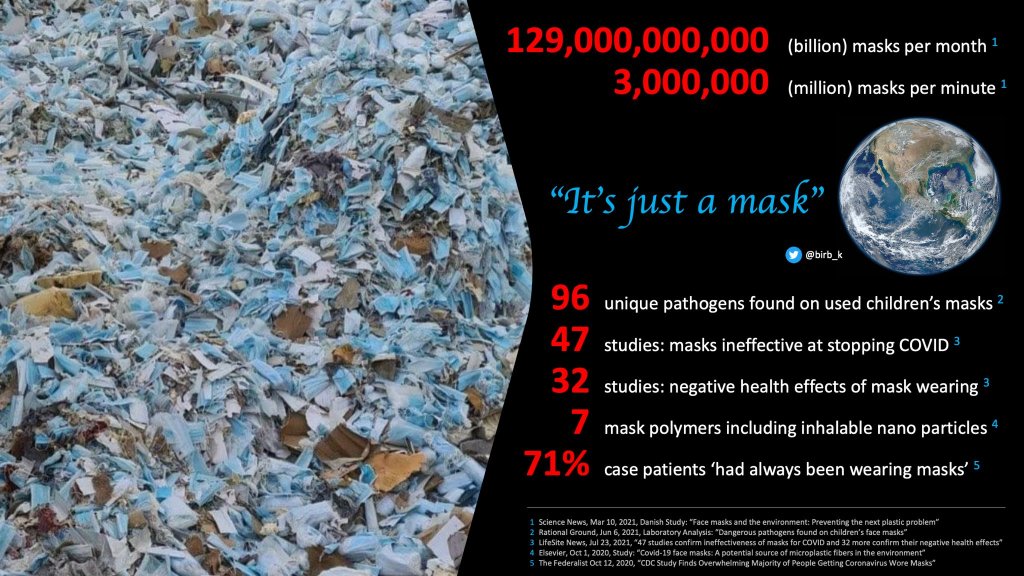
“It’s just a mask”: Global impact of the face mask folly (K. Birb)
Swiss Policy Research | August 22, 2021
It has been known for decades that face masks don’t work against respiratory virus epidemics. Why has much of the world nonetheless fallen for the face mask folly? Ten reasons.
1) The droplet model
Many ‘health authorities’ have relied on the obsolete ‘droplet model’ of virus transmission. If this model were correct, face masks would indeed work. But in reality, respiratory droplets – which by definition cannot be inhaled – play almost no role in virus transmission. Instead, respiratory viruses are transmitted via much smaller aerosols, as well as, possibly, some object surfaces. Face masks don’t work against either of these transmission routes.
2) The Asian paradox
During the first year of the pandemic, several East Asian countries had a very low coronavirus infection rate, and many ‘health experts’ falsely assumed that this was due to face masks. In reality, it was due to very rapid border controls in some countries neighboring China as well as a combination of metabolic and immunologic factors reducing transmission rates. Nevertheless, many East Asian countries eventually got overwhelmed by the coronavirus, too (see charts below).
3) The Czech mirage
In the spring of 2020, the Czech Republic was one of the first European countries that introduced face masks. Because the Czech infection rate initially stayed low, many ‘health experts’ falsely concluded that this was due to the masks. In reality, most of Eastern Europe simply missed the first wave of the epidemic. A few months later, the Czech Republic had the highest infection rate in the world, but by then, much of the world had already introduced face mask mandates.
4) Fake science
For decades, studies have shown that face masks don’t work against respiratory virus epidemics. But with the onset of the coronavirus pandemic and increasing political pressure (see below), suddenly studies appeared claiming the opposite. In reality, these studies were a mixture of confounded observational data, unrealistic modelling and lab results, and outright fraud. The most influential fraudulent study certainly was the WHO-commissioned meta-study published in The Lancet.
5) Asymptomatic transmission
Another factor contributing to the implementation of mask mandates was the notion of ‘asymptomatic transmission’. The idea was that everybody should be wearing a mask because even people without symptoms might spread the virus. The importance of asymptomatic and pre-symptomatic transmission is still a matter of debate – up to half of all transmission might occur prior to symptom onset –, but either way, face masks simply don’t work against aerosol transmission.
6) Political pressure
Several political factors contributed to the implementation of mask mandates. First, some politicians simply wanted to “do something” against the pandemic; second, some politicians thought face masks might have a “psychological effect” and might “remind” citizens to stay cautious (if anything, it had the opposite effect: creating a ‘false sense of security’); third, some politicians used mask mandates to enforce compliance and pressure the population into accepting mass vaccination.
In addition, there was a vicious circle involving science and politics: politicians claimed to “follow the science”, but scientists followed politics. For instance, the WHO famously admitted that their updated mask guidelines were in response to “political lobbying”, not new evidence. The most influential lobby group was “masks4all”, founded by a “Young Leader” of the World Economic Forum (WEF).
7) The media
Perhaps unsurprisingly, most of the ‘mass media’ amplified the fraudulent science and the political pressure driving mask mandates. Only some independent media outlets and some truly independent experts questioned the validity of the underlying evidence. However, their voices got suppressed as dubious “fact checking” organizations eagerly enforced official guidelines and throttled or censored many articles and videos critical of face masks.
8) “Surgeons wear masks”
Surgeons wear masks, so they must be effective, right? This was another notion contributing to the face mask misunderstanding. In reality, surgeons wear masks not against viruses, but against much larger bacteria, but more importantly, studies have long shown that even surgeons’ masks make no difference in terms of bacterial wound infections.
9) Misleading memes
To convince low-IQ social media users of the effectiveness of face masks, several unscientific memes were created. The most notorious one probably was the “peeing into your pants” meme, shared by many ‘health experts’ (really). Many of these memes exploited the fact that most people simply don’t realize how small and ubiquitous viral aerosols really are.
10) Doubling down
After mask mandates had been implemented globally and hundreds of billions of dollars had been spent on masks, it soon became obvious – once more – that masks simply don’t work against respiratory virus epidemics (see charts below). But at that point, neither politicians, nor ‘health experts’, nor duped citizens who had to wear them for months wanted to admit this anymore.
Instead, some ‘health authorities’ doubled down and enforced outdoor masking (even on beaches), double-masking, or N95/FFP2 masking, to no avail. The one novel scientific insight produced during the coronavirus pandemic was that even N95/FFP2 mask mandates have made no difference at all.
Sweden: The exception that proved the rule
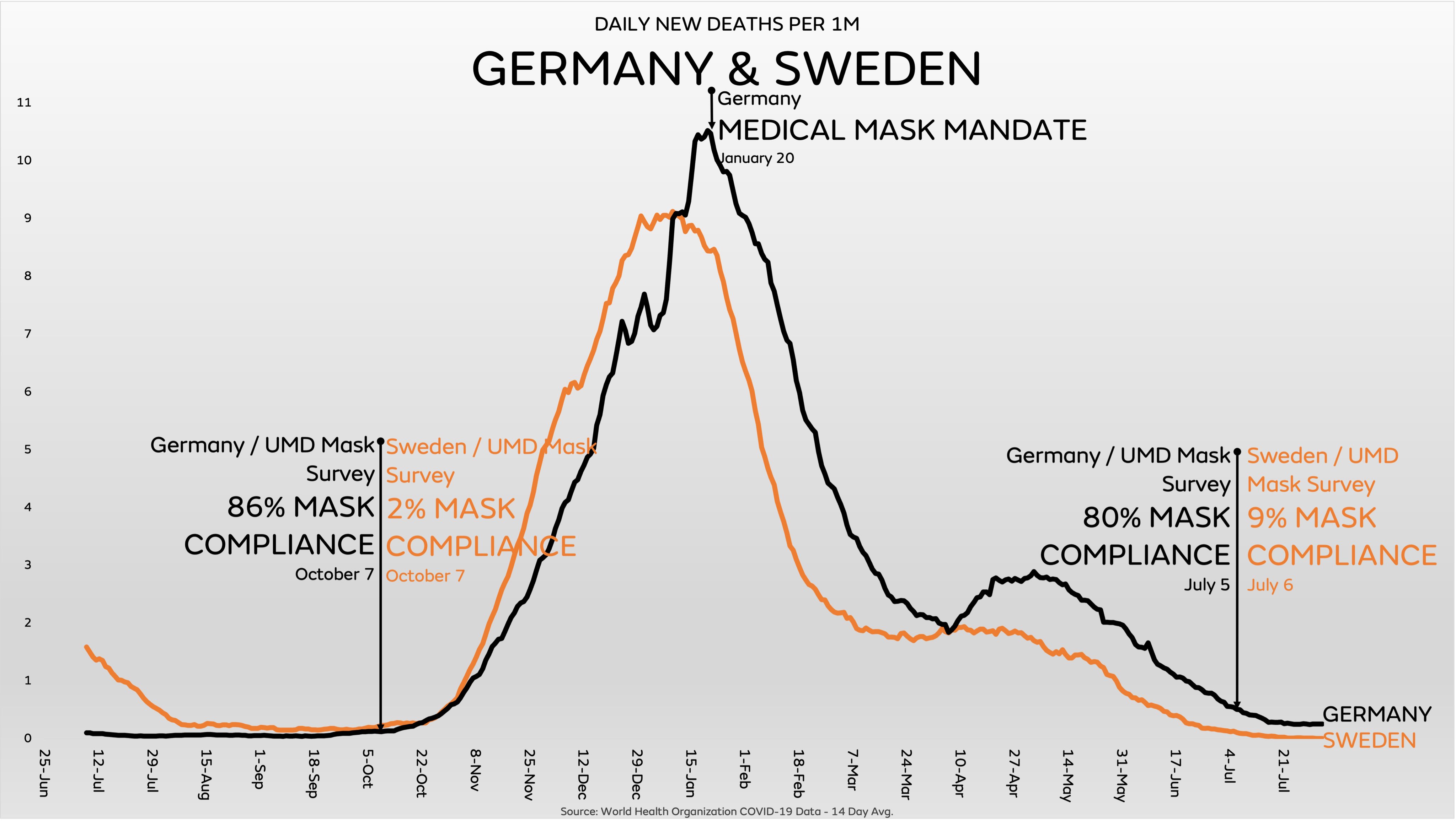
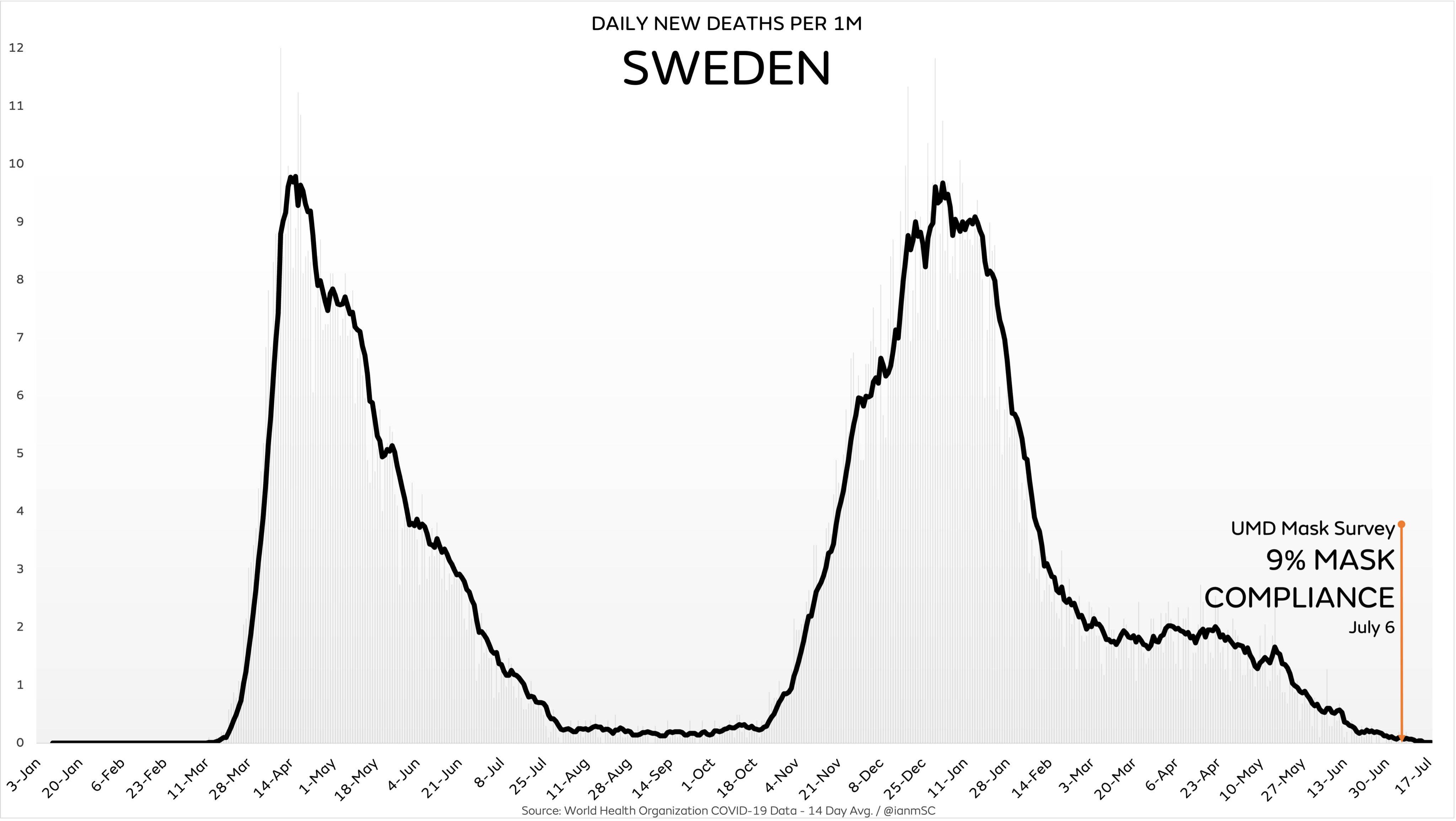
Only very few countries in the world have resisted the face mask folly. The most famous example certainly is Sweden (see charts below), which has also resisted the lockdown experiment. Naturally, Swedish coronavirus mortality has remained below the European average. But the many vicious attacks against Sweden by much of the international media showed just how difficult it has been to escape the global madness and follow the real science during this bizarre pandemic.
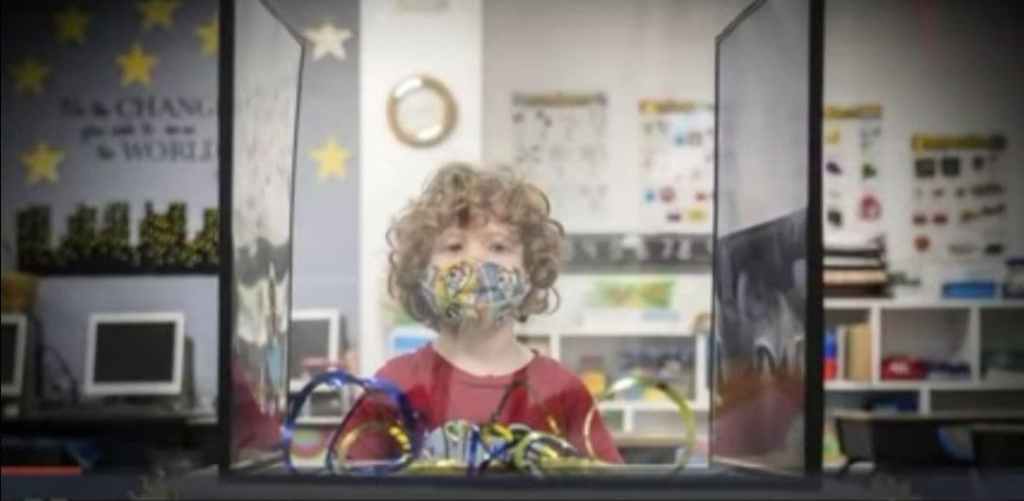
A child wearing a mask at school (more)
How face masks and lockdowns failed
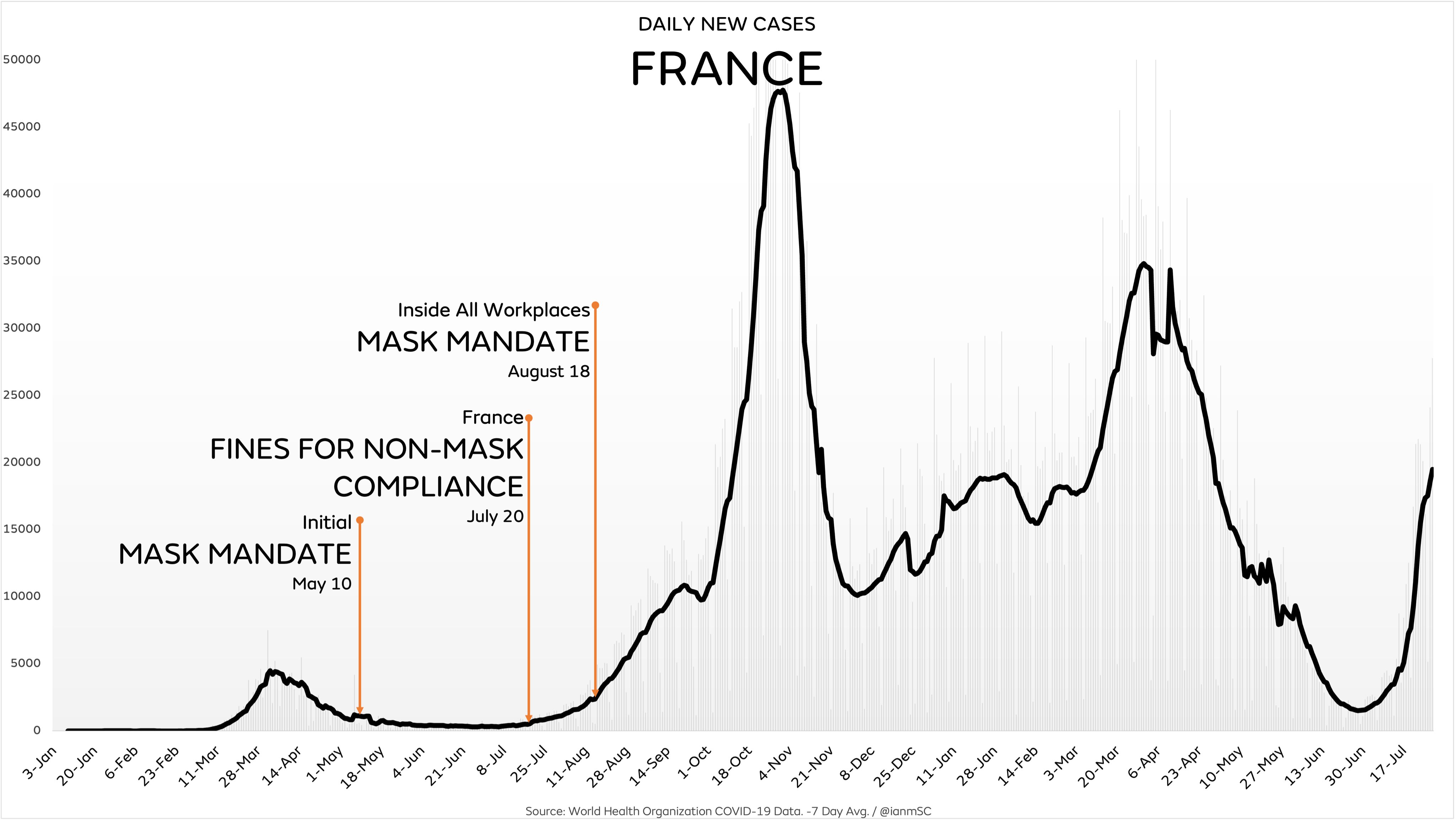
The following charts show that infections have been driven primarily by seasonal and endemic factors, whereas mask mandates and lockdowns have had no discernible impact (charts: IanMSC).






Comments in response to FDA’s license of Pfizer vax today for 16 years and up
By Meryl Nass, MD | August 23, 2021
The vaccine-induced protection provided by Covid vaccines starts fading within months. In late July, Israel’s Minister of Health said vaccine protection had dropped to 39%. It is not preventing severe illness in Israel and the UK either, though the US CDC changed its collecting methods for breakthrough cases on May 1 to disguise this fact.
While the US government has said it will begin booster doses of mRNA vaccines the week of September 20, there is actually NO evidence that Covid-19 boosters will provide increased protection against infection, or that they are effective against the delta variant or other new variants.
For other vaccines, such as mumps and pertussis, there is no evidence that booster doses after the initial course add measurable protection.
Boosters do raise antibody levels, briefly, which increases the risk of autoimmune adverse effects, immune overactivity and the dire possibility of antibody-enhanced disease (AED), a.k.a. vaccine-enhanced disease (VED), in which those who are vaccinated have a much more severe illness when exposed to Covid than do the unvaccinated.
Since the UK’s top vaccine expert Sir Andrew Pollard told Parliament 2 weeks ago that herd immunity cannot be obtained—in fact it is a “myth”– because the vaccine is not halting transmission, and since the CDC director confirmed this, there is no logical reason to mandate vaccinations for anyone, since the vaccines are not protecting the community.
Mandating vaccinations for the young and healthy, who are at minimal risk from Covid, but at increased risk from Covid vaccinations, is a travesty. The risk of myocarditis after vaccination in a male teenager is 50 times higher than the risk to a 65 year old, according to CDC data. The teenager has many years ahead of him, while the long-term side effects from Covid vaccines have yet to be identified.
Reported deaths following Covid vaccinations are at least 10 times higher than for any vaccine ever approved in the US. Yet FDA and CDC have never explained the causes of these deaths, and they pretend they do not exist.
This fact alone should have been sufficient to stop FDA granting a license to the Pfizer vaccine.
Here is the convoluted license-plus-authorization letter from FDA. This could be a bait and switch–see the next post.
Robert Dingwall: We Need to Hold Advocates of Mask Mandates to Account
By Toby Young | The Daily Sceptic | August 23, 2021
Robert Dingwall, a Professor at Nottingham Trent University and a leading sociologist, has written an excellent piece for Social Science Space criticising the imposition of mask mandates, given the paucity of evidence that masks interrupt transmission and the lack of any robust evaluation of the harms masks cause.
First, Professor Dingwall looks at the two main sources of evidence purporting to show that masks are effective.
One is studies at various scales of the impact of mask mandates on reported infection rates. These may compare cities, states, provinces or entire nations using time series data to look for inflections of rates that may be attributable to the mandates. A great deal of mathematical ingenuity has been expended in trying to control for the numerous confounders from biases in reporting, differences in diagnosis, leads and lags in public behaviour in response to the mandates, seasonal fluctuations, mobility – the list is almost endless. By the time these manipulations are complete, though, it is very difficult to conclude that there is any clear and obvious effect. Infection rates do not seem to vary much between comparable communities regardless of the NPIs that have been introduced. I have yet to see a study that identifies a clear and unequivocal benefit from a mask mandate in the form of an obvious inflection point attributable to the intervention. For all the reasons cited, this would be hard to find so perhaps we should not treat its absence as conclusive proof of a lack of benefit so much as something that is consistent with the RCT evidence that any benefit is likely to be minimal.
The other main source of evidence is laboratory studies of the properties of masks using techniques from physics and engineering. Some studies treat masks as a straightforward air filtration experiment. These are well-controlled and reproducible, but bear little resemblance to real-world conditions. The more sophisticated studies use mannikins to create a jet of air carrying inert particles into a controlled space, mimicking human exhalation. Masks can then be used to interrupt the air flow. The resulting measurements are the basis for computational models that provide more general descriptions of the spread of particles, which may be used to create video simulations. These studies are often elegant but suffer familiar problems in generalising to real-world environments. Within reason, the experimenter can manipulate the average velocity of the jet, the size of particles and the permeability of the mask in ways that aim to mimic breathing at different rates, coughing or sneezing. To get reliable measurements, including video or photographic evidence of the dispersion of the particles, the simulated exhalations must enter still air. Air, however, is never still in the real world. In any space there are thermal currents that are moving air around and dispersing exhalations in ways that are not captured, and probably cannot be captured, by the experimenter in a physically meaningful way. The efficacy of masks is also sensitive to the choice of particle size. If the experimenter favours droplets, larger particles, masks capture these quite well – but they also fall quickly to the ground and are unlikely to be inhaled by anyone at a normal social distance. If the experimenter favours aerosols, smaller particles, these are likely to pass through or around cloth masks, whose pore size is typically significantly larger than the aerosol particles. In which case the masks may filter a small proportion of the particles but probably let most through or around the edges. Where higher quality masks have been mandated, the community evidence runs into the same problems as before.
Having concluded that neither body of evidence is remotely persuasive, he then turns to the potential harms that masks do.
The precautionary principle also requires a proper evaluation of the potential harms. Few such studies have actually been done but relevant issues can readily be identified. Four are clearly important. First, they discriminate against a large group of people with communicative disabilities of speech and hearing, with neurodisabilities, such as autism or Aspergers, or with mental health issues, such as prior trauma from confinement as an abused child or as a survivor of sexual assault. Second, they discriminate against people who have medical consequences such as acute skin infections, eye infections or respiratory infections as a result of mask use. In the pre-pandemic world, such people could find workplaces where these issues were avoided but they cannot escape the mandates. Third, there is the impact on child development, particularly in relation to language and social interaction. The American Academy of Pediatrics claimed that there was no evidence for this, but there is a substantial body of research from psychology, education and linguistics establishing the importance of observing faces, particularly for small children. Fourth, and perhaps hardest to measure, there is the impact on community levels of fear and anxiety. This, indeed, has been the ultimate fall-back for committed advocates of masks – they may not have an impact on the transmission of the virus but they remind everyone that there is a pandemic going on and that they should be cautious every time they set foot outside their home – the safety of the home is assumed, of course. The consequence, of course, is that we are nudged towards regarding our fellow human beings as no more than potential vectors of infection. Everyone is guilty until proven innocent. The trust on which everyday life depends in modern societies is fatally compromised.
He concludes that mask mandates should never have been introduced, given the paucity of the evidence and the lack of research into potential harms.
If we do not think it is acceptable to have our lives ordered in ways that discriminate against large sections of the population, that impair the development of children, that damage the mental health of the nation and that make each of us fearful of the other, then it is time to hold the advocates of masking to account for the quality of evidence. It is simply too fragile to justify coercive measures, whether by the state or by private actors. Why has there been so little investment in RCTs? Why are mask advocates now arguing that RCTs would be unethical because the benefits are obvious, when they patently are not? It is more unethical to perpetuate a practice without evidence than to challenge one’s preconceptions. This is truly how science progresses and debate should be conducted.
Worth reading in full.
This Week in the New Normal #3
OffGuardian | August 22, 2021
1. UNIVERSITIES PUNISHING UNVACCINATED STUDENTS
Universities in the United States are issuing fines to any students who refused to take the Covid “vaccine”, according to a report from Zero Hedge.
West Virginia Wesleyan College, announced a few weeks ago that it will fine any unvaccinated student $750. Whilst Connecticut-based Quinnipiac University will fine them $100 per week increasing in $25 increments (equal to $2250 for the first semester).
Not only that, but unvaccinated students will also be denied internet access. In the modern age, attempting to function in an academic institution without access to the internet, emails or digital learning resources is almost impossible. So this is essentially a mandate under any other name.
Some bigger colleges have already started putting full-on mandates in place.
Other campuses are instituting “testing fees” of over $1500, but only for the unvaccinated. This is in spite of the fact vaccinated people are capable of testing positive for Covid.
2. “THE GREAT JOBS RESET”
The World Economic Forum (WEF) is the big daddy when it comes to pushing out the Great Reset, it’s the brainchild of their Chairman Klaus Schwab after all, and this past week they have unveiled their latest project. It’s called the “Jobs Reset Summit”.
The summit discusses, among other things, the alleged “impact of the pandemic” on employment. Bemoaning the loss of an estimated 255 million full-time jobs from the global economy, without ever mentioning (naturally) that these job losses had nothing to do with Covid, and everything to do with lockdown policies which were never intended to stop the spread of any virus.
The most alarming position to come out of this summit, however, was definitely a tweet that stated:
Get your COVID-19 jab – or you could face consequences from your employer #COVID19 #JobsReset21
Clearly supporting the idea that unvaccinated people should face censure, or even termination, from their employers. Just like they did with their “You’ll own nothing and be happy” article, they deleted the tweet and re-titled the article after a somewhat negative reaction.
Fortunately, once something is on the internet, it’s there forever.
3. YET MORE CASHLESS SOCIETY BS
The march toward a cashless society continues apace. We’ve been told already that cash is bad for the environment, and also contaminated with germs and drugs. Now the press is simply treating the cashless future as a fait acompli
This week alone there are articles about how Brazil, and India, and Saudi Arabia will all be cashless in the near future. China isn’t far behind.
Forgettable Guardian columnists are writing faux nostalgia puff-pieces about missing cash when it’s gone. Parishes are ditching collection plates for QR codes.
It seems the argument phase is over, definitely over. And what brought that on? Well Covid, of course. Multiple publications have been more than clear that the “pandemic” produced a “the viral spread of cashless society” and that a “cashless society is closer thanks to corona”.
It seems the totally real (and not-at-all agenda-driven) pandemic has accidentally facilitated the rise of a highly controlling government policy, which was around years before “Covid” even existed.
Weird how many times that’s happened in the last 18 months.
4. NO TRANSPLANTS FOR THE UNVAXXED
This week hospitals in both the USA and Ireland have admitted to removing unvaccinated patients from the donor organ waiting list.
Beaumont Hospital in Ireland sent out letters recommending doctors remove all unvaccinated patients from the kidney transplant waiting list. Whilst a man in Washington state was told he would not be considered for a heart transplant as long as he declined the Covid jab. Other patients in the same hospital, the University of Washington Medical Center, are reportedly in the same position.
The good news is that the public outcry was so intense, that the Beaumont hospital was forced to reverse its decision within days of the story breaking. But this policy will not go away, and just become more covert as it spreads.
BONUS: CREEPY SPEECH OF THE WEEK
Whoever runs the corporate puppet that lives inside Justin Trudeau’s skin has clearly decided it’s time for him to shake his rather inneffectual image and try and become a forceful public speaker. In a “strongman” speech in the run-up to the Canadian elections, Trudeau worked himself into a frenzy on vaccination:
“If you don’t want to get vaccinated, that’s your choice. But don’t think you can get on a plane or a train beside vaccinated people and put them at risk!”
A tip for the future though – if you’re going to have the blandest man in the world try and excite a crowd, give him more than 80 people to work with. That said, however poorly delivered and however lukewarm the reception, the sentiment itself is very unsettling. Full on segregation in Canada. As someone remarked to us on Telegram, “instead of the back of the bus, it’s now no bus at all.”
IT’S NOT ALL BAD…
We’ve got the usual protests in France, Australia and all over the world to report this week. It’s also in the news that Denmark will be abandoning all Coronavirus measures from October first… but whether that’s truly good news remains to be seen.
However, this week’s main entry for INAB comes in the form of a music video that tells the whole story:
You can follow Lukas Lion on youtube or Instagram, and stream the song on Spotify, Apple music and other platforms.
We’d also remind everyone in the UK that next Saturday, the 28th August, is the Unite for Freedom “Freedom Carnival” protest in London (and maybe other cities around the country). You can also follow their telegram channel for updates.
***
All told a pretty hectic week for the new normal crowd, and we didn’t even mention the Department of Homeland Security and Council on Foreign Relations dialling up the “terrorism threat”, or Australia’s new “national resilience centre”.
The Vapor, the Hot Hat, & the Witches’ Potion

By Margaret Anna Alice | Through The Looking Glass | August 3, 2021
Once upon a time in a prosperous land, a rumor swept across the kingdom that there was an invisible vapor floating through the air. Many vapors had come before, but this one was so extraordinary, it called for an extraordinary response.
This vapor, the town criers cried, could kill you at any time, anywhere. You could get it by talking, breathing, or singing. You could get it by standing or walking too closely to someone. You could even get it by playing. And the scariest thing of all—you could get it and not even know you had it.
The only way to escape was to hide indoors, keep away from people, and rub your hands with a clear jelly every time you touched something. Merchants stopped trading, apprentices stopped learning, and people stopped seeing people.
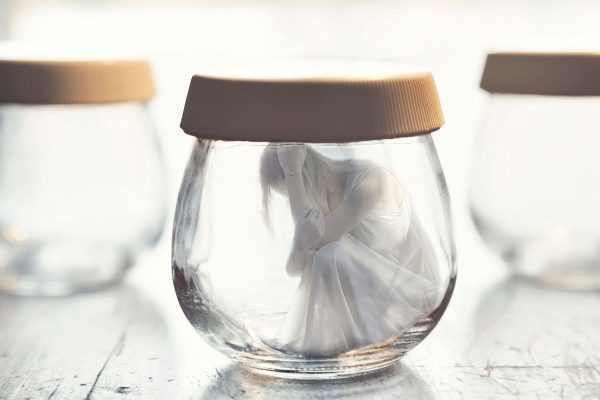
Every day, the town criers yelled out the number of people who had caught the vapor, although most didn’t know it since they felt the same as usual—just a lot more scared. They only learned they had it because of a certain spell a sorcerer had written down before the vapor came. The sorcerer had said it wasn’t supposed to be cast for vapors and couldn’t tell people if they had caught a vapor or not. But the sorcerer had died, and the king’s counselors decided to cast the spell, anyway, and that is how people found out they had the vapor.
The town criers shouted the latest death tolls so often their voices grew hoarse. Almost every one who died was very, very old or very, very sick or very, very fat. Hardly anyone else died, and at the end of the year, it would turn out about the same number had died as had in other years.
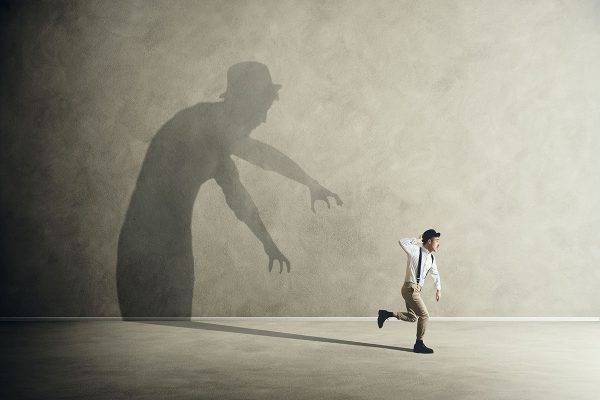
Still, it was a very scary vapor, and the entire kingdom had to change for the good of the public. The land was no longer prosperous, but the king just minted more coins and tossed them out to his subjects so they wouldn’t notice right away.
Eventually, people were told they could come out of hiding and the marketplace could open back up if everyone followed a few rules. They had to wear a hot, scratchy hat that covered their ears and eyes so the vapor couldn’t get into their earholes or eyeholes. They had to hop five times forward and five times backward if they accidentally got too close to another person. And, of course, they had to rub their hands with jelly after touching anything.

Some people thought the hats looked silly and were even a little dangerous since they made it hard for them to hear and see and made them sweat in the summer. The hopping took so much time, people weren’t able to get much done. When those people didn’t wear the hats or hop around, the rest of the people got very, very angry and said it was their fault people were dying and getting sick and couldn’t live the way they used to live. Some even took to wearing two or more hats for extra protection against the anti-hatters and anti-hoppers.

Every so often, the king would tell people to hide back inside again because too many people were catching the vapor. They couldn’t work or shop or visit people they loved. There wasn’t much to do besides lie around listening to the town criers, who always let people know how scared and angry and resentful they should all feel, especially toward the anti-hatters and anti-hoppers.
Suddenly, people started feeling more hopeful. A few witches who were richer than all the world’s kingdoms and queendoms combined offered to make a potion people would need to swallow every so often to keep them safe from the vapor—but it would only work if everyone drank it together.

It took a few months, but eventually the witches each had their own flavor—grape and orange and tropical punch—and they were ready to pour them into people’s mouths. Whenever potions had been made in the past, the witches had had to spend years and years making sure it was safe before giving it to people. This time, though, the vapor was so scary, they skipped all those steps so people could be saved sooner. They even got the king to issue a special decree so no one could hurt the witches if anything bad happened to them after drinking the potion. The king gathered three-quarters of the coins he had collected from the people that year and presented them to the witches.

Almost everybody couldn’t wait to drink the grape or orange or tropical punch potion. They bragged about going to get it and told everyone after they got their first and second drinks. When they came across someone who didn’t want to drink it, they got very, very cross. The town criers told everyone to yell at the anti-drinkers because it was their fault they couldn’t go back to life like it was before the vapor.
Something strange happened after people started drinking the potion. Some of them caught the vapor, anyway, but that was because it was a version of the vapor the witches hadn’t planned for—still, it was important to drink both doses of the potion because it was better than not drinking them. To be safe, though, the town criers said they should go back to wearing hot hats and hopping—although most hadn’t stopped to begin with because they were afraid of what would happen if they did (or worse, they might be mistaken for an anti-hatter, anti-hopper, or anti-drinker).
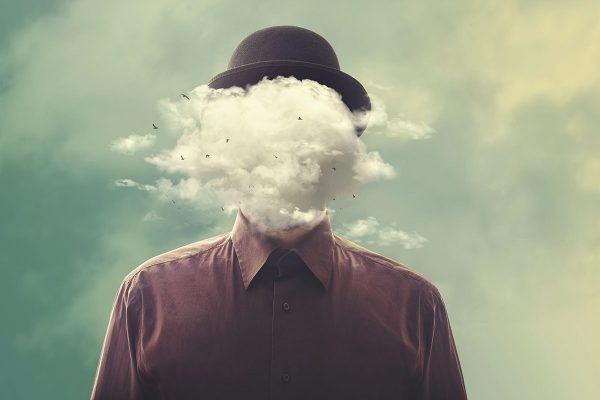
Even stranger, some of the people who had drunk the potion died either right after or not long after drinking it. Unlike the people who died from the vapor, these people were often very, very young or very, very healthy or very, very fit. The town criers never shouted about these deaths. If anyone brought it up, they called them an anti-hatter, anti-hopper, and anti-drinker.
Being an anti-drinker was the worst of all because everyone knows you need to drink to survive. If you’re against drinking the potion, you must surely be against drinking water, too, and we all know you can’t live without drinking water.
Not everyone who drank the potion died. Some just had peculiar things happen to their bodies. They shook all the time or got rare diseases or noticed parts of their bodies stopped working. They were bedridden or lame or hurt in different ways and couldn’t live the way they did before or even after the vapor. The town criers didn’t tell anyone about these people, either.

And then there were the drinkers who felt perfectly fine … for now. The potion had never been tried for longer than a few months, so no one was really sure what would happen in the next year or two or longer. It was also a different kind of potion than anyone had ever drunk before. This potion changed something inside you that could never be undone. People would also need to drink new versions of the potion every few months, and the king would need to continue giving three-quarters of the kingdom’s coins to the witches forever, or at least as long as the kingdom existed.

All the surviving drinkers were grateful to the witches and thanked them for saving their lives. They proudly displayed a mark on their chin that meant they’d drunk the potion. The ones who’d drunk it twice had two marks.
Those who didn’t have any marks were to blame for the kingdom’s problems. They weren’t permitted to shop in the marketplace or work or apprentice or take part in any public activities. They were shamed and shunned for being a threat to the people of the land. These people started to feel like they should leave the kingdom, but they weren’t allowed to travel without the double marks, and besides, all the other kingdoms and queendoms were the same as theirs, anyway. There wasn’t anyplace left where people weren’t afraid of the vapor and where they didn’t demand that everyone drink the potion.
Soon, the king decided the anti-drinkers were so dangerous, they would need to be locked in a dungeon until they agreed to drink the potion. They were free to choose whichever flavor they liked. If they decided not to drink, they would simply remain in the dungeon. It was entirely up to them.

One year passed, and then another. There were fewer and fewer people left in the kingdom. Eventually, so few people were left, the king could no longer collect enough coins to pay the witches. The rest of the kingdoms and queendoms around the world were in the same fix. They decided to join together into one king-queendom so they could collect enough coins to buy the potion.
After eight more years passed, there weren’t enough people left in all the world to cover the witches’ dues. The rulers decided everything that belonged to the people now belonged to the king-queendom. The people could still live in their hovels, but they wouldn’t own anything. They could earn their keep through labor—indeed, they might be put to work making the potion!
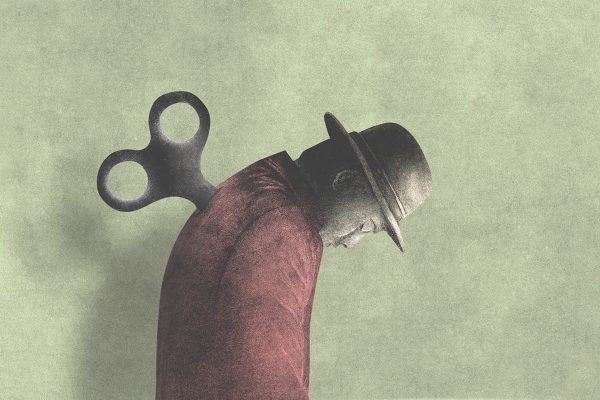
People no longer needed to decide what they wanted to do or be in life because the king-queendom would decide for them. People didn’t need to pay for anything because all the subjects got equally small amounts of the necessities. Everyone looked the same, acted the same, and thought the same.
Most people didn’t remember what it was like before the vapor. Some didn’t even know there was such a time.
The rulers, on the other hand, never wanted for anything. Nor did their friends, the town criers. The witches were the wealthiest of all—and deservedly so, as they had saved the world from the deadly vapor.

It wasn’t long before there were no more subjects. The rulers, the counselors, the town criers, and the witches had all the earth’s riches to themselves, and they lived happily ever after.
If you liked this post from Margaret Anna Alice Through the Looking Glass, why not share it? You can also Buy Me a Coffee, donate via PayPal,
© Margaret Anna Alice, LLC
GM recall of all Chevy Bolts due to battery fire risk likely to cost $1 billion

Chevy Bolt [image credit: GM Authority]
TallBloke’s Talkshop | August 20, 2021
No hope of ever breaking even on that model now, if there was any to start with. Another edition of the recurring lithium-ion safety issue in the world of EVs: battery ’emissions’.
– – –
DETROIT (AP) — General Motors is recalling all Chevrolet Bolt electric vehicles sold worldwide to fix a battery problem that could cause fires.
The recall raises questions about lithium ion batteries, which now are used in nearly all electric vehicles.
President Joe Biden wants to convert 50% of the U.S. vehicle fleet from internal combustion to electricity by 2050 as part of a broader effort to fight climate change.
The recall announced Friday adds about 73,000 Bolts from the 2019 through 2022 model years to a previous recall of 69,000 older Bolts.
GM said that in rare cases the batteries have two manufacturing defects that can cause fires.
The Detroit-based automaker said it will replace the battery modules in all the vehicles.
The move will cost the company about $1 billion.
GM said owners should limit charging to 90% of battery capacity. The Bolts, including a new SUV, should be parked outdoors until the modes are replaced.
Continued here.
Featured Video
Death Spikes & Rising Cancer In Our Youth Explained
or go to
Aletho News Archives – Video-Images
From the Archives
Politicians lie
By Mazin Qumsiyeh | Popular Resistance | August 18, 2013
There is no way to say this truth nicely: Politicians lie. That includes Japanese, American, Egyptian, Israeli, and Palestinian politicians! Is there something more common sense than that? Yet, so many citizens around the world believe their own politicians or wistfully acknowledge lies but think it is part of the job needed to run things. They believe even when politicians contradict themselves blatantly. This phenomenon is rather remarkable. It is a dissonance and disconnect from reality that many seem oblivious to. It is very dangerous because it can lead to accepting rationales for going to war. These can be deadly wars that lead to millions of lives lost as happened in what was called World War 1 and WW2. Even when incredible and declassified evidence abound, politicians continue to lie and old mythologies refuse to die. Here are just a few of the countless lies told to us over the past few decades… continue
Blog Roll
 Aletho News
- From Unipolar Universalism to Multipolar Civilizational Distinctiveness
- RSF military group defects, joins Sudanese army: State media
- Ireland goalkeeper refuses to play ‘Israel’ as squad weighs boycott
- China pushes back against US on Cuba, Iran
- Ukrainian Soldiers, Potential Mercenaries: Have Gun, Will Travel!
- Burnham’s UN debut… A masterclass in British disinformation
- Iran flights continue despite US aviation sanctions
- Global Tipping Points Lead the World Into a State of Entropy
- The day-after at the White House: USA and Xi Jinping
- The Geopolitical Balance in the Red Sea: The UAE Being Displaced by New Players
- If Americans Knew
- Deconstructing Netanyahu’s pants-on-fire UN rant – Daily Update
- Trump betrayed voters with his campaign lies and prioritized a foreign country once he took office
- Netanyahu calls Israel’s war in Gaza ‘opposite of genocide’ in UN speech to near-empty hall
- Settler Kidnappings: Torture, Sexual Abuse and Terrorisation of Palestinian Abductees as Israel Deepens Annexation of West Bank
- Gaza winter nears as 162,000 tents become unusable, raising fears of humanitarian crisis
- Netanyahu says, “It’s the opposite of genocide”; UN says Gaza economy is world’s ‘most severe crisis on record’ – Daily Update
- Israel’s US-Backed Assault on Gaza Has Created the ‘World’s Most Severe Economic Crisis on Record’: UN
- ‘Protecting U.S. Citizens’… From Israel
- ‘This is where I live now, the back of a truck’: a day in the life of a grandmother in Gaza
- In UN Speech, Iran’s President Displays Pictures of Children Killed by US, Brings Attention to Israel’s Nuclear Arsenal
- No Tricks Zone
- New Study: Earth And Venus Surface Warmth Largely Explained By Convection And Lapse Rate, Not CO2 Or Radiation
- 2025 Nature Paper Claiming Worsening Global Drought Gets RETRACTED …Heavily Flawed
- New Study: ‘Global Drought Shows No Detectable Recent Acceleration Under Climate Warming’
- Economic Masterminds: German Socialists Suggest Taxing Productivity Gains Stemming From Using AI
- The South China Sea Has Not Been Cooperating With The Climate Change Narrative
- Energy Crisis: Germany Enters Heating Season With Historically Low Gas Reserve Fill Levels
- New Study: The Antarctic Ice Sheet Gained Mass From 2020-2024 Due To Staggering Snow And Ice Accumulation
- Study: Ocean Heating Rates From Thousands Of Years Ago ‘Dwarf’ Modern Ocean Heating Rates
- Climate Extremists Target, Attack Large-Scale Power Grid Infrastructure In Germany!
- New Study: Antarctic Ice Melt Has Contributed Less Than 1 Centimeter To Sea Level Rise In The Last 30 Years

