India’s “COVID outbreak” & the need for scientific integrity – not sensationalism
Reality versus hysteria in latest fear fest
By Colin Todhunter | OffGuardian | May 4, 2021
Western media outlets are currently paying a great deal of attention to India and the apparent impact of COVID-19. The narrative is that the coronavirus is ripping through the country – people are dying, cases are spiralling out of control and hospitals are unable to cope.
There does indeed seem to be a major problem in parts of the country. However, we need to differentiate between the effects of COVID-19 and the impacts of other factors. We must also be very wary of sensationalist media reporting which misrepresents the situation.
For instance, in late April, the New York Post ran a story about the COVID ‘surge’ in India with the headline saying, “footage shows people dead in the streets”. Next to it was an image of a woman lying dead. But the image was actually of a woman lying on the floor from a May 2020 story about a gas leak in Andhra Pradesh.
To try to shed some light on the situation and move beyond panic and media sensationalism, I recently spoke with Yohan Tengra, a political analyst and healthcare specialist based in Mumbai.
Tengra has carried out a good deal of research into COVID-19 and the global response to it. He is the co-author of a new report: ‘How the Unscientific Interpretation of RT-PCR & Rapid Antigen Test Results is Causing Misleading Spikes in Cases & Deaths’.
For India, he says:
We will never know statistically if the infections have really increased. To be certain, we would need data of symptomatic people who have tested positive with either a virus culture test or PCR that uses 24 cycles or less, ideally under 20.”
He adds that India is experiencing mainly asymptomatic cases:
For example, in Mumbai, they declared two days back that of total cases in the city, 85 per cent were asymptomatic. In Bangalore, over 95 per cent of cases were asymptomatic!”
In his report, Tengra offers scientific evidence that strongly indicates asymptomatic transmission is not significant. He asserts that as these cases comprise most of India’s case numbers, we should be questioning the data as well as the PCR tests and the cycles being used to detect the virus instead of accepting the figures at face value.
As in many countries across the globe, Tengra says people in India have been made to fear the virus endlessly. Moreover, they are generally under the impression that they need to intervene early in order to pass through the infection successfully.
He notes:
The medical system itself works to boost the number of positive cases. Even with a negative PCR test, they are using CAT scans and diagnosing people with COVID. These scans are not specific to SARS-CoV-2 at all. I personally know of people who have been asked to be hospitalised by their doctors just based on a positive test (doctors can get a cut of the total bill made when they refer a patient to a hospital). This also happened to a Bollywood celebrity, who was asked to be admitted by his doctors with no symptoms and just a positive PCR.”
Faulty PCR testing and misdiagnosis, says Tengra, combined with people who want to intervene early with the mildest symptoms, have been filling up the beds, preventing access to those who really need them.
Addressing the much-publicised shortage of oxygen, Tengra implies this too is a result of inept policies, with exports of oxygen having increased in recent times, resulting in inadequate back-up supplies when faced with a surge in demand.
According to Tengra, the case fatality rate for COVID-19 in India was over three per cent last year but has now dropped to below 1.5 per cent. The infection fatality rate is even lower, with serosurvey results showing them to be between 0.05 per cent to 0.1 per cent.
The directors of the All India Institute of Medical Science and the India Council of Medical Research have both come out and said that there is not much difference between the first and second wave and that there are many more asymptomatic cases this time than in the so-called ‘first wave’.
Tengra argues that the principle is the same for all infectious agents: they infect people, most can fight it off without even developing symptoms, some develop mild symptoms, a smaller number develop serious symptoms and an even smaller number die.
Although lives can be saved with the right prevention plus treatment strategies, Tengra notes that most of the doctors in India are using ineffective and unsafe drugs. As a result, he claims that mortality rates could increase due to inappropriate treatments.
As has occurred in many other countries, Tengra notes the way that death certificate guidelines are structured in India makes it easy for someone to be labelled as a COVID death just based on a positive PCR test or general symptoms. It is therefore often difficult to say who has died from the virus and who has been misdiagnosed.
And the issue of misdiagnosis should not be brushed aside lightly. In a recent article by long-term resident of India Jo Nash, ‘India’s Current ‘COVID Crisis’ in Context’, it is noted that the focus of the media’s messaging and the source of many of the horrifying scenes of suffering – Delhi – is among the most toxic cities in the world which often leads to the city having to close down due to the widespread effects on respiratory health.
Nash also argues that respiratory diseases like TB and respiratory tract infections such as bronchitis leading to pneumonia are always among the top ten killers in India. These conditions are severely aggravated by air pollution and often require oxygen which can be in short supply during air pollution crises as happens at this time of the year.
As a result, it is reasonable to state that all is not what it might seem to be with regard to media reporting on the current situation.
It is interesting that this ‘second wave’ has correlated with the vaccine rollout (Nash provides official sources to support this claim). Tengra feels this might not be coincidental. He says that the ‘aefi’ (adverse events following immunisation) data vastly underestimates how many vaccine adverse reactions are taking place in the country.
Tengra says that, based on ground surveys and data collected by himself, there is a tremendous number of people who have fallen ill post vaccination, many of them then testing positive for COVID and becoming hospitalised.
The financial incentive for doctors to diagnose people with COVID could also mean many of the people who are ill with other conditions are being placed as COVID patients, while beds are under occupied for people for non-COVID health issues.
Two months ago, there was a lot of vaccine hesitancy in India and many people were not taking the jabs. Tengra notes that the government has had to up the ante in order to get people scared.
He argues:
We are at a crossroads right now in terms of deciding the fate of our country and it will be interesting to see how this plays out.”
Tengra is working with lawyers and other concerned citizens to file legal cases to challenge the idea of asymptomatic transmission and the testing of healthy people. The aim is to also improve the testing in line with evidence-based protocols.
But that is not all:
We will also be challenging the current vaccine rollout, highlighting the issues with trials that have been conducted, adverse events, deaths, vaccine passports and other issues surrounding the subject.”
Tengra is not alone in challenging the mainstream narrative.
A recent article in India’s National Herald newspaper by clinical epidemiologist Professor Dr Amitav Banerjee argues that the current situation in India is not due to the lethality of the virus but by the numbers who are ending up in hospital, which are exposing cracks in India’s public health infrastructure and the inequitable distribution of health services. Even at the best of times, he argues, there is a mismatch of supply and demand. Little wonder, therefore, that we now see an emergency – not squarely due to COVID.
Like Yohan Tengra, Banerjee questions the scientific integrity of the responses to COVID and this includes the rollout of vaccines and the problems which this in itself could bring:
Going all out for mass vaccination with uncertain input on effectiveness is a big gambit. We have a vaccine against tuberculosis for decades which has zero effectiveness in preventing tuberculosis in the Indian population. Moreover, there are concerns that haphazard and incomplete vaccination of the population can trigger mutant strains.”
Referring to an editorial in the British Medical Journal by K. Abbasi (‘Covid-19, Politicisation, Corruption, and Suppression of Science’), Banerjee raises concerns about the suppression of science by politicians and governments and the conflicts of interest of academics, researchers and commercial lobbies.
He says:
In a global disaster, world leaders, their scientific advisers, including career scientists, are under tremendous pressure. They have to give the impression of being in control and may resort to authoritarian ways to camouflage their uncertainties. Such tactics deviate from the scientific approach. The present pandemic is full of such uncertainties and therefore a vicious cycle of repression has set in when the authorities and their advisers are faced with rising case numbers.”
None of what has been presented here is meant to deny the existence or impact of COVID-19. People in India are dying – some from the virus, others ‘with’ the virus but most likely mainly due to their pre-existing underlying conditions, and there are others who are being misdiagnosed.
Although excess mortality figures are currently unavailable, Yohan Tengra notes the average age of those who died in the first wave was 50. This time it is 49.
Professor Banerjee says that there is opacity and obfuscation instead of transparency. He calls for moral courage among scientists in advisory positions to the Indian government: scientific integrity is the need of the hour.
In finishing, let us place COVID and the global media reporting of the situation in India in context by returning to Jo Nash.
Even as the alleged COVID deaths reach their peak, more people die of diarrhoea every day in India and have done for years, mostly due to a lack of clean water and sanitation creating a terrain ripe for the flourishing of communicable disease.”
Readers can access the report How the Unscientific Interpretation of RT-PCR & Rapid Antigen Test Results is Causing Misleading Spikes in Cases & Deaths by Yohan Tengra and Ambar Koiri here.
Lockdowns are No Substitute for Focused Protection
By Paul E. Alexander | AIER | May 3, 2021
The most vulnerable groups in the US, which have been least able to afford the lockdowns and school closures, have been devastated by unscientific ineffective policies and have been hardest hit by Covid-19. The health of a nation is directly tied to the socioeconomic health of the nation, and the socioeconomic drivers that played a role in Covid-19’s severity cannot be ignored, particularly for the future burden of disease outcomes. Focused protection would have performed far better than lockdowns, which have not only been a distraction but actually enhanced the unequal impacts of severe outcomes of the virus.
In May 2020 the prevailing winds presciently suggested that there was a significant care-burden on the families in the future. The socioeconomic status of a person can negatively impact their lifestyle choices that are often unhealthy in nature, and this is complicated by the reality that often, this is not by choice, and rather based on ‘need.’ Often there is no other option but maladaptive ones.
The ineptness of the government leaders, public health officials and some television medical experts who have shown gross academic sloppiness and a depth of cognitive dissonance to all views not aligned with their failed ones, in retrospect is available to all for review. The evidence of the segments of the populace at greater risk emerged several months ago, included risk factors such as being elderly, being obese, and having comorbid conditions and has remained firm as a precursor of acquiring the ravages of the SARS-CoV-2 infection.
The failure to adopt appropriate public health measures to prevent the catastrophic disaster on the vulnerable and those at risk is laid at the feet of those officials and experts who were involved in the policy making process. The responsibility of the “Task Force” was protection and the safeguarding of all the citizens and they failed in their efforts. Not only did these experts resort to using political import as their guidance on decision-making, they have now resorted to groupthink and we have entered the age of Lysenkoism science where contrarians, dissenters, skeptics, and people who question their motives and underlying evidence for their ineffective policies, are attacked, slandered, and smeared.
All politicization aside, Covid-19 exploits our risk factors and age is the principle risk factor among them. This is understandable given that as we all age, our immune systems become less durable and there is a gradual deterioration of the immune system, called immune senescence. A focus on the other risk factors that Covid-19 exploits will help us prepare for future coronaviruses and other pathogens that also will exploit such risk factors. Covid-19 is a condition of disparity given its unequal force of mortality on lower SES populations. Minority populations in the US have been hit harder by Covid-19 in terms of severe outcomes due to a multiplicity of factors. The worldwide data suggests that this harm has occurred elsewhere and is not unique to the US. As an example, we are willing to discuss the elevated risk due to excessive body weight (obesity, morbid obesity) and this is a very serious issue that must be debated as a society. We argue that for many impoverished persons with depressed SES status, obesity is tied to economics. We have seen that Covid-19 gives away age to obesity in younger persons. Recent British research in near 7 million persons has shown that a body-mass-index (BMI) of greater than “23 kg/m2 was associated with a linear increase in risk of severe Covid-19 leading to admission to hospital and death, and a linear increase in admission to an ICU across the whole BMI range, which is not attributable to excess risks of related diseases. The relative risk due to increasing BMI is particularly notable in people younger than 40 years and of Black ethnicity.”
In confronting this pandemic in March 2020 and certainly by the summer of 2020, we had in our arsenal (yet failed to capitalize upon) a combination of i) strongly protecting (double- and triple-down protection) the elderly high-risk persons in nursing homes and similar congregated settings ii) use of effective public service announcements on who is at risk and how to mitigate the risk iii) allowing the low-risk portion of the population to live daily lives with sensible reasonable precautions, allowing them to get infected naturally and harmlessly given their low risk of severe illness or death and iv) use of early outpatient drug treatment (sequenced antivirals, corticosteroids, and anti-clotting drugs) in high risk populations, younger persons with comorbid conditions, and obese persons.
Unfortunately, we chose to ignore the signals from the pandemic. The fact remains that age and excess body weight/obesity, have accounted for almost 80% of the hospitalizations, intubations/ventilation, severe sequelae and deaths in Covid-19. A large number of persons who have died in nations such as the US have been overweight with some level of obesity.
The importance of educating the public on the risk factors and the need for such protective efforts can be enhanced by the people themselves. Had public health leaders used their platforms optimally, the geared messaging would have helped reduce the damage significantly. We could have cut deaths significantly had the options described above been used, especially early outpatient treatment.
As an example, the various US health agencies and their leaders have failed the minority and higher-risk African-American communities by neglecting to message the need for vitamin D supplements in persons with darker skin color. Evidence suggests that Vitamin D has an important immune function role and is a means to mitigate acute respiratory distress due to Covid-19, with patients revealing improved clinical recovery (shorter lengths of stay), lower oxygen requirements, and a reduction in inflammatory marker status.
So why have the public health agencies not messaged this to the high-risk minority groups, especially African-American and Asian-Americans? Why have the public health agencies or the Surgeon General not focused on public service messaging on the risk of excess body weight in Covid-19, as the right messaging could have saved tens of thousands of lives? We could have saved tens of thousands of lives had public health not been so politicized and done its rightful job.
We are responding to these failures by calling for a ‘social determinants of health’ approach to Covid-19 (a strong focus on the social aspects) and we find it is unacceptable that the public health agencies and television medical experts continued to use the platform to create fear rather than use their daily podium to address the potentially correctable catastrophic linkages.
US public health agencies such as the CDC appear to be 9 months to one year behind the science, routinely. The messaging, even at this late stage, continues to confuse the public as it waffles regarding masking, social distancing and vaccination, thus squandering the opportunity to help mitigate the impact of Covid-19 in their public health roles.
If the approach is mainly a therapeutic biomedical one to deal with Covid-19 (only to treat the disease or mitigate the epidemic/transmission), then this will end in failure each and every time. We must consider the socioeconomic ‘upstream’ fundaments of Covid-19 (and similar illnesses) and in an integrated manner. There is a certain level of personal responsibility in the decision-making on the part of the individual, as part of this discussion that must not be overlooked, but we would be ignorant to not recognize the direct association between poverty and health and the seemingly strong role that Covid-19 has in exploiting this link. Failure to understand this link between the SARS-CoV-2 virus and the SES of an individual thus fails to address an addressable and treatable issue.
In other words, had the US been a healthier population with a lower burden of noncommunicable chronic type diseases (diabetes, renal disease, hypertension, cardiovascular disease, respiratory illnesses etc.) and had the population been composed of less overweight and obese persons, then the force of severe morbidity and mortality would have been far lower from Covid-19.
If Covid-19 entered a population of 10,000 persons as an example, with a mean age of 40 (eldest being 60) and where all 10,000 persons were healthy, no underlying conditions, and a respectable health care system that could respond if there is need, then Covid-19 will likely (more certainly) severely impact no one and kill no one. At least the impact will be minimal. A strong argument could be made here and this is the approach we are taking. We make this clarion call not only for ‘Western’ richer nations plagued by these chronic conditions and risk factors, but also for poorer developing nations also struggling with these chronic conditions. Covid-19 has shown us that as a society, we must urgently heighten our resolve to combat hypertension, obesity, diabetes, cardiovascular, renal, and respiratory diseases, as well as cancer.
In addition, ‘stopping Covid at all costs’ (zero-Covid) has been a critically flawed approach that has proven to be harmful. The mindset of lockdowns continues unabated although the data suggests otherwise and some epidemiologists are voicing contrary opinions. This was indeed understandable in the first month (March/April 2020), but this may come back to haunt us as we have prolonged the fixation on Covid-19 at the loss of other equally and even more dangerous illnesses.
We already see warning signs of dramatic declines in vaccine-preventable disease vaccinations for children (declines in pediatric vaccine ordering and doses administered), and as such, anticipate a surge in such illnesses we usually control with vaccine programs. Yet we continue to fixate on Covid-19, ignoring other pressing conditions, when we know who the at-risk group is, and we know much better how to treat. Covid-19 in April/May 2021 is not Covid-19 in February and March 2020. Covid-19 is not a death sentence for we can manage and treat it and we do have early outpatient treatment that has proven effective, once given early in the sequelae when the patient has not yet worsened.
We continue to caution against the exploits of the politicians and their strong and deliberate inroads into the scientific community. This egregious intrusion is causing a grave harm on science itself. This includes the medical research community and the academic journal publishing and editors (peer-review process) whose roles have been politicized, and have contributed to the current failures. Covid-19 has revealed the political and corrupted underbelly of academic and medical scientific research and journal manuscript publishing with its steep conflicts of interest that will require many years if not decades to recover its reputation (if at all).
Understanding Covid-19 must therefore not involve the traditional unidimensional, dogmatic orthodoxy whereby we simply wish to control the spread of the pathogen or eradicate it. It remains an impossibility to eradicate a viral pathogen, especially if it is highly mutable like the flu virus. We as humanity have learned to live with such viruses. There is a greater severity and adverse sequelae in lower SES populations (socioeconomically disadvantaged populations), so we have to look at this and consider what is happening and focus here with a more nuanced finessed approach to pathology, as we address targeting the pathogen. This approach will help us now as well as in the future, as we deal with existing, emerging, and reemerging pathogens.
Importantly, (and a potential reason for the excessive burden of death in obese persons we have found this to be the case in African-American, minorities etc.), is the heightened expression of the ACE2 receptor in adipose tissue fat cells in obese persons (expression is higher in visceral and subcutaneous adipose tissue than that in lung tissue). A poor diet dominated by high-sugar, high-starch foods (predominantly rice, potatoes etc.) driven by affordability and the drive for satiety, contributes to obesity and the associated health conditions such as diabetes. The seeds of this are often planted in childhood. Is one at-risk group more differentially impacted and can obesity explain a substantial proportion of the severe sequelae? Do these social and economic factors (socioeconomic inequality) affect the severity sequelae differentially based on type of background condition e.g. will a socially disadvantaged person fare worse with diabetes or kidney disease versus cardiovascular illness?
The answers to some of these questions have been answered by the science community. The CDC posits a similar opinion that health disparities among minorities are real and related to the Covid illness. We applaud the CDC for this position. Yet even with a plethora of information available our policy makers still continue to punt on the issues that remain unaddressed and continue to harm people unnecessarily.
To end, we are arguing that the SES status with the social factors work to drive, perpetuate, prolong, and potentially worsen the emergence and clustering of pathogens and diseases. The above-mentioned comorbidities that exist in the vast majority of SARS-CoV-2 severe illness outcomes and death with Covid-19 especially among the poorer minority communities seem to drive Covid-19 and dramatically compromise a person’s ability to ward off the disease and escalate an infected individual’s susceptibility and vulnerability to harm or worsen their health outcomes. We need to study and understand this if we are to effectively shape prognosis and treatments. Good public health policy must reflect this interwoven relationship between pathogen, pathology, and social and economic equality, not merely impose the blunt and devastating “nonpharmaceutical interventions” indiscriminately on the whole of the population.
Contributing Authors
- Paul E Alexander MSc PhD, McMaster University and GUIDE Research Methods Group, Hamilton, Ontario, Canada elias98_99@yahoo.com
- Howard C. Tenenbaum DDS, Dip. Perio., PhD, FRCD(C) Centre for Advanced Dental Research and Care, Mount Sinai Hospital, and Faculties of Medicine and Dentistry, University of Toronto, Toronto, ON, Canada howard.tenenbaum@sinaihealth.ca
- Dr. Parvez Dara, MD, MBA, daraparvez@gmail.com
DC Mayor Bans Dancing & Standing At Weddings!
By Richie Allen | May 4, 2021
Washington DC Mayor Muriel Bowser has banned dancing at weddings. On Friday, Bowser said that weddings could go ahead but only at 25 per cent of a venues capacity. But she banned dancing and standing at receptions.
A spokesperson for the mayor’s office told FOX News on Friday that the measures were necessary to stop the spread of covid-19. The mayor said that people’s behaviour changes when they dance or stand around.
Meanwhile, Florida Governor Ron DeSantis lifted all local coronavirus emergency orders in his state yesterday. He also signed a bill that effectively bans the use of vaccine passports in Florida.
In New York, Governor Andrew Cuomo has announced that most restrictions will be removed from May 19th. However, Cuomo wants to retain social distancing and mask-wearing.
Will couples really ask wedding guests to remain seated at all times? Will they fence off the dance floor too?
Why is Muriel Bowser not being laughed out of town? Who are these people? Who are they taking advice from? Where do they get the balls to tell people who they can invite to weddings and how they must behave on the day?
You know this all goes away when people turn their backs on idiots like Bowser. Just ignore them. It really is that simple. Ignore them and carry on regardless. The only power they have is the power you give them. It’s time to take it back.
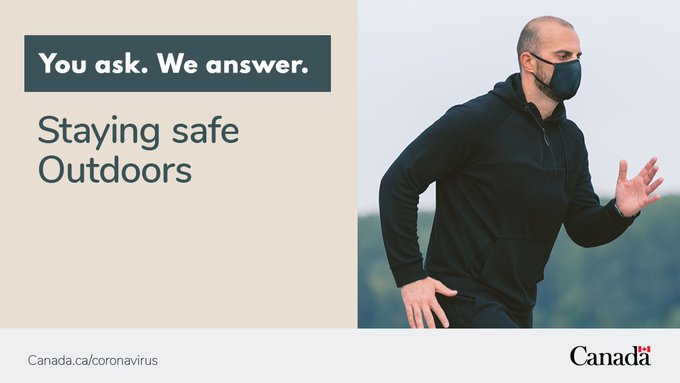
Dr. Theresa Tam recommends wearing masks while jogging outdoors
The Post Millenial | May 2, 2021
Dr. Theresa Tam, Canada’s Chief Public Health Officer, has issued advice on the wearing of masks outdoors.
“You asked: Should I wear a mask when I’m jogging or walking outdoors?” her Tweet begins. “#MaskOn when you’re active outdoors in areas where #PhysicalDistancing is hard to maintain. Tip: Choose routes that make it easy to keep your distance from others.”
The CDC recently said it OK for Americans to not wear masks outdoors provided they are vaccinated and not in a large crowd.
President Biden, who is vaccinated, has continued to wear his mask outdoors, calling it a “patriotic responsibility” to do so.
Early in the COVID-19 pandemic, Dr. Theresa Tam had initially advised against the use of masks but has since advocated for their widespread use, including wearing them during sex.
CLAIM: THE FLU HAS DISAPPEARED NOW THAT COVID IS HERE
By Mac Slavo | SHTFplan.com | April 30, 2021
Imagine that. The seasonal flu that has infected hundreds of thousands of Americans every year has magically disappeared since COVID-19 has surfaced.
If you want to read the most blatant propaganda on Earth that only those with absolutely no critical thinking skills would believe, look no further than Scientific American’s reason why there is no more flu:
The reason, epidemiologists think, is that the public health measures taken to keep the coronavirus from spreading also stop the flu. Influenza viruses are transmitted in much the same way as SARS-CoV-2, but they are less effective at jumping from host to host. – Scientific American
If that’s the truth, why aren’t the masks and “public health measures” stopping COVID-19? People who mask religiously are still getting it. Below is an article about a study conducted by the ruling class and their own alphabet agency that has shown that most of those who get sick follow their commands and wear the muzzle around all the time.
Or are people getting the flu and the PCR tests that aren’t diagnostic tools are set to show a positive COVID-19 test for almost anything? How about you decide. Since the mainstream media can’t be bothered to ask questions, only follow orders, it’s up to us to use our discernment.
As Scientific American reported last fall, the drop-off in flu numbers was both swift and universal. Since then, cases have stayed remarkably low. “There’s just no flu circulating,” says Greg Poland, who has studied the disease at the Mayo Clinic for decades. The U.S. saw about 600 deaths from influenza during the 2020-2021 flu season. In comparison, the Centers for Disease Control and Prevention estimated there were roughly 22,000 deaths in the prior season and 34,000 two seasons ago. –Scientific American
It kind of makes one ponder when they’ll bring in COVID-21 to panic the masses? Is that what all the variants in India are for?
The Fear-Mongering Continues: Over 7,000 COVID-19 Mutations In India, Variants Spread In CA
We had better open our eyes and start really asking some questions about this massive hoax. Time will be up eventually and then there is no going back. With massive amounts of the population already convinced to take a falsely labeled “vaccine” that no one knows the long-term side effects of, things could get interesting, to say the least.
More COIVD-19 Vax Deaths: Think They’ll Blame This On COVID-21?
Never stop asking questions. Stay alert and prepared. If we lose our discernment we will be pulled around by the invisible chains the ruling class is desperately trying to fasten on us. Double-check your preps every few weeks because this is not over. They tell us that much several times a day. But what’s next, is anyone’s guess.
Hancock has blood on his hands – Shocking rise in expectant mothers who’ve lost their baby after having the Covid Vaccine
THE DAILY EXPOSE • APRIL 29, 2021
A tragic milestone has been surpassed as the effects of the mass roll-out of an experimental vaccine continue to devastate the lives of those who “get the jab, when they get the call”. It is with sadness that we have to report that over 100 women have now lost their unborn or newborn baby after having one of the Covid vaccines.
Health authorities in the UK advise women to avoid things like smoked fish, soft cheese, wet paint, coffee, herbal tea, vitamin supplements, and processed junk foods when pregnant. But for some strange and sinister reason they are now adamant the Covid vaccines are 100% safe for use in pregnant women despite the fact there have not been any trials conducted to prove this.
The Joint Committee on Vaccination and Immunisation (JCVI) released a statement just a few short weeks ago saying “it’s preferable for pregnant women in the UK to be offered the Pfizer-BioNTech or Moderna vaccines where available. There is no evidence to suggest that other vaccines are unsafe for pregnant women, but more research is needed.”
This led to the Health Secretary, Matt Hancock to announce on Twitter – “I encourage all pregnant women when they are called to get the jab”.
The fact the JCVI could say “it is preferable for pregnant women” to have the jab, and “more research is needed” in the same sentence would be laughable if it didn’t have such dire consequences. And the fact Hancock actively encouraged pregnant women to get the jab despite the existing evidence it was not safe is criminal.
Unfortunately but not surprisingly the JCVI and Hancock now have blood on their hands since these statements were made.

Blood on their hands because according to the UK Governments latest report on adverse reactions to the Covid-19 vaccines, as of the 21st April 2021 a total of 58 women had suffered a miscarriage after receiving a dose of the Pfizer / BioNTech mRNA vaccine. But the devastation doesn’t end there. The Pfizer jab had also caused two foetal deaths as of the 21st April, 1 still birth and the death of 1 premature baby.

The AstraZeneca viral vector vaccine is also causing devastation to countless lives. As of the 21st April a total of 37 women had sadly suffered a miscarriage after receiving a dose of the AstraZeneca jab, as well as a total of 3 still births.

These numbers may seem small considering the fact we are told tens of millions of people have now received a dose of an experimental Covid vaccine. But let’s put these figures into context. The Covid jab is only just being offered to those in their early 40’s, which means the majority of those who have been vaccinated so far are over the age of 50. The average age for a woman to reach the menopause is 51. This means they cannot get pregnant and therefore cannot suffer a miscarriage.
But then we also have to consider the fact that up until this ghastly unscientific announcement from the JCVI and Hancock the UK Governments advice on administering the Covid vaccine to pregnant women was as follows –
‘Pregnancy
There are no or limited amount of data from the use of COVID-19 mRNA Vaccine BNT162b2.
Animal reproductive toxicity studies have not been completed. COVID-19 mRNA Vaccine
BNT162b2 is not recommended during pregnancy.
For women of childbearing age, pregnancy should be excluded before vaccination. In addition, women
of childbearing age should be advised to avoid pregnancy for at least 2 months after their second dose.
Taking all of this into account, the 102 expectant mothers who have sadly lost their child after having the Covid vaccine as of the 21st April suddenly becomes an extraordinarily high number.
How many more women need to lose their baby for the health authorities to say enough is enough?
Do anti-depressants work?
By Sebastian Rushworth, M.D. | April 30, 2021
Anti-depressant drugs are common. Very very common. According to the Centers for Disease Control in the United States, 13% of adults reported taking an anti-depressant when surveyed a few years ago. Among women over the age of 60, almost one in four was taking an anti-depressant!
When I work in the hospital, I frequently see elderly people who are on five, ten, fifteen, or even twenty drugs simultaneously. Invariably, one or more of these drugs is an anti-depressant. This absurd overuse of medications, an issue known as polypharmacy, is one of the biggest health problems facing elderly people today. Anti-depressants are one of the main drug classes contributing to polypharmacy.
With so many people taking anti-depressants, you would think that they must at the very least be effective. And safe. Why else would so many millions of people be taking them on a daily basis? Why else would doctors prescribe them so freely?
The most commonly prescribed type of anti-depressant is the selective serotonin reuptake inhibitor (SSRI). Examples of this type of drug include sertraline (a.k.a. zoloft), escitalopram (a.k.a. cipralex), and fluoxetine (a.k.a. prozac). SSRI’s increase serotonin signalling in the brain, which is hypothetically a good thing for people who are depressed. They are generally considered to have the best balance of efficacy and safety of any anti-depressant drug, which is why they are the first line therapy.
So, how effective are SSRI’s at treating depression?
A systematic review and meta-analysis was published in BMC Psychiatry in 2017 that sought to answer this question. The review was funded by the Danish government. It identified 131 randomized placebo-controlled trials investigating SSRI’s as a treatment for depression in adults, with a total of 27,422 participants, and meta-analyzed them (i.e. added all their results together to create one big “meta” trial – this gives a more reliable result than the individual trials can provide).
Before we get in to the results, we need to quickly discuss the Hamilton Rating Scale for Depression (HDRS). The HDRS is the scale most commonly used to assess severity of depression in studies, and also to assess how the severity changes over time. It is a 52 point scale, so a score of 52 is as bad as it can get. A score below eight is considered normal (i.e. not depressed). 8 to 13 is considered to be “mild” depression. 14-18 is considered to be “moderate” depression. 19-22 is considered to be “severe” depression, and anything from 23 and up is considered to be “very severe” depression.
The authors of the review decided, before analyzing the data, that anything less than an average reduction of three points on the scale would be considered a negative result. Personally I think that this is a bit generous. I find it hard to believe that anyone would be able to notice a three point reduction on a 52 point scale. I would have set the threshold higher, at more like six points at the very least. One article published back in 2015 came to the conclusion that people are unable to detect anything less than a 7 point difference on the 52 point Hamilton scale. But as we shall soon see, setting the threshold higher wouldn’t have made a difference anyway. So, let’s get to the results.
Overall, SSRI’s resulted in a 1.94 point greater reduction on the 52 point HDRS scale than placebo. Even when only trials of people with very severe depression (a score of 23 or higher) were included, the improvement over placebo was still only 2.69 points.
So, SSRI’s were not able to get over even the generously low bar set by the reviewers. And let’s remember that most of the studies included in the analysis were industry funded, and industry funded studies usually show a bigger benefit than is seen in reality, so it is likely that the real effect is even smaller than was found in the systematic review.
In other words, SSRI’s are not effective as anti-depressants. Considering that they are currently the first line drug therapy for depression, that would seem to be quite a big problem. And before you suggest that we should use non-SSRI anti-depressants instead, like for example tricyclics, I would note that these have not been shown to be markedly more effective than SSRI’s in head-to-head comparisons. Otherwise we’d be using them as the first line therapy, not SSRI’s.
What about safety? Did SSRI’s cause any serious adverse events?
2.7% of participants in the SSRI arm developed a serious adverse event, as compared with 2.1% in the placebo arm. That is a 0.6% absolute difference, which would mean that roughly one in 170 people treated with an SSRI will suffer a serious adverse event as a result of the treatment. Note that the definition of a serious adverse event is an event that causes death, significant risk of death, disability, and/or hospitalization. In other words, “serious” is serious. So even a small increase in serious adverse events is something that needs to be taken quite, well, seriously.
Medical treatments should ideally result in a decrease in serious adverse events. They certainly should not cause an increase. A truly effective anti-depressant would not just make people feel better, it would also make them less likely to try to commit suicide, which would result in an overall reduction in serious adverse events. No such signal was seen here. Even if you look just at suicide attempts, rather than at adverse events overall, there was no signal that SSRI’s decrease their frequency.
Note that the trials in the review were generally of healthy people under 65 years of age. Frail elderly people treated with SSRI’s will likely experience serious adverse events at a much higher rate than that found here.
Speaking of frail elderly people, in particular those living in nursing homes, I want to take the opportunity to point out that they are frequently the heaviest users of anti-depressants. So you would think that there would be a lot of research showing that anti-depressants are useful to give to the frail elderly… Well, having seen that the evidence doesn’t support using anti-depressants in younger people, you might be a bit skeptical by now. A systematic review was published in the Journal of the American Medical Directors Association in 2012, that sought to determine how beneficial anti-depressants are when used as a treatment for depression in people over the age of 65 who are living in nursing homes. The review was funded by the US government.
Two(!) randomized controlled trials were identified that compared anti-depressants with placebo in nursing home residents, with a total of 55(!) participants. It’s pretty shocking that the evidence base is so small, when you consider that nursing home residents are such heavy user of anti-depressants. Basically, when we (doctors) use these drugs on elderly nursing home residents, we have pretty much zero idea what we’re doing, because there is so little evidence.
Neither of the two trials found any benefit to treating nursing home residents with anti-depressants (although to be fair, they were so small that I wouldn’t have expected them to find anything – they were statistically underpowered). The number of participants was far too small to gain any kind of estimate of the prevalence of serious adverse events, although I think it’s fair to assume, as mentioned above, that it would be much higher in this group than in the younger healthier group included in the studies in the previous review.
I’m mainly bringing this tiny systematic review up to illustrate how atrociously small the knowledge base often is when it comes to the effects of drugs on the frail elderly.
What conclusions can we draw these systematic reviews?
Anti-depressant drugs are ineffective against depression. The harms of these drugs clearly outweigh the practically non-existent benefits. That is true for everyone, but especially so for the frail elderly who are at much higher risk of side effects than the general population. In light of this information, which has now been in the public domain for at least a few years, you would expect large campaigns to get doctors to stop prescribing these drugs. Funnily enough, that hasn’t happened yet.
We Need to Hear Much More About Florida and Texas and Less About the Latest Covid Hotspots
By Will Jones • Lockdown Sceptics • April 30, 2021
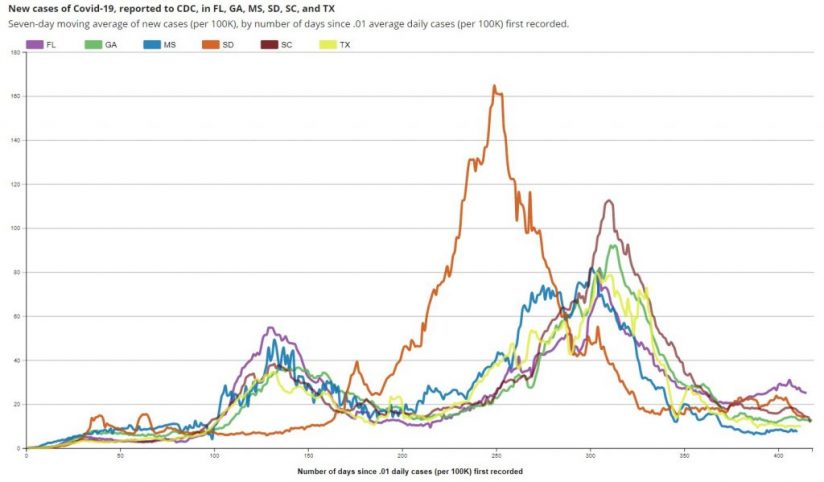
Would that journalists and broadcasters paid as much attention to places with no restrictions doing fine as they do to the latest places experiencing a Covid surge.
All eyes are currently on India and especially Delhi where, after a year of little impact, the virus is making its nasty presence felt. But as Ivor Cummins points out, India for whatever reason has a long way to go to catch up with countries in Europe and the Americas when it comes to Covid deaths. The country is not a good comparison for the UK where the virus is endemic and substantial population immunity is now present.
If only our media would spend as much time telling the population about how Florida lifted its restrictions back in September, how South Dakota never had any, and how Texas and Mississippi reopened in full at the start of March, as they do telling us about how many people are in hospital in Delhi. The latest positive-test data for these open states is in the graph above, along with two other light-restriction states, South Carolina and Georgia. Note the conspicuous lack of surge despite being basically back to normal. What more evidence do our politicians and scientists need that the threat from the virus is overblown and does not warrant social restrictions or emergency measures? Is the Government interested in data which contradict their preferred narrative?
The Telegraph today is reporting that as of June 21st – another seven weeks away – Brits will be permitted once again to attend large events without anti-social and uneconomic distancing requirements and hug one another. Our ultra-cautious scientists are advising that these things might just be okay by then. Though in case you might have thought they would then end the seemingly endless state of emergency, they have said measures such as staggering entries to venues accommodating large groups and good ventilation will still be required. What part of normal don’t they understand?
Nor is there any indication of a move to return international travel to normal, as the country faces more limitations on travel this summer – when most of the country is vaccinated – than last summer – when nobody was. What this has to do with following the science is, as ever, unclear.
What’s strange is that even in America where parts of their own country are living free and showing that the measures aren’t needed, state governments, with popular support and backed by federal agencies, just carry on with their restrictions, lifting them only very slowly and with no obvious commitment to bringing them finally to an end. It’s as though people don’t want to know. Too much has been invested in the lockdown narrative, it seems, for people to be able to cope psychologically with the trauma of facing the truth that it is fundamentally false. Too many reputations are at risk. Too many interests coincide.
Are we doomed to live forever in this Covid state of emergency? I confess it is hard to see what will prompt governments to bring it to an end, now that we live in permanent fear of the appearance of variants and believe we must continually top up the whole world’s antibodies through rolling annual programmes of vaccinations. One of the most depressing thoughts is I find it almost impossible to imagine Boris Johnson facing the camera and announcing: “My friends, our ordeal is over. The data is clear. The virus is now one among many hazards with which we daily must live. Vaccines are available to the vulnerable, as are effective treatments, and we will continually strive to find the safest ways to protect those at risk from this and other illnesses. It is time to resume our old lives. I declare the state of emergency to be over.”
Will we ever reach a point where we no longer even think about whether some activity is “Covid secure”? Where we no longer see our fellow human beings as sources of infection? It would be good to hear much more often from the Government that this is where it believes we are headed, sooner rather than later.
Featured Video

AIDS Inc. by Gary Null (2007)
or go to
Aletho News Archives – Video-Images
From the Archives
Clash of Civilization, Iran Part II
By Jamal Kanj – Intifada-Palestine.com – January 14, 2011
Israel’s survival kit is: perpetuate conflict, insecurity to rationalize collective hate and finally playing victim.
Devoid of conflict, Israel implodes internally; without hate, Zionism loses its justification; and playing eternal victim to continue blackmailing the West. Absence of this holy trinity, Israel ceases to exist.
From its inception, the house of Zion has mastered exploiting adversarial powers to advance Israel’s cause. For instance, their influence over the Democratic Party in the US began with President Truman’s bid for 2nd term election in 1948.
Responding to strong opposition from Secretary of State General George Marshall and Department experts urging against recognition of Israel, President Truman replied: “I’m sorry gentlemen but I have to answer to hundreds of thousands [Jewish voters] who are anxious for the success of Zionism. I do not have hundreds of thousands of [voting] Arabs among my constituents”
Zionists influence over liberal American politics was matched with the doctrinal school of Conservative theoreticians aligning the Republican Party’s platform with Israel’s objectives. The Neoconservative Zionists, coined Zioncons, invented the “Clash of Civilization” concept to fight Israel’s wars. … continue
Blog Roll
 Aletho News
- Merck Virologists Admitted to Falsely Certifying Vaccine Efficacy
- Mandatory Folic Acid for every man, woman & child
- Pro-Palestine protesters arrested outside UK’s ruling Labour Conference in Liverpool
- Mauritius denies landing permit to flight from Israel, forcing cancellation: Tour operator
- Israeli finance minister calls for genocidal war on West Bank, annexation of south Lebanon
- 12 Things Your Psychiatrist Was Trained Not to Tell You
- From Unipolar Universalism to Multipolar Civilizational Distinctiveness
- RSF military group defects, joins Sudanese army: State media
- Ireland goalkeeper refuses to play ‘Israel’ as squad weighs boycott
- China pushes back against US on Cuba, Iran
- If Americans Knew
- Israel forces Gazans to live in constant peril – Daily Update
- Deconstructing Netanyahu’s pants-on-fire UN rant – Daily Update
- Trump betrayed voters with his campaign lies and prioritized a foreign country once he took office
- Netanyahu calls Israel’s war in Gaza ‘opposite of genocide’ in UN speech to near-empty hall
- Settler Kidnappings: Torture, Sexual Abuse and Terrorisation of Palestinian Abductees as Israel Deepens Annexation of West Bank
- Gaza winter nears as 162,000 tents become unusable, raising fears of humanitarian crisis
- Netanyahu says, “It’s the opposite of genocide”; UN says Gaza economy is world’s ‘most severe crisis on record’ – Daily Update
- Israel’s US-Backed Assault on Gaza Has Created the ‘World’s Most Severe Economic Crisis on Record’: UN
- ‘Protecting U.S. Citizens’… From Israel
- ‘This is where I live now, the back of a truck’: a day in the life of a grandmother in Gaza
- No Tricks Zone
- New Study: Earth And Venus Surface Warmth Largely Explained By Convection And Lapse Rate, Not CO2 Or Radiation
- 2025 Nature Paper Claiming Worsening Global Drought Gets RETRACTED …Heavily Flawed
- New Study: ‘Global Drought Shows No Detectable Recent Acceleration Under Climate Warming’
- Economic Masterminds: German Socialists Suggest Taxing Productivity Gains Stemming From Using AI
- The South China Sea Has Not Been Cooperating With The Climate Change Narrative
- Energy Crisis: Germany Enters Heating Season With Historically Low Gas Reserve Fill Levels
- New Study: The Antarctic Ice Sheet Gained Mass From 2020-2024 Due To Staggering Snow And Ice Accumulation
- Study: Ocean Heating Rates From Thousands Of Years Ago ‘Dwarf’ Modern Ocean Heating Rates
- Climate Extremists Target, Attack Large-Scale Power Grid Infrastructure In Germany!
- New Study: Antarctic Ice Melt Has Contributed Less Than 1 Centimeter To Sea Level Rise In The Last 30 Years

