Palestinian film forum breaking the cultural siege on Gaza
Bianca Zammit & Rada Daniell | ISM Gaza | 17 January 2010
The Palestinian Film Forum (the Forum) was established in 2004 as a branch of the Palestinian Artists Union covering both Gaza and the West Bank. In the last couple of months it has intensified its activities aiming to achieve an ambitious list of tasks and ensure development of Palestinian cinematography and its networking with the other world cinematographers.
The Forum recently organised the first film festival in Gaza in many years. The International Al Quds Film Festival took place between 21 and 23 December ‘09 and film makers from 11 Arab countries showed 52 documentary and feature films, two of which were made in cooperation with Spanish and Dutch film associations. All films focused on Al Quds or Palestine and explored issues of life under siege and occupation and five of them were awarded Gold Olive prizes.
Eager to find out more about their work and plans for the future, on 14 January 2010 we met up with the Forum’s founding members, Enas Altawil, Spokeswoman and PR Manager, Zahir Al Kashef, Film and Video Manager and Suad Mhanna, Forum’s President.
They told us that Gaza did not have a cinema and that Gazans were deprived of the art of film and opportunities to escape the grim reality of the life under the siege. When we asked if that was because Gazans were not interested in films, PFF founders told us that nothing could be further from the truth.
Gazans love of film has a long history and that there used to be many cinemas in the Gaza strip. One was located in the Beach (Shati’) Refugee Camp, two in Rafah, four in Gaza City and one in Khan Younis and one of those cinemas was opened 24 hours a day’, said Enas.
The number of cinemas gradually reduced from 1967 onwards and the last one closed in 1987 with the start of the First Intifada.
‘Our dream is to have a cinema in Gaza again. We want to either ‘revamp’ an existing closed one or to build a new one and for this we need to fundraise’, said Enas, ‘ Money is in short supply in Gaza and there are many competing funding priorities for the Gazan Government’. […]
‘The absence of cinema has an impact on the mentality of Gazans’, said Forum’s President Saud. He believes that cinema would play an important role in the development of the culture of dialogue. It would help explore many community issues which Gazans, and young people in particular, are grappling with.
Also, the war and siege have minimised opportunities for creative expression for many existing and potential film makers, professional and amateur. This includes Forum founders Suad Mhanna, who is a well known Palestinian film director, Zahir also a film director and Enas who previously worked for 15 years as a presenter in the Palestinian Broadcasting Corporation. And there are many others like them. There are also many budding film makers and media enthusiasts born out of the long siege and the destructive attacks by Israel a year ago, when the wold media were kept away by Israelis and when many Gazan’s became film makers, journalists and photographers in order to tell the wold what was happening to them.
One of the Forum’s main objectives are to bring together all Palestinian film and media personnel wherever they currently work and give them an opportunity to contribute to the development of Palestinian cinematography.
The Forum also wants to link creative energies of Palestinian film and media artists with those of their colleagues around the world and create opportunities for sharing experiences and developing skills. This would include organising joint training and learning programs, collaborative film making and other media projects and bringing world cinema into Gaza.
Preservation of Palestinian heritage is another important objective. This would be addressed by establishing a film archive and ensuring that Palestinian films, old and new, are made available to film lovers around the world.
The Forum is facing an enormous task of having to address the devastating impact of the siege and occupation and their strangling grip on Palestinian society, including film and media aspects of its culture. This includes: physical isolation, very limited freedom of movement of people and goods and a chronic lack of funding.
The Forum will shortly start to enroll members which shall be open for all those who want to work for the benefit of Palestinian cinematography.
‘The occupation and siege have prevented development of Palestinian film and media in spite of the enormous talent and strong motivation and commitment present. Lots of catching up needs to be done’, said Enas. Zahir added that on the technical side they were starting from zero. ‘We are currently showing films by DVD and we need literally everything including HD cameras, projection, editing, lighting, sound, transmission equipment etc.’, said Zahir adding that they are not after cash but would gratefully receive any of these mentioned essential items.
Enas told us that in the long term they would like to have a building where all resources needed for film making and training would be provided under one roof.
All Forum members stress that it is not only their desire but a duty to their country to ensure that Palestinians have cinematography and to share it with the world. They are well aware of the obstacles they face. ‘Nothing is easy in Gaza’ they all agree and gave us examples of the recent problems they have had to face. Gaza’s borders are almost hermetically sealed and when Forum wanted to invite an innovative Egyptian film director to do a presentation, yet in spite of their best efforts he could not get a travel permit . Also, all film making equipment is banned by Israeli Authorities from reaching Gaza even if there was money to purchase it.
Against all odds, the Forum continues to deliver as best as it can. The Forum has recently held an event called ‘Cinema and War’ where three locally produced films are showing; Beautiful by Hikmet Al Maswi, Little Pieces of Destruction by Abdel Rahman Al Humra and Shadows in the Darkness by Jihad Sharkawi.
Even though “nothing is easy in Gaza’ many Gazans seem to be able to achieve the impossible on a daily basis.
All those who want to be a part of this project to give film back to Gazans and Palestinian film to the world, please email Enas Atawwil – enastawil@hotmail.com
Rada Daniell and Bianca Zammit are human rights activists with the International Solidarity Movement in Gaza.
Haneyya calls for rehabilitating Egyptian-Saudi-Syrian axis in region
 16/01/2010
GAZA, (PIC)– Palestinian premier Ismail Haneyya on Friday called for having a new Arab strategy based on the rehabilitation of the historic axis of Egypt, Saudi Arabia and Syria in order to create a kind of power of balance in the face of Israel.
During the weekly Friday khutba (sermon), Haneyya called on this axis to renew its historic relations with Turkey, which started to reconsider 60 years of its alliance with Israel and restored its Islamic role.
He also expressed his pride to see the rapprochement between Turkey and the Arab and Muslim worlds, calling for investing this for the benefit of the Palestinian cause.
The premier, in another context, stressed the importance of keeping the strategic relations with Egypt and called for addressing the last events of Rafah in a responsible way and stopping the media campaign against Gaza.
In an interview with the Iranian Al-Kawthar satellite channel, premier Haneyya had condemned Thursday the option of settlement and negotiations with Israel to restore the usurped Palestinian rights as a “false pregnancy”, highlighting that the adoption of this option will not lead to real results in light of Israel’s intransigent attitude.
The premier called for a Palestinian-Arab strategy taking into account the fact that the option of negotiation had failed and there is a need for restoring the Palestinian-Arab initiative.
“We do not call on the Arab states to wage a war on the Zionist entity, but we say that we must build a new balance in the region based on the axis of Egypt, Saudi Arabia and Syria in addition to Turkey and benefit from the Islamic republic of Iran,” he underlined.
Regarding the inter-Palestinian reconciliation file, the premier said that 2010 is the year of the national reconciliation because it is a strategic choice and a national need, stressing that his government is seriously determined to end the internal division.
Filmmaker Loach urges cultural boycott of Israel
Press TV – January 15, 2010
The acclaimed British director and winner of Palme d’Or at the Cannes Film Festival, Ken Loach, has called for the boycott of Israeli movies at the international film festivals and cultural events.
“The massacres and state terrorism in Gaza make the showcasing of Israeli films in various sections of international film festivals unacceptable,” Loach was quoted as saying at a ceremony commemorating Israeli offensive on the besieged Gaza Strip by IRNA.
“Tel Aviv sponsors various international film festivals with the intention to open the way for Israeli films.”
He added the call for a boycott of Israeli cultural products comes from many writers, artists, journalists, lawyers, academics, trades unionists and teachers. They see it as “a contribution to the struggle to end Israel’s occupation, colonization and system of apartheid.”
Last July, Loach withdrew his film ”Looking for Eric” from the Melbourne International Film Festival in protest against the Israel’s sponsorship of another filmmaker. Tel Aviv provided airfare for Tatia Rosenthal, whose film ”9.99” is an Israeli-Australian co-production.
In May 2009, Loach as director of the Edinburgh International film festival returned a £300 gift from the Israeli embassy as a sign of his cultural boycott of Israel and in protest of Tel Aviv’s policies towards the Palestinian people.
The Toronto international film festival (TIFF) came under fire in September for selecting Tel Aviv as the subject of its inaugural City-to-City Spotlight strand. Renowned movie makers including Loach, Jane Fonda and David Byrne were among those who signed a statement supporting Canadian film-maker John Greyson, who withdrew his short film “Covered” from TIFF after learning of the program.
In a letter to the festival, Greyson cited Israeli action in Gaza and the expansion of illegal settlements as reasons for his withdrawal.
A United Nations inquiry led by former South African Judge Richard Goldstone details what investigators call Israeli actions “amounting to war crimes, possibly crimes against humanity” during Israel’s offensive against Gaza.
Tel Aviv is worried that charges could be lodged against politicians and army officers for war crimes committed during Israel’s 22-day offensive against blockaded Gaza Strip. Top officials who would be in the judicial cross-hairs could include former Prime Minister Ehud Olmert, former Foreign Minister Tzipi Livni as well as current Defense Minister Ehud Barak.
More than 1,400 Palestinians were killed during three weeks of Israel’s land, sea and air assault in the impoverished coastal sliver. The offensive also inflicted $ 1.6 billion damage to Gaza economy.
Turkish FM: We oppose Iran sanctions
Press TV – January 14, 2010 07:17:58 GMT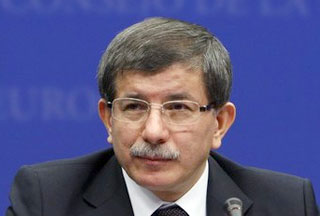
Turkish Foreign Minister Ahmet Davutoglu says Ankara is against imposing further sanctions on Iran over the country’s nuclear program.
“Every country has the right to pursue nuclear power for peaceful purposes,” Davutoglu told the Guardian newspaper during his recent visit to London.
“We also don’t want more sanctions [on Iran]. Sanctions hurt ordinary people and neighboring countries,” he added, repeating a former Turkish offer to mediate negotiations between Tehran and the West.
The Turkish Foreign Minister stressed that the current standoff could only be overcome through diplomatic efforts.
“We don’t forget the very bad experience in Iraq. We would advise intensified negotiations through diplomacy. An absence of mutual trust is the problem,” he said.
Davutoglu reiterated that Turkey was against any kind of nuclear proliferation in the Middle East, whether in Iran, Israel or anywhere else.
Israel, the US and their European allies claim that Iran is pursuing a nuclear weapon. This is while the International Atomic Energy Agency (IAEA) reports and US National Intelligence Estimates issued so far point to the contrary.
Although the published reports by the UN nuclear watchdog and the main American intelligence authority confirm Iran’s stance that it does not have a military nuclear program, Washington and Tel Aviv have not backed down from their stance.
While Iran is a signatory to the nuclear Non-Proliferation Treaty (NPT), Israel remains one of the only three regimes in the world that has not signed the international pact.
Tehran has repeatedly called for the removal of all weapons of mass destruction from across the globe.
Israel, however, is the Middle East’s sole nuclear-armed power with a stockpile that is reported to include over 200 ready-to-launch atomic warheads.
Turkish organization: Arrest Barak for War Crimes When He Arrives Here
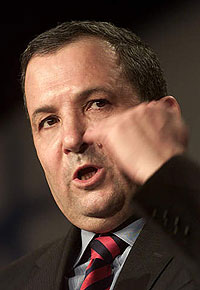 AL – MANAR TV 14/01/2010 – Despite the intensifying crisis between Israel and Turkey, Israeli Defense Minister Ehud Barak is insisting to follow through with his scheduled plans to visit Turkey next week. However, on Thursday it became clear that an arrest warrant may await him there.
One of the major human rights organizations in Turkey, Mazlumder, requested from the Turkish state prosecution to order that Barak be arrested upon landing in the country for what they call “his responsibility for war crimes during Operation Cast Lead.”
A statement published Wednesday night by the Istanbul branch of Mazlumder said that the request is rooted in the right of universal jurisdiction and Article CMK98 of Turkish law.
“Israel perpetrated genocide and crimes against humanity. Israeli army forces bombed the UN building, hospitals, and schools. As was proven by lab tests performed by Turkish universities, they also used phosphorous bombs, which are forbidden. It is known that Israel used an assortment of ammunitions that caused physiological and psychological diseases among the Gazan population.”
The organization’s statement also asserted that a request was made in the past to Turkish prosecution to arrest senior Israeli officials, but then Justice Minister Mehmet Ali Shahin rejected it. The organization hopes that this time around, given the crisis in the relations between the two countries and the precedent provided by efforts in Britain to issue an arrest warrant against former minister Tzipi Livni, the Turkish prosecutor will decide to act differently.
“We know that Barak will arrive in Turkey on the 17th of the month,” said the organization. “(We) need to put him trial and prevent every other Israeli who is responsible for war crimes from entering Turkey freely. We remind the Turkish prosecution of its role. We remind them that Britain has already decided to arrest Tzipi Livni when she was slated to arrive in the country. We remind them that Shimon Peres and Ehud Olmert must also be arrested according to Article CMK-98 of the Turkish law, which grants us the right to try them.”
Mazlumder is an independent organization that was founded in 1991 by a group of 54 lawyers, businessmen, and media correspondents. It has many branches throughout Turkey. The group defines itself as apolitical and promoting human rights regardless of race, religion, or gender and “without double standards for humanity.”
Chairman of the Istanbul branch Attorney Jihad Gokdimar is signed on the current request for an arrest warrant.
This is the not the first time an attempt has been made in Turkey to issue an arrest warrant against senior Israeli officials. In February 2009, a pro-Palestinian organization asked that then Israeli Prime Minister Ehud Olmert, his Foreign Minister Tzipi Livni, Defense Minister Ehud Barak, and President Shimon Peres be put on trial. The general prosecutor in Ankara rejected their request.
Latin American nations send aid to Haiti
Press TV – January 14, 2010
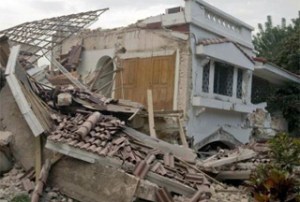 A destroyed building in Port-au-Prince after the earthquake

Latin American nations have scrambled to deploy rescue workers, doctors and supplies to the earthquake-hit island of Haiti.
Rescue efforts stepped up as Haiti’s prime minister warned the death toll may top 100,000 from Tuesday’s brutal 7.0-magnitude earthquake that flattened much of the capital, Port-au-Prince.
Neighboring Cuba which also felt the quake and evacuated some 30,000 people following a brief tsunami alert, sent 30 doctors on Wednesday, according to Cuban media.
Some 400 Cuban medical staff already in Haiti were largely unharmed and two Cuban field hospitals in the capital, Port-au-Prince, had dealt with almost 700 wounded by early Wednesday, said Foreign Minister Bruno Rodriguez.
Brazil said it was sending 10 million dollars in immediate disaster aid, including 28 tons of drinking water and food.
Peru will send two planes with 50 metric tons of humanitarian aid, mainly food, and 18 doctors and nurses and two field hospitals, the health minister said Wednesday afternoon, adding that Peruvian President Alan Garcia may accompany the mission.
Venezuelan President Hugo Chavez promised more aid after the departure of a first group of 50 doctors, firefighters and rescue workers from Venezuela early Wednesday.
Mexico, Colombia and Guatemala also promised to send rescue workers and aid as soon as possible.
Bolivian Defense Minister Walker San Miguel said none of Bolivia’s estimated 200 soldiers in Haiti had been killed, and that the impoverished Andean nation was offering to help UN rescue operations.
American Journalist and Partner Denied Re-entry to Israel – Deportation Imminent
IMEMC | January 13, 2010
…The English Desk at Ma’an News Agency, the largest independent news network in the Palestinian territories, is deeply concerned that its chief editor, Jared Malsin, an American citizen [and graduate of Yale University], was detained on Tuesday afternoon upon arriving at Israel’s Ben Gurion International Airport near Tel Aviv. He is slated for imminent deportation.
In what can only be explained as a retaliatory measure for Malsin’s reporting on Palestine, his long-term girlfriend, Faith Rowold, a two-year, registered volunteer with the Lutheran Church in Jerusalem, was also seized and placed in a holding cell pending deportation. Israeli security agents have prevented the couple from making calls, and lied to concerned American consular staff, denying that the two were even being held.
While the US Embassy is protesting both incidents, and is in constant contact with our staff on the ground, diplomatic officials say that there is little they can do when Israel cites “security reasons” for the denial of entry. Meanwhile, Israeli security officials have quietly expressed concern to Ma’an over this latest abuse of power by authorities at the Interior Ministry, skeptical that the professional journalist they know could be deemed a threat.
For its part, Israel has yet to specify any allegations against Malsin, who indicated – just before his phone was seized by airport guards – that during his hours of interrogation, security agents inexplicably questioned him over his supposed ties to international peace activists, with whom he has no relationship.
Ma’an scrupulously maintains its editorial independence and aims to promote access to information, freedom of expression, press freedom, and media pluralism in Palestine. It has no other agenda. Israel’s arbitrary detention of the head of its English Desk is an affront to professional journalists not only in Palestine, but also to journalists in Israel and abroad, who rely on Ma’an for its accuracy, impartiality, and independence…
Order of Events
Jared’s phone was confiscated by El Al security officials when he boarded a flight in the Czech Republic on 12 January 2010. He was denied the opportunity to make any calls to his consulate, his family or a lawyer between 11am (upon boarding) and 11pm (when his mobile was briefly returned).
In what can only be explained as a retaliatory measure for Malsin’s reporting on Palestine, his long-term girlfriend, Faith Rowold, a two-year, registered volunteer with the Lutheran Church in Jerusalem, was also seized and placed in a holding cell pending deportation.
At 4pm when the flight was disembarked in Tel Aviv, Faith used the phone of a fellow traveler, an Israeli national, in the restroom of the airport. She called her sister with a brief message saying she had landed but indicated that there were problems.
At 6:30pm, the office of US Citizen Services was contacted in Jerusalem. Officials called Israeli airport authorities, who assured them that there were no American citizens being held there at that time. The names of Jared and his companion, also a US national, were reportedly not flagged. The official suggested the couple were out having a good time in Tel Aviv and had simply not gotten in touch.
The official also said local police should be contacted if Jared were actually missing, but assured that his contacts at the airport were not holding him. Ma’an staff asked if the official could confirm whether or not Jared and his companion had in fact cleared immigration.
Jared used the mobile of a French traveler admitted to the detention hall at 8:30pm to call his Faith’s sister again and asked a colleague to immediately contact the US Embassy. He said he was being questioned and feared being denied entry into Israel; he provided passport numbers for himself and his fellow traveler.
The US Consulate official was contacted again with the information that Jared was not out in Tel Aviv, but had in fact been in Israeli custody since 11am that morning. The official immediately expressed concern and said he would call his contacts again at the airport.
The official called back at after 9pm and asked for more information on Jared and his fellow traveler: are they married, is she pregnant, is there a Palestinian connection, what newspaper does Jared write for, etc.
The consulate official was informed that Jared worked with Ma’an. He was also informed that while the US, EU and UK fund programs and productions with the Ma’an Network, that staff at each of the consulates consult the English Desk site daily, even hourly, the State of Israel does not recognize Ma’an as a news organization, and therefore denies its journalists press accreditation.
By 11pm, both Jared and Faith were informed that they had been denied entry. Their mobile phones were returned to them for two hours, and then confiscated just after midnight when they were transferred to holding cells.
At 8am, the US consular official was contacted, called security at the airport and was informed that Jared and Faith were set to be deported at 6am on 14 January 2010, on the next direct flight to Prague, where they had been vacationing a week before.
For further comment, please contact:
George Hale (English)
+972(0)52.785-4907
Raed Othman (Arabic)
+972(0)59.925-8704
Hakim Abdul Salah (Hebrew)
+972(0)59.895-1151
Hariri from Turkey: Defending Lebanon is Not Terrorism
Naharnet-AFP | January 11, 2010
Turkey and Lebanon signed Monday a number of cooperation agreements including an accord on visa-free travel between the two countries and other deals envisaging cooperation in the military, agriculture and transport realms.
The signing ceremony was attended by Prime Minister Saad Hariri and his Turkish counterpart Recep Tayyip Erdogan.
Erdogan, at a joint press conference with Hariri, assured support for Lebanon at all levels.
“We are continuing to put pressure on Israel to implement international resolutions and I have asked Syrian President Bashar al-Assad to visit Lebanon,” Erdogan said.
He slammed the Israeli overflights as “unacceptable action that threatens global peace.”
Erdogan said Turkey would supply natural gas and electricity to help meet Lebanon’s energy needs and that the two countries planned a ferry service between their Mediterranean coasts.
Hariri, for his part, said: “We are not advocates of war, but advocates of the return of our stolen land.”
“Defending Lebanon is not an act of terrorism, but attacks on Lebanon are terrorism itself… We have to stand shoulder by shoulder against the enemy’s plans… We have to stop Israel,” said Hariri answering a question.
Hariri hailed Turkey’s improving ties with Arab countries and increased activism in peace efforts in the Middle East.
“We hope and expect Turkey to continue playing a positive role in trying to bring peace,” he said.
Later Monday, Hariri and the accompanying delegation visited the Turkish parliament in the afternoon.
The premier crowned his talks by an evening meeting with the Turkish President Abdullah Gul in presence of Lebanese Ministers Ali al-Shami, Ziad Baroud, Jerban Bassil, Mohammed Jawad Khalifeh, Mohammed Rahhal, Salim Wardeh, and a number of top Turkish officials.
Protests continue to follow Ehud Olmert
By Adam Horowitz | January 12, 2010

Protest against Olmert speech in Chicago, October, 2009. (Photo:Tom Tian)

A few months ago we followed a series of protests that followed Ehud Olmert across the country as he tried to rehabilitate his image on a US speaking tour. He is still at it, and the protests continue to follow. This Thursday, Olmert will speak at Union College in Schenectady, NY and a coalition of local organizations are planning a protest.
In addition, Union faculty have opposed the decision to host Olmert and are circulating the following statement:
A Position Statement from Members of the Union College Community:
Whereas, Union’s Strategic Plan calls for graduating students who are “engaged, innovative, and ethical contributors to an increasingly diverse, global, and technologically complex society;” and
Whereas, former Prime Minister Ehud Olmert has been indicted on serious corruption charges in his own country, has been officially implicated by the United Nations in war crimes and crimes against humanity in Gaza, and has also been implicated in the suppression of dissent:
We, the undersigned, hold that the administration’s decision to allow the Speaker’s Forum to invite Mr. Olmert was mistaken and contradicts the values and ethics of Union College. We reject the argument that Mr. Olmert’s visit is simply that of a “controversial” individual. We reject the logic that validates such a position, and hold it to be irrational and inconsistent with the intellectual climate we hope to create. Mr. Olmert’s appearance at Union does not contribute to the free exchange of ideas. On the contrary, closed to the general public, under the pall of heavy security, and with questions vetted by moderators, this event seems to limit and stifle opposing viewpoints a set of conditions inconsistent with our tradition of academic freedom. Furthermore, we deplore the significant negative impact this event will have on Union’s academic reputation on the local, national, and international levels. We go on record strongly against this decision to invite Mr. Olmert to speak at Union College, and urge that the event be cancelled.
Anyone wishing to sign this statement is invited to contact any of us listed below to be added to the list of supporters. We are compelled by our consciences to circulate this position statement within the Union College community and beyond.
David Ogawa
Eshi Motahar
Tom Lobe
Mazin Tadros
Andy Feffer
Michelle Chilcoat
Valerie Barr
Soldiers Invade Ramallah, Kidnap a Czech Peace Activist
January 11, 2010 22:34 | By Saed Bannoura | IMEMC News
The Israeli Army invaded on Monday at night the center of the West Bank city of Ramallah, and kidnapped a Czech citizen, identified as Eva Nováková, who started her activities as the media coordinator of the International Solidarity Movement (ISM) three weeks ago.
The ISM reported that Israeli forces broke into the home of Nováková in Al Manara Square and kidnapped her. The raid was carried out by the Israeli army and members of the OZ Immigration Police.
Soldiers occupied rooftops of nearby buildings and kidnapped Nováková before taking her to the Givon detention center in preparation to deport her to the Czech Republic.
Her attorney, Omar Shatz, said that the Israeli attack was carried out in a city that is under Palestinian control, and added that Israel and its army have no jurisdiction in Ramallah.
He said that the Israeli immigration police are acting illegally by arresting activists for political purposes.
The ISM reported that this invasion follows an extensive arrest wave targeting grassroots activists and oragnizers throughout the West Bank.
Such raids have been conducted in the villages of Bil’in – where 32 residents have been arrested in the past six month, Ni’ilin – where 94 residents have been arrested in the past 18 months, the cities of Nablus and Ramallah and East Jerusalem. The past three weeks have seen raids on ex-ISM bases in both Bil’in and Ni’lin, near Ramallah.
Among those arrested in this recent campaign are five members of the Bil’in Popular Committee have been arrested in suspicion of incitement, including Adeeb Abu Rahmah, who has already been held in detention for almost six months and Bil’in’s Popular Committee coordinator, Abdallah Abu Rahmah, the ISM added.
Israel continues to hold captive dozens of grassroots activists from several Palestinian areas, especially in Ramallah, Nablus and Jayyous. Some of the prominent activists held by Israel are Wael Al Faqeeh from Nablus, Jamal Juma’ from East Jerusalem, Mohammad Othman from Jayyous and member of the Stop The Wall NGO which is involved in nonviolent resistance against the Wall and divestment from Israel.
No charges were brought against the detained activists as they are being held captive under a so-called ‘secret file’. Israel does not show this ‘secret file’ even to the lawyers of the detainees.
We’re Sailing Again: Join Us!
by Free Gaza Team | 11 January 2010
This spring, the Free Gaza Movement is sending at least six boats to Gaza to break Israel’s illegal blockade on 1.5 million Palestinians. This blockade constitutes an act of collective punishment, a crime prohibited under international humanitarian law. Gaza’s man-made and internationally perpetuated crisis is set to deepen as Egypt builds an Iron wall 30 meters deep on the southern Rafah border, closing off the final route for Palestinians to get basic supplies.
The urgency of breaking the blockade grows by the day, as Palestinians living in this prison are denied their most basic rights.
Our mission will include two boats committed by a Turkish NGO plus a cargo ship purchased with donations from the Malaysian people. This ship will be loaded with cement, water filtration systems and paper – all essential reconstruction materials denied entry to Gaza by Israel.
Free Gaza’s missions were the first to challenge Israel’s hermetic closing of Gaza when we sailed two small boats into Gaza in August 2008. We did not ask permission of Israel or Egypt to travel to Gaza and sailed directly from international waters into the waters of Gaza. Since then, we have been the catalyst for a growing international movement of civilian advocates, including the Gaza Freedom March and Viva Palestina.
Of course we will face Israel’s illegal naval blockade. But we have broken through it before and we will do it again. We are writing to ask you to make sure the mission is funded and publicized.
We sailed four more successful missions to Gaza since August 2008, and we intend to come back this year with a small flotilla, so you still have time to get boats and come with us. We are calling on all NGOs, human rights organizations and communities around the world to join us. If you already have funding for boats, we can provide the logistical and technical advice on how get them ready to join the flotilla. If you want to help in other ways, we have listed five below.
- Fundraise for this trip. Consider organizing a big or small fundraiser in your community. We already have people available to speak at your events. http://www.freegaza.org/speakers. Friends returning from the Gaza Freedom March, or the Viva Palestina convoy can be especially helpful by turning report backs into fundraisers.
- Get your community involved and turn this flotilla into a global effort. Our boats will carry building supplies and school supplies, both banned by Israeli authorities. Contribute by donating paper, ink or books for our Right to Read campaign: http://www.freegaza.org/right-to-read. If you can donate reconstruction supplies, please contact us. Get your children and their schools involved by having them write letters to children in Gaza that we will carry on our boats and deliver.
- Publicize the trip. Once we have announced the date, help us get the message out to the media and to your elected officials to assure the passengers and boats will sail safely.
- Ask your Member of Parliament/Congress to come with us. We already have MPs from South America, South Africa, Malaysia, Turkey and Europe who are going. If you have contacts with other high profile people, please let us know.
- Volunteer as land crew, media or support crew in your countries.
To help, organize a fundraiser, suggest passengers and offer support, please email us at friends@freegaza.org, and we will follow up immediately. We have only two to three months to finish organizing, raise the additional funds, and to set sail.
Join us as we sail together to Gaza this spring!
Uphill battle for academic freedom in US universities
Nora Barrows-Friedman, The Electronic Intifada, 11 January 2010
 |
University students demonstrate at Hampshire college. (Hampshire SJP) |
In 2009, Hampshire College in Amherst, Massachusetts, became the first American higher educational institution to successfully pressure its Board of Trustees to divest from Israel-tied mutual funds. The victory came three decades after the college similarly disinvested from funds linked to apartheid South Africa. Across North America, student-led Palestine activism groups have used the methods formulated by the Palestinian-led call for boycott, divestment and sanctions (BDS) “to implement divestment initiatives against Israel, similar to those applied to South Africa in the apartheid era, until Israel meets its obligation to recognize the Palestinian people’s inalienable right to self-determination and fully complies with international law.” Hampshire College’s divestment move was a victory for the students and the administration of Hampshire College, and an inspirational model for hundreds of activism groups across North American campuses.
But despite the expanding and momentous student-led BDS movement, open dialogue around the reality of the situation in occupied Palestine continues to be an uphill battle for many professors inside the classrooms. Educators who openly align with the BDS movement, or speak out against Israeli-US policy in Palestine and the region, are being harassed, threatened, blacklisted, denied tenure and fired from their academic posts.
Denied tenure at Ithaca College
Margo Ramlal-Nankoe, former professor of Sociology at Ithaca College in New York, said that after she started addressing issues of human rights abuses in occupied Palestine — especially after the start of the second Palestinian intifada — she was warned by faculty members at the college that she was “risking” her career and “would suffer repercussions from the administration.” Ramlal-Nankoe told The Electronic Intifada (EI) that the verbal threats eventually led to alleged racist and sexist attacks, and an open death threat from a faculty member who protested Ramlal-Nankoe’s support of a department colleague whose husband was Palestinian. “He [made] a cut-throat gesture with his hand across his neck to me,” Ramlal-Nankoe said. She was later denied tenure in 2007. With the tenure review board voting unanimously against her, alleging she did not “fit in the department,” faculty colleagues had encouraged the board to “stop hiring third-world elites,” and told them that Ramlal-Nankoe’s position in the department should instead go to a “native-born American.”
“My tenure debacle started in 2005,” Ramlal-Nankoe told EI. “I received a strong majority vote in support of my tenure in 2005 from the Sociology Tenure Committee. However, the Dean committed violations in my tenure review and denied me tenure. I appealed the dean’s decision and the violations by him and a minority in the Sociology tenure committee. After I won the appeal in April 2006, the provost halted my tenure review and proposed to have a new tenure review in 2007 to correct the violations. This provost was fired soon after his decision.”
Ramlal-Nankoe attributed the core of the attacks and her denial of tenure to her support of Ithaca College’s Students for Justice in Palestine (SJP) group, her organization of a series of Palestine-Israel-themed speaking events on campus (including guests such as Palestinian legislator Hanan Ashrawi, EI’s Ali Abunimah, and former UN Humanitarian Coordinator in Iraq Denis Halliday) and her public criticism of Israel’s ongoing military occupation and violations of human rights in Palestine. The college’s Hillel organization was also aggressive in its attacks against on-campus criticism of Israeli policy.
Furthermore, Ramlal-Nankoe alleged that the college’s dean of the Humanities and Sciences Department at the time of her tenure denial, Howard Erlich, was “known” for his personal retaliation against faculty and staff who he considered to be “too sympathetic” to the Palestinian cause). She also asserted that Erlich denied funding requests for educational programs on the Israeli-Palestinian conflict, classifying them as “anti-Israeli.” Ramlal-Nankoe added that at this time, Erlich had stated to her that his son was serving in the Israeli army.
Professor Ramlal-Nankoe has filed a lawsuit against Ithaca College, but it has not been resolved, she said, despite lengthy appeals and publications. Her case is now under investigation by the New York State Human Rights Commission and the US Equal Employment Opportunity Commission.
North Carolina State University case
Film studies professor Terri Ginsberg, similarly fired in 2008 by North Carolina State University (NCSU) in what she says was a punishment for her outspoken criticism of “Zionism, the Palestinian-Israeli conflict, and US Middle East policy,” believes that institutionalized censorship on the Palestine-Israel issue in the academic realm is eerily reminiscent of the McCarthy era of the 1950s and ’60s. “So many of the dynamics and methods of discrimination perpetrated against today’s scholarly critics of Israel and US Middle East policy derive from and continue, in updated fashion, practices initiated and implemented during that shameful period,” she says.
Ginsberg told EI that she was strongly encouraged to apply for the tenure track position at NCSU because of her strong academic service record and favorable student evaluations. But when she began publicly criticizing US-Israeli policy in the Middle East inside and outside the classroom, the administration retaliated against her and she was “punished with partial removal from — and interference in — duty, non-renewal of contract and rejection from a tenure-track position.” She remarked that since then, her entire professional academic career has been crippled. “I have been veritably blacklisted from the university classroom, ostracized by many of my colleagues, and have been forced to endure unnecessary, unwarranted economic hardship and psychological distress,” Ginsberg said.
Ginsberg also filed a legal complaint against NCSU, accusing the administration of discrimination and violation of the North Carolina Constitution, alleging freedom of speech violations and employment prejudice.
Terri Ginsberg’s legal counsel, Rima Kapitan, told EI that she expects NCSU to file a response to the lawsuit soon. Kapitan added, “The pervasiveness of restrictions on Palestine-related speech in today’s academic climate is shocking, given our Constitution’s speech protections and our society’s idealistic conception of academia as a bastion of open dialogue and debate.” Scare tactics on campuses by administrations and outside Zionist-aligned groups, Kapitan asserted, have resulted in widespread “self-censorship” by untenured or adjunct professors. Combined with a paradigm in which campus administrators and program coordinators take “neutral” stances on the so-called Israeli-Palestinian conflict, Kapitan said that “voices critical of Israel are often either banned or are not permitted unless they are heard alongside Zionist perspectives …[Academia] is a very dangerous climate for critics of Zionism.”
Hostile climate
Working alongside discriminatory academic administrations are right-wing Zionist groups, such as the Committee for Accuracy in Middle East Reporting in America (CAMERA) and Campus Watch. Campus Watch in particular has been a strong force behind smear campaigns against university professors such as Terri Ginsberg. Campus Watch describes itself as a “project of the Middle East Forum” that “seeks to have an influence over the future course of Middle East studies” on US college campuses. However, it has been instrumental in vilifying and discrediting distinguished, well-known academic critics of Zionism and Israeli policies such as Norman Finkelstein (denied tenure in June 2007 from DePaul University), and Joel Kovel (fired from Bard College in 2008 in what Koval claimed was a thinly-veiled attempt by the college to categorize the firing as a necessary and nonpolitical budget cut). The Middle East Forum (MEF) is a right-wing think tank based in Philadelphia that “define[s] and promote[s] … US interests in the Middle East [including] fighting radical Islam; working for Palestinian acceptance of Israel; robustly asserting US interests vis-a-vis Saudi Arabia; and developing strategies to deal with Iraq and contain Iran.” Daniel Pipes, director of the MEF and a top neoconservative American academic, was quoted in 2001 by the Washington Report on Middle East Affairs as saying, “the Palestinians are a miserable people … and they deserve to be.”
Ginsberg said that because of the hostile climate within certain academic structures, combined with external pressure by these so-called watchdog groups that seek to silence criticism of Israeli policy, academic workers are made to “self-censor in order to locate and retain albeit meager employment, producing a chilling environment for permanent faculty as well … Meanwhile, non-conforming Jewish voices and perspectives continue to be held with suspicion and condemnation, not least when they articulate solidarity with the oppressed.”
She said that her academic and intellectual work was highly influenced by her Palestine activism, and “greatly enhanced” her ability to make “informed, well-rounded scholarly judgments about the conflict’s academic and cultural expression, discern true from false facts about it, and convey them to my students and in my writing — writing which would also begin to analyze the ensuing, heightened suppression of academic speech critical of Zionism and US Middle East policy.”
Slashed from the classroom but undeterred in her political activism, she continues to pursue “scholarly, activist and public intellectual work on Palestine/Israel and on Middle Eastern culture in critical light of US and European policy and attitudes toward the region.”
Fight for academic freedom
Ramlal-Nankoe’s and Ginsberg’s battles come at a time when there are both controversies and victories in the fight for academic freedom. In New York, Nadia Abou El Haj, professor of Anthropology at Barnard, became the focus of an online petition to deny her tenure, organized in part by a Barnard graduate who lives in the illegal Israeli settlement colony of Maale Addumim in the occupied West Bank. Despite external pressure, Barnard granted El Haj full tenure in 2007.
Additionally, Joseph Massad, EI contributor and professor of Modern Arab Politics and Intellectual History at Columbia University, was finally granted tenure in 2009 after a years-long public struggle. Massad was the favored target of pro-Zionist student groups who sought to dismantle his tenure application in 2005 by discrediting him in the media in an attempt to pressure the tenure review board. After Columbia’s decision to grant Massad tenure, The New York Post and The Huffington Post, among many other media outlets, ran pieces decrying the outcome. Anna Kelner wrote in The Huffington Post: “[W]hen Columbia University granted tenure to Joseph Massad … the University jeopardized its long-standing commitment to cultivating and supporting its Jewish student population.”
EI also reported on the controversy surrounding Professor William Robinson at UC Santa Barbara, who, after emailing his students with a sharp critique of Israel’s attack on the Gaza Strip last winter, was accused by pro-Zionist student groups (backed by the Anti-Defamation League and the Simon Wiesenthal Center) of faculty misconduct; but the case was thrown out by university officials in June of 2009.
Hindering the debate
However, Ramlal-Nankoe and Ginsberg are still worried. They believe that by attacking, censoring and firing professors because of their political activism specifically on this issue, university students are disallowed the broad-based political education necessary to understand the reality in Israel-Palestine.
“The overall situation in this respect will only deteriorate unless, in contrast to the McCarthy era, public and academic outcry, organized protest and transformative praxis are marshaled to bring about a constructive reversal in the current, nefarious trend,” Ginsberg observed. “The … Gaza Freedom March is one such protest, the BDS movement yet another. But we should not, at the same time, ignore troubles on the home-front. Persons dedicated to teaching the history and culture of Palestine justice struggles, for prime instance, must be allowed to do so unhindered by the fear and economic insecurity wrought by a higher educational system in which academic freedom has sadly devolved almost completely into academic ‘free enterprise.'”
Professor Margo Ramlal-Nankoe agrees. “The repercussions on faculty who dare to speak out against injustices [are] abysmal and contradict and defeat, in my opinion, the whole purpose of education and critical inquiry. In other words, it is anti-education.”
Professor Emeritus of International Law at Princeton University Richard Falk, who is currently the United Nation’s Special Rapporteur for Human Rights in the Occupied Palestinian Territories, said he, too, is concerned about “diverging trends in relation to academic freedom for those who express sharply critical views of Israel [and] Zionism”
“My only advice [to professors], having been attacked for several decades,” Falk added, “is to make yourself as invulnerable as possible in relation to the standard expectations that prevail in universities: publish in scholarly venues, teach reliably and with receptivity to diverse opinions, and be a useful colleague, but do not abandon your conscience or your identity as an engaged citizen with critical views.”
Falk told EI that the growing BDS movement, specifically within the academic and cultural boycott call against Israeli apartheid, is an effective course of action amongst educators and cultural workers of conscience. “There seems to be diverging trends in relation to academic freedom for those who express sharply critical views of Israel or Zionism,” Falk remarked. “On the one side there is growing sympathy for the Palestinian struggle, and this is exhibited by the spreading BDS campaign. On the other side, there are increased efforts by organized Zionist groups to exert covert and overt pressure on university administrations to punish those seen as critics of Israel. As a result, we can expect some inconsistent outcomes in this period.”
Currently, according to the US Academic and Cultural Boycott of Israel (USACBI) campaign, more than 450 American educators and 125 writers, journalists, artists and musicians (including this writer and EI’s Ali Abunimah) have signed onto the national statement. The BDS campaign is gaining ground as academics stand up for their beliefs — and resist the aggressive political pressure — within American educational institutions.
Nora Barrows-Friedman is the co-host and Senior Producer of Flashpoints, a daily investigative newsmagazine on Pacifica Radio. She is also a correspondent for Inter Press Service. She regularly reports from Palestine, where she also runs media workshops for youth in the Dheisheh refugee camp in the occupied West Bank.
Featured Video

AIDS Inc. by Gary Null (2007)
or go to
Aletho News Archives – Video-Images
From the Archives
Clash of Civilization, Iran Part II
By Jamal Kanj – Intifada-Palestine.com – January 14, 2011
Israel’s survival kit is: perpetuate conflict, insecurity to rationalize collective hate and finally playing victim.
Devoid of conflict, Israel implodes internally; without hate, Zionism loses its justification; and playing eternal victim to continue blackmailing the West. Absence of this holy trinity, Israel ceases to exist.
From its inception, the house of Zion has mastered exploiting adversarial powers to advance Israel’s cause. For instance, their influence over the Democratic Party in the US began with President Truman’s bid for 2nd term election in 1948.
Responding to strong opposition from Secretary of State General George Marshall and Department experts urging against recognition of Israel, President Truman replied: “I’m sorry gentlemen but I have to answer to hundreds of thousands [Jewish voters] who are anxious for the success of Zionism. I do not have hundreds of thousands of [voting] Arabs among my constituents”
Zionists influence over liberal American politics was matched with the doctrinal school of Conservative theoreticians aligning the Republican Party’s platform with Israel’s objectives. The Neoconservative Zionists, coined Zioncons, invented the “Clash of Civilization” concept to fight Israel’s wars. … continue
Blog Roll
 Aletho News
- Pro-Palestine protesters arrested outside UK’s ruling Labour Conference in Liverpool
- Mauritius denies landing permit to flight from Israel, forcing cancellation: Tour operator
- Israeli finance minister calls for genocidal war on West Bank, annexation of south Lebanon
- 12 Things Your Psychiatrist Was Trained Not to Tell You
- From Unipolar Universalism to Multipolar Civilizational Distinctiveness
- RSF military group defects, joins Sudanese army: State media
- Ireland goalkeeper refuses to play ‘Israel’ as squad weighs boycott
- China pushes back against US on Cuba, Iran
- Ukrainian Soldiers, Potential Mercenaries: Have Gun, Will Travel!
- Burnham’s UN debut… A masterclass in British disinformation
- If Americans Knew
- Israel forces Gazans to live in constant peril – Daily Update
- Deconstructing Netanyahu’s pants-on-fire UN rant – Daily Update
- Trump betrayed voters with his campaign lies and prioritized a foreign country once he took office
- Netanyahu calls Israel’s war in Gaza ‘opposite of genocide’ in UN speech to near-empty hall
- Settler Kidnappings: Torture, Sexual Abuse and Terrorisation of Palestinian Abductees as Israel Deepens Annexation of West Bank
- Gaza winter nears as 162,000 tents become unusable, raising fears of humanitarian crisis
- Netanyahu says, “It’s the opposite of genocide”; UN says Gaza economy is world’s ‘most severe crisis on record’ – Daily Update
- Israel’s US-Backed Assault on Gaza Has Created the ‘World’s Most Severe Economic Crisis on Record’: UN
- ‘Protecting U.S. Citizens’… From Israel
- ‘This is where I live now, the back of a truck’: a day in the life of a grandmother in Gaza
- No Tricks Zone
- New Study: Earth And Venus Surface Warmth Largely Explained By Convection And Lapse Rate, Not CO2 Or Radiation
- 2025 Nature Paper Claiming Worsening Global Drought Gets RETRACTED …Heavily Flawed
- New Study: ‘Global Drought Shows No Detectable Recent Acceleration Under Climate Warming’
- Economic Masterminds: German Socialists Suggest Taxing Productivity Gains Stemming From Using AI
- The South China Sea Has Not Been Cooperating With The Climate Change Narrative
- Energy Crisis: Germany Enters Heating Season With Historically Low Gas Reserve Fill Levels
- New Study: The Antarctic Ice Sheet Gained Mass From 2020-2024 Due To Staggering Snow And Ice Accumulation
- Study: Ocean Heating Rates From Thousands Of Years Ago ‘Dwarf’ Modern Ocean Heating Rates
- Climate Extremists Target, Attack Large-Scale Power Grid Infrastructure In Germany!
- New Study: Antarctic Ice Melt Has Contributed Less Than 1 Centimeter To Sea Level Rise In The Last 30 Years

