Guatemala: Environmental Activists Kidnapped in Palm Oil Region
teleSUR | September 2015
Three members from the Guatemala’s Council of Displaced Peoples, CONDEG, were kidnapped on Thursday in the palm oil producing town of Petén.
Local human rights organization, UDEFEGUA, issued a press release Thursday denouncing inaction on the part of local authorities following the disappearance.
“We reiterate and demand immediate action by the authorities to ensure the security, life and physical integrity of the human rights defenders,” the statement read.
Police officials have not identified any suspects or persons of interest involved in the incident.
According to local media reports, the kidnappers are demanding the reversal of a Guatemalan court ruling, which ordered local palm oil manufacturer Repsa to temporarily halt its operations due to unethical environmental practices.
The decision was handed down Wednesday after local residents filed legal motions against the company for contaminating drinking water and endangering protected species along the La Pasión River.
Last June, heavy rains caused a holding pond containing chemicals to overflow into the river, marking the second time in two years that communities in northern Guatemala have seen large scale fish die-offs in their rivers.
Water pollution is a major environmental problem associated with palm oil production, according to labor watchdog Verité.
The Ministry of Environment and Natural Resources recently concluded that the La Pasion River had been polluted with malathion, an agricultural pesticide.
The court ruling, however, angered some local residents who depend on the company for work. Repsa employs more than half the local population and the majority of jobs center around the palm oil industry.
Guatemala has become the ninth largest palm oil exporter in the world, and the second largest palm oil exporter in Latin America.
Burning cane and planting corn to reclaim territory in southwestern Colombia
By Lisa Taylor – NACLA – 09/15/2015
Sunlight filters through the trees and whiffs of vegetable beef stew float through the air as dozens of women, men and youths of the Nasa indigenous people congregate together in the southwestern Colombian province of Cauca once a month for a “minga.” During the minga – a type of communal work found throughout the Andes – approximately one thousand people clear hundreds of hectares of sugarcane with machetes and controlled fires.
Replacing the “green desert” of monoculture sugarcane with their own crops is part of the “Liberation of Mother Earth” movement initiated in 2005 by the Nasa. Cauca is one of the most militarized provinces in the country, and indigenous communities have been heavily affected by violence from armed groups including state security forces, paramilitaries and guerrillas. After suffering displacement and the exploitation of their lands by multinational corporations, the Nasa are reclaiming their ancestral territory, sowing subsistence crops including corn, beans, plantains and yucca.
“The Liberation of Mother Earth is a strategy for the defense of life; it’s the protection of life. It’s for our community well-being and so, convinced by this ancient struggle, we are here today,” said one representative attending the July minga from the indigenous reservation of Jambaló.*
The newest phase of the Liberation movement began last December when over 3000 Nasa began peacefully occupying seven sugarcane farms in three different municipalities (Corinto, Caloto and Santander de Quilichao) in northern Cauca. On these farms, they discovered various indigenous artifacts buried in the land, relics from previous generations of Nasa who had been displaced over the last century by armed groups and corporate interests. Statistics from the United Nations indicate that 3.1 million internally displaced persons in Colombia have abandoned an estimated 4 million hectares since 1985.
Under a 2000 ruling by the Inter-American Commission on Human Rights (IACHR), certain lands currently occupied by sugarcane farms are legally owed to the Nasa people after the 1991 El Nilo massacre, when 20 indigenous people were assassinated by members of the national police and other unknown armed actors.
The Colombian state agreed to title 15,663 hectares to the Nasa people as part of a collective reparations deal negotiated by the Inter-American Commission on Human Rights (IACHR). After a delay of more than ten years, the government turned over most of the land, but more than half of it is either infertile or located in protected forest reserves. The government argues that as the price of fertile land in the region has tripled in the intervening ten years, the national budget cannot cover purchasing land currently dedicated to sugarcane for reparations owed the Nasa.
When the government failed to fulfill the reparations agreement and guarantee their security – after El Nilo, three similar massacres occurred in 2001 nearby in the River Naya, Gualanday and San Pedro – the Nasa decided to take back their lands independently. They demand at least 20,000 hectares of land for their survival, adequate agrarian policy reform and special economic and social development programs tailored for indigenous peoples, as called for by Colombian government Decree 982 issued in 1999.
“We’re here because it is our right, but also because of necessity,” a representative from the Regional Indigenous Council of Cauca (CRIC) said. “We don’t have anywhere to sow. . .We’re not going to wait for the government to say, ‘here, have this,’ so bit by bit we’re going to go about achieving our own goals and liberating Mother Earth, liberating her from all monoculture crops.”
According to the Association of Indigenous Councils of Northern Cauca (ACIN), 56 percent of children in the region suffer from hunger or malnutrition and 6,000 of 25,000 local families have inadequate land for survival. Meanwhile, less than one percent of Colombia’s population owns 62 percent of all land, and eight sugar company giants possess over 330,000 hectares (about 1274 square miles) of local land which is planted horizon to horizon with sugarcane, used principally to produce foodstuffs, ethanol and molasses for both domestic consumption and export.
The Nasa have concentrated their occupation on the fields owned by INCAUCA, the multinational sugar company owned by Colombian billionaire Carlos Ardila Lülle. They contend his company represents a “transnational model of plunder and agribusiness.” The Nasa criticize this as an unsustainable model of development that depends upon the cultivation of monoculture crops (sugar, bananas, palm oil and flowers) for export.
“The story of capital and of those who accumulate capital is a project of death that ends up destroying all nature, including the lives of human beings. For us, the land is our mother and they are committing a crime against her,” wrote the ACIN in a 2010 statement.
Artisanal sugarcane production arrived in Cauca in 1538 after the Spanish invasion, and by the beginning of the 19th century, the first modern sugar mill was installed by the company Manuelita. Later railway expansion and mechanization led to a production boom in the 1930s and 1940s – a boom that corresponds with the first waves of indigenous displacement.
Although the Nasa’s recent land occupation is peaceful, since last December at least 143 indigenous people have been injured, 37 seriously, by firearms, tear gas, rubber bullets and confrontations with state security forces. On April 10, 19-year old indigenous guard Guillermo Pavi was killed after he was reportedly shot by the Colombian riot police (ESMAD) and the army. With the road blocked, his injuries proved fatal because his companions could not get him to a hospital.
On May 28, riot police attempted to evict people with tanks, tractors and tear gas, announcing over a megaphone that “this one will be worse than El Nilo.” State security forces have also repeatedly burned and destroyed newly planted crops, recently decimating 580 hectares of corn, beans, yucca and plantains in mid-June and returning for a second round of destruction in July.
The Nasa have received threatening letters, phone calls and text messages from neo-paramilitary groups such as the Aguilas Negras that falsely accuse them of being affiliated with guerrilla groups, which still have a strong presence in the region.
“The Aguilas Negras intelligence has a hundred names of people who are doing harm on the farms . . . who support the narco-terrorists [the FARC . . .] It won’t be a surprise when dismembered bodies appear among those Indian sons-of-bitches,” read one written threat.
Despite the attacks, the Nasa remain committed. Maintaining a constant presence and planting crops, they reclaim their territory day by day, hectare by hectare, advocating against the imposition of monoculture agriculture and extractive economic models, arguing that these do not lead to real development but rather the exploitation of the earth and people that can only be ended with the Liberation of Mother Earth.
“The truth is that today nature ought to be quite content because she has begun to feel our presence again,” said a CRIC representative. “Hopefully as soon as possible, we won’t see all of this sugarcane but rather we’ll see fruit, shade, water . . . This is the challenge each one of us has. It’s not easy but it’s not impossible.”
*Interviewees are unnamed at their request to emphasize the movement’s collective nature and because of concerns for their safety.
Lisa Taylor works for Witness for Peace in Colombia.
Cuba Vows to Continue Supporting Sahrawi Education
Cuba has long supported SADR, including sponsoring education initiatives for refugees

A SADR-administered refugee camp in Western Sahara | Photo: Ryan Mallett-Outtrim/ THKW
teleSUR – September 10, 2015
Cuba’s acting education minister Cira Pineiro Alonso met with Sahrawi ambassador Malainin Etgana Wednesday, and vowed to deepen education ties with the Sahrawi Arab Democratic Republic (SADR).
The meeting in Havana, Cuba focused on Cuban investment in education in SADR, including the Simon Bolivar high school. Supported by both Cuba and Venezuela, the institution was the first high school to be constructed in SADR-administered Western Sahara.
According to SADR media, Piniero said Cuba remains willing to continue investing in the school, along with other joint projects in Western Sahara.
A sparsely inhabited territory in North Africa, most of Western Sahara has been occupied by the Moroccan military since 1975. A thin strip of the territory’s east is administered by the indigenous government, SADR. Most of SADR-administered Western Sahara is uninhabited desert, with the population almost entirely living in refugee camps huddled near the Algerian border. The Simon Bolivar school is located in one such camp.
Cuba has long supported Western Saharan independence from Morocco, and backed SADR as the legitimate government of the indigenous Sahrawi people.
Outside countries like Cuba, the drawn out political crisis in Western Sahara rarely hits international headlines, largely due to a media blackout in the disputed territory by Morocco’s occupation forces, which control around 80 percent of the territory.
‘Stop arming Israel!’ Campaigners launch blockade ahead of London arms fair
RT | September 8, 2015

Anti-arms campaigners set up a blockade in the Dockland’s area of east London on Monday to disrupt one of the world’s largest arms fairs and highlight Britain’s role in arming repressive regimes worldwide.
Protesters gathered outside the Excel center in the Dockland’s area of east London on Monday morning as part of a week of action called Stop the Arms Fair.
The campaigners occupied a space adjacent to the center in an effort to disrupt the Defence & Security Equipment International (DSEI) arms fair scheduled to take place at the venue next week. One of the largest arms fairs in the world, it is expected to attract more than 1,000 global arms firms and 30,000 attendees.
Monday’s day of action focused specifically on Britain’s role in arming Israel. It consisted of talks and thought provoking workshops, and was attended by scores of anti-arms trade campaigners from across Britain, who displayed colorful banners, flags, and quilts, and even sported face paint.

Campaigners said the DSEI arms fair provides a platform for Israeli and international arms firms’ to profit from oppression and destruction.
As the day progressed, a truck carrying a dark green military vehicle attempted to make its way into the Excel center. However, it was obstructed by activists who blocked the road, forcing it to stop. Several campaigners mounted the truck, while others surrounded it.
Police later warned the campaigners they would face arrest if they refused to let the truck pass. In defiance, protestors formed a tight-knit circle in front of the vehicle and staged a traditional Palestinian dance.

The protesters, who remained peaceful throughout the blockade, were eventually dispersed by police. One campaigner was arrested at the site.
Sarah Waldron of Campaign Against Arms Trade (CAAT), who attended the protest, condemned the British government’s sale of arms to Israel.
“In one week one of the world’s biggest arms fairs will be taking place just across the road and the UK government has consistently facilitated weapon sales to the Israeli government who will have a massive pavilion at this fair where their biggest arms companies will be displaying their battle tested weapons,” she told RT.
“The UK government has a very confused attitude to democracy and human rights. On the one hand, it talks of wanting to promote democracy in the Middle East and, on the other, it’s inviting the companies and the governments that are causing violence and conflict in these regions.”
Simon Morris of Occupy Democracy, who also attended the protest, said Occupy campaigners planned to safeguard the protest site.
“The occupy method is to take a space and hold it. We hold it to either facilitate discussions or have a meeting point where people can come down and talk about the issues,” he said.

“We intend to be here from Monday this morning up until Saturday and we intend to be living here continuously in tents holding the space for other people to come and speak.”
“Part of our list of demands, part of what we wish to change in the world, is the shift away from a huge amount of military spending and war, which causes misery and mayhem around the world,” he added.
“If our country had a more democratic system, like direct democracy, we’d see a lot less conflict, a lot less spending on military hardware, and a lot more peace in the world.”
Hilary, a Pro-Palestine campaigner who has spent time in the Occupied Territories, said she was angry with the British government.
“We don’t want Israeli arms companies here. We don’t want Britain to be selling arms to Israel or components for weapons and we don’t want to be buying arms, buying drones to fuel more conflicts in countries around the world,” she said.

Stop the Arms Fair is set to continue until Saturday. It will feature a mixture of creative activities and direct action throughout the week to raise awareness about the destructive impact of the global arms trade.
Activists will argue Britain must redirect spending from arms to renewables and from warfare to welfare. They will also highlight the link between the global arms trade and the global refugee crisis, and host a mass day of action in opposition the DSEI fair.
Photos © Sarah Jane Brennan / RT
SodaStream to shut down West Bank factory, new factory near planned township where Bedouins are being forcefully transferred

IMEMC News & Agencies | September 6, 2015
SodaStream announced, today, that it will finalize the closure of its West Bank factory in two weeks.
SodaStream CEO Daniel Birnbaum commented, earlier, that the boycott only had a “marginal” effect on their business and accused the movement of “antisemitism”, PNN reports.
Mahmoud Nawajaa, The Palestine Boycott National Committee (BNC) General Coordinator, said:
“Coming just as French multinational Veolia has abandoned the Israeli market following a 7-year campaign against its support for settlements that cost it billions of dollars, SodaStream’s announcement today provides further proof that the BDS movement is increasingly able to hold corporate criminals to account for their role in Israeli apartheid and colonialism.
“SodaStream may wish to try and smear our movement, but it is clear that BDS campaigning and the Scarlett Johansson controversy has persuaded retailers across Europe and North America to drop SodaStream and contributed to SodaStream’s share price to tumble by half in the space of a year.
“Even when this closure goes ahead, SodaStream will remain implicated in the displacement of Palestinians. Its new Lehavim factory is close to Rahat, a planned township in the Naqab (Negev) desert, where Palestinian Bedouins are being forcefully transferred against their will. Sodastream, as a beneficiary of this plan, is complicit with this violation of human rights.
“Israel willfully destroys the Palestinian economy in the West Bank, leading to unemployment and economic crisis. The way to tackle this is to challenge Israel’s system of colonialism and apartheid.
“The BDS movement is opposed to all forms of racism, including anti-semitism and Islamaphobia.”
The BNC is the Palestinian Boycott, Divestment and Sanctions National Committee (BNC), the broad coalition of Palestinian civil society organisations that works to support the boycott, divestment and sanctions (BDS) movement.
Hunger strikes continue: Protests across Palestine demand freedom, end of administrative detention
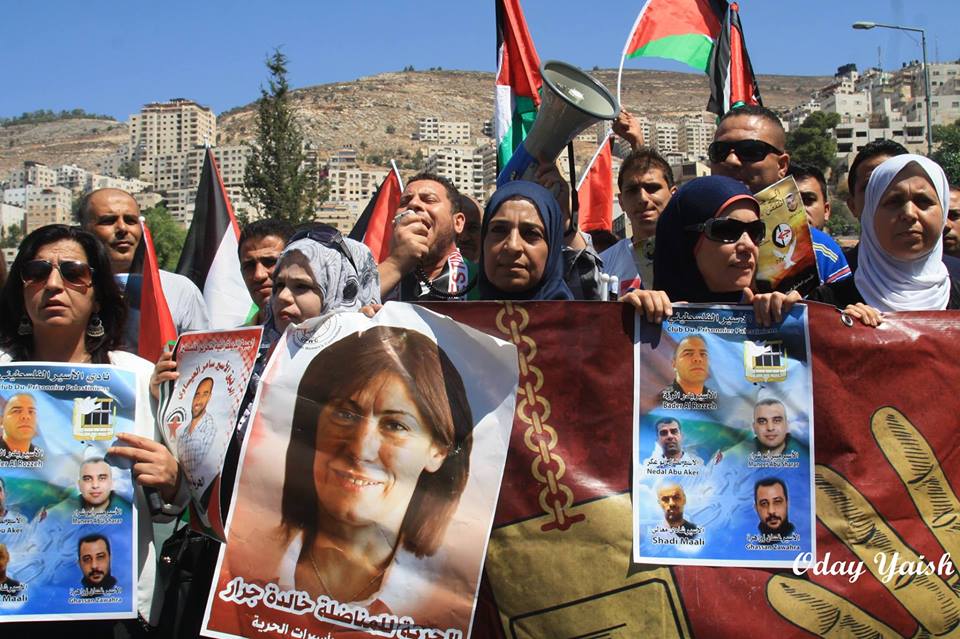
Palestinian Prisoner Solidarity Network | September 5, 2015
Nidal Abu Aker, Munir Abu Sharar, Badr al-Ruzza, Ghassan Zawahreh, and Shadi Ma’ali are engaged in the “Battle of Breaking the Chains” for the seventeenth day, continuing in their hunger strike to demand the end of administrative detention. All five are imprisoned by the Israeli military without charge or trial on the basis of “secret evidence” and have launched a hunger strike to demand not only their freedom personally, but an end to the policy that has been used against them.
Several more Palestinian prisoners have joined in the hunger strike and its demands: Bilal Daoud Saifi, who like Abu Aker, Zawahreh and Ma’ali is a Palestinian refugee who lives in Dheisheh refugee camp near Bethlehem, who started his strike on 30 August; Suleiman Eskafi of Al-Khalil, an administrative detainee on strike since 1 September; and Amir Shammas of Al-Khalil, an administrative detainee who previoulsy engaged in a hunger strike, had been promised that his detention would not be renewed, but since has had his detention renewed. In addition, Noor Shoukri Jaber, a Palestinian prisoner sentenced to life imprisonment, began a hunger strike on 2 September in protest of lack of medical care and his arbitrary transfer.

All of the striking prisoners have been thrown into isolation in an attempt to pressure them to end their strike and to stop other prisoners from joining the strike.
The “Battle of Breaking the Chains” is sparking actions of support in various cities in Palestine. A permanent tent of support has been set up at the main entrance of Dheisheh refugee camp, where four of the strikers – and three of its leaders – live, and demonstrations of support have been organized in Nablus, Al-Khalil, Bethlehem city, and Ramallah, among other cities.
Samidoun Palestinian Prisoner Solidarity Network expresses its strongest solidarity with the striking prisoners, and calls for international actions, mobilizations and events to demand their freedom. We cannot wait until these brave strugglers are facing death to act and demand not only their freedom as individuals, but the abolition of administrative detention – on the road to freeing every Palestinian prisoner held in Israeli occupation jails. It is not the case that Israeli military courts are any more legitimate, fair or acceptable than administrative detention – they are just as arbitrary, racist and illegitimate. But administrative detention is a weapon of mass terror used against the Palestinian people, and it is critical to bring this practice to an end. These Palestinian prisoners have put their bodies on the line in order to end administrative detention – and it is imperative that we act to support them. These prisoners’ struggle is not only about their individual freedom – it is part of their struggle for return and liberation for Palestine.
Take Action!
1. Sign on to this statement in support of the prisoners’ demand to End Administrative Detention. Organizational and individual endorsements are welcome – and organizational endorsements particularly critical – in support of the prisoners’ demands and their actions. Click here to sign or sign below:http://bit.ly/EndAdministrativeDetention
2. Send a solidarity statement. The support of people around the world helps to inform people about the struggle of Palestinian prisoners. It is a morale booster and helps to build political solidarity. Please send your solidarity statements to samidoun@samidoun.net. They will be published and sent directly to the prisoners.
3. Hold a solidarity one-day hunger strike in your area. Gather in a tent or central area, bring materials about Palestinian prisoners and hold a one-day solidarity strike to raise awareness and provide support for the struggle of the prisoners and the Palestinian cause. Please email us at samidoun@samidoun.net to inform us of your action – we will publicize and share news with the prisoners.
4. Protest at the Israeli consulate or embassy in your area. Bring posters and flyers about administrative detention and Palestinian hunger strikers and hold a protest, or join a protest with this important information. Hold a community event or discussion, or include this issue in your next event about Palestine and social justice. Please email us at samidoun@samidoun.net to inform us of your action – we will publicize and share news with the prisoners.
5. Contact political officials in your country – members of Parliament or Congress, or the Ministry/Department of Foreign Affairs or State – and demand that they cut aid and relations with Israel on the basis of its apartheid practices, its practice of colonialism, and its numerous violations of Palestinian rights including the systematic practice of administrative detention. Demand they pressure Israel to free the hunger strikers and end administrative detention.
6. Boycott, Divest and Sanction. Hold Israel accountable for its violations of international law. Don’t buy Israeli goods, and campaign to end investments in corporations that profit from the occupation. G4S, a global security corporation, is heavily involved in providing services to Israeli prisons that jail Palestinian political prisoners – there is a global call to boycott it. Palestinian political prisoners have issued a specific call urging action on G4S.
Over 100k sign UK online petition calling for Israeli PM’s arrest
Press TV – September 5, 2015
 More than 100,000 people in the United Kingdom have now signed a petition demanding the arrest of Israeli Prime Minister Benjamin Netanyahu for war crimes against Palestinians when he visits London later this month.
The petition, which was published on the website of the British Parliament on August 7, calls upon the British government to apprehend the 65-year-old chairman of Israel’s Likud party upon arrival in London next Wednesday for the massacre of thousands of Palestinians during the Israeli military’s 50-day onslaught against the blockaded Gaza Strip last year.
The petition garnered 100,021 signatures as of Saturday morning.
“Under international law, he should be arrested for war crimes upon arrival in the UK for the massacre of over 2,000 civilians in 2014,” the petition says, referring to the Israeli prime minister’s scheduled September visit.
After 10,000 signatures, the British government must respond to the petition, and after 100,000 signatures, it will be considered for debate in the parliament.
The British government has, in return, stated that “under UK and international law, visiting heads of foreign governments, such as Prime Minister Netanyahu, have immunity from legal process, and cannot be arrested or detained.”
Israel started its military campaign against the impoverished Gaza Strip in early July 2014. The offensive ended on August 26, 2014. Nearly 2,200 Palestinians, including 577 children, lost their lives in Israel’s war. Over 11,100 others – including 3,374 children, 2,088 women and 410 elderly people – also sustained injuries.
Italian activist arrested and beaten in occupied Palestine
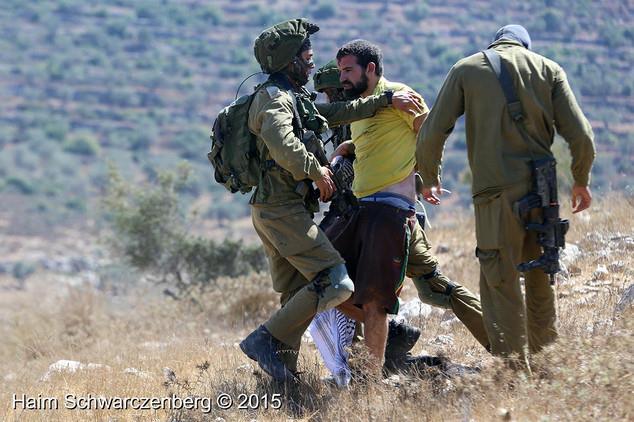
Vittorio Fera violently arrested. Photo credot – Haim Schwarczenberg
International Solidarity Movement | August 31, 2015
Occupied Palestine – Italian activist Vittorio Fera was violently arrested and beaten by soldiers at weekly demonstration in Nabi Saleh in occupied Palestine. The Italian activist, 31-year old Vittorio Fera, is falsely accused of throwing stones and attacking soldiers. His case will be taken to court the second time Monday 31st August between 9 and 11 am.
During a weekly demonstration in Nabi Saleh Israeli soldiers randomly arrested two protesters: one 18-year old Palestinian youth and the Italian activist Vittorio Fera. Fera went to the protest to document human rights violations by the Israeli army against Palestinians and became a victim of military violence himself.
While documenting an Israeli soldier strangling a 12-year old boy, Vittorio and the other activists were ambushed by Israeli forces. Vittorio was separated from the group and violently shoved to the ground. “We were shocked to see the boy being choked by a soldier, when suddenly soldiers came running at us and attacked Vittorio”, Josephine from Denmark explains.

Vittorio Fera with clear marks of military assault
Journalists witnessed soldiers kicking and beating him during the arrest, even though he did not resist or fight back. Vittorio, and the Palestinian youth, were forced into a military jeep where they were detained for almost nine hours by the Israeli army, before they were finally taken to a police station. Despite various demands of Fera’s lawyer to have him brought to a police station immediately, both he and the Palestinian were illegally kept in the military jeep until shortly before midnight.
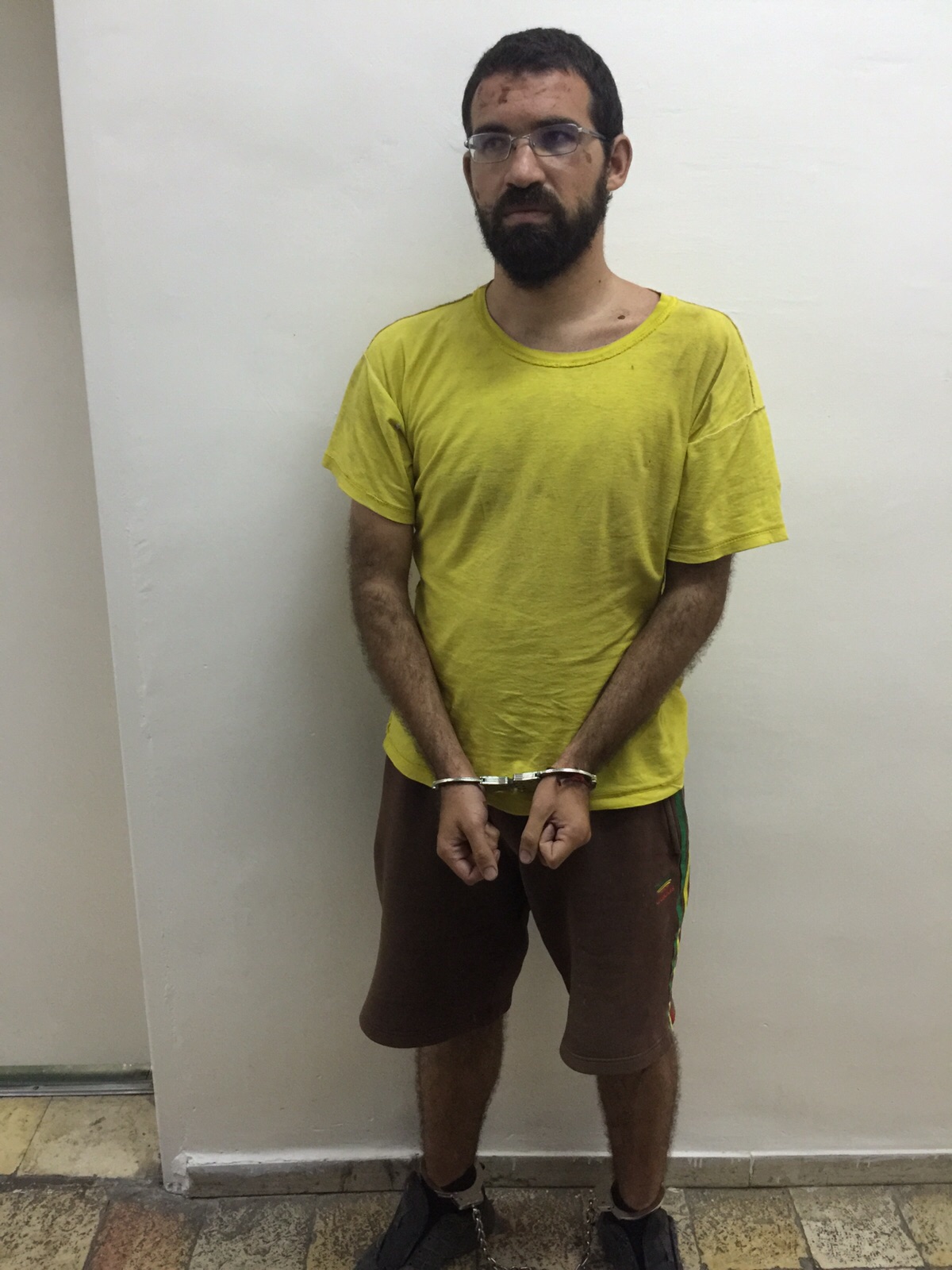
Vittorio Fera with clear marks of military assault
The military accuses Vittorio Fera of throwing stones and attacking the soldiers – an unfounded accusation. A first sentencing in court late Saturday night only resulted in the postponing of the sentencing until Monday morning. The hearing will take place in in Jerusalem Monday the 31st August 2015 between 9 and 11 am.
See the video of the arrest here
Major US industrial union votes in favor of BDS movement
Press TV – August 31, 2015
A prominent industrial union in the United States has endorsed the international movement of Boycott, Divestment and Sanctions (BDS) to support the Palestinians against Israel, calling on Washington to cut off financial support to Tel Aviv.
The United Electrical, Radio and Machine Workers of America union voted in favor of a resolution entitled “Justice and Peace for the Peoples of Palestine and Israel” during its national convention on August 20, the union reported on its website.
Citing Israel’s “long history of violating the human rights of the Palestinians,” the union has become the first nationwide union to join the boycott against Israel.
Union delegate Autumn Martinez said, “It’s absolutely disgusting what is going on. Free Palestine!”
In a statement, the union attacks Israel for its human rights record “starting with the ethnic cleansing of 750,000 Palestinians in 1947-48 that turned most of Palestine into the State of Israel.”
It explained that the goal of endorsing the BDS campaign was “to pressure Israel to end its apartheid over the Palestinians just as similar tactics helped to end South African apartheid in the 1980s.”
The union also voted on a number of other foreign policy issues, including the demand to end US military intervention in the Middle East and other regions.
“We (need) to get rid of this culture of war,” said Mike Ferritto, a local delegate.
“We have done enough damage. We need to get out of the Middle East,” said another delegate, Brandon Dutton.
The resolution was part of a series of resolutions, including support for the Iran nuclear agreement. The union said it was the first US national union to endorse the movement.
The BDS campaign, which began in 2005, encourages organizations and institutions such as universities and churches to divest from Israel until the fundamental rights of the Palestinians have been recognized.
Protesters march against Israeli takeover of Bedouin village
Ma’an – August 27, 2015
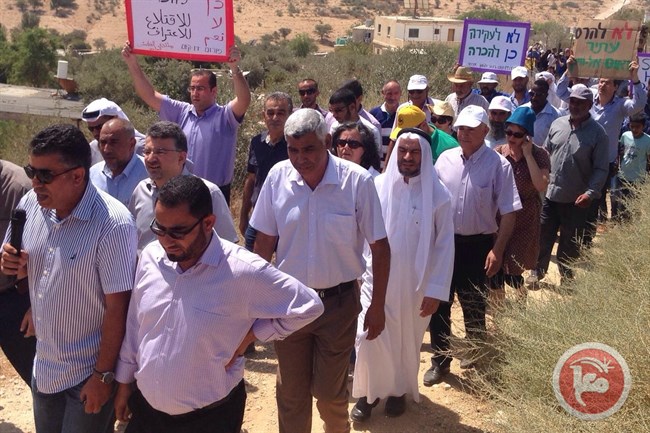 NEGEV – Dozens of Palestinians protested Thursday in the Bedouin village of Umm al-Hiran near the town of Hura in the Negev, as Israel’s construction of a Jewish town on the village’s land continues, local sources said.
The Umm al-Hiran community — around 700 strong — is unrecognized by the Israeli government and residents’ lands were claimed by the state in 2013 in order to make way for the expansion of the Beersheba metropolitan area.
As a march set off from the village and moved towards the site of construction, protesters said they were able to force Israeli police to remove the bulldozers from the area.
Leaders and members of national and Islamic parties, Palestinian members of the Knesset, members of committees for Palestinians in the Negev, and Jewish-Israelis took part in the march.
Sources told Ma’an that the contractor responsible for razing the village is a Palestinian citizen of Israel from the Negev, and locals have condemned the use of Palestinian contractors against their people by the Israeli authorities.
Participants of Thursday’s demonstration called for launching an international media campaign in support of Umm al-Hiran and other villages threatened with land confiscation in order to pressure Israeli authorities to stop longstanding policies to displace Palestinian Bedouins.
Umm al-Hiran residents are a fraction of the thousands of Bedouins living in villages that the Israeli government does not recognize and are at risk of displacement in the Negev due to Israeli policies that critics argue amount to ethnic cleansing.
The community’s residents appealed their displacement in court earlier this year on the grounds that the Israeli military administration ordered the community to be moved to the area in 1956, but the appeal was rejected.
On Sunday, Israeli excavators began work on infrastructure for the Jewish-only town in Umm al-Hiran, building a new road under heavy protection of Israeli forces, locals told Ma’an at the time.
Knesset Member Talab Abu Arar described the Israeli move as racist.
“Racism has become crystal clear in Umm al-Hiran as a Jewish settlement Hiran is being built on the ruins of the Arab Umm al-Hiran village,” Abu Arar told Ma’an on Sunday.
He added that Israeli courts and authorities ignored the rights of Palestinians and worked towards confining them to a few recognized towns and denying their rights.
International Solidarity Movement call for volunteers
International Solidarity Movement | August 21, 2015
Occuppied Palestine – During the months of July and August, there has been an escalation of violence from illegal Israeli settlers and the Israeli army towards Palestinians.
ISM is sending an urgent call for volunteers to join us in Palestine. Check the join us section of our website or email ISM at palreports@gmail.com for more information.
On a weekly basis, people throughout the West Bank are being arrested without charges, houses raided during the night, new houses have been demolished, settler violence has increased in the city of Hebron and in other villages, and the Israeli navy has increased the number of attacks towards Gazan fishermen.
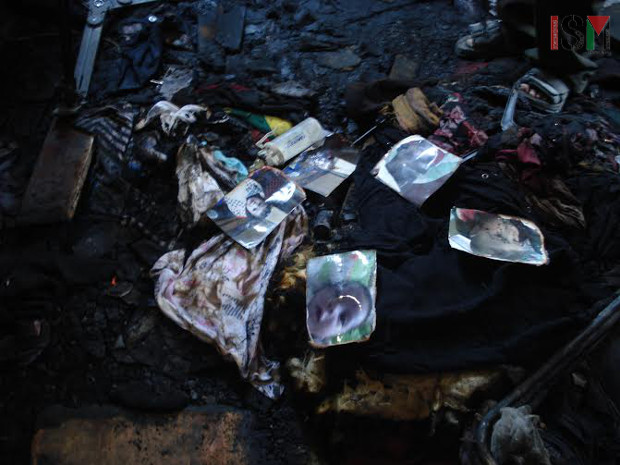
On August 1st, the infant Ali Dawabshe was brutally murdered with an arson attack to his house perpetrated by illegal Israeli settlers in the village of Duma. His father, Saad Dawabshe, died one week after from severe burn injuries. Both his mother, Riham, and his 4 year old brother, Ahamd, remain hospitalized with severe burn injuries all over their bodies, with high risk of dying.
Since the end of the last Zionist massacre against Gaza there have been 1312 reported attacks against Gazan fishermen.
Since then, 22 boats have been stolen; 26 fishermen have been injured; one fisherman, Tawfiq Abu Riela, has been assassinated; 28 boats have been disabled by bullet fire; 2 big fishing boats have been sunken by rocket fire, one in Deir El Balah at 300m from the coast and one in Gaza City at 5 miles; 51 fishermen have been kidnapped while working and 3 fishermen remain prisoners until now.
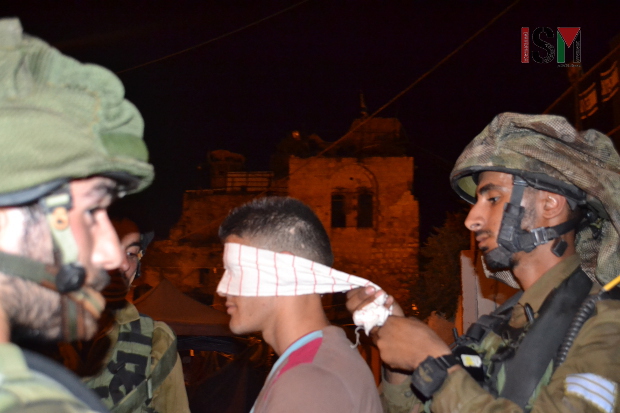
The team in Hebron has reported an increase of night raids by Israeli forces and attacks by illegal settlers, which is terrorizing Palestinians living in Hebron. Two days ago, on August 20th, a group of French extremist Zionists intimidated and attacked international activists and local Palestinians. This group of extremists, called Kahane, which is considered a terrorist organization under Israeli law, was received with signs of sympathy by the soldiers.
At approximately 5:00 am, on Wednesday, August 19, the homes of the Totah and Totanji families were demolished by the Israeli army in the neighborhood of Wadi al Joz, in East Jerusalem. This neighborhood has been under threat of demolition since December, 2014, despite the fact that there are no accountable papers presenting a demolition order, nonetheless, the army has been slowly carrying out this plan. Neighbors live in constant fear that anytime their homes will be torn down.
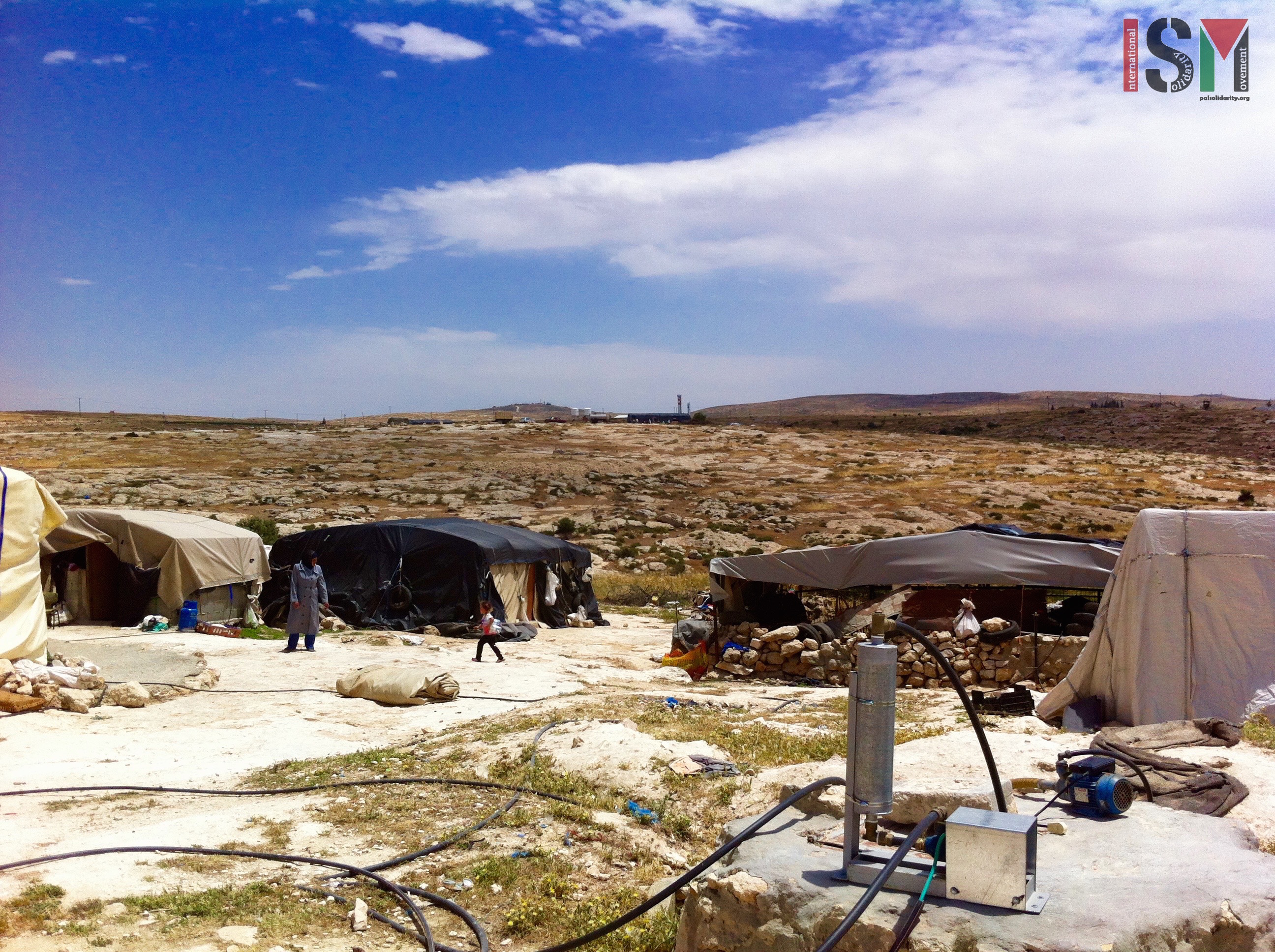
In very similar conditions, the village of Susiya has been suffering from enormous fear by the threat of mass demolition orders issued by the Israeli government since 2012.
ISM also needs volunteers to join the 2015 olive harvest campaign.
ISM volunteers join Palestinian farming communities each year to harvest olives in areas where Palestinians face settler and military violence while working their land. Your presence can make a big difference, with Palestinian communities stating that the presence of international volunteers reduces the risk of extreme violence from Israeli settlers and the Israeli army.
The olive tree is a Palestinian national symbol, and the Israeli military systematically prevents agricultural fruition, in order to make life for Palestinians more difficult. The Israeli occupation provides a platform for Palestinian rights to be violated in an array of ways; the attack on agriculture is at the forefront.
Already documented this year, and to list a few cases; the trees have suffered settler sewage runoff , sabotaging fires, and being uprooted. Olive trees comprise of an essential 14% of the Palestinian agricultural economy.
We support Palestinians’ assertion of their right to earn their livelihoods and be present on their lands. International solidarity activists engage in non-violent intervention and documentation and practical support, which enables many families to pick their olives.
The campaign will begin during the last week of September and will last around 5 weeks. We request a minimum one week commitment from volunteers, but stress that longtermers are needed as well. We ask that volunteers start arriving around the 20th of September, so that we will be prepared when the harvest begins.
Training
We request a minimum two week commitment from volunteers, but stress that longtermers are needed as well. The ISM will be holding mandatory two day training sessions which will run weekly on Wednesdays and Thursdays. Please see the join ISM page or contact palreports@gmail.com for further information.
Alert: 21st Aug 2015 – Demand Freedom For Amer Jubran & Muhammed Allan
inminds – August 20, 2015

Date: Friday 21st August 2015 3pm-5:30pm
Location: Jordanian Embassy, Upper Phillimore Gardens, London W8 7HA (few minutes walk from High Street Kensington tube station), move to Israeli Embassy around 4:30pm
Facebook: https://www.facebook.com/events/947233385320459
Assalaamu Alaikum
Please join us as we hold two vigils this friday for Palestinian prisoners. At 3pm we will be outside the Jordanian Embassy demanding freedom for Palestinian father and human rights activist Amer Jubran who is facing a 10 years prison sentence in Jordan at the behest of Israel for refusing to betray the Lebanese resistance against Israel. Then at around 4:30pm we will move to the Israeli Embassy a few streets away to demand the unconditional and immediate release of Palestinian lawyer and hunger striker Muhammed Allan.
Muhammed Allan is again in a comma, breathing through a respirator, after having suffered brain damage whilst in Israeli custody. Muhammed launched his hunger strike on 15 June 2015 to protest Israel’s illegal practice of Administrative detention – of caging Palestinians indefinitely without charge or trial. He has been caged by Israel without charge since 6th Nov 2014 on never ending rolling detention orders. Allan ended his hunger strike after 65 days on 19th Aug after the Israeli Supreme Court on health grounds ordered the suspension of the administrative detention order against him. But Israel is still threatening to reimpose his administrative detention and imprisonment should he recover, its imperative at this time that we maintain the pressure and demand his immediate and unconditional release.
LATEST UPDATES ON MUHAMMED ALLAN
(courtesy Samidoun Palestinian Prisoners Solidarity Network)
20th Aug: Reports state Palestinian hunger striker Muhammad Allan again in a coma, on respirator
http://samidoun.net/2015/08/reports-state-palestinian-hunger-striker-muhammad-allan-again-in-a-coma-on-respirator/
19th Aug: Breaking News: Reports state Muhammad Allan has ended his strike after decision of the Israeli Supreme Court
http://samidoun.net/2015/08/breaking-news-reports-state-muhammad-allan-has-ended-his-strike-after-decision-of-the-israeli-supreme-court/
18th Aug: Muhammad Allan regains consciousness, pledges to continue hunger strike
http://samidoun.net/2015/08/muhammad-allan-regains-consciousness-pledges-to-continue-hunger-strike/
17th Aug: Muhammad Allan rejects attempt to forcibly deport him from Palestine as Supreme Court considers case
http://samidoun.net/2015/08/take-action-muhammad-allan-rejects-attempt-to-forcibly-deport-him-from-palestine-as-supreme-court-considers-case/
17th Aug: Israeli Supreme Court to hear petition for release of hunger striker Mohammed Allan
http://samidoun.net/2015/08/israeli-supreme-court-to-hear-petition-for-release-of-hunger-striker-mohammed-allan/
16th Aug: Palestinian doctor denied access to Muhammad Allan as he faces life-threatening infection
http://samidoun.net/2015/08/palestinian-doctor-denied-access-to-muhammad-allan-as-he-faces-life-threatening-infection/
14th Aug: Muhammed Allan on ventilator in coma; Palestinian prisoners under Israeli lockdown
http://samidoun.net/2015/08/action-alert-muhammed-allan-on-ventilator-in-medical-crisis-palestinian-prisoners-under-israeli-lockdown/
AMER JUBRAN – BACKGROUND
Palestinian activist Amer Jubran has a long history of being targeted for his activism on behalf of Palestine, first in the US and then in Jordan.
In the US he formed the “New England Committee to Defend Palestine” and in November 2002, two days after leading a demonstration in Boston calling for justice in Palestine, the FBI stormed Amer Jubran’s home and arrested him under the Patriot Act initially holding him without charge. When public outcry made it difficult to continue holding him they initiated deportation proceedings against him and he was deported to Jordan in January 2004 where he continued his activism for Palestine.
In Jordan he was under constant surveillance of the notorious Jordanian secret police. On 5th May 2014, 20 armed me in black uniforms stormed his home where he lived with his wife and four young children, smashing the doors and windows. The secret police abducted Amer, and for months he was interrogated at an undisclosed location without charge and without access to a lawyer.
Finally in August 2014 Amer Jubran was charged under a new law that didn’t exist when he was arrested, that makes “harming the relationship with a foreign government” a crime of “terrorism”. Last month on 29th July 2015 we was sentenced by a military court to 10 years hard labour, reduced from a 15 year sentence. Following his visit to Lebanon to speak an an Anti-Apartheid week function he was accused of working with the Lebanese resistance Hizbullah against Israel, hence ‘harming’ Jordan’s relationship with a friendly country. During his interrogation he was told by the secret police that any decision made about him involves “our American and Israeli friends”. Amer says it “all started when I refused to be a sell-out and work against the Lebanese resistance. I was told then that I will be sent behind the sun for such a refusal. And frankly it is very easy for me to disappear behind the sun rather than to be well, outside but a sell-out and traitor. “. Essentially he is being persecuted and imprisoned because he refused to work for Israeli /Jordanian intelligence as an infiltrator and informant against the resistance.

BACKGROUND – ADMINISTRATIVE DETENTION
Muhammad Allan was on hunger strike to protest against Israel’s practice of Administrative detention. Administrative detention is a practice used by Israel to imprison Palestinians indefinitely without charge or trial. Prisoners are given rolling detention orders which can be anything from 1-6 months, renewable indefinitely. Such practice is against international law.
For example administrative detainee Mazen Natsheh has been locked up cumulatively for nearly 10 years without charge or trial. Muhammad Allan has in total been caged for 3 years under different administrative detention orders without charge or trial.
Detention orders are based on so called “secret information” which never needs to be produced, either to the detainee nor their lawyer. Administrative detention is often used to arbitrarily jail Palestinians where there is no evidence for a trial. It is also used for punishment as in the case of 8 Palestinian MPs who are currently caged in Israeli dungeons to punish them for their political stance.
Palestinian prisoners rights group Addameer have documented “many cases where the detainees themselves will say that administrative detention is actually far worse than a fixed sentence, be that five years, ten years, 20 years, or whatever and why. With a fixed sentence, you know when you’re going home, a prisoner knows when he goes home. It could be ten years or 15 years down the line, but they know when they’re going home. Not with an administrative detention..” They have documented “many cases where prisoners or detainees have been literally leaving the prison, walking out of the prison with their bags in their hand after their administrative detention order has expired [with their family waiting on the other side] and the Israelis have handed that detainee another administrative detention order and they have to go back into the cell to recommence another administrative detention order. Now, this is a form of psychological torture for not only the detainee [but also] their families.”
Israel has on average issued over 2000 detention orders every year (between 2007 and 2011). Today there are around 450 administrative detainees. Most of them, like Muhammad Allan, having been transferred from the West Bank into Israel in contravention of Article 76 of the Fourth Geneva Convention, with their families being prevented from visiting them.
On 18th August 2015, 250 Palestinian prisoners held under administrative detention in the “Negev” prison in the Naqab desert in the south of Palestine announced they will launch an open-ended hunger strike to defeat administrative detention. Their statement reads “the growing use of administrative detention.. represents a clear and explicit violation of all international conventions and human rights principles, where we are arrested for extended periods, for years continuously, at the mercy of a so-called “secret file,” where we have no right to defend ourselves. Administrative detention is a sword hanging over our necks, that eats away our flesh and blood and years of our lives without trial and without mercy.”
LIVE UPDATES DURING PROTEST
We will, inshAllah, be tweeting live from the protest with live photos being uploaded to our twitter and facebook page. So if you can’t join us on the day, please help us by sharing the photos as they get uploaded.
https://www.facebook.com/inmindscom
https://twitter.com/InmindsCom
If you support this activity please share this alert widely, thank you.
JazakAllah,
Abbas Ali
Palestinian Prisoners Campaign
http://www.inminds.com/caged
http://fb.com/inmindscom
http://twitter.com/InmindsCom
http://youtube.com/user/inminds
Featured Video

Trita Parsi: Israel Set a Trap for Total War in the Region
or go to
Aletho News Archives – Video-Images
Book Review
Why the War on Conspiracy Theories Is Bad Public Policy
By Kevin Barrett • Unz Review • February 1, 2019
 A Review of Conspiracy Theories and Other Dangerous Ideas by Cass Sunstein (based on an earlier paper co-authored with Adrian Vermeule); In Defense of Troublemakers: The Power of Dissent in Life and Business by Charlan Nemeth; and Conspiracy Theories and the People Who Believe Them, edited by Joseph E. Uscinski
On January 25 2018 YouTube unleashed the latest salvo in the war on conspiracy theories, saying “we’ll begin reducing recommendations of borderline content and content that could misinform users in harmful ways—such as videos promoting a phony miracle cure for a serious illness, claiming the earth is flat, or making blatantly false claims about historic events like 9/11.”
At first glance that sounds reasonable. Nobody wants YouTube or anyone else to recommend bad information. And almost everyone agrees that phony miracle cures, flat earthism, and blatantly false claims about 9/11 and other historical events are undesirable.
But if we stop and seriously consider those words, we notice a couple of problems. First, the word “recommend” is not just misleading but mendacious. YouTube obviously doesn’t really recommend anything. When it says it does, it is lying. … continue
Blog Roll
 Aletho News
- Putin’s key remarks on peace talks and Europe’s ‘schizophrenia’
- Trita Parsi: Israel Set a Trap for Total War in the Region
- Trump’s Iran war is on an Israeli leash
- Saudi oil boss issues global supply warning
- Riyadh Says Its Oil System Is Intact. The Numbers Say Otherwise.
- Trump and Netanyahu Want to “Finish the Job” on Iran
- US ‘one-sided dictation’ not Iran’s beliefs makes rational talks impossible: Baghaei
- Iran’s Next Strike May Not Explode. It Could Shut You Down /Col Doug Macgregor
- Iran: US political targets legitimate if assassinations return
- Iraq shuts key border crossing with Iran under US pressure: Report
- If Americans Knew
- DAILY UPDATE: Latest essential news on Palestine, Israel, & region
- The Israel Lobby’s Changing Fortunes
- AIPAC has become such a political liability that it’s shifting to a more “nimble” approach to buying politicians
- At least 160 Israeli settler attacks in 2 weeks
- Will Gaza’s Ancient Christian Community Disappear Forever?
- Israel’s vision of regional security rests on keeping Arab states weak
- Heidi Levine recounts how Palestinian youths helped save her in settler attack
- DAILY UPDATE: Latest essential news on Palestine, Israel, & region
- Trump’s Intensifying Sabotage of the ICC, for Israel’s Sake
- Israeli military detain US and UK volunteers in West Bank including Democratic NY politician Brad Lander
- No Tricks Zone
- E-Cars Reduce CO2 Emissions By Only 41% Compared To Internal Combustion Engine Vehicles
- Predictions Made By Renowned Climate Professor Over Past Decades Have Been Proven To Be Poor
- New Study Suggests Large Regions Of The Pacific Ocean Have Been Cooling For The Last 80 Years
- Germany’s Green Energy Debacle: High Energy Costs Force Kahla Porzellan to Close After 182 Years!
- New Study: 50 Years Of The Most Aggressive ‘Net Zero’ Policies Can Only Affect The Global Climate By 0.03°C
- US September “Heat” Was No Record…Many Records Set Decades Ago
- Latest European Green Energy Debacle; Portugal’s Largest Flagship Solar Park Insolvent!
- Green Energy Debacle: German Expert Professor Fritz Vahrenholt Warns Of Severe Economic And Social Consequences
- Two More Paleo Reconstructions Affirm Meters-Higher Sea Levels Across Ireland, Brazil 7000-6000 Years Ago
- New Study: Earth And Venus Surface Warmth Largely Explained By Convection And Lapse Rate, Not CO2 Or Radiation

