Israeli forces invade homes and threaten families with nine children in Deir Istyia
International Solidarity Movement with IWPS | November 30, 2015
Deir Istyia, Occupied Palestine – Deir Istyia, in Salfit district, is a village of 4000 inhabitants who mostly live on agriculture. The Salfit district has 19 villages and 24 settlements. Land confiscation is ongoing in the area and many of the settlements are growing, as the road that connects them is widening.
The 3 families are now the only Palestinians living on the west side of the road.
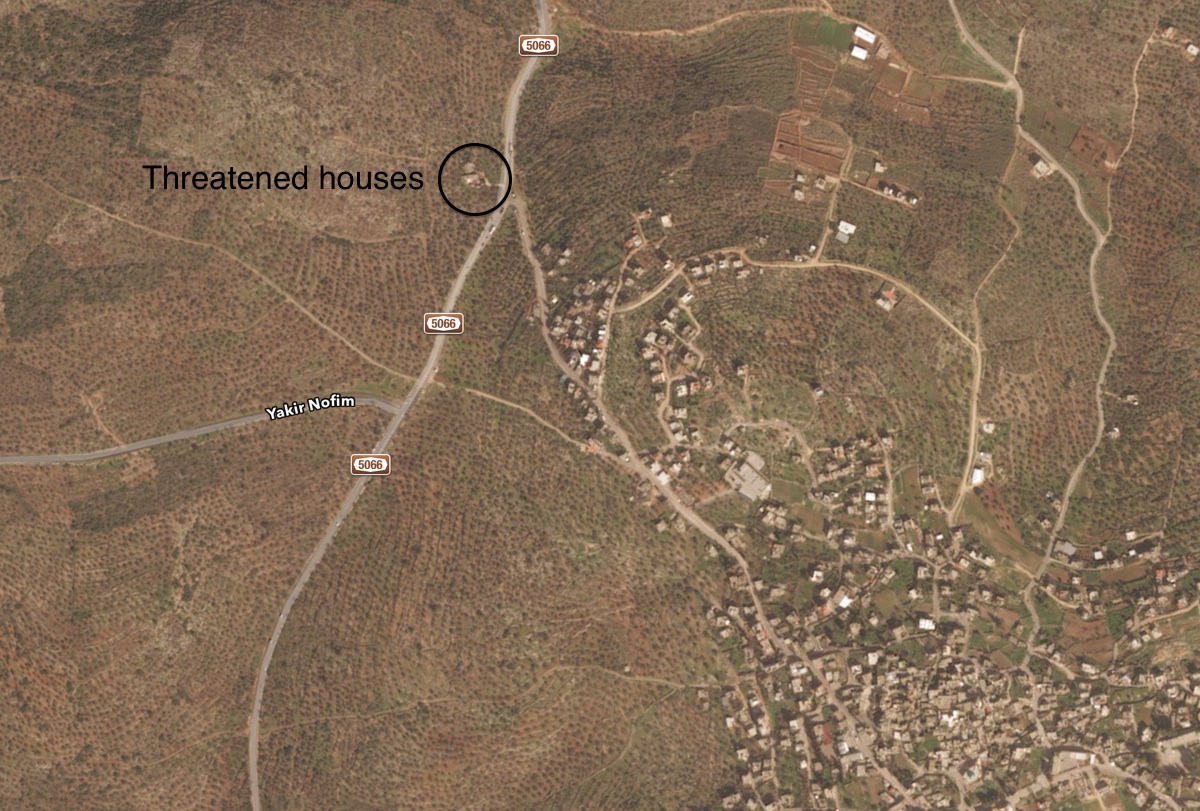
Now three families, living in the outskirts of Deir Istyia (see photo), are under daily threats and harassment from the Israeli forces. They don’t know if the goal is to take over their land or just to try to make their lives so unbearable that they will themselves decide to move from the land on which they have been living peacefully for many generations.
It started in the beginning of October this year, where the soldiers started to come to the houses and harass the families, mainly at daytime. Often the women are alone with the children during the day while the men are working. Israeli forces have chosen this time to come to the houses and scare the families. One of the women explained to us that the soldiers hit her, told her that the house wasn’t hers and that she soon would have to move away. They also told her that she was a terrorist, and that the soldiers would soon come back and shoot her.
Over the last 4 days the Israeli forces have been there day and night, telling the families that they have permission to stay on the roof of one of the houses. One night, they stayed all night and slept on the roof. They claim to have to watch the road and the surroundings, because of stone throwers, even though there hasn’t been any stone throwing in that area. Last Saturday, when the soldiers were there, they took pictures of the house and the yard.
Now, the children are very insecure, and their mothers don’t leave the houses as they are afraid of leaving them alone, a situation that makes them feel, as they describe it, as in prison. They can hear the soldiers walking around outside their houses and standing on the olive hill behind them at night.
Volunteers from International Solidarity Movement and International Women’s Peace Service will follow up on the situation of these families.
RT reporter teargassed while filming unrest in Diyarbakir, Turkey
RT| November 30, 2015
An RT news crew has been caught in a tear gas attack by Turkish police in Diyarbakir. Police responded as Kurds were protesting the killing of a prominent lawyer, Tahir Elci, shot dead by unidentified gunmen while giving a public speech on Saturday.
“We came into the city center of Diyarbakir just now,” said RT correspondent William Whiteman. “The whole city had been on lockdown over night after there were sounds of heavy automatic gunfire and there were a lot of explosions during the night.”
He said the barricades in the city center were removed early on Monday morning and the RT crew tried to enter the center of Diyarbakir. They were looking to get to the spot where the lawyer Tahir Elci was shot.
“As soon as we arrived here there was a very tense situation and there were security forces out in full force in the streets with guns and we heard gunshots,” Whiteman reported.
“We have just managed to escape the gas now and it is very intense here,” Whiteman added.
A campaigner for Kurdish rights, Tahir Elci had been criticized for challenging Turkey’s official stance of calling the Kurdistan Workers Party (PKK) a terrorist organization.
He was subsequently shot dead on Saturday, while giving a public speech in the city.
“The government came out about an hour after he was killed and said it was the PKK that had killed him, even despite the fact that Tahir Elci was actively defending the PKK and calling for them to be no longer recognized as a terrorist organization, given all of their involvement in fighting ISIL in Syria,” Whiteman mentioned, describing why local Kurds have been even more incensed by the shooting of the rights campaigner.
“This assassination is a deliberate act of political intimidation against all those who take part in political struggles against injustice in Turkey,” Firat Anli, a human rights lawyer and friend of Tahir Elci told RT.
“Social media and the mass media say this has been carried out by the PKK, but the Kurdish region does not buy any of this,” he added.
Whiteman mentioned that there is a lot of skepticism amongst the local Kurdish population as to the claims made by the government, while adding that the Turkish authorities are using this as an excuse to clamp down further against the Kurdish minorities in south eastern Turkey.
Illegal Israeli settlers threaten to burn family living at edge of Palestinian village
International Solidarity Movement | November 28, 2015
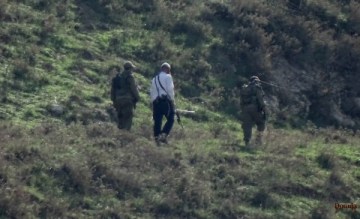 Madama, Occupied Palestine – Earlier today, November 28th, a group of Israeli illegal settlers, in the presence of three Israeli soldiers, threatened to burn down a family in the village of Madama, occupied West Bank.
At noon, 25 settlers from the nearby settlement of Yitzhar trespassed the land of the Palestinian village Madama. Once they had reached the outskirts of the village they started yelling and threatening a family.
The family, which previously had problems with settlers from Yitzhar, includes 9 children and an additional child is expected within two months.
The settlers, some of whom were armed with rifles, were standing within 100-150 metres from the family’s house when they were yelling at the family. The illegal settlers were threatening the family with facing the same end as the Dawasheh family, referring to a previous attack this year where a settler firebombed a Palestinian family. 18 month old Ali Dawasheh was burned alive and both his parents later succumbed from the arson attack, leaving 4 year old Ahmed as the only surviving member of the family.
The settlers today also yelled at the family that they would be the next Mohammed Abu Khdeir. Mohammed was only 16 years old when he was kidnapped outside his house in the neighborhood of Shuafat, East Jerusalem. The kidnappers, later found out to be Jewish Israeli nationalists, beat him up and forced him to drink gasoline before finally burning him alive, from the inside out.
After today’s attack, the family in Madama is feeling even more insecure. Due to repeated attacks by the settlers the family recently got founding from the authorities to put up a barb wire fence, surrounding the house. And the father of the family has put a cover on the windows to protect his family from potential rocks thrown by the settlers.
Ukraine threatens permanent economic blockade against Crimea
By Roger Annis – New Cold War – November 27, 2015
Western news media and governments are keeping hush about an economic blockade by Ukraine against Crimea that is starting to appear permanent.
TASS reports today that at least one of the electricity lines from Ukraine to Crimea that was sabotaged by right-wing extremists during the weekend of Nov 20-21 has been repaired. But no electricity is flowing to Crimea from Ukraine. The information comes from Russian Deputy Energy Minister Andrey Cherezov.
“We have information that the repair work on the Kakhovka-Titan power line has been completed,” he said. “Switching this line on would make it possible to supply about 150-200 megawatts from Ukraine to Crimea. But such hope is lost. Accordingly, all measures in Crimea are aimed at ensuring a minimum level of electricity supply to consumers.”
Kakhovka-Titan is a 220-volt line that supplies electricity to the Crimean border cities of Armyansk and Krasnoperekopsk. Much of its power goes to two districts of the Kherson region of Ukraine.
Kakhovka-Titan is one of four transmission lines that were sabotaged by rightist bombs. At the time of the sabotage, Ukraine’s electricity utility said it could restore one of the four lines in 24 hours and all four of them within days. But the Ukraine government is allowing a handful of extremists on the damaged sites to block repair crews.
On Thursday, Russian Emergency Situations Ministry sent an additional 300 mobile generators to Crimea to provide power for critical facilities.
Crimea consumes an average of 1,000 megawatts of electricity per day, according to the Russian Energy Ministry. Emergency power backups are meeting only 30 per cent of normal demand.
An electrical cable under the Kerch Strait from Russia to Crimea was already under construction before last weekend’s sabotage. The construction is now on emergency pace. The cable is being laid in two stages. The first stage will deliver app 400 MW of power before the end of December. The second stage will bring an equal amount by summer 2016.
Another energy project already on the drawing table is a natural gas pipeline under the Kerch Strait, due to open in 2018. It will power several natural gas electricity generating stations to be built in Crimea.
Western media and governments see nothing, say nothing
The Crimea emergency is going largely unreported in the West. Where it is mentioned, it is pictured as a tit-for-tat game between Ukraine and Russia.
The first report in Canada’s largest daily newspaper, the Toronto Star, was published on Nov 27, six days following the attacks that cut Crimea’s electricity supply from Ukraine. The Star report is taken from the New York Times.
The Times article is a shortened version of a longer article that appeared two days earlier, both written by the newspaper’s Moscow bureau journalist Neil MacFarquhar. He traveled to southern Ukraine.
MacFarquhar describes the terrorist action by the Ukrainian extremists as a “standoff between Moscow and Kiev, with each side finding new ways to increase the tension daily”.
Ukraine’s government has not lifted a finger against the vigilante road blockade of food shipments to Crimea which extreme-rightists began on September 20.
Following the latest outrageous attack, the regime in Kyiv began on November 23 to block all commercial transport to and from Crimea. This is described by the Times thusly: “Ukraine seeks to avoid further Russian aggression to stymie its political and economic stability, and an already unpopular government does not want to go against public sentiment.”
Interestingly, MacFarquhar provides an interpretation of the claim in most Western media that the vigilante actions against Crimea are being perpetrated by “Crimean Tatars”. He writes:
In Kiev, the main driver of the confrontation seems to be the leaders of the Tatar community who were exiled by Russia after it annexed the peninsula and who are now in Parliament as allies of President Petro O. Poroshenko… [1]
Here around Chongar, however, Tatar activists were not much in evidence. They seemed to have been assigned logistical tasks like providing food and housing for the men guarding road checkpoints and the fallen pylons. The fighters were mostly veterans from the east [Ukraine] who did not want to go back to civilian life.
MacFarquhar describes one of the Western media’s “Tatar activists”:
“The people of Crimea are not supposed to feel like they live in a resort while the country [Ukraine] is at war,” said Oleksiy Byk, 34, a chunky, bearded veteran who serves as the area spokesman for the Right Sector, a right-wing Ukrainian organization violently opposed to any accommodation with Russia.
Mr. Byk said he used to fight the separatists [sic] in the east, but after the ceasefire negotiated under the Minsk peace accords [in February 2015] finally took hold in September, he and many other hard-core fighters gravitated to the area just north of Crimea. They are spoiling for a fight, since Ukraine rejects Russia’s March 2014 annexation [sic] of the Black Sea peninsula as illegal.
Ukraine pours on the rhetoric
In its latest, self-destructive measure for the Ukrainian economy (and against the Ukrainian people), the government in Kyiv announced on November 25 that all air travel to and from Russia will be severed. Last month, Ukraine banned landing and takeoff rights for Russian airlines, prompting a move in kind by Russia.
Ukraine’s government has also announced that it wouldn’t buy gas anymore from Russia. But that statement is posturing which followed the decision by Russia’s Gazprom on Nov 25 to cease gas deliveries due to non-payment. The government is effectively bankrupt, living on borrowed money from the IMF. A declaration of default on the international loans it owes is expected.
The Donetsk People’s Republic has taken emergency measures to protect coal stocks and electricity infrastructure in the aftermath of the sabotage directed at Crimea, reports DAN news service. Prime Minister Aleksandr Zakharchenko has assumed direct responsibility over the measures.
The DPR has also halted coal shipments to Ukraine. This began in response to non-payment of bills, but has now also become a gesture of disapproval of Ukraine’s failure to restore electricity service to Crimea and of solidarity with the people of the peninsula.
(See a photo gallery on TASS of Crimea’s electricity situation , here. )
Notes:
[1] Tatar civil organizations in Crimea utterly deny the claims in Western media that the Tatar figureheads in Kyiv who have accepted appointments to the Rada by Petro Poroshenko’s political machine– Mustafa Djemilev and Refat Chubarov—are “leaders” of Crimean Tatars. They say the two represent the viewpoints of only a small section of Tatars. The two figures have been denied entry to Crimea since the secession referendum of March 2014 because they refused to renounce inciting civil war on the peninsula.
Read also:
State of emergency in Crimea after right-wing extremists in Ukraine blow up electricity lines to the peninsula, by Roger Annis, Nov 25, 2015
Israeli forces shoot, injure 67 Palestinians in Gaza, West Bank
Ma’an – November 27, 2015
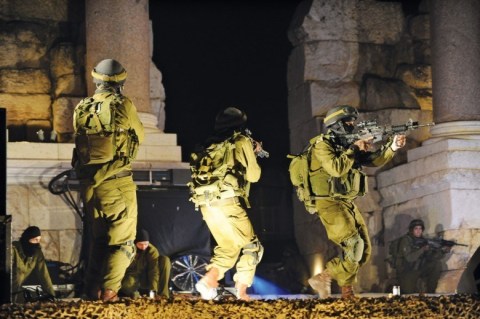
RAMALLAH – At least 67 Palestinians were shot by Israeli military forces during ongoing clashes across the occupied Palestinian territory, the Palestinian Red Crescent said Friday.
A Red Crescent spokesperson told Ma’an that 16 Palestinians were injured by live bullets, as well as two by rubber-coated steel bullets in the Gaza Strip.
Five of those injured by live fire were shot when clashes erupted near the Nahal Oz crossing east of Gaza City, one of whom was shot in the chest and left in critical condition, according to a spokesperson for the Ministry of Health, Ashraf al-Qidra.
Several others were injured in the besieged enclave when Palestinians demonstrated in areas north of Khan Younis, demanding the return of Palestinian bodies currently held by Israel, witnesses told Ma’an.
An Israeli army spokesperson told Ma’an that “multiple violent riots took place near the security fence” between the Gaza Strip and Israel, where Israeli forces used “riot dispersal means” to deter participants attempting to break through the security fence.
The spokesperson said that the forces opened fire on demonstrators after ignoring calls by the forces for the participants to halt.
Palestinians in the Ramallah district meanwhile staged a demonstration near Israel’s Ofer detention center, where medics told Ma’an that Israeli forces opened fire on protesters.
One of those shot by live fire was left in critical condition, medics said, adding that dozens of others suffered from tear gas inhalation.
A total of 22 injuries by live fire were reported from the occupied West Bank, the Red Crescent spokesperson told Ma’an, as well as 27 injured by rubber-coated steel bullets and over a hundred who were treated for tear-gas inhalation.
In Hebron, 14 Palestinians were hit with live bullets, and 10 with rubber-coated steel bullets, the Red Crescent said, adding that Israeli forces targeted an ambulance with tear gas, shattering its windshield.
In Kafr Qaddum near Qalqiliya, Qaisar Jihad,13, and Hamza Mutei, 22, were shot in the legs and lightly injured after Israeli forces trapped protesters and opened fire, according to a spokesperson for the village’s popular resistance committee, Murad Shtewei.
In the village of Bilin in the Ramallah district, locals told Ma’an that photojournalist Hamdi Abu Rahma was shot with a rubber-coated steel bullet in the thigh as Israeli forces fired tear gas, stun grenades and rubber-coated steel bullets at Palestinian demonstrators.
Over 10,300 Palestinians have been injured by Israeli forces since Oct. 1, not including those injured by Israeli settlers.
Around 160 Israelis have been injured by Palestinian individuals during the same time period, according to documentation by the UN Office for the Coordination for Humanitarian Affairs.
Arbitrary arrest of two internationals in Hebron
International Solidarity Movement | November 26, 2015
Hebron, occupied Palestine – Sunday 22nd November 2015, two international solidarity activists were arrested by Israeli forces on the claim of ‘staying in a closed military zone’ in occupied al-Khalil (Hebron).
One German human rights defender passed a checkpoint manned with a group of half a dozen soldiers with two Palestinians and another international. They were not stopped on their way by the soldiers and were allowed to pass without any problems. After visiting a house in the neighbourhood however, they were immediately stopped by soldiers when stepping on the street only twenty minutes later. Soldiers immediately questioned them about what they were doing and ordered them to walk down the hill instead of up, the direction they were headed. When the internationals asked for a reason, soldiers called the police, but allowed the Palestinians in the group to leave. An American activist was also allowed to leave as she was Jewish, whereas the German was detained by the soldiers and not allowed to leave. According to the soldiers, the detained activist was ‘the reason for everything bad in the world’ and ‘should go to Syria’ to die there ‘as the world would be a better place without her.’
Another group of internationals was going to a shop in the same neighbourhood. The three of them were yelled at by soldiers, and one out of the group was ordered to come towards the soldiers whereas the other two were ordered to leave immediately or they would be arrested. Even though in the beginning the international argued that then she would be entering a closed military zone, which she wasn’t allowed to do, soldiers kept insisting. In the end the French activist did approach the soldiers as they kept requesting her to do so – only to be arrested for entering a ‘closed military zone.’
Both the French and German activists were held at the Givat Ha’vot police station in the illegal settlement of Kiryat Arba for in total nine hours. In contrast to two Palestinian prisoners held at the police station, they were treated well. One Palestinian youth, only 18-years old had been at the police station for already 16 hours when the internationals were taken there. He was visibly shaken and told the internationals that he will be taken to Ofer prison. Another Palestinian youth, about 16 years old, was walked past the internationals hand- and foot-shackled, visibly in great pain, trying to hold his stomach while walking bent over in extreme pain. No medical aid was given to him, instead he was forced to sit on the ground outside.
At one point, everyone including the two Palestinian youths, the two internationals and an Israeli prisoner were made to leave the only at least slightly heated room and forced to sit outside in the cold for about an hour as soldiers and police were bringing food and drinks and were audibly enjoying having a good time inside. Any requests for blankets or being allowed back inside were completely ignored or denied. When the internationals asked for food they were only given some bread and a tomato.
The Israeli settler, clearly phsycologically disturbed, kept talking about the ghosts talking to him, all because of a spell that a Rabbi put on him. Still, he was released after a few hours. The two internationals were released after about 9 hours only when agreeing to sign conditions barring them from the ‘Tel Rumeida area’ of al-Khalil for 15 days. Even though they were released in the middle of the night around 2 o’clock they were denied staying in their respective homes as they are in the area signed for. Unfortunately, nothing is known so far about the two Palestinian youths held at the police station. What can be said for sure though is that in Israeli military courts they will not even have the chance of a fair trail or anything at least distantly related to justice.
Israeli army uses Palestinian neighborhood for military training exercises
International Solidarity Movement | November 25, 2015
Hebron, Occupied Palestine – In Qaitun, a Palestinian Neighborhood of Hebron, situated in Oslo-defined Area H2, Israel has the authority for administrative and security control.
Israeli administrative control results in Apartheid: Palestinians will never get permission for doing anything, as building, extending or repairing their houses, and all other sort of things. Israeli citizens get permission for almost everything they want in occupied Hebron H2.
Israeli security control results in the abuse of many human rights including extrajudicial executions and using the Palestinian neighborhoods for military training – as today.
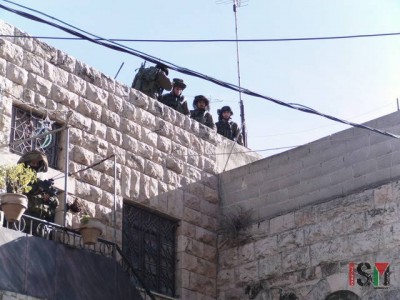
Three teams of at least seventeen soldiers each, invaded several Palestinian homes on a random basis, and detaining the family. They went inside the house to the rooftop and tried observation and shooing possibilities from there. After some 15 minutes they went down again for raiding another home.
Most of these soldiers looked very young as if they were barely out of high school. They were heavily armed and many appeared to be nervous. This could have led to an extremely dangerous risk to Palestinians and anyone else near their training exercise.
A trainer, sided by a personal bodyguard, instructed them how to invade houses and do other military things as stopping civilians and cars in this Palestinian neighborhood.
In the three hour training they invaded more than 20 homes.
‘Human error’ behind Kunduz hospital attack, US General claims
Press TV – November 25, 2015
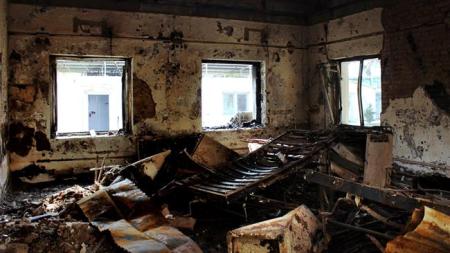
The United States says the deadly airstrike that recently destroyed an Afghan hospital in the northern city of Kunduz was the result of a “human error, compounded by process and equipment failures.”
General John Francis Campbell, the US commander in Afghanistan, made the remarks at a press conference in the capital Kabul on Wednesday, further admitting that the US forces took 17 minutes to act after being warned by Médecins Sans Frontières, or Doctors Without Borders, which was running the hospital in the country.
Campbell described the October 3 air raid on the hospital, packed with patients and medical staff, a “tragic and avoidable accident, caused by human error.”
“At 2.20am an SOF [special operations forces] officer at Bagram [airbase] received a call from MSF advising that their facility was under attack. It took the headquarters and the US special operations commander until 2.37am to realize the fatal mistake. At that time the AC-130 had already ceased firing. The strike lasted for approximately 29 minutes. This is an example of human process error.”
The general was announcing the results of an internal investigation into the incident, which left at least 30 dead.
US forces “did not know the compound was an MSF medical centre,” said Campbell. “They executed from air and did not take appropriate measures to verify the facility was a military target,” he said, adding that “fatigue” and “high operational tempo contributed to this tragedy.”
More questions after US explanation
MSF General Director Christopher Stokes responded to Campbell’s remarks that were accompanied by a 3,000-page US military report.
“The US version of events presented today leaves MSF with more questions than answers. It is shocking that an attack can be carried out when US forces have neither eyes on a target nor access to a no-strike list, and have malfunctioning communications systems,” Stokes said, adding, “It appears that 30 people were killed and hundreds of thousands of people are denied life-saving care in Kunduz simply because the MSF hospital was the closest large building to an open field and ‘roughly matched’ a description of an intended target.”
The MSF official accused the US forces of violation of the rules of war, further reiterating calls for an independent probe into the incident.
“The frightening catalogue of errors outlined today illustrates gross negligence on the part of US forces and violations of the rules of war. The destruction of a protected facility without verifying the target – in this case a functioning hospital full of medical staff and patients – cannot only be dismissed as individual human error or breaches of the US rules of engagement,” Stokes said.“MSF reiterates its call for an independent and impartial investigation into the attack on our hospital in Kunduz. Investigations of this incident cannot be left solely to parties to the conflict in Afghanistan.”
Argentina: Mauricio Macri’s Dubious Dictatorship Ties
teleSUR English | November 23, 2015
 The election of Mauricio Macri in Argentina’s presidential race comes as a welcome victory to the country’s business elite and right-wing parties across Latin America, but the president-elect has some dubious ties that could signal a lasting legacy in the new head of state of darker times in Argentina.
Macri has been particularly criticized for his indirect ties to the last military dictatorship in Argentina in the late 1970s and early 1980s that cracked down on left-wing activists and political opposition.
While many of Macri’s powerful economic backers and corporate allies propped up the dictatorship that benefited them economically, Macri’s closest ties to the dictatorship are through his own family business Macri Society, known as Socma.
Macri, a long-time business magnate and former mayor of Buenos Aires, has been a director of his father’s Socma corporate conglomerate since a young age. The Macris are one of Argentina’s wealthiest families, and Socma was among the companies that directly benefited from the dictatorship.
In 1973, prior to the 1976 military coup that ousted the civilian Peronist government of President Maria Estela de Peron and installed a dictatorship, Socma owned seven companies. When the dictatorship ended 10 years later, in 1983, the Socma corporate empire had expanded to 46 companies.
Among Socma’s dozens of companies were various businesses that benefited the Macri family economically by providing services to the dictatorship regime, such as the solid waste management company Manliba, privatized under the dictatorship in 1979, and the postal company Correo Argentino, later nationalized in 2003 under former President Nestor Kirchner.
Macri also showed his sympathies for corporate complicity in dictatorship-era abuses earlier this year when he and his party opposed a government move to end impunity for dictatorship supporters.
Argentina’s Parliament decided in September to launch an investigation into how people and businesses participated in crimes committed by the 1976-1983 dictatorship. While the vote passed by a wide margin of 170-14, Macri and his Republican Proposal Party made up the minority of lawmakers opposing the bill.
The U.S.-backed Dirty War disappeared between 7,000 and 30,000 people in Argentina under the dictatorship regime.
Argentina’s right-wing newspaper La Nacion, which supported the dictatorship, hailed Macri’s election as signalling an end to “revenge” for the dictatorship years.
“The desire for revenge should be buried once and for all,” a La Nacion editorial said on Monday following Macri’s victory. The editorial referred the end to a “culture of revenge” under the governments of Nestor Kirchner and Cristina Fernandez in reference to their efforts to seek truth and justice for dictatorship-era crimes, including Kirchner’s 2003 repeal of amnesty laws for crimes against humanity.
Macri’s election marks the first victory for the country’s right-wing business elite through electoral means rather than military coup. He will be the third non-Peronist head of state in the more than three decades since the end of the dictatorship.
Right-Wing Alliances in Latin America
While corporate elites and dictatorship-supporters celebrate Macri’s election in Argentina, right-wing organizations across Latin America also welcome his victory as a win for their neoliberal political project in the region.
Macri has already made his foreign policy plans clear, vowing to reshape international ties to strengthen relations with the United States and European Union while requesting that Venezuela be suspended from the South American regional bloc Mercosur.
Macri’s relationship with the United States has been demonstrated in leaked diplomatic cables, published by WikiLeaks, in which he accused the U.S. of being “too soft” on the Kirchner governments and called on the U.S. to crack down on Cristina Fernandez de Kirchner.
Macri’s stance against the Venezuelan government was also clearly solidified when Lilian Tintori, wife of Venezuelan opposition leader Leopoldo Lopez, took to the stage with Macri during his victory celebration on Sunday night. Tintori hailed Macri’s win as the start of “political change in Latin America and Venezuela’s opposition was “delighted” by Macri’s win, Reuters reported.
Many of Macri’s supporters are those who hope to reinvigorate neoliberal free trade politics in Latin America and roll back the regional integration projects launched by former Venezuelan President Hugo Chavez.
For example, the Argentine think tank Thinking Foundation, focused on developing projects and strategies to get Macri’s party elected, has collaborated with the Spanish FAES Foundation, which promotes neoliberal politics and has strong ties to Spain’s conservative People’s Party.
The Thinking Foundation is also part of the Atlas Foundation, which in turn is part of the global Atlas Network, a think tank that promotes neoliberal free trade and market-based public policy through over 400 member think tanks worldwide.
Macri’s Majority Pro-Kirchner Opposition Government
Macri’s plans to shift Argentina to the right may still face resistance. The president-elect will be forced to govern without majority support from Congress.
In the Argentine Senate and House of Representatives, the majority of lawmakers are not representatives of Macri’s Let’s Change coalition, but of the pro-Kirchner alliance Front for Victory that backed Daniel Scioli’s bid for president. Of 257 seats in the Lower House, 114 are held by the Front for Victory. In the Senate, 42 of 72 senators are Front for Victory officials.
The era of “Kirchnerismo” under Cristina Fernandez and Nestor Kirchner may have come to an end with Macri’s election, but the Peronist movement that has long fought for social justice in Argentina now forms the official opposition.
While change under Macri is certain, the question that remains is what the long-term legacy of the Peronist movement and Kirchner governments will be in Argentina and Latin America.
Featured Video
BRITAIN’S WARNING: PREPARE FOR WAR
or go to
Aletho News Archives – Video-Images
From the Archive
How Ukraine Tortured and Slaughtered Donbass
By Kit Klarenberg | Al Mayadeen | July 11, 2024
Almost immediately after the proxy war erupted, ISIS-tier footage of the torture and murder of Russians in Ukrainian custody emerged.
On July 6th, the New York Times published an astonishing investigation: In Ukraine, Killings of Surrendering Russians Divide an American-Led Unit. The article documents in grim detail how Chosen Company, an international volunteer battalion for Kiev, routinely executes Russian prisoners of war. It is the very first mainstream admission that this practice – a brazen breach of the Geneva Conventions, and a grave war crime – is widespread among Ukraine’s fighters, both foreign and homegrown. … continue
Blog Roll
 Aletho News
- Israel Demolishes Home Of Lebanese Journalist Whose Viral Film Exposed Pager Attack
- Record Oil, Empty Tanks: The UAE’s Miracle Recovery
- Burnham tackles Britain’s poverty with aggression in Yemen
- Peace in Ukraine: the easy way – or the hard way
- Trump & the Rrrrussians
- US taxpayer money laundered back through Ukraine – Musk
- Before COVID, an NIH lab chief proposed making a SARS-like bat virus more infectious
- Gates, Bourla on Trial in Netherlands Accused of ‘Great Reset’ Scheme at Vaccine Injury Hearing
- BRITAIN’S WARNING: PREPARE FOR WAR
- “Historic Russia”: The Land Putin Will Not Give Back
- If Americans Knew
- DAILY UPDATE: Latest essential news on Palestine, Israel, & region
- Damning report shows the media must confront its failures on Gaza
- BBC senior broadcaster speaks out on Gaza coverage
- Netanyahu vows vast West Bank invasion in response to 20-minute skirmish that left 2 Israeli soldiers and 2 Palestinian fighters dead
- Tied up and tortured: Israel using US-made electroshock weapons on Palestinian detainees
- The outsourced risk: how newsrooms rely on Gaza’s freelancers without protecting them
- Gaza bakeries forced to shut as Israel blocks flour shipments
- Gaza’s breast cancer patients face a deadly wait for treatment amid Israel’s genocide
- DAILY UPDATE: Latest essential news on Palestine, Israel, & region
- The Israel Lobby’s Changing Fortunes
- No Tricks Zone
- Two New Studies Find Thwaites Glacier Melt Cannot Be Driven By Human Activity Or A Warming Ocean
- E-Cars Reduce CO2 Emissions By Only 41% Compared To Internal Combustion Engine Vehicles
- Predictions Made By Renowned Climate Professor Over Past Decades Have Been Proven To Be Poor
- New Study Suggests Large Regions Of The Pacific Ocean Have Been Cooling For The Last 80 Years
- Germany’s Green Energy Debacle: High Energy Costs Force Kahla Porzellan to Close After 182 Years!
- New Study: 50 Years Of The Most Aggressive ‘Net Zero’ Policies Can Only Affect The Global Climate By 0.03°C
- US September “Heat” Was No Record…Many Records Set Decades Ago
- Latest European Green Energy Debacle; Portugal’s Largest Flagship Solar Park Insolvent!
- Green Energy Debacle: German Expert Professor Fritz Vahrenholt Warns Of Severe Economic And Social Consequences
- Two More Paleo Reconstructions Affirm Meters-Higher Sea Levels Across Ireland, Brazil 7000-6000 Years Ago

