NY Times Whitewashes Israel’s Racist Justice System
By Barbara Erickson | Times Warp | July 7, 2015
Three Israeli civilians are standing trial for killing a Palestinian teenager in a brutal murder last summer, and The New York Times is on hand to report the details. It is all meant to carry a clear message to readers: that democracy is at work in Israel and the law is on hand to deal out justice.
So we read that Israeli prosecutors are pressing defendants to admit their intent to kill, that the families of defendants and the victim are on hand and that the “cramped courtroom” in Jerusalem is crowded with judges, lawyers and observers.
But for all its detail, this story by Isabel Kershner is missing some crucial context: the fact that Israel runs a blatantly racist system of justice, with strikingly different treatment for Israelis and Palestinians. The present trial—for the murder of 16-year-old Muhammad Abu Khdeir, who was doused with gasoline, beaten and burned in a wooded area a year ago—is far from typical.
In reality, Israeli civilians and security forces rarely stand trial for attacks on Palestinians. A study by the Israeli human rights monitoring organization, Yesh Din, released this May, shows that Palestinian complaints against Israeli civilians lead to indictments only 7.4 percent of the time, and only a third of these (or 2.5 percent of the complaints) result in even partial convictions.
Security forces are also shielded from prosecution. Yesh Din notes that criminal investigations against soldiers are rare and even when they do take place, they are closed without indictments 94 percent of the time. And, Yesh Din states, “In the rare cases that indictments are served, conviction leads to very light sentencing.”
In the Times story Kershner quotes the parents of the victim, who are skeptical of the Israeli justice system. “It is all an act,” the boy’s father says. “They burned Muhammad once. Every day we are burned anew.”
Readers are likely to dismiss his misgivings as rhetoric and prompted by anger and grief. In fact, Palestinians have reason for doubting that they can find justice in Israeli courts.
West Bank settlers, for instance, are tried in civilian courts, while their Palestinian neighbors—even the children—face trial in military courts, which are notorious for their lack of due process and impossibly high conviction rates. As UNICEF noted in an extensive report on the abuse of Palestinian children in Israeli custody: “In no other country are children systematically tried by juvenile military courts that, by definition, fall short of providing the necessary guarantees to ensure respect for their rights.”
Palestinians tried in Israeli military courts are convicted 99.74 percent of the time, according to Israeli Defense Force data. Knowing this, most Palestinians and their lawyers opt for plea bargains and give up even the faintest hope of receiving a fair trial.
None of this appears in Kershner’s story, but the context of Israeli justice as it applies to Palestinians is crucial to understanding what is really happening here. The fact is, Israeli officials know the world is watching this trial, just as it watched events unfold after Abu Khdeir was abducted and killed. We can expect at least the appearance of justice to be on display.
The Times, which has ignored the hundreds of cases that show Israel in a far different light, is ready here to present Israeli prosecutors pressing for justice. Readers will not suspect that the newspaper has failed to inform them of other, less savory, outcomes to Israeli crimes against Palestinians.
We can name a few:
- This past April, two years after 16-year-old Samir Awad of the West Bank village of Budrus was killed with three bullets to his back and head, the State Attorney’s Office opted to charge his accused assailant with the minor offense of a “reckless and negligent act using a firearm.” B’Tselem, the Israeli rights organization, called this decision “a new low in Israeli authorities’ disregard for the lives of Palestinians.”
- In January Israel closed an investigation into the killing of Musad Badwan Ashak Dan’a, 17, in Hebron, four years after the event, saying there was no evidence available. In fact, the army investigating unit had plentiful evidence, including medical documents and eyewitness accounts.
- Israel forces shot and killed Yusef a Shawamreh, 14, in March last year as he collected herbs near the Separation Barrier in the West Bank. Three months later, investigators closed the case, saying there was no breach of military rules involved. Videos of the incident show that the boy and his companions posed no possible threat to the soldiers or Israeli security.
All of these (and dozens of others) were newsworthy items, fit to print in the Times, but the newspaper has preferred to look away. Only Samir Awad’s name appeared briefly in an online Reuters story that never made it into print; the others received no mention.
Now, however, Israel knows that the world is aware of the Abu Khdeir case, and a trial is in progress. It is likely that the prosecutors and judges will remain on their best behavior throughout the proceedings.
The Times, as well, is ready to present a narrative of Israeli justice at work. We can expect more reports from the Jerusalem courtroom, but readers are unlikely to learn that the trial is a rare event, an aberration in a system of flagrant inequality.
A month in Palestine
By Tom Blanx | MEMO | July 4, 2015
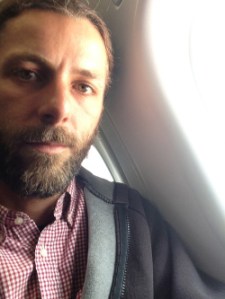 This May, I travelled to the West Bank in occupied Palestine.
I had a fairly good idea of the kind of things I would see when I went, but wanted to take a closer look at what I think is an unfair and asymmetrical situation. I don’t stand against Jews or Israelis. I stand against racism, violence, oppression and ignorance, and all of those things, I think, are here.
During my time in the West Bank, I lived and worked with a Palestinian farmer who runs a Permaculture Project in a small village called Marda. I wanted to see for myself what life was like for Palestinians living under occupation and how Permaculture could help.
Knowledge is everything and with that in mind I’m sharing everything I saw, heard, thought and felt in the time I was there.
Below are excerpts from Tom Blanx’s blog. Read the full blog here.
Getting in
For those who haven’t been, Israel’s not the easiest of places to get in and out of. And if you plan on checking out the occupied territories you’ll need to be a bit creative with the truth. Despite my polite passport note from the queen, I decided not to reveal how freely I would be passing while on my travels as it would have most likely landed me straight back on British soil. This had happened to previous volunteers so the NGO I had organised the trip with had suggested that I lie.
With the help of Murad, my Palestinian friend and his friend, an Israeli who will remain anonymous, I pretended I was traveling to help and learn on a farm in the south. I probably could have said I was there for a beach holiday or Christian visit too, but a bag full of work boots and full length clothing might have been a giveaway. Murad told me to just remain calm and answer all questions confidently but it was a nerve racking and intimidating experience. Much more than I remember it being when I was 18 coming here. In the end I think I got in by inadvertently playing dumb.
Getting into the West Bank was more straight forward. I got on a bus from Tel Aviv bus station all the way to Ari’el (An illegal settlement, next to Marda). There are no stops or checkpoints for settlers (on the way in) so all I had to do was get off before the bus turned into the settlement where Murad was waiting for me and I was in. A better understanding of his instructions, some Hebrew and useful geographical knowledge and I probably wouldn’t have ended up bang in the middle of the Ari’el in the isolating situation of looking for a Palestinian village. I haphazardly navigated my way out of on foot and was an hour late – not the look I was going for, but I guess he was going to find out what I’m about sooner or later.
Marda
Marda is in the Salfit district which is biggest producer of olive oil in Palestine. The village is effectively a ghetto, with reinforced steel gates at each end for when the army want to shut it down and a high metal fence and barbed wire around it, although some of these had been damaged and removed. There used to be resistance here, but like in lots of the rest of Palestine, occupation has become normalized. These days the village is quiet and peaceful. People work and children go to school, cats wander around the place looking for food and donkeys everywhere sound like they’re dying. The village sits directly under the hilltop Ari’el settlement, the 4th biggest in the West Bank. Murad said he used to play there with his friends when he was young before Zionists confiscated and destroyed 9000 dunams of it, in the late 70s to build luxury homes, streets and a university for Israelis and Jewish immigrants. The juxtaposition of the two towns, is a powerful thing to see and its something that you can’t help but see, every day.
As I arrived in Marda another volunteer was leaving. Her name was Judy, a 60 year old American woman from Australia travelling by herself. I wouldn’t normally mention someone’s age or circumstances but I think its significant as many people think the West Bank is too dangerous to travel to and that women could be more vulnerable here. Neither are true. It was her 5th visit to Marda so I wanted to get as much information out of her as I could in the 30 minutes she had left. She gave me the dos and don’ts about living in Marda, how to be with Murad and told me to explore as much as I could of Palestine “You can’t charaterise Palestine on what you see in just Marda as much as you can’t charaterise the US on what you see in Miami”
Murad
Straight away I felt at ease with Murad. From our first Skype conversation, to meeting him an hour late after getting lost, I felt welcome and at home. Chilled and pragmatic, straight talking and funny are the best words I can think of to describe him. Everywhere we went there was banter. Banter with friends, banter with strangers. Sometimes he sounds like he is angry when he’s talking in Arabic but then he laughs and I know he’s not. Judy said his bark is worse than his bite and I now know what she means. “C’mon man!… what you doing man?!”… “Why you sayin sorry all the time man” still echo round my head.
Murads family have lived in Marda for generations spanning centuries. His wider family numbers in the 100s. His immediate family is his his wife, Ghada, daughters Sara, Halla and Tooleen, his youngest – son Khalid, his Mother, Twin brother, older brother, three sisters and their families. I think I can count the number of people in my family with my fingers!
The old house he grew up in has itself been in the family for 300 years. His Mother and twin, Hazim live there now and on my first night, he took me to meet them. We ate dinner, looked at our phones (There’s no escaping it!!!) and then I helped Murad download a Lionel Richie “hello” ringtone he wanted for when Ghada called him. I asked him what other music he liked and he said “none”. “But you like Lionel Richie though?” No. just that song.” Then I reconfigured his answer and decline buttons so he could, in his words, hang up in peoples face.
When violence broke out in the second intifada (literally translated as uprising), Murad decided to leave Palestine. With his Palestinian passport, he traveled to America and spent time working in Chicago and Tennessee. In 2006, he returned to inherit his Father’s land and with some basic knowledge of permaculture from a previous project, he started Marda Permaculture farm.
The Permaculture farm
The farm is 2 1/4 dunams in size. A duman is about 1 square km. The farm has Bees and produces large quantities of honey each year, 5 kilos of which is exported to customers in Qatar. He has chickens and pigeons (with their own cob-built houses) for eggs and meat and and plans on getting some goats and a cow.
The farm is Murad’s livelihood, but its more than that. The farm is his way of fighting the occupation. By growing his own food and providing his own income, he doesn’t need to buy expensive food and water or look for work abroad or in Israel. Permaculuture gives him good health, independence and empowerment.
The farm is a centre for students, activists and volunteers and Murad hopes his model will raise awareness of Permaculture in Palestine and begin to change local peoples attitudes towards farming.
Getting around
I did most of my exploring with Murad. I only did my own thing a couple of times. Once when I went to Jerusalem with Gaie (another volunteer who helped at the farm for a few days) and another time when we split up in Rammalah and I went to see qalandia. But we always left Marda together. Murad wasn’t into the idea of me travelling by myself in case I got mistaken for a settler or deported for being a friend of Palestine. They’re weren’t any bus stops in Marda so unless you hail a passing taxi or sherut you hitch a ride to somewhere you can get a bus. The nearest place to us was Zattara Junction (Tappuah junction for Israelis). From here you can go in three directions north to nablus, east to jericho and south to Rammalah. It used to be checkpoint but some of these have eased off in recent years. There’s still a large military presence here though. Lots of Israelis use the junction so cars are still stopped, IDs are still checked and people are still harassed. We saw one guy in his early 20s being checked out by two soldiers wanting to know where he had been, where he was going, and why he needed to go there.
As we make our way to the bus stop to Rammalah we have to go through the rigmarole of crossing the side of the road we need to the central reservation, avoiding Israeli only bus stop which Palestinans are not allowed to be near, to then cross back 50m further along where the anybody else bus stop is. You keep your head down here as you feel the eyes of soldiers and settlers weigh down on you. You’re at the mercy of the army here, they have done and can do anything they want to you here. This a cold violence that all Palestinans have to go through on a daily basis.
Nablus and Tulkarem
This was the first place outside Marda that I explored. It used to be an important junction on the Old Silk Road and was a strong resistance town in the years following the occupation. Nowadays, its very normalised – the occupation. Like the rest of the country, people are just trying to make enough money to survive. Food and drinks, shops and markets are everywhere. Women are covered up, some even more than in Marda wearing full burkhas which you can also see displayed in shop windows. Lots of women whiten their faces here too. Looks really strange sometimes. On the hilltop behind the city is the largest refugee camp in Palestine – 30,000 refugees packed into ¼ of a sq km. Like the one outside Rammalah they resemble Rio’s hillside favelas. Beautiful backdrop and ugly consequence all at the same time. As we ate a shrawma outside we saw men putting flags up in the main square and cars driving round honking their horns. They were celebrating the release of a young man who had been put in jail by the Israelis. I don’t know who he was or what he had been jailed for but I’m guessing it was for a while and his release was a small victory.
A little bit further on is Tulkarem This is where we met Murad’s friend Fayez, and where I saw the wall for the first time. Like Murad, Fayez also runs a farm in a village just outside Tulkarem called Irtah. His story is amazing: resilience and steadfastness in effect. In a nutshell… Occupation forces tried to confiscate his land to use as a military post; some of the first sections of the segregation wall were built across 20 dunams of his land; he resisted the land confiscation and repeated attacks on him and his crops and was imprisoned, leaving his wife Muna, to manage the farm; 12 chemical factories considered hazardous to Israeli public health were relocated to the other side of the wall, one right next to his farm*; he thus grew more aware of the health impacts of fertilisers and pesticides and made the switch to organic production. Now his and Muna’s farm, famous for popular resistance attracts solidarity activists and volunteers from all over the world.
*Factory chimneys are used when the wind blows east into Palestine, and not when into Israel.
At his home we sat and drank zamzam with his family. Zam zam is holy water welled from the zam zam well in Mecca. They told me the story of zamzam, debating over the specifics but I’m struggling to make sense of my notes so here’s a simple kids version of the origin of zamzam I found online:
“This is the story of the ZamZam water. The water well of Zamzam is a well located within the Masjid al Haram in Mecca. It was a miraculously generated source of water from Allah, which began thousands of years ago when prophet Ismael (PBUH) the son of prophet Abraham and Hajar (the wife of prophet Abraham, May Allah be pleased with her) were thirsty and alone in the dessert.In this area there is very little water if any at all in some places. According to our tradition, Hajar (May Allah be pleased with her) was a very devout mother and wife. When she was separated from her Husband prophet Abraham (PBUH), she was left alone in the dessert, by herself with her small son Ishmael (PBUH). Prophet Abraham made a prayer for his young family as he left them behind and Allah provided the means of sustenance for them. Hagar (May Allah be pleased with her) ran seven times back and forth in the scorching heat between the two hills of Safa and Marwah, in desperation because her son cried as it was very hot and they did not have even a drop of water to drink. Allah provided a Miracle and the ZamZam well was born.”
Fayez’s son “carried” 20L of this water back from his hajj pilgrimage so it goes without saying that I felt really honoured be offered it. It’s meant to contain healing powers so you drink it in 3 sips and wish for good health. I drank mine to my Mum.
Jerusalem
Tony Blair has a multi million penthouse apartment that he rents for free in East Jerusalem. I saw it – Murads not even allowed to come to Jerusalem. No one who lives in the West Bank is, unless they own one of the hard to get permits I mentioned earlier. It’s like me needing permission to visit London.
Jerusalem (East) is as you would expect it to be – tourists, religious places of interest, sight seeing, crap selling blah. The tourism and globalism here makes it more relaxed in its attitudes to drinking and clothing, despite the religious significance of the city. In the old town/holy basin which is a busy Palestinian neighbourhood, Israeli settlers live in homes above the market taken from Palestinians now flagged up and fenced off. Below mesh is in place to stop settlers throwing waste down on the Palestinian’s markets there are Israeli homes.
We tried to get to the Al Aqsa mosque and dome on the rock but it was Muslims only after 4pm and being white and non Muslim looking we were turned away by Israeli police. They control who goes in and out here. It was interesting and maybe kind of nice to see Israelis help enforce the Muslim only after 4pm rule. Was also good to see some soldiers and locals getting on. Saw another soldier help a blind man into the square too which was nice. In the rush to cry dehumanization you can easily find yourself guilty of doing the same thing.
Jenin
Jenin was the furthest town I visited. We had to time our trip around the weather as it gets hotter here. Its in the agricultural north and took about an hour and a half of mountainous driving from Marda to get there although Jenin itself is mostly flat. Didn’t really get a chance to explore Jenin properly it was more of a meet this guy here meet that guy there day but one thing that was noticeable was the absence of anything Israel.
Unlike all the other places Id been to there was no army, no flags, no settlements. This might be because of its unbroken horizontalness as I’m pretty sure most settlements are built strategically on hilltops. Outside the hustling bustling town of markets shops and car-shop after car-shop after car-shop is industrial landscape with factories and fields growing tobacco fruits and vegetables. More mass production than organic production here.
Environment
Despite a deep connection with the land, it gets treated badly by many Palestinians, Israelis too. In many parts of the West Bank, streets and fields are scattered with rubbish. There’s refuse collection once a week in Marda but that’s just to collect landfill waste from peoples houses. Outside though, pedestrians, drivers, kids playing, even farmers, just chuck their empty packets on the ground. Many animals are treated badly: birds caged in small spaces to be sold as meat; donkeys toiling in the insane heat carrying people and heavy loads; dead puppies (clearly not treated well) left next to bins in the street, I could go on. On our way to the farm one day we saw that one donkey had given birth. Murad helped the new donkey to its feet and pushed her closer towards her mother which was tied up to a nearby tree but just out of reach. The next day we saw the same donkey, working, but not the infant. As another mouth to feed and a distraction to his working donkey, the owner, an old guy, chucked the new jenny away. This upset Murad, more out of waste than sentiment, but Murad cares. He understands the important roles animals have. I learnt this early on when some children visited us at the farm and one of them was trying to squash a bug. Murad stopped him and while I couldn’t hear what he actually said, it was clear Murad was telling the boy that he needed those bugs.
Then there’s Israel, the self titled environmentalists, chucking all kind of restrictions and protection laws onto Palestinians in the name of preservation whilst committing all kinds of environmental rights violations: sucking Palestinian land dry of water and selling it back to them at full price; allowing settlements to dump huge quantities of sewage into neighbouring Palestinian fields and villages, damaging buildings, soil and water supplies; poisoning waterways and soil with toxic chemicals; uprooting 1,000s of olive trees, trees that are peoples livelihood, trees that have stood since the Romans were here!; building over ancient springs and vital sources of water, affecting ecosystems and land irrigation; and then the walls and border gates affecting the migration patterns of an array of species.
Culture
I’d never been to a Muslim country before so my head naturally started to fill itself with assumptions and preconceptions of how things were or would be. I knew from the advice the volunteer program gave me, that Marda was a conservative village: No shorts, no singlets (LOL), no drinking, no drugs, and no approaching strange women romantically. I paraphrase but these were all suggested guidelines – Who’s been coming here??
Marda is a conservative village, traditional too – women cover themselves in public and sometimes socialise separately but everyone was friendly and interactive. If my Arabic spanned further than the “Hello, How are you? I’m fine, thank you” at its peak, I may have broken down even more social barriers. Word to the wise: Don’t go in for a handshake with women you’ve just met as you’ll be left hanging.
Despite the occupation and the harassment and intimidation that comes with it, everybody seemed upbeat. There’s a real togetherness here and its so much more chill than it looks and sounds from in the west. There’s lots of joking. Murad likes to take the piss out of people especially people that he likes. There’s one old guy we used to see and Murad always tries to tickle him.
It sounds like a stupid and obvious thing to say but Palestinians really love their children, especially young ones, almost as if preserving their innocence is everything. From about 7-12 boys go through a seen but not heard phase then at 13+ they’re targets for playful clips round the ear and downsizing banter. They have a lot of freedom in Marda. Children as young as 6 walk to and from school through the village, they go to the shops to buy groceries and play outside unsupervised. On paper it sounds like slack parenting but its not. The community polices itself. Everyone knows everyone and when children step out of line or get cheeky the nearest adult will call them up on it. I’d describe it as a golden age if the circumstances didn’t make it sound so ridiculous.
Politics
Murads not the type to push agendas. I wanted a Palestinian perspective on Israel, the occupation, and all the other things that go with it, so I was going to have to ask. Judy ,who I met briefly when I arrived in Marda told me “Don’t ask questions unless you’re ready to accept the context.” I wasn’t completely sure what this meant but I bided my time and began to write down some questions for Murad which I could ask him when we’d got to know each other better. In my spare time I started to plan a positive article about cooperating through collaborating. This had stemmed from seeing how Murad and his Israeli friend had been working together to sneak volunteers into Marda, but with one question my idea, or at least, my inspiration, was blown out of the water. “Do lots of Israelis come here to help?”
“Yes, but I don’t like it. It makes me look bad.” Murad doesn’t pull punches, he tells it as he sees it and when a group of Israeli peace activists came to work on the farm and found this out. He told me how they had asked him what they could do to help the Palestinian cause and in one word, he said, “leave”. “It sounds harsh, but this is a man who has been fired at, arrested, imprisoned, watched as his family’s land was turned into a lavish city for Israelis and Jewish immigrants, which has brought violence right to his door.
“These people say they are for peace but if they really were they would leave Israel. Who built your house?” he asked them. “The person who built your house is living in a tent and you talk about peace?”
Talk leads onto the testimonies of soldiers in, ‘Breaking the silence’. “Breaking the Silence are bastards! They kill innocent men women and children and then feel bad and say sorry? Fuck you’re sorry!” None of this is said in a raised or angry tone of voice. Murad, like lots of other Palestinians, thinks he’s been sold out. Sold out by Israel, sold out by America, sold out by Britain, sold out by Arab states and sold out by their own leaders. I try to explain that propaganda can make people do the worst kind of things but it sounds empty as I say it.
“The world doesn’t care. If it did, Palestinians would have justice.”
The Army
In the whole time I was in Palestine and Israel the only times I ever felt threatened, nervous or insecure was near Israeli police and soldiers. 15 years ago I was in Tower Records in Tel Aviv and 2 young soldiers stood next to me looking through CDs while on duty. It was strange then and it is strange now. In Israel, everywhere soldiers are on the move. Its like scouts but with guns. It’s like something out of the Paul Verhoven film, Starship Troopers. Beautiful, fresh faced, young men and women, IDF issue Tavor assault rifle in one hand and smartphones in the other, all “doing their part!, knowing their foe!, guaranteeing citizenship!” because at the end of the day, “its us or them”
The idea that an 18 year old with a gun has the power to harass and disrespect civilians often much older and wiser than them leaves a nasty taste in my mouth.
For me, military service here is more about protecting a lie than protecting citizens. Imagine a reality where young men and women are indoctrinated with the idea that they are defending their country when all they’re really doing is supporting a decades long colonisation project. It almost doesn’t seem real. Almost.
Pigs
About 5 days in, I was smoking a cigarette on the roof when I heard a gravel moving noise coming from the hill behind my house. The street lights made it difficult to see what it was but I could just about make out a group of large figures making their way down this track. It looked like humans, big humans, on all fours, coming down the hill!! I was scared! The settlement was just up the hill and I’d heard stories of past incursions and still new to this unfamiliar and relatively (to me) troubled place, my imagination and stupidity got the better of me. Reality checked eventually and I concluded they weren’t humans. I still didn’t know what they were though, so I didn’t move or make a sound and just watched as these night monsters marched on by.
The next morning I tell murad what happened… And in his most blasé voice tells me, “That’s the pigs man…. They come and destroy everything in a few minutes!”
So I looked it up. It’s not just in marda. Apparently all over the West Bank wild pigs have been wrecking crops and trees and sometimes attacking people, all since around 2004. People claim they were introduced after the last intifada. One guy even told me he heard a truck load of them had been seen being unloaded in some fields. It’s a wild claim, but in a place where pollution is directed towards specific communities, raw sewage is dumped into village’s water supply and Settler children are marched through villages abusing locals, it becomes more believable. I can only speculate as why pigs. Agitation? Disrespect? One guy joked that Islam should introduce a temporary fatwah so that people could eat the pigs and turn the problem into a solution.
“In 2004 there were no pigs in Palestine! Now there are pigs! They don’t fly in!”
Murad showed me some of the damage they had done to his corn field. To protect his farm he put up a barbed wire fence but it was only when he attached tyres to the fence that they stopped getting in.
I became obsessed by this thing! I really wanted to see the pigs again, I set my alarm to wake me up at all hours, but I never saw them. There were some near encounters. We just missed them on the way to work one day when some builders sent them running down the hill throwing stones at them
A law was passed to protect the pigs so farmers are not allowed to kill them. It would take a bullet to the head to do it apparently which would be pretty hard as you’re not allowed weapons of any description in Palestine.
Getting out
On the way back its the same bus back to Tel Aviv. After speaking to other internationals I was prepping myself for a grilling at the airport. I wasn’t expecting to be removed from the bus by armed officers in plain clothes. And I wasn’t prepared to explain why I was in the West Bank on a settler bus and not where I said I would be in Israel proper. People told me to answer questions confidently, honestly and vaguely. A lot of officials I dealt with had a mediocre knowledge of place names so this helps with the vague answering. You might get through that but you’ve probably been flagged for more security checks. And if you have it’s a tough run in til the fight home. At check in and security your bags will be emptied, their contents swabbed and analysed, your body searched and scanned and your skill at answering repetitive questions tested.
And when you collect your bag from Gatwick airport luggage hall you’ll even find a courtesy note inside explaining that someone’s had another good look through your gear and put everything back as they found it. ‘Come back anytime’ ain’t the vibe I’m getting.
I plan on going back for olive harvest this year but won’t hold my breath on getting in. If one trip is that suspicious, another is probably smoking gun territory.
Florida Man Accused of ‘Terrorism’ Based On Book Collection
Counter Current News | July 2, 2015
Imagine being falsely accused of terrorism for nothing more than the books you have read. Well that’s exactly what has happened to a Florida man named Marcus Dwayne Robertson.
The U.S. government composed “snippets of information from various sources, out of context, to weave together a narrative of terrorist ideation,” according to a Florida judge.
That judge just ordered the release of Robertson, also known as “Abu Taubah,” an Orlando, Florida resident and Islamic scholar. Abu Taubah was accused of “supporting terrorism,” but the “evidence” against him amounted to nothing more than the books on his bookshelf.
Robertson, also known as “Abu Taubah,” was incarcerated from 2011. The charges he faced, however, were tax fraud and illegal gun possession. Not exactly “terrorism.”
But following his arrest and conviction stemming from these charges, prosecutors added what they termed “terrorism enhancement” to the sentence.
There seems to be no rationale for this other than ABu Taubah’s religious orientation… that and his book collection.
This sentencing guideline modification would have locked Robertson up for 20 years.
But the judge’s recent rejection of this bizarre, Orwellian sentencing “enhancement”, led to the Islamic scholar being released immediately.
Robertson’s sentence was argued as justifiable by prosecutors who said the contents of his Islamic book collection were sufficient “evidence” that he was connected to terrorism.
Approximately two dozen eBooks that Robertson downloaded were presented as “evidence” of his “terrorist connections.”
Prosecutors highlighted passage after controversial passage, as though this could serve as legitimate evidence that someone is a terrorist. They didn’t seem to understand that the contents of a book someone owns cannot be used as evidence against them.
A memorandum obtained by First Look was issued along with Judge Gregory A. Presnell decision. That memorandum strongly rejected the government’s argument that eBook passages could be used as “evidence” of “terrorism.”
“[T]here was no evidence produced that Robertson ever accessed these particular documents, much less that he took their extremism to heart,” Presnell argued.
He made it clear that even if the Islamic scholar admitted to having read the eBooks in question, this would not and could not be used as evidence of terrorism.
“The government has never disputed Robertson’s claim of being an Islamic scholar,” he added. “It is not at all remarkable for an Islamic scholar to study, among many, many others, the writings of Islamic extremists.”
He said that beyond this, the prosecutors did “not even come close to proving… Robertson’s relatively minor income tax fraud was intended to promote a federal crime of terrorism.”
The judge noted that he received “hundreds of emails” over the last few weeks that urged him to lock up the man for no reason other than because he was a Muslim. These emails amount to little more than racism and bigotry in most cases, and fear-mongering and ignorance in the rest.
“In America, everyone has a right to say and believe what they want, within the bounds of the law,” Presnell said before declaring that Robertson would have to be released immediately.
Robertson’s lawyer Daniel Broderson agreed that “at no point did the government ever have any actual evidence [Robertson] advocated terrorism, so they attempted to use his library of books as a backhanded way of branding him as a terrorist. He spent four years in prison, two years of it in isolation, over a prosecution that was both unfounded and that completely ran afoul of the first amendment.”
Speaking to The Intercept after he was released, Robertson said, “they’re trying to find an indirect way to sentence people with non-terrorism charges as though they’d committed terrorism offenses, without having to provide the preponderance of evidence that is normally required in such cases. You own a few books and some guy tells an informant you said something, and suddenly that is legal basis enough to sentence you to prison for decades.”
He added that he “lost all those years, in jail, in terrible conditions, away from my family. After all that, they couldn’t produce one single statement from me that supported terrorism.”
Protest commemorating one year anniversary of the killing of Mohammad Abu Khdeir met with military violence
International Solidarity Movement | July 3, 2015
Ramallah – On July 2, 2015, in honor of the first anniversary of the murder of Muhammad Abu Khdeir, Palestinian activists with international supporters blocked a settlers-only road leading to the illegal Adam settlement. Demonstrators cited this road as the road that the murderers took in their search for a Palestinian victim. Journalists, Palestinian and international activists, suffered from pepper spray burns and several were hospitalized.
“This is the first in a week of demonstrations for Muhammad Abu Khdeir. One of the murderers, Yosef Haim Ben-David, is from the Adam settlement. This is why the demonstration was held at this settlers-only entrance,” said Abdullah Abu Rahmah, the coordinator of Popular Committee Against the Wall and Settlements in Bil’in.
Demonstrators blocked the road to settler traffic in both directions until the Israeli Army and Border Police dispersed the non-violent demonstrators and journalists by pepper-spraying indiscriminately. Three Palestinian activists, four journalists, and two International ISM volunteers were pepper sprayed in the eyes and mouth by a masked Army officer. An ISM co-founder as well as journalists from Roya TV Channel, Reuters, and Palestine TV were severely pepper sprayed in the eyes requiring hospitalization.
The soldiers threw sound percussion grenades at demonstrators and chased people. In addition to the pepper spray, they shoved journalists and Palestinian activists to the ground.
After the soldiers and border police chased the demonstrators off the road and down a hill, they continued to throw percussion grenades even as the demonstrators stood at a distance waiting to find fellow demonstrators.
Israeli forces detain 550 Palestinians in six months
Press TV – July 3, 2015
Israeli forces have detained 550 Palestinians, including women and children, in the occupied West Bank since the beginning of 2015.
 The detainees, who were arrested in the southern city of al-Khalil (Hebron), included seven women and 105 teenagers, Amjad Najjar, the head of the Palestinian Prisoners Society (PPS) in al-Khalil, said on Thursday.
The Palestinian official added that 225 of the detainees received sentences through the Israeli practice of the so-called administrative detention, under which Palestinians are kept behind bars without charge or trial for months or even years.
According to Najjar, 78 Palestinian patients “who faced a real life threat as a result of detention” were among the inmates in Israeli jails, where they receive no “medical treatment.”
He noted that Israeli forces treat the Palestinian detainees in a “savage and inhuman way during detention.”
The PPS report pointed out that many of those detained during the six-month period were from the town of Beit Ummar, where over 60 residents, mostly minors, were arrested between January and March.
Earlier reports by the PPS showed that Israel detained 383 Palestinians across the West Bank in December 2014.
Over 7,000 Palestinians are reportedly incarcerated in 17 Israeli prisons and detention camps.
Freedom Flotilla: ‘Tasering my friend Charlie was an act of terrorism’
By Richard Sudan | RT | July 1, 2015
Despite the Israeli authorities’ claims that the seizure of a Freedom Flotilla boat was ‘uneventful’, footage has emerged that indicated that they tasered a Swedish aid worker.
The boats making up Freedom Flotilla 3 (FF3) have been prevented from reaching the besieged people of Gaza and deliver humanitarian aid. The flotilla’s flagship Marianne was boarded by the Israeli military and taken to the Israeli port of Ashdod earlier in the week. By now, some of the crew members have been released, while others remain detained.
Meanwhile, the boat I was meant to be on has not yet left a Greek port. It will head to Gaza at some point. I have been asked not to publish the details. But we will go.
The Israeli authorities claim that their soldiers were ‘non-violent’ as they took over the Marianne, which amounted to an illegal act of piracy, as the vessel was in international waters at the time it was intercepted. The Israeli authorities claimed that there were no injuries when they seized the boat which they had no right to do, legally or morally. The illegal act has been described as ‘uneventful’.
Unsurprisingly though, footage has emerged which shows that the opposite is true. The video shows Arab member of the Israeli Knesset (parliament) Basel Ghattas, who I had long conversations with on my trip, first addressing the Israeli Navy before the soldiers boarded the Marianne. The footage then shows Israeli Navy thugs repeatedly tasering Swedish activist and humanitarian aid worker Charlie Andreasson.
Charlie has spent much time in Gaza. He’s a really nice guy and a genuine individual, the kind of selfless character you meet when preparing for a campaign like this. I had the pleasure of talking with him many times as we prepared for Freedom Flotilla 3, and ate dinner with him just a few days ago.
I watched the video of Charlie being tasered and knew it was him before I even read the article.
It was a sickening feeling. According to Oxford dictoniaries.com a taser is ‘a weapon firing barbs attached by wires to batteries, causing temporarily paralysis’. In reality though, tasering is an extremely violent act which can even cause death. There are campaign groups which lobby against the use of tasers by police for this very reason.
But this is how Israel routinely behaves. In typical fashion the Israeli leadership has sought to distract attention from its own crimes. Netanyahu wrote a letter published in the press and delivered to the activists on the boat. He says they must have gotten lost and perhaps should have headed to Syria. He exploits one tragedy to cynically justify another.
And here he does it again, suggesting that Israel is a beacon of light, justice, surrounded by hostile neighbors in the Middle East trying valiantly to uphold those oh so cherished values we hold dear. You can almost hear the harps playing and the angels singing when you read the letter his press office wrote for him on his behalf. He invites the readers to be “Impressed by the only democracy in the Middle East”.
Well Benjamin, we invite you to go to Gaza and to see what Israel’s democracy looks like if you happen to be a Palestinian and born in Gaza. He says that the leadership in Gaza is “using children as human shields.” Perhaps this comment is written by Netanyahu’s office to deflect attention from the fact that Israel killed hundreds of Palestinians last year including many children, and has done so since 1948.
Netanyahu claims that the people on the flotilla were bringing weapons to Gaza. This is false and nothing but an attempt by Israel to save face in the wake of yet another act of piracy committed at sea. They have to say that we are terrorists, because as it is, the world forming a much clearer picture as to the true extent and nature of Israel’s war crimes.
I’ll end here with a story that Charlie told me once when we were sitting down talking, in the company of two other activists.
Charlie told of a time he was in Gaza, and saw a young man shot by an Israeli soldier, possibly a sniper, as they found themselves under attack as is routine in Gaza.
Charlie and whoever else was there couldn’t help the Palestinian man as they were still being shot at. They had to watch him die, unable to reach him as he lay just a few feet away. They then had to inform the father that his son was dead-while the body of his son still lay in the road, unable to be recovered. The boys’ father thanked them.
I’ve never even seen the image of this happening, but yet I can’t shake it from my mind. Charlie is a brave person and didn’t deserve the treatment he got by the Israeli navy.
The Israeli soldiers are brainwashed and carrying out the work of Netanyahu’s war criminal regime. The sooner people wake up to this the better.
Richard Sudan, is a London based writer, political activist, and performance poet. Follow him on Twitter.
Utah police introduce programs to ‘reeducate’ civilians
By Justin King • The Fifth Column • June 16, 2015
Salt Lake City – The Utah Fraternal Order of Police hosted an event for more than 70 law enforcement agencies. The local media dutifully touted it as a way to reduce violence and some form of community outreach, apparently they didn’t examine the message very closely. The propaganda effort is, unsurprisingly, being conducted in a state where cops kill more people than drug dealers or gang bangers. It’s being conducted in a city that had a DA elected after promises of holding police to account for their actions. There has not been a single conviction.
The premise behind the program is as Stalinesque as they come. The advertising for the program paints it as something that helps officers and the community step into each other’s shoes. However, rather than address the fact that officers consistently use excessive force, it’s designed as a mobile reeducation center to convince people to “play the yes sir, no sir game” when dealing with officers. In other words, comply or die. For officers, the training revolves around attempting to alter the community’s perception of excessive force, rather than actually stopping it. During the class in Utah, officers were advised to go to neighbors after they bust down a door to execute a search warrant to explain why it was done. Nothing says “safe community” like terrorizing one family with a no-knock raid and then going and knocking on all the doors in the neighborhood to confront those families and scare them as well. More importantly, what are the officers going to say? It’s doubtful they will act with a presumption of innocence and therefore open the department up to a lawsuit.
The speaker at the event said, “Who is going to re-educate people who have been educated in a negative way? You!” Yes, it really is designed as a reeducation program.
The name of the organization is “Why’d You Stop Me.” There’s a 17-minute commercial available on YouTube that showcases some of the advice they are giving to kids who endure the reeducation program. Even in the video designed to make the organization look as if it is something other than a propaganda effort, the one-sided message provided by the organization that incorporates “the thin blue line” into its logo is apparent.
The video starts by displaying a badge wrapped with the “thin blue line,” which has become synonymous with police cover-ups, brutality, and misconduct. It then shows a series of clips of officers being beaten or shot. Then after endorsements from a bunch of members of the thin blue line, it displays: “121 Police Officers died in 2014 while protecting the communities they serve.”
With all of the images of violence, the message is clear: 121 cops were killed by criminals last year alone. Of course, that isn’t anywhere near the truth. According to the ODMP (the cited source in the video), the actual number of line of duty deaths was 134. However, they weren’t all beat to death or gunned down by merciless criminals. 2 were killed by other cops, 19 had heart attacks, 7 died from a “9/11 related illness,” 41 were killed in car accidents of some sort, and so on. Less than half of that number were actually killed by the actions of criminals. There’s no telling how many were killed during excessive force scenarios they provoked or by conducting no-knock raids against people that would have otherwise been nonviolent. It makes no mention of the number of unarmed civilians killed by cops during the same year. It makes no mention of the number of people killed by cops at all. That number is 1104. Seems like it would be worth mentioning that cops are killing civilians at a ratio of 20:1.
At 8:21 in the video the speaker states: “If you guys act respectfully, you get through that contact alive.” Seems to me that simply being unarmed should be enough to get through the contact alive. Just like World War II propaganda films, it shows successful conversions of people that didn’t respect police officers, who now say they do. They must be very proud to be able to trick a child from an underfunded inner-city school by feeding them lies and half-truths, but what is going to happen when that child sees a cop beat someone to death because they weren’t acting respectfully?
The primary speaker is obviously some form of social worker, anthropologist, or psychologist, right? Nope. He’s a cop. He works for Long Beach Police Department. He’s a member of the thin blue line. Why should we have expected anything else?
Why does Utah need some form of propaganda effort to reeducate the population? It probably has something to do with the fact that becoming a homicide victim at the hands of police is the most likely way of becoming a homicide victim in the state except for domestic violence, but we don’t have the numbers to determine how many domestic violence victims were killed by partners who are law enforcement. A cursory search found at least 4.
One Utah incident that has made headlines recently because the cop taunted the family of the unarmed man he killed is the case of Joey Tucker. Tucker was in some form of medical or emotional distress when an officer shot him three times. Even though the video clearly shows the officer’s statements to be false, and the new DA, Sim Gill, campaigned on holding police accountable and once wrote a paper lamenting the law enforcement community’s practice of not properly investigating crimes, no charges have been filed. Two videos of Tucker’s execution and screenshots of the Facebook conversation in which the cop says the son’s life was only worth $100,000 are available here.
Welcome to a society that will allow the population to be reeducated to accept brutality and violence, rather than ending it. We are headed to a hellish future where the security services of the United States are permitted to behave as judge, jury, and executioner while the public is expected to cheer at their own executions.
SWAT Raids Wrong Home, Breaks Windows, then Issues Family Citation for Broken Windows
This case gives a new and an even more despicable meaning to the term, “Broken Windows Policing”
By Matt Agorist | The Free Thought Project | June 30, 2015
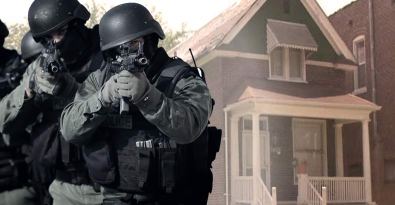
St. Louis, MO — Leon Walker and his family were settling down for dinner last week when they were violently interrupted as flashbang grenades came flying into their house and began exploding.
The front door was kicked down, and armed assailants rushed in with AR-15 rifles drawn and pointed Walker and his family. These armed and incredibly incompetent and dangerous assailants were members of the St. Louis Police Department’s SWAT team.
The SWAT team was looking for an evil man who allegedly committed the ‘crime’ of selling a substance to willing customers. This man’s name was Darron Ford, and he lived two doors down from the Walker family.
The fact that the man they were looking for lived two doors down was of no consequence to these thugs in uniform as they went along with the raid, in full. For two hours, police, who knew they were at the wrong address, tore the home of Leon Walker apart in search of a non-existent reason to justify their idiocy.
Never let a botched SWAT raid go to waste.
Had Walker tried to defend his home against the armed invaders, he would have been killed, and the world would have never known about it. The blurb on the nightly news would have been that police kill an armed man who fired on them.
“Obviously they think they’re being invaded,” family attorney Bevis Schock said. “The hope is that they won’t fight back but that they’ll cower in fear – the flight response rather than the fight response.”
Schock says that police should have stopped their madness once they realized they were at the wrong home. However, they were on an apparent mission to destroy and intimidate.
After the life-threatening home invasion and subsequent destruction of their home, the St. Louis Police Department sent out a building inspector. In turn, the inspector issued the Walker family a citation for a window the SWAT team broke during the raid!
“In this case the insult was to have the building inspector cite them for the window that had been broken by the police an hour earlier as part of the entry, and that’s outrageous,” Schock said.
The Walker family could have been killed by these barbarians as they followed their controller’s orders to seek out illicit substances. Instead of an apology for threatening all their lives and ransacking their home, the Walkers were extorted!
The Walker family has since filed a lawsuit against the city of St. Louis. The taxpayers will now foot the bill for the belligerent idiocy of the St. Louis SWAT team.
The Walker’s situation is hardly an isolated one either. Also this month, and in the same town, another family was wrongfully raided by St. Louis SWAT. Angela Zorich and family were subject to a massive military-style raid during which their house was destroyed, their beloved dog killed, and their mother kidnapped. The reason for this war-like assault on a family — Zorich was on hard times and was temporarily unable to pay her gas bill.
Sadly, many Americans are still unable to see the horrors of the massive and brutally negligent police state that has exploded in this country. The apologists sit back and tell people that if they don’t do anything wrong, they don’t have anything to worry about.
Egypt president to change law to permit speedy executions
Reprieve | June 30, 2015
Egypt’s President, General Abdel-Fattah al Sisi, has said he wants to change the law to allow for quicker executions in the country.
In remarks at the funeral of Egypt’s Attorney-General Hisham Barakat, who died after a car bomb attack on Monday, Sisi is reported to have said: “The arm of justice is chained by the law. We’re not going to wait for this. We’re going to amend the law to allow us to implement justice as soon as possible”. He added: “If there is a death sentence, a death sentence shall be enforced.”
The decision to expedite executions for those sentenced to death raises fears for scores of people arrested in the military’s 2013 breakup of protests. Many face possible death sentences in mass trials that fail to meet international standards; including juveniles such as Irish teenager Ibrahim Halawa, who is being tried as an adult alongside 493 other people. Ibrahim, a student from Dublin, was 17 and visiting family in Cairo when he was arrested in August 2013. Now 19, he has reported torture and mistreatment throughout his two years of pre-trial detention.
Commenting, Maya Foa, the head of Reprieve’s death penalty team, said: “In Egypt we’ve already seen scores of innocent people – including juveniles such as Ibrahim Halawa – arrested for the mere ‘crime’ of being at or near a protest. Thousands still face torture, ‘mass trials’, and the threat of hanging. It is sickening that President Sisi now wants to dismantle what little checks remain to prevent wrongful executions. This wave of repression has done nothing to restore law and order in Egypt – Sisi must urgently change course, before any more lives are lost.”
Spin Becomes “Fact” in NY Times Gaza Flotilla Story
Barbara Erickson | TimesWarp |June 30, 2015
Now, with the seizure of a Swedish boat in international waters, The New York Times can no longer ignore Flotilla III, the latest attempt to break Israel’s illegal blockade of Gaza. So we find a story today that ends the paper’s silence on this weeks-long saga that began in Gothenburg last month.
Times readers learned nothing of the Marianne and her three companion vessels as the international organizers of the flotilla announced their plans and gathered crews throughout the spring. Even when one of the boats was sabotaged last week or when a Palestinian member of the Knesset announced that he was joining the group, none of these events appeared in the Times.
Those who checked out The Washington Post, Newsweek, CBS News or Israeli media would have known that Flotilla III was on its way to Gaza, with the Swedish vessel approaching the strip and the others far behind. The Times, however, avoided any mention of the effort until today, when the Israeli navy announced that it had seized the Marianne and was taking her to the port of Ashdod. (The other vessels by then had turned back toward Europe.)
Now the Times has published an article by Diaa Hadid on the seizure, and her piece gives precedence to Israeli spin, allowing official excuses for the brutal siege of Gaza to stand as fact. Thus, she writes that Israel maintains a naval blockade of the strip “because militants have tried to smuggle in weapons and attack Israel by sea.”
Hadid repeats this formula in the subsequent paragraph where she states that Israel allows only “small amounts” of construction materials into Gaza “because Hamas has used building materials to construct tunnels to attack Israel.”
United Nations investigations have provided very different takes on these two issues: A 2010 fact-finding mission, for instance, declared that Israel has imposed the blockade (by land and sea) out of “a desire to punish the people of the Gaza Strip for having elected Hamas. The combination of this motive and the effect of the restrictions on the Gaza Strip leave no doubt that Israel’s actions amount to collective punishment as defined by international law.”
Where Hadid’s piece implies that tunnels have been used for random “terror” attacks on Israel, a recent UN report on the 2014 conflict found that the tunnels had been used only for legitimate means, to engage with Israeli troops during the fighting this past summer. Neither the Times nor any other media outlet has named a single Israeli civilian who was harmed because of these tunnels. (See TimesWarp 6-22-15.)
Unfortunately, Hadid fails to mention either of these findings and repeats Israeli spin as accepted fact. She fails to make even a minimal attempt at attribution, and so we have no “according to” or “Israel claims” here—just the bald, assertive “because.”
Her story ends with a poignant quote that begs for explanation. As fishermen gathered in Gaza to protest the seizure of the Marianne, one of them spoke to a Times representative. “We hope that other activists come to Gaza to help us break the naval siege,” he said, “so that we can sail again without fear.”
The article leaves us with an unanswered question: Why are the fishermen living in fear? Times readers, however, never learn the answer: Israeli naval boats routinely open fire on fishermen as they sail within the 6-mile limit imposed by the blockade. At least one died this year, several have been injured, and several have lost their boats and equipment because of the Israeli attacks.
The Times ignores this ongoing breach of the August 2014 truce, which stated that the fishing limit would expand to 12 miles. (This in itself is still far short of the 20-mile boundary set by the Oslo accords.) The paper also ignores Israel’s military incursions into Gaza, which are further breaches of the ceasefire.
Times editors are counting on a short shelf life for the Flotilla III story. Too much attention to such messy topics as international law, the definition of piracy, assaults on unarmed fishermen and Israeli breaches of the 2014 ceasefire might expose some inconvenient facts about Israel’s pitiless siege of Gaza, and this is not to their taste.
Hindu extremists beat Muslim man in northern India

In this picture, a Muslim man is being thrashed by Hindu extremists from the Bajrang Dal organization in Muzaffarnagar, northern India, June 19, 2015
Press TV – June 29, 2015
Footage has been released online purportedly showing members of an extremist Hindu organization thrash a Muslim man in India’s northern and most populous state of Uttar Pradesh.
Videos posted on social media networks show radicals from the Bajrang Dal organization, whose ideology is based on fundamentalist Hindutva, verbally abusing the victim as a fanatic mercilessly beats the man, identified as Riyaz, with a belt in the city of Muzaffarnagar, situated approximately 130 kilometers (80 miles) north of the capital, New Delhi, and in front of a large number of onlookers.
The ill-fated Muslim man is being tormented on the accusations that he was attempting to slaughter a cow in Shamli district of the city. Riyaz, however, has dismissed the claims and said he was just present at the site, where the cow was allegedly being slaughtered.
The video further shows Indian police forces arresting the victim, while taking no actions against Bajrang Dal extremists.
Meanwhile, local civil groups have blamed Samajwadi Party and Bharatiya Janata Party – the two major Indian political parties – of rekindling sectarian strife in Muzaffarnagar.
In September 2013, clashes between Muslims and Hindus in the Shamli and Muzaffarnagar districts of Uttar Pradesh state killed more than 50 and left 50,000 displaced. Many among the Muslim community fled their homes seeking shelter at relief camps.
A total of 294 people were arrested over the violence, despite nearly 6,000 being named as suspects.
Displaced Indian Muslims said their makeshift homes were being demolished by the state government in order to avoid negative media attention, following a report that revealed 34 children had died in the relief camps.
Featured Video
BRITAIN’S WARNING: PREPARE FOR WAR
or go to
Aletho News Archives – Video-Images
From the Archives
British weapons and personnel doing much of the killing in Yemen
Press TV – June 18, 2019
A detailed report published by the Guardian newspaper has shown how Britain is massively contributing to Saudi Arabia’s devastating war on Yemen as it suggests that London is not only supplying the bombs that fall on Yemenis, but it provides the personnel and expertise that keep the war going.
The comprehensive report by Arron Merat published on Tuesday showed that Britain was doing much of the killing in Yemen as the country continues to provide Saudi Arabia with everything it needs to turn its southern impoverished neighbor into a graveyard.
“Every day Yemen is hit by British bombs – dropped by British planes that are flown by British-trained pilots and maintained and prepared inside Saudi Arabia by thousands of British contractors,” said Merat in the report. … continue
Blog Roll
 Aletho News
- Elijah Magnier: Yemen’s Strikes Are Shattering Saudi Arabia’s Long-Term Strategy
- Pentagon designates Chinese cultural centers national security threat
- Israel Demolishes Home Of Lebanese Journalist Whose Viral Film Exposed Pager Attack
- Record Oil, Empty Tanks: The UAE’s Miracle Recovery
- Burnham tackles Britain’s poverty with aggression in Yemen
- Peace in Ukraine: the easy way – or the hard way
- Trump & the Rrrrussians
- US taxpayer money laundered back through Ukraine – Musk
- Before COVID, an NIH lab chief proposed making a SARS-like bat virus more infectious
- Gates, Bourla on Trial in Netherlands Accused of ‘Great Reset’ Scheme at Vaccine Injury Hearing
- If Americans Knew
- An error has occurred; the feed is probably down. Try again later.
- No Tricks Zone
- Sudden Stratospheric Warming, Powerful El Niño Combination May Lead To Extreme Europe Cold, Energy Crisis!
- Two New Studies Find Thwaites Glacier Melt Cannot Be Driven By Human Activity Or A Warming Ocean
- E-Cars Reduce CO2 Emissions By Only 41% Compared To Internal Combustion Engine Vehicles
- Predictions Made By Renowned Climate Professor Over Past Decades Have Been Proven To Be Poor
- New Study Suggests Large Regions Of The Pacific Ocean Have Been Cooling For The Last 80 Years
- Germany’s Green Energy Debacle: High Energy Costs Force Kahla Porzellan to Close After 182 Years!
- New Study: 50 Years Of The Most Aggressive ‘Net Zero’ Policies Can Only Affect The Global Climate By 0.03°C
- US September “Heat” Was No Record…Many Records Set Decades Ago
- Latest European Green Energy Debacle; Portugal’s Largest Flagship Solar Park Insolvent!
- Green Energy Debacle: German Expert Professor Fritz Vahrenholt Warns Of Severe Economic And Social Consequences

