Empire Under Obama: Part 3
By Andrew Gavin Marshall | The Hampton Institute | October 17, 2013
Obama’s global terror campaign is not only dependent upon his drone assassination program, but increasingly it has come to rely upon the deployment of Special Operations forces in countries all over the world, reportedly between 70 and 120 countries at any one time. As Obama has sought to draw down the large-scale ground invasions of countries (as Bush pursued in Afghanistan and Iraq), he has escalated the world of ‘covert warfare,’ largely outside the oversight of Congress and the public. One of the most important agencies in this global “secret war” is the Joint Special Operations Command, or JSOC for short.
JSOC was established in 1980 following the failed rescue of American hostages at the U.S. Embassy in Iran as “an obscure and secretive corner of the military’s hierarchy,” noted the Atlantic. It experienced a “rapid expansion” under the Bush administration, and since Obama came to power, “appears to be playing an increasingly prominent role in national security” and “counterterrorism,” in areas which were “traditionally covered by the CIA.” One of the most important differences between these covert warfare operations being conducted by JSOC instead of the CIA is that the CIA has to report to Congress, whereas JSOC only reports its most important activities to the President’s National Security Council.
During the Bush administration, JSOC “reported directly” to Vice President Dick Cheney, according to award-winning investigative journalist Seymour Hersh (of the New Yorker), who explained that, “It’s an executive assassination ring essentially, and it’s been going on and on and on.” He added: “Under President Bush’s authority, they’ve been going into countries, not talking to the ambassador or the CIA station chief, and finding people on a list and executing them and leaving. That’s been going on, in the name of all of us.”
In 2005, Dick Cheney referred to U.S. Special Forces as “the silent professionals” representing “the kind of force we want to build for the future… a force that is lighter, more adaptable, more agile, and more lethal in action.” And without a hint of irony, Cheney stated: “None of us wants to turn over the future of mankind to tiny groups of fanatics committing indiscriminate murder and plotting large-scale terror.” Not unless those “fanatics” happen to be wearing U.S. military uniforms, of course, in which case “committing indiscriminate murder and plotting large-scale terror” is not an issue.
The commander of JSOC during the Bush administration – when it served as Cheney’s “executive assassination ring” – was General Stanley McChrystal, whom Obama appointed as the top military commander in Afghanistan. Not surprisingly, JSOC began to play a much larger role in both Afghanistan and Pakistan. In early 2009, the new head of JSOC, Vice Admiral William H. McRaven, ordered a two-week ‘halt’ to Special Operations missions inside Afghanistan, after several JSOC raids in previous months killed several women and children, adding to the growing “outrage” within Afghanistan about civilian deaths caused by US raids and airstrikes, which contributed to a surge in civilian deaths over 2008.
JSOC has also been involved in running a “secret war” inside of Pakistan, beginning in 2006 but accelerating rapidly under the Obama administration. The “secret war” was waged in cooperation with the CIA and the infamous private military contractor, Blackwater, made infamous for its massacre of Iraqi civilians, after which it was banned from operating in the country.
Blackwater’s founder, Erik Prince, was recruited as a CIA asset in 2004, and in subsequent years acquired over $1.5 billion in contracts from the Pentagon and CIA, and included among its leadership several former top-level CIA officials. Blackwater, which primarily hires former Special Forces soldiers, has largely functioned “as an overseas Praetorian guard for the CIA and State Department officials,” who were also “helping to craft, fund, and execute operations,” including “assembling hit teams,” all outside of any Congressional or public oversight (since it was technically a private corporation).
The CIA hired Blackwater to aid in a secret assassination program which was hidden from Congress for seven years. These operations would be overseen by the CIA or Special Forces personnel. Blackwater has also been contracted to arm drones at secret bases in Afghanistan and Pakistan for Obama’s assassination program, overseen by the CIA. The lines dividing the military, the CIA and Blackwater had become “blurred,” as one former CIA official commented, “It became a very brotherly relationship… There was a feeling that Blackwater eventually become an extension of the agency.”
The “secret war” in Pakistan may have begun under Bush, but it had rapidly expanded in the following years of the Obama administration. Wikileaks cables confirmed the operation of JSOC forces inside of Pakistan, with Pakistani Prime Minister Yousaf Raza Gillani telling the U.S. Ambassador to Pakistan, Anne Patterson (who would later be appointed as ambassador to Egypt), that, “I don’t care if they do it as long as they get the right people. We’ll protest in the National Assembly and then ignore it.”
Within the first five months of Obama’s presidency in 2009, he authorized “a massive expansion of clandestine military and intelligence operations worldwide,” granting the Pentagon’s regional combatant commanders “significant new authority” over such covert operations. The directive came from General Petraeus, commander of CENTCOM, authorizing Special Forces soldiers to be sent into “both friendly and hostile nations in the Middle East, Central Asia and the Horn of Africa.” The deployment of highly trained killers into dozens of countries was to become “systemic and long term,” designed to “penetrate, disrupt, defeat or destroy” enemies of the State, beyond the rule of law, no trial or pretenses of accountability. They also “prepare the environment” for larger attacks that the U.S. or NATO countries may have planned. Unlike with the CIA, these operations do not report to Congress, or even need “the President’s approval.” But for the big operations, they get the approval of the National Security Council (NSC), which includes the president, as well as most other major cabinet heads, of the Pentagon, CIA, State Department, etc.
The new orders gave regional commanders – such as Petraeus who headed CENTCOM, or General Ward of the newly-created Africa Command (AFRICOM) – authority over special operations forces in the area of their command, institutionalizing the authority to send trained killers into dozens of countries around the world to conduct secret operations with no oversight whatsoever; and this new ‘authority’ is given to multiple top military officials, who have risen to the top of an institution with absolutely no ‘democratic’ pretenses. Regardless of who is president, this “authority” remains institutionalized in the “combatant commands.”
The combatant commands include: AFRICOM over Africa (est. 2007), CENTCOM over the Middle East and Central Asia (est. 1983), EUCOM over Europe (est. 1947), NORTHCOM over North America (est. 2002), PACOM over the Pacific rim and Asia (est. 1947), SOUTHCOM over Central and South America and the Caribbean (est. 1963), SOCOM as Special Operations Command (est. 1987), STRATCOM as Strategic Command over military operations to do with outer space, intelligence, and weapons (est. 1992), and TRANSCOM handling all transportation for the Department of Defense. The State Department was given “oversight” to clear the operations from each embassy, just to make sure everyone was ‘in the loop,’ unlike during the Bush years when it was run out of Cheney’s office without telling anyone else.
In 2010, it was reported by the Washington Post that the U.S. has expanded the operations of its Special Forces around the world, from being deployed in roughly 60 countries under Bush to about 75 countries in 2010 under Obama, operating in notable spots such as the Philippines and Colombia, as well as Yemen, across the Middle East, Africa and Central Asia. The global deployment of Special Forces – alongside the CIA’s global drone warfare program – were two facets of Obama’s “national security doctrine of global engagement and domestic values,” in the words of the Washington Post, though the article was unclear on which aspect of waging “secret wars” in 75 countries constituted Obama’s “values.” Commanders for Special Operations forces have become “a far more regular presence at the White House” under Obama than George Bush, with one such commander commenting, “We have a lot more access… They are talking publicly much less but they are acting more. They are willing to get aggressive much more quickly.” Such Special Operations forces deployments “go beyond unilateral strikes and include the training of local counterterrorism forces and joint operations with them.”
So not only are U.S. forces conducting secret wars within dozens of countries around the world, but they are training the domestic military forces of many of these countries to undertake secret wars internally, and in the interests of the United States Mafia empire.
One military official even “set up a network” of private military corporations that hired former Special Forces and CIA operations to gather intelligence and conduct secret operations in foreign countries to support “lethal action”: publicly subsidized, privatized ‘accountability.’ Such a network was “generally considered illegal” and was “improperly financed.” When the news of these networks emerged, the Pentagon said it shut them down and opened a “criminal investigation.” Turns out, they found nothing “criminal,” because two months later, the operations were continuing and had “become an important source of intelligence.” The networks of covert-ops corporations were being “managed” by Lockheed Martin, one of the largest military contractors in the world, while being “supervised” by the Pentagon’s Special Operations Command.
Admiral Eric T. Olson had been the head of Special Operations Command from 2007 to 2011, and in that year, Olson led a successful initiative – endorsed by the Chairman of the Joint Chiefs Mike Mullen and Defense Secretary Robert Gates – to encourage the promotion of top special operations officials to higher positions in the whole military command structure. The “trend” was to continue under the following Defense Secretary Leon Panetta, who previously headed the CIA from 2009 to 2011. When Olson left his position as head of Special Operations Command, he was replaced with Admiral William McRaven, who served as the head of JSOC from 2008 to 2011, having followed Stanley McChrystal.
By January of 2012, Obama was continuing with seeking to move further away from large-scale ground wars such as in Iraq and Afghanistan, and refocus on “a smaller, more agile force across Asia, the Pacific and the Middle East.” Surrounded by the Joint Chiefs of Staff in full uniforms adorned with medals, along with other top Pentagon officials, President Obama delivered a rare press briefing at the Pentagon where he said that, “our military will be leaner, but the world must know the United States is going to maintain our military superiority.” The priorities in this strategy would be “financing for defense and offense in cyberspace, for Special Operations forces and for the broad area of intelligence, surveillance and reconnaissance.”
In February of 2012, Admiral William H. McRaven, the head of the Special Operations Command, was “pushing for a larger role for his elite units who have traditionally operated in the dark corners of American foreign policy,” advocating a plan that “would give him more autonomy to position his forces and their war-fighting equipment where intelligence and global events indicate they are most needed,” notably with expansions in mind for Asia, Africa and Latin America. McRaven stated that, “It’s not really about Socom [Special Operations Command] running the global war on terrorism… I don’t think we’re ready to do that. What it’s about is how do I better support” the major regional military command structures.
In the previous decade, roughly 80% of US Special Operations forces were deployed in the Middle East, but McRaven wanted them to spread to other regions, as well as to be able to “quickly move his units to potential hot spots without going through the standard Pentagon process governing overseas deployments.” The Special Operations Command numbered around 66,000 people, double the number since 2001, and its budget had reached $10.5 billion, from $4.2 billion in 2001.
In March of 2012, a Special Forces commander, Admiral William H. McRaven, developed plans to expand special operations units, making them “the force of choice” against “emerging threats” over the following decade. McRaven’s Special Operations Command oversees more than 60,000 military personnel and civilians, saying in a draft paper circulated at the Pentagon that: “We are in a generational struggle… For the foreseeable future, the United States will have to deal with various manifestations of inflamed violent extremism. In order to conduct sustained operations around the globe, our special operations must adapt.” McRaven stated that Special Forces were operating in over 71 countries around the world.
The expansion of global special forces operations was largely in reaction to the increasingly difficult challenge of positioning large military forces around the world, and carrying out large scale wars and occupations, for which there is very little public support at home or abroad. In 2013, the Special Operations Command had forces operating in 92 different countries around the world, with one Congressional critic accusing McRaven of engaging in “empire building.” The expanded presence of these operations is a major factor contributing to “destabilization” around the world, especially in major war zones like Pakistan.
In 2013, McRaven’s Special Operations Command gained new authorities and an expanded budget, with McRaven testifying before the Senate Armed Services Committee that, “On any day of the year you will find special operations forces [in] somewhere between 70 and 90 countries around the world.” In 2012, it was reported that such forces would be operating in 120 different countries by the end of the year.
In December of 2012, it was announced that the U.S. was sending 4,000 soldiers to 35 different African countries as “part of an intensifying Pentagon effort to train countries to battle extremists and give the U.S. a ready and trained force to dispatch to Africa if crises requiring the U.S. military emerge,” operating under the Pentagon’s newest regional command, AFRICOM, established in 2007.
By September of 2013, the U.S. military had been involved in various activities in Algeria, Angola, Benin, Botswana, Burkina Faso, Burundi, Cameroon, Cape Verde Islands, Senegal, Seychelles, Togo, Tunisia, Uganda and Zambia, among others, constructing bases, undertaking “security cooperation engagements, training exercises, advisory deployments, special operations missions, and a growing logistics network.”
In short, Obama’s global ‘war of terror’ has expanded to roughly 100 countries around the world, winding down the large-scale military invasions and occupations such as those in Afghanistan and Iraq, and increasing the “small-scale” warfare operations of Special Forces, beyond the rule of law, outside Congressional and public oversight, conducting “snatch and grab” operations, training domestic repressive military forces in nations largely run by dictatorships to undertake their own operations on behalf of the ‘Global Godfather.’
Make no mistake: this is global warfare. Imagine for a moment the international outcry that would result from news of China or Russia conducting secret warfare operations in roughly 100 countries around the world. But when America does it, there’s barely a mention, save for the passing comments in the New York Times or the Washington Post portraying an unprecedented global campaign of terror as representative of Obama’s “values.” Well, indeed it is representative of Obama’s values, by virtue of the fact that he doesn’t have any.
Indeed, America has long been the Global Godfather applying the ‘Mafia Principles’ of international relations, lock-in-step with its Western lackey organized crime ‘Capo’ states such as Great Britain and France. Yet, under Obama, the president who had won public relations industry awards for his well-managed presidential advertising campaign promising “hope” and “change,” the empire has found itself waging war in roughly one hundred nations, conducting an unprecedented global terror campaign, increasing its abuses of human rights, war crimes and crimes against humanity, all under the aegis of the Nobel Peace Prize-winner Barack Obama.
Whether the president is Clinton, Bush, or Obama, the Empire of Terror wages on its global campaign of domination and subjugation, to the detriment of all humanity, save those interests that sit atop the constructed global hierarchy. It is in the interests of the ruling elite that America protects and projects its global imperial designs. It is in the interests of all humanity, then, that the Empire be opposed – and ultimately, deconstructed – no matter who sits in office, no matter who holds the title of the ‘high priest of hypocrisy’ (aka: President of the United States). It is the Empire that rules, and the Empire that destroys, and the Empire that must, in turn, be demolished.
The world at large – across the Middle East, Africa, Asia, Latin America – suffers the greatest hardships of the Western Mafia imperial system: entrenched poverty, exploitation, environmental degradation, war and destruction. The struggle against the Empire cannot be waged and won from the outside alone. The rest of the world has been struggling to survive against the Western Empire for decades, and, in truth, hundreds of years. For the struggle to succeed (and it can succeed), a strong anti-Empire movement must develop within the imperial powers themselves, and most especially within the United States. The future of humanity depends upon it.
Or… we could all just keep shopping and watching TV, blissfully blind to the global campaign of terror and war being waged in our names around the world. Certainly, such an option may be appealing, but ultimately, wars abroad come home to roost. As George Orwell once wrote: “The war is not meant to be won, it is meant to be continuous. Hierarchical society is only possible on the basis of poverty and ignorance. This new version is the past and no different past can ever have existed. In principle the war effort is always planned to keep society on the brink of starvation. The war is waged by the ruling group against its own subjects and its object is not the victory over either Eurasia or East Asia, but to keep the very structure of society intact.”
October 24, 2013
Posted by aletho |
Deception, Militarism, Progressive Hypocrite, Subjugation - Torture, Timeless or most popular, War Crimes | Afghanistan, Africa, Dick Cheney, Iraq, Joint Special Operations Command, Obama, Pakistan, Stanley McChrystal, United States |
Leave a comment
Lawyers for Guantanamo Bay detainees accused of the 9/11 attacks said Tuesday their defendants’ rights were violated because they are prevented from open discussion of alleged mistreatment in secret prisons.
Speaking at a hearing in Guantanamo as the five detainees listened, lawyers for the men asked for the death penalty to be eliminated as a possible sentence, in light of alleged torture the inmates had undergone while being held by the United States, before their 2006 transfer to Guantanamo.
Detainees could not file complaints under the UN Convention against Torture, their lawyers said, because their treatment in US detention was a classified matter.
“You have the power to dismiss the death penalty or dismiss these charges because of the obstacles we face in this case,” said Walter Ruiz, a lawyer for detainee Mustafa al-Hawsawi.
The UN Convention against Torture “gives certain rights” to the accused, Ruiz explained.
But “those rights do not exist, certainly not in front of this commission,” he argued.
The self-proclaimed mastermind of the attacks, Khalid Sheikh Mohammed, “was subjected to waterboarding for 183 sessions,” began lawyer Jason Wright, who represents the Pakistani defendants.
But Wright was immediately interrupted by Judge James Pohl, who said certain aspects of the prisoners’ treatment will be dealt with only in closed-door sessions, because they involve classified information.
The order prompted an angry retort from lawyer Cheryl Bormann, who said the defense team was consistently coming up against “a brick wall because of the classification issue.”
“You can’t gag somebody about talking about torture and then want to kill them,” she argued.
The accused face the death penalty if convicted of plotting the attacks on New York and Washington 12 years ago, which left nearly 3,000 people dead.
One after another, the lawyers said a court ruling protecting the secrecy of their detention in secret CIA prisons “violated the Convention against Torture.”
But prosecutor Clay Trivett argued that the case was about “the summary execution of 2,976 people,” not torture.
If the defendants felt they were “mistreated in US custody” they could file a complaint in federal court, he said.
“Mr. Mohammed has a right to complain to the US, to Pakistan and any complicit state,” his lawyer argued.
And al-Hawsawi’s lawyer said “Saudi Arabia wants to talk to him. He’s their citizen and the US government won’t allow that to happen.”
The Convention against Torture and Other Cruel, Inhuman or Degrading Treatment or Punishment was adopted by the UN General Assembly in 1984 and came into force three years later. The United States ratified the convention in 1994.
Arguing that the document “should anyway apply in front of the military commission,” the lawyers asked the judge to allow testimony from international experts, including former UN special rapporteur on torture Manfred Nowak, at the tribunal.
“Some aspects require some knowledge of international law,” said James Connell, lawyer for Mohammed’s nephew, Ali Abd al-Aziz Ali, also known as Ammar al-Baluchi, in arguing for the experts to be brought in.
But the US government said it would oppose bringing experts to the hearings, saying that “everyone should be able to argue whether the convention against torture is relevant in front of this commission.”
And the judge emphasized he didn’t have the power to “order somebody to leave the US to come to Cuba” to testify before the special military tribunal, at the US naval base at Guantanamo Bay.
The lawyers had earlier protested against new violations in their “privileged” communications with their clients, alleging continuing searches of the inmates’ legal mail in their cells, despite a judge’s order forbidding it.
Preliminary hearings began in May 2012, but a date for the trial has yet to be set.
In May, the UN high commissioner for human rights said that the force-feeding of hunger striking inmates in Guantanamo was torture and a breach of international law.
As a candidate in 2008, US President Barack Obama pledged to close the jail and announced plans to close Guantanamo immediately after entering office in 2009. But the high-security facility remains open a year after Obama’s re-election.
(AFP, Al-Akhbar)
October 23, 2013
Posted by aletho |
Deception, False Flag Terrorism, Subjugation - Torture, Timeless or most popular | Cheryl Bormann, Guantanamo, Human rights, Khalid Sheikh Mohammed, United Nations Convention Against Torture, United States |
Leave a comment
There’s a dark side to the flurry of reports and testimony on drones, helpful as they are in many ways. When we read that Amnesty International and Human Rights Watch oppose drone strikes that violate international law, some of us may be inclined to interpret that as a declaration that, in fact, drone strikes violate international law. On the contrary, what these human rights groups mean is that some drone strikes violate the law and some do not, and they want to oppose the ones that do.
Which are which? Even their best researchers can’t tell you. Human Rights Watch looked into six drone murders in Yemen and concluded that two were illegal and four might be illegal. The group wants President Obama to explain what the law is (since nobody else can), wants him to comply with it (whatever it is), wants civilians compensated (if anyone can agree who the civilians are and if people can really be compensated for the murder of their loved ones), and wants the U.S. government to investigate itself. Somehow the notion of prosecuting crimes doesn’t come up.
Amnesty International looks into nine drone strikes in Pakistan, and can’t tell whether any of the nine were legal or illegal. Amnesty wants the U.S. government to investigate itself, make facts public, compensate victims, explain what the law is, explain who a civilian is, and — remarkably — recommends this: “Where there is sufficient admissible evidence, bring those responsible to justice in public and fair trials without recourse to the death penalty.” However, this will be a very tough nut to crack, as those responsible for the crimes are being asked to define what is and is not legal. Amnesty proposes “judicial review of drone strikes,” but a rubber-stamp FISA court for drone murders wouldn’t reduce them, and an independent judiciary assigned to approve of certain drone strikes and not others would certainly approve of some, while inevitably leaving the world less than clear as to why.
The UN special rapporteurs’ reports are perhaps the strongest of the reports churned out this week, although all of the reports provide great information. The UN will debate drones on Friday. Congressman Grayson will bring injured child drone victims to Washington on Tuesday (although the U.S. State Department won’t let their lawyer come). Attention is being brought to the issue, and that’s mostly to the good. The U.N. reports make some useful points: U.S. drones have killed hundreds of civilians; drones make war the norm rather than an exception; signature strikes are illegal; double-tap strikes (targeting rescuers of a first strike’s victims) are illegal; killing rather than capturing is illegal; imminence (as a term to define a supposed threat) can’t legally be redefined to mean eventual or just barely imaginable; and — most powerfully — threatened by drones is the fundamental right to life. However, the U.N. reports are so subservient to western lawyer groupthink as to allow that some drone kills are legal and to make the determination of which ones so complex that nobody will ever be able to say — the determination will be political rather than empirical.
The U.N. wants transparency, and I do think that’s a stronger demand than asking for the supposed legal memos that Obama has hidden in a drawer and which supposedly make his drone kills legal. We don’t need to see that lawyerly contortionism. Remember Obama’s speech in May at which he claimed that only four of his victims had been American and for one of those four he had invented criteria for himself to meet, even though all available evidence says he didn’t meet those criteria even in that case, and he promised to apply the same criteria to foreigners going forward, sometimes, in certain countries, depending. Remember the liberal applause for that? Somehow our demands of President Bush were never that he make a speech.
(And did you see how pleased people were just recently that Obama had kidnapped a man in Libya and interrogated him in secret on a ship in the ocean, eventually bringing him to the U.S. for a trial, because that was a step up from murdering him and his neighbors? Bush policies are now seen as advances.)
We don’t need the memos. We need the videos, the times, places, names, justifications, casualties, and the video footage of each murder. That is to say, if the UN is going to give its stamp of approval to a new kind of war but ask for a little token of gratitude, this is what it should be. But let’s stop for a minute and consider. The general lawyerly consensus is that killing people with drones is fine if it’s not a case where they could have been captured, it’s not “disproportionate,” it’s not too “collateral,” it’s not too “indiscriminate,” etc., — the calculation being so vague that nobody can measure it. We’re not wrong to trumpet the good parts of these reports, but let’s be clear that the United Nations, an institution created to eliminate war, is giving its approval to a new kind of war, as long as it’s done properly, and it’s giving its approval in the same reports in which it says that drones threaten to make war the norm and peace the exception.
I hate to be a wet blanket, but that’s stunning. Drones make war the norm, rather than the exception, and drone murders are going to be deemed legal depending on a variety of immeasurable criteria. And the penalty for the ones that are illegal is going to be nothing, at least until African nations start doing it, at which point the International Criminal Court will shift into gear.
What is it that makes weaponized drones more humane than land mines, poison gas, cluster bombs, biological weapons, nuclear weapons, and other weapons worth banning? Are drone missiles more discriminate than cluster bombs (I mean in documented practice, not in theory)? Are they discriminate enough, even if more discriminate than something else? Does the ease of using them against anyone anywhere make it possible for them to be “proportionate” and “necessary”? If some drone killing is legal and other not, and if the best researchers can’t always tell which is which, won’t drone killing continue? The UN Special Rapporteur says drones threaten to make war the norm. Why risk that? Why not ban weaponized drones?
For those who refuse to accept that the Kellogg Briand Pact bans war, for those who refuse to accept that international law bans murder, don’t we have a choice here between banning weaponized drones or watching weaponized drones proliferate and kill? Over 99,000 people have signed a petition to ban weaponized drones at http://BanWeaponizedDrones.org Maybe we can push that over 100,000 … or 200,000.
It’s always struck me as odd that in civilized, Geneva conventionized, Samantha Powerized war the only crime that gets legalized is murder. Not torture, or assault, or rape, or theft, or marijuana, or cheating on your taxes, or parking in a handicapped spot — just murder. But will somebody please explain to me why homicide bombing is not as bad as suicide bombing?
It isn’t strictly true that the suffering is all on one side, anyway. Just as we learn geography through wars, we learn our drone base locations through blowback, in Afghanistan and just recently in Yemen. Drones make everyone less safe. As Malala just pointed out to the Obama family, the drone killing fuels terrorism. Drones also kill with friendly fire. Drones, with or without weapons, crash. A lot. And drones make the initiation of violence easier, more secretive, and more concentrated. When sending missiles into Syria was made a big public question, we overwhelmed Congress, which said no. But missiles are sent into other countries all the time, from drones, and we’re never asked.
We’re going to have to speak up for ourselves.
I’ll be part of a panel discussing this at NYU on Wednesday. See http://NYACT.net
October 22, 2013
Posted by aletho |
Progressive Hypocrite, Subjugation - Torture, Timeless or most popular, War Crimes | Amnesty International, Drone attacks in Pakistan, HRW, Human Rights Watch, International Criminal Court, Obama, United Nations, United States |
Leave a comment

On Monday morning at dawn, Israeli settlers stole ripe olives from Palestinian farms in different areas of the occupied West Bank. Meanwhile, Israeli forces detained a Palestinian citizen at a moveable military checkpoint in Nablus.
Witnesses and farm owners told the Al-Quds Network that the settlers stole significant amounts of ripe olives from different farms. They also said that the settlers were hindering the arrival of many farmers who were heading to their farms in order to pick the olives.
Palestinian sources said that the settlers stole the olives from the neighbourhoods of Fara, Tal-Farata and Amateen. The sources also confirmed that the settlers were preventing farmers from approaching their farms, despite the farmers’ cooperation with Israeli officials in this regard.
Meanwhile, Israeli occupation forces invaded the Palestinian city of Nablus and detained Aboud Soboh, a Palestinian from the neighbourhood of Ras Al-Ein.
Witnesses reported that after invading the city, Israeli forces set up moveable checkpoints and then they arrested Soboh at one of these checkpoints.
Two of Soboh’s brothers are currently detained in Israeli jails.
Images from alquds.com
October 22, 2013
Posted by aletho |
Ethnic Cleansing, Racism, Zionism, Subjugation - Torture | Human rights, Israeli settlement, Nablus, Qaryut, West Bank, Zionism |
Leave a comment
By HAZEM I. KIRA | October 21, 2013
A little more than three-hundred years ago, the most notorious case of mass hysteria erupted in Salem, Mass. Thankfully, the witchcraft trials, which took place in the pre-revolutionary era, would serve as a cautionary tale for the nation’s Founding Fathers who wished to embed into our national memory the ideals of freedom and due process. Nearly a hundred years after the trials, 39 of these great citizens would sign the U.S. Constitution, a revolutionary document recognizing the inalienable rights given to every person at birth, irrespective of citizenship.
Regrettably, after the atrocities of September 11 another wave of mass hysteria swept through America. But this time, it was not of imaginary witches, but rather imaginary terrorist cells bubbling in the caldrons of every peaceful neighborhood, mosque, and city around the world. Fear of the “other” crept into the American psyche and lapses in due process became more and more frequent. Three-hundred years ago, citizens in Salem gladly set aside their due process at the mere mention of a “witch.” In the wake of September 11, the mere mention of “terrorist” has a similar effect upon our countrymen. Explore patterns of history, and one discovers that every new villain is born, first, in the imagination of a people, to describe the unknown and undesirable.
Almost all of the 164 detainees at Guantanamo Bay have never been charged with a crime. More than 80 inmates who have been cleared for release, by the U.S. government following an assessment by the Guantanamo Review Task Force set up by President Barack Obama, have yet to be released because of Congressional restrictions on the transfer of detainees to the U.S. and other countries. This, in part, is based on the Military Commissions Act of 2006, which states that “no court, justice or judge shall have jurisdiction to hear or consider any other action against the United States or its agents relating to any aspect of the detention, transfer, treatment, trial or conditions of confinement of an alien who is or was detained by the United States.” On Friday, a federal appeals court wrestled with a challenge to force-feed hunger strikers, many of whom are far from death. Detainee lawyer Jon Eisenberg said that he objects to this incredibly painful process of nasogastric force-feeding (through the nose), in principle, arguing that the international community sees it as “unethical and equivalent to torture.”
In 1798 Thomas Jefferson and James Madison sought to remind this country of what it had forgotten and even threatened to secede from the Union after the passage of similar set of unconstitutional actions, the Alien and Sedition Acts by then president John Adams. The Acts curtailed key civil liberties, such as freedoms of speech and press, and were aimed at French and Irish immigrants who opposed war with France– most of whom were Catholics and/or Democrats (Anti-Federalists). Jefferson and Madison’s threat to leave the Union was to remind the country that the ideals found in the Constitution are more than just mere words, but the foundations of a stable and just society.
While in Salem accused “witches” who did not confess, were hanged; in Gitmo (Camp Delta), accused “terrorists” have been tortured, held indefinitely without trial, nasogastric force-fed, and even gifted with “extraordinary rendition” to rogue nations, only to disappear out of existence.
To protest their indefinite detention at Gitmo, more than 100 prisoners have for the past seven months engaged in a hunger strike. To try to break the protest, the US military subjected dozens of the hunger strikers to the cruel and degrading practice of nasogastric force-feeding. This last Friday, the Federal Court of Appeals in Washington, DC heard a case that it first ruled on in July, seeking an injunction against force-feeding at Guantánamo on the grounds that it violates human rights and the right of religious worship.
At the height of the terrorist hysteria following 911, many believed that water boarding would exorcise the truth out of accused terrorists. Similarly, in Salem, accused witches were often put through “enhanced interrogation” with the hope of achieving a similar end. One unique practice of New Englanders was the use of “pressing,” a process that involved placing heavy stones on the accused’s chest until he/she confessed or died. In 1692, after being arrested for witchcraft, Giles Corey refused to enter a plea of guilty or not guilty and was subjected to “pressing,” where he died a couple days later.
Not surprisingly, most of the accused in Salem, Massachusetts were individuals with an independent streak, barren women, the homeless or litigious, or those that challenged the status quo. In Gitmo, many of the prisoners include children, individuals who were part of a warring tribe or had strong political opinions, as well as victims of bounty hunters interested in making a quick buck at the expense of the innocent.
America, critics argue, has lost its bearings like a ship lost at sea, no longer able to lead– even itself. Many have attributed America’s decline on the international scene to weak leadership, but perhaps a more sensible reason, is that America is no longer true to its core identity and ideals. Since George W. Bush established the detention camp on the isolated base in Cuba, in the hopes of operating outside normal standards of the US constitution, and President Obama continues with the practice, our moral high ground has been compromised.
Apparently, for both the Bush and Obama Administrations, the mere accusation of terrorism continues to suffice for guilt. Ironically, in the Salem witchcraft trials, accusers were afforded, at least, a pseudo-trial. In Guantanamo, prisoners are deemed indefinitely guilty without even the pretense of a trial. One wonders what the Founding Fathers’ would think of this debacle. One can only hope that the next president and Congress will work feverishly to dismantle, completely and permanently, this most un-American of institutions and return America to its founding ideals. Here’s for hoping.
Hazem I. Kira teaches US History and Government in the San Francisco Bay Area.
Source
October 21, 2013
Posted by aletho |
Civil Liberties, False Flag Terrorism, Progressive Hypocrite, Subjugation - Torture, Timeless or most popular | Guantanamo Review Task Force, Human rights, Military Commissions Act of 2006, United States |
Leave a comment
President Barack Obama has chosen a former Pentagon attorney who defended the extrajudicial killing of American citizens to man the helm of the United States Department of Homeland Security and replace outgoing Secretary Janet Napolitano.
Jeh Johnson, a general counsel for the Pentagon during the president’s first term in office, was named by Mr. Obama as his choice for new DHS secretary during a Friday afternoon press conference.
“The president is selecting Johnson because he is one the most highly qualified and respected national security leaders,” a senior administration official told the Washington Post on Thursday while speaking condition of anonymity. “During his tenure at the Department of Defense, he was known for his sound judgment and counsel.”
Johnson, 56, served as a special counsel during John Kerry’s unsuccessful 2004 run for the presidency before assisting with Obama’s campaign four years later. During his first week in office, Obama nominated Johnson as DoD general counsel and he was confirmed by the Senate in Feb. 2009.
Up until his resignation from Defense Department attorney in December 2012, Johnson advised the largest military in the world, including during historic matters regarding the repeal of the Pentagon’s ban on openly gay troops and the reform of military commissions.
That same span in the Pentagon was also marred by Obama administration decisions that opponents of the president’s latest pick have been quick to pounce on.
While working as one of the top attorneys for the US military, Johnson authorized the execution of Anwar al-Awlaki, an American citizen and suspected senior figure in Al-Qaeda who was killed by a drone strike in Yemen in late 2011. That slaying was carried out by an operation conducted by the Pentagon in cooperation with the Central Intelligence Agency and has drawn immense criticism directed at the White House and the president’s extrajudicial killing of an American citizen.
The New York Times reported shortly after that Johnson told attendees at a speech at Yale Law School that “Belligerents who also happen to be US citizens do not enjoy immunity where non-citizen belligerents are valid military objectives.”
The president postponed offering full justification for the attack until this past May when he said, “I do not believe it would be constitutional for the government to target and kill any US citizen — with a drone, or with a shotgun — without due process . . . But when a US citizen goes abroad to wage war against America and is actively plotting to kill US citizens, and when neither the United States, nor our partners are in a position to capture him before he carries out a plot, his citizenship should no more serve as a shield than a sniper shooting down on an innocent crowd should be protected from a SWAT team.”
Johnson also served as general counsel during the height of the WikiLeaks scandal that involved the unauthorized disclosure of hundreds of thousands of sensitive documents. In a letter to the whistleblower organization published in August 2010, Johnson blamed WikiLeaks for their “illegal and irresponsible actions,” and said that the leaking of classified materials aided America’s enemy in “their own terrorist aims.” Earlier this year, a military judge said that Chelsea Manning, the Army analyst who admitted to giving those files to WikiLeaks, did not aid Al-Qaeda by supplying the website with documents.
Johnson said in the same letter that the Pentagon “demands that NOTHING further be released by WikiLeaks, that ALL of the US Government classified documents that WikiLeaks has obtained be returned immediately and that WikiLeaks remove and destroy all of these records from its databases.”
Mr. Obama officially nominated Johnson at a 2 p.m. meeting, paving the way for the Senate to formally decide if they will appoint the president’s pick.
“If confirmed by the Senate, I promise all of my energy, focus and ability towards the task of safeguarding our nation’s national and homeland security,” Johnson said after being introduced by the president.
October 19, 2013
Posted by aletho |
Civil Liberties, Full Spectrum Dominance, Progressive Hypocrite, Subjugation - Torture, Timeless or most popular | DHS, Drones, Jeh Johnson, Law, Military, Obama, United States, United States Department of Homeland Security, USA |
Leave a comment
The Palestine Now News Agency has reported that Egyptian soldiers opened fire at the Palestinian side near the border area in Rafah, in the southern part of the Gaza Strip on Wednesday.
Palestinian security sources in Gaza told Palestine Now that the Egyptian army targeted a number of Palestinians in their lands close to the border, no injuries have been reported.
The incident took place while the Egyptian Air Force was flying over the border area with Gaza.
Also on Wednesday, the Egyptian army detonated a tunnel under a home on the Egyptian side, and said that the tunnels lead to the Rafah city.
In related news, Israel allowed Egyptian F16 fighter jets to fly over the border area in Sinai for the first time in 34 years.
Israeli sources said that for the first time since the peace agreement was signed between Cairo and Tel Aviv in 1979, Israel has authorized Egyptian F16 jets to fly over the border area as part of operations the Egyptian military is conducting against armed groups in the Sinai Peninsula.
October 17, 2013
Posted by aletho |
Militarism, Subjugation - Torture, Wars for Israel | Egyptian Air Force, Egyptian Army, Gaza, Rafah |
Leave a comment
NABLUS — The Israeli occupation forces (IOF) obstructed the movement of Palestinian vehicles in the northern West Bank on the second day of Eid Al-Adha.
According to local sources, the IOF closed Za’atara and Hawara checkpoints on Wednesday evening, which caused long lines of vehicles extending two kilometers away.
The bulk of the vehicles had to stay in Hawara town until the IOF opened the checkpoints.
The IOF closed the checkpoints at six o’clock in the evening for several hours, eyewitnesses affirmed.
During the occasion of Eid Al-Adha, the Palestinians in the West Bank visit their relatives in other areas, but every year their movement is hindered by Israeli road blocks and closures.
October 17, 2013
Posted by aletho |
Ethnic Cleansing, Racism, Zionism, Subjugation - Torture | Eid Al-Adha, Hawara, Israel, Palestine, West Bank, Zionism |
Leave a comment
Palestinian medical sources have reported that an elderly Palestinian man was seriously injured after being hit by a settler’s vehicle in Al-Fondoq village, east of Qalqilia, in the northern part of the West Bank on Wednesday.
The Palestinian Police said that a speeding settler driving a Toyota Corolla hit Abdul-Hafith Mohammad Tayyem, in his sixties.
The settler, who fled the scene, was driving in the center of the Palestinian village.
Palestinian medical sources said that Tayyem was moved to an Israeli hospital due to the seriousness of his condition.
There have been dozens of similar incidents that have led to serious injuries and fatalities, in different part of the occupied West Bank, including in occupied East Jerusalem.
On Sunday evening [September 29, 2013] a Palestinian worker was injured after being rammed by a settler’s vehicle, near Husan town, west of the West Bank city of Bethlehem.
On September 20, a Palestinian man was injured in a similar accident with an Israeli settler who fled the scene.
A week before the incident took place, Palestinian child was seriously injured after being hit by a settlers’ vehicle as she was walking home from school in Teqoua’ village, near the West Bank city of Bethlehem.
The child Hayat Mohammad Suleiman, 8 years of age, was walking back home from school on the main road that is also used by Israeli settlers living in illegal Israeli settlements in the area.
October 17, 2013
Posted by aletho |
Ethnic Cleansing, Racism, Zionism, Subjugation - Torture | Al-Fondoq, International Middle East Media Center, Israeli settlement, Qalqilya, West Bank |
Leave a comment
Profiting from Killing
Warning! The Lab contains war-porn and hard-core evil; watch and weep.
Yotam Feldman’s documentary, released in August, is one of the most important exposés of the obscene rationale and execution of Israel’s hugely lucrative arms and security industries through the voices of some of its ex-military key operators: Amos Golan, Shimon Naveh, Leo Gleser, and Yoav Galant.
Israel’s armament juggernaut currently turns over $7 billion p.a. and its phenomenal success is, as Feldman reveals, due to experience, that is, the testing of weaponry on the Palestinian population in the Israeli military ‘labs’ of Gaza and the West Bank:
I think the main product Israelis are selling, especially in the last decade, is experience… the testing of the products, the experience is the main thing they [customers] are coming to buy. They want the missile that was shot in the last operation in Gaza or the rifle that was used in the last West Bank incursion.
Without blinking an eye, Benjamin Ben Eleixer, Industry Minister proudly asserts the reason for the tremendous demand for Israeli weapons and technology,
If Israel sells weapons, they have been tested, tried out. We can say: we’ve used this for 10 years, 15 years.
Tested by Israeli killers on 1,398 Palestinian children murdered since 2000 and the hundreds of thousands of children who struggle with war trauma, PTSD and perpetual terror.
The Lab makes plain why the peace process, past, present and potential, is a total sham. The economy of Israel is inextricably dependent on war and the suffering of the Palestinians.
And the other is the fact that now the Israeli economy is so much dependent on these operations. It’s 20 percent of the exports. It’s 150,000 families–not people–in Israel actually dependent on this industry. And if one day it will stop, if there will be no next operation in Gaza, so Israel will have some economic problems.
The arms industry doesn’t belong to a few dealers, its owned by a whole country.
What better justification of Boycott Divestment and Sanctions (BDS) movement which targets state and private companies as well as all Israeli universities, through their military R&D programmes, that are ‘turning blood into money’.
Which gun made the shekel accelerate when sisters Amal, 2 and Suad Abed-Rabbo, 9, who was waving a white flag, were shot by tank personnel in Gaza?
The degradation of the Israeli mind and society through the perverted normalising of state-sanctioned cruel aggression and violent criminality is apparent in the egotistic strutting throughout the film of the Israeli warmongers, politicians and arms dealers, who are oblivious that to civilised people they come across as psychopaths:
Gen (ret.) Amiran Levin:
I want to move onto one point, speaking of Gaza, speaking of Lebanon, and other places we will occupy in the future. Since we want to maintain equilibrium, as a developed country, punishment as a strategy should be the main element…That’s the most important thing, Quantity is more important than quality. One mistake the army makes is judging each case individually, whether the person deserves to die or not. Most of these people were born to die, we just have to help them.
Lt.Co.(ret.) Shimon Naveh, a military philosopher – yes, you read right, military philosopher — who talks like he’s swallowed a kilo of amphetamines, strolls through a bullet-riddled mock Arab village used for military exercises, moaning,
As you can see this isn’t an Arab village. It is a dead place. Maybe in our rosiest dreams this is what a Palestinian village would look like, but it isn’t one.
Gen.Yoav Galant, the ‘inventor’ of the 2008-9 Operation Cast Lead;
As far as I’m concerned the enemy has 3 options either he get killed, or he surrenders, or he flees.
Galant omits that the 1.6 million men, women, children and elderly of Gaza (for that matter all Palestinians) have nowhere to flee because Israel tightly controls Palestinian land, sea and airspace.
Thus we understand that the Israelis have the identical strategy of low intensity or asymmetrical warfare as the USA; only attack nations that are on their knees through sieges, sanctions and substandard armaments.
Naveh, in an interview in the Small Wars Journal admits as much:
When you fight a war against a rival who’s by all means inferior to you, you may lose a guy here or there, but you’re in total control. It’s nice. You can pretend that you fight the war and yet it’s not really a dangerous war.
Apart from the Hamas freedom fighters armed with Kalashnikovs and a ‘modest stock of weapons’, Palestine has no army, navy, airforce to defend its people. There are, of course, President Abbas’ US armed and trained security forces but they brutally police their own people on behalf of Israel.
Feldman shows how Israel’s major arms companies make arms selling sexy. At a weapons trade exhibition in Paris, a perky young female rep demonstrates on screen the precision capabilities of IAI products, and at the Shivta military base, foreign officers who have come to view a missile demonstration are divided into groups led by ‘lovely’ female Israeli soldiers.
Foreign governments, like Australia, contribute generously to optimising the profits of Israel’s death merchants while simultaneously appeasing their electorates, Galant complains, “There’s a lot of hypocrisy, they condemn you politically, while they ask you what your trick is, you Israelis, for turning blood into money,” nevertheless the gains for Israel as specified by him are, “First of all it gains security, secondly the nations and the armies of the world want to be friends with the strong, just side, and the winning side.”
Strong, yes, JUST? Not according to the parents of little 3 year old Ahmed As -Sinwar who was found under a pile of rubble and stones with a hole in his head, and not according to the parents of the other 352 children killed plus the 860 children injured and maimed in Operation Cast Lead by the sought-after Israeli air and ground missiles, artillery shelling, phosphorous bombs, flechettes, bullets and unexploded ordnance.
It is utterly macabre and beyond decent comprehension that the sales of drones were boosted by the wilful killing by drones of 116 children during Operation Cast Lead.
The highest echelon of the Israeli government has control of the business of death. All export of arms and security services are OK’d by SIBAT, the Israeli Ministry of Defense’s export agency.
Amos Golan, an arms dealer who started “with a dream”, views himself as a “good guy” not someone who kills innocent people in his spare time. He was a former commander of the Duvdevan special forces unit that conducts undercover operations disguised as Arabs and the inventor of the highly profitable Cornershot assault and sniper gun that enables the user to see around corners.
His Silver Shadow Advanced Security Systems (SSASS), listed with SIBAT, has provided security solutions and training for the dictatorships of the Republic of the Congo, Nigeria and Uganda where SSASS trained the Black Mamba death squad accused of human rights violations.
Leo Gleser, a generous father and grandfather, states that since 9/11 “all defense solutions now come from Israel through Israeli companies.” Who’d have thought 9/11 would benefit Israel? His own company, International Security and Defense Systems (ISDS), listed with SIBAT, was “established in 1982 by highly experienced officers, former operatives of I.S.A. Israeli Security Agency, the MOSSAD and the Defence Forces” has among its clients the Athens, Barcelona, Beijing and Rio Olympic Games, 2014 World Cup Soccer, joint ventures in security training with China, India, Brazil, Spain and USA.
It also serves the United Nations which appears to have overlooked that Gleser’s company trained, in the 80s, the CIA backed brutal Honduran Battalion 3-16 involved in the disappearance of 191 people. (This has been documented in Andrew and Leslie Cockburn’s book Dangerous Liaison: The Inside Story of the US-Israeli Covert Relationship.)
War criminal and child-killer, Noav Galant, once tipped to become the next Chief of General Staff, is now retired because of allegations that he appropriated public lands near his home for his private use which is irony par excellence given he is on the board of HaShomer HaChadash that helps Israeli “farmers and ranchers in the Negev and the Galilee who administer vast tracts of state-owned land to deal with the threat of illegal seizure of their land”, which is to say, to prevent the ‘ongoing encroachment of the Bedouin on state-owned land ‘ which we all know is ancestral Bedouin land seized by Israel. As we have seen, Galant knows all about hypocrisy.
The Lab’s exposition of Israel’s profiteering from its military expertise and arms dealing is nothing new as this has been well documented elsewhere such as in Jane Haapiseva-Hunter ‘s ‘Israeli Foreign Policy: South Africa and Central America’. The impact of The Lab lies in directly hearing and seeing for ourselves Israel’s deviants cheerily admit to making big bucks from ethnic cleansing and genocide.
Feldman ends The Lab with a masterstroke of irony filming, at a conference, these fat Israeli death feeding maggots, nodding and smiling to John Lennon’s beautiful and inspiring song, Imagine ..
Imagine all the people,
Living life in peace…
Dr. Vacy Vlazna is Coordinator of Justice for Palestine Matters. She was Human Rights Advisor to the GAM team in the second round of the Aceh peace talks, Helsinki, February 2005 and then withdrew on principle. Vacy was coordinator of the East Timor Justice Lobby as well as serving in East Timor with UNAMET and UNTAET from 1999-2001.
October 16, 2013
Posted by aletho |
Ethnic Cleansing, Racism, Zionism, Militarism, Subjugation - Torture, War Crimes | Amos Golan, Gaza, Gaza War, Human rights, Israel, Palestine, West Bank, Yoav Galant, Zionism |
Leave a comment
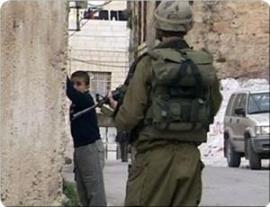 The United Nations Children’s Fund (UNICEF) has reported that Israeli violations against detained Palestinian children are still ongoing, despite an alleged Israeli decision to improve their conditions, and the methods of interrogation.
In a report published on Monday, the UNICEF said “violations are ongoing,” seven months after an initial report underlined widespread mistreatment of Palestinian teenagers arrested by Zionist forces in the occupied West Bank.
The UNICEF said that despite its earlier report violations against detained children are still ongoing, despite the 38 recommendations that outlined these violations and the manner to address them.
The international body cited 20 sample cases of abuse of youths in the West Bank in the second quarter of this year.
The UNICEF said that heavily armed soldiers would violently break into homes, before they force the children out of their beds, and take them to interrogation facilities, cuffed, blindfolded, and in a state of extreme fear.
It said that Israeli interrogators would question the children about allegations of throwing stones at soldiers and settlers, and that the interrogators would threaten the children with physical violence, death, in addition to sexual assault threats not only against the children, but also against a family member.
October 15, 2013
Posted by aletho |
Ethnic Cleansing, Racism, Zionism, Illegal Occupation, Subjugation - Torture | Al-Manar, Human rights, Palestine, UNICEF, West Bank, Zionism |
Leave a comment
Hebron, Occupied Palestine – One international was arrested after settlers fenced off the Asseh family home for a second day in a row in Hebron’s Tel Rumeida area.
Yesterday, early Saturday morning, settlers tied a fence across the exit of the Asseh family home with a wire gate to prevent them from leaving for a second day. After the family and internationals removed the gate, settler children threw rocks, water and water mixed with faeces at them. Two Israeli soldiers stood close and did nothing. The police arrived but also took no action despite being informed of what had happened.
Within an hour of the Asseh family and the internationals dispersing, the gate had been reassembled and reinforced. One adult male settler stood over the gate and prevented anyone from passing through or disassembling it. After 20 minutes the Asseh family and internationals finally managed to remove the gate despite repeated physical attacks by the settler. A number of internationals sustained minor injuries. During this, soldiers continued to stand by and do nothing.

Palestinians view the fence around the Azzeh home
The police arrived and first questioned the settler and then two soldiers who were present. After being shown video footage by an international, police demanded that four internationals accompany them to the police station to file a complaint. When the internationals requested to file the complaint later, police became violent and arrested one international. Other internationals were thrown to the ground by police and soldiers who assisted the arrest. The arrested international was eventually released after being questioned in the police station at the illegal settlement of Givat Havot.
October 13, 2013
Posted by aletho |
Ethnic Cleansing, Racism, Zionism, Illegal Occupation, Subjugation - Torture | Hebron, International Solidarity Movement, Israeli settlement, Palestine, Tel Rumeida, Zionism |
Leave a comment
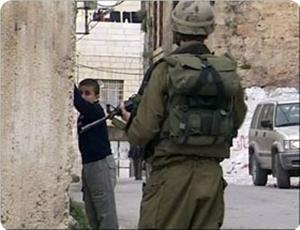 The United Nations Children’s Fund (UNICEF) has reported that Israeli violations against detained Palestinian children are still ongoing, despite an alleged Israeli decision to improve their conditions, and the methods of interrogation.
 The label for Humira, once the best-selling drug in the world, lists its risks in plain print. One of them, in the label’s own words, is new “autoimmune” disease.
 Aletho News
