Mleeta, Khiam, Sabra, Shatila and Resistance In General
By Gilad Atzmon | January 8, 2013
Lebanon is incredible – an intoxicating blend of natural beauty, rebellious spirit, pious clarity, tolerance, wild night life and unbelievable hummus. I landed in Beirut four days ago. The purpose of my visit wasn’t all that clear. I knew that a talk and a musical performance were scheduled by Almayadeen TV, but I never expected such a spiritually transforming experience.
It was my second visit to the country. 30 years ago I crossed the Lebanese border along with an IDF convoy escorted by tanks and armed vehicles. Then I was an occupier, this time I came with only my saxophone and a desire to share my thoughts and deliver some beauty.
But it didn’t take me a couple of hours to realise that Lebanon is much more than just humus, shisha, the sea and some captivating rural scenery. Early on Friday we left Beirut for the south. Our first stop was Mleeta – a Hezbollah front line outpost and a symbol of Lebanese defiance. Mleeta is located on top of a mountain, surrounded by the South Lebanese Massif which, until 2000, was controlled by the Israelis. From Mleeta, the Lebanese Mujahedeen launched daily attacks against the Israeli invader and gave the Israelis a true taste of their own medicine. Now Mleeta is a Jihadi tourist resort, there to tell the story of the heroic Hezbollah, those brave paramilitaries that confounded the ‘best army in the world’. The truth is, though armed only with light weapons, they were well supplied with Shia, spiritual ammunition.

Mleeta provides an overview of three decades of Islamic resistance in Lebanon and, in exhibiting all that the fleeing IDF soldiers have left behind, it proudly demonstrates the reality of Israeli cowardice. Mleeta is a symbol of confidence – confidence that the IDF is gone, never to return. Because when, in the summer of 2006 Hezbollah routed the IDF, it also demolished their confidence forever. The Jewish state was taught a lesson it would never forget – their phantasmic expansionist dream had come to an end.
But Mleeta was just a beginning. South Lebanon is dripping with defiance – every village, house and person is an emblem of Shia’s heroic resistance with the villages bedecked with Hezbollah posters featuring Leader Hasan Nasrallah and the many martyrs who taught the IDF those very necessary lessons.
Like Mleeta, Khiam the notorious Detention Centre is also a monument to Israeli brutality. Khiam is where Israel detained and tortured its political opponents, in some cases, for as long as 14 years. My visit there reminded me of a devastating memory, which on occasion, I share with my audience. It concerns Ansar, an Israeli concentration camp located in South Lebanon. It was back in 1984, on a piece of flat land in the middle of the camp, I noticed a dozen concrete boxes with small metal doors, they looked like dog kennels being only about 80 cm high, 100 cm long and probably about 80cm wide. When I pointed out to the commanding officer that these concrete construction weren’t suitable for dogs, he told me not to worry: no one would even think of putting dogs in them. “Put a Palestinian in one of those for 24 hours,” he laughed, “And he’ll come out singing the Hatikvah.” They were solitary confinement units for Palestinian prisoners. That was it. Then and there, I realised that Israel was not my country.
In Khiam this week I saw the exact same Israeli torture facility where the Israelis would shove their political opponents into tiny metal boxes, lock them in for days and then occasionally hit the top with a heavy stone. This time I took a picture.

But someone in Israel must have felt some shame at what Israel was leaving behind in Lebanon. In 2006 the IDF attempted to erase all trace of the detention centre at Khiam. In a desperate attempt to hide Israeli brutality, Israel sent in its engineering squads to blow up the cells and all remaining evidence of torture. But that clumsy effort to conceal the true reality of Israeli inhumanity achieved only the complete opposite. It now only affirms that Israel has, indeed, a lot to conceal.
The journey to occupied Palestine’s Border is over the most beautiful, wild and rural terrain. But then, suddenly, we were there, faced with the Jewish ghetto walls, guarded by cameras, army posts and barbed wire. Israel clearly doesn’t even try to convince its neighbours that it belongs in the region. It looks different, it smells different, it sounds different – it is in fact, just one extended Jewish European shtetl that has matured into a neurotic, psychotic and murderous collective fuelled by PRE traumatic stress. In that regard, the Israelis indeed have great deal to keep under wraps.
Inspired by Lyotard’s “Heidegger and the Jews” and my visit to the south, I decided, in my talk in Beirut, to speak about ‘History as a form of concealment.’ Instead of telling us ‘what really happened’, I argued that history is there to hide our shame, to repress that which we cannot even utter. It is, in effect, there to make us forget. Jewish history, for instance, is there to suppress Jewish shame, to disguise that which Jews prefer to hide from themselves. Jewish history is an attempt to talk about the past while avoiding the horrendous and embarrassing fact that Jews, throughout their history, have been bringing on themselves one Shoa after the other.
But concealment wasn’t invented by the Jews. The Brits also find it hard to cope with their past chain of murderous imperial genocides. This may explain why they entrusted the writing of Churchill’s biography to Jewish Zionist Sir Martin Gilbert, and why their historians have dedicated a whole floor of the Imperial War Museum to the Nazi Holocaust. As if Brits do not have enough shoas and suffering inflicted on others to remember. One of those British-inflicted shoas is obviously the Palestinian Nakba. Britain should own up to this disaster and perhaps find a little room for it also in its Imperial Museums. And like Britain, the Israelis have yet to acknowledge their own role in the original sin of 1948.
Looking at the state of the refugee camps in Lebanon, it became very clear to me that the Lebanese also might engage in some soul searching. For 65 years Palestinian refugees have lived in Lebanon and in other Arab countries in unbearable conditions and have suffered terrible discrimination. Palestinian refuge camps in Lebanon are nothing short of hell on earth. Palestinians cannot be naturalized. They are banned from certain professions and jobs such as medicine and law. In some ways, their situation is worse even than their brothers’ in Gaza or The West Bank, because for them there is not even any prospect of hope or change.
Those endless solidarity discussions about ‘One State’, ‘Two States’ or ‘BDS’ have zero significance or impact on their lives or their livelihoods. These displaced and dispossessed people need immediate change in their political status, but, being excluded from the political process, they lack the wherewithal to bring such change about. Not able to travel, their voice is hardly heard within the Western solidarity discourse and the International Palestinian solidarity movement is hardly engaged, or even concerned with their tragedy. Even that most absolute of rights, the right to return to their land has been compromised by the BDS in Ramallah and other prominent Palestinian leaders.
On my last day in Beirut I visited Sabra and Shatilla. I saw the mass graveyards, I saw the poverty, I saw the piles of rubbish in the streets, the outcome of the complete absence of even the most elementary municipal services. I have been traveling around the world for many years but this is, without doubt, one of the saddest sights I have seen. But, in those camps, I also saw some of the kindest people on this planet. People who against all odds, in spite of being crushed, humiliated and tortured for more than six decades, still look forward, still live their lives. They raise their kids and care about their education. They greet you in the warmest possible manner and, no sooner have you approached their shop, they have invited you for coffee. Surely, their suffering must be our primary concern.
Related articles
- Shifting responsibility: the propaganda of The Jewish Chronicle (alethonews.wordpress.com)
- Gazans fall victim to Israel’s experimental wars (windowintopalestine.blogspot.com)
Qusra settler attack, two hospitalised
International Solidarity Movement | January 7, 2013
 Qusra, Occupied Palestine – At around 2 p.m. seven settlers attacked a farm on the outskirts of Qusra. The farm belongs to Abu Nasser and his wife Nedda who are both in their sixties.
Nedda confronted the settlers after seeing them on their property cutting olive trees, warning them off with a solid wooden walking stick and a firm voice. At around 4 p.m. twelve settlers returned accompanied by around 12 jeeps and 60 Israeli Occupation Soldiers.
A small group from the local village confronted the settlers and soldiers to defend the farm and a conflict erupted. Consecutive rounds of tear gas were then shot onto the farm land and the settlers and the local youth (shabab) confronted each other. During the skirmish two shabab were shot at close range with rubber bullets: one in the shin and the other in the upper thigh. Both required hospital treatment, with the shabab who was shot in the upper thigh remaining in hospital for further treatment as the rubber coated bullet passed into the front of his thigh and out the side. One of the stones thrown by a shabab hit a settler in the head. In addition to this the Israeli Army fired several rounds of live ammunition. The village Mayor rang the DCO to report the incident and the DCO warned him that the settlers would return for ‘‘revenge’’.
As four volunteers from the ISM, we arrived at the village around 7p.m. and were welcomed to stay overnight at the small farm house of Abu Nasser and Nedda. The following day the settlers were seen gathering across the valley with Israeli soldiers. We were driven to the hilltop across from them and made our presence known, shortly after which they left. During our time in the village we learnt of other attacks on the village that occurred as frequently as 3-4 times a week. We were shown several olive fields where the olive trees had either been broken or cut. The villages estimate that in the previous 3-4 days around 400 olive trees had been killed in their surroundings by settlers from the illegal settlements Esh Kodish and Kida.
During a similar settler attack on the village on the 23/09/2011, the local villages went to stop settlers from cutting the trees and the Israeli Army arrived and shot dead a 32-years old father of 5, Islam Badram.
Related articles
- Red Crescent attacked during settler raids in Qusra (palsolidarity.org)
- Israeli army dogs attack elderly Palestinian, two-year-old child injured in the head in Jewish settlers’ attack (alethonews.wordpress.com)
- Settlers raid Nablus village homes and a tractor. Uproot 190 olive trees and burn Hebron car (occupiedpalestine.wordpress.com)
- Settlers raid Nablus village, fire live ammo (altahrir.wordpress.com)
US renews war on Iranian media
PressTVGlobalNews | January 5, 2013
The United States has imposed fresh sanctions on Iranian media despite Washington’s claims of respecting free speech. Sanctions have all been applied under the umbrella of concern for Iran’s nuclear program becoming militarized. The CIA and IAEA have constantly reported that Iran is not developing nuclear weapons while mainstream American media have promoted that Iran has or is producing a nuclear bomb. Many observers though contend that the many sanctions on Iran are an act of war as part of Western colonialism and imperialism that also serves the Zionists of Israel.
To further discuss the issue, Press TV’s News Analysis has conducted an interview with Joe Iosbaker, Stop FBI Repression, from Chicago, Kevin Barrett, a founding member of the Muslim-Jewish-Christian Alliance, from Wisconsin, and Daniel Pipes, founder and director of the Middle East Forum, from Philadelphia.
Follow our Facebook on: https://www.facebook.com/presstvchannel
Follow our Twitter on: http://twitter.com/presstv
Follow our Tumblr on: http://presstvchannel.tumblr.com
Related articles
- US imposes fresh sanctions on Tehran, including ban on Iranian media (alethonews.wordpress.com)
Israeli Prison Doctors To Amputate Leg Of Wounded Detainee
By Saed Bannoura | IMEMC & Agencies | January 06, 2013
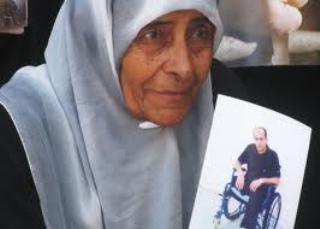
Lawyer of the Palestinian Ministry of Detainees, Fadi Obeidat, stated that Israeli physicians at the Ramla Prison Clinic decided to amputate the left leg of detainee Nahedh Al-Aqra’, 41, from the Gaza Strip. The detainee lost his right leg after being shot by the army.
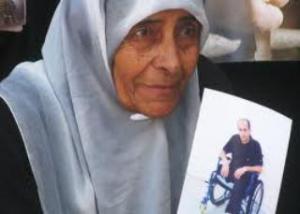
Mother Of Nahed Al-Aqra’ Holding His Picture – hskalla.wordpress.com
Al-Aqra’ is suffering from very sharp pain in his leg due to infections resulting from his injury and due to the lack of adequate medical treatment as the only medication he received was painkilling pills.
His family has not been allowed to visit him since he was kidnapped while returning from Jordan on July 7, 2000, where he received medical treatment for multiple gunshot injuries in his legs, and was sentenced to three life-terms.
Israel’s recent decision to allow family visits to Gaza Strip detainees did not include detainees who are hospitalized at the prison clinic. Gaza Strip detainees were denied visitation rights after the second Intifada started in late September 2000.
In prison, he suffered various complications, including infections, and his wound became septic; the doctors performed several surgeries but could not save his leg.
Al-Aqra is a father of four children who have not seen him since 2000 despite extensive efforts conducted by the Red Cross.
In related news, the family of detainee Mahmoud Hamdi Shabana, 40, stated Saturday that he is suffering from a sharp pain in his throat, especially the vocal cords, and that he is not receiving any medical treatment.
Al-Aqra’ is held at the Negev Detention Camp; he was kidnapped more than 35 months ago and was confined under repeatedly renewed Administrative Detention orders without charges or trial since then.
Related articles
- 18 Seriously Sick Detainees Facing Medical Neglect In Israeli Prisons (imemc.org)
- Israel Kidnapped 173 Palestinians This Month (arabworld360.blogspot.com)
“Did We Just Kill a Kid?”
By TOM McNAMARA | CounterPunch | January 4, 2013

In the spring of 1944, in the quiet little town of Alcolu, South Carolina, two young girls, Betty June Binnicker, age 11, and Mary Emma Thames, age 8, were brutally murdered while picking flowers along a railroad track. Their bodies were found in a nearby water filled ditch. The cause of death was determined to be multiple blows to their skulls with a metal railroad spike. A Mr. George Stinney was soon arrested for the murders. While there was no physical evidence or eyewitness accounts linking the defendant to the crime, unfortunately for Mr. Stinney, the two girls were white. He was black.
Two white police officers were able to get a confession out of Mr. Stinney within an hour, behind closed doors. It was the only evidence offered up during his trial, a trial that was held in one day and lasted only two and a half hours. It was attended by 1,500 people, all of them white. Blacks were not allowed in the courtroom. Mr. Stinney, his family having been driven from their small town, faced the trial alone. Council for the defense offered no evidence on its client’s behalf, and it requested no psychiatric evaluation of the defendant. A guilty verdict was reached after only 10 minutes of deliberation by the (all white male) jury. No recommendation for mercy was given. Had Mr. Stinney’s lawyer filed a simple one sentence appeal, the execution would have been automatically stayed for at least a year. But this was impossible due to the fact that Mr. Stinney did not see his attorney again from the time he left the court. Furthermore, his attorney never spoke to any members of the defendant’s family, let alone inform them that they had the right to appeal the death sentence. Just 81 days after his arrest, on June 16, 1944, Mr. Stinney would walk into the execution chamber.
There is one more tragic element to this already tragic story. Mr. George Junius Stinney Jr. was just 14 years old when he was put to death. He was the youngest person (legally) executed in the United States in the 20th century.
Being small for his age, weighing just 95 pounds (approximately 43 kilograms) and only five feet one inch tall (approximately 1.5 meters), it was with great difficulty that the death sentenced was carried out. But carried out it was. His small body was propped up with books in order to get him to fit properly in the electric chair (the original designers having carelessly overlooked the fact that one day their device might be used to execute a small child), allowing for an electrode to be attached to his right leg.
One commentator reported that George said nothing as the mask was lowered over his face. But after the first 2,400 volts passed through the boy’s small body “the death mask slipped from his face and his eyes were open when two additional shots of 1,200 and 500 volts followed.” George’s head “went up and the mask came of his face … and saliva and all was coming out of his mouth and tears from his eyes.”
The Governor, Olin Johnson, had received hundreds of letters and telegrams asking for leniency for the young boy. But facing a primary election in July, the Governor was not inclined to grant clemency. One telegram compared the execution of a child to something that Adolf Hitler would do. A stinging and bitter accusation considering that American troops had just landed on the beaches of Normandy ten days earlier in the D-Day invasion to liberate France from Nazi occupation and terror. On that one day alone, 9,000 Allied soldiers would die or be wounded fighting the Germans.
It can be argued that the execution of a 14 year old child was a social aberration from a bygone era. A simple anomaly. An isolated case that “fell through the cracks.” A repulsive event from a period when America was still suffering from racial and social ignorance. Surely, as a society, the United States has progressed far beyond the days of when it tolerated the State sanctioned execution of children, has it not?
Two pilots are sitting in an air-conditioned windowless room in New Mexico. Before them sit an array of 14 computer monitors and four keyboards. 6,250 miles away (about 10,000 kilometers) they are controlling a Predator drone that is circling lazily in a figure eight pattern over Afghanistan. They are observing a crude house made of mud when the order is given to launch a laser guided Hellfire missile at the target. With just seconds to go till impact, a small child walks out from behind one of the corners of the structure. A flash on the control screen confirms the impact and explosion, with parts of the structure collapsing and the child disappearing.
“Did we just kill a kid?” the co-pilot asks the pilot.
“Yeah, I guess that was a kid,” the pilot replies.
Confirmation as to whether or not a missile strike had just been carried out on a child was requested. “No. That was a dog,” comes the anonymous response from a military command center.
The pilots review the video of the drone strike that had just taken place.
A dog on two legs?
One of the pilots is no longer in the Air Force, declining to renew his enlistment contract when it was up. After 6,000 flight hours and six years of military service he says “I saw men, women and children die during that time. I never thought I would kill that many people. In fact, I thought I couldn’t kill anyone at all.” He has since been diagnosed with post-traumatic stress disorder by doctors with the Veterans’ Administration.
While the above incident could be deemed an “accident,” apparently the targeted murder of children is now accepted US military policy.
Lt. Col. Marion “Ced” Carrington, Commander of 1st Battalion, 508th Parachute Infantry Regiment, states, “It kind of opens our aperture. In addition to looking for military-age males, it’s looking for children with potential hostile intent” as well. While the Lt. Col would not elaborate on what exactly are the rules of engagement when encountering potential child combatants, reassuringly he tells us that he advises the soldiers serving under him to use “courageous restraint.”
Apparently this “courageous restraint” was lacking on October 14, 2012, when US Marines operating in Helmand province requested, and got clearance for, an airstrike on “shadowy figures” thought to be in the process of setting up an improvised explosive device (IED). The assailants killed in the strike turned out to be three children who were 12, 10 and 8 years old.
The International Security Assistance Force (ISAF), a part of NATO and the organization that is nominally in command of the war (the reality being, of course, that it is a US led affair), said that it may have “accidentally killed three innocent Afghan civilians.” Family members of the victims reported that the children were sent to gather dung, which is used for fuel.
America’s first war in Iraq and its associated sanctions are believed to have resulted in the deaths of over half a million children. America’s second war in Iraq is believed to have resulted in the deaths of over 600,000 Iraqis (most of them between the ages of 15 and 44). America’s targeted drone attacks in the Tribal Regions between Afghanistan and Pakistan have reportedly killed between 474 and 881 civilians, including 176 children
If these were the actions of China, Russia, Iran, or any other country on Earth, we would be able to see them clearly for what they are. War crimes and crimes against humanity of the highest order. We would also realize that they are the actions of a society that is in moral decline.
Why it is impossible for the vast majority of Americans to see this is incomprehensible.
Acknowledgement: The author would sincerely like to thank Professor Bryan A. Stevenson, founder and Executive Director of the Equal Justice Initiative, for making him aware of the story of George Stinney.
Tom McNamara is an Assistant Professor at the ESC Rennes School of Business, France, and a Visiting Lecturer at the French National Military Academy at Saint-Cyr, Coëtquidan, France.
Sources
“Afghan kids recruited for suicide attacks” by Joe Gould and John Ryan, July 18, 2012, Army Times. Accessed at:
“Attempts to clear name of 14-year-old boy who was executed in South Carolina 67 years ago” Reporter: Mark Potter, Anchor: Brian Williams, NBC Nightly News 6:30 PM EST (NBC News Transcripts), October 4, 2011.
“Attorney Decries Juvenile Executions (From Young Blood: Juvenile Justice and the Death Penalty, P 159-165, 1995, Shirley Dicks, ed. – See NCJ-166057)” by D. Bruck, 1995. Accessed at:
https://www.ncjrs.gov/App/Publications/abstract.aspx?ID=166066
“Columbia Journal; Prison Lures Them In (as Tourists)” February 22, 1994, The New York Times. Accessed at:
“D-Day June 6, 1944” United States Army Official Homepage. Accessed at:
“Do Targeted Killings Work?” by Daniel L. Byman, Senior Fellow Foreign Policy, Saban Center for Middle East Policy, July 14, 2009, The Brookings Institute. Accessed at: http://www.brookings.edu/research/opinions/2009/07/14-targeted-killings-byman
“Iraq Sanctions Kill Children, U.N. Reports” by Barbara Crossette, December 1, 1995, The New York Times. Accessed at:
“Living Under Drones: Death, Injury, and Trauma to Civilians From US Drone Practices in Pakistan” the International Human Rights and Conflict Resolution Clinic (Stanford Law School) and the Global Justice Clinic (NYU School of Law), September 2012. Accessed at:
Click to access Stanford_NYU_LIVING_UNDER_DRONES.pdf
“Questions Raised in Deaths of Afghan Children in Coalition Strike” by Alissa J. Rubin, October 17, 2012, The New York Times. Accessed at:
“Some Afghan kids aren’t bystanders” by Dan Lamothe and Joe Gould, December 3, 2012, Military Times. Accessed at:
http://www.militarytimes.com/news/2012/12/marine-taliban-kids-120312w
“Study Claims Iraq’s ‘Excess’ Death Toll Has Reached 655,000” by David Brown, October 11, 2006, The Washington Post. Accessed at:
http://www.washingtonpost.com/wp-dyn/content/article/2006/10/10/AR2006101001442.html
“The Human Cost of the War in Iraq: A Mortality Study, 2002-2006” by G. Burnham, S. Doocy, E. Dzeng, R. Lafta and L. Roberts, with the Bloomberg School of Public Health at Johns Hopkins University, Al Mustansiriya University and the Center for International Studies at the Massachusetts Institute of Technology, October 11, 2006. Accessed at:
Click to access human-cost-war-101106.pdf
“The Merciful Executioner: Spectacles of Sexual Danger and National Reunification in the George Stinney Case, 1944” by Annette Louise Bickford, University of Toronto, Southern Anthropologist Vol. 35, No. 1, 2010
“The Woes of an American Drone Operator” by Nicola Abé, December 14, 2012, Der Spiegel. Accessed at:
“War in Iraq: Humanitarian Relief Efforts” April 11, 2003, The Washington Post. Accessed at:
http://www.washingtonpost.com/wp-srv/liveonline/03/special/iraq/sp_iraq_zaidi041103.htm
“When Something Wicked This Way Comes: Evolving Standards of Indecency – Thompson and Stanford Revisited” by J. L. Whitney, 46 Clev. St. L. Rev. 801 (1998)
“World: Middle East Iraqis blame sanctions for child deaths” by Jeremy Bowen, August 12, 1999, BBC. Accessed at:
http://news.bbc.co.uk/2/hi/middle_east/418625.stm
~
Photo – George Stinney, 1944, executed at age 14 years old (Photo credit: Wikipedia)
Related articles
- US sets records with number of drone strikes in Afghanistan this year (rt.com)
- Newtown kids v Yemenis and Pakistanis: what explains the disparate reactions? [2 of 2] (wondersofpakistan.wordpress.com)
Israeli army dogs attack elderly Palestinian, two-year-old child injured in the head in Jewish settlers’ attack
Al Akhbar | January 3, 2013
Israeli army dogs attacked a 93-year-old Palestinian woman as an undercover unit raided the West Bank city of Jenin on Thursday morning, according to Ma’an news agency.
The agents were dressed as Palestinians and backed up by the army when they staged an incursion into the city’s industrial zone.
The raid is the latest in a string of Israeli attacks on Palestinian towns in the West Bank. On Tuesday, Israeli soldiers disguised as vegetable vendors invaded the northern West Bank town of Tamoun and fired ammunition at residents.
Amneh Hisnawi was alone in her house when soldiers stormed her home and dogs belonging to security personnel attacked her. She was sent to an Israeli hospital for treatment.
An army spokesman said the raid on Jenin was conducted to arrest a Palestinian suspected of ‘terror activity’, but that the suspect was not at home.
Around 500 Palestinians hurled rocks, firebombs, and burned tires, according to the spokesman.
Fadi Ijawi, 23, was wounded in the leg by a a live bullet and taken to a Palestinian hospital, a Ma’an reporter said. Dozens also suffered from tear gas inhalation, the reporter added.
Israeli settlers hit two-year-old Palestinian on the head
Several Palestinians, including one toddler, were injured when dozens of illegal Israeli settlers attacked a northern West Bank village on Wednesday, according to Palestine’s Ma’an news agency.
Two-year-old Farah Nanseem was hit on the head during the assault on Jalud village, south of Nablus. Israelis from the Esh Kodesh settlement had staged a sit-in in Jalud earlier in the day to prevent Palestinians from working in the fields.
Several villagers were sent to hospitals to treat light to moderate wounds; houses and a car were also damaged, settlement monitoring official Ghassan Daghlas said.
Another Nablus village, Qusra, was attacked by settlers two days ago. More than 150 olive trees were uprooted.
The assailants were only briefly detained by village security guards.
Israeli settlers, who are considered illegal by international law, routinely assault Palestinians in the West Bank, damaging property and livelihoods, and often targeting the elderly and children.
They face little to no punishment from Israeli authorities for their crimes.
(Ma’an, Al-Akhbar)
Related articles
- Settlers raid Nablus village homes and a tractor. Uproot 190 olive trees and burn Hebron car (occupiedpalestine.wordpress.com)
- Israeli settler attacks on the rise in West Bank (bikyamasr.com)
- Three Palestinians Injured By Israeli Settlers Near Nablus (imemc.org)
Obama continues rendition despite extensive condemnation of tactic

Press TV – January 2, 2013
US President Barack Obama’s administration is continuing rendition, the practice of sending terrorism suspects to third countries for detention and interrogation without due process.
George Bush administration’s practice of rendition is continuing under the Obama administration despite widespread condemnation of the tactic in the years after the September 11, 2001 attacks, the Washington Post reported on Wednesday.
According to the US daily, it is unknown how many renditions have taken place during Obama’s first term due to the secrecy involved but his administration has not disavowed the practice.
In the latest example of Obama administration’s use of the tactic, a number of American interrogates visited three European men with Somali origins in a jail in the small African country of Djibouti. The detainees had been arrested on a vague pretext in August as they were passing through the African country.
US agents accused the three men of supporting Somalia’s al-Shabab group. The prisoners were secretly indicted by a federal grand jury in New York two months after their arrest. They were then clandestinely taken into custody by the FBI and flown to the United States to face trial.
The secret arrests and detentions became known on December 21, when the suspects appeared briefly in a Brooklyn courtroom.
The US government has revealed little about the circumstances of the arrests. The FBI and federal prosecutors for the Eastern District of New York have also not said where and why the defendants were detained.
Human rights advocates have condemned the Obama administration’s decision to continue rendition.
Obama, in his first presidential candidacy, had strongly suggested he might end the practice but the tactic is still continuing under his administration.
Related articles
Israeli forces attack Tammun, four injured from live bullets
International Solidarity Movement | January 2, 2013
Tammun, Occupied Palestine – From 9am to 6pm Israeli special forces, regular army and border police attacked the village of Tammun, south of Jenin. They used helicopters, many soldiers firing live rounds of ammunition, tear gas and plastic coated steel bullets. 35 people were injured, including 4 with live bullets. 2 children sustained serious head injuries from tear gas canisters.
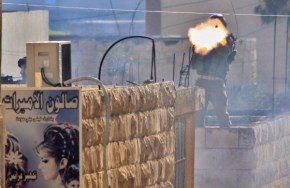 The raid began with at least 15 plain clothed special forces driving into the village in Palestinian plated vehicles to arrest a man. They forced the family out of their home, took one Palestinian brother, Murad, tied him, blindfolded him, pushed him against the wall and took him back into the house. They made the family stand outside as human shields against any resistance to the incursion and, in doing so, committed a war crime. His brother, Mohammed, was forced to assume a stress position for two hours. When he told the soldiers that had a health problem with his chest, they replied that if he said that again they would beat him to death.
The forces interrogated and beat Murad while blindfolded. These special forces, called Duvdevan, are known for targeted assassinations. Murad was told to climb over a wall, but fearing that this could be an excuse to kill him, he refused. The soldiers severely beat him for this.
The soldiers vandalised the house, breaking furniture and shooting walls, wardrobes, beds, mirrors and a fridge.
Last year the same family was raided by these forces. The two brothers were stripped naked and tied to an olive tree in their front garden.
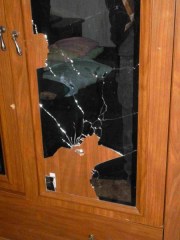 Today, soldiers entered another home. They searched it, broke furniture and shot around the house as well. They threatened the mother that if her husband doesn’t hand himself in, in 24 hours, they will kill him. Another 20 homes were searched in the village.
After the plain clothes special forces entered the village around 20 jeeps of regular army followed. They went into houses and took positions on rooftops.
Resistance by the population to this erupted on news of the incursion and people were attacked. Paramedics reported 35 injuries, two serious head wounds from tear gas canisters that are often used as baton rounds. The two head injuries were inflicted on children. Four of the injuries were from live rounds.
The attack continued until after dark with the army using parachute flares to illuminate the village.
The army eventually left the village at 6pm with Murad. The other Palestinian wanted by the Israeli occupation force has until tomorrow morning to hand himself in or he will be assassinated.
Security video of killing of Hebron circus student shows claim of ‘toy gun’ fraudulent
By Saed Bannoura | IMEMC News | December 29, 2012
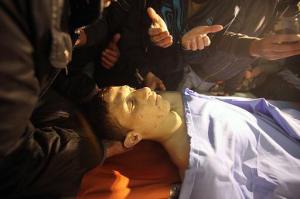
An Israeli security video recently leaked to the media shows that a Palestinian teenager who was killed at a checkpoint on December 12th was actually walking away from soldiers when he was shot in the back. The video shows absolutely no indication of the boy carrying any object that could be mistaken for a gun, as the Israeli military originally claimed.
After originally releasing an edited version of the security footage on December 17th, some journalists tried to get the Israeli military to release a full, unedited copy of the video. An unedited version was leaked by Israeli channel 10 television on Wednesday December 26th, which includes 19 seconds that was edited out – including the final (probably fatal) of the three shots fired at Mohammed Abu Salaymeh, which hit him in the back when he was already doubled over from the impact of the first two shots.
Abu Salaymeh, 17, was a student at the circus school in Hebron, and was killed while on his way to get his birthday cake. He was killed on his 17th birthday. In a statement issued the day after Mohammed’s death, the Palestinian Circus School (PCS) issued a statement saying, “Mohammed Salaymeh, 17 years old, our beloved student at the Palestinian Circus School since one and a half years, was brutally killed by the Israeli army in Hebron yesterday. Rest in Peace, dear Mohammed. You will always stay in our hearts. Today we can only be sad, and be close to the family in our thoughts and prayers.”
The Palestinian Circus School (PCS) is a program of the Middle East Children’s Alliance, and has branches in four Palestinian cities: Ramallah, Jenin, Hebron and Jerusalem. The school’s website states, “The PCS team has witnessed the positive effects of the circus workshops on the well-being of the children and the youth. We are encouraged to see them become more self confident, engage in respectful relationships with each other, and develop more trust, team spirit, and a higher concentration. Most importantly, they get a new taste for life. PCS also wants to be a model for promoting diversity and cooperation. The school enrols students from different socio-economic backgrounds and has been very successful in creating spaces where all these young people work together as one big circus family. Where they come from or what party or religion they belong to doesn’t matter. What is important is their common passion for circus arts and the joint motivation to offer something positive for their society.”
The video released this week of Mohammed’s death at the hands of Israeli soldiers further brings into question the Israeli military’s initial account of the incident. When the soldiers shot Mohammed on December 12th, the Israeli military issued a statement through a spokesperson that was widely reported in the media. In that statement, the military claimed that the teen appeared to have wielded a toy gun that was mistaken for a real gun, and that is why the soldier shot him.
As the video shows, there was no such object in Mohammed’s hand, and the claim that the soldier felt threatened is obviously false, in that the boy was nowhere near the soldier when he was shot three times and killed. There was a struggle with one of the officers, in which Mohammed appears to be fighting with the soldier. But it is after he has backed away from the soldier that the initial shots are fired, and a soldier moves in from another direction and kills him.
The Israeli military frequently issues statements immediately after the killing of Palestinians by its soldiers, making claims that are later proven to be false. In this way, media reports initially following these incidents often contain misinformation, as many media agencies simply report the military’s statements verbatim.
Video shows Israeli soldier kill teen
Al Akhbar | December 28, 2012
A new unedited video surfaced Thursday showing an Israeli soldier firing what appeared to be the ‘kill shot’ that ended the life of a 17-year-old Palestinian at a Hebron checkpoint earlier this month.
The video shows the soldier fire three shots at Mohammed al-Salamey after provoking the boy to throw several punches on December 12.
The first shot was fired at point blank range. A second shot was fired three seconds later from a distance of about 2 meters as Salamey attempted to gain his balance thrown off by the first shot.
The third and final shot was fired from a distance of about three meters several seconds later after Salamey had already been incapacitated.
A shorter, edited version of the video had previously been released by Israel’s army that omitted about 14 seconds in the middle, and another five seconds at the end which showed the final gunshot.
It is not clear what the soldier said to provoke the boy, but Israelis routinely harass and humiliate Palestinians at checkpoints.
The killing occurred as Salamey was reportedly travelling to buy a cake to celebrate his 17th birthday.
Related articles
- Family denies Hebron teen killed by Israel was carrying toy gun (alethonews.wordpress.com)
- Israeli forces kill teenager on his 17th birthday in Hebron (alethonews.wordpress.com)
- Second group of journalists beaten in Hebron (alethonews.wordpress.com)
Featured Video

Death Spikes & Rising Cancer In Our Youth Explained
or go to
Aletho News Archives – Video-Images
From the Archives
Politicians lie
By Mazin Qumsiyeh | Popular Resistance | August 18, 2013
There is no way to say this truth nicely: Politicians lie. That includes Japanese, American, Egyptian, Israeli, and Palestinian politicians! Is there something more common sense than that? Yet, so many citizens around the world believe their own politicians or wistfully acknowledge lies but think it is part of the job needed to run things. They believe even when politicians contradict themselves blatantly. This phenomenon is rather remarkable. It is a dissonance and disconnect from reality that many seem oblivious to. It is very dangerous because it can lead to accepting rationales for going to war. These can be deadly wars that lead to millions of lives lost as happened in what was called World War 1 and WW2. Even when incredible and declassified evidence abound, politicians continue to lie and old mythologies refuse to die. Here are just a few of the countless lies told to us over the past few decades… continue
Blog Roll
 Aletho News
- RSF military group defects, joins Sudanese army: State media
- Ireland goalkeeper refuses to play ‘Israel’ as squad weighs boycott
- China pushes back against US on Cuba, Iran
- Ukrainian Soldiers, Potential Mercenaries: Have Gun, Will Travel!
- Burnham’s UN debut… A masterclass in British disinformation
- Iran flights continue despite US aviation sanctions
- Global Tipping Points Lead the World Into a State of Entropy
- The day-after at the White House: USA and Xi Jinping
- The Geopolitical Balance in the Red Sea: The UAE Being Displaced by New Players
- Iraqi resistance group vows to stage airport sit-ins over Iran aerial blockade
- If Americans Knew
- Deconstructing Netanyahu’s pants-on-fire UN rant – Daily Update
- Trump betrayed voters with his campaign lies and prioritized a foreign country once he took office
- Netanyahu calls Israel’s war in Gaza ‘opposite of genocide’ in UN speech to near-empty hall
- Settler Kidnappings: Torture, Sexual Abuse and Terrorisation of Palestinian Abductees as Israel Deepens Annexation of West Bank
- Gaza winter nears as 162,000 tents become unusable, raising fears of humanitarian crisis
- Netanyahu says, “It’s the opposite of genocide”; UN says Gaza economy is world’s ‘most severe crisis on record’ – Daily Update
- Israel’s US-Backed Assault on Gaza Has Created the ‘World’s Most Severe Economic Crisis on Record’: UN
- ‘Protecting U.S. Citizens’… From Israel
- ‘This is where I live now, the back of a truck’: a day in the life of a grandmother in Gaza
- In UN Speech, Iran’s President Displays Pictures of Children Killed by US, Brings Attention to Israel’s Nuclear Arsenal
- No Tricks Zone
- New Study: Earth And Venus Surface Warmth Largely Explained By Convection And Lapse Rate, Not CO2 Or Radiation
- 2025 Nature Paper Claiming Worsening Global Drought Gets RETRACTED …Heavily Flawed
- New Study: ‘Global Drought Shows No Detectable Recent Acceleration Under Climate Warming’
- Economic Masterminds: German Socialists Suggest Taxing Productivity Gains Stemming From Using AI
- The South China Sea Has Not Been Cooperating With The Climate Change Narrative
- Energy Crisis: Germany Enters Heating Season With Historically Low Gas Reserve Fill Levels
- New Study: The Antarctic Ice Sheet Gained Mass From 2020-2024 Due To Staggering Snow And Ice Accumulation
- Study: Ocean Heating Rates From Thousands Of Years Ago ‘Dwarf’ Modern Ocean Heating Rates
- Climate Extremists Target, Attack Large-Scale Power Grid Infrastructure In Germany!
- New Study: Antarctic Ice Melt Has Contributed Less Than 1 Centimeter To Sea Level Rise In The Last 30 Years

