Israeli army crosses into Lebanon/Four Israeli jets seen over Lebanon
Xinhua | January 18, 2010
An Israeli army unit on Sunday crossed the borders with Lebanon in the direction of the occupied part of al-Ghajar village, Lebanon’s state-run National News Agency (NNA) reported.
“An intense Israeli build-up of forces during the past 24 hours has been observed along the eastern sector of the Blue Line, with mobile and fixed patrols,” said NNA.
It added that “Israeli tank emplacements were spotted amid intense overflights by helicopter gunships and warplanes.”
“Earlier, an Israeli mechanized infantry unit comprised of two Hummers crossed the UN-designated Blue Line for 300 meters in the direction of the occupied part of al-Ghajar village,” said NNA.
On the Lebanese side, UN Interim Force in Lebanon (UNIFIL) and Lebanese army personnel intensified patrolling activities.
The Blue Line, which is the line for Israeli withdrawal from south Lebanon in 2000, now serves as the borderline of the two countries and runs through the middle of the al-Ghajar village.
Lebanon accuses Israel of intruding its airspace on a daily basis, saying it is a violation of UN Security Council Resolution 1701. The resolution put an end to the 2006 war between Israel and Lebanese Shiite armed group Hezbollah, and mandates peacekeepers to monitor the armistice along the border.
Also:

BEIRUT, Jan 17 (KUNA) — Four Israeli fighter jets were seen flying over Lebanese airspace in violation of the Lebanese sovereignty and UN resolution 1701, a Lebanese statement said on Sunday.
The fighters were seen over a town south of Lebanon located close to the border with Israel, according to a statement by the Lebanese armed forces. The jets made a circular movement over several towns before heading back over the sea.
The statement added that Israeli fighters have been witnessed over Lebanese territory on a virtually daily basis for a few weeks lately, and this is considered a breach of the UN Security Council resolution 1701.
The UN Interim Forces in Lebanon (UNIFIL) have voiced concern over the matter on a number of occasions, criticizing the Israeli breaches on Lebanese sovereignty, and sending letters of complaint to the UN and Israeli army command.
US drone attack claims 20 lives in Pakistan
 Press TV – January 17, 2010
At least 20 people have been killed in Pakistan in the latest US drone attacks that picked up pace after seven CIA agents were killed in late December.
The Sunday attack has reportedly targeted a militant compound in an area near Miranshah, the main town in the North Waziristan tribal region. However, the identity of those killed in the air raid has not been confirmed.
The number of CIA-operated drone strikes along the Pakistan-Afghanistan border has increased after a Jordanian double agent crossed into Afghanistan from the tribal lands and struck a US intelligence center in late 2009.
Over the weekend, eleven people were killed in two drone attacks in northwestern Pakistan.
The US has carried out dozens of missile strikes in northwestern Pakistan over the past twelve months. Washington claims it is targeting militants.
But reports say the attacks have repeatedly killed civilians. Last week, Pakistani officials warned US Special Envoy Richard Holbrooke that the US drone attacks could endanger ties.
There have been nationwide rallies in Pakistan against high civilian casualties inflicted by the US operations.
Pakistan Islami Jamiat-e Talaba staged an anti-American rally on Saturday to show strong resentment at US drone attacks in the country.
Demonstrators demanded that the government take a strong stand against the US presence in the country.
Detainee Seriously Wounded Due To Torture
January 16, 2010 | By Saed Bannoura | IMEMC News
The Detainees Media Committee reported that a Palestinian detainee was seriously wounded due to extreme torture by Israeli interrogators at the Salem detention camp in the northern part of the West Bank.
The detainee was identified as Hatheefa Farid Ziyada from the northern West Bank city of Nablus.
He was repeatedly beaten to several parts of his body, mainly to his head, leading a severe injury in his eye, likely leading to internal bleeding.
The committee voiced an appeal to different human rights groups and international humanitarian organizations asking them to intervene and save the lives of hundreds of detainees who are being tortured abused in Israeli interrogation facilities.
The detainee was held at the Negev detention camp, in the Negev desert, and was informed by the administration that he is being moved to Hadarim Prison.
He found out later on that this was a lie as he was moved to the infamous Petah Tikva interrogation center.
He was repeatedly imprisoned by Israel during the first Intifada and was also imprisoned during the second Intifada. In 2004 he was kidnapped again and spent three years in administrative detention without charges or trial.
Ziyada was released in 2007 but was kidnapped again just before the end of the same year and remained under administrative detention since then.
Israel: One law for all?
Al Jazeera | January 13, 2010
In 1948, Israel’s founding fathers issued a manifesto declaring among other things that the new state would uphold the equality of all its citizens, without distinction of race or creed.
Six decades later that is not a principal that many of Israel’s Arab citizens – who make up about 20 per cent of the population – believe applies to them, especially in matters involving law and order.
In his film, One Law for All?, filmmaker Tony Stark investigates whether Israeli Arabs are regularly the victims of legal double standards.
On August 4, 2005, a Jewish soldier in the Israeli army boarded a bus on its way to the northern Arab town of Shafr’Amr.
It was just two weeks before Israel withdrew from Gaza and 19-year-old Eden Natan-Zada strongly opposed the plan.
As the bus entered the town, he began shooting passengers with his M16 rifle.
“I was looking through a window when I suddenly heard shooting. I looked and saw someone shoot the driver. I hid under the seats. As I lay flat, the firing continued, and I saw someone’s finger fall to the floor. That’s when I realised he was on a mission to kill everyone,” says Ha’El al-Janhawe, a passenger on the bus.
“I didn’t move a millimetre. I put my hands over my eyes and prayed and just waited for the bullets to hit my back.”During a pause in the shooting, al-Janhawe decided to try to prevent further bloodshed.
“I stood up and he had a chance to kill me. But, thank God, it seems that his magazine was empty. I pushed him near to the back of the bus. I got him onto his back and was on top of him – trying to hold the gun and stop him pulling the trigger. It was very hot and I burnt my hand.”
Al-Janhawe pulled the gun away from the soldier and got off the bus. By then four people, including the bus driver, had been killed and 12 others were wounded.
‘Chaos’
 |
An angry crowd gathered after the shootings |
As news of the shootings spread, an angry crowd gathered. Natan-Zada was still on the bus – now being held by several police officers.”The bus was in chaos. People were falling over each other. Outside, people were screaming, climbing up trying to get on the bus. They didn’t know if the killer was still alive. No one knew what was going on,” says Amir Sabbah who witnessed it all.
People stormed onto the bus and Natan-Zada was attacked and killed.
“It wasn’t a normal reaction. Someone had come to kill people in their hometown and they wanted to protect themselves and their town. We felt a kind of anger that can’t be described,” Sabbah explains.
Seven local men are now being tried for his attempted murder and a further five for lesser offences.
‘Double standard’
The decision to charge anyone caught up in the events of that day has hit a very raw nerve among Arab Israelis. Sadness at the waste of life is now mingled with anger at the prosecutions.
“This has been a racial decision at the highest level. It’s obvious that the Israeli judiciary, security forces and police have two approaches: one for Arabs, another for Jews,” says Morad Haddad who is part of a support committee for the 12 accused.
The court case has brought into the open a simmering distrust of the forces of law and order among Israel’s 1.5 million Arab citizens.
Protests have been held outside the court in Haifa where the trial is taking place. The claim is that Jews who kill Arabs in Israel are treated in a very different way to the Arabs now being prosecuted for killing Natan-Zada.
It is a view held by some of the most senior members of the Arab community.
“Definitely there is a double standard and discrimination in applying the law towards Jews and Arabs,” says Ahmad Tibi, the deputy speaker of the Knesset.
‘Institutional racism’
Jafar Farah, a lawyer who runs a human rights group in Haifa, has been investigating incidents in which Jews kill Arabs and says that there have been 44 such killings since 2000 that raise very worrying questions.”The case of Imad Hamdoun, for example. He was killed in 2002. He was on his bicycle, a Jewish civilian was shooting at the bicycle. He died. The family was compensated by the police but no conviction against the Jewish civilian that shot the bicycle.
“In the 44 cases we know for sure that the victims have not been involved in violence against state authorities or against Jewish civilians,” says Farah.
Israeli law is meant to apply to everyone equally. But Farah is particularly critical of the way police investigate cases where Jews kill Arab citizens in Israel.
Some Israeli Jews working inside the legal system echo these concerns.
Michael Sfard is a lawyer who acts for a number of Israeli and Palestinian human rights organisations.
“I think institutional racism is evolving in my country and I am embarrassed and very sad to say that,” he says.
“The Israeli police, Israeli police investigators, they all are extremely professional and extremely motivated when it comes to catching Palestinians. They are much less motivated, much less rigorous when it has to do with Jews that operate on ideological grounds and their victims are Palestinians.
“The danger is that the more discrimination will infiltrate our system, the less our system will be legitimate in the eyes of the people. That’s where we are heading.”
Overlooked evidence
Just how far away Israel’s Arab citizens are from receiving equal treatment is shown, some Arabs believe, by the police examination of Natan-Zada’s attack.The police say he was a lone gunman, who acted without help, but that is not the view of Maher Talami, a lawyer representing one of those charged with taking part in his killing.
Talami is conducting his own investigation into Natan-Zada with the help of a former Israeli secret service agent.
The investigation has taken two years and has convinced him that the police overlooked evidence indicating that the attack was a pre-planned conspiracy.
“The police investigation was reckless. They didn’t investigate this case seriously. They just wanted to close this file immediately because it kind of embarrasses the state of Israel because having a soldier who is a terrorist is really embarrassing for the country,” Talami says.
He says the evidence of police failings begin at the bus station in Haifa where Natan-Zada boarded the bus to Shafr’Amr.
Pre-planned attack?
Just two weeks before the attack, Natan-Zada was spotted acting suspiciously at the same bus station.
“He was seen by security guards in the central bus station and he was in his army uniform; he had his gun with him and he was looking around in the area where Arabs get the buses to go to the villages and towns. So that made the security guard really suspicious because he had no reason to be there,” Talami explains.
The bus station guard says he spoke with Natan-Zada and later recognised him when his picture was published in the press.
Talami says he also discovered that Natan-Zada had travelled to Shafr’Amr on the same bus the day before the attack and that this is further evidence that the attack was pre-planned.
When the bus reached the end of its journey, the bus driver found Natan-Zada asleep.
“The bus driver asked him what are you doing here and he said ‘oh I fell asleep’. So he gave him some water. The next day he got on the same bus, the same line at the same time and he shot first the bus driver in the head and then he started shooting at all the passengers,” Talami says.
Not working alone
Talami also says that there is evidence that Natan-Zada had help in planning his attack.
“Three eye witnesses at least saw a suspicious car during the time of the attack in Shafr’Amr. It had three people in it. They describe them as religious Jewish people and they had the orange ribbon in the car.
“Now this ribbon used to represent the struggle of the settlers against disengagement in Gaza. The car was waiting and when they saw a police car coming they just swiftly raced out of the town.”
According to Talami, the strongest evidence that Natan-Zada did not act alone was found in his mobile phone records. The lawyer tracked down who he had been speaking to on the day before the attack.
“We found out we’re talking about really dangerous criminals. They are all Jews from settlements, some of them got indicted before for doing terrorist acts. So what was said in these conversations we don’t know. But he didn’t call for example his family or friends. He called people from Tapuah – which is a really Jewish extreme settlement in the West Bank.”
Democracy undermined
Talami is now calling for the police to re-open their investigation into Natan-Zada.
One in five Israeli citizens is Arab and if a growing number of them continue to feel alienated from the forces of law and order, the legitimacy of the country’s democracy will eventually be undermined.
“We think that the Jewish community have to share responsibility. We need to see the president of the state of Israel and the leaders of the police forces, all of them standing as one voice and say that we will not allow ongoing violence against the Arab citizens,” says human rights lawyer Jafar Farah.
“You have to know that everybody will be equal in front of the law and if people will be criminals and they are Jews or Arabs, they will face the same treatment in front of the law.”
One Law for All? can be seen from Wednesday, January 13, 2010 at the following times GMT: Wednesday: 1230; Thursday: 0130, 1400, 1930; Friday: 0630, 1630; Saturday: 0330, 2030; Sunday: 0030, 0530; Monday: 0830.
Israeli tanks shell Beit Hanoun
January 16, 2010
Gaza – Ma’an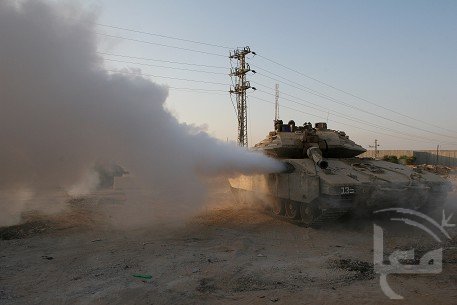 – Israeli tanks operating near the northern Gaza border near Beit Hanoun targeted civilian properties with heavy artillery fire, witnesses said late Friday night.
Eyewitnesses said tanks were spotted at the border, and noted a heavier than usual weaponry used by the forces. They said the fire hit civilian homes on the outskirts of the town, causing material damages but no injuries.
Families said the louder than usual tank fire terrified their children.
An Israeli military spokesman said he was unfamiliar with any military activity in the area overnight, but said he would look into the incident.
According to the UN Office for the Coordination of Humanitarian Affairs’ weekly Protection of Civilians Report, last week saw a steep escalation in violence in Gaza. It counted seven Palestinians in Gaza killed by Israeli airstrikes, and called the deaths a “serious escalation.”
Hebron leaves us stunned, devastated, drowning in shame
 By Alice Rothchild | January 15, 2010
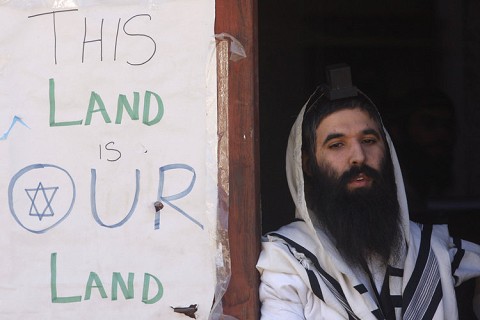
On January 12th, we drive to the southern West Bank city of Hebron. This city is literally drowning in a complex, traumatic, and violent history, that has given birth to the outrageous situation we see today. Most people start the story with the burial of Abraham, Isaac, Jacob, and their wives several thousand years ago, followed by multiple invasions, the Arab massacre of Jews in 1929 one week after Zionists raised a Jewish flag at the Wailing Wall (with many questions regarding the role of the British in this catastrophe), and Baruch Goldstein’s massacre of Moslems praying at the Ibrahimi Mosque in the middle of Ramadan in 1994.
We are touring Hebron with Hisham Sharabati, the uncle of our local co-leader, Lubna. He explains that he went “to the college of the Israeli prison during the First Intifada’ and that after a barrage of tear gas and rubber bullets, he was shot in the leg and sustained a fracture, requiring crutches for 1 1/2 years. He is clearly articulate and educated; suffering has made him strong.
We start in a central open area of the market, old stone buildings with green metal doors on the ground floor, a small square with a palm trees, women in colorful hijabs sitting on poured concrete seats under umbrellas, and a steady circle of traffic and rambunctious young boys, racing around, playing, and harassing us, with unrelenting requests to purchase a variety of Palestinian trinkets. On quick inspection, I notice multiple security cameras and a few guard towers mounted on the tops of the buildings as well as an IDF checkpoint with a swinging yellow metal gate and a solid metal gate guarding the entrance to a Jewish settler area with a soldier perched above. All the ground floor doors, formerly markets, are closed, some welded shut by the IDF, and there is a second floor apartment completely encased in wire to protect the windows as well as the inhabitants from rocks thrown by Jewish settlers. .
As we sit down for the usual lunch of felafel, hummus, pita, and a collection of vegetables, Hisham begins to speak, his style sincere and serious with an ironic sense of humor. Shortly, we notice a commotion at the checkpoint site and it appears that a number of the teenage boys have been apprehended by the soldiers, their intimidating automatic weapons ready, and are being taken one by one inside the metal door for questioning after their bags are checked. We move closer and can only peek through a crack in the tall concrete blocks around the checkpoint. The local population does not seem to pay much attention to this encounter, it is clearly an everyday affair. I do not know what happened to the boys, although several were released and came out, tucking in their shirts and resuming a slightly subdued teenage swagger. The little boys watched with curiosity and at one point, two Israeli soldiers came out from their bunker, wearing what appeared to be a significant amount of battle gear, hands always on their weapons, and spoke with the little boys. I suspect this is the only kind of interaction these children have with Israeli Jews.
Hisham explains that after 1967 a group of very right wing Jewish settlers came to a hotel in Hebron and declared they would never leave. A deal was struck with the IDF that they could settle next to a military facility. There were further deals and expansions and ultimately the settlement of Kiryat Arba was officially established in 1971.These settlers have a history of particularly violent, racist, ugly attacks against their Palestinian neighbors, often observed and sometimes even promoted by the local Jewish soldiers. These are the settlers that spray paint: “Death to the Arabs!” or “Gas all Arabs,” on the walls of Palestinian homes and taunt children and women, calling the women “Whores.” Much of this has been well-documented by Palestinians with video cameras, many provided by the Israeli human rights organization, B’tselem in their “Shoot Back” campaign. It is soldiers from Hebron who started “Breaking the Silence,” when they felt guilty and haunted by their violent racist behavior patrolling this city. The local Palestinians have responded with repeated nonviolent resistance, including strikes and demonstrations, and some of the local leadership have been arrested by Israeli authorities and deported. In the 1970s and 1980s there were also armed attacks against the settlers as well as an attack on a nearby settlement called Beit Haddassah.
In the 1990s, a group of 400 settlers, (which included 250 yeshiva students), decided to move into the old city, into homes that they claimed were originally Jewish and these settlers have repeatedly attacked the local Palestinians and destroyed their market and ability to live a normal life. There are 150,000 Palestinians in all of Hebron and 35,000 in H2, the area of the city under strict Israeli control, “taken hostage on behalf of the settlers.” The UN OCHA has documented 98 different kinds of restrictions of movement in an area that is just one square kilometer. 512 Palestinian stores, spray painted with red and black dots, have been closed by military order, there are repeated prolonged closures and curfews, and Palestinians are only allowed to walk on certain streets, even if their homes are on these streets. These people access there homes by traipsing through other backyards or by walking from roof to roof, up and down ladders, to get to their homes. The central bus station was taken for “security” and given to settlers and the Yeshiva was built above the Palestinian market on top of a Palestinian school.
We wander through much of the market, some of it ghostly quiet, some bustling with vegetables, fruit, clothes, and crowds of people. Above the market Hisham points out a metal wiring creating a protective barrier as settlers living above, throw garbage, bricks, stones, plastic bags of urine and feces, and other offensive items down upon the Palestinians. At one stand he points to a plastic covering with a ragged hole above the market area. Here the Jewish settlers threw acid which burned the plastic and caused havoc below. Suddenly we see three Palestinian young men spread eagled against the wall, one kicked by a solder, and several soldiers, patting them down. We move closer, hoping our presence may contain the violence, and after what feels like an endless harassment, the young men are set free. Welcome to the daily Hebron patrol and, as one delegate said, the mass psychology of fascism.
The most painful part of this tour is the visit to Hisham’s friend, Hashem Aza, who not only can not access his house from the main street, but also lives next to one of the most rabid anti-Palestinian settlers. He has been told, “If you want peace, go to Gaza, Egypt, Saudia Arabia,” been cursed viciously, and particularly after the severe curfews from 2000-2003, many of his neighbors gave up and left. He states that there is a 90% poverty rate and minimal available employment. We clamber up a rocky hill, through several back yards and back stairs until we reach his home. He points to the stone stairs and garden that once were his backyard, but this has been repeatedly destroyed by his Jewish neighbors who not only have attacked his home and his family, but they have also cut his fruit trees, water and electricity lines. They too throw garbage and once hurled a washing machine that we see rusting amongst the trees. Only recently has he acquired water again and we see a new bright blue pipe snaking through the various backyards. His little boy comes scampering outside chasing a pink ball, watched carefully by his wife. In his home he shares more horrifying personal stories, shows us a series of videos documenting racist, violent attacks against Palestinians, primarily women and children, often by settler women and children, with no response from the police or IDF nearby. A committed nonviolent activist, he and his wife and nephew have been personally attacked, their home repeatedly trashed, his children suffer from bedwetting and other signs of PTSD, and he has unsuccessfully pursued his case in Israeli courts. He is determined to persevere, to document the realities in his beloved city, and bring this to the attention of the international community. We listen stunned and drowning in shame, outrage, and heartbreak.
Our sobering taste of life in Hebron includes other devastating stories and experiences with Israeli guard towers, camouflage netting, checkpoints, a wall spray painted with graffiti that includes a tribute to the IDF’s Golani brigade and to Betar, a right wing youth organization. I pass a concrete block obstructing the road, spray painted with an arrow and the words: “This is apartheid.” There are occasional Palestinian Authority police, but the consensus is that they are mostly useless.
So what do we do with this shameful reality? While most Israelis do not support these settlers, they receive full support, protection and encouragement from the Israeli government and military, and this has not changed in the past 42 years, no matter who is in power. They have made the lives of the Palestinians in Hebron a living hell, and they have never been held accountable. This does not happen by accident. From the moment Goldstein massacred the Palestinians in the mosque, it was a political decision by the Israeli government to put the Palestinians under curfew and protect the Jewish settlers who now celebrate his murderous actions. While these settlers are clearly the most racist, religiously fanatic, possibly deranged, and fascistic element in Israeli society, they both use and are used by the government as a wedge in the never-ending land grab and Judaization of the West Bank.
Given the blather that mostly passes for news about the settler issue in the US and Netanyahu and Leiberman’s blatant support for the settlement project and utter disregard for the the welfare of Palestinians, BDS is looking more and more like a reasonable imperative. I take my inspiration from the nonviolent activists who shared their painful reality with us. Such is the impact of a day in Hebron.
Leading Israeli daily threatens to deploy ‘world Jewish capital’ against Turkey
By Philip Weiss | January 15, 2010
Everyone’s talking about Israel’s crazy-disgusting treatment of the Turkish ambassador, his deliberate humiliation by the Israeli deputy foreign minister in a juvenile stunt. Weirdly, some in Israeli media are rationalizing it, per BBC:
“We wonder in Israel why the world relates to us with contempt,” said a commentary in Ma’ariv – “and here is the answer: the pot calling the kettle black”. In Ha’aretz, another commentator said the Israeli apology would have little effect and that “the damage has already been done”. The most serious outcome of all, the writer said, was the “deep erosion in Turkish public opinion.”
…However, there was defiance in some quarters of the Israeli press. A commentator in the leading daily Yediot Aharonot said the Foreign Ministry had “done well” to put a dent in Turkish “incitement” and its “anti-Semite policy”. The writer said Israel had considerable leverage against Ankara, since “world Jewish capital” could boycott Turkey and exacerbate its “deteriorating” economic situation…
Jewish settlers burn Palestinian property, IOF damage land and detain citizens
 14/01/2010 – 11:09 AM
QALQILIA, (PIC)– Jewish armed settlers wreaked havoc in the village of Ematin, Qalqilia district, in a pre dawn raid on Thursday that complemented their sabotage acts in the same village over the past two weeks.
Eyewitnesses said that the settlers from a nearby settlement burnt four vehicles in the village while people were asleep before swiftly withdrawing.
Villagers said that the vehicles were three cars and a tractor.
Meanwhile, the Israeli occupation forces (IOF) rounded up 12 Palestinians in various West Bank areas at an early hour on Thursday during which they searched homes and harassed civilians.
The IOF soldiers on Wednesday night bulldozed four dunums of cultivated land lots in Safa north of Beit Ummar village, Al-Khalil district.
Local sources said that the IOF troops commenced their destruction without prior notice, noting that the land was cultivated with fruitful trees.
In the Gaza Strip, the IOF troops advanced into northeast of Rafah city for a few hours on Wednesday afternoon amidst intensified firing at civilian neighborhoods.
PIC reporter said that the soldiers mounting three armored vehicles escorted bulldozers that damaged cultivated fields.
The troops stationed east of Rafah fired at citizens’ homes and IOF artillery fired at agricultural areas east of Jabalia north of the Gaza Strip inflicting material damage but no casualties.
IOF F-16 warplanes flew at low altitudes over the Strip on Wednesday and penetrated the sound barrier spreading fear among civilians especially children.
Tons of flowers, strawberries piled up at closed Gaza crossing
01/08/10 – Ma’an – For the first time in years, Gazan farmers were told a semi-regular system of exports for flower and then strawberries would be put in place at Israeli crossings.
During 2009 there were four days when the export of goods was permitted from Gaza, there were zero days in 2008. During these years the carnation industry in Gaza has staggered, with most of the product going to feed livestock. Because of scarce water, in mid-2009, farmers that wanted to grow strawberries had to apply for permission from the de facto Gaza government to get the okay to use more than their quota of fresh water for the crops.
For the past month, an irregular schedule for the export of the goods was working at the Kerem Shalom crossing. There is, however, more product awaiting export than has been permitted through the crossing, and the perishable items are lined up in trucks near the border waiting for their turn to leave….
According to the Agricultural Development Society (ADS) in Gaza noted that the “more than 300 out of 750 tones of strawberries that continue to be harvested between now and mid-February, are supposed to be exported; the flower season continues until the end of may and is expected to generate more than 30 million cut flowers for export, so far only 630,000 have left the Gaza Strip.”
The nature of the industry is that if farms stop producing flowers or strawberries, re-starting the production will be difficult and costly. Goods produced but not sold or exported, however, represent an even greater danger.
“Each shipment that cannot be exported causes accumulating economic losses for farmers, and increases the burdens both farming families and the agricultural societies working to get the goods sold,” the ADS said. The society called on crossings officials to ensure the agreed upon amount of goods exit the Strip.
The exports have so far been possible because of the help of the Dutch government, which continues to help 179 farmers in Gaza who work a total of 300 dunums of land for flower farms, and another 500 dunums of strawberry fields. The products from these farms are allocated for sale abroad.
The society thanked the Dutch government, but said farmers would prefer to make a living from their crops, rather than rely on donations from the country to compensate them for the spoiled or perished crops. Full story
Syria threatens retaliatory screening for US travelers
DPA | Jan 12, 2010
Damascus – Syria on Tuesday summoned a senior US diplomat in Damascus to protest new US security regulations calling for mandatory additional screening for citizens of 14 countries, including Syria.
The Syrian Foreign Ministry summoned Chuck Hunter, the deputy chief of mission at the US Embassy in Damascus, to deliver Syria’s ‘strong protest against the discriminatory measures against citizens from certain countries who wish to travel to the United States,’ Syria’s official SANA news agency reported.
The United States imposed tighter security screening on citizens of 14 countries as part of strict measures instituted following a Nigerian man’s failed attempt to blow up an aircraft over Detroit on December 25.
Syrian Foreign Ministry officials told Hunter that Syria considers these measures ‘unfriendly’ and a ‘double-standard,’ SANA reported.
Syrian diplomats reminded Washington that no Syrian citizen was linked to the Nigerian man’s plot.
Syrian diplomats asked the United States to reconsider the measures, and said it would find itself forced to reciprocate if the United States did not.
The United States lists Syria, Iran, Cuba and Sudan as ‘state sponsors of terrorism.’
Of the four, Syria has been on the list longest, since December 1979.
The US State Department in April justified Syria’s inclusion by saying that ‘Syria provided political and material support to Hezbollah and allowed Iran to use Syrian territory as a transit point for assistance to Hezbollah.’
The United States also cited Damascus’ hosting of leaders from Hamas, Palestinian Islamic Jihad and the Popular Front for the Liberation of Palestine.
‘The Syrian government insisted these groups were confined to political and informational activities, but groups with leaders in Syria have claimed responsibility for deadly anti-Israeli terrorist attacks,’ the US State Department said.
NATO forces kill protesters
By Zainullah Stanikzai | RAWA | January 12, 2010
LASHKARGAH: Ten people were killed and 25 others wounded as NATO-led soldiers opened fire on residents protesting civilian deaths and desecration of the Holy Quran in southern Helmand province on Tuesday.
Dwellers of the restive Garmser district said International Security Assistance Force (ISAF) soldiers raided the house of a tribal elder, killing three of his family members and torching copies of Quran in a local mosque.
To protest the overnight raid on the residence of tribal elder Haji Qayyum in the Darveshan village, residents staged a demonstration that came under fire from foreign troops, eyewitness Dost Muhammad told Pajhwok Afghan News.
Agha Muhammad, another resident who had come to the provincial capital of Lashkargah, said the people — chanting slogans against international troops — had informed the district chief of their protest. Even then they were fired on by Afghan and foreign soldiers, he claimed.
“Ten protestors were killed and 25 others wounded as a result of firing by the joint force,” he alleged, saying those slightly injured were rushed to the Garmser Civil Hospital. Eleven people with serious injuries were shifted to the provincial capital, he continued.
An employee of the Lashkargah Emergency Hospital confirmed receiving 10 wounded civilians. Two of them are said to be in a critical condition.
A security official, who did not want to be named, confirmed eight deaths and injuries to13 others. The angry demonstrators reportedly turned violent against intelligence operatives, who opened fire on them, he said.
“The protestors were signaled to stop but they ignored the orders. Subsequently, they came under fire,” the source said, disclosing one intelligence agent was also killed and another two injured. He alleged Taliban commander Mullah Naeem had provoked the protestors.
In Kabul, the ISAF Joint Command (IJC) said it was aware of the protests against the alleged desecration of the Holy Quran that took place in Garmser district.
“While denying these allegations, we take them very seriously and support a combined investigation with local Afghan authorities,” said Major Gen. Michael Regner, IJC deputy chief of staff for operations.
“ISAF is an international force that includes Muslim soldiers, and we deplore such an action under any circumstances.” The allegation comes in reference to an operation against the Taliban in the district.
On Sunday, the multinational force said, Afghan forces conducted the operation, supported by coalition troops. The joint force protected the dignity of all innocent civilians during the operation, it insisted
During the protest, an insurgent sniper shot an Afghan official, the statement added. ISAF service members identified the sniper and shot him dead. There were no other injuries or shots fired.
“As partners with the Afghan people, we will thoroughly investigate allegations to determine the facts,” Regner said. “IJC remains committed to our Afghan partners and we will continue our efforts in support of a free and prosperous Afghanistan.”
Farmers prevented from planting trees
 13/01/2010 – Hebron –Ma’an– Two Palestinians and one child were injured on Tuesday as Israeli forces prohibited farmers from tending to their land in Safa village in the northern Hebron governorate, solidarity workers said.
“While the farmers were planting olive trees, Israeli forces attacked them and clashes erupted between both sides,” said media spokesman for the Palestine Solidarity Project Mohammad Awad.
Two men sustained injuries from rubber bullets used by Israeli forces and Hisham Al-Khlayel, 5, was taken to hospital to undergo treatment for shock as a result of tear gas used by forces to disperse those present, Awwad said.
An Israeli military spokesman confirmed the incident, saying troops responded to the group of farmers with “riot dispersal means,” after youth threw rocks at the encroaching soldiers. He said there were no reports of injuries or damages, however.
“The IDF responded to the group of Palestinians by preventing them from approaching the area in order to avoid a scuffle,” the spokesman said.
On Monday Israeli forces reportedly prohibited Palestinian farmers from planting 1,500 olive trees in the Abu Ar-Rish area, also in Beit Ummar.
“Despite the decision by an Israeli court allowing Palestinian farmers to work on their lands, Israeli troops banned farmers today from planting [olive trees],” said Awad.
“The troops said that it is a closed military area.”
An Israeli military source said troops operating in the area had been advised that the valley between Beit Ummar and the Bay Ayin settlement was one of high tension, following a series of settler attacks on Palestinians. One Palestinian youth also snuck into the settlement in April and killed a settler youth.
The Israeli military source said the April attack gave Israeli forces a “reason to prevent” farmers from working in the area.
[MaanImages] – http://www.maannews.net/eng/ViewDetails.aspx?ID=253739
Featured Video

Dan Dicks with James Corbett on Solutions Watch
or go to
Aletho News Archives – Video-Images
From the Archives
Secret document reveals plans for civil war in Lebanon, Israeli false flags, and invasion
By Randi Nord | Geopolitics Alert | April 5, 2019
Beirut – During his visit with US Secretary of State, Mike Pompeo, Lebanese President Michael Aoun reportedly received a US-Israeli document detailing plans for creating a civil war in Lebanon with covert false flag operations and possible Israeli invasion.
Although the source of the document is Israeli and created in partnership with Washington, no one knows who presented it to Aoun. The Lebanese TV station, Al-Jadeed, initially reported the document on Lebanese TV and a video on its website. Geopolitics Alert translated the report for this article. … continue
Blog Roll
 Aletho News
- Sheikh al-Asadi warns of Iraqi government compliance with US demands
- How to MAKE THE CONSPIRATORS PAY for their crimes! Dan Dicks with James Corbett on Solutions Watch
- There’s a drought in academia: A drought in honest research on the subject of drought and other weather extremes
- Department of War Awards $20.7 Billion Contract to Raytheon for Air-to-Air Missiles
- ‘Distance yourselves from Israel’: IRGC urges US population to question govt policies
- America’s Greenland deal has a radioactive backstory
- The RAF Fairford ‘terror plot’: Unpacking escalation in the UK echo-chamber
- EU Council Advances Chat Control 2.0 Scanning Proposal
- Ex-Greek MEP files complaint against Israeli spyware firm over alleged Pegasus surveillance
- Troubling ideas throughout the Torah, Talmud, Mishneh Torah and Tanya
- If Americans Knew
- New Report: “Scholasticide and Genocide in Gaza: Assessment, Testimonies and Legal Analysis”
- Ex-Biden officials are desperate for a Gaza scapegoat
- Israeli “settlers” Invade Al-Aqsa; Pour Boiling Water on 75-Year-Old
- Israel Has Kidnapped Another American Teenager
- US arms sales to Israel worth $21.6 billion in 20 months
- Three Palestinians Killed in Israeli Attacks on Gaza
- Revealed: German “Anti-Semitism Expert” Driving Crackdown on Palestine Solidarity is Former Israeli Spy
- Egypt’s Warning to Israel Before Oct 7
- Israel’s siege signals another cruel winter for 1.8 million Gazans – Daily Update
- Netanyahu Asked UAE Leader to Deny Report on Oct. 7 Warning in Secret Visit, Sources Say
- No Tricks Zone
- Two More Paleo Reconstructions Affirm Meters-Higher Sea Levels Across Ireland, Brazil 7000-6000 Years Ago
- New Study: Earth And Venus Surface Warmth Largely Explained By Convection And Lapse Rate, Not CO2 Or Radiation
- 2025 Nature Paper Claiming Worsening Global Drought Gets RETRACTED …Heavily Flawed
- New Study: ‘Global Drought Shows No Detectable Recent Acceleration Under Climate Warming’
- Economic Masterminds: German Socialists Suggest Taxing Productivity Gains Stemming From Using AI
- The South China Sea Has Not Been Cooperating With The Climate Change Narrative
- Energy Crisis: Germany Enters Heating Season With Historically Low Gas Reserve Fill Levels
- New Study: The Antarctic Ice Sheet Gained Mass From 2020-2024 Due To Staggering Snow And Ice Accumulation
- Study: Ocean Heating Rates From Thousands Of Years Ago ‘Dwarf’ Modern Ocean Heating Rates
- Climate Extremists Target, Attack Large-Scale Power Grid Infrastructure In Germany!

