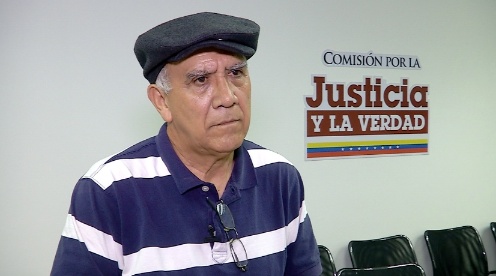
Caracas – Venezuela’s Supreme Court (TSJ) issued a ruling Tuesday ordering the country’s the public prosecution to reopen investigations into the case of a law student disappeared in 1966.
Andres Pasquier Suarez, a law student at the Central University of Venezuela, was detained by Venezuela’s national guard on October 10, 1966 and subsequently handed over to the now defunct Armed Forces Information Service.
According to military records, the youth was transferred two days later to the Urica Anti-Guerrilla Camp from which he never returned.
A Maracaibo military tribunal charged with investigating the incident declared the case closed on March 15, 1968, finding that “no crime has been committed in any moment”.
Writing on behalf of the high court, TSJ President Gladys Gutierrez struck down the prior ruling as “contrary to the elemental principles of law and justice”, concluding that the military court had failed to conduct an impartial investigation of the disappearance.
The justice ordered the public prosecutor’s office to reopen the investigation and identify those responsible as mandated under article 19 of Venezuela’s Law to Prosecute Crimes, Disappearances, Tortures, and Other Human Rights Violations for Political Reasons during the Period 1958-1999.
Over the last 17 years, numerous inquiries have brought to light the magnitude of human rights violations committed under Venezuela’s pacted, two-party system known as the Fourth Republic.
This past July, the country’s official Truth and Justice Commission revealed that it had registered a total of 11,043 cases of torture, assassinations, and political disappearances between 1958 and 1998.
Hebron, Occupied Palestine – This past week marked the feast of Sukkot, which brought settlers from illegal settlements all over the occupied West Bank to al-Khalil (Hebron). There, with restrictions, harassment, collective punishment and intimidation of Palestinians – all in favor of the illegal settlers – the spirit of the Jewish holiday was turned into a feast of intimidation and oppression for the Palestinian residents, going hand in hand with increasing illegal annexation of their land.
With bus-loads of settlers from all over the illegally occupied Palestinian West Bank pouring into al-Khalil, Israeli forces stepped up the movement-restrictions and checkpoint closures for Palestinians even more, thus making the maze of checkpoints, already almost impossible to navigate into a maze that ends mainly in dead-ends. For several days, the main checkpoint connecting the Palestinian market with the area around the Ibrahimi Mosque was closed for Palestinians, and Palestinian shop-owners in the mosque-area were forced shut by the Israeli forces – all to facilitate settler movement in areas that lack any presence of Palestinians.
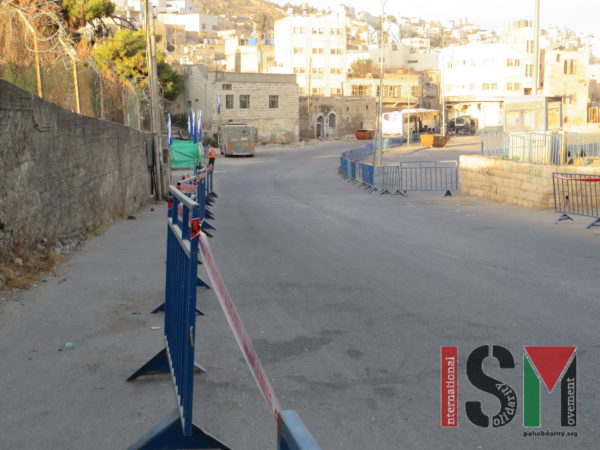
The road connecting the settlements in the heart of al-Khalil with the Kiryat Arba settlement on the outskirts of al-Khalil – where only settlers are allowed to drive – has largely been cordonned off with police-barriers.
The area cordonned off by Israeli forces
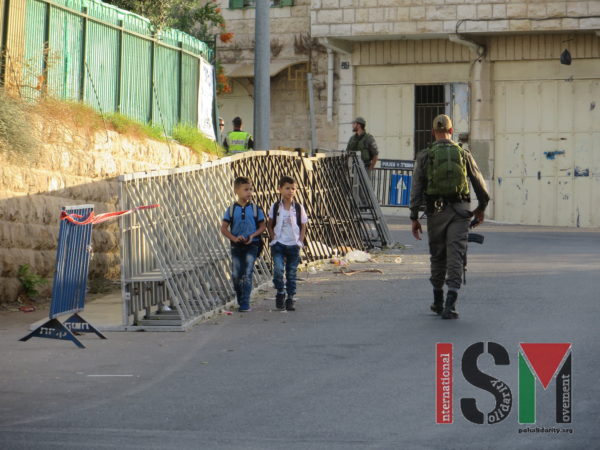
Thus, school-children were not only forced to pass an even larger amount of heavily-armed military and police forces, but also navigate the maze of complete closures for Palestinians, areas to avoid due to excessive settler presence and the gates put up preventing movement in certain directions.
School-children forced to pass heavily-armed Israeli forces and the maze of police-barriers
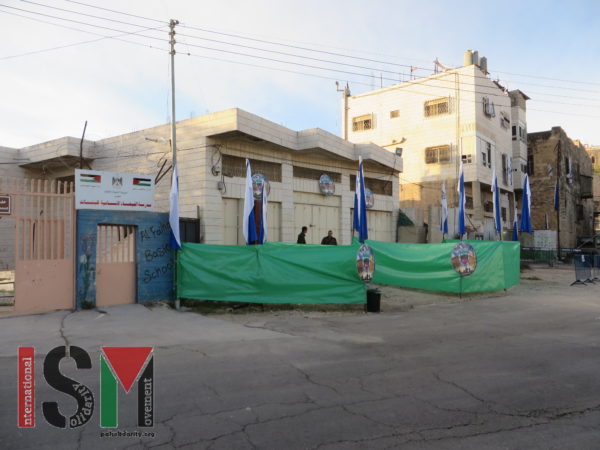
Students of al-Faihaa girls school in the Ibrahimi Mosque area, where just recently a new CCTV surveillance tower was put up following and recording every step of the Palestinian residents movement, are now studying right next to a military encampment. The building right next to the girls school entrance has already been mis-used and turned into a military encampement during last year’s Sukkot celebrations.
Building illegally occupied by Israeli forces for a military base
On Tuesday, many of the settlers arriving to al-Khalil on the occassion of the holiday, were ‘guided’ through the Palestinian market by Israeli forces, preventing Palestinians’ access in their own marketplace for hours. Just a day later, soldiers effectively imposed a curfew on the tiny strip of Shuhada Street where Palestinians are still allowed to walk, the Tel Rumeida neighborhood and the Bab al-Zawwiya area. The latter is located in the H1 area of al-Khalil, supposedly under full Palestinian control. With the closure of Shuhada checkpoint for six hours, Palestinian civilians were either locked inside or outside their houses, while settlers were accompanied by heavily armed military forces to a tomb located in the H1-area, forcing shop-owners to close.
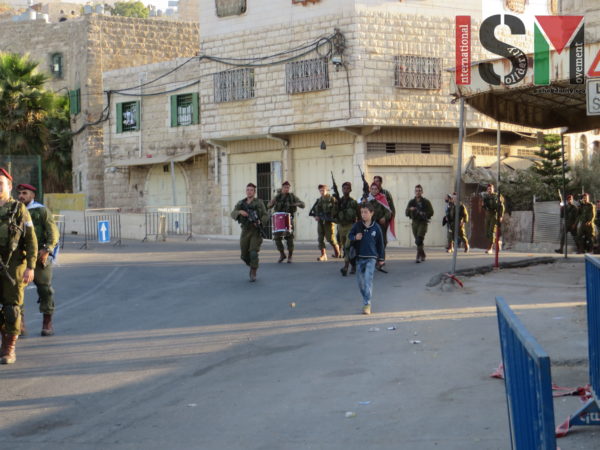
On Thursday morning, Israeli forces marched through the streets of al-Khalil, with drums and music, in a pure show of force and power. The march went on the settler only road, that has been ethnically cleansed from Palestinian cars (but does still allow Palestinian pedestrians), illustrating the continuous plans and attempts to connect the illegal settlements in an area ethnically cleansed of any Palestinian presence.
Soldiers marching through al-Khalil
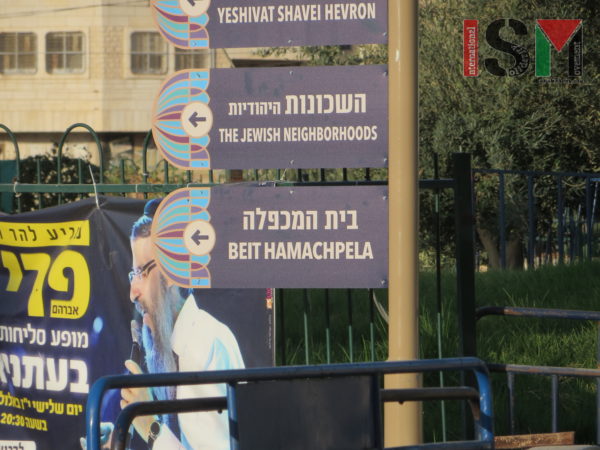
Throughout the increasing efforts to illegally annex more and more strips of land, and erase first the memory of the Palestinian heritage as a step to then erase the whole Palestinian population, Israeli forces are employing the ‘power of words’. More and more areas, streets and houses that belong to Palestinians, but in which settlers have already moved in (and were succinctly kicked out by the army), are given Hebrew names, eradicating the Palestinian names. This is just one small step of illegal annexation that even goes so far to call the illegal Israeli settlements in the city center of al-Khalil “Jewish neighborhoods”.
Signs put up for ‘tourist settlers’ in al-Khalil by Israeli forces
With the holiday of Sukkot lasting for another three days, more restrictions and harassment are expected. And even with the end of the holiday, the restrictions, harassment and intimidation of Palestinian civilians solely and deliberately on the ground of their ethnic group, with the continuous illegal annexation of the land, will not stop as long as the illegal occupation is allowed by the international community to continue their efforts of ethnic cleansing.
On 18 October 2011, 477 Palestinian prisoners were released from Israeli occupation prisons in the Wafa al-Ahrar (“Dedication to the Free”) prisoner exchange with the Israeli occupation. One week prior, hundreds of Palestinian prisoners were engaged in an open-ended hunger strike against the solitary confinement and isolation of Palestinian leaders, especially Ahmad Sa’adat, the imprisoned General Secretary of the Popular Front for the Liberation of Palestine. The strike was suddenly interrupted with stunning news: a prisoner exchange agreement had been released between the Palestinian resistance and the Israeli occupation, for the release of 1,027 Palestinian prisoners in exchange for the release of captured occupation soldier Gilad Shalit. The exchange was completed with the release of 550 fellow Palestinian prisoners in December 2011. In the agreement, among the first set of 477 prisoners released, 131 were released to Gaza and 110 to the West Bank, as well as six Palestinians holding Israeli citizenship returning to Palestine ’48. 203 more were deported from Palestine. This group were the prisoners with lengthy sentences.
This was, of course, not the first time that the Palestinian resistance secured the release of Palestinian prisoners through prisoner exchanges. Throughout Palestinian history, large numbers of Palestinian prisoners in Israeli jails with lengthy sentences have found freedom in prisoner exchanges negotiated by Palestinian resistance organizations.
Since the 2011 Wafa al-Ahrar exchange, dozens of released prisoners have been re-arrested, many with their original sentences reimposed. 57 former prisoners have been re-imprisoned by the Israeli occupation, out of 74 who have been arrested; 50 prisoners have had their original sentences re-imposed on allegations of “violating their terms of release” through “association or support for” prohibited organizations, including all major Palestinian political parties. Three more re-arrested prisoners are serving sentences lower than their original sentences, including Nael Barghouthi (30 months), Nayef Shawamreh (4 years), and Bassam Natsheh (3 years). Israeli Military Order 1651 allows the re-imprisonment of former Palestinian prisoners on prior charges for arbitrary re-arrests, on the basis of secret evidence.
Palestinian prisoners re-arrested include Samer Issawi, who was previously re-arrested and freed after a 265-day partial hunger strike and then re-arrested once more in the raids in June and July 2014 alongside the Israeli assault on Gaza; Samer Mahroum, originally a co-defendant of Omar Nayef Zayed; and Nasser Abed Rabbo, a Jersualemite ex-prisoner prevented from seeing his newborn son by the re-arrest.
Historical precedents for the release of prisoners through resistance actions have been noted on multiple occasions, including exchanges between the Israeli state and Arab states, Hezbollah, the Palestine Liberation Organization and other Palestinian resistance organizations.
On 23 July 1968, the first exchange was successfully completed between the Palestinian revolution and the Israeli occupation. The Popular Front for the Liberation of Palestine hijacked a plane from Rome to Tel Aviv, releasing the passengers in exchange for 37 Palestinian prisoners, some with high sentences imprisoned before 1967.
On 28 February 1971, Palestinian prisoner Mahmoud Bakr Hijazi was exchanged for an Israeli soldier in an exchange agreement between Fateh and the Israeli occupation.
On 14 March 1979, the Popular Front for the Liberation of Palestine – General Command conducted an exchange agreement with the Israeli occupation for the release of 76 Palestinian prisoners, including 12 women prisoners.
In 1980, Palestinian prisoner Mehdi Bseiso was released in exchange for a collaborator captured by the Fateh movement.
On 23 November 1983, 4560 Palestinian detained Palestinian and Lebanese prisoners in southern Lebanon, including 65 Palestinian women prisoners were exchanged for six Israeli occupation soldiers arrested in southern Lebanon, in an exchange with the Palestine Liberation Organization.
In June 1984, 291 Syrians imprisoned by the Israeli state and 72 Syrians’ remains, as well as 20 Palestinian prisoners, were exchanged for six captive Israeli soldiers and five soldiers’ remains in an exchange with Syria.
On 20 May 1985, 1155 Palestinian prisoners were released in an exchange for three Israeli soldiers captured by the PFLP-GC. Many of the Palestinian prisoners released later became leaders in the intifada that arose in 1987.
In September 1997, the Mossad attempted to assassinate Hamas leader Khaled Meshaal in Jordan with a poisonous injection. Two Mossad agents were arrested in Jordan and in exchange for those agents, the Israeli state released Sheikh Ahmed Yassin, the founder and leader of the Hamas movement, then serving a life sentence in Israeli prisons. (Yassin had been previously released in the 1985 prisoner exchange.)
In January 2004, the Israeli occupation released 436 prisoners, including 400 Palestinians, 23 Lebanese, two Syrians, three Moroccans, three Sudanese, one Libyan and one German prisoner, and returned the remains of 59 soldiers in exchange for the remains of three Israeli occupation soldiers and the release of drug dealer, businessman and potential intelligence agent Elhanan Tannenbaum, in an exchange with Hezbollah in Lebanon.
In 2008, Samir Kuntar of the Palestine Liberation Front and four Hezbollah fighters were released in exchange for the remains of two Israeli occupation soldiers in southern Lebnon, in an exchange with Hezbollah in Lebanon.
Today, there are four Israelis, including two Israeli soldiers missing in action, held by the Palestinian resistance. The two soldiers, Hadar Goldin and Oron Shaul, were captured by the Palestinian resistance during the massive Israeli assault on Palestinians in Gaza in 2014, when over 2,300 Palestinians were killed, tens of thousands wounded, and hundreds of thousands displaced by the massive occupation assault on the besieged Palestinian strip. The Israeli media originally declared them killed in action after a massive bombardment under the so-called “Hannibal directive” mandating the massive bombardment of the Palestinian civilian population in order to kill any captured soldier; however, Shaul’s status has been changed to “missing in action.” Also captured by Palestinian resistance organizations are Avera Mengistu and Hashem al-Sayyed, who entered Gaza without permission.
In total, over 8,000 Palestinian prisoners have been released through exchanges, which is why the capture of Israelis and especially Israeli soldiers or settlers has been such a high priority for the Palestinian resistance in the past and at present. Palestinian resistance organizations, including Hamas, have demanded the release of the 57 re-arrestees of the Wafa al-Ahrar agreement as a condition to begin negotiations for an exchange of the four Israelis they currently hold. Palestinian prisoners’ organizations and human rights groups have been urging the release of the 57 prisoners since their re-arrest, including calling on Egypt, which served as a mediator in the exchange, to pressure the Israeli state for their release as part of its commitments to Egypt as part of the exchange agreement.
The 57 re-arrestees have been identified as follows:
1. Nidal Zaloum
2. Abd El-Men’em Othman To’meh
3. Majdi Atieh Suleiman ‘Ajouli
4. Ayed Khalil
5. Samer El-Mahroum
6. Alaa El-Bazyan
7. Adnan Maragha
8. Nasser Abedrabbo
9. Safwan Oweiwi
10. Rabee’ Barghouthi
11. Suleiman Abu Eid
12. Ibrahim Shalash
13. Ibrahim Al-Masri
14. Zuheir Sakafi
15. Ahmad Al-‘awawdeh
16. Bassam Na’im Al-Natsheh Abu Eid
17. Mahmoud Al-Swaiti
18. Mu’amar Al-Ja’bari
19. Khaled Makhamra
20. Abbas Shabaneh
21. Rasmi Maharik
22. Nayef Shawamreh
23. Na’eem Masalmeh
24. Mu’az Abu Rmouz
25. Amer Moqbel
26. Ashraf Al-Wawi
27. Muhamad Barakat
28. Ya’koub Al-Kilani
29. Aref Fakhouri
30. Waheeb Abu Al-Rob
31. Muhamad Saleh El-Rishek
32. Mu’amar Ghawadra
33. Imad Mussa
34. Abdelrahman Salah
35. Ashraf Abu El-Rob
36. Wael Jalboush
37. Nidal Abdelhaq
38. Taha Al-Shakhsheer
39. Zaher Khatatbeh
40. Hamza Abu Arkoub
41. Mahdi El-Assi
42. Shadi Zayed Odeh
43. Jamal Abu Saleh
44. Ismail Hijazi
45. Rajab Tahan
46. Samer Issawi
47. Khader Radee
48. Imad Fatouni
49. Muhamad Issa Awad
50. Suleiman Abu Seif
51. Ahmad Hamad
52. Khaled Ghizan
53. Ismail Musalam
54. Yousri Joulani
55. Nael Barghouthi
56. Imad Abdul-Rahim
57. Fahd Sharaya
Samidoun Palestinian Prisoner Solidarity Network salutes the freed prisoners on the fifth anniversary of their liberation, and joins in the call for pressure and action to free the 57 re-arrested prisoners of Wafa al-Ahrar, and for the liberation of all 7,000 Palestinian prisoners in Israeli jails.
Palestinian student leader and media activist Ibrahim Abu Safiya remains imprisoned after his detention was extended by Israeli occupation forces until 5 November 2016. Abu Safiya, the coordinator of the Islamic Association at Bir Zeit University, was arrested at Beit Ur checkpoint west of Ramallah on 28 September by occupation forces.
The Islamic Association at Bir Zeit issued a statement denouncing the arrest of their coordinator, saying that it “reflects the occupation’s arbitrary policy against Palestinian media, activists and organizers, and punitive actions to cover the crimes of the occupation and the settlers.”
Abu Safiya, 21, is a journalism student at Bir Zeit in his final year, an active member of many popular unions and associations who works with a number of media offices as a freelance journalist and researcher.
He is heavily involved in Bir Zeit student union activities, including the 28-day student strike against tuition increases on the campus, in which he engaged in a five-day hunger strike. Just days before his arrest, he spoke to the media about the success of the student campaign in preventing tuition hikes that make education inaccessible to Palestinian youth, and announcing the agreement to end the student strike. Abu Safiya had been one of the four student spokespeople and representatives during the anti-tuition-hike campaign.
Dozens of Palestinian journalists remain imprisoned by the Israeli occupation, including Omar Nazzal, member of the General Secretariat of the Palestinian Journalists’ Syndicate; Hasan Safadi, media coordinator for Addameer Prisoner Support and Human Rights Association; and Ali Oweiwi, journalist held without charge or trial.
Abu Safiya’s arrest also points to the ongoing targeting of Palestinian student activists and organizers for involvement in student union activities, student protests and other student actions on campus.
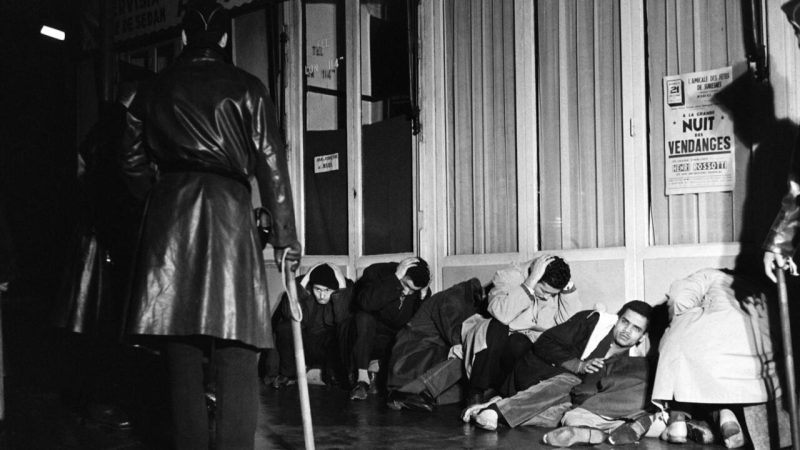
Some 30,000 pro FLN (National Liberation Front) Algerians gathered for a peaceful demonstration in the Streets of Paris. Under orders from the head of the Parisian police, Maurice Papon, the French police attacked the demonstration. The Paris Massacre of 17 October 1961 appears to be intentional. After 37 years of denial the French government admitted the acts, and acknowledged 40 deaths in 1998. Estimates of deaths exceed 200.
Historian Jean-Luc Einaudi won a trial against Maurice Papon in 1999. The latter, according to official documents, seems to have directed the massacre. He assured officers in one station that they would be protected in prosecution if they participated in quelling the demonstration.
The protestors were killed in many different methods. Some were herded into the Seine River, others thrown from bridges after being beaten unconscious. Other still were delivered to the Paris police headquarters after being arrested and killed there.
The estimates of the deaths range between 70 and 200.
A few days after the massacre on 31 October, some anonymous policemen published a text stating:
What happened on 17 October 1961 and in the following days against the peaceful demonstrators, on which no weapons were found, morally forces us to bring our testimony and to alert public opinion… All guilty people must be punished. The punishment must be extended to all of the responsible people, those who give orders, those who feign of letting it happen, whatever their high office may be… Among the thousands of Algerians brought to the Parc des Expositions of the Porte de Versailles, tens were killed by blows from rifle butts and pickaxe handles… In one of the extremity of the Neuilly bridge, groups of policemen on one side, CRS on the other, moved slowly towards each other. All the Algerians captured in this huge trap were knocked out and systematically thrown in the Seine. A good hundred people were subjected to this treatment… [In the Parisian police headquarters], torturers threw their victims by tens in the Seine which flows only a few meters from the courtyard, to keep them from being examined by the forensic scientists. Not before having taken their watches and money. Mr. Papon, prefect of the police, and Mr. Legay, general director of the municipal police, assisted to these horrible scenes… These indisputable facts are only a small part of what has happened in these last days and what continues to happen. They are known by the municipal police. The extortions committed by the harkis, the district special brigades, the brigades des aggressions et violences are not secret any more. The little information given by the newspapers is nothing compared to the truth… We do not sign this text and sincerely regret it. We observe, not without sadness, that the current circumstances do not allow us to do so…”
“In five years, however, I believe that the coming invasion of Iraq will be remembered as an act of profound morality.”
These are the not-so-prescient words of Jeffrey Goldberg, named this week the new chief editor of the 159-year-old Atlantic Magazine, one of the most famous journalistic institutions in U.S. history.
The openly-Zionist Goldberg moved to Israel nearly 25 years ago and served in the Israeli Defense Forces. Since then, he has been the opening speaker for numerous Zionist functions, including the American Jewish Committee conference and Zionism 3.0.
Most garishly, he worked as a prison guard at Ktzi’ot, Israel’s largest detention camp for Palestinian political prisoners, where he boasted of helping beat Palestinian political prisoners. Ktzi’ot is one of Israel’s largest detention camps and has long been criticized for its inhumane conditions, which include frequent beatings, lack of drinking water and forced labor.
In his 2006 book Prisoners, Goldberg describes a scene at the detention camp, in which his friend repeatedly hits a Palestinian prisoner in the head with a sharp-edged object, beating him to a bloody pulp, a beating that Goldberg described “was prompted by something (the prisoner) said.” Goldberg covered up the crime by saying, “I found another military policeman, and handed off the wobbling prisoner, who was by now bleeding on me. ‘He fell,’ I lied.”
Goldberg himself took part in beatings, justifying them by saying, “Unlike (Goldberg’s camp guard friend), I never hit a Palestinian who wasn’t already hitting me.”
Additionally, his credibility as a journalist is most unsavory. At the New Yorker magazine, Goldberg authored dozens of articles that were later discovered to be false but provided the United States with a pretense for invading Iraq. In 2002, Goldberg also published a two-part series in the New Yorker in which he alleged that the Lebanese resistance movement Hezbollah was running a black market cigarette ring on U.S. soil to finance a terrorist operation. No evidence of any such activity has since been discovered. Indeed, the new head honcho of one the United States’ most prominent publications has become so fringe in his shilling for Israel and the U.S. empire, that even former key conservatives and staunch Zionists such as former New Republic Editor Andrew Sullivan have heavily criticized him.
OCCUPIED JERUSALEM – The Israeli authorities imposed tight restrictions throughout occupied Jerusalem in anticipation of the Jewish holiday of Yom Kippur.
Haaretz Hebrew newspaper said that a series of closures and heightened security operations were declared between the eastern and western parts of occupied Jerusalem.
Palestinian vehicles’ movement is completely restricted as several checkpoints were erected throughout the occupied city, according to the sources.
Israeli Police spokeswoman Luba al-Samri said in a statement that Israeli police, border police, and Israeli “volunteers” would be spread through different areas in the city of Jerusalem beginning early Tuesday morning, the beginning of Yom Kippur.
Al-Samri added that Israeli police provided the volunteers with weapons to “guarantee the safety of the worshipers.”
“Israeli police in cooperation with the Jerusalem municipality will install checkpoints at the main roads to prevent cars of Eastern residents from heading to West Jerusalem,” al-Samri said in her statement, referring to preventing the access of any Palestinian residents from the eastern part of Jerusalem to its western part.
“Israeli police will also be stationed at neighborhoods to prevent any rock throwing,” according to her statements.
Earlier Monday, Israeli authorities imposed a complete closure in occupied West Bank and Gaza Strip on the occasion of Jewish holiday Yom Kippur.
Israeli Magistrate’s Court in Jerusalem sentenced Palestinian Jerusalemite journalist and activist Samer Hussam Abu Aisha, 29, to 20 months in Israeli occupation prison. Abu Aisha has been imprisoned since 6 January 2016; he was attacked and abducted from inside the Jerusalem office of the International Committee of the Red Cross, where he and Hijazi Abu Sabih had erected a protest tent against the Israeli occupation’s order expelling them from their city of Jerusalem. They held evening events, lectures and cultural programs in rejection of deportation and in defense of the Palestinian identity of Jerusalem.
The two organizers were leaders of a campaign against Israeli occupation orders of expulsion from Al-Aqsa Mosque and from the city of Jerusalem. Their campaign included singing protests and other forms of cultural resistance and creative actions. On 16 December 2015, he and Abu Sbeih were delivered an order of expulsion from the city of Jerusalem for five months, citing “state security and order.” He had previously been arrested and harshly interrogated for 33 days, then released and banned from traveling outside Palestine. As soon as his house arrest ended, the Israeli occupation imposed the expulsion order upon them.
Abu Aisha went on hunger strike for 21 days in August in solidarity with Bilal Kayed’s demand for release from Israeli prison; he was part of a group of 35 prisoners from Gilboa prison who also demanded improved conditions inside the prison. Rawan Abu Aisha, Samer’s wife, said that the strike was in part prompted by ongoing denials of family visits.
Abu Aisha wrote earlier regarding the Israeli charges against him:
I was born in Jerusalem in 1987. I lived there all my life except for a few years during my studies in Egypt. As part of my work, I often travel to participate in conferences and youth exchanges in Arab countries and across the world.
Last August I travelled to Lebanon to participate in the 25th Arab Youth Camp. 28 hours after my return to Jerusalem on 17 August 2015, I was arrested by Israeli occupation forces and subjected to an interrogation that lasted 44 days. Eventually, I was conditionally released under open ended house arrest and accused of traveling to an “enemy state” in violation of the “Israeli” emergency regulations of 1952 which place a ban on travel to enemy state of the Zionist regime. These “laws” and policies are forced on us Palestinians despite the fact that we don’t recognize these laws, and the fact that Palestinians hold Lebanon to be a sister state which is naturally, geographically and culturally connected to Palestine.
The detention of Yasser Qous, Jerusalem director of the Palestinian Prisoners’ Society, was extended as well by Israeli occupation courts on 9 October; he had been assaulted and arrested by police forces in the Old City of Jerusalem and accused of “obstructing police work.”
Interactions between young people and police don’t occur just on the streets of America — they’re happening in our nation’s K-12 schools, too. Increasingly police have become “embedded” in schools, in many cases working there full-time. Many are considered school staff and have daily authority over students, even in situations that have traditionally been seen as everyday disciplinary matters.
Little is known about the day-to-day practices of school-based police and about the rules under which they operate. Nobody — not even the federal government — knows how many sworn law enforcement officers (and of what type) are assigned to schools. What we do know should give us pause for concern.
Whether they are called school police officers, school resource officers, or school safety agents; carry the same weapons as a regular cop; serve in uniform; are friendly or aggressive; or are unionized; these officers have the power to arrest, detain, interrogate, and issue criminal citations to students.
It is time to rethink the role police play in our schools.
The boundaries between police and educators have become less clear — who decides what when interacting with students — and the degree of collaboration between police and educators has increased in the past two decades. Often when controversies arise, police say, “Don’t blame us. We’re here because the school asked us to be here.” Educators say, “We cannot control what police do in our school — that’s a law enforcement matter.”
Embedding such officers has real consequences for students and for the culture of schools. One popular (and growing) type of school policing, the School Resource Officer (SRO) program, blurs those lines and accountability even more. SROs are described as mentors and classroom presenters as well as cops, a so-called “triad” model of school policing. In fact, this is a big selling point of the program. School policing is presented as a form of community policing — without regard to the costs.
The activities of school-based police officers (especially SROs) are typically less regulated by formal policies than those of officers that are called to a school from the outside. Can a school-based officer be permitted to question a student without reading him or her rights? What about when an SRO is “mentoring”? What about seeing a student’s records without the permission of the student or parent? When must an SRO get a search warrant? … Full article
Libraries often find themselves on the frontlines against government overreach, whether it is opposing local politicians who want to ban books or protecting the privacy and confidentiality of their patrons from police intrusion.
The Kansas City, Mo., Public Library system has dealt with these issues over the years. But now the library finds itself at the center of a new controversy — aggressive policing — a trend increasingly common in the streets but rarely seen inside the walls of libraries.
In May, Kansas City police arrested an audience member attending a public event at a local branch of the city’s library system. The police also arrested an employee of the Kansas City Library who intervened on behalf of the audience member.
The library kept quiet about the May 9 incident for several months, hoping the city would drop the charges against the two people. When the city told the library it was moving forward with the charges, the library began to publicize the incident and how the local police suppressed free speech.
“They’ve kind of doubled-down on this and they’re moving ahead with the prosecution,” R. Crosby Kemper III, the Kansas City Library executive director, said in a video interview posted Sept. 30 on the Kansas City Starwebsite. “At this stage, I’m actually outraged. This is a big violation of the very First Amendment to the Constitution of the United States. We would expect our police department, which we have worked with very closely over the years, to want to talk to us about this and deal with this in a community way. Instead, they’ve chosen to defend the indefensible conduct of their off-duty police officer.”
The audience member, Jeremy Rothe-Kushel, was standing still and speaking into a microphone when a security guard grabbed him. Steve Woolfolk, director of public programming for the library system, intervened without touching the security guard and asked for Rothe-Kushel to be allowed to leave the library peacefully.
Woolfolk reportedly suffered a torn medial collateral ligament in his knee when a police officer providing security at the event hit him in the leg. Rothe-Kushel was arrested and charged with trespassing and resisting arrest. Woolfolk was arrested and charged with interfering with an arrest.
The arrests occurred at the Plaza branch of the Kansas City Library, where diplomat and Middle East «specialist» Dennis Ross was giving the inaugural Truman and Israel Lecture, established by the Truman Library Institute and the Jewish Community Foundation of Greater Kansas City. The Jewish Community Foundation hired the private security and off-duty police officers for the event.
Prior to the event, the library said it specified that no one was to be removed for asking uncomfortable questions and not without permission of library staff, unless there was an imminent threat of physical danger. “We were absolutely clear on this issue from the very beginning,” Kansas City Library spokeswoman Carrie Coogan said. “We don’t know why that was not communicated to the security teams that were there that day.”
The American Library Association (ALA) issued a statement on Oct. 3 expressing its support for the Kansas City Library and commended Woolfolk for defending Rothe-Kushel’s “right to question and debate matters of public concern.”
“The ALA commends the Kansas City Public Library for its commitment to fostering public deliberation and the exchange of a wide spectrum of ideas by offering meeting rooms and other spaces for lectures, educational programs, and organizational meetings,” ALA President Julie Todaro said in a statement. “Libraries are public institutions that serve as catalysts for public discussions that help solve community challenges. Such efforts are not possible when patrons are not allowed to engage in open debate in a public forum, but rather are arrested for asking difficult questions.”
The ALA said it will “extend resources” to the staff of the Kansas City Library in their legal battle over the incident.
The Jewish Community Foundation has tightened security at its facilities and events over the past two years. In April 2014, Frazier Glenn Miller Jr., a notorious neo-Nazi and Klansman, killed two people at the Jewish Community Center of Greater Kansas City in nearby Overland Park, Kan. Frazier also killed one person at Village Shalom, a Jewish retirement community located in Overland Park. Miller was convicted of the killings and sentenced to death.
In a statement on the May 9 incident, the Jewish Community Foundation noted that it included a question-and-answer opportunity after Ross’s speech “in the spirit of encouraging dialogue.” During the Q&A, “a series of actions by a questioner and a library employee began that resulted in their arrests by local law enforcement,” the organization said.
Jewish Community Foundation spokeswoman Brooke Hardy said the organization has been trying to encourage a resolution to the incident “that would be acceptable to all parties” and that it will “continue to cooperate in this matter.”
Rothe-Kushel told the Mondoweissnews site that the private security guard who grabbed him at the event was Blair Hawkins, who serves as security director for the Jewish Community Foundation.
The Kansas City Library has no plans to stop partnering with the Jewish Community Foundation, Coogan said. The library also will continue to allow private security guards at future library events. “We just will make absolutely, positively sure that they understand the expectations ahead of time,” she said.
===============
Below is a transcript of the clip with a few additional comments based on another video:
Jeremy Rothe-Kushel:
Hi, thank you. I’m very interested in the issue of tribalism and terror. Just today, I ran into an article referencing Truman’s daughter’s, Margaret’s book, disclosing that the Stern Gang sent mail bombs to Truman in ‘47, and we know that when I think – I can’t remember which group blew up the King David Hotel, but Jews were amongst the dead involved in that ‘necessary statecraft’, what ultimately became that. So you see this long history of not only the United States, but Israel utilizing terrorism that includes potentially the death of its own tribe to advance its own geopolitical cause all the way up into the 21st century, including September 11th and that whole mess that I would tell people to look at Alan Sabrosky, the Jewish, courageous Marine who’s exposed the Zionist role in that. So I would ask you, at what point does the Jewish diaspora – do we have to have the ethical courage – I’m a Jewish American – to point out that especially in America, both the countries that operate in our name have used terrorism way too long, including against its own citizens, to project power at home and abroad. When are we going to stand up and be ethical Jews and Americans?
Dennis Ross:
Well, look, I don’t think that as a matter of policy, that the United States or Israel engage in acts of terror. Terror is you target deliberately civilians for an expressed political purpose. The idea that Israel had something to do with 9/11 is just outrageous – they had nothing to do with it. [Applause]
Jeremy Rothe-Kushel:
Tell that to the Marine. Tell that to the Marine, Alan Sabrosky.
Look him up, Jewish American Marine.
Dennis Ross:
You know what? You can make up whatever you want to.
Jeremy Rothe-Kushel:
I didn’t make that up.
Dennis Ross:
Well, I’m a big believer – as Patrick– Daniel Patrick Moynihan used to say, everybody’s entitled to their own opinions; they’re just not entitled to their own facts. [Applause]
Greg McCarron:
Take your own advice Dennis.
Jeremy Rothe-Kushel:
True—–, Go look at September —- [–mic being cut in and out] …. [off mic] free fall speed
[At this time, while at the microphone beginning to respond to Dennis Ross, Rothe-Kushel’s upper left arm was grabbed with force, with no apparent warning, from behind by the head of the Jewish Community Foundation’s private security detail, and pushed away from the microphone and towards another, currently unidentified, member of security.]
Jeremy Rothe-Kushel: Do not touch me!
Get your hands off me right now!
[Multiple people are grabbing Rothe-Kushel at this point]
You can ask me to leave.
I will leave if asked.
Get your hands off me!
Greg McCarron:
Hey! He has a right to talk without being–
Patron sitting next to Greg:
No he had a right to ask the question and he asked the question.
Greg McCarron:
They don’t have to be putting their hands on him like that!
Jeremy Rothe-Kushel:
Get your hands off me.
I will leave if asked.
Get your hands off of me.
I will ask if leaved–
[At this time, Dennis Ross begins to move on to the next question, by stating the following:]
Dennis Ross:
Okay, you know what? I will accept the question and we can ignore that.
Jeremy Rothe-Kushel:
I will leave.
Get your hands off of me!
I didn’t threaten anybody.
The Israeli navy has seized the Zaytouna-Oliva, a Gaza-bound aid ship, and is currently towing it towards the Israeli port city of Ashdod, according to the initiative’s organizers and reports in the Israeli media.
Sondos Ferwana, a media spokeswoman for the International Coalition for the Fourth Freedom Flotilla, told reporters on Wednesday evening that Israeli naval forces had “captured the ship”.
The Israeli military, for its part, confirmed the ship’s seizure in a statement.
“The Israeli Defense Forces managed to quickly seize the ship without causing any injuries among passengers,” the statement read.
According to the military, the crew of the Gaza-bound vessel had initially refused the navy’s orders to change course.
“This forced us to intervene and seize the ship before it violated the legal maritime closure imposed on the Gaza Strip,” the statement read.
According to reports on Israel’s Channel Two television station, the aid ship was intercepted — without resistance — some 80 kilometers off Gaza’s coast.
Ferwana, for her part, described the incident as “another act of Israeli piracy”, adding that all contact with the ship — which is carrying humanitarian aid and several female activists — had been lost.
“We don’t know the fate of the activists aboard,” she said.
Passengers on the Zaytouna-Oliva, which set sail from the Spanish city of Barcelona last month, include Irish Nobel Peace Prize laureate Mairead Maguire, Swedish and Algerian lawmakers, a South African Olympic athlete and a Malaysian doctor.
The all-female initiative seeks to break Israel’s decade-long blockade of the Gaza Strip and show solidarity with the women of Gaza.
Palestinian resistance movement Hamas, for its part, which has governed the Gaza Strip since 2007, condemned what it described “the Israeli occupation’s assault on the aid ship and its intimidation of the activists on board”.
In a statement, Hamas spokesman Fawzi Barhoum said the incident amounted to “an act of state terrorism” and another example of Israeli “aggression against the Palestinian people and those who show solidarity with the Palestinian cause”.
Barhoum went on to urge the international community to “put an end to Israel’s crimes”, stressing the need for immediate action “to lift the blockade and rescue the people of Gaza”.
In June of last year, Israeli forces intercepted the “Marianne” — which had been taking part in a similar initiative — and arrested all activists on board.
A similar Gaza-bound aid flotilla ended in tragedy in 2010 when the Mavi Marmara, a Turkish aid ship, was raided by Israeli commandos who killed 10 Turkish activists.
Since 2007, the Hamas-run Gaza Strip has groaned under a crippling Israeli/Egyptian blockade that has deprived its almost two million inhabitants of most basic commodities, including food, fuel, medicine and desperately-needed building materials.
In June, UN Secretary-General Ban Ki-moon described the blockade of Gaza as “collective punishment”, which, he asserted, “suffocates its people, stifles its economy and impedes reconstruction efforts”.
“Police are specialists in violence. They are armed, trained, and authorized to use force. With varying degrees of subtlety, this colors their every action. Like the possibility of arrest, the threat of violence is implicit in every police encounter. Violence, as well as the law, is what they represent.”—Author Kristian Williams
How do you protect yourself from flying fists, choking hands, disabling electrified darts and killing bullets?
How do you defend yourself against individuals who have been indoctrinated into believing that they are superior to you, that their word is law, and that they have the power to take your life?
Most of all, how can you maintain the illusion of freedom when daily, Americans are being shot, stripped, searched, choked, beaten and tasered by police for little more than daring to frown, smile, question, challenge an order or just exist?
The short answer: you can’t.
Now for the long answer, which is far more complicated but still leaves us feeling hopeless, helpless and vulnerable to the fears, moods and misguided training of every cop on the beat.
If you ask police and their enablers what Americans should do to stay alive during encounters with law enforcement, they will tell you to comply (or die).
It doesn’t matter where you live—big city or small town—it’s the same scenario being played out over and over again in which Americans are being brainwashed into believing that anyone who wears a government uniform—soldier, police officer, prison guard—must be obeyed without question, while government agents, hyped up on their own authority and the power of their uniform, ride roughshod over the rights of the citizenry.
For example, a local law enforcement agency in Virginia has started handing out a guide—developed in cooperation with a group of African American pastors—on how to interact with police. The purpose of this government resource, according to the police, is to make sure citizens feel “comfortable” and know what to do when interacting with police in order to “promote public safety and respectful interaction.”
Curiously, nowhere in the “Guide to Interacting with Police” is there any mention of the Constitution, or the rights of the citizenry, other than the right to remain silent.
In fact, the primary point stressed throughout the bilingual guide aimed at “building trust and cooperation,” is that citizens should comply, cooperate, obey, not resist, not argue, not make threatening gestures or statements, avoid sudden movements, and submit to a search of their person and belongings.
The problem, of course, is what to do when compliance is not enough.
I’m not talking about the number of individuals—especially young people—who are being shot and killed by police for having a look-alike gun in their possession, such as a BB gun. I’m not even talking about people who have been shot for brandishing weapons at police, such as scissors.
I’m talking about the growing numbers of unarmed people are who being shot and killed for just standing a certain way, or moving a certain way, or holding something—anything—that police could misinterpret to be a gun, or igniting some trigger-centric fear in a police officer’s mind that has nothing to do with an actual threat to their safety.
Killed for standing in a “shooting stance.” In California, police opened fire on and killed a mentally challenged—unarmed—black man within minutes of arriving on the scene, allegedly because he removed a vape smoking device from his pocket and took a “shooting stance.”
Killed for holding a cell phone. Police in Arizona shot a man who was running away from U.S. Marshals after he refused to drop an object that turned out to be a cellphone.
Killed for behaving oddly and holding a baseball bat. Responding to a domestic disturbance call, Chicago police shot and killed 19-year-old college student Quintonio LeGrier who had reportedly been experiencing mental health problems and was carrying a baseball bat around the apartment where he and his father lived.
Killed for opening the front door. Bettie Jones, who lived on the floor below LeGrier, was also fatally shot—this time, accidentally—when she attempted to open the front door for police.
Killed for being a child in a car pursued by police. Jeremy David Mardis, six years old and autistic, died after being shot multiple times by Louisiana police in the head and torso. Police opened fire on the car—driven by Jeremy’s father, Chris Few, who was also shot—and then allegedly lied, claiming that they were attempting to deliver an outstanding warrant, that Few resisted arrest, that he shot at police (no gun was found), and that he tried to ram his car into a police cruiser. Body camera footage refuted the police’s claims.
Killed for attacking police with a metal spoon. In Alabama, police shot and killed a 50-year-old man who reportedly charged a police officer while holding “a large metal spoon in a threatening manner.”
Killed for running in an aggressive manner holding a tree branch. Georgia police shot and killed a 47-year-old man wearing only shorts and tennis shoes who, when first encountered, was sitting in the woods against a tree, only to start running towards police holding a stick in an “aggressive manner.”
Killed for crawling around naked. Atlanta police shot and killed an unarmed man who was reported to have been “acting deranged, knocking on doors, crawling around on the ground naked.” Police fired two shots at the man after he reportedly starting running towards them.
Killed for hunching over in a defensive posture. Responding to a domestic trouble call, multiple officers with the Baltimore County police forced their way inside a home where, fearing for their safety and the safety of others,” three officers opened fire on an unarmed 41-year-old man who was hunched over in a defensive posture. The man was killed in front of his two young daughters and their mother.
Killed because a police officer accidentally pulled out his gun instead of his taser. An Oklahoma man suspected of trying to sell an illegal handgun was shot and killed after a 73-year-old reserve deputy inadvertently fired his gun instead of his taser. “Oh! I shot him! I’m sorry!” the deputy cried out.
Killed for wearing dark pants and a basketball jersey. Donnell Thompson, a mentally disabled 27-year-old described as gentle and shy, was shot and killed after police—searching for a carjacking suspect reportedly wearing similar clothing—encountered him lying motionless in a neighborhood yard. Police “only” opened fire with an M4 rifle after Thompson first failed to respond to their flash bang grenades and then started running after being hit by foam bullets.
Killed for telling police you lawfully own a firearm and have a conceal-and-carry permit. Philando Castile was shot and killed during a routine traffic stop allegedly over a broken tail light. As he was reaching for his license and registration, Castile explained to police that he had a conceal-and-carry permit. That’s all it took for police to shoot Castile four times in the presence of his girlfriend and her 4-year-old daughter.
Killed for leaving anywhere at all when a police officer pulls up. Deravis Caine Rogers was killed after starting to drive away from an apartment complex right around the same time as a police officer pulled up. Despite the fact that the police officer had no reason to believe Rogers was a threat or was suspected of any illegal activity, the officer fired into Rogers’ passenger side window.
Killed for driving while deaf. In North Carolina, a state trooper shot and killed 29-year-old Daniel K. Harris—who was deaf—after Harris initially failed to pull over during a traffic stop.
Killed for being homeless. Los Angeles police shot an unarmed homeless man after he failed to stop riding his bicycle and then proceeded to run from police.
Killed for being old and brandishing a shoehorn. John Wrana, a 95-year-old World War II veteran, lived in an assisted living center, used a walker to get around, and was shot and killed by police who mistook the shoehorn in his hand for a 2-foot-long machete and fired multiple beanbag rounds from a shotgun at close range.
Killed for holding a garden hose. California police were ordered to pay $6.5 million after they opened fire on a man holding a garden hose, believing it to be a gun. Douglas Zerby was shot 12 times and pronounced dead on the scene.
Shot seven times for peeing outdoors. Eighteen-year-old Keivon Young was shot seven times by police from behind while urinating outdoors. Young was just zipping up his pants when he heard a commotion behind him and then found himself struck by a hail of bullets from two undercover cops. Allegedly officers mistook Young—5’4,” 135 lbs., and guilty of nothing more than taking a leak outdoors—for a 6’ tall, 200 lb. murder suspect whom they later apprehended. Young was charged with felony resisting arrest and two counts of assaulting a peace officer.
Now you can make all kinds of excuses to justify these shootings, and in fact that’s exactly what you’ll hear from politicians, police unions, law enforcement officials and individuals who are more than happy to march in lockstep with the police. However, to suggest that a good citizen is a compliant citizen and that obedience will save us from the police state is not only recklessly irresponsible, but it is also deluded and out of touch with reality, because in the American police state, compliance is no longer enough.
Frankly, as these incidents make clear, the only truly compliant, submissive and obedient citizen in a police state is a dead one.
If you’re starting to feel somewhat overwhelmed, intimidated and fearful for your life and your property, you should be.
As I point out in my book Battlefield America: The War on the American People, “we the people” are now at the mercy of law enforcement officers who have almost absolute discretion to decide who is a threat, what constitutes resistance, and how harshly they can deal with the citizens they were appointed to “serve and protect.”
Sad, isn’t it, how quickly we have gone from a nation of laws—where the least among us had just as much right to be treated with dignity and respect as the next person (in principle, at least)—to a nation of law enforcers (revenue collectors with weapons) who treat us all like suspects and criminals?
Constitutional attorney and author John W. Whitehead is founder and president of The Rutherford Institute.
A Review of Conspiracy Theories and Other Dangerous Ideas by Cass Sunstein (based on an earlier paper co-authored with Adrian Vermeule); In Defense of Troublemakers: The Power of Dissent in Life and Business by Charlan Nemeth; and Conspiracy Theories and the People Who Believe Them, edited by Joseph E. Uscinski
On January 25 2018 YouTube unleashed the latest salvo in the war on conspiracy theories, saying “we’ll begin reducing recommendations of borderline content and content that could misinform users in harmful ways—such as videos promoting a phony miracle cure for a serious illness, claiming the earth is flat, or making blatantly false claims about historic events like 9/11.”
At first glance that sounds reasonable. Nobody wants YouTube or anyone else to recommend bad information. And almost everyone agrees that phony miracle cures, flat earthism, and blatantly false claims about 9/11 and other historical events are undesirable.
But if we stop and seriously consider those words, we notice a couple of problems. First, the word “recommend” is not just misleading but mendacious. YouTube obviously doesn’t really recommend anything. When it says it does, it is lying. … continue
This site is provided as a research and reference tool. Although we make every reasonable effort to ensure that the information and data provided at this site are useful, accurate, and current, we cannot guarantee that the information and data provided here will be error-free. By using this site, you assume all responsibility for and risk arising from your use of and reliance upon the contents of this site.
This site and the information available through it do not, and are not intended to constitute legal advice. Should you require legal advice, you should consult your own attorney.
Nothing within this site or linked to by this site constitutes investment advice or medical advice.
Materials accessible from or added to this site by third parties, such as comments posted, are strictly the responsibility of the third party who added such materials or made them accessible and we neither endorse nor undertake to control, monitor, edit or assume responsibility for any such third-party material.
The posting of stories, commentaries, reports, documents and links (embedded or otherwise) on this site does not in any way, shape or form, implied or otherwise, necessarily express or suggest endorsement or support of any of such posted material or parts therein.
The word “alleged” is deemed to occur before the word “fraud.” Since the rule of law still applies. To peasants, at least.
Fair Use
This site contains copyrighted material the use of which has not always been specifically authorized by the copyright owner. We are making such material available in our efforts to advance understanding of environmental, political, human rights, economic, democracy, scientific, and social justice issues, etc. We believe this constitutes a ‘fair use’ of any such copyrighted material as provided for in section 107 of the US Copyright Law. In accordance with Title 17 U.S.C. Section 107, the material on this site is distributed without profit to those who have expressed a prior interest in receiving the included information for research and educational purposes. For more info go to: http://www.law.cornell.edu/uscode/17/107.shtml. If you wish to use copyrighted material from this site for purposes of your own that go beyond ‘fair use’, you must obtain permission from the copyright owner.
DMCA Contact
This is information for anyone that wishes to challenge our “fair use” of copyrighted material.
If you are a legal copyright holder or a designated agent for such and you believe that content residing on or accessible through our website infringes a copyright and falls outside the boundaries of “Fair Use”, please send a notice of infringement by contacting atheonews@gmail.com.
We will respond and take necessary action immediately.
If notice is given of an alleged copyright violation we will act expeditiously to remove or disable access to the material(s) in question.
All 3rd party material posted on this website is copyright the respective owners / authors. Aletho News makes no claim of copyright on such material.


 Israeli Magistrate’s Court in Jerusalem sentenced Palestinian Jerusalemite journalist and activist
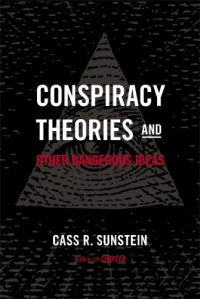 A Review of Conspiracy Theories and Other Dangerous Ideas by Cass Sunstein (based on an earlier paper co-authored with Adrian Vermeule); In Defense of Troublemakers: The Power of Dissent in Life and Business by Charlan Nemeth; and Conspiracy Theories and the People Who Believe Them, edited by Joseph E. Uscinski

