Belgian Defender is Second Brighton Player to Retire With Heart Problems in Last Year

BY ROBERT KOGON | THE DAILY SCEPTIC | AUGUST 3, 2023
The 22-year-old Belgian defender Lars Dendoncker announced last week that he was retiring from football due to a heart condition, thus making him the second Brighton player to retire because of heart problems in less than a year.
Dendoncker, the younger brother of Leander Dendoncker of Aston Villa and the Belgian national team, announced his retirement on Instagram, saying “this was and will be the hardest decision ever in my life” and that it “really hurts”. He was signed by Brighton & Hove Albion on a two-year contract in 2020 and played for the Scottish side St Johnstone for a year on loan.
Although Dendoncker has only now made his retirement official, he in fact already stopped playing football over a year ago after being diagnosed with myocarditis. In an Instagram post from last December, he wrote:
I have been through tough times the past few months. Six months ago I was about to make a transfer to a new club. I did my medical and something wasn’t right with my heart condition. I suffered from myocarditis.
Six months earlier will have been in May, not long before the unfortunate Dendoncker’s contract with Brighton was set to expire.
Last October, the Brighton midfielder Enock Mwepu was also forced into retirement by a heart condition. At the time, the condition was described as congenital. But when Mwepu first started feeling unwell and was rushed to the hospital just two weeks earlier while on a trip to Mali, the problem did not sound congenital. Thus, in his own September 26th Instagram post, he noted cryptically that doctors, and presumably he himself, were not at liberty to disclose the details of “what really happened”.
Mwepu’s words are reminiscent of remarks made by the American basketball player Brandon Goodwin. In mid-2021, while playing for the Atlanta Hawks of the NBA, Goodwin fell ill after being vaccinated against COVID-19 and was subsequently diagnosed with blood clots.
Goodwin himself attributed his condition “1000%” to the vaccine. But in a Twitch video, he described how while in the hospital a team official told him “Don’t say anything about it, don’t tell anyone” – to which he responded, “Bruh, what?” (The video appears to have been removed from Goodwin’s Twitch account, but relevant excerpts are still available on the Daily Caller here.)
Brighton is not the only major football club to have had multiple players stricken by cardiac problems in the last two years. So too did German powerhouse Bayern Munich, though the Bayern players have since returned to action: French winger Kinsley Coman after undergoing heart surgery in September 2021 and Canadian defender Alphonso Davies after being diagnosed with myocarditis in January 2022.
Robert Kogon is a pen name for a widely-published financial journalist, translator and researcher working in Europe. Subscribe to his Substack and follow him on Twitter.
Number of Vaccine Doses During Neonatal Period and Infancy and Mortality in Children at 1 and 5 Years
Ecological Analysis Suggests Worldwide Mass Vaccination for Childhood Illnesses Could be Backfiring
By Peter A. McCullough, MD, MPH | Courageous Discourse | August 3, 2023
When ACIP panel added the experimental mRNA vaccines for infants age 6 months and older, it triggered concerns that ACIP may not have ever had adequate intent for risk mitigation or re-evaluation of the ever expanding vaccine schedule. Many have had reservations for a long time and have felt drowned out by the medical orthodoxy of “more vaccines are better.” Now an analysis by Miller, et al, suggests the entire program of hyper vaccination may be backfiring.
The two main independent variables in this analysis restricted to developed countries at two time points 2019 and 2021 (check for internal validity) were the number of vaccines given in the 28 day neonatal period (none, hepatitis B, Bacille Calmette-Guérin (BCG) for tuberculosis) and then the overall number of shots given before age 1 year. The outcome variable was all cause mortality at age 1 and 5 years.
As you can see this does not look good for vaccines. In every analysis the children who went “natural” with no shots did the best and there was a trend for the fewest number of injections to be associated with the lowest mortality. I was born in 1962, so I received zero shots in the neonatal period and a total of 6 doses for four diseases (diphtheria, tetanus, pertussis, polio) before the age of 1 years. As you can see the optimal number of infant doses in the vaccine schedule is <14. The current US ACIP schedule is ~23 doses by year one—a proxy for national intent for hyper vaccination.
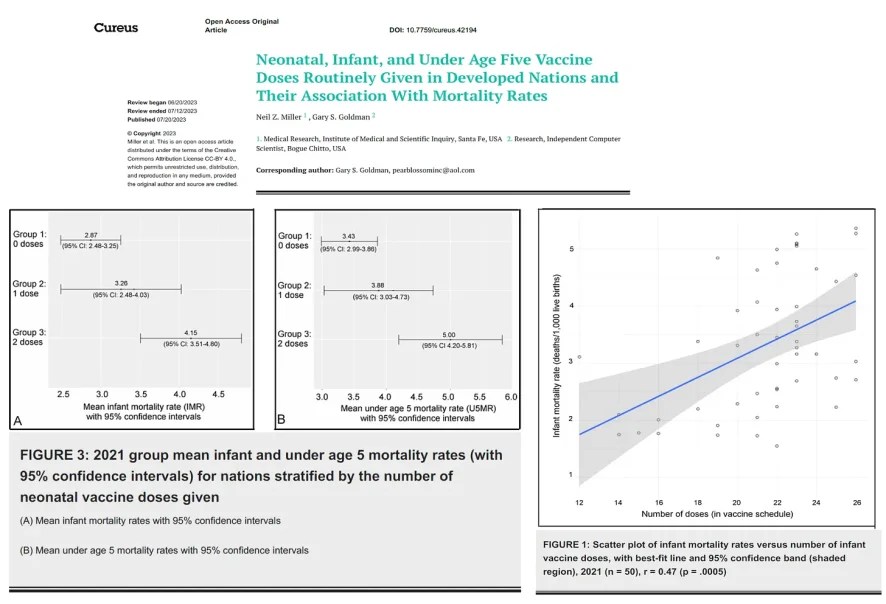
This paper has all the limitations of an ecological analysis where individual child record information is not available. The exact configuration of specific vaccines and causes of death are not specified. Thus we can only conclude from this study that “less is more” and countries should consider a risk stratified approach. The two main neonatal vaccines, hepatitis B and BCG should be reconsidered altogether according to individual risk of hepatitis B and tuberculosis, respectively.
Military bloat and empire as a way of life
Recalling William Appleman Williams final work
By Patrick Mazza | The Raven | June 3, 2023
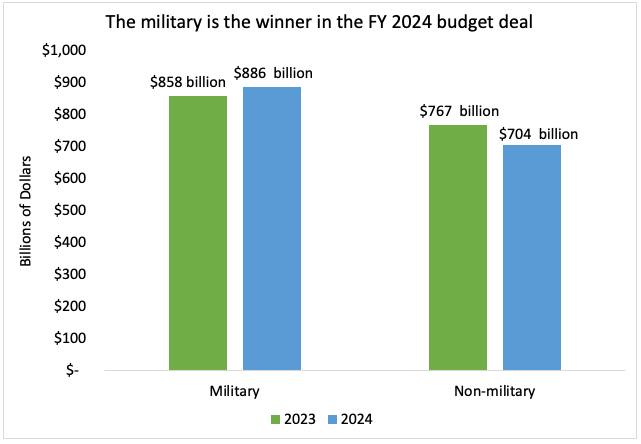
Once again, while other needs are squeezed, a federal budget deal will literally starve the poor to feed the military. While new work requirements are placed on SNAP recipients that will drive some from the food support program, the military budget (never call it defense) remains untouched. The recent debt ceiling deal leaves Joe Biden’s $886 billion 2024 Pentagon budget request intact while domestic programs are slashed. The above graph from the National Priorities Project tells the story.
In real terms it is the largest military budget in U.S. history, the only exceptions being World War II and the height of the Iraq and Afghanistan wars that came after 9-11. Larger by far than during the Korean and Vietnam Wars, or the Reagan military buildup. Again, from the National Priorities Project:
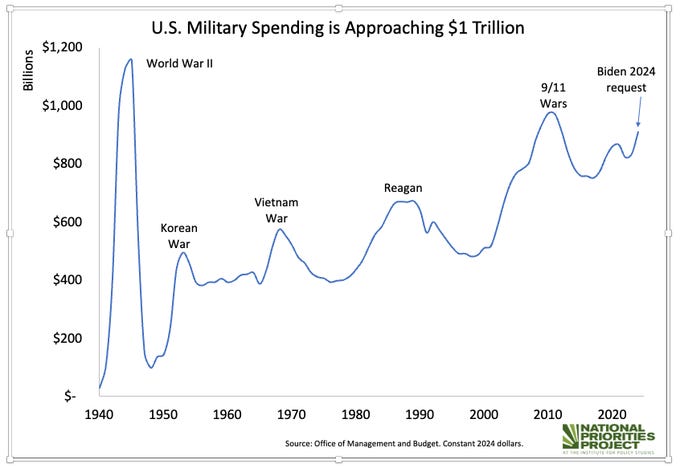
The real military budget is even higher. Adding in nuclear weapons, foreign military aid and “intelligence,” the project puts the current 2023 budget at $920 billion. That is still an undercount. William Hartung, an expert on military spending, calculates that even in fiscal year 2020 the total military expenditure was $1.25 trillion, adding in other costs such as support for veterans and debt service. It’s easily pushing $1.5 trillion by now.
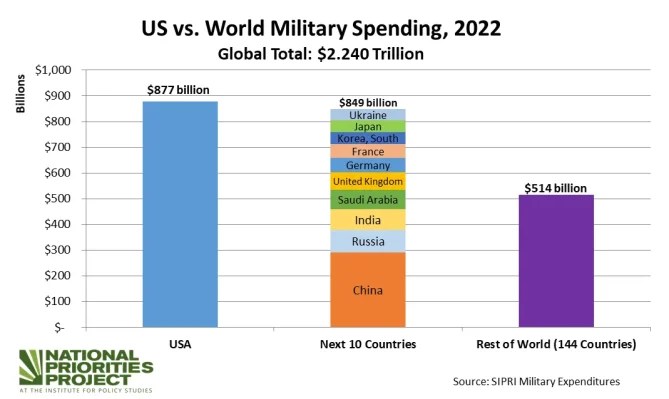
The U.S. by far is the biggest military spender on Earth, with 39% of the total, exceeding the next 10 nations combined, as this chart shows:
Most warlike nation
So why is the military budget so unassailable? Why, no matter how often bloated military spending is denounced, does the budget climb toward ever greater heights? Even after Dwight Eisenhower made the famous warning in his farewell address:
“In the councils of government, we must guard against the acquisition of unwarranted influence, whether sought or unsought, by the military-industrial complex. The potential for the disastrous rise of misplaced power exists and will persist. We must never let the weight of this combination endanger our liberties or democratic processes. We should take nothing for granted. Only an alert and knowledgeable citizenry can compel the proper meshing of the huge industrial and military machinery of defense with our peaceful methods and goals, so that security and liberty may prosper together.”
Ike would have known, being one of the progenitors of that complex as the general leading U.S. forces that invaded Europe during D-Day and as the president during the nuclear buildup of much of the early Cold War. One clue as to why his warning went unheeded is in the fact he originally wanted to call it the military-industrial-congressional complex, the “iron triangle” that keeps pumping up military expenditures. As Hartung writes, Congress is bought by the weapons industry. It is a kind of money laundering scheme where increased military spending comes back as campaign donations, a perfect example of the legalized bribery that is the real governing system of the U.S.
But there are deeper reasons, explaining why that “alert and knowledgeable citizenry” for which Ike called has never appeared, at least to the level able to tie back the power of the complex. War and militarism are rooted deep in the U.S. of American experience. As former President Jimmy Carter said, “If you go around the world and ask people which is the most warlike country on Earth, which one do you think they would respond? The United States. Since we left the Second World War, and even before, the United States has constantly been at war in some part of the world. We’ve been in about 30 combats with other countries since the Second World War . . . So I would say that the military-industrial complex, the manufacturers of all kinds of weapons, are very influential in the country and the Congress as well.”
Carter noted that the U.S. hasn’t been at war with someone only 16 years of its 242-year history. (Even that is doubtful since even during Carter’s so-called peaceful years the U.S. was stirring up trouble in Afghanistan in a successful effort to give the Soviets “their own Vietnam,” as his National Security Adviser, Zbignew Brzezinski, has confessed.) The list is extensive. If the U.S. was not fighting with some European or Asian power, it was warring on some native nation or another on the frontier. War has worked for the United States, historian Geoffrey Perrett noted in his 1989 history of major U.S. conflicts, Country Made by War.
“Since 1775 no nation on Earth has had as much experience of war as the United States: nine major wars in nine generations. And in between the wars have come other armed conflicts such as the Philippine insurgency and clashes in the Persian Gulf. America’s wars have been like the rungs on a ladder by which it rose to greatness. No other nation has triumphed so long, so consistently, or on such as vast scale, through force of arms.”
Although conflicts since World War II have not been so successful, nonetheless they failed to dislodge the fundamental U.S triumph in that war, which left it overwhelmingly dominant over all other powers, each of which had been ravaged in the war. As historian Alfred McCoy noted in his recent work, To Govern the Globe, it left the U.S. in the unprecedented position of holding sway on both European and Asian ends of Eurasia. If this hegemony is eroding with the rise of China and other powers, the U.S. still remains in a powerful position.
To all this one must ask the more fundamental question. Why has the U.S. been the most warlike, most continually at war? For the answer we can look to historian William Appleman Williams and the title of his final book which summarized his substantial life work, published in 1980, Empire as a Way of Life. Williams was the dean of what came to be known as the revisionist school of U.S. history that penetrated the myth of American exceptionalism with the facts of history, that the U.S. was an empire from its colonial roots, and behaved much as any other empire.
First let Williams define his terms. “. . . a way of life is the combination of patterns of thought and action that, as it becomes habitual and institutionalized, defines the thrust and character of a culture and society.” Then, empire, a system in which, “The will, and power, of one element asserts its superiority.” In some cases empire “concerns the forcible subjugation of formerly independent people by a wholly external power.” Such as native peoples or those who lived in the former northern half of Mexico.
Williams does not let the mass of U.S. of Americans off. We are enmeshed in the ways of empire.
“Empire became so intrinsically our American way of life that we rationalized and suppressed the nature of our means in the euphoria of the enjoyment of the ends . . . It is perhaps a bit too extreme, but only by a whisker, to say that imperialism has been the opiate of the American people.”
The U.S. was “born and bred” of another empire, the British. “The 19th– and 20th-century empire known as the United States of America began as a gleam in the eyes of various 16th century critics of, and advisers to, Elizabeth I,” Williams explains. At that time, “England was then a backward and underdeveloped small island” outclassed by other powers emerging in the Atlantic fringe, Portugal, Spain, France and The Netherlands, who were already commencing the age of European world conquest.
England concluded that “domestic welfare and social peace required vigorous imperial expansion,” and began first by consolidating the internal empire on the British Isles in Scotland and Ireland, and then in the 1600s expanding to the North American coast. “. . . the most significant aspect of the empire was the success in transforming the American colonies from tiny, insecure outposts into dynamic societies generating their own progress . . . It produced another culture based on the proposition that expansion was the key to freedom, prosperity, and social peace.”
Inevitably, tensions rose between the ruling class of the home isles and the rising elites of the colonies. Benjamin Franklin believed the weight of development would eventually move the center of the British Empire to North America (which it finally did in 1945, but that comes later in the story), and until nearly the time of the split recommended that course. “But the British feared that such a policy would lead to the loss of control and profits, and Americans increasingly asserted their own claims to their own empire,” Williams writes.
That culminated in the Revolutionary War and the successful creation of the United States. But a weak central government seemed unable to fully press forward what George Washington would call “a rising empire” – the founders were not shy about using that kind of language. It appeared the union would fray into two or more nations, while uprisings such as Shay’s Rebellion threatened to shatter social peace. So the new national elites came together to create a framework to ensure continued expansion under a strong central government, the Constitution. Writes Williams, “. . . the Constitution was an instrument of imperial government at home and abroad.”
The Constitution was founded on a clever turnaround of a fundamental political understanding architected by one of its key authors, James Madison. The general belief to that point had been exposited by French political philosopher Montesquieu “that liberty could only exist in a small state. Madison boldly argued the opposite: that empire was essential for freedom.” Madison needed to make that argument because many citizens of the new nation, burned by their experience with Britain, wanted nothing to do with a strong central government.
Madison made his case in a letter to Thomas Jefferson. “This form of government, in order to effect its purpose, must operate not within a small but extensive sphere . . . Extend the sphere, and you take in a greater variety of parties and interests; you make it less probable that a majority of the whole will have a common motive to invade the rights of other citizens; or if such a common motive exists, it will be more difficult for all to feel it . . . to act in unison with each other.”
Williams writes, “He was arguing that surplus social space and surplus resources were necessary to maintain economic welfare, social stability, freedom and representative government.” A strong central government would be needed to expand land for agriculture, to expand and protect exports, and to promote manufacturing.
With the Louisiana Purchase and the Lewis & Clark Expedition to the Pacific, Jefferson fully embraced Madison’s understanding. “I am persuaded that no constitution was ever before as well calculated as ours for extensive empire and self-government,” he said as he left the presidency. “Jeffersonian Democracy, as it came to be called, was a creature of imperial expansion,” Williams writes. “He, perhaps even more than Madison, established it as a way of life, and most Americans embraced it because it gave them personal and social rewards.”
So much for the “alert and knowledgeable citizenry.”
“. . . once people begin to acquire and enjoy and take for granted and waste surplus resources and space as a routine part of their lives,” Williams writes, “and to view them as a sign of God’s favor, then it requires a genius to make a career – let alone a culture – on the basis of agreeing upon limits. Especially when several continents lie largely naked off your shores.”
The myth of empty continents and the racism it embodies has always been part of the story. “Racism . . . began and survived as a psychologically justifying and economically profitable fairy tale. It provided the gloss for the harsh truth that empire . . . is the child of an inability or unwillingness to live within one’s own means. Empire as a way of life is predicated upon having more than one needs.”
Next: Coming installments will review how imperial expansionism is rooted in a misguided sense of mission and compulsive drive for security, and how empire as a way of life continued to unfold after the era of the founders.
Do The COVID Vaccines Affect Your Ability to Think?
Examining some of the common neurological injuries caused by vaccination
A Midwestern Doctor | The Forgotten Side of Medicine | July 20, 2023
When the COVID-19 vaccines were brought to market, due to their design I expected them to have safety issues, and I expected over the long term, a variety of chronic issues would be linked to them. This was because there were a variety of reasons to suspect they would cause autoimmune disorders, fertility issues and cancers—but for some reason (as shown by the Pfizer EMA leaks), the vaccines had been exempted from being appropriately tested for any of these issues prior to being given to humans.
Since all new drugs are required to receive that testing, I interpreted it to be a tacit admission it was known major issues would emerge in these areas, and that a decision was made that it was better to just not officially test any of them so there would be no data to show Pfizer knew the problems would develop. Sadly, since the time the vaccines entered the market, those three issues (especially autoimmunity) have become some of the most common severe events associated with the vaccines.
At the start of the vaccine rollout, there were four red flags to me:
• The early advertising campaigns for the vaccines mentioned that you would feel awful when you got the vaccine, but that was fine and a sign the vaccine was working. Even with vaccines that had a very high rate of adverse events (e.g., the HPV vaccine), I had never seen this mentioned. This signified it was likely the adverse event rate with the spike protein vaccines would be much higher than normal.
• Many of my colleagues who got the vaccine (since they were healthcare workers they were able to get it first) posted on social media about just how awful they felt after getting the vaccine. This was also something I had never seen with a previous vaccine. After some digging, I noticed those with the worse vaccine reactions typically had already had COVID and their reaction was to the second shot rather than the first, signifying that some type of increased sensitization was occurring from repeated exposures to the spike protein. Likewise, the published clinical trial about Pfizer’s vaccine also showed adverse reactions were dramatically higher with the second rather than first shot.
• Once it became available to the general public, I immediately had patients start showing up with vaccine reactions, many of whom stated they received their flu shot each year and never had experienced something similar with a previous vaccination. One of the most concerning things were the pre-exacerbation of autoimmune diseases (e.g., spots in their body they previously would occasionally have arthritis and felt like they were on fire). After I started looking into this I realized people were seeing between a 15-25% rate of new autoimmune disorders or exacerbations of existing autoimmune disorders developing after the vaccine (later shown in an Israeli survey), a massive increase I had never seen any previous vaccine cause.
• About a month after the vaccines were available to the public, I started having friends and patients share that they’d known someone who had unexpectedly died suddenly after receiving the vaccine (typically from a heart attack, stroke, or a sudden aggressive case of COVID-19).
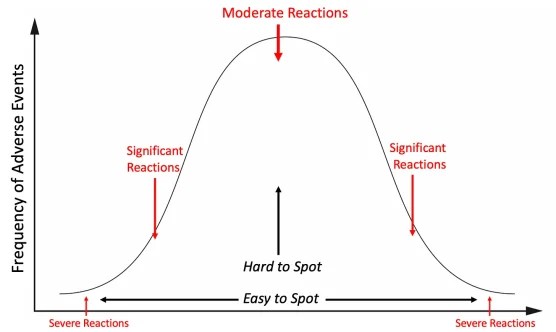
This was extremely concerning to me, because reactions to a toxin typically distribute on a bell curve, with the severe ones being much rarer than the moderate ones. This meant that if that many severe reactions were occurring, what I could already see was only the tip of the iceberg and far, far more less obvious reactions were going to be happening, to the point it was likely many people I knew would end up experiencing complications from the vaccine.
I tried to warn my colleagues about the dangers of this vaccine, but even when I pointed out Pfizer’s own trial admitted the vaccine was more likely to harm than help you, no one would listen to me. Not being sure what else to do, but not be willing to do nothing, I decided to start documenting all the severe reactions I came across so I could have some type of “proof” to show my colleagues.
This was something that was extremely important at the time since no one was willing to take on the personal risk of publishing something went against the narrative (that vaccines were killing people) in the peer reviewed literature. Shortly after Steve Kirsch kindly helped launch my Substack, I decided to post the log I’d put together, and since there was a critical need for that information, the post went viral and created much of the initial reader base that made my substack possible.
It was immensely time consuming to do the project (especially the verification of the story that was reported to me), so I ended the project after a year. During that time, I came across 45 cases of either a death (these comprised the majority of the 45 cases), something I expected to be fatal later on (e.g., a metastatic cancer) or a permanent and total disability. Additionally, in line with the previously described bell curve, I also came across many more serious but not quite as severe injuries.
I’ve had a long term interest in studying pharmaceutical injuries because many of my friends and relatives have had bad reactions to pharmaceuticals. In most of these cases, ample data existed to show that reaction could happen (often to the degree it strongly argued against the pharmaceutical remaining on the market) and yet almost no one in the medical field was aware of those dangers, hence leading to my injured friends never being warned before they took the pharmaceutical or even while the injury was occurring.
My bell curve theory originally came about from examining all of their cases. I thus was interested to know if the distribution of adverse events from the spike protein vaccines would match what I had observed with previous dangerous pharmaceuticals and if what I saw personally did or did not match what everyone was reporting online.
One of the things that immediately jumped out at me were the multiple cases of a friend’s parent in a nursing home receiving the vaccine, immediately undergoing a rapid cognitive decline which was “diagnosed” as Alzheimer’s disease and then dying not long after. At the time, I assumed these were most likely due to undiagnosed ischemic strokes as that was the most plausible mechanism to describe what I’d heard, but I was not certain as I could never examine any of these individuals for signs a stroke had indeed happened.
These cases were very concerning to me, as they signified (per the bell curve) that there was going to be a much larger portion of people who would develop less severe (but nonetheless impactful) cognitive decline following vaccination.
Note: one of the most common types of injuries from pharmaceuticals are neurological injuries which both impair cognitive function and create psychiatric symptoms. This places patients in a difficult situation of being gaslighted by the medical system. This is because their doctors assume the psychiatric symptoms the patients are experiencing are the cause of their illness rather than a symptom of it, leading to the patient being told the illness is all in their head and continually referred for psychiatric help. One of the best examples with this occurred as a result of the abnormal heart rhythms (e.g., rapid anxiety provoking palpitations) caused by the vaccine damaging the heart which were consistently diagnosed as being a result of anxiety, even when a subsequent workup I requested showed heart damage was present.
As I began seeing more and more signs of cognitive impairment following vaccination, I realized that what I observed mirrored what I had previously seen with chronic inflammatory conditions such as mold toxicity, HPV vaccine injuries, and lyme disease. Some of the examples included:
• Many people reported having a “COVID” brain where it was just harder for them to think and remember things. I sometimes saw this after more severe cases of COVID, more frequently after vaccination, and repeatedly in patients who per their timeline clearly developed it from the vaccine but believed it had come from COVID.
• These issues tended to be more likely to affect older adults, but younger ones were more likely to notice (and complain) about them. In the case of older adults, I typically learned about them from someone else who had observed the cognitive decline rather than directly from the individual.
• I saw cases of vaccine injured individuals who had trouble remembering or recalling the word they knew expressed what they were trying to communicate (this is also a common mold toxicity symptom).
• I had friends and patients who told me their brain just didn’t work the same since they’d received the vaccine. As an example, a few colleagues told me they started losing the ability to remember basic things they needed to practice medicine (e.g., medication dosages for prescriptions). They shared that they were very worried they would need to take an early retirement and that they thought it came from the vaccine but there was no one they could talk to about it (which understandably created a lot of doubt and anxiety).
• I saw cases of coworkers demonstrating noticeable (and permanent) cognitive impairment after I’d assumed they’d received the vaccine. Their impairment was never mentioned or addressed (rather the physician kept on working, did not perform as well, and in some cases retired).
• I met significantly injured vaccine injured patients who told me one of the primary symptoms was a loss of cognitive functioning they had taken for granted throughout their life. In many cases following treatment of their vaccine injury, their cognition also improved.
• Colleagues who treated vaccine injured patients told me cognitive impairment was one of the common symptoms they saw and was particularly noteworthy because they had never seen anything like that happen to young adults.
• One of my friends (a very smart immunologist) developed complications from the first two vaccines and based on their symptoms was able to describe exactly which parts of their immune systems were becoming dysregulated. Against my advice, they took a booster and reported they suffered a significant cognitive impairment never experienced before in their lifetime. I feel this case was important to share as it illustrates how an exacerbation of a vaccine injury can also cause an exacerbation of cognitive symptoms.
Note: I also saw significant cognitive impairment occur in individuals who were acutely ill with COVID-19. This was not as unusual since delirium is a well known complication in patients hospitalized with a systemic illness (e.g., sepsis), but it seemed to happen more frequently than ususual.
At the same time I was observing these effects, many rumors were also swirling around online that the vaccines would cause severe cognitive impairment and that we would witness a zombie apocalypse from the vaccine injuries.
This apocalypse of course never happened, but many observed a suspicion cognitive impairment was occurring. For example to quote Igor Chudov’s recent article:
I own a small business and deal with many people and other small businesses. Most provided reliable service, would remember appointments, followed up on issues, and so on. I noticed that lately, some people have become less capable cognitively. They forget essential appointments, cannot concentrate, make crazy-stupid mistakes, and so on.
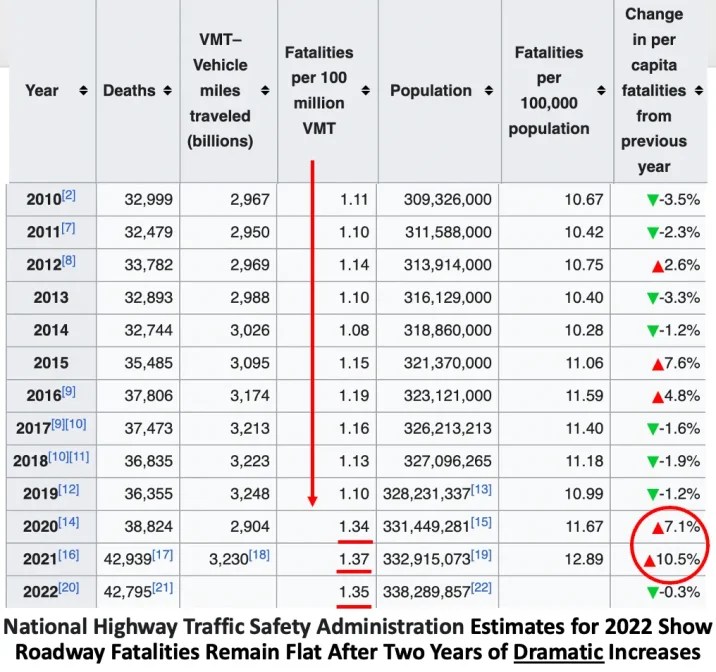
In my own case, the most evident change I noticed was a worsening of drivers around me and had a few near misses from impaired driving.
The challenge with these situations is that it’s very hard to tell if something is actually happening or your perception is simply a product of confirmation bias. For this reason, while I was comfortable asserting my belief the COVID-19 vaccines were causing the severe injuries on either end of the bell curve, I avoided doing so for many of the less impactful injuries in the middle where it was much more ambiguous if what I was observing was “real” or simply my own biased perception of the events around me. Because of this, amongst other things, I never mentioned the changes in driving I observed.
Note: after I posted the original article many of the readers stated they too had observed a significant worsening in the behavior of drivers around them. I was then pointed to this dataset, which suggests this issue was happening, but is difficult to properly assess because COVID-19 can also cause cognitive impairment and less people were driving in 2020.
Typically, when we have situations like this, large bodies of data or scientific studies are needed to tease out if a correlation is in fact occurring. Unfortunately, since there are political repercussions for dissenting from the dominant narrative, data which threatens tends not to be published. This creates the challenging situation where those who are looking for answers on a topic which challenges a vested interest have to look quite carefully for clues on the subject (e.g., by dissecting papers to see exactly what the data is actually showing).
Igor periodically finds those, and after I saw the most recent one he unearthed, I requested to write the original guest post. To quote his discovery from the Netherlands:
Primary care data for January to March 2023 showed that adults visited their GP more frequently for a number of symptoms compared to the same period in 2019. Memory and concentration problems were significantly more common than last year and in the period before COVID-19. Where these symptoms are concerned, the difference compared to 2019 is growing steadily in each quarter.
In the first quarter of 2023, there was a 24% increase in GP [general practioner] visits related to memory and concentration problems among adults (age 25 years and older) compared to the same period in 2020. This is evidenced by the latest quarterly research update from the GOR Network. The increase in memory and concentration problems of adults seems to be a longer-term effect of the coronavirus measures as well as SARS-CoV-2 infections.
More specifically they found:
• No increase was observed in adults under 25 years old.
• A 31% increase was observed in those 24-44 years old.
• A 40% increase was observed in those 45-74 years old.
• A 18% increase was observed in those over 75 years old.
Note: previous rounds of this survey, in addition to the cognitive issues described above, worsening mental health (e.g, anxiety, depression or suicidal thoughts), sleep problems, tiredness, and cardiovascular issues (e.g., shortness of breath, dizziness or heart palpitation) were also observed to have significantly increased since 2019.
Typically, patients, less than 75 years old are unlikely to visit their doctors for cognitive issues. Taken in context with this data, it means there is a stronger case that the (massive) increases in those under 75 were caused by something that happened after 2019. Additionally, since there were already a large number of visits for cognitive impairment in the elderly, the lower percentage increase is slightly misleading in quantifying the extent to which everyone was affected. For example to quote the previous report:
Primary care data showed that adults visited their GP somewhat more frequently for sleep problems in October–December 2022 than in the same period in 2019. This was particularly striking in the oldest age group (75 years and older).
All of this data put health officials in a bit of an awkward situation since publishing data demonstrating large scale cognitive impairment directly undermines the narrative they previously had committed themselves to. Nonetheless, the authors of the report were significantly more candid than many other before them:
The source of this increase in memory and concentration problems is unclear. A possible explanation could be that COVID-19 measures caused accelerated cognitive decline among people who were starting to have problems with memory and concentration (66 years on average).
COVID-19 was of course cited as a potential cause (which, as discussed above can sometimes cause long term cognitive impairment):
A supplementary explanation could be that some of these people have long-term symptoms after COVID-19. Various studies have shown that memory and concentration problems are common in post-COVID symptoms. Other infectious diseases, such as flu, can also cause these symptoms. However, recent studies have shown that long-term memory and concentration problems are much more common after COVID-19 than after flu. In addition, these symptoms are more common in older age groups. The figures provided by GPs are consistent with this expectation.
Fortunately, the authors acknowledged that long COVID could not be the primary explanation for what was occurring, and instead alluded to the elephant in the room—the vaccines.
Note: on VAERS, in the 23 years VAERS has operated, 2352 of the 3071 (76.6%) reports of memory impairment following vaccination came from the COVID-19 vaccines. Additionally, Ed Dowd has identified numerous government datasets demonstrating that widespread impairment and disability has occurred since the vaccine rollout.
My specific interest in studying spike protein vaccine toxicity arose because I suspected I would see many similarities to other pharmaceutical injuries I had observed previously and treatments that had developed for those injuries could be used to treat COVID-19 vaccine injuries. On Substack, I’ve tried to focus on explaining the areas that I believe are the most important to understanding this, zeta-potential, the cell danger response (CDR) and the treatments for Alzheimer’s disease. Note: Each of these is interrelated with and often causes the others.
Zeta Potential: Zeta potential (explained in detail here) governs if fluid in the body clumps together (e.g., forming a clot) or remains dispersed and capable of freely flowing. Additionally, it also influences if proteins will stay in their correct formation or misfold and clump together. Many different issues (discussed here) emerge when fluid circulation (be it blood, lymph, interstitial fluid or cerebrospinal fluid) becomes impaired. Since the spike protein is uniquely suited for impairing zeta potential, we have found restoring zeta potential (discussed here) often is immensely helpful during COVID-19 infections and for treating COVID-19 vaccine injuries. Many of those approaches were initially developed from working with other vaccine injuries and cognitive decline in the elderly.
Cell Danger Response (CDR): When cells are exposed to a threat, their mitochondria shift from producing energy for the cell to a protective mode where the cell’s metabolism and internal growth shuts down, the mitochondria release reactive oxygen species to kill potential invaders, the cell warns other cells to enter the CDR and the cell seals off and disconnects itself from the body. The CDR (explained further here) is an essential process for cellular survival, but frequently in chronic illness, cells become stuck in it rather than allowing the healing response to complete.
Understanding the CDR is extremely important when working with complex illnesses because it explains why triggers from long ago can cause an inexplicable illness, and why many treatments that seem appropriate (specifically those that treat a symptom of the CDR rather than the cause of it) either don’t help or worsen the patient’s conditions. Many of the most challenging patients seen by integrative practitioners are those trapped within the CDR, but unfortunately, there is still very little knowledge of this phenomena.
My interest was drawn back to the CDR after I realized that one of the most effective treatments for long COVID and COVID-19 vaccine injuries was one that directly treated the CDR. Since many of the therapies that have been developed to revive nonfunctional tissue was developed by the regenerative medical field, I wrote an article describing how these approaches are applied to restore localized regions of dysfunctional tissue (which is sometimes needed to treat vaccine injuries) and another on the regenerative treatments that treat systemic CDRs (and are more frequently needed for vaccine injuries).
Alzheimer’s Disease (AD): AD is one of the most devastating and costly conditions in existence (e.g., for the year of 2020 it was estimated to have cost America 305 billion dollars) and as a result, billions of dollars are spent each year in researching a cure for it. This research (which began in 1906) has gone nowhere and presently the FDA is working with the drug industry to push forward ineffective, quite dangerous but highly profitable treatments for AD.
However, effective treatments do exist for AD and my colleagues have developed a few different methods that have successfully treated the condition. Additionally, one neurologist, Dale Bresden developed a method for reversing AD that he proved worked in mulitiple publications (included a recent 2022 clinical trial).
All of these successful approaches utilize the following principles:
• Restore both the blood flow to the brain and the lymphatic drainage from it (which removes amyloid plaques). This often requires restoring the physiologic zeta potential and having a healthy sleep cycle.
• Treating the CDR (which causes chronic inflammation) and reactivating brain cells that became trapped in an unresolved CDR (which amongst other things requires reclaiming a healthy sleep cycle).
Note: Bresden’s approach also emphasizes the importance of addressing chronically elevated blood sugar or insulin levels.
One of the most important things to recognize about AD is that it is a slowly worsening disease which often progresses over decades. In the early stages of AD, minor cognitive changes occur, which (when possible to autopsy) correlate with tissue changes within the brain. In rare instances, individuals can instead have a rapidly progressing form of Alzheimer’s which strikes with a younger age and is often linked to the toxin exposure.
In the case of spike proteins illnesses, I have seen both the early signs of AD cognitive decline occurring in much younger patients, and exist in cases of AD rapidly progressing following COVID vaccination. Additionally, I have also seen cases of rapid cognitive decline in the elderly following the administration of other vaccinations—however they were far less frequent than those seen with the COVID-19 vaccines.
Anytime you attempt to perceive the world around you, you are always biased by the pre-existing filters you have which prevent you from seeing much of the world around you (discussed further here). To some extent, these filters are a necessary evil as without them, the world would be overwhelmingly complicated. However, if you cannot be open to the possibility a biased filter this is clouding your perception of reality, you become blind to a great deal of important things around you. Misleading filters for example, explain why many of those committed to the narrative cannot see the overwhelming evidence of COVID-19 vaccine injuries around them.
One of the most commonly used filters is “social proof,” which essentially says people will typically not act on something, believe it, or even see it unless their peers (the herd) already are. This creates a problem, because frequently when you need to know something, the herd does not yet believe it, forcing you to either make a decision no one else supports (which can be quite terrifying) or to wait until there is safety in doing it because the herd has now moved in that direction (which is often too late).
As I’ve gotten to know those who challenged the COVID-19 narrative, I’ve noticed they all had a tendency they’d learned through life experience to not follow the crowd and be willing to act on their initial impression of what preliminary data suggested before the rest of the crowd caught on. For example, Ed Dowd was a highly successful stock trader (e.g., he made Blackrock a lot of money) and his method boiled down to spotting early trends before anyone else and acting on them while they were still profitable to investors.
Like many, from the start of the vaccination campaign, based on the preliminary data points that were available, I suspected it was going to cause long-term cognitive issues. Now that the data which supports that trend is beginning to appear, and concerningly the issue appears to be gradually worsening, something commonly observed over time with factors that give rise to dementia. This is an important issue and I want to extend my thanks to Igor Chudov for drawing attention to this very important dataset.
Hiroshima, Nagasaki Bombings Were Needless, Said World War II’s Top US Military Leaders
Mythology about these mass civilian slaughters warps thinking about US militarism
Stark Realities with Brian McGlinchey | July 31, 2023
The anniversaries of the atomic bombings of Hiroshima and Nagasaki present an opportunity to demolish a cornerstone myth of American history — that those twin acts of mass civilian slaughter were necessary to bring about Japan’s surrender, and spare a half-million US soldiers who’d have otherwise died in a military conquest of the empire’s home islands.
Those who attack this mythology are often reflexively dismissed as unpatriotic, ill-informed or both. However, the most compelling witnesses against the conventional wisdom were patriots with a unique grasp on the state of affairs in August 1945 — America’s senior military leaders of World War II.
Let’s first hear what they had to say, and then examine key facts that led them to their little-publicized convictions:
- General Dwight Eisenhower on learning of the planned bombings: “I had been conscious of a feeling of depression and voiced to [Secretary of War Stimson] my grave misgivings, first on the basis of my belief that Japan was already defeated and that dropping the bomb was completely unnecessary, and secondly because I thought that our country should avoid shocking world opinion by the use of a weapon whose employment was, I thought, no longer mandatory as a measure to save American lives. It was my belief that Japan was, at that very moment, seeking some way to surrender with a minimum loss of ‘face’.”
- Admiral William Leahy, Truman’s Chief of Staff: “The use of this barbarous weapon…was of no material assistance in our war against Japan. The Japanese were already defeated and ready to surrender because of the effective sea blockade and the successful bombing with conventional weapons.”
- Major General Curtis LeMay, 21st Bomber Command: “The war would have been over in two weeks without the Russians entering and without the atomic bomb… The atomic bomb had nothing to do with the end of the war at all.”
- General Hap Arnold, US Army Air Forces: “The Japanese position was hopeless even before the first atomic bomb fell, because the Japanese had lost control of their own air.” “It always appeared to us that, atomic bomb or no atomic bomb, the Japanese were already on the verge of collapse.”
- Ralph Bird, Under Secretary of the Navy: “The Japanese were ready for peace, and they already had approached the Russians and the Swiss… In my opinion, the Japanese war was really won before we ever used the atom bomb.”
- Brigadier General Carter Clarke, military intelligence officer who prepared summaries of intercepted cables for Truman: “When we didn’t need to do it, and we knew we didn’t need to do it…we used [Hiroshima and Nagasaki] as an experiment for two atomic bombs. Many other high-level military officers concurred.”
- Fleet Admiral Chester Nimitz, Pacific Fleet commander: “The use of atomic bombs at Hiroshima and Nagasaki was of no material assistance in our war against Japan. The Japanese were already defeated and ready to surrender.”
Putting out feelers through third-party diplomatic channels, the Japanese were seeking to end the war weeks before the atomic bombings on August 6 and 9, 1945. Japan’s navy and air forces were decimated, and its homeland subjected to a sea blockade and allied bombing carried out against little resistance.

Full of midget submarines, a drydock in the port city of Kure, Japan lies in ruins
The Americans knew of Japan’s intent to surrender, having intercepted a July 12 cable from Japanese Foreign Minister Shigenori Togo, informing Japanese ambassador to Russia Naotake Sato that “we are now secretly giving consideration to the termination of the war because of the pressing situation which confronts Japan both at home and abroad.”
Togo told Sato to “sound [Russian diplomat Vyacheslav Molotov] out on the extent to which it is possible to make use of Russia in ending the war.” Togo initially told Sato to obscure Japan’s interest in using Russia to end the war, but just hours later, he withdrew that instruction, saying it would be “suitable to make clear to the Russians our general attitude on ending the war”— to include Japan’s having “absolutely no idea of annexing or holding the territories which she occupied during the war.”
Japan’s central concern was the retention of its emperor, Hirohito, who was considered a demigod. Even knowing this — and with many US officials feeling the retention of the emperor could help Japanese society through its postwar transition —the Truman administration continued issuing demands for unconditional surrender, offering no assurance that the emperor would be spared humiliation or worse.
In a July 2 memorandum, Secretary of War Henry Stimson drafted a terms-of-surrender proclamation to be issued at the conclusion of that month’s Potsdam Conference. He advised Truman that, “if… we should add that we do not exclude a constitutional monarchy under her present dynasty, it would substantially add to the chances of acceptance.”
Truman and Secretary of State James Byrne, however, continued rejecting recommendations to give assurances about the emperor. The final Potsdam Declaration, issued July 26, omitted Stimson’s recommended language, sternly declaring, “Following are our terms. We will not deviate from them.”
One of those terms could reasonably be interpreted as jeopardizing the emperor: “There must be eliminated for all time the authority and influence of those who have deceived and misled the people of Japan into embarking on world conquest.”
At the same time the United States was preparing to deploy its formidable new weapons, the Soviet Union was moving armies from the European front to northeast Asia.
In May, Stalin told the US ambassador that Soviet forces should be positioned to attack the Japanese in Manchuria by August 8. In July, Truman predicted the impact of the Soviets opening a new front. In a diary entry made during the Potsdam Conference, he wrote that Stalin assured him “he’ll be in the Jap War on August 15th. Fini Japs when that comes about.”
Right on Stalin’s original schedule, the Soviet Union declared war on Japan two days after the August 6 bombing of Hiroshima. That same day — August 8 — Emperor Hirohito told the country’s civilian leaders that he still wanted to pursue a negotiated surrender that would preserve his reign.
On August 9, Soviet attacks commenced on three fronts. News of Stalin’s invasion of Manchuria prompted Hirohito to call a new meeting to discuss surrender — at 10 am, one hour before the strike on Nagasaki. The final surrender decision came on August 10.

Three-year old Shinichi Tetsutani, burned as he was riding this tricycle when the atomic bomb hit Hiroshima, died a painful death that night (Hiroki Kobayashi/National Geographic)
The Soviet timeline makes the atomic bombings all the more troubling: One would think a US government that’s appropriately hesitant to incinerate and irradiate hundreds of thousands of civilians would want to first see how a Soviet declaration of war affected Japan’s calculus.
As it turns out, the Japanese surrender indeed appears to have been prompted by the Soviet entry into the war on Japan — not by the atomic bombs. “The Japanese leadership never had photo or video evidence of the atomic blast and considered the destruction of Hiroshima to be similar to the dozens of conventional strikes Japan had already suffered,” wrote Josiah Lippincott at The American Conservative.
Sadly, the evidence points to a US government determined to drop atomic bombs on Japanese cities as an end in itself, to such an extent that it not only ignored Japan’s interest in surrender, but worked to ensure that surrender was delayed until after upwards of 210,000 people — disproportionately women, children and elderly — were killed in the two cities.
Make no mistake: This was a deliberate targeting of civilian populations. Hiroshima and Nagasaki were chosen because they were pristine, and could thus fully showcase the bombs’ power. Hiroshima was home to a small military headquarters, but the fact that both cities had gone untouched by a strategic bombing campaign that began 14 months earlier certifies their military and industrial insignificance.
“The Japanese were ready to surrender and it wasn’t necessary to hit them with that awful thing,” Eisenhower would later say. “I hated to see our country be the first to use such a weapon.”
According to his pilot, General Douglas MacArthur, commander of US Army Forces Pacific, was “appalled and depressed by this Frankenstein monster.”
“When I asked General MacArthur about the decision to drop the bomb,” wrote journalist Norman Cousins, “I was surprised to learn he had not even been consulted…He saw no military justification for the dropping of the bomb. The war might have ended weeks earlier, he said, if the United States had agreed, as it later did anyway, to the retention of the institution of the emperor.”
What then, was the purpose of devastating Hiroshima and Nagasaki with atomic bombs?
A key insight comes from Manhattan Project physicist Leo Szilard. In 1945, Szilard organized a petition, signed by 70 Manhattan Project scientists, urging Truman not to use atomic bombs against Japan without first giving the country a chance to surrender, on terms that were made public.
In May 1945, Szilard met with Secretary of State Byrnes to urge atomic restraint. Byrnes wasn’t receptive to the plea. Szilard — the scientist who’d drafted the pivotal 1939 letter from Albert Einstein urging FDR to develop an atomic bomb — recounted:
“[Byrnes] was concerned about Russia’s postwar behavior. Russian troops had moved into Hungary and Rumania, and Byrnes thought it would be very difficult to persuade Russia to withdraw her troops from these countries, that Russia might be more manageable if impressed by American military might, and that a demonstration of the bomb might impress Russia.“

Burned to impress Stalin: A victim of the US atomic bombing of Hiroshima (AP /The Association of the Photographers of the Atomic Bomb Destruction of Hiroshima, Yotsugi Kawahara)
Whether the atomic bomb’s audience was in Tokyo or Moscow, some in the military establishment championed alternative ways to demonstrate its power.
Lewis Strauss, Special Assistant to the Navy Secretary, said he proposed “that the weapon should be demonstrated over… a large forest of cryptomeria trees not far from Tokyo. The cryptomeria tree is the Japanese version of our redwood… [It] would lay the trees out in windrows from the center of the explosion in all directions as though they were matchsticks, and, of course, set them afire in the center. It seemed to me that a demonstration of this sort would prove to the Japanese that we could destroy any of their cities at will.”
Strauss said Navy Secretary Forrestal “agreed wholeheartedly,” but Truman ultimately decided an optimal demonstration required burning hundreds of thousands of noncombatants and laying waste to their cities. The buck stops there.
The particular means of inflicting these mass murders — a solitary object dropped from a plane at 31,000 feet — helps warp Americans’ evaluation of its morality. Using an analogy, historian Robert Raico cultivates ethical clarity:
“Suppose that, when we invaded Germany in early 1945, our leaders had believed that executing all the inhabitants of Aachen, or Trier, or some other Rhineland city would finally break the will of the Germans and lead them to surrender. In this way, the war might have ended quickly, saving the lives of many Allied soldiers. Would that then have justified shooting tens of thousands of German civilians, including women and children?”
The claim that dropping the atomic bombs saved a half-million American lives is more than just empty: Truman’s stubborn refusal to provide advance assurances about the retention of Japan’s emperor arguably cost American lives.
That’s true not only of a war against Japan that lasted longer than it needed to, but also of a Korean War precipitated by the US-invited Soviet invasion of Japanese-held territory in northeast Asia. More than 36,000 US service members died in the Korean War — among a staggering 2.5 million total military and civilian dead on both sides of the 38th Parallel.
We like to think of our system as one in which the supremacy of civilian leaders acts as a rational, moderating force on military decisions. The needless atomic bombing of Hiroshima and Nagasaki — against the wishes of World War II’s most revered military leaders — tells us otherwise.
Sadly, the destructive effects of the Hiroshima myth aren’t confined to Americans’ understanding of events in August 1945. “There are hints and notes of the Hiroshima myth that persist all through modern times,” State Department whistleblower and author Peter Van Buren said on The Scott Horton Show.
The Hiroshima myth fosters a depraved indifference to civilian casualties associated with US actions abroad, whether it’s women and children slaughtered in a drone strike in Afghanistan, hundreds of thousands dead in an unwarranted invasion of Iraq, or a baby who dies for lack of imported medicine in US-sanctioned Iran.
Ultimately, to embrace the Hiroshima myth is to embrace a truly sinister principle: That, in the correct circumstances, it’s right for governments to intentionally harm innocent civilians. Whether the harm is inflicted by bombs or sanctions, it’s a philosophy that mirrors the morality of al Qaeda.
That’s not the only thread connecting 1945 to 2023, as Truman’s insistence on unconditional surrender is echoed by the Biden administration’s utter disinterest in pursuing a negotiated peace in Ukraine.
Today, confronting an adversary with 6,000 nuclear warheads — each a thousand times more powerful than the bombs dropped on Japan — Biden’s own stubborn perpetuation of war puts us all at risk of sharing the fate of Hiroshima and Nagasaki’s innocents.
Mask Indoctrination is Strong in Boston
The Naked Emperor’s Newsletter | July 28, 2023
Boston.com, a regional website providing news and information about the Boston, Massachusetts region, posted an article a few days ago that reads as if it was from 2021.
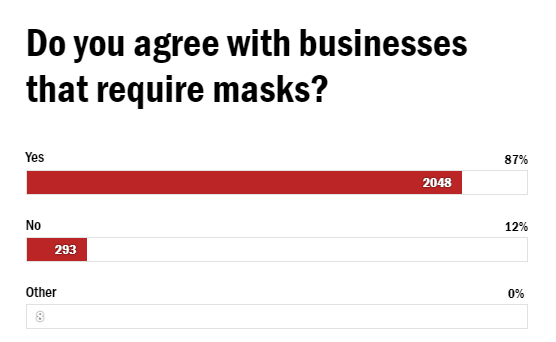
Many businesses in the Greater Boston area have decided to continue requiring masks in stores because they are concerned about the 745 confirmed Covid cases! With that in mind, Boston.com asked their readers whether they agree with the businesses who still require masks. 87% of 2,300 readers who responded agreed that wearing masks is the right thing to do.
One of the main reasons given for masking was to protect the immunocompromised and vulnerable. Great if that worked or made a difference, but it doesn’t.
Sammie H. from Boston says that wearing masks to stop the spread can show that one cares about others.
“Preventing spread of illness shows that you care about others around you,” she said. “Masking is one small way to do just that. You might even save some lives, like the lives of those who are immunocompromised.”
Readers also decided masking was the correct course of action to prevent Long Covid.
“[Long COVID] took out myself, my partner, and many people I know with fatigue, lung issues, cold like symptoms and weird stuff like stomach issues. Masks help limit the spread and save people years of pain for a few minutes of minor discomfort, like a seatbelt,” said reader Berinthia from Somerville.
Many readers still think that preventative measures are needed for good now that Covid is endemic and will always be around.
“Nothing has changed, there is still a virus circulating that has killed millions and is continuing to do so, as well as disabling countless more,” she said. “When we all wear masks, we are all protected. It’s good for business and it’s good for people’s health.”
Other reasons given included:
- “I think essential services, especially medical settings, and transportation should still require masks so they are safe for people who can’t avoid them, and I applaud any businesses that choose to require masks — it reduces community spread and helps everybody.”
- “It would be much more physically safe for me, both as a retail employee and as a customer, if masks were still required in businesses around town.”
- “I want to stay alive and want others to be alive too.”
- “Because I care about keeping others safe(r) from COVID and other airborne disease. And because ‘high risk’ people (which include people who’ve been infected with COVID once or more) deserve to have access to spaces that are too high risk if everyone is unmasked. “
- “We should follow the science, not the latest fashions of political fanaticism. Wearing a mask is a minor inconvenience; long COVID or death is not.”
- “COVID-19 is still very much with us — killing and disabling a mass amount of people every day. Masks are an effective way to protect yourself and others, especially the most vulnerable. I want those that I know and love, and even those that I don’t, to live a long, long time.”
- “Business owners who require masks are doing community service by keeping themselves safe (thus able to stay healthy enough to continue operations) and our communities safer by reducing viral spread.”
The brainwashing is strong in Boston.
Featured Video

Prof. Ted Postol: Iran Already Achieved Nuclear Deterrence Against Israel
or go to
Aletho News Archives – Video-Images
From the Archives
How the occupied mentality syndrome works
Saudi Arabia on the American chessboard – Part 3
By B. J. Sabri | American Herald Tribune | June 27, 2016
Read part 2: “The occupied mentality Syndrome“
Previously I argued whether Saudi Arabia’s repeated involvements in U.S. interventions and wars stem from free national will or in response to a specific condition. For starters, in Saudi Arabia there is no national will. In Saudi Arabia, the national will is the will of the Al Saud clan. Still, when a major Arab state allies itself with a superpower that committed unspeakable crimes against humanity in almost every Arab country, then something is wrong. This fact alone should compel us to examine the U.S.-Saudi relation for one exceptional reason. As a result of the U.S.-Saudi wars, hundreds of thousands of people in Afghanistan, Iraq, Iran, Libya, Syria, Yemen, and Somalia have lost their lives. Millions became displaced in their own homelands. And millions more rendered refugees.
Attributing the Saudi policies to the bonds of “partnership” with the U.S. is frivolous. There are no bonds between these two thugs except those of business, military deals, secret plots, and wars. Proving this point, bonds such as these have no space for the American and Saudi peoples to share significant cultural or societal exchanges. If partnership is not the reason for the Saudi contribution to the U.S. strategy of empire and imperialism, then another reason must exist.
This leads to three possibilities. … continue
Blog Roll
 Aletho News
- NIAID/NIH and USDA Fund Bioengineered Chimeric Influenza Viruses Built Using Pandemic H1N1 Components: Journal ‘Science Advances’
- Hezbollah hits Israeli warship off Lebanon’s coast, sets it aflame
- Iran slams US strikes on B1 bridge, Mahshahr petrochemical plants as ‘blatant acts of state terrorism’
- In letter to UN chief, Araghchi warns of dire consequences of US-Israeli attacks on Iran’s nuclear facilities
- Why the CIA conspiracy to invade Iran with Kurdish militias failed
- Why Are Upbeat US Claims About Mission to Rescue Pilot ‘Highly Questionable’?
- Aircraft destroyed during US ‘rescue’ of downed F-15 pilot cost more than $100 million each
- Washington University removes professor who condemned US-Israeli war on Iran
- Russia Warns of Retaliation as UK Authorizes Seizure of Vessels
- Serbia thwarts plot to bomb Russia-Hungary gas pipeline – Vucic
- If Americans Knew
- In Iran, Israel-US take aim at “reason, research, and freedom of thought” – Daily Update
- US loses planes over Iran, Israel downgrades Lebanon war goals – Daily Update
- Israel Is Blocking Palestinians from Easter at Church Where Jesus Resurrected
- Plot to assassinate Palestinian activist follows harassment campaign promoted by Zionist groups and elected officials
- Prominent New York synagogue hosts presentation on why U.S. Jews should support the ethnic cleansing of Gaza
- Tapper vs. Piker: Is the CNN Anchor Auditioning for David Ellison?
- Shouldn’t Democrats Be Able to Condemn Genocide?
- Israel-US kill negotiators, destroy civilian structures, but Iran’s military capabilities still largely intact – Daily Update
- ‘War crime’: Global condemnation as Israeli ministers celebrate death penalty law targeting Palestinian prisoners
- 7 Ways Israel Is Turning Lebanon Into Gaza
- No Tricks Zone
- An Inconvenient Tree: Uncovered In Alps… Europe Much Warmer Than Today 6000 Years Ago
- New Study Reports A 60% Slowdown In Greenland’s Ice Loss Rate In The Last Decade
- Low Intensity Tornado Wrecks Major Solar Farm, Creating A Potential Toxic Dump
- New Study Finds Warming Saves Lives…Cold Temperatures 12 Times More Deadly Than Excess Heat
- German Science Blog Accuses PIK Climate Institute Of Hallucinating Climate Tipping Points
- Devastating Assessment Of Comirnaty Vaccine By Former Senior Pfizer Europe Toxicologist
- New Study: CO2 Is ‘Effectively Negligible’ As An Explanatory Climate Change Factor Since 2000
- Former Pfizer Toxicologist Dr. Helmut Sterz Tells Bundestag Hearing Pfizer Vaccine Should Have Never Been Approved
- Energy Expert: Germany’s Nuclear Phaseout Was A “500 Billion Euro Mistake”
- New Research: South Australia’s Mid-Holocene Sea Surface Temperatures Were 4°C Warmer Than Today
 Aletho News