A recent conversation between popular podcaster Joe Rogan and presidential candidate, Robert F Kennedy Jr ignited an international discussion about placebos in clinical trials. Here, we document the difficulty in determining the details (formulation and testing) of the placebo used in a controversial cholesterol-lowering trial of Crestor (rosuvastatin) – adapted from our earlier publication in JAMA Internal Medicine.
The basis for a “placebo” controlled trial is to reliably assess the safety and efficacy of a therapeutic drug or vaccine against a placebo – they can be active or inactive placebos.
An active placebo can be used to mimic the side effects of the intervention, with no therapeutic effects on the condition being treated. For example, atropine may be used as a placebo in antidepressant trials to mimic the symptoms of “dry mouth” often experienced after using antidepressants, with no therapeutic effect on depression. The aim is to mitigate the risk of unblinding trial participants.
More commonly, placebos are intended to be inactive or inert. Inactive placebos should ‘match’ the sensory and visual aspects of the experimental drug to maintain blinding throughout the trial. In other words, a placebo needs to be equal in shape, size, colour, texture, weight, taste, and smell.
Drug companies keep details a secret
Drug companies will often manufacture their own placebo for use in clinical trials. The technical data and analytical methods used for the placebo are detailed in the certificate of analysis (CoA), which is part of the dossier submitted to the relevant drug regulator as part of a licensing application.
Drug regulators are expected to analyse the CoA to ensure the placebo and the experimental drug are appropriately matched, to eliminate an unknown variable. However, the details relating to the contents of a placebo are often unknown to independent researchers and remains proprietary information of the drug manufacturers. For example, the in trials of Gardasil (HPV vaccine), the manufacturer often used a placebo containing amorphous aluminium hydroxyphosphate sulfate (AAHS) – an adjuvant to enhance immune response – and has kept the formulation a proprietary secret.
In fact, the exact formulation of a placebo is rarely disclosed in the peer-reviewed publication of a clinical trial. Further, medical journals do not require authors, nor drug manufacturers, to disclose the contents of a placebo or publish the CoA. Placebos may contain excipients such as chemicals, dyes, or allergens, which might unintentionally cause side effects, raising concerns about the reliability of trial data and the transparency of important information.
In 2017, Robert Shader, physician and editor-in-chief of Clinical Therapeutics, raised concerns when a study on people with multiple sclerosis published in the New England Journal of Medicine, injected one group of people with a monoclonal antibody (ocrelizumab) and the other group with a ‘matching’ placebo. But what was in the placebo?
“Was it saline? Was it the same vehicle in which the monoclonal antibody was dissolved?” asked Shader.
Shortly after, he made the following announcement to prospective authors:
Effective January 1, 2018 (Issue 1, Volume 40), we will require that a full description of any placebo (PBO) or matched control used in a clinical trial be given in the Methods section. It will no longer be sufficient to simply indicate that a PBO was used. This means that color; type (capsule or pill or liquid); contents (eg, lactose), including dyes; taste (if there is any); and packaging (eg, double-dummy) must be noted. For solid PBOs, shape must also be described, as well as whether the PBO is active or inactive. In addition, any efforts to study the success of matching should be included. For example, could subjects/patients or evaluating/rating clinicians guess assignments? Sham procedures must also be described in detail. We are instituting this change as part of our ongoing effort to facilitate replication of findings from trials. All too often this valuable information is omitted from published trial results.
Inappropriately matching a placebo to the experimental drug or vaccine can lead to under-reporting of harms or misleading trial outcomes as well as raising ethical questions about whether patients are properly consenting to participate in trials.
Even when one of us (TJ) found evidence that an ‘active’ ingredient in the placebo of a pivotal HPV vaccine trial had been misreported as ‘inert,’ neither the authors nor the editors acted to correct the error.
Placebo in the JUPITER trial
The JUPITER trial investigated the effects of 20 mg rosuvastatin (Crestor) in ‘healthy people’ at low risk of heart disease. It was a highly controversial study because – despite major criticisms – it underpinned the decision to grant regulatory approval for rosuvastatin for the prevention of “a first cardiovascular event.”
One aspect of the JUPITER trial piqued our interest. While, muscle aches were similar in the statin and placebo groups, the reported rate of muscle aches in the placebo group (taking the ‘inert’ pill) was much higher (15.4%) than in the placebo group of other statin trials (<5%).
Therefore, we sought to obtain the CoA of the placebo pill used in the JUPITER trial, in the hope that it might explain why the ‘healthy subjects’ at low risk of heart disease in the placebo group, experienced an unusually high rate of muscle harms.
The process of obtaining the CoA for the placebo used in the trial turned out to be arduous.
The peer-reviewed publication in the New England Journal of Medicine contained no information about the contents of the placebo, nor did the study protocol, which only described it as a ‘matching’ placebo.
We then contacted the lead investigator – Paul Ridker, Professor of Medicine at Harvard University and Brigham and Women’s Hospital – but he did not respond to our emails.
We made enquiries to the European Medicines Agency since it allows access to certain regulatory data. However, the agency informed us that it had not licensed any single statin (only two statin-fibrate combination products) so we turned to the individual member states of the European Union.
The Dutch drug regulator – i.e. Medicines Evaluation Board (MEB) – had licensed rosuvastatin and confirmed that it held the data relating to the JUPITER trial. But after multiple emails over several months requesting access to the CoA, the regulator finally conceded that it did not have that particular document in its possession.
We also lodged a request with the Australian drug regulator – the Therapeutic Goods Administration (TGA) – which informed us that the information we requested was “not publicly available and the TGA would not be in a position to release this information…without the permission of the sponsor (AstraZeneca Pty Ltd)”.
The TGA also stated that we could apply through a formal Freedom of Information (FOI) process, however it would not guarantee the release of any information “if the sponsor raised valid objections” or if the documents were classified as exempt under the FOI Act. The TGA suggested that we approach the drug manufacturer directly, so we did.
After multiple emails and lengthy delays, we finally obtained a response from AstraZeneca stating that we could ‘apply’ for access to the information but that we could not share the data with any third parties without restrictions. The company stipulated in its conditions that we could not publish the CoA in the peer reviewed literature and that any analysis of the CoA by us, would have to be “pre-reviewed” by the drug company since they were owners of the information.
We refused to abide by AstraZeneca’s conditions of access. This type of oversight, whereby research needs to be vetted by drug companies or where researchers are required sign confidentiality agreements, can stifle open science.
Lack of transparency
Our attempts to independently analyse the formulation of the placebo used in the JUPITER trial to eliminate an unknown variable, was time consuming, convoluted and ultimately, unsuccessful. Since the contents of the placebo remain unknown, we were not able to elucidate whether the absence of any increase in musculoskeletal harms in the JUPITER trial was a reliable outcome. Further, we are left with questions over whether this document was properly scrutinised by the drug regulators before making the decision to license the statin. We are concerned that significant aspects of clinical trials funded by the pharmaceutical industry are kept secret, with drug manufacturers having the final word on the trial outcomes of these widely used public health drugs.
The member nations of the North Atlantic Treaty Organization — consisting of the teetering Masters of Empire and their tawdry entourage of class-stratified vassals — have just concluded a historic confab in Vilnius, Lithuania, capital of the alpha Baltic chihuahua.
In a shockingly transparent but otherwise rather banal series of events it became unmistakably clear that their grand plans to subject Russia to the “rules-based order” have come to naught.
Among others, the following consequences will ripple in the wake of this reality:
Russia will achieve a decisive conclusion to the war on terms they dictate.
NATO is shattered as a military alliance, and coming apart at the seams as a political alliance.
Germany is on a trajectory of becoming a failed state, and as it goes, so will go the incoherent iron and clay mixture of the so-called European Union.
The great myth of overwhelming US armaments supremacy has been exposed as little more than a modestly scaled boutique enterprise utterly ill-suited and ill-prepared to prosecute industrial warfare against a peer adversary.
Of course, many will immediately object:
“But the US hasn’t even employed its military in Ukraine! If the US entered this war with its awesome air and naval power, and its “best-in-class” army … well, the Russians would get pounded to dust within a few weeks.”
Well, I hope the thesis is never put to the test, because it will NOT end well.
I am now more convinced than ever that Russia’s specific strengths match and will consistently defeat the American military’s perceived strengths.
Russia admittedly does not wield an expeditionary military, but the concept and constitution of the military it has built renders it effectively unbeatable in its own neighborhood.
A little over a year has now passed since I published an essay entitled The United States Could Not Win and Will Not Fight a War Against Russia. I have recently revisited it. I felt no impulse to change a thing. Indeed, I am struck by how much it is more aproposnow than it was a year ago. I believe it constitutes an essential element of understanding in relation to the geopolitical realities at work in our world circa 2023.
Since I wrote the article, there have been many twists and turns in the path of the continuing quasi-proxy war in Ukraine between the rapidly descendant American Empire and an increasingly resurgent Russia. But in early July 2022, it had, in my estimation, become undeniably evident that Russia had effectively wrecked the formidable original proxy army the empire had built, trained, and partially equipped on the foundation of Ukrainian flesh and blood, and a substantial collection of legacy Soviet implements of war.
Sure, there were still scattered potent remnants, but it had been degraded at least 60% by that point in time. Despite a few own-goals along the way, the Russians accomplished this using a force less than half the size of the one the Ukrainians arrayed against them, while inflicting severe equipment losses and at least a 7 to 1 casualty ratio.
So NATO was forced to up the ante. Aspiring to address the obvious Russian advantage in firepower, they shipped several batteries of M-777 155 mm howitzers to Ukraine, followed soon by a few dozen M-142 HIMARS rocket launchers.
M-777 155 mm Howitzer
M-142 HIMARS Rocket Launcher
Both weapon systems enjoyed a smattering of early successes that were ecstatically trumpeted by western media and their devout disciples around the world.
Meanwhile, tens of thousands of Ukrainian young men were being trained in NATO bases dotting Europe and the western hemisphere. They were instructed in the use of NATO equipment, and to fight the Russians according to NATO battlefield doctrine.
By mid-summer, a significant portion of this second iteration of the Ukrainian army had arrived back in Ukraine, along with hundreds of NATO infantry vehicles, mountains of ammunition — and perhaps most significantly — a substantial contingent of NATO-affiliated “volunteers” from many countries within the western alliance, notably Poland.
I am persuaded this escalatory step convinced the Russians they must immediately begin to more fully prepare themselves for the prospect that NATO would directly intervene in the war.
First they gave priority to learning how best to track down and destroy the limited-mobility M-777 howitzers. And rather than obsess unduly on targeting the elusive HIMARS launcher vehicles, the Russians instead focused on electronically jamming / spoofing the GPS sensors or otherwise shooting down the rockets with their short- and medium-range air defense systems.
(Their success in this respect has been nothing short of a revolution in military affairs. It is unprecedented in the age of aerial warfare. Yes, some missiles still get through, but not many, and typically only in the absence or on the outskirts of Russian ECM and air defense coverage areas.)
The Russians had, throughout early- to mid-2022, made significant offensive advances into the Novorossiya regions of Kherson, Zaporizhzhia, Donetsk, Lugansk, and Kharkov. But as the summer waned, they began to perceptibly consolidate the entire line of contact. They then quickly brought to pass popular referenda in all but the Kharkov region — thereby formally assimilating the other four into the Russian Federation.
In mid-August 2022, the AFU began to advance against Russian forces on the western borders of the Dnieper River near Kherson. The Russians savaged the initial attacks, but then assumed a tactical-retreat posture. This continued for many weeks as they methodically contracted their lines into a bridgehead on the western part of Kherson city proper, all the while exacting severe losses on the attacking forces.
They would eventually effect an almost-flawless evacuation of twenty thousand troops and virtually all their heavy equipment to the eastern bank of the river, blow up the Antonovsky bridge, and then proceed to methodically destroy the AFU equipment, ammo, and troops on the other side with artillery and airstrikes that continue to this day.
As September rolled around, the Ukrainians (with significant numbers of NATO-affiliated “volunteers” in the vanguard) moved with an even more potent force in the Kharkov region, aiming for the strategic cities of Kupyansk, Izyum, and Kremmenaya.
Again, amid much triumphalism in the western punditsphere, as well as bitter recrimination and hyperbolic dooming from the Russian sixth column and its acolytes, the Russian high command effected what I observed to be an orderly, well-executed fighting retreat to the other side of the Oskol river, where they had prepared fortified lines and installed substantial reinforcements.
At that point, the Ukrainian offensive in the Kharkov region reached its high-water mark, and as autumn turned to winter and then to spring, every attempt to advance further — and there were a great many — was met with a decisive repulse.
Though consistently ignored by those who laud the “lightning advances” of the late-season AFU “counter-offensive” in Kharkov, the attacking Ukrainian forces were horrifically mauled between the first week of September and mid-October — and ever since.
As the Russians contracted their lines to much more defensible positions, they concurrently mobilized and commenced intensive training of several hundred thousand reservists and new volunteers; ramped up armaments production to completely unforeseen levels, and settled in for the next few months to fight a punishing war of attrition against Ukraine and its NATO benefactors — even as they simultaneously prepared to face the credible possibility of direct NATO intervention.
That said, despite a mostly defensive posture throughout late 2022 and early 2023, the Russians did launch an operation against the strategic cities of Soledar and Bakhmut that few foresaw would evolve into the bloodiest battle on European soil since the Second World War. “Surovikin’s Meat Grinder” would eventually consume many tens of thousands of Ukraine’s best remaining troops and equipment.
In the end, the second iteration of the Ukrainian army was degraded even more comprehensively than was the first.
Ukrainian air power has long-since been rendered effectively negligible. Provided with occasional but very sparse deliveries of old Soviet aircraft from the former Warsaw Pact nations, they have continued to manage occasional stand-off missile strikes, but close air support has been nonexistent.
Russian missile strikes on Ukrainian infrastructure in early 2023 served to rapidly deplete the legacy Soviet air defense systems. And all western shipments of would-be replacements have proven to be inferior to Ukraine’s old stocks of S-300 and Buk systems.
Fantastical Ukrainian and western media claims of 90%+ shoot-downs of Russian missiles notwithstanding, the Russians now routinely strike targets throughout Ukraine where and when they will.
Most debilitating of all, persistent ammunition shortages have now become acute. Original and supplemented stocks of Soviet-sized 152 mm artillery are nearly exhausted. And despite the US having coordinated the shipment of millions of NATO 155 mm artillery shells from every nook and cranny in the empire’s vast global network of bases and those of its obedient vassals, the cupboard is now bare.
What was widely (albeit fallaciously) believed to be a nearly inexhaustible supply of equipment and ammunition in the warehouses of the Pentagon and its various less-than-sovereign minions around the globe has been exposed as entirely inadequate to the demands of a real war.
It is an astonishing revelation in the eyes of a great many in the world.
And yet, it shouldn’t be.
In my July 2022 article, I prominently cited US Army Col. (Ret.) Alex Vershinin’s all-important analysis regarding The Return of Industrial Warfare, which had appeared in RUSI a couple weeks previous. If you have not already done so, I highly recommend this short but powerful essay. His entire argument has now been confirmed by events.
Here in mid-July 2023, almost everything that eighteen months ago was only seen through a glass darkly is now undeniably apparent to all with eyes to see:
Far from being massively attrited, as any number of empire-compromised NATO rent-a-generals and politicians have ludicrously argued from the first weeks of the war, the Russians have employed an extremely impressive economy of force to achieve their objectives. To be certain, they have suffered losses in men and equipment that would be far in excess of anything western nations could abide. But the fact remains that the Russians have inflicted the most disproportionate casualty ratio of any major war in the modern era.
My sense of the matter is that the aggregated total of Russian, Donbass militia, and PMC Wagner combat deaths is probably in the neighborhood of twenty-five thousand.
On the other side of the line, Ukrainian combat deaths are now almost certainly in the range of 250k to 350k – at least 20k of that total occurring just since the first week of June.
The third iteration of the Ukrainian army, equipped predominantly with imported NATO armor, artillery, and ammunition, has been torn to shreds over the course of the previous six weeks of their last gasp offensive. The AFU very likely has been husbanding its scant remaining stock of NATO equipment and ammunition for one last “charge of the damned”, but otherwise Ukrainian offensive potential is played-out, and there will be no fourth iteration of a Ukrainian army to face the Russians on the field.
Meanwhile, upwards of four-hundred thousand uncommitted Russian reserves are champing at the bit to be turned loose. With Russian military industrial output now in high gear, these troops are better-equipped than any that have yet taken part in this conflict.
The Russian air force has received substantial numbers of new airframes from the production line. Attack helicopters roam the battlefield with near-impunity. Russian supply of strike drones, cruise missiles, and supersonic air-launched missiles appears to meet all its battlefield demands. Its so far modest deployment of hypersonic missiles has shown them to be extremely potent weapons that defy the attempts of antiquated western air defenses to interdict them.
This war is a lost cause for the empire and its hapless allies in Europe and around the world. And that, of course, is the unavoidable conclusion that has finally managed to seep into the otherwise dense skulls of the various participants at the recent NATO summit in Lithuania.
The Masters of Empire now face a no-win scenario. They must abandon their failed Ukraine gambit — and inexorably, over the next few years, yield to maximalist Russian demands regarding the roll-back of NATO to its pre-1997 borders — or else yield to the mad impulse of a futile attempt to subjugate Russia by force of arms in the form of direct US/NATO intervention into this war.
Either way, the decline of the empire will be radically accelerated; NATO will almost immediately cease to function as a credible military/political alliance; the EU will dissolve as a monetary/political “union”; the demise of the global dollar system will rapidly gain momentum.
And though many, if not most, find risible the assertion that these things could possibly come to pass in anything like the near- or medium-term (2 – 5 years), I increasingly expect they will be proven catastrophically mistaken.
In the West, we’re taught that Hitler is the embodiment of all evil, but it’s more complicated than that, isn’t it? The more I read about Hitler, the more convinced I am that his views about the Versailles Treaty were fairly commonplace among Germans living at the time. It seems to me that if Hitler hadn’t emerged as the leader who promised to restore Germany (to its original borders), someone else would have taken his place. The real problem was the injustice of the treaty itself which exacted reparations that could not be repaid along with the partitioning of the German state. It was the onerous settlement of Versailles that ensured there would be Second World War not Hitler.
Am I wrong about this? And would you agree that our over-simplified “cartoonish” portrayal of Hitler prevents people from understanding the events that led to WW2?
Ron Unz—You’re correct on all those points, but the true history is even worse than that.
Germany had been very successful during the early years of the First World War, repeatedly defeating the Russians while occupying portions of northern France, but nevertheless its leaders then sought to end the horrible mutual slaughter in 1916 by proposing a peace without winners or losers. However, most of the Allied leadership harshly rejected any peace negotiations and were instead determined to continue the war until Germany was defeated and permanently crippled. I discussed that important forgotten history in a long article last year.
A couple of years later, after America had entered the war, Germany agreed to an armistice—an end to the fighting—on the basis of President Woodrow Wilson’s Fourteen Points, which seemed to offer a fair peace without a victory for either side. But this turned out to be a bait-and-switch operation, since once Germany had withdrawn its army from French territory and given up its powerful naval forces, the Allies then imposed a brutal starvation blockade upon the weakened country, inflicting many hundreds of thousands of civilian deaths until the new German government finally accepted very harsh peace terms. These included the dismemberment and occupation of portions of their country, permanent military weakness, and acceptance of the entire guilt of the war, as well as paying gigantic future financial reparations to the victorious Allies.
The outrageous terms imposed at Versailles deeply rankled all Germans, and the memory of the starvation imposed upon Germany during the war and even afterward was one of the reasons Hitler believed it was so important to somehow gain access to additional agricultural territory.
As for the German leader himself, several years ago I pointed out that his contemporaneous assessment by many leading figures was very different than one might imagine based upon his demonic portrayal in the historical propaganda-narrative later created after war broke out.
By resurrecting a prosperous Germany while nearly all other countries remained mired in the worldwide Great Depression, Hitler drew glowing accolades from individuals all across the ideological spectrum. After an extended 1936 visit, David Lloyd George, Britain’s former wartime prime minister, fulsomely praised the chancellor as “the George Washington of Germany,” a national hero of the greatest stature. Over the years, I’ve seen plausible claims here and there that during the 1930s Hitler was widely acknowledged as the world’s most popular and successful national leader, and the fact that he was selected as Time Magazine’s Man of the Year for 1938 tends to support this belief.
I discovered a particular example of such missing perspectives earlier this year when I decided to read The Prize, Daniel Yergin’s magisterial and Pulitzer Prize-winning 1991 history of the world oil industry, and came across a few surprising paragraphs buried deep within the 900 pages of dense text. Yergin explained that during the mid-1930s the imperious chairman of Royal Dutch Shell, who had spent decades at the absolute summit of the British business world, became greatly enamored of Hitler and his Nazi government. He believed that an Anglo-German alliance was the best means of maintaining European peace and protecting the continent from the Soviet menace, and even retired to Germany in accordance with his new sympathies.
Since the actual history of this era has been so thoroughly replaced by extreme propaganda, academic specialists who closely investigate particular topics sometimes encounter puzzling anomalies. For example, a bit of very casual Googling brought to my attention an interesting article by a leading biographer of famed Jewish modernist writer Gertrude Stein, who seemed totally mystified why her feminist icon seemed to have been a major admirer of Hitler and an enthusiastic supporter of the pro-German Vichy government of France. The author also notes that Stein was hardly alone in her sentiments, which were generally shared by so many of the leading writers and philosophers of that period.
There is also the very interesting but far less well documented case of Lawrence of Arabia, one of the greatest British military heroes to come out of the First World War and who may have been moving in a rather similar direction just before his 1935 death in a possibly suspicious motorcycle accident. An alleged account of his evolving political views seems extremely detailed and perhaps worth investigating, with the original having been scrubbed from the Internet but still available at Archive.org.
A couple of years ago, the 1945 diary of a 28-year-old John F. Kennedy travelling in post-war Europe was sold at auction, and the contents revealed his rather favorable fascination with Hitler. The youthful JFK predicted that “Hitler will emerge from the hatred that surrounds him now as one of the most significant figures who ever lived” and felt that “He had in him the stuff of which legends are made.” These sentiments are particularly notable for having been expressed just after the end of a brutal war against Germany and despite the tremendous volume of hostile propaganda that had accompanied it.
The political enthusiasms of literary intellectuals, young writers, or even elderly businessmen are hardly the most reliable sources by which to evaluate a particular regime. But earlier this year, I pointed to a fairly comprehensive appraisal of the origins and policies of National Socialist Germany by one of Britain’s most prominent historians:
Not long ago, I came across a very interesting book written by Sir Arthur Bryant, an influential historian whose Wikipedia page describes him as the personal favorite of Winston Churchill and two other British prime ministers. He had worked on Unfinished Victory during the late 1930s, then somewhat modified it for publication in early 1940, a few months after the outbreak of World War II had considerably altered the political landscape. But not long afterward, the war became much more bitter and there was a harsh crackdown on discordant voices in British society, so Bryant became alarmed over what he had written and attempted to remove all existing copies from circulation. Therefore the only ones available for sale on Amazon are exorbitantly priced, but fortunately the work is also freely available at Archive.org.
Writing before the “official version” of historical events had been rigidly determined, Bryant describes Germany’s very difficult domestic situation between the two world wars, its problematic relationship with its tiny Jewish minority, and the circumstances behind the rise of Hitler, providing a very different perspective on these important events than what we usually read in our standard textbooks.
Among other surprising facts, he notes that although Jews were just 1% of the total population, even five years after Hitler had come to power and implemented various anti-Semitic policies, they still apparently owned “something like a third of the real property” in that country, with the great bulk of these vast holdings having been acquired from desperate, starving Germans in the terrible years of the early 1920s. Thus, much of Germany’s 99% German population had recently been dispossessed of the assets they had built up over generations…
Bryant also candidly notes the enormous Jewish presence in the leadership of the Communist movements that had temporarily seized power after World War I, both in major portions of Germany and in nearby Hungary. This was an ominous parallel to the overwhelmingly Jewish Bolsheviks who had gained control of Russia and then butchered or expelled that country’s traditional Russian and German ruling elites, and therefore a major source of Nazi fears.
Unlike so many of the other historians previously discussed, after the political climate changed Bryant assiduously worked to expunge his suddenly unfashionable views from the written record, and as a consequence went on to enjoy a long and successful career, topped by the accolades of a grateful British establishment. But I suspect that his long-suppressed 1940 volume, presenting a reasonably favorable view of Hitler and Nazi Germany, is probably more accurate and realistic than the many thousands of propaganda-drenched works by others that soon followed. I have now incorporated it into my HTML Books system, so those so interested can read it and decide for themselves.
Help me understand Munich. We’ve all been taught that Britain’s Neville Chamberlain caved in to Hitler’s demands on the annexation of Czechoslovakia’s Sudetenland which, in turn, fueled Hitler’s lust for global conquest. But was that really what happened? And was “appeasement” really such a bad idea or should the European leaders have accepted that Versailles was a disaster from the get-go and agreed to Hitler’s demands to restore Germany’s original borders?
Ron Unz—The First World War had led to the collapse of the multi-ethnic Austro-Hungarian, Czarist, and Ottoman empires, each of which had been politically dominated by one ethnic group at the expense of all the others. President Woodrow Wilson’s Fourteen Points and the Versailles Peace Conference had elevated the principle that nationalities should be given freedom and ruled by their own leaders, and this had served as the logical basis for most of the successor states thus created.
However, there was a blatant double standard in the political application of this policy, with the creation of the new country of Czechoslovakia being one of the most obvious examples. Like the much larger Austro-Hungarian Empire, Czechoslovakia was stitched together from several entirely different nationalities, with roughly half the population being the ruling Czechs and the other half being Germans, Slovaks, and Ukrainians, who had little political power and deeply resented the domination of the Czechs, who completely controlled the government and its administration.
Czechoslovakia had been established as an important strategic ally for France to use against Germany, geographically serving as an ideal staging area for bombing attacks, almost amounting to an unsinkable aircraft carrier directly jutting into the heart of its German neighbor. Since the country was intentionally designed to threaten Germany, the overwhelmingly German Sudetenland region had been included so as to strengthen its geographical border defenses. The Germans were actually the second largest nationality within Czechoslovakia, so the very name amounted to dishonest propaganda, and something like Czecho-Germania might have been a little more accurate.
One of Hitler’s main goals was to free the suppressed German populations of Central Europe and reunite them with their German homeland and this included the more than 3 million Sudeten Germans. The Czech government was also quite friendly with Stalin’s Soviet Union, and therefore seemed a particularly menacing potential military threat, a possible future base for Soviet attacks against Germany.
Hitler gradually rebuilt Germany’s strength and by March 1938 managed to reunite his country with the Germans of Austria, accomplished with the overwhelmingly enthusiastic support of the latter. He then demanded that the Sudeten Germans be freed by the Czechs and allowed to unify with Germany as well, being willing to potentially risk a wider European war with the British, French, and Soviets on that issue. To avoid this, the leaders of Germany, Britain, France, and Italy together negotiated an agreement at Munich, allowing the Sudeten Germans to secede and join Germany. This peace agreement was wildly popular across nearly all of Europe.
However, once the Germans had been allowed to secede from Czechoslovakia, the Slovaks soon also did the same, establishing their own independent state of Slovakia (just as happened once again in 1993), and the entire country fell apart. At that point, Poland also grabbed a piece of disputed territory and the Hungarians threatened to do the same, so according to most accounts that I’ve read, the desperate Czech president turned to Hitler for support, and what was left of the country became a German protectorate.
Although anti-German propaganda soon portrayed the loss of Czech independence as a flagrant violation of the Munich Agreement, proof that Hitler couldn’t be trusted to keep his promises, the situation was really not so clear-cut since Czechoslovakia had already fallen apart and no longer existed. Furthermore, the Czechs had only been fully independent for twenty years after having previously spent nearly 700 years under German suzerainty, so in many respects, this merely restored the the traditional geopolitical arrangements in that part of Europe, doing so far more peacefully than when the Soviets invaded and occupied the Baltic States the following year.
Ironically enough, the Munich agreement signed by Chamberlain was reportedly so tremendously popular in Britain that if he’d called elections soon afterward, he probably would have won an overwhelming majority in Parliament, strongly consolidating his political hold over the British government for the next few years.
For those interested in a much more detailed discussion of this important history, I’d recommend the 1961 classic The Origins of the Second World War by renowned Oxford historian A.J.P. Taylor as well as David Irving’s outstanding 1991 volume Hitler’s War, available in HTML format on this website:
Another excellent book covering this complex history is 1939: The War Had Many Fathers, published in 2011 by Gerd Schultze-Rhonof, a fully mainstream German professional military man, who rose to the rank of major-general in the German army before retiring. I’d also recommend David L. Hoggan’s extremely detailed narrative history in The Forced War, whose English version was originally published in 1989 and was long unavailable.
The Forced War When Peaceful Revisionism Failed
David L. Hoggan • 1989 • 320,000 Words
I should mention that both Schultze-Rhonof and Hoggan view these events somewhat differently than I have presented, with the former sharply condemning Hitler’s move into Czechia as a serious violation of the Munich Agreement and the latter arguing that the British government under Lord Halifax’s influence had always intended to orchestrate a war against Germany and was merely using the Munich Agreement as ruse to gain additional time for full rearmament before attacking.
I can’t make any sense of Churchill’s behavior prior to the war. Why was he so eager to declare war on Germany over a German territorial dispute with Poland many hundreds of miles away from his own country? Why did he think that should involve England? Besides, Churchill clearly had no way to transport British troops to Poland to defend the country nor would the battered British army have fared well against the better-trained and equipped Wehrmacht. In your book, Understanding World War II, you suggest that Churchill had benefactors who may have been pulling his strings and persuading him to do things that were clearly not in his country’s best interests. Is that what was going on, was Churchill just following a script that was written by others?
Ron Unz—Actually, Churchill only became a member of the British government on the day that war was declared against Germany, but he had indeed been strongly pressing from the outside for an anti-German policy by Chamberlain’s government, so the issue remains.
When I first encountered David Irving’s important historical work a few years ago, my biggest surprise was not the new information he provided about Hitler but the astonishing facts he revealed about Churchill. As I explained in my 2019 article on World War II:
I recently decided to tackle one of Irving’s much longer works, the first volume of Churchill’s War, a classic text that runs some 300,000 words and covers the story of the legendary British prime minister to the eve of Barbarossa, and I found it just as outstanding as I had expected.
As one small indicator of Irving’s candor and knowledge, he repeatedly if briefly refers to the 1940 Allied plans to suddenly attack the USSR and destroy its Baku oilfields, an utterly disastrous proposal that surely would have lost the war if actually carried out. By contrast, the exceptionally embarrassing facts of Operation Pike have been totally excluded from virtually all later Western accounts of the conflict, leaving one to wonder which of our numerous professional historians are merely ignorant and which are guilty of lying by omission.
Until recently, my familiarity with Churchill had been rather cursory, and Irving’s revelations were absolutely eye-opening. Perhaps the most striking single discovery was the remarkable venality and corruption of the man, with Churchill being a huge spendthrift who lived lavishly and often far beyond his financial means, employing an army of dozens of personal servants at his large country estate despite frequently lacking any regular and assured sources of income to maintain them. This predicament naturally put him at the mercy of those individuals willing to support his sumptuous lifestyle in exchange for determining his political activities. And somewhat similar pecuniary means were used to secure the backing of a network of other political figures from across all the British parties, who became Churchill’s close political allies.
To put things in plain language, during the years leading up to the Second World War, both Churchill and numerous other fellow British MPs were regularly receiving sizable financial stipends—cash bribes—from Jewish and Czech sources in exchange for promoting a policy of extreme hostility toward the German government and actually advocating war. The sums involved were quite considerable, with the Czech government alone probably making payments that amounted to tens of millions of dollars in present-day money to British elected officials, publishers, and journalists working to overturn the official peace policy of their existing government. A particularly notable instance occurred in early 1938 when Churchill suddenly lost all his accumulated wealth in a foolish gamble on the American stock-market, and was soon forced to put his beloved country estate up for sale to avoid personal bankruptcy, only to quickly be bailed out by a foreign Jewish millionaire intent upon promoting a war against Germany. Indeed, the early stages of Churchill’s involvement in this sordid behavior are recounted in an Irving chapter aptly entitled “The Hired Help.”
Ironically enough, German Intelligence learned of this massive bribery of British parliamentarians, and passed the information along to Prime Minister Neville Chamberlain, who was horrified to discover the corrupt motives of his fierce political opponents, but apparently remained too much of a gentlemen to have them arrested and prosecuted. I’m no expert in the British laws of that era, but for elected officials to do the bidding of foreigners on matters of war and peace in exchange for huge secret payments seems almost a textbook example of treason to me, and I think that Churchill’s timely execution would surely have saved tens of millions of lives.
My impression is that individuals of low personal character are those most likely to sell out the interests of their own country in exchange for large sums of foreign money, and as such usually constitute the natural targets of nefarious plotters and foreign spies. Churchill certainly seems to fall into this category, with rumors of massive personal corruption swirling around him from early in his political career. Later, he supplemented his income by engaging in widespread art-forgery, a fact that Roosevelt eventually discovered and probably used as a point of personal leverage against him. Also quite serious was Churchill’s constant state of drunkenness, with his inebriation being so widespread as to constitute clinical alcoholism. Indeed, Irving notes that in his private conversations FDR routinely referred to Churchill as “a drunken bum.”
During the late 1930s, Churchill and his clique of similarly bought-and-paid-for political allies had endlessly attacked and denounced Chamberlain’s government for its peace policy, and he regularly made the wildest sort of unsubstantiated accusations, claiming the Germans were undertaking a huge military build-up aimed against Britain. Such roiling charges were often widely echoed by a media heavily influenced by Jewish interests and did much to poison the state of German-British relations. Eventually, these accumulated pressures forced Chamberlain into the extremely unwise act of providing an unconditional guarantee of military backing to Poland’s irresponsible dictatorship. As a result, the Poles then rather arrogantly refused any border negotiations with Germany, thereby lighting the fuse which eventually led to the German invasion six months later and the subsequent British declaration of war. The British media had widely promoted Churchill as the leading pro-war political figure, and once Chamberlain was forced to create a wartime government of national unity, his leading critic was brought into it and given the naval affairs portfolio.
Following his lightening six-week defeat of Poland, Hitler unsuccessfully sought to make peace with the Allies, and the war went into abeyance. Then in early 1940, Churchill persuaded his government to try strategically outflanking the Germans by preparing a large sea-borne invasion of neutral Norway; but Hitler discovered the plan and preempted the attack, with Churchill’s severe operational mistakes leading to a surprising defeat for the vastly superior British forces. During World War I, Churchill’s Gallipoli disaster had forced his resignation from the British Cabinet, but this time the friendly media helped ensure that all the blame for the somewhat similar debacle at Narvik was foisted upon Chamberlain, so it was the latter who was forced to resign, with Churchill then replacing him as prime minister. British naval officers were appalled that the primary architect of their humiliation had become its leading political beneficiary, but reality is what the media reports, and the British public never discovered this great irony.
This incident was merely the first of the long series of Churchill’s major military failures and outright betrayals that are persuasively recounted by Irving, nearly all of which were subsequently airbrushed out of our hagiographic histories of the conflict. We should recognize that wartime leaders who spend much of their time in a state of drunken stupor are far less likely to make optimal decisions, especially if they are extremely prone to military micro-management as was the case with Churchill.
In the spring of 1940, the Germans launched their sudden armored thrust into France via Belgium, and as the attack began to succeed, Churchill ordered the commanding British general to immediately flee with his forces to the coast and to do so without informing his French or Belgium counterparts of the huge gap he was thereby opening in the Allied front-lines, thus ensuring the encirclement and destruction of their armies. Following France’s resulting defeat and occupation, the British prime minister then ordered a sudden, surprise attack on the disarmed French fleet, completely destroying it and killing some 2,000 of his erstwhile allies; the immediate cause was his mistranslation of a single French word, but this “Pearl Harbor-type” incident continued to rankle French leaders for decades.
Hitler had always wanted friendly relations with Britain and certainly had sought to avoid the war that had been forced upon him. With France now defeated and British forces driven from the Continent, he therefore offered very magnanimous peace terms and a new German alliance to Britain. The British government had been pressured into entering the war for no logical reason and against its own national interests, so Chamberlain and half the Cabinet naturally supported commencing peace negotiations, and the German proposal probably would have received overwhelming approval both from the British public and political elites if they had ever been informed of its terms.
But despite some occasional wavering, Churchill remained absolutely adamant that the war must continue, and Irving plausibly argues that his motive was an intensely personal one. Across his long career, Churchill had had a remarkable record of repeated failure, and for him to have finally achieved his lifelong ambition of becoming prime minister only to lose a major war just weeks after reaching Number 10 Downing Street would have ensured that his permanent place in history was an extremely humiliating one. On the other hand, if he managed to continue the war, perhaps the situation might somehow later improve, especially if the Americans could be persuaded to eventually enter the conflict on the British side.
Since ending the war with Germany was in his nation’s interest but not his own, Churchill undertook ruthless means to prevent peace sentiments from growing so strong that they overwhelmed his opposition. Along with most other major countries, Britain and Germany had signed international conventions prohibiting the aerial bombardment of civilian urban targets, and although the British leader had very much hoped the Germans would attack his cities, Hitler scrupulously followed these provisions. In desperation, Churchill therefore ordered a series of large-scale bombing raids against the German capital of Berlin, doing considerable damage, and after numerous severe warnings, Hitler finally began to retaliate with similar attacks against British cities. The population saw the heavy destruction inflicted by these German bombing raids and was never informed of the British attacks that had preceded and provoked them, so public sentiment greatly hardened against making peace with the seemingly diabolical German adversary.
In his memoirs published a half-century later, Prof. Revilo P. Oliver, who had held a senior wartime role in American Military Intelligence, described this sequence of events in very bitter terms:
Great Britain, in violation of all the ethics of civilized warfare that had theretofore been respected by our race, and in treacherous violation of solemnly assumed diplomatic covenants about “open cities”, had secretly carried out intensive bombing of such open cities in Germany for the express purpose of killing enough unarmed and defenceless men and women to force the German government reluctantly to retaliate and bomb British cities and thus kill enough helpless British men, women, and children to generate among Englishmen enthusiasm for the insane war to which their government had committed them.
It is impossible to imagine a governmental act more vile and more depraved than contriving death and suffering for its own people — for the very citizens whom it was exhorting to “loyalty” — and I suspect that an act of such infamous and savage treason would have nauseated even Genghis Khan or Hulagu or Tamerlane, Oriental barbarians universally reprobated for their insane blood-lust. History, so far as I recall, does not record that they ever butchered their own women and children to facilitate lying propaganda….In 1944 members of British Military Intelligence took it for granted that after the war Marshal Sir Arthur Harris would be hanged or shot for high treason against the British people…
Churchill walks through the ruins of Coventry Cathedral in 1941
Churchill’s ruthless violation of the laws of war regarding urban aerial bombardment directly led to the destruction of many of Europe’s finest and most ancient cities. But perhaps influenced by his chronic drunkenness, he later sought to carry out even more horrifying war crimes and was only prevented from doing so by the dogged opposition of all his military and political subordinates.
Along with the laws prohibiting the bombing of cities, all nations had similarly agreed to ban the first use of poison gas, while stockpiling quantities for necessary retaliation. Since Germany was the world-leader in chemistry, the Nazis had produced the most lethal forms of new nerve gases, such as Tabun and Sarin, whose use might have easily resulted in major military victories on both the Eastern and Western fronts, but Hitler had scrupulously obeyed the international protocols that his nation had signed. However, late in the war during 1944 the relentless Allied bombardment of German cities led to the devastating retaliatory attacks of the V-1 flying bombs against London, and an outraged Churchill became adamant that German cities should be attacked with poison gas in counter-retaliation. If Churchill had gotten his way, many millions of British might soon have perished from German nerve gas counter-strikes. Around the same time, Churchill was also blocked in his proposal to bombard Germany with hundreds of thousands of deadly anthrax bombs, an operation that might have rendered much of Central and Western Europe uninhabitable for generations.
I found Irving’s revelations on all these matters absolutely astonishing, and was deeply grateful that Deborah Lipstadt and her army of diligent researchers had carefully investigated and seemingly confirmed the accuracy of virtually every single item.
The two existing volumes of Irving’s Churchill masterwork total well over 700,000 words, and reading them would obviously consume weeks of dedicated effort. Fortunately, Irving is also a riveting speaker and several of his extended lectures on the topic are available for viewing on BitChute after having been recently purged from YouTube:
Irving’s 1987 Churchill book had laid bare his subject’s extremely lavish lifestyle as well as his lack of any solid income, together with the dramatic political consequences of that dangerous combination. This shocking historical picture was fully confirmed in 2015 by a noted financial expert whose book focused entirely on Churchill’s tangled finances, and did so with full cooperative access to his subject’s family archives. The story told by David Lough in No More Champagne is actually far more extreme than what had been described by Irving almost three decades earlier, with the author even suggesting that Churchill’s financial risk-taking was almost unprecedented for anyone in public or private life.
For example, at the very beginning of his book, Lough explains that Churchill became Prime Minister on May 10, 1940, the same day that German forces began their invasion of the Low Countries and France. But aside from those huge military and political challenges, Britain’s new wartime leader also faced an entirely different crisis as well, being unable to cover his personal bills, debt interest, or tax payments, all of which were due at the end of the month, thereby forcing him to desperately obtain a huge secret payment from the same Austrian Jewish businessman who had previously rescued him financially. Stories like this may reveal the hidden side of larger geopolitical developments, which sometimes only come to light many decades later.
The unacknowledged influence of secret payments to our own national leaders may be similar. George Washington law professor Jonathan Turley, a very prominent mainstream legal expert, recently published a column in The Hill expressing his total outrage that the American media was completely ignoring the massive corruption scandal involving Biden family members, who had received at least $10 million in secret financial payments from overseas interests. And just a few days ago, we learned that those payments to the Bidens had been made by a Ukrainian billionaire, perhaps helping to explain our current military confrontation with Russia over that country. Over the last year, Joseph Biden has sometimes been praised as another Winston Churchill, and that characterization may indeed be correct but not in the way intended.
Why was FDR so eager to drag the United States into a war that posed no threat to US national security? It seems to me, that FDR’s decision may have been shaped—not by principle—but by the expectation that if the industrial centers of Europe were left in ruins, the US would unavoidably emerge as the lone global superpower. That, of course, turned out to be exactly what happened. But keep in mind, the “tipping-point” Battle of Stalingrad ended in February 1943, whereas, D-Day took place in June, 1944. What that means, is that the United States did not enter the conflict for a whole 16 months after it was certain that Germany would lose the war. In other words, the US invasion was basically a mop-up operation aimed at ensuring US hegemony over western Europe while preventing the Soviet Union from spreading communism across the continent. (Perhaps, you disagree with my analysis??)
What can you tell us about FDR and his motivation to enter the war? Was it entirely his decision or were there other factors involved?
Ron Unz—It’s possible that FDR envisioned that a European war would lead to the destruction of industrialized Europe as an competitor and the establishment of American global hegemony. But I think his motivation for American involvement in a war was actually much simpler than that.
America had been hit especially hard by the Great Depression and although FDR had reached the White House based upon his promise to end it, after five years in office, his policies had largely failed.
The American economy had also been weak in 1914, but once the First World War broke out, the huge needs of the Allied countries boosted our industrial production to new heights, resulting in American prosperity. Similarly, many mainstream history books admit that it was only the outbreak of World War II in 1939 that finally pulled the American economy out of the Great Depression, but they never consider the possibility that FDR might have deliberately provoked the war for that purpose. However, as I wrote in 2018, there seems strong contemporaneous evidence to that effect:
During the 1930s, John T. Flynn was one of America’s most influential progressive journalists, and although he had begun as a strong supporter of Roosevelt and his New Deal, he gradually became a sharp critic, concluding that FDR’s various governmental schemes had failed to revive the American economy. Then in 1937 a new economic collapse spiked unemployment back to the same levels as when the president had first entered office, confirming Flynn in his harsh verdict. And as I wrote last year:
Indeed, Flynn alleges that by late 1937, FDR had turned towards an aggressive foreign policy aimed at involving the country in a major foreign war, primarily because he believed that this was the only route out of his desperate economic and political box, a stratagem not unknown among national leaders throughout history. In his January 5, 1938 New Republic column, he alerted his disbelieving readers to the looming prospect of a large naval military build-up and warfare on the horizon after a top Roosevelt adviser had privately boasted to him that a large bout of “military Keynesianism” and a major war would cure the country’s seemingly insurmountable economic problems. At that time, war with Japan, possibly over Latin American interests, seemed the intended goal, but developing events in Europe soon persuaded FDR that fomenting a general war against Germany was the best course of action. Memoirs and other historical documents obtained by later researchers seem to generally support Flynn’s accusations by indicating that Roosevelt ordered his diplomats to exert enormous pressure upon both the British and Polish governments to avoid any negotiated settlement with Germany, thereby leading to the outbreak of World War II in 1939.
The last point is an important one since the confidential opinions of those closest to important historical events should be accorded considerable evidentiary weight. In a recent article John Wear mustered the numerous contemporaneous assessments that implicated FDR as a pivotal figure in orchestrating the world war by his constant pressure upon the British political leadership, a policy that he privately even admitted could mean his impeachment if revealed. Among other testimony, we have the statements of the Polish and British ambassadors to Washington and the American ambassador to London, who also passed along the concurring opinion of Prime Minister Chamberlain himself. Indeed, the German capture and publication of secret Polish diplomatic documents in 1939 had already revealed much of this information, and William Henry Chamberlin confirmed their authenticity in his 1950 book. But since the mainstream media never reported any of this information, these facts remain little known even today.
Franklin Roosevelt and Winston Churchill at the Casablanca Conference, January 1943
So according to Flynn’s January 1938 account, FDR and his advisors had originally viewed a possible war with Japan as the key to America’s economic revival, but they subsequently shifted their focus to a European war against Germany instead, and I think a turning point may have been the widespread Kristallnacht riots against German Jews in November 1938, following the assassination of a German diplomat by a Jewish activist. These attacks outraged the very influential Jewish communities of America and Europe, completely undoing any positive consequences of the Munich Agreement a couple of months earlier and focused intense international hostility against Hitler’s Germany, which had previously worked out reasonably amicable relations with its small Jewish population while establishing an important economic partnership with the rising Zionist movement.
Ironically enough, according to Irving’s very detailed reconstruction, Hitler had nothing to do with the anti-Jewish riots and urgently sought to suppress them once they began. Instead, the attacks seem to have been orchestrated by Joseph Goebbels, his powerful Propaganda Minister, who had recently fallen from favor because of his high-profile love affair with a Czech actress, leading to the bitter complaints of his wife, a close friend of Hitler. Goebbels apparently hoped he could use the anti-Jewish riots to restore his influence in the Nazi hierarchy, but they instead had disastrous consequences, thus raising the remarkable possibility that the political fallout from an extra-marital affair may have played a crucial role in the outbreak of World War II.
Recently, I’ve watched a number of David Irving videos on Rumble all of which are extremely persuasive. I really have a hard time understanding why powerful Jewish groups characterize Irving as an antisemite. What’s that all about? It seems to me that he’s just providing evidence from “primary source” material that he’s acquired from personal interviews or historical archives. In other words, he’s just doing what you would expect any credible historian to do, presenting the facts without ‘fear or favor’. Can you help me understand why these Jewish groups are so hostile to Irving?
Ron Unz—Irving’s research methodology has always relied heavily upon the use of documentary material and as he spent years working on his landmark Hitler biography, he gradually realized that there seemed to be no such evidence that the German dictator had approved or even been aware of any Jewish extermination project, strongly suggesting that he had had nothing to do with it. Jewish activist groups had come to regard Hitler as a demonic figure, so they bitterly resented those unorthodox conclusions from such a world-famous historian, and as I explained in 2018, their attacks enormously escalated after he later agreed to testify as an expert witness in a Canadian trial:
Fred Leuchter was widely regarded as one of America’s leading expert specialists on the technology of executions, and a long article in The Atlantic treated him as such. During the 1980s, Ernst Zundel, a prominent Canadian Holocaust Denier, was facing trial for his disbelief in the Auschwitz gas chambers, and one of his expert witnesses was an American prison warden with some experience in such systems, who recommended involving Leuchter, one of the foremost figures in the field. Leuchter soon took a trip to Poland and closely inspected the purported Auschwitz gas chambers, then published the Leuchter Report, concluding that they were obviously a fraud and could not possibly have worked in the manner Holocaust scholars had always claimed. The ferocious attacks which followed soon cost him his entire business career and destroyed his marriage.
David Irving had ranked as the world’s most successful World War II historian, with his books selling in the millions amid glowing coverage in the top British newspapers when he agreed to appear as an expert witness at the Zundel trial. He had always previously accepted the conventional Holocaust narrative, but reading the Leuchter Report changed his mind, and he concluded that the Auschwitz gas chambers were just a myth. He was quickly subjected to unrelenting media attacks, which first severely damaged and then ultimately destroyed his very illustrious publishing career, and he later even served time in an Austrian prison for his unacceptable views.
Although Irving has never been directly focused on Holocaust issues, in some of his presentations he has emphasized the total lack of any documentary evidence to support the standard narrative, an extremely suspicious fact given the massive scale of the alleged extermination project and the notorious German tendency for meticulous record-keeping.
In my previous interview, I’d already discussed many of the reasons I’m so extremely skeptical of the reality of the Holocaust, so there’s no need for me to repeat those arguments here.
However, I’d like to add the important point that once I read the books of leading mainstream Holocaust scholars such as Lucy S. Dawidowicz, Deborah Lipstadt, and Peter Novick, I found that their contents actually provided some considerable evidence against the historical reality of their central topic. As I explained in 2018:
These days, my morning newspapers seem to carry Holocaust-related stories with astonishing frequency, and probably no event of the twentieth century looms so large in our public consciousness. According to survey data, even as far back as 1995, some 97% of Americans knew of the Holocaust, far more than were aware of the Pearl Harbor attack or America’s use of the atomic bombs against Japan, while less than half our citizenry were aware that the Soviet Union had been our wartime ally. But I’d suspect that anyone who drew his knowledge from the mainstream newspapers and history books during the first couple of decades after the end of the Second World War might never have even been aware that any Holocaust had actually occurred.
In 1999 Peter Novick published a book on this general theme entitled The Holocaust in American Life, citing that survey, and his introduction began by noting the very strange pattern the Holocaust exhibited in its cultural influence, which seems quite unique among all major historical events. In the case of almost all other searing historical occurrences such as the massive bloodshed of the Somme or the bitter Vietnam War, their greatest impact upon popular consciousness and media came soon afterward, with the major books and films often appearing within the first five or ten years when memories were fresh, and the influence peaking within a couple of decades, after which they were gradually forgotten.
Yet in the case of the Holocaust, this pattern was completely reversed. Hardly anyone discussed it for the first twenty years after the end of the World War II, while it gradually moved to the center of American life in the 1970s, just as wartime memories were fading and many of the most prominent and knowledgeable figures from that era had departed the scene. Novick cites numerous studies and surveys demonstrating that this lack of interest and visibility certainly included the Jewish community itself, which had seemingly suffered so greatly under those events, yet apparently had almost completely forgotten about them during the 1950s and much of the 1960s.
I can certainly confirm that impression from my personal experience. Prior to the mid- or late-1970s, I had had only the vaguest impression that virtually all the Jews and Gypsies of Europe had been exterminated during the Second World War, and although the term “Holocaust” was in widespread use, it invariably referred to a “Nuclear Holocaust,” a term long-since supplanted and scarcely used today. Then, after the Berlin Wall fell, I was quite surprised to discover that Eastern Europe was still filled with vast numbers of unexterminated Gypsies, who quickly flooded into the West and provoked all sorts of political controversies.
I found even more striking material in a widely-praised research study by Prof. Joseph Bendersky, Book Review Editor of the Journal of Holocaust Studies. Descriptively subtitled “Anti-Semitic Politics of the U.S. Army,” his volume ran more than 500 pages with 1350 endnotes and was based upon ten years of archival research, but when I read it in 2019, I discovered an extremely strange omission:
Oliver’s peremptory dismissal of the standard Holocaust narrative led me to take a closer look at the treatment of the same topic in Bendersky’s book, and I noticed something quite odd. As discussed above, his exhaustive research in official files and personal archives conclusively established that during World War II a very considerable fraction of all our Military Intelligence officers and top generals were vehemently hostile to Jewish organizations and also held beliefs that today would be regarded as utterly delusional. The author’s academic specialty is Holocaust studies, so it is hardly surprising that his longest chapter focused on that particular subject, bearing the title “Officers and the Holocaust, 1940-1945.” But a close examination of the contents raises some troubling questions.
Across more than sixty pages, Bendersky provides hundreds of direct quotes, mostly from the same officers who are the subject of the rest of his book. But after carefully reading the chapter twice, I was unable to find a single one of those statements referring to the massive slaughter of Jews that constitutes what we commonly call the Holocaust, nor to any of its central elements, such as the existence of death camps or gas chambers.
The forty page chapter that follows focuses on the plight of the Jewish “survivors” in post-war Europe, and the same utter silence applies. Bendersky is disgusted by the cruel sentiments expressed by these American military men towards the Jewish former camp inmates, and he frequently quotes them characterizing the latter as thieves, liars, and criminals; but the officers seem strangely unaware that those unfortunate souls had only just barely escaped an organized mass extermination campaign that had so recently claimed the lives of the vast majority of their fellows. Numerous statements and quotes regarding Jewish extermination are provided, but all of these come from various Jewish activists and organizations, while there is nothing but silence from all of the military officers themselves.
Bendersky’s ten years of archival research brought to light personal letters and memoirs of military officers written decades after the end of the war, and in both those chapters he freely quotes from these invaluable materials, sometimes including private remarks from the late 1970s, long after the Holocaust had become a major topic in American public life. Yet not a single statement of sadness, regret, or horror is provided. Thus, a prominent Holocaust historian spends a decade researching a book about the private views of our military officers towards Jews and Jewish topics, but the one hundred pages he devotes to the Holocaust and its immediate aftermath contains not a single directly-relevant quote from those individuals, which is simply astonishing. A yawning chasm seems to exist at the center of his lengthy historical volume, or put another way, a particular barking dog is quite deafening in its silence.
I am not an archival researcher and have no interest in reviewing the many tens of thousands of pages of source material located at dozens of repositories across the country that Bendersky so diligently examined while producing his important book. Perhaps during their entire wartime activity and also the decades of their later lives, not a single one of the hundred-odd important military officers who were the focus of his investigation ever once broached the subject of the Holocaust or the slaughter of Jews during World War II. But I think there is another distinct possibility.
As mentioned earlier, Beaty spent his war years carefully reviewing the sum-total of all incoming intelligence information each day and then producing an official digest for distribution to the White House and our other top leaders. And in his 1951 book, published just a few years after the end of fighting, he dismissed the supposed Holocaust as a ridiculous wartime concoction by dishonest Jewish and Communist propagandists that had no basis in reality. Soon afterward, Beaty’s book was fully endorsed and promoted by many of our leading World War II generals, including those who were subjects of Bendersky’s archival research. And although the ADL and various other Jewish organizations fiercely denounced Beaty, there is no sign that they ever challenged his absolutely explicit “Holocaust denial.”
I suspect that Bendersky gradually discovered that such “Holocaust denial” was remarkably common in the private papers of many of his Military Intelligence officers and top generals, which presented him with a serious dilemma. If only one or two of those individuals had expressed such sentiments, their shocking statements could be cited as further evidence of their delusional anti-Semitism. But what if a substantial majority of those officers—who certainly had possessed the best knowledge of the reality of World War II—held private beliefs that were very similar to those publicly expressed by their former colleagues Beaty and Oliver? In such a situation, Bendersky may have decided that certain closed doors should remain in that state, and entirely skirted the topic.
In our last interview, you challenged two of the most widely-accepted claims about World War 2, that:
Hitler started WW2
Hitler’s invasion of Poland was the first step in a broader campaign aimed at world domination
You showed that both of these are not true. Even so, they are still accepted as fact by the vast majority of people in the West. My concern, is that this same pattern is repeating itself in Ukraine where we’ve been told repeatedly that the war was an “unprovoked aggression” by an imperialist Putin who sees Ukraine as merely the first step in restoring the Soviet Empire. This is the prevailing narrative we read in the media about Ukraine, but is it true?
In your opinion, who started the war in Ukraine and why is it important that our record of events be based on historical facts and not on the fabrications of political partisans?
Ron Unz—When Russia invaded Ukraine in late February 2022, I’d almost immediately noticed the remarkable parallels to Germany’s invasion of Poland, which caused the outbreak of World War II. In each case, influential Western interests had heavily orchestrated the war by encouraging powerful provocations while blocking any reasonable negotiations, so I quickly published an article emphasizing this historical analogy and pointing out that America had clearly been responsible for the Ukraine war.
Although FoxNews has become one of the outlets most rabidly hostile to Russia, a recent interview with one of their regular guests provided a very different perspective. Col. Douglas Macgregor had been a former top Pentagon advisor and he forcefully explained that America had spent nearly fifteen years ignoring Putin’s endless warnings that he would not tolerate NATO membership for Ukraine, nor the deployment of strategic missiles on his border. Our government had paid no heed to his explicit red-lines, so Putin was finally compelled to act, resulting in the current calamity:
Prof. John Mearsheimer of the University of Chicago, one of our most distinguished political scientists, had spent many years making exactly these same points and blaming America and NATO for the simmering Ukraine crisis, but his warnings had been totally ignored by our political leadership and media. His hour-long lecture explaining these unpleasant realities had quietly sat on Youtube for six years, attracting relatively little attention, but then suddenly exploded in popularity over the last few weeks as the conflict unfolded, and has now reached a worldwide audience of over 17 million. His other Youtube lectures, some quite recent, have been watched by additional millions.
Such massive global attention finally forced our media to take notice, and the New Yorker solicited an interview with Mearsheimer, allowing him to explain to his disbelieving questioner that American actions had clearly provoked the conflict. A couple of years earlier, that same interviewer had ridiculed Prof. Cohen for doubting the reality of Russiagate, but this time he seemed much more respectful, perhaps because the balance of media power was now reversed; his magazine’s 1.2 million subscriber-base was dwarfed by the global audience listening to the views of his subject.
During his long and distinguished career at the CIA, former analyst Ray McGovern had run the Soviet Policy Branch and also served as the Presidential Briefer, so under different circumstances he or someone like him would currently be advising President Joe Biden. Instead, a few days ago he joined Mearsheimer in presenting his views in a video discussion hosted by the Committee for the Republic. Both leading experts agreed that Putin had been pushed beyond all reasonable limits, provoking the invasion.
Prior to 2014 our relations with Putin had been reasonably good. Ukraine served as a neutral buffer state between Russia and the NATO countries, with the population evenly divided between Russian-leaning and West-leaning elements, and its elected government oscillating between the two camps.
But while Putin’s attention was focused on the 2014 Sochi Olympic Games, a pro-NATO coup overthrew the democratically-elected pro-Russian government, with clear evidence that Victoria Nuland and the other Neocons grouped around Secretary of State Hillary Clinton had orchestrated it. Ukraine’s Crimea peninsula contains Russia’s crucial Sevastopol naval base, and only Putin’s swift action allowed it to remain under Russian control, while he also provided support for break-away pro-Russian enclaves in the Donbass region. The Minsk agreement later signed by the Ukrainian government granted autonomy to those latter areas, but Kiev refused to honor its commitments, and instead continued to shell the area, inflicting serious casualties upon the inhabitants, many of whom held Russian passports. Diana Johnstone has aptly characterized our policy as years of Russian bear-baiting.
As Mearsheimer, McGovern, and other observers have persuasively argued, Russia invaded Ukraine only after such endless provocations and warnings were always ignored or dismissed by our American leadership. Perhaps the final straw had been the recent public statement by Ukraine President Volodymyr Zelenskyy that he intended to acquire nuclear weapons. How would America react if a democratically-elected pro-American government in Mexico had been overthrown in a coup backed by China, with the fiercely hostile new Mexican government spending years killing American citizens in its country and then finally announcing plans to acquire a nuclear arsenal?
Moreover, some analysts such as economist Michael Hudson have strongly suspected that American elements deliberately provoked the Russian invasion for geostrategic reasons, and Mike Whitney advanced similar arguments in a column that went super-viral, accumulating over 800,000 pageviews. The Nord Stream 2 pipeline carrying Russian natural gas to Germany had finally been completed last year and was about to go into operation, which would have greatly increased Eurasian economic integration and Russian influence in Europe, while eliminating the potential market for more expensive American natural gas. The Russian attack and the massive resulting media hysteria have now foreclosed that possibility.
So although it was Russian troops who crossed the Ukrainian border, a strong case can be made that they did so only after the most extreme provocations, and these may have been deliberately intended to produce exactly that result. Sometimes the parties responsible for starting a war are not necessarily those that eventually fire the first shot.
Just days after the war began, I pointed out that the total demonization of Russia and Vladimir Putin by our media and government seemed exactly similar to how they had treated Germany and Adolf Hitler three generations earlier.
Such international retaliation against Russia and individual Russians seems extremely disproportionate. As yet the fighting in Ukraine has inflicted minimal death or destruction, while the various other major wars of the last two decades, many of them American in origin, had killed millions and completely destroyed several countries, including Iraq, Libya, and Syria. But the global dominance of American media propaganda has orchestrated a very different popular response, producing this remarkable crescendo of hatred.
Indeed, the closest parallel that comes to mind would be the American hostility directed against Adolf Hitler and Nazi Germany after the outbreak of World War II, as indicated by the widespread comparisons between Putin’s invasion of Ukraine and Hitler’s 1939 attack on Poland. A simple Google search for “Putin and Hitler” returns tens of millions of webpages, with the top results ranging from the headline of a Washington Post article to the Tweets of pop music star Stevie Nicks. As far back as 2014, Andrew Anglin of the Daily Stormer had documented the emerging meme “Putin is the new Hitler.”
Ironically enough, the arguments of Mearsheimer and others that Putin was greatly provoked or possibly even manipulated into attacking Ukraine raise certain intriguing historical parallels. The legions of ignorant Westerners who mindlessly rely upon our disingenuous media may be denouncing Putin as “another Hitler” but I think they may have inadvertently backed themselves into the truth.
In this amazing study, researchers demonstrate the reduction in the risk of cancer in generally healthy individuals aged 70 and older that were placed on regimen of Vitamin D, Omega-3s, and simple exercise. Let’s review.
A major rewriting of the science published on Wikipedia that is sceptical of the ‘settled’ climate narrative is being funded by a number of Governments from Scandinavia and the U.K. The operation is being directed by the green activist group, the Stockholm Environment Institute (SEI), under a project titled ‘Improving communication of climate knowledge through Wikipedia’.
The operation targets climate change pages that have significant daily page views. The SEI notes that Wikipedia articles usually appear at the top of internet search results, and the site plays a “key role” in helping promote climate change knowledge. “The improvement of the key articles making use of available scientific expertise is necessary,” it says.
The key word of course is “improvement” but, alas, a brief list of the “content experts” does not inspire confidence that rigorous dissemination of all climate science views will prevail. For instance, Kristie L. Ebi from the University of Washington has the curious notion that rising concentrations of carbon dioxide in the atmosphere are “affecting the nutritional quality of our food”. Poor old CO2 you might feel. It gets a shocking press these days but few doubt its role as the gas of life, whose 60% reduction in the atmosphere would lead to the swift removal of all plant and life forms on Earth.
Elizabeth Gilmore of Carleton University, another of SEI’s “content experts”, runs a class on inspiring young eco-activists. She recently wrote that after Greta Thunberg “admonished” delegates at COP24, “it has become increasingly apparent that university students feel the brunt of multiple and interlinked existential crises of climate change, biodiversity, persistent inequality, inequity and economic precarity”.
The SEI project includes academics who have “scientific and climate change expertise”. In fact the ‘expertise’ seems to tend towards the burgeoning world of eco bureaucracy, consultancy and green activism. All the parties collaborate by revising and cutting text, proposing new content and adding new references. There is also interaction with published experts, “who advise us on necessary content edits”.
The Stockholm Environment Institute was founded in 1989 by the Swedish government to “support decision-making and induce changes towards sustainable development around the world”. It claims to provide this by supplying knowledge that bridges science and policy in the field of environmentalism and development. Its green activism is well supported by governments and many interested parties including Left-wing billionaire foundations. According to figures publicly revealed, it received over £11 million in 2020 from Swedish government interests, and £1.5 million from Norway. The British government even supplied £326,000 of funding it says in its 2022 report.
SEI is closely connected with the United Nations and the Intergovernmental Panel on Climate Change (IPCC). Its Chairman, appointed by the Swedish government, is Lennart Bage, the former Co-Chair of the U.N. Green Climate Fund (GCF) that aims to raise $100 billion a year to pay for green boondoggles in the developing world. Signing off his chairmanship of the GCF in 2019, Bage noted that “we have moved from millions to billions but we need to move to trillions”. Some of the content experts for the Wikipedia re-education programme come from the U.N., the IPCC and the Conference of the Parties (COP).
Recently, the U.N. Under-Secretary for Global Communications, Melissa Fleming, told delegates at a World Economic Forum ‘disinformation’ seminar that her organisation had partnered with Google to ensure only U.N.-approved climate search results appear at the top. In chilling tones, she explained: “We are becoming more proactive, we own the science and the world should know it.” In the context of this remark, the disclosure that a concerted attempt is being made to propagandise Wiki pages is unsurprising. Across all media, collectivist-minded operations funded by a wide variety of sources including governments, NGOs, foundations and wealthy individuals are rewriting the climate narrative with the help of mainstream media to suit a drive to Net Zero and economic and societal change. Advertising boycott campaigns face any individual media operation that steps out of line, academic careers are held back, fatuous ‘fact-check’ attacks are launched, school text books are rewritten and massive green scare campaigns are launched on an almost daily basis.
What is truly depressing is that the Conservative Party is often to be found at the front of the queue when it comes to handing out taxpayer cash to fund climate and woke campaigns. Providing money to alter Wiki pages is just the latest misuse of taxpayers’ hard earned money. In February, the Daily Sceptic reported that the British Foreign Office was helping to fund the Global Disinformation Index (GDI), which was circulating a ‘blocklist’ of conservative publications including the American Spectator and the New York Post.
As we noted at the time, one of the reasons the GDI posed such a threat to free speech was that its definition of ‘disinformation’ is unusually capacious. It doesn’t just mean information that is false and dissemination by people knowing it’s false. It has broadened the definition to include what it calls “adversarial narratives”.
Just weep for the death of science – “adversarial narratives” no longer required.
Chris Morrison is the Daily Sceptic’s Environment Editor.
“There is no more harmful way of generating energy than with wind turbines,” Rudolf Hammer tells AUF 1 journalist Sabine Petzl.
As Germany and Austria rush to wean themselves off fossil fuels like coal and natural gas to produce electricity and replace them with weather-dependent wind and solar energy, the countries aim to substantially expand their fleet of wind turbines by 2040. Many would have to be installed near homes and in sensitive wildlife areas. e.g.the 1,000 -year-old Reinhard Forest.
In the AUF 1 interview, Hammer comments on the effectiveness and usefulness of wind power plants and offers a completely different view of what the entrenched politicians claim.
Damaging the local environment
Hammer explains that one problem with wind turbines is that hey extract a massive amount of kinetic energy from the wind, which in turn leads to a windspeed reduction downstream from the wind park and air layers getting mixed. The higher layers of wind end up getting mixed with the layers near the surface. “Colder layers are getting mixed with warmer layers and that is having dramatic effects on the temperature, humidity, and on evaporation,” which leads to “drier conditions and even drought.”
When asked about how realistic it would be to quickly go 100% renewable, Hammer characterized the idea as “economic nonsense, saying it would require an additional 19,000 turbines and large swaths of land that just aren’t available in Austria.
As context is very important for all videos; this message is to confirm that the purpose of this video is reporting on or documenting the content. Note that we make an effort to research for context and cite our sources when necessary.
The US-led West is not interested in peace or in any kind of compromise to put an end to the current conflict in Ukraine. According to University of Chicago political science professor John Mearsheimer, “Western leaders have additional goals, which include regime change in Moscow, putting Putin on trial as a war criminal, and possibly breaking up Russia into smaller states.” Journalist Anchal Vohra, writing for Foreign Policy, tells us that “Western analysts and Russian dissidents” have been publicly calling for the “decolonization of Russia itself”
Take, for example, the Commission on Security and Cooperation in Europe (an independent US. government agency): already in 2022, Vohra reminds us, it published a report called “Decolonizing Russia”, which declared that such decolonizing should be “a moral and strategic objective.”
This extreme stance is not a “reaction” to the escalation of the ongoing conflict (but rather one of its external causes); in fact, such views are nothing new at all. Take, for instance, the late Zbigniew Brzezinski, the influential diplomat and foreign policy expert who served as a national advisor to former US President Jimmy Carter: he openly called for the further fragmentation of Russia (after the collapse of the Soviet state). In his 1997 Foreign Affairspiece, he called for a “loosely confederated Russia – composed of a European Russia, a Siberian Republic and a Far Eastern Republic.” Brzezinski advocated all this while also speaking about “America’s global primacy” – extending all the way over to the Eurasiatic landmass too, of course. According to him, the US should “perpetuate the prevailing geopolitical pluralism on the map of Eurasia”, so as to prevent even “the remote possibility of any one state” seeking to “challenge America’s primacy”. To put it simply, for the American establishment, Russian simply cannot be.
This attitude, distorted as it is, makes some sense, from a certain American perspective, focused on global supremacy and the pursuit and maintenance of unipolarity. This has been shaped by the geopolitical thinking of Sir Halford John Mackinder and his concept of the struggle for the Heartland, and also by US Navy captain Alfred Thayer Mahan (and his 1890 The Atlanticarticle “The United States Looking Outward”). One must also add American exceptionalism to geopolitical thinking – that in turn can be traced back to the Puritan’s biblical metaphor about the “city upon a hill”.
We are talking about a nation that, according to retired Navy captain Jerry Hendrix (formerly an adviser to Pentagon senior officials), engages in land wars, while also seeking naval hegemony. Furthermore, it is actively pursuing a dual containment policy against both Russia and China, simultaneously. When it comes to Great Powers, for the United States, there can only be one.
Under this framework, Washington has consistently refused to acknowledge Moscow’s global role as the Great Power it is. American rhetoric up to early 2022 routinely described Russia as a “paper tiger” and a “declining power”. NATO’s Secretary General Jens Stoltenberg stated on December 16, 2021 that “Russia is a power in decline, meaning the economic importance of Russia, the GDP is not keeping track with many other countries in the world”, albeit, at the same time, adding that “even an economy in decline and a power in economic decline can be a threat and a challenge.” This contradictory view could be seen mirrored in US President Joe Biden’s July 2022 dismissing remarks about Moscow “sitting on top of an economy that has nuclear weapons and oil wells and nothing else.” This denial attitude goes so far as to deny Russia’s role as a regional power even.
Many post-Soviet states have sought to maintain their ties with Moscow, which is exemplified by their ongoing adhesion over the last years to economic and security alliances such as the Collective Security Treaty Organization (CSTO), the Commonwealth of Independent States (CIS), the Shanghai Cooperation Organisation (SCO), and, more recently, the Eurasian Economic Union (EEU). This reflects geoeconomic and geopolitical convergent interests which are a function of both geography and history: Russian civilization has a common history and has for centuries kept economic, political, and religious relations with a number of Slavic and Turkic peoples as well as many other ethnic groups.
In denial of all such basic facts and data, from an American perspective, Moscow is not to have even a “zone of influence” of its own. Moreover, for many influential US policy makers, political scientists, and thinkers (as we’ve seen) Russia should in fact cease to exist altogether as a polity.
Earlier attempts to “cancel” Russia into irrelevance or into virtual “non-existence” should thus be seen as examples of this peculiar mindset. The refusal to realistically and properly assess Moscow’s role and status in the global arena is not merely Western wishful thinking: the American Establishment seems to be unable to think of its own country outside of the context of a unipolar world. The very existence of a Russian state is thus perceived as a threat.
Rather than prolonging a proxy attrition war (which the Europeans themselves are tired of) “to the last Ukrainian”, responsible leaders should engage in good diplomacy and lots of table talks, which are needed more than ever, so as to minimize the risk of a global thermonuclear war (a scenario no one can afford). However, any such dialogue is hampered, among other things, by American exceptionalism.
Safi Ahmad Mohammad Jawabra, 11, was shot by Israeli forces in the head above his left eye with a rubber-coated metal bullet around 10 a.m. on May 29, 2022 at the entrance to Al-Arroub refugee camp, near Hebron in the southern occupied West Bank, according to documentation collected by Defense for Children International – Palestine. Safi was walking home from school after completing his final exam in math when an Israeli soldier shot him in the head unexpectedly and without warning. While running away, another group of Israeli soldiers around 50 meters (164 feet) away fired tear gas canisters in front of Safi.
Former security state operatives occupy the highest positions at Big Tech internet platforms, and are responsible for censoring political content and limiting public debate, Glenn Greenwald reported on Tuesday.
Americans have been aware of security state efforts to control media narratives since the 1970s, when the Senate’s Church Committee exposed the CIA’s Operation Mockingbird, Greenwald told listeners of his podcast, “System Update.”
Under that program, CIA agents covertly infiltrated and influenced the nation’s largest news organizations.
Project Mockingbird’s exposure greatly embarrassed the media and the government, as the CIA is forbidden from targeting the American public, Greenwald said.
Over the past decade, a series of whistleblowers revealed the U.S. security state has again amped up its covert targeting of American citizens, particularly since the start of the post-9/11 War on Terror.
News that intelligence agencies spied on Americans or infiltrated the news media was considered scandalous just over a decade ago.
But today, things have changed, Greenwald said. In fact, it has become common for top news outlets to openly hire former U.S. security state agents to report and comment on the news.
The U.S. government, in part, dictates what content social media platforms ought to allow on their sites, Greenwald said. But, he added:
“There’s another element, another layer to it, which is they’ve infiltrated these Big Tech companies — these ex-CIA agents have — exactly like they’ve infiltrated corporate news outlets. They’re all over these censorship regimes.”
Greenwald said top positions at the tech firms are now held by people coming directly from intelligence agencies.
For example James Baker, who the Twitter Files revealed was involved in most censorship decisions prior to Elon Musk’s takeover of the platform, worked as general counsel for the FBI before he became deputy counsel for Twitter.
“So the FBI sent its top lawyer to go work in the part of Twitter that censored political content,” Greenwald said. “Do you understand? That’s the FBI controlling our domestic political discourse and the limits of it.”
MintPress News profiled a number of former CIA agents who now manage and develop misinformation policies for Facebook in a July 2022 article that Greenwald shared.
According to the article, the problem isn’t that these people are incompetent. “The problem is that having so many former CIA employees running the world’s most important information and news platforms is only one small step removed from the agency itself deciding what you see and what you do not see online — and all with essentially no public oversight.”
Greenwald said this allows the intelligence agencies to maintain significant influence over news and information flows, while maintaining “some veneer of plausible deniability.”
The U.S. government doesn’t need to tell the platforms what to do because the people making the decisions rose in the ranks of the National Security State first — “meaning their outlooks match those of Washington’s,” Greenwald said, quoting MintPress News.
Greenwald said this is evidence of a multi-pronged effort, where on the one side, former security state operatives propagandize the American people on corporate media and on the other side, they control what can be said on the largest Big Tech platforms.
As a result, he said, the entire range of dissenting views is “simply banned.”
The ‘censorship-industrial complex’
The Twitter account @NameRedacted247 tracks the movement of security state operatives into social media corporations where they work on misinformation and disinformation.
The account provided a thread, which Greenwald’s team confirmed, reporting that as of December 2022, Google employed at least 165 people in high-ranking positions from the intelligence community.
Across the company there were 27 former CIA agents, 52 former FBI agents, 30 people who came from the National Security Agency (NSA), 50 from the U.S. Department of Homeland Security (DHS) and six from the Director of National Intelligence.
Facebook had at least 115 former security state operatives in high-ranking positions — 17 from the CIA, 37 from the FBI, 23 from the NSA and 38 from DHS.
Google’s “trust and safety team,” which manages what content is allowed on the platform, is managed by three former CIA agents who control misinformation and hate speech.
One of them, Nick Rossman, referred to “anti-vaxxers” on Twitter as “Nazis” and “Confederates,” Greenwald said, asking:
“Do you think these people are objective arbiters of misinformation? Or do you think they’re using their censorship power inside Big Tech for this in the same way that people inside corporate media are using it to advance the propaganda games of these agencies against their own citizens?”
Greenwald presented a series of online profiles of people who worked in intelligence for years or decades before recently moving into their new roles in Big Tech.
Since then, a massive “censorship-industrial complex” has grown up, Greenwald said, that includes the U.S. state, philanthropic foundations, “fact-checking” organizations, Big Tech, universities, think tanks, nonprofits and private contractors.
The ‘hallmark of totalitarianism’
But the most amazing part of this story, Greewnald said, is the lack of pushback by liberals, who used to be the primary critics of the security state. “Central to left liberal politics was the view that these agencies are nefarious,” he said. But that all changed with the Trump presidency:
“… in 2015, in 2016, the US Security state aligned itself against Donald Trump and devoted itself to sabotaging first the Trump campaign and then the Trump presidency.
“That’s where Russiagate came from. That’s where all of those scams came from, including the lie in 2020 if the Hunter Biden laptop was misinformation.”
And because there are now very few media outlets reporting critically on these agencies, he said, they are at “the peak of their power, more powerful than ever.”
Because of that, he said they are embedded in the biggest corporations that control information and propaganda in the U.S. — corporate media and Big Tech.
Greenwald concluded:
“This is why they’re so obsessed with destroying the few outposts of independent media, the few places they cannot control, because without those, they really do have a fully closed information system.
“And a fully closed information system is the hallmark of totalitarianism. If you can control how people think and prevent them from hearing dissent, you can control all of their actions because their actions are based in what their thoughts are.
“And if you can control their thoughts, you don’t even need to control their actions. And that is the system that is being created.”
Brenda Baletti Ph.D. is a reporter for The Defender. She wrote and taught about capitalism and politics for 10 years in the writing program at Duke University. She holds a Ph.D. in human geography from the University of North Carolina at Chapel Hill and a master’s from the University of Texas at Austin.
Europe and the USA have already bought into the Global Biosecurity Agenda aka Pandemic Preparedness.
Europe issued its report on its Global Health Agenda in March, and it isn’t about health, it is about making health the driver for the WHO/globalist agenda. No surprise I guess. But to see it in print, with lots of pretty pictures, all spelled out: well, I was surprised. Please take a look at it.
But then I stumbled on this 2021 US document, signed by Eric Lander (then the Assistant to the President for Science and Technology) and Jake Sullivan, still the National Security Advisor.
They equate the US government’s broad pandemic preparedness initiative with the Apollo (mission to the moon) program. Was that an oops? Because didn’t the Apollo mission suck up a ton of money but wind up in a studio being filmed by Stanley Kubrick instead, to fake out us gullible Americans?
Did Lander and Sullivan (or whoever wrote this report) give us a broad hint that the “biological preparedness” they envision will suck up a lot of money but go nowhere?
I don’t know if we went to the moon or not. But watching the astronauts at their press conference on their return to earth, I was convinced they were ashamed of their performance, rather than triumphant. Watch it.
The funding required in this report for pandemic preparedness is just over $65 Billion. To be spent over 7-10 years. But as I showed you 2 days ago, the President’s budget to Congress asks for $20 Billion next fiscal year for biopreparedness. The price has gone up.
By far the largest line item is vaccines: $24.2 billion.
This is a quote:
The development of mRNA vaccine technology and other ‘programmable platforms’3 — thanks to more than a decade of foresighted investment by the public and private sector — have been game- changing.mRNA vaccines shortened the time needed to design and test vaccines to a record-setting 314 days — far less than previous vaccines, which had taken several years. They have also been surprisingly effective against COVID-19.
Another quote from the report to justify “spending billions to save trillions” which is verbatim from the EU report linked above and from certain US documents:
In addition to protecting American lives, the annual investment is strongly justified from an economic standpoint: If major pandemics similar to COVID-19, costing the U.S. roughly $16 trillion, occur at a frequency of every 20 years, the annualized economic impact on the U.S. would be $800 billion per year. Even for somewhat milder pandemics, the annualized cost would likely exceed $500 billion
Then there is this, a vaccine timetable that is identical to the CEPI plan (Gates-Farrar being the main originators of CEPI) to get vaccines to the populace so fast that there is no time to test them in humans. In 130 days they plan to have enough vaccine for every American. Great, huh? No, it is scary.
Now you know what they are planning. We are only in the second stage of a very big battle for our bodily integrity and many other rights and freedoms, not to mention our property. Forewarned is forearmed!
Dr. Michael Huang was a brave physician in California who treated vaccine-injured patients and wrote vaccine exemptions. Please watch this heartbreaking 3 minute video that Dr. Huang just sent to Steve Kirsch. This is the CA medical system at work. No mainstream doctors will speak out in support. — Mirror mirror: https://twitter.com/stkirsch/status/1677099016415477760 —
By GARETH PORTER | CounterPunch | February 27, 2013
“Going to Tehran” arguably represents the most important work on the subject of U.S.-Iran relations to be published thus far.
Flynt Leverett and Hillary Mann Leverett tackle not only U.S. policy toward Iran but the broader context of Middle East policy with a systematic analytical perspective informed by personal experience, as well as very extensive documentation.
More importantly, however, their exposé required a degree of courage that may be unparalleled in the writing of former U.S. national security officials about issues on which they worked. They have chosen not just to criticise U.S. policy toward Iran but to analyse that policy as a problem of U.S. hegemony. … continue
This site is provided as a research and reference tool. Although we make every reasonable effort to ensure that the information and data provided at this site are useful, accurate, and current, we cannot guarantee that the information and data provided here will be error-free. By using this site, you assume all responsibility for and risk arising from your use of and reliance upon the contents of this site.
This site and the information available through it do not, and are not intended to constitute legal advice. Should you require legal advice, you should consult your own attorney.
Nothing within this site or linked to by this site constitutes investment advice or medical advice.
Materials accessible from or added to this site by third parties, such as comments posted, are strictly the responsibility of the third party who added such materials or made them accessible and we neither endorse nor undertake to control, monitor, edit or assume responsibility for any such third-party material.
The posting of stories, commentaries, reports, documents and links (embedded or otherwise) on this site does not in any way, shape or form, implied or otherwise, necessarily express or suggest endorsement or support of any of such posted material or parts therein.
The word “alleged” is deemed to occur before the word “fraud.” Since the rule of law still applies. To peasants, at least.
Fair Use
This site contains copyrighted material the use of which has not always been specifically authorized by the copyright owner. We are making such material available in our efforts to advance understanding of environmental, political, human rights, economic, democracy, scientific, and social justice issues, etc. We believe this constitutes a ‘fair use’ of any such copyrighted material as provided for in section 107 of the US Copyright Law. In accordance with Title 17 U.S.C. Section 107, the material on this site is distributed without profit to those who have expressed a prior interest in receiving the included information for research and educational purposes. For more info go to: http://www.law.cornell.edu/uscode/17/107.shtml. If you wish to use copyrighted material from this site for purposes of your own that go beyond ‘fair use’, you must obtain permission from the copyright owner.
DMCA Contact
This is information for anyone that wishes to challenge our “fair use” of copyrighted material.
If you are a legal copyright holder or a designated agent for such and you believe that content residing on or accessible through our website infringes a copyright and falls outside the boundaries of “Fair Use”, please send a notice of infringement by contacting atheonews@gmail.com.
We will respond and take necessary action immediately.
If notice is given of an alleged copyright violation we will act expeditiously to remove or disable access to the material(s) in question.
All 3rd party material posted on this website is copyright the respective owners / authors. Aletho News makes no claim of copyright on such material.


 However, once the Germans had been allowed to secede from Czechoslovakia, the Slovaks soon also did the same, establishing their own independent state of Slovakia (just as happened once again in 1993), and the entire country fell apart. At that point, Poland also grabbed a piece of disputed territory and the Hungarians threatened to do the same, so according to most accounts that I’ve read, the desperate Czech president turned to Hitler for support, and what was left of the country became a German protectorate.

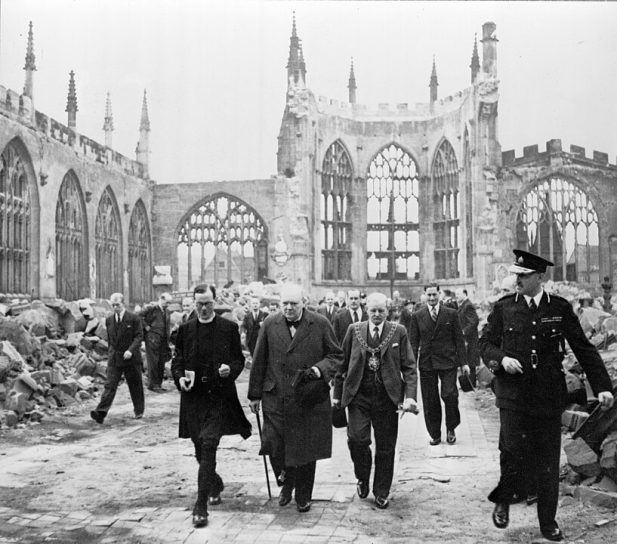
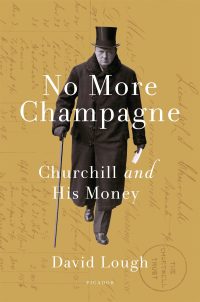 Irving’s 1987 Churchill book had laid bare his subject’s extremely lavish lifestyle as well as his lack of any solid income, together with the dramatic political consequences of that dangerous combination. This shocking historical picture was fully confirmed in 2015 by a noted financial expert whose book focused entirely on Churchill’s tangled finances, and did so with full cooperative access to his subject’s family archives. The story told by David Lough in




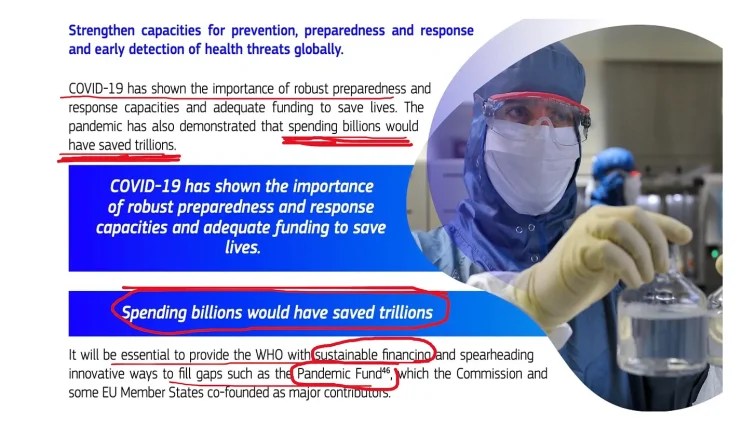
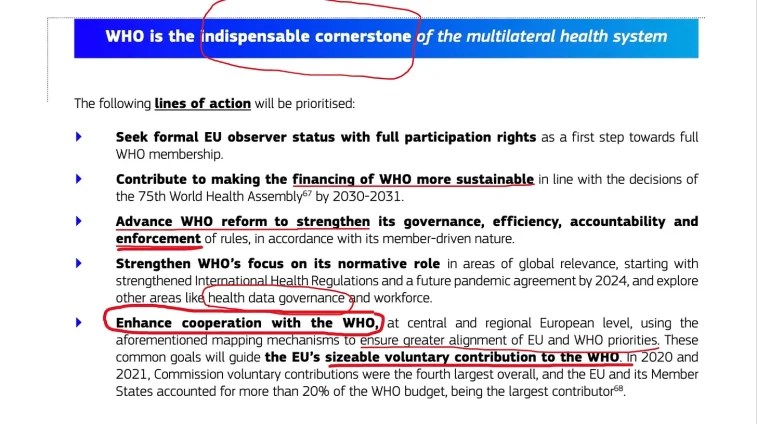
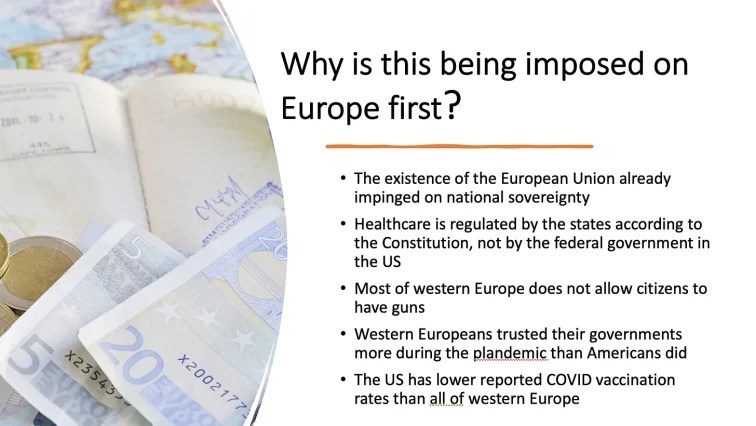
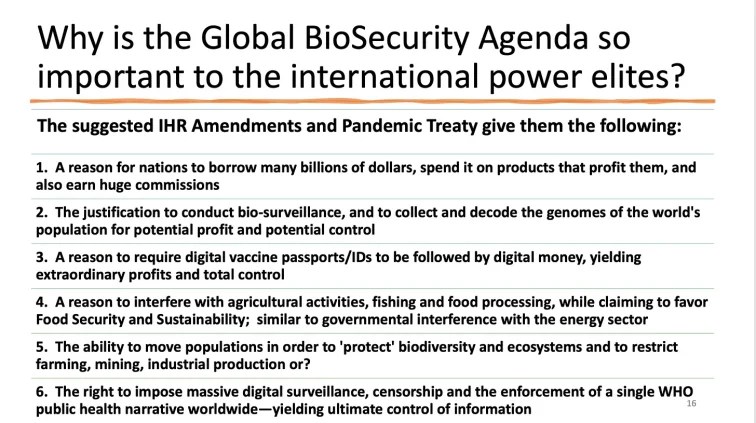



 Aletho News