Soaring Prices, Growing Destabilization
The dramatic rise in food prices is fueling a great deal of discontent in Tunisia, Egypt and elsewhere. It’s a deep undercurrent propelling many of the poor, who face prospects of starvation to resort to the streets and to violence. According to the United Nation’s Food Agency (Food and Agriculture Organization — FAO) world food prices are up for the 7th month in a row and are likely to surpass the record high reached in December 2010.
No end is in sight for this destabilizing battle with food price inflation in places like Egypt, where more than half of an average income goes for food. According to the State Department, more than 60 food riots occurred worldwide over the past two years.
In March 2008, a dramatic spike in food prices led thousands of people on the brink of starvation in Egypt to violently riot — sending a seismic shock wave through the Mubarak regime. After the Egyptian military was able to distribute enough wheat to dispel the rioting, efforts to stockpile wheat by the Mubarak government have failed, as food prices continue to hover at record highs.
The media is reporting many reasons for this problem ranging from soaring demand, cuts in food subsidies, droughts, and government mandates to use more grain-based biofuel. But, another significant factor is at play: unfettered speculation by investment banks. As noted in USA Today, in 2008, “the bulls may not be running on Wall Street, but they’re charging in the commodities pits.
At issue are the still deregulated commodity markets ushered in by the Clinton administration and the U.S. Congress with the passage of the Commodity Futures Modernization Act of 2000. Before this law, the Commodity Futures Trading Commission (CFTC) served as a cop on the beat, enforcing rules that prevent the distortion or manipulation of prices beyond normal supply and demand. But Wall Street banks and companies such as ENRON and British Petroleum were determined to make a lot more money from speculation by exempting energy-derivative contracts and related swaps from government oversight.
For this reason, the 2000 law allows entities that have no stake in whether adequate amounts of food and fuel are available for ordinary people and commodity-dependent businesses to make huge sums of money by gambling with other people’s money.
Soon after passage of the 2000 law, “dark” unregulated futures trading markets emerged, most notably the Intercontinental Exchange (ICE) in London — created by Wall Street and European investment banks and several oil companies. A key practice involves “over the counter index trading” in which hundreds of billions of dollars of pension, sovereign wealth, and other institutional funds are used to flood “dark” commodity markets to buy and hold futures contracts without an expiration date or oversight. When it’s time to make money on a losing bet, these funds are withdrawn, causing commodity price crashes and economic instability.
These transactions don’t involve customary “bona fide” commodity traders, such as an airline company hedging on the price of jet fuel by purchasing futures contracts. As prominent hedge fund manager Michael McMasters noted before a U.S. Senate panel in 2008, this amounts to “a form of electronic hoarding and greatly increases the inflationary effect of the market. It literally means starvation for millions of the world’s poor.”
Some world leaders are willing to speak out against the pernicious role of “dark” commodity markets. Recently, French President Sarkozy warned of further unrest and even war at the Davos forum, unless commodity speculation is reined in — something that Wall Street and Republican lawmakers are bitterly fighting. The Dodd/Frank Financial Reform Law places some restrictions on this practice by the CFTC. In particular, the CFTC is beginning the process of weeding out “non bona fide” investment bank speculators.
True to form, House Republicans are demanding that the CFTC slam on the brakes. They’re planning hearings and legislation to hamstring these efforts.
The spontaneous mass uprising of ordinary people in Egypt and the Middle East against their authoritarian regimes has many root causes. One that deserves much greater attention is unfettered speculation by powerful private financial institutions that don’t care about world-wide starvation and its impacts. It’s distorting global food supplies.
Robert Alvarez, an Institute for Policy Studies senior scholar, served as senior policy adviser to the Energy Department’s secretary from 1993 to 1999.
February 4, 2011
Posted by aletho |
Corruption, Economics, Malthusian Ideology, Phony Scarcity, Timeless or most popular |
Leave a comment
What’s it like spending two years doing thankless work that, in the end, is going to be ignored by the very people who asked for your services? The members of the Financial Crisis Inquiry Commission have just found out. Their 662 page report is sinking rapidly into oblivion in official Washington, and is now destined to be of interest only to historians. This was fully predictable. The Commission was given a charter by Congress to tell us who, what, when, and where about the financial crisis, but they were not allowed to explain why. To understand why this crisis occurred would be stepping on way too many powerful toes in Washington, and for this reason the Commission was told not to make any policy recommendations to Congress that would help prevent such a crisis from occurring again.
Though toothless and hobbled by Congress, the Commission has issued a remarkable report, at least by Washington standards. The report reads like the work of an investigative reporter, filled with interesting anecdotes selected from hundreds of hours of interviews with financial experts and market participants. The chapters are organized chronologically from the start of the housing boom to its collapse. Hardly anybody comes out of this report looking good, but of the many people who have reason to hang their head in shame, none appear quite as damaged as Alan Greenspan. He and the Federal Reserve are fingered by the Commission for failure to regulate the banks and other players in the housing market.
The outcome of “Fed Lite”
The central bank operated a regulatory regime called “Fed Lite”, providing little regulatory oversight for the banks, and no oversight for the shadow banking system that blew up under the weight of excessive debt and sparse capital. Fed Lite was founded on Alan Greenspan’s near-religious belief that the markets always weed out inefficient players and excesses, and the Fed’s job therefore is to stay out of the way of the banks they are supposed to regulate. Greenspan later admitted to the Commission that he might have been a bit wrong about the wonderful self-correcting mechanism of the markets. He also admitted that he was out of his depth whenever the staff came to talk to him about technical matters like mortgages, the housing markets, derivatives such as CDOs, and so on.
This was the man who was dubbed “The Maestro” by Bob Woodward, but apparently nearly twenty years of hands-on experience running the central bank was not enough to educate him sufficiently to understand the housing market, much less detect a bubble in the making. Why was someone like him given such a position of power? The Commission is unable to explain this to us, and to do so would require going much further back in time than the housing bubble – in fact back to the 1950s, when Alan Greenspan sat at the side of Ayn Rand, as an Apostle of Selfishness and a prized member of her cult of Objectivists.
Greenspan Shrugged
In his professional life Alan Greenspan has never talked about his days with Ayn Rand, and curiously no one in Washington has bothered to ask him publicly about how much of her philosophy he believes. As Fed Chairman, if Greenspan was a maestro of anything, it was playing Washington politics, and he was always wise enough never to tip his hand on policy matters until he had to. By the time the Fed was ready to implement Fed Lite, the mood in Washington had already shifted in favor of the Republican campaign to reduce government regulation wherever possible. This meant not only allowing market operators to function unfettered, it meant giving the wolves access to the henhouse. Insurance and oil industry executives were allowed in to Congressional staff meetings to help write laws governing their industries. Bankers were appointed to top positions at the Treasury and the Fed. As far as Wall Street was concerned, the traditional balance between Greed and Fear was upended: Fear was banished and Greed was allowed to run rampant once bankers were given access to unlimited taxpayer money in the form of bailouts.
All of this was quite congenial to Alan Greenspan, the inventor of the “Greenspan put” – which was a phrase created by the market to characterize the promise by the Fed that any serious losses in the market could always be “put back” to the government. Time and again Greenspan oversaw one bank bailout after another, and then expanded the franchise to the hedge fund industry when he bailed out LTCM in 1998. By the time he retired from the Fed, the financial industry had become so large that the Greenspan put had become institutionalized, and is now referred to as the Bernanke put. The job of Chairman of the Federal Reserve apparently carries with it the promise to forever protect the markets from their mistakes.
Only the “Worthy” Succeed
This must be quite satisfying to Ayn Rand followers. In their mythology, only Worthy Individuals are allowed to succeed in life, by taking what they want from others, and fighting off the little people and bothersome bureaucrats who obstruct them because they are envious of anyone who succeeds. Alan Greenspan must view himself and the eminent people he associates with as the Worthy few, entitled to their wealth and position of power. As a Republican, Greenspan has had no problems with the evolution of his party into the protector of the privileged few – the Lucky Duckies who control nearly 90% of the wealth in America, and feel entitled to raid the Treasury whenever they need to cover up for their mistakes.
This is the problem the Commission has had in doing its work. It is operating in a political and social environment in Washington that for decades has glorified greed and selfishness, and so accepted are these qualities that an alternative universe where government helps the average person rather than just the wealthy person is simply too hard for people in Washington to imagine. The best the Commission can do is say “Alan Greenspan should have done this, and he shouldn’t have done that.” It cannot say that there is something deeply corrupting in the way politicians of both parties think and act in Washington.
That is also why this Commission is so very different from the Pecora Commission of the 1930s, which took as its job the exposure of corruption and fraud at the very highest levels of business and government. The evidence of corruption and fraud in the housing bubble and during the credit crisis is mounting every day, but no one of responsibility or power has been called to account. The Commission has apparently identified a few low level functionaries for the attention of the Justice Department, but it is unlikely that someone like Angelo Mozilo of Countrywide is ever going to wind up in court on fraud charges. There is no moral outrage in Washington anymore, because there is simply no telling whose head would not fall under the guillotine if the true extent of fraud and corruption were revealed.
“Greed is Good”
The American people don’t have much moral outrage either. For the longest time they bought into the Greed is Good philosophy as long as the stock market was going up, and the housing bubble was in the ascendant. Once both of these financial props collapsed, misery spread everywhere, but it wasn’t the misery experienced by our grandfathers, who lost all their wealth in the 1930s when the banks collapsed completely. Most Americans are holding on to some of their wealth, and 80% of them have full time jobs, even if the work is stressful and the benefits are disappearing. Unemployment checks are being extended for another year, payroll taxes are scheduled to be cut in 2011, and Ben Bernanke has spent over half a trillion dollars generating another stock market bubble. The wealthy are spending money, which helps the retail sales numbers look good, and the Fed assures us that inflation is not a problem, because the Fed excludes the price of food and energy in its calculations of inflation.
Of what use, then, is a Commission that explains why things really happen the way they do? No one wants to hear it – not the Congress, not the White House, not Republicans, Democrats, nor independents. No one wants to hear that the American Dream – which use to say that anyone could succeed in America with hard work – has been polluted by a wholly different American Dream, which now says you can succeed with the right connections and you can take what you want without any consequences. We have brought the philosophy of Selfishness to its logical conclusion, which has left us with a society of individuals who are isolated from each other, who have been stripped of any sense of community, and who have been taught to expect that government will be of no help to you unless your are in a position of privilege and power.
What America really needs is a Commission of Truth, that would outline how Selfishness became triumphant, how it has devastated our country, and what we as a community and as a nation must do about this. A Commission of Truth, however, needs to have an audience willing to listen to the truth, and such an audience does not exist in America. At least not yet – not until Americans have experienced the full, bitter fruits that a lifetime of Selfishness can produce.
February 3, 2011
Posted by aletho |
Corruption, Economics, Supremacism, Social Darwinism, Timeless or most popular |
Leave a comment
Lester Kurtz is a professor of sociology who sits on the academic advisory board of the International Center for Non-violent Conflict, an organization that trains activists in the use of mass civil disobedience to take power from foreign governments.

Lester Kurtz, another academic pony in Peter Ackerman’s ICNC stable. Kurtz talked to the CIA because they asked him to.
The ICNC was founded by former Freedom House head, Peter Ackerman, Michael Milken’s right-hand man at the Wall Street investment banking firm Drexel Burnham Lambert. Ackerman became ridiculously wealthy organizing the KKR leveraged buy-out of RJR Nabisco. [1]
These days Ackerman is a member of the Council on Foreign Relations, along with former US secretaries of state, defense, and treasury, and CEOs, investment bankers and highly placed media people. When he’s not helping formulate foreign policy recommendations at the CFR, he’s lending a hand on the Advisory Council of the United States Institute for Peace, a phoney U.S. government peace outfit headed absurdly by the U.S. secretaries of defense and state.
As you might expect of a wealthy investor who hobnobs with the US foreign policy establishment, Ackerman defines protection of private property rights as an integral part of democracy and believes the United States has a lot of teach the world. [2]
After learning investment banking at the knee of Milken, Ackerman turned his energies to training foreign activists in the use of the nonviolent resistance techniques of Gene Sharp, probably the first person to situate mass civil disobedience in the context of military strategy. [3] This earned Sharp the sobriquet the Clausewitz of nonviolence, after the Prussian military strategist Carl von Clausewitz. [4]
An interviewer working for a Canadian nonviolent resistance magazine once pointed out to Sharp — with some incredulity — that people say a government cannot fund or sponsor the overthrow of another government.
Sharp replied, “Why not?” adding, “What do they prefer that the U.S. spend money on?” [5]

Gene Sharp, the Clausewitz of nonviolence, who sees no trouble with the U.S. government spending money on overthrowing foreign governments. When Sharp was accused of advising right-wing Venezuelans on how to topple Venezuelan president Hugo Chavez, the head of the ICNC academic advisory board, Stephen Zunes, sprang to his defense. Sharp is old and sick, Zunes explained. Besides, he has adopted a “transpartisan’ position that cuts across political boundaries and conceptions and (talks) to essentially anyone”. It used to be that leftist peaceniks were against the US government and other rightist forces. Now they advise them.
Nonviolent resistance – also more aptly called nonviolent warfare – is about taking power, not making a point. It’s not pacifism or a principled religious or ethical position based on abhorrence of violence. It’s power politics. Ackerman and other nonviolent warriors believe that mass civil disobedience – the shrewd use of strikes, boycotts, demonstrations, and nonviolent sabotage backed by sanctions and demonization of target governments – can be more effective in taking political power than military intervention. [6] That makes them instrumental nonviolence advocates. They advocate nonviolence, not because they hate violence, but because they think nonviolence works better than armed revolt or military intervention.
With the help of people like Lester Kurtz, the ICNC trains a modern cadre of mercenaries, who travel the world in the pay of NGOs, Western governments, wealthy individuals and corporate foundations, in order to train local groups in regime change through nonviolent warfare. [7] Ackerman, Kurtz and company, sit at the head of a kind of imperialist International, whose aim is to spread the US system, US influence and ultimately US capital around the world, under the guise of “promoting democracy.” It calls to mind a line from Phil Ochs’ condemnation of US imperialism, “We’re the Cops of The World”. Ochs sang, “The name for our profits is democracy.” Of course, the ICNC isn’t admitting to any of this. ICNC members say they’re just handing out information on nonviolence to anyone who will listen.
Last April, Kurtz posted a comment to my blog, calling my linking of Ackerman and his ICNC to US imperialism a “non sequitur.”
I replied. In my reply I pointed out that Kurtz discloses on his CV that he gave workshops to the CIA and the U.S. government- and corporate- funded think-tank, the RAND Corporation. Nine months later, Kurtz replied, with a bombshell. Sure, he talked with the CIA and RAND, he said, because they asked him to.
Albert Szymanski, also a professor of sociology, would never have received an invitation from the CIA to conduct a workshop on anything, and if he had, we can be pretty sure he would have turned them down. So why Kurtz (an academic advisor to an outfit founded by a wealthy CFR member who celebrates the overthrow of former Yugoslav president Slobodan Milosevic, an act which cleared the way for a US-backed pro-capitalist government to come to power to sell off state and socially-owned assets to investors like Ackerman) and not Szymanski (a Marxist-Leninist who deplored imperialism)? If ever there was a sign you’re part of the problem, it’s being asked by the CIA for advice. Giving it erases all doubts.
Here’s the exchange. It begins with Kurtz’s comments on my article, “Washington Post: North Korean, Iranian nuclear capability threatens US imperialism”, on April 5, 2010.
It’s no surprise that US foreign policy is somehow linked to the economics of things is not a shock – what is surprising is Stephen Gowans’ effort to link “pro-democracy nonviolence activists,” and Peter Ackerman, with US imperialism! What a non-sequitur! Those activists (with the aid of only educational resources from the International Center on Nonviolent Conflict that Ackerman funds) have taken on oppressors of all political stripes, many of them (like Marcos, Pinochet, etc., etc.) part of the US orb. While Washington no doubt has a hit list, it has nothing to do with providing information and resources to people who would organize for their rights regardless of who is thwarting them. The kind of imprecise thinking that links these activities through some leap of logic simply distracts from other aspects of the argument and leaves me puzzled as to the point of the article.
I replied the same day.
I’m assuming the above was written by Lester Kurtz, Professor of Sociology at George Mason University, and a member of the academic advisory board of Peter Ackerman’s organization, the ICNC. In March, 2005, Kurtz ran a workshop on religion and violence for the CIA and RAND.
I wonder whether Kurtz sees the connection between RAND and the CIA on the one hand and US imperialism on the other. Probably not.
While it may come as no surprise to Kurtz that US foreign policy is somehow linked to the economics of things, showing that this is so is much more difficult than showing that Peter Ackerman is linked to US imperialism. The latter is easily demonstrated.
(1) US foreign policy is imperialist,
(2) The Council on Foreign Relations plays a major role in shaping US foreign policy, and
(3) Peter Ackerman is a member of the Council on Foreign Relations.
We could add other observations (e.g., Ackerman’s previous role as head of the CIA-interlocked Freedom House, hardly what you would call a non-imperialist organization, and his privileged position atop the economic order of things) but the points above should suffice.
What comes as a surprise to me is that while Kurtz can grasp the nexus between the economics of things and the imperialist nature of US foreign policy, he can’t see the much more obvious connection between Ackerman and US imperialism, but perhaps that is so because to see it, would mean acknowledging his own connection to it.
Nine months later Kurtz responded.
Of course there’s a connection between RAND, the CIA, and US imperialism – that’s why I talked with them when asked to do so. What good does it do to sit in a corner and talk to ourselves? I used to complain to my students that nobody ever asked me about important policy questions – do they ask you? I’d ask. So, when they asked me to speak, I did. I’d not work for them, but will talk with them, with you, with the devil, with anyone who will listen. The whole system is rotten, but won’t be replaced or transformed until people stand up and speak out.
Interestingly, Kurtz used the same defense that the head of the ICNC academic advisory board Stephen Zunes used on behalf of the Clausewitz of nonviolence, Gene Sharp, when it was revealed that Sharp had advised right-wing Venezuelans on how to bring down Venezuelan president Hugo Chavez. Sharp, explained Zunes, had “taken a ‘transpartisan’ position that cuts across political boundaries and conceptions and (talks) to essentially anyone” [8], apparently just as Kurtz does. If that’s a defense, the world dodged a bullet when Zunes turned down a career in law.
Here’s more of Zunes defending Sharp:
Unfortunately, Sharp – who is now well into his 80s and whose health is failing – appears to show little discernment as to who he meets with and his audience has sometimes included some right-wing Cubans or Venezuelans who have sought him out to see if any of his research would be of relevance in their efforts to organize some kind of popular mobilization against the Castro or Chavez governments. Some of those may have indeed been later found to have engaged in assassination plots. [9]
Since Kurtz isn’t well into his 80s, how do we explain his lack of discernment in who he meets with? Or does age have anything to do with it? Meeting with right-wing Venezuelans, right-wing Cubans [10], followers of Reza Pahlavi, the son of the deposed Shah of Iran [11], and the CIA seems to be standard operating procedure for nonviolent warriors. The New Republic’s Franklin Foer pointed out that “When some of State’s desk officers don’t want to create international incidents by advising activists on how to overthrow governments, they gently suggest visiting Ackerman, who has fewer qualms about lending a helping hand.” It seems that if there’s a nationalist or socialist government to be overthrown, the nonviolent warriors are always willing to step up to the plate. They’ll talk to anyone: right-wing assassins, followers of a former US-backed Iranian dictator, the CIA. Adopting a position that “cuts across political boundaries and conceptions” means that where leftist peaceniks once were against the US government and other rightist forces, now they advise them.
On January 5, I responded to Kurtz’s latest comment.
Good work Les. Maybe after you deliver a few more seminars, the CIA will see the light, and decide that taking down foreign governments that refuse to subordinate themselves to Washington’s dictates isn’t such a good thing after all… Oh, but I forgot, that’s no longer a CIA function, is it? It’s now your job, and that of your ICNC colleagues.
Exactly what is it you’re standing up and speaking out about to the CIA anyway: that organizing nonviolent warfare campaigns against foreign governments is more effective in achieving US foreign policy goals than taking out wedding parties with predator drones?
You are, indeed, making the world a better place, Les. Keep accepting those CIA invitations.
Kurtz and some other ICNC academic advisors seem bewildered that they should be so vigorously criticized for trying to show the powerful that nonviolent overthrow movements are a better alternative to armed intervention. After all, what could be wrong with trying to persuade Washington that there’s a nonviolent way to achieve its foreign policy objectives? What they fail to grasp is that the tools the US government uses to prosecute its foreign policy aren’t the problem. The problem is US foreign policy.
1. Franklin Foer, “Regime Change Inc. Peter Ackerman’s quest to topple tyranny,” The New Republic, April 16, 2005.
2. Foreign Affairs and International Trade Canada, “Interview with Peter Ackerman, founding chair of the International Center on Nonviolent Conflict,” October 19, 2006. http://www.international.gc.ca/cip-pic/discussions/democracy-democratie/video/ackerman.aspx?lang=eng .
3. Eli Lake, “Iran launches a crackdown on democracy activists,” The New York Sun, March 14, 2006.
4. Peace.Ca, “Gene Sharp: A Biographical Profile.” http://www.peace.ca/genesharp.htm
5. Spencer, Metta, “Gene Sharp 101,” Peace Magazine, July-Septmeber, 2003.
6. Peter Ackerman, “Paths to peace: How Serbian students brought dictator down without a shot fired,” National Catholic Reporter, April 26, 2002; Peter Ackerman and Jack DuVall, “The nonviolent script for Iran,” Christian Science Monitor, July 22, 2003; Peter Ackerman and Jack DuVall, “With weapons of the will: How to topple Saddam Hussein – nonviolently,” Sojourners Magazine, September-October 2002 (Vol 31, No. 5, pp.20-23.)
7. Mark R. Beissinger, “Promoting democracy: Is exporting revolution a constructive strategy?” Dissent, Winter 2006. http://www.dissentmagazine.org/article/?article=155
8. Stephen Zunes, George Cicariello-Maher and Eva Golinger, “Debate on the Albert Einstein Institution and its Involvement in Venezuela”, venezuelanalysis.com, August 5, 2008. http://venezuelanalysis.com/analysis/3690
9. Ibid. It’s bad enough that Zunes tries to excuse Sharp’s meeting with right-wing Venezuelans as a lack of discernment attributable to age and illness when nonviolent warriors regularly aid right-wing forces, but his descent into bafflegab in the construction of the truly prolix phrase “‘transpartisan’ position that cuts across political boundaries and conceptions” — meaning I’d give advice to Hitler if he asked — would be comic were it not intended to prettify a reactionary position. Zunes, I think, would give British MP Sir Norman Fry a run for his money as a concocter of tortured explanations to cover up what he doesn’t care to admit.
February 2, 2011
Posted by aletho |
Timeless or most popular |
Leave a comment
RAMALLAH — Israeli forces psychologically tortured a 14-year-old Palestinian detained in a night raid on his Ramallah village, a local rights group said.
Islam Tamami was detained on 23 January from his home in Nabi Saleh, a village which holds weekly anti-wall rallies to protest Israel’s confiscation of residents’ land.
He was taken to a police station and interrogated without his parents or a lawyer present, the Popular Struggle Coordination Committee said.
Soldiers used psychological torture to extract false testimony about demonstrations in his village during an eight hour interrogation, PSCC reported.
Tamimi’s lawyers requested access to the boy immediately after his request, but this was not granted until after five hours of interrogation, the committee said.
The boy is still in Israeli detention, despite appeals from his defense for his immediate release due to the unlawful conduct of the police and military.
A military judge on Tuesday refused a request to transfer him to house arrest, committee spokesman Joseph Dana said.
The committee says residents of the village, including children, have been subject to countless injuries, arrests and collective punishment. It says the army’s campaign is an attempt to crush the village’s non-violent protests against the wall.
DCI: Army detained 7,000 Palestinian children detained since 2000
On Saturday, Defence for Children International said Israel’s military had detained around 7,000 Palestinian children since 2000.
In its annual report, submitted to the United Nations, DCI said it was rare for children, or their parents, to be told the reason for the arrest or where the children would be taken.
The arrests were frequently carried out by heavily armed soldiers in the middle of the night, the report said, and children were usually handcuffed and blindfolded before being taken away in a military vehicle.
“The arrest and transfer process is frequently accompanied by physical and verbal abuse,” DCI reported.
“Children are frequently threatened and physically assaulted during interrogation often resulting in the provision of a coerced confession, or the signing of documents which the child has not had a chance to read or understand.”
DCI noted that children as young as 12 were tried in military courts, and said most children ultimately plead guilty “whether the offence was committed or not, as this is the quickest way out of the system.”
Further, Israeli military courts impose sentences on most children detained.
“In 2009, custodial sentences were imposed on children by the military courts in 83 percent of cases, in contrast to a custodial sentence rate of 6.5 percent in the Israeli civilian juvenile justice system,” DCI found.
February 2, 2011
Posted by aletho |
Civil Liberties, Subjugation - Torture, Timeless or most popular |
Leave a comment
Syria in the cross-hairs
The Obama regime has been using its Government-Organized Non-Governmental Organizations (GONGOs) close to the CIA like Freedom House and the NED to remove or threaten the ugly puppet dictators in Tunisia and Egypt. Further “color revolutions” in Yemen, Algeria and Jordan are in the making. The aim of this US policy is clearly to replace these dictators with less repugnant US-friendly puppet ‘democracies’. Now Washington is trying to use the momentum of this process to stage a color regime change in Syria.
Internet activists and organizers in academia have been financed with over half a billion dollars through the State Department’s Middle East Partnership Initiative (MEPI) program. Mass media and well known hasbara institutions are directing this campaign. On Monday CNN, which is close to the US regime, together with the Zionist propaganda organization MEMRI, called for an uprising in Syria. The Wall Street Journal, which is also close to the US regime, continued this campaign against Syria. And later, the U.S. news agency UPI campaigned for a dubious “Syrian revolution” Facebook group advocating for protests in Syria on Friday.
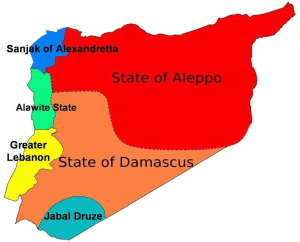 There is a vast difference between the revolutionary events in Tunisia and Egypt and the protests planned in Syria. While the abolition of US-backed dictators like Ben Ali and Mubarak could be viewed as progress in the fight for justice, a color revolution in Syria would be a big step backward. Though less democratic than Iran – where a Mossad backed color revolution attempt failed in 2009 – Syria is also a key pillar of resistance against the hegemony of the Zionist dominated US policy of aggression in the middle east.
Like many other countries in the middle east, Syria has had a lot of problems in recent decades. But these problems in Syria were primarily caused by it’s strong stance for the resistance against Zionism, by not obeying the orders of Tel-Aviv.
Precisely because of his very effective support for the resistance, Syrian president Bashir al-Assad is one of the most popular politicians among the Arab people. Due to the achievements of the steadfast resistance of Syria – and it’s ally Iran – the US is now forced to dismantle it’s ugliest puppet dictatorships in the middle east and let them be replaced by regimes closer to the people.
Should the Zionist-dominated US propaganda succeed in creating a short-term wave of public anger that ousts Assad, the US would not only be able to control Syria, but also have a free hand in installing pro-US puppet regimes in the other newly ‘color’ revolutionized Arab countries. These pseudo democratic puppet regimes modeled after the German pseudo democracy could more easily be forced to submit to the kleptomaniac Zionist terror regime.
For these reasons, it is important for all those longing for real change in the middle east, and finally the world, to support Syria now and defend it against US sponsored soft war attempts. The only way to reach lasting and just peace in the middle east is to resist, until the Zionist apartheid state of Israel ends all occupation and is transformed into a state of all it’s citizens.
Update, March 29, 2011:
Elliot Abrams’ Plan For Syria
February 2, 2011
Posted by aletho |
Deception, Timeless or most popular, Wars for Israel |
Leave a comment
The people of Egypt have had enough of a failed dictatorship masquerading as a democracy. As events unfold, we’re seeing a cautionary message entering the corporate media coverage of this event. Having never exposed the dire conditions that prompted the massive protests and demands for change, we’re now told that this could negatively impact oil supplies, the stock market, and anti-terror efforts. No foundation for the claims was provided but they’re repeated regularly on CNN, the NBCs, Fox, and the print media.
Thus, a false dilemma is created for the public: support the right of people to determine their own fate or protect your safety and the current standard of living, as it were.
Egypt’s oppressive tyranny
Eighty million Egyptians have suffered under an oppressive regime for thirty years. President Hosni Murbark became Egypt’s president and dictator in 1981 after the assassination of the late President Answer Sadat in 1981. Sadat had just completed a peace treaty with Israel. Since then, Mubarak has ruled through emergency law for all but 18 months. Using this law, the government has the, “right to arrest people without charge, detain prisoners indefinitely, limit freedom of expression and assembly, and maintain a special security court.” The Egyptian parliament extended for two years in May 2010. For those who get too far out of line, there are the famous torture facilities of the national police.
The Egyptian revolution followed the successful peoples uprising in Tunisia just days before. The Egyptian economy has not performed for the people. The majority of Egyptians live in substandard conditions and they see little reason for hope. Conditions were no better in Tunisia. Future hot spots for revolution, Algeria and Yemen, are equally bereft of the conditions that allow for human dignity – gainful employment, health, and safety.
Children are particularly hard hit, one-third of Egypt’s population. A recent UNISEF that, “Increases in child mortality and morbidity, child labour, child exploitation, violence against children and women and other forms of abuse, alongside declines in school attendance and the quality of education, nurture, care and emotional well-being, can all be traced to times of economic crisis.” (Harper et al, 2009). The Egyptian economic crisis has been devastating to children.
The conditions in Egypt are different from those in the United States in terms of income and material wealth. On a structural level, however, the class inequalities mirror those faced here. A robust stock market failed to translate into employment gains or basic benefits for the vast majority. Policies are friendly to businesses but discriminate against worker rights and unions. Privatization has sapped the public coffers.
While conditions were building up to a boiling point, the Egyptian Stock Exchange became a favorite for foreign investors. Somehow, the geniuses on Wall Street convinced President Mubarak to privatize and adopt a market economy [crony capitalism]. He did, the people suffered more, and the results led to the near universal demand that Mubarak step down. The globalization of crony capitalism has reached the point where the main stimulus is revolution.
The false dilemma
The coverage of Egypt’s revolution has been a bit timelier than the Tunisian affair, which the corporate media nearly missed. The initial focus was on events and the questions determining the survival of Hosni Mubarak. Who will win? There was no explanation of conditions prompting the protests. That would legitimize the protesters and foreclose media manipulation that may be needed to continue the three-decade support for the present dictatorship and oligarchy.
A Wall Street Journal article Sunday laid out the talking points for fear mongering and the false dilemma – support a peoples revolution? – take an oil shock and more terror.
US stocks are taking a big hit because of the revolution. We’re supposed to react by thinking, Is this really worth it? The recession may get worse.
“Anti-government protests in Egypt have affected world financial markets, with US stocks suffering the biggest one-day loss in six months.” Egyptian Unrest Has Repercussions in Global Economy Wall Street Journal (WSJ), January 30
The specific fear of oil price increases appears. Somehow, we’re asked to believe that a new government might say, all of a sudden, no more United States ships in the Suez Canal.
“In the short term, the biggest global economic worry remains oil prices. Egypt itself isn’t a big energy producer. But significant shipments of oil and petroleum products pass through Egypt each day on their way from the Mideast to European and U.S. markets.” WSJ 01/30
There is absolutely no basis for this. Therefore, the fabrication is deliberate and ill intended.
Then the Journal trots out an expert who draws a conclusion based on the unproven hypothetical. Once again, there is no basis for saying that there would be any shipping disruptions. Why would a new Egyptian government give up that income or pick a fight with a White House with a record of military aggression?
“If oil shipments through Egypt were disrupted, European supply — and global prices — would be affected tremendously, said Dalton Garis, an associate professor in petroleum-market behavior at the Petroleum Institute, an energy-research center in Abu Dhabi.” WSJ 01/30
The media is like a dog on point. They just can’t give up the notion that we’re headed for an oil shock.
“Apart from Egypt’s role as an energy transporter, fear that unrest could spread to bigger oil producers could exacerbate worries.” WSJ 01/30
Where is the information that would justify this fear?
Where is the explanation that accounts for this remarkable mass uprising?
Where are the questions about the three decades of neglect by several U.S. administrations and the requests by presidents Bush and perhaps Obama to carry out “renditions” [torture] in behalf of the United States.
When you support a tyrant who oppresses his/her people, you risk the antipathy of the people when they gain control.
Apparently, our ruling class hasn’t paid any attention to recent history. For years, successive US regimes supported dictatorial rule in South America. The dictators are gone, left leaning governments are in place, and no one is lining up to punish the United States.
The real concern about change in Egypt is all about control. The elite of the US and Europe may encounter a leader who isn’t in their pocket, doesn’t care whether or not he or she is invited to Davos, and actually seeks the benefit of the vast majority of citizens rather than the crony capitalist network also known as the global economy.
Michael Collins is a writer in the DC area who researches and comments on the corruptions of the new millennium. His articles focus on the financial manipulations of The Money Party, the abuse of power by government, and features on elections and election fraud. His articles can be found here. His website is called The Money Party.
Copyright © 1998-2007 Online Journal
February 2, 2011
Posted by aletho |
Deception, Economics, Mainstream Media, Warmongering, Timeless or most popular |
Leave a comment
CAIRO – There is no money at the banks. Fuel is scarce. Tourism is evaporating.
As a popular uprising to oust President Hosni Mubark enters its second week, Egyptians are feeling the economic pinch.
Banks have been shut since Sunday, and they remained so on Tuesday, the day that protesters hope will see a million-strong demonstration in Cairo to demand an end to Mubarak’s regime.
Many automatic teller machines (ATM) in the teeming capital have run out of cash, and those still working were dispensing only a limited number of banknotes.
“I scoured the city in search of an automatic teller and I found only one place — in a neighbourhood where people do not normally use ATMs,” said Mohamed, a driver.
In Cairo, supermarkets that usually accepted credit cards insisted on cash instead, while crowds flocked to grocery stores in several neighbourhoods to stock up on essentials.
Many gas stations were closed, with long lines at those that were still open. The Chamber of Commerce in Cairo appealed to shopkeepers on Monday to reopen, but most ignored the call.
Some kiosks complained of an early shortage of cigarettes, in a country with a large number of smokers and relatively cheap tobacco. Top-up cards for mobile phones were also running short.
Responding to growing fears of shortages, the authorities said Egypt still had sufficient stocks of food, including wheat reserves, to feed itself until June.
Tourism, a crucial source of foreign revenue, has been hit hard by the uprising in which at least 125 people have died and thousands injured since it began last Tuesday.
This is high season for the tourist industry, with Europeans escaping their winter for sunshine by the Red Sea and the River Nile, but many tour operators have suspended departures and leisure bookings have dried up.
With 14.7 million visitors in 2010 and revenues estimated at about 13 billion dollars, tourism is an important source of income for Egypt, a developing nation with an estimated 20 percent living under the poverty line.
Some foreign firms have suspended their activities, such as the Danish shipping and oil concern A.P. Moeller-Maersk, the French cement manufacturer Lafarge and Japanese automaker Nissan.
Egyptair cancelled all domestic and international flights between 3 p.m. and 8 a.m. — the hours of a government-imposed curfew — starting Monday. Other flight times are to be modified.
Air freight is off sharply as well, said Ayman Nasr, head of Egyptair’s cargo department.
He said foreign trade had been affected by “the inability to pay for imports due to lack of liquidity resulting from the closure of banks or, the inability to arrive at the airport (to collect shipments) due to the curfew.”
The Cairo stock exchange had been shut since Thursday, after more than 10 percent of its value or 70 billion Egyptian pounds (about 12 billion dollars) was wiped out over its last two days of trading.
February 1, 2011
Posted by aletho |
Economics, Timeless or most popular |
Leave a comment
Israel has told its diplomats in the United States, Europe and elsewhere to encourage their host nations to support the regime of Egyptian President Hosni Mubarak, Israeli daily Haaretz reported Monday.
The newspaper said Israel’s foreign ministry told its diplomats to stress that it is in “the interest of the West” and of “the entire Middle East to maintain the stability of the regime in Egypt.” “We must therefore curb public criticism against President Hosni Mubarak,” the message sent at the end of last week said, according to Haaretz.
The newspaper said the message was sent to Israeli diplomats in at least a dozen embassies in the United States, Canada, China, Russia and several European countries.
A foreign ministry spokesman and a spokesman for the prime minister’s office questioned by AFP both refused to confirm or deny that such instructions had been issued.
Israel has so far kept a low profile on the upheaval rocking Egypt, with Prime Minister Benjamin Netanyahu saying on Sunday he had instructed ministers not to speak publicly about the situation. He himself has said little more than that he watching developments closely.
But a senior Israeli official quoted by Haaretz suggested Israel was unhappy with the public comments made so far by US and European officials in response to the growing Egyptian crisis. The United States and Europe have yet to call for Mubarak to step down, but they have called for a transition to democracy and warned him to allow peaceful protests to continue.
February 1, 2011
Posted by aletho |
Supremacism, Social Darwinism, Timeless or most popular |
Leave a comment
Soon after Pakistan appeared on the world map as a sovereign country, it was placed in the US sphere of influence. From the signing of the Mutual Defense Assistance Agreement with the United States in 1954 to Musharraf’s blind subservience to the US, the incompetent Pakistani rulers have effectively turned Pakistan and US relations into the relationship between the vassal and suzerain state; with Pakistani rulers’ abject submissiveness, Pakistan’s sovereignty has been very much reduced to flag waving and singing the national anthem.
General Musharraf during ten years of his rule pushed Pakistan to a new low in subservience to the US In his constant bid to prove his unwavering loyalty, Musharraf, in his docile act of obedience, sold Pakistani and foreign citizens to the US for a bounty of $5,000 to 5 million per head. These people were kidnapped and hunted in flagrant contravention of Pakistani and international laws, handed over to the US without any charge, concrete evidence or due judicial process, and then they were thrown in the torture pit of Guantanamo Bay. Musharraf, without feeling a single iota of guilt, says in his memoir, “We have captured 689 and handed over 369 to the United States. We have earned bounties totaling millions of dollars. Those who habitually accuse us of ‘not doing enough’ in the war on terror should simply ask the CIA how much prize money it has paid to the government of Pakistan. Here, I will tell the stories of just a few of the most significant man-hunts…” This is perhaps the first instance in civilized history that a head of state abducted and sold his own people for prize money and was proud of it and unabashedly mentioned it in his memoirs.
Among the many ills that Musharraf inflicted on Pakistan, he allowed the personnel of the US intelligence agencies and mercenaries from American private military companies (Blackwater, Halliburton, DynCorp, etc) to operate all over Pakistan in search of Al Qaeda leaders. Today, it is well known, that hundreds of US armed operatives freely roam on the streets of Pakistani cities. Whether as a mistake or unintentional utterance, US Defense Secretary Robert Gates in an interview admitted Blackwater’s presence in Pakistan. Not only did the Musharraf regime allow American mercenary presence in the country but he also waived the visa requirement for them; they come and go as they please, without visa or traveling documents. Often, they are escorted off the plane into a waiting car on the tarmac.
Pakistan’s newspaper Nawa-e Waqt in its editorial writes, “The Blackwater operatives, who committed heinous and inhuman crimes in Iraq, come wherever they please in Pakistan without visa or travel document. They keep on roaming around in vehicles with fake number plates with dangerous weapons. These U.S. officials point guns at the security people if asked to reveal their identity. During a few minutes debate, there is a series of phone calls from the high officials, and they, who consider Pakistan as their playground, are allowed to go with honor (How Much Dignity is Left?”, Nawa-e Waqt, January 18, 2010, translated from Urdu). It is also claimed by many and cannot be dismissed easily that Dr. Aafia Siddiqui was abducted independently by Americans mercenaries from Karachi and then transferred to Afghanistan.
Pakistan’s government, Musharraf’s and the present PPP regime, has turned a blind eye and keeps mum to US mercenaries violating the country’s sovereignty and assassinating its citizens. However, the recent murder of two Pakistanis by a U.S. “diplomat” Raymond Davis on a busy street of Lahore in full view of the public forced the Pakistani government to arrest the American suspect. After the shooting and killing Davis called the consulate for help, a Land Cruiser, came to the scene. The driver of the Land Cruiser went the wrong way down a one-way street and ran over a man on a motorcycle, killing a third person. The driver of the get-away vehicle and four passengers who came to rescue Davis fled the scene and are still at large. Despite repeated requests the US Consulate is not revealing any information about the driver who killed a motorcyclist. The murder incident and the aborted attempt to rescue and help the suspect flee has, once again, brought to the forefront the presence and criminal activities of secretly fielded American mercenaries in Pakistan.
The US authorities claim that the name of the man arrested for the double murder is not Raymond Davis. The US State Department spokesman P.J. Crowley said, “We have not released the identity of our employee at this point”; however, he denied the man’s name is Raymond Davis. The US Embassy in Pakistan says that the man in Pakistan’s custody is a diplomat with a valid US diplomat passport and visa. But the copies of passport and visa of Davis obtained by Dawn News show that his name is Raymond Alan Davis, his passport is not of a diplomat and he was not on diplomatic visa but he came to Pakistan on a business visa. The US first claimed that Davis is a “Technical Adviser” and “Counselor”. Later his designation is changed to “functionary” of the US Consulate. However, ABC News says, Davis is an employee of Hyperion Protective Consultants LLC, a private security company based in Orlando, Florida.
Davis’ claim that he killed the two men in self-defense is spoiled when one considers that all the bullet wounds were found in the back of the dead bodies. Also, no shot was fired from the guns recovered on the bodies of the dead Pakistanis. His other claim that he is immune from arrest and prosecution by the virtue of his diplomatic status is also proven empty, as neither his passport nor the visa is diplomatic. If indeed Davis is a diplomat and enjoys diplomatic immunity, the US, on ethical grounds, should waive the immunity and let the judicial process take its course. It would only raise US prestige. If Davis truly acted in self-defense, he would be acquitted.
The Washington Post in its report of January 27 puts a new twist to the already complicated storyline, and even adds a dose of suspense. Here is what the Post says, “A senior former U.S. diplomatic security agent suggested Thursday that the American involved in a fatal shootout in Lahore, Pakistan, was the victim of a spy meeting gone awry, not the target of a robbery or car-jacking attempt.” The Post quoted Fred Burton, a former deputy chief of the US Diplomatic Security Service’s counter-terrorism division who worked on several major terrorism cases in the 1980s and 1990s, as saying: “It looks like an informant meet gone bad more than a car-jacking attempt.”
If we consider what a diplomat fluent in Urdu with automatic weapons and a large sum of money in a rented car was doing in the part of town that has been scene of terror bombing, Burton’s theory of “an informant meet gone bad” appears highly credible. Diplomats do not travel in a locally rented car and go cruising with large sums of money and automatic weapons in the not so desirable part of the town. It is very plausible that Davis was on a mission and the mission went awry. Pakistanis strongly suspects U.S. hands in the terror bombings in their country.
At the end of the day, the US will get its way; Pakistan’s servile administration under US pressure will let Davis go free. There will be some clamor in the press and anti US demonstrations on the streets but all will be forgotten and forgiven soon. The other likely scenario: to appease the Pakistani public, the US may release Dr. Aafia Siddique; a Pakistani neuroscientist who the US says has ties to Al Qaeda members, sentenced in the US to 86 years in prison for attempted murder, in exchange for the release of Raymond Davis. It is highly unlikely, rather unimaginable, that the trial will go to its end, and if Davis is found guilty that he will serve the full sentence in a Pakistani jail. The US is not Pakistan, and Raymond Davis is not Pakistani Aafia Siddique, who was sold and forgotten and abandoned by her Pakistani rulers.
If Raymond Davis goes free, after murdering two Pakistanis in broad daylight, without judicial process, it would be yet another abject surrender by the Pakistani government to the will of the US.
© 2011 Abdul-Majid Jaffry
February 1, 2011
Posted by aletho |
Deception, False Flag Terrorism, Timeless or most popular |
Leave a comment
The death throes of the Mubarak regime in Egypt signal a new level of crisis for a U.S. Middle East strategy that has shown itself over and over again in recent years to be based on nothing more than the illusion of power. The incipient loss of the U.S. client regime in Egypt is an obvious moment for a fundamental adjustment in that strategy.
But those moments have been coming with increasing regularity in recent years, and the U.S. national security bureaucracy has shown itself to be remarkably resistant to giving it up. The troubled history of that strategy suggests that it is an expression of some powerful political forces at work in this society, as former NSC official Gary Sick hinted in a commentary on the crisis.
Ever since the Islamic Republic of Iran was established in 1979, every U.S. administration has operated on the assumption that the United States, with Israel and Egypt as key client states, occupies a power position in the Middle East that allows it to pursue an aggressive strategy of unrelenting pressure on all those “rogue” regimes and parties in the region which have resisted dominance by the U.S.-Israeli tandem: Iran, Iraq, Syria, Hezbollah and Hamas.
The Bush administration’s invasion of Iraq was only the most extreme expression of that broader strategic concept. It assumed that the United States and Israel could establish a pro-Western regime in Iraq as the base from which it would press for the elimination of resistance from any of their remaining adversaries in the region.
But since that more aggressive version of the strategy was launched, the illusory nature of the regional dominance strategy has been laid bare in one country after another.
- The U.S. invasion and occupation of Iraq merely empowered Shi’a forces to form a regime whose geostrategic interests are far closer to Iran than to the United States.
- The U.S.-encouraged Israeli invasion of Lebanon in 2006 only strengthened the position of Hezbollah as the largest, most popular and most disciplined political-military force in the country, leading ultimately the Hezbollah-backed government now being formed.
- Israeli and U.S. threats to attack Iran, Hezbollah and Syria since 2006 brought an even more massive influx of rockets and missiles into Lebanon and Syria which now appears to deter Israeli aggressiveness toward its adversaries for the first time.
- U.S.-Israeli efforts to create a client Palestinian entity and crush Hamas through the siege of Gaza has backfired, strengthening the Hamas claim to be the only viable Palestinian entity.
- The U.S. insistence on demonstrating the effectiveness of its military power in Afghanistan has only revealed the inability of the U.S. military to master the Afghan insurgency.
And now the Mubarak regime is in its final days. As one talking head after another has pointed out in recent days, it has been the linchpin of the U.S. strategy. The main function of the U.S. client state relationship with Egypt was to allow Israel to avoid coming to terms with Palestinian demands.
The costs of the illusory quest for dominance in the Middle East have been incalculable. By continuing to support Israeli extremist refusal to seek a peaceful settlement, trying to prop up Arab authoritarian regimes that are friendly with Israel and seeking to project military power in the region through both airbases in the Gulf States and a semi-permanent bases in Iraq and Afghanistan, the strategy has assiduously built up long-term antagonism toward the United States and pushed many throughout the Islamic world to sympathize with Al Qaeda-style jihadism. It has also fed Sunni-Shi’a tensions in the region and created a crisis over Iran’s nuclear program.
Although this is clearly the time to scrap that Middle East strategy, the nature of U.S. national security policy-making poses formidable obstacles to such an adjustment Bureaucrats and bureaucracies always want to hold on to policies and programs that have given them power and prestige, even if those policies and programs have been costly failures. Above all, in fact, they want to avoid having to admit the failure and the costs involved. So they go on defending and pursuing strategies long after the costs and failure have become clear.
An historical parallel to the present strategy in the Middle East is the Cold War strategy in East Asia, including the policy of surrounding, isolating and pressuring the Communist Chinese regime. As documented in my own history of the U.S. path to war in Vietnam, Perils of Dominance, the national security bureaucracy was so committed to that strategy that it resisted any alternative to war in South Vietnam in 1964-65, because it believed the loss of South Vietnam would mean the end of Cold War strategy, with its military alliances, client regimes and network of military bases surrounding China. It was only during the Nixon administration that the White House wrested control of national security policy from the bureaucracy sufficiently to scrap that Cold War strategy in East Asia and reach an historic accommodation with China.
The present strategic crisis can only be resolved by a similar political decision to reach another historical accommodation – this time with the “resistance bloc” in the Middle East. Despite the demonization of Iran and the rest of the “resistance bloc”, their interests on the primary issue of al Qaeda-like global terrorism have long been more aligned with the objective security interests of the United States than those of some regimes with which the United States has been allied (e.g., Saudi Arabia and Pakistan).
Scrapping the failed strategy in favor of an historic accommodation in the region would:
- reduce the Sunni-Shi’a geopolitical tensions in the region by supporting a new Iran-Egypt relationship;
- force Israel to reconsider its refusal to enter into real negotiations on a Palestinian settlement;
- reduce the level of antagonism toward the United States in the Islamic world and
- create a new opportunity for agreement between the United States and Iran that could resolve the nuclear issue.
It will be far more difficult, however, for the United States to make this strategic adjustment than it was for Richard Nixon and Henry Kissinger to secretly set in motion their accommodation with China. Unconditional support for Israel, the search for client states and determination to project military power into the Middle East, which are central to the failed strategy, have long reflected the interests of the two most powerful domestic U.S. political power blocs bearing on national security policy: the pro-Israel bloc and the militarist bloc. Whereas Nixon and Kissinger were not immobilized by fealty to any such power bloc, both the pro-Israel and militarist power blocs now dominate both parties in the White House as well as in Congress.
One looks in vain for a political force in this country that is free to press for fundamental change in Middle East strategy. And without a push for such a change from outside, we face the distinct possibility of a national security bureaucracy and White House continuing to deny the strategy’s utter failure and disastrous consequences.
January 31, 2011
Posted by aletho |
Militarism, Timeless or most popular, Wars for Israel |
Leave a comment
The ruling National Democratic Party’s policies secretariat has reportedly received a confidential memorandum from a member of the Egyptian Council for Foreign Affairs detailing Israeli designs to gain access to the waters of the Nile River in exchange for completing construction of the Gongli Canal project in southern Sudan.
It is estimated that, when complete, the Gongli Canal project would increase Sudan’s and Egypt’s annual share of Nile water by between 10 billion and 15 billion cubic meters. According to the memorandum, Israel plans to ask for half of these amounts, for which it is prepared to pay US$0.1 per cubic meter.
The memorandum also states that Israel has exploited the ongoing disagreements between the upstream and downstream riparian states in hopes of securing cheap access to Nile water.
The memorandum concluded by recommending that the government import coffee and meat from the upstream states of the Nile Basin to ease the latter’s disappointment over Egypt’s current policy of importing these products from other countries.
January 31, 2011
Posted by aletho |
Timeless or most popular |
Leave a comment
Vietnam rarely makes the news these days, but there was a recent item about a journalist who died after being doused in his sleep with a chemical, then set on fire. The BBC implied that he may have been retaliated against for reporting on official misconduct.
Investigating corruption and abuse of power, Hoang Hung made plenty of enemies in high places. His best known article is about how officials in Long An, after receiving bribes from developers, kicked hundreds of farmers off their lands to make way for golf courses. After his death, a colleague quoted Hoang Hung, “We’re soldiers on the media battlefield. We must dare to speak the truth, dare to fight for social justice in spite of harassment from many quarters.” Fifty years old at his death, Hoang Hung was too young to participate in the Vietnam War. His father, however, was a Vietcong who died in battle.
The Vietnamese Communists won the war so they could eventually open the country to Capitalist sweat shops and golf courses. No wonder Hoang Hung was pissed. To make room for a rich man’s game, hundreds of Vietnamese became landless. Though Vietnam is smaller than California, it has more than twice the population. The deltas and coastline are packed with people. There, even a lawn is an alien concept, and as popular as soccer is, there are few grass fields. Vietnamese grow rice and vegetables, not grass. The last thing Vietnam needs is golf courses, but of course they aren’t built for the locals.
According to George Carlin, America doesn’t need these vast, high maintenance fields either. From a 1992 skit, “It is time to reclaim the golf courses from the wealthy and turn them over to the homeless […] Think of how big a golf course is. The ball is that fucking big! What do these pinheaded pricks need with all that land? There are over 17,000 golf courses in America. They average over 150 acres apiece. That’s 3 million plus acres, 4,820 square miles. You could build two Rhode Islands and a Delaware for the homeless on the land currently being wasted on this meaningless, mindless, arrogant, elitist, racist […] and a boring game.”
In any case, whoever killed Hoang Hung was a pro. The assassin knew that he tended to work late and often slept in his second floor home office. Waiting until the lights were out, the killer managed to climb onto the balcony without being detected just after midnight. He then entered the darkened room where his target was sound asleep inside the mosquito netting. After the attack, there were photos published in the Vietnamese press of the scorched bed and the near-naked victim lying in the hospital, where he suffered for ten days before dying. Make no mistake about this: Hoang Hung was killed as a warning to other journalists. Make too much noise and you will be roasted alive like this man.
In the 60’s, South Vietnamese monks immolated themselves to protest against the government. Their action was effective because it was a horrendous spectacle. It was visual. At the same time, South Vietnam’s best novelist, Nhat Linh, also committed suicide in protest, but he did it by ingesting poison in private. Whereas the image of a burning monk has become iconic, Nhat Linh’s death caused no international ripple whatsoever. It wasn’t visual. There is nothing to show.
Everywhere now, not least America, writers are becoming more invisible by the day, in any case. With so much mass media all the time, it would not matter if an American writer became a living torch in Times Square. They’d just hose his ashes into the gutter and point the camera at the naked cowboy. The Vietnamese Communists have also figured out that serious writers are mostly irrelevant in this cultural climate. They used to lock up poets—one, Nguyen Chi Thien, was imprisoned for a total of twenty-seven years—but now they pretty much leave poets alone. Though many are still blocked from publishing, poets are no longer jailed. To imprison a poet is to shine a spotlight on him. No one pays attention to poets anyway, no matter what they write. From the perspective of tyranny, it would be foolish to flesh out this nothingness.
Journalists, however, are a different story. They can still reach the masses. America has solved this problem by consolidating her media outlets. With countless newspapers and TV stations, there seems to be many voices speaking, but nearly all are manipulated by the same puppet master. As everyone sits in the dark, the spotlight is fixed on a tiny ring where there’s much flailing over next to nothing. Should anyone still manage to get out of line, however, America can always snuff him out, just like the Vietnamese did. Invading Iraq, we bombed the office of Al Jazeera and shelled the Palestine Hotel, killing three journalists. We also arrested Al Jazeerra’s al Sami al-Hajj and kept him in Guantanamo for six years without charge. In 2005, an American tank shot at a car carrying Italian journalist, Giuliana Sgrena, injuring her and killing intel agent, Nicola Calipari.
On the American fringe, independent voices are free to write as they please, but even the best among them can only appear in little read webzines. Many write almost exclusively on their own blogs. Needless to say, they have almost no impact on the general public. In too late late capitalism, those who seek to tell the truth don’t need to be burnt. They are already being drown out by nonsense.
January 31, 2011
Posted by aletho |
Full Spectrum Dominance, Mainstream Media, Warmongering, Timeless or most popular, War Crimes |
Leave a comment


 There is a vast difference between the revolutionary events in Tunisia and Egypt and the protests planned in Syria. While the abolition of US-backed dictators like Ben Ali and Mubarak could be viewed as progress in the fight for justice, a color revolution in Syria would be a big step backward. Though less democratic than Iran – where a Mossad backed color revolution attempt failed in 2009 – Syria is also a key pillar of resistance against the hegemony of the Zionist dominated US policy of aggression in the middle east.

 Aletho News

