Trust the Authorities, trust the Experts, and trust the Science, we were told. Public health messaging during the Covid-19 pandemic was only credible if it originated from government health authorities, the World Health Organization, and pharmaceutical companies, as well as scientists who parroted their lines with little critical thinking.
In the name of ‘protecting’ the public, the authorities have gone to great lengths, as described in the recently released Twitter Files (1,2,3,4,5,6,7) that document collusion between the FBI and social media platforms, to create an illusion of consensus about the appropriate response to Covid-19.
They suppressed ‘the truth,’ even when emanating from highly credible scientists, undermining scientific debate and preventing the correction of scientific errors. In fact, an entire bureaucracy of censorship has been created, ostensibly to deal with so-called MDM— misinformation (false information resulting from human error with no intention of harm); disinformation (information intended to mislead and manipulate); malinformation (accurate information intended to harm).
“Whether it’s a threat to our health or a threat to our democracy, there is a human cost to disinformation.” — Tim Davie, Director-General of the BBC
But is it possible that ‘trusted’ institutions could pose a far bigger threat to society by disseminating false information?
Although the problem of spreading false information is usually conceived of as emanating from the public, during the Covid-19 pandemic, governments, corporations, supranational organisations and even scientific journals and academic institutions have contributed to a false narrative.
Falsehoods such as ‘Lockdowns save lives’ and ‘No one is safe until everyone is safe’ have far-reaching costs in livelihoods and lives. Institutional false information during the pandemic was rampant. Below is just a sample by way of illustration.
The health authorities falsely convinced the public that the Covid-19 vaccines stop infection and transmission when the manufacturers never even tested these outcomes. The CDC changed its definition of vaccination to be more ‘inclusive’ of the novel mRNA technology vaccines. Instead of the vaccines being expected to produce immunity, now it was good enough to produce protection.
The authorities also repeated the mantra (at 16:55) of ‘safe and effective’ throughout the pandemic despite emerging evidence of vaccine harm. The FDA refused the full release of documents they had reviewed in 108 days when granting the vaccines emergency use authorisation. Then in response to a Freedom of Information Act request, it attempted to delay their release for up to 75 years. These documents presented evidence of vaccine adverse events. It’s important to note that between 50 and 96 percent of the funding of drug regulatory agencies around the world comes from Big Pharma in the form of grants or user fees. Can we disregard that it’s difficult to bite the hand that feeds you?
The vaccine manufacturers claimed high levels of vaccine efficacy in terms of relative risk reduction (between 67 and 95 percent). They failed, however, to share with the public the more reliable measure of absolute risk reduction that was only around 1 percent, thereby exaggerating the expected benefit of these vaccines.
They also claimed “no serious safety concerns observed” despite their own post-authorisation safety report revealing multiple serious adverse events, some lethal. The manufacturers also failed to publicly address the immune suppression during the two weeks post-vaccination and the rapidly waning vaccine effectiveness that turns negative at 6 months or the increased risk of infection with each additional booster. Lack of transparency about this vital information denied people their right to informed consent.
They also claimed that natural immunity is not protective enough and that hybrid immunity (a combination of natural immunity and vaccination) is required. This false information was necessary to sell remaining stocks of their products in the face of mounting breakthrough cases (infection despite vaccination).
In reality, although natural immunity may not completely prevent future infection with SARS-CoV-2, it is however effective in preventing severe symptoms and deaths. Thus vaccination post-natural infection is not needed.
The WHO also participated in falsely informing the public. It disregarded its own pre-pandemic plans, and denied that lockdowns and masks are ineffective at saving lives and have a net harm on public health. It also promoted mass vaccination in contradiction to the public health principle of ‘interventions based on individual needs.’
It also went as far as excluding natural immunity from its definition of herd immunity and claimed that only vaccines can help reach this end point. This was later reversed under pressure from the scientific community. Again, at least 20 percent of the WHO’s funding comes from Big Pharma and philanthropists invested in pharmaceuticals. Is this a case of he who pays the piper calls the tune?
The Lancet, a respectable medical journal, published a paper claiming that Hydroxychloroquine (HCQ) — a repurposed drug used for the treatment of Covid-19 — was associated with a slight increased risk of death. This led the FDA to ban the use of HCQ to treat Covid-19 patients and the NIH to halt the clinical trials on HCQ as a potential Covid-19 treatment. These were drastic measures taken on the basis of a study that was later retracted due to the emergence of evidence showing that the data used was false.
In another instance, the medical journal Current Problems in Cardiologyretracted —without any justification— a paper showing an increased risk of myocarditis in young people following the Covid-19 vaccines, after it was peer-reviewed and published. The authors advocated for the precautionary principle in the vaccination of young people and called for more pharmacovigilance studies to assess the safety of the vaccines. Erasing such findings from the medical literature not only prevents science from taking its natural course, but it also gatekeeps important information from the public.
A similar story took place with Ivermectin, another drug used for the treatment of Covdi-19, this time potentially implicating academia. Andrew Hill stated (at 5:15) that the conclusion of his paper on Ivermectin was influenced by Unitaid which is, coincidentally, the main funder of a new research centre at Hill’s workplace —the University of Liverpool. His meta-analysis showed that Ivermectin reduced mortality with Covid-19 by 75 percent. Instead of supporting Ivermectin use as a Covid-19 treatment, he concluded that further studies were needed.
The suppression of potentially life-saving treatments was instrumental for the emergency use authorization of the Covid-19 vaccines as the absence of a treatment for the disease is a condition for EUA (p.3).
Many media outlets are also guilty of sharing false information. This was in the form of biased reporting, or by accepting to be a platform for public relations (PR) campaigns. PR is an innocuous word for propaganda or the art of sharing information to influence public opinion in the service of special interest groups.
The danger of PR is that it passes for independent journalistic opinion to the untrained eye. PR campaigns aim to sensationalise scientific findings, possibly to increase consumer uptake of a given therapeutic, increase funding for similar research, or to increase stock prices. The pharmaceutical companies spent $6.88 billion on TV advertisements in 2021 in the US alone. Is it possible that this funding influenced media reporting during the Covid-19 pandemic?
Lack of integrity and conflicts of interest have led to an unprecedented institutional false information pandemic. It is up to the public to determine whether the above are instances of mis- or dis-information.
Public trust in the Media has seen its biggest drop over the last five years. Many are also waking up to the widespread institutional false information. The public can no longer trust ‘authoritative’ institutions that were expected to look after their interests. This lesson was learned at great cost. Many lives were lost due to the suppression of early treatment and an unsound vaccination policy; businesses ruined; jobs destroyed; educational achievement regressed; poverty aggravated; and both physical and mental health outcomes worsened. A preventable mass disaster.
We have a choice: either we continue to passively accept institutional false information or we resist. What are the checks and balances that we must put in place to reduce conflicts of interest in public health and research institutions? How can we decentralise the media and academic journals in order to reduce the influence of pharmaceutical advertising on their editorial policy?
As individuals, how can we improve our media literacy to become more critical consumers of information? There is nothing that dispels false narratives better than personal inquiry and critical thinking. So the next time conflicted institutions cry woeful wolf or vicious variant or catastrophic climate, we need to think twice.
Abir Ballan is the co-founder of THiNKTWICE.GLOBAL — Rethink. Reconnect. Reimagine.. She has a Masters in Public Health, a graduate certificate in special needs education and a BA in psychology. She is a children’s author with 27 published books.
Where did the lab leak theory come from? Who first promoted the idea and why? The answer to this question is surprising – and may be the key to unlocking the mystery of the origin of COVID-19.
The first known mention of the idea that the coronavirus may have originated in a Chinese lab appeared on January 9th 2020 in a report by Radio Free Asia (RFA). This was just days after the virus had first entered public consciousness, and at the time, no deaths had yet been reported and few people were worrying about the virus – including, it seems, the Chinese, who were claiming it wasn’t even clear whether it was spreading between humans.
Seemingly unhappy about the lack of alarm, RFA ran a comment from Ren Ruihong, former head of the medical assistance department at the Chinese Red Cross, who said she was confident it was spreading between humans. She also asserted it was a “new type of mutant coronavirus”, and immediately, without pausing for breath, raised the possibility it was a result of a Chinese biological attack on Hong Kong using a virus developed in the Wuhan Institute of Virology (WIV). Bear in mind this was before a single person had been reported as dying from the virus, and no solid evidence was presented for the claim. It is the first time the WIV and the idea of a lab origin of the virus are mentioned in the media. The report then implies the WIV is hiding its involvement – though the basis for this insinuation is tenuous, to say the least.
Ren said. “They haven’t made public the genetic sequence, because it is highly contagious. From what I can tell, the patients caught it from other people. I have thought that all along.”
She said the lack of fatalities didn’t indicate that the virus was less deadly than SARS, just that antiviral medications have improved in the past 10 years or so.
Ren said she also regarded the relatively high number of infections in Hong Kong with suspicion, given that there had been no reports of cases anywhere in between the two cities, in the southern province of Guangdong, for example.
“Genetic engineering technology has gotten to such a point now, and Wuhan is home to a viral research center that is under the aegis of the China Academy of Sciences, which is the highest level of research facility in China,” she said.
Repeated calls to various numbers listed for the Wuhan Institute of Virology under the Chinese Academy of Sciences rang unanswered.
However, an employee who identified herself as a senior engineer said she knew nothing about the virus.
“Sorry, I… I don’t know about this,” the employee said.
Over the following two weeks RFA pushed hard on the idea of a Chinese biowarfare lab origin, and its reporting was picked up by the Washington Times on January 24th, which quoted Dany Shoham, an “Israeli biological warfare expert”.
The deadly animal virus epidemic spreading globally may have originated in a Wuhan laboratory linked to China’s covert biological weapons programme, according to an Israeli biological warfare expert.
Radio Free Asia this week rebroadcast a local Wuhan television report from 2015 showing China’s most advanced virus research laboratory known [as] the Wuhan Institute of Virology, Radio Free Asia reported.
The laboratory is the only declared site in China capable of working with deadly viruses.
Dany Shoham, a former Israeli military intelligence officer who has studied Chinese biowarfare, said the institute is linked to Beijing’s covert biological weapons programme.
“Certain laboratories in the institute have probably been engaged, in terms of research and development, in Chinese [biological weapons], at least collaterally, yet not as a principal facility of the Chinese [biological weapons] alignment,” Mr. Shoham told the Washington Times.
Why did Radio Free Asia and the Washington Times introduce and promote the idea of Covid as a Chinese bioweapon? RFA appears to have done so in order to counter the Chinese lack of concern about the virus, hence the heading: “Experts Cast Doubts on Chinese Official Claims Around ‘New’ Wuhan Coronavirus.” The Washington Times report indicates at one point it is in response to rumours “circulating on the Chinese Internet claiming the virus is part of a U.S. conspiracy to spread germ weapons”, citing an unnamed “U.S. official”.
One ominous sign, said a U.S. official, is that false rumours since the outbreak began several weeks ago have begun circulating on the Chinese Internet claiming the virus is part of a U.S. conspiracy to spread germ weapons.
That could indicate China is preparing propaganda outlets to counter future charges the new virus escaped from one of Wuhan’s civilian or defence research laboratories.
Why is the report anticipating “future charges” of a lab leak – particularly when it is in the process of making such charges?
The words of the anonymous U.S. official appear to state the Chinese rumours began “several weeks ago”, right back at the beginning of January or end of December; however, oddly, the article was soon updated to delete the words “since the outbreak began several weeks ago”, for reasons that are unclear.
In any case, the really strange thing about these “rumours circulating on the Chinese Internet” is that no evidence of them has ever been produced or found. Indeed, all the places you might expect to mention them do not. For instance, in February 2021 the DFRLab of the Atlantic Council published a lengthy document in conjunction with the Associated Press summarising all the “false rumours” and “hoaxes” regarding the origins of Covid. Its large research team scoured the internet for all rumours connected with Covid origins – yet the section on China doesn’t mention anything about these alleged January rumours of U.S bioweapons.
Another example is Larry Romanoff, an activist who writes on various ‘conspiracy theories’ and who has lived in China for many years. His columns in early 2020 on the Global Research website attacking the American position were tweeted out by senior Chinese figures, but he never mentions anything about these alleged early rumours on the “Chinese Internet”, which he surely would have done.
In addition, the rumours claim has never been repeated by any intelligence sources; this was the only time it was made.
Why then did RFA introduce the lab-engineered virus narrative, even before the first death? Why was it trying to ratchet up alarm? And why did the unnamed U.S. official claim to be responding to Chinese rumours that turned out not to exist?
The plot thickens when you realise that Radio Free Asia is a U.S.-Government-funded media outlet that is essentially a CIA front, once named by the New York Times as a key part in the agency’s “worldwide propaganda network”. As Whitney Webb pointed out right back in January 2020, though RFA is no longer run directly by the CIA, it is managed by the Government-funded Broadcasting Board of Governors (BBG), which answers directly to the Secretary of State – who, at the outset of the pandemic was Mike Pompeo, whose previous job was as CIA Director.
This means we can see that the Covid lab origin narrative originated with the U.S. Government’s security services, and did so very early, prior to the first death, as part of a deliberate effort to increase alarm in China and elsewhere. It was also designed to counter the anticipated claims, which had not yet been made (though the anonymous U.S. official falsely claimed they had been), that the virus was a U.S. biological attack.
That the U.S. Government would be the source of the lab origin theory is no doubt surprising to many people, given that within weeks the same theory would be dismissed by Government officials as a ‘conspiracy theory’ and forcibly suppressed. In its place, official U.S. channels would endorse the wet market natural origin theory and seek to close down further debate and investigation. So what’s going on?
Here’s one possible explanation, which makes sense of all the known facts – though is admittedly highly disturbing. It may not be correct, but I confess I cannot currently think of a better one. Perhaps someone else can.
The explanation is that the Chinese lab origin narrative was put out by U.S. intelligence in early January as a cover story. A cover story for what? For a U.S. biological attack on China. As a cover story for an attack, it serves four key purposes. First, it preempts allegations of a U.S. attack (and indeed the anonymous U.S. official falsely claimed these had already been made). Second, it anticipates the need to explain the non-natural origin of the virus, which would be expected to be discovered, as a natural origin manifests differently to a non-natural origin – a natural origin should have animal reservoirs, early genetic diversity and evidence of adaptation to humans, which are lacking for SARS-CoV-2. Third, it spreads alarm in China – one of the purposes of the attack. And fourth, it justifies the U.S. and other countries activating biodefence protocols to defend themselves from any blowback – which we know is exactly what they did, and that they treated it as a matter of national security, not public health.
The idea that the U.S. might deliberately release a virus in China might seem far-fetched to some. However, it’s well known that the Pentagon intensified its research into bat-borne viruses in the years approaching the pandemic. Though it said this was solely for defensive purposes given the supposed risk of bats being used as “bioweapons”, scientists have previously warned, in the journal Science, that another supposedly defensive Pentagon programme, DARPA’s “Insect Allies” programme, appeared really to be aimed at creating and delivering a “new class of biological weapon” and that it revealed “an intention to develop a means of delivery of HEGAAs for offensive purposes”. In addition, the Iranian Government was so convinced that its early COVID-19 outbreak in February 2020, which killed a significant number of its senior leaders, was due to a U.S. biological attack that it lodged a formal complaint with the UN. Such allegations don’t prove anything of course. But together these concerns do suggest that such an attack is not outside the realm of possibility and should at least be considered as an explanation for the origin of the virus.
But if the lab leak was the intended cover story, why was it shortly afterwards suppressed as a ‘conspiracy theory’? It is a matter of public record that this occurred largely due to the efforts of Anthony Fauci, Jeremy Farrar and other Western scientists, who organised a scientific cover-up of evidence that might implicate their complicity in the gain-of-function research that they suspected may have created the virus. Did they know about the attack? There’s no evidence they did. Which means they would also have been in the dark about the intended cover story. Indeed, one of the conspirators, Christian Drosten, in one of the disclosed emails directly asks the group where the “conspiracy theory” of a lab origin has come from. Farrar and Fauci, for their part, appear to be genuinely exploring the origin questions in their emails (while clearly aiming for a particular answer).
The fears of this group of scientists about being implicated in the creation of the virus led them to organise a highly effective effort to dismiss and suppress the lab origin theory. This intervention greatly complexified the cover story, with the result that the output from the U.S. intelligence community (IC) became confused and inconsistent. In what follows I enumerate the six main interventions of the U.S. intelligence community during the pandemic and suggest what likely lay behind them. They are:
The November 2019 secret intelligence report claiming to show a large respiratory outbreak in Wuhan that was used to brief the U.S. Government, NATO and Israel. Importantly, the alleged evidence for this outbreak has never been produced, and what evidence there is suggests that in reality there was no detectable outbreak in Wuhan in November 2019, meaning the report appears to have been largely a work of fiction.
The January 2020 introduction and promotion of the Chinese lab origin story, as set out above.
The early April 2020 media briefings from unnamed intelligence sources about the November intelligence reports noted in (1) above. These briefings were particularly odd because by that point the main origin story being pushed by official U.S. channels was the wet market theory, which this information contradicted because it implied a large outbreak (an “out of control” epidemic and “cataclysmic event”) well before the wet market outbreak in December.
The late April and early May 2020 public endorsement by the U.S. intelligence community of the wet market natural origin theory. This contradicted both the early April anonymous media briefings in (3) and the lab origin story in (2), while at the same time embarrassing Mike Pompeo and President Trump who were at the time strongly pushing the lab leak theory.
The August 2021 declassified intelligence report on Covid origins, which gave a somewhat mixed picture of how the intelligence community assessed the lab leak theory. What the report was sure to make clear on the first page, however, is that the virus was “not developed as a biological weapon” and it was “not genetically engineered”. The report says that a small number of IC elements thought the virus might have escaped from a lab (though as a natural, not engineered, virus); in particular the National Center for Medical Intelligence (NCMI), which was responsible for the November 2019 secret intelligence report and (presumably) the April 2020 anonymous media briefings, endorsed this theory with “moderate confidence”. Note that by this point the lab leak theory was back in play following the WHO origins investigation in February 2021.
The October 2022 Senate minority report, which for the first time set out the evidence in favour an engineered virus and a lab leak. U.S. biodefence bigwig Robert Kadlec was behind this report and it notably did not mention the November 2019 U.S. intelligence report, which appears to have been entirely ‘forgotten’ (indeed, it has never been officially acknowledged). It also made no reference to the United States’ considerable involvement in bat coronavirus research in the years prior to the pandemic. We should also note that the evidence presented in the report of an alleged safety breach at the WIV in November 2019 was all assembled retrospectively – there is no suggestion that such evidence was known at the time, and the report makes clear that all its information comes from publicly available sources, stating: “This report has reviewed open source, publicly available information relevant to the origins of the virus.”
So here’s what I suggest was really going on with these often curious and clashing IC interventions.
The November 2019 secret intelligence report (1) was intended to forewarn the U.S. Government and its allies of the potential need for epidemic countermeasures given the risk of blowback from the attack. While blowback was probably not expected (after all, SARS and MERS never troubled Europe and America), it was obviously a risk. Note that those responsible for the November 2019 report had to know there wasn’t really any evidence of an outbreak in Wuhan at that time, and thus that their report was based on fabrication. This appears to implicate the NCMI, which produced the report, in the attack.
The early April 2020 anonymous media briefings (3) about the November 2019 intelligence reports were most likely an attempt by the intelligence community (or, rather, the NCMI) to point out that they did try to warn everyone about the virus and the need to prepare. This would explain why they went ahead with the anonymous briefings despite, by that point, those briefings contradicting the new ‘official narrative’ that the virus came from the wet market.
The official endorsement by the intelligence community in late April and early May 2020 of the wet market theory (4) would then have occurred because of a switch amongst most of the intelligence community to the narrative created and endorsed by Anthony Fauci, Jeremy Farrar etc. Those in the IC not involved in the attack (likely the vast majority) had probably figured out what was going on, i.e., the lab leak theory was a cover story put out by reckless colleagues, and would be very aware of the terrible fallout should the truth become known. Hence also the suppression around this time within the U.S. Government of all Covid origins investigations, which a senior Government official said would only “open a can of worms“.
This tension between IC elements then continued with the 2021 declassified intelligence report (5), with most of the IC claiming not to know anything, but the NCMI still believing the lab leak was the best cover story and wanting it back in play.
By the time of the October 2022 Senate report (6) the natural origin theory was clearly collapsing. This report then represents an effort by some within the intelligence community to bring back the lab leak as the cover story, while directing all attention to China and the WIV and away from the U.S.
How plausible is all this? It certainly fits the evidence, though perhaps there is another, more innocent way of explaining it all.
However, those who would like to exclude the possibility of a U.S. biological attack – and indeed, I would like to exclude this – need to answer at least two key questions:
1. Why was the U.S. concerned about and following an outbreak in Wuhan in November 2019 which all the available evidence shows was not detectable at the time? Why did the U.S. falsely claim there was a signal of a large, worrying outbreak and brief allies about it?
2. Why did U.S. security services begin spreading rumours about the virus being engineered in China at the beginning of January, even before the first death had been reported, when they had no evidence of this (at least, they have never explained how they knew it) and no one else was worried about it, and based on the false claim that rumours were already being spread in China about a U.S. bioweapon?
There are those, looking more prescient by the day, who have always called the Covid episode a ‘plandemic’ rather than a ‘pandemic’, which it clearly wasn’t. There is mounting evidence that the virus was invented for the vaccine, and not the other way around.
As new and clever variants of Covid stalk the world, awkward questions are beginning to be asked by experts and others, still sadly a small minority, though the numbers are growing.
The American epidemiologist Dr Paul Alexander recently warned of the likelihood of ‘more lethal [Covid] strains arising from the vaccine program’. All but the most determined Covid ostriches, with their heads buried in the sand, perhaps up their fundaments, could have failed to have noticed that it is the vaccinated, and especially the multiply boostered, who are now most likely to get Covid, to pass it on, to end up in hospital, to be in intensive care units, and to die from Covid. (See this article from yesterday’s TCW.)
Here is how SARS CoV-2 has benefited from the global vaccine rollout. Paul Alexander explains: ‘When you place variants under pressure, natural selection will operate and will select for more infectious variants. If you keep this bivalent program going [in the United States], the new booster, you are going to keep this pandemic going for many more years. In other words, this vaccine rollout . . . will keep variants emerging one variant after the next, and they’re gonna be more infectious.’
Ouch.
Alexander’s analysis sounds like good science. Compelling, even. What he describes also sounds like a plandemic. The ultimate virtuous circle for the whole of the Covid class. Get governments to lock people down and so kill off their immunity. Manufacture vaccines that lower immunity. Then roll out the jabs that will, over time, leave people more, not less, prone, to catching Covid. A damned fine business model.
The fully indemnified vaccine manufacturers must be considered the luckiest capitalists of all time. Whether they conspired with well-known supra-national actors intent on vaccinating the globe, for whatever reasons, or simply raked in the profits, hardly matters. (Or does it? Those keen on a Nuremberg Two might beg to differ.)
They got governments all over the world, of every ideological persuasion, to buy their dodgy products, never remotely fit for purpose. They got opinion leaders to buy the false binary between lockdowns and vaccines-as-freedom-guarantors. They got them to keep the deals through which they got the contracts secret. Witness the shady shenanigans of Ursula von der Leyen of the European Commission and Albert Bourla of Pfizer. They got them to bully their populations into taking their jabs. Over and over. They got them to grant them immunity from prosecution. They got willing governments to do their marketing for them. They got them to insist on vaccinating those, including children, with next to no risk from contracting Covid.
They have lied, repeatedly. They got others to lie. They covered up. They fixed vaccine trials. They have taken short cuts. They have compromised medical science. They committed felonies. They collaborated with evil.
They have perpetrated, at the very least, a giant scam, never before witnessed in the history of corporate welfare or of public policy. Crony capitalism has morphed into an entirely different, turbo-charged beast.
This new dimension, whereby Covid becomes the gift that keeps on giving, is next-level sinister. When trying to explain some social, economic or political phenomenon, as they say, follow the money. And these days, follow the power. Who benefits from the endlessly rolled-out Covid virus, or perhaps more accurately, the endlessly rolled-out viruses which might bear very little resemblance to the original strain?
The list of beneficiaries is long and impressive.
Obviously, Big Pharma. Big Tech. Big business (but decidedly not small business). Big government. The corporatist state. Those of authoritarian bent. The rapidly emerging pandemic industry, as Will Jones and others have termed it. Ghastly public health bureaucrats for whom 15 minutes of power was never going to be enough. (Those who haven’t already gone on to become Australian State Governors). The World Economic Forum and its fellow-travelling great resetters of great wealth and power. Big climate (local authorities in the United Kingdom are already trying out climate lockdowns). Those who want to use technology to impose future tyranny based upon the claim they are protecting the public’s safety during emergencies. The United Nations. Curtain twitchers and cultural maskists. The legacy media. The universities who get their funding from others on the above list. And, believe me, many do.
And all the while, no one sees the basic problem at the core of endless pandemia identified by Paul Alexander. Well, hardly anyone, to date. The mRNA vaccine is the ultimate emperor with no clothes. The naked emperor status of the vaccines was pointed out very early on in the Covid state rollout. Lockdowns would serve only to kill immunity. Experimental jabs that normally take decades to develop and test would constitute the biggest medical experiment in history. They were unapproved for other than ‘emergency’ purposes when there never was any emergency.
There is more to this ghastly story, alas. Not only are the vaccines the gifts that keep on giving. At the same time they are killing and maiming people. Possibly in their millions.
Denmark has halted its government rollout. Where are the Australian politicians (other than Alex Antic, Gerard Rennick and Malcolm Roberts) stepping up to the plate? Looking the other way is a lethal sin of omission.
What does the Chief Medical Officer, Paul Kelly, say about vaccine deaths and injuries? Nothing. Surely he has caught up with the worldwide movement seeking to have the vaccines banned? And the deep and broad peer-reviewed science upon which it is based?
Yet the jabs continue and the useful idiot bureaucrats and politicians still waddle around in the weeds of the debate. Meanwhile, the global vaccine steamroller continues on its merry way, cheered on by those who designed the whole thing. They will all be back in Davos in a week and planning (oops, preparing for) future pandemics.
A story promoted by the NHS about a woman who was hospitalized with flu and regrets not getting the vaccine turned out to be a nurse who has previously appeared in hospital PR photo shoots.
Internal communications obtained by Louisiana Attorney General Jeff Landry show that the White House lobbied Facebook to censor Tucker Carlson and others for expressing skepticism about the COVID-19 vaccine.
White House Director of Digital Strategy Rob Flaherty wrote an email to an unnamed Facebook employee on April 14, 2021 complaining about posts that were negative towards the vaccine appearing prominently on Facebook.
“Since we’ve been on the phone – the top post about vaccines today is [T]ucker Carlson saying they don’t work. Yesterday it was Tomi Lehren [sic] saying she won’t take one,” the email stated.
“This is exactly why I want to know what ‘Reduction’ actually looks like – if ‘reduction’ means ‘pumping our most vaccine hesitant audience with [T]ucker Carlson saying it doesn’t work’ then… I’m not sure it’s reduction!” Flaherty added.
This is clearly related to the Biden White House’s frustration that Facebook wasn’t rigging its algorithm enough to ensure that such posts were censored from being seen by a large enough majority of Facebook users.
The Facebook staffer responded to the email by assuring Flaherty that the company was “running this down,” meaning acquiescing to the censorship demand.
The communication was unearthed in response to a lawsuit filed by Landry and Missouri’s AG Eric Schmitt seeking to determine whether the Biden administration coerced social media networks to censor content related to the 2020 presidential election and COVID-19.
The files once again prove that Big Tech censorship was carried out at the behest of the government, meaning it was a direct violation of the First Amendment.
As part of discovery, other communications also show Flaherty expressing his frustration with Facebook for not censoring on a broad enough scale.
“Really couldn’t care less about products unless they’ve having measurable impact,” Flaherty raged.
“I still don’t have a good, empirical answer on how effective you’ve been at reducing the spread of vaccine-skeptical content and misinformation to vaccine fence sitters in the now-folded ‘lockdown,’” he added.
The White House demanded “assurances” that Facebook wasn’t going to dilute its censorship policies.
Flaherty also warned Google that such concerns were shared by “the highest (and I mean highest) levels of the WH [White House],” and demanded that the company, which owns YouTube, get a “handle on vaccine hesitancy generally” and resolve to work “toward making the problem better.”
In this RT segment, Ring of Fire host Mike Papantonio discusses the deadly lies told by Big Pharma.
In the 1980’s, Bayer Corporation produced a medicine that was supposed to improve the lives of hemophiliacs. Bayer didn’t tell those hemophiliacs that their product was infected with HIV. Entire families of hemophiliacs died with AIDS as the virus spread within households. When Bayer was ordered to stop selling their drug in America, they dumped their AIDS laden product in Asia and killed Asian families. No one with Bayer management was arrested. No one who made those psychopathic quality decisions went to prison. They claimed the protection of their status as a “corporation.” That “corporate” status gave management the ability to kill people for profit and not go to prison. Mike Papantonio handled the civil case against Bayer and saw first hand that this was a rogue operation not typical of most corporations. But how do you put that rogue in prison? Who do you arrest?
Today, rogue corporations have the best of all worlds. They take advantage of the constitutional protections that were originally written for living, breathing, humans. They argue that the U.S. Supreme Court mandated 130 years ago that we must treat a “corporation” exactly like we treat a “person.” They argue that the 14th Amendment was written to protect their “corporate person status” with equal protection and due process.
The information barrier separating establishment media consumers from pandemic heretics who do their own research is unmistakably crumbling. Every day, more doctors and more scientific papers are admitting that the mRNA gene therapy injections they once championed so fervently not only don’t protect the user from catching Covid-19 but may actually destroy their immune system, stop their hearts, or cause sudden death. Statisticians have incontrovertible proof of excess deaths in previously-healthy young people far outstripping any rise in mortality during the supposed height of the pandemic – or any other time in recent history, for that matter. The utterly avoidable carnage is such that even if we didn’t have an extensive psychological profile of the culprits, there would be no doubt it was premeditated and deliberate. And since those scumbags couldn’t resist leaving behind the usual array of PowerPoint slideshows, tabletop pandemic simulations, woefully fictionalized clinical trial data, and other criminal detritus, prosecution should be a breeze. After three years, we know more than ever about this criminal enterprise and the people responsible – certainly enough to make sure they never breathe free air again.
Except Anthony Fauci, architect of the steepest decline in life expectancy in American history, was allowed to gracefully bow out after 40 years bilking the taxpayer out of the highest salary in Washington as director of the National Institute of Allergies and Infectious Diseases, his entire bloodstained career a case study in how to get away with murder. Bill Gates, not two years after threatening that the next pandemic would “get our attention,” has just conducted another tabletop pandemic simulation, this time whipping up an enterovirus that kills 15 million children, only to whine that no one trusts his miracle shots anymore. The WHO has designated “anti-vaxxers” public enemy number one, even accusing them of murder, while the New Yorker calls for permanent mask mandates and a coterie of washed-up celebrities insist the unvaccinated belong in jail. This is not the behavior of a criminal gang caught red-handed. What happened to “knowledge is power”? Why has humanity gone limp when it should be dealing the killing blow to these psychopaths and those giving them their marching orders?
As moribund as human civilization seemed in 2020, the world at the start of 2023 is practically unrecognizable. No longer mocking the TV-gullible in their fear-forts built of toilet paper and canned beans, we can’t even afford to stockpile such luxury objects – but religiously defend our penury as a necessary sacrifice, enduring cold showers so that a Nazi fetishist can climb into bed with BlackRock. A “democracy” whose citizens knew the system was rigged has become an indoctrination center where questioning that rigging is seen as a terrorism threat. A language once merely fraught with cliches and self-marginalizing semantic boobytraps has become one whose most loaded terms changedefinitions from day to day, where raising questions about why the linguistic ground is constantly shifting beneath one’s feet is dismissed as irrational.
“how do I work this darn memory-hole again?”
But it has always been like this, we’re reassured by the faceless “fact-checkers” who have formed an impenetrable biofilm over social media, nudging us into a homogenous future while rewriting the recent past to remove any stray genocide. If words are truly violence as so many of them insist, their body count surely rivals that of Fauci and his white-coated army. The word “gaslight,” overused to the point of meaninglessness, is no longer sufficient to describe the firehose of lies (lie-hose?), often presented directly alongside conflicting information, that assaults us when we turn on our computers or unlock our phones. But then, the narrative managers’ aim is not necessarily persuasion in the traditional sense but to infect the target’s perception and processing centers so that they begin to doubt their own reality, gradually substituting elements of the establishment’s fantasy, sacrificing those cumbersome human instincts for the reassurance of being a Team Player on the winning team. No one can withstand the lie-hose forever – there’s a reason you and everyone you know look like you’ve aged 10 years since you first heard the word “coronavirus” – but if it hasn’t drained you of your sanity yet, you may want to see about deprogramming your loved ones from the Cult of Corona. We’re going to need everyone we can get.
Sorry, Not Sorry
Not long ago, ruling class rag the Atlantic published what was supposed to be a plea for ‘pandemic amnesty,’ an apparent white flag bylined by economist Emily Oster that argued that because the government’s devastating policies had been adopted with good intentions, and no one could have possibly guessed what the results would be, it was important for those on all sides of the issue to forgive and move on. It was the equivalent of a typewritten letter from Genghis Khan breezily explaining that you shouldn’t be mad that his Golden Horde razed your village to the ground, slaughtered your livestock and had their way with your daughters, he just thought buildings looked better on fire, and by the way could those girls maybe smile more? – but forgiving you for not having a four-course dinner ready to accompany his post-coital cigarette. It has been clear since the scale of the mRNA bioweapon’s harms became apparent that the architects of the Covid-19 experiment would have to either play dumb (“We didn’t know!”) or go full Nuremberg (“Just following orders!”) if they hoped to avoid a public execution, but this – suggesting those responsible for the most horrific crime against humanity in recorded history should be essentially forgiven for their crimes with the excuse that they didn’t know better while their victims are encouraged to beg for mercy from their tormentors (and presumably sign away the right to demand reparations) was a bold strategy indeed. Unsurprisingly, Oster was digitally torn limb from limb for her trouble, and some people even called the public display of rage a victory, believing the outpouring of powerful emotions had spooked the predators. But others desperately reached for what they were sure was an olive branch this time, falling for the same promise that led them first to submit to solitary confinement, then to wearing a bacteria-laden rag around their face, and ultimately to having themselves injected repeatedly with an experimental gene therapy: the promise that things could, if they just obeyed enough rules, go “back to normal.”
One had to be willfully delusional to read sincerity in Oster’s plea for a small-r reset, however, given that her recommendations included vaccine mandates for schoolchildren and more mRNA shots for everyone. She left “willful purveyors of misinformation” out of her to-forgive list, perhaps understanding that an ideological in-group can’t rely on the usual surface markers of difference to choose an outgroup when it comes time to make sacrifices. A person seeking amnesty for their misdeeds generally starts by admitting they’ve done something wrong. They typically stop committing the crime they’re hoping to be forgiven for, or at least try not to be balls-deep in another while begging to be spared the consequences of the last. A show of contrition, if not full repentance, is obligatory, and one certainly doesn’t blame the victim for bleeding on the killer’s Sunday best. Clearly, things work differently in the New Normal.
The predators who shredded the Nuremberg Codes by enrolling humanity in this unlicensed clinical trial against our will have, if anything, doubled down on their criminality since relaxing the mandates and admitting the shots can’t stop the spread. Not content with eliminating religious and medical exemptions to vaccine mandates, California passed a law allowing the state to strip doctors of their medical licenses for sharing “misinformation or disinformation related to the SARS-CoV-2 pandemic,” taking the censorship of legitimate information that has been de rigueur under the Big Tech-Big Brother collusion propping up the pandemic narrative to the next level and injecting the corporate-state even further into the once-inviolable doctor-patient relationship. Many universities, including Yale, still require students to be not only vaxxed but boosted, despite the growing body of evidence proving the risks far outweigh any benefits the shots might provide to young people. Governments, health authorities, even sites like WebMD full-throatedly champion a complete course of mRNA injections for everyone down to the last 6-month-old child. The narrative managers who refused to acknowledge the shots were anything other than safe and effective even as hundreds of thousands of bodies piled up outside their doors only just last month admitted the link between mRNA vaccines and myocarditis was even being (belatedly) studied – and even then insisted any cases were likely due to Covid-19, that the rare vaccine-linked case was mild, and that myocarditis – inflammation of the heart muscle – did not lead to cardiac-related death. Far from closing the book on this disastrous interlude, the Rockefeller Foundation announced less than six months ago that it was expanding its questionably-titled Mercury Project – another experiment undertaken without informed consent, this time with a focus on manipulating internet use behavior – to increase vaccine uptake by studying “how mis- and disinformation spreads” around the world, presumably in order to spread some of its own. Not to be outdone, Stanford University is offering an online course on how to con people into getting vaccinated. The Biden administration recently ordered tens of millions more doses of bivalent Moderna boosters, the mRNA component manufactured special-order by CIA-funded firm Resilience, even though few Americans are eager to play side-effect roulette with a concoction tested on eight mice. But these sociopaths never tire. And not only are they not finished with their game, they’re barely getting started.
Trust us, we’re scientists
The Gates Foundation – along with the Johns Hopkins Global Center for Health Security and its other usual partners – wasted no time smothering the fantasy of a Covid armistice in its cradle, simulating another deadly pandemic almost exactly three years after Event 201 – and two years after a smirking Bill, chiding world governments for failing to lavish sufficient resources on Covid-19, promised “pandemic two” would “get attention next time”. There is nothing subtle about “Catastrophic Contagion,” which stars an improbably named pathogen called Severe Epidemic Enterovirus Respiratory Syndrome (SEERS), a virus which targets the young (15 million of its 20 million casualties are children) and leaves those it doesn’t kill with paralysis and brain damage. While SEERS hails from a fictionalized country sitting on Venezuela’s land (Johns Hopkins goons are not subtle in their foreign policy ambitions), its participants are mostly African leaders who read their stilted lines (“no one is safe until we all are safe!”) to the approving nods of noticeably-paler health bureaucrats (Gates, red-faced WHO pearl-clutcher Mike Ryan, and Johns Hopkins’ own Tom Inglesby) running the exercise. Those who believe these simulations merely put health officials through their paces to ensure optimal performance when faced with the real thing may be surprised how little discussion of saving lives actually takes place, or how much the “mistakes” made during the exercises are meticulously replicated when they go live. The redistribution of wealth (from the hoi polloi to the parasite class) and the need for behavioral controls dominate the highlight reels, and October’s was an especially naked advertisement for the WHO’s latest power grab, which combines a sweeping new global “pandemic treaty” complete with legally-binding controls on speech and movement that supersede national laws with a proposed update to the International Health Regulations, which govern public health rule-making.
Video excerpts from Catastrophic Contagion reveal it doubled down on the need to “trust” narrative managers, corporations, and government institutions, the importance of holding ever more pandemic simulations (a pet project of Gates, whose eponymous foundation and Gavi Vaccine Alliance are shoo-ins for the lucrative contracts to host and run these “germ games”), and the need to silence dissident voices – all key planks of the global pandemic treaty, an ambitious power-grabbing agreement that will not only supersede individual countries’ laws but set up and fund (through the generous contributions of member nations) a transnational Ministry of Truth to determine what information can be shared during a Public Health Emergency of International Concern (a term that lost its last shred of meaning earlier this year when WHO Director General Tedros Adhanom Ghebreyesus ignored the advice of his expert panel to declare monkeypox a PHEIC, despite its spread being almost exclusively limited to ultra-promiscuous gay men). Because PHEICs don’t expire – of the six declared since the classification was adopted in 2005, three are still in effect – that ministry would retain control of information indefinitely.
The ruling class have wasted no time in implementing the Johns Hopkins simulation’s conclusions, which play on longstandinganxieties regarding the seemingly inexorable decline of trust in authority in the age of the internet. Leading the crusade to revive trust in corporations – specifically social media, which suffered a fatal blow to its credibility when it emerged in September that all the major platforms were holding weekly meetings with at least 12 US government agencies and taking detailed orders from them on who and what to censor – is Elon Musk, hailed as a real-life Iron Man by people who should know better because he allowed a handful of journalists (and Bari Weiss) to post screenshots of what may or may not be internal Twitter communications that appear to confirm what was public knowledge three months ago. The effort to bring back trust in government – in the US at least – is in the sweaty hands of the Republican Party, who have promised to grill Fauci to within an inch of his life – now that he’s retired and can plead the Fifth until he dies in his sleep of old age. Taking on the rehabilitation of journalism is Tucker Carlson, who on the day Biden was supposed to (and predictably declined to) declassify the remaining government documents regarding the JFK assassination shared with his audience the blindingly obvious fact that the CIA was “involved” in Kennedy’s murder. And redeeming science is Andrew Huff, the Eco-Health Alliance whistleblower who blames the pandemic on sloppy containment procedures at the Wuhan Institute of Virology – even though he admits he quit working at the controversial facility in 2016, years before the fatal “lab leak” supposedly took place – muddying the waters of guilt and blame in a way that would make Emily Oster proud. Limited hangouts all, but the respite they provide from the usual lie-hose waterboarding sessions means they will be embraced, even trusted.
Fool me once…
Any suggestion that bad pandemic policies were honest mistakes born of good intentions is frankly offensive given the amount of evidence to the contrary. Because we did know what would happen when the experimental conditions were imposed – that was the point of all those tabletop simulations. Face masks were known to be worse than useless for preventing respiratory illness, and only an absolute psycho would put one on a toddler who needs to see the mouths of his fellow humans to learn how to do things like smile or speak. There was no scientific evidence to support “social distancing,” and if you’d suggested locking Great-Aunt Imelda up alone in a plexiglas box with nothing but a TV and a grab-bag of midazolam and morphine to keep her company through her last days, you’d have been rightfully slapped. The harms of lockdowns were well-understood – yet like the rest of the medical knowledge held by human civilization in 2019, it supposedly deserted us in our hour of need. Scientists have known for years that loneliness poses a bigger risk to health than even obesity or smoking, that the elderly are in the greatest danger of becoming critically lonely, that vitamin D – absorbed from sunlight – is key to recovery from respiratory illness. But pointing any of that out got you exiled from polite society as a homicidal anti-science granny-killing lunatic washing your horse paste down with Trump-brand bleach. It clearly wasn’t a mistake that every “public health tip” the CDC issued was harmful and out of step with medical best practices. Had that been the case, there would have been at least a few “mistakes” on the side of wellness. Yet no one wanted to open the Pandora’s box of “the government is working against my interests” – certainly not when Chris Cuomo had just told them it was time to “sacrifice the me to the we,” the Year of the Team Player. Instead, putting aside everything they thought they knew about how to take care of their physical and mental health, they embraced the CDC’s strict limits on movement and association as a source of security – proof that Big Brother loved them and wanted them to be happy, even while he was quietly killing their grandparents to free up pension obligations.
Three years later, the standard response to the mounting evidence of permanent damage by mRNA shots is often anger – how could they?! – but rarely surprise. Given that Big Pharma’s track record is littered with corpses, no successful coronavirus vaccine has ever actually been manufactured despite decades of trying, and every other “public health intervention” of the pandemic has been based in part or in whole on lies, many of which had serious consequences for the rule-obeyers, it would have been truly shocking if these products were safe. As for “effective,” we knew by the end of 2020 that neither the Pfizer nor Moderna jab could stop transmission of the virus, but also that they hadn’t tried to. The CDC tried to claim otherwise, vaccine mandates were hastily adopted based on the “misunderstanding,” and millions of people lined up to get injected under that false premise, silencing any misgivings that might have interfered with following the advice of the Experts and crossing their fingers in the hope that this time they would get that return to Normal they’d been hearing so much about. But this required a level of willful suspension of disbelief that would have gotten one locked up as a delusional psychotic in the pre-Covid era, given Pandemic Pope Fauci’s history. The miniature Mengele pulled off a series of self–enrichingscams over the course of the AIDS era, poisoning hundreds of thousands of innocent people – including tens of thousands of children – with drugs he knew were toxic, and given that he was never punished, he has merely repeated his old tricks, again and again. Accountability is a foreign concept in Washington, and in the misery-loves-company tradition of late-stage empire, we have exported this moral failure around the globe.
Given Pfizer’s literally record-breaking history of fraud and rampant criminality, one might ask why they were entrusted with being the public face of such a major project – hundreds of billions if not trillions of dollars were riding on Warp Speed, after all, even though Pfizer CEO Albert Bourla isn’t a human-doctor at all but a veterinarian, having focused his education on “the biotechnology of reproduction” if Wikipedia is to be believed. Bourla was in charge of Pfizer’s animal vaccine division in 2010 when a diarrhea shot for pregnant cows, PregSure BVD, was discovered to be killing off as many as 15% of the calves who nursed from the jab recipients. They didn’t just die, they bled out of every hole in their bodies, including their pores. By denying everything and continuing to sell the shot outside Germany – where the problem had initially arisen – Bourla apparently distinguished himself as the man you want when you need to kill a lot of kids and get away with it. He also proved himself back in his veterinary days as a pioneer in expanding the definition of “vaccine” to include chemical castration, devising a shot for boars called ImproVac that he claimed was 99% as good as physically hacking their balls off (it’s unclear how he arrived at that figure, but then, it’s unclear what hole Pfizer pulled its effectiveness numbers out of either). Still think the Covid-19 shots’ disastrous effects on human fertility are a coincidence? Don’t tell Bourla – he understands why people fear his company’s products, but wants speaking up about the harm they cause to be criminalized. The US military was sending a very powerful message when it selected Pfizer and Bourla to be the standard-bearers of its mRNA bioweapon campaign. It is unfortunate for humanity that so few were listening.
Throw away the key
These people do not expect to be punished, but if humanity is to continue as something other than a slave species, they must be, and immediately. It’s hard to think of any crimes that haven’t been committed in the course of the planning, setup, and perpetration of these power-grab-s fraud, corruption, murder, genocide, and the coercive pharmaceutical rape that will become depressingly common when so-called “health passports” or any other permutation of the World Economic Forum’s Known Traveler Digital Identity social credit score are adopted worldwide. Where once the unvaxxed could merely be threatened with job loss or expulsion from school, or denied entry into a business or country, once all systems are linked, refusing the shot will effectively get a person occluded from society entirely – unable to withdraw or spend money, unable to enter any buildings or board transportation, unable to unlock even their phone or computer to communicate with loved ones. Most people wouldn’t last a day as a locked-out ghost in the prison state the pandemic pimps are building.
But the spirit to resist is fading fast, with bodily integrity turning into an anachronism at the hands of a generation who have never experienced privacy. Kids born in the 2010s are likely to believe it’s perfectly normal to be summoned to a school clinic for injections without their parents’ knowledge, uninterested in what’s in the needle and neither asked nor asking to sign a consent form. They don’t know they have a choice. Gates may have declared the Covid-19 shots a failure, but his foundation has already poured billions of dollars into DARPA’s choicest nightmare material, “flying needles” competing with drugged food and even human vaccine vectors to penetrate anyone they can get their hands on.
The body is merely a sideshow for these psychopaths, however – the real target is the multi-layered rape of the mind, a specialty of military technology which sits at the core of the mRNA bioweapon. Unlike standard vaccines, the mRNA formulas deployed under cover of Covid-19 can cross the blood-brain barrier with their hypertoxic spike protein, triggering a cascade of inflammation, autoimmune dysfunction, and other reactions that can bring about permanent personality changes (on top of the damage caused by the virus itself). It’s anyone’s guess how well these changes can be controlled – if one can select for docility over brute stupidity, say, or an eagerness to please on top of the inability to defy – but one can imagine that like the lobotomies of old, they will become a popular way of dealing with inconvenient dissidents as pressure to decrease the overt appearance of prisons (so unsightly!) grows internationally. Of course if you shrink the prison to fit within the skull, the division between ‘inside’ and ‘outside’ becomes literally a state of mind, one that can be artificially imposed from without – a possibility Fourth Industrial Revolution fetishists like Klaus Schwab no doubt already see for contraptions like Neuralink (the kindler, gentler brain-rape!) and a “battery-free” deep-brain stimulator that uses the patient as its battery.
The possibilities for remote implantation of thought and emotion are alarming – simply envision the targeted censorship the Biden administration conducted against opinions and social media users that displeased it over the last three years, deploying representatives from no fewer than 12 agencies to meetings with all the major tech platforms to silence individual citizens because its own narratives were so poorly constructed they regularly fell down under their own weight. Informed consent will be a thing of the past – when adoption of such devices is widespread enough, the narrative managers will literally be able to conduct mass sentiment like an orchestra.
On the metaphorical front, the WHO wants to make sure its good little citizens wash their brains as often as their hands, holding meetings about a global “infodemic” before it had even declared Covid-19 a pandemic and talking up the importance of “information hygiene.” Just as environmental watchdogs condemn chemical companies for dumping toxic waste into the planet’s water supply, the Ministry of Truth whose charter is being woven into the WHO’s global pandemic treaty will argue that spreading “conspiracy theories” and other unauthorized opinions is poisoning the collective consciousness with dangerous doubt and hate. As Catastrophic Contagion glibly explains, all of this death could have been avoided if we just placed our trust in the Corporate State. Those millions of dead kids the Global Health Security Center warns are waiting at the end of the next pandemic rainbow? That ‘poisoning’ is what happens when you do your own research. UNESCO’s “think before sharing” campaign – aimed at recruiting an internal thought-police officer within every good citizen to squelch the innate human desire to post interesting or troubling rumors, question authority, or otherwise fan the flames of “infodemics,” lest their content inspire some kind of extremist to action motivated by hate and physically hurt someone – is the first step toward declaring every individual’s thoughts part of the global commons. It’s the “I wear my mask to keep you safe” of thoughtcrime.
But even that isn’t sufficiently intrusive for these parasites. Their ultimate goal is to hijack and ultimately replace the natural instincts that arise to meet a hostile occupying force, substituting trust, obedience and docility, the precursors to a slave species blissfully ignorant of our slavery – who will “own nothing and be happy,” in WEFspeak. How? They seem to have settled on the lie-hose – gaslighting on steroids – in the hope of making it so exhausting to continue thinking critically that the target just gives up, overwhelmed, their bullshit-detector overheating in the wake of 3 years of “two weeks to flatten the curve.” Eagerly studying its captive audience back in 2020 as it urged them to stay glued to the couch while warning them obesity was the primary indicator of death with Covid-19, the CDC found it didn’t take many waterboarding sessions with the lie-hose to induce a roaring epidemic of Stockholm syndrome. After just two months of mask mandates, shelter-in-place, and six-feet-apart rules, only 25% of New Yorkers said they’d feel safe if the restrictions were scrapped. How much harm do you think decades of “safe and effective” has done?
It’s tempting to believe that the narrative managers’ insistence on doubling down on obvious falsehoods despite undeniable proof to the contrary will simply relegate them to a Pravda-level epistemological irritant – everyone knows the narrative is false, even the individuals selected to propagate it, and while one must pay lip service to the narrative in public if one wants to maintain their socioeconomic status, one can always discuss reality in private with trusted people, informed by underground publications not subject to censorship. However, technology has enabled the kind of information control the worst excesses of the Eastern Bloc could only have dreamed of. I’ve already written at great length about the informational iron curtain being constructed to quarantine wrongthink on the internet and eventually prevent its uploading (and contemplation) altogether, and this project has advanced dramatically under cover of Covid-19, with even non-Google search engines like DuckDuckGo vigorously scrubbed of competing narratives to the extent the user hoping to quickly confirm a fact or a name instead ends up in a hall of mirrors with one narrative showing on every screen, its production values as impeccable as its lies are threadbare. But it’s the only narrative in town, save the user’s own imagination – and since the US school system ensures no trace of viable imagination survives the third grade, they’re basically defenseless. Forced to internalize what they know is a bogus narrative, even temporarily, they’ve nonetheless become complicit in their own reprogramming, and the lie-hose residue has a corrosive effect on their memories and even sensory input when these contradict the lies they’ve grudgingly swallowed just to survive. “If vaccines weren’t really safe and effective, wouldn’t all the doctors be screaming from the rooftops?”
Thus what appears to be ham-handed slopaganda can actually insinuate the narrative managers into the target’s decision-making centers – the rather self-explanatory process known as the OODA loop (observe, orient, decide, act) – where a little bit of pressure exerted at the right moment can have an outsize effect. Mentally knocking the individual off-balance with a jolt from the lie-hose while they’re trying to observe and orient themselves ensures whatever they do next will be misinformed at best, heinously miscalculated at worst. If they blame themselves rather than the predatory outside influences leading them astray, the self-perpetuating feedback loop becomes difficult to break. Doubt leads to “distrust your gut”, only to learn when they become suddenly sick and read way too many articles about spike proteins that they’ve basically poisoned themselves and now can likely never board a plane because of blood clots, the normal self-preservation urge – to have the problem taken care of medically, to warn others, even to demand those responsible “fix it” – is muted by guilt and embarrassment over their willing participation in this act of self-destruction.
Me or your lying eyes?
A recent Rasmussen poll revealed that 56% of Americans believe the vaccine is at least somewhat effective in preventing infection – a claim that even the CDC doesn’t try to make anymore. Even when confronted with incontrovertible evidence the shots are harmful – evidence they accept as legitimate! – no one wants to admit they’ve subjected themselves or their children to a totally preventable risk, especially one that could kill them.
There’s a sense that speaking up about vaccine harms will somehow manifest more of them – or worse, cause others to become vaccine hesitant, a fate generally agreed upon to be worse than death even though it has become increasingly hard to ignore the causative relationship between death and the vaccines themselves. Health authorities’ rapid pivot (as mandates dropped across the US and Europe) from ordering the population to roll up their sleeves or else to insisting the shots were always voluntary deprives the injured of a clear target for their rage and plants a nagging sense of responsibility for their own suffering. In the same way they were incentivized to get the shot in the first place through an absurd selection of bribes from Krispy Kreme donuts to lap dances, the vaccine-injured can be cajoled back into the fold through universal basic income payments or other benefits specifically for the jabbed. The more they can be made to identify with the experimental compound colonizing their bodies, the more easily they can be turned back against the unvaccinated, those selfish throwbacks who are Not Team Players.
And the retconning of the pandemic is running at full speed as the narrative managers insinuate themselves into humanity’s collective OODA loop. Americans running at top speed away from the bivalent boosters are concerned about physical discomfort, not the possibility of dying suddenly! Rebelling against authority means wearing masks forever! And that 40% surge in non-Covid excess mortality among 18- to 49-year-olds that has actuaries all spooked? That’s just stealth-Covid! Anti-vaxxers are to blame for traffic accidents, antisemitism, and even sudden death itself!
Narrative managers’ refusal to give even an inch on the Big Lie that this class of ‘vaccines’ are 100% “safe and effective” as cries to the contrary hit critical mass suggests another epistemological rug-pull is just around the corner. So when I saw an actual news story last month describing the pandemic as “the biggest US intelligence failure since 9/11” I most certainly did not believe my lying eyes. With so much evidence pointing to years if not decades of premeditation in the unleashing of Covid-19 and a profound intent to cause harm, the reemergence and sudden popularity of the “lab leak” theory of Covid-19’s origins plays much too perfectly into the hands of the interests behind the pandemic. Indeed, it was first floated by a representative of one of them all the way back in 2020.
Forget for a moment that the architects of this grand scam have already explained their evil plot to us in Bond-villain-esque detail, repeatedly, accompanied by long, short, and medium-length write-ups, complete with helpful video. The lab leak hypothesis may make more sense than the zoonotic-origin hypothesis (it would be hard not to) but it conveniently absolves the World Economic Forum, the Gates Foundation, the WHO, DARPA, BARDA, and the rest of the medical-totalitarian infrastructure – including the financial cartels that paid for the whole atrocity and have been reaping massive dividends – from responsibility for the millions of deaths ensuing from virus and injectable bioweapons alike by recasting what all evidence supports as a controlled release as mere accidental exposure. Like the deadly “mistakes” that governments supposedly made in responding to the outbreak, or the self-contradicting policies that “just don’t make sense” yet always err on the side of harm, tacitly admitting to a containment screw-up is their best option legally speaking for getting out of jail with their necks intact. But it simply doesn’t hold water with all the information currently in the public domain. I couldn’t completely rule out the possibility of an accidental leak when I wrote my first article on Covid-19 nearly three years ago, but even then the theory required extreme suspension of disbelief, given that its primary proponent was the same Israeli biowarfare specialist who spent the Bush II years telling anyone who would listen that Saddam Hussein had biological weapons, specifically anthrax, and was responsible for the letters full of ominous white powder that had materialized on the desks of a handful of legislative and media opponents to the Patriot Act following a pattern set out in the events of 2001 Johns Hopkins tabletop simulation Dark Winter. The parallels between 9/11 and Covid-19 have been obvious since day one, but they do not include any “intelligence failures.”
It is very likely the ‘final’ narrative decided upon to explain the pandemic will center on an accidental release of some kind (perhaps more than one, to prevent any one country having to shoulder an unfair burden that could later result in its leaders letting slip what really happened), but this must not be allowed to stand. If the predatory parasites behind Covid-19 are allowed to walk on the grounds that the original pathogen’s release was just another “mistake,” we can all kiss our asses goodbye.
Look who’s Public Enemy #1
Medical totalitarianism is far more dangerous than any mere political dictatorship, no matter how repressive or violent. Most citizens of the latter regimes understand, even in the midst of hardcore reality mismanagement, that their enemies are ultimately human – bestial, perhaps, or even evil, but human nonetheless. However, the transnational capital class who built the Covid-19 experiment reviles traditional nation-states, and the WHO’s global pandemic treaty is so determined to communicate disdain for such unprofitable ideas like human dignity that it had language referencing the concept removed from the text. The catalyzing experience of Covid-19, recast for future newsreels as all of humanity uniting against a deadly invisible enemy, lends itself to War on Terror-like reductionism: “you’re either with us, or you’re with the virus.” Since no sane person could ever be pro-sickness, the growing crowd of opponents to vaccine mandates, killer lockdowns, ‘infodemic’ thought police, and mask fetishism can be written off as criminal insanity and taken out of circulation, forming a natural test reservoir for future clinical trials (the 21st century human sacrifice). With no natural enemies once it has seized the machinery of market and state under the guise of selfless do-gooderism, the public health technocracy can only continue to exist by demonizing and then sacrificing groups of its own constituents, creating the impression of a benevolent regime deftly battling the forces of “subversion” so that the masses can live their lives in peace. “First, they came for the anti-vaxxers, and I did not speak up, because I didn’t want to end up like Andrew Wakefield” is not an excuse when life and death hang in the balance.
Peter Hotez, the buffoonish tropical disease specialist who became a media darling for his ideological crusade against “anti-vaxxers” – a much-maligned group even before the Covid-19 experiment – has partnered with the WHO to condemn “anti-vaccine activism,” which he rechristens “anti-science aggression,” as “a major killing force globally.”
Hotez made the absurd claim last month that “Anti-science now kills more people than things like gun violence, global terrorism, nuclear proliferation, and cyber attacks,” and while it’s tempting to laugh at his histrionics (or to simply point out that iatrogenesis – medical “error” – kills nearly 1 million Americans every year, topping cancer and heart disease), his demands for “political solutions” to the growing portion of the planet that disagrees with his medical totalitarianism are no laughing matter, given that he is backed by the WHO – which will be itching to cut its new global pandemic treaty teeth on a crowd-pleasing victim for its Ministry of Truth tribunals. He has repeatedly called for the Biden administration to sic the Department of Homeland Security and the Justice Department on those he deems insufficiently reverent of The Science, and thanks to a longstanding alliance with the ADL, he will likely get what he wants.
While it may be tempting to see the Covid-19 project as a failure – mandates rolled back, boosters sitting untouched on shelves or in landfills, doctors finally speaking up – this leaves out the big picture. When regarded as a coordinated operation to drive mad, enslave, and ultimately liquidate the human race, the Covid-19 experiment is shaping up to be a stunning success. This must be prevented at all costs.
Former White House adviser Dr. Scott Atlas, the Robert Wesson Senior Fellow in health policy at Stanford University’s Hoover Institute, wrote an excellent essay recently in the Wall Street Journal. In it, he raises a vital question for all students, parents, faculty, and the broader public, as to how our nation’s university system became, along with major media, the most aggressive proponent and distributor of medical ideology and biosecurity policy. University behavior continues to be directed by the CDC and WHO, and it appears that university administration will continue its commitment to a consensus posture toward the COVID phenomenon, until another institution that it considers authoritative tells it otherwise. That is not likely to happen.
Academia will never account for its misguided COVID policies, and it will never back out of its commitment to consensus explanations or opportunities. Indeed, these people will help accelerate the entire COVID complex. COVID is a new social engineering program, and universities will make biosecurity, including molecular engineering and tracking technology, into a permanent research activity that is worth billions per year in funding and commercialization. The link connecting business, government, and higher education has never been stronger, while China-style social credit scoring, based in part on medical and ideological compliance, is considered by the current White House administration a necessary part of the political agenda.
For universities to admit that they were wrong would not only undermine their authority and risk their research funding, but also, most of all, put their senior administration in legal jeopardy. University directors, trustees, regents, and other governance bodies are keen to avoid liability, and university legal and communications departments are working overtime to shield their institutions from blowback, including vicarious liability.
Plaintiff litigation, including class action, appears to be gaining momentum, as the evidence necessary to make durable causes of action against university administration is coalescing from widespread sources (serious health complications due to vaccines, for example). Legal theories are being formed to seek damages that could easily reach in the billions of dollars. Some universities could face bankruptcy.
COVID-related damages may be the next large-scale, long-term litigation project that rivals tobacco and asbestos. The lawyers in the modern university system know that and have effectively put out a gag order to avoid university self-incrimination. But the best legal strategy they possess is to push the same COVID explanations, while actually escalating their commitment to them. They continue to expand the spectrum of biosecurity research that has penetrated nearly every department in the modern university system.
Disease caused by prescribed drugs and medical errors, known as iatrogenesis, has been well documented as the third leading cause of death in the developed world, after cardio-vascular disease and cancer. How many people think about the broader implications of that information and apply it as a filter through which to scrutinise medical advice and recommendations?
Some time back, before the plandemic, I heard a radio advertisement for prescription services which stated that 52 per cent of people in this country were on permanent medication. I do not know if this astounding statistic is accurate, but if it is anywhere near that figure, it is deeply disturbing. It indicates that illness is considered the norm, and good health the out-of-the-ordinary, particularly in the over-65 age group. What must now be the percentage of people on permanent medication following the multi-billion-pound campaign to render populations drug-dependent?
A great part of that campaign, as we know, has been psychological and mental manipulation, and one of the tools in the arsenal is the distortion of language, designed to remove rational thought.
The Oxford English Dictionary defines the word therapy as ‘the treatment of physical or mental disorders, other than by surgery’. Therefore, so-called prophylactic interventions such as vaccines should not be described as therapy, or therapeutics, as they target healthy people who, by definition, do not have disorders and so do not need therapy. Combined with the word gene, as in ‘gene therapy’, it suggests that our genes are somehow defective and consequently in need of therapy, which most people would agree is an abomination. This is why language matters, and why we need to choose our own words to express ourselves rather than those chosen for us.
Another part of the brain-washing campaign has been to convince people they are born fundamentally flawed and cannot survive without continuous pharmacological interventions from the cradle onwards. This, of course, is the perfect business model for the supply chain of these infinite interventions.
‘The poor die from a lack of medical attention, and the rich from an excess of medical intervention’ is the view of Spanish doctor Juan Gervás who co-authored a book with Mercedes Pérez in 2013 entitled Sano y Salvo – Safe and Sound. The book challenges the public health model of wealthy, developed countries which, he contends, is driven by an insatiable quest for preventive medicine that risks becoming the undoing of good health.
Several explanations have been offered as to why doctors and scientists have been willing participants in this fraud, or are so obtuse they are unable to recognise it. These range from fear of loss of livelihood and prestige if they go the ethical route, to having received a training so deeply indoctrinating of the superiority of pharmacology that their ability to perceive inconvenient truths is all but obliterated.
When this system crumbles, as it is doing under its own weight, and the renaissance begins, doctors will have to retrain and learn instead about health. Meanwhile, we must continue to challenge the fact-resistant institutions, from the Medical and Healthcare products Regulatory Agency (MHRA) to Parliament, to respond to the multitude of different sources of data corroborating the damage caused by mRNA ‘vaccines’.
In summary:
1. We have Pfizer clinical trial data indicating serious harm, prised out of the FDA (the US Food and Drug Administration) by court order following the legal challenge made by Public Health and Medical Professionals for Transparency.
2. We have national and international pharmacovigilance data (such as the Yellow Card Reporting System in the UK) showing extraordinarily high levels of reports of serious harm and fatalities following Covid-19 vaccination.
3. We have clinical observational data of previously healthy people presenting in A&E and to their GPs with illness and injury following vaccination.
4. We have national and international statistical data showing high levels of excess deaths in the months and years following the mass vaccine roll-out.
5. We have data from life insurance companies showing high increases in payouts for death and disability following the vaccine rollout, as well as data from funeral homes showing no increase in deaths in 2020, but a massive surge following the vaccine roll-out in 2021/22.
6. We have medical-scientific data on the mechanisms of the experimental ‘vaccines’ which can cause harm to all the body’s systems, as well as on the damaging effects of some of the adjuvants in the ‘vaccines’.
7. We have autopsy data from fatalities over a broad range of ages following ‘vaccination’.
Any one of these sources of data on their own is alarming enough. Collectively they show a composite picture of iatrogenesis on a mass scale.
Two in five U.S. children and nearly half of adults with a food allergy are allergic to multiple foods, according to research published last month in the Annals of Allergy, Asthma and Immunology.
The researchers, led by Northwestern University’s Christopher Warren, Ph.D., also found that as the number of food allergies a person has increases, so does the effect on their physical and psychological health.
“Findings of such high disease burden among children and adults living with many food allergies highlights an acute need for improved treatments and approaches to improve day-to-day food allergy management in this important subpopulation, including facilitating access to psychosocial support services — including support groups which can help improve quality of life.”
Food allergies are part of a chronic and growing public health epidemic in the U.S., afflicting 32 million Americans, including 5.6 million children under age 18.
Between 1997 and 2008, the prevalence of peanut or tree nut allergy appears to have more than tripled among U.S. children.
Research has shown that food allergies adversely affect physical health, cause emotional distress, lead to economic burden and negatively affect quality of life, even for individuals who avoid exposure to triggering foods.
Past studies revealed that many people with food allergies have multi-food allergies, but their distribution and expression are still poorly understood.
To uncover the rates and manifestations of multi-food allergies in the U.S., researchers conducted a nationally representative survey of adults and children in U.S. households by phone and electronically from October 2015 to September 2016.
They analyzed responses from 40,443 adults and 38,408 children who reported on their allergies and associated physical and psychological symptoms.
Symptoms were considered “convincing” if the respondent’s most severe reaction appeared on a stringent list developed by an expert panel.
They assessed the psychological burden of living with food allergies using a 1-to-7 point scale.
They found that of the 7.6% of children who met the criteria for convincing food allergies, 40% reported multi-food allergies. Among the 10.8% of adults who met the criteria, 48% reported multi-food allergies.
As the number of food allergies increased, so did food allergy-related emergency department visits, severe allergic reactions, psychosocial burden and epi-pen use.
The researchers also identified four latent types of multi-food allergies: milk/egg-dominant, seafood-dominant, peanut/tree nut-dominant and broadly multi-food allergic.
The study’s findings underscore the importance of ensuring that patients who suspect they have one or more food allergies receive prompt and appropriate food allergy testing so that each suspected allergy can be either confirmed or ruled out, Warren said.
Warren added:
“It is remarkably common for patients to ‘self-diagnose’ their food allergies, and in many cases, they are not truly allergic to the food.
“Given the greater adverse impact on quality of life experienced by patients avoiding a greater number of food allergens, it is essential that patients are not unnecessarily avoiding foods to which they are not allergic — even more so because regular consumption of commonly allergenic foods is likely an important way to avoid developing a true allergy to those foods down the road.”
Food allergies and vaccines: What’s the connection?
In a recent episode of VSRF (Vaccine Safety Research Foundation) weekly update, Robert F. Kennedy, Jr., Children’s Health Defense (CHD) chairman and chief litigation counsel, and VSRF founder Steve Kirsch discussed the relationship between the explosion of food allergies over the last five decades and childhood vaccination.
According to Kennedy, in 1968, the rate of chronic disease in the U.S. was 6% among children. By 1986, that had risen to 11.8% and by 2006, it was up to 54%. That means that more than half of U.S. children have neurological diseases (ADHD, autism, etc.), obesity, autoimmune disease and allergic diseases.
“All of this appeared in epidemic form suddenly in 1989,” Kennedy said. These chronic health conditions existed prior to that, but the numbers started soaring in 1989.
As a founder of the Food Allergy Initiative, now the Food Allergy Research and Education network, which raised more than $200 million for allergy research, Kennedy explained that most research focused on treating allergies rather than understanding their causes.
These treatments, he said, are developed by inducing allergies in lab rats. Researchers inject rats with aluminum adjuvants from the hepatitis vaccine, along with the protein for the given allergen being studied.
The aluminum “does not just give you allergies to materials that are in that vaccine, it will give you an allergy to materials that are in the ambient environment,” Kennedy explained. “So if you get that vaccine when there is a Timothy weed outbreak, you may now have a lifetime allergy to Timothy weed.”
Recent research by Brian S. Hooker, Ph.D., P.E., CHD’s chief scientific officer, found that fully vaccinated children were 4.31 times more likely to suffer from serious allergies (requiring an epi-pen) compared to their unvaccinated counterparts.
Hooker’s findings affirmed research by Anthony Mawson, M.A., doctor of public health, an epidemiologist and professor at Jackson State University, which showed a 3.9-time increase in allergies reported among vaccinated children versus unvaccinated children.
According to Kennedy, there are hundreds of studies with similar outcomes. “We created an entire generation of all these allergies by giving them these early vaccines.”
Vaccine side effects are not limited to allergies, Kennedy added:
“Every one of those diseases that I mentioned to you are listed as vaccine side effects on the manufacturer’s inserts of the 72 doses of vaccines that are now mandated for our children.
“There are 405 listed side effects in total on all of those vaccines. Those are a list of all of the diseases that became epidemic after 1989. Do you think that’s a coincidence?”
Tell us, Washington, how do you really feel about American public opinion?
For years now, Beltway establishmentarians have been trying desperately to countermand the idea that they are in fact, elites: out of touch, impervious to what regular Americans want and need, and slaves to conventional foreign policy doctrine and dogma.
But it is wartime again, and that’s when the masks slip. It began with the steady stream of Eliot Cohen and Anne Applebaum columns from the start of the Russian invasion, all demanding that Americans see the war in Ukraine as our fight, a struggle for democracy, the liberal world order. If Americans do not have the stomach for it, there is something wrong with us, a moral failing.
These ham-fisted approaches befit the neoconservatives who wield them, as they did the same in the Global War on Terror, and to a great extent, worked to keep the Iraq War going for almost a decade and the war in Afghanistan shambling on for a full 20 years.
In addition to the destruction of two countries, trillions of dollars, a massive refugee crisis, a new generation of U.S. veterans dependent on lifetime assistance, and countless dead and wounded, these “elites” are in great part responsible for the mistrust of Washington that has eaten away at the culture and politics here to the core.
Poll after poll show a plunging lack of faith in American institutions, including the once-vaunted military. That’s what going to war based on lies, distortions, and rhetorical bullying will do to an already strained and tribalized society. Add a financial collapse (2008) that Washington addressed with an unprecedented bank bailout, while homeowners and workers struggled to survive, and you have the basis for major populist movements — on the left, and the right.
The rise of Bernie Sanders and Donald Trump were buoyed in part by a continuing skepticism of the ongoing wars and of the elites at the helm of U.S. foreign policy, which had become as self-serving and disconnected from American interests as they were.
You would have thought they had learned their lesson.
But the war in Ukraine has given them new purpose and in that vein, to both patronize and ignore the wants and needs of the American public. A new commentary by Gian Gentile and Raphael S. Cohen, deputy director of the Rand Corporation’s Army Research Division, and Air Force Strategy and Doctrine Program, respectively, says it all. Clearly written for Beltway practitioners and politicians, the takeaway from “The Myth of America’s Ukraine Fatigue” is clear: don’t mind the polls, or even American public opinion. Ukraine’s (and in effect, Washington’s) long war will go on no matter what the hoi polloi is thinking, or feeling.
In war, from a purely political perspective, it’s usually safer for politicians to stay the course.
Perhaps this is why democracies’ track records of playing the long game in armed conflicts is actually pretty good. From the ancient Athenians during the Peloponnesian War on through to the present day, democracies have not usually been the fickle, shrinking violets their detractors make them out to be. In the United States, the wars in Korea, Vietnam, Iraq, and Afghanistan were all eventually deeply unpopular. Yet the United States fought for three years in Korea, almost nine years in Iraq (before going back in after the initial withdrawal), and almost 20 years in both Vietnam and Afghanistan. All these campaigns involved significantly more investment of American blood and treasure than the U.S. commitment to Ukraine has demanded thus far.
The authors are referring to a number of recent polls that would appear to show that Americans’ unconditional support for Ukraine against the Russian invasion has its limits and in some cases, may be flagging. To start, Cohen and Gentile say that isn’t true, that Americans support Ukrainian sovereignty and the fight for it. Absolutely. What the authors don’t say is that the polls indicate that Americans are also concerned about a protracted war that could lead to more death and a direct U.S. confrontation with the Russians. That they are less enthusiastic about supporting Ukraine “as long as it takes,” and have shown a growing interest in negotiations to end the war sooner than later, even if that ultimately means concessions for both sides.
Instead of recognizing the nuance and giving credit to Americans for understanding the implications of another long war (whether they are directly involved on the ground or not), the authors blame the media for hyping up what they believe is the negative messaging from the surveys. Furthermore, they suggest that — citing the cases of Vietnam and our recent wars — conflicts will go on (and rightly so!) no matter where public opinion is at.
“If past is precedent, and present trends continue, it could be years before any of the declines in the American public’s support actually result in a change of policy,” the authors contend. Cohen and Gentile (much like their counterparts in the Iraq and Afghanistan War eras, did) diminish those “amplifying the Ukraine fatigue narrative,” claiming they fit into neat little categories: 1) “America First” Republicans who’d rather focus on domestic issues 2) “knee-jerk” anti-war activists on the left, and 3) those who “may genuinely sympathize with Russian talking points” that Americans will tire of the war.
Meanwhile, “some Americans may really believe that they are paying more of a price for the conflict than they in fact are, but this is primarily based on perceptions—not facts.”
Americans have a right to be weary of this conflict and to desire to bring it to an end. But before we choose the easier and more comfortable wrong over the harder and more distasteful right, we should examine more closely the two core assumptions that underlie the current antiwar arguments: that we must lose this war because we cannot win it at any acceptable cost, and that it will be better to lose than to continue trying to win.
Which makes this all very ironic, since (Col.) Gian Gentile was one of the few brave souls in the active duty military who were openly speaking out against Fred Kagan’s “Surge” and the counterinsurgency craze that was rocking the Blob during that period. He was an arch critic of Washington’s hyper-message management and selective history machinations. It is head scratching that he would oversimplify the effects of public opinion on recent wars — and suggest its relative unimportance — while offering the thinnest of arguments for in essence, “staying the course.”
“The leaders of the free world need to remind their publics what is at stake in Ukraine—not just for European and global security, but for democracy at large,” Gentile exclaims in his recent piece with Cohen.
This, from an historian who in his 2013 book, “America’s Deadly Embrace of Counter-Insurgency,” not only took on what he called the “myths” of Iraq and Afghanistan, but the shibboleths of the U.S. counterinsurgency in Vietnam and the British military’s “success” in Malaya (1948-60) as well.
Gentile’s “Ukraine fatigue myth” article is elite thinking, which reads as a pep talk for Beltway insiders in the wake of recent polling. For the rest of us, it is a cogent reminder that the same people who did not want regular Americans to actually think about foreign policy during the Iraq War, are still out there, whether they want to call themselves “elites” or not.
Last year, Western media and high-ranking politicians actively discussed the possibility of Russian troops using atomic weapons in Ukraine. There has even been speculation on the likelihood of a nuclear war breaking out. However, it could be said that the risk is probably a lot higher on the other side of the barricades.
Ukraine’s Atomic History
Ukraine was a nuclear state after the collapse of the USSR, when 1,700 active atomic warheads remained in the country. Its politicians of that time had the prudence to abandon this status. The weapons were taken to Russia under international control, and their means of delivery were destroyed. Ukraine’s missile silos, with the exception of one which is now a museum near Kiev, were blown up, while its strategic bombers capable of carrying nuclear weapons were either transferred to Russia or destroyed.
Despite this, there were still many nuclear specialists in Ukraine, as research into nuclear fission has been conducted in Kharkov since the 1930s. In addition, five nuclear power plants were built in Ukraine during the Soviet years: Zaporozhye, Rovno, Khmelnitsky, and South-Ukrainian, as well as the infamous Chernobyl, where an accident involving a power unit led to an explosion that spewed radioactive fallout throughout Europe.
In addition, uranium is extracted at a deposit in Ukraine’s Kirovograd Region and enriched at a plant in the city of Zheltye Vody. In the 2010s, there were plans with Russia’s Rosatom to build a plant in Ukraine that would produce fuel for nuclear power stations. However, these were abandoned after the Maidan coup in 2014, when the country adopted an adversarial stance towards Russia.
At present, three of Ukraine’s five original nuclear power plants remain under its control. Chernobyl, which continued to generate electricity even after the 1986 accident, was finally decommissioned in 2020, while Zaporozhye, the largest nuclear power plant in Europe, has been guarded by Russian troops since last year. It is currently being run by Rosatom but does not produce electricity, largely for safety reasons. This is due to regular rocket and artillery attacks by Ukrainian troops, which have damaged numerous pieces of auxiliary equipment.
Push to Reobtain Nuclear Weapons
It should be noted that not everyone in Ukraine was happy that the country gave up its nuclear weapons. Ukrainian politicians have often failed to hide the fact that their dream of reobtaining nuclear weapons is not so much connected with their country’s security, as the desire to dictate their will to the rest of the world. Radical Ukrainian nationalists were particularly dissatisfied with the abandonment of the country’s nuclear status, and many of their manifestos contain a clause calling for it to be restored.
For example, “the return of nuclear weapons” is specifically cited as a goal in paragraph 2 of the Military Doctrine section in the program statement of the Patriot of Ukraine organization, while paragraph 7 of its Foreign Policy section reads: “The ultimate goal of Ukrainian foreign policy is world domination.” Patriot of Ukraine was created in 2014 by the notorious Andrey Biletsky, who formed it based on the ideology of the neo-Nazi Azov Battalion and had dreamed of Ukraine possessing nuclear weapons as far back as 2007.
In 2009, the Ternopil Regional Council, which was then dominated by Oleg Tianibok’s neo-Nazi Svoboda Party (called the Social-National Party until 2004), demanded that Ukraine’s president, prime minister, and head of the Verkhovna Rada “terminate the Budapest Memorandum of 1994 and restore Ukraine’s nuclear status.”
Ukraine’s longing for an atomic bomb especially increased after February 2014. In an interview with USA Today in March of that year, Ukrainian MP Pavel Rizanenko called Ukraine’s accession to the Treaty on the Non-Proliferation of Nuclear Weapons a “big mistake.” And that was not just the opinion of one MP. Just a few days later, representatives of the Batkivshchyna party, headed by ex-Prime Minister Yulia Timoshenko, and UDAR, headed by Kiev’s current mayor, Vitaly Klitschko, including the secretary of the parliamentary Committee on National Security and Defense, Sergey Kaplin, submitted a bill on withdrawing from the non-proliferation treaty. Kaplin claimed that Ukraine could create nuclear weapons in just two years because it already had almost everything necessary: The fissile materials, equipment (except centrifuges), technology, specialists, and even means of delivery. In September of the same year, Ukraine’s minister of defense, Valery Geletey, also expressed the desire to develop nuclear weapons.
In December 2018, the former representative of the Ukrainian mission to NATO, Major General Pyotr Garashchuk, announced the real possibility of Ukraine creating its own nuclear weapons. In 2019, Aleksandr Turchinov, who usurped power in Ukraine in February of 2014, called Ukraine’s renunciation of nuclear weapons a “historic mistake.” Following him, in April 2021, the Ukrainian ambassador to Germany, Andrey Melnik, stated that if the West did not help Ukraine in its confrontation with Russia, the country would launch a nuclear program and create an atomic bomb. And on February 19, 2022, before the start of Russia’s special military operation, Ukrainian President Vladimir Zelensky announced at the Munich Security Conference that Ukraine has the right to abandon the Budapest Memorandum, which proclaimed the country’s nuclear-free status.
Perhaps the most striking statement by a Ukrainian politician was made by David Arakhamia, the head of the Ukrainian parliament’s ruling parliamentary faction, Servant of the People. “We could blackmail the whole world, and we would be given money to service (nuclear weapons), as is happening in many other countries now,” he said in mid-2021.
Range of Possibilities
Is Ukraine technically capable of creating an atomic bomb? Absolutely. Yes, enriching uranium-235 to the purity necessary to set off a chain reaction would cost a lot, primarily to create centrifuges for separating isotopes. However, though this may be the most effective way to separate isotopes, it’s not the only one. The first American bombs dropped on Hiroshima and Nagasaki were created without the use of this technology.
In addition, it should not be forgotten that there are not only uranium, but also plutonium bombs. Breeder reactors are used to synthesize this chemical element, most often using heavy-water reactor technology, and research reactors are capable of producing weapons-grade plutonium. There is presently a nuclear research installation at the Kharkov Institute of Physics and Technology, and a VVR-M reactor suitable for plutonium production at the Institute for Nuclear Research of Ukraine’s National Academy of Sciences in Kiev. Until March 2022, there was a US-built facility in Kharkov that could produce isotopes by irradiating the starting materials with a powerful neutron flux, which could also be used to develop fissile materials for a bomb.
In addition, Ukraine has the technical capability to create a nuclear weapon based on uranium-233, rather than uranium-235, which is usually used. A similar bomb was tested by the US in 1955 during Operation Teapot, and its power was comparable to that of the Fat Man bomb that destroyed the Japanese city of Nagasaki. To obtain uranium-233, it is enough to replace one of the fuel assemblies of a conventional nuclear power plant reactor with a thorium-232 cassette, a supply of which is located near Mariupol, a city that was fiercely defended by Ukrainian nationalists from the Azov regiment earlier this year.
There is another indirect sign that both uranium and plutonium versions of nuclear weapons have been secretly developed at the direction of the post-Maidan authorities. At the beginning of 2021, Ukraine completely banned the export of spent nuclear fuel (SNF) to Russia, as was required by an agreement on its supply by Rosatom. SNF, among other things, is a source of weapons-grade plutonium, which can be isolated from fuel cells that have been in a nuclear power plant reactor.
Nuclear Power on the Brink of Disaster
Just as dangerous is the nuclear power policy pursued by the Ukrainian government.
Ukraine inherited five nuclear power plants with 18 active reactors from the USSR. Three of them located at the Chernobyl NPP were decommissioned by 2000. Five of the six reactors at the Zaporozhye NPP, three of the four reactors at the Rovno NPP, one of the two reactors at the Khmelnitsky NPP, and all three reactors at the South Ukraine NPP have exceeded their original lifespans and received extensions of their operating lives for another 10 to 15 years. The license extensions have sometimes been granted with violations of existing regulations since, after 2015, Ukraine’s State Nuclear Regulatory Inspectorate stopped cooperating with Russian vendors and has not overhauled reactor vessels, which become brittle after prolonged exposure to neutron radiation. Back in 2015, independent experts noted the critical condition of Reactor 1 of the South Ukraine NPP, which, nevertheless, has had its service life extended until 2025.
Ukraine’s Union of Veterans of Nuclear Energy and Industry sent a warning letter to the government in April 2020, arguing that the country’s nuclear energy sector was faced with a “threatening situation,” which, according to the authors of the letter, could well result in “a new Chernobyl.”
The lack of accountability, which led to the 1986 disaster, does not stop at neglecting the technical condition of the reactors that are not being properly monitored and maintained by their developers. During Viktor President Yushchenko’s administration, the decision was made to replace some of the standard fuel rods in Ukrainian reactors with unlicensed fuel assemblies supplied by Westinghouse Electric Company. In 2012, that experiment led to an emergency shutdown of Reactor 3 of the South Ukraine NPP, after Westinghouse fuel assemblies were damaged due to the specific design features of the American counterfeits.
That fuel assemblies fabricated by Westinghouse tend to malfunction in Soviet-designed reactors was not a revelation. They have repeatedly caused emergencies at NPPs in Finland, Hungary, the Czech Republic, and Slovakia, but that did not deter the Ukrainian leadership. Not even losses of around $175 million caused by using non-standard assemblies persuaded Ukraine against conducting risky experiments with its nuclear assets.
The new ‘revolutionary’ government, which came to power in 2014, was quick to plunge into its own experiments with nuclear power together with Westinghouse, which was suffering from financial distress. For the company, which filed for bankruptcy in 2017, the Ukrainian market could have been a much-needed lifeline – however, it wasn’t to be, because it once again emerged that the counterfeit fuel assemblies were dangerous for VVER-type reactors. Emergencies at Ukrainian NPPs became a routine event, and yet Westinghouse assemblies accounted for 46% of all nuclear fuel used in Ukraine by the end of 2018.
These risky experiments went beyond using non-standard fuel assemblies. In the fall of 2014, Kiev sent direct orders to boost electricity production at the South Ukraine NPP by 5 to 7%. To achieve this, three VVER-1000 reactors were supposed to operate in “controlled runaway mode,” and a whole algorithm was developed by Ukrainian and British engineers. It was this type of experiment that resulted in the explosion at the Chernobyl Nuclear Power Plant in 1986. A potential disaster was only averted by an ‘Italian strike’ organized by the NPP personnel, who refused to fulfil outsiders’ orders. This might have been what former NATO Secretary General Anders Fogh Rasmussen meant when he said: “We have, upon Ukrainian request, sent a small team of civilian experts to Ukraine to assist the Ukrainians in improving security of their civilian nuclear plants.”
‘Revolutionary expedience’ was used as a pretext for a mass exodus of experienced nuclear engineers from Ukrainian NPPs. As Ukrainian MP Viktoria Voytsitska said in 2018, literally all categories of workers were thinking of leaving Ukrainian NPPs, from steam engine drivers and riggers to engineers who controlled reactors and other high-tech equipment.
Provocation for Nuclear Escalation
After Russian forces assumed control of the Zaporozhye NPP, it became a target for incessant Ukrainian shelling, sometimes with the use of Western-made multiple launch rocket systems, heavy artillery, and attack drones. The plant sustained significant damage and was forced to stop generating electricity due to the destruction of auxiliary equipment and the threat to the reactors themselves. At the same time, an IAEA mission “was unable” to establish who was firing on the nuclear site, where Russian soldiers were present.
As the Western media was busy whipping up hysteria over the potential use of tactical nuclear weapons by Russia in Ukraine, it transpired that Ukraine was allegedly plotting a provocation of exactly that nature. According to Russian intelligence services, in October 2022, the Eastern Mining and Enrichment Combine in the town of Zheltye Vody and the Kiev Institute for Nuclear Research were in the final stages of developing a dirty bomb on the orders of the Ukrainian government. A missile plant in Dnepropetrovsk built a mock-up of the Russian Iskander missile, which was supposed to carry a radioactive charge and be “shot down” over the Chernobyl exclusion zone. The goal was to accuse Russia of using nuclear weapons and push NATO to retaliate in kind. In other words, to start a nuclear war in Europe.
All these facts mean that present-day Ukraine is arguably a real threat to nuclear security not just in Europe, but on a global scale. It has everything it would take, from irresponsible people in charge of safety and security at nuclear sites, to the technical capabilities.
By Mazin Qumsiyeh | Popular Resistance | August 18, 2013
There is no way to say this truth nicely: Politicians lie. That includes Japanese, American, Egyptian, Israeli, and Palestinian politicians! Is there something more common sense than that? Yet, so many citizens around the world believe their own politicians or wistfully acknowledge lies but think it is part of the job needed to run things. They believe even when politicians contradict themselves blatantly. This phenomenon is rather remarkable. It is a dissonance and disconnect from reality that many seem oblivious to. It is very dangerous because it can lead to accepting rationales for going to war. These can be deadly wars that lead to millions of lives lost as happened in what was called World War 1 and WW2. Even when incredible and declassified evidence abound, politicians continue to lie and old mythologies refuse to die. Here are just a few of the countless lies told to us over the past few decades… continue
This site is provided as a research and reference tool. Although we make every reasonable effort to ensure that the information and data provided at this site are useful, accurate, and current, we cannot guarantee that the information and data provided here will be error-free. By using this site, you assume all responsibility for and risk arising from your use of and reliance upon the contents of this site.
This site and the information available through it do not, and are not intended to constitute legal advice. Should you require legal advice, you should consult your own attorney.
Nothing within this site or linked to by this site constitutes investment advice or medical advice.
Materials accessible from or added to this site by third parties, such as comments posted, are strictly the responsibility of the third party who added such materials or made them accessible and we neither endorse nor undertake to control, monitor, edit or assume responsibility for any such third-party material.
The posting of stories, commentaries, reports, documents and links (embedded or otherwise) on this site does not in any way, shape or form, implied or otherwise, necessarily express or suggest endorsement or support of any of such posted material or parts therein.
The word “alleged” is deemed to occur before the word “fraud.” Since the rule of law still applies. To peasants, at least.
Fair Use
This site contains copyrighted material the use of which has not always been specifically authorized by the copyright owner. We are making such material available in our efforts to advance understanding of environmental, political, human rights, economic, democracy, scientific, and social justice issues, etc. We believe this constitutes a ‘fair use’ of any such copyrighted material as provided for in section 107 of the US Copyright Law. In accordance with Title 17 U.S.C. Section 107, the material on this site is distributed without profit to those who have expressed a prior interest in receiving the included information for research and educational purposes. For more info go to: http://www.law.cornell.edu/uscode/17/107.shtml. If you wish to use copyrighted material from this site for purposes of your own that go beyond ‘fair use’, you must obtain permission from the copyright owner.
DMCA Contact
This is information for anyone that wishes to challenge our “fair use” of copyrighted material.
If you are a legal copyright holder or a designated agent for such and you believe that content residing on or accessible through our website infringes a copyright and falls outside the boundaries of “Fair Use”, please send a notice of infringement by contacting atheonews@gmail.com.
We will respond and take necessary action immediately.
If notice is given of an alleged copyright violation we will act expeditiously to remove or disable access to the material(s) in question.
All 3rd party material posted on this website is copyright the respective owners / authors. Aletho News makes no claim of copyright on such material.
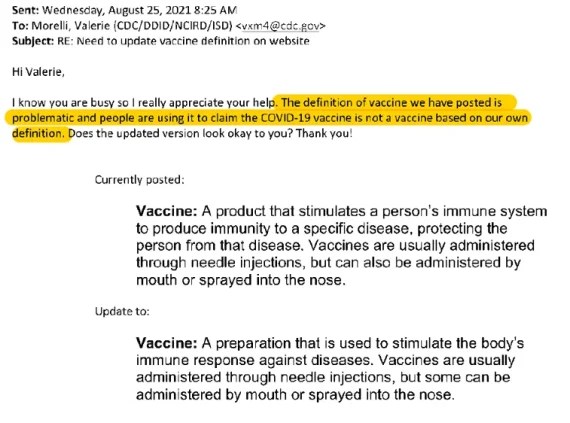

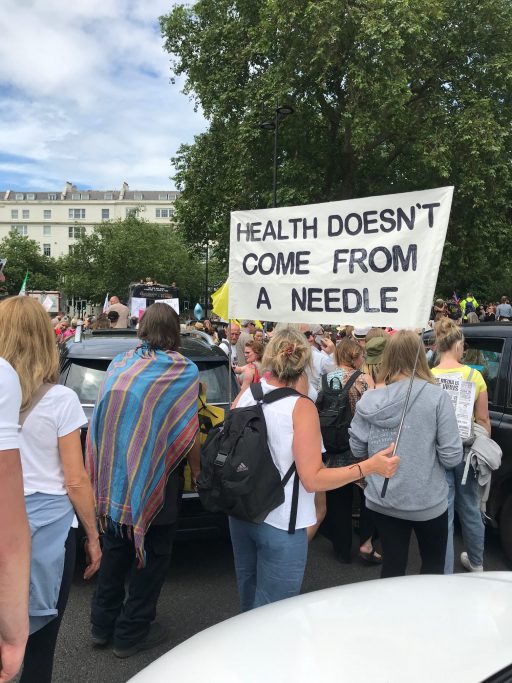
 Aletho News
