On COVID-19 and Curtis LeMay
By Robert S. Griffin • Unz Review • March 26, 2020
As I write this in late March of 2020, the world is under attack from a deadly strain of coronavirus called COVID-19. Thus far, there have been around 18,000 deaths world-wide, including 550 deaths in the United States where I live. My country has come to a halt: schools and businesses are shut down and people have been warned to stay in their houses or apartments hunkered down in the face of this menacing enemy. We’re in a war, that’s how it is being described in the media. The president has said he is like a war-time president.
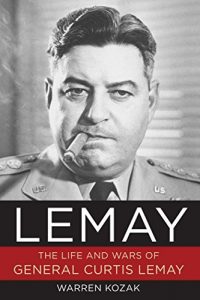
Speaking of war, tonight, hunkered down as I usually am in this very late stage of life—I didn’t need to be directed to hide out on this leather couch I’m sitting on at the moment—I read a biography of an American World War II-era air force general by the name of Curtis LeMay (LeMay: The Life and Times of General Curtis LeMay by Warren Kozak, Regnery, 2009). As I was reading along, it hit me that COVID-19 has a long way to go before it’s in a league with General LeMay as a killing machine. Back in 1945, in less than three hours, LeMay got way, way more killing done than COVID-19 has been able to accomplish in three months.
And it’s more than just in the sheer number of deaths that LeMay comes out on top in the comparison.
COVID-19 has been bad at snuffing out the lives of children and people who aren’t already sick with something. With LeMay, young and old, sick and well, he put them all in their graves.
And LeMay wasn’t limited to primly killing people lying quietly in hospital beds with rubber tubes running into them as COVID-19 has been. He set them on fire, deprived them of air to breathe, and heated them up like pot roasts. Imagine that action!
More, COVID-19 seems only to be proficient at x-ing out human life in cold weather; no good in the summer. LeMay demonstrated in both Europe and Asia that he was a man for all seasons, as it were—he was as effective cancelling someone’s existence in July as January.
Plus, Curtis LeMay didn’t just kill people; he also totally leveled the areas they lived in. COVID-19 has accomplished nothing in this regard.
In addition, Curtis LeMay had style and pizzazz—he had a snappy uniform and chewed on a big cigar. COVID-19, tiny and round with little spikes, no snappy uniform, no big cigar, nothing, lacks presence entirely.
Even more, Curtis LeMay was miles ahead of COVID-19 in public relations. He did his killing and came off looking good and got fawned over and invited to dinner parties, while COVID-19 does its killing and comes off looking bad and is shunned and people are brewing up poison to slip into its margarita. No contest there either.
The one area where COVID-19 comes out ahead of LeMay is in the ability to make the stock market plunge. LeMay was lacking in that area, though in fairness to him, he wasn’t dedicated to getting that accomplished—total destruction and super high death counts were his only priorities.
Assuming you don’t know about him, General Curtis LeMay conceived and ordered an incendiary bombing raid—fire bombs, they set everything aflame—on the civilian population of Tokyo, Japan, March 9th, 1945. Here’s a description of how it went down drawn from the LeMay biography I just read:
Across Tokyo, residents looked up in amazement. They had never seen the “B-sans” [B29 bomber airplanes] so low, nor had they ever seen so many at once. German Catholic priest, Father Gustav Bitter, who was there, later wrote, “The fire falling from the sky reminded me of tinsel hung on a Christmas tree. The red and yellow flames reflected from below onto the silvery undersides of the planes in the upper darkness gave them the appearance of giant dragon flies with jeweled wings. I watched as if I were in a trance.”
With sudden fury, tranquility became horror as the incendiaries hit home. They created tornadoes of fire. They sucked away oxygen; people couldn’t breathe and suffocated. Masuko Harino, a factory worker, reported, “Intense heat came from the firestorm. My eyes seemed about to pop out. People’s clothes were on fire. They were writhing in torment.” A young woman described a school that had become a three-story oven: every human being inside it was cooked to death. Strewn everywhere, some in batches, the incinerated bodies were black; they looked like logs from a distance. There was a dreadful sameness about the dead, no telling men from women or adults from children. If they could walk, survivors wandered about like ghosts, silent. Those still alive were left to die in agony; there was no medicine, food, or drinking water for them.
The raid lasted two hours and forty minutes. Sixteen square miles of Tokyo, one of the most densely populated areas in the world, was transformed into a moonscape of twisted reddish-black iron, roasted sheet metal, and rubble. Not a single man-made structure still stood. An estimated 100,000 people died in Tokyo that night. More than a million were left homeless. The grisly retrieval of bodies took weeks. At least 70,000 people were buried in mass pits. A U.S. Strategic Bombing Survey concluded, “More persons lost their lives in Tokyo that night than in any equivalent period of time in the history of mankind.”
How did what Curtis LeMay pulled off that March night in 1945 go over? It went over really big. And LeMay himself went over really big. I read The New York Times every morning, and it’s been non-stop trashing COVID-19 for weeks, not one positive word, and there’s been all kinds of commiserating with the dead and dying. With LeMay, the Times jumped up and down like cheerleaders. Hurray for our hero! The paper pointed out that those people in Tokyo LeMay set on fire, asphyxiated, and baked had it coming—women, children, and infants, every last one of them–because “the people, factories, and small establishments all contributed to Japan’s war effort.” The Times celebrated LeMay’s admirable deed as the start of really good things: to wit, Japanese cities becoming “no more than holes in the ground.” Though the newspaper cautioned readers that the Japanese “have done their deadliest fighting from holes in the ground,” so we need to be diligent and thorough with the killing.
Following the bombing raid, New Yorker magazine had a glowing profile of LeMay. And he was on the cover of Time magazine and given an effusive write-up in its pages. Nothing like that for COVID-19. But then again, COVID-19 hasn’t done the bang-up job of extinguishing human life that LeMay did, and it’s not anihilating the people who most richly deserve to die like LeMay was so good at doing.
LeMay got a promotion to Chief of Staff of the United States Air Force, and in 1968, ran for vice-president on a third-party ticket, garnering a hefty 13% of the vote. COVID-19 couldn’t come by a janitor’s job or get on the ballot for dogcatcher.
LeMay got an elementary school named after him, and . . . oh, you get my point. LeMay had it all going, and my best guess is that no matter how good COVID-19 does in the future—including getting up to speed with killing little children—it’s never going to measure up to him.
The Truth About the United States’ “Continuity of Government” Plans & The Coronavirus Perfect Storm
By Whitney Webb | The Last American Vagabond | March 23, 2020
WASHINGTON DC — Last week, Newsweek published a report entitled “Inside The Military’s Top Secret Plans If Coronavirus Cripples the Government,” which offers vague descriptions of different military plans that could be put into effect if the civilian government were to be largely incapacitated, with a focus on the potential of the current novel coronavirus (COVID-19) pandemic to result in such a scenario.
The article’s author, William Arkin, largely frames these plans as new, though — buried deep within the article — he eventually mentions that such contingency plans can be traced back to the Eisenhower administration (though they were in place before) and have since been developed and updated by most subsequent administrations, largely through the issuance of executive orders. Arkin also points out that some of these “Continuity of Government”, or COG, plans include the “devolution” of leadership and Constitutional authority, which he notes “could circumvent the normal Constitutional provisions for government succession, and military commanders could be placed in control around America.”
Yet, there are key aspects of COG and its development that Arkin leaves out. For instance, in his timeline on how such plans have developed in the post-World War II era, he conveniently fails to mention any of the Reagan administration’s major changes to COG, including the Reagan-era Executive Order on which all current COG programs are based. Indeed, many of the “extra-Constitutional” aspects of COG that Arkin mentions began during the Reagan administration, when these plans were redrafted to largely exclude members of Congress, including the Speaker of the House, from succession plans and even moved to essentially eliminate Congress in the event of COG being implemented, with near total power instead being given to the executive branch and the military. It was also during this time that the “devolution” aspect of COG was hammered out, as it created three president-cabinet “teams” to be stationed in different parts of the country outside of the nation’s capital. Arkin’s decision to not mention how COG was a major focus of the Reagan administration is striking given that that administration poured hundreds of millions of dollars annually into COG planning and development and also conducted COG drills on a regular basis.
Furthermore, the Miami Herald revealed in 1987, that the COG programs of that era were deeply connected to what the Herald termed “a virtual parallel government outside the traditional cabinet departments and agencies” that began operating “almost from the day Reagan took office” and included many of Reagan’s closest advisers, including then-CIA Director William Casey. The Herald further claimed that this “parallel government” had been responsible for the Iran-Contra scandal (i.e. “involved in arming the Nicaraguan rebels”) as well as “the drafting of martial law plans for national emergencies,” i.e. COG, as well as “the monitoring of U.S. citizens considered potential security risks.”
Other key players in those Reagan-era COG developments, such as former Vice President Dick Cheney, former CIA Director James Woosley and former Secretary of Defense Donald Rumsfeld, are also left unmentioned in Arkin’s article. Not mentioning Cheney and Rumsfeld are particularly glaring omissions given that they were involved in the implementation of aspects of those COG plans that went live in the wake of the September 11 attacks, when both men were serving in key posts in the George W. Bush administration.
While Arkin’s omission of the role of the Reagan administration and leading neoconservatives in the development and use of COG is significant, arguably more significant is his failure to mention one of COG’s major components, one that has gone essentially unmentioned by well-known media outlets for well over a decade – Main Core.
The government’s database of “potential troublemakers”

When Reagan issued Executive Order 12656, he created COG plans that could be implemented during “any national security emergency,” which the E.O. loosely defined as “any occurrence, including natural disaster, military attack, technological emergency, or other emergency, that seriously degrades or seriously threatens the national security of the United States.” E.O. 12656 also put the National Security Council (NSC) in charge of developing and administering COG policies. The NSC official placed in charge of this “secret” COG program was Oliver North, whose name would later become infamous for the key role he played in the Iran-Contra Scandal. During the Iran-Contra hearings in the late 1980s, then-Representative Jack Brooks (D-TX) attempted to ask the following question to North: “Colonel North, in your work at the NSC, were you not assigned at one time to work on plans for the continuity of government in the event of a major disaster?” Brooks, however was immediately cut off by Senator Daniel Inouye (D-HI), who stated ” I believe that question touches upon a highly sensitive and classified area, so may I request that you not touch upon that, sir.” Brooks protested, but North was ultimately not required to give an answer.
As the de facto leader of COG development and planning during the Reagan administration, North oversaw the creation of a controversial database that later became known simply as “Main Core.” The Main Core database, first built using the stolen PROMIS software (more information on PROMIS here and here), was essentially a list of American dissidents and “potential troublemakers.” A senior government official with a high-ranking security clearance and service in five presidential administrations described the database to journalist Chris Ketcham in 2008 as follows:
“A database of Americans, who, often for the slightest and most trivial reason, are considered unfriendly, and who, in a time of panic might be incarcerated. The database can identify and locate perceived ‘enemies of the state’ almost instantaneously.”
In 1993, Wired magazine stated that:
“Using PROMIS, sources point out, North could have drawn up lists of anyone ever arrested for a political protest, for example, or anyone who had ever refused to pay their taxes. Compared to PROMIS, Richard Nixon’s enemies list or Sen. Joe McCarthy’s blacklist look downright crude.”
Main Core is the aspect of COG that is most often ignored in reporting on these types of plans, with Arkin’s article being just a more recent example. While most of the rare mentions of COG in the mainstream touch on how those plans would result in the implementation of martial law and the suspension of the Constitution, they even more rarely — if ever — mention Main Core. Indeed, the last “mainstream” reports on Main Core were written over a decade ago — all in 2008 — by Chris Ketcham in Radar, by Scott Horton in Harpers and by Tim Shorrock in Salon.
Given that COG is now creeping back into mainstream reporting, revisiting Main Core is essential as the database still exists and has grown considerably since Oliver North first oversaw its creation in the early 1980s. In Ketcham’s 2008 article on the subject, he quotes then-senior government officials who said that, at the time, the number of “unfriendly” Americans on that database was approximately 8 million. Ketcham further notes that, in the event COG is implemented, these individuals could be subject to anything ranging from “heightened surveillance and tracking to direct questioning and possibly even detention.”
Tim Shorrock, in his coverage of Main Core, noted that the database was seen in use at the White House following the September 11 attacks and there is strong evidence pointing to it having been used by the George W. Bush administration to guide its domestic surveillance activities in the post-9/11 era. A government official who had told a reporter about having seen the database operational at the White House following September 11th “turned white as a sheet” when the reporter mentioned the name “Main Core” specifically. Shorrock’s reporting also details how Main Core includes vast amounts of information on those “unfriendly” Americans, including the fruits of the vast domestic surveillance programs of the NSA and other U.S. federal agencies that continue today and are now set to be expanded due to the current coronavirus crisis.
In a report written last year on the involvement of U.S. and Israeli intelligence and their private sector allies in pushing for new, troubling pre-crime programs, I noted that Main Core is not only available to U.S. intelligence but also Israel’s intelligence apparatus and that Israeli intelligence was involved in the creation and expansion of Main Core. That report also detailed how Main Core was used by members of Reagan’s NSC to blackmail members of Congress, a practice that is likely to have continued under subsequent administrations. It also noted how Main Core today likely involves the same software now used by every U.S. intelligence agency and numerous other federal agencies that is marketed by Palantir, a company created and owned by Trump ally Peter Thiel. Palantir’s software boasts “predictive policing” capabilities and tracks a category of person using the label “subversive,” very much in keeping with the spirit of Main Core.
Main Core and Bill Barr’s Power Grab

Though Main Core was reportedly in use after September 11 to target “unfriendly” individuals for increased domestic surveillance, concern that COG plans in the age of coronavirus could take a more drastic turn and involve the detention of Americans included in that database now seems more plausible than ever. On Saturday, Politico reported that the Department of Justice has demanded new “emergency powers” during the current pandemic and these powers include being able to indefinitely detain Americans without trial. Politico also noted that the DOJ’s controversial new requests “span several stages of the legal process, from initial arrest to how cases are processed and investigated.” Per the DOJ’s requests, indefinite detention would emerge through a new ability whereby the Attorney General or a judge could pause court proceedings whenever courts are “fully or partially closed by virtue of any natural disaster, civil disobedience, or other emergency situation.”
What Politico did not include in its report is that current Attorney General William Barr has spent the past several months fine-tuning and implementing a “pre-crime” program. Officially known as the “National Disruption and Early Engagement Program” (DEEP), it aims to “identify, assess and engage” potentially violent individuals “before they strike.” Barr first announced this program last October in an official memorandum and therein stated that the program was to be implemented sometime over the course of 2020 and would involve “an efficient, effective and programmatic strategy to disrupt individuals who are mobilizing towards violence, by all lawful means.”
A training conference for that program took place this past December and involved members of the Department of Justice, Federal Bureau of Investigation and “private sector partners.” One recent DOJ statement regarding an arrest made last year in Nevada, claimed that that specific case was part of the DOJ’s “National Disruption and Early Engagement Program,” suggesting that this program is already in use — at least in some parts of the country.
In his memorandum, Barr further notes that the program’s “early engagement tactics” were “born of the posture we adopted with respect to terrorist threats” following the September 11 attacks, essentially stating that this pre-crime program will utilize methods from the “War on Terror” domestically and on a massive scale.
Given the context of the current coronavirus crisis, the DOJ’s recent request for sweeping new powers and the role of Main Core in COG plans, one part of Barr’s pre-crime memorandum stands out. In the part of the document where Barr outlines what actions will be taken once an individual is deemed potentially violent or threatening, he writes that those individuals will be subject to detention, court-ordered mental health treatment and electronic monitoring, among other measures.
The possibility of pre-crime detention was also present in the DOJ’s recent request for new “emergency powers” in light of the coronavirus crisis, as it specifically asks that those new powers apply to “any statutes or rules of procedure otherwise affecting pre-arrest, post-arrest, pre-trial, trial, and post-trial procedures in criminal and juvenile proceedings and all civil process and proceedings.” Norman L. Reimer, executive director of the National Association of Criminal Defense Lawyers, told Politico that the inclusion of the term “pre-arrest” likely means that “you could be arrested and never brought before a judge until they decide that the emergency or the civil disobedience is over. I find it absolutely terrifying.”
Thus, if DOJ is granted these new powers it has requested, the William Barr-led Department of Justice will not only be authorized to indefinitely detain Americans without trial, it will be able to detain them without any proof of those detainees having committed a crime or even having plans or the intent to commit a crime. Instead, the DOJ only needs to argue that the individual was “mobilizing towards violence,” an extremely vague phrase that could potentially be used against anyone who expresses discontent with the government or government policy.
Furthermore, with the FBI having recently flagged “conspiracy theorists” (and by extension those who distrust or question government narratives of both past and present) as a “domestic terror threat,” the DOJ could even make the case that failure to blindly trust government narratives presents a threat to the public order. Given that the Main Core database in its current form contains bulk surveillance gathered from social media, phone conversations/messaging apps and even financial information (i.e. purchasing history, etc.) on Americans deemed unfriendly “often for the slightest and most trivial reason,” this unprecedented power grab by the DOJ has an authoritarian and Orwellian potential to target legitimate dissent like never before.
With the specter of COG now snaking its way into mainstream discourse during the coronavirus crisis, it is essential that Americans stay vigilant, as these Orwellian and dystopian “solutions” to allegedly protect us from the current pandemic have been in place long before COVID-19 made its appearance on the world stage or landed on U.S. shores.
It is also essential to remember that COG, Main Core and the DOJ’s pre-crime program were all created and are currently controlled by extremely corrupt and fundamentally untrustworthy individuals who have not only been involved in, innumerable scandals, over the years, but have also installed and supported some of the most authoritarian, savage and horrific dictators the world has ever seen. To trust them with such unprecedented and dangerous powers in a period of national confusion and panic is tantamount to beckoning the horrors of those dictatorships — past and present — to come home to roost.
COVID-19: Two Major ‘Waves’ of Global Infection, Towards Global Contamination?
By Larry Romanoff | Global Research | March 26, 2020
The US State Department and media are heavily promoting as theology that COVID-19 is “a Chinese virus and China spread it around the world”, demanding apologies and more. One American law firm in Florida filed a class action lawsuit against the Chinese government, seeking compensation for ‘damages’. (1) I have reviewed and analysed the details available of all first and subsequent confirmed infections in all countries, including infection source, virus strain, and timeline, which data provide ample evidence that this American theology is not supported by the facts. There appears to have been two major ‘waves’ of global infection, the first around the end of January, the second a month later. (2) (3) (4)
It is true that – in the very early stages, the first wave – 22 countries had their first confirmed infections in travelers from China but, soon after this, in the second wave, 34 countries obtained their first confirmed infection in travelers from Italy, and another 16 from Iran. However, so-called “first infection” in these countries, from Chinese citizens or other travelers, proved in all but perhaps two cases to be irrelevant because these first external infections proved to have no links to the subsequent local outbreaks, and because the virus strain in many of those explosive local eruptions did not exist in China but only in the US.
What this means is that while Italy discovered its first two infections in Chinese tourists, these two were unrelated to the subsequent virus outbreak because the strain infecting Italy is different from that in China and in those two Chinese tourists. Italy, like almost all other countries, did not obtain its infection from China and indeed could not have done. The only country with Italy’s variety of the virus is the US, and thus the infection must have originated in America, not in China. Similarly, the locations near China – South Korea, Japan, Vietnam, even Taiwan Province, share an entirely different common strain. China had only a tiny pocket of that strain, and very far from Wuhan. These were not infected by China, either. I have dealt with this in an earlier article. (5)
Much was made in the American media of the “first American virus infection” being a Chinese traveler from Wuhan, but that was also irrelevant because the massive underlying epidemic waiting to break free (as it soon did) was unrelated to that Chinese citizen, the thousands of infections in Washington, California and New York clearly stemming from unidentified (and unsought) local sources.
Given the high volume of Chinese passenger traffic around the world, it isn’t surprising that some infections would have been discovered in Chinese nationals in other countries and, since the first outbreak occurred in China, it was natural to test travelers from China. Because of that focus, few countries thought to check travelers from the United States. Australia did check, the country’s Prime Minister recently stating that 80% or more of all infections in his country occurred in the US, then traveled home. (6) Similarly, Iceland confirmed that some of their coronavirus infections have been traced to Denver. (7) (8) I have a strong suspicion that if all countries review the travel history of their early infections, they will discover more US traffic in the mix, perhaps predominantly so.
If you can get people focused on asking the wrong question, you don’t care about the answers. The wrong question is whether the original virus came from a bat or a pangolin or a banana, but that’s irrelevant. It wasn’t a bat or a banana that infected the people in Wuhan, but a live person – or a person carrying a live virus in a pail. The right questions to ask relate to the identity of that person and the source of the contents of that pail, and those answers seem to lead us to the USA. Certainly, they are not to be found in China.
Let’s take a quick look at those two waves of infections that circled the globe.
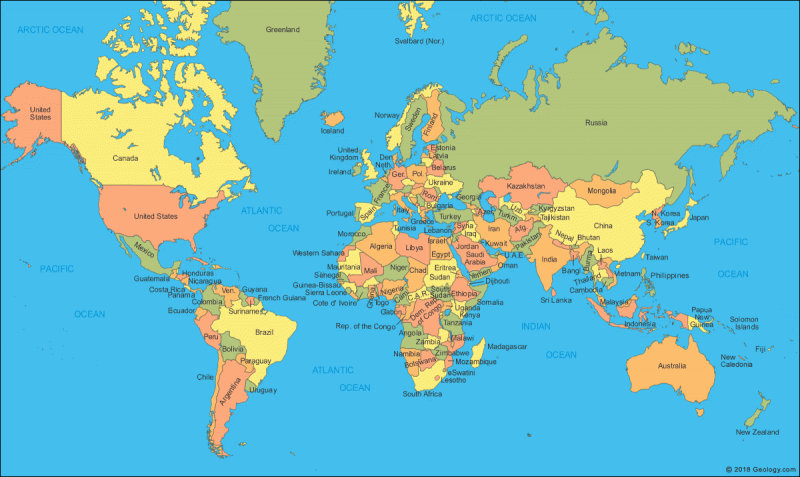
The First Wave simultaneously infected 25 nations or provinces within a few days centered around January 25. The infected areas: Macau, Hong Kong, Taiwan, Singapore, Vietnam, South Korea, Sri Lanka, the Philippines, Cambodia, Nepal, Malaysia, Australia, Thailand, Canada, the US, Germany, Italy, the UK, France, Bavaria, Spain, Belgium, Russia, Finland, and the UAE.
One month later. The Second Wave simultaneously infected 85 nations within a few days centered around February 25. The infected countries: Austria, the Netherlands, Switzerland, Portugal, Luxembourg, Monaco, San Marino, the Vatican, Liechtenstein, Malta, New Zealand, Pakistan, Afghanistan, Indonesia, Bangladesh, the Maldives, Bhutan, Andorra, Bulgaria, Belarus, Lithuania, Poland, Hungary, the Ukraine, the Czech Republic, Slovenia, Latvia, Croatia, Estonia, North Macedonia, Georgia, Romania, Bosnia & Herzegovina, Slovakia, Serbia, Moldova, Albania, Egypt, Iraq, Oman, Bahrain, Kuwait, Lebanon, Qatar, Saudi Arabia, Jordan, Palestine, Iceland, Ecuador, Armenia, Norway, Denmark, Costa Rica, Peru, Colombia, Mexico, the Dominican Republic, Paraguay, Chile, Brazil, Argentina, Nigeria, Togo, Cameroon, Senegal, Algeria, South Africa, Morocco, and Tunisia. Kosovo, Namibia, Uruguay, the Sudan, Ethiopia, Lesotho, Bolivia, Panama, the Democratic Republic of Congo, Mongolia, Burkina Faso, Brunei and Cyprus were simultaneous around one week later.
Source: Geology.com
I make no claim to being a virologist, but this is beginning to look damned peculiar. A natural virus hasn’t the ability to simultaneously infect 85 different countries on all continents of the world, with outbreaks in multiple locations in each country – and to do it without the vehicle of a seafood market full of bats and bananas.
More peculiar is that these countries were by no means all infected with the same variety of the virus, which means the simultaneous infections in these 85 countries were not from the same source. Even more peculiar is that most countries, at least the major ones, reported simultaneous outbreaks in multiple locations, and to date while some nations have been able to identify one or more of their ‘patients zero’, I am aware of no country that was able to definitively identify all their several ‘patients zero’. Considering the above information in light of the known basic facts of virus transmission, intuition suggests at least the possibility of there having been many people carrying a pail of live viruses.
It is interesting to note that high fatality rates are entirely within Italy, Iran, and China. For approximate figures, China’s fatality rate is between 3% and 4%, that of Iran at about 7% and Italy the highest at around 9%. Even more interesting is that if these countries did pass their strain of the virus to other nations, those strains abandoned their lethality when they left home. Of the 34 countries supposedly infected by Italy, for example, all exhibit very low mortality, the same being true of Chinese or Iranian infections. The natural conclusion is that these viruses prefer their ‘home populations’ and pose at best a minor threat to others.
*
Larry Romanoff is a retired management consultant and businessman. He has held senior executive positions in international consulting firms, and owned an international import-export business. He has been a visiting professor at Shanghai’s Fudan University, presenting case studies in international affairs to senior EMBA classes. Mr. Romanoff lives in Shanghai and is currently writing a series of ten books generally related to China and the West. He is a Research Associate of the Centre for Research on Globalization (CRG). He can be contacted at: 2186604556@qq.com
Notes
(2) https://www.clinicaltrialsarena.com/features/coronavirus-outbreak-the-countries-affected/
(3) https://www.clinicaltrialsarena.com/features/coronavirus-countries-with-suspected-cases/
(4) https://www.clinicaltrialsarena.com/features/
(5) https://www.globalresearch.ca/covid-usa-targeting-italy-and-south-korea/5707042
(7) https://www.denverpost.com/2020/03/13/iceland-coronavirus-traced-denver/
(8) https://icelandmonitor.mbl.is/news/news/2020/03/13/three_covid_19_cases_in_iceland_traced_to_denver/
Copyright © Larry Romanoff, Global Research, 2020
On This Day in 1999: NATO Bombing of Yugoslavia in Numbers
Sputnik – March 24, 2020
21 years ago today, on March 24, 1999, NATO began a massive bombing campaign of Yugoslavia, bombarding the country with thousands of cruise missiles and bombs in what would become the largest military assault in Europe since the Second World War.
- NATO’s campaign of air and missile strikes against the Federal Republic of Yugoslavia, which consisted of Serbia and Montenegro, lasted 78 days, ending on June 10, 1999.
- During the campaign, dubbed ‘Operation Noble Anvil’ by NATO, alliance warplanes carried out some 2,300 sorties against 995 facilities, firing nearly 420,000 missiles, bombs and other projectiles with a total mass of about 22,000 metric tonnes.
- The campaign included multiple violations of the laws of war, including the use of cluster bombs (37,000 of them), and depleted uranium projectiles, which led to major spike in oncological diseases, including juvenile cancer rates, after the war. According to Serbian doctors, the most widespread consequences of the use of such weapons have been thyroid disorders, cancers and foetus mutations. In 2017, Serbian scientist Ljubisa Rakic calculated that the amount of DU dropped on Yugoslavia was equivalent to about 170 Hiroshima bombs.
- According to Serbian estimates, the strikes on Yugoslavia left as many as 5,700 people dead, with 12,500 injured.
- NATO casualties included a US AH-64 Apache, an F-16C fighter, an AV-8B Harrier and an F-117A Nighthawk stealth bomber (the first and so far only case of a stealth fighter jet being destroyed in combat). On the Yugoslav side, military and police casualties included 631 troops and 325 policemen dead, with more than 50 missing. Due to the effective use of maskirovka or ‘military deception’ doctrine, The Yugoslav army was able to limit losses of military hardware (93 tanks lost out of an estimated 600), and other armoured vehicles, artillery and anti-aircraft systems.
- The bombing is estimated to have caused as much as $100 billion in damage, destroying or damaging some 25,000 residential buildings, 470 km of roads, and 595 km of railway infrastructure. 14 airports, 19 hospitals, 20 health centers, 69 schools, 18 kindergartens, 176 cultural monuments and 38 bridges were destroyed. The bombing included a targeted raid on Radio Television of Serbia, which claimed 16 lives, and the accidental bombing of the Chinese Embassy, which killed 3 Chinese nationals. All told, Serbian officials estimate that over a third of NATO’s targets were civilian.
- NATO’s official justification for the strikes was its desire to protect Kosovar Albanians from ethnic cleansing and “a humanitarian catastrophe.” Before the war began, Albanian separatists allied to radical Islamist forces clashed with Serbian army and police forces in Kosovo, attacking authorities and attempting to drive ethnic Serbs out of the region. After the bombing campaign was completed and NATO troops entered the breakaway Serbian region in June of 1999, the separatists continued their campaign of violence against Serbs, in spite of NATO commitments to disarm the Kosovar militants.
- In 2008, the province unilaterally declared independence from Serbia. This forced over 200,000 ethnic Serbs to leave their homes. Belgrade, Russia, and many other countries have refused to recognize the breakaway republic. NATO troops, meanwhile, have remained in the province since 1999, establishing Camp Bondsteel, the second-largest US military base in Europe.
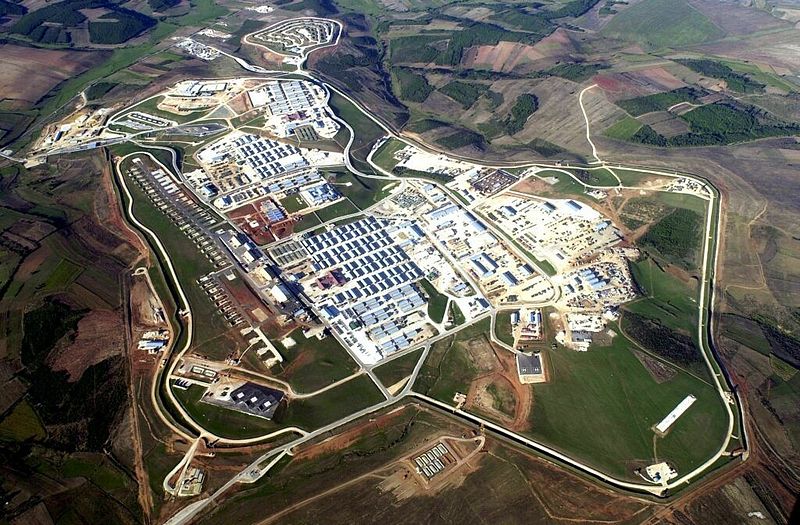
© Photo : public domain Camp Bondsteel in Kosovo
- In 2015, NATO Secretary-General Jens Stoltenberg expressed his “sincere regret” over the deaths and suffering of Serbian civilians. However, three years later at an event in Belgrade, the NATO chief emphasized that the bombing was not aimed against ordinary Serbs, but actually meant “to protect civilians and stop the Milosevic regime.” According to Stoltenberg, Serbs should “look to the future” and continue to shore up the “excellent relationship” between Belgrade and the bloc.
Warming Improves Our Health – part 1
What’s Natural
By Jim Steel | Watts Up With That? | March 22, 2020
It’s deeply disturbing to hear people uncritically regurgitate media misinformation suggesting global warming threatens our health far worse than the COVID pandemic. Scientific evidence unequivocally shows colder weather is the major killer. As Figure 1 illustrates, the percentage of all deaths attributed to weather and temperature increases during the cold months. In contrast mortalities rates fall during warmer months. Researchers examining 74 million deaths across the globe from 1985-2012 found 7.3% were caused by temperatures cooler than the optimum compared to just 0.4% attributed to temperatures above the optimum. Extreme temperature events, both hot and cold only accounted for 0.9% of all deaths.
Likewise, a 2014 National Health Statistics reports found, “During 2006–2010, about 2,000 U.S. residents died each year from weather-related deaths. About 31% of these deaths were attributed to exposure to excessive natural heat, heat stroke, sun stroke; 63% were attributed to exposure to excessive natural cold, hypothermia, or both.” Similarly, according to the CDC , from 1979-1999, a total of 8015 deaths in the United States were heat related while 13,970 deaths were attributed to hypothermia. So why aren’t people listening to the science?

Global warming fear is based on speculation regards what could happen in the future if global average temperatures rose 2°F to 4°F. But scary predictions are not scientific fact until their hypotheses are tested and verified. Without time machines we cannot directly test predicted outcomes for the years 2050 or 2100. But we can observe the effects of a similar temperature change.
In the United States people have steadily migrated away from the cold Northeast to the warmer Southwest. In the Southwest they are exposed to higher average temperatures, temperatures equal to or greater than what global warming predicts they would endure if they remained in the Northeast. The good news, scientists determined that “migration from the Northeast to the Southwest accounts for 4% to 7% of the total gains in life expectancy experienced by the U.S. population over the past thirty years.” We can infer a similar benefit from global warming. A complementary study determined people that migrated to colder climates suffered ‘greater cardiovascular mortality” than people who remained in their native country.
Because the two major U.S. government agencies that track heat and cold deaths – and the CDC – differ sharply on which is the bigger killer, the public is rightfully confused. In contrast to the CDC results, NOAA argues heat is killing twice as many people as cold, but NOAA’s researchers have also been heavily invested in catastrophic global warming claims. By statistically adjusting the data via “seasonal detrending”, they remove the greater number of winter deaths in their analyses and just focus on extreme temperature deaths. They justify their adjustments arguing factors such as increased winter deaths due to flu season are not directly due to colder temperatures. But that obscures the health effects of temperature.
Colder temperatures reduce the effectiveness of our immune systems, which promotes influenza epidemics that may kill 34,000 to 60,000 people in a year. Because influenza season ends when temperatures warm, scientists are hoping warmer weather will similarly curtail the novel COVID-19 pandemic.
NOAA’s adjusted data focuses on deaths from heat waves and cold snaps. Indeed, there is a greater spike in deaths during heat waves, but research suggests heat waves have a small long‑term effect due to a “harvesting effect”. Us elderly and health compromised people are most vulnerable to extreme weather and epidemics. The “harvesting effect” describes an event during which vulnerable people who would have likely died over the following months instead died “prematurely” during an extreme event. But mortality rates drop in the following months because the most vulnerable have already passed. Researchers have found because mortality rates fall during the months following a heat wave there is no long‑term population effect. In contrast, cold snaps do have long-term effects as researchers found no such “harvesting effect”.
Although alarming models and media narratives suggest global warming causes more extreme heat waves, scientific data disagrees. As the EPA’s heat wave index illustrates (below), there has been no increase in heat waves as the worse heat waves happened during the 1930s.
Fortunately, heat waves are short‑lived and foreseeable. Weather forecasters detect approaching high-pressure systems that bring cloudless skies that increase solar heating. High pressure systems inhibit rising air currents that normally carry heat away. And high‑pressure systems draw warm tropical air poleward on one flank while blocking cooler air from moving south. By forecasting extreme heat waves, scientists believe we can prevent most heat wave deaths. Urban heat effects are 2°F to 10°F warmer than the countryside, thus urban dwellers should be most careful. And because elderly people who lack air conditioning are most vulnerable and less mobile, we can make sure they are moved out of harm’s way.

Jim Steele is Director emeritus of San Francisco State’s Sierra Nevada Field Campus and authored Landscapes and Cycles: An Environmentalist’s Journey to Climate Skepticism
Siegel Climate Data Movie

Cutting Through The Noise | February 11, 2020
This 45-minute video shows data from authoritative sources on climate and the claims made around carbon dioxide. Spend some time with this video and decide whether the United Nations and other government agencies are telling you the truth.
See Tony Heller’s videos: https://www.youtube.com/user/TonyHeller1
Recent scientific work on climate: https://medium.com/@pullnews/recent-s…
Global Warming for Dummies: https://medium.com/@pullnews/global-w…
The 97% consensus myth: https://www.youtube.com/watch?v=ewJ6T…
The Giordano Bruno Institute: http://giordano.institute
Update on Arctic sea ice extent: 2019 was a year of low sea ice, but this year is already tracking back to normal: http://nsidc.org/arcticseaicenews/202…
The War in Vietnam: John Wayne Was Wrong
By Marko | The Voluntaryist Reader | 12/10/2012
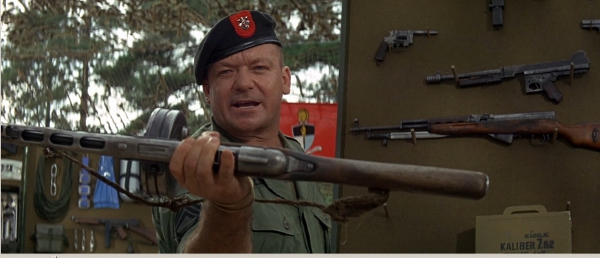
John Wayne’s Vietnam-era pro-war classic, The Green Berets opens with a scene of a press conference. It starts off with a group of Green Berets introducing themselves to the press, which is followed by a Q&A session with two Green Berets sergeants who have been assigned to answer questions. The scene reaches a crescendo when a reporter asks one of the sergeants if the war in Vietnam does not seem like a war between the Vietnamese and if the Americans should therefore stay out of it. Hearing this, the visibly irritated sergeant proceeds to pick up captured Vietnamese firearms from a display board nearby, and drops them in front of the reporter one by one, all the while explaining in a voice laden with hostile emotion that the weapons are Chinese-made, Soviet-made and Czechoslovakian-made respectively.
The implication is clear. The war in Vietnam is not merely an internal Vietnamese affair, because quite aside from the American factor in the war there is also the Soviet, the Chinese, even the Czechoslovakian factor. It is therefore on the account of this involvement of foreign Communist powers in Vietnam that the United States has to involve itself on the other side.
Now it is easy to see the inadequacy of that argument. Providing war material, even on a vast scale, is in no way comparable to a direct military intervention carried out with an occupation force of half a million soldiers, which is how many the United States had in Vietnam at the time The Green Berets aired in 1968.* Clearly the American involvement in Vietnam went far beyond what was necessary to balance out the involvement of the Soviets, the Chinese, or the Czechoslovaks, on the side of Hanoi.
But is it even true the American involvement was a reaction, perhaps an exaggerated reaction, to the Soviet, etc involvement? What were the actual cause and effect, in life rather than on film? Were the Americans in Vietnam because Soviet shipments of weaponry were going there, or were the Soviets shipping weaponry to Vietnam because the Americans had come there? How does this and other claims of war propagandists of the time stack up against what we know from the works of historians today?
In fact, where the Soviets are concerned their relationship with the Vietnamese before the American intervention in Vietnam was at its nadir precisely because the Soviet Union would not support DRV (North Vietnam) in reunifying Vietnam by military means. Soviet aid to DRV in this period, that is when the North was facilitating the struggle of the NLF (“Viet Cong”) in the South and before direct American involvement on a great scale, was relatively small and almost exclusively economic, not military.
When the unifying elections called for by the Geneva Accords of 1954 that had ended the French War in Vietnam did not come about, Hanoi gradually resolved to wage a military campaign to oust the American-backed government in the South. In this, however, it did not have the support of Moscow.
The Soviets feared American intervention which would have to result in an American-Soviet confrontation that would interfere with their policy line of “peaceful coexistence” with the Capitalist bloc. They made it clear to Hanoi they supported its struggle to reunify Vietnam only in as much as it was pursued by diplomatic means and encouraged Hanoi to pursue a peaceful strategy.
Vietnamese Communists shared many of the concerns being voiced by Moscow, but ultimately pressed on regardless. Both the Vietnamese and the Soviets were acutely aware that waging a violent struggle for reunification could result in an American invasion in Vietnam. They were both uneasy about this prospect and regarded it as highly undesirable, even disastrous. The difference was that the Vietnamese were ultimately willing to accept a confrontation with the Americans if they stood in the way of the reunification of their country, but the Soviets were not.
It was not until the time of the Gulf of Tonkin Resolution which marked the official entry of the United States into the war in Vietnam that the USSR begun to provide DRV with military assistance. The Soviets had held back on providing Vietnamese Communists with war material because this would encourage them to wage war in the South, which could in turn result in an American intervention. Now that Americans had intervened regardless, the Soviets no longer had a reason to continue to hold back. Whatever they did, the Americans were already in Vietnam. Now they would provide the Vietnamese with aid, because that was the only way these could hope to prevail against the Americans.
An additional reason for the Soviet reversal on the question of military assistance was to regain the influence they had lost with North Vietnam to China. In 1954 Moscow and Beijing had pressured the Vietnamese Communists into signing the Geneva Accords, which ended the French War in Indochina, but also split Vietnam in half.** Since then both China and the Soviet Union acted as a moderating force on Hanoi. They encouraged the Vietnamese to pursue the goal of reunification by peaceful means only, even after these had clearly shown themselves to be ineffectual when unifying elections called for by the Accords failed to materialize.
Following the Sino-Soviet split, however, Beijing gradually moved away from this position and came to see a military struggle could complement diplomatic and propaganda efforts. In time, the Chinese position would become further radicalized and they would reject the notion that negotiations could be of any use at all. It is important to understand, however, that Beijing came to approve of the armed struggle of the Vietnamese only in 1961, fully two years after the Vietnamese had gone ahead with it.
The change in the position of the PRC and the resultant increase in assistance to Vietnam enabled the Chinese-Vietnamese relationship to thrive. In the context of the Sino-Soviet confrontation within the Communist camp North Vietnam was now aligning ever more closely to China. That is, until the American intervention in the war caused the Soviets to launch a giant, Lend Lease-like program of military assistance to the DRV and regain their lost influence with Hanoi.
The key thing to take from here is that it was not the case that the Vietnamese fell under China’s influence which directed them to pursue the goal of unification of their country with military means. The Vietnamese were orienting themselves to that of the two Communist powers which would support them in their own policy line on South Vietnam. Chinese-Vietnamese relations could thrive precisely because China had come to adopt Hanoi’s view of peaceful means to reunify Vietnam as inadequate. The Soviet Union in turn could regain its influence over DRV and pull it back from the Chinese camp only when it had dropped its opposition to the military struggle of the Vietnamese.
The presence of Soviet and Chinese-made firearms in Vietnamese hands did not in fact point to the latter being simply the agents of monolithic Communism with designs over the entire globe as John Wayne wanted Americans to believe in 1968. In actuality, by going to war the Vietnamese Communists had defied the Kremlin and had frustrated its plans. It was precisely by opting for a military struggle that the DRV leadership had demonstrated its freedom of action. It was also the case that the USSR did everything it could to spare the US its calamitous war in Vietnam.
The Soviets attempted to dissuade the Vietnamese leadership from waging a military struggle even at the cost of losing nearly all its influence in Hanoi and seeing North Vietnam slide into the Chinese camp. If the mistake the Soviets committed was failing to appreciate just how important it was to the Vietnamese to reunify their country, it was a mistake the Americans tragically made as well. In part, due to propagandists like John Wayne who put out the idiotic drivel of the Vietnamese struggle for reunification as a matter of “world Communist domination”.
~ Marko
Source: Mari Olsen, Soviet–Vietnam Relations and the Role of China, 1949–64: Changing Alliances (New York: Routledge, 2006)
*Albeit by the time The Green Berets aired this was no longer the case, the Chinese also stationed troops in Vietnam, specifically in the Communist-run Democratic Republic of Vietnam (North Vietnam), but on a far smaller scale. In all 320,000 Chinese anti-aircraft and engineer troops served in Vietnam in comparison to 2.7 million Americans. The Chinese deployed in North Vietnam in mid 1965, in response to the Americans landing in the South. They evacuated in early 1968, having suffered about 1100 dead, mainly in the American bombing of the North.
**The two powers went as far as to signal the Viet Minh that rejecting the Accords may result in their ending their material assistance to the movement’s struggle.
Featured Video
or go to
Aletho News Archives – Video-Images
From the Archives
A Lesser “Grade” of Human
By Michael Hoffman | Revelation of the Method | January 3, 2024
Will the more than 100 Iranians killed by terrorist bombs today be mourned in the West as victims of terrorism? Certainly not. Allied doctrine has it that the killing of Israeli or American civilians is a crime of cosmic proportions, while shedding the blood of “enemy” women and children is perfectly acceptable; indeed commendable.
The West does not memorialize the hundreds of thousands of civilians bombed by the U.S. in Serbia, Iraq, Afghanistan and every major German city 1943-1945. America’s fire-bombing of the city of Tokyo by General Curtis LeMay in March 1945 was followed by Harry Truman’s atomic incineration of Hiroshima and Nagasaki in August of that year. Truman never had a moment of doubt or regret over the murder of more than a 100,000 Asian children, mothers and non-combatant boys and men. It was business as usual for the “noble” Allies during the “Good War.”
In the West human rights signifies passionate concern only for civilians designated as truly human: Israelis first, then Americans and British, followed by their satraps.
This inhumanity is the legacy of Talmudic ideology, beginning with tractate Sanhedrin 57a from 400 A.D., concerning liability for capital punishment: “If a Jew murders a gentile, he is exempt.”
This teaching of contempt was reiterated in the dogma of Chabad Lubavitch founder Rabbi Shneur Zalman in the 18th century. … continue
Blog Roll
 Aletho News
- MOE: Nearly 22,000 Students and Education Workers Killed
- Guterres in Islamabad: Genocide, cowardice, and the cage of Imran Khan
- Johnson, Marandi say Yemen holds upper hand over Saudi Arabia
- False flags won’t save aggressors, Iran FM spokesman says
- The Makkah Pact Enters Into Force: The End of American Dominance or Its New Form?
- NATO’s top generals gather in Kiev
- EU’s continuing expansion – greater threat to Russia
- US Senator Murphy says Pentagon denied him entry to US base in Qatar
- Israel expands “incitement” charge to target Palestinian education and memory
- How Israel seeks to reshape Arab classrooms
- If Americans Knew
- Three Years of Genocide: How America’s Israel-First Media Filtered Out the Truth
- Israeli war chief briefs ministers on potential war against Palestinian Authority
- New Report: Israel Killed nearly 21,000 Palestinian Students and Education Workers in Past Three Years
- Israel’s flailing chatbot army
- Five Palestinians Killed, Others Injured by Israeli Fire in Gaza
- Israel is rewriting the Palestinian curriculum in East Jerusalem to erase Palestinian identity
- Three years of genocide: Israel turned prisons into killing grounds and torture sites
- Three years of genocide. Words fail. Daily Update
- ‘I’d rather die than go back’: A Palestinian teen’s 10-month nightmare in Israeli jail
- How Jared Kushner’s firm’s investment in an Israeli company could be a major conflict of interest
- No Tricks Zone
- US September “Heat” Was No Record…Many Records Set Decades Ago
- Latest European Green Energy Debacle; Portugal’s Largest Flagship Solar Park Insolvent!
- Green Energy Debacle: German Expert Professor Fritz Vahrenholt Warns Of Severe Economic And Social Consequences
- Two More Paleo Reconstructions Affirm Meters-Higher Sea Levels Across Ireland, Brazil 7000-6000 Years Ago
- New Study: Earth And Venus Surface Warmth Largely Explained By Convection And Lapse Rate, Not CO2 Or Radiation
- 2025 Nature Paper Claiming Worsening Global Drought Gets RETRACTED …Heavily Flawed
- New Study: ‘Global Drought Shows No Detectable Recent Acceleration Under Climate Warming’
- Economic Masterminds: German Socialists Suggest Taxing Productivity Gains Stemming From Using AI
- The South China Sea Has Not Been Cooperating With The Climate Change Narrative
- Energy Crisis: Germany Enters Heating Season With Historically Low Gas Reserve Fill Levels

