Foreign Minister Mohammad Javad Zarif reminds the United States that Israel’s Prime Minister Benjamin Netanyahu contributed to the launch of the US-led invasion of Afghanistan before he tried bringing about the Washington-spearheaded war on Iraq.
“Did you know, realDonaldTrump (the name of the US president’s Twitter account), that Netanyahu was also instrumental in pushing the US into the Afghanistan quagmire?” Zarif tweeted on Tuesday.
The tweet incorporated a video showing the Israeli premier’s promoting the Afghan invasion before its realization in 2001 during a congressional hearing in the US.
“His (Netanyahu’s) motto since 1986: Fight to the last American soldier,” Zarif added. He was citing a remark made by the Israeli politician in a book written by him that year, to which Netanyahu himself is seen referring during the hearing.
About 18 years on, Zarif said, the United States is now bogged down in Afghanistan and unable to “get out,” referring to Washington’s inability to strike a peace deal with the Afghan militant group Taliban, which the US overthrew through the invasion but failed to eliminate.
On Monday, Zarif had posted another tweet indicating Netanyahu’s influence in realization of the US-led invasion of Iraq two years after the invasion of Afghanistan.
In that tweet, he pointed to Netanyahu’s remarks back in 2002, during which the Israeli premier promoted a US-led military aggression against the Arab country by claiming that it would hugely benefit the region.
The United States led its allies in the invasion a year later. The war was ensued by devastating chaos in Iraq and elsewhere in the region. The tumultuous aftermath also paved the way for the emergence of Takfiri terrorists in the Middle East.
“Remember his “GUARANTEE” of “positive reverberations” in ’02?” the tweet read, and also incorporated a video of Netanyahu’s giving the pledge.
Iran calls the US in breach of the Nuclear Non-Proliferation Treaty (NPT), citing Washington’s refusal to come under a comprehensive nuclear arms control regime and its harboring an intention to resume testing of nuclear weapons.
Iranian Ambassador to the United Nations Majid Takht-e Ravanchi made the remarks to the United Nations General Assembly on Monday.
He cited the latest Nuclear Proliferation Report (NPR), which has found that the United States is disinclined to ratify the Comprehensive Nuclear-Test-Ban Treaty. The report also outlines how the US “will resume nuclear explosive testing, … including underground nuclear explosive,” the envoy added.
“This policy is in gross violation of its (the US’s) explicit legal obligations under the NPT,” he noted.
“Such irresponsible policies, the latest of which is the US withdrawal from the INF Treaty, are detrimental to all international efforts towards nuclear disarmament and non-proliferation, and therefore must come to an end,” the ambassador asserted.
The US scrapped the 1987 Intermediate-range Nuclear Forces treaty with Russia last month. Later, the Pentagon announced that it had tested a type of a ground-launched missile that was banned under the deal.
The Iranian official also reminded that Israel, which has the US as its primary and strongest supporter, maintains nuclear weapons that continue to threaten peace and security in the region and beyond.
Copious volumes of evidence have identified the occupying regime as the sole possessor of the non-conventional weapons in the region. Those include The Sunday Times’ historic report of 1986 that first broke the story on tip-off from former Israeli nuclear technician Mordechai Vanunu, and former US president Jimmy Carter’s similarly head-turning revelation that the occupying regime was in possession of hundreds of nuclear warheads.
Takht-e Ravanchi finally remarked, “Total elimination of these inhumane weapons is what we owe to ourselves, to our children, to generations to come and to entire humanity,” adding, “Iran stands ready to play its role in pursuing this noble objective.”
That so many of the 9/11 visas were issued from a single office—the US Consulate in Jeddah, Saudi Arabia—may seem like a minor footnote at first glance, but it is not. In fact, the Jeddah Consulate is not just another US Consular Office. It has a history of issuing visas to terrorists at the request of the CIA. Just ask Michael Springmann. This is his story.
To watch the full 9/11 Whistleblowers series, please CLICK HERE.
TRANSCRIPT
In the days after September 11th, 2001, while the toxic dust was still settling on Lower Manhattan, details began to emerge about the terrorists who had allegedly hijacked the fateful 9/11 flights. Names and pictures were released to the public and broadcast around the world. Ziad Jarrah. Hani Hanjour. Marwan al Shehhi. Mohammad Atta. Even before the official story had begun to coalesce, the foreign faces and unfamiliar names flashing across the screens seared themselves into the consciousness of a traumatized public and left little doubt: This attack was the work of Muslim terrorists.
But at the same time, information began to come out that created problems for this narrative. Reports of these devout Muslim fundamentalists drinking alcohol and partying in strip clubs. Revelations that two of the suspects had been allowed into the US after being identified as Al Qaeda agents. Confirmation that these same agents lived with an FBI asset while in the US. And even the testimony of a senior military intelligence official that a counter-terror program had been specifically warned not to investigate Mohammad Atta in the lead up to 9/11.
WYATT ANDREWS: According to Congressman Kurt Weldon, it was a secret Pentagon intelligence unit code named Able Danger that knew a year before 9/11 that lead hijacker Mohammed Atta was in the United States and connected to Al Qaeda.
CONGRESSMAN KURT WELDON: And as you can see, they identified Mohamed Atta’s cell.
ANDREWS: In the summer of 2000, he says, the Pentagon’s special ops command had identified two terrorist cells inside the US, and knew of the connection between Atta and three other men who became hijackers. When the agents recommended telling the FBI, Weldon says Clinton administration lawyers said “No,” because Atta was in the country legally and could not be targeted by military intelligence.
WELDON: And their recommendation to bring the FBI in, to take that cell out, which was ignored, and they were told you can’t do that.
ANDREWS: So a year before 9/11 they had their picture—they had the picture of Mohamed Atta—
But of the many bizarre pieces of the alleged 9/11 hijacker puzzle, none gets closer to the heart of the mystery than the seemingly innocuous revelation that 14 of the alleged hijackers’ visas to enter the United States had been issued at the same office: the US Consulate in Jeddah. That so many of the visas were issued from a single office may seem like a minor footnote at first glance, but it is not. In fact, the Jeddah Consulate is not just another US Consular Office. It has a history of issuing visas to terrorists at the request of the CIA.
Just ask Michael Springmann.
J. Michael Springmann was a graduate of the Georgetown University School of Foreign Service who joined the Commerce Department’s International Trade Administration, serving as an economic/commercial officer in Stuttgart from 1977 to 1980 and as a commercial attache in New Delhi from 1980 to 1982. In 1987, having passed the foreign service exam and gone through an orientation program, Springmann was assigned to the Jeddah consulate in Saudi Arabia.
Whatever he was expecting to find awaiting him in his new office, it’s safe to say that it didn’t take long for Springmann to find that the reality was going to be very different. As he writes in his expose of his time at the Jeddah consulate, Visas for Al Qaeda: CIA Handout That Rocked the World, “the Kingdom of Saudi Arabia was a mysterious and exotic place, but it was nowhere near as exotic and mysterious as the American consulate general on Palestine Road.”
J. MICHAEL SPRINGMANN: Well, when I got to Saudi Arabia I began hearing all kinds of strange things about the problems my predecessor had made for me. I heard this in fact from Walter Cutler, the American ambassador, just before I left. He spent 45 minutes telling me about all the problems that my predecessor Greta Holtz had created, and I thought, “Gee, she’s going to make my career for me!”
And I get to Jeddah and I’m being requested: “It’s your decision of course, Mike, but we have this problem here with this visa and we have an especially good contact and we’d like to have the person get a visa to come to the United States. Can you do it?” And I’d interview them and I’d give them the visa.
And after a while, these people began to be really strange characters that had no ties to either Saudi Arabia or to their own country and I would refuse them. And I would get a rocket from the Consul General Jay Freres, who’s dead now, about “Why didn’t you issue the visa? This guy is a good contact.”
I said, “Well, he couldn’t prove he had any ties either to Saudi Arabia or to his own country that was strong enough to make him return from the United States to Saudi Arabia or to his own country.” There’s no set list of contacts and connections, but it’s things like having a job, having businesses, having property, having family, something that would prevent you from staying in the United States and disappearing into the woodwork.
And it got to the point where it was “Either issue the visa or you’re not going to work for the State Department anymore.” And as time went by I found out that of some 20 Americans there were only three including myself that I knew for a certainty to work for the Department of State. The rest worked for the CIA or the National Security Agency.
Eventually reassigned as a political/economic officer in Stuttgart and, finally, as an economic analyst for the State Department’s Bureau of Intelligence and Research, it took years for Springmann to fully comprehend the story that he had found himself in the middle of during his time at the Jeddah Consulate. A key piece of that puzzle was provided when Springmann returned to the US and talked to journalist Joseph Trento, who informed him that the Jeddah office was being used by the CIA to ship in Osama Bin Laden’s associates for training in the US.
SPRINGMANN: So I came across Joe Trento, the journalist, in the middle of all of this, and he said, “Well, what you were doing in Saudi Arabia was issuing visas to the Mujahedin who were being recruited for Afghanistan to fight the Soviets.” And then the penny dropped and my eyes were opened and I said “Yeah! That explains why they got so ferocious when I said no to these visas and why they stonewalled me when I tried to find out what was going on.”
I was talking formally to people. I talked formally to the Bureau of Consular Affairs when I was in Washington on the advice of the council for consular affairs in Riyadh. And then I talked to the Congressional Committee on Foreign Affairs for the House of Representatives. I talked to the the Government Accountability Office, which is a watchdog for Congress on the executive branch and got nowhere. People just didn’t want to talk to me. And I said “Well this is really strange.”
And it bears out exactly what Trento had said that they had an intelligence operation going on. And according to Joe the reason they didn’t tell people in Jeddah about this was they wanted plausible deniability. They wanted to be at arm’s length from what people were saying and saying “Well oh, gee. We didn’t know anything about that. He made a mistake. He didn’t get with the program. He didn’t know what was going on. He was violating the law. Put him in jail. Fine him.” Whatever.
Although the idea seems outlandish from a post-9/11 perspective, at the time it was not particularly surprising. The CIA had worked with Osama Bin Laden and other so-called “Mujahedin,” including many Saudis who had been drawn to Afghanistan to fight America’s arch-enemy, the Soviets, during the Afghan War. There were glowing articles framing Bin Laden as an “Anti-Soviet Warrior” who was “On the Road to Peace” in mainstream publications well into the 1990s. And in the weeks after 9/11 it was even reported in the pages of Newsweek that in the late 1980s—precisely at the time that Springmann was stationed at the Jeddah consulate—”the veterans of the [Mujahedin’s] holy war against the Soviets began arriving in the United States—many with passports arranged by the CIA.”
One infamous example of an intelligence agency helping a known terrorist to enter the United States in this period came in the case of Omar Abdel Rahman, better known as the “Blind Sheik.” In December 1990 it was revealed that the Blind Sheik had “slipped into the United States” despite being on a State Department terrorist watchlist. At the time, the State Department insisted “[t]hey made a mistake” by issuing him a tourist visa from the United States Embassy in Khartoum. But three years later, the truth finally came out. As The New York Timesreported in 1993 after a State Department inspector general investigation: “Central Intelligence Agency officers reviewed all seven applications made by Sheik Omar Abdel Rahman to enter the United States between 1986 and 1990 and only once turned him down because of his connections to terrorism.”
In this context, the revelation that Springmann was being directed by the CIA to let Mujahedin into the US for training was not unthinkable or outlandish conspiracy conjecture. On the contrary, it was practically expected.
As Springmann himself admits, if he had simply been informed at the time that the CIA was helping to facilitate such an operation in support of their foreign policy goals against the Soviet Union, he probably would have went along with it.
SPRINGMANN: And you know it goes back to Trento saying “Well, they wanted somebody—some schlub is his word—to be there and take the heat if something went wrong. And at the time I was dumb enough that if they’d explained it to me, “Yes, we’re recruiting the Mujahedin” I would have said “Well, yeah, OK, this is an important foreign policy goal. I hate those godless communist bastards! So yeah, I’ll go with this.” But they never did.
And it would have saved a lot of effort on my part and saved a lot of embarrassment on their part, because I’ve been writing and talking about this for the last 25 years.
Springmann’s attitude is reflective of much of the American public’s perception of Muslim terrorists in the late 1980s. As tools of US foreign policy—convenient pawns to be wielded on the global chessboard against America’s enemies—they were not regarded as enemies themselves, but embraced as “freedom fighters” and “anti-Communist warriors.”
KENNETH BRANAGH: US National Security Adviser Brzezinski flew to Pakistan to set about rallying resistance. He wanted to arm the Mujahedin without revealing America’s role. On the Afghan border near the Khyber Pass, he urged the Soldiers of God to redouble their efforts.
ZBIGNIEW BRZEZINSKI: We know of their deep belief in God, and we are confident that their struggle will succeed. That land over there is yours. You will go back to it one day, because your fight will prevail and you’ll have your homes and your mosques back again, because your cause is right and God is on your side.
PRESIDENT RONALD REAGAN: The goal of the United States remains a genuinely independent Afghanistan, free from external interference, an Afghanistan whose people choose the type of government they wish, an Afghanistan to which the four million refugees from Soviet aggression may return in safety and, yes, in honor.
On behalf of the American people, I salute Chairman Khalis, his delegation, and the people of Afghanistan themselves. You are a nation of heroes. God bless you.
But that was before “the day that changed everything.”
After the FBI released their list of suspected 9/11 hijackers, it didn’t take long for questions to emerge about these men, their background, and their travels. What paper trail and travel documents had been left in their wake? How did they obtain their visas to enter the US? Where did they obtain them? When? Which consular officers were in charge of issuing the visas, and were there any irregularities in the process?
It took years for these questions to be answered, but when they were the results were scarcely believable. Not only had 14 of the alleged hijackers’ visas been obtained from the same Jeddah consulate that the CIA had used to funnel terrorists to the US during Springmann’s tenure, but 12 of those visas were issued by a single consular officer: Shayna Steinger.
A Columbia University graduate with no apparent foreign service background, Steinger was appointed as a consular officer in 1999 and arrived in Jeddah for her first foreign service assignment on July 1, 2000. From that point on, she proceeded to issue the visas to more than half of the alleged hijackers, many of them based on incomplete applications and fraudulent documents.
Saeed al Ghamdi received two visas, one in September, 2000, and the other in June, 2001. His second application was incomplete, lied about his earlier visa and was linked to a different passport with fraudulent features. Both visa requests were approved by Shayna Steinger.
Hani Hanjour received a visa from Steinger in September, 2000, just two weeks after she rejected his first application. In subsequent investigations, she gave conflicting accounts of why she denied Hanjour’s visa the first time and why she issued it the second time.
And, later that week, despite an incomplete application and suspicious indicators in his passport, Steinger issued a visa to Ahmed Alnami.
From the time of her arrival at Jeddah until just weeks before the attacks, the pattern continued: Men with incomplete, error-ridden applications and fraudulent or suspicious documents had their visas rubber stamped by Steinger and, in September, their names and faces ended up on the FBI’s hijack suspect list.
In researching his book, Springmann tracked down and confronted Steinger about her time at Jeddah and her role in issuing these visas.
SPRINGMANN: So in the course of doing more research I ran across Jon Gold who was a 9/11 researcher and an activist, and he came up with Shayna Steinger’s name. She was my successor several times removed who was in Jeddah and who would issued visas to 11 of the 15 Saudis who got the visas in Saudi Arabia to go fly airplanes into American buildings. I said “Wait a minute. What is this?”
And she went on—She was hired out of Columbia University with no real background in foreign affairs that I could see at a very high “GS” or foreign service level of about an FSO-4 which is maybe a GS-13 I can guess in the civil service. And she went on for a full 20 years with the State Department and retired, if she in fact worked for State. And after a bit I came across or actually a journalist came across me and said, “Look I found Shayna Steinger out in Iowa. Do you want to talk to her about your experience and her experience and compare them?”
So I did. I called her up. I found her phone number and she was living with her mother. And we had a bit of a fight to get her to talk to me, and I said, “Look, you either talk to me or I’ll write an article about it.” So she finally broke down and we talked, but only in general terms, saying, “Well, yes, I did the right thing. I did what I was told. They did an investigation. They cleared me.”
And I said “Well, what was the story? You know, my understanding was they were recruiting terrorists for the Mujahedin to come to the US for training at US military facilities, generally on the East Coast. And they even had recruiting offices in the United States, including one in Washington, DC, but I could never find any background exactly where they were located.”
And she said, “I didn’t do anything wrong. I just did what I was told.” And it was kind of like talking to my cats sometimes. They were there and they knew you were talking to them but they didn’t give you any real good answers. So the book went out. It’s never been challenged by the government, but it’s gotten me interviewed such as with you and with a lot of September 11th people.
Like so many of the 9/11 whistleblowers, Springmann paid a heavy price for his desire to tell the truth. His refusal to bow to the CIA and issue visas to unqualified applicants during his time at Jeddah, his refusal to stop asking questions about the operation he had been involved in after he was transferred elsewhere, and his refusal to stop speaking about the visas for Al Qaeda long after he left the State Department have had drastic repercussions on his career and his personal life.
SPRINGMANN: Once I was out of state I found I couldn’t get a job anywhere. I mean I spoke several languages to a greater or lesser extent, I had experience working on three continents, I knew how to manage offices. I couldn’t get a job and I got the impression after a bit that I was being blacklisted.
So I hired one of these resume checking services over in California and asked them to ask around so they they called up Day Mount and pretended to be someone hiring me and wanted to know how I was as an employee in Jeddah, and what he thought of me and could he think of anything that special that I had done. And he said, “Well, I can’t think of anything anything really right off the bat,” and he came up with these weasel worded responses to their questions, which gave the impression that, no, you shouldn’t hire this guy. But he didn’t come out and say that, but it was by implication very very clear that Mike Springmann is not to be touched.
So then I went to law school and worked at getting a job after law school. I started asking around when I was in law school. I interned in various organizations like the American Civil Liberties Union. I talked to various national security organizations and found out that I couldn’t get a job again to save my soul.
[. . .]
I tried writing I tried everything I could think of. And while collecting unemployment I was told to issue them reports on how many people I talk to during the week, and I would send page after page after page in of companies I applied to that I had hoped would fit my talents and abilities but got nowhere.
So I figured, you know, the government is still in there, pitching, trying to keep me out of any kind of a gainful employment because that’s how you get rid of people permanently. They don’t have any money, they can take your house, you have no money to do anything except put food on the table, which you can. So it was a very nasty few years.
And for all of this sacrifice, we are still no closer to learning the truth about the Jeddah consulate and the CIA operations there then we were two decades ago. That 14 of the 19 alleged hijackers received their visas from the same office—12 from the same consular officer—is just the start of a deep and largely unexplored rabbit hole that brings not just the travel patterns or the intelligence connections but the very identity of those suspects into question.
Biographical details and pictures of two separate Ziad Jarrahs have been released to the public, and in fact multiple photographs of a number of the alleged hijackers appear to be pictures of entirely different people. A Waleed al-Shehri appeared alive and well in Morocco after 9/11 to protest the use of his name and photograph in stories about the supposed hijackers, and he was joined by an Abdulrahman al-Omari in Jeddah, who the FBI were forced to apologize to for falsely naming as a suspect. Newsweekreported that five of the alleged hijackers received training at secure U.S. military installations in the 1990s. Amidst the confusion, FBI Director Robert Mueller was forced to admit that the Bureau was “not certain” as to the identity of several of the men on their suspect list.
These issues remain untouched and largely forgotten by a public that, through a process of suggestion and association, have come to believe largely without question that the 19 faces in the iconic “hijacker line up” are the perpetrators of 9/11. It is only through the story of people like Mike Springmann that we can begin removing those layers of lies and obfuscations from the story of 9/11, and come to a better understanding of the truth.
And, in the end, that idea—that we can get closer to the truth, that wrongs can be righted and lies exposed—is the idea that motivates whistleblowers like Mike Springmann. Whistleblowers who have come forward at great personal expense to shine light on these long-buried and inconvenient truths.
SPRINGMANN: I think, you know, I have to look at what I did and look at myself, and as the story goes look at your face in the mirror every morning. But I’ve been reading some emails sent to me by a good lawyer contact, lobbyist and attorney, on stoicism. And there have been things from Marcus Aurelius, Epictetus and other folks. And one of the things that I saw was their comment that—memento mori—that you expect to die and you don’t fear death. You don’t look forward to death, but at the end of the day you think “what have I done this day, the last day that might be the rest of my life? I may not wake up tomorrow morning. Have I balanced the accounts? Have I done something of substance? Have I tried to rectify a wrong and have I tried to do something good to balance out the evil in the world?”
[. . .]
So that’s one of the reasons why I keep doing this. I figure if I’ve got nothing else to do for the rest of my life I’ve got to square the balance, and, regrettably, I’ve got to say educate the ignorant if I can.
New evidence has surfaced to demonstrate how both American and Israeli intelligence services, aided by European partners, have long been targeting Iran in spite of clear evidence that it constituted no threat. The story involves the Stuxnet virus or “worm,” which was first employed in 2007 and eventually identified and exposed by cybersecurity experts in 2010. It constituted one of the first effective uses of a cyber-weapon, carried out in secret by two countries against a third country with which the two were not at war.
Stuxnet was one of a series of viruses developed by Israel and the United States shortly after the turn of the century to target and disrupt specific operating systems in computers by accessing what are referred to as the programmable logic controllers, which operate and manage machinery, to include the centrifuges that are employed in separating and enriching nuclear material. The systems are accessed through Microsoft Windows operating systems and networks, which in turn provide access to the Siemens software that was in use at the Iranian nuclear research facility at Natanz. The centrifuges themselves could be ordered by the virus to speed up and spin wildly, causing them in many cases to tear themselves apart.
The insertion of Stuxnet in the Iranian computers in 2007 by means of a thumb drive reportedly ruined twenty percent of Iran’s existing centrifuges, more than 1,000 machines, but it also spread and infected several hundred thousand computers using Microsoft and Siemens software and eventually wound up in large numbers of machines outside Iran. Though the Stuxnet virus had been designed with safeguards to prevent its spread, it did eventually infect other computers and propagate worldwide. Its use by its developers was regarded as particularly reckless after it was discovered and identified.
Ironically, two comprehensive studies by the American Government’s Central Intelligence Agency (CIA) conducted in 2007 and 2012 determined that no Iranian nuclear weapons program existed and that Iran had never taken any serious steps to initiate such research. Israel was also aware that there was no program but it was active in planting fabricated information suggesting that a secret facility existed that was engaged in weapon development. It has frequently been observed that Israel’s Prime Minister Benjamin Netanyahu has been warning for twenty years that Iran is “six months away” from having an atomic bomb.
Nevertheless, even though the Iranian nuclear threat was known to be a fantasy by 2007 at the latest, the Israeli government, sometimes working in collusion with American intelligence agencies, took steps to interfere with Iran’s existing and completely legal and open to inspection civilian atomic energy program. A multifaceted plan was developed and executed that included using surrogates to identify then kill Iranian scientists and technicians while also developing and introducing viruses into the country’s computer systems. This was in spite of the fact that Iran was fully compliant with international norms on nuclear research and had its facilities regularly inspected by the International Atomic Energy Agency (IAEA). Iran was also a signatory to the Nuclear Non-Proliferation Treaty (NPT), which Israel, possessing its own nuclear arsenal consisting of as many as 200 weapons, had refused to sign.
All of the background to Stuxnet has been known for some time, but one mystery remained: how did the virus get introduced into the Natanz computers as the research center was “quarantined” and not connected to the internet so that it could not be attacked from outside? That question has now been answered.
The Dutch external intelligence service AIVD had been approached by the U.S. and Israel in 2004 to provide help in locating a suitable Iranian to be groomed for the project. At that time, Holland had a large expat Iranian community and it was a relatively easy country for Iranian travelers to enter. Eventually, an Iranian engineer was identified, recruited and trained to plant the Stuxnet virus at the Natanz Iranian nuclear research site in 2007, with the objective of sabotaging the uranium enrichment centrifuges in what was to be the first-ever major use of a cyber-weapon.
The actual insertion of the thumb drive was part of a broader operation which began with a thorough debriefing of the engineer, who had previously been a contractor at Natanz, regarding the location of the centrifuges and other hardware within the facility, making it possible to write code that could target the centrifuges and their control systems specifically.
The Israeli-American-Dutch agent/mole, who was responding to an offer of considerable money and resettlement in the West, set up a computer systems maintenance and repair company in Iran that eventually was able to obtain contract work at Natanz. The agent made several visits to the facility to fine-tune his approach to installing the virus prior to actually doing so.
According to the media report, the operation was called the “Olympic Games” after the five-ring Olympian symbol because it wound up including the intelligence agencies of five countries after Germany and France joined in on the effort. It should be noted that Holland, Germany and France all had nominally friendly relations with Iran at the time. Then U.S. President George W. Bush personally approved the attack after his concerns that the virus might escape from Iran and cause a major international crisis were addressed by technical experts.
There were several arrests and executions at Natanz after the virus was discovered and it is not known if the Dutch mole ever collected on his money and the promised resettlement. More recently, Iran entered into the Joint Comprehensive Plan of Action (JCPOA) with the U.S., the United Nations, Britain, Germany, France, China and Russia in 2015. President Donald Trump withdrew from the arrangement last year for reasons best described a fatuous and, as of now, JCPOA is still in place but under considerable strain from all sides.
One might argue that the continuing Iran nuclear crisis all started with the reckless deployment of Stuxnet, which was based on a flawed assessment, did not have to be done, and was executed for all the wrong reasons, primarily consisting of pressure from Israel on Washington to “do something.” It also demonstrated that cyber-warfare was for real and could do great damage to infrastructure, a genie that has been let out of the bottle and has made the world a much less safe place. It has, in fact, become a global problem that continues to vex politicians and national security experts worldwide.
Hezbollah footage of the strike (English subtitles):
Report about Israeli dummy soldiers:
According to Israel’s military censor, there were no Israelis so much as scracthed by Hezbollah’s Kornet missiles, but only 2 days later, an Israeli soldier was severely injured and almost died because of an alledged ‘rock-throwing game’. Sounds like the lousiest cover-up ever…
Political section of the speech of Hezbollah Secretary General Sayed Hassan Nasrallah on September 2nd, 2019, on the occasion of the commemoration of the martyrdom of Imam Hussein (‘Ashura), and the day after Hezbollah’s retaliation against an Israeli armored vehicle.
Transcript:
The (political) part of my speech will be devoted to the latest developments, that is Hezbollah’s retaliation, the different reactions to it and (everything that happened yesterday and today).
First, we express our thanks to God Most High and Exalted for the success, the victory, and the accomplishments He has bestowed upon us, because all the benefits we enjoy come from His beneficence, His goodness, and His mercy. We praise Him and implore His forgiveness.
I must then address, at the beginning of my speech, the Resistance, the Mujahideen (fighters in the way of God), be they leaders, soldiers or persons in charge, who since 8 days, since Sunday (August 25) to this day, until last night or until this morning at least, were on the battlefield, at every time, along the Lebanese border with occupied Palestine, and ready (to hit the first valuable target). It is by their presence, their state of alert, their courage, their efficiency and their sacrifices that we realized and confirmed all the equations that dissuade the enemy and protect our country.
These brothers, since the first hours after my Sunday (August 25) speech, whether under the sun or under the stars, in the heat of daylight or the freshness of the night, and in spite of the maximum alert of the Israeli enemy, of his radars and (surveillance) drones, as well as all his (ultra-sophisticated) technical means, remained in front of the enemy, exposed (to strikes), present on the ground (and not hidden in bunkers), ready to give their blood. After God the Most High and the Exalted, it is they whom we must thank, these noble and very dear brothers.
In the same way, I must thank the Lebanese army, which remained vigilant on the whole length of the border, ready to face any aggression. I also express our thanks to our beloved people, our kith and kin, and our beloved families, especially those who are in the villages and regions closest to the border, who have spent all these days living their daily & normal lives, and who have followed, supported and congratulated our retaliation, and expressed their joy and pride in the success of the Resistance.
Likewise, we naturally thank anew the (Lebanese) Presidents (of the Republic, of the Council of Ministers and of the Parliament) and government officials, and all those who have clearly and firmly taken a stance (alongside the Resistance). I declare in truth that they have followed the events until the last moments, and have assumed their national responsibility.
I particularly thank the media, who have made great efforts to follow the evolution of the situation, supporting the actions of the Resistance and showing the situation as it really was, thwarting the enemy’s attempts to hide the facts (claiming that Hezbollah didn’t cause any casualties). As I will explain, our operation did not take place only yesterday in the afternoon, but extended from my speech (on August 25) to the military operation itself. All of this has been closely monitored by the media, and I thank them all, especially the reporters on the ground, who sometimes put themselves in danger in order to show the situation in a strong and eloquent way [the Israeli Army had completely deserted the area, allowing some Al-Manar, Al-Mayadeen and Russia Today Arabic journalists to infiltrate Israeli territory and even enter abandoned military bases]. We also thank all the analysts and commentators who provided the public with truthful, relevant and eloquent explanations.
I did not prepare a list of all those I had to thank, so in advance, I apologize to all those I may have forgotten, which will dispense me from mentioning them later [Laughter]. We thank everyone.
Secondly, I will quickly assess what has happened so that I can draw clear conclusions. What happened started during the night from Saturday to Sunday (August 25), and consisted of two events. The first event was the Israeli airstrike against the city of ‘Aqraba in the suburbs of Damascus, which led to the martyrdom of our dear brothers Yasser Dhaher and Hassan Zbib. And a few hours later, the second event was the operation of the two suicide drones in the southern suburbs of Beirut. I want to clarify something in this regard: it is common knowledge that the first suicide drone was neutralized (pelted with stones) and fell to the ground, and therefore failed to achieve what it was sent for. I add today that the second suicide drone, which was also sent to destroy a target, also failed in its mission: the target that this drone tried to destroy was not hit. The Israelis know well what they have come to strike, and I have no reason to reveal it, but I announce to the enemy that this operation failed. And it is also a blessing of God the Most High and Exalted.
Since the first moments, we have announced, especially in my Sunday speech, that we would not remain silent about these two aggressions, that we would not accept that new equations are imposed (to our disadvantage), and that we wouldn’t let the achievements of our July 2006 victory be squandered. And that’s why we said we would retaliate with certainty to these two attacks.
Our response has taken two aspects. The first aspect of our response took place on the ground, and across the international border with occupied Palestine, with the territory of Palestine occupied in 1948. And the second aspect of our response concerns Israeli drones in the skies of Lebanon.
Regarding the first aspect, the direct operation on the ground, we have stated publicly and clearly… I will present the overall situation to highlight our strengths, the strengths of Lebanon, and the points of weakness, humiliation, fear and failure of the enemy. We announced publicly that we would retaliate from Lebanon, from anywhere on the Lebanese border (with occupied Palestine), and perhaps even in the depths (of Israel). We warned the enemy that he had to expect us (any time) from now on. This is a strength point of the Resistance. We could have remained silent, refrained from threatening (Israel of an imminent retaliation), not revealing our intentions, keeping quiet as we say, for 1, 2 or 3 days, then hit them by surprise. The military know that one of the most important aspects of a military operation is the element of surprise. But we have not done so, because our fight against the Zionist entity has a major psychological component, affecting the morale and soul of the enemy (which we strive to undermine). So we told them from the beginning to wait for us, because we were coming. In itself, it is an enormous challenge issued by the Resistance, (but the enemy did not dare to take up the gauntlet).
If we consider the overall situation, in our eyes, everything that has happened since my (August 25) speech until yesterday, and which I will detail, is a (humiliating) punishment inflicted on the enemy, a deterrence of the enemy, a (successful) confrontation with the enemy. It is an operation composed of several layers that add up. Part of it is psychological, part of it touches the morale, part of it takes place on the battlefield, a part consists of an (anti-tank) missile launch, but all this is part of the same operation of a multiple punishment of the enemy, consisting of different layers.
If we consider the situation since last Sunday, since my August 25 speech, and briefly summarize the facts, what happened?
1 – The border has been deserted throughout its length. For Israel, there was no longer any distinction between the blue line, the international border, and this or that disputed piece of land in one direction or the other: the entire border, whether it is indicated by a wall or barbed wire, was completely abandoned by Israel, and it was impossible to find any soldier on the whole length of the border. Neither soldiers, nor these vehicles that regularly move on the dirt tracks or asphalt could be seen along the border. We did not see anyone nor anything. It is only today that they began to reappear, our operation having ended yesterday.
2 – All positions close to the borders have been completely abandoned. They did not even hole up in their bases, no, they completely abandoned them. They escaped. By God, it’s more than we expected. I told them to hole up, but they literally fled.
Entire barracks were abandoned, like the one whose name has now become famous, the barracks of Avivim. A large military base, including a command center occupied by a large number of officers and soldiers, etc., etc., etc., was completely deserted, as a journalist (from Russia Today) showed: she went in and walked the premises, finding them completely empty. There was absolutely no one! Several barracks and military positions have been abandoned at the border, and sometimes even in the depths (of Israel).
3 – At a depth of 5 kilometers in some areas, and 7 kilometers in others, special measures, severe restrictions, evacuations and travel bans have been put in place. Even in the settlements, as we saw on television, cameras roamed the settlements from morning till night and did not meet a soul: no pedestrians, no motorists, no motorcyclists, no bicycles, no open shops, nothing. Everyone stood still. They were all holed up in their houses, and the doors of the shelters were open.
4 – Very severe (security) measures were taken everywhere in Israel, with an unprecedented state of alert. All the Iron Dome units that they could find and bring to the North, they brought and deployed them to face (possible) missile fire. All their anti-aircraft defense capabilities were activated, as well as all their means of dealing with the missiles or drones that Hezbollah could have launched towards occupied Palestine. Of course, we have drones (in quality and quantity), it’s not a secret and they know it well.
5 – During these 8 days, their combat units were on alert, on a war footing and deployed: I speak of several divisions, several air bases, several naval bases, etc.
If we consider the general situation that prevailed on the Israeli side during these last days, it was clear that this Israel, which to this day presents itself as endowed with the most powerful army of the region, the first army of the region, this arrogant, despotic, infatuated and tyrannical state, which once terrorized millions and hundreds of millions of people (through its wars and threats of aggression), for eight days, the whole world saw it frightened, fearful, hidden, holed up, and having completely deserted the Lebanese border on a width of at least 5 kilometers. It’s an absolute shame and humiliation. It is a demonstration of weakness. This is one manifestation of the fact that Israel is weaker than a spider’s web. And that’s part of the punishment (we inflicted on Israel). Before we retaliated with our military operation, some people were (ironically) asking: where is your response? But (this terror situation on the Israeli side) was already a punishment and a retaliation.
On the other hand, on our side, the Lebanese army has not left the border anywhere, remaining in all its positions. Likewise, the Resistance was present everywhere it was supposed to be. Our good Lebanese people were normally moving in border areas, whether in villages or fields [Israeli settlers were forbidden to approach “their” fields in occupied Palestine], and led a completely normal life.
So we have a scene (of normal life) on our side, on our territory and in our villages, a scene of endurance, strength, assurance, confidence, certainty, dignity and nobility, be it Lebanon, its people, its army, its State or its Resistance. Such was the scene on our side, (compare it with the spectacle of terror and desolation on the other side).
Similarly, to properly assess the situation, it should be noted that yesterday, the Resistance conducted its operation in broad daylight. The military is well aware of what it means to conduct an operation in broad daylight (risk of detection, of elimination, etc.), so close to the border, while the (Israeli surveillance) drones were flying in the sky, and while their combat helicopters were ready to come and hit us. Our fighters were exposed to danger in broad daylight because we did not act at night. It is a deliberate choice we made not to act at night, for reasons that I will not bother to mention (show of force, etc.). We made the decision to act imperatively by day, and we communicated it to the brothers in charge of the operation on the ground, and it is also one of the reasons for the delay of the operation, because if we had acted at night, we would have had more targets and opportunities.
This Resistance did not hit directly at the border – anyway, there were no targets at the border – but at some depth (2 kilometers). And despite all the Israeli measures, despite all their precautions and despite all the dummy targets they have scattered everywhere (empty vehicles or occupied by dummies dressed as soldiers), a considerable amount of military vehicles and tanks placed here and there, which were all calling for our strikes to put an end to this unbearable wait for the enemy, despite all this, the Resistance has patiently waited, watched and monitored, ensuring the validity of information and checking all the data, and when a valuable target finally showed up, we hit it and touched it with certainty. Today, the whole world was able to see the video of the operation broadcast in the media. What happened clearly demonstrates our boldness, our courage, our precision and our sense of responsibility.
O my brothers and sisters, one of the most important points about what happened yesterday, and whatever the Israeli attempts to minimize its losses, is the very fact that the operation was conducted. The most important aspect of the operation, even before its success and its results, is to have been accomplished! We had the courage to do it! For the past 7 days, in the media, there is not a single Israeli official who has not said that if we opened fire, shot a missile, killed, wounded or attacked, the reaction would be devastating and could lead to war, etc. We have heard all conceivable threats. And the most severe are those that were expressed through the diplomatic channels: if one was to believe them, Israel would not tolerate the slightest shot in its direction, would respond disproportionately and destroy the country, returning it to the Stone Age. A considerable operation to terrorize us was conducted by the media and diplomatic channels (United States, Great Britain, France, etc.). But I assure you, O my brothers and sisters, and in all sincerity: not only has Hezbollah not flinched, but none of the Lebanese officials with whom we spoke trembled! Nobody flinched! And Lebanon remained strong in its attachment (to its right to defend itself), and its faith in our retaliation response and the legitimacy of our retaliation. The very fact that we made this operation is a success in itself!
I come to the most important point to which all should pay attention, because it is on it that I will base the conclusion of this whole episode of confrontation, and the new equation in force. In the past, when we were attacked, where did we respond? In the Shebaa Farms, inside the Shebaa Farms. Because there are Israeli military positions inside the Shebaa farms. The traps we laid for Israeli tanks and vehicles were placed on occupied Lebanese territory. The rest of the border, that is to say the border of Lebanon with the territory of Palestine occupied in 1948, and which the enemy considers as its official and indisputable border, its usurping State and its entity, the very fact of touching this border was considered by the enemy for decades as one of the largest red lines. Israel could not tolerate anyone allowing himself to touch the barbed wire delimiting the border, sending any drone flying over its territory, firing in the air, or throwing a grenade at it. No way! Israel responded violently to any such violation, for it was a red line in their eyes! What happened yesterday is that the main red line of Israel for decades has been shattered by the Islamic Resistance! That’s what happened yesterday.
It’s not a red line anymore. It’s over. This period is well and truly over, regardless of what the Israelis can say and claim.
And even tastier, this Israel, which normally [Laughter] responds to any shot, any projectile and any grenade by air strikes, assassinations and massive destruction, yesterday, Israel has made considerable efforts to absorb the blow at all costs. And even their incendiary and phosphorous strikes (against empty lands and forests) were mostly defensive, and aimed at building a smokescreen to protect themselves from further strikes, as they imagined that the Resistance was going to strike again the barracks of Avivim and other positions. But they wanted to get over with it and especially not escalate, being ready to conclude a truce at any price.
What is the result of all this? First, we confirmed and even reinforced the deterrence equation. If Netanyahu wanted to change the equation in his favor, we confirmed it and even reinforced it in our favor. Our deterrent force is now greater. We have increased it by one step. He feared a retaliation from us, but thought we would respect some red lines. But we said and demonstrated that we no longer have any red line. Since Netanyahu tried to change the rules of engagement, our response was to break absolutely all the red lines (of Israel). We have passed from a stage where our responses were launched exclusively against (a thin band of) occupied Lebanese territory, namely the Shebaa Farms and the Kfar Chouba Hills, to a stage where our response directly strikes the territory of occupied Palestine! It’s something new. It’s completely new. And we do not have to hit the border area. We can strike at 1, 2 or 5 kilometers, or, if need be, far more distant points, in the full depth of occupied Palestine.
What is the message we sent? This is where our accomplishment and success lie. The message is clear: if you attack us, all your borders, all your soldiers and all your settlements, whether at the border, deep or at the very extremity of your entity, will be threatened and may be targeted by our response, absolutely and categorically. This does not pose any problem for us. And the courage and boldness demonstrated by the Resistance yesterday will be found in the future by actions much more courageous, bolder, stronger and more important. Such is the new equation.
Today, I want to say this to the Israelis: Listen carefully to what Netanyahu did by his imbecility and pettiness, and remember this date, September 1, 2019. Sunday, September 1, 2019 is the beginning of a new stage of the situation on the Lebanese border with occupied Palestine: as regards the defense of Lebanon, its sovereignty, its dignity, its security and its people, there is no longer any red line!
I now come to the second point. I already started to mention it on Sunday (August 25) when I declared that from now on, we would work on a new file on which we had avoided to intervene during all the past years, namely the Lebanese skies and its permanent violation by Israeli drones. I explained that it was only internal Lebanese considerations that led us to leave this issue aside, and that we constantly called upon the Lebanese State to solve this problem. But it has not been resolved. We have therefore established, and it is now irrevocable in the deterrence equation, that the Lebanese have the right to defend their territory, their skies, their waters, their people, their security and their sovereignty, and that we would take care of defending them. And so we opened a new field of action, namely to confront the Israeli drones in our skies. I say nothing more than that. I speak of the Lebanese skies. We have established and announced it clearly. The decision is made, and implementing this choice is now in the hands of our fighters on the ground, as for the first point. Since August 25, the decision to retaliate against Israel was taken and was in the hands of the fighters on the ground, to whom we announced that we were in no hurry: we wanted a clean operation, without any loss on our side, and that would restore the deterrence equation in our favor. The opportunity arose, they seized it and we re-established and strengthened the deterrence equation.
Today, with regard to the fight against Israeli drones, the same is true: the decision is made, and everything is now in the hands of our combatants on the ground. And I already explained how we would behave, what was our vision, etc., so I do not need to repeat myself [Hezbollah does not commit to shooting down all the drones, because that may disclose and / or exhaust all of its anti-aircraft defenses, but will act wisely and judiciously depending on the circumstances]. Tomorrow, someone will tell us, when the first drone is shot down – and this can happen at any time –, that we are putting the stability of the country in danger, pushing the situation towards a military escalation, etc. But it will be useless. Whoever wants, within the international community, especially the countries that contacted us before Sunday, Sunday and during the Sunday operation, I say to them now: whoever cares about the stability of Lebanon and the region must speak with the Israelis and tell them that the time of the violation of Lebanon’s skies with impunity is over. This time is over. There will be no more tolerance and we will no longer look the other way. Hezbollah will no longer allow the sovereignty and the skies of Lebanon to be violated. As for how we deal with it, it’s a decision that’s in our hands. But it’s our right. No matter how long it takes, it’s our right, and the way we act is just a detail. Of course, that’s part of our response.
Today, I declare that because of the death of our two brothers killed in Syria, and the two suicide drones in Beirut, our response began on Sunday, continued yesterday and will continue via the fight against drones. That’s what we decided. Naturally, we come out stronger from this episode of confrontation, with a stronger position. Netanyahu wanted to overturn the rules of engagement in Israel’s favor, and we stopped him. He wanted to break the balance of deterrence, and we strengthened it in our favor. This is the result, and that is the conclusion.
Anyway, the Israelis must know that all this was caused by the stupidity of this man, who has only one idea in mind, to win the elections at all costs in order to escape justice for the many corruption cases in which he is involved.
So we can say that this new stage of confrontation is over from the point of view of the new equation that it has founded. And in the future, the fight against drones will continue. And in case of aggression against Lebanon, there will no longer be any red line at the international borders and in the Palestinian territories occupied in 1948, to which will henceforth extend all our retaliations, which will no longer be confined to the Shebaa farms. All the limits have been removed, and everything is now clear.
I renew my thanks to God and to our fighters, whose response has confirmed and strengthened the equations, prevented the rules of engagement from being violated in favor of the enemy, preserved the achievements of the July 2006 war, as well as the dignity, the honor and the pre-eminence of Lebanon vis-a-vis Israel.
So much for this topic. I’m done with the political section of my speech. Pray upon the Prophet and his family.
Last year Professor Deborah Lipstadt gave a lecture about Holocaust denial at the University of Oxford. There she stated:
“In not one war-crimes trial since the end of World War Two has a perpetrator of any nationality ever said it didn’t happen.” (1:55)
There are many, many people in fact who are under the same impression; they are quite certain that during the trials all the Nazis fell to their knees exclaiming “We did it!”. But is this true?
In order to find out we will have a look at several Nazi testimonies from the International Military Tribunal (IMT) and Nuremberg Military Tribunal (NMT) transcripts regarding the alleged attempt to exterminate the Jews – testimonies you will never find in history books.
We begin with Field Marshal Wilhelm Keitel (IMT, v. 10, p. 594, 598):
“DR. LATERNSER: Do you know whether the higher military commanders at any time were informed of the intention of Hitler or Himmler to kill the Jews?
KEITEL: According to my opinion, that was not the case, since I personally was not informed either. […]
DR. HORN: In connection with the testimony by General Lahousen, I want to ask you one question. At the time of the Polish campaign, was there a directive or an order by Hitler to exterminate the Jews in the Polish Ukraine?
KEITEL: I cannot recall any such things. I know only that during the occupation of Poland – that is after the occupation – the problem of the Polish Jews played a part. In that connection I also put a question once to Hitler to which, I believe, he answered that that area was well suited for settling the Jews there. I do not know or remember anything else.”
We continue with Reichskommissar Arthur Seyss-Inquart (v. 16, p. 19):
“DR. HAENSEL: You said in your interrogation that a decree of Heydrich’s caused you to have Jews transported from Holland. Did you see Hitler’s decree to Heydrich?
SEYSS-INQUART: I think so – a decree from Hitler to Heydrich alone would not have been for Heydrich.
DR. HAENSEL: You picture the situation as if Heydrich had told you that he had this decree.
SEYSS-INQUART: Yes, he told me that, and a few weeks later he sent me this decree.
DR. HAENSEL: Was it in writing?
SEYSS-INQUART: Yes, it was in writing.
DR. HAENSEL: And what did the decree say?
SEYSS-INQUART: That he had complete charge of the final solution of the Jewish question as well as other matters dealing therewith.
DR. HAENSEL: And when was this? 1941? 1940?
SEYSS-INQUART: It was at about the time when the evacuations started. That was in 1942.
DR. HAENSEL: That must be wrong. It was 1941, not later.
SEYSS-INQUART: Perhaps he showed me the decree later. I do not know the date of the decree.
DR. HAENSEL: That must be the case. But this decree, you said, was conceived in general terms?
SEYSS-INQUART: General terms.
DR. HAENSEL: It could be interpreted one way or another? I mean, you know…
SEYSS-INQUART: Yes, I had the impression that in the occupied territories Heydrich was to carry through the evacuation, and at that time I was not quite sure whether that was to be a final evacuation – which, however, was possible. The most extreme possibility was that the Jews would be collected in camps and after the end of the war settled somewhere.
DR. HAENSEL: I beg your pardon, Witness, the most extreme possibility would certainly be that the Jews would be destroyed, is that not so?
SEYSS-INQUART: I am speaking of the most extreme possibility which I thought of at the time.”
He also added (p. 20):
“DR. HAENSEL: Before 1943 did you discuss these problems with Hitler?
SEYSS-INQUART: I was merely present when Hitler talked about these problems. It was always along this line, to eliminate the Jews from the German population and to send them somewhere abroad.
DR. HAENSEL: But there was no talk at all about destruction of the Jews?
SEYSS-INQUART: Never.”
Now we turn to the Chief of the Reich Chancellery Hans Lammers (v. 11, pp. 50-53):
“DR. THOMA: I have only one more question. Did you know anything regarding the fact that Hitler had decided to solve the Jewish question by the final solution, that is, by the annihilation of the Jews?
LAMMERS: Yes, I know a great deal about that. The final solution of the Jewish question became known to me for the first time in 1942. That is when I heard that the Führer supposedly, through Göring, had given an order to the SS Obergruppenführer Heydrich to achieve a solution of the Jewish question. I did not know the exact contents of that order and consequently, since this did not come within my jurisdiction, at the beginning I took a negative attitude, but then as I wanted to know something I, of course, had to contact Himmler. I asked him what was really meant by the idea of the final solution of the Jewish question. Himmler replied that he had received the order from the Führer to bring about the final solution of the Jewish problem – or rather Heydrich and his successor had that order – and that the main point of the order was that the Jews were to be evacuated from Germany. With that statement I was satisfied for the time and waited for further developments, since I assumed that I would now in some way – I really had no jurisdiction here – I would obtain some information from Heydrich or his successor, Kaltenbrunner. Since nothing did come I wanted to inform myself about this, and back in 1942 I announced a report to the Führer, whereupon the Führer told me that it was true that he had given Himmler the order for evacuation but that he did not want any further discussion about this Jewish question during the war. […]
In the meantime I once more turned to Herr Himmler. He was of the opinion that it was necessary to discuss this question since a number of problems would have to be solved, particularly since the intention of achieving a final solution of the Jewish question would probably extend to persons of mixed blood, first grade, and would also extend to the so-called “privileged” marriages, that is to say, marriages where only one party was Aryan whereas the other party was Jewish. The Führer stated once more that he did not wish to have a report on it but that he had no objections to consultation on these problems. That some evacuations had taken place in the meantime had become known to me. At that time, at any rate, not the slightest thing was known, about the killing of Jews; if crass individual cases came up, I always addressed myself to Himmler and he was always very willing to settle these individual cases. Finally, however, in 1943, rumors cropped up that Jews were being killed. I had no jurisdiction in this field; it was merely that I occasionally received complaints and on the basis of these complaints I investigated the rumors. But, as far as I could tell, at any rate, these rumors always proved to be only rumors. Every one said he had heard it from somebody else and nobody wanted to make a definite statement. I am, in fact, of the opinion that these rumors were based mostly on foreign broadcasts and that the people just did not want to say from where they had the information. That caused me once more to undertake an investigation of this matter. First of all, since I, for my part, could not initiate investigations of matters under Himmler’s jurisdiction, I addressed myself to Himmler once again. Himmler denied any legal killings and told me, with reference to the order from the Führer, that it was his duty to evacuate the Jews and that during such evacuations, which also involved old and sick people, of course there were cases of death, there were accidents, there were attacks by enemy aircraft. He added too, that there were revolts, which of course he had to suppress severely and with bloodshed, as a warning. For the rest, he said that these people were being accommodated in camps in the East. He brought out a lot of pictures and albums and showed me the work that was being done in these camps by the Jews and how they worked for the war needs, the shoemakers shops, tailors shops, and so forth. He told me:
“This is the order of the Führer; if you believe that you have to take action against it then tell the Führer and tell me the names of the people who have made these reports to you.”
Of course, I could not tell him the names, first of all because they did not want to be named, and secondly, they only knew these things from hearsay, so as I said, I could not have given him any definite material at all. Nevertheless, I once again reported this matter to the Führer, and on this occasion he gave me exactly the same reply which I had been given by Himmler. He said, “I shall later on decide where these Jews will be taken and in the meantime they are being cared for there.” […]
DR. THOMA: But, Witness, please be quite brief. I am now putting this question to you: Did Himmler ever tell you that the final solution of the Jewish problem would take place through the extermination of the Jews?
LAMMERS: That was never mentioned. He talked only about evacuation.
DR. THOMA: He talked only about evacuation?
LAMMERS: Yes, only about evacuation.
DR. THOMA: When did you hear that these 5 million Jews had been exterminated?
LAMMERS: I heard of that here a while ago.”
And later (p. 115):
“MAJOR JONES: Are you, as the head of the Reich Chancellery, the man who knew all the secrets of the Third Reich, saying to this Tribunal that you had no knowledge of the murder of millions and millions who were murdered under the Nazi regime?
LAMMERS: I mean to say that I knew nothing about it until the moment of the collapse, that is, the end of April 1945 or the beginning of May, when I heard such reports from foreign broadcasting stations. I did not believe them at the time, and only later on I found further material here, in the newspapers. If we are speaking now of the elimination of a harmful influence that is far from meaning annihilation. The Führer did not say a word about murder; no mention was ever made of such a plan.”
Lammers also testified at the Ministries Case (NMT, v. 13). Asked again about the Final Solution he affirmed (pp. 419-421):
“Q. Witness, I must return to the killings of Jews. You stated that you had no knowledge of that. But I must nevertheless ask you, didn’t you at least hear rumors of such killings of Jews, and what did you undertake on hearing them?
A. Only in the year 1943 did such rumors come to my knowledge and this happened through private conversations and through a few anonymous and pseudonymous letters. But for me these rumors remained rumors. I looked into them. However, I never succeeded in ascertaining anything positive regarding the truth of such alleged facts. People bringing me such rumors never wished to stand their ground and withdrew when I tried to pin them down to their statements. It always turned out that they would name their informants or did not wish to and that they themselves were not eyewitnesses. I myself always had the impression that such rumors rested solely on the listening to foreign radios which was strictly forbidden and punishable and in the last analysis no one wished to confess this activity. So far as I looked into letters that were actually signed, I found out that these were pseudonymous letters, and so far as I wished to pin any individual down to an actual deposition of facts, that never came about because the persons did not wish to stick to their stories and could produce no actual recounting of facts, and were themselves not eyewitnesses. […]
Q. In what then did the problem of the final solution consist so far as you understood that term at that time and I emphasize your understanding of the term at that time?
A. The solution was to lie in the evacuation of full-blooded Jews, and secondly, a regulation of some sort concerning the privileged Jews and the half-Jews.
Q. Witness, on the basis of the minutes of the three meetings of 20 January 1942, 6 March 1942, and 27 October 1942 put in by the prosecution, are you stilI of the opinion that no program for exterminating the Jews was ever set up and that, secondly, with regard to including half-Jews and privileged Jews in the evacuation or other measures, no program was set up?
A. Yes. I am of that opinion. At least this program never came to my attention. The program cannot have been set up.”
Minister of Finance Schwerin von Krosigk and Secretary of the Foreign Office Ernst von Weizsäcker were also examined during that trial. On the Final Solution, von Krosigk stated (p. 406):
“Q. With reference to the problem of the treatment of the Jews I have one more question. These matters have been repeatedly discussed here. I would only like to hear your personal attitude. What did you know about the so-called Final Solution [Endloesung] of the Jewish Question?
A. I cannot remember ever having heard the term at all before the collapse. At any rate I was not aware of any physical extermination as a solution of the Jewish question.
Q. The prosecution naturally says that many people in Germany knew it and asks why you, as a minister, did not know it. Is it possible for you to explain that?
A. Of course it could not remain hidden from me that in wartime Jews were evacuated from Germany. All the less since the property they left behind them was transferred to my financial authority for administration and evaluation. But as far as a plan, the execution of such a plan went, that this evacuation was to lead to extermination, that is something of which I never heard anything at all. When I asked I was always told that these measures were equivalent to the internment of enemy nationals in wartime for security reasons.
Q. At that time were you ever given the name of a place where they were taken?
A. The East was mentioned quite generally. I only heard one name. That was Theresienstadt. That was given to me as a place which had been evacuated by other inhabitants and made available for the settlement of German Jews.”
And von Weizsäcker (p. 437):
“Q. Were you kept currently informed about what was happening to the Jews and what extent the extermination [Vernichtung] had assumed?
A. From the very beginning I considered many atrocious actions possible, but my imagination did not suffice to picture what I actually learned after the collapse.
Q. Didn’t you know of the plan of the so-called Final Solution [Endloesung], I mean the plan regarding the final extermination of all the Jews who were reported to the East?
A. This plan was completely unknown to me.”
We return to Nuremberg with the testimony of Julius Streicher (IMT, v. 12, p. 374):
“LT. COL. GRIFFITH-JONES: We will go on. Now, I just want to put one or two further articles of your own to you. You remember what I am suggesting, that you are inciting the German people to murder. We know now that at least you had read one article in the Israelitisches Wochenblatt where murder is mentioned. I just want to see what you go on to publish in your own paper after that date. Would you look at Page 47-A. This is an article by yourself on 6 January 1944. This is after you had been living on your estate for some time.
“After the National Socialist uprising in Germany, a development began in Europe, too, from which one can expect that it will free this continent for all time of the Jewish disintegrator and exploiter of nations; and, over and above this, that the German example will, after a victorious termination of the second World War, bring about the destruction of the Jewish world tormentor on the other continents as well.”
What example was the German nation setting to the other nations of the world? What example do you mean there?
STREICHER: This article corroborates what I have been saying all along. I spoke of an international solution of the Jewish question. I was convinced that if Germany had won this war or had been victorious over Bolshevism, then the world would have agreed that an understanding should be reached with the other nations for an international solution of the Jewish question. If I wrote here about destruction, it is not to be understood as destruction by mass killing; as I have said, that is an expression; I have to point out that I do not believe that Erich Kauffmann[1] really wanted to kill the German people by sterilization, but he wrote it, and we sometimes wrote in the same manner, echoing the sounds that we heard in the other camp.
LT. COL. GRIFFITH-JONES: You have not yet told us what is this international solution that you are advocating by talking about extermination; if it is not murder, what is it? What is the solution?
STREICHER: I have already said that I founded the Anti-Semitic Union, and through this Anti-Semitic Union we wanted to create movements among the nations which should, above and beyond governments, act in such a way that an international possibility would be created, such as has been represented today here in this Trial – thus I conceived it, to form an international congress center which would solve the Jewish question by the creation of a Jewish state and thereby destroy the power of the Jews within the nations.
LT. COL. GRIFFITH-JONES: That is your answer – that you were advocating a Jewish state? Is that all that this comes to? Is it simply that you were advocating a Jewish national home? Is that what you have been talking about in all these extracts that we have read? Is that the solution which you are advocating?
STREICHER: Well, I do not know what you want with that question. Of course, that is the solution.
LT. COL. GRIFFITH-JONES: Very well. Let us just go on now. Turn to Page 48-A now, will you? This is 24 January 1944, “Whoever does what a Jew does is a scoundrel, a criminal, and he who repeats and wishes to copy him deserves the same fate – annihilation, death.”
Are you still advocating a national Jewish home?
STREICHER: Yes, that has nothing to do with the big political plan. If you take every statement by a writer, every statement from a daily newspaper, as an example, and want to prove a political aim by it, then you miss the point. You have to distinguish between a newspaper article and a great political aim.”
Next, Chief of the Wehrmacht Alfred Jodl (v. 15, p. 332):
“DR. EXNER: As we are just talking of the Jews, will you tell the Court what you knew about the extermination of Jews? I remind you that you are under oath.
JODL: I know just how improbable these explanations sound, but very often the improbable is true and the probable untrue. I can only say, fully conscious of my responsibility, that I never heard, either by hint or by written or spoken word, of an extermination of Jews. On one single occasion I had doubts, and that was when Himmler spoke about the revolt in the Jewish Ghetto. I did not quite believe in this heroic fight; but Himmler immediately supplied photographs showing the concrete dugouts which had been built there, and he said, “Not only the Jews but also Polish Nationalists have taken refuge there and they are offering bitter resistance”. And with that he removed my suspicions.
THE PRESIDENT: Are you speaking of Warsaw? What example was the German nation setting to the other nations of the world? What example do you mean there?
JODL: I am speaking of the uprising in the Warsaw Ghetto of which I heard through a personal report from Himmler given in our presence, in the presence of soldiers at the Fuehrer’s headquarters. Himmler spoke only of an uprising and of bitter fighting. As far as the activities of the Police are concerned, of the so-called action groups, Einsatzgruppen and Einsatzkommandos – a conception, incidentally, of which I first heard here in detail – there was never any explanation through the Fuehrer himself other than that these police units were necessary to quell uprisings, rebellions, and partisan actions before they grew into a menace. This was not a task for the Armed Forces, but for the Police, and for that reason the Police had to enter the operational areas of the Army. I have never had any private information on the extermination of the Jews; and on my word, as sure as I am sitting here, I heard all these things for the first time after the end of the war.”
We continue with Alfred Rosenberg (v. 22, p. 382):
“The thought of a physical annihilation of Slavs and Jews, that is to say, the actual murder of entire peoples, has never entered my mind and I most certainly did not advocate it in any way. I was of the opinion that the existing Jewish question would have to be solved by the creation of a minority right, by emigration, or by settling the Jews in a national territory over a ten-year period of time. The White Paper of the British Government of 24 July 1946 shows how historical developments can bring about measures which were never previously planned.”
And finally, Reich Marshal Hermann Goering (v. 9, p. 619):
“SIR DAVID MAXWELL-FYFE: You heard what I read to you about Hitler, what he said to Horthy and what Ribbentrop said, that the Jews must be exterminated or taken to concentration camps. Hitler said the Jews must either work or be shot. That was in April 1943. Do you still say that neither Hitler nor you knew of this policy to exterminate the Jews?
GOERING: For the correctness of the document.
SIR DAVID MAXWELL-FYFE: Will you please answer my question. Do you still say neither Hitler nor you knew of the policy to exterminate the Jews?
GOERING: As far as Hitler is concerned, I have said I do not think so. As far as I am concerned, I have said that I did not know, even approximately, to what extent these things were taking place.
SIR DAVID MAXWELL-FYFE: You did not know to what degree, but you knew there was a policy that aimed at the extermination of the Jews?
GOERING: No, a policy of emigration, not liquidation of the Jews. I knew only that there had been isolated cases of such perpetrations.”
So here is the question: Is Dr. Deborah Lipstadt aware of all this? If yes, then she is deliberately misleading the public. If not, she is just an ignoramus who should probably stick to giving lectures on making birthday cakes.
[1] Theodore N. Kaufman, author of Germany Must Perish
In 2001, Barry Jennings was the Deputy Director of Emergency Services for the New York City Housing Authority. After being called to World Trade Center Building 7 to help coordinate the emergency response on the morning of 9/11, he was trapped in the building for hours by a series of explosions that—according to the official government conspiracy theory—never happened. This is his story.
To watch the full 9/11 Whistleblowers series, please DTube.
TRANSCRIPT
JEFF ROSSEN: So now they’re walking back toward the World Trade Center and as we keep letting you hear the personal stories the survivor stories of exactly what happened inside the World Trade Center on that first plane went in and of course the collapses since then. We’re going to bring more of those to you now. Barry Jennings, you were on the eighth floor. You work for the City housing department. Explain to me the moment of impact.
BARRY JENNINGS: Well, me and Hess, the Corporation Counsel, were on the 23rd floor. I told him, ‘We gotta get out of here.’ We started walking down the stairs. We made it to the eighth floor [later clarified to be the sixth floor]. Big explosion! Blew us back into the eighth floor. And I turned to Hess and I said, ‘This is it, we’re dead. We’re not gonna make it outta here…
I took a fire extinguisher and I bust the window out. This gentlemen, he heard my cries for help. This gentleman right here. And he said kept saying stand by somebody’s coming to get you they could they couldn’t get to us for now because they couldn’t find us you thought that was it I thought I go we’re dead I thought that was it I started praying to allies that that’s it we’re going
In 2001, Barry Jennings was the Deputy Director of Emergency Services for the New York City Housing Authority. After the first plane hit the North Tower at 8:46 AM on the morning of 9/11, Jennings was called to the city’s Office of Emergency Management in World Trade Center Building 7 (WTC 7) along with Corporation Counsel Michael Hess to help coordinate the emergency response. Entering Building 7 together before the strike on the South Tower at 9:03 AM, Jennings and Hess were surprised to discover that the office had been abandoned. Receiving a phone call from his superior, Jennings was warned to leave the building immediately. Descending via the stairwell, Jennings and Hess reached the sixth floor before an explosion blew them back up to the eighth floor, trapping them inside the building. After hours of chaos and confusion, including the collapse of the Twin Towers and repeated attempts to draw the attention of first responders, the pair were finally rescued by firefighters.
Hours later, World Trade Center Building 7, also known as the Salomon Brothers building, collapsed at freefall acceleration directly into the path of most resistance. After seven years of investigation, the National Institute of Standards and Technology (NIST) determined that the building had not come down due to explosives or controlled demolition, as many alleged, or due to structural damage from the collapse of the Twin Towers, an explosion in the building’s fuel oil systems, or any of the other suggestions that had been put forward and retracted by NIST over the course of its investigation. Instead, NIST spokesman Shyam Sunder insisted that the building had collapsed due to ordinary office fires.
SHYAM SUNDER: The collapse of WTC 7 on 9/11 was a rare event. Our study has identified thermal expansion as a new phenomenon that can cause the collapse of the structure. For the first time we have shown that fire can induce a progressive collapse.
Jennings’ remarkable story was captured by Jeff Rossen, reporting on the ground for WABC TV, just moments after he and Hess had been rescued from the building. But it wasn’t until several years later that Dylan Avery and Jason Bermas, the creators of Loose Change—the first viral internet documentary—discovered the clip of that interview from the day of 9/11 and realized that Jennings’ testimony was one of the few eyewitness accounts of one of the deepest mysteries of that day: The destruction of WTC 7.
JASON BERMAS: So while we were doing research for, obviously, our next cut of the film, Loose Change: Final Cut—you know, Loose Change Second Edition gave us a real opportunity to go around doing investigation. And we had had so much archived footage sent to us, because this was long before the days of the internet where you get something high-quality on the spot. And Dylan found footage of Barry Jennings that had been unedited that we had not seen that really suggested that he was absolutely in Building Seven.
And we also correlated that with him being with Michael Hess. And Michael Hess was the right-hand man of Giuliani. He was the city corporation counsel. Here’s a still shot of him behind me. And then you can see him here sitting next to Giuliani, so pretty much as close as it gets. And, you know, we made this connection. And actually I had reached out to Hess via email. I heard nothing back—and to, you know, the proper parties, nothing back.
But Dylan tracked down Barry Jennings in his city office and Barry did respond. And Barry said, “Come on down!” So me and Dylan went down with the camera, and once we got in there and started talking to him I remember like the first thing that I saw—you know, he was obviously, I’d say, not the highest up guy, but very—you know, he had his own office, he was well respected. He had the key to the city. You know, he had talked about the key to the city after this event and he even told us how he had seen Loose Change Second Edition. Basically, what I can remember: He was pretty sympathetic to our cause. He talked to us about Fahrenheit 9/11.
And from there we tried to find a spot to get him, and I remember he drove us out there. We were in the back, one of his suits hanging up. I remember we even talked about his family, you know, being out in Long Island. Very friendly guy. And we got him on the pier.
And listen: The interview is what it is. We’ve released it in full. We didn’t add anything. We didn’t coherse the guy. And I think what he says is about as telling as it gets.
“As telling as it gets.”
Indeed, Barry Jennings’ story is telling. As the only documented eyewitness testimony of the events taking place inside World Trade Center 7 during the hours of the attack, the accounts of Barry Jennings and Michael Hess are essential to coming to an understanding of the destruction of the building. And, most telling of all, it contradicts the official, government-approved story of Building 7’s destruction in many important ways.
BARRY JENNINGS: As I told you guys before it was very, very funny. I was on my way to work and the traffic was excellent, I received a call that a small Cessna had hit the World Trade Center. I was asked to go and man the Office of Emergency Management (OEM) at World Trade Center 7 on the 23rd floor.
As I arrived there, there were police all in the lobby. They showed me the way to the elevator. We got up to the 23rd floor, me and Mr. Hess, who I didn’t know was Mr. Hess at the time. We got to the 23rd floor. We couldn’t get in. We had to go back down. Then security and the police took us to the freight elevators where they took us back up and we did get in.
Upon arriving into the OEM EOC [Emergency Operations Center] we noticed that everybody was gone. I saw coffee that was on the desk. Still. The smoke was still coming off the coffee. I saw half eaten sandwiches. And only me and Mr. Hess were up there.
After I called several individuals, one individual told me to leave, and leave right away. Mr. Hess came running back in. He said, “we’re the only ones up here, we gotta get out of here.” He found the stairwell. So we subsequently went to the stairwell and were going down the stairs.
When we reached the 6th floor, the landing that we were standing on gave way. There was an explosion and the landing gave way. And I was left there, hanging. I had to climb back up. And now I had to walk back up to the 8th floor. After getting to the 8th floor, everything was dark. It was dark and it was very, very hot. Very hot.
I asked Mr. Hess to test the phones as I took a fire extinguisher and broke out the windows. Once I broke out the windows, I could see outside below me. I saw police cars on fire. Buses on fire. I looked one way, the building was there. I looked the other way, it was gone.
I was trapped in there for several hours. I was trapped in there when both buildings came down.
The firefighters came. They came to the window. And they . . . Because I was going to come out on the fire hose. I didn’t want to stay any longer. It was too hot. I was gonna come out on the fire hose. They came to the window and they started yelling, “Do not do that. It won’t hold you.” And then they ran away.
See, I didn’t know what was going on. That’s when the first tower fell. When they started running, the first tower was coming down. I had no way of knowing that.
Then I saw them come back. Now I saw them come back with more concern on their faces. And then they ran away again. The second tower fell. So as they turned and ran the second time, the guy said, “Don’t worry, we’ll be back for you.” And they did come back.
This time they came back with 10 firefighters. And they kept asking, “Where are you? We don’t know where you are?” I said, “I’m on the north side of the building.” Because when I was on the stairs, I saw “North Side”.
All this time, I’m hearing all types of explosions. All this time I’m hearing explosions. And I’m thinking that maybe it’s the buses around me that were on fire, the cars that were on fire. I don’t see no . . . you know? But I’m still hearing these explosions.
When they finally got to us and they took us down to what they called the lobby . . . Because I asked them when we got down there. I said, “Where are we?” He said, “This was the lobby.” And I said, “You gotta be kidding me.” It was total ruins. Total ruins. Now keep in mind: When I came in there, the lobby had nice escalators. It was a huge lobby. And for me to see what I saw was unbelievable.
And the firefighter that took us down kept saying, “Do not look down!” And I kept saying, “Why?” He said, “Do not look down.” And we were stepping over people. And you know you can feel when you’re stepping over people.
They took us out through a hole, that . . . I don’t know who made this hole in this wall. That’s how they got us out. They took us out through a hole through the wall to safety.
As they were taking me out, one firefighter had fallen. I believe he was having a heart attack. But before that, this big giant police officer came to me. And he said, “You have to run!” I said, “I can’t run my knees are swollen.” He said, “You’ll have to get on your knees and crawl, then!” He said, “Because we have reports of more explosions.” And that’s when I started crawling and I saw this guy fall behind me. His comrades came to his aid and they dragged him to safety.
I was looking for an ambulance for my knees, and at that time they told me we gotta walk 20 blocks to a refuge. Before I got there, EyeWitness News grabbed me and started interviewing me.
To those unfamiliar with the official story of WTC 7, this might seem like just another account of the terror, confusion and heroism that the victims of that day faced during their harrowing ordeal.
But this is not the case. Jennings’ story is in fact full of details that directly contradict NIST’s pronouncements on the destruction of the building.
Most notably, Jennings’ vivid description of the explosions that were taking place in the building during his ordeal is in direct contradiction to NIST’s assertion in its FAQ on WTC 7 that, although NIST “investigated the possibility” of explosions contributing to the building’s demolition, “NIST concluded that blast events inside the building did not occur and found no evidence supporting the existence of a blast event.”
In fact, not only is there ample evidence, available to anyone interested, that there were explosions going on in the building shortly before it went down.
But Jennings’ personal account confirms that there were numerous explosions taking place inside WTC 7 in the morning, hours before the building was destroyed.
The BBC in its “Conspiracy Files” program on “The Third Tower” tries to muddy the waters by implying that the explosions that Jennings testified to were in fact the dust and debris from the Twin Towers’ demolitions impacting Building 7.
JENNINGS: I received a phone call from one of my higher-ups and he said, “Where are you?” and I said, you know, “The emergency command center, of course. And then he came back, he said, “Get out of here get out of the area.”
NARRATOR: At 9:59 the 1300 foot South Tower collapses.
[…]
JENNINGS: I wanted to get out of that building in a hurry so I started—instead of taking one step at a time, I’m jumping landings. When I reach down to the sixth floor, with this eerie sound the whole building went dark and the staircase that I was standing on just gave way.
NARRATOR: At 10:28 the North Tower collapses in just 11 seconds.
With their editing and narrative intrusions, the BBC makes it seem that the explosions that Jennings and Hess experienced were just remanants of the Twin Towers hitting WTC 7. But in his interview with Dylan Avery and Jason Bermas, Jennings was completely adamant that he could still see both towers standing after the explosions happened.
JENNINGS: What happened was, when we made it back to the 8th floor—as I told you earlier, both buildings were still standing, because I looked. [Pointing] Two. [pauses] I look one way, look the other way—now there’s nothing there.
When I got to the 6th floor there was an explosion that forced us back to the 8th floor. Both buildings were still standing.
Keep in mind, I told you the fire department came..and ran. They came twice. Why? Because building tower 1 fell and then tower 2 fell. And then when they came back, they came back, they came back all concerned like to get me the hell out of there. And, and they did. And we got out of there.
I got into the building a little before nine . . . A little after nine. I didn’t get out of there until, like, 1:00 PM.
It is important to note that Jennings’ story does not present a different view of the official story of 9/11; it undermines that story entirely. Multiple explosions taking place in the lower floors of Building 7 before the Twin Towers’ destruction shows that NIST was wrong to dismiss the possibility of explosive demolition of WTC 7. Given that the explosions that trapped Jennings and Hess was not falling debris from the Twin Towers and was not a fuel oil tank explosion—a point stressed by Jennings and confirmed by NIST—then the most likely possibility—pre-planted explosives that were timed to go off during the attacks—remains not only uncontested, but unconsidered by NIST or any other investigative agency.
Indeed, the 9/11 Commission—which called Jennings in to question him about his story in one closed-door meeting that was never followed up—did not even mention the stunning, symmetrical, free fall demolition of World Trade Center Building 7 in its final report on the attacks. The BBC, as we have seen, attempted to bring Jennings’ story in line with the official story by purposely misleading its viewers about the timeline that Jennings himself insisted on. And NIST, infamously, took seven years to finally offer an account of Building 7’s collapse; an account so absurd as to be self-refuting:
Most remarkable of all, and conveniently left out of the account of every so-called “debunker” of Jennings’ testimony, is what Jennings himself felt about the destruction of Building 7.
JENNINGS: Well, I’m just confused about one thing and one thing only. Why WTC7 went down in the first place? I’m very confused about that. I know what I heard. I heard explosions.
The explanation that I got was that it was the fuel oil tank. I’m an old boiler guy. If it was a fuel oil tank, it would have been one side of the building. When I got to that lobby, the lobby was totally destroyed. It looked like King Kong had came through it and stepped on it. It was so destroyed, I didn’t know where I was. And it was so destroyed, they had to take me out through a hole in the wall. A makeshift hole that I believe the fire department made to get me out.
Given Barry Jennings’ personal experience, what did he make of the BBC’s attempts to alter the timeline of his story? How did he react to the official government viewpoint that no explosions took place in the building that day? What did he think of NIST’s refusal to even examine the evidence of controlled demolition of WTC 7 or their own computer-generated model of how “thermal expansion” and regular office fires brought down a 47-story steel-framed office tower?
Sadly, we will never know. When Dylan Avery and Jason Bermas released a small clip of their interview, Jennings’ job was threatened and he asked that the interview not be included in Loose Change Final Cut. The full interview was not released until after the BBC released their Third Tower documentary in which Jennings claimed to be unhappy with how his testimony was “portrayed” by Avery and Bermas.
No further interview or follow up with Jennings about his comments or about the way the BBC portrayed his story was possible. In September 2008, just as NIST was presenting its final report concluding that WTC 7 had spontaneously collapsed from ordinary office fires, it was reported that Barry Jennings had passed away in hospital the month before. No further details of his death were offered.
Dylan Avery, seeking to bring closure to Barry Jennings’ life, answer questions about his death, and honor the bravery of a 9/11 survivor who spoke the truth even when it was unpopular, hired a private investigator to determine the circumstances of Jennings’ death. In a remarkable and bizarre turn of events, however, after pursuing the case, the investigator referred the matter to the police, refunded his fee, and told Avery never to contact him again. To this day, no time or cause of death of Barry Jennings has ever been publicly announced or confirmed.
Despite the sad and confused ending of this tale, there is still hope. Hope that the courage Jennings had in standing up and telling the truth—even though it was not what the government, NIST, or the promoters of the official 9/11 story wanted to hear—will not be wasted. Hope that, ultimately, the historical record, and the truth itself, will out.
BERMAS: I think the strongest lesson to be learned about Barry Jennings is that the historical record is the historical record, no matter how hard you try to spin it. For instance, you know, now with these Dark Overlord documents leaking, there’s litigation talking about the transformers being blown up in the bottom of the building. OK, now if that had happened we would have had a visual event much like what happened with the Con Edison transformer blowing less than six months ago. It did not happen. And yet on paper and litigation and in official documents it does again and again. Well, it’s a cover-up.
The man stepped over bodies. We know that happened. He and Hess both talked about internal explosions. That building housed the CIA, the Secret Service, the SEC. I mean, I could go on. It’s unbelievable.
And I really hope with this latest litigation we finally get to the truth, no matter what. And I would hope that Barry would want the truth, no matter what he may have said in that BBC documentary. Because I spent time with the man. I was in his back seat, and he sure as hell wanted the truth then.
And so now, all these years later, those who are still seeking the truth are left in the same position as Barry Jennings himself was when he first talked to Dylan Avery and Jason Bermas: Looking at his own experience inside WTC 7 on 9/11 and the government’s official explanation of those experiences, and realizing that the two do not add up. Jennings and the other 9/11 whistleblowers are those special few who can stand up and say that the emperor is not wearing any clothes.
JENNINGS: Well, I’m just confused about one thing and one thing only. Why WTC7 went down in the first place? I’m very confused about that. I know what I heard. I heard explosions.
Of the many scenes from September 11, 2001, that have been etched into the public consciousness, few are as iconic as the images of the survivors and first responders escaping Ground Zero completely covered in dust from the destruction of the Twin Towers.
And of the many, many lies told by government officials in the days following the attacks, few have been as blatant or as clearly documented as the lies about the safety of that dust propounded by the EPA and its administrator at the time, Chrstine Todd Whitman.
CHRISTINE TODD WHITMAN: We know asbestos was in there, was in those buildings. Lead is in the those buildings. There are the VOC’s [Volatile Organic Compounds], however, the concentrations are such that they don’t pose a heath hazard.
WHITMAN: Well, if there’s any good news out of all this, it’s that everything we’ve tested for, which includes asbestos, lead, and VOCs have been below any level of concern for the general public health. Obviously, for those who are down here, these are very important…
WHITMAN: Statements that EPA officials made after 9/11 were based on the judgement of experienced environmental and health professionals at the EPA, OSHA and the CDC, who had analyzed the test data that 13 different organizations and agencies were collecting in Lower Manhattan.
I do not recall any EPA scientist or experts responsible for viewing this data ever advising me that the test data from Lower Manhattan showed that the air or water proposed long-term health risks for the general public.
As early as September 18th, the very same day that Whitman was assuring New Yorkers that the air was safe to breathe, the Environmental Protection Agency (EPA) had already detected sulfur dioxide levels in the air so high that “according to one industrial hygienist, they were above the EPA’s standard for a classification of ‘hazardous’.” And even in those early days, first responders were already reporting a range of health problems, including coughing, wheezing, eye irritation and headaches. Even so, Whitman and the EPA persisted in perpetuating the lies about the dust, assuring New Yorkers that respirators were not needed outside of the “restricted area” around Ground Zero.
And, as we examined in 9/11 Suspects: Christine Todd Whitman, it was later confirmed that the White House had been editing the EPA’s press releases on the air quality in Manhattan and removing warnings about the air safety all along.
LISA MYERS: In the wake of 9/11, there were serious concerns about whether the air around ground zero was filled with toxins, unsafe for workers and residents. But by September 18th, many New Yorkers were back in their apartments and on the job, partly because of this press release that day from the Environmental Protection Agency, reassuring New Yorkers that their air is safe to breathe.
Was that press release misleading?
NIKKI TINSLEY: It was surely not telling all of the truth.
MYERS: In an exclusive interview, Inspector General Nikki Tinsley, the EPA’s top watchdog, tells NBC News the agency simply did not have sufficient data to justify such a reassurance. In fact, a new report by Tinsley’s office says at the time, more than 25 percent of dust samples collected before September 18th showed unsafe levels of asbestos. And the EPA had no test results at all on PCBs, dioxins or particulates in the air that can cause respiratory problems.
TINSLEY: The EPA did not give the people of New York complete information.
MYERS: So what happened? Tinsley’s report charges in the crucial days after 9/11 the White House changed EPA press releases to “add reassuring statements and delete cautionary ones.” September 13th, the EPA draft release, never released to the public, says, EPA “testing terrorized sites for environmental hazards.” The White House changes that to EPA “reassures public about environmental hazards.” September 16th, the EPA draft says, “recent samples of dust on Water Street show higher levels of asbestos.” The White House version: “new samples confirm ambient air quality meets OSHA standards and is not a cause for public concern.” And the White House leaves out entirely this warning, that “air samples raise concerns for cleanup workers and office workers near Water Street.”
What many do not know, because their story has been largely ignored and marginalized, is that there were officials within the EPA who were desperately trying to blow the whistle on the agency’s lies. Officials like Cate Jenkins.
Dr. Cate Jenkins had joined the EPA in December 1979, serving as an Environmental Scientist with EPA’s Office of Solid Waste and Emergency Response (OSWER). Her work included “detecting hazardous waste and developing regulations for their control,” a role that took on special importance in the wake of the toxic dust clouds covering Manhattan on 9/11. Unlike many of the other 9/11 whistleblowers, however, the events of September 11, 2001 did not represent the first time Dr. Jenkins had to blow the whistle on her own agency.
Jenkins dealt with many hazardous waste products in her job, but she specialized in Dioxin (a.k.a. Agent Orange), a contaminant of wood preservatives that was used in the Vietnam War as a defoliant. Monsanto Chemical Corporation was the largest producer of Agent Orange during the Vietnam War, and it was a series of Monsanto-sponsored studies in the early 1980s that led the EPA to conclude that “human evidence supporting an association” between dioxin and cancer “is considered inadequate.”
In February 1990, Jenkins wrote a memo to the EPA Science Advisory Board alleging that the Monsanto-sponsored studies were fraudulent, and that the studies, if performed correctly, would have shown the carcinogenic effects of dioxin. The memo caught the attention of the press and, under the glare of a media spotlight, the EPA launched a criminal investigation of Monsanto. That investigation was opened on August 20th and closed less than two years later, but, as EPA whistleblower William Sanjour notes, “the investigation itself and the basis for closing the investigation were fraudulent.” No attempt was even made to determine the scientific validity of the studies in question, and the EPA declined to pursue the matter because of statute of limitations technicalities.
The EPA did, however, find time to mount a campaign of retribution against Jenkins for having the audacity to blow the whistle on the agency and its listing practices for hazardous chemicals. Her work load was reduced and higher ups at the EPA immediately began talking about shunting her off into a purely administrative position where she would “not be involved with anything that puts her in direct contact with the regulated community or the public.” Her supervisor even wrote a letter to Monsanto apologizing for Jenkins’ memo questioning their studies.
Jenkins filed a complaint with the Department of Labor, and, in a series of cases that were appealed all the way up to the Secretary of Labor himself, it was found that she had been unfairly retaliated against for her whistleblowing and the EPA was ordered to reinstate her in her previous position.
But as nightmarish as that years-long, potentially career-ending ordeal in whistleblowing was for Dr. Jenkins, it was nothing compared to the ordeal she would have to face after “the day that changed everything.”
Beginning shortly after the attack, and continuing for years afterward, Dr. Jenkins attempted to bring the EPA’s faulty and fraudulent air quality testing practices to the attention of anyone who would listen. According to the Administrative Review Board of The US Department of Labor:
“Beginning in 2001, Jenkins made numerous disclosures and complaints alleging that the EPA engaged in improper laboratory testing, falsified a regulation governing exposure safety standards, and knowingly covered up the toxic properties of the dust emanating from the September 11, 2001 (“9/11”) World Trade Center (WTC) disaster. The improper testing and cover-up, Jenkins claimed, contributed to excessive and harmful toxic dust exposures of WTC “First Responders” and others sufficient to later cause respiratory and other serious and debilitating disease. Jenkins disseminated these disclosures and complaints to her supervisors and others at EPA, to the EPA Inspector General’s Office, members of Congress, and the Federal Bureau of Investigation, as well as to state officials, state elected representatives, law firms representing WTC First Responders, citizens, and the media. Her disclosures were posted on web sites and repeatedly quoted in the press and television broadcasts, and by members of Congress.”
One of these early memos, dated January 11, 2002, was written on EPA letterhead and addressed to “Affected Parties and Responsible Officials.” It examines the case of Libby, Montana—a designated “Superfund” site where the federal government is paying to help residents clean the “interiors of homes and residential soils [that] have been contaminated with asbestos from an adjacent vermiculite mining operation.” Jenkins compared the levels of contaminated dust particles found inside apartments in Lower Manhattan after 9/11 to dust samples taken in Libby, finding that the New York samples contained 22 times higher concentrations of asbestos than the Montana samples. As Jenkins noted: “The logical question thus arises: Why is EPA leaving people to their own devices in the cleanup of New York City, while intervening to clean homes at taxpayer expense in Libby?”
Worse, a team of independent scientists hired by tenant groups and New York political leaders found much higher samples of asbestos in the dust than what the EPA was reporting. As Dr. Jenkins told the St. Louis Post-Dispatch at the time: “For every asbestos fiber EPA detected, the new methods used by the outside experts found nine. [. . .] This is too important a difference to be ignored if you really care about the health of the public.”
CATE JENKINS: New York City directly lied about the test results for asbestos in the air. When they finally released them, they doctored the results. They changed high hazardous levels to zero when they finally released them.
After years of internal memos, press interviews and other tireless efforts to blow the whistle on the severe health issues that would develop as a result of the EPA’s deliberate cover up, the mainstream media was finally forced to begin covering the issue in 2006, after many of the Ground Zero clean up workers and the residents of Manhattan were beginning to succumb to the effects of the deadly dust.
In 2006, after a federal judge ruled that Whitman’s post-9/11 lies were “conscience-shocking” and that she would not be granted immunity for her actions, the media finally began to cover the story. The New York Times, CBS and other outlets all ran stories on the scandal, and they all quoted from Jenkins’ memos and featured interviews with Jenkins herself. After the 5th anniversary came and went on September 11, 2006, however, the media’s attention turned elsewhere and the story drifted out of the attention of the public once again.
But Dr. Jenkins’ attempt to obtain justice for the victims of this horrendous crime did not end there. In 2007, she penned a remarkable 134-page letter addressed to then-Senator Hillary Clinton, as well as Congressmen Jerrold Nadler and Carolyn Maloney, calling for a Senate investigation of the falsification of pH corrosivity data for World Trade Center dust. The thoroughly documented letter, containing over 300 footnotes and citations, included a detailed analysis of the falsification of WTC pH data by groups like the US Geological Survey, and the remarkable story of how “In May 1980, EPA’s hazardous waste program falsified pH levels (changed the numbers) that the UN World Health Organization (WHO) International Labour Organization (ILO) determined would invariably result in corrosive permanent tissue damage (chemical burns).”
In a much shorter—though no less explosive—letter to the Federal Bureau of Investigation written at the same time, Jenkins also called for the FBI to open a criminal investigation into the EPA’s cover up. This was followed up with an additional letter to the FBI in 2008 where Jenkins went even further, alleging fraud in pH testing of WTC dust and providing documentation that the EPA lab had diluted WTC dust almost 600 times with water before testing it for corrosivity.
Remarkably, despite her very public and very serious charges against the federal agency, and despite her past experience blowing the whistle on the EPA and subsequent years-long court battle to retain her position, Jenkins told Occupational Hazards magazine in 2002 that she did not fear losing her job over her comments. “All [EPA] management has to do is say, ‘Stop,’ and they haven’t,” she said, adding that as an EPA official, speaking out about lapses in the agency’s WTC effort does not require courage, just plenty of hard work.
Despite this belief, Dr. Jenkins was indeed fired from the EPA on December 30, 2010.
The firing followed a series of inane workplace incidents that resulted in suspensions and other retaliatory measures against Jenkins. The chain of events included Jenkins sending an email under the title “Op-Ed: Should EPA Institute a Workplace Fragrance Ban as Part of its Endocrine Disruptor Initiative?” after an encounter with a heavily-perfumed IT tech triggered an asthma attack in Jenkins, and her supervisor recommending that she be suspended, as the email—which was only sent to other EPA staff—”could have misled recipients as to whether it was an official EPA communication.” Eventually, the supervisor claimed that the series of incidents culminated with Jenkins threatening him in a workplace incident that was witnessed by no one.
As the Public Employees for Environmental Responsibility, who supported Jenkins in her ordeal with the agency, summarized:
“Dr. Cate Jenkins, a senior chemist with more than three decades of agency tenure, publicly charged that due to falsified EPA standards, First Responders waded into dust so corrosive that it caused chemical burns deep within their respiratory systems. After raising the issue to the EPA Inspector General, Congress and the FBI, Dr. Jenkins was isolated, harassed and ultimately removed from her position on December 30, 2010 by EPA, based upon an un-witnessed and contested claim that the soft-spoken, petite childhood polio survivor threatened her 6-foot male supervisor.”
Continuing through a series of appeals, legal wrangling and bureaucratic red tape, Jenkins succeeded in having her employment reinstated in 2012.
AMY GOODMAN: A government whistleblower who was fired after exposing the dangers of asbestos and dust on workers at Ground Zero in the days after 9/11 has been reinstated to her job following a federal court decision. Cate Jenkins, a chemist who worked for the Environmental Protection Agency, was the first EPA official to warn that dust in the air around the World Trade Center could pose a serious health risk. But the head of the EPA at the time claimed there was no reason for concern. Jenkins accused the EPA of intentionally hiding the dangers of air pollution at Ground Zero. She was fired in 2010. A federal court has now ruled Jenkins must be reinstated and given back pay.
Incredibly, even this was not the end of Jenkins’ ordeal.
Instead of returning her to her daily work duties in 2012 as ordered, the EPA instead kept Jenkins on paid administrative leave and then re-filed the same charges against her in 2013. Less than a year after being ordered to give her her job back, the agency was instead trying to take it away again, saying that Jenkins had failed to prove that the EPA was retaliating for her whistleblowing.
The agency’s move was especially galling given that Jenkins had yet to be given a chance to prove her case. Part of the reason that the EPA had been ordered to restore Jenkins to her job was because the agency had been found to have destroyed records pertaining to her case and otherwise obstructed discovery. In fact, her case that the EPA had retaliated against her for her whistleblowing was still before the Department of Labor.
The entire legal ordeal proceeded for years, finally coming to an end in 2018—a full eight years after the agency’s first attempt to fire her—when the Department of Labor confirmed a 2015 decision that the EPA had “retaliated against [Jenkins] for her reports to Congress and the FBI, and to the public through the media, about her allegations of violation of environmental laws and regulations by the EPA in connection with the rescue and cleanup operations at the WTC, in violation of the whistleblower provisions of the Clean Air Act, the Solid Waste Disposal Act, the Comprehensive Environmental Response, Compensation and Liability Act, the Toxic Substances Control Act, and the Federal Water Pollution Control Act.”
After nearly two decades of research and whistleblowing and almost ten years of legal nightmare, Jenkins was finally vindicated. She had been unjustly fired for attempting to call attention to the agency’s wrongdoings, and she was restored to her position.
But although this victory is to be celebrated, it comes as slim comfort to those seeking justice for the victims of 9/11, not just those killed in the buildings that day, and not just the victims of the wars that have been waged in the name of September 11th, but the victims of the toxic dust that Cate Jenkins and others have been warning about since the events unfolded.
And meanwhile, those who pushed the deadly lies about the air quality have moved on with their lives, continuing their careers and only occasionally being confronted by the independent media that is still attempting to shed light on the story.
DERRICK BROZE: Ms. Whitman, I appreciate your talk in there. You guys mentioned voting and the power of shaming voters. I feel like there’s probably a lot of folks who feel like you might need to be shamed since it’s been 17 years since 9/11 and nearly 10,000 people are now sick with 9/11 related illnesses. And I know you apologized about it two years ago and you were cleared in the courts, but all evidence points to your time in the Bush administration clearly led to people being sick and led to people getting cancer.
WHITMAN: Everything that I said was based on the best available science at the time. Science has progressed now. I think we found things that we didn’t know then. But I never said anything that wasn’t predicated on what the scientists told me. That morning—every morning—I had a conference call with the scientists: “What is safe to say? What can I say? What shouldn’t I say?” And they kept repeating that they were seeing nothing in their studies that show that there was a long-term health consequence from the air in Manhattan in general and lower Manhattan in general.
They may not be the lies we think of when we think of the lies of 9/11—lies which led to the illegal invasion of Afghanistan and contributed to the illegal invasion of Iraq—but the EPA’s lies about the World Trade Center dust have killed many hundreds.
And, like a Cassandra cursed with the ability to foresee a grim future that she could not prevent, Cate Jenkins spent decades of her life warning of the consequences of those lies. And for her service, she faced years of persecution. Worst of all, her warnings were dismissed until they could no longer be denied.
And there are still those who claim that 9/11 does not have its whistleblowers.
WHITMAN: To say [that] because a draft press release changes that somehow that’s nefarious manipulation is . . . It’s mind-boggling that you leap to that conclusion.
Organized crime pioneered sexual blackmail; collaboration of organized crime and intelligence; Lewis Rosenstiel, Samuel Bronfman and Meyer Lansky; background of Jeffrey Epstein and Leslie Wexner; former US AG, Alex Acosta; the secretive Mega Group; the Maxwells; Mossad; money laundering; insider trading; BCCI; Israeli military espionage in the US; theft and compromise of Promis software; Amdocs; Verint; Israeli tech incubator start-ups integrated into major US high tech; Israeli 8200 Signal Intelligence Unit; Carbyne and Team Eight start-ups; American high-tech moves to Israel; Pentagon cloud computing compromised; intelligence and organized crime is a business.
From Reagan to Clinton: Organized Crime, Intelligence and Human Trafficking – Whitney Webb, #411
The insiders around Ronald Reagan including fixer Roy Cohn and Estee Lauder billionaire, Ronald Lauder; Cohn’s influential power within the media, both print and broadcast, including many of his famous friends; Ronald Reagan’s ties to organized crime through Lew Wasserman and talent agency MCA; Ronald Lauder’s connections to the Mega Group, the World Jewish Congress and Israel; Jeffrey Epstein’s Austrian passport; the White House Call Boys Network during Bush senior’s administration; savings and loan scandals; the Franklin Cover-Up; FBI protecting pedophile rings; the Clintons’ connections to Iran/Contra while in Arkansas; Jackson Stephens’ complex financial web, connections to the Rose Law Firm, BCCI and Systematics; speculation as to why Jeffrey Epstein re-arrested on July 7th; the Federal Accounting Standards Advisory Board SFFAS 56 – Classified Activities.
“But someone would have talked” say the self-styled skeptics that believe the government’s official conspiracy theory of 9/11.” After all, every major conspiracy has its whistleblowers, doesn’t it?”
But there’s a problem with this logically fallacious non-argument. “Someone” did talk. In fact, numerous people have come out to blow the whistle on the events of September 11, 2001, and the cover up that surrounds those events.
In 2001, Kevin Ryan was the site manager at Environmental Health Laboratories (EHL) in South Bend, Indiana. At the time, EHL was a subsidiary of Underwriters Laboratories (UL), a global safety consulting and certification corporation that tests a range of consumer and industrial products for compliance with government safety standards. Among many other things, UL provides fire resistance ratings for structural steel components to insure compliance with New York City building codes.
Just weeks after the events of September 11, 2001, UL’s then-CEO, Loring Knoblauch, visited Ryan’s EHL lab in South Bend. During his speech there, Knoblauch assured the lab’s workers that UL “had certified the steel in the World Trade Center buildings” and “that we should all be proud that the buildings had stood for so long under such intense conditions.” Knowing UL’s role in producing a fire resistance directory and providing ratings for steel components, Ryan thought little of the statement at the time.
But Ryan’s curiosity about UL’s role in the certification of the World Trade Center steel was piqued when, in 2003, he began to question the lies that the Bush administration had used to justify the invasion of Iraq, and, eventually, to question the official story of September 11th itself. Recalling Knoblauch’s comments about UL’s role in certifying the Trade Center steel shortly after 9/11, Ryan began to take a professional interest in the official investigation into the Twin Towers’ destruction, an investigation in which UL itself was to play a part.
As Ryan began to learn more about the issues involved with the destruction of the towers and the ongoing investigation into that destruction, his concerns only grew. Why had the actual steel evidence of the towers’s destruction been illegally removed and disposed ofbefore a proper investigation could take place? Why did not one or two, but three modern, steel-frame buildings completely collapse due to fire on 9/11 given that such an event had never taken place before? Why did the towers fail at all when John Skilling, the structural engineer responsible for designing the towers, claimed in 1993—just five years before his death—that his own analysis of jet plane crashes and ensuing fires in the towers had concluded that “the building structure would still be there”? And why had Knoblauch himself bragged about UL’s role in testing the trade center steel—a test that would have rated the floor components for two hours of fire resistance and the building columns for three hours—when the North Tower “failed” in 102 minutes and the South Tower came down in just 56 minutes?
These concerns prompted Ryan, in October 2003, to write directly to Loring Knoblauch, outlining his thoughts and “asking what [Knoblauch] was doing to protect our reputation.” But if Ryan was expecting Knoblauch to put his mind at ease about these issues, he was sorely disappointed. Instead, Knoblauch—who included Tom Chapin, then the head of UL’s fire resistance division, in the email chain—wrote a response that only raised more questions than it answered.
KEVIN RYAN: Knoblauch copied Tom Chapin on his response to me, because it was Tom’s job as the leader of the fire resistance division to really address these kinds of things. And interestingly, Tom Chapin had written a letter to the editors at The New York Times in 2002 where he basically admitted, again, that UL’s testing had been behind the fire resistance of the World Trade Center towers. And so I’ve written about that a little bit, but he was very clear that the World Trade Center stood for as long as it did because of UL’s testing. And the problem of course with that is that that the south tower lasted for only 56 minutes after it was hit, and the testing that was required by New York City code was three hours of fire resistance for the columns and two hours for the floor assemblies. So 56 minutes and those ratings do not add up. That’s just not something that should go unquestioned.
So Loring Knoblauch wrote back to me after my questions in—it must have been October 2003 when I wrote to him. He wrote back to me a month later and he said all these things about how the company had tested the steel components used to build the World Trade Center towers. What he meant is he we had tested samples of those and provided ratings for fire resistance to the New York City Code—again, three hours for columns and two hours for floor assemblies. And that information established the confidence that the buildings would stand in those fire durations. And the test that was used was ASTM E119, which is the standard test used for this purpose. And UL is the leader in doing that testing, so it wasn’t a surprise.
And not only that but NIST—the government agency NIST [the National Institute of Standards and Technology]—had made clear in some of their progress reports that UL had consulted with the construction companies for the World Trade Center towers, and throughout the building of the buildings that UL had provided that information. So it’s really not a surprise at all.
And Tom Chapin replied further to me that the NIST agency was doing an investigation and asked me, basically, to have patience. And I did for maybe the next year.
In 2002, NIST began its three-year, $16 million study of the Twin Towers’ “failure.” Tom Chapin had assured Ryan that UL was cooperating with this investigation, and that his concerns would be allayed once the final report was released. But by 2004, it was already clear that there were serious problems with that report and its preliminary findings, including findings from tests conducted by UL on mock-ups of the WTC floor assemblies that contradicted NIST’s own conclusions about the buildings’ destruction.
RYAN: Well, it’s very important to understand that with the official accounts for the World Trade Center, there were a number of explanations given in the early years. And for the towers the one that was settled upon and that lasted for three years was the pancake theory.
And the pancake theory was this concept where the floor assemblies had heated up and sagged and this steel had softened or weakened and then they started to collapse upon each other in a pancake fashion. And then the the columns basically just folded inward. So that was the official account, really. It was given by the FEMA investigators Corley and Thornton and others—who coincidentally had also given us the official account for the Oklahoma City bombing. But in this video from the television program Nova it was captured for everyone’s benefit in little videos . . . animations. And so the pancake theory was the official account.
And UL tested the floor assemblies basically for the possibility of this in August 2004. So this was, again, nine months or ten months after I had asked my original questions. And they did so by using different assemblies with varying amounts of fireproofing. One of the assemblies had basically no fire proofing on it at all and they ran it through this furnace in this ASTM E119 test and concluded in the end that there would be no collapse. That the floors would not collapse even at temperatures and times greater than what we’re seeing at the World Trade Center.
And they made that clear. NIST made this clear, that the pancake theory was not supported. So that left us all at that time with no explanation, in 2004, three years later. Having invaded Iraq, having done so much to invest in the official account that the World Trade Center had been destroyed by these planes. And that was a difficult situation for NIST and for everyone.
Realizing that UL was not pressing NIST on the discrepancies in its findings, Kevin Ryan took matters into his own hands and, on November 11, 2004, wrote directly to Frank Gayle, the director of NIST’s Twin Towers investigation. That email began:
“As I’m sure you know, the company I work for certified the steel components used in the construction of the WTC buildings. In requesting information from both our CEO and Fire Protection business manager last year, I learned that they did not agree on the essential aspects of the story, except for one thing—that the samples we certified met all requirements. They suggested we all be patient and understand that UL was working with your team, and that tests would continue through this year. I’m aware of UL’s attempts to help, including performing tests on models of the floor assemblies. But the results of these tests appear to indicate that the buildings should have easily withstood the thermal stress caused by pools of burning jet fuel.”
After pointing out the problems raised by NIST’s own investigation—including the tests that disproved claims that the steel in the floor area simply “melted”—Ryan got to the heart of the matter:
“This story just does not add up. If steel from those buildings did soften or melt, I’m sure we can all agree that this was certainly not due to jet fuel fires of any kind, let alone the briefly burning fires in those towers. That fact should be of great concern to all Americans. Alternatively, the contention that this steel did fail at temperatures around 250C suggests that the majority of deaths on 9/11 were due to a safety-related failure. That suggestion should be of great concern to my company.
“There is no question that the events of 9/11 are the emotional driving force behind the War on Terror. And the issue of the WTC collapse is at the crux of the story of 9/11. My feeling is that your metallurgical tests are at the crux of the crux of the crux. Either you can make sense of what really happened to those buildings, and communicate this quickly, or we all face the same destruction and despair that come from global decisions based on disinformation and ‘chatter.’”
Predictably, if unfortunately, Gayle never responded to the email. However, Ryan made the important decision to share the email, and his concerns, with the broader public:
RYAN: Frank did not respond, no. Actually, that letter was sent to him and then also copied to a couple of people who were trying to find more information. Trying to find the truth about what happened on 9/11. Those two included David Griffin, who had just recently written a book, and Catherine Austin Fitz, the director of 911Truth.org.
Dr. Griffin asked me almost immediately if he could share it publicly. And, of course, with some hesitation, but knowing the importance in believing what I wrote, I told him it was OK. And overnight there must have been tens of thousands of people reading this letter on the web and people calling our offices in South Bend at UL constantly, and calling me at home constantly. I think a lot of people were feeling the same—they were thinking the same thing: That clearly there was something wrong here and the story was not explaining what we needed to know.
So Dr. Gayle did not respond. He’s never responded. Maybe one day I will talk to him personally and find out what he thinks. But, you know, these things are clear in terms of job—this is not really just a career decision, although it is. It’s a career decision. It’s more than that, it’s a decision about, you know, what kind of world we want to live in, and at a time where that kind of decision is really important. Because, you know, the book Nineteen Eighty-Four was supposed to be a fiction and it’s evolving into reality.
Ryan did not engage in these actions naively. He knew that allowing his concerns to go public would focus public attention on himself and on UL, and that such actions would have ramifications for his employment.
But if he was bracing himself for those ramifications, he didn’t have long to wait. His email to Frank Gayle was sent on Thursday, November 11, 2004. It was published on the web the following day. Immediately, Ryan’s phone was ringing off the hook and UL was being contacted for comment. That weekend, the company reached out to him to let him know the consequences of his actions.
RYAN: The Human Resources folks called me that weekend and asked if I would contact the people on the web who had published it and asked that it be taken down. And I refused to do that and told them that I didn’t think that was the right thing to do. And I think it was at that very point then they started making the plans to terminate me.
So I had actually taken the next Monday off of work and that was convenient. It allowed me to get my thoughts together. And then on Tuesday when I came in—which I believe was the 16th—the leaders from the Northbrook, Chicago office were there, and they had told me they would be: “Please make sure you’re there.” They brought a letter on UL letterhead and made it clear that, you know, they felt that I had practiced poor judgment in writing this letter and sending it to their client NIST. It had harmed their relationship with NIST, and thereby I was terminated.
So, yeah, that was a tough spot for my family and I. But my wife has been supportive. She knows the idealistic nature of her husband, I think, and she knew why it was important. And we’ve done fine, we’ve gotten by and gotten other jobs. And that’s—I believe people should recognize that it’s not the end of the world to lose your job. Sometimes it’s a new beginning that was useful.
Not for courting controversy, but merely for pointing out the glaring truth, Ryan was fired from his job. Like so many other whistleblowers in so many other stories, Ryan paid a price for doing what his conscience demanded.
Also like many other brave men and women who have been thrust into the position of blowing the whistle, Ryan has found a way to thrive despite the setbacks. Rather than keeping quiet and moving on with his life, Ryan has doubled down on his efforts, founding several action groups, editing the Journal of 9/11 Studies, writing articles and books on the subject of 9/11, volunteering on the board of directors of Architects & Engineers for 9/11 Truth, delivering lectures on the destruction of the World Trade Center, and continuing to raise public awareness of the problems with the official story of the founding event of the “War on Terror.”
In the end, despite the high price he paid career-wise, Ryan feels that his decision to blow the whistle and call out the self-contradictions of the NIST investigation was worth it. After all, it is only when those who know the truth are unafraid to step up and speak it, regardless of the personal consequences, that we will ever hope to achieve true justice.
RYAN: What I’ve been able to benefit from is understanding a lot more about society, history, politics, being better at communicating myself. And I’ve met a lot of great people. We’ve worked together to raise awareness and try to bring justice for 9/11. You know, I’ve met and presented with 9/11 victims’ family members. I’ve met 9/11 Commission leaders and and other people who were very central to this story. So many great researchers. So many great people. So overall it was definitely worth it for me.
It’s a personal decision, of course, and it has to be motivated by trying to do some good. If it’s not motivated by trying to do some good then you’re doing the wrong thing.
Returning to Epstein-related investigations, I look at Christine and Isabel’s multiple software ventures. I go beyond Magellan and look deeper at the Chili@d/FBI story and bring you some deeper information. more.. There are links here to the NSA, CIA, Intel, Microsoft, Google and many more. I don’t know if back-doors or other vulnerabilities were installed with the software.. but what if they were?
Following the arrest and subsequent death in prison of alleged child sex trafficker Jeffrey Epstein, a little-known Israeli tech company began to receive increased publicity, but for all the wrong reasons. Not long after Epstein’s arrest, and his relationships and finances came under scrutiny, it was revealed that the Israeli company Carbyne911 had received substantial funding from Jeffrey Epstein as well as Epstein’s close associate and former Prime Minister of Israel Ehud Barak, and Silicon Valley venture capitalist and prominent Trump backer Peter Thiel.
Carbyne911, or simply Carbyne, develops call-handling and identification capabilities for emergency response services in countries around the world, including the United States, where it has already been implemented in several U.S. counties and has partnered with major U.S. tech companies like Google. It specifically markets its product as a way of mitigating mass shootings in the United States without having to change existing U.S. gun laws.
Yet, Carbyne is no ordinary tech company, as it is deeply connected to the elite Israeli military intelligence division, Unit 8200, whose “alumni” often go on to create tech companies — Carbyne among them — that frequently maintain their ties to Israeli intelligence and, according to Israeli media reports and former employees, often “blur the line” between their service to Israel’s defense/intelligence apparatus and their commercial activity. As this report will reveal, Carbyne is but one of several Israeli tech companies marketing themselves as a technological solution to mass shootings that has direct ties to Israeli intelligence agencies.
In each case, these companies’ products are built in such a way that they can easily be used to illegally surveil the governments, institutions and civilians that use them, a troubling fact given Unit 8200’s documented prowess in surveillance as a means of obtaining blackmail and Israel’s history of using tech companies to aggressively spy on the U.S. government. This is further compounded by the fact that Unit 8200-linked tech companies have previously received U.S. government contracts to place “backdoors” into the U.S.’ entire telecommunications system as well as into the popular products of major American tech companies including Google, Microsoft and Facebook, many of whose key managers and executives are now former Unit 8200 officers.
Israeli Prime Minister Benjamin Netanyahu has made it no secret that placing Unit 8200 members in top positions in multinational tech companies is a “deliberate policy” meant to ensure Israel’s role as the dominant global “cyber power”, while also combating non-violent boycott movements targeting Israel’s violations of international law and stifling the United Nations’ criticisms of Israeli government policy and military operations abroad.
As Jeffrey Epstein’s links to intelligence in both the United States and Israel — the subject of a recent four-part series exclusive to MintPress — began to be revealed in full, his financing of Carbyne came under scrutiny, particularly for the company’s deep ties to Israeli intelligence as well as to certain Americans with known connections to U.S. intelligence. Ehud Barak’s own role as both financier and chairman of Carbyne has also added to that concern, given his long history of involvement in covert intelligence operations for Israel and his long-standing ties to Israeli military intelligence.
Another funder of Carbyne, Peter Thiel, has his own company that, like Carbyne, is set to profit from the Trump administration’s proposed hi-tech solutions to mass shootings. Indeed, after the recent shooting in El Paso, Texas, President Trump — who received political donations from and has been advised by Thiel following his election — asked tech companies to “detect mass shooters before they strike,” a service already perfected by Thiel’s company Palantir, which has developed “pre-crime software” already in use throughout the country. Palantir is also a contractor for the U.S. intelligence community and also has a branch based in Israel.
Perhaps most disturbing of all, whatever technological solution is adopted by the Trump administration, it is set to use a controversial database first developed as part of a secretive U.S. government program that involved notorious Iran-Contra figures like Oliver North as a means of tracking and flagging potential American dissidents for increased surveillance and detention in the event of a vaguely defined “national emergency.”
As this report will reveal, this database — often referred to as “Main Core” — was created with the involvement of Israeli intelligence and Israel remained involved years after it was developed, and potentially to the present. It was also used by at least one former CIA official on President Reagan’s National Security Council to blackmail members of Congress, Congressional staffers and journalists, among others.
Given recent reports on the Trump administration’s plan to create a new government agency to use “advanced technology” to identify “neurobehavioral signs” of “someone headed toward a violent explosive act” using data collected by consumer electronic devices, the picture painted by the technology currently being promoted and implemented under the guise of “keeping Americans safe” is deeply Orwellian. In fact, it points directly to the genesis of a far-reaching surveillance state far more extensive than anything yet seen in American history and it is being jointly developed by individuals connected to both American and Israeli intelligence.
Demystifying Carbyne
Carbyne911, which will be referred to simply as Carbyne in this report, is an Israeli tech-startup that promises to revolutionize how calls are handled by emergency service providers, as well as by governments, corporations and educational institutions. Not long after it was founded in 2014 by veterans of Israeli military intelligence, Carbyne began to be specifically marketed as a solution to mass shootings in the United States that goes “beyond the gun debate” and improves the “intelligence that armed emergency responders receive before entering an armed shooter situation” by providing video-streaming and acoustic input from civilian smartphones and other devices connected to the Carbyne network.
Prior to Jeffrey Epstein’s arrest in July, Carbyne had been receiving high praise from U.S. and Israeli media, with Fox News hailing the company’s services as the answer to the U.S.’ “aging 911 systems” and the Jerusalem Post writing that the company’s platform offers “hi-tech protection to social workers and school principals.” Other reports claimed that Carbyne’s services result in “a 65% reduction in time-to-dispatch.”
Carbyne’s call-handling/crisis management platform has already been implemented in several U.S. counties and the company has offices not only in the U.S. but also in Mexico, Ukraine and Israel. Carbyne’s expansion to more emergency service provider networks in the U.S. is likely, given that federal legislation seeks to offer grants to upgrade 911 call centers throughout the country with the very technology of which Carbyne is the leading provider. One of the main lobby groups promoting this legislation, the National Emergency Number Association (NENA), has a “strong relationship” with Carbyne, according to Carbyne’s website. In addition, Carbyne has also begun marketing its platform for non-emergency calls to governments, educational institutions and corporations.
Yet, what seemed like the inevitability of Carbyne’s widespread adoption in the U.S. hit a snag following the recent arrest and subsequent death of sex trafficker and pedophile Jeffrey Epstein, who exploited underage girls for the purpose of obtaining “blackmail” on the rich and poweful, an operation that had clear ties to intelligence. Epstein, after his first arrest and light sentence for soliciting sex from a minor in 2007, was tapped by former Israeli Prime Minister and former head of Israeli military intelligence Ehud Barak, to become a key financial backer of Carbyne.
Ehud Barak, center, poses with Carbyne co-founders Alex Dizengof, Amir Elichai and Lital Leshem. Photo | Yossi Seliger
As a result of increased scrutiny of Epstein’s business activities and his ties to Israel, particularly to Barak, Epstein’s connection to Carbyne was revealed and extensively reported on by the independent media outlet Narativ, whose exposé on Carbyne revealed not only some of the key intelligence connections of the start-up company but also how the architecture of Carbyne’s product itself raises “serious privacy concerns.”
MintPress detailed many of Carbyne’s main intelligence connections in Part III of the investigative series “Inside the Jeffrey Epstein Scandal: Too Big to Fail.” In addition to Barak — former Israeli prime minister and former head of Israeli military intelligence — serving as Carbyne’s chairman and a key financer, the company’s executive team are all former members of Israeli intelligence, including the elite military intelligence unit, Unit 8200, which is often compared to the U.S. National Security Agency (NSA).
Carbyne’s current CEO, Amir Elichai, served in Unit 8200 and tapped former Unit 8200 commander and current board member of AIPAC Pinchas Buchris to serve as the company’s director and on its board. In addition to Elichai, another Carbyne co-founder, Lital Leshem, also served in Unit 8200 and later worked for Israeli private spy company Black Cube. The only Carbyne co-founder that didn’t serve in Unit 8200 is Alex Dizengof, who previously worked for Israel’s Prime Minister’s office.
As MintPress noted in a past report detailing Israeli military intelligence’s deep ties to American tech giant Microsoft, Unit 8200 is an elite unit of the Israeli Intelligence corps that is part of the IDF’s Directorate of Military Intelligence and is involved mainly in signal intelligence (i.e., surveillance), cyberwarfare and code decryption. It is frequently described as the Israeli equivalent of the NSA and Peter Roberts, senior research fellow at Britain’s Royal United Services Institute, characterized the unit in an interview with the Financial Times as “probably the foremost technical intelligence agency in the world and stand[ing] on a par with the NSA in everything except scale.”
Notably, the NSA and Unit 8200 have collaborated on numerous projects, most infamously on the Stuxnet virus as well as the Duqu malware. In addition, the NSA is known to work with veterans of Unit 8200 in the private sector, such as when the NSA hired two Israeli companies, to create backdoors into all the major U.S. telecommunications systems and major tech companies, including Facebook, Microsoft and Google. Both of those companies, Verint and Narus, have top executives with ties to Israeli intelligence and one of those companies, Verint (formerly Comverse Infosys), has a history of aggressively spying on U.S. government facilities. Unit 8200 is also known for spying on civilians in the occupied Palestinian territories for “coercion purposes” — i.e., gathering info for blackmail — and also for spying on Palestinian-Americans via an intelligence-sharing agreement with the NSA.
Unlike many other Unit 8200-linked start-ups, Carbyne also boasts several tie-ins to the Trump administration, including Palantir founder and Trump ally Peter Thiel — another investor in Carbyne. In addition, Carbyne’s board of advisers includes former Palantir employee Trae Stephens, who was a member of the Trump transition team, as well as former Secretary of Homeland Security Michael Chertoff. Trump donor and New York real-estate developer Eliot Tawill is also on Carbyne’s board, alongside Ehud Barak and Pinchas Buchris.
Yet, privacy concerns with Carbyne go beyond the company’s ties to Israeli intelligence and U.S. intelligence contractors like Peter Thiel. For instance, Carbyne’s smartphone app extracts the following information from the phones on which it is installed:
Device location, video live-streamed from the smartphone to the call center, text messages in a two-way chat window, any data from a user’s phone if they have the Carbyne app and ESInet, and any information that comes over a data link, which Carbyne opens in case the caller’s voice link drops out.” (emphasis added)
According to Carbyne’s website, this same information can also be obtained from any smartphone, even if it does not have Carbyne’s app installed, if that phone calls a 911 call center that uses Carbyne or merely any other number connected to Carbyne’s network.
Carbyne gathers data points from users’ phones as well as a myriad of other web-connected devices.
Carbyne is a Next-Generation 9-11 (NG911) platform and the explicit goal of NG911 is for all 911 systems nationwide to become interconnected. Thus, even if Carbyne is not used by all 911 call centers using an NG911 platform, Carbyne will ostensibly have access to the data used by all emergency service providers and devices connected to those networks. This guiding principle of NG911 also makes it likely that one platform will be favored at the federal level to foster such interconnectivity and, given that it has already been adopted by several counties and has ties to the Trump administration, Carbyne is the logical choice.
Another cause for concern is how other countries have used platforms like Carbyne, which were first marketed as emergency response tools, for the purpose of mass surveillance. Narativ noted the following in its investigation of Carbyne:
In May, Human Rights Watch revealed Chinese authorities use a platform not unlike Carbyne to illegally surveil Uyghurs. China’s Integrated Joint Operations Platform brings in a much bigger data-set and sources of video, which includes an app on people’s phones. Like Carbyne, the platform was designed to report emergencies. Chinese authorities have turned it into a tool of mass surveillance.
Human Rights Watch reverse-engineered the app. The group discovered the app automatically profiles a user under 36 “person types” including “followers of Six Lines” which is the term used to identify Uyghurs. Another term refers to “Hajj,” the annual Islamic pilgrimage to Mecca. The app monitors every aspect of a user’s life, including personal conversations [and] power usage, and tracks a user’s movement.”
Such technology is currently used by Israeli military intelligence and Israel’s domestic intelligence agency Shin Bet to justify “pre-crime” detentions of Palestinians in the occupied West Bank. As will be noted in greater detail later in this report, Palestinians’ comments on social media are tracked by artificial intelligence algorithms that flag them for indefinite detention if they write social media posts that contain “tripwire” phrases such as “the sword of Allah.”
Carbyne’s platform has its own “pre-crime” elements, such as it’s c-Records component, which stores and analyzes information on past calls and events that pass through its network. This information “enables decision makers to accurately analyze the past and present behavior of their callers, react accordingly, and in time predict future patterns.” (emphasis added)
Concerns have recently been raised that “pre-crime” technology may soon become more widely adopted in the U.S., after President Trump stated that one of his planned solutions to mass shootings in the wake of the recent tragedy in El Paso was for big tech companies to detect potential shooters before they strike.
Israeli intelligence, Blackmail and Silicon Valley
Though many of the individuals involved in funding or managing Carbyne have proven ties to intelligence, a closer look into several of these players reveals even deeper connections to both Israeli and U.S. intelligence.
One of Carbyne’s clearest connections to Israeli intelligence is through its chairman and one of its funders, Ehud Barak. Though Barak is best known for being a former prime minister of Israel, he is also a former minister of defense and the former head of Israeli military intelligence. He oversaw Unit 8200’s operations, as well as other units of Israeli military intelligence, in all three of those positions. For most of his military and later political career, Barak has been closely associated with covert operations.
Prior to the public scrutiny of Barak’s relationship to Jeffrey Epstein, following the latter’s arrest this past July and subsequent death, Barak had come under fire for his ties to disgraced film mogul Harvey Weinstein. Indeed, it was Ehud Barak who put Weinstein in contact with the Israeli private intelligence outfit Black Cube, which employs former Mossad agents and Israeli military intelligence operatives, as Weinstein sought to intimidate the women who had accused him of sexual assault and sexual harassment. Former Mossad director Meir Dagan led Black Cube’s board until his death in 2016 and Carbyne co-founder Lital Leshem is Black Cube’s former director of marketing.
After Barak put him in contact with Black Cube’s leadership, Weinstein, according to The New Yorker, used the private spy firm to “‘target,’ or collect information on, dozens of individuals, and compile psychological profiles that sometimes focused on their personal or sexual histories.” In addition, The New Yorker noted that “Weinstein monitored the progress of the investigations personally” and “also enlisted former employees from his film enterprises to join in the effort, collecting names and placing calls that, according to some sources who received them, felt intimidating.”
Yet, more recently, it has been Barak’s close relationship to Epstein that has raised eyebrows and opened him up to political attacks from his rivals. Epstein and Barak were first introduced by former Israeli Prime Minister Shimon Peres in 2002, a time when Epstein’s pedophile blackmail and sex trafficking operation was in full swing.
Barak was a frequent visitor to Epstein’s residences in New York, so often that The Daily Beast reported that numerous residents of an apartment building linked to Epstein “had seen Barak in the building multiple times over the last few years, and nearly half a dozen more described running into his security detail,” adding that “the building is majority-owned by Epstein’s younger brother, Mark, and has been tied to the financier’s alleged New York trafficking ring.” Specifically, several apartments in the building were “being used to house underage girls from South America, Europe and the former Soviet Union,” according to a former bookkeeper employed by one of Epstein’s main procurers of underage girls, Jean Luc Brunel.
Barak is also known to have spent the night at one of Epstein’s residences at least once, was photographed leaving Epstein’s residence as recently as 2016, and has admitted to visiting Epstein’s island, which has sported nicknames including “Pedo Island,” “Lolita Island” and “Orgy Island.” In 2004, Barak received $2.5 million from Leslie Wexner’s Wexner Foundation, where Epstein was a trustee as well as one of the foundation’s top donors, officially for unspecified “consulting services” and “research” on the foundation’s behalf.
In 2015, Barak formed a limited partnership company in Israel for the explicit purpose of investing in Carbyne (then known as Reporty) and invested millions of dollars in the company, quickly becoming a major shareholder and subsequently the company’s public face and the chairman of its board. At least $1 million of the money invested in this Barak-created company that was later used to invest in Carbyne came from the Southern Trust Company, which was owned by Jeffrey Epstein.
In a statement to the Israeli newspaper Haaretz, Barak asserted:
I saw the business opportunity and registered a partnership in my control in Israel. A small number of people I know invest in it… Since these are private investments, it wouldn’t be proper or right for me to expose the investors’ details.”
However, Barak later admitted that Epstein had been one of the investors.
MintPress’ recent series on the Jeffrey Epstein scandal noted in detail Epstein’s ties to CIA/Mossad intelligence assets, such as Adnan Khashoggi; CIA front companies, such as Southern Air Transport; and organized crime, through his close association with Leslie Wexner. In addition, Epstein’s long-time “girlfriend” and alleged madam, Ghislaine Maxwell, has family links to Israeli intelligence through her father, Robert Maxwell. While it appears that Epstein may have been working for more than one intelligence agency, Zev Shalev, former executive producer for CBS News and journalist at Narativ, recently stated that he had independently confirmed with two unconnected sources “closely connected to the Epstein story and in a position to know” that Epstein had “worked for Israeli military intelligence.”
Exclusive: We have two independent sources confirming Jeffrey Epstein worked for Israeli military intelligence. In each case the source is closely connected to the Epstein story and in a position to know. You can take it to the bank. @narativlivehttps://t.co/BdK1DrZEO6
Notably, Epstein, who was known for his interest in obtaining blackmail through the sexual abuse of the underaged girls he exploited, also claimed to have “damaging information” on prominent figures in Silicon Valley. In a conversation last year with New York Times reporter James Stewart, Epstein claimed to have “potentially damaging or embarrassing” information on Silicon Valley’s elite and told Stewart that these top figures in the American tech industry “were hedonistic and regular users of recreational drugs.” Epstein also told Stewart that he had “witnessed prominent tech figures taking drugs and arranging for sex” and claimed to know “details about their supposed sexual proclivities.”
In the lead-up to his recent arrest, Jeffrey Epstein appeared to have been attempting to rebrand as a “tech investor,” as he had done interviews with several journalists including Stewart about technology investing in the months before he was hit with federal sex trafficking charges.
Jessica Lessin, editor-in-chief of The Information, told Business Insider that a journalist working for The Information had interviewed Epstein a month before his recent arrest because “he was believed to be an investor in venture capital funds.” However, Lessin claimed that the interview was not “newsworthy” and said the site had no plans to publish its contents. Business Insiderclaimed that the way the interviews with Epstein had been arranged “suggests that someone in Silicon Valley may have been trying to help Epstein connect with reporters.”
Though it is unknown exactly which Silicon Valley figures were most connected to Epstein and which tech executives were potentially being blackmailed by Epstein, it is known that Epstein associated with several prominent tech executives, including Google co-founder Sergey Brin, Facebook co-founder Mark Zuckerberg, Tesla CEO Elon Musk, Microsoft co-founder Bill Gates, and LinkedIn co-founder Reid Hoffman.
Last year, Epstein claimed to be advising Tesla and Elon Musk, who had been previously photographed with Epstein’s alleged madam Ghislaine Maxwell. A few years ago, Epstein also attended a dinner hosted by LinkedIn’s Reid Hoffman, where Musk had allegedly introduced Epstein to Mark Zuckerberg. Google’s Sergey Brin is known to have attended a dinner hosted by Epstein at his New York residence where Donald Trump was also in attendance.
Elon Musk with Epstein’s alleged madam Ghislaine Maxwell at an Oscars after-party on March 2, 2014. Kevin Mazur | VF14
These associations suggest that the person in Silicon Valley who was trying to boost Epstein’s image as a tech investor before his arrest may have been Peter Thiel, whose Founders Fund had also invested in Carbyne. Thiel was an early investor in Facebook and is still on its board, connecting him to Zuckerberg; he is also a funder of Elon Musk’s SpaceX and a former colleague of Musk’s through PayPal. In addition, Thiel has ties to Reid Hoffman and both Thiel and Hoffman are prominent backers of Facebook.
It is unknown whether Epstein’s “damaging information” and apparent blackmail on notable individuals in the American technology industry were used to advance the objectives of Carbyne, which recently partnered with tech giants Google and Cisco Systems — and, more broadly, the expansion of Israeli intelligence-linked tech companies into the American tech sector, particularly through the acquisition of Israeli tech start-ups linked to Unit 8200 by major U.S. tech companies.
The latter seems increasingly likely given that the father of Ghislaine Maxwell — one of Epstein’s chief co-conspirators in his intelligence-linked sexual blackmail operation involving minors — was a Mossad operative who helped sell software that had been bugged by Israeli intelligence to government agencies and sensitive facilities around the world, including in the United States.
As will be noted later in this report, Israel’s Prime Minister Benjamin Netanyahu — to whom all of Israel’s intelligence agencies answer by virtue of his position — has stated on more than one occasion that the acquisition of Israeli intelligence-linked start-ups by foreign tech giants, especially in Silicon Valley, is a current and “deliberate policy” of the state of Israel.
Carbyne’s ties to U.S. intelligence
While Epstein and Barak are the two financiers of Carbyne whose ties to intelligence are clearest, another funder of Carbyne, Peter Thiel, has ties to U.S. intelligence and a history of investing in other companies founded by former members of Unit 8200. Thiel co-founded and still owns a controlling stake in the company Palantir, which was initially funded with a $2 million investment from the CIA’s venture capital fund In-Q-Tel and quickly thereafter became a contractor for the CIA.
After the success of its contract with the CIA, Palantir became a contractor for a variety of federal agencies, including the FBI, the Defense Intelligence Agency (DIA), the National Security Agency (NSA), the Department of Homeland Security(DHS) and the military’s Special Operations Command, among others. Last year, it won a contract to create a new battlefield intelligence system for the U.S. Army. Palantir is also in demand for its “pre-crime technology,” which has been used by several U.S. police departments. According to the Guardian, “Palantir tracks everyone from potential terrorist suspects to corporate fraudsters, child traffickers and what they refer to as ‘subversives’… it is all done using prediction.”
Thiel has gained attention in recent years for his support of President Trump and for becoming an adviser to Trump following the 2016 election, when he was “a major force in the transition,” according to Politico, and “helped fill positions in the Trump administration with former staff.” One of those former staffers was Trae Stephens, who is also on Carbyne’s board of advisers. Thiel also has business ties to Trump’s son-in-law and influential adviser, Jared Kushner, as well as to Kushner’s brother Josh. A senior Trump campaign aide told Politico in 2017 that “Thiel is immensely powerful within the administration through his connection to Jared.”
Thiel has also backed some prominent Israeli tech start-ups connected to Unit 8200, such as BillGuard, which Thiel funded along with former Google CEO Eric Schmidt and other investors. BillGuard was founded by Raphael Ouzan, a former officer in Unit 8200, who serves on the board of directors of Start-Up Nation Central (SUNC) alongside neoconservative American hedge fund manager Paul Singer, neoconservative political operative and adviser Dan Senor, and Terry Kassel, who works for Singer at his hedge fund, Elliott Management.
Peter Thiel greets Netanyahu during a 2017 meeting in Israel. Photo | Israel PM
SUNC is an organization founded by Paul Singer, who has donated heavily to both President Trump and Israeli Prime Minister Netanyahu. Since it was founded in 2012, SUNC has sought to integrate Unit 8200-connected Israeli tech start-ups into foreign companies, primarily American companies, and has helped oversee the shift of thousands of high-paying tech jobs from the U.S. to Israel.
Another Carbyne-connected individual worth noting is the former head of the Department of Homeland Security, Michael Chertoff, who serves on Carbyne’s board of advisers. In addition to Chertoff’s ties to DHS, Chertoff’s company, The Chertoff Group, employees several prominent former members of the U.S. intelligence community as principals, including Michael Hayden, former director of the CIA and former director of the NSA; and Charles Allen, former assistant director of Central Intelligence for Collection at the CIA, who worked at the agency for over 40 years.
The Chertoff Group has a long-standing and lucrative contract with the company OSI Systems, which produces full-body scanners and markets itself as a solution to mass shootings and crisis events, not unlike Carbyne. While Chertoff’s company was advising OSI Systems, Chertoff went on a media blitz to promote the widespread use of the machines produced by OSI Systems and even called on Congress to “fund a large-scale deployment of next-generation systems.” Chertoff did not disclose his conflict of interest while publicly promoting OSI’s full-body scanners.
Some have also alleged that Chertoff’s mother, Livia Eisen, had links to Israeli intelligence. According to her 1998 obituary, cited by both researcher/author Christopher Bollyn and journalist Jonathan Cook, Eisen participated in the Mossad operation code-named “Magic Carpet” while working for Israel’s El Al Airlines. Both Bollyn and Cook have suggested that Eisen’s participation in this covert Israeli intelligence operation strongly indicates that she had ties to the Mossad.
Melding into Silicon Valley
Beyond its troubling connections to Silicon Valley oligarchs, Israeli military intelligence and the U.S.-military industrial complex, Carbyne’s recent partnerships with two specific technology companies — Google and Cisco Systems — raise even more red flags.
Carbyne announced its partnership with Cisco Systems this past April, with the latter announcing that it would begin “aligning its unified call manager with Carbyne’s call-handling platform, allowing emergency call centers to collect data from both 911 callers and nearby government-owned IoT [Internet of Things] devices.” A report on the partnership published by Government Technology magazine stated that “Carbyne’s platform will be integrated into Cisco Kinetic for Cities, an IoT data platform that shares data across community infrastructure, smart city solutions, applications and connected devices.” The report also noted that “Carbyne will also be the only 911 solution in the Cisco Marketplace.”
As part of the partnership, Carbyne’s President of North American Operations Paul Tatro told Government Technology that the Carbyne platform would combine the data it obtains from smartphones and other Carbyne-connected devices with “what’s available through nearby Cisco-connected road cameras, roadside sensors, smart streetlamps, smart parking meters or other devices.” Tatro further asserted that “Carbyne can also analyze data that’s being collected by Cisco IoT devices … and alert 911 automatically, without any person making a phone call, if there appears to be a worthy problem,” and expressed his view that soon most emergency calls will not be made by human beings but “by smart cars, telematics or other smart city devices.”
A few months after partnering with Cisco Systems, Carbyne announced its partnership with Google on July 10, just three days after Carbyne funder Jeffrey Epstein was arrested in New York on federal sex trafficking charges. Carbyne’s press release of the partnership described how the company and Google would be teaming up in Mexico “to offer advanced mobile location to emergency communications centers (ECCs) throughout Mexico” following the conclusion of a successful four-week pilot program between Carbyne and Google in the Central American nation.
Google Executive Chairman Eric Schmidt meets Netanyahu at his Jerusalem office. Israel PM | YouTube
Carbyne will provide Google’s Android ELS (Emergency Location Service) in real time from emergency calls made on AndroidTM devices. Deployment for any ECC in the country won’t require any integration, with Carbyne providing numerous options for connection to their secure ELS Gateway once an ECC is approved. The Carbyne automated platform, requiring no human interaction, has the potential to save thousands of lives each year throughout Mexico.”
The reason Carybne’s partnerships with Cisco Systems and Google are significant lies in the role that Cisco and former Google CEO Eric Schmidt have played in the creation of a controversial “incubator” for Israeli tech start-ups with deep ties to Israeli military intelligence, American neoconservative donor Paul Singer, and the U.S.’ National Security Agency (NSA).
This company, called Team8, is an Israeli company-creation platform whose CEO and co-founder is Nadav Zafrir, former commander of Unit 8200. Two of the company’s other three co-founders are also “alumni” of Unit 8200. Among Team8’s top investors is Schmidt, the former CEO of Google, who also joined Peter Thiel in funding the Unit 8200-linked BillGuard, as well as major tech companies including Cisco Systems and Microsoft.
Last year, Team8 controversially hired the former head of the NSA and U.S. Cyber Command, Retired Admiral Mike Rogers, and Zafrir stated that his interest in hiring Rogers was that Rogers would be “instrumental in helping strategize” Team8’s expansion in the United States. Jake Williams, a veteran of NSA’s Tailored Access Operations (TAO) hacking unit, told CyberScoop:
Rogers is not being brought into this role because of his technical experience. … It’s purely because of his knowledge of classified operations and his ability to influence many in the U.S. government and private-sector contractors.”
Team8 has also been heavily promoted by Start-Up Nation Central (SUNC). SUNC prominently features Team8 and Zafrir on the cybersecurity section of its website and also sponsored a talk by Zafrir and an Israeli government economist at the World Economic Forum, often referred to as “Davos,” that was attended personally by Paul Singer.
SUNC itself has deep ties to Israeli military intelligence, with former Unit 8200 officer Raphael Ouzan serving on its board of directors. Another example of SUNC-Unit 8200 ties can be seen with Inbal Arieli, who served as SUNC’s Vice President of Strategic Partnerships from 2014 to 2017 and continues to serve as a senior adviser to the organization. Arieli, a former lieutenant in Unit 8200, is the founder and head of the 8200 Entrepreneurship and Innovation Support Program (EISP), which was the first start-up accelerator in Israel aimed at harnessing “the vast network and entrepreneurial DNA of [Unit] 8200 alumni” and is currently one of the top company accelerators in Israel, alongside Team8. Arieli was the top executive at 8200 EISP while working at SUNC and several other top SUNC staffers are also connected to Israeli military intelligence.
Thus, Google and Cisco’s connections to Team8 suggests that their partnerships with another Israeli military intelligence-connected firm like Carbyne is a deepening of those two companies’ links to the growing bi-national security state that is uniting key players in the U.S. military-industrial complex and Israeli intelligence.
Mossad-backed Panic Buttons, coming to a school near you
Carbyne is hardly the only Israeli intelligence-linked tech company marketing itself in the United States as a solution to mass shootings. Another Israeli start-up, known as Gabriel, was founded in 2016 in response to a shooting in Tel Aviv and the Pulse Nightclub shooting in the United States, which took place just days apart.
Created by Israeli-American Yoni Sherizen and Israeli citizen Asaf Adler, Gabriel is similar to Carbyne in the sense that elements of its crisis response platform require installation on civilian smartphones as well as devices used by crisis responders. The main difference is that Gabriel also installs one or a series of physical “panic buttons,” depending on the size of the building to be secured, that also double as video and audio communication devices connected to the Gabriel network.
As with Carbyne, the ties between Gabriel and Israeli intelligence are obvious. Indeed, Gabriel’s four-person advisory board includes Ram Ben-Barak, former deputy director of the Mossad and former director-general of Israel’s intelligence ministry; Yohanan Danino, former chief of police for the state of Israel; and Kobi Mor, former director of overseas missions for the Israeli intelligence agency Shin Bet. The only American on the advisory board is Ryan Petty, the father of a Parkland shooting victim and friend of former Florida Governor Rick Scott.
Gabriel’s only disclosed funder is U.S.-based MassChallenge, a start-up accelerator non-profit. Gabriel is funded by MassChallenge’s Israel branch, which was opened six months prior to Gabriel’s creation and is partnered with the Israeli government and the Kraft Group. The Kraft Group is managed by Robert Kraft, who is currently embroiled in a prostitution scandal and is also a close friend of President Trump.
Notably, one of MassChallenge Israel’s featured experts is Wendy Singer, the executive director of SUNC, the organization created and funded by neoconservative Trump backer Paul Singer with the explicit purpose of promoting Israel’s tech start-ups and their integration into foreign, chiefly American, businesses. As was noted in a recent MintPress report on SUNC, Wendy Singer is the sister of neoconservative political operative Dan Senor, who founded the now-defunct Foreign Policy Initiative with Robert Kagan and Bill Kristol, and was previously the director of AIPAC’s Israel office for 16 years.
Gabriel’s founders have been quite upfront about the fact that the uptick in shootings in the U.S. has greatly aided their company’s growth and success. Last November, Sherizen told The Jerusalem Post that new mass shootings in the U.S. not only increased U.S. demand for his company’s product but also were opportunities to show the effectiveness of Gabriel’s approach:
Unfortunately every month there seems to be another high-profile event of this nature. After the Vegas shooting, we were able to show [that] our system would have managed to identify the location of the shooter much quicker.”
The Jerusalem Postnoted that Gabriel is set to make considerable profits if concern over mass shootings continues to build in the U.S., writing:
With more than 475,000 soft targets across the US and amid increasing security fears, the potential market for Gabriel is huge. The company could gain revenues of almost $1 billion if only 10% of soft targets were to invest around $20,000 in its alert systems.”
Our starter kit costs $10,000. Depending on the size and makeup of the community building, it would cost between $20-30,000 to fully outfit the location. We have made it very affordable. This is a game-changer for the lock-down and active shooter drills that are now a standard part of any child’s upbringing in the States.”
Much more than just a start-up
While it is certainly possible that numerous former officials and commanders of elite Israeli intelligence agencies may have no ulterior motive in advising or founding technology start-up companies, it is worth pointing out that top figures in Israel’s military intelligence agencies and the Mossad don’t see it that way.
Last March, Israeli media outlet Calcalist Tech published a report entitled “Israel Blurs the Line Between Defense Apparatus and Local Cybersecurity Hub,” which noted that “since 2012, cyber-related and intelligence projects that were previously carried out in-house in the Israeli military and Israel’s main intelligence arms are transferred to companies that in some cases were built for this exact purpose.” (emphasis added)
The article notes that beginning in 2012, Israel’s intelligence and military intelligence agencies began to outsource “activities that were previously managed in-house, with a focus on software and cyber technologies.” (emphasis added)
It continues:
In some cases, managers of development projects in the Israeli military and intelligence arms were encouraged to form their own companies, which then took over the project,’ an Israeli venture capitalist familiar with the matter told Calcalist Tech.”
Notably, Calcalist Tech states that the controversial company Black Cube was created this way and that Black Cube had been contracted, and is likely still contracted, by Israel’s Ministry of Defense. The private security agency Black Cube is known to have two separate divisions for corporations and governments. The firm was recently caught attempting to undermine the Iran nuclear deal — then also a top political objective of Israeli Prime Minister Benjamin Netanyahu — by attempting to obtain information on the “financial or sexual impropriety” (i.e., blackmail) of top U.S. officials involved in drafting the accord. NBC News noted last year that “Black Cube’s political work frequently intersects with Israel’s foreign policy priorities.” As previously mentioned, one of Carbyne’s co-founders — Lital Leshem, also a veteran of Unit 8200 — worked for Black Cube prior to starting Carbyne.
One of the main companies profiled in the Calcalist Tech report appeared to be a front for Israeli intelligence, as its registered owner was found not to exist: even high-level employees at the company had never heard of him; his registered addresses were for nonexistent locations in Israel’s capital of Tel Aviv; and the three people with that name in Tel Aviv denied any association with the business.
This company — which Calcalist Tech was unable to name after the Israeli military censor determined that doing so could negatively impact Israeli “national security” — was deliberately created to service the Israeli military and Israeli intelligence. It is also “focused on cyber technologies with expertise in research and development of advanced products and applications suitable for defense and commercial entities.” (emphases added) In addition, the company’s management consists largely of “veterans of Israeli military technology units.”
Notably, a former employee of this company told Calcalist Tech that “crossing the lines between military service and employment at the commercial outfit was ‘commonplace’ while he was working at the company.”
It’s not exactly clear why Israel’s military intelligence and other intelligence agencies decided to begin outsourcing its operations in 2012, though Calcalist Tech suggests the reasoning was related to the difference in wages between the private sector and the public sector, with pay being much higher in the former. However, it is notable that 2012 was also the year that Paul Singer — together with Netanyahu’s long-time economic adviser and former chair of the Israeli National Economic Council, Eugene Kandel — decided to create Start-Up Nation Central.
As MintPress noted earlier this year, SUNC was founded as part of a deliberate Israeli government effort to counter the nonviolent Boycott, Divest and Sanctions (BDS) movement and to make Israel the dominant global “cyber power.” This policy is aimed at increasing Israel’s diplomatic power and specifically undermining BDS as well as the United Nations, which has repeatedly condemned Israel’s government for war crimes and violations of international law in relation to the Palestinians.
Last year, Netanyahu was asked by Fox News host Mark Levin whether the large growth seen in recent years in Israel’s technology sector, specifically tech start-ups, was part of Netanyahu’s plan. Netanyahu responded, “That’s very much my plan … It’s a very deliberate policy.” He later added that “Israel had technology because the military, especially military intelligence, produced a lot of capabilities. These incredibly gifted young men and women who come out of the military or the Mossad, they want to start their start-ups.”
Netanyahu again outlined this policy at the 2019 Cybertech Conference in Tel Aviv, where he stated that Israel’s emergence as one of the top five “cyber powers” had “required allowing this combination of military intelligence, academia and industry to converge in one place” and that this further required allowing “our graduates of our military and intelligence units to merge into companies with local partners and foreign partners.”
The direct tie-ins of SUNC to Israel’s government and the successful effort led by SUNC and other companies and organizations to place former military intelligence and intelligence operatives in strategic positions in major multinational technology companies reveal that this “deliberate policy” has had a major and undeniable impact on the global tech industry, especially in Silicon Valley.
Mossad gets its own In-Q-Tel
This “deliberate policy” of Netanyahu’s also recently resulted in the creation of a Mossad-run venture capital fund that is specifically focused on financing Israeli tech start-ups. The venture capital fund, called Libertad, was first announced by Israel’s Prime Minister’s Office and was created with the explicit purpose of “increasing the Israeli intelligence agency’s knowledge base and fostering collaboration with Israel’s vibrant startup scene” It was modeled after the CIA’s venture capital fund In-Q-Tel, which invested in several Silicon Valley companies turned government and intelligence contractors — including Google and Palantir — with a similar goal in mind.
Libertad declines to reveal the recipients of its funding, but announced last December that it had chosen five companies in the fields of robotics, energy, encryption, web intelligence, and natural language processing and text analysis. In regard to its interest in web intelligence, a Mossad employee told the Jerusalem Post that the intelligence agency was specifically interested in “innovative technologies for [the] automatic identification of personality characteristics – personality profiling – based on online behavior and activity, using methods based on statistics, machine learning, and other areas.” (emphasis added)
According to Libertad’s website, in return for its investment, now set at NIS 2 million (~$580,000) per year per company, “the Mossad will receive access to the IP [initial product] developed during R&D [Research and Development] while under contract, and a non-commercial, non-exclusive license to use it. Libertad’s contract with the company will not provide it with any additional rights.” In an interview with Calcalist Tech, Mossad Director Yossi Cohen told the paper that the Mossad’s partnership with civilian companies in Israel is “excellent” and that the agency will continue to strengthen those ties.
Israeli intelligence has a documented history in placing “backdoors” into technology products for the purpose of surveillance, with one well-known case being Israel’s repurposing of the PROMIS software, discussed in Part III of MintPress’ series on Jeffrey Epstein. Furthermore, given that U.S. intelligence, specifically the NSA, had “backdoors” placed into the products of major Silicon Valley companies (a service performed by Israeli intelligence-linked tech companies no less), Mossad may very well plan on doing the same with the technology products of companies it backs through Libertad.
Tim Shorrock, investigative journalist and author of Spies For Hire: The Secret World of Intelligence Outsourcing, told MintPress that the Mossad’s continuation of such practices through Libertad was definitely plausible, especially given what Shorrock described as the “unusual” choice of Libertad choosing not to release the identities of the companies in which it invests.
“The Mossad is trying to hide what they are investing in,” Shorrock stated, adding that Libertad’s secrecy “raises a lot of questions” particularly given that it was modeled after the CIA’s In-Q-Tel. Shorrock noted that In-Q-Tel and other venture capital funds with ties to U.S. intelligence or the U.S. military rarely, if ever, hide the identities of the companies they finance.
However, Libertad is merely the latest and most public expression of the Mossad’s interest in Israeli tech start-ups, the lion’s share of which are created by veterans of Unit 8200 or other Israeli intelligence agencies. Indeed, former Mossad Director Tamir Pardo stated in 2017 that “everyone” in the Israeli cybertechnology sector is an “alumni” of either Israeli intelligence, like the Mossad, or Israeli military intelligence, like Unit 8200. Pardo even went as far as to say that the Mossad itself is “like a start-up.”
Pardo himself, after leaving his post as Mossad director in 2016, dove straight into the world of Israeli tech start-ups, becoming chairman of Sepio Systems, whose two CEOs are former Unit 8200 officers. Sepio Systems’ advisory board includes the former chief information security officer of the CIA, Robert Bigman; former member of the U.S. Military’s Joint Special Operations Command (JSOC), Geoff Hancock; and former head of the Israel National Cyber Bureau and veteran of Israeli military intelligence, Rami Efrati. Sepio Systems’ cybersecurity software has been adopted by several banks, telecom and insurance companies, including in the U.S. and Brazil.
Pardo is not the only prominent figure in Israel’s intelligence community to compare Israeli intelligence agencies to tech start-ups. Shin Bet Director Nadav Argaman described Israel’s domestic spy agency in similar terms. “The Shin Bet is like an evolving start-up, with unmatched strength,” Argaman stated in a June 2017 speech, as he extolled the agency’s use of “pre-crime” technology to detain Palestinians based on their social media activity.
Argaman, at the time, claimed that more than 2,000 Palestinians, whom he described as “potential lone-wolf terrorists,” had been arrested as a result of these “breakthrough technological advances” that use artificial-intelligence algorithms to monitor the social media accounts of Palestinians, especially younger Palestinians, for the use of “tripwire” phrases that have been used by Palestinians who later committed acts of violence. In the case of those who use such terms, “their phones are tracked to see if they meet other suspects, or leave their districts to move towards potential Israeli targets. In such cases, security forces detain the suspect,” according to a 2017 report on the practice by The Economist.
The road to fascism, paved by a corrupted PROMIS
Though Israeli intelligence’s interest in tech companies goes back several years, there is a well-documented history of Israeli intelligence using bugged software to surveil and gain “backdoor” access to government databases around the world, particularly in the United States.
As was mentioned in Part III of MintPress’ Epstein series, a sinister yet cunning plan was executed to place a backdoor for Israeli intelligence into the Prosecutor’s Management Information System (PROMIS) software, which was then being used by the U.S. Department of Justice and was the envy of government agencies, particularly intelligence agencies, around the world. This bugged version of PROMIS — born out of the collusion between Earl Brian, Ronald Reagan’s then-envoy to Iran, and Rafi Eitan, then-director of the now-defunct Israeli intelligence agency Lekem — was seeded around the world by Brian’s company Hadron as well as by Mossad-linked media mogul Robert Maxwell, father of Jeffrey Epstein’s long-time girlfriend and alleged madam, Ghislaine Maxwell.
After this first PROMIS “backdoor” was discovered, Israel would again gain access to sensitive U.S. government communications, as well as civilian communications, thanks to the collusion between Israeli intelligence and Israeli telecom and tech companies, especially Amdocs and Comverse Infosys (now Verint), that were operating throughout the United States. Today, Unit 8200-linked start-ups appear to have taken up the torch.
While the PROMIS software is perhaps best known for offering Israeli intelligence a backdoor into as many as 80 intelligence agencies and other sensitive locations around the world for nearly a decade, it was also used for a very different purpose by prominent officials linked to Iran-Contra.
One key Iran-Contra figure — Lt. Col. Oliver North, then serving on the National Security Council — decided to use PROMIS neither for espionage nor for foreign policy. Instead, North turned PROMIS’ power against Americans, particularly perceived dissidents, a fact that remained unknown for years.
Beginning in 1982, as part of the highly classified Continuity of Government (COG) program, North used the PROMIS software at a 6,100-square-foot “command center” in the Department of Justice, as well as at a smaller operations room at the White House, to compile a list of American dissidents and “potential troublemakers” if the COG protocol was ever invoked.
According to a senior government official with a high-ranking security clearance and service in five presidential administrations who spoke to Radar in 2008, this was:
A database of Americans, who, often for the slightest and most trivial reason, are considered unfriendly, and who, in a time of panic might be incarcerated. The database can identify and locate perceived ‘enemies of the state’ almost instantaneously.”
In 1993, Wireddescribed North’s use of PROMIS in compiling this database as follows:
Using PROMIS, sources point out, North could have drawn up lists of anyone ever arrested for a political protest, for example, or anyone who had ever refused to pay their taxes. Compared to PROMIS, Richard Nixon’s enemies list or Sen. Joe McCarthy’s blacklist look downright crude.”
The COG program defined this “time of panic” as “a national crisis, such as nuclear war, violent and widespread internal dissent, or national opposition to a US military invasion abroad,” whereby the government would suspend the Constitution, declare martial law, and incarcerate perceived dissidents and other “unfriendlies” in order to prevent the government’s (or then-serving administration’s) overthrow.
This secretive database has often been referred to as “Main Core” by government insiders and, most troubling of all, it still exists today. Journalist Christ Ketcham, citing senior government officials, reported in 2008 that, at that time, Main Core was believed to contain the names of as many as 8 million Americans. Eleven years later, it is highly likely that the number of Americans included in the Main Core database has grown considerably.
Author and investigative journalist Tim Shorrock also covered other disturbing aspects of the evolution of Main Core back in 2008 for Salon. At the time, Shorrock reported that the George W. Bush administration was believed to have used Main Core to guide its domestic surveillance activities following the September 11 attacks.
Citing “several former U.S. government officials with extensive knowledge of intelligence operations,” Shorrock further noted that Main Core — as it was 11 years ago at the time his report was published — was said to contain “a vast amount of personal data on Americans, including NSA intercepts of bank and credit card transactions and the results of surveillance efforts by the FBI, the CIA and other agencies.”
Bill Hamilton, former NSA intelligence officer and the original creator of the PROMIS software, told Shorrock at the time that he believed that “U.S. intelligence uses PROMIS as the primary software for searching the Main Core database” and had been told as much by an intelligence official in 1992 and an NSA official in 1995. Dan Murphy, former deputy director at the CIA, had told Hamilton that the NSA’s use of PROMIS was “so seriously wrong that money alone cannot cure the problem.” “I believe in retrospect that Murphy was alluding to Main Core,” Hamilton had told Shorrock.
Though most reporting on Main Core, from the time its existence was first revealed to the present, has treated the database as something used by the U.S. government and U.S. intelligence for domestic purposes, MintPress has learned that Israeli intelligence was also involved with the creation of the Main Core database. According to a former U.S. intelligence official with direct knowledge of the U.S. intelligence community’s use of PROMIS and Main Core from the 1980s to 2000s, Israeli intelligence played a role in the U.S. government’s deployment of PROMIS as the software used for the Main Core domestic surveillance database system.
Israeli intelligence remained involved with Main Core at the time of the August 1991 death of journalist Danny Casolaro, who was investigating not only the government’s misuse of the stolen PROMIS software but also the Main Core database. This same official, who chose to remain anonymous, told MintPress that, shortly before his death, Casolaro had obtained copies of computer printouts from the PROMIS-based Main Core domestic surveillance database system from NSA whistleblower Alan Standorf, who was found murdered a few months before Casolaro’s lifeless body would be found in a West Virginia hotel room.
The source also stated that Main Core’s contents had been used for the political blackmail of members of Congress and their staff, journalists, and others by Walter Raymond, a senior CIA covert operator in psyops and disinformation who served on President Reagan’s National Security Council during and after Main Core’s creation. If used for this purpose by Raymond in the 1980s, Main Core has also likely been used by other individuals with access to the database for blackmailing purposes in the years since.
Given that Israeli intelligence was known to have placed a backdoor into the PROMIS software, before it was marketed and sold around the world by Earl Brian and Robert Maxwell, its role in the U.S. government’s decision to use PROMIS in the creation of Main Core suggests that Israeli intelligence likely advocated for the version of PROMIS containing this backdoor, thereby giving Israeli intelligence access to Main Core. Given that Reagan aides and officials colluded with Israeli “spymaster” Rafi Eitan in his efforts to create a backdoor into the software for Israeli military intelligence, the use of this version of PROMIS in the Main Core database is certainly plausible.
Furthermore, the fact that Israeli intelligence was known to be involved in Main Core nearly a decade after its creation suggests that Israeli intelligence may have played a role in certain aspects of the database, such as the criteria used to flag Americans as “unfriendly,” and — like Walter Raymond — may have used information in the database to blackmail Americans. In addition, the fact that the cooperation between U.S. and Israeli intelligence, particularly between Unit 8200 and the NSA, has only grown since 1991 further suggests that Israeli involvement in Main Core continues to the present.
While Main Core’s very existence is troubling for many reasons, the alleged involvement of a foreign intelligence service in the creation, expansion and maintenance of a database with personal details and potentially damaging information on millions of Americans targeted for detention or increased surveillance in times of crisis is chilling. It is especially so considering that the Trump administration’s latest proposals to prevent mass shootings before they occur are likely to use Main Core to flag certain Americans for increased surveillance or potentially detention, as was done by the George W. Bush administration following the September 11 attacks.
It appears that Main Core serves a dual purpose; first as a mass targeted surveillance system to crush dissent during times of “national crisis” — whether spontaneous or engineered — and, second, as a massive blackmail database used to keep every potential opponent in line during non-emergencies.
Peter Thiel’s Seeing Stone
As was mentioned earlier in this report, Palantir — the company co-founded by Peter Thiel — is set to profit handsomely from the Trump administration’s plans to use its “pre-crime” technology, which is already used by police departments throughout the country and also used to track Americans based on the company’s integrative data-mining approach. Palantir, named for the “seeing stones” in the Lord of the Rings novels, also markets software to foreign (and domestic) intelligence agencies that predicts the likelihood that an individual will commit an act of terrorism or violence.
Aside from its “pre-crime” products, Palantir has come under fire in recent years as a result of the company’s contracts with Immigration and Customs Enforcement (ICE), where it created an intelligence system known as Investigative Case Management (ICM). The IB Times described ICM as “a vast ‘ecosystem’ of data to help immigration officials in identifying targets and creating cases against them” and also “provides ICE agents with access to databases managed by other federal agencies.” ICM further gives ICE access to “targets’ personal and sensitive information, such as background on schooling, employment, family relationships, phone records, immigration history, biometrics data, criminal records as well as home and work addresses.” In other words, Palantir’s ICM is essentially a “Main Core” for immigrants.
Notably, part of Oliver North’s original intentions in “Main Core” was to track immigrants then coming from Central America as well as Americans who opposed Reagan era policy with respect to Central America. At that time, Main Core was believed to be controlled by the Federal Emergency Management Administration (FEMA), which is now part of the Department of Homeland Security (DHS).
VICE Newsreported in July that the Northern California Regional Intelligence Center, which is run by DHS, “serves around 300 communities in northern California and is what is known as a ‘fusion center,’ a Department of Homeland Security intelligence center that aggregates and investigates information from state, local, and federal agencies, as well as some private entities, into large databases that can be searched using software like Palantir. “ VICE further noted that this center alone used Palantir to surveil as many as 8 million Ameicans. There are many more such DHS “fusion centers” throughout the United States.
If the Trump administration moves forward with its proposal of employing technology to detect potential mass shooters before they strike, Palantir’s technology is set to be used, given that it has already been used by U.S. law enforcement and U.S. intelligence to determine which people run “the highest risk of being involved in gun violence,” according to an investigation of Palantir by The Verge. Furthermore, Palantir’s close ties to the Trump administration make the company’s role in a future nationwide “pre-crime” prevention system based on technology appear inevitable.
Worse still is the apparent overlap between Palantir and Main Core. Palantir — which has obvious similarities to PROMIS — is already known to use its software to track potential terror threats, including domestic terror threats, and a category of people it refers to as “subversives.” Palantir’s tracking of these individuals “is all done using prediction.” Palantir’s close ties to the U.S. intelligence community suggest that Palantir may already have access to the Main Core database. Tim Shorrock told MintPress that Palantir’s use of Main Core is “certainly possible,” particularly in light of the company’s use of the term “subversive” to describe a category of people that its software tracks.
Palantir also has alleged ties to Israeli intelligence, as there have long been suspicions that Israeli intelligence has used Palantir as part of its AI “pre-crime” algorithms targeting Palestinians after Palantir opened a research and development (R&D) center in Israel in 2013. The current head of Palantir Israel, Hamultal Meridor, previously founded a brain-machine interface organization and was senior director of web intelligence at Verint (formerly Comverse Infosys), which has deep connections to Unit 8200, a history of espionage in the United States and was one of the two companies contracted by the NSA to insert a “backdoor” into the U.S. telecommunications system and popular products of major American tech companies.
Given the above, Peter Thiel’s 2018 decision to fund Carbyne, the Unit 8200-linked start-up that markets itself as a technological solution to mass shootings in the U.S., strongly suggests that Thiel has been anticipating for some time the now-public efforts of the Trump administration to employ “pre-crime” technology to track and target Americans who show signs of “mental illness” and “violent tendencies.”
A nightmare even Orwell could not have predicted
In early August, in the wake of the shooting at an El Paso Walmart, President Trump called on big tech companies to collaborate with the Justice Department in the creation of software that “stops mass murders before they start” by detecting potential mass shooters before they cnm act. Though Trump’s ideas were short on specifics, there is now a new proposal that would create a new government agency that will use data gathered from civilian electronic devices to identify “neurobehavioral” warning signs, thereby flagging “potential shooters” for increased surveillance and potentially detention.
This new agency, as proposed by the foundation led by former NBC Universal president and vice chairman of General Electric Robert Wright, would be known as the Health Advanced Research Projects Agency (HARPA) and would be modeled after the Defense Advanced Research Projects Agency (DARPA). Per the proposal, recently detailed by the Washington Post, the flagship program of HARPA would be “Safe Home” (Stopping Aberrant Fatal Events by Helping Overcome Mental Extremes), which would use “breakthrough technologies with high specificity and sensitivity for early diagnosis of neuropsychiatric violence,” specifically “advanced analytical tools based on artificial intelligence and machine learning.”
The program would cost an estimated $60 million over four years and would use data from “Apple Watches, Fitbits, Amazon Echo and Google Home” and other consumer electronic devices, as well as information provided by health-care providers to identify who may be a threat.
The Washington Post reported that President Trump has reacted “very positively” to the proposal and that he was “sold on the concept.” The Post also noted that Wright sees the president’s daughter, Ivanka, as “the most effective champion of the proposal and has previously briefed her on HARPA himself.” Ivanka has previously been cited as a driving force behind some of her father’s policy decisions, including his decision to bomb Syria after an alleged chemical weapons attack in 2017.
Liz Fed — president of the Susan Wright Foundation, which is led by Robert Wright and created the proposal for HARPA and “Safe Home” — told the Post that the proposal emulated DARPA because “DARPA is a brilliant model that works. They have developed the most transformational capabilities in the world for national security…We’re not leveraging the tools and technologies available to us to improve and save lives.” Fed further asserted that DARPA’s technological approach had yet to be applied to the field of healthcare.
For anyone familiar with DARPA, such claims should immediately sound loud alarm bells, especially since DARPA is already developing its own solution to “mental health” issues in the form of a “brain-machine interface” as part of its N3 program. That program, according to reports, involves “noninvasive and ‘minutely’ invasive neural interfaces to both read and write into the brain,” help distance soldiers “from the emotional guilt of warfare” by “clouding their perception” and “to program artificial memories of fear, desire, and experiences directly into the brain.” Though N3 is intended to improve the prowess of American soldiers, it is also set to be used as a means of pursuing DARPA’s Systems-Based Neurotechnology for Emerging Therapies (SUBNETS) project, which aims to “to develop a tiny, implanted chip in the skull to treat psychiatric disorders such as anxiety, PTSD and major depression.”
Given that HARPA’s lead scientific adviser is Dr. Geoffrey Ling, former director and founder of DARPA’s Biological Technologies Office (BTO), which “merges biology, engineering, and computer science to harness the power of natural systems for national security,” it seems likely that DARPA’s neurological-focused research programs, like SUBNETS and N3, would be folded into HARPA’s portfolio, making the proposed agency’s approach to mental health very questionable indeed.
Aside from the dystopian nature of both DARPA and potentially HARPA’s approach to mental health, there is grave cause for concern regarding the Trump administration’s moves to address U.S. mass shooting events by implementing pre-crime technology based on artificial intelligence, data-mining and mass surveillance, technologies already laying in wait thanks to companies like Palantir and numerous Israeli tech start-ups led by former Unit 8200 officers.
With companies like Carbyne — with its ties to both the Trump administration and to Israeli intelligence — and the Mossad-linked Gabriel also marketing themselves as “technological” solutions to mass shootings while also doubling as covert tools for mass data collection and extraction, the end result is a massive surveillance system so complete and so dystopian that even George Orwell himself could not have predicted it.
Following another catastrophic mass shooting or crisis event, aggressive efforts will likely follow to foist these “solutions” on a frightened American public by the very network connected, not only to Jeffrey Epstein, but to a litany of crimes and a frightening history of plans to crush internal dissent and would-be dissenters in the United States.
Whitney Webb is a MintPress News journalist based in Chile. She has contributed to several independent media outlets including Global Research, EcoWatch, the Ron Paul Institute and 21st Century Wire, among others. She has made several radio and television appearances and is the 2019 winner of the Serena Shim Award for Uncompromised Integrity in Journalism.
NEW YORK — For nearly two decades, one of the most overlooked and little known arrests made in the aftermath of the September 11 attacks was that of the so-called “High Fivers,” or the “Dancing Israelis.” However, new information released by the FBI on May 7 has brought fresh scrutiny to the possibility that the “Dancing Israelis,” at least two of whom were known Mossad operatives, had prior knowledge of the attacks on the World Trade Center. … continue
This site is provided as a research and reference tool. Although we make every reasonable effort to ensure that the information and data provided at this site are useful, accurate, and current, we cannot guarantee that the information and data provided here will be error-free. By using this site, you assume all responsibility for and risk arising from your use of and reliance upon the contents of this site.
This site and the information available through it do not, and are not intended to constitute legal advice. Should you require legal advice, you should consult your own attorney.
Nothing within this site or linked to by this site constitutes investment advice or medical advice.
Materials accessible from or added to this site by third parties, such as comments posted, are strictly the responsibility of the third party who added such materials or made them accessible and we neither endorse nor undertake to control, monitor, edit or assume responsibility for any such third-party material.
The posting of stories, commentaries, reports, documents and links (embedded or otherwise) on this site does not in any way, shape or form, implied or otherwise, necessarily express or suggest endorsement or support of any of such posted material or parts therein.
The word “alleged” is deemed to occur before the word “fraud.” Since the rule of law still applies. To peasants, at least.
Fair Use
This site contains copyrighted material the use of which has not always been specifically authorized by the copyright owner. We are making such material available in our efforts to advance understanding of environmental, political, human rights, economic, democracy, scientific, and social justice issues, etc. We believe this constitutes a ‘fair use’ of any such copyrighted material as provided for in section 107 of the US Copyright Law. In accordance with Title 17 U.S.C. Section 107, the material on this site is distributed without profit to those who have expressed a prior interest in receiving the included information for research and educational purposes. For more info go to: http://www.law.cornell.edu/uscode/17/107.shtml. If you wish to use copyrighted material from this site for purposes of your own that go beyond ‘fair use’, you must obtain permission from the copyright owner.
DMCA Contact
This is information for anyone that wishes to challenge our “fair use” of copyrighted material.
If you are a legal copyright holder or a designated agent for such and you believe that content residing on or accessible through our website infringes a copyright and falls outside the boundaries of “Fair Use”, please send a notice of infringement by contacting atheonews@gmail.com.
We will respond and take necessary action immediately.
If notice is given of an alleged copyright violation we will act expeditiously to remove or disable access to the material(s) in question.
All 3rd party material posted on this website is copyright the respective owners / authors. Aletho News makes no claim of copyright on such material.


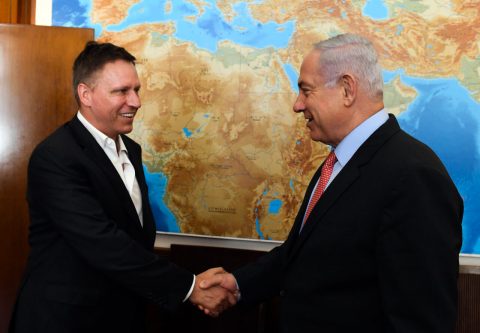
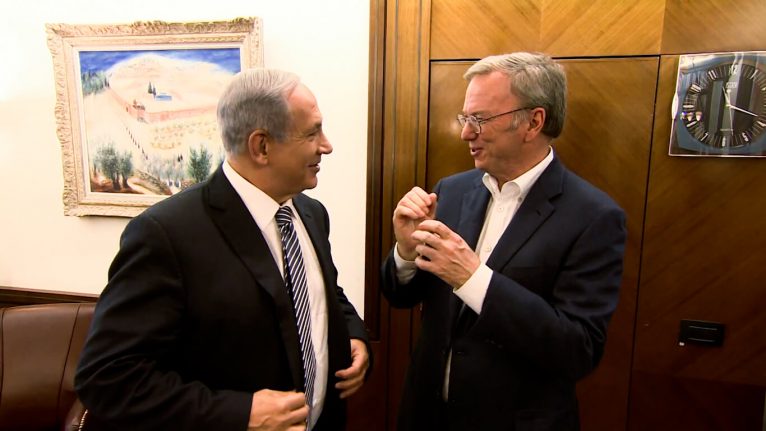
 Aletho News