With April’s elections looming, Benjamin Netanyahu has good reason to fear Benny Gantz, his former army chief. Gantz has launched a new party, named Israeli Resilience, just as the net of corruption indictments is closing around the prime minister.
Already, at this early stage of campaigning, some 31 per cent of the Israeli public prefer Gantz to head the next government over Netanyahu, who is only months away from becoming the longest-serving leader in Israel’s history.
Gantz is being feted as the new hope, a chance to change direction after a series of governments under Netanyahu’s leadership have over the past decade shifted Israel ever further to the right.
Like Israel’s former politician generals, from Yitzhak Rabin to Ehud Barak and Ariel Sharon, Gantz is being portrayed – and portraying himself – as a battle-hardened warrior, able to make peace from a position of strength.
Before he had issued a single policy statement, polls showed him winning 15 of the 120 parliamentary seats, a welcome sign for those hoping that a centre-left coalition can triumph this time.
But the reality of what Gantz stands for – revealed this week in his first election videos – is far from reassuring.
In 2014, he led Israel into its longest and most savage military operation in living memory: 50 days in which the tiny coastal enclave of Gaza was bombarded relentlessly.
By the end, one of the most densely populated areas on earth – its two million inhabitants already trapped by a lengthy Israeli blockade – lay in ruins. More than 2,200 Palestinians were killed in the onslaught, a quarter of them children, while tens of thousands were left homeless.
The world watched, appalled. Investigations by human rights groups such as Amnesty International concluded that Israel had committed war crimes.
One might have assumed that during the election campaign Gantz would wish to draw a veil over this troubling period in his military career. Not a bit of it.
One of his campaign videos soars over the rubble of Gaza, proudly declaring that Gantz was responsible for destroying many thousands of buildings. “Parts of Gaza have been returned to the Stone Age,” the video boasts.
This is a reference to the Dahiya doctrine, a strategy devised by the Israeli military command of which Gantz was a core member. The aim is to lay waste to the modern infrastructure of Israel’s neighbours, forcing survivors to eke out a bare existence rather than resist Israel.
The collective punishment inherent in the apocalyptic Dahiya doctrine is an undoubted war crime.
More particularly, the video exults in the destruction of Rafah, a city in Gaza that suffered the most intense bout of bombing after an Israeli soldier was seized by Hamas. In minutes, Israel’s indiscriminate bombardment killed at least 135 Palestinian civilians and wrecked a hospital.
According to investigations, Israel had invoked the Hannibal Procedure, the code name for an order allowing the army to use any means to stop one of its soldiers being taken. That includes killing civilians as “collateral damage” and, more controversially for Israelis, the soldier himself.
Gantz’s video flashes up a grand total of “1,364 terrorists killed”, in return for “three-and-a-half years of quiet”. As Israel’s liberal Haaretz daily observed, the video “celebrates a body count as if this were just some computer game”.
But the casualty figure cited by Gantz exceeds even the Israel army’s self-serving assessment – as well, of course, as dehumanising those “terrorists” fighting for their freedom.
A more impartial observer, Israeli human rights group B’Tselem, estimates that the Palestinian fighters killed by Israel amounted to 765. By their reckoning, and that of other bodies such as the United Nations, almost two-thirds of Gazans killed in Israel’s 2014 operation were civilians.
Further, the “quiet” Gantz credits himself with was enjoyed chiefly by Israel.
In Gaza, Palestinians faced regular military attacks, a continuing siege choking off essential supplies and destroying their export industries, and a policy of executions by Israeli snipers firing on unarmed demonstrators at the perimeter fence imprisoning the enclave.
Gantz’s campaign slogans “Only the Strong Wins” and “Israel Before Everything” are telling. Everything, for Gantz, clearly includes human rights.
It is shameful enough that he believes his track record of war crimes will win over voters. But the same approach has been voiced by Israel’s new military chief of staff.
Aviv Kochavi, nicknamed the Philosopher Officer for his university studies, was inaugurated this month as the army’s latest head. In a major speech, he promised to reinvent the fabled “most moral army in the world” into a “deadly, efficient” one.
In Kochavi’s view, the rampaging military once overseen by Gantz needs to step up its game. And he is a proven expert in destruction.
In the early stages of the Palestinian uprising that erupted in 2000, the Israeli army struggled to find a way to crush Palestinian fighters concealed in densely crowded cities under occupation.
Kochavi came up with an ingenious solution in Nablus, where he was brigade commander. The army would invade a Palestinian home, then smash through its walls, moving from house to house, burrowing through the city unseen. Palestinian space was not only usurped, but destroyed inside-out.
Gantz, the former general hoping to lead the government, and Kochavi, the general leading its army, are symptoms of just how complete the militaristic logic that has overtaken Israel really is. An Israel determined to become a modern-day Sparta.
Should he bring about Netanyahu’s downfall, Gantz, like his predecessor politician-generals, will turn out to be a hollow peace-maker. He was trained to understand only strength, zero-sum strategies, conquest and destruction, not compassion or compromise.
More dangerously, Gantz’s glorification of his military past is likely to reinforce in Israelis’ minds the need not for peace but for more of the same: support for an ultranationalist right that bathes itself in an ethnic supremacist philosophy and dismisses any recognition of the Palestinians as human beings with rights.
French Polynesia comprises a multitude of islands in the center of the Pacific Ocean, which are a part of France. The biggest and the most famous of these is the island of Tahiti. As in other “overseas” territories that remain under France’s dominion since colonial times, there is a powerful movement for independence in French Polynesia. Islanders take special issue with their parent country when it comes to numerous nuclear tests, which France conducted in the region in the second half of the 20th century.
Based on available data, during the period from 1966 to 1998, the French military performed 193 tests of nuclear weaponry in the atolls of Moruroa and Fangataufa, which comprise the Tuamotu Archipelago. It is public knowledge that 46 tests, conducted from 1966 to 1974, were atmospheric in nature, i.e. nuclear warheads were positioned in special towers on the Earth’s surface, on barges in lagoons, on aerostats in the air, and were also dropped from planes and detonated in the air. It is noteworthy that in 1963, the USSR, the USA and Great Britain signed the Treaty of Moscow, which banned nuclear weapon tests in the atmosphere, under water and in outer space, but France chose not to participate in this agreement.
The other 147 tests were performed underground from 1975 to 1998, with detonations taking place in 500 to 1,100-meter-deep closed vertical shafts.
It is worth mentioning that both atmospheric and underground nuclear tests were conducted on the two atolls of Moruroa and Fangataufa.
It is difficult to say which approach is more harmful to the environment and population’s health. A nuclear detonation in the atmosphere causes a rapid dispersion of radioactive substances over a large area, which soon have an effect on well-being of residents living in this area. After an underground test, a lot of harmful compounds could remain in a shaft, where the detonation took place, for quite a number of years. However with time, these substances, via various routes, such as underground waters, could pollute the surrounding area, and their effect may be more long-lasting and permanent than after-effects following a detonation in the atmosphere, which gradually subside with the help of winds and rains.
Either way, for a long time the French leadership asserted that the tests conducted in the Tuamotu Archipelago had no effect on either the environment or the residents of French Polynesia. However, even in the 1960s, many did not believe this to be true. For decades, the media have published increasingly frightening data about the state of the atoll environment and the fate of people who were in surrounding areas during nuclear testing. It was reported that French politicians and high-ranking military personnel often ignored warnings made by scientists about consequences of nuclear detonations. As a result, residents of near by areas were not evacuated, while French servicemen, who carried out these tests, did not have access to protective gear. In the 1980s the French military leadership attempted to convince the public that it possessed technology of a “clean bomb”, but few believed such statements. Even a stage-managed swim, taken by the French Defence Minister, Paul Quilès, in the lagoon of the Moruroa atoll 5 hours after yet another scheduled test in 1985 did not help matters (interestingly, he is alive and well at present).
In the end, the French Polynesian government managed to receive financial compensation from France, which makes annual payments for damage caused by nuclear testing. This money is a significant contribution to French Polynesia’s budget.
In addition, in 2001 two organizations were established in France. Their aims are to prove that the French government caused harm to a large number of people with its testing and to secure compensation for these people. These organizations are Association des vétérans des essais nucléaires (AVEN, Nuclear Test Veterans Association), which comprises French service personnel who took part in the testing, and Moruroa e tatou (Moruroa and us), which united workers from Moruroa testing sites together. For a number of years these bodies waged an information war against the French government, who continued to assert that the explosions in French Polynesia did not have any serious consequences.
In the end, France was forced to officially admit that thousands of people, including military personnel involved in nuclear testing as well as local residents, contracted serious diseases, including oncological, due to exposure to radiation.
In March 2009, France’s Minister of Defence, Hervé Morin, stated that overall, 150,000 residents of French Polynesia and France were affected by the French nuclear tests. In addition, he informed the public that the French Parliament was in the process of reviewing legislation on making annual targeted compensation payments to people who suffered from radiation exposure. France allocated 10 million euros for these disbursements per year. And individuals who happened to be near a nuclear testing site during detonations were no longer obliged to prove that their health problems stemmed from effects of radiation. The law was approved in 2010, however, according to data as of the end of 2018, only few people have been able to receive this compensation due to red tape. Based on some sources, in French Polynesia the number of such individuals is equivalent to dozens. Hence, the previously mentioned organizations with active support from the Assembly of French Polynesia (AFP, the local parliament) continued waging their battle.
As for the AFP, many of its members are supporters of independence of French Polynesia from France, and the damage sustained by the islands as a result of nuclear testing, is yet another trump card for them. The AFP organized numerous protests and information campaigns which demanded an admission that French Polynesia suffered from the actions taken by French military personnel. One of the key figures in this struggle became Oscar Temaru, a former President of French Polynesia, who held this post on five occasions and was the founder and leader of the party, the Front for the Liberation of Polynesia (FLP), currently known as Tavini Huiraatira (People’s Servant).
In 2013, France’s Ministry of Defence was forced to declassify a number of documents, which were immediately publicized by the media. These reports provide detailed descriptions of the effects of nuclear testing on the environment of the entire French Polynesia. For instance, the documents mention that after a series of nuclear tests, increased radiation levels exceeding safety limits were reported in Tahiti, an island in the center of French Polynesia, which is located more than 1,000 km from Moruroa and happens to be a popular international resort. Other islands of French Polynesia were reported to be in a similar situation. Furthermore, witnesses recall that there were instances when French authorities refused to evacuate residents from some French Polynesian islands that were within the fallout zone.
In November 2014, the AFP announced that it was determined to demand compensation from France for damage caused to the environment of French Polynesia, which it estimated to amount to more than 1 billion US dollars.
In October 2018, at the session of the UN Committee on Decolonization in New York, the previously mentioned politician, Oscar Temaru, affirmed that he and his allies had begun legal proceedings against France at the International Court of Justice in The Hague. France has been accused of crimes against humanity.
The same month, a court ruled to suspend Oscar Temaru from his duties within the AFP for a year as unexpectedly, fraudulent financial irregularities were uncovered during his election campaign. In November 2018, Oscar Temaru was detained for 12 hours in the course of an investigation on fund embezzlement from a local company that sponsored an opposition-friendly radio station. Now, the famous politician is awaiting trial, which will begin in June 2019. Members of the Front for the Liberation of Polynesia assert that evidence against Oscar Temaru was fabricated by the French authorities in order to ruin his reputation as a politician.
Regardless of whether these accusations are true or not, any focus on issues connected to nuclear testing in French Polynesia hurts France. As new facts about the events that transpired emerge, France’s actions in French Polynesia begin to look more and more unsightly. Environment-related crimes are among the most condemned in modern liberal European society. And the fact that France chose its “overseas” territory in the Pacific Ocean for its nuclear testing and failed to take necessary safety measures to protect local residents may be tied to even more deplorable acts, such as colonialism and racism.
Hence, France, long considered to be a bastion of European values, such as tolerance and multiculturalism, will most likely do everything in its power to reduce tensions surrounding Moruroa, Fangataufa and its nuclear program by, among other means, sidelining politicians such as Oscar Temaru.
In addition, it is important for France to dampen the separatist mood in French Polynesia so as not to lose dominion over the atolls of Moruroa and Fangataufa. After all, in order to accurately assess the environmental consequences of French nuclear testing in French Polynesia, and the potential threat to future generations of Polynesians, scientists need to conduct research in the cursed atolls. They need to determine quantities of harmful substances which remain underground, and to find possible routes that these compounds could use to spread from these two atolls to the rest of the region. Some also think that underground detonations could have resulted in appearance of cracks, which could connect the shafts where the tests were conducted with the ocean. However, scientists have not been able to access Moruroa and Fangataufa since France ratified the Comprehensive Nuclear Test Ban Treaty (CTBT) in 1998. Nuclear test sites have thus been sealed and are protected by armed security personnel who do not allow scientists and employees of environmental organizations to reach these areas.
Various experts have, on numerous occasions, expressed an opinion that France’s unwillingness to allow researchers to access these closed off testing sites is one of the reasons why France is trying to keep French Polynesia in its dominion.
It is well known that keeping these islands under France’s control is a significant expense for the French budget. The region is incapable of supporting itself even through tourism, which accounts for 25% of French Polynesia’s GDP and is a key economic sector for the nation. Paris is compelled to spend billions of euros on French Polynesia, which is why calls for its independence are even periodically echoed in France itself.
In addition, independence supporters who live in French Polynesia think that France is responsible for the region’s economic woes, as it prevents development of local businesses and sets high tariffs on imported and exported goods. Members of forces, opposing French rule, believe that the parent nation uses such means to artificially slow down economic development of French Polynesia for fear that, on gaining financial independence, the region will immediately attain political freedom. Then France will lose control over Moruroa and Fangataufa, and whatever secrets are hidden in these atolls will be revealed by the world media.
Now that the case has been taken to the International Court of Justice, France will need to do its best to maintain control of French Polynesia. If the AFP estimates damages, caused by nuclear testing, at 1 billion US dollars, then, most likely, France will pay this sum out. From now onwards, France will probably start making compensation payments due to veterans, affected by nuclear testing, and to common residents of French Polynesia, in accordance with the 2010 law, with much more effort. However, it is uncertain whether these measures will help France’s case, as this issue has already gained notoriety world-wide. For far too long, France ignored demands from people who suffered from consequences of nuclear tests. Perhaps if it had started making generous compensation payments to these individuals several years earlier, there would not be a court case against France at The Hague. As things stand now, the global community will have to make a legal and environmental assessment of the actions taken by France from 1966 to 1998. And it can not be ruled out that soon France will not only lose control over French Polynesia but its reputation as well.
Sofia Pale, PhD, Research Fellow of the Center for South-East Asia, Australia and Oceania of the Institute of Oriental Studies of the Russian Academy of Sciences.
“Settled science” and BuzzFeed share a fatal commonality. Both are driven by an agenda rather than facts. BuzzFeed learned that lesson yet another time last week. Two years ago, the publication pushed the Clinton-bought phony and unverified Trump Russia dossier, which launched stories of collusion, FISA warrants, and the ongoing Mueller investigation.
In a bit of irony, it was the Mueller team that slapped down BuzzFeed’s latest story accusing President Trump of asking Michael Cohen to lie to Congress. Imagine the fake news media being fact-checked by their hero, Robert Mueller.
So-called settled science faces similar collisions with reality. Driven by a particular agenda, whether financial or political, science becomes blinded to any contrarian views, insisting that the issue is “settled,” shutting off any further inquiry, debate, or honest disagreement. In some areas of science, dissenters are labeled as “deniers” with threats of violence, loss of job, or even imprisonment.
The most prevalent example is climate. From global cooling in the 1970s to global warming in the 2000s, the names have changed, but not the agenda. Since climate models are misbehaving, not providing the desired predictions, the names have morphed into “climate change” or “extreme weather.” But still the science is considered “settled.”
Barack Obama in 2014 told Congress, “The debate is settled, climate change is a fact.”
Someone with a bit more science knowledge than the community organizer from Chicago, physician and author Michael Crichton, said this about settled science: “There is no such thing as consensus science. If it’s consensus, it isn’t science. If it’s science, it isn’t consensus. Period.”
The latest bit of unsettled science is something few of us are thinking about in the midst of global warming-induced winter storms and piles of snow – namely, sunscreen.
A recent article in Outside magazine sums it up: “Current guidelines for sun exposure are unhealthy and unscientific, controversial new research suggests – and quite possibly even racist. How did we get it so wrong?”
It started with vitamin D.
People with low levels of vitamin D in their blood have significantly higher rates of virtually every disease and disorder you can think of: cancer, diabetes, obesity, osteoporosis, heart attack, stroke, depression, cognitive impairment, autoimmune conditions, and more. The vitamin is required for calcium absorption and is thus essential for bone health, but as evidence mounted that lower levels of vitamin D were associated with so many diseases, health experts began suspecting that it was involved in many other biological processes as well.
Why were so many of us low in vitamin D? “Vitamin D is a hormone manufactured by the skin with the help of sunlight. It’s difficult to obtain in sufficient quantities through diet.”
Enter the settled science that sun exposure is bad. Excessive sun exposure, particularly sunburn, increases the risk of skin cancer. Dermatologists recommend absolute protection from the sun, even on cloudy days. Use sunscreen, the higher the SPF rating the better, and apply it multiple times a day, even if you are just going to work and back.
Easy enough. Just take a vitamin D supplement every day, stay out of the sun, and all will be well. Or will it?
“Vitamin D supplementation has failed spectacularly in clinical trials” according to the Outside article. Five years of high-dose vitamin D had “[n]o impact on cancer, heart disease, or stroke.”
Maybe simply taking vitamin D as a pill isn’t the same as getting it naturally from sun exposure. Perhaps the low blood levels of vitamin D in the unhealthy weren’t the actual cause of health problems, but instead just a marker.
This is the scientific conundrum of causation versus association. Does having blue hair cause elderly ladies to play bingo, or is this just an association?
The science of sunlight is a bit more complicated. The skin uses sunlight to make nitric oxide, a blood vessel-dilator that lowers blood pressure. This in turn reduces the risk of heart attack and stroke. Vitamin D is produced along the way but may not be preventing actual disease, instead serving as a marker that an individual is receiving enough sun exposure.
But too much sun, particularly sunburn, does increase the risk of skin cancer. Some types, like basal cells, are a cosmetic nuisance, whereas melanoma is deadly.
Much as with climate. One can argue that fossil fuel consumption is a threat to the climate. Yet the benefits of fossil fuel energy production have lifted millions out of poverty, prolonging life spans and quality of life.
A Swedish study tracked 30,000 women over 20 years and found that “[s]un avoiders were twice as likely to die as sun worshippers.”
What unsettled the science of lathering on sunscreen or avoiding the sun altogether was the finding that “[a]voidance of sun exposure is a risk factor of a similar magnitude as smoking, in terms of life expectancy.”
How else to explain our prehistoric ancestors, wearing minimal, if any, clothing, spending their days in the sun, without becoming extinct? Settled science looks simplistic, much in the way Al Gore’s insistence the CO2 controls the Earth’s thermostat looks simplistic when we consider that the upper Midwest was once covered in a mile-thick sheet of ice when the planet cooled but then melted when the planet warmed.
It seems that sun exposure, in moderation, may not be bad for you. In fact, it may be healthier than avoiding it. Does this sound familiar?
In the annals of settled science, we have heard this song before. Once upon a time, margarine was good and butter was bad. Margarine is a trans fat and now considered unhealthy compared to butter. Dietary fats in general were unhealthy, and people were told to eat carbohydrates instead. This ushered in an epidemic of Type 2 diabetes.
Same with coffee, at one time the cause of all types of nasty diseases, now providing numerous health benefits.
Don’t forget carbon dioxide, which, some say, is killing the planet. Constituting only 0.04% of the atmosphere, does a small increase in CO2 mean the planet is doomed? Or is it beneficial, since CO2 is plant food, necessary for photosynthesis, responsible for “greening” the planet – which in turn leads to more food production?
There’s temperature as well, which fluctuates on the Earth in varying cycles for unclear reasons. Warmer temperatures might raise the sea level a few inches but may also increase the amount of fertile land and provide a longer growing season.
Although we know much about the world, there is plenty we don’t yet understand. It’s the height of hubris to assume we have all the answers and that the science is settled. The sunscreen about-face is just the latest example.
Brian C Joondeph, M.D., MPS is a Denver-based physician and writer. Follow him on Facebook, LinkedIn, and Twitter.
The religion of “the Holocaust” is a secular one: it belongs to the lay world; it is profane; in actuality, it has at its disposal the secular arm, that is a temporal authority with dreaded power. It has its dogma, its commandments, its decrees, its prophets and its high priests. As one revisionist has observed, it has its circle of saints, male and female, amongst whom, for example, Saint Anne (Frank), Saint Simon (Wiesenthal) and Saint Elie (Wiesel). It has its holy places, its rituals and its pilgrimages. It has its sacred (and macabre) buildings and its relics (in the form of cakes of soap, shoes, toothbrushes, …). It has its martyrs, its heroes, its miracles and its miraculous survivors (in the millions), its golden legend and its righteous ones. Auschwitz is its Golgotha. For it, God is called Yahweh, protector of his chosen people, who, as said in one of the psalms of David (number 120), recently invoked by a female public prosecutor, Anne de Fontette, during the trial in Paris of a French revisionist, punishes “lying lips” (by, incidentally, sending them the “sharp arrows of the mighty, with coals of juniper”). For this religion, Satan is called Hitler, condemned, like Jesus in the Talmud, to boil for eternity in excrement. It knows neither mercy, nor forgiveness, nor clemency but only the duty of vengeance. It amasses fortunes through blackmail and extortion and acquires unheard-of privileges. It dictates its law to the nations. Its heart beats in Jerusalem, at the Yad Vashem monument, in a land taken over from the natives; in the shelter of a 26-foot high wall built to protect a people who are the salt of the earth, the companions of the “Holocaust” faith rule over the goy with a system that is the purest expression of militarism, racism and colonialism.
A quite recent religion whose growth has been meteoric
Although it is largely an avatar of the Hebraic religion, the new religion is quite recent and has exhibited meteoric growth. For the historian, the phenomenon is exceptional. Most often a religion of universal scope has its origins in remote and obscure times, a fact that makes the task of historians of religious ideas and institutions rather arduous. However, as luck would have it for that type of historian, in the space of fifty-odd years (1945-2000), right before our eyes, a new religion, that of “the Holocaust”, has suddenly come into being and proceeded to develop with astonishing speed, spreading nearly everywhere. It has conquered the West and intends to impose itself on the rest of the world. Any researcher interested in the historical phenomenon made up by the birth, life and death of religions ought therefore to seize the occasion, never so much as hoped for, thus offered to study from up close the birth and life of this new religion, then calculate its chances of survival and the possibility of its demise. Any specialist of war watching out for indications of a coming conflagration would owe it to himself to survey the risks of a warlike crusade such as the one into which this conquering religion may take us.
A religion that embraces consumerism
As a rule, consumer society places religions and ideologies in difficulty or danger. Each year, growth in both industrial production and business activity creates in peoples’ minds new needs and desires, truly concrete ones, lessening their thirst for the absolute or their aspiration towards an ideal, factors that religions and ideologies feed on. Besides, the progress of scientific thinking makes people more and more sceptical as to the truth of religion’s stories and the promises it gives them. Paradoxically, the only religion to prosper today is the “Holocaust” religion, ruling, so to speak, supreme and having those sceptics who are openly active cast out from the rest of mankind: it labels them “deniers”, whilst they call themselves “revisionists”.
These days the ideas of homeland, nationalism or race, as well as those of communism or even socialism, are in crisis or even on their way to extinction. Equally in crisis are the religions of the Western world, including the Jewish religion, and in their turn but in a less visible manner, so are the non-Western religions, themselves confronted by consumerism’s force of attraction; whatever one may think, the Moslem religion is no exception: the bazaar attracts bigger crowds than the mosque and, in certain oil-rich kingdoms, consumerism in its most outlandish forms poses an ever more insolent challenge to the rules for living laid down by Islam.
Roman Catholicism, for its part, is stricken with anaemia: to use Céline’s phrase, it has become “christianaemic”. Amongst the Catholics whom Benedict XVI addresses, how many still believe in the virginity of Mary, the miracles of Jesus, the physical resurrection of the dead, everlasting life, in heaven, purgatory and hell? The churchmen’s talk is usually limited to trotting out the word that “God is love”. The Protestant religions and those akin to them are diluted, along with their doctrines, in an infinity of sects and variants. The Jewish religion sees its members, more and more reluctant to observe so many peculiar rules and prohibitions, deserting the synagogue and, in ever greater numbers, marrying outside the community.
But whereas Western beliefs or convictions have lost much of their substance, faith in “the Holocaust” has strengthened; it has ended up creating a link – a religion, according to standard etymology at any rate, is a link (religat religio) – that enables disparate sets of communities and nations to share a common faith. All in all, Christians and Jews today cooperate heartily in propagating the holocaustic faith. Even a fair number of agnostics or atheists can be seen lining up with enthusiasm under the “Holocaust” banner. “Auschwitz” is achieving the union of all.
The fact is that this new religion, born in the era where consumerism expanded so rapidly, bears all the hallmarks of consumerism. It has its vigour, cleverness and inventiveness. It exploits all the resources of marketing and communication. The vilest products of Shoah Business are but the secondary effects of a religion that, intrinsically, is itself a sheer fabrication. From a few scraps of a given historical reality, things that were, after all, commonplace in wartime (like the internment of a good part of the European Jews in ghettos or camps), its promoters have built a gigantic historical imposture: the imposture, all at once, of the alleged extermination of the Jews of Europe, of camps allegedly equipped with homicidal gas chambers and, finally, of an alleged six million Jewish victims.
A religion that seems to have found the solution to the Jewish question
Throughout the millennia, the Jews, at first generally well received in the lands that have taken them in, have ended up arousing a phenomenon of rejection leading to their expulsion but, quite often, after leaving through one door, they have re-entered through another door. In several nations of continental Europe, in the late 19th and early 20th century, the phenomenon appeared once more. “The Jewish question” was especially put in Russia, Poland, Romania, Austria-Hungary, Germany and France. Everyone, beginning with the Jews themselves, then set about looking for “a solution” to this “Jewish question”. For the Zionists, long a minority amongst their coreligionists, the solution could only be territorial. The thing to do was to find, with the accord of the imperial powers, a territory that Jewish colonists could settle. This colony might be located, for example, in Palestine, Madagascar, Uganda, South America, Siberia, … Poland and France envisaged the Madagascar solution whilst the Soviet Union created in southern Siberia the autonomous Jewish sector of Birobijan. As for National Socialist Germany, she was to study the possibility of settling the Jews in Palestine but wound up realising, from 1937, the unrealistic nature of the idea and the great wrong to the Palestinians that such a project would entail. Subsequently the 3rd Reich wanted to create a Jewish colony in a part of Poland (the Judenreservat of Nisko, south of Lublin), then in its turn, in 1940, it seriously considered creating a colony in Madagascar (the Madagascar Projekt). Two years later, beset by the necessities of a war to wage on land, sea and in the air and taken up with the more and more distressing concerns of having to save German cities from a deluge of fire, to safeguard the very life of his people, to keep the economy of a whole continent running, a continent so poor in raw materials, Chancellor Hitler made it known to his entourage, notably in the presence of Reichsminister and head of the Reichskanzlerei Hans-Heinrich Lammers, that he intended to “put off solving the Jewish question till after the war”. Constituting within her a population necessarily hostile to a Germany at war, the Jews – in any case a large portion of them – had to be deported and interned. Those able to work were made to do so, the others were confined in concentration camps or transit camps. Never did Hitler either desire or authorise the massacre of Jews and his courts martial went so far as to order the death penalty, even in Soviet territory, for soldiers found guilty of excesses against Jews. Never did the German State envisage anything else, as concerned the Jews, than “a final territorial solution of the Jewish question” (eine territoriale Endlösung der Judenfrage) and it takes all the dishonesty of our orthodox historians to evoke incessantly “the final solution of the Jewish question” and deliberately evade the adjective “territorial”, so important here. Up to the end of the war, Germany kept on offering to deliver interned Jews to the western Allies, but on condition that they then stay in Britain, for example, and not go and invade Palestine to torment “the noble and valiant Arab people”. There was nothing exceptional about the fate of Europe’s Jews in the general blaze of war. It would have deserved just a mention in the great book of Second World War history. One may therefore quite rightly be astonished that today the fate of the Jews should be considered the essential feature of that war.
After the war it was in the land of Palestine and to the detriment of the Palestinians that the upholders of the “Holocaust” religion found – or believed they’d found – the final territorial solution to the Jewish question.
A religion that, previously, groped along with its sales methods
(Raul Hilberg’s recantation)
I suggest that sociologists undertake a history of the new religion by examining the extremely varied techniques in line with which this “product” was created, launched and sold over the years 1945-2000. They can thus measure the distance between the often clumsy procedures of the beginning and the sophistication, at the end, of the packagings designed by our present-day spin doctors (crooked “com” experts) for their presentations of “the Holocaust”, henceforth a compulsory and kosher mass-consumer product.
In 1961, Raul Hilberg, first of the “Holocaust” historians, “the pope” of exterminationist science, published the first version of his major work, The Destruction of the European Jews. He expressed in doctoral manner the following thesis: Hitler had given orders for an organised massacre of the Jews and all was explained as somehow coming of those orders. This way of displaying the merchandise was to end in a fiasco. With the revisionists asking to see the Hitler orders, Hilberg was compelled to admit that they had never existed. From 1982 to 1985, under the pressure of the same revisionists asking to see just what the magical homicidal gas chambers, in technical reality, looked like, he was led to revise his presentation of the holocaustic product. In 1985, in the “revised and definitive” edition of the same book, instead of taking an assertive, curt stance with the reader-customer, he sought to get round him with all sorts of convoluted phrases, appealing to a supposed taste for the mysteries of parapsychology or the paranormal. He expounded on the history of the destruction of the European Jews without in the least bringing up any order, from Hitler or anyone else, to exterminate the said Jews. He explained everything by a kind of diabolical mystery through which, spontaneously, the German bureaucrats told themselves to kill the Jews to the very last.“Countless decision makers in a far-flung bureaucratic machine” took part in the extermination enterprise by virtue of a “mechanism”, and did so without any “basic plan” (p. 53); these bureaucrats “created an atmosphere in which the formal, written word could gradually be abandoned as a modus operandi” (p. 54); there were “basic understandings of officials resulting in decisions not requiring orders or explanations”; “it was a matter of spirit, of shared comprehension, of consonance and synchronization”; “no one agency was charged with the whole operation”; “no single organization directed or coordinated the entire process” (p. 55). In short, according to Hilberg, this concerted extermination had indeed taken place but there was no possibility of actually demonstrating it with the aid of specific documents. Two years previously, in February 1983, during a conference at Avery Fischer Hall in New York, he had presented this strange and woolly thesis as follows: “What began in 1941 was a process of destruction not planned in advance, not organized centrally by any agency. There was no blueprint and there was no budget for destructive measures. They were taken step by step, one step at a time. Thus came about not so much a plan being carried out, but an incredible meeting of minds, a consensus-mind reading by a far-flung bureaucracy”. To sum up, that vast project of destruction was executed, magically, by telepathy and by the diabolical workings of the “Nazi” bureaucratic genius. It can be said that with Hilberg, historical science has thus turned cabalistic or religious.
Serge and Beate Klarsfeld, at their end, wanted to set off on the same road of fake science when they called upon French pharmacist Jean-Claude Pressac for assistance. For several years the poor Pressac strove to sell the tainted product in a pseudo-scientific form but, realising the imposture, in 1995 he did a complete turnaround and admitted that, all things considered, the dossier of “the Holocaust” was “rotten” and fit only “for the rubbish bins of history”; such were his own words. The news of his change of heart was to be kept hidden for five years, emerging only in 2000 at the end of a long book by Valérie Igounet, another Shoah peddler, entitled Histoire du négationnisme en France (Seuil, p. 652).
A religion that has at last discovered the up to date sales techniques
It was then that the spin doctors came onto the scene. What with the product having become suspect and potential customers starting to ask questions, the “Holocaust” religion’s management had to steer an altogether different course and give up defending the merchandise with ostensibly scientific arguments: their new approach would be a resolutely “modern” one. It was decided to set only the very least store by efforts at logical argumentation and to replace serious research with appeals to sentiment and emotion, in other words with art: the cinema, theatre, historical novels, shows, story telling (the contemporary art of throwing together an account or framing a “testimony”), the media circus, stage designs in museums, public ceremonies, pilgrimages, worshiping of (false) relics and (false) symbols (symbolic gas chambers, symbolic numbers, symbolic witnesses), incantations, music and even kitsch, the whole thing matched with assorted ways of forcing people to buy it, including various kinds of threats. The filmmaker Steven Spielberg, a specialist in dishevelled and extraterrestrial fiction, has become the leading instigator for holocaustic films as well as for the casting of 50,000 witnesses. In order to sell their tainted product better in the long term, our fake historians and real junk dealers have sought and obtained the primary school “franchise”, with which they instil a taste for “the Holocaust” in the very youngest clientele: for it’s in the earliest years that appetites are acquired, making so that, later on, the customer need hardly be enticed: he’ll demand on his own what he enjoyed as a child, be it sweets or poison. Thus has it come to be that no one involved could care less about history: all serve the sole cause of a certain Remembrance, that is a jumble of legends and slanders that give the public the pleasure of feeling good andrighteous, ready tosing the virtues of the poor Jew and curse the intrinsically wicked “Nazis”, to call for vengeance and spit on the graves of the defeated. At the end it only remains to collect a flood of cold hard cash and receive new privileges. Pierre Vidal-Naquet was but an amateur: in 1979, he had shown himself from the outset to be too basic, too rough in his “Holocaust” promotion. For example, when asked by the revisionists to explain how in blazes, after a gassing operation with hydrogen cyanide (the active ingredient in the insecticide “Zyklon B”), a squad of Jews (Sonderkommando) could enter unharmed into a room still full of that terrible gas, then handle and remove up to a few thousand corpses infused with poison, he, along with 33 other academics, replied that he simply need not provide any explanation. Spielberg, a more skilful man, was to show in a screen drama a “gas chamber” wherein, for once, “by a miracle”, the showerheads sprayed… water and not gas. Subsequently, in his turn, Vidal-Naquet had, quite awkwardly, attempted to answer the revisionists on the scientific level and made a fool of himself. Claude Lanzmann, for his part, in the film Shoah, sought to produce testimonies or confessions, but his result was clumsy, inept and hardly convincing; that said, at least he’d grasped that the main point was to “make movies” and occupy the public forum. Today there is no longer a single “historian” of “the Holocaust” who makes it his business to prove the reality of “the Holocaust” and its magical gas chambers. All of them do like Saul Friedländer in his latest book (L’Allemagne nazie et les juifs / Les années d’extermination, Seuil, 2008): they leave it as understood that it all existed. With them history becomes axiomatic, although their axioms aren’t even drawn up. These new historians proceed with such self-assurance that the reader, taken aback, doesn’t realise the trick being played on him: the smooth talkers go on endlessly about an event whose reality they haven’t established in the first place. And so it is that the customer, believing that he’s bought some goods, has actually bought the smooth talk of the one giving him the sales pitch. Today’s world champion of holocaustic bluff is a shabbos goy, Father Patrick Desbois, one hell of a trickster whose various productions dedicated to “the Holocaust by bullets”, notably in the Ukraine, seem to have reached the very peaks of Judeo-Christian media hype.
A success story of the great powers
A veritable success story in the art of selling, the holocaustic enterprise has acquired the status of an international lobby. This lobby has blended with the American Jewish lobby (whose flagship organisation is the AIPAC) which itself defends, tooth and nail, the interests of the State of Israel, of which “the Holocaust” is the sword and shield. The mightiest nations in the world can hardly allow themselves to annoy such a network of pressure groups which, under a religious veneer, was at first a commercial concern only to become later on military-commercial, constantly pushing for new military adventures. It follows that if other countries, called “emerging”, want to be in good graces with a certain more powerful one, then they would be well advised to bend to its wishes. Without necessarily professing their faith in “the Holocaust”, they will contribute, if need be, to the propagation of “the Holocaust” and to the repression of those who dispute its reality. The Chinese, for example, although they have no use at all for such nonsense themselves, keep well away from any calling into question of the “Jewish Holocaust”; this enables them to pose as the “Jews” of the Japanese during the last war and so point out that they too have been victims of genocide, a formula which, they think, may open the way to financial reparations and political profits, as it has done for the Jews.
A particularly mortal religion
The future trouble for the religion of “the Holocaust” lies in the fact that it is too secular. Here one may well think of the Papacy, which, in centuries past, drew its political and military strength from a temporal power that, in the final analysis, ended up causing its downfall. The new religion is hand in glove with, all together, the State of Israel, the United States, the European Union, NATO, Russia, the big banks (which, as in the case of the Swiss banks, it can force to knuckle under if they show unwillingness to pay out), international racketeering and the arms merchants’ lobbies. This being the case, who can guarantee it a solid base in the future? It has made itself vulnerable by endorsing, de facto, the policies of nations or groups with inordinate appetites, whose spirit of worldwide crusade, as may be particularly noted in the Near and Middle East, has become adventurist.
It has come to pass that religions disappear with the empires where they used to reign. This is because religions, like civilisations, are mortal. That of “the Holocaust” is doubly mortal: it spurs countries to go on warlike crusades and it is rushing to its doom. It will rush to its doom even if, in the last instance, the Jewish State vanishes from the land of Palestine. The Jews then dispersed throughout the world will have only one last resort, that of bewailing this “Second Holocaust”.
***
Translator’s note: The italicised English words are in English in the original.
NB: Already in 1980, in my book Mémoire en défense contre ceux qui m’accusent de falsifier l’histoire (“Statement of case against those who accuse me of falsifying history”, La Vieille Taupe, Paris), I dealt with “the new religion” of “the Holocaust” (p. 261-263). In 2006 I wrote two articles on the subject: “La ‘Mémoire juive’ contre l’Histoire ou l’aversion juive pour toute recherche approfondie sur la Shoah” (“‘Jewish Remembrance’ versus History, or the Jewish aversion to any thorough research on the Shoah”) and “Le prétendu ‘Holocauste’ des juifs se révèle de plus en plus dangereux” (“The Alleged ‘Holocaust’ of the Jews is proving ever more dangerous”).
The second may be found here in English translation.
Hamburg, Germany – I was with Gerd Büntzly, 69, of Herford, in a demonstration in Germany July 17, 2017. So were Steve Baggarly, Susan Crane, and Bonnie Urfer, all of the United States. Ours was a peaceful if covert, night-time occupation of a protected aircraft shelter or bomb bunker far inside the Büchel Air Force Base, near the beautiful Mosel River valley.
We were there to help prevent the unlawful use of the shelter in nuclear attacks or nuclear war preparations. Routine nuclear war planning by US and German Air Force personnel there, using US B61 nuclear bombs (NATO’s so-called “nuclear sharing”), violates the Treaty on the Nonproliferation of Nuclear Weapons (NPT) and several other international treaties, all binding on the United States and Germany.
In spite of our formal complaint to state prosecutors against “selective prosecution” of Gerd, and the violation of his “equal protection” rights, only he was charged, tried, and convicted of trespass and property damage (for clipping fences) in January last year. This Jan. 16, he was in court again appealing the conviction. Susan Crane from California and I travelled to Koblenz to speak on his behalf. Attorneys were quite sure that we two could testify, but ultimately were not allowed.
We wanted to explain that international law has the force of state and federal law in Germany and the United States, a fact recognized by Germany’s Constitution (Art. 25) and the US Constitution (Art. 6). According to Univ. of Illinois Law School Prof. Francis Boyle, writing recently for other nuclear weapons resisters, “International law is not ‘higher’ or separate law; it is part and parcel of the structure of federal law. The Supreme Court so held in the landmark decision in The Paquete Habana (1900), that was recently reaffirmed in Hamdan v. Rumsfeld, in 2006.”
Contrary to modern military strategists, there is no such thing as a “limited nuclear war.” Nuclear weapons only produce massacres. Beginning with 8 to 10 million degrees at detonation, followed by indiscriminate mass destruction from blast effects, city-size mass fires (firestorms) in which nothing survives, and uncontrollable radiation poisoning that produces genetic damage unlimited by space or time, nuclear weapons are just massacre delivery systems.
International law has prohibited the planning and not just the commission of such massacres since 1946.
Professor Boyle wrote last November 1st: “The Judgment of the Nuremberg International Military Tribunal meted out severe punishment in 1946 against individuals who, acting in full compliance with domestic law but in disregard of the limitations of international law, had committed war crimes and crimes against peace as defined in its Charter.”
The Nuremberg Charter and Principles apply to individual civilians like us and oblige individuals to disobey domestic laws that protect government crimes. And Nuremberg prohibits all “planning and preparation” of wars that violate international treaties.
The 1949 Geneva Conventions prohibit indiscriminate attacks on noncombatants, attacks on neutral states, and long-term damage to the environment. The 1907 Hague Conventions forbid the use of poison and poisoned weapons under any circumstances.
Under the 1970 NPT, it is prohibited for Germany to receive nuclear weapons from the United States and for the US to transfer them to Germany. Germany and the United States are both formal state parties to all of these Treaties.
“By implication,” Boyle explains, “the Nuremberg Judgment privileges all citizens of nations engaged in war crimes to act in a measured but effective way to prevent the continuing commission of those crimes. The same Nuremberg Privilege is recognized in Article 38 of the Statute of the International Court of Justice which has been adopted as a Treaty (the United Nations Charter) by the United States” [and Germany]. In my opinion, such action certainly includes nonviolent exposure and inspection of sites of ongoing war crimes.”
Because nuclear weapons cannot be used without violating these binding international treaties; since Germany and United States at Büchel are planning and preparing war that violates these treaties; and because the Nuremberg Charter and Principles forbid this planning and preparation, and apply to civilians and military personnel alike, and hold citizens individually responsible; and require citizens to disobey illegal orders, to refuse participation in or ignore international crimes, civil resistance at Büchel is no offense but a civic duty, a lawful obligation, and an act of crime prevention.
In the courtroom, crowded with 40 people, the three-person “bench” (two lay volunteers and one criminal court judge) found Gerd guilty — but reduced his fine from 1,200 Euros to 750 — after making a yawning apology for “deterrence.” Prescient as ever, Professor Boyle’s latest book is, “The Criminality of Nuclear Deterrence” (Clarity Press 2013).
John LaForge is a Co-director of Nukewatch, a peace and environmental justice group in Wisconsin, and edits its newsletter.
According to green fund manager Erik Kobayashi-Solomon a carbon tax is the free market solution to the climate crisis.
Carbon Tax: The Ultimate Free Market Solution To Climate Change
Erik Kobayashi-Solomon | Forbes | January 25, 2019
… Unlike a lot of mush-minded Greenies, I am under no illusion that a tax on carbon emissions will discourage people from burning carbon-based fuel or will serve just retribution on wasteful capitalists. Nor do I think that the taxing authority will use the collected funds for anything other than a typically idiotic boondoggle. In fact, I do not even believe that a carbon tax will do anything to stop the near-term effects of climate change (there is plenty of heat stored in the ocean, and those chickens will take decades to come home to roost).
No. My reasoning is based completely on free market considerations.
Humans do one thing phenomenally well: adapt to obstacles. If there is a mountain in front of us, we’ll climb it, build a tunnel through it, construct a road around it, and throw up a scenic overlook on the side of it.
The pure expression of human adaptability is the free market system. […]
Let’s say that the federal government enacted a levy of $10 per ton of CO2 emitted — a pittance next to the true, non-externalizedcost of carbon.
The fact is that a $10 / ton carbon tax will do nothing or next to nothing to end prices or to the amount of CO2 released into the atmosphere. However, it will release the adaptive creativity of engineers and business people trying to find ways to help companies extract as much profit after the tax is imposed as they did before. […]
Then, it will be time to raise that tax to $15 / ton so we can watch the same wealth creating process occur once again. … Full article
Some people might find it fascinating to poke an ant’s nest with a big stick, to watch the ants unleash their “adaptive creativity” to repair the damage. But being poked with a big stick is pretty hard on the ants.
Here’s a radical thought Erik – instead of trying to argue the virtues of persuading politicians to coerce the “free market”, instead of celebrating the sacrifice and adaptability people would employ to overcome your artificial carbon tax mountain, how about developing products which people would want to purchase of their own free will?
People who followed with awful fascination the Bana account, designed to facilitate the destruction of Syria, will have a sense of deja vu at the arrival on the ‘climate’ scene of another shocking example of cynical child exploitation and manipulation: that of Swedish girl Greta Thunberg.
The Bana Alabed twitter account tweeted ostensibly from Aleppo in the months leading up to its liberation from terrorist forces. Her task was to claim war crimes on the part of “Assad” and Russia and demand action on Syria from world leaders, WIII if necessary, but at least a Libya-style “no-fly-zone”.
From the age of seven Bana Alabed has been shamelessly exploited by the world’s media, forced to dissemble, to take part in bogus interviews where she clearly had no idea of what she was saying, and to pose with a series of mature men from terrorists to Erdogan to UNICEF’s Justin Forsyth. Although she became a citizen of Turkey, there is no evidence that Bana has ever been to school in Turkey, or given the opportunity to learn the Turkish language,. Instead, she has been given the star treatment, appearing at conferences and flying all over the world (The Crucifixion of Bana Alabed). At the same time her role as a puppet exposes her to eternal ridicule.
We are now being treated to another gruesome spectacle of child abuse, the creation of the Greta Thunberg persona. At 15 Greta is older than Bana, but is self-described as suffering from Asperger’s syndrome, a fact which if anything appears to make the exploitation more acceptable in the eyes of the mainstream and ‘alternative’ media). Bana has been a media star from the age of seven – all the signs indicate that normal life is over for Greta Thunberg too. (For further information on Greta, she now has her own Wikipedia page, in eight languages.)
Greta Thunberg’s function is not to call for destruction, but on the contrary, to warn of impending doom for the planet if we do not do something about CO2 – presumably something which gives more power to the United Nations and helps pave the way for global government. She first hit the headlines with a call to school children to strike to save the climate.
Being both older and a citizen of Sweden, many of the flaws in the Bana accounts are not obvious with Greta. When her account opened Bana’s spoken English was non-existent, and so the contrast between the speech in her videos and the perfectly idiomatic English of her tweets was positively embarrassing. In the case of Greta, however, one could argue that a well-educated Swedish girl might just have the immaculate English of her speeches. Furthermore, the completely passionless delivery of her claims of ‘climate breakdown’ and fast-approaching ‘extinction’ can be put down to her Asperger’s Syndrome.
As with the Bana account, but even more so, Greta’s social media accounts are completely focused on the task in hand (creating ‘climate panic’ in defiance of the facts), and certainly nothing like what might be expected from a 15 year-old, Aspergers or no Aspergers. The Facebook account is series of self-promotional posts with no interraction with comments. The list of people that Greta follows on twitter parallels in an eerie fashion those favoured by Bana Aalbed: world leaders and major political figures such as Antonio Guterres and Bernie Sanders, climate and environment accounts like Soros-funded Greenpeace and WWF (i.e. all supporting the UN’s climate/world government project), like-minded celebrities such as Michael Moore and Ricky Gervais, and like-minded media such as the Guardian.
Bana was never more than media and political spin, promoted by the likes of the New York Times and the BBC, as well of course by the United Nations, but without any mass following. Although she bought up thousands of twitter followers, the majority of comments on her tweets came either from critics or from obvious trolls or bots with a handful of followers. At the very least the same thing will happen with Greta, however the plan is more ambitious. There are clearly genuine hopes of galvanising the world’s youth in her support.
Greta works in tandem with Extinction Rebellion (XR), which appears to be the climate cult’s Antifa, promoting civil disobedience in order to force action on the ‘climate emergency’ (see Frances Leader, From Occupy to Extinction Rebellion: Exposing the Common Purpose).
15 year old @GretaThunberg 🤟 is rebelling and ‘striking from School’ until the general election in Sweden to start a conversation about #ClimateBreakdown 🌏.
Within a few short months Greta’s stature was such that she was invited to address the UN’s Climate Change Conference at Katowice, making her plea for ‘climate justice’.
”You are not mature enough to tell it like it is. Even that burden you leave to your children.”
This is so impressive from @GretaThunberg. She should be surrounded by hundreds, thousands of friends and supporters – she’s literally fighting for her life and ours against the insanity of climate inaction. Planet before profit on this, or we’re finished. https://t.co/kVM6wp6kVK
Greta was motivated, it seems, by a heatwave in Sweden, due of course to “climate change” -never mind the fact that Swedish high temperature records go back many decades, still unbroken by July 2018, which is hardly consistent with runaway global warming whatever may have happened later that summer.
Greta’s very first tweet back in June 2018 was to post an article (in English of course) which warned that climate change will wipe out all of humanity unless we stop using fossil fuels over the next five years.
“A top climate scientist is warning that climate change will wipe out all of humanity unless we stop using fossil fuels over the next five years.”https://t.co/AOr2DDZORc
For the first time in 33 million years, it seems, we are almost at a point where there is no ice at either pole. ‘The chance that there will be any permanent ice left in the Arctic after 2022 is essentially zero,[…] with 75 to 80 percent of permanent ice having melted already in the last 35 years’.
This is obviously claptrap, the Arctic was never anywhere melting away, and latest reports indicate that the poles are putting on ice. The earth has not returned to the temperatures of the Medieval Warm Period when Greenland was colonised – how can we be approaching temperatures not seen in 33 million years?
Being both older and a citizen of Sweden, many of the flaws in the Bana accounts are not obvious with Greta. When her account opened Bana’s spoken English was non-existent, and so the contrast between the speech in her videos and the perfectly idiomatic English of her tweets was positively embarrassing. In the case of Greta, however, one could argue that a well-educated Swedish girl might just have the immaculate English of her speeches. Furthermore, the completely passionless delivery can be put down to her Asperger’s Syndrome.
As with the Bana account, Greta’s social media accounts are completely focused on the task in hand (creating ‘climate panic’ in defiance of the facts), and certainly nothing like what might be expected from a 15 year-old, Aspergers or no Aspergers. The list of people that Greta follows on twitter parallels in an eerie fashion those favoured by Bana: world leaders and major political figures such as Antonio Guterres and Bernie Sanders, climate and environment accounts like Soros-funded Greenpeace and WWF (i.e. all supporting the UN’s climate/world government project), like-minded celebrities such as Michael Moore and Ricky Gervais, and like-minded media such as the Guardian.
As with the Bana account, there is growing concern at the unashamed exploitation of Greta Thunberg:
15 year old victim of brainwashing cult under mind control by Soros media. https://t.co/FW14xJDPbX
The spectacle of the globalist media using a young girl in order to panic the world into giving more power to the United Nations is both bizarre and horrifying.
Thousands of the world’s scientists (see here and here) have called climate alarmism a hoax. However, ludicrous as it may seem, we are expected to ignore the facts about geological history, Co2 and global climate, and to follow the lead of a 15 year old who parrots arrant nonsense embedded in unending cliché, on the say-so of the likes of George Monbiot and Media Lens, the very people who have themselves been parroting the same nonsense for years.
And as with Bana Alabed, the media serving the globalist agenda have absolutely no qualms about the callous exploitation and manipulation of a child in order to further the goal of world government.
Windows on the World have produced a series of articles and videos on Extinction Rebellion, see Globalist Fake Revolution
A large number of people have pointed out the function of the climate scare is actually to scare the world’s populace into accepting an ever increasing role for the United Nations, and eventually global government by the Club of Rome elite that control the corrupt United Nations bureaucracy. See for example Agenda 21: The Plan for a Global Fascist Dictatorship. or Maurice Newman, The Corrupted UN Must Not Be Allowed to Lecture Us.
We are frequently told that people in Venezuela have no food, clothing or toilet paper, and that popular discontent with the left wing government is driven by real hunger. There are elements of truth in this story, though the causes of economic dislocation are far more complex than the media would have us believe.
But I ask you to look at this photo of supporters of CIA poster-boy, the West’s puppet unelected “President” Juan Guaido, taken at a Guaido rally in Caracas two days ago and published yesterday in security services house journal The Guardian. Please take a really close look at the photo. Blow it up as big as you can. Scan individual people in the crowd, one by one.
These are not the poor and most certainly not the starving. As it chances I have a great deal of life experience working amongst seriously deprived, hungry and despairing people. I know the gaunt face of want and the desperate glance of need. Look at these Guaido supporters, one by one by one. This designer spectacled, well-coiffed, elegantly dressed, sleekly jowled group does not know hunger. This group does not know want. This is a proper right wing gathering, a gathering of the nicely off section of society. This is a group of those who have corruptly been siphoning Venezuela’s great wealth for decades and who want to make sure the gravy train flows properly in their direction again. It is, in short, a group of exactly the kind of people you would expect to support a CIA coup.
Those manicured hands raised in the air will never throw rocks, or get involved in violence unless against a peasant strapped to a chair for them. It is not this crowd which will suffer as public disorder is manipulated and directed by the CIA. These wealthy ones are immune, just as Davos serves as nothing but an annual reminder of how very poorly God aims avalanches.
There is real suffering in Venezuela. The CIA is working hard to stoke violence, and the genuine poor will soon start to die, both in those egged on to riot and in the security services. But do not get taken in by the complete nonsense that this is a popular, democratic revolution. It is not. It is yet another barefaced CIA regime change coup.
UPDATE Such wisdom as this blog finds is often crowd-source, and with thanks to a commenter below here is some useful information from Jill Stein.
—————————————————
Unlike our adversaries including the Integrity Initiative, the 77th Brigade, Bellingcat, the Atlantic Council and hundreds of other warmongering propaganda operations, Craig Murray’s blog has no source of state, corporate or institutional finance whatsoever. It runs entirely on voluntary subscriptions from its readers – many of whom do not necessarily agree with the articles, but welcome the alternative voice, insider information and debate.
In 2007, when making a speech during his bid for the presidency of the United States, the late Senator John McCain spoke about Iran’s supposed nuclear weapons’ programme and when questioned as to whether there might be US reaction to such allegations responded by singing “That old Beach Boys song, Bomb Iran… bomb, bomb, bomb, bomb.”
This jovial retort about killing people by bombing them was not surprising to those who remembered that during the US war on Vietnam McCain was shot down on a mission to bomb a power generation plant in Hanoi, the capital of North Vietnam, in the course of the entrancingly-named Operation Rolling Thunder. If he hadn’t been shot down before he released his bombs there would almost certainly have been civilian casualties and deaths. Power stations in cities are not manned by soldiers, after all, and around the Hanoi plant there were houses that would doubtless be struck by errant bombs.
But who cares about civilians who are killed or maimed in bombing or rocket attacks?
In Syria, for example, in October 2018 “the US-led coalition was responsible for 46% of civilian casualties from all explosive weapon use in Syria.” And in November Reuters reported that “At least 30 Afghan civilians were killed in US air strikes in the Afghan province of Helmand, officials and residents of the area said on Wednesday, the latest casualties from a surge in air operations aimed at driving the Taliban into talks.”
Forbesrecords that “the US has never dropped as many bombs on Afghanistan as it did this year. According to U.S. Air Forces Central Command data, manned and unmanned aircraft released 5,213 weapons between January and the end of September 2018. The UN announced that the number of civilian casualties in the first nine months of 2018 is higher than in any year since it started documenting them in 2009.” On January 25 Defense Postreported that “Afghanistan is investigating reports that at least 16 civilians including women and children were killed in an airstrike in southern Helmand province, the defense ministry said in a statement.” On and on its goes — Bomb, Bomb, Bomb Afghanistan.
There’s nothing new in this, so far as US Secretary of State Pompeo is concerned. As a member of Congress in 2014 he made it clear that he was one of the bombing club. As The Nationreported, “Representative Mike Pompeo (R-KS), participating in the same [Foreign Affairs Committee] roundtable, urged the United States and its allies to strongly consider a pre-emptive bombing campaign of Iran’s nuclear sites. He said ‘In an unclassified setting, it is under 2,000 sorties to destroy the Iranian nuclear capacity. This is not an insurmountable task for the coalition forces’.”
The fact that when Pompeo was asked at a US Senate hearing in April 2018 if he was supportive of a preemptive strike on Iran he declared “I’m not. I’m absolutely not” is indicative only of the fact that he is given to duplicity.
Which brings us to Trump’s National Security Advisor, John Bolton, who has been an advocate of bombing for many years. He is the man who declared in November 2002 that “We are confident that Saddam Hussein has hidden weapons of mass destruction and production facilities in Iraq” and four weeks before the US invaded Iraq, according to Israel’s Haaretz newspaper in February 2003, “US Undersecretary of State John Bolton said in meetings with Israeli officials on Monday that he has no doubt America will attack Iraq, and that it will be necessary to deal with threats from Syria, Iran and North Korea afterwards.”
Iraq was duly bombed and rocketed and reduced to chaos, and Bolton was totally unrepentant. In an article in the UK’s Daily Telegraph in 2016 he pronounced that “Iraq today suffers not from the 2003 invasion, but from the 2011 withdrawal of all US combat forces. What strengthened Iran’s hand in Iraq was not the absence of Saddam [Hussein], but the absence of coalition troops with a writ to crush efforts by the ayatollahs to support and arm Shi’ite militias. When US forces left, the last possibility of Iraq succeeding as a multi-ethnic, multi-confessional state left with them. Don’t blame Tony Blair and George W Bush for that failure. Blame their successors.”
In November 2016 Bolton was aptly described by MSNBC host Joe Scarborough as “a massive neocon on steroids” but the Financial Timesargues that he is not a neocon, because “Neocons believe US values should be universal. Mr Bolton believes in aggressive promotion of the US national interest, which is quite different.” Be that as it may, there are some things that are certain, such as that Bolton is a rabid warmonger who avoided serving in Vietnam just like Donald Trump and George W Bush and Bill Clinton and Dick Cheney and many others. (And here it has to be said that my feelings are strong about this, having served in Vietnam in the Australian Army in 1970-71.)
As noted by the Daily News of his Alma Mater, Yale, “though Bolton supported the Vietnam War, he declined to enter combat duty, instead enlisting in the National Guard and attending law school after his 1970 graduation. ‘I confess I had no desire to die in a Southeast Asian rice paddy,’ Bolton wrote of his decision in the 25th reunion book. ‘I considered the war in Vietnam already lost’.” But now that it is obvious that Washington lost its wars in Iraq and Afghanistan, Bolton is ready for another one.
In July 2018, while tension between the US and Iran was heightening, the Iranian president, Hassan Rouhani, warned Washington about pursuing a hostile policy against his country, saying “Mr Trump, don’t play with the lion’s tail, this would only lead to regret… America should know that peace with Iran is the mother of all peace, and war with Iran is the mother of all wars.” That was a red rag to a bull, and Trump responded in his normal way by tweeting “To Iranian President Rouhani: NEVER, EVER THREATEN THE UNITED STATES AGAIN OR YOU WILL SUFFER CONSEQUENCES THE LIKES OF WHICH FEW THROUGHOUT HISTORY HAVE EVER SUFFERED BEFORE. WE ARE NO LONGER A COUNTRY THAT WILL STAND FOR YOUR DEMENTED WORDS OF VIOLENCE & DEATH. BE CAUTIOUS! — Donald J. Trump (@realDonaldTrump)”
That is frightening. Any world leader who tweets such things as “North Korea best not make any more threats to the United States. They will be met with fire and fury like the world has never seen” is verging on the psychotic. And, in his own words, the demented.
Trump’s former foreign policy officials were not altogether in favour of having Iran and North Korea suffer unspecified but obviously terrifying consequences for having expressed its views on Trump policy, but now, as the BBC notes, “Mr Trump has built a foreign policy team that is largely on the same page — his page.”
That’s the Fire and Fury Page, and it’s being proof-read and expanded by Pompeo and Bolton. Stand by for Bomb, Bomb, Bomb Iran.
In late January Aiia al Maasarwe, initially described in the Australian media as an ‘Israeli student’, then as an ‘Arab Israeli’ but never as a Palestinian, the correct description, was murdered in Melbourne.
Aiia, a student of Chinese and English, was in Melbourne as an exchange student, had traveled home by tram after watching a comedy show and was talking to her sister in Palestine when she was attacked, raped and killed while walking a kilometer home late at night.
It was a shocking crime and Melbourne was appalled. The tram she had taken, no. 86, stopped at all stops so people could get on with bundles of flowers to be delivered to the crime scene. Government officials, including the Prime Minister, Scott Morrison, made statements expressing their horror.
Compare this with Israel where, to quote The Times of Israel,
“While the murder is major news in Australia, it is not in Israel despite the fact that the two countries have comparable murder rates … no Israeli official has said anything of substance about the killing … while the murder is on the front page of leading Australian newspapers it merits merely a blip on the front page of Israel’s dailies, as will most killings of a not-terror nature.”
In the week after her death, the Israeli embassy in Canberra made contact with the family in Aiia’s home town, Baqa al Gharbiyya, but there was no personal contact from anyone in the government until President Reuven Rivlin wrote to the family.
Baqa al Gharbiyya is not ‘mostly Arab’ as the Australian media, genuflecting to Israel as always, reported but wholly Palestinian. Until Israel began building its apartheid wall in 2000, there was one Baqa: now the wall cuts it into two, Baqa al Gharbiyya (western Baqa), inside pre-1967 Israel, and Baqa al Sharqiyya (eastern Baqa), inside the territories taken in 1967.
Writing in the Guardian, Jennine Khalik, a Sydney-based Palestinian, wrote that while it should not matter where the murdered young woman came from, it did. Either through ignorance or through deliberate suppression, the Australian media insisted that this young Palestinian was an ‘Arab Israeli,’ the official Israeli description of its Palestinian population, and a term rejected by almost all Palestinians.
In keeping with its drive to eradicate Palestine from the map, in every way and at every level, the government of Israel refuses to call its Palestinian population ‘Palestinian.’ It prefers the generic ‘Arab’ which means they come anywhere and could belong anywhere in the Middle East, except in their homeland.
Haifa University professor Sami Smooha carried out a survey in 2017 which showed that only 16 percent of Palestinians living within pre-1967 Israel was willing to be called ‘Arab Israelis.’
They have exactly the same attitude to their Palestinian identity as Palestinians living in the occupied West Bank, occupied Jerusalem and the occupied Gaza Strip. The Palestinians inside pre-1967 Israel are not living in a state of its citizens like other states but a state for and of the Jewish people. By legal definition they are second class, a status deliberately created by discriminatory laws at every level and now reinforced by the passage last year of the nation-state law.
This law, declaring that Israel is a Jewish nation-state, automatically excludes the Palestinian 17.5 per of the population, Sunni or Christian, plus all others (including the Druze who serve in the armed forces) who are not Jewish.
The law is the inevitable product of a racist ideology which never intended Jews to live peacefully with the Palestinians but to live in Palestine instead of them. The consequence has been an endless round of wars with and on neighboring states, plus deepening oppression of the Palestinian people in the further territories stolen in 1967, as well as oppression of Syrians in the occupied Golan. For Israel to survive as a Jewish state on stolen land this is as it must be.
By and large, this process is supported by the Israeli Jewish population, amongst whom racism has been deliberately inculcated by religious and political leaders to the level of hatred of Palestinians, delight in their suffering and endless justification when they are killed.
Let’s get straight to a central issue here. Had the young woman murdered in Melbourne been Jewish, the media would have reported it entirely differently. The story would have been headlines, it would have run for days and there would have been interviews with the family plus phone calls and visits from senior members of the government.
As it was, little attention was paid to the murder in the media and nothing came to the family from the government until Reuven Rivlin sent his letter. From Netanyahu and senior members of the government, there still has been no personal word of condolence for Aiia’s family.
The killing of Aiia can be contrasted with the response to the murder last October of Aisha al-Rabi. Ayesha, from the Nablus district village of Biddya, was in a car with her husband and a daughter when it was pelted with rocks thrown by youths from a nearby settlement.
These twisted youths, the young Zionist pioneers of the present generation, carrying forward the process of occupation and colonization, are hate-filled fanatics. They glory in the death or discomfort of Palestinians. They terrorize, they scrawl anti-Arab graffiti (not anti-Palestinian as they scarcely recognize the Palestinians as human beings let alone as Palestinian) on walls, they harass women and children, they destroy crops and olive trees, they commit acts of arson, they beat and occasionally they murder.
Violence of this nature has tripled in the past year, with 482 ‘incidents’ reported during the 12 months to December compared to 140 for the previous year.
Time to take a stand, one would think, but not in Israel. Even in the most extreme circumstances the violence every excuse is found for the lenient treatment of these settler youths.
Take for example the stoning of the car which killed Ayesha Rabi’a, the mother of eight children. Many stones were thrown, near the Tapuah checkpoint, not just one, and five youths from the nearby settlement yeshiva – a religious seminary where hatred of ‘Arabs’ seems to be high on the agenda – were arrested.
In a state of its citizens, one might expect messages of sympathy to flow towards the family of the murdered woman from senior members of the government. One might expect assurances that justice would be done and the killers punished to the full extent of the law but in an ostensible Jewish state the sympathy flowed in the other direction, towards the families of the youths accused of killing Ayesha.
They were visited by Ayelet Shaked, the so-called ‘justice minister’ in Netanyahu’s coalition government, a vicious racist by any definition.
In 2015 Shaked paid a similar visit to the families of the youths accused of firebombing a Palestinian home at Douma in July, killing three members of the Dawabshe family, husband, and wife and their 18-month-old son Ali, with only five-year-old Ahmad surviving.
Shaked expressed her sympathy with the families’ plight and encouraged one mother to ‘stay strong.’
There was no visit by Shaked or anyone else in the Israeli government to the relatives of the murdered Palestinian family. While public outrage was expressed in demonstrations, settlers continued to celebrate the murders. At a Jewish wedding in Jerusalem in late 2015, guests brandishing Molotov cocktails, knives and guns danced around holding photos above their heads of Ali Dawabsheh which they then proceeded to stab and burn. The persecution of the Dawabsheh family by settlers continued, with a family house being destroyed in May 2018.
In June 2018 the ‘Lod’ (Lydda – ethnically cleansed in 1948) district court ruled out some of the confessions of the accused youths on the grounds that they had been obtained under torture. One of the defendants who had confessed to previous acts of arson, vandalism and the scrawling of hate graffiti on walls was released to house arrest.
Outside the court several dozen ‘hilltop youth’ celebrated, taunting the Dawabsheh grandfather with cries of ‘Where’s Ali? There’s no Ali. Ali is on the grill.’ When Reuven Rivlin condemned Jewish terror he received a spate of death threats. The case against the main defendant continues.
Ayalet Shaked was a member of the Jewish Home party until she broke away recently and founded, along with Naftali Bennett, who also split from the Jewish Home, the Heyemin Hehadash (New Right) party.
This new grouping is being misleadingly defined as ‘conservative’. In fact, it is violently rightwing and racist, effectively a Jewish fascist party. Bennett has boasted of killing ‘Arabs’, while Shaked, like many Zionist racists before her, has compared the Palestinians to snakes.
In the meantime, while all of this goes on inside occupied Palestine, the retiring Israeli army chief, Gadi Eisenkot, has boasted that Israel has carried out thousands of air attacks on Syria in recent years, attacking, in fact, almost on a daily basis.
Many of these attacks have been carried out from Lebanese air space. Some have been made behind the radar shield of civilian aircraft, once behind a Russian military aircraft which was then shot down by Syrian air defenses. A frequent target has been installations around Damascus international airport, prompting the Syrian ambassador at the UN, Bashar al Ja’afiri, to warn that if the UN does not intervene, Syria might be forced to retaliate against Tel Aviv airport.
Eisenkot was the author of the ‘Dahiye doctrine’ according to which the aerial destruction visited on the Beirut suburb of Dahiya – the political headquarters of Hizbullah – in 2006 will be carried out across Lebanon in the next war.
Israel is also campaigning again for war on Iran, if it does not start one by its attacks on Syria. Internally and externally, this racist and violent state, a time bomb planted in the Middle East by the British a century ago, is destined to erupt cataclysmically at some point in the future.
– Jeremy Salt taught at the University of Melbourne, at Bosporus University in Istanbul and Bilkent University in Ankara for many years, specializing in the modern history of the Middle East. Among his recent publications is his 2008 book, The Unmaking of the Middle East. A History of Western Disorder in Arab Lands (University of California Press).
Statement of the Permanent Representative of Syria at the UN, Dr. Bashar Ja’fari, during the Security Council devoted to the situation in the Middle East, including the Palestinian question, January 22nd, 2019.
Transcript:
Thank you, Mr. President.
In the beginning, I congratulate your country [Dominican Republic] for your non-permanent membership in the Security Council, and I congratulate you personally for presiding over the work of this Council during this month. I welcome the Minister of Foreign Affairs of Indonesia, Mrs. Marsudi, and I congratulate Palestine, the State of Palestine for presiding over the G77 + China.
Mr. President,
Yesterday, the Israeli occupation forces once again committed a series of aggression using missiles targeting the Syrian Arab Republic territories from above Lebanese territories – it was mentioned by my colleague, the representative of Lebanon in great detail. They attacked us from above the Lebanese territories, from the occupied Palestinian territories and from the See of Galilee in the occupied Syrian Golan. This was a gross violation of international law, of the UN Charter and of the relevant UN Security Council Resolutions, as well as the 1974 Disengagement Agreement (between Israel and Syria).
These acts of aggression would not have been committed if the Security Council hadn’t failed in compelling the implementation of Security Council Resolutions relevant to the Israeli-Arab conflict over long decades, and were it not for the unlimited support provided by some permanent members of this Security Council to this rogue entity. This encouraged Israel to increase their frequent crimes, violations and State terrorism, away from any kind of accountability, even purely formal. This was demonstrated by the repeated acts of aggression against my country carried out by Israel, and the multifaceted support they provided for years to terrorist organizations.
These acts were not condemned, nor was there any call by the Security Council to stop such acts, in light of the position of the US, Britain and France, who are accomplices and supporters of Israel in such acts of aggression. The policies of these 3 countries and their stances in the UN run counter, in the letter and spirit, to the responsibility they are supposed to shoulder in maintaining international peace and security in line with the international law and the UN Charter’s provisions. The fact that these countries continue to play the role of false witnesses and prevent the Security Council from undertaking its responsibilities will not stop us from exercising our legitimate right of self-defense and work on retaking the occupied Syrian Golan by all means possible.
Mr. President,
Recovering the Syrian Golan is an established right for the Syrian Arab Republic. This imprescriptible right is not subject to negotiations, concessions or expiration. The full withdrawal of the Israeli occupying forces from the Golan, to the June 4th, 1967 line is an obligation that shall be fulfilled. It is an unwavering demand based on the principles of international law and the binding UN International Resolutions, including your own resolutions 242, 338 and 497.
Israel feverishly strives to alter this reality, as we have seen today in the Israeli representative’s intervention – he talked about everything, except the Palestinian cause and the Israeli-Arab conflict. Israel feverishly strives to alter this reality, and keeps uttering aggressive statements and undertaking criminal acts, but they are doomed to fail, and will never lead in any form whatsoever to any prejudice against the legal or sovereign rights of my country.
Certain countries have invested heavily in the terrorist war waged against my country, and counted on the situation of some countries in the region to overshadow Arab rights and choke the voices calling to implement the binding UN International Resolutions imposing the end of the Israeli occupation of Arab land. Moreover, these countries tried to achieve gains for the occupation and promote some suspicious deal to liquidate the Palestinian cause and the established and unwavering rights of the peoples and countries in the region.
They tried to ignite artificial strife and stir surrealist conflicts between countries of the region, in order to deviate their attention from the fundamental cause of what’s happening in the Middle East. All this lack of stability, prosperity and development is because of the continued Israeli occupation, Israeli settlements and Israeli massacre of the Palestinian cause.
Mr. President,
The past period has witnessed many dangerous and systematic Israeli practices, through which the occupying forces tempted to consolidate their control and impose their will on the occupied Syrian Golan. Let us mention for example: holding meetings of the Israeli government in the occupied Syrian Golan; striving to organize illegitimate local elections there; signing deals and issuing permits to loot the natural resources of the Golan; just recently, looting the properties of Syrians and displacing them to establish a project for wind power generation over around 6000 dunams of land, in some of the surrounding sites around the cities of Magd al-Chams, Ayn Qania, Buqata and Massada; and the continuous settlement activity as well as crimes and daily repression against Syrian citizens under the yoke of the occupation. They arrest them and throw them in Israeli prisons arbitrarily, as is still the case of the activist Sedqi al-Maqet, Syria’s Nelson Mandela, and Amal Abu Saleh. They also subject other Syrians to house arrest. The Israeli officials have also issued repeated aggressive statements, which stress that the occupying power cares neither about international law nor about the Resolutions of your Council, and intends to continue its occupation.
Unfortunately, all these issues and their rejection by our people in the Golan did not catch the attention of the Special Coordinator, Mr. Mladinov, so that they could be included in his monthly briefing to you. Worse, he avoided on purpose to call things by their names. He talked to us about about the side “Alpha” and the side “Bravo”, as if each of you knew what means Alpha and what means Bravo [1], instead of issuing a clear condemnation of the almost daily Israeli aggression against the territories of the Syrian Arab Republic, including the continuous aggression against the Damascus International Civil Airport, which is, I repeat, a civilian airport. Such blatant disregard is a political and moral failure to undertake his mandate in a way that turns counter to the principles and rules applicable in the UN, and thus deprives him of any legitimacy.
Mr President, isn’t it high time for this Council to take the necessary measures to stop the repeated Israeli aggression against the territories of my country? Or should we attract the attention of the war makers of this Council by exercising our legitimate right for self-defense and respond to the Israeli aggression against the Damascus International Civil Airport in kind by striking Tel-Aviv Airport?
Mr. President,
We are pragmatic and we know the differences in the political stances of the members of this Council. However, we call upon you to focus on the common ground that joins us, that is the international law, the UN Charter and the Resolutions of this Council of yours. Thus, we stress the necessity for the countries supporting Israel, its policies and stances to review their approach, to stick to that common ground that I have touched upon now, and to work towards the restoration of the legitimate rights to their true owners in line with the binding UN International Resolutions and the internationally recognized bodies. Otherwise, the destiny of this international organization will be just a repeat of the failure of the League of Nations for the same reasons.
Let us remember that many of the calamities suffered by our country came due to the violation of international law and of the UN Charter, through the constitution of illegitimate coalitions like the ones which targeted Irak, Libya, Yemen, Syria and others, and due to call for meetings that bypass the Security Council, like this Warsaw Meeting [called by the US against Iran], or the Middle East Strategic Coalition known among intelligence experts as the NATO of the Middle East. All these coalitions are made outside the UN Security Council.
This begs the question : from where do such coalitions and meetings gain their legitimacy? Are international relations governed by international law and the UN Charter upon which the founding fathers strove to agree? Or are they governed by the will and the destructive agendas of some countries? Are we not correct, Mr. President, to warn that this organization might end up just like the League of Nations if we do not hold a stance against the policies of these countries? The absence of a UN sponsoring of the Warsaw meeting clearly shows that such an approach will not manage to resolve anything, and won’t realize what was announced by the organizers themselves, namingly the drafting of a common strategy on the Middle East. They said themselves that the Warsaw meeting meant to draft a common strategy on the Middle East.
Mr. President,
My country expresses its firm and principled position supporting the rights of the Palestinian people for self-determination and independent statehood over all its territories with Al-Quds (Jerusalem) as its capital, and the right of return of the refugees in line with Resolution 194 of 1948. We renew and stress that any measures that would prejudice those rights are null, void and rejected, and will only escalate tensions and threaten peace and security in the region and in the world.
To conclude, Mr. President, I tell those who are trying to redraw the maps of our region along their own whims that our people, who stood against the unprecedented international terrorist war imposed on us, will also stand against such evil plans, and will thwart them just as he thwarted others over decades.
Thank you, Mr. President
[1]Here is how Nickolay Mladenov, UN Special Coordinator for the Middle East Peace Process, briefed the Security Council on the Israeli aggression, at the beginning of the session:
“On the occupied Golan, the ceasefire between Israel and Syria has been maintained with relative calm and low levels of military activity in the areas of separation and limitation on the Bravo side. UNDOF attributes this activity to controlled detonations of explosive ordnance as part of clearance conducted by Syrian security forces. The relative calm in the UNDOF area of operation was interrupted by events that occurred on 25 December and most recently on 20 and 21 January.
On 25 December, UNDOF observed a helicopter on the Alpha side fire four rockets that impacted on the Bravo side. On that day, UNDOF also heard and observed surface-to-air missiles, anti-aircraft defense guns, rockets and heavy machine guns fired on the Bravo side but could not observe the points of origin or impact.
On 20 and 21 January, UNDOF observed and heard an increase in air activity over, and firing of missiles into, the areas of separation and limitation on the Bravo side. UNDOF liaised with both sides to de-escalate the situation. The observations of military activity coincided with open source reports of Israel’s confirming that it had conducted a series of airstrikes on targets in Syria in response to a missile fired from Syria intercepted by Israel.
Such events demonstrate the volatility of the area and risk jeopardizing the long-standing ceasefire between the two countries. It is critical that both parties to the 1974 Disengagement of Forces Agreement respect the Agreement at all times to prevent escalation across the ceasefire line and actions that undermine progress towards stability in the area.”
By Ali Salaam | American Herald Tribune | July 31, 2017
The New York Times, owned by the Zionist Jewish supremacist Ochs-Sulzberger family, has no problem with Iraqi suffering as long as Iran is not the one behind it.
The Iraq War was a genocide of the Iraqi people by Zionist supremacists in the Bush administration. Over 1 million innocent people were killed based on a lie. American soldiers died in an Israeli war and now an average of 22 soldiers commit suicide every day because their consciences cannot cope with the fact they committed crimes in an illegal war that served no purpose other than to benefit Israel, not America.
Benjamin Netanyahu, Prime Minister of the Zionist regime, once said “We are benefiting from one thing, and that is the attack on the Twin Towers and Pentagon, and the American struggle in Iraq.”
Paul Wolfowitz had his sights on Iraq since his time in the first Bush administration. Former Israeli official and Bush administration official Richard Perle had his eyes on Iraq since at least his authorship of the Clean Break white paper. The Zionist regime had their eyes on Iraq since the 1980s when strategist Oded Yinon wrote his white paper in support of dividing the Arab-Muslim world along ethnic and sectarian lines. The global Zionist lobby has had their eyes on Iraq since Theodor Herzl stated that Eretz Israel’s true borders go from the Nile River in Egypt to the Euphrates River in Iraq. … continue
This site is provided as a research and reference tool. Although we make every reasonable effort to ensure that the information and data provided at this site are useful, accurate, and current, we cannot guarantee that the information and data provided here will be error-free. By using this site, you assume all responsibility for and risk arising from your use of and reliance upon the contents of this site.
This site and the information available through it do not, and are not intended to constitute legal advice. Should you require legal advice, you should consult your own attorney.
Nothing within this site or linked to by this site constitutes investment advice or medical advice.
Materials accessible from or added to this site by third parties, such as comments posted, are strictly the responsibility of the third party who added such materials or made them accessible and we neither endorse nor undertake to control, monitor, edit or assume responsibility for any such third-party material.
The posting of stories, commentaries, reports, documents and links (embedded or otherwise) on this site does not in any way, shape or form, implied or otherwise, necessarily express or suggest endorsement or support of any of such posted material or parts therein.
The word “alleged” is deemed to occur before the word “fraud.” Since the rule of law still applies. To peasants, at least.
Fair Use
This site contains copyrighted material the use of which has not always been specifically authorized by the copyright owner. We are making such material available in our efforts to advance understanding of environmental, political, human rights, economic, democracy, scientific, and social justice issues, etc. We believe this constitutes a ‘fair use’ of any such copyrighted material as provided for in section 107 of the US Copyright Law. In accordance with Title 17 U.S.C. Section 107, the material on this site is distributed without profit to those who have expressed a prior interest in receiving the included information for research and educational purposes. For more info go to: http://www.law.cornell.edu/uscode/17/107.shtml. If you wish to use copyrighted material from this site for purposes of your own that go beyond ‘fair use’, you must obtain permission from the copyright owner.
DMCA Contact
This is information for anyone that wishes to challenge our “fair use” of copyrighted material.
If you are a legal copyright holder or a designated agent for such and you believe that content residing on or accessible through our website infringes a copyright and falls outside the boundaries of “Fair Use”, please send a notice of infringement by contacting atheonews@gmail.com.
We will respond and take necessary action immediately.
If notice is given of an alleged copyright violation we will act expeditiously to remove or disable access to the material(s) in question.
All 3rd party material posted on this website is copyright the respective owners / authors. Aletho News makes no claim of copyright on such material.





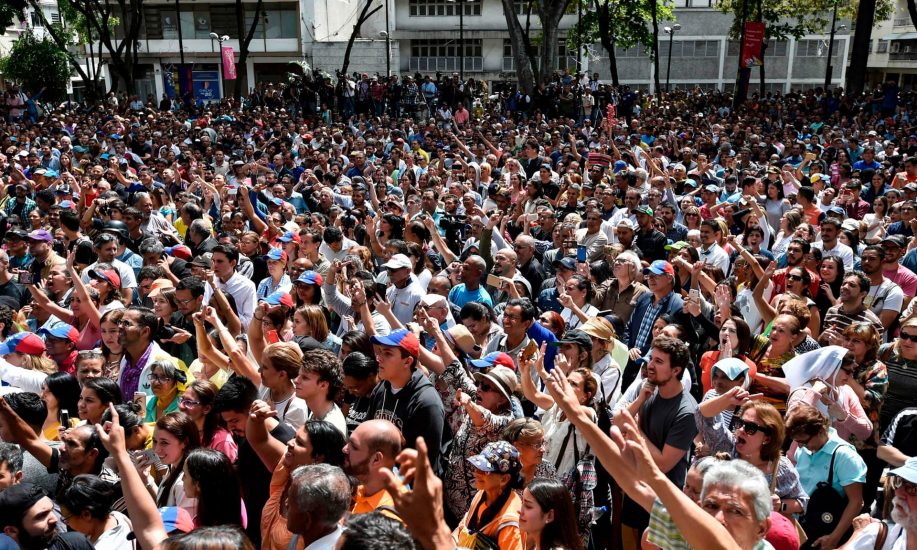
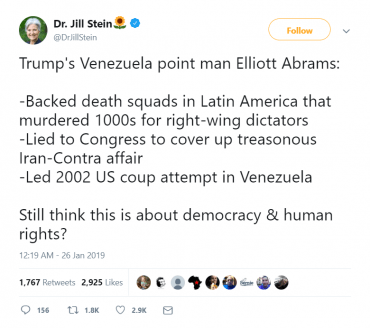




 Aletho News
