CNN recently discovered a paradox. How was it possible, they asked, that in 1989, Viktor Orban, at the time a Western-acclaimed liberal opposition leader, was calling for Soviet troops to leave Hungary, and now that he is Prime Minister, he is cozying up to Vladimir Putin?
For the same reason, dummy.
Orban wanted his country to be independent then, and he wants it to be independent now.
In 1989, Hungary was a satellite of the Soviet Union. Whatever Hungarians wanted, they had to follow directives from Moscow and adhere to Soviet communist ideology.
Today, Hungary is ordered to follow directives from Brussels and adhere to the EU ideology, a k a “our common values”.
But what exactly are those “common values”?
Not so very, very long ago, “the West”, that is, both America and Europe, claimed devotion to “Christian values”. Those values were evoked in Western condemnation of the Soviet Union.
That is out. These days, indeed, one of the reasons why Viktor Orban is considered a threat to our European values is his reference to a Hungarian conception of “the Christian character of Europe, the role of nations and cultures”. The revival of Christianity in Hungary, as in Russia, is regarded in the West as deeply suspect.
So it’s understood, Christianity is no longer a “Western value”. What has taken its place? That should be obvious: today “our common values” essentially mean democracy and free elections.
Guess again. Orban was recently re-elected by a landslide. Leading EU liberal Guy Verhofstadt called this “an electoral mandate to roll back democracy in Hungary.”
Since elections can “roll back democracy”, they cannot be the essence of “our common values”. People can vote wrong; that is called “populism” and is a bad thing.
The real, functional common values of the European Union are spelled out in its treaties: the four freedoms. No, not freedom of speech, since many Member States have laws against “hate speech”, which can cover a lot of ground since its meaning is open to wide interpretation. No, the obligatory four freedoms of the EU are free movement of goods, services, persons and capital throughout the Union. Open borders. That is the essence of the European Union, the dogma of the Free Market.
The problem with the Open Border doctrine is that it doesn’t know where to stop. Or it doesn’t stop anywhere. When Angela Merkel announced that hundreds of thousands of refugees were welcome in Germany, the announcement was interpreted as an open invitation by immigrants of all sorts, who began to stream into Europe. This unilateral German decision automatically applied to the whole of the EU, with its lack of internal borders. Given German clout, Open Borders became the essential “European common value”, and welcoming immigrants the essence of human rights.
Very contrasting ideological and practical considerations contribute to the idealization of Open Borders. To name a few:
Economic liberals maintain that because Europe is aging, it needs young immigrant workers to pay for the pensions of retired workers.
Many Jewish activists feel threatened by national majorities and feel safer in a society made up of ethnic minorities.
More discreetly, certain entrepreneurs favor mass immigration because growing competition in the labor market brings down wages.
Many artistically inclined people consider ethnic diversity to be more creative and more fun.
Certain anarchist or Trotskyist sects believe that uprooted immigrants are the “agent” of the revolution that the Western proletariat failed to produce.
Many Europeans accept the idea that nation states are the cause of war, concluding that every way of destroying them is welcome.
International financial investors naturally want to remove all obstacles to their investments and thus promote Open Borders as The Future.
There are even a few powerful schemers who see “diversity” as the basis of divide and rule, by breaking solidarity into ethnic pieces.
There are good people who want to help all humanity in distress.
This combination of contrasting, even opposing motivations does not add up to a majority in every country. Notably not in Hungary.
It should be noted that Hungary is a small Central European country of less than ten million inhabitants, which never had a colonial empire and thus has no historic relationship with peoples in Africa and Asia as do Britain, France, the Netherlands, and Belgium. As one of the losers in World War I, Hungary lost a large amount of territory to its neighbors, notably to Romania. The rare and difficult Hungarian language would be seriously challenged by mass immigration. It is probably safe to say that the majority of people in Hungary tend to be attached to their national identity and feel it would be threatened by massive immigration from radically different cultures. It may not be nice of them, and like everyone they can change. But for now, that is how they vote.
In particular, they recently voted massively to re-elect Victor Orban, obviously endorsing his refusal of uncontrolled immigration. This is what has spurred scrutiny of Orban’s leadership for signs of incumbent dictatorship. The EU is taking steps to strip Hungary of its political rights as a result. On September 14, Victor Orban made his position clear in a speech to the (largely rubber stamp) European Parliament in Strasbourg:
“Let’s be frank. They want to condemn Hungary and the Hungarians who have decided that our country will not be an immigration country. With all due respect, but as firmly as possible, I reject the threats of the pro-immigration forces, their blackmail of Hungary and the Hungarians, all based on lies. I inform you respectfully that however you decide, Hungary will stop illegal immigration, and defend its borders, against you if necessary.”
This was greeted with outrage.
Former Belgian prime minister Guy Verhofstadt, currently president of the Alliance of Liberals and Democrats for Europe Group in the European Parliament and an ardent European federalist, responded furiously that “we cannot let far right populist governments drag democratic European states into the orbit of Vladimir Putin!”
In a tweet to his EP colleagues, Verhofstadt warned: “We are in an existential battle for the survival of the European project. … For Europe’s sake, we need to stop him!”
CNN approvingly ran an opinion piece from Verhofstadt describing Hungary as a “threat to international order”.
“In the coming weeks and months, the international community — and the United States in particular — must heed our warning and act: Hungary’s government is a threat to the rules-based international order,” he wrote.
“European governments and the US have a moral obligation to intervene”, Verhofstadt continued. “We cannot stand aside and let populist, far-right governments drag democratic European states into Vladimir Putin’s orbit and undermine the postwar international norms.”
Next come sanctions: “Political and financial costs must be attached to governments pursuing an authoritarian path and support provided to civil society organizations…”
Verhofstadt concluded: “This is not in the interests of the people of America or Europe. We need to stop him — now.”
Verhofstadt’s appeal to America to “stop” the Hungarian prime minister sounds like nothing so much as appeals to Brezhnev by hard-line communists to send the tanks into reformist Czechoslovakia in 1968.
However, this appeal for intervention was not addressed to President Trump, who is in the same doghouse as Orban among the Atlanticists, but rather to the deep state forces which the Belgian fanatic assumes are still in power in Washington.
At the start of his CNN article, Verhofstadt paid tribute to “the late, great, John McCain, who once described Orban as ‘a fascist in bed with Putin’…” That is the McCain who went around the world as head of the Republican branch of the National Endowment for Democracy (NED) encouraging and financing dissident groups to rebel against their respective governments, in preparation for U.S. intervention. Oh Senator McCain, where are you now that we need you for a little regime change in Budapest?
Orban’s reputation in the West as dictator is unquestionably linked to his intense conflict with Hungarian-born financier George Soros, whose Open Society foundation finances all manner of initiatives to promote his dream of a borderless society, notably in Eastern Europe. Soros operations could be considered privatized U.S. foreign policy, along the same lines as McCain, and innocently “non-governmental”. One Soros initiative is the private Budapest-based Central European University whose rector is open society advocate Michael Ignatieff. Hungary recently imposed a 25% tax on money spent by nongovernmental organizations on programs that “directly or indirectly aim to promote immigration,” which affects the CEU. This is part of a recently adopted package of anti-immigration measures known as the “Stop Soros” bill.
Hungarian measures against Soros’ interference are of course denounced in the West as a grave violation of human rights, while in the United States, prosecutors search frantically for the slightest indication of Russian interference or Russian agents.
In another blow against the international rules-based order, the Hungarian prime minister’s office recently announced that the government will cease to fund university courses in gender studies, on the grounds that they “cannot be justified scientifically” and attract too few students to be worthwhile. Although privately funded and thus able to continue its own gender studies program, the CEU was “astonished” and called the measure “without any justification or antecedent.”
Like the Soviet Union, the European Union is not merely an undemocratic institutional framework promoting a specific economic system; it is also the vehicle of an ideology and a planetary project. Both are based on a dogma as to what is good for the world: communism for the first, “openness” for the second. Both in varying ways demand of people virtues they may not share: a forced equality, a forced generosity. All this can sound good, but such ideals become methods of manipulation. Forcing ideals on people eventually runs up against stubborn resistance.
There are differing reasons to be against immigration just as to be for it. The idea of democracy was to sort out and choose between ideals and practical interests by free discussion and in the end a show of hands: an informed vote. The liberal Authoritarian Center represented by Verhofstadt seeks to impose its values, aspirations, even its version of the facts on citizens who are denounced as “populists” if they disagree. Under communism, dissidents were called “enemies of the people”. For the liberal globalists, they are “populists” – that is, the people. If people are told constantly that the choice is between a left that advocates mass immigration and a right that rejects it, the swing to the right is unstoppable.
A former high-ranking MEK official confirmed long-held suspicions that Saudi Arabia has been financing the political-militant group bent on violent regime change in Iran through sophisticated channels to provide the group with valuables like gold and Rolex watches, according to a new report.
In an interview with Jordanian news outlet Al-Bawaba Tuesday, a former MEK member who oversaw the transfer of hundreds of millions of dollars’ worth of materials explained how the group has stayed financially afloat.
Massoud Khodabandeh explained that 3 tons of solid gold, a minimum of four suitcases of customized Rolex watches and fabric that had been used to cover the Muslim holy site of Kaaba in Mecca were among the commodities shipped from Saudi Arabia to MEK operatives in Baghdad as part of the scheme. From there, the valuables would be sold on the black market in Jordan’s capital, Amman, to Saudi-aligned merchants.
“Aided by two Iraqi and two Saudi representatives, Khodabandeh smuggled three trucks filled with gold bars from Saudi Arabia to Baghdad. He estimated that each truck held about a ton of gold, making the shipment’s contemporary worth almost $200 million,” Al-Bawaba reports. After selling the gold, funds would be sent to offshore MEK bank accounts, Khodabandeh said.
The report says that the US also supported the MEK by providing the UN Refugee Agency with $20 million in order to transport thousands of MEK members from Iraq to Albania. The US then gave Albania funds to construct a “military-style facility for the MEK, in which it is currently holed up.”
War hawks in Washington point to the MEK as the most viable proxy force for bringing down the Iranian government. The group doesn’t have support within Iran, according to Saeed Jalili, a Tehran-based writer. “I have not heard anyone asking them [MEK] to make a comeback in Iran or anything like that,” Jalili told Al Jazeera in March.
“There is a viable opposition to the rule of the ayatollahs. And that opposition is centered in this room today,” John Bolton, once the US ambassador to the UN and now White House national security adviser, said during a speech at an MEK conference in Paris last year.
Bolton went so far as to conclude his remarks by predicting the overthrow of the Iranian government by the end of 2018, according to Iranian expat journalist Bahman Kalbasi. “And that’s why, before 2019, we here will celebrate in Tehran,” Bolton said to a round of roaring applause.
“We resettled a lot of the MEK people from Iraq in Albania,” Daniel Benjamin, the State Department’s counterterrorism coordinator at the time, told Foreign Policy in April. “It became the goal of the US government to get them out of there. That is the reason they were delisted” from the US list of terror groups in 2012.
“It happened under the secretary’s authority, not because they had met the requirements for not being a terrorist group,” said Benjamin, who is now director of the Center For International Understanding at Dartmouth University. Hillary Clinton was the US secretary of state from 2009 to 2013, before John Kerry assumed the post until the arrival of the Trump administration in 2017.
“Bolton is positively predisposed to the MEK,” a foreign policy Capitol Hill staffer told Foreign Policy in April, when Bolton joined the White House as national security adviser. “They will have some access to this White House at least.”
Like vultures, Israeli soldiers descended on Khan Al-Ahmar, on Sep. 14, recreating a menacing scene with which the residents of this small Palestinian village, located East of Jerusalem, are all-too-familiar.
The strategic location of Khan Al-Ahmar makes the story behind the imminent Israeli demolition of the peaceful village unique amid the ongoing destruction of Palestinian homes and lives throughout besieged Gaza and Occupied West Bank.
Throughout the years, Khan Al-Ahmar, once part of an uninterrupted Palestinian physical landscape has grown increasingly isolated. Decades of Israeli colonisation of East Jerusalem and the West Bank left Khan Al-Ahmar trapped between massive and vastly expanding Israeli colonial projects: Ma’ale Adumim, Kfar Adumim among others.
The unfortunate village, its adjacent school and 173 residents are the last obstacle facing the E1 Zone project, an Israeli plan that aims to link illegal Jewish colonies in Occupied East Jerusalem with West Jerusalem, thus cutting off East Jerusalem entirely from its Palestinian environs in the West Bank.
Like the Neqab (Negev) village of Al-Araqib, which has been demolished by Israel and rebuilt by its residents 133 times, Khan Al-Ahmar residents are facing armed soldiers and military bulldozers with their bare chests and whatever local and international solidarity they can obtain.
Despite the particular circumstances and unique historical context of Khan Al-Ahmar, however, the story of this village is but a chapter in a protracted narrative of a tragedy that has extended over the course of seventy years.
It would be a mistake to discuss the destruction of Khan Al-Ahmar or any other Palestinian village outside the larger context of demolition that has stood at the heart of Israel’s particular breed of settler colonialism.
It is true that other colonial powers used the destruction of homes and properties, and the exile of whole communities as a tactic to subdue rebellious populations. The British Mandate government in Palestine used the demolition of homes as a ‘deterrence’ tactic against Palestinians who dared rebel against injustice throughout the 1920s, 30s and 40s, till Israel took over in 1948.
The Israeli strategy is far more convoluted than a mere ‘deterrence’. It is now carved in the Israeli psyche that Palestine must be destroyed for Israel to exist. Therefore, Israel is engaging in a seemingly endless campaign of erasing everything Palestinian, because the latter, from an Israeli viewpoint, represents an existential threat to the former.
This is precisely why Israel sees the natural demographic growth among Palestinians as an ‘existential threat’ to Israel’s ‘Jewish identity’.
This can only be justified with an irrational degree of hate and fear that has accumulated throughout generations to the point that it now forms a collective Israeli psychosis for which Palestinians continue to pay a heavy price.
The repeated destruction of Gaza is symptomatic of this Israeli psychosis.
Israel is a “country that when you fire on its citizens, it responds by going wild – and this is a good thing,” was the official explanation offered by Tzipi Livni, the Israeli foreign minister in January 2009 to justify its country’s war on the blockaded Gaza Strip. The Israel ‘going wild’ strategy has led to the destruction of 22,000 homes, schools and other facilities during one of Israel’s deadliest wars on the Strip.
A few years later, in the summer of 2014, Israel went ‘wild’ again, leading to even greater destruction and loss of lives.
Israel’s mass demolition of Palestinian homes in Gaza, and everywhere else, preceded Hamas by decades. It has nothing to do with the method of resistance that Palestinians utilise in their struggle against Israel. Israel’s demolishing of Palestine – whether the actual physical structures or the idea, history, narrative, and even street names – is an Israeli decision through and through.
A quick scan of historical facts demonstrates that Israel demolished Palestinian homes and communities in diverse political and historical contexts, where Israel’s ‘security’ was not in the least a factor.
Nearly 600 Palestinian towns, villages and localities were destroyed between 1947 and 1948, and approximately 800,000 Palestinians were exiled to make room for the establishment of Israel.
According to the Land Research Center (LRC), Israel had destroyed 5,000 Palestinian homes in Jerusalem alone since it occupied the city in 1967, leading to the permanent exile of nearly 70,000 people. Coupled with the fact that almost 200,000 Jerusalemites were driven out during the Nakba, the Catastrophe’ of 1948, and the ongoing slow ethnic cleansing, the Holy City has been in a constant state of destruction since the establishment of Israel.
In fact, between 2000 and 2017, over 1,700 Palestinian homes were demolished, displacing nearly 10,000 people. This is not a policy of ‘deterrence’ but of erasure – the eradication of the very Palestinian culture.
Gaza and Jerusalem are not unique examples either. According to the Israeli Committee against House Demolitions (ICAHD’s) report last December, since 1967 “nearly 50,000 Palestinian homes and structures have been demolished – displacing hundreds of thousands of Palestinians and affecting the livelihoods of thousands of others.”
Combined with the destruction of Palestinian villages upon the establishment of Israel, and the demolition of Palestinian homes inside Israel itself, ICAHD puts the total number of homes destroyed since 1948 at more than 100,000.
In fact, as the group itself acknowledges, the figure above is quite conservative. Indeed, it is. In Gaza alone, and in the last ten years which witnessed three major Israeli wars, nearly 50,000 homes and structures were reportedly destroyed.
So why does Israel destroy with consistency, impunity and no remorse?
It is for the same reason that it passed laws to change historic street names from Arabic to Hebrew. For the same reason, it recently passed the racist Nation-state law, elevating everything Jewish and completely ignoring and downgrading the existence of the indigenous Palestinians, their language and their culture that goes back millennia.
Israel demolishes, destroys and pulverizes because, in the racist mindset of Israeli rulers, there can be no room between the Sea and the River but for Jews; where the Palestinians – oppressed, colonised and dehumanised – don’t factor in the least in Israel’s ruthless calculations.
This is not just a question of Khan Al-Ahmar. It is a question of the very survival of the Palestinian people, threatened by a racist state that has been allowed to ‘go wild’ for 70 years, untamed and without repercussions.
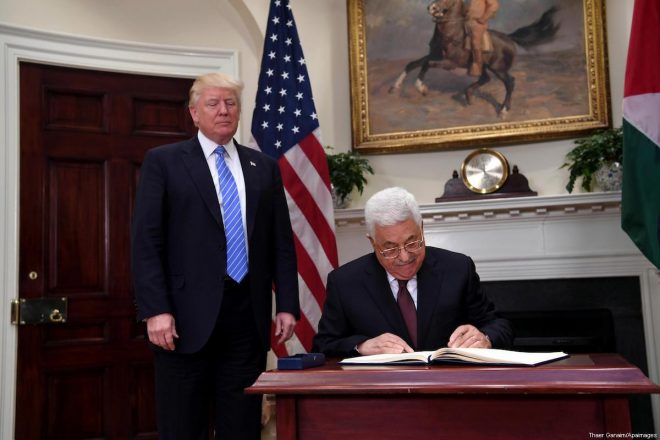
US President Donald Trump with Palestinian President Mahmoud Abbas in the Oval Office of the White House on May 3, 2017 in Washington, DC. [Thaer Ganaim/Apaimages]
A few years after Arafat assumed the leadership of the Palestinian national movement he tried to tempt the West to offer him something in return for what he called peace. Many people still remember him with his white sweater, in the United Nations General Assembly in 1974, saying: “I come bearing an olive branch in one hand, and the freedom fighter’s gun in the other. Do not let the olive branch fall from my hand.”
As one Fatah former leader and Arafat companion once told me, Arafat and his group always thought that liberation should happen within their lifetime and that they should enjoy its fruits. They were convinced from the early stages that they cannot beat the Zionists with all the American and Western support behind them. They were ready from the beginning for something other than complete liberation, unlike most Palestinians. It was not a surprise to my friend that Arafat ended up trapped with a lousy agreement, the Oslo Accords, engineered secretively by Mahmoud Abbas, his successor.
Almost all Palestinian factions, including those who are members of the Palestine Liberation Organisation (PLO), rejected it and many Fatah and Palestinian National Council (PNC) members resigned in protest against the agreement, including Mahmoud Darwish, Ibrahim Abu Lughod and Edward Said, who accused Arafat of treason.
The attempts of Fatah to lead the Palestinian national movement led eventually to the complete monopoly of the Palestinian national decision. All other factions who used to get their financial support and annual budget from the PLO had to concede to Arafat’s decisions even if they opposed them, and for those who refused to do so Arafat used to smear, intimidate and in many cases use brutal force against them, including assassination if necessary.
Although the PLO’s institutions and other Palestinian bodies had elections, most of the time they were decorative. Most of the Palestinian leadership, including Arafat, did not believe in leadership succession and democratic transition. Opposition was never allowed unless it was superficial and could beautify the face of the PLO and give legitimacy to the “historical leadership”, as Arafat and his group used to be called by their supporters.
In the eighties, after Hamas and Islamic Jihad (IJ) became serious contenders, Fatah tried to combat them. In the beginning Arafat refused to recognise that these movements ever existed. Then he spread a rumour, which many still believe in, that these movements were the creation of Israel to divide the national Palestinian decision. Fatah and its members used to assault members of Hamas and IJ, in universities, Israeli detention camps, mosques and wherever they could.
In 1993 the Oslo Accords were signed and from that moment on a deep rift was created between the Palestinian people, who were once always united behind resistance. Arafat believed, and made many Palestinians believe, that through diplomacy Palestinians could have their independent state. This sweet dream was a mere illusion, which Arafat eventually realised before his mysterious death.
The “peace process” – which was supposed to yield according to Oslo a Palestinian state within six years – continued for about two decades and managed only to consolidate Israeli control of the West Bank and the Gaza Strip. Arafat eventually realised that the United States and Israel had turned him into a policeman whose duty it is to keep his own people calm and accept the gradual annexation of land and the looting of resources.
By the beginning of the second intifada, which was triggered by Ariel Sharon’s intrusion into Al-Aqsa Mosque, Arafat started local resistance groups in secret and released many Hamas leaders and members from his prisons. Sharon and George W. Bush decided that it was time to get rid of him and the Israeli Army destroyed almost all the infrastructure Arafat managed to build with European aid in the West Bank, surrounded his headquarters in Ramallah, and imposed Mahmoud Abbas on him as a prime minister.
It was by then very clear that the Americans and the Israelis despised Arafat and favoured Abbas. Arafat’s health gradually and mysteriously deteriorated, he finally died and Abbas took over. Abbas did not believe in pressurising Israel using armed resistance, nor with peaceful resistance, as is evident in the way he runs the areas under his jurisdiction. He seems to believe that the only way to implement his plans of having a state is to convince the Americans and reassure the Israelis, which seems a very naïve approach.
Yet there were some serious obstacles to overcome. First was the armed Fatah groups Arafat founded and financed, which Abbas could liquidate quickly. The second is groups like Hamas, which Arafat, with all his might, could not contain. Abbas chose a new tactic; elections. Abbas managed to convince Hamas’ leadership to take part in the general elections in the West Bank and the Gaza Strip, inaccurately estimating that it would not get more than 30 per cent of the seats of the Legislative Council, and he would emerge victorious and impose his views on Hamas through democracy.
Abbas found no other way except to recognise the results of the elections but worked to undermine the work of the government which was formed by Hamas, and boycotted by most of the other Palestinian factions due to Abbas’ pressure. Through Fatah armed groups and PA security agencies, Abbas started with the help of people like Mohmmed Dahlan – who was then the head of the Preventive Security Force in Gaza – an armed revolt. Abbas made the work of the government almost impossible.
Local Hamas leaders got fed up of the situation and with their smaller and less equipped forces, kicked Dahlan and the armed leaders of Fatah out of the Gaza Strip, and Abbas in return cracked down on Hamas in the West Bank. From that time on Abbas and his group monopolised Palestinian representation under the pretext that Hamas carried out a coup in Gaza and unless it surrenders and hands over everything to Abbas there will be no reconciliation, which gave Abbas all the liberty he wanted to go on his way undisputed.
Yes, Abbas ruled undisputed, but it is very clear that he failed. Abbas worked for three decades to make the Oslo Accords a reality but ended up cursing his partners, the Americans and the Israelis, in a vulgar way, for he has nothing else he could do. Abbas lacks the courage to declare that he led the Palestinian people into a disaster, apologise and give way to a new leadership. One day, most probably soon, Abbas like Arafat will pass away, and leave his people face to face with his disastrous heritage.
Israeli Defence Minister Avigdor Lieberman yesterday rejected an Israeli army discussion of establishing a committee to see whether life sentences issued against Palestinian prisoners should be reduced, Yedioth Ahronoth reported.
“As long as I am the defence minister, no terrorist will have his sentence shortened by even one hour,” Lieberman announced on Twitter.
All Palestinians who stand up against the occupation, including children who protests, are referred to as “terrorists” by Israeli officials.
Israeli Prime Minister Benjamin Netanyahu also voiced out his rejection to the proposal that sentences be reduced.
“Regarding the talk about shortening terrorists’ sentences—I strongly oppose this. I know that this is also the position of the defence minister and, therefore, it will not happen,” he was quoted by the Israeli news website Ynet News as saying.
The Israeli media has reported that an official order is expected to be issued to establish a committee that will examine parole requests for Palestinian prisoners who are serving life terms imposed by military courts in the occupied West Bank.
Yedioth Ahronoth reported that, if established, the committee would discuss the possibility to equating military life sentences, which are 99 years, with the civil life terms.
Last week saw the 25th anniversary of the signing of the cursed Oslo Accords that eliminated the Palestinian national constants. It replaced them with the recognition of Israel in exchange for imaginary power for the Palestinian people and false promises of establishing a Palestinian state.
A quarter of a century has passed since the “peace agreement” between Israel and the Palestine Liberation Organisation signed by Palestinian leader Yasser Arafat and the then Prime Minister of Israel, Yitzhak Rabin. It was signed on the White House lawn under the auspices of US President Bill Clinton, and it derailed the path of the great struggle in which the heroic Palestinians offered their lives for the sake of their land, not for the sake of creating a fake authority that serves the Israeli occupation. On that fateful day in Washington, the PLO was burned, along with its national charter, which stipulated that Israel is a colonial entity which has stolen Palestine and that the organisation does not recognise it.
A quarter of a century has passed since the PLO laid down its arms and removed armed struggle against the Israeli enemy from its charter. This is despite the fact that this was its means of liberating Palestine from the Mediterranean to the River Jordan; instead, “peace” became the strategic choice of the umbrella organisation.
Throughout the post-Oslo quarter of a century, Israel has achieved more of its objectives than it did in its previous wars; the Palestinians have lost too much in concession after concession. The US now recognises all of Jerusalem as the capital of Israel and has moved its embassy there. Israel is pushing ahead with its Judaisation of Jerusalem and the Old City is being emptied of Palestinians; their numbers are dwindling. Meanwhile, the number of Jews inside Jerusalem has increased, as has the number of settlements surrounding Al-Aqsa Mosque, not to mention the ongoing settlement expansion in the West Bank, home to around 800,000 illegal settlers. The Palestinians now have just 20 per cent of historical Palestine for their supposed state; this figure is likely to get smaller as there are plans to establish new settlements to cater for up to 1.5 million settlers.
The “Jewish Nation State Law”, approved by the Knesset last month, unmasked Israel’s ugly racist face; it was passed to legitimise these settlements by making Palestine a homeland solely for the Jewish people. “The land of Israel is the historical homeland of the Jewish people, in which the State of Israel was established,” says the new law. “The right to exercise national self-determination in the State of Israel is unique to the Jewish people.”
Furthermore, in order to promote the Jewishness of the state, the law makes Hebrew Israel’s only official language. The state’s Palestinian citizens — 20 per cent of the population — must either leave the country or live as second-class citizens with no access to full citizenship and equal rights.
The Zionist lie for more than a century has been that Palestine is solely for the Jews; the Promised Land given to them by God which they cannot abandon. Turning reality upside down, the presence of the Palestinians is regarded as that of occupiers from whom the 1948 war was a war of liberation.
Moreover, the implication of the new law is that the settlements regarded as illegal under international law are not built on occupied land; they are simply an extension of Israeli territory. “The state views the development of Jewish settlement as a national value and will act to encourage and promote its establishment and consolidation,” it announces. “The state will be open for Jewish immigration and the ingathering of exiles.” The “exiles” in this case does not mean the Palestinian refugees who have been ethnically cleansed since 1948, so the law unilaterally annuls their legitimate right of return.
The Palestinians have been disoriented for a quarter of a century, entering negotiations and disengaging, only to engage in new ones, and so one, lost in an endless cycle of talks. Their cause has been lost in the corridors of power while the Palestinian Authority — with its imaginary authority — has become a part of the Israeli project, by means of its security coordination with the occupation. The PA is the tool used by Israel to restrict and suffocate the Palestinians; to arrest activists and inform on Palestinian resistance members to the Israeli security agencies.
Given what has happened, why were the Oslo Accords signed? Oslo was preceded by the Madrid Conference and, prior to that, secret talks between the Palestinians and Israelis in preparation for the Accords. This followed the outbreak of the first intifada in 1987, which haunted the Israelis and carried a huge financial cost. The entire international community sympathised with this intifada and the children of the stones; Israel found itself surrounded domestically and internationally. Hence, it sought an agreement to calm the situation and allow the crisis to pass.
In its usual deceitful manner, Israel signed the Oslo Accords and made false promises about establishing a Palestinian state in the West Bank and Gaza. Arafat acknowledged the right of Israel to live in peace and security, and said that the Declaration of Principles would mark the beginning of a violence-free era. The PLO condemned the use of terrorism — the label applied to legitimate Palestinian struggle against occupation — and other acts of violence and amended the clauses of the national charter accordingly. It also took it upon itself to force every member of the PLO to adhere to the changes, prohibiting them from violating the new clauses and disciplining anyone who did. Based on Arafat’s commitment, the intifada was stopped by his direct order and he began cracking down on the Palestinians and banning them from any act of resistance against Israel’s occupation.
In fact, Arafat had accepted years earlier that the Israeli presence was an inevitable reality and that the state could not be erased. In mid-1973 he wrote to former US President Richard Nixon via a back channel — this is mentioned by Kai Bird in the book The Good Spy — telling the Americans that he and his colleagues in the Palestinian leadership were convinced that Israel was established for good and its demise was out of the question. The person who dragged us to the Oslo disaster thus began dragging us there at least 20 years beforehand.
Arafat lived in dreamland, and forced the Palestinians to do the same, waiting for his promised state until he woke up at the Camp David negotiations in 2000. He realised that he was running after a fantasy and had been deluded into thinking that Israel would ever give up Jerusalem or accept the right of return. He pulled out of negotiations and returned from the US disappointed, with the hopes of the Palestinian people unfulfilled.
That’s when he announced the return to resistance; Al-Aqsa intifada broke out after the Israeli Prime Minister at the time, Ariel Sharon, visited Al-Aqsa Mosque in September 2000. As a result of his actions, Arafat was besieged in his compound in Ramallah, until he was poisoned and killed in 2004.
His chapter was closed, and the pages of the Palestinian struggle are now limited to Hamas and Islamic Jihad in Gaza. They are being suffocated by Mahmoud Abbas, President of the Palestinian “sacred security coordination” Authority, who is now a key player in the overall Israeli project. The past twenty-five years since hope-filled Oslo have been a mirage.
There’s never a shortage of commentators reporting on how Russia planned the attack on the Skripals, or how Syria planned its chemical weapons massacres. So let’s just turn the tables on these prejudiced and blinkered proponents of the Western narrative…
The current impasse between the UK and Russia, initiated by the Skripal poisoning on March 4th and crystallized by the identification of two Russian “suspects” this week, calls for new thinking. Despite what appears to most Russians as the complete exposure of the UK’s dirty game, where its “smoking gun” evidence has been trashed by the appearance of the two “guns” on Russian TV, the UK’s leaders and their dutiful media remain unrepentant.
Worse than that, the “spycatchers” are re-invigorated with passionate Russophobia, full of indignation over the “brazen appearance” of their assassins on the BBC’s nemesis, RT. After they spent so many months combing through 11,000 hours of CCTV footage to put together a picture of the men, whose recorded movements almost coincided with the location and movements of the Skripals, it would be vexing to see that work squandered in less than a week.
Or so it might seem.
But before we feel too sorry for those unnamed individuals who finally found the proverbial needles in the haystack of Russians visiting Salisbury, albeit, at rather a quiet time, we might consider this inconvenient detail: “Novichok” was found on swabs taken at the City Stay Hotel on MAY 4th.
This, of course, was only two months after the attack on the Skripals, when the nerve agent might have been considered “fresh” and possibly dangerous; more recent re-testing found no trace of Novichok, though it was suggested this was because all of the substance had been removed on the swabs in May. Yes.
Given that no-one at the hotel reported being affected by Novichok, one must conclude that police had already identified Alexander Petrov and Ruslan Boshirov by the end of April, as Russians who had flown into London on that snowy weekend in March, and who had visited Salisbury while staying at City Stay Hotel.
But before we waste time speculating how and why it took them another four months to release the mug-shots of the suspected “GRU agents”, we should consider how much earlier the two Russians may have been under suspicion as the possible culprits and purveyors of the Nina Ricci perfume “Nouveau Truc”.
If authorities assumed the assassins had come from Russia, with the extensive monitoring and searching capabilities now available to them, might Petrov and Boshirov (their real names) not have been identified within days?
But now here’s the rub.
Accepting that the “Novichok” poisoning of Sergei and Yulia Skripal did NOT take place, neither as claimed by the UK from contact with a Novichok-smeared doorknob, nor in fact from any contact at all, we should now logically consider if these two Russian guys were identified before they came to London.
This is not some “conspiracy theory” – because it’s clear that there was a conspiracy. And with every new piece of “evidence”, and every repetition of the original false and fabricated claims against Russia this conspiracy becomes deeper and more malignant.
It is often useful when accusations are made against countries of – for instance – military expansionism, to reverse the protagonists; would the US be happy to see Chinese warships “maintaining freedom of navigation” between Cuba and Florida? While building military bases in neighboring countries and installing anti-missile defense systems in them?
So in considering the attack on the Skripals, and the apparent connection with false-flag chemical weapons attacks in Syria, it is useful to take what we may call a “conspirator’s eye view”.
Despite the credulity of Western media and its audience in the fabricated stories of chemical weapons use both in Syria and in Salisbury, there is now no alternative but to count these Western populations amongst the victims of a massive conspiracy by the UK and its allies; one that threatens to even exceed the criminality and deception involved in that “Mother of all Conspiracies” that launched the Imperial Wars of Terror seventeen years ago.
Considering this conspiracy, or operation – as it may appear to those who planned and executed the whole deception – from their perspective, opens up a whole new line of inquiry, and interest in past events that may have otherwise been overlooked. It may also take us into a realm of human psychology that is highly discomfiting, and for which it may be better to pretend that this is simply an academic inquiry.
A “what if the Skripal poisoning was staged by GCHQ to frame the Russians and provide a pretext for sanctions, because of their support for the Syrian government?” inquiry. But just remember this is a pretense.
First, we must assume that this operation was well-planned, and at least some months in advance. While considerations of the coming Russian Presidential election and the World Cup Football may have figured, along with Russia’s resistance in Ukraine and on its borders, the key driver behind “Operation Nina” (as we may choose to call it after the UK’s choice of “perfume”) must surely have been the situation in Syria.
This became quite clear when Theresa May delivered the “first use of a chemical weapon in Europe since WW2” accusation against Russia, timed as it was so cleverly only weeks before the staging of the Douma gas attack. Rather than simple guilt by association – supporting the “murderous Assad regime” – Russia could now be framed as a collaborator and user of chemical weapons.
One need only look at the rise in toxic Russophobia, and support for extreme measures against Russia which are entirely unjustifiable, to realize just who benefits from this framing of the West’s chief bugbear, and thus who might consider such an operation.
Russia’s enormous commitment to restoring peace and justice in Syria for the last seven years, and dedication to diplomacy and negotiation, with military action as the last resort, has been completely obscured by the NATO campaign of disinformation and subversive action, and to an extraordinary degree.
Clearly from the conspirators’ point of view, “Operation Nina” and the concomitant “White Helmets” and “Doctors Under Fire” operations in Syria have been a resounding success – even though the presumed goal of regime change still eludes them, whether in Damascus or Moscow. Certainly in terms of intent, and what the opposing parties stood to gain from assassinating Sergei Skripal there can be no argument – Russia only stood to lose, a little or a lot, while the UK and its allies stood to prevail both militarily and politically in their own interests, however morally repugnant and legally unjustified these were.
So we have the motive, and know the details of the bizarre method; what of the planning?
Is it possible that the unwitting Russian “agents”, whose visit to Salisbury has now become the clincher of the UK’s Novichok case, were actually lured to the vicinity of Sergei Skripal’s home, with the conveniently placed chemical weapons labs at nearby Porton Down? Without doubting the innocence of Petrov and Boshirov over any involvement in the BZ attack on the Skripals, might we consider if they were on a different mission, and victims of a “honey trap” not involving women?
This possibility – including their comment that “a friend suggested we visit Salisbury” could explain their slightly evasive and unconvincing answers on why they returned to the city for a second time. While we know that they weren’t caught on CCTV walking along Wilton Road “near the Skripal house” because that was their destination, it’s fair to ask why they chose to walk that way rather than the road north to Old Sarum, which they professed a desire to see.
Old Sarum is about two miles from the city center, so Petrov and Boshirov could have easily visited the site. But perhaps their friend had a different recommendation, and one they understandably would be reluctant to reveal – a venue which appears to be about the same distance from the center, along Wilton Road.
If this explanation for some anomalies in the Russians’ story is true, then it has an ironic twist; at the same time as they were striding off down Wilton Road, the final moves of the conspiracy to poison Sergei Skripal and his daughter were taking place back in the city center.
The exact circumstances and timing of the attack – presumably on the park bench on which they were discovered incapacitated – may only be known to those who set it up, but we may be sure nothing was left to chance. This is in contrast to the apparently haphazard behavior and conflicting reports afterward, despite some serious preparations just beforehand.
To anyone familiar with Salisbury, its proximity to the largest Chemical and Biological Weapons research facility in Europe ranks alongside its ancient cathedral and prehistoric sites as a subject of interest, if not as a destination. For some in the past, it proved a final destination, as revealed at an inquest in 2003, fifty years after the death of a MoD guinea pig, RAF volunteer Ronald Maddison, from Sarin poisoning.
The UK government and its agencies will, of course, assure the public that “nowadays” Porton Down is merely involved in research into protection and defense against other states’ chemical, biological and nuclear agents. It gave similar assurances to the 3000 odd volunteers in the ‘50s, telling them they were helping to develop a cure for the common cold, as drops of Sarin were put on their skin.
It seems that nothing much has changed, except that in those days – like Soviet propaganda – no-one really believed Whitehall’s bland reassurances or imagined that Porton Down was full of harmless boffins working for the common good.
What has changed is that the “elite” at the helm of today’s conspiracies has become supremely confident in its ability to deceive the public into believing whatever story best suits their special interests. As is illustrated by the whole crazy “Novichok” story – which has appeared as barely believable even to those who would readily blame Russia for it – the public can now be made to believe in anything, and with conviction.
And so it seems that as in Mossad’s motto – “By way of deception though shalt wage war”; this has become the modus operandi for the UK and its allies in their war on Russia and Syria, and anyone else standing in the way of their hegemonic and demonic ambitions.
This exclusive Grayzone investigative mini-doc by Dan Cohen exposes the cynical deceptions and faux humanitarianism behind the campaign to sell the dirty war on Syria. It will demonstrate the lengths that the US and its allies have gone to develop new ploys to tug at Western heartstrings and convince even liberal minded skeptics of war that a US intervention was necessary — even if it meant empowering Al Qaeda’s largest franchise since 9/11 and its theocratic allies among the insurgency. Big lies and little children have formed the heart of what is perhaps the most expensive, sophisticated, and shameless propaganda blitz ever conducted. Welcome to the Syria Deception.
Notice
Age-restricted video (based on Community Guidelines)
In a previous article (US: The Century of Lost Wars) I recorded the repeated US military defeats over the past two decades. In this discussion I will describe the role of military strategists who bear responsibility for the US defeats, but also for Israeli political successes.
The key to this apparent contradiction is to uncover how and why the destruction of Israeli adversaries prolonged costly US military invasions.
The two outcomes are inter-related. The same US military strategists whose policies lead to failed US wars in the Middle East facilitated and augmented the power of Israel.
US war strategists’ operations reflect ‘dual loyalties’. On the one-hand they receive their elite education and high positions in the US, while their political loyalties to Tel Aviv express their Israel First strategic decisions.
Our hypothesis is that dual loyalist strategists have fabricated threats, identified adversaries and committed hundreds of thousands of US soldiers to losing wars based on calculations that effectively increase Israeli power and influence in the Middle East.
We will proceed by identifying the war strategists and their policies and conclude by proposing an alternative framework for re-thinking the relationship between dual citizens and military strategy.
The ‘Best and the Brightest’: The Blind Ally of Military Defeats
There is an apparent contradiction between the high academic achievements of elite military strategists and their abominable record in pursuing military conflicts.
Most, if not all, policy makers who led the US in prolonged wars against Iraq, Somalia, Libya, Yemen, Afghanistan, Lebanon and Syria were Israel-firsters, either Zionists or Israeli ‘fellow travelers’.
In each of these wars, the Israel firster war strategists, (1) identified the enemy, (2) exaggerated the threat to the US and (3) grossly inflated the military capacity of the targeted country. They started with Iraq and Afghanistan and then proceeded to the other nations, all opponents of Israel.
By ‘coincidence’ all countries supported the Palestinians’ rights of self-determination and opposed Israeli annexation and colonization of Arab lands.
Driven by their loyalty to Israel’s ‘expansionist goals’, the military strategists ignored the ‘real world’ political and economic costs to the US people and state. Professional and academic credentials, nepotism and tribal loyalties, each contributed to the Israel firsters advance to securing strategic decision-making positions and elite advisory posts in the Pentagon, State Department, Treasury and White House.
Their policies led to an unending trillion-dollar war in Afghanistan; losing wars in Libya, Iraq and Syria; and costly economic sanctions against Iran.
The main beneficiary was Israel which confronted less political and military opposition; zero cost in lives and money; and substantial gains in territory.
Why did the Yale, Harvard, Princeton, Chicago, Johns Hopkins’ cum laude graduates repeatedly produce the worst possible military outcomes?
In part because the US acted as an instrument of another power (Israel). Moreover, the Israel firsters never were obliged to reflect in self-criticism nor to admit their failures and rectify their disastrous strategies..
Their refusal to assume their responsibilities resulted from several causes. Their criteria for success was based on whether their policies advanced Israeli goals, not US interests.
Moreover, while their decisions were objectionable to US citizens they were supported by the 52 Presidents of the Major American Jewish Organization including the powerful Zionist lobby, AIPAC, which dictated Middle East policy to both political parties and the US Congress.
Ordinarily, military strategists whose policies lead to repeated political disasters are denounced, fired or even investigated for treason. In our experience nothing of the sort happened.
The best and the brightest rotated between six-digit jobs in Washington to seven-digit positions on Wall Street, or secured positions in lucrative law firms in Washington and New York (many with offices in Israel) or were appointed to prestigious academic posts in Ivy League universities.
What Should be Done?
There are countervailing measures which can lessen the impact of the strategic policies of the Israel Firsters. Academic Israel firsters should be encouraged to remain in Academia; rather than serve Israel in the State.
If they remain in the Ivory Tower they will inflict less destructive policies on American citizens and the state.
Secondly, since the vast-majority of Israel firsters are more likely to be arm chair war monger, who have not risked their lives in any of the wars that they promote, obligatory recruitment into combat zones would dampen their ardor for wars.
Thirdly, as matters stand, since many more Israel firsters choose to serve in the so-called Israeli Defense (sic) Force (IDF) they should reimburse US taxpayers for their free ride to education, health and welfare .
Fourthly, since most Israel firsters who volunteer to join the IDF prefer shooting unarmed Palestinian protesters, medics, journalists and kite flying kids they should be drafted into the US Army to serve in Afghanistan and face armed Taliban fighters surrounding Kabul, an experience which might knock a bit of realism in their dreams of converting the Middle East into an Israeli fiefdom.
Many national loyalties are forged by shared lives with families and friends of US soldiers who endure endless wars. Israel firsters dispatched to the war front would receive existential experiences that the Harvard, Princeton and Yale military strategists who make wars for Israel failed to understand.
Obligatory courses on the genocide of millions of Palestinian, Iraqi, Syrian, and Libyan people would enrich Israel firsters understanding of “holocausts’ in diverse ethno-religious settings.
Face to face encounters in life threatening military situations, where superior arms do not prevail, would deflate the hubris, arrogance and superiority complexes which fuel the tribal loyalties of Israel firsters.
In conclusion we offer modest suggestions for educated and cultured scientists, doctors, artists and entrepreneurs:
1/ Convert your skills to raising a new generation which will defend democratic values and social solidarity and eschew wars, persecution and phony claims of anti-semitism against critics of an ethnically exclusionary state.
2/ Forsake exclusive control of the mass media which glorifies Israeli war crimes and denigrates critics as ‘anti’ Semites for speaking truth to power.
Let’s join together to liberate America from military entanglements that privilege Israel while thirty million Us workers lack health coverage and forty percent of upstate New York children live in poverty.
Yes, there is an honorable place for everyone who joins in solidarity with the victims of Israeli First war strategists.
This talk was filmed at the Tattered Cover Bookstore in Denver, Colorado on June, 19, 2012.
Kristen Iversen shared excerpts from her new book “Full Body Burden: Growing Up in the Nuclear Shadow of Rocky Flats”.
Here are some quotes about her book…
“In this powerful work of research and personal testimony, Iversen chronicles the story of America’s willfully blinkered relationship to the nuclear weapons industry . . . masterful use of the present tense, conveying tremendous suspense and impressive control of the material.” Publishers Weekly starred review
“Superbly crafted tale of Cold War America’s dark underside . . . exquisitely researched.” Kirkus starred review
“Iversen has crafted a chilling, brilliantly written cautionary tale about the dangers of blind trust . . . Full Body Burden is both an engrossing memoir and a powerful piece of investigative journalism.” Bookpage
“Full Body Burden is one of the most important stories of the nuclear era—as personal and powerful as Silkwood, told with the suspense and narrative drive of The Hot Zone. With unflinching honesty, Kristen Iversen has written an intimate and deeply human memoir that shows why we should all be concerned about nuclear safety, and the dangers of ignoring science in the name of national security. Rocky Flats needs to be part of the same nuclear discussion as Three Mile Island, Chernobyl, and Fukushima. So does Full Body Burden. It’s an essential and unforgettable book that should be talked about in schools and book clubs, online and in the White House.
–REBECCA SKLOOT, author of The Immortal Life of Henrietta Lacks
“This terrifyingly brilliant book – as perfectly crafted and meticulously assembled as the nuclear bomb triggers that lie at its core – is a savage indictment of the American strategic weapons industry, both haunting in its power, and yet wonderfully, charmingly human as a memoir of growing up in the Atomic Age.”
–SIMON WINCHESTER, author of The Professor and the Madman and Atlantic
“News stories come and go. It takes a book of this exceptional caliber to focus our attention and marshal our collective commitment to preventing future nuclear horrors.”
–Booklist
A popular lament about the JFK assassination is, “Golly, I guess we’ll never know what really happened.” The reason people express that lament is that they are thinking of what the law calls “direct evidence,” like a videotaped confession or a written memorandum detailing plans to conduct the assassination.
What such lamenters fail to consider, however, is the important role that circumstantial evidence can tell us about what happened on that fateful day in November 1963. They either fail to understand the importance of circumstantial evidence or they are simply too frightened to consider the possibility that officials might be lying about the official account of the assassination.
What is circumstantial evidence? It is indirect evidence that is used to establish certain facts. Suppose people in Atlanta wake up tomorrow morning and see the streets of the city flooded with water. Even though they slept through the night, they can conclude that it rained the previous night. The flooded streets are circumstantial evidence that it did in fact rain, even if no one saw it rain.
Every court in the land holds that circumstantial evidence is just as valid as direct evidence. Thus, courts put equal weight on an eyewitness who saw it rain and on the fact that the streets are flooded to establish that it did in fact rain.
Let’s consider an important aspect of the Kennedy assassination, one that I am currently exploring in my new video/podcast series on the assassination: the autopsy that the U.S. military conducted on the body of President Kennedy just a few short hours after the assassination. It’s an aspect of the assassination about which many Americans are unfamiliar but one that can enable people to have a better understanding about the assassination itself.
After the Warren Commission issued its official conclusions in 1964, it ordered much of its investigative records to be kept secret for a period of 75 years. After the House Select Committee on Assassinations reopened the investigation into JFK’s death in the mid-1970s, it ordered that much of its investigative records be kept secret for 50 years. Meanwhile, from the very beginning, the U.S. national-security establishment shrouded its JFK-related records in an indefinite and perpetual cloak of “national-security” secrecy and “classified-information” secrecy.
The official secrecy was especially pronounced with respect to the autopsy that the U.S. military conducted on the body of President Kennedy. Participants in the autopsy were told that the entire operation was “classified.” They were ordered to never disclose to anyone what they had seen. They were threatened with court martial and criminal prosecution if they ever talked to anyone about what they had witnessed. They were required to sign official “letters of secrecy” by which they acknowledged their vow to keep the autopsy secret.
By and large, and with a few exceptions, that military secrecy held for some 30 years. Much of it came to a screeching halt, however, in the 1990s, when Congress enacted the JFK Records Act, which mandated that the military, the CIA, and other elements of the national-security establishment release their JFK-related records. The law was enacted in response to the outrage produced by Oliver Stone’s movie JFK, which posited that the assassination was a national-security regime-change operation, no different in principle from those conducted in places like Iran in 1953, Guatemala in 1954, Congo in 1961, Cuba in the early 1960s, Vietnam in 1963, and, later, in Chile in 1973. Stone’s movie informed people of the 30-year old wall of secrecy that the U.S. national-security establishment had constructed around the JFK assassination. That caused Congress to enact the JFK Records Act. To enforce the Act, Congress called into existence the Assassination Records Review Board (ARRB).
Here are some of the things we have learned about the JFK autopsy, mostly because of the JFK Records Act and the enforcement measures taken by the ARRB, as detailed in the five-volume book Inside the Assassination Records Review Board by Douglas Horne, who served on the staff of the ARRB:
1. While most everyone thought that the president’s body was being transported in a U.S Navy vehicle to the Bethesda Naval Facility after Air Force One landed at Andrews Air Force Base, along with the president’s wife Jacqueline and his brother Bobby, it was actually sneaked into the back entrance of the Bethesda morgue almost 1 ½ hours before it was officially introduced into the front of the facility at 8 pm.
How do we know this? Through a combination of both direct and indirect evidence, most of which wasn’t discovered until the 1990s as part of the JFK Records Act and the ARRB’s enforcement actions, as follows:
a. The testimony of several enlisted men, which established that they carried the president’s body into the morgue in a cheap “shipping casket,” similar to the types the military used for transporting the bodies of soldiers who were being killed in the Vietnam War, rather than the expensive, ornate, heavy casket into which the president’s body had been placed at Parkland Hospital in Dallas after he was declared dead.
b. A written report from Gawler’s Funeral Home, the most prestigious funeral home in Washington. It conducted the embalming of the president’s body and then the president’s funeral. The report, which was prepared contemporaneously with events in November 1963, established that the president’s body was brought into the morgue in a shipping casket.
c. A written report from U.S. Marine Sgt. Roger Boyajian, which was also prepared near the time of the autopsy, establishing that his team carried Kennedy’s body into the morgue at 6:35 p.m. in a shipping casket, which was almost 1 ½ hours before the official 8:00 p.m. time that the body was brought into the morgue in the Dallas casket.c
d. The testimony of Jerrol Custer, a U.S. Navy x-ray technician at the autopsy, who stated that he was carrying x-rays of the president’s head in the main foyer of the building when Jacqueline Kennedy entered the front of the facility at around 6:55 p.m. When she entered the building, the Dallas casket which she believed contained the body of the president was still sitting in the front of the facility.
e. At 8 p.m., Commander James Humes, one of the three military pathologists who would conduct the autopsy, telephoned Army Lt. Col. Pierre Finck to request his help with the autopsy. That was also the time — 8 p.m. — that the president’s body was being officially brought into the morgue for the autopsy.
During that telephone call, Humes told Finck that they already had x-rays of the president’s head. Humes’s statement is what the law calls an “admission against interest.” It is akin to a confession. At the risk of belaboring the obvious, the only way they could already have x-rays of the president’s head is if the president’s body had in fact previously been brought into the morgue prior to 8:00 p.m. time that the body was officially being brought into the facility, which was the same time that Humes was making his telephone call to Finck.
2. U.S. Navy Petty Officer Saundra Spencer’s testimony before the ARRB in the 1990s helped establish that the military had conducted a fraudulent autopsy on the body of President Kennedy. Spencer worked in the U.S. Navy’s photography lab in Washington. She had a top-secret security clearance. Her job included developing photographs. She worked closely with the White House, especially on classified photographs. No one has ever questioned the competence, integrity, and veracity of Saundra Spencer.
Spencer told the ARRB an astounding story, one that she had kept secret for some 30 years, owing to the fact that what she had done was, she was led to believe, constituted “classified information.” After the ARRB released her from her obligation of secrecy, Spencer testified that on the weekend of the assassination she was asked to develop, on a top-secret basis, the autopsy photographs of President Kennedy.
When the general counsel for the ARRB, a lawyer named Jeremy Gunn, showed her the autopsy photographs of the back of JFK’s head in the official record, she carefully examined them and stated firmly, directly, and unequivocally that they were not the ones she developed on the weekend of the assassination. She stated that the autopsy photographs she developed showed a massive wound in the back of the president’s head, which matched what the Dallas treating physicians had stated, along with other many other witnesses, including Secret Service agent Clint Hill, FBI agents Francis O’Neill and James Sibert, nurses Diane Bowrun and Audrey Bell, and assassination eyewitnesses Charles Brehm, Marilyn Willis, and motorcycle policemen B.J. Martin and Bobby Hargis. The autopsy photographs in the official record show the back of the president’s head to be fully intact, i.e., no massive sized wound.
3. The ARRB discovered that the military pathologists had conducted two separate brain examinations, which they falsely represented to be only one brain examination. ARRB staff members were able to discover this through circumstantial evidence. The official photographer for the autopsy, John Stringer, testified that he was at the first brain exam, which took place within a couple of days of the autopsy. He stated that the brain was “sectioned” or cut into slices (like a loaf of bread), which was standard procedure for gunshot wounds to the head. Col. Finck testified that he attended a brain examination about a week after the autopsy. Finck was not at the first brain exam. Stringer was not at the second brain exam. That is how we know they are lying about there being only one brain exam. That’s the power of circumstantial evidence.
Moreover, at the second brain exam, a full-sized, albeit damaged, brain was examined. Necessarily, that could not have been the president’s brain because the president’s brain was “sectioned” at the first brain exam. Moreover, the brain at the second exam weighed more than an average person’s brain, which could not have been the president’s brain given that the president had lost around 25-30 percent of brain mass with the gunshot that hit his head.
4. The ARRB discovered that the military was using both an official photographer and a secret photographer for the autopsy. The official photographer was John Stringer, who taught medical photography at the Bethesda Naval Medical School (which necessarily would have brain specimens for the students to practice on). The secret photographer was Robert Knudsen, who worked as the White House photographer for five presidents. Knudsen was summoned to Andrews Air Force Base on the day of the assassination and was gone from his family for 3 days. When he returned, he told his family that he photographed the autopsy but that he was forbidden to disclose what he had done. He later told a national photography magazine that he had been the photographer for the Kennedy autopsy. Everyone agrees that Knudsen was not at the official autopsy. The photographs he took were clearly part of a top-secret, classified operation. Many years later, Knudsen privately disclosed to his family that there were shenanigans taking place regarding the autopsy photographs.
5. In November 1966, three years after the assassination, a top-secret meeting was held at the National Archives. It included two of the three autopsy pathologists who had conducted the autopsy, Humes and Commander J. Thornton Boswell, the autopsy radiologist Navy Capt. John Ebersole, and the official autopsy photographer John Stringer. At that meeting, a lawyer from the Justice Department presented them with a detailed written inventory of the JFK autopsy photographs and x-rays in the official record.
Their job was to compare the photographs and x-rays in the official record with the detailed written inventory. At the end of the inventory, the Justice Department had inserted an affirmation that stated that this was a complete and accurate inventory and that the signers had no reason to believe that any photographs or x-rays were missing.
During this process, Stringer stated that some of the photographs he took were not in the official record or in the inventory. Humes agreed with him. Nonetheless, all four of them signed the affirmation, knowing that it was false and that they were committing perjury or false official statement.
Thirty years later, when Stringer appeared before the ARRB, he acknowledged that he had knowingly signed that false affirmation. When Gunn, the ARRB’s general counsel, observed that there were people who objected to this sort of thing, Stringer agreed with him but also stating that such people don’t get very far either.
All of this is just part of the fraud and deception in the U.S. military’s autopsy of President John F. Kennedy.
Why would the military conduct a fraudulent autopsy? As I am detailing in my video-podcast series, the answer to that question enables us to better understand the assassination itself.
Coming up with the answer to that question requires us to examine the actions of the man who launched the fraudulent autopsy in the first place — the man who became president when Kennedy was declared dead, Lyndon Baines Johnson. That requires us to turn to Parkland Hospital in Dallas.
Immediately upon being Kennedy’s being declared dead, a team of Secret Service agents, stating that they were operating under orders, informed the Dallas County Medical Examiner, Dr. Earl Rose, that they were not going to permit him to conduct an autopsy, even though Texas law required it. Brandishing guns and screaming, yelling, and emitting a stream of profanities, they forced their way out of hospital with the president’s body.
Keep in mind an important fact: the federal government had no jurisdiction in the assassination of John F. Kennedy. That’s because assassinating the president was not a federal crime at that time. The only officials who had jurisdiction over the murder of John F. Kennedy Dallas County officials, including the County Medical Examiner, Dr. Earl Rose, the man who was prohibited by that team of Secret Service agents from conducting the autopsy that state law required him to conduct.
The only one who could reasonably have issued the order to that team of Secret Service agents to get the body out of Parkland without permitting an autopsy to be conducted was Lyndon Johnson, who had immediately proceeded to Dallas’s Love Field, where he began having seats removed from Air Force One to make room for the casket that he was awaiting from that team of Secret Service agents. Johnson then flew the body to Andrews Air Force Base and delivered it into the hands of the military, which then proceeded to conduct the fraudulent autopsy.
Here is the question to ponder in the context of all this circumstantial evidence: When did Johnson conceive of the plan to have the military conduct a fraudulent autopsy on the body of President Kennedy: (1) during the 30-minute or so time period between the time the president was shot and the time he was declared dead or (2) prior to the assassination itself? That’s one of the questions we are exploring in my video-podcast series on the JFK assassination. (Episode 12 has been posted today.)
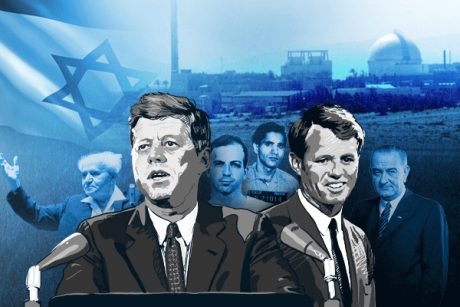
Just after midnight of June 6, 1968, Senator Robert Kennedy was assassinated in a backroom of the Ambassador Hotel in Los Angeles. He had just been celebrating his victory at the California primaries, which made him the most likely Democratic nominee for the presidential election. His popularity was so great that Richard Nixon, on the Republican side, stood little chance. At the age of 43, Robert would have become the youngest American president ever, after being the youngest Attorney General in his brother’s government. His death opened the way for Nixon, who could finally become president eight years after having been defeated by John F. Kennedy in 1960.
John had been assassinated four and a half years before Robert. Had he survived, he would certainly have been president until 1968. Instead, his vice-president Lyndon Johnson took over the White House in 1963, and became so unpopular that he retired in 1968. Interestingly, Johnson became president the very day of John’s death, and ended his term a few months after Robert’s death. He was in power at the time of both investigations.
And both investigations are widely regarded as cover-ups. In both cases, the official conclusion is rife with contradictions. We are going to sum them up here. But we will do more: we will show that the key to solving both cases resides in the link between them. And we will solve them beyond a reasonable doubt. … continue
This site is provided as a research and reference tool. Although we make every reasonable effort to ensure that the information and data provided at this site are useful, accurate, and current, we cannot guarantee that the information and data provided here will be error-free. By using this site, you assume all responsibility for and risk arising from your use of and reliance upon the contents of this site.
This site and the information available through it do not, and are not intended to constitute legal advice. Should you require legal advice, you should consult your own attorney.
Nothing within this site or linked to by this site constitutes investment advice or medical advice.
Materials accessible from or added to this site by third parties, such as comments posted, are strictly the responsibility of the third party who added such materials or made them accessible and we neither endorse nor undertake to control, monitor, edit or assume responsibility for any such third-party material.
The posting of stories, commentaries, reports, documents and links (embedded or otherwise) on this site does not in any way, shape or form, implied or otherwise, necessarily express or suggest endorsement or support of any of such posted material or parts therein.
The word “alleged” is deemed to occur before the word “fraud.” Since the rule of law still applies. To peasants, at least.
Fair Use
This site contains copyrighted material the use of which has not always been specifically authorized by the copyright owner. We are making such material available in our efforts to advance understanding of environmental, political, human rights, economic, democracy, scientific, and social justice issues, etc. We believe this constitutes a ‘fair use’ of any such copyrighted material as provided for in section 107 of the US Copyright Law. In accordance with Title 17 U.S.C. Section 107, the material on this site is distributed without profit to those who have expressed a prior interest in receiving the included information for research and educational purposes. For more info go to: http://www.law.cornell.edu/uscode/17/107.shtml. If you wish to use copyrighted material from this site for purposes of your own that go beyond ‘fair use’, you must obtain permission from the copyright owner.
DMCA Contact
This is information for anyone that wishes to challenge our “fair use” of copyrighted material.
If you are a legal copyright holder or a designated agent for such and you believe that content residing on or accessible through our website infringes a copyright and falls outside the boundaries of “Fair Use”, please send a notice of infringement by contacting atheonews@gmail.com.
We will respond and take necessary action immediately.
If notice is given of an alleged copyright violation we will act expeditiously to remove or disable access to the material(s) in question.
All 3rd party material posted on this website is copyright the respective owners / authors. Aletho News makes no claim of copyright on such material.
 “In this powerful work of research and personal testimony, Iversen chronicles the story of America’s willfully blinkered relationship to the nuclear weapons industry . . . masterful use of the present tense, conveying tremendous suspense and impressive control of the material.” Publishers Weekly starred review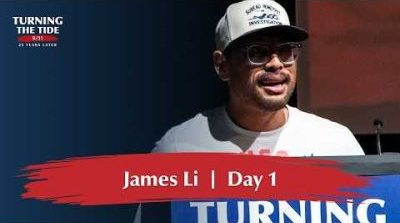
 Aletho News
