As Israeli leaders and the Trump regime grotesquely celebrated the moving of the U.S. embassy to Jerusalem on the 70th anniversary of Israel’s declaration of independence, May 14, just 40 miles away Israeli troops were massacring unarmed Palestinians trapped inside Gaza. At least 61 Palestinians were killed, and more than 2,700 wounded, over a thousand shot by snipers firing military grade ammunition against unarmed protestors who were demanding an end to their isolation and the right to return to their homeland.
There was a bitter historical irony in the juxtaposition of these events
Most of the two million residents of Gaza are refugees and their descendants (who also have refugee status), driven from other parts of Palestine in 1948. Altogether, more than 750,000 Palestinians were expelled in 1948-49 to make way for the creation of the Israeli state. Another 300,000 were driven out after the Six Day War in 1967. Today, there are seven million registered Palestinians refugees, many still living in 59 refugee camps in Jordan, Lebanon, Syria, Egypt, the West Bank and Gaza. None have ever been allowed to return to their stolen homes, farms and shops, in blatant violation of their rights.
For many decades, Israeli leaders and their American apologists maintained the fiction that the Palestinians who left did so at the urging of their leaders. Even if that had been the case, it would have in no way invalidated their right of return, an inalienable right under international law.
But it was not the case. As has been irrefutably documented by numerous Israeli as well as Palestinian historians, mass ethnic cleansing was carried out by means of massacre and other forms of terror. It could not have been accomplished otherwise.
The Israeli colonial state was not, of course, the only one that employed terror and massacre to subjugate the indigenous population. All of the colonizers utilized such tactics, including the United States, Britain, France, Belgium, Japan, Netherlands, Italy, etc., to establish their empires.
“Transfer” – Zionist leaders’ intention from the start
The leaders of the Zionist movement that manifested itself as the Israeli state in 1948 had often been quite open about their intention to conquer all of Palestine and to force the indigenous population out. Their code word for ethnic cleansing was “transfer.” In 1937, David Ben-Gurion, a reputed “moderate” in the Zionist leadership who would later become Israel’s first prime minister wrote:
“Now a transfer of a completely different scope will have to be carried out. In many parts of the country new settlement will not be possible without transferring the Arab fellahin…Jewish power which grows steadily, will also increase our possibilities to carry out this transfer on a large scale.”
In 1940, another key Zionist leader, Josef Weiiz, director of the Jewish National Fund charged with acquiring as much land as possible, wrote: “Among ourselves it must be clear that there is no room for both people in this country . . . and there is no way besides transferring the Arabs from here to neighboring countries, to transfer them all, except maybe for Bethlehem, Nazareth and Old Jerusalem, we must not leave a single village, a single tribe.”
On November 29, 1947, the United Nations voted to partition the British colony of Palestine: 55% for a Jewish state, 44% for an Arab state, and 1% for an international zone. In true colonialist fashion, there was no consultation with the Palestinians before the vote. Widespread fighting broke out immediately.
A month after the vote, Ben-Gurion, said in a speech:
“In the area allocated to the Jewish state there are not more than 520,000 Jews and about 350, 000 non-Jews, mostly Arabs. Together with the Jews of Jerusalem, the total population of the Jewish State at the time of its establishment will be about one million, including almost 40 percent non-Jews. Such a [population] composition does not provide a stable basis for a Jewish state. This fact must be viewed in all its clarity and acuteness. With such a composition, there cannot event be absolute certainty that the control will remain in the hands of the Jewish majority . . . There can be no stable and strong Jewish state so long as it has a Jewish majority of only 60 percent.”
Ben-Gurion hailed ethnic cleansing
The ethnic cleansing of Palestine that began almost immediately after the fateful UN vote delighted Ben-Gurion. In a February 8, 1948 speech to the governing council of his Labor Party, he gloated:
“From your entry into Jerusalem, through Lifta, Romema [an East Jerusalem neighborhood] … there are no Arabs. One hundred percent Jews. Since Jerusalem was destroyed by the Romans, it has not been as Jewish as it is now. In many Arab neighborhoods in the west one sees not a single Arab. I do not assume that this will change … What has happened in Jerusalem … is likely to happen in many parts of the country … in the six, eight to ten months of the campaign there will certainly be great changes in the composition of the population in the country.”
But what so heartened Ben-Gurion in early 1948 was not yet reflected in most of the country. The much better armed and financed Zionist militias prevailed in most, though not all, battles. But in most areas, the objective of driving out the Palestinian population was not being achieved. Palestinian villagers would retreat during active combat, but only to nearby villages or towns, waiting for the fighting to stop so they could return to their homes and farms.
At the time, the majority of Palestinians were peasant farmers who could not leave their land and livestock for any extended period of time without disastrous consequences. The contention that they would have voluntarily abandoned their farms based on the call of some far-off “leader” is simply ludicrous.
By March 1, 1948, less than 5% of the Palestinian population had been driven out, which was viewed by the Zionist leaders as serious threat to their plan.
Two additional factors made this a crisis-in-the-making for Ben-Gurion and his cohorts. One was a shift in Washington. While the Truman administration had played a key role in ramming the partition plan through the UN, it was now evidencing second thoughts. The partition plan had not brought peace — just the opposite, and much of the anger in the Arab world and beyond was directed at the U.S.
The State Department was floating a proposal to scrap partition and replace it with a five-year trusteeship. The Zionist leaders rejected it outright, but were acutely conscious of the importance of maintaining support from the United States.
And, the approach of May 15, 1948, the date the British colonizers had set for withdrawing their troops from Palestine was fast approaching.
An Israeli soldier stops Palestinians in Nazareth, 1948, for traveling after the imposed curfew
Plan Dalet – terrorist violence on a mass scale
Confronted with what they viewed as multi-front crisis, Ben-Gurion and his commanders began to implement a new military doctrine under the name Plan Dalet, or Plan D. Under the plan, the official Zionist army, the Haganah, along with its supposed rival militias, Irgun and Lehi (Stern Gang), both of the latter self-proclaimed terrorist organizations, began attacking “quiet” Palestinian villages, those not involved in fighting.
The progressive Israeli historian Ilan Pappe asserts in his book, The Ethnic Cleansing of Palestine, that Ben-Gurion actually viewed the “quiet” villages as a bigger problem than those that resisted, as the latter provided a pretext for carrying out harsh repression and removal.
Among the directives of Plan Dalet were:
“Mounting operations against enemy population centres located inside or near our defensive system in order to prevent them from being used as bases by an active armed force. These operations can be divided into the following categories:
“Destruction of villages – setting fire to, blowing up, and planting mines in the debris – especially those population centers which are difficult to control continuously.
“Mounting search and control operations according to the following guidelines: encirclement of the village and conducting a search inside it. In the event of resistance, the armed force must be destroyed and the population must be expelled outside the borders of the state.”
Plan Dalet escalated the level of violence directed against the Palestinian civilian population to an extreme. A typical operation carried out by Zionist military units would involve planting explosives around Palestinian houses in the middle of the night, drenching them with gasoline and then opening fire. The point was to terrorize and expel the population. Arbitrary executions became routine, particularly targeting men and boys simply deemed to be of “fighting age,” regardless of whether they were actually engaged in combat.
Deir Yassin massacre – a turning point
Deir Yassin, on the outskirts of Jerusalem was on of the “quiet” villages. On April 9, 1948, the Irgun led by Menachem Begin, wiped out nearly its entire population The Irgun blew up houses with the inhabitants inside, executed others in their homes. Many of the women in the village were raped before being killed. The Irgun paraded the few survivors in a truck through Jerusalem where they were jeered and spit on.
Deir Yassin raised Plan Dalet to a new level of brutality, The Jewish Agency, which a few weeks later would become the Israeli government, officially condemned the massacre but on the same day brought Irgun into the Joint Command with the Haganah, and Lehi, led by another future prime minister, Yitzhak Shamir.
The massacres in Deir Yassin, Tantura and other villages were widely publicized by the Zionists themselves, for maximum effect. Pappe has documented at least 29 additional massacres by Zionist forces between December 1947 and January 1949.
Twelve days after the Deir Yassin massacre, on April 21, 1948, the British commander in Haifa, a major city in the north with a mixed population, advised the Jewish Agency that he would immediately begin withdrawing his forces. He did not inform the Palestinians. The same day, Hagahah forces launched a major attack on the Palestinian neighborhoods of the city, rolling barrel bombs filled with gasoline and dynamite down narrow alleys in the heavily populated city while shelling the same areas with mortars.
Haganah army loudspeakers and sound cars broadcast “horror recordings” of shrieks and screams of Arab women, mixed with calls of, “flee for your lives, the Jews are using poison gas and nuclear weapons. By early May, only 4,000 Palestinians of 65,000 remained in Haifa.
Irgun commander Menachem Begin, provided most vivid description of how well the slaughter at Deir Yassin was instrumental in the expulsion of the Palestinians from Haifa and other cities, towns and villages. In his book The Revolt, Begin wrote:
“Panic overwhelmed the Arabs of Eretz Israel [sic]. Kolonia village, which had previously repulsed every attack of the Haganah (the underground Jewish military organization that became the Israeli Army), was evacuated overnight and fell without further fighting. Beit-Iksa was also evacuated. These two places overlooked the road and their fall, together with the capture of Kastel by the Haganah, made it possible to keep open the road to Jerusalem. In the rest of the country, too, the Arabs began to flee in terror, even before they clashed with Jewish forces … The legend of Deir Yassin helped us in particular in the saving of Tiberias and the conquest of Haifa … All the Jewish forces proceeded to advance through Haifa like a knife through butter. The Arabs began fleeing in panic, shouting ‘Deir Yassin!’”
Three decades later, in an article for The American Zionist, Mordechai Nisan of the Truman Research Centre of the Hebrew University in Jerusalem expressed his concern about the failure to understand the major significance of terrorism in the struggle for Jewish sovereignty. He wrote: “Without terror it is unlikely that Jewish independence would have been achieved when it was.”
(Much of the historical material in this article can be found in the book, Palestine, Israel and the U.S. Empire, by Richard Becker. PSL Publications, 2009)
During the early 1970s, Henry Kissinger became emblematic of a US foreign policy establishment that was conniving, cunning and content with its own penchant for lawlessness. By the late 1970s, Zbigniew Brzezinski became the face of the next generation of the US establishment – a man who could easily provide the pseudo-intellectual justification to back every fringe, extremist group in the world, so long as “the enemy” would ultimately suffer as a result.
From the Reagan era up to the Bush era there was no single figure who encapsulated the views, desires and methods of the establishment and in the Obama era, Hillary Clinton became a familiar face whose overall lust for political control just happened to be placed in the State Department.
Today, the US once again has a single figure who represents everything that the current generation of US foreign policy elite want and much to the horror of the wider world, this person is Nikki Haley. While the position of Ambassador to the UN is often one that is hardly visible to the domestic US audience, Haley has taken it upon herself to be incredibly visible. During the tenure of Donald Trump’s first Secretary of State, Rex Tillerson, Haley was vastly more visible than the soft spoken putative foreign policy chief who was humiliatingly ousted by Donald Trump via Twitter. Even today with the more boisterous Mike Pompeo “in charge” Haley remains the go-to person for interviews on US foreign policy, all the while using the UN as a bully pulpit for personal grandstanding rather than for anything remotely representing traditional diplomacy.
In this sense, in spite of her titular status, Haley is not a diplomat at all but rather an irrepressible spokeswoman for what the American foreign policy elites want in the 21st century. Haley is thus the perfect representative of US foreign policy because in a single individual, she represents everything wrong with the United States in an objective sense, while perversely representing everything the ruling elite of the US actually want.
Haley’s manner of speech is casual to the point of being nauseating, yet it is unambiguous in its platitudes regarding America’s self-proclaimed superiority over international law, the institutions of the United Nations and every other country of the world, both US allies and especially US enemies. Of course, the only country that Haley awards a status as important if not more important to that of the US is “Israel”, while she reserves for Russia, Iran, the DPRK, China and members of the Arab world a particularly personal ire. This is in keeping with a modern US establishment that views even the act of going through the motions and attempting to look balanced on the Palestine crisis as somehow “un-American”. In this sense, the interests of Tel Aviv are not only bound-up with the interests of the US but are in fact one of the very reasons the US continues to participate in UN Security Council meetings.
Just yesterday, when the US stood alone in the entire Security Council in voting down a resolution calling for a probe into “Israeli” war crimes in Gaza, she proudly vetoed the measure before stating,
“Further proof was not needed, but it is now completely clear that the UN is hopelessly biased against ‘Israel’. Further proof was not needed, but it is now completely clear that the UN is hopelessly biased against ‘Israel”.
In other words, that which for the rest of the world, including America’s EU allies is an overly biased obstructionist technique, is for Haley a kind of crusade to prevent the UN Security Council from ever standing up for Palestine through the disproportional wielding of the US veto.
Unlike Trump who is the establishment’s anti-establishment playboy rogue, Haley is the face of the front-line establishment. This is the reason why so many in Washington will be pushing for an early Trump retirement and a Haley run for the Presidency. Haley fulfils all the crucial criteria for the establishment in ways that are even more all-encompassing than foreign policy “specialists” of previous generations like Kissinger and Brzezinski whose mannerisms remained all too “foreign” to even attempt a run for the Presidency, even if the US constitution allowed naturalised citizens such a right.
Haley is the perfect mix of foreign and domestic both in terms of the policies she brazenly advocates for and her personal background. While Haley was born in the US and has adopted most of the colloquial mannerisms of the typical white anglo-saxon protestant, she nevertheless was born to two Indian Sikh academics. In this sense, Haley’s willingness to transform herself from into the archetypal “ugly American” while not even having the traditional ‘WASP’ background that is typically obligatory for such ugly Americans, is considered an achievement rather than a personal act of shame and betrayal in the eyes of the existing elite.
The progress of Haley’s political career furthermore appears to be more the product of unbridled ambition than actual talent and this too is fitting with an increasingly vacuous culture that tends to value malignant persistence over anything resembling quality, craftsmanship or genuine intellect. To this end, Haley must certainly be ‘hard-working’ but not so much that she isn’t apt to complain about having to work too much – all while blaming foreign powers for her work load as if there was some conspiracy to create global conflict so as to remove Haley from her bed. This also is clearly a means of appealing to the notion that Haley is “every man and every woman’s diplomat” even though in most cultures, the qualities needed to be an actual diplomat are necessarily extraordinary. Thus, Haley revels in mediocrity while disguising it as a means of climbing the ladder of meritocracy.
Haley’s brazen disregard for normal diplomatic protocol is in the eyes of the establishment not a vice which is a sign of childish inexperience and a personal penchant for contrived hysteria, but rather a sign that the US is “too good” to play by the rules which everyone else (except “Israel”) is bound by. Here too, universal vices are in the context of the American establishment, turned instantly into perverse virtues.
Because of this, Haley is far more dangerous than either Kissinger or Brzezinski because while the ideas of Kissinger and Brzezinski represented the signposts of the direction in which the American foreign policy establishment were heading, Haley represents a one-woman encapsulation of the establishment itself: calculating in its capriciousness, dignified by its own supreme arrogance, proud of its own intellectual and ethical shortcomings, filled with grandiose grievances over petty personal minutiae and an ignominious arrogance that brings disgrace upon the institution most representative of international law.
Nikki Haley is the penultimate embodiment of the American dream in the 21st century. She is a woman who stubbornly refuses to wake up to the reality of the contemporary world as if in a daze. To put it another way, Haley’s version of the “American dream” is a living nightmare for the rest of the world.
Robert F. Kennedy Jr., is roiling the assassination waters with the publication of his new book American Values: Lessons I Learned from My Family, where he sets forth his skepticism regarding the official explanations of the assassinations of John F. Kennedy and Robert F. Kennedy.
As much as it might like to, the mainstream media is finding it hard to ignore conspiracy allegations by the son and nephew of the assassination victims. Consider, for example, these recent articles in the mainstream press:
Some people continue to hold that it is simply inconceivable that the U.S. national-security establishment would commit these political assassinations.
It certainly wasn’t inconceivable to John Kennedy or to his brother Bobby.
In fact, immediately after FBI head J. Edgar Hoover telephoned Bobby to advise him that his brother had been shot in Dallas, Bobby suspected the CIA and even said as much to CIA Director John McCone.
Now, why would Bobby have immediately suspected the CIA in the murder of his brother, the president? Isn’t the CIA supposed to be the nation’s protector of “national security”? Wouldn’t Bobby, as U.S. attorney general, have known that? What in the world would cause him to immediately suspect that the CIA had assassinated the president of the United States?
The reason is because Bobby, unlike most Americans at the time and unlike many Americans today, knew that there had been a vicious war taking place between President Kennedy and the national-security establishment throughout his administration and especially in the months leading up to the president’s assassination. It was a war for the future direction of the United States, one in which there could be only one winner — either the president or the national-security establishment.
In January 2017, Congressman Chuck Schumer weighed in on the fight between President Trump and the U.S. national-security establishment with the following observation: “He’s really dumb to do this. Let me tell you: You take on the intelligence community — they have six ways from Sunday at getting back at you.”
Fifty years earlier, John Kennedy was well aware of what Schumer would be talking about.
For one thing, Kennedy had listened to the warning of his predecessor President Eisenhower in his Farewell Address just as Kennedy was coming into office. Ike pointed out that the U.S. military-industrial complex, which was new to the American way of life, posed a grave threat to the freedoms and democratic processes of the American people.
Eisenhower was echoing the sentiments of America’s Founding Fathers, who were ardently opposed to big military establishments for the same reason — the grave threat they posed to freedom.
Kennedy himself was well aware of the dangers involved in taking on the military establishment and the CIA. Early in his administration, he read a novel called Seven Days in May, which posited a military coup against a president whose policies conflicted with those of the national-security establishment. He persuaded friends in Hollywood to turn the novel into a movie, to serve as warning to the American people of the danger about which Eisenhower and America’s Founding Fathers had warned.
A family friend once asked Kennedy about the possibility of a domestic regime-change operation. He responded that a young president might be given one, possibly two, chances to make serious mistakes, but that if he made a third one, there was a good possibility that a regime-change operation would be initiated against him, as a way to “save” the country from a naïve, incompetent president.
That is what’s important to keep in mind in all this. Once the federal government was converted to a national-security state after World War II to fight the Cold War against America’s WWII partner and ally, the Soviet Union, protecting national-security from all threats, foreign and domestic, became the overarching mission of the national-security establishment.
Kennedy took on the national-security establishment. After the CIA’s disastrous defeat at the hands of the communists at the Bay of Pigs, Kennedy initiated a war against the CIA, which prided itself on its independence, by firing the much-revered CIA Director Allen Dulles, reining in the CIA’s powers, putting his brother in charge of supervising the CIA, and privately vowing to tear the CIA into a thousand pieces and scatter them to the winds. For its part, the CIA considered Kennedy to have shown weakness, cowardice, and betrayal by refusing to come to the CIA’s assistance by ordering U.S. air support for the invaders.
After that, Kennedy rejected the Pentagon’s plan for initiating a first-strike nuclear attack on the Soviet Union, which would have been much like Japan’s surprise attack at Pearl Harbor. Kennedy left that meeting, indignantly muttering, “And we call ourselves the human race.” He also rejected the Pentagon’s Operation Northwoods, which called for a false and fraudulent false-flag operation to serve as a justification for invading Cuba, a nation that had never attacked the United States.
In the Cuban Missile Crisis, he refused Pentagon demands to bomb Cuba and invade the island. It was during that crisis that Bobby Kennedy told a Russian official with whom he was negotiating that his brother, the president, was facing the possibility of a coup from U.S. military officials who vehemently disagreed with how he was handling the crisis.
When Kennedy settled the Cuban Missile Crisis by vowing that the United States would not invade Cuba, the Joint Chiefs of Staff were livid. They considered him weak, an appeaser, just like Chamberlain at Munich. They believed that the settlement was among the worst defeats in U.S. history, especially since it left a communist regime permanently in power in Cuba — a communist dagger pointed at America’s neck from only 90 miles away .
That’s when Kennedy really threw down the gauntlet. Without consulting or advising his national-security establishment with what he was about to do, Kennedy delivered his famous Peace Speech at American University, where he announced an end to the Cold War and his intention to establish friendly and normal relations with the Soviet Union and the rest of the communist world. It was a slap in the face of the U.S. national-security establishment and a grave threat to its existence, given that Kennedy was removing the original justification for turning the federal government into a national-security in the first place.
That was, needless to say, the last straw for the U.S. national-security establishment. In their eyes — indeed, in the eyes of many conservatives today, peaceful coexistence with the communist world, including the Soviet Union (and Russia), Red China, North Vietnam, and North Korea was the pipedream of a naïve, incompetent president, one who was leading the United States to disaster.
Kennedy was not naïve. Like Schumer 50 years later, he was fully aware of the danger into which he was placing himself. He was threatening the existence of a gigantic racket that was set to put the national-security establishment in high cotton with ever-increasing money, power, and influence into perpetuity.
Soon after the assassination, Jacqueline Kennedy used a family friend to send a message to Soviet Premier Nikita Khrushchev, with whom her husband had been secretly negotiating just prior to his assassination. The message commended and thanked Khrushchev, the leader of the communist world, for the moves toward peace that he and her husband had jointly made prior to the assassination.
Despite public announcements purporting to support the Warren Report’s lone-nut theory of the assassination, many people were convinced that Bobby Kennedy never bought it. But everyone also knew that given the power of the U.S. national-security establishment, the only way that Bobby could get to the truth was by becoming president. That’s why he needed to be eliminated as a threat as soon as he won the California primary.
In 1953, the CIA published an in-house assassination manual, which remained secret for almost 50 years. The manual reveals that ten years before JFK’s assassination, the CIA was specializing in the art of political assassination and, equally important, in the art of covering up any evidence of the CIA’s complicity in such assassinations. It is also worth noting that during the Kennedy administration, the CIA, in a top-secret operation that lacked the approval or consent of the president, entered into an assassination partnership with the Mafia, which, like the CIA, had long specialized in assassination, cover-up, and silence.
One of the most revealing parts of all this occurred in 1970, when the people of Chile elected a socialist named Salvador Allende to be their president. Allende, like Kennedy seven years before, began reaching out to the Soviet Union and Cuba in a spirit of peace and friendship. Perceiving Allende to be a grave threat to U.S. national security, the U.S. national-security establishment went on the offensive to initiate a regime-change operation.
The Chilean national-security establishment, however, balked. The position of the commander of the Chilean armed forces, Gen. Rene Schneider, was that the Chilean constitution didn’t provide for a coup as a way to remove a democratically elected president.
The U.S. national-security establishment was livid, believing that a nation’s constitution is not a suicide pact. Its position was that the Chilean national-security establishment had a moral duty to save its country by violently removing Allende from power. The CIA facilitated the process with a kidnapping-murder scheme that left Schneider dead on the streets of Santiago. Three years later, Allende himself would be dead in another successful U.S. national-security state regime-change operation.
The recent Lebanese parliamentary election generated a lot of publicity in Western media. To be sure, free elections are rare in the Middle East, and Western media get excited over the prospects of success for what they dub as “pro-Western” candidates or coalitions anywhere. Also because foes of Israel and the U.S. were in the running, Western media become automatically invested in the outcome. This time, Western media decided that Hizbullah won “a majority of seats” in the election—as the headline of The Financial Times had it. The results were certainly a blow to Western and Gulf regimes who invest—politically and financially–heavily in Lebanese elections.
We can’t really talk about free elections in the Middle East—or anywhere else in the developing world for that matter. Not because people there don’t want them but essentially because Western governments and Gulf regimes won’t allow it. To be fair, the U.S. is clearly in favor of free elections, but only when the results guarantee a victory for its puppets. Thus, when Hamas won the legislative elections of 2006 (which the U.S. had been insisting on), the U.S. not only refused to recognize the free expressions of the Palestinian people but the U.S. worked on a covert operation to undermine the results and to overthrow Hamas in Gaza.
Historically, the U.S. (among other outside parties, chiefly Gulf regimes) intervened heavily in Lebanese elections through the provision of cash payments to its favored right-wing, anti-communist candidates. For instance, the 1947 election lives on as one of the most corrupt in Lebanese history, and former CIA agent, Wilbur Eveland, wrote about his adventures of driving to the residence of then president, Kamil Sham`un, with a load of cash to ensure that the right-candidates win. But the cash wasn’t really necessary because Sham`un forged the election anyway and arranged for the defeat of his opponents.
In 1968, the U.S. was most likely behind the rise of the far-right coalition of “the tripartite alliance,” which included the Phalanges, who swept through the election and, in few years, would—with U.S. help—trigger the Lebanese civil war. (New U.S. archival materials show the extremely close relations between those parties and U.S. and Israel).
But the U.S. and Saudi Arabia surpassed all previous foreign intervention in Lebanon in the 2009 election, when they threw close to a $1 billion to sway the vote on the side of the March 14 coalition, which included the Muslim Brotherhood and right-wing groups—all dubbed “pro-Western” by U.S. media. The victor was arranged although the election was very close: no one side was able to rule without veto power by the other side.
In this election, the Saudis didn’t spend as much as previously probably because they thought it wouldn’t make much difference since a new electoral system had changed the rules. But Western and Gulf governments convened a special economic conference in Paris to prop up the leadership of Sa`d Hariri, who claimed in the wake of the conference that he would be create no less than 900,000 jobs.
Elections in ‘Democracies’
Elections in democratic political systems are merely some of the people selecting representatives who speak on behalf of “all the people.” The propaganda about the virtue of elections is highly exaggerated in order to provide the political system with much more political legitimacy than warranted.
In the U.S., there is still a clear agenda to suppress wide political participation. The U.S. is one of the few countries in the world which holds the vote on a working day—and in the winter where much of the East coast is buried under rain and snow. Furthermore, the U.S. requires voter registration, when most democracies don’t. The low voter turnout in the U.S. is by design, and not by default. If the U.S. were to adopt a proportional representation system—which both parties won’t allow because they enjoy holding the exclusive monopoly over political representation—voter turnout would increase. Most world democracies have—at least partially or at some level—adopted proportional representation.
The leftist coalition during the Lebanese civil war years, the Lebanese National Movement, proposed political reforms in 1975. They included—among other things—the adoption of proportional representation at the national level, with Lebanon designated as one electoral district. The political class rejected that because they preferred the single-member district (at a small local level) since it facilitates the utilization of cash in swaying voters. Also, Lebanese national proportional representation wouldn’t fit well with regional sectarian leaderships.
The May 6 Lebanese election took place nine years after the previous one. Regional conflicts and Lebanese internal turmoil gave sectarian leaders the excuse to postpone the elections repeatedly. Sectarian leaders also had a hard time agreeing on a new electoral law. But the election of Gen. Michel Aoun to the presidency in 2016 expedited the process of finally holding a ballot. His parliamentary bloc had been vociferous in calling for new elections. After long months of acrimonious negotiations, the sectarian leaders agreed on a new electoral law.
Aoun: Pressed hard for a vote.
Hizbullah and the progressives in Lebanon called for a proportional representation system, while Hariri and his allies fought against it. Hizbullah was willing to risk losing a few seats in return for the election of some of its allies from different sects, while Hariri knew that his broad coalition in parliament would lose substantially because most of his Christian MPs were elected in specially-designed districts where the majority Muslims vote for Christian and Muslim MPs.
The design of electoral districts is not a simple matter in Lebanon because the system has to balance different political interests with a sectarian arithmetic formulae (which is incorporated into the political system of the country). For example, the top posts of government (presidency, speakership, and prime ministership) are distributed among Maronites, Shi`ites, and Sunnis respectively.
Elections to the 128-seat Lebanese parliament must split seats evenly between Christians and Muslims though Muslims surpassed Christians demographically long before the 1975 civil war. It is estimated that Christians are now no more than a third of the population. There is a quota for Christians in the Lebanese parliament that keeps up the pretense that they are half the population no matter how different the demographic reality. In fact, the Lebanese state refuses to conduct a census for fear of upsetting Christians. The last census was conducted in 1932.
So Lebanese leaders agreed on a new electoral law that would mix the proportional representation system with the single-member district. They arrived at a law which divided Lebanese governorates as electoral districts but then gave the voter the choice to rank one candidate on the electoral list as his/her “favored” candidate, which basically prioritized sectarian preferences of voters. The whole purpose of proportional representation was defeated.
The law was quite complicated and the low voter turnout (around 49 %, less than the 2009 election) seems to confirm that many voters and even Interior Ministry experts did not fully understand the rules. The low turnout can also be explained by the low level of enthusiasm among voters and the diminished sense of expectations for change. Furthermore, sectarian leaders in Lebanon suppress the vote by not allowing 18-year-olds to vote. If they did it’s estimated that it would substantially increase the Muslim voters—especially Shi`ites.
Part Two will look closely at the election’s winners and losers and what it means.
As’ad AbuKhalil is a Lebanese-American professor of political science at California State University, Stanislaus. He is the author of the Historical Dictionary of Lebanon (1998), Bin Laden, Islam & America’s New ‘War on Terrorism’ (2002), and The Battle for Saudi Arabia (2004). He also runs the popular blogThe Angry Arab News Service.
The Syrian Arab Army (SAA), allied Palestinian militias, and the government of Syria deserve high praise for the recent liberation of Yarmouk refugee camp from ISIS.
Anti-war activists took a lot of flak from some people in North America and Europe, describing themselves as Palestine solidarity activists and “leftists”, when, in 2012, Yarmouk was invaded and occupied by proxy armies of western powers and Arab monarchs. Because we condemned the US-led attack on Syria and defended the Syrian government’s resistance to the terrorist occupation of Yarmouk, we were among the activists denounced by the misguided persons above as being “Assad apologists.”
This would be a good time to set the record straight and reaffirm our position that Palestinians and Syrians have strong common national aspirations. The aspiration of Palestinian refugees to return to their homes in Palestine is recognized as part of the common struggle of all Syrians. And both nations seek to reclaim from the State of Israel all the territories in Syria and Palestine which it currently occupies.
Background
Yarmouk was originally a refugee camp for Palestinians who had been displaced by the “Nakba”, the catastrophe of the ethnic cleansing of the indigenous people of historic Palestine which accompanied the founding of the State of Israel in 1948. It was a .81 hectare of land which, in 1957, was outside the boundaries of Damascus but which, by 2011, had turned into a lively suburb of the city housing about one million people of whom about 160,000 people were Palestinians. It was the largest and most prosperous settlement of Palestinians anywhere in Syria.
It is important to note that the government of Syria treated its hundreds of thousands of Palestinian refugees better than most Arab countries and as equals to Syrian citizens themselves. Palestinians in Syria received the same levels of free health care and education as Syrians and were allowed to rise in all areas of employment as high as their abilities carried them. There was only one formal legal distinction between Syrians and Palestinians. Palestinians were not given Syrian citizenship – in order to maintain their internationally-recognized right of return to their homes in Palestine – and therefore were not allowed to participate in Syrian elections.
Finally, the Syrian government, along with Iran and Hezbollah, was part of the Coalition of Resistance against Israel for many years. It was no accident therefore that, before the US-led aggression against Syria in 2011, the Palestinian factions chose to locate their headquarters in Damascus.
In short, the Assad government was a staunch supporter of the Palestinian cause.
The proxy war on Syria
In 2011, a group of western countries and Arab monarchies, led by the USA, unleashed scores of proxy armies of terrorist mercenaries on Syria with the purpose of achieving regime change, a scheme clearly illegal under international law. Importantly, the State of Israel participated heavily in this regime change operation, supporting terrorist mercenaries using the illegally-occupied Golan Heights as their base to fight against the Syrian government inside of Syria. Israel also used its air force to bomb Syria more than one hundred times during the course of the seven-year long war and supplied aid and weapons to separatist Kurdish elements in eastern Syria with a view to aid the USA in trying to partition that country.
In this context, negotiations took place for the Palestinians in Syria to remain neutral in the war. The Syrian government supported this view but the terrorists didn’t.
In 2012, the so-called “Free Syrian Army” (FSA) invaded and occupied Yarmouk. Some Palestinian factions facilitated their entry. The FSA was soon joined by al Qaeda and other militant factions. In 2015, ISIS entered the camp and, after some internecine warfare, drove out the other terrorist factions.
As they did in many other pockets of Syria, the terrorists evicted many Palestinians from their homes, looted and plundered everything of value, arrested anyone with known sympathies for the government and/or religious beliefs different from theirs and proceeded to torture and execute them, sexually assaulted and/or kidnapped women and girls, turned Yarmouk into a fortified camp, and hoarded all the foodstuffs for themselves. As in every other terrorist enclave, the vast majority of the inhabitants promptly fled to government-held areas.
The Syrian government did not directly attack Yarmouk until just a few weeks ago. Instead, it patiently armed and supported the courageous fighters of the Popular Front for the Liberation of Palestine – General Command (PFLP-GC) who, for many years, led the unremitting struggle against the terrorists inside the camp. In other words, the Syrian government respected the neutrality requested by the Palestinian organizations.
The Syria Solidarity Movement notes,
“the patience of the Syrian hosts in allowing the Palestinian refugee population to try to reconcile its differences and take the lead in expelling ISIS and al-Qaeda and their affiliates from Yarmouk since early in the conflict is especially remarkable. In the end, the SAA took over responsibility for eliminating these terrorist groups from neighbouring Hajar al-Aswad, which allowed the Palestinian militias and their Syrian allies to remove the remainder from Yarmouk, the last remaining source of terror attacks on the civilian population in Damascus. We send our sincerest congratulations to all the people of Damascus and the surrounding metropolitan area for their liberation from fear of such attacks, which they endured for seven long years.” 1
Lies and distortions about Yarmouk
In 2012, certain self-styled Palestine solidarity activists and western “leftists” sought to twist the facts about the second displacement of the Palestinians – this time from their homes in Yarmouk. They sought specifically to lay the blame for this second victimization of the Palestinians in Yarmouk on the Syrian government and effectively gave left cover and support to the western regime-change operation. According to the nay-sayers, the Syrian government was simply to cave in to the armed militants and ignore its duty to protect its citizens and the Palestinian refugees, who lived under its protection, from foreign aggression.
From personal experience in Canada, we can attest to the fact that the Left cover provided by these misguided people for the attempted US regime-change operation in Syria was poisonous to the Canadian anti-war movement. It made it hard to organize people against the illegal war. In fact, it became difficult, thanks to threats by anarchists and other intervenors, even to find a venue to hold a public meeting in Canada for outspoken and courageous opponents of the war on Syria, such as Mother Agnes Mariam and Eva Karene Bartlett. In a few short years, because some of these misguided people, specifically members of the International Socialists (IS), were in positions of authority within the pan-Canadian anti-war movement, the movement dried up and died.
We note that many people got it wrong at the time. It’s heartening that some of them, such as journalists, Max Blumenthal, Rania Khalek, and Ben Norton have publicly acknowledged that their earlier analysis and criticisms were wrong.2 Others, such as UK professor Gilbert Achcar, who travelled to the World Social Forum in Montreal in 2016 to villify the Syrian government, will probably dance to empire’s tune until they die. It has taken seven years but the recent string of victories of the Syrian government over the terrorists have forced many honest people on the left to open their eyes wide and realize that what has transpired in Syria is not a popular uprising and or a “revolution”, but a deadly plan by the US, its western allies, and regional clients criminally to interfere in the domestic affairs of Syria and to target Iran and the Coalition of Resistance.
Thankfully, with the help of its international allies – Russia, Iran, Hezbollah, and several Palestinian popular militias – the Syrian Arab Army and government, after much sacrifice, has finally gained the upper hand and has driven the terrorists out of many of the enclaves they seized and occupied, including Yarmouk, thus defeating the US regime change plan.
In response to the failure of that plan, the USA moved to its Plan B: direct attacks on, and the occupation of, a large swath of Syria with a view to partition the country. On April 13, 2018, in response to a fraudulent “chemical attack” staged by the White Helmets3, the USA, UK, and France launched 100+ missiles against Syria. Interestingly, the Palestinian peak organizations immediately condemned the missile attack, and came out strongly in support of the government in Damascus, thereby abandoning any pretence at neutrality.
Fatah (the majority faction of the Palestine Liberation Organization [PLO]) declared that it
“stood unreservedly with the unity of Syrian territory and rejected efforts at destroying it or harming its unity and sovereignty.”
Palestinian Islamic Jihad “condemned the Western aggression against Syria” and “expressed solidarity (to) stand by Syria and its people and with all Arab and Islamic peoples in the face of all threats and challenges to their security, stability and unity.” The Islamic Resistance Movement (Hamas) “considered the aggression of America and its allies on the Syrian territory as a blatant aggression against the nation, aimed at confiscating its lands and destroying its capabilities in order to preserve the existence of the Israeli entity and (to advance) its schemes.” The Popular Front for the Liberation of Palestine (PFLP) “strongly condemned the American-British-French aggression, which targeted Syria with their missiles.” The Front added that
“the aggression and its objectives will be destroyed on the rock of the steadfastness of the Syrian people and the Syrian state” for whom it expressed its support and solidarity.4
Syrian and Palestinian struggles indivisible
The liberation of Yarmouk and the angry Palestinian reactions to the April 13 missile attacks put a satisfying end to a chapter of disunity in Palestinian and Syrian history. They show that the Palestinian and Syrian struggles are one and the same. There can be no ultimate victory for Palestine if Syria is destroyed. There can be no ultimate victory for the Syrian people without also freeing the Palestinians from the tyranny of occupation in Palestine.
The moral of the Yarmouk story can be summed up thus: if you are for Palestine, you must also be for Syria!
Those self-styled Palestinian solidarity activists and “leftists” in Europe and North America who slammed the Syrian government for resisting the terrorist proxy armies of the West need to reflect on the consequences of their de facto support of the US empire’s meddling in Syria: half a million deaths, millions of injured people (both physically and emotionally), enormous destruction of civilian infrastructure (including housing, schools, and hospitals), the transformation of 12 million Syrians into displaced persons and into a wave of refugees that swept over Europe, the descent of thousands of Syrian women and girls into the international human trafficking trade, and much much more… Will there ever be a day of reckoning for these apologists of empire?
Conclusion
The liberation of Yarmouk refugee camp is a significant milestone in Syria’s struggle to regain its national sovereignty and territorial integrity. Eventually, all of Syria will be liberated from the terrorists and from the direct occupations of the USA (east of the Euphrates), of Turkey (in the north), and Israel (in the south). In the meantime, the Palestinian residents of Yarmouk will soon be able to return to their homes in southern Damascus. And, when Syria is completely liberated, they will be able to organize once again – with the help of the Syrian government – for the Day of Return to Palestine.
*
Ken Stone is a veteran antiwar activist, a former Steering Committee Member of the Canadian Peace Alliance, an executive member of the SyriaSolidarityMovement.org, and treasurer of the Hamilton Coalition To Stop The War [hcsw.ca]. Ken is author of “Defiant Syria”, an e-booklet available at Amazon, iTunes, and Kobo. He lives in Hamilton, Ontario, Canada.
Notes
1 “Statement… on the liberation of Yarmouk”, Syria Solidarity Movement, May 27, 2018, syriasolidritymovement.org;
2 Blumenthal and Khalek recant their previously held views on Syria:
On May 31, 2010, Israeli forces ambushed an aid flotilla heading to Gaza, killing 10 activists in a siege that drew international condemnation and sparked damning investigations, despite Israel’s efforts to control the narrative.
Six ships – three carrying international aid – were on their way to Gaza to break the blockade imposed by Israel in 2007 when Israeli forces raided the vessels in international waters, about 64 nautical miles from the blockade zone.
The flotilla was organized by the Free Gaza Movement umbrella organization and the Foundation for Human Rights and Freedoms and Humanitarian Aid (IHH). Nine Turkish people were killed during the ambush, while a 10th died in 2014, after spending four years in a coma as a result of his injuries.
A UN Human Rights Council report said at least six of the killings were “consistent with an extra-legal, arbitrary and summary execution.” At least 50 other people were injured and Israel arrested more than 600, including 60 journalists, politicians and other passengers.
‘No satisfactory explanation for deaths’
On May 30, the flotilla gathered off the coast of Cyprus to make its way to Gaza. The Israel Defense Forces and Navy told the ships to go to the Israeli port of Ashdod, which the flotilla ignored and Israel claimed the move was a “provocation.” At 4am, Israel signal-jammed communications, and half an hour later, launched its attack.
When Israeli forces attempted to board the largest boat, Mavi Marmara, they were met with resistance. Passengers sprayed water hoses and threw things, including chairs. The first of three helicopters arrived and stun grenades were thrown at the boat, while at the same time, forces took over the other, smaller boats in the flotilla.
The Turkish-owned boat experienced the harshest response in the raid. Nine men were killed on board after being shot some 30 times between them, with five receiving gunshots to the head, Turkey’s autopsies revealed. A 19 year old, who also had US citizenship, was shot five times at close range.
According to Israel’s account, a number of the Mavi Marmara passengers were “hardcore” and bore bars and knives. Activists, however, claim the soldiers began shooting as soon as they entered. “After 20 minutes, maybe 15 minutes, there were three dead bodies,” Knesset Member Hanin Zoabi recounted.
A 2011 Report of the UN Secretary-General’s Panel of Inquiry found Israel gave “no satisfactory explanation” for any of the deaths. It also said that “such substantial force at a great distance from the blockade zone and with no final warning immediately prior to the boarding was excessive and unreasonable.”
While there were no fatalities on the other boats, those on board say they too suffered violence from the raiding Israeli forces. “They treated all of the boats on the flotilla with violence, they didn’t treat any of us peacefully and when they say that, it’s an absolute lie,” Alex Harrison, who was on board another of the vessels, told a Palestine Solidarity Campaign meeting in June, 2010. “Two of the women were hooded, Guantanamo-style.”
Suppressing footage
The flotilla raid drew international outrage, despite Israel getting ahead of the story whilst the activists were detained. Protests over the incident erupted around the world and tensions between Israel and Turkey deteriorated. Israeli Prime Minister Benjamin Netanyahu said the raid was to “prevent the infiltration of thousands of rockets, missiles and other arms that could hit our cities, communities or people.”
Israel sought to play down the events of the raid, releasing radio recordings it claimed showed the boat’s passengers were anti-Semitic and threatening but which it later had to admit had been edited and couldn’t be confirmed as from the Mavi Marmara, as originally claimed.
Officials also released select footage, allegedly showing the activists being violent. This included clips from the footage they had seized, which was condemned by the Foreign Press Association and the Committee to Protect Journalists (CPJ). Efforts were also made to frame the IHH as a terrorist organization and some of the passengers as members of Al-Qaeda.
A UN Human Rights Council panel accused Israel of suppressing footage of the raid. The IDF attempted to confiscate images and footage, taking phones and laptops from them, including those belonging to journalists on board. Despite this, an hour of footage from Mari Marmara was released by filmmaker Iara Lee, who was on board.
Israel’s inquiry into the events found its actions were legal under international law and noted the “regrettable consequences of the loss of human life.” The UN General Assembly’s 2010 fact-finding mission found Israeli forces were guilty of a series of violations of international law, and its disproportionate response “betrayed an unacceptable level of brutality.” Israel said this was biased.
In November 2017, the International Criminal Court’s prosecutor Fatou Bensouda said it would not prosecute Israel, but that there is “reasonable basis to believe that war crimes were committed by some members of the Israel Defence Forces.”
Eight years on from the flotilla deaths, Gaza remains under blockade and with two wars waged on Gaza since then, the situation on the ground is more bleak than before. A new flotilla is currently making its way to Gaza, due to arrive in July.
There’s a good deal of discussion, both in mainstream and in alt media, of how/why the Arkady Babchenko event unfolded in the ludicrous way it has.
The Ukrainian government narrative is (currently) claiming the SBU faked AB’s death in order to entrap some real (Russian) assassins who really wanted him dead, and it was all part of a cunning plan. They’re light on detail about exactly how taking pics of Bab pretending to be dead helped with the general effort, but maybe they’ll fill in all those blanks soon.
Others, including RFE, are telling us the very bad fake death pic was released on a Facebook page with ties to Washington.
But beyond the Byzantine imbroglio, I think there’s another question no one is asking. –
What if Arkady hadn’t turned up, looking sheepish at that presser?
What if he hadn’t turned up ever? What if he’d decided he couldn’t face the humiliation, or what if his SBU handlers decided it might be better if he just continued to be dead and skipped off the map somewhere with a few hundred grand and nice new ID.
What then?
We need to never forget that while Arkady was busy hiding in his closet (or whatever he did for the hours he was supposed to be dead), his demise was the reality for all of us. Sold to us, not just with narrative consistency, but with apparent hard evidence and circumstantial confirmation.
There was the blood-soaked “corpse” photo:
There was the sketch of the perp:
There was the Twitter parade of blue-tick public mourners.
A very very familiar roll-out we have all seen many times was taking shape. There were predictable articles, by predictable people, saying predictable things. By next month Luke Harding would have had a new book out called something like “Death in Broad Daylight: how the Kremlin silenced Arkady Babchenko.” Its cover would feature Babchenko’s completely fake murder pic with a target superimposed and a semi-opaque red halftone background of Putin’s face. It would be on the NYT bestseller list for the next two years and make Luke another little fortune.
There would soon be an “Arkady Babchenko” street in Washington. A “posthumous” Pulitzer would have been his within a year or two. Arkady Babchenko memorial plaques would spawn like tribbles. Navalny and his twenty-seven supporters would carry those tragically misty and sepia pics of our boy (which miraculously appeared within hours of his “death”) on all their “rallies”. By 2019 Katherine Bigelow would have made the movie (based on Luke’s book), and it would be a dead cert at the 2020 Oscars.
But it would have been no more true that it is now, would it? It would simply be an undiscovered lie. A mesh of words, woven thick by repetition, giving shape to an absence – of evidence, of investigation, of everything.
If he hadn’t turned up alive, Arkady dead would have become the thing most people called “truth.” Like “United 93”, and similar collective myths, the legend of his martyrdom would have taken on all the trappings of solid reality. No one – none of us – would think to question it. And anyone who did would be dismissed as a lunatic.
The most important and abiding point about the non-death of Arkady Babchenko, beyond all the spin and damage control and narrative-boosting we are inevitably going to see over the next days and weeks, is that, at its deepest level, consensual reality is a fragile thing that can very easily have nothing to do with truth or fact or actual reality. The point is that the people who are paid to fact check official narratives didn’t do it, and would never have done it. They were simply sold a line and bought it, uninterrogated, uninvestigated, unwrapped.
And this is what they do every day. With every item of “news” they lay before us.
Look at the illusion of depth and veracity they gave this lie, simply by reporting it. See how easily they were fooled and went on to fool us. See how little it occurred to any of us, even those who make a habit of interrogating narratives, to ask whether or not it really happened.
Think about how easily that basic question was trampled and crushed into oblivion. How effortlessly a few public statements and a very very questionable pic became the collective “truth” for all of us. Look at how the debate was already being positioned. How the issue was going to be “who did it?” not “was it even done?”
The real problem this highlights is not just that the derogation of journalistic duty to fact-check and second-source is now the norm. We already know this. It’s been too apparent for too long.
The real problem is that this derogation helps to create the reality we all live in. Even those of us who deplore it. If for whatever reason Arkady had sloped off to Hawaii in a bad wig, today we would all be debating who may have killed him. Unwittingly hostage to a flimsy lie.
This is an uncomfortable truth we need to recognise. Because it’s often the questions that seem most unnecessary, absurd, offensive, even insane that actually most need to be asked.
We are already being dissuaded from learning this most valuable lesson. The journos who were so recently burned are already backstopping against it. They aren’t focusing on why the lie happened, they are focusing on how “the enemy” (the Russians, the alt-media, the whole evil circus of “other”) are “exploiting” it. How they will now have an “excuse” to suggest any future such deaths might also be fake.
The drive is to make it ridiculous to learn from experience or to cite precedence. We are already being persuaded only idiots would think future deaths might be fake based on the fact past deaths were fake.
No matter how much data there might be for fakery we must never accept it as a legitimate possibility. No matter how many Doumas may happen, no matter how many Babchenkos come back from the dead, no matter how many incidents of fakery are outed, or “explained” in unsatisfactory terms, we must never learn from experience. We can discuss why the victims of the latest atrocity died, but not the possibility they might not have died at all?
Is this really good enough? I don’t think so.
Next time we are flooded with the apparently shocking narrative of violent death, how many of us will be brave or crazy enough to dare to ask – “did this death even happen?”?
Technology gives us the opportunity to wage war from afar at a greatly reduced risk to our armed forces. But is removing the horror of war a slippery slope to reducing the threshold for conflict?
Going to war usually boosts a politician’s approval ratings and can be a useful distraction from domestic problems. Yet public opinion typically turns sour when a steady stream of soldiers start returning in body bags and candid reportage from the war zone reveals unpleasant truths. The public’s distaste at seeing ‘our boys and girls’ returning in coffins or missing limbs somewhat hampers the abilities of warmongers to fulfill their wish-list. In the 1860s Confederate General Robert E Lee remarked: “It is well that war is so terrible, otherwise we should grow too fond of it”.
21st century technology is giving wealthier countries the opportunity to wage war from afar, in an asymmetrical manner, where their own forces can be spared the risk of death and injury. There has been an exponential increase in the production and proliferation of Unmanned Aerial Vehicles (UAV), more commonly known as drones, over the past 15 years. Drones can be used for surveillance, reconnaissance or assassination. After the US first used a UAV in 2001 to assassinate a high ranking al-Qaeda militant in Afghanistan, a growing number of countries began manufacturing or using armed drones. In the early days of drone warfare both the US Air Force and Britain’s Royal Air Force (RAF) operated drones flying over Afghanistan from Creech Air Force Base in the Nevada desert, 7000 miles away. The UK began operating its drone fleet from home soil at RAF Waddington, Lincolnshire in 2013.
Drones have allowed the US to silently observe or kill individuals across several countries at virtually no risk to their armed forces. In 2011 the UK’s Ministry of Defence published a document in which is stated: “It is essential that, before unmanned systems become ubiquitous (if it is not already too late) that we consider this issue and ensure that, by removing some of the horror, or at least keeping it at a distance, that we do not risk losing our controlling humanity and make war more likely”.
In 2012 I co-authored a report on behalf of UK charity Medact – ‘Drones: the physical and psychological implications of a global theatre of war’ – in which we examined the impact of this new form of warfare upon civilians and considered the moral, legal and geopolitical implications of a globalised theatre of war where a nation could remotely eliminate its enemies anywhere across the globe, including outside designated conflict zones.
For example, the US has performed hundreds of drone strikes in Pakistan against the Taliban and other militants even though the US and Pakistan are not at war. These drone strikes have caused numerous civilian deaths. There have even been reports of good samaritans and medical personnel being attacked in a follow up drone strike whilst coming to the assistance of people injured in an earlier drone attack.
The London based Bureau of Investigative Journalism estimates that between 424-969 civilians have been killed out of a total of 2,515-4,026 dead from at least 430 drone strikes conducted by the US in Pakistan alone since 2004.
Only three countries had used armed drones at the time of our report’s publication: the US in Afghanistan, Iraq, Libya, Pakistan, Somalia and Yemen; the UK in Afghanistan; Israel in Gaza. The report warned that “Drones may become a routine weapon of war, in order to avoid anti-war sentiment and to reduce the political cost of initiating a military intervention. It is hard to imagine that the US could have undertaken military action in Iraq, Afghanistan, Pakistan, Yemen, Somalia and Libya in one year (2011) without drones. Drones could lead to a world of globalised warfare, in which people may find themselves within a theatre of war literally anywhere on the planet”.
America’s drone war greatly expanded during the Presidency of Nobel Peace Prize laureate Barack Obama when the CIA and other US intelligence agencies would add the names of alleged terrorists earmarked for elimination by drone onto what became informally known as the ‘kill list’ . The President then had final say over who will be killed. This included individuals in Pakistan, Yemen and Somalia, who had not been formally charged or tried in a court of law.
Another aspect of drone killings involves ‘signature strikes’ whereby a drone operator identifies individuals whose behaviour is deemed suspect and who might then be eliminated, if the order is given from above. In 2012, 26 members of Congress signed a letter asking for the legal basis and due process behind the Obama administration’s sanctioning of signature strikes and expressed caution over the lack of transparency, accountability or oversight pertaining to America’s drone war.
By 2018 the armed drone club had grown to 12 members (China, Iran, Turkey, Pakistan, Iraq, Saudi Arabia, UAE, Egypt, Nigeria in addition to the original three), who had either manufactured their own armed UAVs or purchased them from other nations. A number of non-state actors (ISIS, PKK, Hezbollah, Hamas, Houthi militants) have also reportedly used drones in combat, albeit cruder versions than those used by the aforementioned states such as small drones outfitted with explosives that are made to crash into a target in a Kamikaze-like manner. Russia and India are among several other countries believed to be developing armed drones. Russia has however already developed its own unmanned submarine, or autonomous underwater vehicle, capable of carrying nuclear warheads.
While the USA and Israel are globally recognised drone exporters they may soon face competition from China, which has recently begun exporting armed drones. Chinese models are believed to be variants of US made Predator and Reaper drones that sell at a fraction of the price. Pressure from the US drone lobby led to the US easing restrictions on exporting armed UAVs in April 2018.
Drones are presently still under the direct control of a human operator, albeit one who may be thousands of miles away. The next stage in the evolution of drone warfare is predicted to be a move from unmanned to increasingly autonomous drones that can select their own targets and ultimately operate without human oversight. Such technology is being tested and developed and “influential people like [the late] Stephen Hawking, Elon Musk and Steve Wozniak have already urged a ban on warfare using autonomous weapons or artificial intelligence,” according to NATO Review magazine.
Proponents of drone warfare argue that using UAVs is preferable to risking soldiers’ lives. Saving lives is laudable but removing the horror of war, at least for the side possessing drones, is the start of a slippery slope where the threshold of going to war decreases. Rather than finding ways to make war easier, policy makers ought to spend time, effort and money on trying to prevent conflict. War may at times be necessary but few would argue that the conflicts where drones have been used, such as the Western led interventions in Afghanistan, Iraq, Libya and Syria, were unavoidable let alone beneficial for those countries and their people. A future where a globalised battlefield becomes the norm and individuals deemed a threat to the US, or any other power with the means, can be eliminated without due process or trial is a dark one indeed.
The possibility of increasingly autonomous warfare systems would allow decision makers to further wash their hands from the horrors of war. Who would be held responsible if a fully autonomous drone chose the ‘wrong’ target or caused civilian casualties? Furthermore there is always the possibility that any robotic system can be hacked or commandeered by other countries or non-state actors.
Legally binding international conventions controlling the manufacture, use and sale of armed drones ought to have been ratified before the technology became available. As drone use is now too extensive to easily control, there should at least be a move to channel the technology in a direction that benefits humanity as a whole. Although the profit margins may be much smaller than in war, drones can be used to deliver supplies and medicines to remote areas, take part in search and rescue missions in disaster zones, or monitor large wildlife reserves for poachers. We can decide how this new technology shapes our future. A challenge for humanity is that technology is developing faster than the legal, ethical and moral codes governing its use.
Tomasz Pierscionek is a doctor specialising in psychiatry. He was previously on the board of the charity Medact.
I wonder if noted conservative writer R. Emmett Tyrell Jr. realizes that he has just contradicted himself in an op-ed in the Washington Times entitled, “Re-examining the RFK Assassination.” Based on a new book by Robert F. Kennedy Jr., Tyrell is calling for a new investigation into the assassination of Bobby Kennedy to determine if he was killed as part of a … conspiracy.
But according to the two opening paragraphs of Tyrell’s article, he has “never believed in conspiracy theories” because, he feels, it would be impossible for conspirators to keep the conspiracy secret.
But if that’s the case, then why is Tyrell calling for a new investigation into the Bobby Kennedy assassination? If there really was a conspiracy in that assassination, the conspirators, according to Tyrell’s opening paragraphs, would have talked. Since no such talk has ever emerged, that would mean, under Tyrell’s reasoning, that there could be no conspiracy and, therefore, no need to have a new investigation.
But the fact is that Tyrell is wrong. There are conspiracies, especially those involving assassination (i.e., murder), in which the conspirators don’t talk. After all, let’s not forget that a criminal conviction for murder can involve the death penalty or life in prison without parole. Oftentimes that is enough incentive to keep murder conspirators, especially professional ones, silent about what they have done.
Consider Johnny Roselli, a member of the Mafia who was murdered in 1976, just before he was scheduled to testify before the U.S. Senate Committee on Intelligence, which was exploring the possibility of a conspiracy to assassinate President Kennedy. Roselli was the liaison between the Mafia and the CIA when those two entities entered into an assassination partnership in the early 1960s. It’s a fairly good assumption that Roselli did not commit “suicide,” as some of the people surrounding the JFK assassination appeared to have done. That’s because his body parts were found floating in a drum in Miami Harbor. Given the gruesome nature of that discovery, it is also a virtual certainty that more than one person was responsible for Roselli’s murder, which would make it a conspiracy. Yet, no one has ever talked and the murder has never been solved.
The same holds true for Mafia figure Jimmy Hoffa. It is pretty well assumed that he was murdered as part of a Mafia conspiracy. Yet, no one has ever talked.
Consider the U.S. conspiracy to murder American citizens Charles Horman and Frank Teruggi during the Chilean coup in 1973. None of those conspirators have ever talked, at least not publicly, but that doesn’t negate the fact that U.S. intelligence officials conspired to murder them. We know that from a long-secret State Department investigative report that concluded that U.S. intelligence played a role in their murder. But to this day, we don’t know anything more than that, both because the conspirators have kept their lips sealed and also because someone squelched the recommendation in that report for further investigation.
In 1953, the CIA published an in-house manual on assassination, which the CIA was successful in keep secret for more than 40 years. The manual reflects that, early on, the CIA was specializing not only in the art of political assassination but, equally important, also in the art of covering up CIA involvement in the assassination.
As previously stated, in the early 1960s, the CIA and the Mafia entered into a top-secret assassination partnership. Thus, here you had two entities, both of whom specialized in murder and cover-up, getting together to jointly perform a political assassination.
Therefore, why shouldn’t people raise their eyebrows at least a little bit with respect to the political assassinations that took place in the 1960s, especially those in which the victims were sworn enemies of the Mafia or the CIA or both, such as President Kennedy, Bobby Kennedy, and Martin Luther King, and especially where the facts in the case are bit too pat?
Maybe it’s a good sign that Tyrell, notwithstanding his obvious reluctance to be labeled a “conspiracy theorist,” is willing to take a closer look into the assassination of Bobby Kennedy and that the Washington Times is willing to publish his op-ed about it.
Luis Posada Carriles, the most notorious and wanted terrorist in the Western Hemisphere — but one few Americans have ever heard of — has died a free man in Miami at age 90.
The Miami Herald reports Posada Carriles died peacefully in his sleep in a Hollywood, Florida hospital early on May 23 following a lengthy battle with throat cancer.
At the time of his death, Posada Carriles, a staunchly militant anti-Castro Cuban exile and former longtime CIA agent, was wanted by authorities in Cuba and Venezuela for his leading role in masterminding the 1976 bombing of a Cuban commercial airliner over the Caribbean, an attack that killed 73 innocent people. He is also wanted for orchestrating a string of terror attacks on Cuban hotels and for repeatedly plotting to assassinate the late Cuban president Fidel Castro.
Posada Carriles and Castro were actually acquaintances during their pre-revolution college years at the University of Havana. Both equally despised the brutal US-backed Cuban dictator Fulgencio Batista. However, after Castro’s revolution overthrew the Batista regime Posada Carriles was briefly jailed before fleeing his homeland for Argentina, then the United States.
When the John F. Kennedy administration decided to wage covert warfare against Castro’s Cuba, Posada Carriles was one of the young CIA-trained exiles who planned the ill-fated 1961 Bay of Pigs invasion. Following that colossal embarrassment, he received explosives and sabotage training at Ft. Benning, Georgia during a period of rising US support for anti-Castro terrorism, crimes which included a rocket attackon the United Nations in a failed bid to assassinate Che Guevara.
The CIA set up a stationat University of Miami, where agents plotted to kill or overthrow Castro and where operatives planned and launched countless terror and sabotage missions. Militantly anti-communist exile groups trained and operatedthroughout South Florida, with secret camps popping up in the Everglades. In the 1970s, a wave of bombings, assassinations and other attacks on pro-Castro exiles in South Florida and far beyond earned Miami the FBI nickname of America’s “terrorist capital.”
Posada Carriles would later boast that “the CIA taught us everything… they taught us explosives, how to kill, bomb, trained us in sabotage.”
He would put all of those deadly skills to use while planning, along with fellow anti-Castro exile Orlando Bosch, the brazen broad daylight car bombing assassinationof former Chilean minister Orlando Letelier in Washington, DC on September 21, 1976. Letelier’s newlywed American aide, Ronni Moffit, was also killed in the attack.
The following month, Posada Carriles and Bosch planned the bombing of Cubana Airlines Flight 455, which killed 73 civiliansincluding Cuba’s junior Olympic fencing team. It was the worst act of airborne terrorism in the Western Hemisphere until the attacks of September 11, 2001.
The CIA, under its new director George H. W. Bush, knewas early as June 1976 that Cuban exiles were plotting to blow up a Cubana airliner, but did nothing.
Police in Barbados arrested two Venezuelan operatives in connection with the bombing of Flight 455. They confessed and implicated Posada Carriles and Bosch as planners of the attack. The Cubans were arrested, tried and acquitted in a military court but civil authorities planned to retry them and they remained behind bars. Although they were acquitted in 1987, secret US government documents have since proventhe US knew Posada Carriles and Bosch were behind the bombing.
Posada Carriles didn’t wait around to learn his fate. He escaped from prison in 1985 and made his way to El Salvador where, under the alias Ramon Medina, he worked for Col. Oliver North on the Reagan administration’s illegal arming of the terrorist Contra army in Nicaragua.
In the late 1990s, Posada Carriles was behind a string of hotel bombings in Cuba, including one in 1997 that killedan Italian tourist. He later explained that his goal was to cripple the socialist economy’s burgeoning tourism industry to deprive the Castro regime of desperately needed hard currency. Posada Carriles boastedthat he “slept like a baby” after the bombings and brushed off their grisly results. “That Italian was in the wrong place at the wrong time,” he said.
Over 40 bombings in Honduras were also attributed to Posada Carriles during the 1990s. In 2000, Cuban intelligence agents foiled a plot by him and others to bomb a Panamanian university during a visit by Fidel Castro. Posada Carriles was convicted and jailed. However, then-Panamanian president Mireya Moscoso, a close ally of the George W. Bush administration, pardoned the terrorist before leaving office. Panama’s Supreme Court later overturnedwhat it ruled an unconstitutional pardon.
Posada Carriles illegally entered the United States in 2005, returning to a hero’s welcome in Miami, a city that once celebratedOrlando Bosch Day to honor his co-conspirator. He sought asylum but was instead arrested for entering the country illegally. Although the Justice Department called him“an unrepentant criminal and admitted mastermind of terrorist plots and attacks,” a federal judge recommended that he be released.
Incredibly, he was freed. Posada Carriles settled in Miami, where he found work as an artist. He also made frequent radio and television appearances, and once sat in the front row with Orlando Bosch at a speech by President George W. Bush, whose family is closely connected with some of the most notorious anti-Castro terrorists.
In April 2011, Posada Carriles was acquittedof immigration-related charges in a Texas court. Although he was accused of lying about his role in the deadly 1997 Cuba hotel bombing, he was never indicted for that or any other attack, even after his confessions. Critics blasted the United States for fighting a global war on terrorism, replete with threats and worse to attack countries that aid and abet terrorists, while harboring the hemisphere’s most wanted terrorists — and many otherslike them.
While many of Miami’s Cuban exiles, especially the older ones, are mourning Posada Carriles’ passing, his death was greeted with cheers throughout Cuba and much of Latin America. The Miami-based exile radio station La Poderosa hailed him as “a leader of liberty and justice… a man of real dignity,” while Cuban state media lamentedthat the “bin Laden of the West” died “without paying his debts to justice.”
One man’s terrorist may very well be another’s freedom fighter, but Luis Posada Carriles’ fight for “freedom” — which often included doing dirty, deadly work for some of the world’s worst human rights violators — claimed the lives of too many innocent men, women and children to be called anything but terrorism.
Brett Wilkins is editor-at-large for US news at Digital Journal.
The prohibition on the use of force by one state against another is one of the most fundamental principles of international law. It is set out in Article 2(4) of the UN Charter, which states:
“All Members shall refrain in their international relations from the threat or use of force against the territorial integrity or political independence of any state … .”
The UN Charter recognises two exceptions to this fundamental prohibition on the use of force. The first is the right of self-defence under Article 51 of the Charter in the face of an armed attack. The other exception is if the use of force has been authorised by the Security Council under Article 42 in Chapter VII of the Charter.
The use of force in any other circumstance constitutes aggression contrary to Article 2.4 of the UN Charter.
On 14 April 2018, the UK engaged in military action against Syria in alliance with the US and France. Together, they fired 105 missiles against targets in Syria. This action was not carried out in self-defence in response to Syrian aggression, nor was it authorised by the Security Council. So, it constitutes aggression against Syria contrary to Article 2.4 of the UN Charter.
Oliver Miles: Is it legal?
Lest there be any doubt about this, here’s what former UK Ambassador Oliver Miles had to say about the action shortly after it took place:
“Before launching an operation of this kind, you have to pass three tests. The first test is: is it legal? The second is: is it effective? And the third test is: what are the political consequences?
“It fails on the first test, because I don’t think it’s legal. I think that the Prime Minister and the Government, and the other Governments concerned, have failed to address [the fact] that the Charter of the United Nations is very clear that military action of this kind can only be undertaken in two circumstances, either in self-defence, which clearly this was not, or with the authority of the Security Council, which they did not have.
“The Government, and the other Governments concerned, have stressed very rightly the importance of strengthening the taboo on use of chemical weapons, but the trouble is that in pursuing that objective they’ve weakened the intermission – the ban – on aggressive war.”
President Putin was not wrong when he described the airstrikes on Syria by the US, UK and France as: “an act of aggression against a sovereign state … without a mandate from the UN Security Council and in violation of the UN Charter and norms and principles of international law”.
This aggression was supported by the EU. Since EU foreign policy decisions require unanimity amongst EU members, this means that all 28 EU states support a fundamental breach of the UN Charter by the US and two of its own members.
May justifies use of force
Prime Minister May justified this use of force on humanitarian grounds in a statement on 14 April. It was taken, she said, in response to the use of chemical weapons by the Syrian Government in Douma on 7 April 2018, which killed “up to 75” civilians. Its purpose was to “protect innocent people in Syria from the horrific deaths and casualties caused by chemical weapons” and, to that end, it consisted of “targeted strikes to degrade the Syrian Regime’s chemical weapons capability and deter their use” in future.
The Government published a paper Syria action – UK government legal position, which attempted to argue that this use of force was legal under international law. It asserted that:
“The UK is permitted under international law, on an exceptional basis, to take measures in order to alleviate overwhelming humanitarian suffering.”
Understandably, the paper made no mention whatsoever of the UN Charter, since there is no provision in the UN Charter which permits military action on humanitarian grounds without specific authorisation by the Security Council. Without that, military action against another state is aggression in breach of the UN Charter unless it is taken in self-defence.
Russia seeking to undermine “the international rules-based system”?
In recent years, the accusation that Russia is seeking to undermine “the international rules-based system” has become a mantra for the British Government and its supporters. For example, in the wake of the nerve gas attack on Sergei and Yulia Skripal, Prime Minister May told the House of Commons on 26 March 2018:
“This act against our country is the latest in a pattern of increasingly aggressive Russian behaviour, attacking the international rules-based system across our continent and beyond.”
The Prime Minister didn’t make clear what she means by “the international rules-based system”, but the UN system, and the rules specified in the UN Charter, must be at the heart of it. It is ironic therefore that a few weeks later Britain should drive a cart and horses through the UN Charter by taking military action without Security Council authorisation against a sovereign state that hasn’t attacked it.
The Russian veto
The Prime Minister inferred that efforts to sanction Syria in any other way for its alleged use of chemical weapons were “repeatedly thwarted” by Russia applying, or threating to apply, its veto in the Security Council.
Like it or like it not, the “international rules-based system” involves Russia having a veto in the Security Council, along with the other four permanent members: China, France, the UK and the US (see Articles 23 and 27 of the UN Charter). Russia’s status as a veto-wielding permanent member is a reflection of its outstanding contribution to the defeat of fascism in Europe in WWII.
What is more, it is impossible to take the veto away from Russia, or any of the other permanent members – because amending the UN Charter requires the support of all five permanent members (see Article 108 of the UN Charter).
So, in practice defending the “international rules-based system” involves accepting that Russia will always have a veto on the Security Council, the body which, according to Article 24 of the UN Charter, has “primary responsibility for the maintenance of international peace and security”.
It is not insignificant that each of the three states which took military action against Syria on 14 April have a veto in the Security Council. They are in a position to engage in aggression against other states,as and when they like, without fear of being sanctioned by the Council for doing so, since they can veto any resolution critical of them proposed in the Council.
Did a chemical weapons attack take place?
But, did a chemical weapons attack actually take place in Douma on 7 April? All the Prime Minister has to say about the alleged attack in her statement of 14 April is that “a significant body of information including intelligence indicates the Syrian Regime is responsible for this latest attack”. This “indication” of the Syrian Government’s responsibility was sufficient for the Prime Minister to authorise the use of force and to put it into effect. For reasons that can only be guessed at, the execution couldn’t be delayed to give the OPCW inspectors (who were already on the ground in Damascus) sufficient time to gather information and make a judgment about what actually happened in Douma.
Did the Syrian Government really mount such a chemical weapons attack against civilians at this time when it is coming close to defeating the armed opposition? Such an attack was absolutely certain to provoke a military response from President Trump, since an alleged attack a year ago at Khan Sheikhoun had done so.
On that occasion, President Trump authorised the firing of 59 cruise missiles at a single target, namely, the Syrian air base from which the attack was said to have been launched. Damage to Syria’s military capabilities was limited. However, another chemical weapons attack was likely to lead to a more extensive US onslaught against Syria’s military infrastructure, which might undermine the Syria Government’s ability to finally defeat the armed opposition.
Why on earth would President Assad risk that outcome by using chemical weapons against civilians in an attack of little or no military value?
Lord West has doubts
As Lord West, former First Sea Lord and Chief of Defence Intelligence, pointed out in a BBC interview on 16 April:
“President Assad is in the process of winning this civil war. And he was about to take over and occupy Douma, all that area. He’d had a long, long, hard slog, slowly capturing that whole area of the city. And then, just before he goes in and takes it all over, apparently he decides to have a chemical attack. It just doesn’t ring true.
“It seems extraordinary, because clearly he would know that there’s likely to be a response from the allies – what benefit is there for his military? Most of the rebel fighters, this disparate group of Islamists, had withdrawn; there were a few women and children left around. What benefit was there militarily in doing what he did? I find that extraordinary. Whereas we know that, in the past, some of the Islamic groups have used chemicals [see here], and of course there would be huge benefit in them labelling an attack as coming from Assad, because they would guess, quite rightly, that there’d be a response from the US, as there was last time, and possibly from the UK and France …”
Little more than a gesture
In fact, the military response from the US, UK and France turned out to be little more than a gesture. This was because the US military accepted that missile strikes against military targets that might lead to Russian casualties had to be avoided, lest the Russians respond by striking the sources of the missiles, as they had warned in advance they might do. As Russian Foreign Minister Sergei Lavrov explained afterwards, the US military was informed “where [the Russian] red lines are, including red lines on the ground, geographically” and “the results show that they did not cross these red lines”.
So, instead of striking significant military targets, three sites associated in the past with Syria’s chemical weapons capabilities were chosen – a research centre in Barzeh near Damascus and two weapons storage centres near Homs. On the face of it, this choice was appropriate given that the military action was, in the Prime Minister’s words, “to degrade the Syrian Regime’s chemical weapons capability”. But would these sites have been attacked if it was really thought that significant quantities of chemical weapons were stored there, given the risk to civilians nearby from toxic chemicals?
Syria became a party to the Chemical Weapons Convention on 14 October 2013 and, as required by the Convention formally agreed to destroy its chemical weapons stocks and production facilities. On 4 January 2016, the OPCW announced that all chemical weapons declared to it by Syria had been destroyed.
If Syria did not declare all its stocks to the OPCW (as the US and its allies claim), then it is highly unlikely that the undeclared stocks would be kept in known storage sites and be open to destruction from the air. A few months earlier, on 22 November 2017, the OPCW inspected the Barzeh site and didn’t discover any banned chemicals or “observe any activities inconsistent with obligations under the Convention”. Likely, the US and its co-aggressors didn’t expect to destroy any chemical weapons at these sites – there have been no reports that they did – but it made sense to target these sites in order to put a humanitarian face on the aggression.
Mainstream media turn a blind eye
The mainstream media in Britain have, almost without exception, accepted without question the Government’s narrative that the Syrian Government used chemical weapons against civilians in Douma on 7 April – and they have turned a blind eye to the growing body of evidence which suggests that there wasn’t a chemical weapons attack at all, which the Syrian and Russian Governments have claimed from the outset.
Remarkably few Western journalists have visited Douma to see for themselves. An exception to this was Robert Fisk, who has reported from the Middle East for over forty years (and is an Arabic speaker). Here is an extract from his account published in the Independent on 17 April of his conversation with Dr Assim Rahaibani, a senior doctor in the clinic where victims of the alleged chemical attack were brought for treatment. Dr Rahaibani told Fisk what had happened on that occasion:
“I was with my family in the basement of my home three hundred metres from here on the night but all the doctors know what happened. There was a lot of shelling [by government forces] and aircraft were always over Douma at night – but on this night, there was wind and huge dust clouds began to come into the basements and cellars where people lived. People began to arrive here suffering from hypoxia, oxygen loss. Then someone at the door, a ‘White Helmet’, shouted “Gas!”, and a panic began. People started throwing water over each other. Yes, the video was filmed here, it is genuine, but what you see are people suffering from hypoxia – not gas poisoning.”
Fisk walked freely around Douma talking to people he met but he encountered nobody who knew of a “gas” attack on 7 April. An American journalist, Pearson Sharp, from the One America News Network, had a similar experience: on 16 April he reported:
“Not one of the people that I spoke to in that neighbourhood said that they had seen anything, or heard anything, about a chemical attack on that day… they didn’t see or hear anything out of the ordinary.”
Russia Today has broadcast several interviews with paramedics from the clinic and with an 11-year old boy describing how he was roped into the making of the video by the White Helmets (see Interview with boy in Douma video raises more doubts over ‘chem attack’, 19 April). It has also broadcast the proceedings of a news conference organised at The Hague by the Russian Ambassador to the OPCW, when 17 doctors and paramedics, brought from Syria by Russia, testified to a complete absence of chemical weapons or victims at the clinic (see No attack, no victims, no chem weapons: Douma witnesses speak at OPCW briefing at The Hague, 26 April).
This evidence from Robert Fisk and Pearson Sharp, together with the witness testimony broadcast by Russia Today, is close to definitive proof that there was no chemical weapons attack in Douma on 7 April.
David Morrison is the co-author of “A Dangerous Delusion: Why the West is Wrong about Nuclear Iran” (published by Elliott & Thompson, 2013). He has written many articles on the US-led invasion of Iraq.
Fathi Harb should have had something to live for, not least the imminent arrival of a new baby. But last week the 21-year-old extinguished his life in an inferno of flames in central Gaza.
It is believed to be the first example of a public act of self-immolation in the enclave. Harb doused himself in petrol and set himself alight on a street in Gaza City shortly before dawn prayers during the holy month of Ramadan.
In part, Harb was driven to this terrible act of self-destruction out of despair.
After a savage, decade-long Israeli blockade by land, sea and air, Gaza is like a car running on fumes. The United Nations has repeatedly warned that the enclave will be uninhabitable within a few years.
Over that same decade, Israel has intermittently pounded Gaza into ruins, in line with the Israeli army’s Dahiya doctrine. The goal is to decimate the targeted area, turning life back to the Stone Age so that the population is too preoccupied with making ends meet to care about the struggle for freedom.
Both of these kinds of assault have had a devastating impact on inhabitants’ psychological health.
Harb would have barely remembered a time before Gaza was an open-air prison and one where a 1,000kg Israeli bomb might land near his home.
In an enclave where two-thirds of young men are unemployed, he had no hope of finding work. He could not afford a home for his young family and he was about to have another mouth to feed.
Doubtless, all of this contributed to his decision to burn himself to death.
But self-immolation is more than suicide. That can be done quietly, out of sight, less gruesomely. In fact, figures suggest that suicide rates in Gaza have rocketed in recent years.
But public self-immolation is associated with protest.
A Buddhist monk famously turned himself into a human fireball in Vietnam in 1963 in protest at the persecution of his co-religionists. Tibetans have used self-immolation to highlight Chinese oppression, Indians to decry the caste system, and Poles, Ukrainians and Czechs once used it to protest Soviet rule.
But more likely for Harb, the model was Mohamed Bouazizi, the Tunisian street vendor who set himself on fire in late 2010 after officials humiliated him once too often. His public death triggered a wave of protests across the Middle East that became the Arab Spring.
Bouazizi’s self-immolation suggests its power to set our consciences on fire. It is the ultimate act of individual self-sacrifice, one that is entirely non-violent except to the victim himself, performed altruistically in a greater, collective cause.
Who did Harb hope to speak to with his shocking act?
In part, according to his family, he was angry with the Palestinian leadership. His family was trapped in the unresolved feud between Gaza’s rulers, Hamas, and the Palestinian Authority (PA) in the West Bank. That dispute has led the PA to cut the salaries of its workers in Gaza, including Harb’s father.
But Harb undoubtedly had a larger audience in mind too.
Until a few years ago, Hamas regularly fired rockets out of the enclave in a struggle both to end Israel’s continuing colonisation of Palestinian land and to liberate the people of Gaza from their Israeli-made prison.
But the world rejected the Palestinians’ right to resist violently and condemned Hamas as “terrorists”. Israel’s series of military rampages in Gaza to silence Hamas were meekly criticised in the West as “disproportionate”.
The Palestinians of the West Bank and East Jerusalem, where there is still direct contact with Israeli Jews, usually as settlers or soldiers, watched as Gaza’s armed resistance failed to prick the world’s conscience.
So some took up the struggle as individuals, targeting Israelis or soldiers at checkpoints. They grabbed a kitchen knife to attack Israelis or soldiers at checkpoints, or rammed them with a car, bus or bulldozer.
Again, the world sided with Israel. Resistance was not only futile, it was denounced as illegitimate.
Since late March, the struggle for liberation has shifted back to Gaza. Tens of thousands of unarmed Palestinians have massed weekly close to Israel’s fence encaging them.
The protests are intended as confrontational civil disobedience, a cry to the world for help and a reminder that Palestinians are being slowly choked to death.
Israel has responded repeatedly by spraying the demonstrators with live ammunition, seriously wounding many thousands and killing more than 100. Yet again, the world has remained largely impassive.
In fact, worse still, the demonstrators have been cast as Hamas stooges. The United States ambassador to the UN, Nikki Haley, blamed the victims under occupation, saying Israel had a right to “defend its border”, while the British government claimed the protests were “hijacked by terrorists”.
None of this can have passed Harb by.
When Palestinians are told they can “protest peacefully”, western governments mean quietly, in ways that Israel can ignore, in ways that will not trouble consciences or require any action.
In Gaza, the Israeli army is renewing the Dahiya doctrine, this time by shattering thousands of Palestinian bodies rather than infrastructure.
Harb understood only too well the West’s hypocrisy in denying Palestinians any right to meaningfully resist Israel’s campaign of destruction.
The flames that engulfed him were intended also to consume us with guilt and shame. And doubtless more in Gaza will follow his example.
Will Harb be proved right? Can the West be shamed into action?
Or will we continue blaming the victims to excuse our complicity in seven decades of outrages committed against the Palestinian people?
Recent disclosures by the Zionist regime show that some 2,069 British nationals were serving in the IDF as of March 2025, according to Freedom of Information (FoI) requests submitted to the occupation forces (1,686 dual British-Israeli, plus 383 multinational). We cannot tell from the figures how many of these were already settler colonists and intend to stay in the colony, and how many will return or have returned to the UK. Presumably, those returning to the UK will number far fewer than 2,000, since many are known to have become permanently residents of the colony.
Additionally, the IDF figures only provide a snapshot, and do not tell us how many have served in the Jewish supremacist military either before or after March 2025. One way into the question of how many genocidaires are living in Britain is to ask how many current British residents were born in the Zionist colony. There is data on that, as we shall see. … continue
This site is provided as a research and reference tool. Although we make every reasonable effort to ensure that the information and data provided at this site are useful, accurate, and current, we cannot guarantee that the information and data provided here will be error-free. By using this site, you assume all responsibility for and risk arising from your use of and reliance upon the contents of this site.
This site and the information available through it do not, and are not intended to constitute legal advice. Should you require legal advice, you should consult your own attorney.
Nothing within this site or linked to by this site constitutes investment advice or medical advice.
Materials accessible from or added to this site by third parties, such as comments posted, are strictly the responsibility of the third party who added such materials or made them accessible and we neither endorse nor undertake to control, monitor, edit or assume responsibility for any such third-party material.
The posting of stories, commentaries, reports, documents and links (embedded or otherwise) on this site does not in any way, shape or form, implied or otherwise, necessarily express or suggest endorsement or support of any of such posted material or parts therein.
The word “alleged” is deemed to occur before the word “fraud.” Since the rule of law still applies. To peasants, at least.
Fair Use
This site contains copyrighted material the use of which has not always been specifically authorized by the copyright owner. We are making such material available in our efforts to advance understanding of environmental, political, human rights, economic, democracy, scientific, and social justice issues, etc. We believe this constitutes a ‘fair use’ of any such copyrighted material as provided for in section 107 of the US Copyright Law. In accordance with Title 17 U.S.C. Section 107, the material on this site is distributed without profit to those who have expressed a prior interest in receiving the included information for research and educational purposes. For more info go to: http://www.law.cornell.edu/uscode/17/107.shtml. If you wish to use copyrighted material from this site for purposes of your own that go beyond ‘fair use’, you must obtain permission from the copyright owner.
DMCA Contact
This is information for anyone that wishes to challenge our “fair use” of copyrighted material.
If you are a legal copyright holder or a designated agent for such and you believe that content residing on or accessible through our website infringes a copyright and falls outside the boundaries of “Fair Use”, please send a notice of infringement by contacting atheonews@gmail.com.
We will respond and take necessary action immediately.
If notice is given of an alleged copyright violation we will act expeditiously to remove or disable access to the material(s) in question.
All 3rd party material posted on this website is copyright the respective owners / authors. Aletho News makes no claim of copyright on such material.
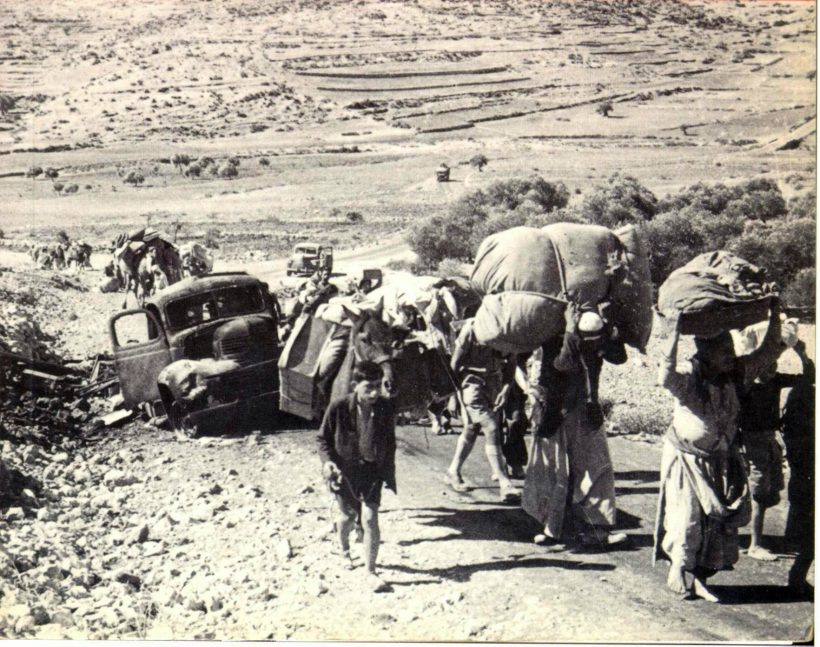
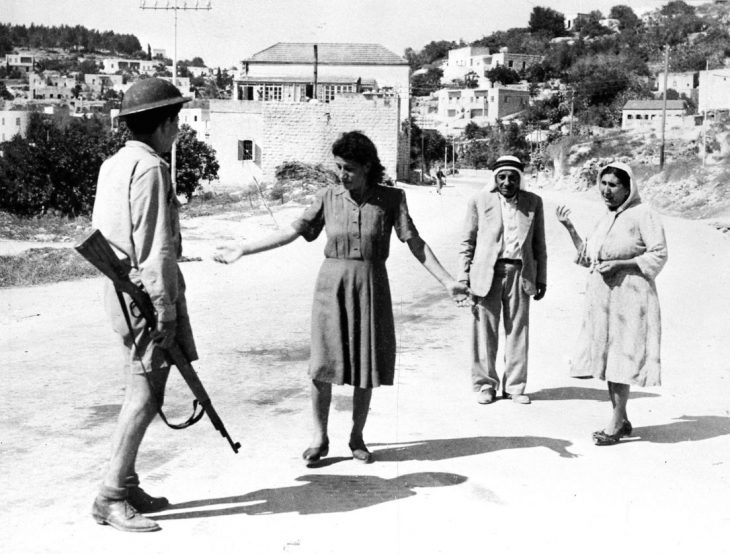

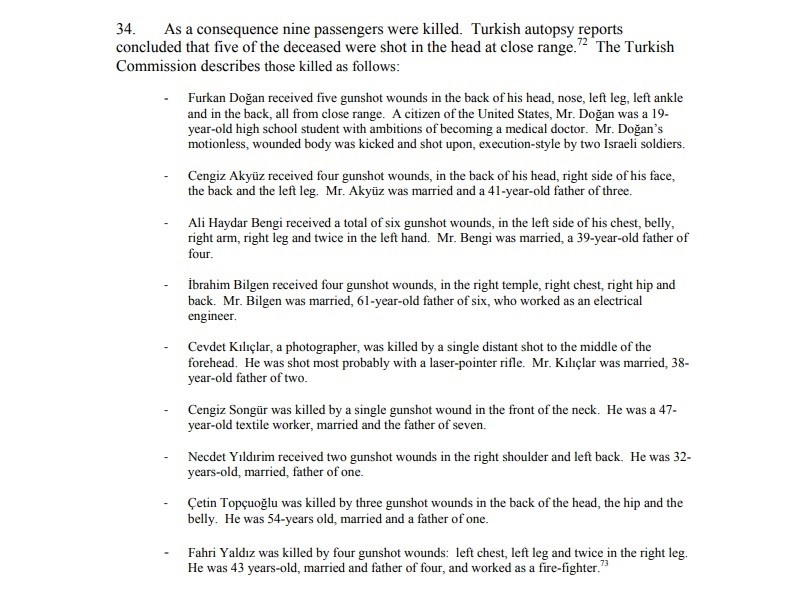



 Aletho News

