The information battle on the E. Ghouta front is turning into Aleppo 2.0, with Western media, often relying on dubious sources, describing – in unison – the Syrian regime atrocities while nearly glorifying terrorists’ resistance.
Over the last few days, mainstream media have simultaneously turned their attention to the ongoing anti-terrorist operation in Eastern Ghouta, a militant-controlled suburb of Damascus, which is seeing a new wave of clashes between Syrian government forces and Islamist factions.
While the army aims to clear the area of such terrorist units as Jaysh al-Islam, Jabhat Fatah al-Sham (formerly known as al-Nusra Front), Ahrar al-Sham and Failaq al-Rahman, Western media, often relying on militant-embedded sources, continue to paint an ominous picture, in which the government troops are deliberately slaughtering civilians.
“Right now we see very concerted Western media attempt to paint the Syrian government as the bad guy, the evil, and giving breathing space for the terrorists who are having the last bastion,” Kaveh Afrasiabi, a former adviser to Iran’s nuclear negotiation team, explained to RT. “The Syrian government has the legitimate security concerns because of the daily shelling of its capital city by the rebels.”
“A naive viewer might imagine that Assad was just bombing civilians for the hell of it because the jihadi fighters are totally absent from the picture. And the pictures are literally provided by the jihadists themselves,” Peter Ford, former UK ambassador to Syria and Bahrain, told RT, referring to the controversial White Helmets, who have long been hailed by the mainstream western media as heroes. However, the UK-backed NGO has been plagued by allegations of having close ties with terrorist groups.
Before the Syrian government forces intensified operations against jihadist factions in the area, Russia had been trying to broker a deal with armed groups to stop using civilians as human shields and surrender their weapons. Moscow has also been working relentlessly to allow humanitarian aid in. On Thursday, however, Russia had to reject a Western-backed UN resolution for a 30-day ceasefire in Syria as “utopian,” with Russia’s envoy Vassily Nebenzia pointing out that the “propaganda-driven” approach to the coverage of the conflict was only encouraging militants to continue their armed provocations.
“As the saying goes, truth is the first casualty of war,” Afrasiabi laments. The New York Times on Tuesday, for instance, published a piece based on the information provided by the Syrian Observatory for Human Rights (SOHR), a one-man Britain-based war-monitoring group. The piece paints the Assad regime as pure evil, whose only intention is to butcher civilians. The British Guardian newspaper, meanwhile, went as far as to compare the civilian suffering in Eastern Ghouta to Bosnia’s Srebrenica.
Russia has also been repeatedly attacked for the failure of its de-escalation zone initiative and its support of Damascus. Together with Iran and Turkey, Russia is tasked with enforcing the ceasefire in Eastern Ghouta, one of the de-escalation zones established as a result of the Astana talks in May 2017. Despite the ongoing armed provocations, the Russian Center for Reconciliation in Syria enabled the militants to leave the area, but the proposal was rejected.
What is also being downplayed is the Syrian and Russian resolve to end the Ghouta crisis, similar to the one during the Battle of Aleppo, where special corridors were organized to evacuate civilians out of the city, before extending the offer to terrorists for a mass exodus. NYT and the Guardian are not the only western media sources to have shown bias in reporting the events in Eastern Ghouta. A number of experts have pointed out that the Western media coverage of the current events follows a pattern developed in covering the operation to liberate Aleppo, which ended in July 2016.
“We have seen this kind of atrocity level pulled over and over again a few months ago, with Aleppo for example,” Jim Jatras, political analyst, and media and government affairs specialist, told RT. “Every time the Al Qaeda linked groups are on the ropes and the Syrian army is on the verge of liberating territory, then we hear all these horror stories, some of which may have a basis in truth, some not, about how civilians are suffering but nothing on who the terrorists are who are controlling these areas and oppressing the people who live there.”
The Aleppo campaign, initially backed by Russian airstrikes, received mostly one-sided, negative coverage in the Western media, with reporters and politicians accusing Moscow of “war crimes” and causing a “humanitarian disaster,” despite the fact that Moscow and Damascus maintained a ‘no-fly zone’ over the city. The liberation of the city was presented as its “fall” and “destruction,” as media outlets chose footage of shelled-out buildings rather than scenes of Aleppo civilians celebrating in the streets. Eventually, that narrative fell apart as tens of thousands of refugees started returning to the city and rebuilding of ruined areas began.
Now the same tactic is being used by the Western media today. This week, CNN used a 15-year-old, Muhammad Najem, and selfie videos he posted on social media, to base their report on the bloody atrocities allegedly committed by the government forces in Damascus suburbs. “The children of Ghouta die every day by the bombing of the Assad regime and Russia,” Najem says, in a segment featured on CNN.
The Syrian boy with flawless English serves as a stark reminder of a seven-year-old Bana al-Abed, who became the “voice” of many civilians trapped under the government siege in Aleppo. While many had only fondness and concern for the Aleppo girl, to others her accounts raised doubt and were seen as a directed propaganda effort.
“We saw this very much with Aleppo. We saw the same kind of coverage from the Western media. Atrocities were being predicted and reported and it turned out that most of those, if not all of them, were actually false propaganda claims. And we are seeing the repeat of this situation again,” Charles Shoebridge, a security analyst and former UK army officer, pointed out.
In a stark contrast, any concern over civilians’ fate miraculously disappeared from Western media coverage during the US-led coalition’s ‘liberation’ of Raqqa and Mosul.
“There was actually no coverage of the situation of Raqqa and Mosul. There were occasional articles,” Shoebridge told RT. “The reason why these things are not being covered is because it is not conducive to supporting UK and US foreign policy which is, of course, still, even now, to destabilize and undermine the Assad government.”
“The Western media are so closely linked to information or misinformation coming out of their governments that it is really misleading the public in the Western countries,” Jim Jatras added.
Real images of destruction from Raqqa and Mosul were there for British and American media outlets to beat the drums of a humanitarian catastrophe. Yet most outlets stayed silent to the indiscriminate bombing of civilians in Syrian and Iraqi cities by the US-led Inherent Resolve coalition. No objection was voiced to the lack of civilian evacuation or the refusal to negotiate a ceasefire with the hardcore Islamists holding civilians as human shields.
“There were no calls … for a ceasefire to take place” during the British and the American led bombardment of Mosul and of Raqqa, Shoebridge noted. “The US bombardment and sieges of these areas were causing immense suffering and loss of life among civilian populations.” Yet any remote calls to have a ceasefire so that civilians could leave the besieged cities were met with the response “no, this would help terrorists who are occupying that area,” Shoebridge added.
The same selective anti-Assad coverage is continuing in East Ghouta, where the Western media continues to neglect the atrocities committed by the jihadists in the region.
“What the media failed to point out also is that the Islamic State is one of the groups which hold Yarmuk camp, which is one corner of Ghouta, and then you have an affiliate of Al Qaeda which is holding another corner,” former ambassador Ford points out. “So these are really bad guys. Exactly the guys that were wrinkled out of Mosul and Raqqa, with many civilian casualties in the process.”
The brief respite on the Korean Peninsula seems fated to end with the Winter Olympics in Pyeongchang after North Korean leaders canceled a planned secret meeting with US Vice President Mike Pence. Washington is also expected to soon resume postponed military exercises alongside South Korea, exercises that North Korea has labeled provocative.
Brian Becker and John Kiriakou of Radio Sputnik’s Loud & Clear were joined by Christine Ahn, a co-founder of the Korea Policy Institute, a think tank that advises American politicians to foster diplomacy and friendship with both Koreas, as well as the International Coordinator of Women Cross DMZ, an organization of peace activists.
“I feel like we’re in a funhouse with a lot of smoke and mirrors and doublespeak and confusion, especially coming from the Trump administration,” said Ahn. “This spin coming from the White House that it’s North Korea that canceled the secret meeting, but [the US] were also noting that they were just going to reiterate their hardline stance — which they publicly did in Tokyo as [Pence] was meeting with [Japanese Prime Minister Shinzo] Abe.”
“As for the military exercises — I have heard different things. I have heard that South Korea has now been in conversation that they will consider stalling the military exercises, and we have the US jumping the gun and saying that the exercises are going to resume. We are in a critical window and it is urgent now for the US peace movement to raise our voices and to say we must support the inter-Korean peace process that is underway.”
“We must urge our government to halt the military exercises, to listen to the people of Korea — both North and South — that want the inter-Korean reconciliation to continue. Clearly resuming these military exercises, that include provocative decapitation strikes and regime-change exercises, would intrude on inter-Korean dialogue,” she went on to say.
In response to North Korea’s myriad missile tests, the US, South Korea and Japan launched a series of military exercises on and near the peninsula. This includes December air drills between the US and South Korea that involved hundreds of aircraft, including nuclear-capable B-1B bombers.
“The national security law in South Korea [considers] any contact with North Koreans to be a threat to their national security,” said Ahn. “I think you have a situation where South Korean President Moon Jae-in, who has gone to the 2007 summit in North Korea, having his mother come from the northern part of the Korean Peninsula before it was divided, deeply understands the complex situation that South Korea is in.”
“They have this ‘alliance’ with the US which includes wartime operational control over South Korea’s military. I think you also have… this older generation, who are maintaining that Cold War paradigm that has really hobbled the advancement of South Korean democracy.”
“It’s a historic moment, we know that. [Moon] has said he is trying to get a peace treaty between the US and North Korea, as promised under the armistice agreement that was signed in 1953.”
The agreement that ended hostilities on the Korean Peninsula, was not a peace treaty, merely an armistice, so the Korean War technically continues 65 years later. While the stated intention of the armistice was to eventually replace it with a permanent peace treaty, attempts to actually do so have never gotten far.
“It’s time right now for Americans to really put pressure on our government to formally end the Korean War,” said Ahn. “Not just for the Korean people, but also for the soul of this nation.”
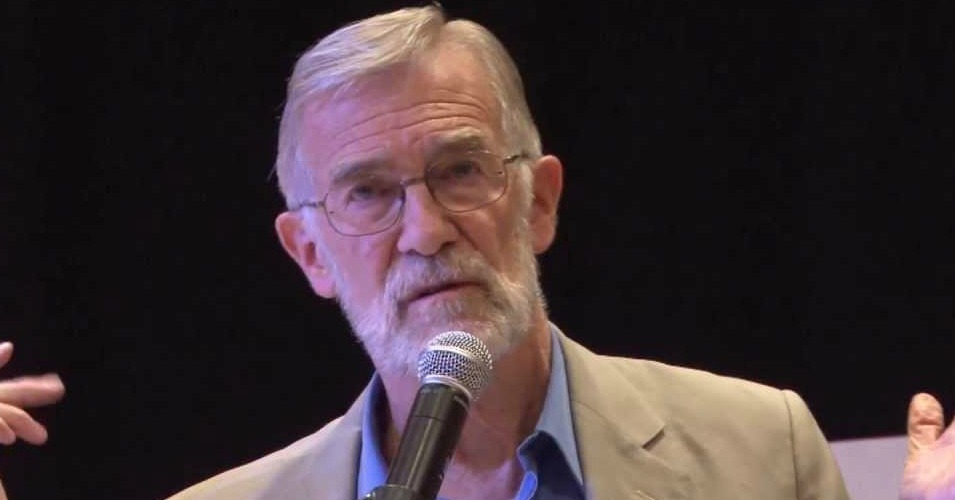
Now that I have been nominated again – this time by author Paul Craig Roberts – to be CIA director, I am preparing to hit the ground running.
Ray McGovern
Last time my name was offered in nomination for the position – by The Nation publisher Katrina vanden Heuvel – I did not hold my breath waiting for a call from the White House. Her nomination came in the afterglow of my fortuitous, four-minute debate with then-Defense Secretary Donald Rumsfeld, when I confronted him on his lies about the attack on Iraq, on May 4, 2006 on national TV. Since it was abundantly clear that Rumsfeld and I would not get along, I felt confident I had royally disqualified myself.
This time around, on the off-chance I do get the nod, I have taken the time to prepare the agenda for my first few days as CIA director. Here’s how Day One looks so far:
Get former National Security Agency Technical Director William Binney back to CIA to join me and the “handpicked” CIA analysts who, with other “handpicked” analysts (as described by former National Intelligence Director James Clapper on May 8, 2017) from the FBI and NSA, prepared the so-called Intelligence Community Assessment (ICA) of Jan. 6, 2017. That evidence-impoverished assessment argued the case that Russian President Vladimir Putin ordered his minions “to help President-elect Trump’s election chances when possible by discrediting Secretary Clinton.”
When my predecessor, CIA Director Mike Pompeo invited Binney to his office on Oct. 24, 2017 to discuss cyber-attacks, he told Pompeo that he had been fed a pack of lies on “Russian hacking” and that he could prove it. Why Pompeo left that hanging is puzzling, but I believe this is the kind of low-hanging fruit we should pick pronto.
The low-calorie Jan. 6 ICA was clumsily cobbled together:
“We assess with high confidence that Russian military intelligence … used the Guccifer 2.0 persona and DCLeaks.com to release US victim data obtained in cyber operations publicly and in exclusives to media outlets and relayed material to WikiLeaks.”
Binney and other highly experienced NSA alumni, as well as other members of Veteran Intelligence Professionals for Sanity (VIPS), drawing on their intimate familiarity with how the technical systems and hacking work, have been saying for a year and a half that this CIA/FBI/NSA conclusion is a red herring, so to speak. Last summer, the results of forensic investigation enabled VIPS to apply the principles of physics and the known capacity of the internet to confirm that conclusion.
Oddly, the FBI chose not to do forensics on the so-called “Russian hack” of the Democratic National Committee computers and, by all appearances, neither did the drafters of the ICA.
Again, Binney says that the main conclusions he and his VIPS colleagues reached are based largely on principles of physics – simple ones like fluid dynamics. I want to hear what that’s all about, how that applies to the “Russian hack,” and hear what my own CIA analysts have to say about that.
I will have Binney’s clearances updated to remove any unnecessary barriers to a no-holds-barred discussion at a highly classified level. After which I shall have a transcript prepared, sanitized to protect sources and methods, and promptly released to the media.
Like Sisyphus Up the Media Mountain
At that point things are bound to get very interesting. Far too few people realize that they get a very warped view on such issues from the New York Times. And, no doubt, it would take some time, for the Times and other outlets to get used to some candor from the CIA, instead of the far more common tendentious leaks. In any event, we will try to speak truth to the media – as well as to power.
I happen to share the view of the handful of my predecessor directors who believed we have an important secondary obligation to do what we possibly can to inform/educate the public as well as the rest of the government – especially on such volatile and contentious issues like “Russian hacking.”
What troubles me greatly is that the NYT and other mainstream print and TV media seem to be bloated with the thin gruel-cum-Kool Aid they have been slurping at our CIA trough for a year and a half; and then treating the meager fare consumed as some sort of holy sacrament. That goes in spades for media handling of the celebrated ICA of Jan. 6, 2017 cobbled together by those “handpicked” analysts from CIA, FBI, and NSA. It is, in all candor, an embarrassment to the profession of intelligence analysis and yet, for political reasons, it has attained the status of Holy Writ.
The Paper of (Dubious) Record
I recall the banner headline spanning the top of the entire front page of the NYT on Jan. 7, 2017: “Putin Led Scheme to Aid Trump, Report Says;” and the electronic version headed “Putin Led a Complex Cyberattack Scheme to Aid Trump, Report Finds.” I said to myself sarcastically, “Well there you go! That’s exactly what Mrs. Clinton – not to mention the NY Times, the Washington Post and The Establishment – have been saying for many months.”
Buried in that same edition of the Timeswas a short paragraph by Scott Shane: “What is missing from the public report is what many Americans most eagerly anticipated: hard evidence to back up the agencies’ claims that the Russian government engineered the election attack. That is a significant omission.”
Omission? No hard evidence? No problem. The publication of the Jan. 6, 2017 assessment got the ball rolling. And Democrats like Adam Schiff (D-Calif.) ranking member of the House Intelligence Committee, were kicking the ball hard down the streets of Washington. On Jan. 25, 2017, I had a chance to confront Schiff personally about the lack of evidence — something that even Obama had acknowledged just before slipping out the door. I think our two-minute conversation speaks volumes.
Now I absolutely look forward to dealing with Adam Schiff from my new position as CIA director. I will ask him to show me the evidence of “Russian hacking” that he said he could not show me on Jan. 25, 2017 – on the chance his evidence includes more than reports from the New York Times.
Sources
Intelligence analysts put great weight, of course, on sources. The authors of the lede, banner-headlined NYT article of Jan. 7, 2017 were Michael D. Shear and David E. Sanger; Sanger has had a particularly checkered career, while always landing on his feet. Despite his record of parroting CIA handouts (or perhaps partly because of it), Sanger is now the NYT’s chief Washington correspondent.
Those whose memories go back more than 15 years may recall his promoting weapons of mass destruction in Iraq as flat fact. In a July 29, 2002 article co-written with Them Shanker, for example, Iraq’s (non-existent) “weapons of mass destruction” appear no fewer than seven times as flat fact.
More instructive still, in May 2005, when first-hand documentary evidence from the now-famous “Downing Street Memorandum” showed that President George W. Bush had decided by early summer 2002 to attack Iraq, the NYT ignored it for six weeks until David Sanger rose to the occasion with a tortured report claiming just the opposite. The title given his article of June 13 2005 was “Prewar British Memo Says War Decision Wasn’t Made.”
Against this peculiar reporting record, I was not inclined to take at face value the Jan. 7, 2017 report he co-authored with Michael D. Shear – “Putin Led a Complex Cyberattack Scheme to Aid Trump, Report Finds.”
Nor am I inclined to take seriously former National Intelligence Director James Clapper’s stated views on the proclivity of Russians to be, well, just really bad people — like it’s in their genes. I plan to avail myself of the opportunity to discover whether intelligence analysts who labored under his “aegis” were infected by his quaint view of the Russians.
I shall ask any of the “handpicked” analysts who specialize in analysis of Russia (and, hopefully, there are at least a few): Do you share Clapper’s view, as he explained it to NBC’s Meet the Press on May 30, 2017, that Russians are “typically, almost genetically driven to co-opt, penetrate, gain favor, whatever”? I truly do not know what to expect by way of reply.
End of Day One
In sum, my priority for Day One is to hear both sides of the story regarding “Russian hacking” with all cards on the table. All cards. That means no questions are out of order, including what, if any, role the “Steele dossier” may have played in the preparation of the Jan. 6, 2017 assessment.
I may decide to seek some independent, disinterested technical input, as well. But it should not take me very long to figure out which of the two interpretations of alleged “Russian hacking” is more straight-up fact-based and unbiased. That done, in the following days I shall brief both the Chair, Devin Nunes (R-Calif.) and ranking member Schiff of the House Intelligence Committee, as well as the Chair and ranking member of its counterpart in the Senate. I will then personally brief the NYT’s David Sanger and follow closely what he and his masters decide to do with the facts I present.
On the chance that the Times and other media might decide to play it straight, and that the “straight” diverges from the prevailing, Clapperesque narrative of Russian perfidy, the various mainstream outlets will face a formidable problem of their own making. Mark Twain put it this way: “It is easier to fool people than it is to convince them they have been fooled.”
And that will probably be enough for Day One.
Ray McGovern works with Tell the Word, a publishing arm of the ecumenical Church of the Savior in inner-city Washington. He served 30 years as an U.S. Army Intelligence and CIA analyst, and in retirement co-founded Veteran Intelligence Professionals for Sanity (VIPS).
Canadians should prepare themselves for an onslaught of feel-good propaganda in the coming weeks as the world marks the 15th anniversary of one of the most horrific war crimes of the 21st century, the illegal invasion and occupation of Iraq by forces including the U.S., U.K., and Canada.
It will be disheartening to watch as liberal commentators from the Toronto Star and CBC engage in the most dishonest kind of smug, self-satisfied flag saluting, praising then-Liberal Prime Minister Jean Chretien for allegedly “declining” to sign on to the war. Yet the notion that Canada somehow decided not to be part of the Shock and Awe invasion of Iraq is a complete falsehood, and is well-documented elsewhere .
Lost within any of this self-congratulatory coverage will be the people of Iraq themselves, for whom 2018 marks 38 years of almost non-stop warfare and repression, during which they have endured hardships that are incomprehensible to most of us. The blood of the Iraqi people — millions of them killed, maimed, poisoned, irradiated, traumatized — is on the hands of many Canadian corporate, military, and political leaders who profited from weapons sales and political brinksmanship.
And while every Canadian government from Pierre Trudeau through to Justin Trudeau is in part responsible for this misery, no one has been held to account for aiding and abetting the crimes against humanity that have marked decades of aerial bombardment, the use of chemical and radioactive weapons (resulting in a massive spike in previously unseen birth defects), and an economic sanctions regime described by former UN inspectors as a “genocide.”
Was the price ‘worth it’?
Enforced throughout the 1990s in part with $1 billion in Canadian military muscle, those sanctions led to the monthly deaths of over 5,000 Iraqi children under the age of five, and provoked the high-profile resignations of UN humanitarian co-ordinators Denis Halliday and Hans Von Sponeck. When Halliday resigned in 1998, he stated: “I’ve been using the word ‘genocide’ because this is a deliberate policy to destroy the people of Iraq. I’m afraid I have no other view.”
What was one to make of a policy that deliberately targeted the importation of civilian goods that allegedly had “dual use,” from pencils and baby dolls to eyeglasses and shampoo? The equipment needed to fix electrical generating stations and water purification systems destroyed during the 1991 U.S. and Canadian bombing runs of Desert Storm was not permitted entry, so water-borne diseases ran rampant. The medicines needed to treat the spike in cancer (a result of tons of depleted uranium munitions dust that wound up in the Iraqi soil, air and water) didn’t get through either.
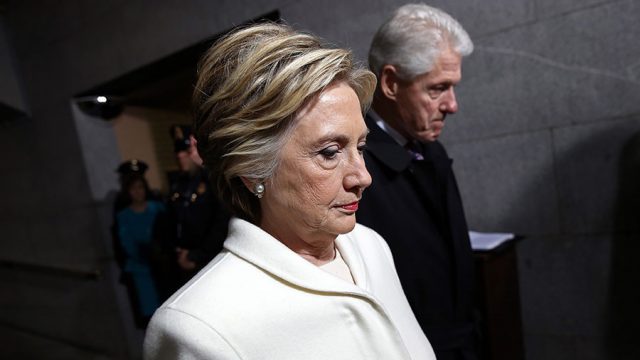
Bill Clinton’s secretary of state, Madeleine Albright, asked on the CBS program 60 Minutes if the sanctions-related deaths of a half million Iraqi children were worth it, famously replied, “We think the price is worth it.”
The people of Iraq were subjected to a Stalingrad-style siege, and while the general responsible for the Russian siege was charged as a war criminal at Nuremberg, Clinton now struts about the world stage as a self-styled “elder statesman” who runs a foundation where he paints himself as the second coming of Mother Theresa.
“In my life now, I am obsessed with only two things: I don’t want anybody to die before their time, and I don’t want to see good people spend their energies without making a difference,” Clinton crowed when the foundation began.
As Clinton continues to rake in obscene six-figure speaking fees for trotting out such tripe and basks in the “at least he wasn’t like Donald Trump” comparisons, New York oncologist Dr. Rafil Dhafir, who also believed no one should die before their time — especially in Iraq — remains behind the same prison walls that have marked his existence since his arrest 15 years ago this week for an alleged crime of compassion.
A crime of compassion
Dr. Dhafir was sentenced to 22 years for consciously violating the sanctions against the people of Iraq. Many individuals and groups who were not Muslim also violated the sanctions — fines were the worst punishment directed at a number of groups — yet Dhafir, as the driving force behind the Help the Needy Foundation, which provided millions in aid, was the only one to suffer such a fate. Needless to say, corporations that quietly went around the sanctions not for humanitarian goals, but to profit from their relationship with the Hussein dictatorship, did not face charges either.
Dhafir’s imprisonment began on the morning of February 26, 2003, when hundreds of federal agents swooped down on the community of Syracuse, New York. They knocked down his door, pointed a gun at his wife’s head, and ransacked his house, taking away any books related to Islam while leaving behind the Bible and tomes on American history.
Agents proceeded to terrorize patients at Dhafir’s clinic, and interrogated almost 150 primarily Muslim Help the Needy donors about how often they prayed, whether they had family in the Middle East, and whether they celebrated Christmas.
Cynically framed as a terrorism-related arrest as the U.S. prepared its invasion of Iraq, the first indictment of Dhafir contained 14 charges of violating sanctions. But when he refused a plea bargain, the government ratcheted up its already hyperbolic case, alleging an additional 45 alleged breaches of various financial laws related to the running of a charity as well as alleged Medicare fraud. The non-sanctions charges were speciously vague, and related to things like incorrectly filling out the complicated Medicare forms (many doctors refuse to treat Medicare patients as a result of their burdensome regulations, and even Medicare officials themselves appeared confused about them during the trial). Charges also arose from using another organization to issue Help the Needy’s tax receipts, a not uncommon practice. In any event, most such “white collar” cases, should they actually result in a trial, do not produce such serious consequences.
Refusing to be silent
As community members could testify, Dhafir was a hugely generous person, and opened his office not in Syracuse, where he could have made more money, but an hour away in Rome, New York, an under-served community. His reputation for providing interest-free loans, treating low-income patients, donating large chunks of money for schools and mosques, and assisting newcomers to the U.S. was legendary.
But Dhafir’s refusal to be silent in the face of genocide resulted in seven government agencies investigating Help the Needy and intercepting his mail, email, faxes and telephone calls, bugging his office and hotel rooms, combing through his trash, and also conducting physical surveillance. They were unable to find any evidence of terrorism links, yet the stench of such alleged associations infused the trial as a result of headline-grabbing outbursts from New York Governor George Pataki and Attorney General John Ashcroft.
After a six-week trial, Dhafir was convicted in February, 2005, though as the Syracuse New Standard pointed out, “The defense was forbidden during the trial to tell the jury that the government’s investigation of Dhafir had apparently begun as a terrorism hunt, nor was the defense allowed to argue that Dhafir had been selectively prosecuted for alleged crimes that are relatively common and do not usually result in criminal charges.”
Said former UN representative Denis Halliday: “I am stunned by the conviction of this humanitarian, especially as the US State Department breached its own sanctions to the tune of $10 billion. The policy of sanctions against Iraq undermined not only the UN’s own charter, but the Declaration of Human Rights and the Geneva Convention as well.”
During his time behind bars, Dhafir has developed a range of debilitating conditions, from an untreated hernia and diabetes, to chronic gout, significant back pain, and incipient cataracts. Even though he was originally sentenced to a medium-security prison within driving distance of his community, he was transferred to the notorious Communication Management Unit in Terre Haute, Indiana (a.k.a., “Little Guantanamo”), which was “home” to dozens of Muslims arrested as part of post-9/11 racial profiling paranoia. At the CMU, he could not have contact visits, his freedom to worship was severely limited, phone calls were rare, and he was harshly treated along with his fellow, isolated inmates.
When Barack Obama was getting ready to leave the White House, Dhafir, now aged 69, had the opportunity to apply for clemency, but declined to do so.
“How can an innocent person like me ask for this alleged commutation from a criminal, regardless of who she/he is?” he asked. While he is considering applying for non-medical compassionate release given his age and the fact that he has served so much time in prison, he watches as the world continues to treat the people of Iraq as a geopolitical punching bag and a $1 trillion economic opportunity. Indeed, Canadian companies are salivating at the chance to help “rebuild” the very infrastructure that they helped to destroy.
Dr. Dhafir, if forced to serve the remainder of his term, will not be released until he is 76 years of age. The lives of those he tried to save in Iraq — as well as the lives of patients who no longer had access to his compassionate and accessible medical services in New York State — are nameless victims to almost all of us, just some of the millions who have been sacrificed in the name of state security, war profiteers, and politicians addicted to militarism.
The atmosphere in the United States regarding possible Russian interference in the 2016 presidential election is something like hysteria, with a real danger that bilateral relations might break down completely as a result. Indeed, a number of politicians and senior government officials have described the allegations that Moscow sought to influence the election results as an “act of war” with Congressman Jerold Nadler even declaring that it was similar to Pearl Harbor.
Assuming that the indictment against 13 Russians and 3 Russian companies filed last week by Special Counsel Robert Mueller is accurate, the reported activity of the Internet Research Agency could indeed have been part of an intelligence operation seeking to influence developments in the US, but the organization’s employees also displayed considerable amateur behavior, suggesting that they were not professional spies, supporting the stronger argument that it was not a Russian government-run operation at all.
And the United States is hardly innocent when it comes to interfering in the domestic politics of both friends and enemies. That is very often what intelligence agencies are designed to do, and no one is more active in interfering in foreign governments and elections than the United States of America. The Russian election featuring Boris Yeltsin in 1996 was arranged by Washington working with the International Monetary Fund, and more recently there was the $5 billion invested in bringing “democracy” to Ukraine in 2014. The US was also involved in many of the elections in post-war Europe, most particularly in countries whose own democratic systems were still evolving. The CIA worked to keep communists out of the government in Italy’s 1976 national election. Conservative parties received sacks of money and articles warning about communism appeared in all the major newspapers. The major covert action proceeded even though Italy was a NATO member and the corruption that the intervention brought with it has blighted Italian politics to this day.
And then, there are America’s friends who in similar fashion interfere in US politics to support their own national agendas. Most active recently have been Israel and Saudi Arabia, both of which have an identical foreign policy goal, which is to end what they describe as the Iranian threat in their region. As neither has the resources to go it alone, both seek to involve the United States in what would likely be a catastrophic war for all involved, leaving Riyadh and Tel Aviv standing on the sidelines to pick up the pieces.
The Saudi lobby in the United States operates largely below the surface, working on individual congressmen and through the funding of think tanks. Israel’s manipulation of the US is, however, much more in the open. One can argue that what we are now calling Russiagate all started when Trump National Security Adviser designate Michael Flynn called Russian Ambassador Sergey Kislyak, on December 22, 2016. The call was made at the direction of Trump son-in-law Jared Kushner, who, in turn, had been approached by Israeli Prime Minister Benjamin Netanyahu to change a U.N. vote critical of Israel.
Kushner asked Flynn, the soon-to-be National Security Adviser, to help Israel by undermining what was being done by the still-in-power American government in Washington headed by President Barack Obama. In legal terms this most certainly could be construed as covered by the “conspiracy against the United States” statute that the Mueller investigation has exploited in the recent Russian indictments.
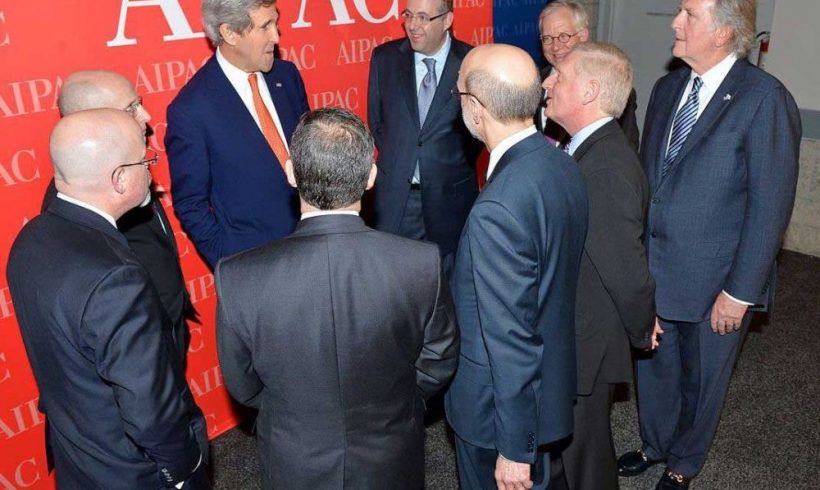
Mueller’s indictment specifically claimed that the Russians created false US personas while also stealing actual identities. But the Russians are being accused of involvement in activity that Israel engages in openly. It has interfered in US elections, to include promoting Mitt Romney over Barack Obama in 2012, and has a powerful and well-funded lobby in AIPAC that intervenes aggressively in American foreign and domestic policy. And the Israeli government’s propaganda arm uses its hasbara to use false internet identities to confuse and deflect critical stories. They do so routinely and do not even try to hide what they are doing. Part of their agenda is to smear critics and elect politicians favorable to them.
So, when will Mueller and the several congressional committees that are investigating the Russians move on to the topic of Israel and Saudi Arabia to find out what really effective foreign influencing operations looks like? Given the power of Israel and the Saudis over Congress, probably never.
As a Palestinian, I am skeptical about Mahmoud Abbas’s address, billed by the press as “Abbas delivers rare address at UNSC meeting”, which calls for two states.
Whereas I believe that the Boycott, Divestment and Sanctions (BDS) movement’s goals can be achieved through more than one political accommodation, including a two-state scenario in historic Palestine as a solution to its violent partition in 1948, I am skeptical about the ability or will of the international order to achieve this end without compromising Palestinian fundamental human rights.
Read my answer to ‘Why is it so difficult to reform the United Nations Security Council?’ here.
Abbas is addressing a world order impotent to stand up to Israel – one that is also committed to Israel’s Jewish national identity and to advancing its national security. They are the very same players who have, without question, deceived the Palestinian people throughout the long decades of Oslo.
As the ESCWA report on Israel’s Apartheid noted in the introduction,
“the policies, practices and measures applied by Israel to enforce a system of racial discrimination threaten regional peace and security. United Nation resolutions have long recognized that danger and called for resolution of conflict so as to restore and maintain peace and stability in the region.”
Recognition has yet to translate into action as far as the U.N. is concerned.
Additionally, instead of unifying all segments of the Palestinian people (who are fragmented as a condition imposed by Israel) behind the goal of liberation, Abbas is cooperating with Israel and its allies in the escalation of the deprivation of the Palestinian people in the Gaza Strip – in order to pressure them into relinquishing their political objectives.
Such political maneuvering on Abbas’s part has turned the goal of the Palestinian people, as Karma Nabulsi expressed it, on its head:
“The goal of Palestinians is to unify for the struggle to liberate their land and return to it, and to restore their inalienable human rights taken by force – principles enshrined in centuries of international treaties, charters, and resolutions, and in natural justice.”
The creation of a Jewish state in Palestine dispossessed Palestinian Arabs, against their will, of land and property, as well as of their fundamental right to self-determination in their own homeland in favor of self-determination for Jews worldwide.
In my opinion, without addressing Israel’s legitimacy as a Jewish state in Palestine, the Palestinian people are unlikely ever to achieve self-determination in their own homeland. The right of the Jewish people to self-determination in a state of their own is a right acknowledged internationally today, but one that must be challenged, if only from a demographic perspective in Palestine.
As Albert T. Clay wrote in the February 1921 issue of The Atlantic:
“A visit to some of the better established Jewish colonies will not fail to awaken sympathy for Economic Zionism. No unbiased observer of past events could think of throwing obstacles in the way of those Jews who, being persecuted in certain lands, prefer to live in a community solely Jewish; or who, through historical sentiment, long to reside in a purely Jewish cultural community in the land of their ancestors. Only an extremist would deny the gratification of their desires to as many of these people as can be accommodated; yet it must be borne in mind that, as estimated by experts, the tiny country can support only about a million and a half additional inhabitants; which number, if all were Jews, would represent only one tenth of the fifteen millions in the world.”
The Palestinians have never held the bargaining chips in their tragedy and might as well go for broke – ending the Apartheid Zionist colonial regime in all of historic Palestine. We have spent enough time agreeing to piecemeal “solutions” during the so-called peace process that achieved nothing but unspeakable inhumanity and suffering.
– Rima Najjar is a Palestinian whose father’s side of the family comes from the forcibly depopulated village of Lifta on the western outskirts of Jerusalem. She is an activist, researcher and retired professor of English literature, Al-Quds University, occupied West Bank.
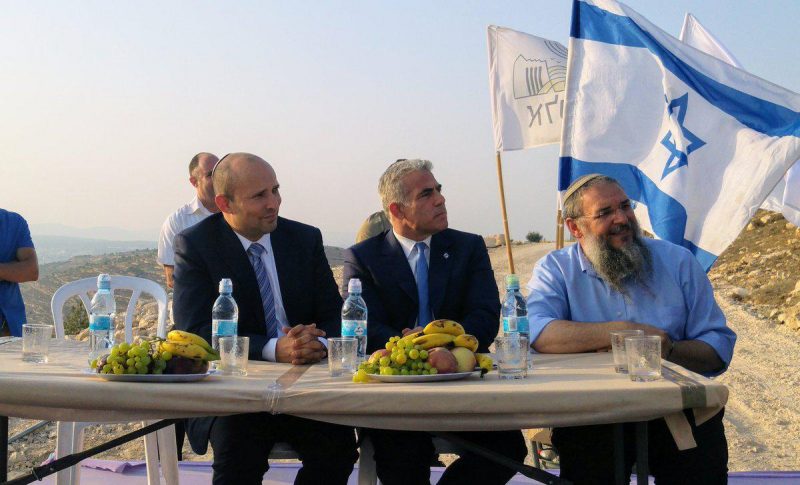
Yair Lapid (centre) and Naftali Bennett (left) joined settlers on 23 July 2017 at the inauguration of a monument that was rebuilt in the illegal settlement outpost of Netiv HaAvot after the Israeli Supreme Court ordered the outpost’s demolition and the evacuation of all settlers [Yigal Dilmoni/Twitter]
The Israeli government is preparing to give 20 million shekels ($5.68 million) in compensation to settlers who have been living in an illegal outpost on private Palestinian land, reports Haaretz.
Prime Minister Benjamin Netanyahu is seeking the approval of his coalition partners, ahead of the impending evacuation of 15 Israeli settler families from Netiv Haavot settlement outpost.
One of the buildings in Netiv HaAvot was demolished in November 2017. The Israeli Supreme Court has ordered the state to demolish the other 15 houses in March, but, according to Haaretz, “the state is expected to request that the supreme court delay the outpost’s evacuation”.
Government ministers Naftali Bennett and Ayelet Shaked “visited the outpost on Sunday and promised the residents they would try to postpone their eviction by three months, until construction starts on alterative homes nearby, for ‘humanitarian’ reasons”, the paper added.
According to the Times of Israel, residents of the illegal outpost will establish a “protest test” outside Netanyahu’s Jerusalem office, where they will demand “an immediate solution to prevent the evacuation as well as the construction of 350 homes in the Etzion [settlement] bloc”.
Israeli NGO Peace Now slammed the compensation plan as “political bribery for building offenders”.
“The residents of Nativ Ha’avot stole land, took control of it, and built their homes on it without permission from any official source.”
“This is not according to us, but rather according to the state, which issued demolition orders for all the structures,” said NGO official Shabtay Bendet.
“Now they are receiving very generous financial compensation from the same state.”
The PLO’s Committee for Prisoners and Freed Prisoners revealed on Monday that the Israeli authorities pay stipends to Jewish settlers indicted of crimes against Palestinians, Quds Press has reported. Israel has complained frequently about payments to the families of Palestinian prisoners by the Palestinian Authority, claiming that they “encourage terrorism”.
As an example of the Israeli payments, the rights group mentioned the case of Israeli settler Yoram Skolnik, who shot dead Musa Abu Sabha while he was lying with his face on the ground and his hands tied behind his back in March 1993. The killing took place near the illegal settlement of Susia in the occupied West Bank city of Hebron, and the killer has been receiving a monthly salary in addition to his national insurance payments.
Furthermore, Skolnik also received financial assistance from the government to start a business after he was released from prison, the Committee pointed out. It noted that the Israeli authorities reduced his sentence from life to just eight years.
Israel’s official and popular support for criminals and appeals for their release from prison are part of the “rising racism, fascism and encouragement of extremism against the Palestinians,” the Committee claimed. Ninety-nine per cent of Israeli Jews who were imprisoned after killing Palestinians were released and received legal and social support, as well as full protection by successive Israeli governments, it added.
According to the Head of the Committee, Issa Qaraqe, the international community must take steps against Israeli laws which clearly target human rights and the rights of the Palestinians.
Leader of Opposition and head of the UK Labour Party Jeremy Corbyn is facing numerous attacks from the Tories, who recalled their Cold War practices to discredit their left-wing opponent, branding him a communist spy.
The scandal was sparked by the allegations made by former Czechoslovak intelligence officer Jan Sarkocy, who claimed that Corbyn supplied sensitive information to the communist government.
The Conservatives were quick to jump on the bandwagon, calling on Corbyn to disclose a file that was opened on him by the East German intelligence agency, the Stasi, when he visited the German Democratic Republic (GDR) in 1980s. For instance, British Prime Minister Theresa May has publicly called on Corbyn to be “accountable for his actions in the past”.
“Where there are allegations of this sort, MPs should be prepared to be open and transparent,” May said.
Tory Minister State for Security and Economic Crime Ben Wallace even alluded to Kim Philby, the ringleader of Cambridge Five, a group of Britons that spied for the Soviet Union during the Cold War, in his tweet about Corbyn.
“Jeremy has been interested in Foreign Policy issues his entire political career ” — Labour MP Louis Haigh, BBC Daily Politics — yup so was Kim Philby”- the tweet read.
Wallace was eventually forced to backtrack by Twitter users, who mocked the logic behind his attack.
“Wasn’t comparing just saying that being interested in Foreign policy isn’t an answer to the allegations being made,” another tweet read.
Junior defense minister Tobias Ellwood, however, did not hold back, telling The Telegraph that the allegations raise “legitimate concerns” about Corbyn’s “patriotism”.
The Conservatives are keen on pushing the story and are planning to invite Sarkocy to testify before the House of Commons’ Foreign Affairs Committee, which is chaired by a senior Tory MP, Tom Tugendhat.
Tugendhat stated that his committee is “planning to look at how nation states undermine democracy and the rule of law”, invoking the tried-and-tested anti-Russian rhetoric to further undermine Corbyn.
“It is Russia and other countries as well that are trying to do it. While we are doing that it may be worth asking people who have actually tried to do this in the past to tell us how they did it,” Tugendhat said.
The scandal comes just as the latest YouGov poll revealed a slight lead that the Labour Party holds over the Conservatives in voting preferences of British citizens.
The new figures show that 41% of Britons are likely to vote Labour, while the Conservatives enjoy the support of 40% of the UK electorate.
However, the scandal is likely to backfire and discredit the Tories themselves, as there is evidence that directly debunks the allegations.
According to the Sun, the Czechoslovak intelligence archives actually reveal that the communist spies never managed to successfully recruit Corbyn.
The Labour leader has confirmed that he indeed met with Sarkocy, who posed as a diplomat during his tenure in London, but staunchly denied supplying any information to the communist spy and dismissed the claims as “ridiculous smears.”
Even before Donald Trump set foot in the White House, loveless liberals were busy pushing the narrative that Russia meddled in the elections. But could this claim be – just maybe – a dastardly ploy to hide some unsavory truths?
Pass the popcorn, the theater of the political absurd known as ‘Russiagate’ continues playing to disappointed audiences without so much as an intermission. And with the latest episode featuring an indictment against 13 Russian nationals without rhyme or reason, perhaps it’s a good time to pause and reflect on the question the mainstream media conspicuously ignores: was the real meddlesome actor in the 2016 presidential election not the perennial bogeyman known as ‘Putin’s Russia’, but the Democratic Party itself?
Indeed, some highly questionable moves on the part of the Democrats before, during and after the elections go far in exonerating the Russian fall guy from any and all charges. You be the judge.
The FISA fail
In a memo declassified by the White House and released to great fanfare by the House Intelligence Committee on February 2, it was alleged that on October 21, 2016, the FBI and the Department of Justice (DOJ) – armed with the notorious Trump dossier – secured a Foreign Intelligence Surveillance Act (FISA) warrant to conduct surveillance on Carter Page, a Trump campaign adviser.
But something looks rotten in Denmark. As it turned out, the explosive Trump dossier, compiled by former MI6 spy Christopher Steele, was bought and paid for by the Democratic National Committee (DNC) and the Clinton campaign. In other words, this represents – at the very least – a very big conflict of interest.
At the same time, in the their application for the FISA warrant, the FBI and DOJ “cited extensively” a Yahoo News article by one Michael Isikoff, which discusses Page’s July 2016 trip to Moscow.
As it turned out, however, there were serious problems with that article. As the Nunes memo states, Isikoff’s article “does not corroborate the Steele dossier because it is derived from information leaked by Steele himself…”
Indeed, Steele admitted that he met with Yahoo News “at the direction of Fusion GPS,” the firm that organized the dossier, in September 2016. Meanwhile, the mainstream media has largely played down these glaring violations of FISA protocol, as it continues to heap scorn on Russia.
“Putin’s KGB-inspired maneuvering of the United States via Donald Trump and the Republican Congress has all the earmarks of a carefully planned, professionally executed war game in which Trump, congressional Republicans and some in right wing media are his comrades,”wrote Cheri Jacobus in USA Today.
The specter of the Russian bogeyman is truly the gift that keeps giving.
Clinton’s email scandal
In March 2015, the news broke that Hillary Clinton, while serving as secretary of state, had used her home computer while handling classified government documents. An assortment of experts and politicians accused Clinton of violating State Department protocol.
On July 5, 2016, following an investigation, FBI Director James Comey said Clinton had been “extremely careless” in handling her email correspondences. He added that “no reasonable prosecutor would bring such a case.”
That statement did little to calm the critics, however, as Clinton was haunted by the ghosts of emails past right up to the eve of the elections.
On October 28, 2016, the FBI said it was reopening its investigation into Clinton’s private email server after messages were discovered on the computer of top aide Huma Abedin’s husband, Anthony Weiner, who was then embroiled in a sexting scandal. Comey announced just before the elections that nothing had changed in the Clinton case, which had been closed four months earlier without criminal charges.
However, the email saga refuses to go away as the DOJ once again reopened its investigation into Clinton’s email server in January.
To this day, Hillary Clinton has been able to divert attention away from the very serious charge of handling classified government emails over her private server thanks to a giant smokescreen known as Russia, the bogeyman that conveniently explains every transgression and setback by the Democratic Party.
Operation Sink Sanders
In July 2016, the DNC suffered a broadside after WikiLeaks released a batch of emails purporting to show that Debbie Wasserman Schultz, the chairwoman of the body, was actively conspiring against the campaign of Senator Bernie Sanders. Naturally, this news had a way of upsetting those donors who contributed funds to the Sanders campaign. Wasserman Schultz resigned in disgrace following the revelations.
Despite there being a deliberate effort to undermine the Sanders campaign, that disturbing news was sidelined by the conspiracy theory that a Russian army of apparatchiks hacked the DNC computers, turning over the information to Julian Assange. To this day, no evidence has been provided to support that claim.
Meanwhile, Wasserman Schultz was eventually cleared of rigging the Democratic primary in favor of Hillary Clinton, while Russia continues to suffer from mainstream media mudslinging.
Clinton cheated in debates
One of the most shocking revelations to come from the leaked/hacked DNC emails was the claim that Donna Brazile, interim chairperson of the DNC who once worked at CNN, used her inside connections to feed Hillary Clinton the questions to several of her public debates against Donald Trump.
Following the DNC debacle, Brazile hoped to cash in on the scandal by publishing a tell-all book entitled, ‘Hacks: The Inside Story of the Break-ins and Breakdowns that Put Donald Trump in the White House.’
In one particularly candid part, Brazile said she was secretly concerned about Clinton’s health as Election Day drew closer. This comment did not sit well with Brazile’s former colleagues. Clinton’s staffers published an open letter in response to the book, saying, “It is particularly troubling and puzzling that she would seemingly buy into false Russian-fueled propaganda, spread by both the Russians and our opponent, about our candidate’s health.”
Once again, Russia was used and abused as the convenient 11-time-zone Band-Aid that can cover any political wound, whatever the size. What is the most surprising about this tactic is that anybody still falls for it.
Regime change
Given Hillary Clinton’s past track record for advocating on behalf of military adventures, most memorably in Iraq and Libya, the tall tale of Trump-Russia collusion appears to have been a desperate effort on the part of the establishment to get their candidate into office and the military industrial complex into another war.
According to the Center for Public Integrity’s review of Federal Election Commission data, over a 14-month period (January 2015 through February 2016), Clinton and Sanders jointly received at least $765,049 from employees of major defense contractors – more than twice the $357,775 sum received by the Republican Party presidential candidates.
To prove the liberal media’s (and by extension, the establishment’s) apparent desire for military conflict, consider how it lavished praise on Trump after he attacked Syria’s Shayrat Airbase on April 7, 2017, America’s first unilateral military act aimed at the Syrian government forces (not the terrorists).
CNN analyst Fareed Zakaria waxed poetically, “I think Donald Trump became president of the United States,” he said dreamily. “I think this was actually a big moment.” On MSNBC, Nicholas Kristof, a regular Trump critic, said the Republican leader “did the right thing.” Elliott Abrams could barely contain his newfound enthusiasm for Trump: “… the Trump administration can truly be said to have started only now. The president has been chief executive since January 20, but this week he acted also as Commander in Chief. And more: He finally accepted the role of Leader of the Free World.”
Judging by such comments, had Trump continued bombing Syria, and thereby pacifying the hawks in Washington, there is a very good chance that Russiagate would have been quietly swept under the media’s carpet.
Impeach Trump
It would be difficult to name another US president who has suffered the slings and arrows of media scorn more than Donald J. Trump. And he’s only been in office for just over one year. Indeed, no sooner had his Inauguration finished there were already calls for him to be impeached. In fact, the subject has become so popular among the Democrats that there is even a special Wikipedia page dedicated to the relentless campaign.
Although the clamor to impeach the Republican leader has subsided of late, when the idea does raise its head, the empty claim that Russia influenced the elections ranks high among the reasons.
Clinton Foundation ‘pay to play’
Another reason why the Democrats would need to push the anti-Russia narrative is to protect the Clinton family from allegations that they personally profited from donations to the Clinton Foundation.
In January 2017, it was reported that the FBI opened an investigation into whether the Clinton Foundation accepted donations in exchange for political favors while Hillary Clinton served as secretary of state in the Obama administration, the Los Angeles Time reported, citing two anonymous sources.
“Critics have accused the Clinton family of using the foundation to enrich themselves and give donors special access to the State Department when Hillary Clinton was its head,” the article said.
The LA Times said that the Democrats have rejected the claims, saying that “Trump is trying to steer attention away from investigations examining…Russian attempts to influence the 2016 election.”
Nunes Memo, Part 2
If anybody thought the Trump administration would just release the Nunes memo and drop it, think again. In fact, Trump’s legal team backs the idea of a second special counsel to investigate the FBI and Justice Department
White House Deputy Press Secretary Raj Shah told reporters on Air Force One Monday that Trump’s attorneys have given the green light to starting the process of appointing a second special counsel to investigate the FBI and Justice Department’s behavior during the 2016 presidential campaign, according to a report by Axios.
In other words, expect a lot more anti-Russia outbursts from the Democrats in the days and weeks to come.
It’s hard to know where to begin. Last Friday’s indictment of 13 Russian nationals and three Russian companies by Special Counsel Robert Mueller was detailed in a 37 page document that provided a great deal of specific evidence claiming that a company based in St. Petersburg, starting in 2014, was using social media to assess American attitudes. Using that assessment, the company inter alia allegedly later ran a clandestine operation seeking to influence opinion in the United States regarding the candidates in the 2016 election in which it favored Donald Trump and denigrated Hillary Clinton. The Russians identified by name are all back in Russia and cannot be extradited to the U.S., so the indictment is, to a certain extent, political theater as the accused’s defense will never be heard.
In presenting the document, Rod Rosenstein, Deputy Attorney General, stressed that there was no evidence to suggest that the alleged Russian activity actually changed the result of the 2016 presidential election or that any actual votes were altered or tampered with. Nor was there any direct link to either the Russian government or its officials or to the Donald Trump campaign developed as a result of the nine-month long investigation. There was also lacking any mention in the indictment of the Democratic National Committee, Hillary Clinton and Panetta e-mails, so it is to be presumed that the activity described in the document was unrelated to the WikiLeaks disclosures.
Those of the “okay, there’s smoke but where’s the fire” school of thought immediately noted the significant elephant in the room, namely that the document did not include any suggestion that there had been collusion between Team Trump and Moscow. As that narrative has become the very raison d’etre driving the Mueller investigation, its omission is noteworthy. Meanwhile, those who see more substance in what was revealed by the evidence provided in the indictment and who, for political reasons, would like to see Trump damaged, will surely be encouraged by their belief that the noose is tightening around the president.
Assuming the indictment is accurate, I would agree that the activity of the Internet Research Agency does indeed have some of the hallmarks of a covert action intelligence operation in terms how it used some spying tradecraft to support its organization, targeting and activity. But its employees also displayed considerable amateur behavior, suggesting that they were not professional spies, supporting the argument that it was not a government intelligence operation or an initiative under Kremlin control. And beyond that, so what? Even on a worst-case basis, stirring things up is what intelligence agencies do, and no one is more active in interfering in foreign governments and elections than the United States of America, most notably in Russia for the election of Boris Yeltsin in 1996, which was arranged by Washington, and more recently in Ukraine in 2014. From my own experience I can cite Italy’s 1976 national election in which the CIA went all out to keep the communists out of government. Couriers were discreetly dispatched to the headquarters of all the Italian right wing parties dropping off bags of money for “expenses” while the Italian newspapers were full of articles written by Agency-paid hacks warning of the dangers of communism. And this all went on clandestinely even though Italy was a democracy, an ally and NATO member.
Does that mean that Washington should do nothing in response? No, not at all. Russia, if the indictment is accurate, may have run an influencing operation and gotten caught with its hand in the cookie jar. Or maybe not. And Washington might also actually have information suggesting that Russia is preparing to engage in further interference in the 2018 and 2020 elections, as claimed by the heads of the intelligence agencies, though, as usual, evidence for the claim is lacking. There has to be bilateral, confidential discussion of such activity between Washington and Moscow and a warning given that such behavior will not be tolerated in the future, but only based on irrefutable, solid evidence. The leadership in both countries should be made to understand very clearly that there are more compelling reasons to maintain good bilateral working relations than not.
With that in mind, it is important not to overreact and to base any U.S. response on the actual damage that was inflicted. The indictment suggests that Russia is out to destroy American democracy by promoting “distrust” of government as well as sowing “discord” in the U.S. political system while also encouraging “divisiveness” among the American people. I would suggest in Russia’s defense that the U.S. political system is already doing a good job at self-destructing and the difficult-to-prove accusations being hurled at Moscow are the type one flings when there is not really anything important to say.
I would suggest that Moscow might well want to destroy American democracy but there is no evidence in the indictment to support that hypothesis. I particularly note that the document makes a number of assumptions which appear to be purely speculative for which it provides no evidence. It describes the Russian company Internet Research Agency as “engaged in operations to interfere with elections and political processes.” Its employees were involved in
“interference operations targeting the United States. From in or around 2014 to the present, Defendants knowingly and intentionally conspired with each other (and with persons known and unknown to the Grand Jury) to defraud the United States by impairing, obstructing, and defeating the lawful functions of the government through fraud and deceit for the purpose of interfering with the U.S. political and electoral processes, including the presidential election of 2016.”
The theme of Russian subversion is repeated throughout the indictment without any compelling evidence to explain how Mueller knows what he asserts to be true, suggesting either that the document would have benefited from a good editor or that whoever drafted it was making things up. Internet Research Agency allegedly “conduct[ed] what it called ‘information warfare against the United States of America’ through fictitious U.S. personas on social media platforms and other Internet-based media.” The indictment goes on to assert that
“By in or around May 2014, the ORGANIZATION’s strategy included interfering with the 2016 U.S. presidential election, with the stated goal of ‘spread[ing] distrust towards the candidates and the political system in general’”
with a
“strategic goal to sow discord in the U.S. political system, including the 2016 U.S. presidential election. Defendants posted derogatory information about a number of candidates, and by early to mid-2016, Defendants’ operations included supporting the presidential campaign of then-candidate Donald J. Trump (“Trump Campaign”) and disparaging Hillary Clinton. Defendants made various expenditures to carry out those activities, including buying political advertisements on social media in the name of U.S. persons and entities. Defendants also staged political rallies inside the United States, and while posing as U.S. grassroots entities and U.S. persons, and without revealing their Russian identities and ORGANIZATION affiliation, solicited and compensated real U.S. persons to promote or disparage candidates. Some Defendants, posing as U.S. persons and without revealing their Russian association, communicated with unwitting individuals associated with the Trump Campaign and with other political activists to seek to coordinate political activities.”
Two company associates
“traveled in and around the United States, including stops in Nevada, California, New Mexico, Colorado, Illinois, Michigan, Louisiana, Texas, and New York to gather intelligence. After the trip, [they] exchanged an intelligence report regarding the trip. The conspiracy had as its object the opening of accounts under false names at U.S. financial institutions and a digital payments company in order to receive and send money into and out of the United States to support the ORGANIZATION’s operations in the United States and for self-enrichment. Defendants and their co-conspirators also used the accounts to receive money from real U.S. persons in exchange for posting promotions and advertisements on the ORGANIZATION-controlled social media pages. Defendants and their co-conspirators typically charged certain U.S. merchants and U.S. social media sites between 25 and 50 U.S. dollars per post for promotional content on their popular false U.S. persona accounts, including Being Patriotic, Defend the 2nd, and Blacktivist. All in violation of Title 18, United States Code, Section 1349.”
Note particularly the money laundering and for-profit aspects of the Internet Research scheme, something that would be eschewed if it were an actual intelligence operation. There is some speculation that it all might have been what is referred to as a click-bait commercial marketing scheme set up to make money from advertising fees. Also note how small the entire operation was. It focused on limited social media activity while spending an estimated $1 million on the entire venture, with Facebook admitting to a total of $100,000 in total ad buys, only half of which were before the election. It doesn’t smell like a major foreign government intelligence/influence initiative intended to “overthrow democracy.” And who attended the phony political rallies? How many votes did the whole thing cause to change? Impossible to know, but given a campaign in which billions were spent and both fake and real news were flying in all directions, one would have to assume that the Russian effort was largely a waste of time if it indeed was even as described or serious in the first place.
And apart from the money laundering aspect of the alleged campaign was it even illegal apart from the allegations of possible visa fraud and money laundering? If the Russians involved were getting their financial support from the Moscow government then it would be necessary to register under the Foreign Agents Registration Act (FARA) of 1938, but if not, they would be protected by the Constitution and have the same First Amendment right to express their opinions of Hillary Clinton on blogs and websites while also associating with others politically as do all other residents of the United States. Many of the commenters on this Unz site are foreign and are not required either by law or custom to state where they come from.
And, of course, there is one other thing. There always is. One major media outlet is already suggesting that there could be consequences for American citizens who wittingly or unwittingly helped the Russians, identified in the indictment as “persons known and unknown.” A former federal prosecutor put it another way, saying “While they went to great pains to say they are not indicting any Americans today, if I was an American and I did cooperate with Russians I would be extremely frightened…” Politicospeculates that “Now, a legal framework exists for criminal charges against Americans…” and cites a former U.S. district attorney’s observation that “Think of a conspiracy indicting parties ‘known and unknown’ as a Matroyshka doll. There are many more layers to be successively revealed over time.”
Under normal circumstances, an American citizen colluding with a foreign country would have to be convicted of engaging in an illegal conspiracy, which would require being aware that the foreigners were involved in criminal behavior and knowingly aiding them. But today’s overheated atmosphere in Washington is anything but normal. Russia’s two major media outlets that operate in the U.S., Sputnik and RT America, have been forced to register under FARA. Does that mean that the hundreds of American citizens who appeared on their programs prior to the 2016 election to talk about national politics will be next in line for punishment? Stay tuned.
Philip M. Giraldi, Ph.D., is Executive Director of the Council for the National Interest, a 501(c)3 tax deductible educational foundation that seeks a more interests-based U.S. foreign policy in the Middle East. Website is http://www.councilforthenationalinterest.org, address is P.O. Box 2157, Purcellville VA 20134 and its email is inform@cnionline.org.
By Kevin Barrett | Crescent | Dhu al-Qa’dah 24, 1445
In corporate America, hostile takeovers are commonplace. They occur when an aggressor—a larger corporation or rich individuals—seizes control of a smaller corporation without asking permission.
What few recognize is that the United States itself has been subjected to a hostile takeover. Since the aggressor, the illegitimate settler colony known as “Israel,” is much smaller than the US, the takeover has necessarily been surreptitious.
As of June, 2024, Israel’s gradual takeover of the US has become obvious and undeniable—a proverbial “elephant in the living room.” … continue
This site is provided as a research and reference tool. Although we make every reasonable effort to ensure that the information and data provided at this site are useful, accurate, and current, we cannot guarantee that the information and data provided here will be error-free. By using this site, you assume all responsibility for and risk arising from your use of and reliance upon the contents of this site.
This site and the information available through it do not, and are not intended to constitute legal advice. Should you require legal advice, you should consult your own attorney.
Nothing within this site or linked to by this site constitutes investment advice or medical advice.
Materials accessible from or added to this site by third parties, such as comments posted, are strictly the responsibility of the third party who added such materials or made them accessible and we neither endorse nor undertake to control, monitor, edit or assume responsibility for any such third-party material.
The posting of stories, commentaries, reports, documents and links (embedded or otherwise) on this site does not in any way, shape or form, implied or otherwise, necessarily express or suggest endorsement or support of any of such posted material or parts therein.
The word “alleged” is deemed to occur before the word “fraud.” Since the rule of law still applies. To peasants, at least.
Fair Use
This site contains copyrighted material the use of which has not always been specifically authorized by the copyright owner. We are making such material available in our efforts to advance understanding of environmental, political, human rights, economic, democracy, scientific, and social justice issues, etc. We believe this constitutes a ‘fair use’ of any such copyrighted material as provided for in section 107 of the US Copyright Law. In accordance with Title 17 U.S.C. Section 107, the material on this site is distributed without profit to those who have expressed a prior interest in receiving the included information for research and educational purposes. For more info go to: http://www.law.cornell.edu/uscode/17/107.shtml. If you wish to use copyrighted material from this site for purposes of your own that go beyond ‘fair use’, you must obtain permission from the copyright owner.
DMCA Contact
This is information for anyone that wishes to challenge our “fair use” of copyrighted material.
If you are a legal copyright holder or a designated agent for such and you believe that content residing on or accessible through our website infringes a copyright and falls outside the boundaries of “Fair Use”, please send a notice of infringement by contacting atheonews@gmail.com.
We will respond and take necessary action immediately.
If notice is given of an alleged copyright violation we will act expeditiously to remove or disable access to the material(s) in question.
All 3rd party material posted on this website is copyright the respective owners / authors. Aletho News makes no claim of copyright on such material.
 Aletho News
