The Kremlin could one day regret any US detachment from the South China Sea, American geopolitical analyst Tim Daiss insists. Are Washington’s efforts truly aimed at maintaining the freedom of navigation in the region or is it part of Obama’s plan to write the rules and call the shots in the Asia Pacific region?
Russia’s opposition to internationalizing the South China Sea dispute and the US deployment of the Terminal High-Altitude Area Defense (THAAD) system in South Korea has promted deep concerns among American geopolitical analysts.
Moscow’s support for Beijing has put the US plan to pressure China into making concessions on the maritime dispute in the South China Sea at risk. On the other hand, India’s decision to side with China on the issue has caught Western observers by surprise.
“China and Russia have agreed on the need to limit US influence in the Asia Pacific Region. On Friday, following bilateral talks in Beijing Russia’s foreign minister Sergey Lavrov and his Chinese counterpart Wang Yi expressed opposition to the US deployment of an anti-missile system in South Korea and also said that non-claimants should not take sides in the dispute over maritime territorial claims in the South China Sea,” American geopolitical analyst Tim Daiss wrote in his Op-Ed for Forbes.
Russian Foreign Minister Lavrov has repeatedly stated that the South China Sea dispute should be resolved by the parties directly concerned, while outside powers should refrain from interfering.
A joint communiqué of the 14th Meeting of the Foreign Ministers of the Russian Federation, the Republic of India and the People’s Republic of China singed on April 18, 2016, reads:
“Russia, India and China are committed to maintaining a legal order for the seas and oceans based on the principles of international law, as reflected notably in the UN Convention on the Law of Sea (UNCLOS). All related disputes should be addressed through negotiations and agreements between the parties concerned. In this regard the Ministers called for full respect of all provisions of UNCLOS, as well as the Declaration on the Conduct of Parties in the South China Sea (DOC) and the Guidelines for the implementation of the DOC.”
The statement coincided with reports that Beijing is seeking Moscow’s support over the South China Sea court battle with the Philippines in the Hague.
Nearly three years ago, the Philippines, backed by America, filed a lawsuit against China in the Hague International Tribunal Court. In October 2015 the Permanent Court of Arbitration in The Hague confirmed that it would hold a hearing on the matter. The hearing is expected to take place in May or June 2016.
“China is lobbying Russia for support in opposing international court proceedings launched by the Philippines over the disputed South China Sea,” South China Morning Postreported April 20.
Beijing has reason to believe that Moscow can provide it with juridical assistance to solve the problem, Alexander Shpunt of Russia’s Regnum media outlet suggested.
Shpunt called attention to the fact that on April 20 Moscow won the Yukos case in the District Court in the Hague; a Dutch court overturned an award of $50 billion to former shareholders of the now defunct Yukos oil company that Russia had been ordered to pay by the Permanent Court of Arbitration in 2014.
The journalist continued that Lavrov’s notion about “outside parties” in the South China Sea dispute is a direct reference to the Permanent Court of Arbitration in the Hague that will soon hold hearing on the Philippines’ complaint against China.
This is the issue of utmost importance for Beijing that Moscow has outplayed the Permanent Court of Arbitration, Shpunt emphasized.
However, according to Daiss, Beijing is the major troublemaker in the region that plans to outwit its “much smaller Asian neighbors.”
“Who knows what the future holds geopoliticaly?” he wrote, adding that “the Kremlin could one day regret any US detachment from the South China Sea.”
Like many other Western observers Daiss remained silent about the fact that China’s Asian neighbors are also involved in controversial building activities in the South China Sea region, while, for example, Taiwan’s constructions in the Spratlys are located outside any claimed Taiwanese exclusive economic zone.”Of the six countries claiming an interest in the Spratlys, only Brunei has failed to construct structures, mostly on stilts, on more than 40 of these islets and reefs. Yet the western media again focuses exclusively on [China’s] ‘aggressive’ reclamation and building activities,” Australian lawyer James O’Neill wrote in his article for New Eastern Outlook.
What lies at the root of this double-standard approach? And is Washington really “trying to keep the sea lanes open in the name of freedom of navigation for any and all countries” as Daiss claims?
Apparently, US President Barack Obama’s latest Op-Ed in the Washington Post could shed some light on the matter.
“Today, some of our greatest economic opportunities abroad are in the Asia-Pacific region, which is on its way to becoming the most populous and lucrative market on the planet,” Obama wrote.
“Of course, China’s greatest economic opportunities also lie in its own neighborhood, which is why China is not wasting any time,” he noted referring to Beijing’s New Silk Road initiative.
“Instead, America should write the rules. America should call the shots. Other countries should play by the rules that America and our partners set, and not the other way around,” Obama stressed.
Given this, it becomes clear that what Washington is truly interested in is not the freedom of navigation “for any and all countries,” but its dominance in the region.
Critics of American foreign policy love to point out instances where our policy reeks of hypocrisy. No current issue in international affairs affords a better illustration of our inconsistent sanctimoniousness than the dispute over competing claims to insular territories (whether to call them “islands” or “rocks” is of great significance, as we shall see) in the South China Sea.
Symptomatic of our hypocrisy on this issue, we protest Chinese “aggressive” actions in the area by sailing the Seventh Fleet through the territorial waters of atolls turned into landing-strips to demonstrate our commitment to protecting freedom of navigation. Yet we refuse to sign the UN’s Convention on the Law of the Sea (UNCLOS), the international effort to formalize the rules governing freedom of navigation on the high seas. The convention, which has been around since 1982, has been ratified by over 160 UN member states, including China, but not by the U.S. of A.
Opponents of the UNCLOS, like Senators Portman and Ayotte, contend that the convention infringes on US sovereignty, in particular with regard to its provision for international arbitration of disputes (keep that in mind when the Permanent Court of Arbitration rules on a suit brought by the Philippines over China’s claims in the South China Sea). But I believe the main reason for our unwillingness to ratify the UNCLOS lies elsewhere.
The convention makes a distinction between “islands”, which can support human habitation, and “rocks”, which cannot. The territorial waters around either type of sea-bound outcrop can be claimed up to 12-miles out, but a 200-mile Exclusive Economic Zone (EEZ) can only be claimed around an island, not a rock.
We have a number of possessions in the Pacific, formally called US Minor Outlying Islands, around which we claim EEZs. Here’s a map showing them:
Most of these possessions were acquired in the late 19th century under the Guano Islands Act of 1856. There was a gold rush, so to speak, for guano deposits at the time as the phosphate-rich bird poop was much sought after as a fertilizer. The act authorized any American captain who stumbled on an uninhabited, unclaimed island covered in guano to claim it in the name of the United States. Under the act dozens of islands came into America’s possession, most of which we gave up once an island had been stripped clean, literally. Currently, none of our outlying islands have permanent residents.
As can be seen, the EEZs around these outlying “islands” cover a sizeable area. In fact, the projection used causes the EEZs in the South Pacific to look smaller than they actually are compared to zones in more northern latitudes. Just one of the equatorial EEZs, that around the Howland and Baker Islands, is larger than the EEZ off the California coast.
Under UNCLOS, many of these “islands” would be deemed mere rocks, not entitled to EEZs. The same is probably true of some of the “islands” in the Aleutian Islands chain. Hence, ratification of the Convention on the Law of the Sea would result in a significant diminution of our Exclusive Economic Zones, something our world-beaters are not likely to agree to readily.
Despite the rocky grounds for many of our own claims, we pooh-pooh Chinese claims based on similar grounds. I recently heard a former Deputy Under Secretary of Defense, Kathleen Hicks, belittle China’s claim to the Scarborough Shoal because it is almost underwater at high tide (see this video at the 2:55:26 minute mark); yet we claim not only the territorial waters but also an EEZ around a reef in the Hawaiian Islands chain, Maro Reef, which is entirely submerged, even at LOW tide.
As mentioned previously, the Philippines has taken China to court over its claims in the South China Sea. The court in question, the Permanent Court of Arbitration, is often referred to in the press as a “UN tribunal” to give it greater cachet, but, in fact, it is not part of the UN, being a body created in 1899 when imperialism ruled the waves. No wonder China refuses to participate in the proceedings (a Palestinian in an Israeli court stands a better chance) and will no doubt ignore an adverse ruling. If so, you can count on our media howling about China flaunting the rule of law, how outraged the “the international community” (read “NATO”) is, and the like.
Perhaps some courageous, soon-to-be-unemployed journalist will be brave enough to point out that when Nicaragua took us before the International Court of Justice – an actual UN body – over our mining of their harbors and other offenses, we refused to participate in the proceedings, claiming the court did not have jurisdiction. When the court ruled against us, we blocked enforcement of the ruling through our veto in the Security Council. Embarrassingly, in light of current posturing, one of the charges levelled against us was interrupting peaceful maritime commerce – this by the self-proclaimed protector of freedom of navigation in the western Pacific.
To the uninformed (read “Kathleen Hicks”), it will seem obvious to whom sovereignty over the Scarborough Shoal belongs. Just look at how close they are to the Philippines and how far from China.
Ms. Hicks has probably never heard of Navassa Island, another Guano Islands Act possession of ours (see the map of US EEZs above). It lies far from our shores but just off the coast of Haiti, which also claims it. We’ve shown no willingness to give up the former El Dorado of avian defecation simply based on geography.
Similarly, when bemoaning how far China’s nine-dash-line delineating its claims in the South China Sea (shown as a solid red line above) extends from the Chinese mainland, we should consider what a line encompassing our own far-flung possessions would look like. Our line, like China’s, would reflect past naval exploits, not proximity to ours or someone else’s coast, and our line would extend much farther from our mainland than China’s does from theirs.
Adopting a conveniently faulty memory, we call for peaceful resolution of the disputes and require all disputants (read “China”) to refrain from aggressive actions, like populating disputed territories, but in 1935 we secretly started placing settlers on Howland, Baker, and Jarvis Islands, former Guano Islands Act possessions long forgotten and by then of lapsed and uncertain ownership. After a year of surreptitious colonizing, President Roosevelt revealed the sneaky scheme and proclaimed the islands American territory. That sort of behavior would not be condoned under the Convention on the Law of the Sea, another reason our wily buccaneers will not sign it.
Prologue: In 2004 I wrote Brazil and Lula: Year Zero (Edifurb: Blumenau, Sao Paolo 2005), in which I presented my analysis of the Lula-Workers Party (PT) regime in Brazil undergoing a Grand Transformation with the first stage represented by the PT’s incorporation into a government apparatus led by of bankers and exporters (the agro-mineral elite).
Two years earlier, my colleague, Henry Veltmeyer, and I had published Cardoso’s Brazil: A Land for Sale (Rowman and Littlefield, Lanham MD 2003) where we described how President Cardoso had sold off the major public resources, banks, petroleum and iron resources to foreign capital for rock bottom prices. The 2002 election of President Lula DaSilva of the Workers’ Party did not reverse Cardoso’s sell-out. Indeed, Lula accepted his predecessor’s neo-liberal policies – embellished them – and set about forging an alliance between the Workers’ Party and the economic elites, replacing Cardoso’s Party! For the next few years, we were attacked by the Left academic and pundit world for having dared to advance such a critique on their ‘worker president’! The consequences of what we had described as the PT’s pact with the Right are clear to everyone today: Brazil is enmeshed in swindles, scandals and coups.
Introduction
“The nature of the multitude is to arrive rapidly and depart swiftly”.
For more than a decade, left-wing parties, accompanied by working class trade unions and landless rural social movements, dominated Brazil, the largest country in Latin America. Their political leaders were repeatedly elected; their trade union and rural social officials secured concessions from the state; the political process followed legal procedures adjudicating its agenda with the opposition business, banking and professional parties.
We were told the days of coups and revolutions were passed. Electoral processes, honest vote counts and mutual recognition of political legitimacy precluded any violent, dismissal and ouster of the established Left political leadership.
The Rise and Fall of the Political Left
The dominance of the Left is now only a memory! Its parties are in full retreat. Its leaders are scorned, insulted and prosecuted by their former political allies. The business allies of the past are now at their throats. Those politicians, who secured government positions in return for loyalty and votes, have fled clamoring for ‘impeachment’ and claiming deceit… while seeking new sources of patronage and plunder.
The great left political leaders, who had once bragged of 53 million voters, who were hailed in the international press for their command of a huge mass base while accommodating the interest of modern trade and business, are now condemned by the capitalist media as the cause of the current economic calamity.
The popular heroes of yesterday, who shared wealth and status with their rivals in the business elite, are now ostracized and facing show-trials for corruption.
The Trade Union and Rural Workers’ Leaders
Veteran trade union and rural leaders came to the Presidential Palace to celebrate the electoral successes of the ‘worker president’.
Once blushing with flattery, these mass leaders are now dismayed that the fiesta has ended and the music has stopped, while the workers and peasants are ordered to pay for the broken dishes and start the cleanup…
The mass popular organizations are now without allies in Congress; their voices are shut out of the bourgeois media; the domestic economy has been abandoned by the market; and the masses are in the streets clamoring for retribution against the politicians betrayal. Now trade union and peasant leaders appeal for resistance and a return to class struggle; but their followers are in retreat!
Toward an Understanding of a Historical Defeat
The rise and fall of the Left is a historical reversal, which requires a systematic analysis of a disastrous strategy. The left’s defeat cannot simply be dismissed as a betrayal by treacherous allies, corrupt party officials or plots concocted by billionaires and the US Embassy, leading up to a coup via a clearly phony impeachment process. The real question to ask is: Why did the Left allow such treachery and betrayal, culminating in a legislative ‘coup d’état’, to develop unopposed leading to reversal and rout of the Left? How could a huge multi-million-person voting machine, a vast and experienced trade union apparatus and a militant rural social movement fall defeated without even a struggle?
The Strategy of the Left
The Left parties deliberately adopted a short-term strategy of accommodation with the right, in part to avoid long-term, large-scale strategic confrontations with the defeated economic elite. For their part, the parties of the Right and their US advisors patiently chose to accept the Left’s compromises and offers of cooperation, in order to prepare for a strategic offensive when the Left’s mass of support had declined.
The Left parties embraced poorly thought-out ’short-cuts’ to governance. They occupied government posts while cutting cozy deals with all the major power brokers of the Right.
The Left signed ‘austerity’ agreements with the IMF to restrain budgets and accept debt obligations. Members of notorious rightwing and opportunistic political parties were brought into the cabinet, assigned strategic congressional leadership positions and placed on senior presidential advisory panels in exchange for their votes to approve loans, credits and regional development projects.
The Left negotiated deals with business elites, offering them generous subsidies and high profits, while restraining workers’ demands for structural changes. They viewed this accommodation as an exchange for economic growth, wage increases and trade union recognition as a legitimate power sharer.
The Left dismissed the grassroots demands for social transformation and they opposed any popular campaign to prosecute the financial elites for money laundering and white-collar crimes. Instead, they favored incremental increases in wages, poverty funds, pensions and consumer credit.
The Left ignored the reality that such arrangements with the business elites were only a temporary truce rather than a permanent, strategic alliance.
The trade unions followed the lead of the Left political leadership. They directed their mass organizations to accept negotiations based on periodic wage increases, more funds for trade union education and subsidies for new union building complexes. The trade union leaders discouraged strikes, repressed demands for public ownership and prevented any investigation into mining, banking and agro-business corruption, tax evasions and bribery. Even the well-documented wave of assassinations of landless worker activists and the naked land grabs of ‘protected’ Indian territories went unpunished.
The business elite realized they faced a potential radical mass movement, which was under the control of an elected ‘Left’ government. They were ‘delighted’ that this Left government was so willing to accommodate capitalist demands. They cautiously decided that short-term rewards and well-placed bribes would help prepare the ground for their restoration to power and reversal of the left’s concessions.
The Left rural social movements retained their radical socialist rhetoric and mass membership, but their leadership followed the Left parties in government.
In exchange for subsidies to set-up and expand community-based rural organizations and training schools for farmworkers, the social movements mobilized their mass activists to ‘turn-out the vote’ for the Left parties’ President and Congress people.
The rural movement leaders justified their accommodation with the Left- business alliance describing the Left regime as a ‘field of contention’, where they could press for radical changes. After more than a dozen years of successful mass struggle, the radical rural movement chose to ally with the Left party apparatus! Only when the ‘Left President’ was impeached did the rural workers’ leader call for the return to class struggle!
The Left’s Short Term Gains and Long Term Losses
The political leaders on the left, as well as trade union and rural movement leaders, all believed they had a winning strategy. They claimed their mostly superficial ‘gains’ were ‘evidence’ of their success. These included:
(1) Their governance for over four administrations where they increased or maintained the left’s voting majority.
(2) ‘Pragmatic’ political alliances with parties across the spectrum – won through various forms of bribery – as a formula for winning Congressional approval for major development contracts.
(3) Their funding of opposition allies, which attracted ‘respectability’ and enriched both Left politicians and their electoral campaigns.
(4) The decrease in social tension achieved by recruiting business opponents and gaining support among sectors of the capitalist class.
The Left political leaders’ strategy of accommodation depended on the economic success of the mineral-oil-agriculture export elites. This ignored the business sector’s fundamental policy of cutting social and productive investments whenever markets, profits and economic opportunities declined.
When the Left regime’s public subsidies for the export industry declined following the collapse of the global commodity market, the entire capitalist elite coalesced into a virulent Rightwing opposition.
When the previous political accommodation with capital, held together by corruption and questionable subsidies became the target, the Right launched their strategic offensive.
The fact that business, banking, media and agro-mineral elites were able to join forces so quickly and launch their attack on the Left shows how they had flourished for a decade during the commodity boom.
The entire façade of a ‘broad progressive coalition’ disappeared: The trade union and rural movement structures, linked to the Left political leaders, were incapable of mobilizing their mass base and countering the insurgent Right. For over ten years, the Left regime had cut all its political deals in Congress, in the corridors of elite power, while ignoring ‘class struggle’.
This was a ‘Left’ regime, wholly dependent on market conditions and business allies. It was unable to defend any strategic ground when the Right regained its power base.
The Left regime had retained an intact and fully functioning right administrative and judicial apparatus, composed of courts and judges, the prosecutors and investigators all aligned with the Right opposition. They were ready to undermine the regime’s congressional majority by opening ‘corruption’ investigations targeting the Left. Meanwhile, the business elite managed to intensify the consequences of the economic recession and insist that ‘recovery’ meant austerity against the poor.
The Right purchased its street crowds and mobilized its party allies, including the center, the fascists, the neo-militarists, the agro-business elite and the imperial and local financial press. From Sao Paulo to New York to London they were poised to forcibly oust the elected Left President from power and jail its leaders.
Conclusion
The Left believed in the myth of democratic capitalism. They had faith that their negotiations with the business elites would increase social welfare. They operated on a platform of gradual accommodation of class interests leading to multi-class alliances and strategic conciliation between business and labor.
The historical lesson has proven otherwise – again. Business and the capitalist elite make clear, tactical short-term agreements in order to prepare a strategic counter-offensive. Their patient long-term strategy was to mobilize their class allies and overturn the electoral process – at the ripe moment.
The Left parties depended on achieving a series of ’strategic understandings with the capitalist class’ where both would benefit at a time of peak global demand for Brazil’s commodities, instead of expanding their popular mandate by transforming the economy and domestic market.
The Left behaved as if favorable world market conditions would last forever. They lost their chance to use their 53 million-voter strength and radically change the organization and ownership of Brazil’s strategic economic sectors!
In this way, the Left imitated the Right, choosing to share its power bases through accommodation with their business-partners. These were amateurs at the bourgeois power game, who found themselves entrapped in corruption and crisis! How shocking!
It was so much easier for the Left politicians to get campaign funding through the usual practice of business payola than to campaign from door to door, factory to factory, village to village, fighting repression, elite media boycotts and armed vigilantes.
In the end, their ‘power base’ dissolved and their capitalist ‘partners’ and political ‘allies’ abandoned them: the Left President was impeached.
Victorious capital and empire neatly ended this charade of ‘market democracy’. The retreating Left parties begged for a reprieve via parliamentary vote and ended with a decisive defeat… bleating their last whimper as the door slammed shut…
Capitalists have never and will never recognize weak popular opposition. The capitalist political elite will always choose power and wealth over social democracy. The Left, in retreat, isolated and expelled from the corridors of power, now face retribution from the most corrupt and treacherous of their ‘former allies’.
We won — and now, thirty years later, the government has finally admitted it.
It’s not often that government officials admit to failure in the face of popular resistance. When they do, it’s an occasion for celebration.
Draft registration was reinstated in 1980, supposedly to prepare for possible deployment of US troops in Afghanistan on the side of the Islamic fundamentalist warlords and “mujahideen” who were then fighting against the USSR. The US government put me in prison for refusing to agree to fight on the side of the people who would later become the Taliban and Al Qaeda! It’s no wonder that people of my generation, or later generations, have no faith in the ability of the US government to decide for us in which wars, or on which (if any) side, we should fight.
Today in U.S. News & World Report, Steven Nelson has the most significant piece of reporting about draft registration and the Selective Service System in decades, asking questions that journalists, politicians, and the public should have been asking years ago.
It’s been obvious — to anyone who wanted to look — that resistance forced the government to abandon the attempt to enforce draft registration in failure in the 1980s, after show trials of a handful of the “most vocal” nonregistrants. But this is the first time that responsible Selective Service officials and former officials have confirmed this on the record.
The article is worth reading in full, but I’ve posted some key excerpts below, followed by my analysis and comments:
Gender-Neutral Draft Registration Would Create Millions of Female Felons
by Steven Nelson, U.S. News & World Report, May 3, 2016
A key congressional committee voted last week to require young women to register for potentially compulsory military service, but the gender-equalizing reform threatens to make felons out of women who refused to participate.
Though prosecutions currently appear unlikely, men jailed for not registering with the Selective Service System and some former authorities who participated in the cases are concerned about criminalizing a large swath of the population.
“It will inevitably lead to massive resistance, whether visible in the streets or women just blowing it off the way men have,” says Edward Hasbrouck, prosecuted for not registering in the 1980s. “Congress is smoking crack if they think women can be forced to register.”
Hasbrouck served more than four months in prison after catching the eye of an ambitious federal prosecutor, Robert Mueller, who went on to be FBI director. He originally received a suspended sentence, but recalls an unamused judge sending him to prison in late 1984 [actually 1983] for doing peace activism to satisfy court-ordered community service….
The government was “faced with far more people who had initially refused to register in the start-up period than they had ever imagined — it was beyond their worst nightmare. They were self-deluded in the way people today who think they can just wave their wand and women will sign up for the draft are self-deluded,” Hasbrouck says….
In all, 20 men were prosecuted in the 1980s for not registering, a diverse and geographically scattered group including ideological advocates of individual rights and members of the historical peace churches.
The last indictment came in 1986 when Terry Kuelper of Arkansas was slapped with the felony charge. He agreed to register before trial and the charge was dismissed. Court proceedings ended when Gillam Kerley of Wisconsin was released from a three-year prison sentence after four months, with the case ending in 1988….
Former Selective Service associate director Edward Frankle … developed a process for … enforcement of the registration law…. “We did what we had to to keep at least some level of credibility in the system,” he says. “You couldn’t just totally ignore it — how could you do that and still with a straight face say, ‘Yeah that’s the requirement’?”
In the late ’80s the Justice Department discontinued prosecutions. Dick Flahavan, a spokesman for the Selective Service who was with the agency at the time, recalls the Justice Department “decided that since there was no draft … there are limited resources and the FBI’s time would be better spent chasing white collar crime than some Mennonite kid through Pennsylvania.”
“We said, ‘Fine, we understand,’ and that’s why it ended in ’88,” he says. “The agency did agree to what the Justice Department proposed, a suspension of prosecutions [during peace time]. Since they did the prosecutions we didn’t have much leverage anyways.”…
Flahavan says the Selective Service had hoped for a much stronger approach from federal prosecutors, but was rebuffed.
“What we would have preferred was every year in all 95 judicial districts there be a prosecution to keep the heat on and the publicity going,” he says. “But they couldn’t sustain that.”
If someone registered just before trial, the prosecution would be dropped, Flahavan notes, making the pursuit of resisters “really a losing proposition for the feds” and often “a big waste of time.”
Wilfred Ebel, acting director of the Selective Service System in 1987, when further waves of prosecutions were being considered, says he can’t recall the precise discussions that led to abandonment of new cases. Former Attorneys General Ed Meese, who left the department in 1988, and successor Dick Thornburgh did not respond to requests for comment, nor did Mueller….
Though hard numbers are elusive, Hasbrouck says with confidence “compliance with the address update requirement is and has been since 1980 essentially zero.”
Despite the refusal of the Justice Department to prosecute nonregistrants, the Selective Service System continues to refer names of possible nonregistrants identified by automated data-matching to the Justice Department “for possible prosecution”. According to the latest Selective Service System Annual Report to Congress for Fiscal Year 2015 (page 16), “If a man fails to register or fails to provide evidence that he is exempt from the registration requirement after receiving Selective Service reminder and/or compliance mailing, his name is referred to the Department of Justice (DOJ) for possible investigation and prosecution for his failure to register… During FY 2015, 146,997 names and addresses of suspected violators were provided to the DOJ.” None of these nonregistrants were investigated or prosecuted, nor have any of the other millions of suspected draft registration resisters whose names have been referred by the SSS to the DOJ in the last thirty years.
If resistance rendered draft registration of men unenforceable, why would anyone think that young women will be more willing to sign up to kill or be killed on command than young men have been?
Resistance to any attempt to extend draft registration to women is inevitable, but people tend to (wrongly) discount the practical or political significance of silent resistance, despite its effectiveness. That’s a major reason why the ongoing resistance to draft registration by young men has been so little noticed or understood.
Much of the active political life of subordinate groups has been ignored because it takes place at a level we rarely recognize as political. To emphasize the enormity of what has been, by and large, disregarded, I want to distinguish between the open, declared forms of resistance, which attract most attention, and the disguised, low-profile undeclared resistance….
For many of the least privileged minorities and marginalized poor, open political action will hardly capture the bulk of political action…. The luxury of relatively safe, open political opposition is rare… So long as we confine our conception of the political to activity that is openly declared we are driven to conclude that subordinate groups essentially lack a political life…. To do so is to miss the immense terrain that lies between quiescence and [open] revolt and that, for better or worse, is the political environment of subject classes….
Each of the forms of disguised resistance… is the silent partner of a loud form of public resistance.
Desertion is quite different from an open mutiny that directly challenges military commanders. It makes no public claims, it issues no manifestos, it is exit rather than voice. And yet, once the extent of desertion becomes known, it constrains the ambitions of commanders, who know they may not be able to count on their conscripts…. Quiet, anonymous,… lawbreaking and disobedience may well be the historically preferred mode of political action for… subaltern classes, for whom open defiance is too dangerous.
To make this happen, Congress and the public need to hear from young women who don’t plan to register for the draft. Otherwise they won’t think about the prospect of resistance by women to draft registration, or take it seriously. I’ll be happy to publish or link to “I Won’t Go” or “We Won’t Go” statements, anonymously or with names as the authors wish. If there are other things I can do to help young women prepare to resist draft registration, or to support their resistance, or to support the ongoing resistance by young men, please let me know.
In a bizarre effort to paper over the historical truth regarding Hitler and the Haavara Agreement, Professor Rainer Schulze of Essex University wrote an article totally lacking intellectual integrity. Schulze’s piece in the Independent, ‘Hitler and Zionism: Why the Haavara Agreement does not mean the Nazis were Zionists’, demonstrates that fear of Zionists and their extensive power extends beyond the Labour party. It is deeply entrenched within the British psyche and institutionally embedded in academia.
Schulze article leads him to the conclusion that: “any claim that Nazis and Zionists ever shared a common goal is not only cynical and disingenuous, but a distortion of clearly established historical fact.” The German/British professor’s failure to apply elementary academic analytical skills to the issue results in faulty scholarship.
Schulze accepts that the Havaara Agreement provided that “Jewish emigrants from Germany had to hand over their possessions before they departed, and the proceeds from the sale of such possessions were used by a company specifically set up for this purpose in Tel Aviv to purchase German goods for sale in Palestine.”
But Schulze continues, “The Haavara Agreement does not mean the Nazis were ever Zionists. Instead, it is testament to the fact that Nazi policy towards the Jews was not clear-cut from the beginning, but evolved greatly over the years.” Schulze clearly doesn’t understand what Zionism was and who the Zionists were at the time of the Agreement.
Schulze defines Zionism as; “a movement based on the right of self-determination.” This definition of Zionism is profoundly anachronistic and it is wrong.
Zionism was primarily and fundamentally the belief that Jews should return to Zion. Zionism was a Jewish ‘homecoming project.’*
Zionists Jews were divided amongst themselves what the ‘homecoming’ might mean. Some believed that Zionism should aim to create a spiritual centre, others believed in Bi Nationalism. Many engaged in a pragmatic political struggle to erect a racially oriented Jews Only State.
Crucially, Hitler like Churchill** and many others, saw in Zionism an opportunity for Europe to rid itself of some problematic Jewish elements. Whether Schulze likes it or not, Zionism was a successful project because from its onset, it formed a symbiotic relationship between Zionist Jews and the Jew haters who wanted the Jews out of Europe. Zionism promised a national home for the Jews and at the same time offered to ‘take the Jews away.’
In 1933 Hitler was a Zionist. Like Zionists (both Jews and their detractors) he wanted the Jews out of Europe. Palestine was his preferred solution. At a later stage, probably around 1936, Hitler changed his mind about Zionism. He realised that the Zionist project was celebrated at the expense of the indigenous Palestinian people. Professor Schulze can discuss this transition with Israeli PM Benjamin Netanyahu.
One would expect an academic scholar specialising in Modern Jewish History to grasp that Zionism as well as the State of Israel are sustained by Jew hatred. If ‘anti Semitism’ disappears, Israel and Zionism become obsolete concepts. Understanding this, Israel and Zionism have consistently contributed to the rise of anti Semitism. When there is no anti Semitism to point at, Jewish institutions simply invent it, as they are presently doing in the Labour party.
Enough Schulze bashing for one day. To his credit, Professor Schulze is not entirely dishonest. Like other contemporary German historians, Schulze is very careful with his wording regarding the German oppressive mechanisms and practicality.
Towards the end of his Independent article, Schulze writes about the 1939 German Polish Campaign: “they (the Nazis) were looking for dumping grounds for Jews and other “undesirables.” These people were at best treated as ‘assets’ to exploit or, later, a stock of slave labour, and at worst simply expected to die of disease and starvation.”
Did Schulze miss something? He did. He forgot to mention the gas chambers. Was this unintentional? I don’t think so. I have noticed that more German mainstream historians are unwilling to commit to the gas chamber homicidal narrative. Let’s see how long it will be before Schulze is kicked out of Essex University for heresy of the one and only universal Western religion.
—-
*Home coming” from a Jewish perspective only. The author of this article doesn’t agree in any way that Palestine is home for the Jews.
**”Zionism offers the third sphere to the political conceptions of the Jewish race. In violent contrast to international communism, it presents to the Jew a national idea of a commanding character. It has fallen to the British Government, as the result of the conquest of Palestine, to have the opportunity and the responsibility of securing for the Jewish race all over the world a home and centre of national life.” (A Struggle for the Soul of the Jewish People, Winston S. Churchill 1920)
We are desperately in need of some sanity as the British political and media establishment seek to generate yet another “new anti-semitism” crisis, on this occasion to undermine a Jeremy Corbyn-led Labour party before the upcoming local elections.
Corbyn and his supporters want to revive Labour as a party of social justice, while Britain’s elites hope that – in a period of unpopular austerity – they can turn the Labour leadership’s support for the Palestinians into its Achilles’ heel. This is nothing more than a class war to pave the way for a return of the Blairites to lead Labour.
Israel and its supporters in the UK are only too willing to help fuel the hysteria, given their own fears that a Corbyn-led government would be bad news for an Israel committed to destroying any hope of justice for the Palestinians.
I have analysed earlier efforts to foment panic about a “new anti-semitism”, including during the early years of the second intifada, when Israel’s popularity plummeted. As now, Israel tried to deflect attention from its increasingly clear abuses of Palestinians – and its lack of interest in peace-making – by suggesting that the problem lay with critics rather than its policies. You can see my articles about this here, here and here.
Then, the chief targets of the “new anti-semitism” smear were supposedly leftist elements in the media who were concealing their true goal – vilification of Jews – behind criticism of Israel. The campaign, despite being patent nonsense, was successful enough that it cowed the few critical voices in the media – and terrorised senior editors at the BBC into supine compliance with Israel’s narrative.
That’s why we should take this current campaign seriously and worry that Corbyn, who is already on the back foot, is in real danger of conferring credibility on this whole confected narrative of an “anti-semitism problem” in Labour simply by giving it house room. The only suitable response is derision.
We should be particularly wary of the wolves in sheep’s clothing. The Guardian’s Jerusalem bureau chief Peter Beaumont, for example, was set the task of bolstering absurd claims against Ken Livingstone for being an anti-semite after he stated – admittedly clumsily – a historical truth that for a period of time Hitler and the Zionist movement shared enough common ground that they held negotiations about transferring Jews to Palestine.
Livingstone said the following on radio:
When Hitler won his election in 1932 his policy then was that Jews should be moved to Israel. He was supporting Zionism before he went mad and ended up killing six million Jews.
There’s a lot of information about this out there – Lenni Brenner even wrote a book on the subject. Livingstone’s mistake was both to express himself slackly in the heat of the moment and to refer to a history that was supposed to have been disappeared down the memory hole. But what he is saying is, in essence, true.
He could have gone further, in fact. A century ago, many European anti-Semites, including most members of the British government that formulated the Balfour Declaration in 1917 to create a “national home” for Jews in Palestine, upheld the same logic as the Zionist movement. They saw the Jews as a race apart. They thought in terms of a “Jewish question”, one that needed solving. And for many, the solution was to export that “problem” far away, out of Europe.
This was not surprising because Zionism emerged both in reaction to Europe’s ugly ethnic nationalisms – where it was normal to speak of “races” – and mirrored these nationalisms’ failings. The Zionists wanted to claim for themselves the same traits as other European “races”: nationhood and territory. And the European anti-Semites were only too happy to oblige – especially if the primary victims were going to be brown people in the colonies, whether in Uganda or Palestine.
Fortunately, there is an antidote to Beaumont’s kind of stenographic journalism, apparently written up after an afternoon at Israel’s Holocaust museum Yad Vashem, in the form of this interview with Norman Finkelstein. It is full of profound insights.
Finkelstein puts into perspective both Livingstone’s comments and the orginal “offending” Facebook post by Labour MP Naz Shah that triggered the latest hysteria. Finkelstein notes that the post (one dredged up from two years ago), which shows a map of the United States with Israel superimposed, and suggests resolving the Israel-Palestine conflict by relocating Israel to the US, was clearly intended to be humorous rather than anti-Semitic.
I would make a further point. It is also obvious that the true target of the post is the US, not Jews or even Israel – making the anti-Semitic claim even more ridiculous.
The post’s implicit argument is that, if the US government and ordinary Americans are really so committed to the creation of a safe haven for Israeli Jews, then would it not be far wiser to locate them inside the US rather than supporting at great expense a garrison state in the Middle East that will always be at war with its neighbours? This is classic satire, and the fact that almost no one in the British media and political establishment can see this – or, in the case of Corbyn and his allies, afford to admit it – is the real cause for concern.
In addition, Finkelstein concludes with a very powerful argument that the “new anti-Semitism” canard is likely – and possibly intended – to fuel the very anti-Semitism that it claims to be exposing and challenging.
Here is what Finkelstein says:
Our Corbyn is Bernie Sanders. In all the primaries in the US, Bernie has been sweeping the Arab and Muslim vote. It’s been a wondrous moment: the first Jewish presidential candidate in American history has forged a principled alliance with Arabs and Muslims. Meanwhile, what are the Blairite-Israel lobby creeps up to in the UK? They’re fanning the embers of hate and creating new discord between Jews and Muslims by going after Naz Shah, a Muslim woman who has attained public office. They’re making her pass through these rituals of public self-degradation, as she is forced to apologise once, twice, three times over for a tongue-in-cheek cartoon reposted from my website. And it’s not yet over! Because now they say she’s on a ‘journey’. Of course, what they mean is, ‘she’s on a journey of self-revelation, and epiphany, to understanding the inner antisemite at the core of her being’. But do you know on what journey she’s really on? She’s on a journey to becoming an antisemite. Because of these people; because they fill any sane, normal person with revulsion.
Here is this Muslim woman MP who is trying to integrate Muslims into British political life, and to set by her own person an example both to British society at large and to the Muslim community writ small. She is, by all accounts from her constituents, a respected and honourable person. You can only imagine how proud her parents, her siblings, must be. How proud the Muslim community must be. We’re always told how Muslim women are oppressed, repressed and depressed, and now you have this Muslim woman who has attained office. But now she’s being crucified, her career wrecked, her life ruined, her future in tatters, branded an ‘antisemite’ and a closet Nazi, and inflicted with these rituals of self-abasement. It’s not hard to imagine what her Muslim constituents must think now about Jews. These power hungry creeps are creating new hate by their petty machinations.
Often, when people are first becoming personally acquainted with me and my political views, I will be asked point-blank: “Do you support North Korea?” I always respond, “No, I don’t support North Korea. I support all of Korea.”
Among average Americans and even many who consider themselves activists and leftists, there is a great deal of confusion about issues involving the Democratic People’s Republic of Korea (DPRK) and its history. Each time there is an escalation of tensions on the Korean Peninsula, the level of confusion seems to get worse. The US media makes no effort to educate the public about why Korea is divided — and often blatantly distorts and lies about it.
Why is Korea Divided?
Prior to the Second World War, the Korean Peninsula was occupied by Japan, which carried out horrendous atrocities against the Korean people. Korean women were forced into sexual slavery by the Japanese military.
When Korean pacifist Christians went out to protest against Japan in March of 1919, over 7,000 of them were killed. The Japanese military retaliated against nonviolent acts of civil disobedience by randomly setting schools on fire and causing hundreds of random Korean children, who had nothing to do with the protests, to die in the flames. Tens of thousands of Koreans were rounded up and tortured by the Japanese on the mere suspicion of involvement in the pacifist, anti-Japanese protest movement.
After the failure of peaceful, nonviolent struggles, Koreans took up arms against the Japanese occupiers. In the 1920s and 30s, Kim Il Sung and others received military and political training from the Soviet Union. The Chinese Communist Party and the Korean Communist Party often closely cooperated in their activities. Armed Korean and Chinese Communists received a lot of guns and money from the Soviet Union as they fought for basic democratic rights against Japanese occupiers.
When the Second World War ended in 1945, the northern half of the Korean Peninsula had been liberated by Soviet troops. The southern half of the Korean Peninsula soon became occupied by US troops. In the northern part of the country, the major anti-Japanese resistance political parties — including communists, Social Democrats, agrarian revolutionaries, Christians, and many others — merged in 1948 to form the Korean Workers Party.
The understanding at the war’s conclusion was that there would be a nationwide election, in which every political party, including the very popular Korean Workers Party, would be allowed to participate in writing a new constitution.
However, in the southern half of the Peninsula, a military dictatorship was established. Syngman Rhee seized power and violently suppressed all opposition. The Rhee dictatorship was openly supported by the United States. Thousands of US troops poured into the country to prop up the military regime.
When democratic and labor activists living on Jeju Island rose up against Syngman Rhee to demand the free elections promised at the end of the war, US troops joined Rhee’s forces in slaughtering thousands of innocent civilians. Thirty thousand people — roughly one out of every ten people living on Jeju Island — were killed in the aftermath of the uprising.
In response to US military occupation of the southern half of Korea, the canceling of free elections, and the slaughter of innocent Korean civilians by US troops, the Democratic People’s Republic of Korea (DPRK) based in the northern territories of the peninsula, sent forces into the south, hoping to reunify the country and drive out US troops.
The response to the attempted reunification was the horrific United Nations “police action,” more commonly known as the Korean War. The United States bombed every building above one story tall in the northern half of the country. Dams were bombed in order to cause mass flooding of civilian areas. Between 3 and 4 million Koreans were killed.
An armistice was declared in 1953 — but the United States never signed a peace treaty, as was agreed upon. The Korean War technically never ended, and the United States has not even recognized the DPRK as a legitimate government.
“Democracy” in Southern Korea?
During the majority of the years between 1945 and today, the southern half of the Korean Peninsula has been ruled by unapologetic military dictators. Syngman Rhee and Park Chung Hee made no pretense of being democratic. They were violent, repressive military autocrats who were fully supported by the United States. Tens of thousands of US troops have been in southern Korea since the end of the Second World War, and often the US troops were used to violently suppress democratic uprisings against the Rhee and Park dictatorships.
After a series of student uprisings, labor protests, and other upsurges among the population, in the 1980s Korea transitioned toward a less repressive government. However, even today the government in southern Korea is hardly a poster child for “human rights.”
The Unified Progressive Party, the only genuine opposition party in southern Korea, was forcibly broken up by the government in 2013. Five candidates from the Unified Progressive Party, who had won seats in the government, were not permitted to take office. The leader of the party, Lee Seok-ki, was sent to prison for 12 years. Her conviction was based on a tape-recorded hypothetical conversation about what to do in the event of war between the United States and the DPRK.
A Korean youth named Park Jung-geun was sent to prison for 10 months in 2012, simply for re-tweeting the statements of the DPRK on social media. Park included sarcastic, anti-communist comments, and was clearly not a supporter of his northern countryfolk. He was still imprisoned.
The National Security Laws in the southern part of the Korean peninsula violate any notion of “human rights” and “free speech.” In southern Korea, making any statement in support of the DPRK, or even vaguely in support of Marxism or socialism, is a very serious crime. Koreans live in fear of openly speaking about the history of their country, the continued presence of US troops, or commonly discussed political concepts like class struggle. Saying anything that could in any way be construed as positive about their northern countryfolk could very well mean being imprisoned or tortured under Korean law.
The current president of the “Republic of Korea” in the southern regions of the country is Park Geun-hye. She is the daughter of the previously mentioned military dictator Park Chung Hee. Park is not only responsible for the death of tens of thousands of innocent people; he routinely employed methods of torture, collective punishment, retaliation against family members, and other extreme violations of human rights.
Park Guen-hye makes no attempt to distance herself from her father or any of his autocratic practices and well documented crimes against humanity. She describes her father’s coup d’état — in which he deposed the elected government with violence and established a brutal military dictatorship — as a “revolution to save the country” from communism.
Despite so much ugly repression, US media routinely calls the “Republic of Korea” in the south “democratic.”
Conditions in the North
During the 1960s, 70s, and even the early 80s, the Democratic People’s Republic of Korea, in the northern parts of the country, had a very strong economy.
This fact will of course be automatically dismissed as outrageous propaganda by the average American, but it is confirmed by the BBC.
An article from BBC’s website proclaims: “At one time, North Korea’s centrally planned economy seemed to work well — indeed, in the initial years after the creation of North Korea following World War II, with spectacular results.”
“The mass mobilisation of the population, along with Soviet and Chinese technical assistance and financial aid, resulted in annual economic growth rates estimated to have reached 20%, even 30%, in the years following the devastating 1950-53 Korean war.”
“As late as the 1970s, South Korea languished in the shadow of the ‘economic miracle’ north of the border.”
The DPRK’s crisis of malnutrition during the 1990s was the result of the collapse of the Soviet Union. The agrarian parts of the Korean Peninsula are all in the south, while the north is very mountainous. Without oil from the Soviet Union, it became very hard for the DPRK’s agricultural system to function. Sanctions from the United States made it nearly impossible for the DPRK to purchase things on the international markets, and as a result, there was mass starvation.
Koreans refer to this period of mass starvation in the 1990s as the “Arduous March” and they blame the United States’ economic and military blockade of their country for it. The conditions in the northern regions of the Korean peninsula were very bad during the 1990s, and any other government would have most likely collapsed under such pressure.
The DPRK has been able to slowly recover from these disastrous years. The DPRK now trades with Russia, Iran, Venezuela, China, and other countries. The DPRK’s agricultural system has been revamped, and the country has now been able to allocate money toward the construction of new housing units and other infrastructure for the population.
Defense spending remains a top priority in the DPRK, and almost every Korean above the age of 18 is somehow involved in the military. Those who criticize the DPRK for this forget that this is a country which is literally at war with the United States. Tens of thousands of US troops are lined up along its borders. The US military routinely rehearses dropping atomic bombs on the DPRK, and US Army General Douglas MacArthur publicly threatened to do this during the Korean War.
Koreans in the north generally feel that the proliferation of nuclear weapons has enabled them to be much more secure as a country. Now that the DPRK has the atomic bomb, the United States is far less likely to attack or invade and carry out the “regime change” it often discusses.
Critiques of the DPRK in relation to the topic of “human rights” often completely ignore the context and history of Korea. Between 3 and 4 million Koreans died in the Korean War, with no peace treaty ever signed. A similarly large amount died during the 1990s as a result of malnutrition, imposed on the country by the United States. The people of the DPRK are fighting for their very lives against the most powerful and well armed government in the world. Millions of Korean lives have already been claimed by the United States.
No country, facing such extreme threats and encirclement, can be expected to be a free, open society full of debate and discussion. The DPRK is locked down, in a state of war, fighting for its survival. No sensible person would claim it is a paradise, or an ideal model for human civilization. Under extremely hostile circumstances, the DPRK survives — primarily because of the political brilliance of the Korean Workers Party and its overall ability to mobilize and maintain the loyalty of the population.
Often the US media portrays the DPRK’s leadership as vulgar nationalists or “supremacists.” Those who fall for US media claims that the DPRK is somehow “racist” should note that the DPRK has a record of international solidarity with oppressed peoples around the world.
The DPRK was very supportive of the US Black Panther Party during the 1970s. The DPRK has come to the aid of the Palestinians.
The DPRK also supported the people of Zimbabwe as they fought against the British Empire and the apartheid settler state called “Rhodesia.” The DPRK supported the people of Angola in fighting against Portuguese colonialism. The DPRK even gave military support to Nelson Mandela and the African National Congress, while the US described them as “terrorists.”
Anti-Asian Racism and War Propaganda
Hatred for the DPRK seems to be almost compulsive in the United States. US media routinely repeats outrageous anti-DPRK allegations that have no basis in fact.
US media has claimed that women in the DPRK are forbidden to ride bicycles. This claim is easily refuted. Women in the DPRK not only ride bicycles, but have won Gold Medals in Olympic sports such as target shooting and weightlifting.
Without the slightest hesitation, US media repeated the claim that a prominent DPRK official was executed by “being eaten by a pack of wild dogs.” This outrageous story was proven to have originated in a satirical publication in China, and was never even intended to be true.
Hollywood churns out films like “Red Dawn,” “Olympus Has Fallen” and “The Interview,” all of which are dedicated to demonizing the DPRK, dehumanizing its population, and psychologically preparing the US public for war. The amount of extreme distortion associated with everything related to the situation on the Korean Peninsula should be very shocking and upsetting to any sensible person.
Many Asian Americans say the manner in which the DPRK is portrayed in US media should be offensive, not just to Koreans, but to all Asians. The anti-DPRK Hollywood film “The Interview,” which caused international tensions, involved extensive mockery of the Korean accent by white male actors. Furthermore, the film notably portrayed Korean women — who were forced into sexual slavery by Japan, and often raped by US troops during the Korean War — as mere sex objects, with white male characters crassly commenting on their bodies.
The extensive mockery of accents, clothing styles and other things in relation to the DPRK all fits into an archaic racist concept commonly called “Asiatic despotism.” At one time, the US and western European press portrayed Chinese, Vietnamese, and even Russian leaders in roughly the same way.
The racist underlying message hinted at in the endless slander and mockery of Korea’s leadership is that the peoples of Asian descent are barbaric savages, who naturally long for autocracy, and need whites to forcibly “civilize” them and teach them about “democracy.” While the extreme demonization of the DPRK’s leaders is the most blatant example, the old racist caricature of “Asiatic despots” and “Mongoloid tyrants” is gradually reemerging in relation to Xi Jinping in China and Vladimir Putin in Russia.
For the last five decades, the DPRK has called for peaceful reunification of the Korean Peninsula. The leaders of the Korean Workers Party currently ask for nothing more than what was agreed upon at the end of the Second World War. They want nationwide elections in which every party, including the communists, can participate. They also want US troops to leave.
This is hardly a radical or extreme proposal. The request of the DPRK is essentially: “Let Koreans run Korea.” There is nothing “extreme,” “crazy,” or “insane” about it.
Koreans are people — just like Americans, Western Europeans, Russians, Iranians, Chinese, or others. However, the Koreans are a people that have been subjected to almost a century of division, degradation and extreme humiliation by foreign powers.
The people of the Korean Peninsula, both in the north and the south, deserve our support and respect, not further demonization and mockery. The US media’s use of such extreme deception and racism in its portrayal of the situation on the Korean Peninsula should be a source of global outrage.
When Vice President Joseph Biden traveled to Iraq a few days ago, he did it, as always, under a shroud of secrecy. The mainstream press was asked in advance to keep the trip secret and dutifully complied. Biden declined to spend the night in Iraq, staying only 10 hours before whisking away to Italy, where presumably he slept safe and sound.
Why all the secrecy? Why didn’t Biden stay in Baghdad a few days, walk the streets, do a little shopping, visit with the people, and tour the country? After all, isn’t this the country that the US government invaded and regime-changed under the military rubric “Operation Iraqi Freedom”? Isn’t this the country that the US military and the CIA occupied for more than 10 years, killing people with impunity and destroying homes, buildings, and infrastructure in the process, all with the aim of producing a showcase for interventionism to present to the world?
Oh, let’s not forget the regime they installed. After all, lest we forget, this was, in fact, a regime-change operation, one devoted to removing Saddam Hussein from power (who had been a partner and ally of the US government during the 1980s) and installing and establishing a government that would be, well, more pro-USA. and, therefore, more “free.” And after all, the structure of the new government was modeled after that of the US government — that is, one founded on an all-powerful national-security establishment, including an enormous military and intelligence force with the omnipotent power to round up people, torture them, and kill them.
The purpose of Biden’s trip? To offer support to the beleaguered regime of Iraqi Prime Minister Haider al-Abadi, whose government is wracked with political corruption. In fact, the corruption goes so deep that over the weekend hundreds of Iraqi protestors broke into the infamous “Green Zone” in Baghdad to protest the corruption. That’s the walled-in zone that the US government constructed as part of “Operation Iraqi Freedom.” It was the first time that many of the protestors had ever been inside the Green Zone.
Today a car bomb exploded in Baghdad, killing 18 and wounding at least 28 others. That was a different car bomb from the one that exploded in Baghdad on Saturday, which killed 21 people and wounded another 42. Those two were different from the car bomb that exploded in Baghdad on April 25, which killed at least 11 people and wounded 39.
No wonder Biden sneaks into Iraq and doesn’t dare spend the night there, much less walk the streets, do a little shopping, visit with the people, and tour the sites. Indeed, have you ever noticed that not one single American neocon has ever taken his family on vacation to Iraq since the Pentagon invaded some 13 years ago? Have you ever noticed that congressmen never include Iraq on their list of nice, little junkets to take?
What better testament to the philosophy of foreign interventionism than Iraq? Here was their chance — the great opportunity for the Pentagon, the CIA, the entire national-security establishment, the neocon movement, and the interventionist movement to show what they could do if given carte blanche over a country, a country that had never attacked the United States or even threatened to do so.
All that needed to be done was to kill a few hundreds of thousands of people, incarcerate and torture tens of thousands of others, reeducate millions who would survive the onslaught, and bring into existence a new government — one that might be a bit brutal, corrupt, and tyrannical but at least would be pro-USA.
Iraq was to be the showcase for foreign interventionism. It was to be their model.
Alas, all they’ve done is produced one giant hellhole of death, destruction, misery, suffering, privation, violence, crises, civil war, and loss of freedom. All they have to show for their grand interventionist experiment is hundreds of thousands of corpses, tens of thousands of others who have been detained and tortured, an impoverished society, and a crooked, corrupt, and tyrannical government, not to mention a brand new organization that their interventionism produced to the Middle East: ISIS, aka ISIL, aka the Islamic State.
The Iraq intervention is proof positive that God has created a consistent universe, one in which evil means beget evil ends. How in the world can any right-thinking American be an interventionist? How can anyone who cares about moral principles be an interventionist? How can any Christian be an interventionist? What does he say to God — that he meant well when he supported the violence, death, suffering, and corruption that comes with interventionism?
There is but one thing for the US government to do: Leave everyone in Iraq and the rest of the Middle East alone. Come home. You have done enough damage, especially if we throw Afghanistan, Libya, Syria, Yemen, and Somalia into the interventionist mix. You have killed, incarcerated, tortured, and maimed enough people. You have destroyed enough buildings. You have produced enough terrorists. You have caused enough refugees.
No more interventionism. Just bring all your troops home. Don’t pour fuel on the fire that your interventionism has ignited.
Patrick Henningsen of 21st Century Wire joins us today to discuss his recent article on “Smart Power & The Human Rights Industrial Complex.” Topics discussed include the NGO/State Dept/Pentagon/NATO nexus, the use of human rights as a perception management tool to demonise NATO enemies, and the complicity of the media in reporting these stories uncritically.
Yesterday, I noted the special relish the Guardian and Haaretz, erstwhile liberal publications, are taking in savaging the UK Labor Party’s left, in the person of one-time London mayor, Ken Livingstone. Given the hundreds of thousands of words and gallons of ink spilled in the vain effort to turn the Labor left into anti-Semites, the current atmosphere in England strikes me as the Night of the Long Knives, when the SS took its revenge on its enemies within the Nazi movement and solidified its hold on the Party.
Now, the Guardian’s Israel correspondent, Peter Beaumont, has gotten into the act. He’s written an odd article that continues the attack on Livingstone, calling his argument “dubious history.” But it does so from a strange angle. Beaumont reviews one of the major pieces of historical evidence raised by Livingstone in his fateful interview, in which the latter said that “Hitler supported Zionism.” I refer to the Haavara Agreement, by which the Yishuv negotiated the ransom of German Jews in return for the Reich confiscating their property and using it to fuel Germany’s pre-World War II military buildup. Beaumont’s purpose seems to be to both acknowledge the validity of the argument that the Zionists collaborated with the Nazis, while at the same time undercutting it. He calls Livingstone’s invocation of it a “twisted kernel of historical truth.”
In the process, the Guardian reporter engages in petulant schoolmarm tactics like criticizing Livingstone for saying the Agreement was negotiated in 1932, when it was negotiated in 1933; and criticizing Livingstone for saying the Agreement was negotiated between Nazi Germany and “Israel,” when the Yishuv didn’t become Israel until 1948 (it was the Palestinian Mandate before then). These are facts that an expert on Zionist history or a PhD student should know. But given the fact-free zone through which MK anti-Semite Inquisitors like John Mann are floating, I think we can safely cut Livingstone a bit of slack.
Beaumont tries to downgrade the significance of Haavara by saying that it was “deeply controversial,” as if this controversy lets the Yishuv off the moral hook for negotiating it in the first place. Of course it would be justified if Beaumont could show that the Zionist leadership renounced the Agreement or whether key leaders protested against it publicly. But nothing of the sort happened.
There are rumors that one of the key negotiators of Haavara, Chaim Arlosoroff, was assassinated (he was murdered shortly after he returned from a negotiation session with the Nazis) because of his role. But this has never been proven. And even if it had been, the murder was likely committed by rightists Lehi, which itself sought to collaborate with the Nazis.
Beaumont also obscures the historical record by saying Haavara was neogiated ” between Germany and German Zionists.” No, it was an agreement negotiated between the Yishuv and the Nazis. Since I’m not a historian of the period it’s entirely possible German Jews were involved. But eliding Yishuv participation is distorting history in an attempt to lessen its culpability.
Beaumont comes up short historically in this passage as well:
The Haavara agreement was designed to encourage the emigration of Jews from Germany in line with National Socialist policies, but it did not have in mind the foundation of a Jewish state in Palestine, a key tenet of Zionism.
That is something like saying I eat ice cream to provide nourishment to my body, but not for the pleasure of eating it. Of course, eating ice cream provides nourishment. But one important reason for doing so is the pleasure of the eating. So in the case of the Nazis, arguing that the reason they agreed to Haavara had nothing to do with Palestine is simply wrong.
Beaumont continues this false argument with the following: “Hitler wanted neither Jews in Germany nor in their own state.”
The Nazis knew the German Jews who emigrated would go to Palestine. Had they really objected to this, they could have done so as part of the negotiations. They could have forced the Yishuv to permit the Jews to emigrate to other countries in addition to Palestine. But they didn’t. The Nazis knew where these Jews were headed and accepted this. Thus the Nazis did provide support for the “Jewish state in Palestine.”
This certainly wasn’t their primary purpose in doing the deal. But it was a clear and known result of the deal.
None other than SS chief, Reinhard Heydrich wrote this in 1935 (thanks to Shraga Elam for forwarding this historical gem):
“‘National Socialism has no intention of attacking the Jewish people in any way. On the contrary, the recognition of Jewry as a racial community based on blood, and not as a religious one, leads the German government to guarantee the racial separateness of this community without any limitations. The government finds itself in complete agreement with the great spiritual movement within Jewry itself, the so-called Zionism, with its recognition of the solidarity of Jewry throughout the world and the rejection of all assimilationist ideas. On this basis, Germany undertakes measures that will surely play a significant role in the future in the handling of the Jewish problem around the world.’
Göring’s January 24, 1939, note to the Interior Ministry gave Heydrich the authority to determine which parts of the world were the most suitable destinations for Jewish emigrants. The SS had consistently favored Jewish emigration to Palestine and would continue to do so with its enhanced authority in emigration policy.”
This passage is from Francis R. Nicosia, The Third Reich and the Palestine Question, University of Texas Press, Austin, 1985. For further historical evidence on this issue, see Shraga’s terrific culling of sources here.
Let’s introduce another inconvenient piece of historical evidence that rebuts Beaumont’s claims. Writing in 1932, the Palestine Post (predecessor of the Jerusalem Post ) published this piece from the Jewish Forward via the Jewish Telegraphic Agency, in which thugs clad in Nazi uniforms assaulted Jews in the Berlin Underground shouting: “Jews to Palestine!” If the Nazis rejected the legitimacy of Palestine, they could’ve shouted simply: “Jews Out!” or “Jews to America.” But they associated German Jewish emigration with the Jewish homeland, Palestine. So one wonders why it’s so important for Beaumont to argue that the Nazis didn’t recognize the legitimacy of Palestine as a destination for German Jewry.
To buttress his argument, Beaumont introduces the claim that Hitler opposed a state for the Jews:
Indeed, by late 1937 an anti-Nazi German official involved in administering the agreement suggested that fear in Nazi circles that it might lead to a Jewish state, to which Hitler was implacably opposed, was leading to suggestions “it should be terminated.”
I have no doubt that this “anti-Nazi” official exists, but Beaumont neither tells us who he is nor does he offer a source for this claim. So it’s hard to judge anything about it. But here is the unvarnished historical truth: the Nazis pursued a policy of partnership with the Zionist leadership almost until 1939. Eichmann himself visited Palestine on a fact-finding mission studying the success in implementing the Haavara Agreement.
Further, whether or not someone feared Haavara might be terminated, it wasn’t. So the claim that Hitler opposed the creation of a Jewish state is irrelevant. If he did, he never let this opposition prevent him from agreeing to collaborate with that future state’s leadership.
In short, the Yishuv’s position in agreeing to Haavara sacrificed any moral high-ground to the cold, hard calculation of saving Jews who would populate Palestine and aid the leadership in their struggle with the Palestinian Arabs to dominate the demographic landscape there. Haavara was collaboration pure and simple. Of course, there are legitimate reasons the Zionists agreed to it. But in doing so they sacrificed morality and also strengthened the Nazi war machine for its coming battles.
Beaumont also omits another key piece of historical evidence of Zionist collusion with the Nazis. The far-right Irgun, the leading political Opposition to the Yishuv leadership, went even farther than the Yishuv in collaborating with the Nazis. They actually drew up an official plan to fight alongside the Nazis in the War. The Irgun was willing to help the Nazis win the War. It read:
“The establishment of the historical Jewish state on a national and totalitarian basis, and bound by a treaty with the German Reich, would be in the interest of a maintained and strengthened future German position of power in the Near East.
Proceeding from these considerations, the NMO [Irgun] in Palestine, under the condition the above-mentioned national aspirations of the Israeli freedom movement are recognized on the side of the German Reich, offers to actively take part in the war on Germany’s side.”
In effect, Lehi was suing for peace even before the War concluded. It did so in hope of securing Nazi support for the Yishuv and in an attempt to guarantee its survival.
While it is true that Lehi was in the political opposition and not a dominant player in the Yishuv, it still maintained a critical role in Palestinian society. Future prime ministers like Yitzhak Shamir and Menachem Begin were its senior leaders. The descendants of Lehi have been ruling Israel virtually since 1977. So it’s important not to dismiss what it did before World War II as an anomaly or historically insignificant.
Early in 1935, a passenger ship bound for Haifa in Palestine left the German port of Bremerhaven. Its stern bore the Hebrew letters for its name, “Tel Aviv,” while a swastika banner fluttered from the mast. And although the ship was Zionist-owned, its captain was a National Socialist Party member. Many years later a traveler aboard the ship recalled this symbolic combination as a “metaphysical absurdity.”/1 Absurd or not, this is but one vignette from a little-known chapter of history: The wide-ranging collaboration between Zionism and Hitler’s Third Reich.
Common Aims
Over the years, people in many different countries have wrestled with the “Jewish question”: that is, what is the proper role of Jews in non-Jewish society? During the 1930s, Jewish Zionists and German National Socialists shared similar views on how to deal with this perplexing issue. They agreed that Jews and Germans were distinctly different nationalities, and that Jews did not belong in Germany. Jews living in the Reich were therefore to be regarded not as “Germans of the Jewish faith,” but rather as members of a separate national community. Zionism (Jewish nationalism) also implied an obligation by Zionist Jews to resettle in Palestine, the “Jewish homeland.” They could hardly regard themselves as sincere Zionists and simultaneously claim equal rights in Germany or any other “foreign” country.
Theodor Herzl (1860-1904), the founder of modern Zionism, maintained that anti-Semitism is not an aberration, but a natural and completely understandable response by non-Jews to alien Jewish behavior and attitudes. The only solution, he argued, is for Jews to recognize reality and live in a separate state of their own. “The Jewish question exists wherever Jews live in noticeable numbers,” he wrote in his most influential work, The Jewish State. “Where it does not exist, it is brought in by arriving Jews … I believe I understand anti-Semitism, which is a very complex phenomenon. I consider this development as a Jew, without hate or fear.” The Jewish question, he maintained, is not social or religious. “It is a national question. To solve it we must, above all, make it an international political issue …” Regardless of their citizenship, Herzl insisted, Jews constitute not merely a religious community, but a nationality, a people, a Volk. /2 Zionism, wrote Herzl, offered the world a welcome “final solution of the Jewish question.”/3
Six months after Hitler came to power, the Zionist Federation of Germany (by far the largest Zionist group in the country) submitted a detailed memorandum to the new government that reviewed German-Jewish relations and formally offered Zionist support in “solving” the vexing “Jewish question.” The first step, it suggested, had to be a frank recognition of fundamental national differences: /4
Zionism has no illusions about the difficulty of the Jewish condition, which consists above all in an abnormal occupational pattern and in the fault of an intellectual and moral posture not rooted in one’s own tradition. Zionism recognized decades ago that as a result of the assimilationist trend, symptoms of deterioration were bound to appear …
Zionism believes that the rebirth of the national life of a people, which is now occurring in Germany through the emphasis on its Christian and national character, must also come about in the Jewish national group. For the Jewish people, too, national origin, religion, common destiny and a sense of its uniqueness must be of decisive importance in the shaping of its existence. This means that the egotistical individualism of the liberal era must be overcome and replaced with a sense of community and collective responsibility …
We believe it is precisely the new [National Socialist] Germany that can, through bold resoluteness in the handling of the Jewish question, take a decisive step toward overcoming a problem which, in truth, will have to be dealt with by most European peoples …
Our acknowledgment of Jewish nationality provides for a clear and sincere relationship to the German people and its national and racial realities. Precisely because we do not wish to falsify these fundamentals, because we, too, are against mixed marriage and are for maintaining the purity of the Jewish group and reject any trespasses in the cultural domain, we — having been brought up in the German language and German culture — can show an interest in the works and values of German culture with admiration and internal sympathy …
For its practical aims, Zionism hopes to be able to win the collaboration of even a government fundamentally hostile to Jews, because in dealing with the Jewish question not sentimentalities are involved but a real problem whose solution interests all peoples and at the present moment especially the German people …
Boycott propaganda — such as is currently being carried on against Germany in many ways — is in essence un-Zionist, because Zionism wants not to do battle but to convince and to build …
We are not blind to the fact that a Jewish question exists and will continue to exist. From the abnormal situation of the Jews severe disadvantages result for them, but also scarcely tolerable conditions for other peoples.
The Federation’s paper, the Jüdische Rundschau (“Jewish Review”), proclaimed the same message: “Zionism recognizes the existence of a Jewish problem and desires a far-reaching and constructive solution. For this purpose Zionism wishes to obtain the assistance of all peoples, whether pro- or anti-Jewish, because, in its view, we are dealing here with a concrete rather than a sentimental problem, the solution of which all peoples are interested.”/5 A young Berlin rabbi, Joachim Prinz, who later settled in the United States and became head of the American Jewish Congress, wrote in his 1934 book, Wir Juden (“We Jews”), that the National Socialist revolution in Germany meant “Jewry for the Jews.” He explained: “No subterfuge can save us now. In place of assimilation we desire a new concept: recognition of the Jewish nation and Jewish race.” /6
Active Collaboration
On this basis of their similar ideologies about ethnicity and nationhood, National Socialists and Zionists worked together for what each group believed was in its own national interest. As a result, the Hitler government vigorously supported Zionism and Jewish emigration to Palestine from 1933 until 1940-1941, when the Second World War prevented extensive collaboration.
Even as the Third Reich became more entrenched, many German Jews, probably a majority, continued to regard themselves, often with considerable pride, as Germans first. Few were enthusiastic about pulling up roots to begin a new life in far-away Palestine. Nevertheless, more and more German Jews turned to Zionism during this period. Until late 1938, the Zionist movement flourished in Germany under Hitler. The circulation of the Zionist Federation’s bi-weekly Jüdische Rundschau grew enormously. Numerous Zionist books were published. “Zionist work was in full swing” in Germany during those years, the Encyclopaedia Judaica notes. A Zionist convention held in Berlin in 1936 reflected “in its composition the vigorous party life of German Zionists.”/7
The SS was particularly enthusiastic in its support for Zionism. An internal June 1934 SS position paper urged active and wide-ranging support for Zionism by the government and the Party as the best way to encourage emigration of Germany’s Jews to Palestine. This would require increased Jewish self-awareness. Jewish schools, Jewish sports leagues, Jewish cultural organizations — in short, everything that would encourage this new consciousness and self-awareness – should be promoted, the paper recommended. /8
SS officer Leopold von Mildenstein and Zionist Federation official Kurt Tuchler toured Palestine together for six months to assess Zionist development there. Based on his firsthand observations, von Mildenstein wrote a series of twelve illustrated articles for the important Berlin daily Der Angriff that appeared in late 1934 under the heading “A Nazi Travels to Palestine.” The series expressed great admiration for the pioneering spirit and achievements of the Jewish settlers. Zionist self-development, von Mildenstein wrote, had produced a new kind of Jew. He praised Zionism as a great benefit for both the Jewish people and the entire world. A Jewish homeland in Palestine, he wrote in his concluding article, “pointed the way to curing a centuries-long wound on the body of the world: the Jewish question.” Der Angriff issued a special medal, with a Swastika on one side and a Star of David on the other, to commemorate the joint SS-Zionist visit. A few months after the articles appeared, von Mildenstein was promoted to head the Jewish affairs department of the SS security service in order to support Zionist migration and development more effectively. /9
The official SS newspaper, Das Schwarze Korps, proclaimed its support for Zionism in a May 1935 front-page editorial: “The time may not be too far off when Palestine will again be able to receive its sons who have been lost to it for more than a thousand years. Our good wishes, together with official goodwill, go with them.”/10 Four months later, a similar article appeared in the SS paper: /11
The recognition of Jewry as a racial community based on blood and not on religion leads the German government to guarantee without reservation the racial separateness of this community. The government finds itself in complete agreement with the great spiritual movement within Jewry, the so-called Zionism, with its recognition of the solidarity of Jewry around the world and its rejection of all assimilationist notions. On this basis, Germany undertakes measures that will surely play a significant role in the future in the handling of the Jewish problem around the world.
A leading German shipping line began direct passenger liner service from Hamburg to Haifa, Palestine, in October 1933 providing “strictly kosher food on its ships, under the supervision of the Hamburg rabbinate.” /12
With official backing, Zionists worked tirelessly to “reeducate” Germany’s Jews. As American historian Francis Nicosia put it in his 1985 survey, The Third Reich and the Palestine Question: “Zionists were encouraged to take their message to the Jewish community, to collect money, to show films on Palestine and generally to educate German Jews about Palestine. There was considerable pressure to teach Jews in Germany to cease identifying themselves as Germans and to awaken a new Jewish national identity in them.” /13
In an interview after the war, the former head of the Zionist Federation of Germany, Dr. Hans Friedenthal, summed up the situation: “The Gestapo did everything in those days to promote emigration, particularly to Palestine. We often received their help when we required anything from other authorities regarding preparations for emigration.” /14
At the September 1935 National Socialist Party Congress, the Reichstag adopted the so-called “Nuremberg laws” that prohibited marriages and sexual relations between Jews and Germans and, in effect, proclaimed the Jews an alien minority nationality. A few days later the Zionist Jüdische Rundschau editorially welcomed the new measures: /15
Germany … is meeting the demands of the World Zionist Congress when it declares the Jews now living in Germany to be a national minority. Once the Jews have been stamped a national minority it is again possible to establish normal relations between the German nation and Jewry. The new laws give the Jewish minority in Germany its own cultural life, its own national life. In future it will be able to shape its own schools, its own theatre, and its own sports associations. In short, it can create its own future in all aspects of national life …
Germany has given the Jewish minority the opportunity to live for itself, and is offering state protection for this separate life of the Jewish minority: Jewry’s process of growth into a nation will thereby be encouraged and a contribution will be made to the establishment of more tolerable relations between the two nations.
Georg Kareski, the head of both the “Revisionist” Zionist State Organization and the Jewish Cultural League, and former head of the Berlin Jewish Community, declared in an interview with the Berlin daily Der Angriff at the end of 1935: /16
For many years I have regarded a complete separation of the cultural affairs of the two peoples [Jews and Germans] as a pre-condition for living together without conflict… I have long supported such a separation, provided it is founded on respect for the alien nationality. The Nuremberg Laws … seem to me, apart from their legal provisions, to conform entirely with this desire for a separate life based on mutual respect… This interruption of the process of dissolution in many Jewish communities, which had been promoted through mixed marriages, is therefore, from a Jewish point of view, entirely welcome.
Zionist leaders in other countries echoed these views. Stephen S. Wise, president of the American Jewish Congress and the World Jewish Congress, told a New York rally in June 1938: “I am not an American citizen of the Jewish faith, I am a Jew… Hitler was right in one thing. He calls the Jewish people a race and we are a race.” /17
The Interior Ministry’s Jewish affairs specialist, Dr. Bernhard Lösener, expressed support for Zionism in an article that appeared in a November 1935 issue of the official Reichsverwaltungsblatt : /18
If the Jews already had their own state in which the majority of them were settled, then the Jewish question could be regarded as completely resolved today, also for the Jews themselves. The least amount of opposition to the ideas underlying the Nuremberg Laws have been shown by the Zionists, because they realize at once that these laws represent the only correct solution for the Jewish people as well. For each nation must have its own state as the outward expression of its particular nationhood.
In cooperation with the German authorities, Zionist groups organized a network of some forty camps and agricultural centers throughout Germany where prospective settlers were trained for their new lives in Palestine. Although the Nuremberg Laws forbid Jews from displaying the German flag, Jews were specifically guaranteed the right to display the blue and white Jewish national banner. The flag that would one day be adopted by Israel was flown at the Zionist camps and centers in Hitler’s Germany. /19
Himmler’s security service cooperated with the Haganah, the Zionist underground military organization in Palestine. The SS agency paid Haganah official Feivel Polkes for information about the situation in Palestine and for help in directing Jewish emigration to that country. Meanwhile, the Haganah was kept well informed about German plans by a spy it managed to plant in the Berlin headquarters of the SS. /20 Haganah-SS collaboration even included secret deliveries of German weapons to Jewish settlers for use in clashes with Palestinian Arabs. /21
In the aftermath of the November 1938 “Kristallnacht” outburst of violence and destruction, the SS quickly helped the Zionist organization to get back on its feet and continue its work in Germany, although now under more restricted supervision. /22
Official Reservations
German support for Zionism was not unlimited. Government and Party officials were very mindful of the continuing campaign by powerful Jewish communities in the United States, Britain and other countries to mobilize “their” governments and fellow citizens against Germany. As long as world Jewry remained implacably hostile toward National Socialist Germany, and as long as the great majority of Jews around the world showed little eagerness to resettle in the Zionist “promised land,” a sovereign Jewish state in Palestine would not really “solve” the international Jewish question. Instead, German officials reasoned, it would immeasurably strengthen this dangerous anti-German campaign. German backing for Zionism was therefore limited to support for a Jewish homeland in Palestine under British control, not a sovereign Jewish state. /23
A Jewish state in Palestine, the Foreign Minister informed diplomats in June 1937, would not be in Germany’s interest because it would not be able to absorb all Jews around the world, but would only serve as an additional power base for international Jewry, in much the same way as Moscow served as a base for international Communism. /24 Reflecting something of a shift in official policy, the German press expressed much greater sympathy in 1937 for Palestinian Arab resistance to Zionist ambitions, at a time when tension and conflict between Jews and Arabs in Palestine was sharply increasing. /25
A Foreign Office circular bulletin of June 22, 1937, cautioned that in spite of support for Jewish settlement in Palestine, “it would nevertheless be a mistake to assume that Germany supports the formation of a state structure in Palestine under some form of Jewish control. In view of the anti-German agitation of international Jewry, Germany cannot agree that the formation of a Palestine Jewish state would help the peaceful development of the nations of the world.”/26 “The proclamation of a Jewish state or a Jewish-administrated Palestine,” warned an internal memorandum by the Jewish affairs section of the SS, “would create for Germany a new enemy, one that would have a deep influence on developments in the Near East.” Another SS agency predicted that a Jewish state “would work to bring special minority protection to Jews in every country, therefore giving legal protection to the exploitation activity of world Jewry.”/27 In January 1939, Hitler’s new Foreign Minister, Joachim von Ribbentrop, likewise warned in another circular bulletin that “Germany must regard the formation of a Jewish state as dangerous” because it “would bring an international increase in power to world Jewry.” /28
Hitler himself personally reviewed this entire issue in early 1938 and, in spite of his long-standing skepticism of Zionist ambitions and misgivings that his policies might contribute to the formation of a Jewish state, decided to support Jewish migration to Palestine even more vigorously. The prospect of ridding Germany of its Jews, he concluded, outweighed the possible dangers. /29
Meanwhile, the British government imposed ever more drastic restrictions on Jewish immigration into Palestine in 1937, 1938 and 1939. In response, the SS security service concluded a secret alliance with the clandestine Zionist agency Mossad le-Aliya Bet to smuggle Jews illegally into Palestine. As a result of this intensive collaboration, several convoys of ships succeeded in reaching Palestine past British gunboats. Jewish migration, both legal and illegal, from Germany (including Austria) to Palestine increased dramatically in 1938 and 1939. Another 10,000 Jews were scheduled to depart in October 1939, but the outbreak of war in September brought the effort to an end. All the same, German authorities continued to promote indirect Jewish emigration to Palestine during 1940 and 1941. /30 Even as late as March 1942, at least one officially authorized Zionist “kibbutz” training camp for potential emigrants continued to operate in Hitler’s Germany. /31
The Transfer Agreement
The centerpiece of German-Zionist cooperation during the Hitler era was the Transfer Agreement, a pact that enabled tens of thousands of German Jews to migrate to Palestine with their wealth. The Agreement, also known as the Haavara (Hebrew for “transfer”), was concluded in August 1933 following talks between German officials and Chaim Arlosoroff, Political Secretary of the Jewish Agency, the Palestine center of the World Zionist Organization. /32
Through this unusual arrangement, each Jew bound for Palestine deposited money in a special account in Germany. The money was used to purchase German-made agricultural tools, building materials, pumps, fertilizer, and so forth, which were exported to Palestine and sold there by the Jewish-owned Haavara company in Tel-Aviv. Money from the sales was given to the Jewish emigrant upon his arrival in Palestine in an amount corresponding to his deposit in Germany. German goods poured into Palestine through the Haavara, which was supplemented a short time later with a barter agreement by which Palestine oranges were exchanged for German timber, automobiles, agricultural machinery, and other goods. The Agreement thus served the Zionist aim of bringing Jewish settlers and development capital to Palestine, while simultaneously serving the German goal of freeing the country of an unwanted alien group.
Delegates at the 1933 Zionist Congress in Prague vigorously debated the merits of the Agreement. Some feared that the pact would undermine the international Jewish economic boycott against Germany. But Zionist officials reassured the Congress. Sam Cohen, a key figure behind the Haavara arrangement, stressed that the Agreement was not economically advantageous to Germany. Arthur Ruppin, a Zionist Organization emigration specialist who had helped negotiate the pact, pointed out that “the Transfer Agreement in no way interfered with the boycott movement, since no new currency will flow into Germany as a result of the agreement…” /33 The 1935 Zionist Congress, meeting in Switzerland, overwhelmingly endorsed the pact. In 1936, the Jewish Agency (the Zionist “shadow government” in Palestine) took over direct control of the Ha’avara, which remained in effect until the Second World War forced its abandonment.
Some German officials opposed the arrangement. Germany’s Consul General in Jerusalem, Hans Döhle, for example, sharply criticized the Agreement on several occasions during 1937. He pointed out that it cost Germany the foreign exchange that the products exported to Palestine through the pact would bring if sold elsewhere. The Haavara monopoly sale of German goods to Palestine through a Jewish agency naturally angered German businessmen and Arabs there. Official German support for Zionism could lead to a loss of German markets throughout the Arab world. The British government also resented the arrangement. /34 A June 1937 German Foreign Office internal bulletin referred to the “foreign exchange sacrifices” that resulted from the Haavara. 3/5
A December 1937 internal memorandum by the German Interior Ministry reviewed the impact of the Transfer Agreement: “There is no doubt that the Haavara arrangement has contributed most significantly to the very rapid development of Palestine since 1933. The Agreement provided not only the largest source of money (from Germany!), but also the most intelligent group of immigrants, and finally it brought to the country the machines and industrial products essential for development.” The main advantage of the pact, the memo reported, was the emigration of large numbers of Jews to Palestine, the most desirable target country as far as Germany was concerned. But the paper also noted the important drawbacks pointed out by Consul Döhle and others. The Interior Minister, it went on, had concluded that the disadvantages of the agreement now outweighed the advantages and that, therefore, it should be terminated. /36
Only one man could resolve the controversy. Hitler personally reviewed the policy in July and September 1937, and again in January 1938, and each time decided to maintain the Haavara arrangement. The goal of removing Jews from Germany, he concluded, justified the drawbacks. /37
The Reich Economics Ministry helped to organize another transfer company, the International Trade and Investment Agency, or Intria, through which Jews in foreign countries could help German Jews emigrate to Palestine. Almost $900,000 was eventually channeled through the Intria to German Jews in Palestine. /38 Other European countries eager to encourage Jewish emigration concluded agreements with the Zionists modeled after the Ha’avara. In 1937 Poland authorized the Halifin (Hebrew for “exchange”) transfer company. By late summer 1939, Czechoslovakia, Romania, Hungary and Italy had signed similar arrangements. The outbreak of war in September 1939, however, prevented large-scale implementation of these agreements. /39
Achievements of Haavara
Between 1933 and 1941, some 60,000 German Jews emigrated to Palestine through the Ha’avara and other German-Zionist arrangements, or about ten percent of Germany’s 1933 Jewish population. (These German Jews made up about 15 percent of Palestine’s 1939 Jewish population.) Some Ha’avara emigrants transferred considerable personal wealth from Germany to Palestine. As Jewish historian Edwin Black has noted: “Many of these people, especially in the late 1930s, were allowed to transfer actual replicas of their homes and factories — indeed rough replicas of their very existence.”/40
The total amount transferred from Germany to Palestine through the Ha’avara between August 1933 and the end of 1939 was 8.1 million pounds or 139.57 million German marks (then equivalent to more than $40 million). This amount included 33.9 million German marks ($13.8 million) provided by the Reichsbank in connection with the Agreement. /41
Historian Black has estimated that an additional $70 million may have flowed into Palestine through corollary German commercial agreements and special international banking transactions. The German funds had a major impact on a country as underdeveloped as Palestine was in the 1930s, he pointed out. Several major industrial enterprises were built with the capital from Germany, including the Mekoroth waterworks and the Lodzia textile firm. The influx of Ha’avara goods and capital, concluded Black, “produced an economic explosion in Jewish Palestine” and was “an indispensable factor in the creation of the State of Israel.”/42
The Ha’avara agreement greatly contributed to Jewish development in Palestine and thus, indirectly, to the foundation of the Israeli state. A January 1939 German Foreign Office circular bulletin reported, with some misgiving, that “the transfer of Jewish property out of Germany [through the Ha’avara agreement] contributed to no small extent to the building of a Jewish state in Palestine.”/43
Former officials of the Ha’avara company in Palestine confirmed this view in a detailed study of the Transfer Agreement published in 1972: “The economic activity made possible by the influx German capital and the Haavara transfers to the private and public sectors were of greatest importance for the country’s development. Many new industries and commercial enterprises were established in Jewish Palestine, and numerous companies that are enormously important even today in the economy of the State of Israel owe their existence to the Haavara.”/44 Dr. Ludwig Pinner, a Ha’avara company official in Tel Aviv during the 1930s, later commented that the exceptionally competent Ha’avara immigrants “decisively contributed” to the economic, social, cultural and educational development of Palestine’s Jewish community. /45
The Transfer Agreement was the most far-reaching example of cooperation between Hitler’s Germany and international Zionism. Through this pact, Hitler’s Third Reich did more than any other government during the 1930s to support Jewish development in Palestine.
Zionists Offer a Military Alliance With Hitler
In early January 1941 a small but important Zionist organization submitted a formal proposal to German diplomats in Beirut for a military-political alliance with wartime Germany. The offer was made by the radical underground “Fighters for the Freedom of Israel,” better known as the Lehi or Stern Gang. Its leader, Avraham Stern, had recently broken with the radical nationalist “National Military Organization” (Irgun Zvai Leumi) over the group’s attitude toward Britain, which had effectively banned further Jewish settlement of Palestine. Stern regarded Britain as the main enemy of Zionism.
This remarkable Zionist proposal “for the solution of the Jewish question in Europe and the active participation of the NMO [Lehi] in the war on the side of Germany” is worth quoting at some length: /46
In their speeches and statements, the leading statesmen of National Socialist Germany have often emphasized that a New Order in Europe requires as a prerequisite a radical solution of the Jewish question by evacuation. (“Jew-free Europe”)
The evacuation of the Jewish masses from Europe is a precondition for solving the Jewish question. However, the only way this can be totally achieved is through settlement of these masses in the homeland of the Jewish people, Palestine, and by the establishment of a Jewish state in its historical boundaries.
The goal of the political activity and the years of struggle by the Israel Freedom Movement, the National Military Organization in Palestine (Irgun Zvai Leumi), is to solve the Jewish problem in this way and thus completely liberate the Jewish people forever.
The NMO, which is very familiar with the good will of the German Reich government and its officials towards Zionist activities within Germany and the Zionist emigration program, takes that view that:
1. Common interests can exist between a European New Order based on the German concept and the true national aspirations of the Jewish people as embodied by the NMO.
2. Cooperation is possible between the New Germany and a renewed, folkish-national Jewry [Hebräertum].
3. The establishment of the historical Jewish state on a national and totalitarian basis, and bound by treaty with the German Reich, would be in the interest of maintaining and strengthening the future German position of power in the Near East.
On the basis of these considerations, and upon the condition that the German Reich government recognize the national aspirations of the Israel Freedom Movement mentioned above, the NMO in Palestine offers to actively take part in the war on the side of Germany.
This offer by the NMO could include military, political and informational activity within Palestine and, after certain organizational measures, outside as well. Along with this the Jewish men of Europe would be militarily trained and organized in military units under the leadership and command of the NMO. They would take part in combat operations for the purpose of conquering Palestine, should such a front by formed.
The indirect participation of the Israel Freedom Movement in the New Order of Europe, already in the preparatory stage, combined with a positive-radical solution of the European Jewish problem on the basis of the national aspirations of the Jewish people mentioned above, would greatly strengthen the moral foundation of the New Order in the eyes of all humanity.
The cooperation of the Israel Freedom Movement would also be consistent with a recent speech by the German Reich Chancellor, in which Hitler stressed that he would utilize any combination and coalition in order to isolate and defeat England.
There is no record of any German response. Acceptance was very unlikely anyway because by this time German policy was decisively pro-Arab. /47 Remarkably, Stern’s group sought to conclude a pact with the Third Reich at a time when stories that Hitler was bent on exterminating Jews were already in wide circulation. Stern apparently either did not believe the stories or he was willing to collaborate with the mortal enemy of his people to help bring about a Jewish state. /48
An important Lehi member at the time the group made this offer was Yitzhak Shamir, who later served as Israel’s Foreign Minister and then, during much of the 1980s and until June 1992, as Prime Minister. As Lehi operations chief following Stern’s death in 1942, Shamir organized numerous acts of terror, including the November 1944 assassination of British Middle East Minister Lord Moyne and the September 1948 slaying of Swedish United Nations mediator Count Bernadotte. Years later, when Shamir was asked about the 1941 offer, he confirmed that he was aware of his organization’s proposed alliance with wartime Germany. /49
Conclusion
In spite of the basic hostility between the Hitler regime and international Jewry, for several years Jewish Zionist and German National Socialist interests coincided. In collaborating with the Zionists for a mutually desirable and humane solution to a complex problem, the Third Reich was willing to make foreign exchange sacrifices, impair relations with Britain and anger the Arabs. Indeed, during the 1930s no nation did more to substantively further Jewish-Zionist goals than Hitler’s Germany.
Notes
1. W. Martini, “Hebräisch unterm Hakenkreuz,” Die Welt (Hamburg), Jan. 10, 1975. Cited in: Klaus Polken, “The Secret Contacts: Zionism and Nazi Germany, 1933-1941,” Journal of Palestine Studies, Spring-Summer 1976, p. 65.
2. Quoted in: Ingrid Weckert, Feuerzeichen: Die “Reichskristallnacht” (Tübingen: Grabert, 1981), p. 212. See also: Th. Herzl, The Jewish State (New York: Herzl Press, 1970), pp. 33, 35, 36, and, Edwin Black, The Transfer Agreement (New York: Macmillan, 1984), p. 73.
3. Th. Herzl, “Der Kongress,” Welt, June 4, 1897. Reprinted in: Theodor Herzls zionistische Schriften (Leon Kellner, ed.), erster Teil, Berlin: Jüdischer Verlag, 1920, p. 190 (and p. 139).
4. Memo of June 21, 1933, in: L. Dawidowicz, A Holocaust Reader (New York: Behrman, 1976), pp. 150-155, and (in part) in: Francis R. Nicosia, The Third Reich and the Palestine Question (Austin: Univ. of Texas, 1985), p. 42.; On Zionism in Germany before Hitler’s assumption of power, see: Donald L. Niewyk, The Jews in Weimar Germany (Baton Rouge: 1980), pp. 94-95, 126-131, 140-143.; F. Nicosia, Third Reich (Austin: 1985), pp. 1-15.
5. Jüdische Rundschau (Berlin), June 13, 1933. Quoted in: Heinz Höhne, The Order of the Death’s Head (New York: Ballantine, pb., 1971, 1984), pp. 376-377.
6. Heinz Höhne, The Order of the Death’s Head (Ballantine, 1971, 1984), p. 376.
7. “Berlin,” Encyclopaedia Judaica (New York and Jerusalem: 1971), Vol. 5, p. 648. For a look at one aspect of this “vigorous life,” see: J.-C. Horak, “Zionist Film Propaganda in Nazi Germany,” Historical Journal of Film, Radio and Television, Vol. 4, No. 1, 1984, pp. 49-58.
8. Francis R. Nicosia, The Third Reich and the Palestine Question (1985), pp. 54-55.; Karl A. Schleunes, The Twisted Road to Auschwitz (Urbana: Univ. of Illinois, 1970, 1990), pp. 178-181.
9. Jacob Boas, “A Nazi Travels to Palestine,” History Today (London), January 1980, pp. 33-38.
10. Facsimile reprint of front page of Das Schwarze Korps, May 15, 1935, in: Janusz Piekalkiewicz, Israels Langer Arm (Frankfurt: Goverts, 1975), pp. 66-67. Also quoted in: Heinz Höhne, The Order of the Death’s Head (Ballantine, 1971, 1984), p. 377. See also: Erich Kern, ed., Verheimlichte Dokumente (Munich: FZ-Verlag, 1988), p. 184.
11. as Schwarze Korps, Sept. 26, 1935. Quoted in: F. Nicosia, The Third Reich and the Palestine Question (1985), pp. 56-57.
12. Lenni Brenner, Zionism in the Age of the Dictators (1983), p. 83.
13. F. Nicosia, The Third Reich and the Palestine Question (1985), p. 60. See also: F. Nicosia, “The Yishuv and the Holocaust,” The Journal of Modern History (Chicago), Vol. 64, No. 3, Sept. 1992, pp. 533-540.
14. F. Nicosia, The Third Reich and the Palestine Question (1985), p. 57.
15. Jüdische Rundschau, Sept. 17, 1935. Quoted in: Yitzhak Arad, with Y. Gutman and A. Margaliot, eds., Documents on the Holocaust (Jerusalem: Yad Vashem, 1981), pp. 82-83.
16. Der Angriff, Dec. 23, 1935, in: E. Kern, ed., Verheimlichte Dokumente (Munich: 1988), p. 148.; F. Nicosia, Third Reich (1985), p. 56.; L. Brenner, Zionism in the Age of the Dictators (1983), p. 138.; A. Margaliot, “The Reaction…,” ad Vashem Studies (Jerusalem), vol. 12, 1977, pp. 90-91.; On Kareski’s remarkable career, see: H. Levine, “A Jewish Collaborator in Nazi Germany,” Central European History (Atlanta), Sept. 1975, pp. 251-281.
17. “Dr. Wise Urges Jews to Declare Selves as Such,” New York Herald Tribune, June 13, 1938, p. 12.
18. F. Nicosia, The Third Reich (1985), p. 53.
19. Lucy Dawidowicz, The War Against the Jews, 1933-1945 (New York: Bantam, pb., 1976), pp. 253-254.; Max Nussbaum, “Zionism Under Hitler,” Congress Weekly (New York: American Jewish Congress), Sept. 11, 1942.; F. Nicosia, The Third Reich (1985), pp. 58-60, 217.; Edwin Black, The Transfer Agreement (1984), p. 175.
20. H. Höhne, The Order of the Death’s Head (Ballantine, pb., 1984), pp. 380-382.; K. Schleunes, Twisted Road (1970, 1990), p. 226.; Secret internal SS intelligence report about F. Polkes, June 17, 1937, in: John Mendelsohn, ed., The Holocaust (New York: Garland, 1982), vol. 5, pp. 62-64.
21. F. Nicosia, Third Reich (1985), pp. 63-64, 105, 219-220.
22. F. Nicosia, Third Reich (1985), p. 160.
23. This distinction is also implicit in the “Balfour Declaration” of November 1917, in which the British government expressed support for “a national home for the Jewish people” in Palestine, while carefully avoiding any mention of a Jewish state. Referring to the majority Arab population there, the Declaration went on to caution, “…it being clearly understood that nothing shall be done which may prejudice the civil and religious rights of existing non-Jewish communities in Palestine.” The complete text of the Declaration is reproduced in facsimile in: Robert John, Behind the Balfour Declaration (IHR, 1988), p. 32.
24. F. Nicosia, Third Reich (1985), p. 121.
25. F. Nicosia, Third Reich (1985), p. 124.
26. David Yisraeli, The Palestine Problem in German Politics 1889-1945 (Bar-Ilan University, Israel, 1974), p. 300.; Also in: Documents on German Foreign Policy, Series D, Vol. 5. Doc. No. 564 or 567.
27. K. Schleunes, The Twisted Road (1970, 1990), p. 209.
28. Circular of January 25, 1939. Nuremberg document 3358-PS. International Military Tribunal, Trial of the Major War Criminals Before the International Military Tribunal (Nuremberg: 1947-1949), vol. 32, pp. 242-243. Nazi Conspiracy and Aggression (Washington, DC: 1946-1948), vol. 6, pp. 92-93.
29. F. Nicosia, Third Reich (1985), pp. 141-144.; On Hitler’s critical view of Zionism in Mein Kampf, see esp. Vol. 1, Chap. 11. Quoted in: Robert Wistrich, Hitler’s Apocalypse (London: 1985), p. 155.; See also: F. Nicosia, Third Reich (1985), pp. 26-28.; Hitler told his army adjutant in 1939 and again in 1941 that he had asked the British in 1937 about transferring all of Germany’s Jews to Palestine or Egypt. The British rejected the proposal, he said, because it would cause further disorder. See: H. v. Kotze, ed., Heeresadjutant bei Hitler (Stuttgart: 1974), pp. 65, 95.
30. F. Nicosia, Third Reich (1985), pp. 156, 160-164, 166-167.; H. Höhne, The Order of the Death’s Head (Ballantine, pb., 1984), pp. 392-394.; Jon and David Kimche, The Secret Roads (London: Secker and Warburg, 1955), pp. 39-43. See also: David Yisraeli, “The Third Reich and Palestine,” Middle Eastern Studies, October 1971, p. 347.; Bernard Wasserstein, Britain and the Jews of Europe, 1939-1945 (1979), pp. 43, 49, 52, 60.; T. Kelly, “Man who fooled Nazis,” Washington Times, April 28, 1987, pp. 1B, 4B. Based on interview with Willy Perl, author of The Holocaust Conspiracy.
31. Y. Arad, et al., eds., Documents On the Holocaust (1981), p. 155. (The training kibbutz was at Neuendorf, and may have functioned even after March 1942.)
32. On the Agreement in general, see: Werner Feilchenfeld, et al., Haavara-Transfer nach Palaestina (Tübingen: Mohr/Siebeck, 1972).; David Yisraeli, “The Third Reich and the Transfer Agreement,” Journal of Contemporary History (London), No. 2, 1971, pp. 129-148.; “Haavara,” Encyclopaedia Judaica (1971), vol. 7, pp. 1012-1013.; F. Nicosia, The Third Reich and the Palestine Question (Austin: 1985), pp. 44-49.; Raul Hilberg, The Destruction of the European Jews (New York: Holmes and Meier, 1985), pp. 140-141.; The Transfer Agreement, by Edwin Black, is detailed and useful. However, it contains numerous inaccuracies and wildly erroneous conclusions. See, for example, the review by Richard S. Levy in Commentary, Sept. 1984, pp. 68-71.
33. E. Black, The Transfer Agreement (1984), pp. 328, 337.
34. On opposition to the Haavara in official German circles, see: W. Feilchenfeld, et al., Haavara-Transfer nach Palaestina (1972), pp. 31-33.; D. Yisraeli, “The Third Reich,” Journal of Contemporary History, 1971, pp. 136-139.; F. Nicosia, The Third Reich and the Palestine Question, pp. 126-139.; I. Weckert, Feuerzeichen (1981), pp. 226-227.; Rolf Vogel, Ein Stempel hat gefehlt (Munich: Droemer Knaur, 1977), pp. 110 ff.
35. W. Feilchenfeld, et al., Haavara-Transfer (1972), p. 31. Entire text in: David Yisraeli, The Palestine Problem in German Politics 1889-1945 (Israel: 1974), pp. 298-300.
36. Interior Ministry internal memo (signed by State Secretary W. Stuckart), Dec. 17, 1937, in: Helmut Eschwege, ed., Kennzeichen J (Berlin: 1966), pp. 132-136.
37. W. Feilchenfeld, et al, Haavara-Transfer (1972), p. 32.
38. E. Black, Transfer Agreement, pp. 376-377.
39. E. Black, Transfer Agreement (1984), pp. 376, 378.; F. Nicosia, Third Reich (1985), pp. 238-239 (n. 91).
40. E. Black, Transfer Agreement, p. 379.; F. Nicosia, Third Reich, pp. 212, 255 (n. 66).
41. W. Feilchenfeld, et al., Haavara-Transfer, p. 75.; “Haavara,” Encyclopaedia Judaica, (1971), Vol. 7, p. 1013.
42. E. Black, Transfer Agreement, pp. 379, 373, 382.
43. Circular of January 25, 1939. Nuremberg document 3358-PS. International Military Tribunal, Trial of the Major War Criminals Before the International Military Tribunal (Nuremberg: 1947-1949), Vol. 32, pp. 242-243.
44. Werner Feilchenfeld, et al., Haavara-Transfer nach Palaestina (Tübingen: Mohr/Siebeck, 1972). Quoted in: Ingrid Weckert, Feuerzeichen (Tübingen: Grabert, 1981), pp. 222-223.
45. W. Feilchenfeld, et al., Haavara-Transfer nach Palaestina(1972). Quoted in: I. Weckert, euerzeichen (1981), p. 224.
46. Original document in German Auswärtiges Amt Archiv, Bestand 47-59, E 224152 and E 234155-58. (Photocopy in author’s possession).; Complete original German text published in: David Yisraeli, The Palestine Problem in German Politics 1889-1945 (Israel: 1974), pp. 315-317. See also: Klaus Polkhen, “The Secret Contacts,” Journal of Palestine Studies, Spring-Summer 1976, pp. 78-80.; (At the time this offer was made, Stern’s Lehi group still regarded itself as the true Irgun/NMO.)
47. Arab nationalists opposed Britain, which then dominated much of the Arab world, including Egypt, Iraq and Palestine. Because Britain and Germany were at war, Germany cultivated Arab support. The leader of Palestine’s Arabs, the Grand Mufti of Jerusalem, Haj Amin el-Husseini, worked closely with Germany during the war years. After escaping from Palestine, he spoke to the Arab world over German radio and helped raise Muslim recruits in Bosnia for the Waffen SS.
48. Israel Shahak, “Yitzhak Shamir, Then and Now,” Middle East Policy (Washington, DC), Vol. 1, No. 1, (Whole No. 39), 1992, pp. 27-38.; Yehoshafat Harkabi, Israel’s Fateful Hour (New York: Harper and Row, 1988), pp. 213-214. Quoted in: Andrew J. Hurley, Israel and the New World Order (Santa Barbara, Calif.: 1991), pp. 93, 208-209.; Avishai Margalit, “The Violent Life of Yitzhak Shamir,” New York Review of Books, May 14, 1992, pp. 18-24.; Lenni Brenner, Zionism in the Age of the Dictators (1983), pp. 266-269.; L. Brenner, Jews in America Today (1986), pp. 175-177.; L. Brenner, “Yitzhak Shamir: On Hitler’s Side,” Arab Perspectives (League of Arab States), March 1984, pp. 11-13.
49. Avishai Margalit, “The Violent Life of Yitzhak Shamir,” New York Review of Books, May 14, 1992, pp. 18-24.; Lenni Brenner, Zionism in the Age of the Dictators (1983), pp. 266-269.; L. Brenner, Jews in America Today (1986), pp. 175-177.; L. Brenner, “Skeletons in Shamir’s Cupboard,” Middle East International, Sept. 30, 1983, pp. 15-16.; Sol Stern, L. Rapoport, “Israel’s Man of the Shadows,” Village Voice (New York), July 3, 1984, pp. 13 ff.
From The Journal of Historical Review, July-August 1993 (Vol. 13, No. 4), pages 29-37.
Mark Weber studied history at the University of Illinois (Chicago), the University of Munich, Portland State University and Indiana University (M.A., 1977). In March 1988 he testified for five days in Toronto District Court as a recognized expert witness on Germany’s wartime Jewish policy and the Holocaust issue.
This site is provided as a research and reference tool. Although we make every reasonable effort to ensure that the information and data provided at this site are useful, accurate, and current, we cannot guarantee that the information and data provided here will be error-free. By using this site, you assume all responsibility for and risk arising from your use of and reliance upon the contents of this site.
This site and the information available through it do not, and are not intended to constitute legal advice. Should you require legal advice, you should consult your own attorney.
Nothing within this site or linked to by this site constitutes investment advice or medical advice.
Materials accessible from or added to this site by third parties, such as comments posted, are strictly the responsibility of the third party who added such materials or made them accessible and we neither endorse nor undertake to control, monitor, edit or assume responsibility for any such third-party material.
The posting of stories, commentaries, reports, documents and links (embedded or otherwise) on this site does not in any way, shape or form, implied or otherwise, necessarily express or suggest endorsement or support of any of such posted material or parts therein.
The word “alleged” is deemed to occur before the word “fraud.” Since the rule of law still applies. To peasants, at least.
Fair Use
This site contains copyrighted material the use of which has not always been specifically authorized by the copyright owner. We are making such material available in our efforts to advance understanding of environmental, political, human rights, economic, democracy, scientific, and social justice issues, etc. We believe this constitutes a ‘fair use’ of any such copyrighted material as provided for in section 107 of the US Copyright Law. In accordance with Title 17 U.S.C. Section 107, the material on this site is distributed without profit to those who have expressed a prior interest in receiving the included information for research and educational purposes. For more info go to: http://www.law.cornell.edu/uscode/17/107.shtml. If you wish to use copyrighted material from this site for purposes of your own that go beyond ‘fair use’, you must obtain permission from the copyright owner.
DMCA Contact
This is information for anyone that wishes to challenge our “fair use” of copyrighted material.
If you are a legal copyright holder or a designated agent for such and you believe that content residing on or accessible through our website infringes a copyright and falls outside the boundaries of “Fair Use”, please send a notice of infringement by contacting atheonews@gmail.com.
We will respond and take necessary action immediately.
If notice is given of an alleged copyright violation we will act expeditiously to remove or disable access to the material(s) in question.
All 3rd party material posted on this website is copyright the respective owners / authors. Aletho News makes no claim of copyright on such material.


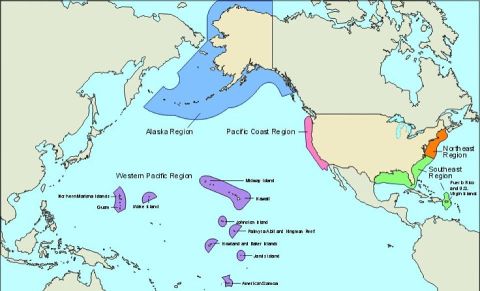
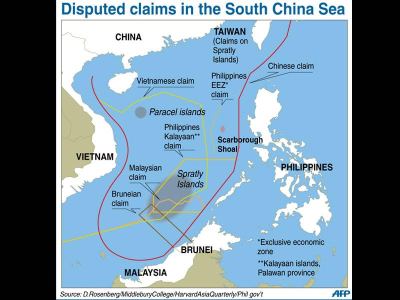
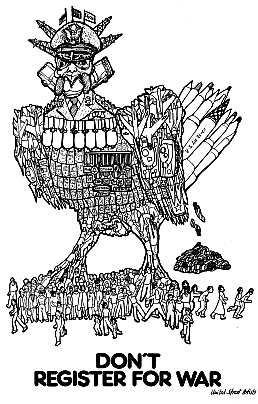 We won — and now, thirty years later, the government has finally admitted it.




 Aletho News

