As noted by numerous commentators on the Middle East, the situation in Yemen remains very grave. The country has been devastated by the armed conflict being waged between the Houthis and the troops of ousted President Mansour Hadi, which in turn are being heavily supported by the air forces of the so-called Arab coalition led by Saudi Arabia.
The ongoing airstrikes claim civilians lives, leave districts in ruin, and destroy the country’s infrastructure. Earlier this month at least three people were killed in an air raid on the hospital of Doctors Without Borders in the governorate of Saada. It’s been reported that hospitals are closing their doors, unable to operate under the current circumstances.
This is not the first medical facility to be bombed in Yemen – the so-called Arab coalition has even destroyed the Center for Care and Rehabilitation of the blind in the Yemeni capital Sana’a. Moreover, the international Human Rights Watch organization reported that the coalition was using cluster bombs to destroy certain facilities in Sana’a back in January.
One should note that massive civil unrest began in Yemen in 2011 as the direct result of so-called the Arab Spring, orchestrated by the US and its allies. In 2014, Shia tribesmen that are known today as the Houthis started fighting government forces and consequently managed to capture a significant part of the country due to the massive support that was shown for them by the Yemeni population. In March 2015, Saudi Arabia launched its first airstrikes against the Houthis, which were, according to various human rights organizations, badly coordinated and resulted in massive civilian casualties.
Concerned by the grave state of affairs in Yemen, the UN High Commissioner for Human Rights Zeid Ra’ad al Hussein announced at a meeting of the UN Security Council back in December that it is the so-called Arab coalition that is responsible for the absolute majority of attacks on residential areas and civilian targets in Yemen. According to Reuters, the UN High Commissioner announced that he:
“observed with extreme concern heavy shelling from the ground and air in areas of Yemen with a high concentration of civilians and the destruction of civilian infrastructure, such as hospitals and schools.”
It is curious to note that in pursuit of its criminal goals in Yemen, Saudi Arabia has been using weapons that were bought from the UK in 2012. Moreover, it keeps on restocking its supply of deadly British-made weapons. For this reason, at the end of last year, leading British diplomats and lawyers warned David Cameron that he was running the risk of facing an international tribunal for war crimes due to the fact that the weapons that his government supplies to Saudi Arabia are being extensively used against civilian targets in Yemen.
“Advisers to Philip Hammond, the Foreign Secretary, have stepped up legal warnings that the sale of specialist missiles to the Saudis, deployed throughout nine months of almost daily bombing raids in west Yemen against Houthi rebels, may breach international humanitarian law…
… thousands of Yemeni civilians have been killed, with schools, hospitals and non-military infrastructure hit. Fuel and food shortages, according to the United Nations, have brought near famine to many parts of the country.
Amnesty International, Human Rights Watch (HRW) and other NGOs, claim there is no doubt that weapons supplied by the UK and the United States have hit Yemeni civilian targets. One senior Foreign and Commonwealth Office (FCO) legal adviser told The Independent: “The Foreign Secretary has acknowledged that some weapons supplied by the UK have been used by the Saudis in Yemen. Are our reassurances correct – that such sales are within international arms treaty rules? The answer is, sadly, not at all clear.”
Yet, The Guardian notes that Saferworld and Amnesty released a legal opinion from Professor Philippe Sands QC and a number of other lawyers, according to which the sales of British arms to Saudi Arabia in the light of its military intervention and bombing of Yemen violate national, European and international laws. The lawyers are pointing out that in the period of 9 months before July 2015 the UK supplied 9 million pounds worth of rockets and bombs, while in the next three months this number hit a staggering one billion pounds. Additionally, there’s clear evidence that those weapons were used against hospitals, schools, markets, warehouses, ports, and camps for displaced persons, turning Yemen into a nightmare. The Saferworld human rights organization is convinced that there’s a direct link between the increase in sales of ammunition and bombings in Yemen.
Many British observers, including those from The Guardian, have been pointing out that days after David Cameron’s statements about his attempt to “initiate a political process in Yemen,” and remarks that “there could be no military solution in Yemen,” the data released by the government showed that UK officials approved the sale of a billion pounds worth of bombs to Saudi Arabia.
Under these circumstances the only natural question is: Will international human rights organizations and the international community as a whole, all those who failed to say a resounding “NO” to Western military interventions in Iraq, Syria, Libya, Afghanistan, that were only profitable for arms sellers, carry on watching silently the destruction of Yemen? How many Yemenis do we need to see die before we start solving conflicts within a political framework? How many lives should be spared? Do we ever bring to justice those responsible for such massacres? Or will we rather allow politicians, the likes of Cameron, to call for peace, while selling huge amounts of deadly weapons behind our backs with impunity?
Martin Berger is a Czech-based freelance journalist and analyst.
Almost two dozen people, including civilian rescuers and an ambulance driver from an MSF-affiliated hospital, have reportedly been killed after Saudi-led coalition planes carried out repeated airstrikes on the same target in Sa’ada province, Yemen.
Médecins Sans Frontières (MSF) confirmed the fatal air raids in Sa’ada, saying the “planes went back to bomb areas already hit.”
“An ambulance driver from an MSF hospital [was] killed,” the NGO wrote, explaining that the first responders at the scene had been trying to help those wounded in the first round of strikes.
The ambulance had just picked up the victims when a direct strike killed everyone inside it, said the director of the Jumhuriya Hospital in Sa’ada province, according to the New York Times.
Yemen’s Health Ministry has strongly condemned the coalition’s actions as a “heinous massacre” that first targeted a residential building in Sa’ada, Saba news agency reports, citing ministry spokesperson Dr. Nashwan Attab.
According to reports, at least 20 people were killed and another 35 wounded, in what the medics claim was a deliberate attack. Following the initial air raid in the Dhahyan district of Sa’ada, first responders rushed to the scene to care for the wounded. But the planes soon returned to strike again in an attempt to “completely eliminate the few remaining medical staff in the province,” Dr. Attab said.
WARNING! DISTURBING VIDEO, VIEWER DISCRETION IS ADVISED!
“There are still people under the rubble and it is difficult to get them as a result of targeting by Saudi aggression of paramedics and medical personnel in the region,” he added.
Earlier this week, MSF said that the Saudi coalition continues to engage civilian targets on the ground, in particular medical treatment facilities, noting that over 100 hospitals have witnessed attacks since the Saudi-led intervention began last March.
The constant bombing of health clinics in Yemen has created conditions in which locals fear for their lives and try to avoid hospitals at all costs, MSF said. The United Nations has criticized the Saudi-led bombing campaign in Yemen for the disproportionate number of civilian deaths and the destruction of infrastructure.
The UN estimates that the violence has resulted in a dramatic increase in civilian casualties, with more than 5,800 people killed in Yemen since March.
Andrey Lugovoy, accused of being involved in the death of former Russian FSB secret service agent Alexander Litvinenko by a recent UK inquiry, says the British intelligence tried recruiting him prior to Litvinenko’s death.
On Thursday, a UK inquiry into the case of Litvinenko found his former colleagues Dmitry Kovtun and Andrey Lugovoy deliberately poisoned Litvinenko with polonium-210.
Lugovoy said during the “Evening With Vladimir Solovyov” show on the Rossiya 1 TV channel that he was likely exposed to polonium simultaneously with Litvinenko.
Lugovoy also drew a connection between the death of Litvinenko and the British Secret Intelligence Service (MI6).
“Litvinenko died in November 2006, in March-April I was openly offered cooperation [by MI6] and in order to motivate me somehow, I was denied a visa, that was in May 2006. And after I called Litvinenko – I’ve said this multiple times – I was granted a visa all of a sudden. I have always connected these two events,” Lugovoy recalled.
He stressed that prior to May 2006, he had always received British visas without any problems.
“They [UK] always gave me visas, and did it with great pleasure before May 2006, when I was denied a visa after the British intelligence MI6 tried recruiting me.”
Lugovoy Plans to Stay in Russia After Release of UK Litvinenko Case Inquiry Report
Andrey Lugovoy, a former colleague of Alexander Litvinenko, does not plan to go to court to clear his name and does not intend to leave Russia in view of the recent developments in the Litvinenko case.
“I don’t care about anything they say,” Lugovoy said during the “Evening With Vladimir Solovyov” show on the Rossiya 1 TV channel.
Asked whether he plans to go to court, or clear his name somehow, Lugovoy said “I don’t intend to do that, because if I go into that, it means I will attach importance to what the British are doing, and they are trying to do everything so that we pay more attention to it [the UK inquiry], so that we react to it somehow.”
Lugovoy stressed that he has no plans of leaving Russia amid new claims related to Litvinenko’s death.
“I have not left Russia for a long time now and I do not plan to do it.”
Litvinenko moved from Russia to the United Kingdom in 2000. He died in 2006, three weeks after drinking tea with Kovtun and Lugovoy in London.
Lugovoy stated in the past that he had passed a polygraph test conducted by British experts, which proves that he was not guilty of murdering the former FSB agent.
The Russian Foreign Ministry claimed that the UK inquiry revealed on Thursday was politicized and lacked transparency and had an adverse effect on Moscow-London relations.
So now the Russian President is a cold-blooded assassin, as well as Europe’s “new Hitler”, the saboteur of civilian airliners, sponsor of drug abuse in sports and the friend of Middle East butcher-dictators.
Can the list of demonic epithets for the Russian leader get any longer? Just when you think it couldn’t, the good old British master of dirty tricks pulls out the “evil assassin” card.
Putin is fingered for ordering the murder of Alexander Litvinenko, a former member of Russia’s security service FSB.
The British so-called public inquiry published this week only said Putin “probably” ordered the killing of Litvinenko in London nearly 10 years ago. But the intended innuendo implanted in the public mind is plain: Putin is an assassin.
As the Russian Foreign Ministry said in derisory response to the British report, it is all so predictable. The politicization of a criminal matter is so flagrantly transparent, it is almost cringe-making in its clumsiness.The inquiry was ordered by the British government in October 2014, and is anything but “public”. It is based on secret evidence presented behind closed doors by anonymous British intelligence figures.
No verifiable proof worthy of a proper legal court is presented. It is based entirely on “circumstantial”, that is subjective, inference by a former British judge sitting in private, but who is then given ample media exposure to broadcast his “findings”. To call this a “judicial ruling” is a farce and an insult to the public’s intelligence.
Yet following the announcement of the inquiry’s “conclusions”, the British government immediately censured Russia over “a blatant and unacceptable breach of international law”. This is not only typical British arrogance, it is a dangerous, reckless misuse of a country’s dubious legal procedures to project an international political jurisdiction.
There is plenty of hard evidence for Russia or any other state to accuse the British prime minister of war crimes given his country’s illegal interference in Libya and Syria. But what gives Britain the right to accuse Russia’s head of state of murder, especially based on such flimsy “circumstantial” evidence? Britain’s disrespect for international norms in this regard is a new low in dirty tricks.
The corny Cold War stereotypes of “ex-KGB spies seeking revenge” is the first giveaway that this is a “psyops job”, in addition to the scripted political reaction by the British government. This latest smear fits consistently with the long-running running Western-led propaganda vendetta against Vladimir Putin.
As alluded to above, the smears include Putin wanting to militarily over-run Europe to revive the Soviet Empire, to the shooting down of the Malaysian MH17 airliner over eastern Ukraine in July 2014 with 298 dead, to Russia’s air force support for Syrian President Bashar Assad. Even though the latter instance is legitimate aid to an allied country which is actually being attacked by Western-backed terrorist mercenaries for regime change.Of the many absurdities in the British report on the death of Litvinenko, perhaps the main one is the alleged use of radioactive Polonium as a lethal poison. Two named former FSB agents are accused in the British report of having tipped the toxin into Litvinenko’s pot of tea during a private meeting at a posh London hotel. How very English. Death by a cup of tea!
The meeting did take place in November 2006. Three weeks later, Litvinenko died in a London hospital from internal organ failure apparently due to poisoning from the Polonium.But if, as the British claim, it was the work of cold-blooded, professional Russian assassins under orders from their bosses in the Kremlin the fatal contradiction in this claim is that the apparent murder was carried out with extraordinary amateurishness.
Traces of radioactive polonium were allegedly found in the London hotels where the accused Russian men stayed and even the planes they travelled on. If professional assassins were to use radioactive poison they would keep the lethal dose in a lead capsule to prevent emission of radioactivity. Our putative Russian assassins in London must have been throwing the deadly substance around themselves like aftershave, if we are to believe the findings of the British judge.
On the contrary, what careless radioactive traces in hotels, planes and elsewhere strongly suggest is that someone was laying an incriminating path to frame up the Russian men. And even at that we don’t really know if traces of radioactivity were actually found because, as noted the un-public nature of the British inquiry was based entirely on secret, unverifiable “evidence”.
This is the same kind of legal “standard” that the West uses to accuse Russian warplanes of bombing hospitals in Syria or Russian tanks rolling across Ukraine – with no verifiable evidence. It’s all down to politicized assertion and bombast.
Litvinenko defected from Russia to Britain in 2000 after he was sacked from the Russian FSB for unprofessional misconduct. He became a British citizen and worked for Britain’s state intelligence MI6. It sounds as if Litvinenko was an expedient opportunist, making nice money as an anti-Putin media writer, from which he was able to buy a fashionable house in London.
He was a valuable asset to the British owing to the very public allegations he made and they were able to broadcast for smearing Putin and other Russian government officials with corruption claims. As a former “Kremlin spy”, the propaganda value that the British state exploited through Litvinenko was considerable.But then came an even more valuable propaganda opportunity for the British – Litvinenko’s death.
Who is to say that his British handlers did not bump off the Russian “former spy” with their own supply of radioactive polonium? And given Litvinenko’s personal umbrage with the Russian government for being sacked from the FSB, he could be relied on by the British to give a plausible-sounding death bed statement imputing Putin for his demise.
The putative scenario of Litvinenko’s alleged assassination by Russian agents under the direction of the Kremlin was like an investment for the British. The propaganda dividends have paid out since his death in 2006 with recurring media stories impugning Vladimir Putin.
The timing of the latest big dividend – actually openly accusing Putin of ordering assassination – is another cause for suspicion that the British “public inquiry” is just the latest twist in a long-running smear campaign.
British media are calling for more sanctions to be imposed on the Russian government and for extradition warrants to be issued. However, British officials are quoted as saying that they are constrained because of the “sensitive timing” in relation to the peace talks due to take place in Geneva next week over Syria.
“We have other fish to fry with the Russians,” said one official in explaining why the British authorities may not take more legal action against Moscow over the Litvinenko case.
The “other fish to fry” is a veiled reference to extracting concessions from Russia over Syria where the British objective is regime change against President Assad.
This has all the hallmarks of a time-honored British psychological operation. Pile up the smears to then undermine the moral authority of your opponent in order that concessions can be extracted.
For the British, Alexander Litvinenko is definitely worth more dead than alive.
The implication of a report written for the US Congress is that the United States is a state sponsor of terrorism in Syria. At the same time, the report challenges widely held beliefs about the conflict, including the idea that the opposition has grass-roots support and that the conflict is a sectarian war between Syrian president Bashar al-Assad’s Alawite sect and the majority Sunnis.
Written in October 2015, the report was prepared by the Congressional Research Service, an arm of the United States Library of Congress. The Congressional Research Service provides policy and legal analysis to committees and members of the US House and Senate.
1. The Syrian conflict is between Islamists and secularists, not Sunnis and Alawites.
Media reports often emphasize the dominant Sunni character of the rebels who have taken up arms against the Syrian government, while depicting the Syrian government as Alawite-led. What is almost invariably overlooked is that the largest Sunni fighting force in Syria is the country’s army. Yes, the rebels are predominantly Sunni, but so too are the Syrian soldiers they’re fighting. As Congress’s researchers point out, “most rank and file military personnel have been drawn from the majority Sunni Arab population and other (non-Alawite) minority groups” (p. 7). Also: “Sunni conscripts continue to fight for Assad” (p. 12). Rather than being a battle between two different sects, the conflict is a struggle, on the one hand, between Sunni fundamentalists who want to impose their version of Islam on Syrian politics and society, and on the other hand, Syrians, including Sunnis, who embrace a vision of a secular, non-sectarian government.
2. The Syrian Opposition Coalition is dominated by Islamists and is allied with foreign enemies of Syria.
According to the report, the Syrian National Council (whose largest member is the Syrian Muslim Brotherhood) is the “largest constituent group” of the Syrian Opposition Coalition (SOC). The SOC is based “in Turkey and considered to be close to foreign opponents of Assad.” (p. 14) The Muslim Brotherhood seeks to base political rule on the Quran, which it sees as divinely inspired, rather than on a secular constitution.
3. “Political opposition coalitions appear to lack…grass roots support” (p. 27).
This is consistent with the findings of a public opinion poll taken last summer by a research firm that is working with the US and British governments. That poll found that Assad has more support than the forces arrayed against him.
Syrians rally for Assad, October, 2011.
The survey, conducted by ORB International, a company which specializes in public opinion research in fragile and conflict environments, found that 47 percent of Syrians believe that Assad has a positive influence in Syria, compared to only 35 percent for the Free Syrian Army and 26 percent for the SOC. [1]An in-country face-to-face ORB poll conducted in May 2014 arrived at similar conclusions. That poll found that more Syrians believed the Assad government best represented their interests and aspirations than believed the same about any of the opposition groups. [2]
According to the poll, only six percent believed that the “genuine” rebels represented their interests and aspirations, while the ‘National Coalition/transitional government,” a reference to the SOC, drew even less support, at only three percent.
Assad has repeatedly challenged the notion that he lacks popular support, pointing to his government surviving nearly five years of war against forces backed by the most powerful states on the planet. It’s impossible to realistically conceive of his government’s survival under these challenging circumstances, he argues, without its having the support of a sizeable part of its population. [3]
4. A moderate opposition doesn’t exist. The United States is trying to build one to act as its partner.
The report refers to US efforts to create partners in Syria, a euphemism for puppets who can be relied upon to promote US interests.
“Secretary of Defense Carter described the ‘best’ scenario for the Syrian people as one that would entail an agreed or managed removal of Assad and the coalescence of opposition forces with elements of the remaining Syrian state apparatus as U.S. partners ….” (emphasis added, pp. 15-16).
Also: The Pentagon “sought to…groom and support reliable leaders to serve as U.S partners…” (emphasis added, p. 23).
To create partners, the United States is engaged in the project of building a “moderate” opposition. According to the report:
“On June 18, Secretary of Defense Carter said, ‘…the best way for the Syrian people for this to go would be for him to remove himself from the scene and there to be created, difficult as it will be, a new government of Syria based on the moderate opposition that we have been trying to build…” (emphasis added, footnote, p. 16).
In the report summary the researchers write that US strategy seeks to avoid “inadvertently strengthening Assad, the Islamic State, or other anti-U.S. armed Islamist groups” (emphasis added.) What’s left unsaid is that armed Islamist groups that are not immediately anti-U.S. may be looked upon favorably by US strategy. However, that “political opposition coalitions…appear to lack grass-roots support,” and that Washington can’t rely on an already-formed moderate opposition but needs to build one, shows that the set of rebels on which the US can rely to act as US partners who will rule with elements of the existing Syrian state in a post-Assad Syria is virtually empty. The conclusion is substantiated by the failure of a now-abandoned Pentagon program to train and equip vetted rebel groups. Gen. Lloyd J. Austin III, the top American commander in the Middle East, told the Senate Armed Services Committee that despite the Pentagon spending $500 million training and equipping “moderate” rebels, only “four or five” were “in the fight.” [4] As the Wall Street Journal observed in late December, moderate rebels don’t exist. They’ve either been absorbed into Jabhat al-Nusra, Ahrah al-Sham and ISIS—the extremist terrorist groups which dominate the opposition—or were Islamist militants all along. [5]
5. The United States is arming sectarian terrorists indirectly and possibly directly and covertly.
The report points out that not only has the Pentagon openly trained and equipped rebels, but that the United States has also covertly armed them. According to the Congress’s researchers:
“Then Secretary of Defense Chuck Hagel said in a September 2013 hearing before the Senate Foreign Relations Committee that the Administration was taking steps to provide arms to some Syrian rebels under covert action authorities” (p. 23).
Also:
“Secretary Hagel said, ‘it was June of this year that the president made the decision to support lethal assistance to the opposition….we, the Department of Defense, have not been involved in this. This is, as you know, a covert action’” (footnote, p.23).
If the United States was prepared to overtly arm some rebel groups, why is it covertly arming others? A not unreasonable hypothesis is that it is arming some rebel groups covertly because they have been designated as terrorist organizations. To be sure, a number of press reports have revealed that rebels who have received training and arms from the United States are operating with terrorist groups in Syria. According to the Wall Street Journal, “insurgents who have been trained covertly by the Central Intelligence Agency…are enmeshed with or fighting alongside more hard-line Islamist groups, including the Nusra Front, Al Qaeda’s Syria affiliate” [6]. Another report from the same newspaper notes that “al-Nusra has fought alongside rebel units which the U.S. and its regional allies have backed” [7]. A third report refers to collaboration between “CIA-backed Free Syrian army factions and extremist elements such as Nusra Front and Ahrar al Sham” [8]. Let’s be clear. Anyone who is enmeshed with and fighting alongside Al-Qaeda is a terrorist.
According to Congress’s researchers, weapons the US furnished to selected groups have made their way to jihadists. “Some Syrian opposition groups that have received U.S. equipment and weaponry to date have surrendered or lost these items to other groups, including to extremist groups such as Jabhat al-Nusra” (p. 23).
When you consider that, as The Washington Post reported, “the CIA has trained and equipped nearly 10,000 fighters sent into Syria over the past several years” [9] and that, at best, there are 700, and more likely only 70 “moderate” rebels in Syria [10], then the bulk of the large rebel force the CIA has trained and equipped is very likely made up of Islamist extremists. Concealing this shameful reality from the US public is probably the principal reason the program is covert.
6. Washington wants to contain ISIS, but not eliminate it, in order to maintain military pressure on the Syrian government.
Based on the US coalition’s less than vigorous air campaign against ISIS, many observers have questioned whether the United States is at all serious about eliminating ISIS just yet, and is simply trying to contain it, to keep pressure on the Syrian government. For example, veteran Middle East correspondent Robert Fisk says: “I don’t think the U.S. is serious. Very occasionally, you can hear the rumble of American bombs. But they’re certainly not having much effect.” [11]
One day, soon after Russia began air operations in Syria, journalist Patrick Cockburn noted that “Russian planes carried out 71 sorties and 118 air strikes against Islamic fighters in Syria over the past two days compared to just one air strike by the US-led coalition – and this single strike, against a mortar position, was the first for four days.” [12] After ISIS captured Palmyra, and pushed into Aleppo, the US coalition did nothing to push back the ISIS advance, leading even rebels to question “the U.S.’s commitment to containing the group.” [13] Assad too has expressed scepticism about whether the United States is serious about destroying ISIS, pointing to the terrorist organization’s continued successes in Syria, despite the US coalition’s presumed war against it. “Since this coalition started to operate,” observed the Syrian president, “ISIS has been expanding. In other words, the coalition has failed and it has no real impact on the ground.” [14]
A tepid approach to fighting ISIS in Syria would fit with US president Barack Obama’s stated goal of degrading the Al-Qaeda offspring organization. Destroying it may be an ultimate goal, to be achieved after ISIS has served the purpose of weakening the Syrian government. But for now, the United States appears to be willing to allow ISIS to continue to make gains in Syria. The Congressional Research Service report concurs with this view: It concludes that “U.S. officials may be concerned that a more aggressive campaign against the Islamic State may take military pressure off the” Syrian government (p. 19).
By contrast, Moscow has pursued a more vigorous war against ISIS, and for an obvious reason. Unlike Washington, it seeks to prop up its Syrian ally, not give ISIS room to weaken it. It should be additionally noted that Russia’s military operations in Syria are legal, carried out with the permission of the Syrian government. By contrast, the US coalition has brazenly flouted international law to enter Syrian airspace without Damascus’s assent. It has, in effect, undertaken an illegal invasion and committed a crime of aggression, compounded by its training and arming of terrorists.
Conclusion
The report says that in the absence of grass-roots support for political opposition coalitions in Syria, the United States is relying on a number of tactics to pressure the current government in Syria to step down, including:
• Keeping ISIS alive as a tool to sustain military pressure on Damascus.
• Arming jihadist groups indirectly and (we can assume) directly (albeit covertly) to pressure Assad.
• Seeking to create a moderate opposition that will act as a US partner.
• Trying to co-opt parts of the existing Syrian state to take a partnership role in governing a post-Assad Syria.
The implication of points 1 and 2 is that the United States—as the trainer of, and supplier of arms, to rebels who are enmeshed with and fighting alongside Al-Qaeda in Syria, and in keeping ISIS alive, in order to use these terrorist organizations to achieve its political goal of installing a US-partner government in Syria—is a state sponsor of terrorism.
3. “President al-Assad: Russia’s policy towards Syria is based on values and interests, the West is not serious in fighting terrorists,” Syrian Arab News Agency, December 11, 2015, http://sana.sy/en/?p=63857
4. Philip Shishkin, “U.S. weighs talks with Russia on military activity in Syria,” The Wall Street Journal, September 16, 2015.
5. Stuart Rollo,“Turkey’s dangerous game in Syria,” The Wall Street Journal, December 28, 2015.
6. Anne Barnard and Michael R. Gordon, “Goals diverge and perils remain as U.S. and Turkey take on ISIS,” The New York Times, July 27, 2015.
7. Farnaz Fassihi, “U.N. Security Council unanimously votes to adopt France’s counterterrorism resolution,” The Wall Street Journal, November 20, 2015.
8. Sam Dagher, “Syria’s Bashar al-Assad Tries to Force the West to Choose Between Regime, Islamic State,” The Wall Street Journal, October 9, 2015.
9. Greg Miller and Karen DeYoung, “Secret CIA effort in Syria faces large funding cut,” The Washington Post, June 12, 2015.
10. Robert Fisk, “Is David Cameron planning to include al-Qaeda’s Jabhat al-Nusra in his group of 70,000 moderates?”, The Independent, December 1, 2015.
11. Thomas Walkom, “Journalist Robert Fisk explains why Canada should abandon ISIS war,” The Toronto Star, September 25, 2015.
12. Patrick Cockburn, “Russia in Syria: Air strikes pose twin threat to Turkey by keeping Assad in power and strengthening Kurdish threat,” The Independent, October 28, 2015.
13. Raja Abdulrahim, “Islamic State advances further into Syria’s Aleppo province,” The Wall Street Journal, June 1, 2015.
14. “President Assad’s interview with Russian media outlets, Syrian Arab News Agency, September 16, 2015 http://sana.sy/en/?p=54857
Almost 13 years on from the so-called ‘Operation Iraqi Freedom’, a new UN report has documented the continuing ‘staggering’ violence suffered by civilians in Iraq.
According to the report, at least 18,802 civilians were killed and another 36,245 wounded between January 2014 and October 2015, while another 3.2 million people were internally displaced due to violence.
The UN Commissioner for Human Rights has said the death toll in Iraq may even be considerably higher.
It is hard to get one’s head round the suffering the people of Iraq have endured since Bush and Blair’s illegal invasion of 2003. Hundreds of thousands of innocent civilians have been killed in the carnage that engulfed the country after Saddam Hussein was toppled.
“We’ve moved on from the Iraq war, but Iraqis don’t have that choice,” wrote the great John Pilger in 2013.
Yet the very obvious link between the invasion of 2003 and the ongoing violence in Iraq today is something we’re not really supposed to mention.
The reality is that Iraq did not see hundreds of thousands of people killed in the years before 2003, but it did in the years following. So it does seem quite reasonable to infer that something quite important happened in 2003 which led to the huge increase in violence. And that ‘something’ is unlikely to have been Arsenal’s 1-0 FA Cup Final win against Southampton.
John Pilger writes how three years before the invasion of Iraq he drove the length of the country ‘without fear’. “On the way I met people proud, above all, to be Iraqis, the heirs of a civilization that seemed, for them, a presence. Bush and Blair blew all this to bits. Iraq is now a nest of jihadism. Al-Qaeda – like Pol Pot’s “jihadists” – seized the opportunity provided by the onslaught of ‘Shock and Awe’ and the civil war that followed.”
It’s not only in Iraq that ‘staggering’ violence has been unleashed by the US and its allies’ regime change ops.
Libya six years ago enjoyed the highest standard of living in Africa. Education and medical treatment were free for all citizens. Electricity was free too. A bursary, worth $5,000 was given to all mums with new born babies. It was also a very safe country for tourists to visit. In 2005, with UN sanctions lifted, it returned to cruise ship itineraries.
In 2007, it received one million ‘same-day’ visitors.
In 2010, cruises along the coast of Libya were listed in the Daily Telegraph’s ‘Six of the Best’ Exotic Cruises feature.
A year later though, the NATO bombs started to fall in pursuit of ‘regime change’ and Libya’s days as a safe place to live, work and visit were over. Muammar Gaddafi’s warning that many of the so-called anti-government rebels were extremists linked to al-Qaeda was dismissed as the ravings of a madman.
But it wasn’t the ’mad’ Gaddafi who was telling lies in 2011, but the regime changers in suits.
Like Iraq, Libya post-regime change, is a country where violence has become a part of daily life.
Earlier this month, around 60 people were killed and over 200 injured in a bomb attack on a police training centre in Zliten. In November, UNICEF expressed concern over the impact that armed-conflict related violence was having on Libyan children- saying that 270,000 children in Benghazi alone needed some form of support.
The Foreign and Commonwealth Office (FCO) now advises British citizens against all travel to the country which was listed as one of the ‘Six of the Best’ places to cruise just six years ago.
“The situation throughout the country remains dangerous and unpredictable,” the FCO says. “Fighting continues in many parts of Libya. It can be unclear in some areas which faction has control….. There is a high threat from terrorism. There are continued attacks across Libya including in major cities, leaving significant numbers of people dead or injured. There is a high threat of kidnapping throughout Libya. There have been a number of kidnappings, including of British nationals….”
What a truly great job of ‘liberating’ Libya David Cameron and William Hague did!
Syria was also a safe place to live, work and visit before the West’s regime changers got going.
“Despite being depicted in the Western media as a land full of terrorists and similar nasties, Syria is really a safe country to travel in. It is quite safe to walk around at any time of the day or night, which is more than can be said for most Western countries”- these words come not from a SANA press release – but the Lonely Planet ‘travel survival kit’ to Jordan and Syria of 1987. As for being worried about crime, the guide told us “Theft, or more precisely the lack of it, has got to be one of the most refreshing things about travelling in Syria… Your bags will be quite safe left unattended virtually everywhere.”
I travelled around Syria in 1999 and never once felt threatened or in danger. I met some incredibly kind and hospitable people – but no terrorists. As for the lack of theft, I left a bag full of valuables on a table in a canteen at Tishreen University in Latakia, and as my friends assured me, it was still there, with all its contents intact, when I came back.
In 2006, Mary Wakefield, deputy editor of the Spectator magazine, travelled to Syria and like so many others, was pleasantly surprised with what she found. “Assad’s Ba’ath party is a long way from Saddam’s. It has lifted the ban on internet access and mobile phones, and ordinary Syrians seem free not just from fear, but from regular Western misanthropy as well,” she noted.
“Throughout Syria, passers-by paused to say ‘welcome’ and invite me in for mint tea – no furtive looks, no soviet-style reluctance to be singled out.”
A fascinating glimpse of everyday life in pre-war Syria was provided by the BBC/Open University series ‘Syrian School,’ which screened in 2010. “Syria is a country where, from poetry to politics, you can have an intellectual debate. You can re-imagine the world there in a way that we seem to have lost in the West, where even the credit crunch hasn’t dented the orthodoxy of Liberal Capitalism, where “The X-Factor” seems now to have become the cultural pinnacle,” wrote the BBC‘s Max Baring.
With its secular government Syria – like Iraq and Libya – was a bulwark against al-Qaeda and similar terrorist groups. In 2006 the Syrian authorities foiled an attack by Islamist militants on the US Embassy in Damascus.
The US expressed gratitude, but we know from WikiLeaks that secret plans for regime change in Syria were already being hatched.
Under the guise of the ’Arab Spring’, regime change in Damascus would be pursued by funding and arming violent rebels hell-bent on overthrowing President Assad.
The Syrian government did put forward a new constitution in 2012 which ended the Baath party’s forty year monopoly on political rule and genuine moderates embraced the political reform process. But the regime changers continued to pour petrol onto the fire. In 2013, Britain and France pushed other EU members to lift the arms embargo on the so-called Syrian ’rebels‘.
In 2015 the UN estimated that 250,000 people had died in Syria’s war – with more than 11 million people forced from their homes.
Today, travelling around Syria simply isn’t an option for Western tourists. The country where you could walk around safely ‘at any time of the day or night’, is now far too dangerous.
The FCO advises against ‘all travel’ to the country.
Meanwhile the Department of State “continues to warn US citizens against all travel to Syria and strongly recommends that US citizens remaining in Syria depart immediately.”
Syria, like Iraq and Libya, has been engulfed by ‘staggering’ violence directly attributable to the actions of the Western regime changers, and their regional allies.
If these countries had been left alone, it is inconceivable that violence of the scale we have witnessed would have occurred. The governments might have been authoritarian ones which were intolerant of dissent, but the reality is that daily life for the majority of the citizens in the countries concerned was better than it is today. Acknowledging that doesn’t make one an ‘apologist for dictatorship’- just someone who doesn’t try to spin chaos and carnage as ‘success’. In any case, there’s no doubt that some of the crimes of the governments that were targeted for ‘regime change’ were exaggerated, or in some cases even made up by the neocon war lobby. Amnesty International and other human rights organizations found no evidence to back up the NATO claims that Gaddafi ordered his forces to commit mass rapes in 2011.
Saddam’s notorious ’people shredder’ was never found and of course those WMDs which we were told could be assembled in 45 minutes didn’t show up either.
And here is Amnesty’s annual report on Syria from 2010.
It’s hardly impressive, but it’s interesting to compare it to the Amnesty report from the same year on Saudi Arabia, a strong western ally.
If you supported ‘regime change’ in Syria on human rights grounds then logically you would have to support the same in Saudi Arabia, whose record on human rights was worse. But the Western regime changers and ’democracy promoters’ weren’t calling for the toppling of the government in Riyadh, showing the hypocrisy of their position.
The foundation of Islamic State (IS, formerly ISIS/ISIL), which we’re now told is the biggest threat to Western civilization, was a direct consequence of the invasion of Iraq, and its growth was a direct result of the regime change plans for Syria.
In the words of John Pilger: “ISIS is the progeny of those in Washington and London who, in destroying Iraq as both a state and a society, conspired to commit an epic crime against humanity.”
WikiLeaks revealed how in 2010, the US rejected an offer from the secular Syrian government to work together against extremist groups like IS.
Far from wanting to defeat IS, the regime changers welcomed its rise.
In August 2012, a declassified secret US intelligence report discussed the “possibility of establishing a declared or undeclared Salafist principality in eastern Syria”, saying that “this is exactly what the supporting powers to the opposition want, in order to isolate the Syrian regime.”
The refugee crisis which hit Europe in 2015 was directly attributable to regime change ops too. If Iraq, Libya and Syria hadn’t been targeted, we’d still be able to visit those countries safely as tourists. Most important of all, the people in those countries would still be able to go about their everyday lives without the fear of being blown to kingdom come, or beheaded, for having the ‘wrong’ faith.
All things considered, the regime changers have an awful lot to answer for. So it’s hardly surprising, given the blood that’s on their hands, that the warmongers try and maintain the deceit that the ’staggering’ violence in Iraq, Libya and Syria is nothing to do with them.
Neil Clark tweets on politics and world affairs @NeilClark66
Why is there still the word “probably” in the report of the UK public inquiry into the death of former Russian FSB officer Aleksandr Litvinenko? Was the inquiry really public? Are we seeing an increased strain in UK-Russia relations? RT asked experts.
The UK has conducted a public inquiry into the death of the former Russian FSB officer Aleksandr Litvinenko. According to the report, Vladimir Putin and his administration ‘probably’ had motive to murder Litvinenko. British judge Robert Owen, who was leading the inquiry, claimed the poisoning of Litvinenko by former KGB members Andrey Lugovoy and Dmitry Kovtun was a part of the operation of the Federal Security Service (FSB.) Litvinenko died in a London hospital from polonium poisoning in 2006.
“This man was killed, was murdered in London almost 10 years ago. This latest report was set up in July 2014 – interestingly, just a couple of weeks after the MH17 disaster. So it was set up in this particular climate, this anti-Russia climate, and it has gone on now for 18 months. And what have they come up with – they’ve come up with a verdict that ‘probably’ this was the work of the Kremlin. “Probably” – is not evidence,” Journalist and broadcaster Neil Clark told RT.
“What is lacking – is any hard evidence, this is just conjecture; this is just a theory put forward; one of the theories is that the Kremlin was behind this. But there are other theories too to explain why this man may have been murdered,” he said. “We’ve got to look at the context of this. The fact was this man died in 2006, and we’ve got an inquiry set up in 2014 in the very month when the West was taking very anti-Russian line.”
“… If to look at the bigger picture, in 2006 relations between Britain and Russia were improving. So what logic would there have been in the Kremlin ordering this murder in a very public place in London? It doesn’t really make sense, does it? If you think about it from the Russian point of view, this man is a minor figure; he wasn’t as if he was going to stand for president and pose a real threat to Putin. The risk would have been very high and that is what makes me skeptical of the fact that the Kremlin was behind this, and there are other theories to explain this man’s murder,” Clark added.
Litvinenko Inquiry: ‘story confounded by misleading information from beginning’
The UK report on the causes of Litvinenko’s death doesn’t have any supportive evidence, and is partly based on statements fabricated by figures like Berezovsky, said William Dunkerley, author of “The Phony Murder.”
RT:Is the public inquiry really that public? And how different is it from a regular trial?
William Dunkerley: First of all it is not a trail at all, this isn’t a judicial procedure, it is a public inquiry. The term ‘public inquiry’ is actually a misnomer, because the rules in the UK allow a public inquiry to be conducted behind closed doors.
RT:The coroner’s inquest into Litvinenko’s death was suspended in July 2014 to start a public inquiry shortly after. What can you say about this timing?
WD: The timing is interesting, the coroner’s inquest sort of came to an end when the Home Secretary told the coroner to stop conducting an illicit criminal investigation. The coroner is supposed to concentrate on judging the cause of death. Sir Robert [Owen] was not doing that, he wasn’t doing his job. The Home Secretary finally reined him in, told them to concentrate on his statutory duties and asked him to not go off on a witch-hunt for Russian culpability in the case.
Then, things changed when Prime Minister [David] Cameron got involved. He put the whole issue back on the table, and turned [Sir Robert] Owen, now chairman of the public inquiry, loose on his search for Russian state culpability. And this coincidentally happened on the day that the EU announced additional sanctions against Russia, in a sort of part of the sanctions frenzy that the public inquiry was opened.
RT:It’s been almost a decade since he died, why is the UK launching an investigation now?
WD: The story was really confounded by misleading information right from the beginning. One of Putin’s political adversaries Boris Berezovsky, who was a fugitive oligarch hanging out or hiding out in London, made a lot of fabricated statements about the Litvinenko case, that incriminated the Russian state and in particular President Putin.
RT:Isn’t the fact that that the inquiry was held behind the closed doors make the investigation more complicated?
WD: Yes, it is a complication in the investigation that the public inquiry was able to hold hearings behind closed doors. Most of the media reports gave the impression that the public inquiries going to add transparency to the case, but actually the opposite was true.
RT:Are we seeing the increase of strain in UK-Russia relations?
WD: Well, the UK- Russia relations have sort of been up and down throughout the course of this whole thing. At one point the Berezovsky people, Mrs. Litvinenko and others were critical of the UK for not coming to a conclusion about this that would agree with their version of the case. They said that the UK was avoiding doing that, because it didn’t want to offend Russia, in order to preserve relations between the two countries. Now some people theorize that since the UK- Russia relationship is so bad that it doesn’t matter if there is offence given by the report from the public inquiry…
…. People are conditioned to believe in the story that has been going on in the news. It is not based on facts and there have not been supportive evidence, but people have been exposed to this story for a long, long time now. The truth that I’ve found in my research is counterintuitive to people who have been following all of the Western news reports.
Martin McCauley, former senior lecturer at the School of Slavonic and East European Studies at the University of London on latest Litvinenko inquiry: “ All they can do, as they said, “we have a prima facie case which proves that Lugovoy and Kovtun were acting as part of the FSB,” which goes right up to Nikolai Patrushev. But prima facie only means on the face of it. Therefore, the case is not proven. In other words it is a probability, and in an English court it wouldn’t stand up, because you couldn’t convict Lugovoy and Kovtun on the evidence, which has been presented in the report… They didn’t cross-examine or interview Lugovoy or Kovtun…”
A curious reality about Official Washington is that to have “credibility” you must accept the dominant “group thinks” whether they have any truth to them or not, a rule that applies to both the mainstream news media and the political world, even to people who deviate from the pack on other topics.
For instance, Sen. Bernie Sanders may proudly declare himself a “democratic socialist” – far outside the acceptable Washington norm – but he will still echo the typical propaganda about Syria, Russia, Iran and other “designated villains.” Like other progressives who spend years in Washington, he gets what you might called “Senate-ized,” adopting that institution’s conventional wisdom about “enemies” even if he may differ on whether to bomb them or not.
That pattern goes in spades for former Secretary of State Hillary Clinton and other consciously “centrist” politicians as well as media stars, like NBC’s Andrea Mitchell and Lester Holt, who were the moderators of Sunday’s Democratic presidential debate. They know what they know based on what “everybody who’s important” says, regardless of the evidence or lack thereof.
So, you had Mitchell and Holt framing questions based on Official Washington’s “group thinks” – and Sanders and Clinton responding accordingly.
Regarding Iran, Sanders may have gone as far as would be considered safe in this political environment, welcoming the implementation of the agreement to restrain Iran’s nuclear program but accepting the “group think” about Iran’s “terrorism” and hesitant to call for resumption of diplomatic relations.
“Understanding that Iran’s behavior in so many ways is something that we disagree with; their support of terrorism, the anti-American rhetoric that we’re hearing from their leadership is something that is not acceptable,” Sanders said. “Can I tell you that we should open an embassy in Tehran tomorrow? No, I don’t think we should.”
Blaming Iran
In her response, Clinton settled safely behind the Israeli-preferred position – to lambaste Iran for supposedly fomenting the trouble in the Middle East, though more objective observers might say that the U.S. government and its “allies” – including Israel, Saudi Arabia and Turkey – have wreaked much more regional havoc than Iran has.
“We have to go after them [the Iranians] on a lot of their other bad behavior in the region which is causing enormous problems in Syria, Yemen, Iraq and elsewhere,” Clinton said.
Yet, how exactly Iran is responsible for “enormous problems” across the region doesn’t get explained. Everybody just “knows” it to be true, since the claim is asserted by Israel’s right-wing government and repeated by U.S. pols and pundits endlessly.
Yet, in Iraq, the chaos was not caused by Iran, but by the U.S. government’s invasion in 2003, which then-Sen. Clinton supported (while Sen. Sanders opposed it). In Yemen, it is the Saudis and their Sunni coalition that has created a humanitarian disaster by bombing the impoverished country after wildly exaggerating Iran’s support for Houthi rebels.
In Syria, the core reason for the bloodshed is not Iran, but decisions of the Bush-43 administration last decade and the Obama administration this decade to seek another “regime change,” ousting President Bashar al-Assad.
Supported by Turkey, Saudi Arabia and other Sunni powers, this U.S.-backed “covert” intervention instigated both political unrest and terrorist violence inside Syria, including arming jihadist forces such as Al Qaeda’s Nusra Front and its close ally, Ahrar al-Sham and – to a lesser degree – Al Qaeda’s spinoff, the Islamic State. [See Consortiumnews.com’s “Hidden Origins of Syria’s Civil War.“]
The desire of these Sunni powers — along with Israel and America’s neoconservatives — was to shatter the so-called “Shiite crescent” that they saw reaching from Iran through Iraq and Syria to Lebanon. Since Assad is an Alawite, a branch of Shiite Islam, he had to be removed even though he was regarded as the principal protector of Syria’s Christian, Shiite and Alawite minorities. [See Consortiumnews.com’s “Did Money Seal Saudi-Israeli Alliance?’]
However, while Israel and the Sunni powers get a pass for their role in the carnage, Iran is blamed for its assistance to the Syrian military in battling these jihadist groups. Official Washington’s version of this tragedy is that the culprits are Assad, the Iranians and now the Russians, who also intervened to help the Syrian government resist the jihadists, both the Islamic State and Al Qaeda’s various friends and associates. [See Consortiumnews.com’s “Climbing into Bed with Al Qaeda.”]
Blaming Assad
Official Washington also accepts as undeniably true that Assad is responsible for all 250,000 deaths in the Syrian civil war – even those inflicted by the Sunni jihadists against the Syrian military and Syrian civilians – a logic that would have accused President Abraham Lincoln of slaughtering all 750,000 or so people – North and South – who died in the U.S. Civil War.
The “group think” also holds that Assad was behind the sarin gas attack near Damascus on Aug. 21, 2013, despite growing evidence that it was a jihadist group, possibly with the help of Turkish intelligence, that staged the outrage as a provocation to draw the U.S. military into the conflict against Syria’s military by creating the appearance that Assad had crossed Obama’s “red line” on using chemical weapons.
Mitchell cited Assad’s presumed guilt in the sarin attack in asking Clinton: “Should the President have stuck to his red line once he drew it?”
Trying to defend President Obama in South Carolina where he is popular especially with the black community, Clinton dodged the implicit criticism of Obama but accepted Mitchell’s premise.
“I know from my own experience as Secretary of State that we were deeply worried about Assad’s forces using chemical weapons because it would have had not only a horrific effect on people in Syria, but it could very well have affected the surrounding states, Jordan, Israel, Lebanon, Turkey. …
“If there is any blame to be spread around, it starts with the prime minister of Iraq, who sectarianized his military, setting Shia against Sunni. It is amplified by Assad, who has waged one of the bloodiest, most terrible attacks on his own people: 250,000-plus dead, millions fleeing. Causing this vacuum that has been filled unfortunately, by terrorist groups, including ISIS.”
Clinton’s account – which ignores the central role that the U.S. invasion of Iraq and outside support for the jihadists in Syria played in creating ISIS – represents a thoroughly twisted account of how the Mideast crisis evolved, But Sanders seconded Clinton’s recitation of the “group think” on Syria, saying:
“I agree with most of what she said. … And we all know, no argument, the Secretary is absolutely right, Assad is a butcher of his own people, man using chemical weapons against his own people. This is beyond disgusting. But I think in terms of our priorities in the region, our first priority must be the destruction of ISIS. Our second priority must be getting rid of Assad, through some political settlement, working with Iran, working with Russia.” [See Consortiumnews.com’s “A Blind Eye Toward Turkey’s Crimes.”]
Sanders also repeated his talking point that Saudi Arabia and Qatar must “start putting some skin in the game” – ignoring the fact that the Saudis and Qataris have been principal supporters of the Sunni jihadists inflicting much of the carnage in Syria. Those two rich countries have put plenty of “skin in the game” except it comes in the slaughter of Syrian Christians, Alawites, Shiites and other religious minorities.
Blaming Russia
NBC anchor Lester Holt then recited the “group think” about “Russian aggression” in Ukraine – ignoring the U.S. role in instigating the Feb. 22, 2014 coup that overthrew elected President Viktor Yanukovych. Holt also asserted Moscow’s guilt in the July 17, 2014 shoot-down of Malaysia Airlines Flight 17 despite the lack of any solid evidence to support that claim.
Holt asked: “Secretary Clinton, you famously handed Russia’s foreign minister a reset button in 2009. Since then, Russia has annexed Crimea, fomented a war in Ukraine, provided weapons that downed an airliner and launched operations, as we just did discuss, to support Assad in Syria. As president, would you hand Vladimir Putin a reset button?”
While noting some positive achievements from the Russian “reset” such as a new nuclear weapons treaty, help resupplying U.S. troops in Afghanistan and assistance in the nuclear deal with Iran, Clinton quickly returned to Official Washington’s bash-Putin imperative:
“When Putin came back in the fall of 2011, it was very clear he came back with a mission. And I began speaking out as soon as that happened because there were some fraudulent elections held, and Russians poured out into the streets to demand their freedom, and he cracked down. And in fact, accused me of fomenting it. So we now know that he has a mixed record to say the least and we have to figure out how to deal with him. …
“And I know that he’s someone that you have to continuingly stand up to because, like many bullies, he is somebody who will take as much as he possibly can unless you do. And we need to get the Europeans to be more willing to stand up, I was pleased they put sanctions on after Crimea and eastern Ukraine and the downing of the airliner, but we’ve got to be more united in preventing Putin from taking a more aggressive stance in Europe and the Middle East.”
In such situations, with millions of Americans watching, no one in Official Washington would think to challenge the premises behind these “group thinks,” not even Bernie Sanders. No one would note that the U.S. government hasn’t provided a single verifiable fact to support its claims blaming Assad for the sarin attack or Putin for the plane shoot-down. No one would dare question the absurdity of blaming Assad for every death in Syria’s civil war or Putin for all the tensions in Ukraine. [See, for instance, Consortiumnews.com’s “MH-17’s Unnecessary Mystery.”]
Those dubious “group thinks” are simply accepted as true regardless of the absence of evidence or the presence of significant counter-evidence.
The two possibilities for such behavior are both scary: either these people, including prospective presidents, believe the propaganda or that they are so cynical and cowardly that they won’t demand proof of serious charges that could lead the United States and the world into more war and devastation.
Investigative reporter Robert Parry broke many of the Iran-Contra stories for The Associated Press and Newsweek in the 1980s. You can buy his latest book, America’s Stolen Narrative, either in print here or as an e-book (from Amazon and barnesandnoble.com).
The American and British governments are launching yet another media campaign to demonize Russia, with tall claims that the Kremlin is infiltrating European political parties and news media. The dastardly Russian aim, we are told, is to destroy the European Union.
We’ve already seen versions of this scare tactic with regard to Ukraine and “Putin the new Hitler”. But what this yawn-inducing exercise illustrates is that the old former spell over the Western public held by their rulers no longer works. The opiate of Western propaganda has expired.
Never mind Russia. The EU has no-one else to blame for its present stresses and strains but itself, owing to its craven subservience to Washington’s reckless policies.
Twenty-five years after the end of the Cold War and the dissolution of the Soviet Union, Washington and its trusty sidekick in London are desperately seeking to turn back the clock to the “good old days” when they could control their public through scare stories.
Recall those hoary old bogeyman themes of “Reds under the bed”, the “Red menace”, “Evil Empire”, and so on, when the Western authorities mobilized their populations out of fear and trepidation that “the Russians are coming”.
Looking back now, it seems amazing how this Western brainwashing managed to get away with such scare tactics. And to a large degree it worked back then. It allowed the US and its NATO allies to build up a huge arsenal of nuclear weapons that could annihilate the planet many times over; it permitted the US in particular to militarily interfere in dozens of countries all over the world, subvert their governments and implant brutal dictatorships — all on the pretext of defending the “free world” against “evil Russians.”
Last week, we got a reprise of the Cold War brainwashing formula. Britain’s Daily Telegraph, a notorious purveyor of psychological warfare, ran a report which cast Russia and President Vladimir Putin as a malign specter trying to break up European unity by “funding political parties” and “Moscow-backed destabilization”.
The newspaper, mockingly known as the “Torygraph” because of its deep links with Britain’s rightwing political establishment, quoted anonymous British government officials as saying:
“It really is a new Cold War out there. Right across the EU we are seeing alarming evidence of Russian efforts to unpick the fabric of European unity on a whole range of vital strategic issues.”
It was also reported in the same article that the American Congress has ordered James Clapper, the US National Intelligence Director, to “conduct a major review into Russian clandestine funding of European parties over the last decade.”
European political parties suspected of alleged Russian manipulation include Britain’s Labour party under Jeremy Corbyn, France’s National Front led by Marine Le Pen, as well as others in Netherlands, Hungary, Italy, Austria and Greece, according to the Daily Telegraph.
Not one scrap of evidence was presented to substantiate the story of alleged Russian conspiracy to destabilize European politics. Typical of old Western Cold War propaganda dressed up as “news” the accusations leveled against the Russian government relied on innuendo, prejudice and demonization. Russia and its leader Vladimir Putin are “malign” because, well, er, we say they are “malign”.
What’s really going on here is that the European Union is indeed straining at the seams because massive numbers of ordinary citizens have become so disillusioned with the undemocratic monstrosity. That disaffection with the EU applies to voters of both rightwing and leftwing parties.
Economic policies of unrelenting austerity, rising unemployment and poverty, and draconian cutbacks in public services — while banks, corporate profits and a rich minority keep getting richer and richer — has alienated vast swathes of the EU’s 500 million population.
The EU’s political leadership, whether called Conservative, Liberal, Socialist or whatever, has shown itself to be impotent to create more democratic policies and meet the needs of the public. In the eyes of many Europeans, the established political parties are all the same, all slavishly following a form of capitalist welfare for the already super-rich.
A big part of the problem is that the EU has shown no independence from Washington. The European governments under the harness of the American-led NATO military alliance have blindly joined the US in its disastrous, illegal wars for regime change in Afghanistan, Iraq, Libya and Syria. Those wars have in turn rebounded to bequeath Europe with its worst refugee crisis since the Second World War. Compounding the hardship is the totally unnecessary and futile standoff between Russia and Europe over the Ukraine crisis. European farmers, businesses and workforces are suffering on account of Washington and Brussels’ policy to have destabilized Ukraine in order to isolate Russia for some geopolitical agenda. On this score, the European governments are especially execrable, since it should be clear that Washington wants to isolate Russia for its own self-interest of displacing Russia as a major energy supplier to the continent. Talk about shooting yourself in the foot.
Given all these strands of trouble it is no wonder that European citizens are discontent with their so-called political leadership. The popular contempt for Brussels has grown to record levels, and rightly so.
Europe’s pathetically servile deference to Washington’s economic and foreign policies is manifesting in forms of protest and dissent towards the entire EU project. The rise of Poland’s rightwing, nationalist ruling party is another sign of the times.
But rather than facing the music for the widespread discontent across Europe, what Washington and its pro-Atlanticist allies like Britain are trying to do is make Russia the scapegoat.
The irony is that Washington and London are seeking to blame the woes and growing disunity in Europe on Russia. When it is Washington and London who are the main reasons for why Europe appears to be coming apart at the seams.
To that end, the US and Britain are re-launching the old Cold War epithets to demonize Russia as a way to distract from their own malign and destructive influence on the rest of Europe.
Decades ago the anti-Russian vilification may have worked on the public. Especially when Western news organizations and their CIA, MI6-infiltrated “journalists” enjoyed an effective monopoly over public opinion. Those days are over. The Western public are no longer under the sway of scary stories like little children. There are many alternative information sources out there for them to avail of in order to obtain a more accurate picture.And that accurate picture of European problems does not fit with alleged Russian malfeasance. Rather, the malfeasance is plentifully ascribed to Washington and its lackey European governments.
The attempted rewind of the “red scare” by Washington and London can be easily dismissed for sure. But the interesting thing is that it betrays a deep sign of how these two actors have run out of propaganda ideas with which to distract increasingly restless and angry Western populations.
The people want real solutions to mounting social and economic problems, not stupid scare stories that expired decades ago. The more that the Western public is insulted by such nonsense the more contempt they have for their rulers. The Western capitalist powers, bankrupt and impotent, are at a dead-end. Bring it on.
In one of his most controversial remarks yet, the Israeli Defense Minister Moshe Ya’alon said Tuesday he would rather see Syria falling in the hands of the Islamic State group than Iran and its allies defeating the group, ignoring the plight of the Syrian people who live and suffer under the Islamic State group.
“In Syria, if the choice is between Iran and the Islamic State [group], I choose the Islamic State. They don’t have the capabilities that Iran has,” Ya’alon told the audience at a conference organized by the Institute of National Security Studies in Tel Aviv. “Our greatest enemy is the Iranian regime that has declared war on us,” the defense minister said of the threats facing Israel.
The comments come three days after the Iran nuclear deal between Tehran and six world powers came into effect. Israel remains one of the few opponents to the deal. According to the Israeli minister through the nuclear deal and recent lifting of sanctions, Tehran “has escaped international isolation” and become a “central player” in Syria, he continued.
Ya’alon’s comments confirmed a long-standing policy of Israel: The Islamic State group is not a threat to Tel Aviv while Iran and the Iranian-backed Hezbollah group, which is fighting alongside President Bashar Assad in Syria, were a bigger threat to Israel.
This policy is clearly demonstrated through the non-Israeli involvement into the fight against the extremist group led by its ally the United States. However, throughout the five-year Syrian conflict, Israel has several times bombed Hezbollah and Syrian government targets.
In fact, last month an Israeli air strike killed Hezbollah leader Samir Qantar in the Syrian capital Damascus.
The Israeli policy and the comments by the head of its military Tuesday come to show how Israel remains disconnected from the suffering of the people in its neighboring country Syria. As long as the Islamic State group does not threaten Israel, Tel Aviv will see it as an event that does not concern it.
“Israel sees Islamic State as something that’s happening to other people — and the country will do its best to keep it so,” Mariam Karouny, Reuters Deputy Bureau Chief Lebanon, Syria and Jordan, wrote in a column in October last year.
In fact, according to Karouny, Israel has been using the “unfolding catastrophe” which is the rise of the Islamic State group to legitimize its crackdown on Palestinians calling for end of occupation.
“With the West again mobilizing against a radical Islamist group, Netanyahu finds himself on the familiar turf of the “war on terror.” He is capitalizing on this by trying to equate Palestinian nationalism — especially the religious wing of it — with Islamic State [group] at every conceivable opportunity.”
On 16 November 2015 the present writer published an article in Australia’s New Matilda magazine. The article had two main objectives. The first was a discussion of the legal bases upon which one State could attack another State. The second purpose was to provide an outline of my attempts to obtain a copy of the legal advice that the Australian government said it would seek before announcing a decision on whether or not to join the United States bombing campaign in Syria.
The content of that advice was of considerable interest. The majority of international lawyers doubted that Australia had any legal basis to intervene militarily in Syria. If the government’s legal advisers had a different opinion, then that would represent a minority view and lawyers would have an interest in the basis of their legal reasoning.
The Australian government had announced on 24 August 2015 that it would be seeking that legal advice. The clear inference was that no decision would be made pending receipt of that advice.
The request under the Freedom of Information Act was refused, but the schedule of relevant documents that were provided (but I was not allowed to see the actual documents) showed that the legal advice had been given to the government on 24 September 2014, eleven months before the Foreign Minister Julie Bishop announced that the advice would be sought.
The decision that Australia was going to join the American bombing campaign was announced in early September 2015 and the first bombing was carried out over the weekend of 12 and 13 September 2015. No legal basis was advanced on which this decision had been made. There was no debate in Parliament, but even if there had been it is unlikely that the Labor Opposition would have opposed it given their supine position on all matters relating to “national security”.
The only opposition in Parliament came from Senator Richard di Natale, the Green Party leader, and Senator Scott Ludlum, also of the Greens.
On 16 November 2015, the day the New Matilda article was published, Ms Bishop appeared on ABC National Radio to announce that the decision to join the US bombing was made in response to a request from the Iraqi government pursuant to the collective self-defence provisions of Article 51 of the UN Charter. That it took two months to even proffer a reason was interesting in itself.
What Ms Bishop claimed was the reason for the military intervention, that it was at the request of the Iraqi government, contradicted what the government had itself said in August 2015. According to a report in the Sydney Morning Herald the government of then Prime Minister Tony Abbott had “pushed for Washington to request that Australia expand its air strikes against Islamic State from Iraq into Syria.”
In acknowledging in August 2015 that the “invitation” was solicited, there was no mention then of any legal considerations that the government would have to consider. The further issue of how it was legally possible, under international law, for the United States to have any basis of inviting any country to join its bombing campaign in Syria, was never mentioned.
It exemplifies the arrogance characteristic of western foreign policy that simply assumes the right to bomb countries, and invite others to do so.
Ms Bishop in her radio interview of 16 November 2015 never referred to any American request, or that her former leader had solicited such a request. She preferred instead to claim that the invitation had come from the Iraqi government. For the reasons given below, that claim was in all probability untrue.
Ms Bishop’s explanation in that radio interview might have answered the query about the claimed legal basis upon which Australia was going to bomb another sovereign nation put to her by the interviewer. But there were further problems for Ms Bishop and the Australian government.
On 20 November 2015 the UN Security Council unanimously passed Resolution 2249. Despite some ill-informed media comment in the mainstream press about this resolution, it was manifestly not an authorization to attack Syria.
The operative part of the Resolution required all Member States to “take all necessary measures, in compliance with international law, in particular the UN Charter… on the territory under the control of ISIL also known as Daesh, in Syria and Iraq.”
The Australian government’s first problem then, is that it purports to rely on international law, and in particular Article 51 of the UN Charter. UN Security Council Resolution 2249 did not authorise action outside the terms of the UN Charter. That means that any action would have to be either in self-defence or by resolution of the Security Council. Neither condition exists. That leaves only the notion of collective self-defence.
This is the lingering fig leaf of legal respectability that the government clung to, as set out by Ms Bishop in her interview of 16 November 2015. She claimed that Australia was acting at the purported request of the Iraqi government.
Confirmation of the Australian government’s reliance upon the alleged request by the Iraqi government is found in the letter sent by the Australian government to the Security Council on 9 September 2015. Such a letter of notification of military action against another sovereign State is required under the terms of the UN Charter.
The letter stated that the Syrian government was “unable or unwilling” to prevent attacks from its territory upon Iraq. This is a highly contentious claim, and one that has no foundation in international law. Only two States, The United States and the United Kingdom have officially endorsed the “unwilling or unable” doctrine and their self-interest in doing so is readily apparent.
Among the many reasons for its rejection as a doctrine in international law is that it would open the floodgates to the extraterritorial use of force against non-state actors. That it should appear in an official letter from the Australian government to the UN Security Council is surprising. In effect the doctrine is a back door route to avoiding the restrictions imposed by Article 51 of the UN Charter that force must be utilized only in legitimate self-defence or with the consent of the Security Council.
The letter went on to say “in response to the request for assistance by the government of Iraq, Australia is therefore undertaking necessary and proportionate military operations against ISIL in Syria in the exercise of the collective self-defence of Iraq.”
The further problem for the Australian government however, was that the Office of the Prime Minister of Iraq issued an official statement on 3 December 2015. That statement renewed the Iraqi government’s “emphasis on the lack of need for foreign troops in Iraq and that the Iraqi government is committed to not allowing the presence of any ground forces on the land of Iraq, and did not ask any side, whether regional or from an international coalition to send ground troops to Iraq.”
The Prime Minister of Iraq’s statement went on to repeat the Iraqi government’s position that it had asked for air support for Iraqi forces operating within Iraq. It further demanded that no activity be undertaken without the approval of the Iraqi government. It would appear that the Iraqi government has a firmer grasp of the limitations on military actions imposed by international law than does the Australian government.
That Iraqi government statement is a direct rebuttal of the claims made by Ms Bishop on behalf of the Australian government that the bombing of Syria was at the request of the Iraqi government. Thus, the Iraqi government demolished the remaining tiny element of potential legality for Australia’s actions.
This is not the end of the Australian government’s legal problems. The International Court of Justice has on at least two occasions in recent years pronounced that the concept of “collective self-defence” does not apply when the “defence” is against non-State actors.
ISIS is not a State in any meaningful sense of the word, so if Iraq had asked for such help against ISIS in Syria, (which as we have seen it did not) such a request would have had no legal basis.
The Australian mainstream media had given a small amount of space to Ms Bishop’s original announcement about Australia intending to bomb Syria. There was also some coverage of the fact that Australian warplanes had carried out operations in Syria when those operations commenced in September 2015.
Almost no coverage was given to the doubts about the legality of the air operations after they had commenced. There was no coverage given to the government’s letter to the Security Council and therefore on the contentious claims made in that letter. Neither was any coverage given to the statement from the Office of the Prime Minister of Iraq. To do so would of course have fatally undermined the editorial support for the government’s actions.
But there was a further significant development that should have been disclosed by the government and given extensive coverage by the media, and that is the extent of the actual bombing in Syria undertaken by the Australian Air Force.
The Department of Defence issues, via its website, the activities of the Air Task Group as it is known, in Iraq and Syria. These data reveal that the F/A-18 fighter-bomber used by the Australian Air Force flew 18 sorties in Syria in September 2015 for a total of 143 operational hours. This was the month the operations commenced.
It was also however, the month that the operations initially ended. The Department of Defence figures show that zero sorties were flown in Syria in the months of October and November and 10 in December.
Some obvious questions are posed by these data. The first question is why did the bombing cease after the same month it began? The second question is why, given the controversies that surrounds the bombing, were the government and the media totally silent on the fact that the bombing had ceased in October and November?
An obvious question is why did the Foreign Minister, in her interview on 16 November 2015, not mention the fact that the bombing she claimed was legally justified had in fact ceased more than six weeks previously? The impression that she strongly sought to convey was that the bombing was both legal and continuing pursuant to the various claims that she was making.
The answers to those questions are necessarily speculative, as the government does not see fit to announce to the people to whom it is accountable, what they are doing on such a vital issue. The mainstream media are doing what they always do, which is to avoid printing any material that does not accord with their pre-determined agenda.
We do know however, that the American bombing of Syria had been singularly ineffective in diminishing ISIL’s operational capacity. Some commentators have suggested that was precisely the point. Whether Australia wished to continue being a party to that charade is an interesting point, and one that an Opposition and a media interested in the truth should pursue.
There was another development at the end of September 2015 however, that has been a singular game-changer in the Syrian theatre of operations. The Russian military intervened in the Syrian conflict. Completely unlike the position of the US “coalition”, the Russians intervened at the specific request of the Syrian government. There was therefore no doubt in international law that the Russian intervention was legally permissible.
The Russian intervention, while on a relatively small scale, has been devastatingly effective. Not only were the ISIL forces obliged to seek cover from air attacks, having enjoyed apparent immunity from the Americans and their allies during the preceding 15 months, there was also major disruption of their supply lines.
As a result of Russian air reconnaissance and satellite images, it has been established beyond doubt that ISIL was transporting stolen Iraqi and Syrian oil across the Turkish border. That oil was sold on the black market through a company with close links to President Erdogan of Turkey. Military supplies were in turn being shipped back across the Turkish border into Iraq and Syria.
There is also good evidence that wounded ISIL fighters are being treated in Turkish and Israeli hospitals. They are also trained in Turkish and Jordanian camps among other places. Both President Putin and Foreign Minister Lavrov have pointed out the financial and other support ISIL receives from other countries in the region.
The Australian media have chosen to give only minimal coverage to some of these disclosures and certainly no analysis of their implications. Those interested in discovering what is actually happening in Syria and related theatres of war are obliged to seek that information elsewhere.
The Russians have also installed the sophisticated S400 air defence system in Syria. This gives them, and their Syrian allies, the capacity to shoot down any unauthorized aircraft in Syrian air space. Again it is purely speculative, but that may also be a reason why Australian Air Force bombing of Syria, which is manifestly unauthorized, ceased for two months after the Russian intervention.
There has now been another new development. The former Defence Minister, Kevin Andrews, sacked when Malcolm Turnbull became Prime Minister in September, complained that Australia should not have rejected a request from the Americans for a greater commitment of troops to Syria. It appears that the replacement Defence Minister, Marise Payne, had rejected such a request.
Typically, neither the fact of the request nor that it had been refused were known to the public until Mr Andrews complained. Equally typically, the issue of the legal right of the US to make such a request was never discussed.
The fact that it was the Americans who were driving the push for a greater military commitment by Australia did not form part of the letter to the Security Council, and neither was it mentioned by Ms Bishop on 16 November 2015 when she told the ABC why Australia was going to join the bombing of Syria.
To stop the illegal bombing was undoubtedly correct from many points of view, not least from the standpoint of international law that Australia has increasingly disregarded in recent years. The great pity is that the Australian government had neither the moral fortitude nor sufficient faith in the Australian people to inform them of the decision to even temporarily withdraw from a war they had no business in pursuing in the first place.
Neither have we been given an explanation as to why this manifestly illegal bombing has recommenced, whether it is intended to continue, and if so on what possible legal basis. The original purported justifications have been comprehensively demolished by the subsequent revelations. Whether Mr Turnbull can resist the inevitable pressure from the Americans at his forthcoming meeting with President Obama will be closely watched.
James O’Neill is an Australian-based Barrister at Law.
As the International Atomic Energy Agency (IAEA) verified over the weekend that Iran has completed the measures necessary to comply with the nuclear deal reached last July with the P5+1 governments, the New York Times Editorial Board proclaimed “the world is now safer for this.” They lauded the deal as a “testament to patient diplomacy” and President Barack Obama’s “visionary determination to pursue a negotiated solution to the nuclear threat.”
The Editorial Board takes for granted that Iran presents a threat. Iran has always maintained it has never intended to build nuclear weapons, and that it’s nuclear program was strictly meant to use nuclear technology as a source of energy production. In fact, in 1957 the United States government itself provided Iran with its first nuclear reactor while the country was ruled by U.S. ally – and murderous dictator – Shah Reza Pahlavi. Iran would later sign the Treaty on the Non-Proliferation of Nuclear Weapons (NPT) in 1968 and ratify it two years later.
Several years ago Ayatollah Ali Khamenei declared that “(w)e believe that nuclear weapons (in the world) must be obliterated, and we do not intend to make nuclear weapons.” Previously he had said making nuclear weapons was a “sin.”
But regardless of their professed intentions, the New York Times is skeptical the Iranian government can be trusted. They claim that there still exist “daunting challenges ahead” as the other parties to the agreement need to ensure “the deal is strictly adhered to.” The New York Times’s skepticism is unsurprising. While the Times certainly will not repeat George W. Bush’s “Axis of Evil” language, they internalize the same ideological framework.
Is the Times’s skepticism warranted by the Iranian government’s record? That would be hard to argue, as the revolutionary regime in power since 1979 has never invaded another country. Unstated and assumed to be self-evident is the idea that Iran is dangerous and unable to be trusted because it is not aligned with Washington. Rather, it exercises its own independent foreign policy outside of American control.
If there were not a double standard in play, the Times would treat the United States government with the same skepticism as Iran. After all, the United States, which possesses at least 7,200 nuclear warheads, is the only country in history to have used nuclear weapons – twice, against a country seeking for months to negotiate a conditional surrender.
Unlike Iran, the United States is not complying with the NPT. As a state already in possession of nuclear weapons, the United States has a responsibility under its treaty obligations to pursue disarmament. The Times itself detailed the U.S. government’s own modernization of its nuclear weapons in a front-page article on January 11.
The article by William J. Broad and David E. Sanger notes that Obama promised to work towards nuclear disarmament early in his presidency, saying he would “reduce the role of nuclear weapons in our national security strategy.”
However, the $1 trillion plan that later emerged called for the modernization of current nuclear weapons by redesigning and improving them. The Times quotes a critical report developed by two former national security officials as saying Obama’s plan could be seen “as violating the administration’s pledge not to develop or deploy” new nuclear weapons. Neither the report nor the Times questions whether this is also a violation of the government’s obligations under the NPT.
The Times shows a graphic depiction of the enhancements, including a steerable fins, a navigation system and safety features. “The result is a bomb that can make more accurate nuclear strikes and a warhead whose destructive power can be adjusted to minimize collateral damage and radioactive fallout,” the caption reads. This may make them “more tempting to use,” according to critics.
The title of the article, “As U.S. Modernizes Nuclear Weapons, ‘Smaller’ Leaves Some Uneasy,” is evidence that the debate around the Obama administration’s plan is seen as a matter of strategy and cost efficiency, rather than as a violation of international law and a threat to peace. The people left “uneasy” are all close to the national security establishment. Their concerns don’t have to do with the program’s contravention of the U.S. government’s responsibilities under the NPT. The debate is merely one of philosophical differences between policy makers.
Despite Iran’s compliance with the nuclear agreement (their continued compliance with the NPT is not even mentioned), the Times Editorial Board states that this doesn’t mean they “should not be subject to criticism or new sanctions for violation of other United Nations resolutions or American laws.” Indeed, they had previously called the Obama administration’s plans to impose new sanctions for Iran’s ballistic missile tests “wise.”
Aside from the dubious position that the U.S. government should unilaterally impose sanctions related to UN resolutions, they claim that Iran should be subject to the extraterritorial application of American laws. Under international law, no state is bound to respect the domestic laws of another state. The U.S. Supreme Court declared “the laws of no nation can justly extend beyond its own territories except so far as regards its own citizens. They can have no force to control the sovereignty or rights of any other nation within its own jurisdiction.”
The Times does not call for any legal or economic repercussions against the United States. The U.S. government’s $1 trillion program to upgrade its nuclear weapons is not in any way presented as a grave threat that affects the rest of the world. They don’t demand controls by outside powers the U.S. must strictly adhere to, as they do for Iran. Their framing of the story and absence of any editorial condemnation makes it clear the paper views the actions of the U.S. government as unquestionably beyond reproach.
The paper’s calls for the strict enforcement of the nuclear deal and application of new sanctions on the Iranian government are not grounded in any moral or legal principles. They are a reflection of the Times‘s acceptance of the U.S. government’s patronizing doctrine that threats to peace only emanate from countries outside of American control, who must be dealt with using coercion and punishment that the U.S. itself is always exempt from.
This site is provided as a research and reference tool. Although we make every reasonable effort to ensure that the information and data provided at this site are useful, accurate, and current, we cannot guarantee that the information and data provided here will be error-free. By using this site, you assume all responsibility for and risk arising from your use of and reliance upon the contents of this site.
This site and the information available through it do not, and are not intended to constitute legal advice. Should you require legal advice, you should consult your own attorney.
Nothing within this site or linked to by this site constitutes investment advice or medical advice.
Materials accessible from or added to this site by third parties, such as comments posted, are strictly the responsibility of the third party who added such materials or made them accessible and we neither endorse nor undertake to control, monitor, edit or assume responsibility for any such third-party material.
The posting of stories, commentaries, reports, documents and links (embedded or otherwise) on this site does not in any way, shape or form, implied or otherwise, necessarily express or suggest endorsement or support of any of such posted material or parts therein.
The word “alleged” is deemed to occur before the word “fraud.” Since the rule of law still applies. To peasants, at least.
Fair Use
This site contains copyrighted material the use of which has not always been specifically authorized by the copyright owner. We are making such material available in our efforts to advance understanding of environmental, political, human rights, economic, democracy, scientific, and social justice issues, etc. We believe this constitutes a ‘fair use’ of any such copyrighted material as provided for in section 107 of the US Copyright Law. In accordance with Title 17 U.S.C. Section 107, the material on this site is distributed without profit to those who have expressed a prior interest in receiving the included information for research and educational purposes. For more info go to: http://www.law.cornell.edu/uscode/17/107.shtml. If you wish to use copyrighted material from this site for purposes of your own that go beyond ‘fair use’, you must obtain permission from the copyright owner.
DMCA Contact
This is information for anyone that wishes to challenge our “fair use” of copyrighted material.
If you are a legal copyright holder or a designated agent for such and you believe that content residing on or accessible through our website infringes a copyright and falls outside the boundaries of “Fair Use”, please send a notice of infringement by contacting atheonews@gmail.com.
We will respond and take necessary action immediately.
If notice is given of an alleged copyright violation we will act expeditiously to remove or disable access to the material(s) in question.
All 3rd party material posted on this website is copyright the respective owners / authors. Aletho News makes no claim of copyright on such material.
 As noted by numerous commentators on the Middle East, the situation in Yemen remains very grave. The country has been devastated by the armed conflict being waged between the Houthis and the troops of ousted President Mansour Hadi, which in turn are being heavily supported by the air forces of the so-called Arab coalition led by Saudi Arabia.

 According to Congress’s researchers, weapons the US furnished to selected groups have made their way to jihadists. “Some Syrian opposition groups that have received U.S. equipment and weaponry to date have surrendered or lost these items to other groups, including to extremist groups such as Jabhat al-Nusra” (p. 23).
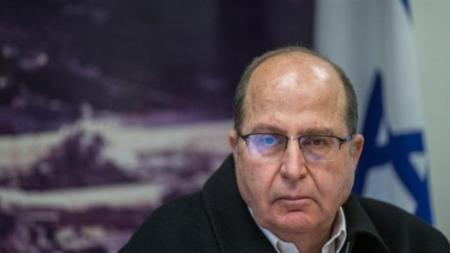


 Aletho News

