A US Department of Justice (DoJ) task force charged with studying the performance of the Federal Bureau of Investigation (FBI) laboratories in the 1990s is suspected of having sought to cover up scandalous FBI behavior.
The DoJ set up a task force in the 1990s to investigate reports of data manipulation by the FBI crime laboratories.
The findings of the investigation revealed that the laboratories of the FBI manipulated DNA test results under pressure from superior authorities and presented flawed results for years in order to tilt the case in favor of the claimants and against the defendants.
The issue was first revealed in 1995 when Fredric Whitehurst, a chemist and lawyer who worked at the FBI’s crime lab, testified that he was told by his superiors to perjure in order to facilitate the prosecution of two men accused of involvement in the World Trade Center bombing in February 26, 1993.
“There was a great deal of pressure put upon me to bias my interpretation,” the FBI whistleblower said at the US District Court in New York in 1995.
Whitehurst had written or passed along scores of memos over the years warning about the lack of impartiality and scientific standards in FBI’s forensic research on the World Trade Center attack and in other cases.
After the Justice Department’s inspector general began a review of Whitehurst’s claims, Attorney General Janet Reno and FBI Director Louis J. Freeh decided to launch a task force to dig through thousands of cases involving discredited agents, to ensure that “no defendant’s right to a fair trial was jeopardized.”
It took the task force nine years to complete the mission. However, it never publicly released the results of its case reviews of suspicious lab work, the names of the defendants who were convicted as a result and the nature or scope of the forensic problems it found.
Tens of thousands are probably in jails on account of the flawed and criminal lab work conducted by the FBI, Whitehurst noted.
A recent review by the US daily Washington Post on more than 10,000 pages of the task force documents revealed that “the panel operated in secret and with close oversight by FBI and Justice Department brass – including Reno and Freeh’s top deputy – who took steps to control the information uncovered by the group.”
Innocent prisoners who were probably jailed mistakenly never got the chance to have their cases reviewed, because neither their advocates nor their relatives were informed of the flawed nature of the FBI laboratory results.
The Justice Department continues to decline to release the names of the affected defendants.
April 23, 2012
Posted by aletho |
Civil Liberties, Deception, False Flag Terrorism, Timeless or most popular | DNA profiling, FBI, Federal Bureau of Investigation, Janet Reno, Justice Department, United States, United States Department of Justice |
Leave a comment

Abu Jihad coordinates with fedayeen (Palestinian guerrilla fighters) during the siege of Beirut in 1982. (Photo: Archive)
It took Israeli intelligence over two decades and many assassination attempts before they managed to hunt down the PLO’s military mastermind Khalil al-Wazir. On the 24th anniversary of his death, Al-Akhbar recounts his story.
When Khalil al-Wazir (Abu Jihad) began his endeavor in the early 1950s, Israeli intelligence had no idea he existed. At the time, he was the twenty-something leader of the Palestinian al-Haq Brigade in Gaza. His family had been displaced from Ramleh in 1948.
Back then, the security establishment in Israel did not believe that Palestinians were capable of organizing a resistance movement. Operations by the fedayeen (Palestinian guerrilla fighters) were believed to be entirely orchestrated in Egypt.
It took Tel Aviv about 10 years to begin to know al-Wazir, who would go on to play a major role in establishing the first and largest Palestinian national liberation movement. Moreover, he would coin the idea of “armed struggle” as the only path to liberate Palestine.
News of Abu Jihad first reached Israel in 1964 through a secret Mossad unit named “Ulysses” whose mission was to spy on Palestinian refugee communities in Arab countries. Operatives spoke about the creation of a Palestinian national liberation movement led by Yasser Arafat and al-Wazir and sounded the alarm in Israeli security agencies.
According to the Israeli newspaper Yediot Aharonot– which pieced together the story of the assassination of Abu Jihad based on public and private sources – the Mossad formed a secret unit in 1965. Its prime directive was to investigate methods of countering “Palestinian terrorism” and approve assassinations. It immediately suggested two primary targets: Abu Ammar (Arafat) and Abu Jihad.
The first assassination attempt was in Damascus when a planned car bomb operation was not executed properly. It was carried out by an agent of Unit 504 of the military intelligence, responsible for recruiting and running operatives.
Abu Jihad’s role in pushing for armed struggle against Israel became apparent, especially in the period following the naksah (the defeat of Arab armies in 1967). In 1970, Israeli prime minister Golda Meir retaliated by issuing him a “Red Card,” essentially a direct assassination order.
The Israeli secret service was adamant to settle scores with Abu Jihad and put an end to his dossier. In 1975, the Israeli air force raided a building in Beirut based on information of a Fatah movement meeting taking place there. In addition to Abu Jihad, Fatah leaders Arafat, Faruq Qaddumi, and Mahmoud Abbas were supposedly attending.
The Ben Hur operation missed the target and encouraged an escalation of attacks on Israel, coordinated by Abu Jihad, who was now the deputy chief commander of the Palestinian revolution.
On 11 March 1978, he planned the Kamal Adwan operation (named after a Fatah leader assassinated in Beirut in 1973), which was carried out by the Deir Yassin group led by Dalal Mughrabi.
The operation led to the death of 35 Israelis, with dozens more injured. It created a shock wave inside Israel especially following Abu Jihad’s announcement that the operation “demonstrated the ability of the revolution to reach Israel and carry out operations anywhere it wants.”
Following the Israeli invasion of Lebanon and the PLO’s relocation to Tunisia, Abu Jihad attempted to reverse the setback in armed struggle.
He visited various Arab countries, exposing himself to three assassination attempts, according to the Israeli account.
Abu Jihad, for his part, was planning an “unprecedented” operation that would strengthen the PLO’s position and impose new conditions on the struggle with the Israelis.
Twenty resistance fighters were supposed to reach Yafa by rubber dinghies, hijack a bus, drive it to the defense ministry in Tel Aviv, and attack the entrance known as Gate Victor. But the Israeli navy surprised their ship and sank it on 20 April 1985.
Abu Jihad did not hesitate and pressed on with plans for another major operation. In 1988, he picked Dimona, the location of Israel’s nuclear reactor.
On March 7, three Palestinian commandos captured a bus carrying workers from the nuclear facility. The fighters were consequently killed along with three of the workers in an exchange of fire with an Israeli army unit.
The Mossad concentrated its resources on the pursuit of Abu Jihad, by now the number one wanted person in Israel. Defense minister at the time, Yitzhak Rabin, ordered a direct operation that would not resort to remote targeting such as an air raid. He wanted to send a message to the Palestinian movement that Israel can reach its enemies in their homes.
The Mossad surveilled al-Wazir’s home in Tunis, 4km from the beach. It began planning an assassination attempt and sent a unit from Sayeret Matkal (General Staff Reconnaissance Unit) to the Tunisian shores.
It was to repeat the same scenario used successfully 15 years earlier against three Palestinian leaders in Beirut (know as the “Verdun Operation”).
On 13 April 1988, the quarter century chase after al-Wazir was almost over. Mossad agents carrying Lebanese passports arrived in Tunis and split into two groups.
The first group rented cars to transport the assassination unit from the beach to the targeted house, which was being closely watched by the second group.
In the meantime, Israeli navy vessels carrying the assassins were waiting at sea. In the evening, a unit of 26 Israeli commandos reached the beach and took the rented cars to al-Wazir’s home. After 23 years, they finally managed to assassinate him.
The next day, Israeli Prime Minister Yitzhak Shamir was asked about Israel’s involvement in the assassination. Scowling, he replied, “I just heard about it on the radio.”
From Ramleh to Yarmouk
Omar Nashabe
Khalil al-Wazir was born in 1935 in Ramleh and was expelled from Palestine along with his family in 1948. He studied in Alexandria University and then moved to Saudi Arabia.
Later, he went to Kuwait where he met with Yasser Arafat and joined him in creating the Fatah movement.
Leaving Kuwait in 1963, he founded the first Fatah office in Algeria, where he was allowed to establish the first Palestinian military camp.
He then moved on to Damascus in 1965 to establish the military command headquarters and coordinate with fedayeen cells inside Palestine.
During the 1967 war, he planned and executed operations in Upper Galilee, then became the head of the western sector of Fatah until 1982.
Abu Jihad strived to develop military capabilities throughout his struggle, playing a leading role in defending Beirut against the 1982 Israeli invasion.
In his meetings with the fedayeen, he would focus on tactics and also on ethics, telling them to save ammunition and explosives, not to be zealots, and not to steal.
One time, when he was ordering the fedayeen to avoid killing children, one of them replied, “Our children in Shatila and Sabra were the first to die… I lost 12 members of my family.”
Abu Jihad’s reply was clear, “In spite of this, we will not become like those fascists. We are not fascists. [The Prophet Muhammad’s second successor] Omar Bin Khattab commands us not to cut down trees or kill children.”
Memory of Resistance
Qassem Qassem
Those who knew Abu Jihad speak of his special relationship with Imad Mughniyeh. At the end of 1978, a 16-year-old Mughniyeh joined the Fatah cell in Chiyah.
Bassem Haidar, who was in charge of the cell between 1977 and 1979, says that the boy was always with another young man, Ali Khodor Salama (Abu Hassan), assassinated by Israel in 1999 in Abra, near Sidon.
The newcomer soon caught the attention of the higher command of the Palestinian revolution, specifically Abu Jihad, due to his skill in planning ambushes in the area between Tayouneh and Asaad al-Asaad street (south of Beirut).
He was none other than Mughniyeh, Hezbollah’s military commander who was assassinated in Damascus in 2008.
“Mughniyeh was the only person able to provide the cell with the weapons they needed. He would go to the Fakhani neighborhood (PLO headquarters in Beirut) and get it,” Haidar remembers.
“Once, we needed 3.5 inch anti-tank missiles, so he was sent to get them.” Haidar continues, “Had Mughniyeh’s relationship with Abu Jihad not been good, he would not have been able to get them, since they pass directly through the leadership.”
In 1978, Mughniyeh left the Chiyah cell after “he was summoned by the leadership in Fakhani and began clandestine work in a secret security unit. We never saw him again.”
April 22, 2012
Posted by aletho |
Timeless or most popular | Abu Jihad, Fatah, Israel, Khalil al-Wazir, Mossad, Palestine, Yasser Arafat |
Leave a comment
RAMALLAH – Head of the Palestinian Prisoners Society Qadura Fares said Saturday that Israeli media reports on the interrogation of Fatah leader Marwan Barghouthi failed to prove he confessed to any charge.
Israeli daily Haaretz on Friday reported that records of the leader’s questioning by Israeli internal security service Shin Bet show Barghouti giving partial confessions of his awareness of attacks on Israelis, and late President Yasser Arafat’s tacit acceptance of attacks.
Barghouthi — a revered political figure and former presidential candidate — was convicted by Israel of five counts of murder in 2004, but refused to present a defense, saying the trial was illegitimate.
Fares on Sunday questioned the timing and content of the Haaretz report, ten years after the interrogation took place.
“The Israeli security services, which failed to make Barghouthi give any confessions during four months of interrogation using the ugliest ways of psychological and physical torture, come today with false claims and baseless lies,” Fares said.
“If there were such confessions, the Israelis would have disseminated them at that time, and they would have used them for political gains,” he added.
“I challenge any Israeli service to show any document or paper of any kind signed by Marwan Barghouthi.”
April 22, 2012
Posted by aletho |
Civil Liberties, Deception, Timeless or most popular | Haaretz, Israel, Marwan Barghouti, Shin Bet, Yasser Arafat |
Leave a comment
An Associated Press article by Diaa Hadid, filed from Tel Aviv and published Wednesday, warns of a potential increase in anti-Semitism and possible anti-Jewish violence in Europe if Israel carries out a military assault on Iran. The piece focuses on Moshe Kantor, president of the European Jewish Congress, speaking at Tel Aviv University “after the presentation of an annual report on worldwide anti-Semitic attacks” and in advance of Holocaust Remembrance Day. Kantor said “he feared a minority of angry, extremist European Muslims who live in impoverished neighborhoods might use an Israeli attack [against Iran] as a pretext to hit local Jews, particularly in France and Great Britain.”
The report cited by Kantor was issued by Tel Aviv University’s Kantor Center for the Study of Contemporary European Jewry. And yes, the Kantor Center is indeed named after Moshe Kantor himself, who paid for its creation in 2010. Kantor is not only the head of the EJC, he’s also the Chairman of the European Jewish Fund (which he established in 2006) and, with his net worth of $2.3 billion, one of the richest people in the world.
AP quotes Kantor as saying, “If Israel attacks Iran, it will be a dramatic increase of anti-Semitic, very violent attacks against Jews. And the vehicle for the realization of the attacks will be these enclave communities, where the level of hatred is very high and they are prepared to attack enemies inside their countries.” An Israeli assault on Iran would produce, in Kantor’s words, a “tsunami of hate against Jews.”
Note how Kantor worries that an actual, unprovoked violent attack by a nuclear-armed state against a non-nuclear-armed state is called a “pretext” for potential, future anti-Semitism in Europe. So what are Kantor and the EJC doing about this? Well, AP reports that “his group is prodding European governments to take more measures to protect Jewish communities. He said its biggest efforts were focused on combatting anti-Semitism in the radical fringes of European Muslim neighborhoods.” Kantor also described this alleged latent and potential violence emanating from Muslim communities in Europe as “a bomb ready to explode.”
That’s right. Kantor isn’t using his platform in Tel Aviv and position in Europe to warn against an illegal Israeli attack; no, he just wants more protection for European Jews if and when such an attack occurs. Apparently, the ancient community of 25,000 Iranian Jews don’t need similar protection for Israeli missiles and bombs.
But, this type of fear-mongering about the so-called “new anti-Semitism” is old news. While the provocation – “pretext” – is now linked to Iran, in the past it has been focused more on Palestine.
Over eight years ago, in March 2004, Los Angeles Times staffer Jeffrey Fleischman wrote, “Intolerance toward Jews is changing. Traditional anti-Semitism is coinciding with leftist opposition to Israel’s response to the Palestinian intifada. And attacks on Jewish institutions in France, the Netherlands and elsewhere suggest that a burgeoning population of frustrated Muslim men is transplanting Middle East animosities into Europe.”
Despite describing Europe as “an eloquent testament to constitutions and human rights,” Fleischman claims that, “as Europe reinvents itself, so does the way it hates.” He also quotes Cobi Benatoff, then-president of the European Jewish Congress, as issuing a “warning cry, a warning to Europe,” saying, “Anti-Semitism and prejudice have returned. The monster is with us again. What is of most concern to us, however, is the indifference of our fellow European citizens.”
Naturally, the Palestine connection is made. “The backlash against Jews over the Palestinian struggle to gain statehood is more pronounced in countries with large Muslim populations such as France, where about 700,000 Jews live amid more than 5 million Muslims,” Fleischman reports. “Germany has about 100,000 Jews and 3.5 million Muslims, and Britain has 300,000 Jews and about 2 million Muslims.”
Look at how outnumbered they are! Those poor, potential victims, adrift in a sea of bearded barbarity! How spooky!
But this type of hysteria is nothing new.
In 2006, journalist Jonathan Cook reported that there has been an intense effort on the part of the Israeli government to push the concept and fear of the “new anti-Semitism” dating back decades and reemerging more stridently in 2002. Cook explained that “Israel alerted the world to another wave of anti-Semitism in the early 1980s, just as it came under unprecedented criticism for its invasion and occupation of Lebanon. What distinguished the new anti-Semitism from traditional anti-Jewish racism of the kind that led to Germany’s death camps, said its promoters, was that this time it embraced the progressive Left rather than the far Right.” This narrative was again picked up twenty years later by members of Ariel Sharon’s administration, and championed by a rather familiar character. Cook reports,
Like its precursors, argued Israel’s apologists, the latest wave of anti-Semitism was the responsibility of progressive Western movements – though with a fresh twist. An ever present but largely latent Western anti-Semitism was being stoked into frenzy by the growing political and intellectual influence of extremist Muslim immigrants. The implication was that an unholy alliance had been spawned between the Left and militant Islam.
Such views were first aired by senior members of Sharon’s cabinet. In an interview in the Jerusalem Post in November 2002, for example, Benjamin Netanyahu warned that latent anti-Semitism was again becoming active:
“In my view, there are many in Europe who oppose anti-Semitism, and many governments and leaders who oppose anti-Semitism, but the strain exists there. It is ignoring reality to say that it is not present. It has now been wedded to and stimulated by the more potent and more overt force of anti-Semitism, which is Islamic anti-Semitism coming from some of the Islamic minorities in European countries. This is often disguised as anti-Zionism.“
The entire Cook article is vital reading on the subject.
The disingenuous association of anti-Semitism with progressive ideology, along with the absurd conflation and equation of anti-Semitism with anti-Zionism, has only been further exploited in the intervening years and the examples are legion.
The American Jewish Committee released a lengthy report in 2002 that declared, “Over the past two years the specter of anti-Semitism has spread over that part of peaceful, democratic, and law-abiding Europe that prides itself on the high degree of safety it affords its inhabitants.” Written by Villanova professor Gordon Murray, the report charged that, due to “the one-sided condemnation of Israel and the failure of [European] governments to condemn atrocities committed against Israelis, along with “their unbalanced, strongly pro-Palestinian line in the Middle East conflict, Western European governments have given a pass to those who wish to play out the intifada on the streets of Paris, Antwerp, Madrid, and Berlin.” Murray also condemned the “left” for its support for the Palestinian cause, in part blaming the “left’s sympathy for Palestinians and antipathy for Israel on, what he deemed, “the left’s congenital anti-Americanism.”
In September 2008, Paul A. Shapiro, Director of the Center for Advanced Holocaust Studies at the United States Holocaust Memorial Museum in Washington D.C. delivered the keynote address at a conference in Bucharest, Romania. In his speech, which warned of the “dangers of resurgent antisemitism” in Europe, Shapiro described the “multiple agents” responsible for the trend, “each capable of being effective with one or more audiences:”
1) Radical and jihadist elements within Islam; (2) right-wing bigots, including neo-Nazis, skinheads, paramilitary militia movements, ultra-nationalists, Holocaust apologists; (3) left-wing ideologues, in particular in the European region, as well as some more mainstream intellectuals, who in the current atmosphere are susceptible to anti-Semitic expression or to the use of code words (e.g., “New York,” “the Israel Lobby”) to express negative views of Jews and protest Jewish “power” and “influence”; (4) extreme anti-Zionists; (5) representatives of a variety of religious denominations who, through their preaching, writing, or speech tap into religious fervor and belief to assault the legitimacy of Judaism and Jews.
Shapiro also stated that this bigotry manifests itself in many ways, not only is physical attacks against Jews or Jewish organizations, but also in the form of “boycotts and divestment efforts against Israel” and “anti-Zionism.” Shapiro continues,
Scholars debate whether anti-Zionism is necessarily and always to be understood as a form of antisemitism. Many argue, I believe correctly, that one can be critical of specific Israeli policies and actions and not be antisemitic. However, what is often called “legitimate criticism of Israel” frequently crosses the line and becomes vilification of the Jewish state as such. This is characterized by demonization, delegitimization, and judging Israel by double standards, i.e., standards not applied to others. Denunciations of Israel as a “Nazi state,” an “apartheid state,” a state guilty of “ethnic cleansing” or “genocide” are antisemitic. Demonizing Israel, denying its right to exist, and attributing its perceived faults to its Jewish character crosses the line, encouraging both verbal and physical violence against Israel and against Jews in general.
So how real is this threat? Well, the report cited by European Jewish Congress head Moshe Kantor, while noting “an increase in cases involving harassment and violence against Jews worldwide, singling out western Europe, Australia and Canada as three of the places most affected by the trend, also “found that on average the number of verbal threats and vandalism cases against Jews were down 27% in 2011 with 446 incidents compared to 614 in 2010.” Furthermore, “57% of hate crimes involved vandalism.”
“The decrease was the second year in a row that the research center, which focuses on the study of European Jews, has counted fewer global anti-Semitic attacks,” reported The Jerusalem Post.
The Times of Israel was quick to point out that the “Antisemitism Worldwide 2011” study alleged that “[r]adicalization among young Muslims, as well as the growing dissemination of anti-Semitic and anti-Israeli propaganda online, contributed significantly to the increase in harassment and incitement throughout the world,” adding that “France led the list of countries where major violent incidents occurred with 114, followed closely by the UK with 104 cases.” The report also claimed that, while “the number of attacks declined in 2011…they were generally more violent than in previous years.”
By contrast, in 2010, the organization Human Rights First reported, “Authorities in France do not report explicitly on violence against Muslims, but their reporting of racist and xenophobic hate crimes offers a window into the problem of anti-Muslim violence, with 33 percent of reported incidents perpetrated against people of North African (Maghreb) origin, who are predominantly Muslim. In 2009, authorities reported 1,026 racist or xenophobic hate crimes, a 219 percent increase from 2008 (467).”
Additionally, a 2009 survey by the European Union Agency for Fundamental Rights (FRA) that reported discrimination against immigrants and minorities in the EU found that “1 in 10 of all Muslims surveyed (11%) was a victim of racially motivated ‘in-person crime’ (assault, threat or serious harassment) at least once in the previous 12 months.”
The research, compiled in 2008 via face-to-face questionnaire interviews of a total of 23,500 immigrant and ethnic minority people in all 27 Member States of the EU, also indicated that, if the data were translated “to the entire Muslim population in the Member States where Muslim respondents were surveyed, the level of victimisation would extend into thousands of cases every year that are not recorded by the police as racist incidents in the majority of Member States.”
The FRA report also stated, “On average 1 in 3 Muslim respondents (34% of men and 26% of women) stated that they had experienced discrimination in the past 12 months. Those Muslim respondents who had been discriminated against stated that they had experienced, on average, 8 incidents of discrimination over a 12 month period.”
This is not to mention the actual laws and policies implemented in the West in the past few years that explicitly discriminate against and brutalize Muslims, such as bans on clothing and architecture and the systematic, institutionalized destruction of equality, human rights and civil liberties.
The association of Muslims in Europe with both violence and anti-Semitism is also completely disingenuous. Between 2006 and 2008, a mere 0.4% of all terrorist attacks in Europe could be attributed to extremist Muslims. Meanwhile, a recent survey about anti-Semitic sentiment conducted by the Anti-Defamation League in ten European countries and which reportedly found increased levels of bigotry against Jews within some European populations, polled only 500 people in each country and compiled (or at least reported) absolutely no data on the religious identification or political ideology of the respondents.
The exploitation of this “new anti-Semitism” charge as a method of policing speech and terminology, dismissing historical events, marginalizing comparative narratives, and delegitimizing the efforts of those who challenge the inherent racism, colonialism and ethno-religious exclusivism of Zionism is laid bare in a statement by Dr. Roni Stauber, a senior research fellow at the Kantor Center and one of the report’s authors:
“We began compiling these reports in 2001 and while we were very strict at the beginning, about differentiating between anti-Semitism and anti-Zionism, in recent years it has become virtually impossible.
“The data derived suggests that the propaganda promoted by the world’s radical Left and far Right have meshed together the hatred for Israelis and that of Jews; and have created the perception that all Jews are ‘in cahoots’ with Israel, and therefore anti-Semitism and anti-Zionism are the same.”
The purpose of the “new anti-Semitism” charge is abundantly clear: it not only serves to fear-monger about Muslims in Europe but also, perhaps more importantly, is a way to demonize and cow into silence critics of Israeli policy and advocates for human rights and international law.
April 21, 2012
Posted by aletho |
Deception, Science and Pseudo-Science, Timeless or most popular | Antisemitism, European Jewish Congress, Israel, Kantor, Tel Aviv University |
Leave a comment
Revealed: Britain’s Orwellian Empire
After his death, George Orwell’s terrifying vision in Nineteen Eighty-Four of a future in which the past could be erased and rewritten at will by a faceless bureaucracy was quickly appropriated in the US and Britain for the purposes of Cold War propaganda. The novel was taken as confirmation of a worldview that divided the globe according to an almost ontological opposition, between a ‘free world’ that clung to life, liberty, and the pursuit of happiness, and a ‘them’ who were not only violent and cruel (after all, hadn’t ‘we’ had recourse to massive violence, from the fire-bombing of Dresden to Hiroshima and Nagasaki?), but who offended against the very laws of empirical truth and the sanctity of the historical record. But without in any way detracting from the crimes of the Soviet empire or the Communist Party regime in China, in reality the calculus of violence and horror in the postwar world was never so neatly and cleanly divided, especially once the populations excluded from the Cold War algebra of ‘us’ and ‘them’ begins to be taken into account—namely the populations of the ‘Third World,’ upon whom so much of the bloody Cold War was fought out. The upcoming disclosure of a massive haul of some 8,800 secret files—which one respected British historian has called “the ‘lost’ British Empire archive” (BBC News, 17 April 2012)—may require a rethinking of the whole Cold War narrative. For while the Cold War warriors of the West rightly denounced Stalinist and other regimes for their horrifically cynical and insidious rewriting of the past—airbrushing out not only individuals, but whole institutional structures of criminality, and indeed the fate of whole populations—these archives suggest that the decolonizing British state was also guilty of manipulating the historical record and hiding major crimes against humanity, albeit on a scale that has still to be assessed and fully understood.
The secret colonial archive is comprised of thousands of documents that detail the military and police activities of British colonial administrations in 37 British colonial territories, from Malaya, Kenya, Cyprus, and Aden—the scenes of high profile late-colonial wars—to much less well-known and often overlooked colonial flashpoints, such as the Chagos Islands, Guyana, Botswana, and Lesotho. As the prospect of national liberation loomed in each territory, British officialdom conducted a wholesale program of stripping the colonial archives, extracting incriminating documents that recounted acts of murder, torture, and wide-scale human rights abuses, and ‘repatriating’ them to Britain. Significant instances of crimes that are recorded in these files that have emerged so far include the reported murder and torture of Mau Mau insurgents in Kenya in the 1950s, the alleged operation of a secret torture center in Aden in the 1960s, and the forced removal of Chagos Islanders to make way for the massive US base on Diego Garcia (Guardian, 18 April 2012). There are indications that documents were also removed that might embarrass British allies, especially the United States.
However, in British law such documents once ‘repatriated’ should have become available for public scrutiny; instead they were hidden, and their existence denied. The secret archive only came to light in 2011 as the result of a court case taken by five elderly Kenyans, who sued the British government claiming that they had been tortured during the Mau Mau Emergency, an uprising led by the Kikuyu people against British rule that lasted from 1952 to 1960, and which resulted in an estimated death toll of between 25,000 and 300,000 (Guardian, 21 July 2011). Historians working for the claimants began to unearth evidence of a secret trove of documents that had been deliberately ‘disappeared’ by the Foreign Office, and which appear to record not only atrocities in Kenya, but also a whole host of criminal state actions across the late-colonial world. According to Professor David Anderson of Oxford University, “the British Government did lie about this,” and as he observes “this saga was both a colonial conspiracy and a bureaucratic bungle” (BBC News, 17 April 2012). Shamed by the revelations in court, the British Government has promised full disclosure, with documents being released incrementally in tranches from this month through to the end of 2013. This is a massive archive, and clearly no firm conclusions can be drawn at present. It will need the scrutiny of activists, civil rights professionals, academics, and civil society groups from across the world to begin to make sense of the material, and to begin to understand its importance not only for the historical record, but also for current political circumstances.
Yet even at this early stage, the revelation of this secret archive offers an important insight into the ways in which the British government cynically and quite deliberately sought to reconstruct the postwar record in order to manipulate wider perceptions of the West’s postwar global role. While sometimes conducted hastily, the winnowing of the colonial archive was calculated and designed with systematic intent. Files that could be left behind after independence were classified as “legacy,” while those considered too sensitive to fall into the hands of post-independence governments were designated as “watch,” and could only be handled by colonial officials who were “British subject[s] of European descent” (BBC News, 17 April 2012).
However, not only was the historical record being quite deliberately edited, but in truly Orwellian fashion the process of censorship was itself carefully concealed. As The Guardian newspaper reports:
Painstaking measures were taken to prevent post-independence governments from learning that the watch files had ever existed. One instruction states: “The legacy files must leave no reference to watch material. Indeed, the very existence of the watch series, though it may be guessed at, should never be revealed.” [Therefore, when] a single watch file was to be removed from a group of legacy files, a “twin file”—or dummy—was to be created to insert in its place. If this was not practicable, the documents were to be removed en masse. (Guardian, 18 April 2012)
Given the complicated and time-consuming nature of the process of combing through the files, it appears that in their haste officials increasingly resorted to the wholesale destruction of sections of the colonial archive. A memo from April 1961 advises: “To obviate a too laborious scrutiny of ‘dead’ files, emphasis is placed on destruction—a vast amount of paper in the Ministry of Defence secret registry and classified archives could be burnt without loss” (BBC News, 17 April 2012). The secret cache of 8,800 files is thus most likely the reduced remnant of a much larger ‘ghost’ archive, comprising files destroyed not only to hide evidence of criminal actions but also to conceal the very program of concealment itself. Although initial indications suggest that this archival destruction was conducted on a massive scale, its full extent may never be known.
The intellectual legacy of the Cold War was the starkly melodramatic opposition of ‘free world’ and ‘evil empire’ so memorably rehearsed by President Ronald Reagan. However, one unacknowledged consequence of the overwhelming focus on the crimes of the Soviet regime was the airbrushing from popular consciousness of the continuing historical role of British colonialism in the postwar period, and its continuity with the emergent US hegemony. The aggressive defense of a late colonial edifice based in the Middle East, East Africa, and the Far East—regions that continue to number among the central battlefields of the US ‘war on terror’—was at the time a serious embarrassment to the Western Cold War vocabulary of ‘freedom’ and ‘democracy.’ But it now transpires that the West’s capacity to win the propaganda battle was not simply a matter of the best arguments winning the day, but depended on the bureaucratic manipulation of the past and the systematic liquidation of extensive sections of the historical record.
Orwell himself was in fact much less convinced by the Cold War’s stark oppositions than his subsequent promoters were willing to concede. As a former colonial policeman in Burma, he wrote about the insidious suppression of independent thinking among European colonial administrators in his 1934 novel Burmese Days. And although routinely read as a straightforward Cold War text, his more famous novel Nineteen Eighty-Four involves a more complex geopolitical vision than it is usually given credit for. As Orwell explained in a letter to Roger Senhouse dated 26 December 1948, rather than focusing exclusively on the critique of totalitarianism, the novel also sought “to discuss the implications of dividing the world up into ‘Zones of influence,’” an insight that had been prompted by the news of the collaboration between Roosevelt, Churchill, and Stalin in organizing the postwar world.1 In Orwell’s mind, the suppression of autonomous political action by the emerging geopolitical power blocs of East and West was intimately bound up with the suppression of individual freedom of thought and the destruction of a historical record that functioned according to shared norms of inclusiveness, accuracy, and fidelity to verifiable data. We might speculate with good reason, then, that Orwell would not only have welcomed the revelation of the secret imperial archive, but might not have been so surprised to learn of it in the first place.
Graham MacPhee is Associate Professor of English at West Chester University. He is the author of Postwar British Literature and Postcolonial Studies (Edinburgh University Press, 2011), and co-editor of Empire and After: Englishness in Postcolonial Perspective (Berghahn, 2007).
Notes
1. George Orwell, In Front of your Nose: Collected Essays, Journalism, and Letters 1946-1950, edited by Sonia Orwell and Ian Angus, Boston: Nonpareil (2000), 460.
April 21, 2012
Posted by aletho |
Civil Liberties, Deception, Full Spectrum Dominance, Timeless or most popular, War Crimes | British Empire, Cold War, George Orwell, Guardian, United States |
Leave a comment
Thousands of documents detailing some of the most shameful acts and crimes committed during the final years of the British empire were systematically destroyed to prevent them falling into the hands of post-independence governments, an official review has concluded.
Those papers that survived the purge were flown discreetly to Britain where they were hidden for 50 years in a secret Foreign Office archive, beyond the reach of historians and members of the public, and in breach of legal obligations for them to be transferred into the public domain.
The archive came to light last year when a group of Kenyans detained and allegedly tortured during the Mau Mau rebellion won the right to sue the British government.
The Foreign Office promised to release the 8,800 files from 37 former colonies held at the highly-secure government communications centre at Hanslope Park in Buckinghamshire.
The historian appointed to oversee the review and transfer, Tony Badger, master of Clare College, Cambridge, says the discovery of the archive put the Foreign Office in an “embarrassing, scandalous” position.
“These documents should have been in the public archives in the 1980s,” he said. “It’s long overdue.”
The papers at Hanslope Park include monthly intelligence reports on the “elimination” of the colonial authority’s enemies in 1950s Malaya; records showing ministers in London were aware of the torture and murder of Mau Mau insurgents in Kenya, including a case of aman said to have been “roasted alive”; and papers detailing the lengths to which the UK went to forcibly remove islanders from Diego Garcia in the Indian Ocean.
April 20, 2012
Posted by aletho |
Civil Liberties, Subjugation - Torture, Timeless or most popular | British Empire, Foreign and Commonwealth Office, Foreign Office, Kenya, Mau Mau Uprising, Tony Badger |
Leave a comment
At first blush, it seems obvious that a picture could reveal your location. A picture of you standing in front of the Golden Gate Bridge sensibly leads to the conclusion you’re in the San Francisco Bay Area when the photo was taken. But now that smartphones are quickly supplanting traditional digital cameras, and even traditional cameras now have wifi built in, many more pictures are finding their way onto the web, in places like Twitter, Flickr, Google+ and Tumblr. In a span of 10 days, popular photo social network Instagram added 10 million new users as a result of the release of its Android app and its acquisition by Facebook. And the location data hidden in these quick and candid pictures — even when your location isn’t as obvious as “standing in front of the Golden Gate Bridge” — is becoming another easy way for anyone, including law enforcement, to figure out where you are.
Take the case of “w0rmer,” a member of an Anonymous offshoot called “CabinCr3w,” for example. According to the federal government (PDF), “w0rmer” broke into a number of different law enforcement databases and obtained a wealth of sensitive information. In a Twitter post, “w0rmer” provided a link to a website that contained the sensitive information as well as a picture of a woman (NSFW) posing with a sign taunting the authorities. Because the picture was taken with an iPhone 4, which contains a GPS device built in, the GPS coordinates of where the picture was taken was embedded into the picture’s EXIF metadata. The FBI was able to use the EXIF data to determine that the picture was taken at a house in Wantirna South, Australia.
The FBI tracked down other online references to “w0rmer,” with one website containing the name Higinio Ochoa. The feds took a look at Ochoa’s Facebook account, which detailed that his girlfriend was Australian. Combined with the EXIF metadata, the government believed they had corroborated the identity of “w0rmer” as Ochoa, and in turn arrested him.
Even for photos not taken with a smartphone and not embedded with GPS coordinates (for example, point and shoot or SLR cameras that do not geotag), it’s still possible for the police to get location information through EXIF metadata. You can upload a picture here and see the metadata stored in a picture for yourself. Contained within that metadata is the camera’s serial number. Armed with that information, the police can easily scour the internet for other pictures tagged with the same serial number. In Australia, a man whose camera was stolen was able to track it down using stolencamerafinder.com because the thief had taken a picture with the camera and uploaded it to Flickr, where had had listed his address. But even if the thief’s Flickr site didn’t contain his address, police could have subpoenaed Flickr – like law enforcement have attempted to do with Twitter – for information concerning a user’s temporarily assigned IP address, as well as session times and logs, to eventually determine where a person uploaded a picture from. All of which can be used to piece together a snapshot of not only your movements, but as in the case of “w0rmer,” potentially your identity. In the United States, police are being trained about the broader investigative (PDF) potential of this information.
It might be tempting to say the problem is overblown, because some social media sites, including Facebook and Twitter, strip the metadata out of photos uploaded by their members. But not all do. Twitpic‘s default is to use a picture’s location tag unless you opt out. Flickr gives you the option to hide a photo’s EXIF data, but many casual photographers tempted by the rapid growth of photo sharing may not understand what EXIF data is, and the implication of making it publicly available.
The bigger problem is that courts have been expanding the police’s right to search digital devices without a warrant under the “search incident to arrest” exception of the Fourth Amendment. While many of the cases involve warrantless searches of cell phones, there has been at least one case in California (PDF) where the police used the “search incident to arrest” exception to search a juvenile’s digital camera. And there are other reported incidents of photojournalists having their cameras confiscated and searched when covering political protests and rallies. If the cops have the physical camera (and thus the memory cards that store the photos), whatever scrubbing that happens when a photo is uploaded to the web is no obstacle.
So if you value your privacy, you should take steps to ensure the EXIF metadata in your pictures isn’t an easy way for anyone on the Internet to figure out your location. If you’re using a smartphone to take pictures, disable geotagging from your pictures. If you’re uploading your pictures to a website like Flickr or Twitpic that defaults to automatically include EXIF data and location information, take the steps to turn it off. And if you’re using a traditional SLR or point and shoot camera that doesn’t geotag, but does contain a breadth of EXIF data, the make sure you scrub its metadata before you upload it on the Internet. There are free online tools that will help you do precisely that. These simple steps will help ensure that the thousand words a picture describes doesn’t include your location.
April 20, 2012
Posted by aletho |
Civil Liberties, Full Spectrum Dominance, Timeless or most popular | Exchangeable image file format, Facebook, Federal Bureau of Investigation, Flickr, iPhone 4, Twitter |
Leave a comment
In contrasting China and America, pundits often cite our free and independent media as one of our greatest strengths, together with the tremendous importance which our society places upon individual American lives. For us, a single wrongful death can sometimes provoke weeks of massive media coverage and galvanize the nation into corrective action, while life remains cheap in China, a far poorer land of over a billion people, ruled by a ruthless Communist Party eager to bury its mistakes. But an examination of two of the greatest public-health scandals of the last few years casts serious doubt on this widespread belief.
First, consider the details of the Chinese infant formula scandal of 2008. Unscrupulous businessmen had discovered they could save money by greatly diluting their milk products, then adding a plastic chemical compound called melamine to raise the apparent protein content back to normal levels. Nearly 300,000 babies throughout China had suffered urinary problems, with many hundreds requiring lengthy hospitalization for kidney stones. Six died. A wave of popular outrage swept past the controlled media roadblocks and initial government excuses, and soon put enormous pressure on Chinese officials to take forceful action against the wrongdoers.
China’s leaders may not be democratically elected, but they pay close attention to strong popular sentiment. Once pressed, they quickly launched a national police investigation which led to a series of arrests and uncovered evidence that this widespread system of food adulteration had been protected by bribe-taking government officials. Long prison sentences were freely handed out and a couple of the guiltiest culprits were eventually tried and executed for their role, measures that gradually assuaged popular anger. Indeed, the former head of the Chinese FDA had been executed for corruption in late 2007 under similar circumstances.
Throughout these events, American media coverage was extensive, with numerous front-page stories in our leading newspapers. Journalists discovered that similar methods of dangerous chemical adulteration had been used to produce Chinese pet food for export, and many family dogs in America had suffered or died as a result. With heavy coverage on talk radio and cable news shows, phrases such as “Chinese baby formula” or “Chinese pet food” became angry slurs, and there was talk of banning whole categories of imports from a country whose product safety standards were obviously so far below those found in Western societies. The legitimate concerns of ordinary Americans were fanned by local media coverage that sometimes bordered on the hysterical.
However, the American media reaction had been quite different during an earlier health scandal much closer to home.
In September 2004, Merck, one of America’s largest pharmaceutical companies, suddenly announced that it was voluntarily recalling Vioxx, its popular anti-pain medication widely used to treat arthritis-related ailments. This abrupt recall came just days after Merck discovered that a top medical journal was about to publish a massive study by an FDA investigator indicating that the drug in question greatly increased the risk of fatal heart attacks and strokes and had probably been responsible for at least 55,000 American deaths during the five years it had been on the market.
Within weeks of the recall, journalists discovered that Merck had found strong evidence of the potentially fatal side-effects of this drug even before its initial 1999 introduction, but had ignored these worrisome indicators and avoided additional testing, while suppressing the concerns of its own scientists. Boosted by a television advertising budget averaging a hundred million dollars per year, Vioxx soon became one of Merck’s most lucrative products, generating over $2 billion in yearly revenue. Merck had also secretly ghostwritten dozens of the published research studies emphasizing the beneficial aspects of the drug and encouraging doctors to widely prescribe it, thus transforming science into marketing support. Twenty-five million Americans were eventually prescribed Vioxx as an aspirin-substitute thought to produce fewer complications.
Although the Vioxx scandal certainly did generate several days of newspaper headlines and intermittently returned to the front pages as the resulting lawsuits gradually moved through our judicial system, the coverage still seemed scanty relative to the number of estimated fatalities, which matched America’s total losses in the Vietnam War. In fact, the media coverage often seemed considerably less than that later accorded to the Chinese infant food scandal, which had caused just a handful of deaths on the other side of the world.
The circumstances of this case were exceptionally egregious, with many tens of thousands of American deaths due to the sale of a highly lucrative but sometimes fatal drug, whose harmful effects had long been known to its manufacturer. But there is no sign that criminal charges were ever considered.
A massive class-action lawsuit dragged its way through the courts for years, eventually being settled for $4.85 billion in 2007, with almost half the money going to the trial lawyers. Merck shareholders also paid large sums to settle various other lawsuits and government penalties and cover the heavy legal costs of fighting all of these cases. But the loss of continuing Vioxx sales represented the greatest financial penalty of all, which provides a disturbing insight into the cost-benefit calculations behind the company’s original cover-up. When the scandal broke, Merck’s stock price collapsed, and there was a widespread belief that the company could not possibly survive, especially after evidence of a deliberate corporate conspiracy surfaced. Instead, Merck’s stock price eventually reached new heights in 2008 and today is just 15 percent below where it stood just before the disaster.
Furthermore, individuals make decisions rather than corporate entities, and none of the individuals behind Merck’s deadly decisions apparently suffered any serious consequences. The year after the scandal unfolded, Merck’s long-time CEO resigned and was replaced by one of his top lieutenants, but he retained the $50 million in financial compensation he had received over the previous five years, compensation greatly boosted by lucrative Vioxx sales. Senior FDA officials apologized for their lack of effective oversight and promised to do better in the future. American media conglomerates quietly mourned their loss of heavy Vioxx advertising, but continued selling the same airtime to Merck and its rivals for the marketing of other, replacement drugs, while their investigative arms soon focused on the horrors of tainted Chinese infant food and the endemic corruption of Chinese society.
This story of serious corporate malfeasance largely forgiven and forgotten by government and media is depressing enough, but it leaves out a crucial factual detail that seems to have almost totally escaped public notice. The year after Vioxx had been pulled from the market, the New York Times and other major media outlets published a minor news item, generally buried near the bottom of their back pages, which noted that American death rates had suddenly undergone a striking and completely unexpected decline.
The headline of the short article that ran in the April 19, 2005 edition of USA Today was typical: “USA Records Largest Drop in Annual Deaths in at Least 60 Years.” During that one year, American deaths had fallen by 50,000 despite the growth in both the size and the age of the nation’s population. Government health experts were quoted as being greatly “surprised” and “scratching [their] heads” over this strange anomaly, which was led by a sharp drop in fatal heart attacks.
On April 24, 2005, the New York Times ran another of its long stories about the continuing Vioxx controversy, disclosing that Merck officials had knowingly concealed evidence that their drug greatly increased the risk of heart-related fatalities. But the Times journalist made no mention of the seemingly inexplicable drop in national mortality rates that had occurred once the drug was taken off the market, although the news had been reported in his own paper just a few days earlier.
A cursory examination of the most recent 15 years worth of national mortality data provided on the Centers for Disease Control and Prevention website offers some intriguing clues to this mystery. We find the largest rise in American mortality rates occurred in 1999, the year Vioxx was introduced, while the largest drop occurred in 2004, the year it was withdrawn. Vioxx was almost entirely marketed to the elderly, and these substantial changes in national death-rate were completely concentrated within the 65-plus population. The FDA studies had proven that use of Vioxx led to deaths from cardiovascular diseases such as heart attacks and strokes, and these were exactly the factors driving the changes in national mortality rates.
The impact of these shifts was not small. After a decade of remaining roughly constant, the overall American death rate began a substantial decline in 2004, soon falling by approximately 5 percent, despite the continued aging of the population. This drop corresponds to roughly 100,000 fewer deaths per year. The age-adjusted decline in death rates was considerably greater.
Patterns of cause and effect cannot easily be proven. But if we hypothesize a direct connection between the recall of a class of very popular drugs proven to cause fatal heart attacks and other deadly illnesses with an immediate drop in the national rate of fatal heart attacks and other deadly illnesses, then the statistical implications are quite serious. Perhaps 500,000 or more premature American deaths may have resulted from Vioxx, a figure substantially larger than the 3,468 deaths of named individuals acknowledged by Merck during the settlement of its lawsuit. And almost no one among our political or media elites seems to know or care about this possibility. A recent Wall Street Journal column even called for relaxing FDA restrictions aimed at avoiding “rare adverse events,” which had been imposed after the discovery of “unanticipated side effects of high-profile drugs like Vioxx.”
There are obvious mitigating differences between these two national responses. The Chinese victims were children, and their sufferings from kidney stones and other ailments were directly linked to the harmful compounds that they had ingested. By contrast, the American victims were almost all elderly, and there was no means of determining whether a particular heart attack had been caused by Vioxx or other factors; the evidence implicating the drug was purely statistical, across millions of patients. Furthermore, since most of the victims were anyway nearing the end of their lives, the result was more an acceleration of the inevitable rather than cutting short an entire young life, and sudden fatal heart attacks are hardly the most unpleasant forms of death.
But against these important factors we must consider the raw numbers involved. American journalists seemed to focus more attention on a half-dozen fatalities in China than they did on the premature deaths of as many as 500,000 of their fellow American citizens.
The inescapable conclusion is that in today’s world and in the opinion of our own media, American lives are quite cheap, unlike those in China.
April 20, 2012
Posted by aletho |
Corruption, Deception, Timeless or most popular | China, Food & Drug Administration, Merck, Ron Unz, United States, Vioxx |
Leave a comment
They Can’t Stop Building Walls
 Beirut – It may be that researchers would want to examine as long ago as the period from the 3rd century BC until the beginning of the 17th century in order to find a regime so frenetically building walls and barriers in a hopeless quest to hold onto stolen lands as we in Lebanon may soon witness in the south of the country. It was back in 221 BC that in order to protect China from the land claims of the Xiongnu people from Mongolia, the Xiongnu tribe being China’s main enemy at that time who sought the return of lands they claimed the Chinese had stolen, that the emperor Qin Shi Huang ordered the construction of a wall to guard China’s territorial gains.
Lots of walls have been built throughout history to preserve occupied lands. The Romans built Hadrian’s Wall in England to keeep the Picts out and the East Germans built the Berlin wall to keep the people in. But no regime in history has built, in the span of six decades, the number of walls as the paranoid regime in Tel Aviv has erected. And it plans at least five more “anti-terrorist protective walls” including one slated to begin soon along the Lebanese-Palestine border at the Lebanese village of Kfar Kila. And that one may present a problem.
The decision to build a wall “to replace the existing Israeli technical fence” along the Blue Line near the town of Kfar Kila was announced last month by Tel Aviv. The announcement followed a meeting between the Israel military and UNIFIL and both are keeping fairly mum about what it knows about this latest wall but UNIFIL spokesman Neeraj Singh hinted to this observer that the first section will be about half a mile long and approximately 16 feet high.
Some south Lebanon residents are strongly objecting for among other reasons that the high wall will block the scenic views into Palestine. Others are ridiculing the reasons for the wall expressed by the US-Israeli lobby that will ask the American taxpayer to pay for it.
Israel firster, David Schenker, from the Washington Institute for Near East Policy, set up by AIPAC, told a Congressional hearing recently: “South Lebanon is obviously a very sensitive area [for Israel], being so close to Metula and the possibility of infiltration by Hezbollah and Palestinians is a legitimate concern. The Israeli government believes that this wall will prevent terrorists from launching direct line-of-sight firing of things like RPGs and mortars. Even the throwing of stones which some tourists visiting the area are in the habit of doing.”
Local observers, UNIFIL officials and experts like Timor Goksel, who worked as UNIFIL’s spokesman for 24 years along the blue line, expressed surprise at why Israel is claiming that Kfar Kila is a particularly dangerous area that needs a wall.
In point of fact the area has not been a particularly hazardous or “sensitive” one historically, even when the PLO controlled the area in the 1970’s. Goksel explained; “In my 24 years’ experience, there were never any attacks there because it’s adjacent to a Lebanese village, so any attack there will make life for the Lebanese difficult. I don’t think anybody has ever thought of doing anything there. Moreover, even if you cross into Israel at Kifa Kula there, you’re not going to come across an Israeli position for a long time, so it doesn’t make sense for anyone to attack from there. What are you going to attack? There’s no target.”
Some local observers are speculating that the real reason Israel wants the barrier in Kfar Kila might be to stop its troops from bargaining for drugs in exchange for weapons and classified military information, as the IDF’s drug problem among its “northern command” soldiers has escalated since the battering it took in the July 2006 war.
Israel’s newest frontier wall will follow the one being erected along the 150-mile boundary between the Sinai and Negev deserts. That wall building project is due to be completed by the end of this year of 2012. Once the Kfar Kila wall is finished, Israel will be almost completely enclosed by steel, barbed wire and concrete, leaving only the southern border with Jordan between the Dead and Red Seas without a physical barrier. But that too, may be walled in the future according to Shenker. He testified that the reason was due to the uncertainty in Jordan and its increasingly wobbly government.
Yet another wall, approximately seven miles from the Mediterranean along the southern border will meet the fence Israel has already been built around Gaza. This wall runs for 32 miles, with a buffer zone, which Palestinians are forbidden from entering, and extends close to 1,000 meters inside the narrow Gaza Strip, walling off more prime Palestinian agricultural land. This “security war” has caged Palestinians inside Gaza but did not prevent the cross-border capture of IDF soldier Gilad Shalit in 2006.
Along the Palestine-Lebanon border, a barrier built by Israel in the 1970s along the boundary was reconstructed, after Israel was forced out of Lebanon in 2000 following a 22-year occupation. This barrier did not prevent Hezbollah in a cross-border ambush in 2006, capturing two Israeli soldiers in order to negotiate a prisoner exchange. Nor did it prevent Hezbollah from firing of thousands of rockets during the ensuing 33-day war in retaliation for Israel bombing much of south Lebanon.
And the “protective walls” rise like mushrooms after a summer rain.
Further east from Lebanon, an Israeli barrier has been constructed on the ceasefire line drawn at the end of the 1973 Yom Kippur war, running between the Golan Heights, which Israel has illegally occupied for nearly 45 years, and Syria. It was here that hundreds of pro-Palestinian demonstrators entered occupied Palestine last May, in the Golan and along the Lebanese border. More than a dozen people were killed and scores injured when Zionist forces opened fire on the unarmed civilians.
A crossing at Quneitra, now operated by the UN, does allow some movement of UN personnel, truckloads of apples, a few Druze students and the occasional Syrian bride in white.
A few miles north of Quneitra is Shouting Hill, where Druze families in the Golan yell greetings across the barrier to relatives in Syria.
Moving south through heavily mined fields and hills, the 1973 ceasefire line is bordered by Israeli military bases and closed military zones, and shells of tanks from past battles, until it connects with the border with Jordan. It then joins with one of Israel’s first walls, constructed in the late 1960s, which now stretches almost from the Sea of Galilee down the Jordan Valley to the Dead Sea. Most of this line is not Israel’s border, but rather a barrier separating Jordan from the Israeli-occupied West Bank.
Around a third of the way down this stretch, the barrier joins the infamous huge steel-and-concrete West Bank wall. This runs along or inside the 1949 armistice line, swallowing up tracts of Palestinian agricultural land, slicing through communities and separating farmers from their fields and olive trees. As with its other 18 walls and barriers, the Zionist regime claims it is simply a security measure, but many believe it marks the boundaries of a future Palestinian state, consuming an additional 12 per cent of the West Bank. Approximately two-thirds of its 465-mile length is complete, mostly as a steel fence with wide exclusion zones on either side. According to the current route, 8.5 per cent of the West Bank territory and 27,520 Palestinians are on the “Israeli” side of the barrier. Another 3.4 percent of the area (with 247,800 inhabitants) is completely or partially surrounded by the barrier.
Two similar barriers, the Israeli Gaza Strip barrier and the Israeli-built 7-9 meter (23 – 30 ft) wall separating Gaza from Egypt (temporarily breached on January 23, 2008), which is currently under Egyptian control, are also widely condemned by the international community.
Returning to the subject of the latest wall project, increasingly the Zionist regime opposes discussions, hearings, visits, expressions of solidarity with Palestinians, and even the viewing its garrison state from south Lebanon. Cutting off a view that people throughout history have marveled at represents a continuation of its isolation and xenophobia.
Following the joint meeting at Kkar Kila noted above, UNIFIL Major-General Serra said: “The meeting was called to assist Israel in putting in place additional security measures along the Blue Line in the Kafr Kila area in order to minimize the scope for sporadic tensions or any misunderstandings that could lead to escalation of the situation.”
In fact, the opposite with likely happen. In a recent visit to Ahmad Jibril’s Palestinian camp in the Bekaa Valley, and in discussion with salafist groups in Saida, it’s plain the wall will likely become an object of target practice and further strain UNIFIL and Hezbollah efforts to keep the border calm.
In a scathing commentary in Yedioth Ahronoth, Israel’s biggest-selling newspaper, defense analyst Alex Fishman recently wrote: “We have become a nation that imprisons itself behind fences, which huddles terrified behind defensive shields.” It has become, he said, a “national mental illness”.
Franklin Lamb is doing research in Lebanon and is reachable c/o fplamb@gmail.com
April 20, 2012
Posted by aletho |
Ethnic Cleansing, Illegal Occupation, Timeless or most popular | Gaza Strip, Golan Heights, Israel, Kfar Kila, Lebanon, Qin Shi Huang, West Bank |
Leave a comment
Americans and Afghans alike are rightly outraged over a video circulating on the Internet that allegedly shows U.S. Marines urinating on Taliban corpses. Pentagon officials are scrambling to do damage control, fearing that the video will hinder peace talks, and military officials are promising that those involved will be punished to the highest extent. But another video that surfaced recently also merits outrage and action: It shows a soldier viciously beating a sheep with a baseball bat while other soldiers laugh and cheer.
Blow after metallic, stomach-churning blow rains down on the terrified sheep’s skull. The convulsing and kicking animal tries in vain to rise and flee, but the man with the bat just keeps swinging. A local boy in the background jumps up and down in apparent delight while the sheep struggles on the ground. After much public outcry, military officials are finally investigating the video.
Animals don’t start wars. They don’t have political views, militaries or weapons. Yet they are often the victims of cruelty in combat zones. In 2008, video surfaced of a smiling Marine who hurled a live puppy off a cliff while another Marine laughed. Thankfully, after a massive public outcry and pressure from PETA, the puppy-tossing Marine was expelled, and another Marine in the video faced disciplinary action.
The same year, video that was allegedly taken from a CD found in Baghdad’s Green Zone depicts what appear to be U.S. soldiers taunting and tormenting a dog whose back legs were apparently crippled. The laughing men threw rocks at the dog, who snarled and yelped in pain before making a desperate attempt to flee on two legs. One of the men in the video said the dog’s attempt to run was “the funniest thing I’ve ever seen in my life.” Many other similar incidents of abuse have been recorded on video, and many more likely never see the light of day.
Whether the abuser is a military service member or a regular Joe, cruelty to animals isn’t “normal” behavior, and it must be taken seriously, for everyone’s safety. People who find pleasure or humor in harming animals aren’t just cruel; they’re also cowards because they target “easy victims” who don’t have any hope of fighting back.
Mental-health and law-enforcement professionals know that animal abusers’ disregard for life and indifference to suffering indicate a dangerous psychopathy that does not confine itself to animal victims. A history of cruelty to animals regularly shows up in the FBI records of serial rapists and murderers, and a study by Northeastern University and the Massachusetts SPCA found that people who abuse animals are five times more likely to commit violent crimes against humans. Violence is a fact of war, but the depravity shown by the sheep-beating soldier and the sick pleasure the onlookers seemed to derive from watching the beating are red flags.
All the students who have opened fire on their classmates have histories of cruelty to animals. “BTK” killer Dennis Rader, who was convicted of killing 10 people, admitted that he was cruel to animals as a child and apparently practiced strangling dogs and cats before moving on to human victims. Serial killer and cannibal Jeffrey Dahmer tortured animals and impaled cats’ and dogs’ heads on sticks. The Boston Strangler, Albert DeSalvo, used arrows to shoot cats and dogs who were trapped inside crates.
Whether it occurs at home or in a war zone, there is never an excuse for harming animals. The stakes of cruelty to animals are far too high to ignore it, to excuse it or to let those who commit it go unpunished. It’s time for the military to treat acts of cruelty to animals with the seriousness that they deserve.
April 20, 2012
Posted by aletho |
Militarism, Subjugation - Torture, Timeless or most popular | Animal welfare, Boston Strangler, Cruelty to animals, Green Zone, Jeffrey Dahmer |
Leave a comment
The President of Venezuela’s National Land Institute (INTI), Luis Motta Dominguez, affirmed that more than 224,000 families have benefited from redistributed farmlands made available through the Chavez administration’s agrarian reform program.
The announcement was made during an interview with state television on Tuesday when Motta gave an update on the progress being made with respect to the country’s land redistribution program.
“It we take an average of 5 people per family, then we’re talking about 1.3 million people who have benefited from the redistribution”, the INTI President said while interviewed on the program Toda Venezuela (All of Venezuela).
Venezuela’s agrarian reform began in November 2001 when President Hugo Chavez signed by decree the Land Law, mandating the break up of fallow landed estates, known in Spanish as latifundios. The law gives the state the legal authority to expropriate any lands underutilized or illegally acquired and redistribute them to farming collectives comprised of wage workers previously without access to their own parcels.
According to Motta, INTI has been able to regularize some 7.7 million hectares (19 million acres) of land over the past 11 years and redistribute some 1.1 million (2.7 million) of those to rural laborers involved in state projects.
“The expropriation of these lands happens when there is a latifundio. We need to act so that these lands that were once concentrated in the hands of a single person and weren’t being used are handed over to the small producer”, the Land Institute President declared.
In addition to providing land and meaningful work to rural laborers, Venezuela’s land redistribution program is also designed to help decrease the country’s reliance on imported food items, a historical problem in the OPEC member state.
This is done, Motta informed, by turning the once underutilized lands into productive tracts in line with the country’s needs.
“All those lands that are not productive are being rescued. They’re being handed over to collectives or to agro-ecological projects in order to consolidate the food security and development. There is a constant monitoring and we’ve seen how production has increased throughout the national territory”, he said on Tuesday.
Recently, the government introduced a new program, Mission AgroVenezuela, with a similar goal – to stimulate agricultural production by providing assistance to any farmer willing to dedicate their land to domestic production.
The assistance comes in the form of low-interest credits through state financing as well as access to technical aid, supplies and farming machinery such as tractors and harvesters.
These initiatives along with continual evaluation and rescue of fallow lands have led, Motta argued, to greater work opportunities and higher living standards for Venezuela’s small farmers.
April 20, 2012
Posted by aletho |
Economics, Timeless or most popular | Hugo Chávez, Land Law, Redistribution of wealth, Venezuela |
Leave a comment

A prominent international affairs expert says it is time for the United States to remove its tactical nuclear arsenal in Europe as the dangerous stockpiles “serve no legitimate strategic purpose.”
“[T]here is no good reason to keep them (the US tactical nuclear arsenal) there (Europe) and plenty of good reasons to remove them,” Stephen M. Walt wrote on the Foreign Policy website.
“It’s hard to imagine that these weapons are helping Dutch, German, or Turkish elites sleep soundly at night, or helping reassure their respective populations. If anything, local populations should worry about having these devices on their soil,” he added.
The senior international relations author described the situation as “rather ludicrous,” saying the theories that justified these weapons during the Cold War “never made sense” to him in the first place either.
“There is no threat of a conventional invasion of Western Europe, and thus no need to ‘link’ the US strategic deterrent to Europe’s defense via tactical weapons physically deployed on the continent,” he wrote.
Walt suggested that the US failure to discard the weapons will undermine the basic logic of nuclear disarmament, and threaten global efforts to “de-legitimize” nuclear weapons as status symbols, thereby dealing a blow to broader nuclear security objectives.
The persistence of the weapons, he added, will also question the pledges that the United States made when it signed the nuclear Non-Proliferation Treaty (NPT).
Though there is no single agreed-upon definition of a tactical nuclear weapon, it is generally characterized by a lower yield and shorter range than a long-range (strategic) nuclear weapon. Tactical nuclear weapons are also sometimes referred to as battlefield nuclear weapons.
The US has not made public the number of its tactical nuclear weapons, but according to the Center for Arms Control and Non-Proliferation, the US is believed to deploy approximately 500 tactical nuclear warheads, including about 200 B61 gravity bombs deployed in five NATO states (Belgium, Italy, Turkey, Germany, and the Netherlands).
The US also maintains approximately 700-800 additional tactical warheads in storage.
The original pretext offered by the US for deploying the tactical nuclear weapons in Europe was to deter a Soviet conventional attack on Western Europe.
US military leaders increasingly suggest that the European deployment serves no military purpose, and a growing group of NATO members, including host nations such as Germany and Belgium, have called for the removal of tactical nuclear weapons from Europe.
Given their small size and mobility, tactical nuclear weapons are also particularly vulnerable to loss or theft.
April 19, 2012
Posted by aletho |
Militarism, Timeless or most popular | Arms Control, NATO, Nuclear Non-Proliferation Treaty, Nuclear weapon, Tactical nuclear weapon, United States, Western Europe |
Leave a comment
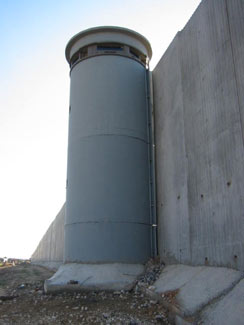 Beirut – It may be that researchers would want to examine as long ago as the period from the 3rd century BC until the beginning of the 17th century in order to find a regime so frenetically building walls and barriers in a hopeless quest to hold onto stolen lands as we in Lebanon may soon witness in the south of the country. It was back in 221 BC that in order to protect China from the land claims of the Xiongnu people from Mongolia, the Xiongnu tribe being China’s main enemy at that time who sought the return of lands they claimed the Chinese had stolen, that the emperor Qin Shi Huang ordered the construction of a wall to guard China’s territorial gains.


 Aletho News

