UN Report Reveals Nobody Held Accountable for Crimes Against Russian PoWs in Ukraine
Sputnik – 01.10.2024
GENEVA – A recent periodic report from the Office of the UN High Commissioner for Human Rights (OHCHR) revealed that no one has been held accountable for crimes committed against Russian prisoners of war in Ukraine.
Earlier this year, the Independent International Commission of Inquiry on Ukraine, established by the United Nations Human Rights Council, released a report indicating that Ukrainian soldiers committed war crimes by executing and torturing Russian prisoners of war. The UN mission documented 25 instances of reprisals against these prisoners by Ukrainian troops.
“The Prosecutor General’s Office of Ukraine reported that as of 16 August 2024, five pre-trial investigations were carried out into possible ill-treatment, as well as wilful killings of Russian prisoners of war, under articles 434 and 438 (“violations of rules and customs of war”) of the Criminal Code of Ukraine. However, no person received a notification of suspicion in relation to these investigations,” the report read.
More than half of the 205 Russian prisoners of war in Ukraine interviewed by the UN since March 2023 said they had been tortured and ill-treated, the report read, adding that 10 of them “reported being subjected to sexual violence, including inflicting violence to genitals and threats of rape.”
“The vast majority of incidents of torture or ill-treatment of Russian POWs (reported by 87 interviewees) occurred in unofficial or transit locations including garages, basements or private houses. OHCHR identified several such places. They were typically used by frontline units of the Ukrainian armed forces or by security forces and were located in Donetsk, Kharkov, Kherson, Kiev, Lugansk and Zaporozhye regions. Russian POWs were held in these places after evacuation from the battlefield and before entering official facilities,” the report read.
American Atrocity: Remembering the Shenandoah Burning
By Jim Bovard | The Libertarian Institute | September 30, 2024
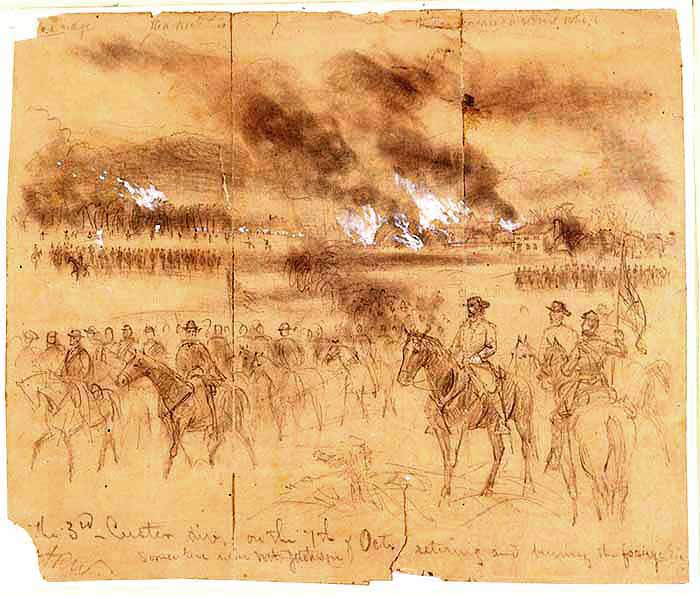
George Orwell wrote in 1945 that “the nationalist not only does not disapprove of atrocities committed by his own side, but he has a remarkable capacity for not even hearing about them.” This week is the 160th anniversary of one of the worst atrocities of the American Civil War, a barbarous episode that vanished long ago from history books. Union General Philip Sheridan laid waste to a hundred mile swath of the Shenandoah Valley, leaving vast numbers of women and children on the edge of starvation.
Before the summer of 1864, the Civil War was primarily fought on battlefields. After failing to decisively vanquish Confederate forces in pitched clashes, the Union leadership widened the war, trying to destroy the South’s economy—with the civilian population increasingly a target. William Tecumseh Sherman, the commander of the Union forces menacing Atlanta in 1864, telegrammed Washington saying that in the South, “There is a class of people men, women, and children, who must be killed or banished before you can hope for peace and order.”
On July 15, 1864, supreme Union commander Ulysses S. Grant signed an order that the Shenandoah Valley should be made into a “desert” and “all provisions and stock should be removed, and the people notified to move out.” His troops would “eat out Virginia clear and clean as far as they go, so that crows flying over it for the balance of the season will have to carry their provender with them.” In August 1864, Grant ordered Sheridan to “do all the damage to railroads and crops you can. If the war is to last another year, we want the Shenandoah Valley to remain a barren waste.” Sheridan set to the task with vehemence, declaring that “the people must be left nothing but their eyes to weep with over the war” and promised that, when he was finished, the valley “from Winchester to Staunton will have but little in it for man or beast.”
Because people lived in a state that had seceded from the Union, Sheridan acted as if they had automatically forfeited their property, if not their lives. Many who lived in the Shenandoah Valley, such as Mennonites, had opposed secession and refused to join the Confederate Army, but their property was also looted and burned.
Stephen Starr, author of Union Cavalry in the Civil War, wrote, “The deliberate planned devastation of the Shenandoah Valley has deservedly ranked as one of the grimmest episodes of a sufficiently grim war. Unlike the haphazard destruction caused by Sherman’s bummers in Georgia, it was committed systematically, and by order.” Historian John Heatwole, author of The Burning: Sheridan’s Devastation of the Shenandoah Valley, recounted, “From a hill near Mt. Jackson Union cavalrymen counted 168 barns burning at one time. When it was all over Sheridan’s men had systematically destroyed around 1,400 barns, countless other farm structures, seventy mills, several factories, three iron furnaces, warehouses and railroad buildings, and hundreds of thousands of bushels of wheat, oats and corn, and crops standing in the fields. In Rockingham County alone, over 10,000 head of livestock were driven off.”
Some Union soldiers were aghast at their marching orders. A Pennsylvania cavalryman lamented at the end of the fiery spree, “We burnt some sixty houses and all most of the barns, hay, grain and corn in the shocks for fifty miles [south of] Strasburg. It was a hard-looking sight to see the women and children turned out of doors at this season of the year.” An Ohio major wrote in his diary that the burning “does not seem real soldierly work. We ought to enlist a force of scoundrels for such work.” A newspaper correspondent embedded with Sheridan’s army reported, “Hundreds of nearly starving people are going North not half the inhabitants of the valley can subsist on it in its present condition.” After one of Sheridan’s favorite aides was shot by Confederates, Sheridan ordered his troops to burn all houses within a five-mile radius. After many outlying houses had been torched, the small town at the center—Dayton—was spared after a federal officer disobeyed Sheridan’s order.
By the end of Sheridan’s campaign, the former “breadbasket of the Confederacy” could no longer even feed the women and children remaining there. An English traveler in 1865 “found the Valley standing empty as a moor.” Historian Walter Fleming, in his classic 1919 study The Sequel to Appomattox, quoted one bedeviled local farmer, “From Harpers Ferry to New Market, which is about eighty miles, the country was almost a desert…The barns were all burned; chimneys standing without houses, and houses standing without roof, or door, or window.” Historian Heatwole concluded, “The civilian population of the Valley was affected to a greater extent than was the populace of any other region during the war, including those in the path of Sherman’s infamous march to the sea in Georgia.” Unfortunately, given the chaos of the era at the end of the Civil War and in its immediate aftermath, there are no reliable statistics on the number of women, children, and other civilians who perished.
Some defenders of Union tactics insist there was no intent to harshly punish civilians. However, after three years of a bloody stalemate, the Lincoln administration had adapted a total-war mindset to scourge the South into submission. As Sheridan was finishing his fiery campaign, General Sherman wrote to Grant, “Until we can repopulate Georgia, it is useless to occupy it, but the utter destruction of its roads, houses and people will cripple their military resources.” President Abraham Lincoln congratulated both Sheridan and Sherman for campaigns that sowed devastation far and wide. But Lincoln’s cheerleading for collective punishment vanished from the history books thanks to his hypocritical call for “malice towards none” in his second inaugural address.
The carnage inflicted by Sheridan, Sherman, and other northern commanders made the South’s post-war recovery far slower and multiplied the misery of both white and black survivors. At the end of the war, four million ex-slaves were largely left to fend for themselves. The horrific suffering of the former slaves was swept under the rug by historians for much of the twentieth century. However, as Professor Jim Downs noted in his 2012 book, Sick from Freedom, roughly 25% of freed slaves died or became gravely ill in the first years after the war. Ex-slaves suffered violence from the Ku Klux Klan, but even more suffered because they were liberated into an economic landscape that had been desolated by four years of increasingly destructive war. Sherman’s devastating march through Georgia and the Carolinas, for instance, resulted in “a large contraction in agricultural investment, farming asset prices, and manufacturing activity. Elements of the decline in agriculture persisted through 1920,” according to a 2018 National Bureau of Economic Research analysis. Harvests collapsed in the south during and after the Civil War; cotton output fell by half between 1860 and 1870. A 1997 analysis in theJournal of Economic History concluded that “the legacy of the Civil War was far more severe and long lasting than what has been previously supposed” for both blacks and whites, especially regarding illnesses such as hookworm spread in part by poverty.
After the Civil War, politicians and many historians consecrated the conflict as a moral crusade and its sometimes-grisly tactics were consigned to oblivion. The habit of sweeping abusive policies under the rug also permeated post-Civil War policy toward the Indians (Sheridan famously declared, “The only good Indian is a dead Indian”) and the suppression of Filipino insurgents after the Spanish-American War. Later, historians would often ignore U.S. military tactics in World War II, Vietnam, and Iraq that resulted in massive civilian casualties.
The U.S. government’s targeting of civilians in the final campaigns of the Civil War signified a radical change in the relation between citizens and government that endured long after the South’s surrender at Appomattox. An 1875 article in the American Law Review noted, “The late war left the average American politician with a powerful desire to acquire property from other people without paying for it.” Ironically, a war that stemmed in large part from the blunders and follies of politicians on both sides of the Potomac resulted in a vast expansion of the political class’s presumption of power.
In the post-war era in the late 1800s, Republican politicians were notorious for invoking the “bloody shirt” of wounded veterans to demonize political opponents who did not tow the GOP line. After the September 11 terrorist attacks, America saw the same political vilification of anyone who dissented from the Bush administration’s wars. Will the same groveling reflex occur from any wars launched by the next president?
Since 1864, no prudent American should have expected this nation’s wars to have happy or uplifting endings. Unfortunately, as long as people rarely if ever hear of the atrocities their government commits, citizens will underestimate the odds that wars will spawn debacles and injustices that return to haunt us.
Another letter to the four Chief Medical Officers of the UK
Is it acceptable that 60% of young people with vaccine-induced myocarditis have cardiac damage?
Health Advisory & Recovery Team | September 30, 2024
Open letter to the Chief Medical Officers of the 4 nations of the UK
Professor Chris Whitty – CMO England: Email [email protected]
Sir Michael McBride – CMO Northern Ireland: [email protected]
Dr Gregor Smith – CMO Scotland: [email protected]
Dr Frank Atherton – CMO Wales: [email protected]
30th September 2024
Dear Professor Whitty, Dr McBride, Dr Smith and Dr Atherton,
Sixty doctors and scientists wrote to you on 6th September 2021 urging you against rolling out Covid-19 vaccines to healthy children. We had written previously to Professor Whitty in May and again in June of that year to flag up our concerns. As you know, the JCVI in their statement on 3rd September 2021, had decided against recommending these products for children’s direct benefit in view of the mild nature of SARS-CoV-2 infection for their age range coupled with concerns about the known and as yet unknown adverse effects.
They had held a conference call with cardiologists from the USA and also Israel, both countries which had started vaccinating children ahead of the UK. These groups had both reported on vaccine-induced-myocarditis, with the US group having studied a case series of 63 children and finding 89% of affected children showing Late Gadolinium Enhancement (LGE) on cardiac MRI scanning. This finding is known to be indicative of cardiac scarring and to be a predictor of deaths in the 5-years following. The group were planning a follow-up study and members of the JCVI specifically requested a delay of 6 months to await this data before making a decision.
Finally, almost 3 years later, this study has been published and it does not make for happy reading, especially if you are a parent of a child or young person who was affected. Of the 333 children and young adults enrolled, and despite an apparently mild clinical course, 82% showed LGE on their initial cardiac MRI scans, and in 60% these changes were still present at the 6 months follow-up scan. Long-term data is still awaited and risk of cardiac failure sudden death is still unquantified. A new systematic review has confirmed that LGE is a risk factor for all cause mortality, cardiac deaths, arrhythmias and heart failure.
This letter is to put on record the failure of due diligence which you, as a group of chief medical officers, showed when recommending these products for use in healthy children. “The view of the UK CMOs is that the additional likely benefits of reducing educational disruption, and the consequent reduction in public health harm from educational disruption, on balance provide sufficient extra advantage in addition to the marginal advantage at an individual level identified by the JCVI to recommend in favour of vaccinating this group.” The argument that vaccinating children would reduce school disruption seemed to ignore the fact that most of the disruption was arising from the combined policy of (a) routine testing of asymptomatic children and (b) the quarantining of whole classes or in some cases even whole year groups if one child tested positive. In England, this policy had been discontinued on 19 July 2021 just 2 days before the end of the summer term and with no time to assess the likely improvement in school attendance. It was also admitted that the calculations of possible school time saved were not balanced against any potential for school time lost, even for the vaccination process itself, let alone any possible adverse events.
When you advised the rollout of the vaccines to children, did you also advise a prospective study of cardiac health to be carried out in any of the four nations?
If the answer is yes, we would be very grateful to see the results.
If the answer is no, this surely should be organised as a matter of urgency.
Yours sincerely,
Dr Rosamond Jones, MBBS, MD, FRCPCH, retired consultant paediatrician, convenor of CCVAC
-Professor Anthony J Brookes, Department of Genetics & Genome Biology, University of Leicester
-Professor Richard Ennos, MA, PhD. Honorary Professorial Fellow, University of Edinburgh
-Professor Karol Sikora, MA, MBBChir, PhD, FRCR, FRCP, FFPM, Dean of Medicine, Buckingham University, Professor of Oncology
–Professor David Livermore, BSc, PhD, Professor of Medical Microbiology, University of East Anglia
-Professor Keith Willison, PhD, Professor of Chemical Biology, Imperial, London
–Professor Angus Dalgleish, MD, FRCP, FRACP, FRCPath, FMed Sci, Emeritus Professor of Oncology, University of London, Principal, Institute for Cancer Vaccines & Immunotherapy
–Professor John Fairclough FRCS FFSEM retired Honorary Consultant Surgeon
-Professor Norman Fenton, CEng, CMath, PhD, FBCS, MIET, Professor of Risk Information Management, Queen Mary University of London
-Professor John Watkins, Consultant Epidemiologist Cardiff University
–Lord Moonie, MBChB, MRCPsych, MFCM, MSc, House of Lords, former parliamentary under-secretary of state 2001-2003, former consultant in Public Health Medicine
-Dr Theresa Lawrie, MBBCh, PhD, Director, Evidence-Based Medicine Consultancy Ltd, Bath
-Dr Roland Salmon, MB BS, MRCGP, FFPH, Consultant Epidemiologist (retired), former Director, Communicable Disease Surveillance Centre (Wales)
-Dr Alan Mordue, MBChB, FFPH. Retired Consultant in Public Health Medicine & Epidemiology
-Dr John Flack, BPharm, PhD. Retired Director of Safety Evaluation,Beecham Pharmaceuticals 1980-1989 and Senior Vice-president for Drug Discovery 1990-92 SmithKline Beecham
-Dr Gerry Quinn, PhD. Postdoctoral researcher in microbiology and immunology
-Dr Karen Horridge, MBChB(Hons), MSc, MRCP, FRCPCH, Consultant Paediatrician (Disability)
-Mr Anthony Hinton, MBChB, FRCS, Consultant ENT surgeon, London
-Dr Geoffrey Maidment, MBBS, MD, FRCP, retired consultant physician
-Mr Malcolm Loudon, MBChB, MD, FRCSEd, FRCS(Gen Surg), MIHM,VR, Consultant Surgeon
-Dr Christina Peers, MBBS,DRCOG,DFSRH,FFSRH, Consultant in Reproductive Health
-Dr Noel Thomas, MA, MBChB, DCH, DObsRCOG, DTM&H, MFHom, retired doctor
-Dr Elizabeth Evans MA(Cantab), MBBS, DRCOG, Retired Doctor
-Katherine MacGilchrist, BSc (Hons), MSc, CEO/Systematic Review Director, Epidemica Ltd.
-Dr Greta Mushet, MBChB, MRCPsych, retired Consultant Psychiatrist in Psychotherapy
-Mr James Royle, MBChB, FRCS, MMedEd, Colorectal surgeon
–Mr Ian F Comaish, MA, BM BCh, FRCOphth, FRANZCO, Consultant ophthalmologist
-Dr Helen Westwood MBChB MRCGP DCH DRCOG, General Practitioner
-Dr Jonathan Engler, MBChB, LlB (hons), DipPharmMed
-Dr Renée Hoenderkamp, General Practitioner
-Mr Colin Natali, BSc(hons) MBBS, FRCS (orth) ,Consultant Spinal Surgeon
–Dr Alan Black, MBBS, MSc, DipPharmMed, retired pharmaceutical physician
–Dr Mark A Bell, MBChB, MRCP(UK), FRCEM, Consultant in Emergency Medicine
-Dr Livia Tossici-Bolt, PhD, NHS Clinical Scientist
-Dr Zac Cox, BDS, LCPH, Holistic Dentist, Homeopath
-Dr Samuel McBride, BSc(Hons) Medical Microbiology & Immunobiology, MBBCh BAO, MSc in Clinical Gerontology, MRCP(UK), FRCEM, FRCP(Edinburgh), NHS Emergency Medicine & geriatrics
-Dr Branko Latinkic, BSc, PhD, Reader in Biosciences
-Dr Kulvinder Singh Manik, MBBS, General Practitioner
-Dr Michael D Bell, MBChB, MRCGP, retired General Practitioner
-Dr Jason Lester, MRCP, FRCR, Consultant Clinical Oncologist, Rutherford Cancer Centre, Newport
-Dr Clare Craig, BMBCh, FRCPath, Pathologist
-Dr Scott McLachan, FAIDH, MCSE, MCT, DSysEng, LLM, MPhil, Postdoctoral researcher, Risk & Information Group
-Dr Franziska Meuschel, MD, ND, PhD, LFHom, BSEM, Nutritional, Environmental and Integrated Medicine
-Dr Emma Brierly, MRCGP, General Practitioner
-Dr Sarah Myhill, MBBS, Dip NM, Retired GP, Independent Naturopathic Physician
-Michael Cockayne, MSc, PGDip, SCPHNOH, BA, RN, Occupational health practitioner
–Dr Christopher Exley, PhD, FRSB, retired professor in Bioinorganic Chemistry
-Julie Annakin, RN, Immunisation specialist nurse
-Dr Charles Forsyth, MBBS, BSEM, Independent Medical Practitioner
-Dr Marco Chiesa, MD, FRCPsych, Consultant Psychiatrist & Visiting Professor, UCL
-Dr Paul Cuddon, PhD, Pharmaceutical Equity Research Analyst, Head of Healthcare and Life Sciences
-Margaret Moss, MA (Cantab), CBiol, MRSB, Director, The Nutrition and Allergy Clinic, Cheshire
-Prof Anthony Fryer, PhD, FRCPath, Professor of Clinical Biochemistry, Keele University
-Dr David Critchley, BSc, PhD, 32 years in pharmaceutical R&D as a clinical research scientist.
-Dr David Morris, MBChB, MRCP(UK), General Practitioner
-Dr Scott Mitchell, MBChB, MRCS, Associate Specialist in Emergency Medicine
-Dr Pauline Jones, MB BS, retired General Practitioner
-Sarah Waters, BA (Hons), MBACP, Psychotherapist, Therapeutic Parenting Practitioner
-Dr. Eashwarran Kohilathas, BMBS, GP Trainee
-Dr Rohaan Seth, Bsc (hons), MBChB (hons), MRCGP General Practitioner
-Dr Jessica Robinson, BSc(Hons), MBBS, MRCPsych, MFHom, Psychiatrist & Integrative Medicine
-Dr Dee Marshall, MBBS, MFHom, Nutritional Medicine
-Dr Jenny Goodman, MA, MB ChB, Ecological Medicine
-Dr Elizabeth Burton, MBChB, retired general practitioner
-Dr Sam White, MBChB, MRCGP, General Practitioner, Functional medicine practitioner
-Dr Rachel Nicoll, PhD, Medical researcher
-Dr Ruth Wilde, MB BCh, MRCEM, AFMCP, Integrative & Functional Medicine Doctor
-Dr Damien Downing, MBBS, MRSB, private physician
-Dr Andrew Isaac, MB BCh, Physician, retired
-Jemma Dale, BSc (Hons), Biomedical Scientist
-Angela Chamberlain, Bsc (Hons), Midwife
-Alex Hicks, MEng, MCIPS, Compliance Director (Supply Chain)
-Sophie Gidet, RM, Midwife
-Helen Auburn, Dip ION, MBANT, CNHC, Registered Nutritional Therapist
-Dr Ali Haggett, PhD, Mental health community work, former lecturer in the history of medicine
UK ministers tried to sway police to stifle anti-‘Israel’ activists
Al Mayadeen | September 30, 2024
Home Office ministers and staff attempted to influence UK police and legal prosecutors to take action against activists targeting the facilities of Elbit Systems, a major Israeli arms manufacturer, campaigners revealed after obtaining internal documents as proof, The Guardian reported.
Briefing notes obtained by Palestine Action through freedom of information requests reveal discussions held prior to October 7 and the Israeli genocide in Gaza, which aimed to “reassure” Elbit Systems UK, the main target of an action campaign by the network.
The prosecution of Palestine Action activists, who have relentlessly protested the Israeli genocide and war crimes against Palestinians in Gaza, has resulted in some convictions for charges like burglary and criminal damage.
Briefing notes, though heavily redacted, reveal that Home Office ministers attended meetings with representatives from Elbit Systems, and one meeting included a director from the Attorney General’s Office reportedly representing the Crown Prosecution Service (CPS). These notes also indicate that Home Office officials reached out to the police regarding Palestine Action.
Tim Crosland, coordinator of Defend Our Juries, which argues that judges are undermining jurors’ absolute right to acquit based on conscience by restricting defendants from discussing their motivations, stated, “These disclosures, despite the extensive redaction, are the smoking gun on what has been obvious for a while: the government has been trying to put a stop to juries acquitting those who expose and resist corporate complicity in violations of international law and mass loss of life.”
He further asserted that the political intervention constitutes a “national scandal that implicates those at the highest levels”, indicating that the matter is also tantamount to the corruption of democracy and a breach of law by the UK’s elite.
Details
A private secretary note from March 2, 2022, detailing a meeting between then Home Secretary Priti Patel and Martin Fausset, CEO of Elbit Systems UK, noted, “Palestine Action’s criminal activity is for the police to investigate and though they are operationally independent of government meaning we cannot direct their response, my officials have been in contact with the police about PA.”
Another briefing from April 19, 2023, framing a session between Chris Philp, then a Home Office minister, and Elbit, revealed that a director from the Attorney General’s Office will attend to represent the CPS, as the CPS opted not to participate in the meeting to maintain their operational independence.
Meanwhile, the content of a section titled “past lobbying” was redacted.
A spokesperson for Palestine Action stated that claims of independence were undermined within the same sentences where they were made.
“What is happening behind closed doors is clear evidence of collusion between the government, a foreign private arms manufacturer, the CPS, the Attorney General’s Office, and the police,” they said, asserting that it was a flagrant abuse of power that asserts how the state prioritizes the interests of Elbit Systems “over the rights and freedoms of its own citizens.”
On the other hand, a police spokesperson said, “We fully respect the operational independence of the police and the independent judiciary, which remains the bedrock of our policing model. These meetings took place under the previous government.”
Previous documents obtained through FoI requests indicated that Israeli embassy officials in London sought to have the Attorney General’s Office intervene in UK court cases involving the prosecution of protesters.
Labour continues arming ‘Israel’
Since its election, the new Labour government has been at the center of demands to halt all arms sales to “Israel”.
Although it announced that it would continue funding UNRWA following a baseless global defunding campaign and that it would not contest the International Criminal Court’s authority to issue an arrest warrant for Israeli Prime Minister Benjamin Netanyahu and Security Minister Yoav Gallant for war crimes, the government was yet to completely commit to the more significant shift that the public is calling for, which is the cessation of arms shipments to “Israel”.
Mark Smith, a counterterrorism official at the British Embassy in Dublin, relayed to his colleagues after submitting his resignation, “Each day we witness clear and unquestionable examples of War Crimes and breaches of International Humanitarian Law in Gaza perpetrated by the State of Israel.”
“There is no justification for the UK’s continued arms sales to Israel, yet somehow it continues. I have raised this at every level in the organization … As a fully cleared officer raising serious concerns of illegality in this Department, to be disregarded in this way is deeply troubling. It is my duty as a public servant to raise this,” he added.
Earlier this month, the British government announced the immediate suspension of 30 out of its 350 arms export licenses with the Israeli occupation, citing concerns that the equipment might be used in ways that violate international humanitarian law, Foreign Minister David Lammy announced after a review of arms sales to the occupying regime, particularly in the context of the ongoing war on Gaza.
Lammy emphasized that this suspension does not amount to a blanket ban or an arms embargo but is a targeted measure. “It is with regret that I inform the House of Commons today that the assessment I have received leaves me unable to conclude anything other than that for certain UK arms exports to Israel, there exists a clear risk that they might be used to commit or facilitate a serious violation of international humanitarian law,” Lammy stated.
Joe Biden Is Responsible for Burning Lebanon
By Daniel Larison | The Libertarian Institute | September 30, 2024
The Joe Biden administration claims to be pushing for a “temporary ceasefire” between Israel and Hezbollah to avert a larger conflict, but this is very late in the day and it is not a serious effort to prevent a new war in Lebanon. It is at best a desperate, last-minute exercise in going through the motions of diplomacy. The administration would like to pretend that it is a passive bystander pleading from the sidelines instead of the chief patron and arms supplier of the main belligerent in the conflict, and it designs its entreaties to be toothless so that Israel can safely ignore them.
The United States has refused to exert any pressure on Prime Minister Benjamin Netanyahu’s government for the last eleven months, and it has continued supplying Israel with weapons no matter how those weapons have been used to commit war crimes against Palestinians. Now American officials say that they don’t want further escalation in Lebanon, but once again the administration won’t back up those words with action. The U.S. could use its leverage to rein Israel in and insist on the de-escalation that the administration says that it wants, but the president has shown that he has no interest in doing that.
The empty Gaza ceasefire negotiations prove as much. The ceasefire talks have become an interminable process designed to lead nowhere. The administration has catered to the Netanyahu government’s preferences at every turn. Each time that Netanyahu adds new deal-breakers or otherwise seeks to derail negotiations with new attacks, the administration has dutifully taken his side and pretended that Hamas is the sole obstacle to securing an agreement. The United States cannot be a credible diplomatic actor in the region when its primary role is acting as Netanyahu’s PR agent.
The Israeli government assumes that the U.S. won’t withhold weapons, diplomatic support, or military protection under any circumstances, and that has encouraged Netanyahu to pursue increasingly aggressive goals. Because the U.S. shields Israel from military reprisals, as it did earlier this year during Iran’s missile and drone strikes, it has given Netanyahu free rein to lash out whenever and wherever he wants. The administration has dressed all of this up as preventing a wider regional war, but the reality is that they have simply delayed the conflagration while making it more likely that it will be even more destructive when it occurs.
The total failure of the administration’s policy is there for all to see. The region is likely facing a new Israeli invasion of Lebanon, and that invasion will have serious destabilizing effects on the wider region. This is the disaster that the United States has claimed to oppose all along, but in practice it has done nothing to stop it. Had the U.S. truly wanted the war in Gaza not to spread, it would have demanded a lasting ceasefire months ago. Had the U.S. wanted to prevent escalation in Lebanon, it would be cutting off arms transfers and pulling back its forces from the region rather than rushing more troops to the Middle East. Instead the United States has done everything that one would expect it to do if it wished to set the region ablaze.
The U.S. is at great risk of being ensnared in this larger war. It is imperative that our country avoid direct involvement in Israel’s conflicts. The U.S. has no vital interests at stake in these fights. The president has no authority to involve American forces directly. It is not the responsibility of the United States to bail out a reckless client state when it gets in over its head. The quickest way to force the Israeli government to deescalate is to deprive it of the support and protection that it takes for granted.
Once the current crisis is over, U.S. foreign policy in the region has to be radically overhauled. To avoid future entanglements in the wars of client states, the U.S. should downgrade its relationships with the Middle Eastern governments that rely heavily on American weapons supplies and protection. The United States has no formal commitments to defend these states, and it should not extend security guarantees to any of them. The U.S. also needs to reduce its military presence in the region to the bare minimum required to secure our embassies. Decades of extensive American military involvement in this part of the world have been ruinous for the countries of the region and for American interests, and it is in the best interests of all concerned for the United States to get out.
Lebanon: Israeli forces’ airstrikes kill 14 medics in 2 days
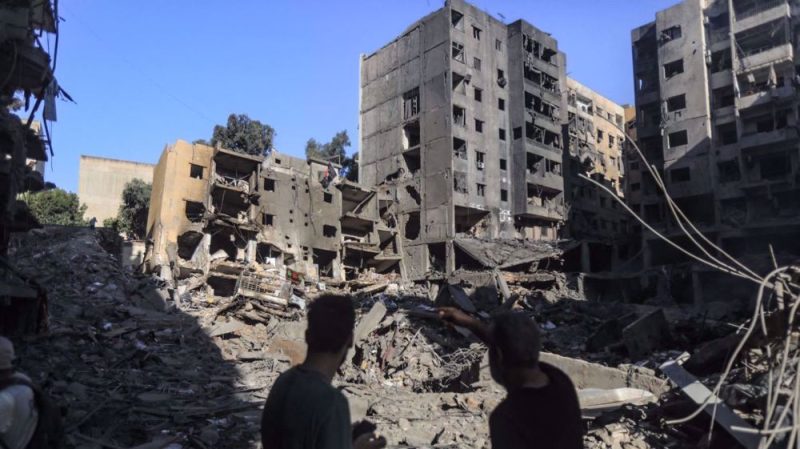
People check the leveled area bombarded on September 27, 2024 by US-made bunker-buster bombs in the Haret Hreik neighborhood of Beirut’s southern suburbs. (Photo by AFP)
Press TV – September 29, 2024
More than a dozen paramedics have been killed in recent Israeli attacks, Lebanon’s health ministry announced.
The Lebanese health ministry announced on Sunday that 14 paramedics had been killed in two days of intense Israeli bombardment in Lebanon’s east and south and in Beirut where it had killed Hezbollah’s leader, Sayyed Hassan Nasrallah.
The ministry said in its statement that it “condemns in the strongest terms the Israeli enemy’s repeated attacks on medical centers” and that “paramedics do not participate in hostilities.”
“The Israeli occupation forces have accumulated their attacks on paramedics and health centers in recent days. This series of attacks led to the martyrdom of fourteen paramedics in two days,” it said in the statement.
“The repeated attacks by the Israeli enemy on health centers flout international laws and norms, especially the Geneva Convention which highlights the neutrality of health centers and health workers in combat zones to allow them to carry out their humanitarian duty.”
“Does Israel want the blood to flow without stopping? Where is the international community and its responsibility to put an end to this escalating genocide?” it added.
The Lebanese Government Emergency Committee announced that the Israeli war machine launched 216 air attacks in the past 24 hours across Lebanon.
The Israeli airstrikes are due to the Lebanese Hezbollah resistance group showing solidarity with and giving support to Palestinians since the Tel Aviv leaders unleashed a genocidal war against the besieged Gaza Strip in October 2023.
Since then, Israeli attacks on Lebanese targets have left 1,640 people dead.
Hezbollah leader Sayyed Hassan Nasrallah, who led the resistance movement for over three decades, was himself martyred after Israeli regime forces bombarded a Beirut suburb using US-made jet fighters and bunker-buster bombs.
Of Cool Heads and Hot Heads

By Philip Kraske • Unz Review • September 29, 2024
Ever more desperate, Israel is working hard to start a world war with the United States on its side. The elimination of Hassan Nasrallah won’t make much difference to Hezbollah’s fight; the new leader will soon step up. But Israel might regret the absence of the cool-headed Nasrallah.
Cool-headedness has actually been the norm this past year, and is among the few hopeful notes on the international scene. Lots of leaders are keeping calm, holding back the factions in their governments that would love to take a crack at the folks thumbing their military noses at them.
China merely tut-tuts about foreign navy ships traversing the Strait of Taiwan, Hezbollah keeps its big missiles in their silos, Iran responds to Israeli attacks with a few half-hearted firecrackers, and Vladimir Putin frowns and issues warning after warning when Ukraine, with Nato help, hits Russian refineries and radar installations. Meanwhile Egypt, Jordan, Iran, Syria, and Turkey — and I’ve probably missed a few — itch to put holes in Israeli runways.
But restraint is the watchword. Unlike before World War One, when governments decided to declare war from one day to the next, countries are looking before they leap. Why? To what do the world’s citizens owe this clear shift to reluctance among national leaders to jump into conflict? It’s often been observed that nuclear weapons have kept the peace among the great powers. Nowadays, however, other elements keep the peace just as well. Here are the three most important ones.
The first is economic. It’s true that capitalist consumerism has atomized the citizenry, but it also keeps people quiet. National leaders figure that the only way to keep everybody fed and employed and hypnotized by Netflix series is to keep the economy running. Take tourism, for example — a labor-intensive industry that absorbs a lot of workers with little formal education. Israel’s has been hammered. Who wants to retrace the steps of Christ in the Holy Land amidst the squall of sirens announcing incoming missiles from Hezbollah? Israel now has to rotate its forces in and out of the military just to keep the economy going. But they’re finally going to throw the Palestinians out, and figure it’s worth the tradeoff.
Other touristy countries have much less to gain. In Turkey, tourism makes up more than ten percent of the economy, and is still growing. In Egypt, it’s 24 percent. Take that away, and the ensuing unrest will topple governments. But their leaders have less to gain from tackling Israel.
The second element is strategic. Just over the last several years, war has turned into a video game of missiles and missile-defenses and drones of all different kinds. As the commentator Alistair Crooke has observed, American aircraft carriers parked in the eastern Mediterranean look like something out of the 1950s. A couple of missiles sent from Crimea would send them to the bottom of the sea in a question of minutes.
Conventional war has all but disappeared. Imagine what would happen to American troop and supply ships traversing the Atlantic. If German U-boats sank nearly three thousand, Russians would sink every one of them, and not from a dank submarine but from a cosy office in Moscow. And crossing the Pacific to attack China would be a suicide mission.
National governments see the destruction wrought by Russian missiles — not its army shelling villages, but the attacks from afar on major cities and infrastructure — and they quickly figure that restraint is the better part of valor.
The third element that makes governments hesitate to get into a fight is that societies are far more fragile than before. Imagine what would happen if the Chinese got mad at the Americans and dropped a few missiles on highway overpasses, which then collapsed highways, between San Diego and San Francisco. Of course, hackers could wreak havoc on just about everything, but if software defenses proved troublesome to them, a couple of missiles — or just bombs placed by hired thugs — on data centers would quickly affect the internet in all kinds of random ways. Well-paid jokers could send drones flying around Atlanta and Chicago airports — or Istanbul’s or Frankfurt’s or Tokyo’s — closing them down. And if some leader were in a bloody frame of mind, he could order the downing of just two commercial airliners, one taking off in Paris and the other in Miami — and watch every flight reservation in the the western hemisphere get canceled in an hour. Citizens of the world’s poorest countries would finally have the last laugh.
In fact, there is a never-declared Mutually Assured Destruction that restrains governments, or quasi-governments like Hezbollah. All to the good, except that conventional war seems to be morphing into terrorism. Now that Israel has opened the Pandora’s box of booby-trapping consumer items, how long will it be before desk lamps — or shoes or avocados — begin to explode in Tel Aviv? Will Kurds need to take apart their Turkish-made earphones? As readers of Unz.com know, attacking China is far more cost-effective through untraceable biological attacks against its people and livestock, and invites no revenge — at least for the moment.
Israel’s attack with pagers and radios, Ukraine’s worthless drone strikes on Moscow apartment buildings, America’s aimless pecking at “terrorists” in Syria and Iraq — these are harbingers of the terrorist world to come.
And as defeat approaches, the losers are bound to raise the ante — especially the Israelis and Ukrainians. As in World War Two, the years of war have corroded their last vestige of ethics, and they know that the Washington elite will ultimately excuse their tactics. The western media would give nothing but dashing accounts of how Zelensky and Netanyahu — harried, exhausted, yet persevering — listened to their advisers, rubbed their necks, and gave the green lights to “limited” chemical or nuclear attacks against advancing enemies. For an excellent example of how flexible, how downright protean, mainstream journalists can be, read New York Times columnist Amanda Taub’s article on the legality of Israel bombing of the Iranian consulate in Damascus: “Israel Bombed an Iranian Embassy Complex. Is That Allowed?” She concludes that it was.
In short, if Hezbollah’s next leader, not so restrained as Nesrallah, unleashes missile hell down the whole length of Israel, Netanyahu and his hard-eyed friends may come to regret finishing him off. Doesn’t history tell the best jokes?
Nasrallah assassination aimed at provoking US-Iran war: Russia’s Lavrov
Press TV – September 29, 2024
Russia’s Foreign Minister Sergey Lavrov says that Israel’s assassination of Hezbollah Secretary-General Sayyed Hassan Nasrallah may have been intended to provoke a war between the United States and Iran.
Lavrov told reporters at a news conference after addressing the UN General Assembly on Saturday that a lot of people believe Israel’s assassination of Nasrallah was aimed at provoking Iran and the US “to unleash a full-blown war in the entire region.”
Killing the Hezbollah leader was “not simply a political assassination. It’s very cynical as an act,” Lavrov said.
“I think – well not even, I think, but a lot of people say – that Israel wants to create the grounds to drag the US directly into this and so to create these grounds, it is trying to provoke Iran,” Lavrov added.
“The Iran leadership, I think, are behaving extremely responsibly. And this is necessary. This is something that we should take due note of.”
Speaking at the UN Security Council meeting on Friday, Lavrov said, “the Middle East is once again on the brink of a big war,” calling for active diplomatic efforts to prevent the “most catastrophic scenario.”
In his UN General Assembly speech, Lavrov condemned the Israeli regime for its “inhumane attack on Lebanon.”
“Another glaring example of terrorist methods as a means of achieving political aims is the inhumane attack on Lebanon that transformed civilian technology into a lethal weapon,” Lavrov said, calling for an immediate international investigation.
‘US knew about Israel’s pager attacks’
Lavrov also told reporters that the US was likely aware of the Israeli regime forces’ plans to launch a “terrorist attack” against Lebanon using communication devices.
He said the complexity of the attack and the leaking of details to Western media indicate Washington’s possible complicity in the terrorist operation.
Last week, thousands of hand-held pagers and walkie-talkies used by Hezbollah members exploded across Lebanon simultaneously, killing dozens and injuring thousands, including many civilians. The attack, widely blamed on Israeli spy agency Mossad, drew international condemnation, with UN Human Rights Commissioner Volker Turk calling it a “shocking” and “unacceptable” act that violates human rights laws.
Tel Aviv has not claimed responsibility for the pager attacks, and its allies have denied any knowledge. However, according to Lavrov, Western media reports regarding the details and preparations “indicate to varying degrees the involvement and, at the very least, awareness of Washington concerning the preparation of that terrorist attack.”
Hezbollah confirms Hassan Nasrallah assassinated by Israel
The Cradle | September 28, 2024
Lebanese resistance movement Hezbollah confirmed on 28 September the assassination of its Secretary-General Hassan Nasrallah during intense Israeli airstrikes that hit Beirut’s southern suburbs on Friday.
“His Eminence Sayyed Hassan Nasrallah, Secretary General of Hezbollah, has joined his great and immortal martyred comrades, whose path he led for nearly thirty years, during which he led them from victory to victory, succeeding the Master of the Martyrs of the Islamic Resistance in 1992 until the liberation of Lebanon in 2000 and to the glorious divine victory in 2006 and all the battles of honor and sacrifice, arriving at the battle of support and heroism in support of Palestine, Gaza, and the oppressed Palestinian people,” the statement released by the Lebanese resistance reads.
“The leadership of Hezbollah pledges to the highest, most sacred, and most precious martyr in our journey full of sacrifices and martyrs that it will continue its jihad in confronting the enemy, in support of Gaza and Palestine, and in defense of Lebanon and its steadfast and honorable people,” the statement adds.
Hezbollah also stressed that its leader “is still among us with his thought, spirit, line, and sacred approach, and you are committed to the pledge of loyalty and commitment to resistance and sacrifice until victory.”
Nasrallah was killed during an Israeli carpet bombing campaign on the Lebanese capital that destroyed several residential buildings and displaced tens of thousands of civilians. The attack reportedly targeted the main headquarters of the Lebanese resistance movement.
Earlier on Saturday the Israeli army confirmed Nasrallah’s assassination alongside other top resistance leaders. Israeli authorities told the New York Times (NYT) that they had been tracking Nasrallah “for months,” adding that “more than 80 bombs were dropped over a period of several minutes to kill him.”
Born in 1960 to a Shia Muslim family in a poor area of east Beirut, Nasrallah briefly joined the Amal Movement as a young man, inspired by its leader Sayyed Musa Sadr.
In late 1976 Nasrallah left for Najaf in Iraq to study at the city’s religious seminary, where he met Lebanese scholar Abbas Mussawi. After the 1978 Baathist crackdown on Shia Muslims Nasrallah and Mussawi returned to Lebanon where he continued his studies.
Nasrallah became head of Hezbollah’s executive council and a member of its shura council in 1985. Seven years later, Mussawi, serving as Hezbollah’s secretary general, was assassinated along with his wife and child in an Israeli airstrike.
Speaking at his funeral, Nasrallah said, “By murdering … Sayyed Abbas Mussawi, they sought to kill our spirit of resistance and destroy our will for jihad. But his blood will continue to simmer in our veins, only strengthening our determination to move forward and intensifying our enthusiasm to pursue the path.”
“America will remain the primary enemy of this nation and the greatest Satan of all. Israel will forever be, in our eyes, a cancerous growth that must be eradicated, an artificial entity that should be removed, even if all the rulers of the world recognize it. Palestine—all of Palestine—will remain part of this nation, and we shall not relinquish a single grain of its sand.”
According to Iranian General Hossein Hamedani, following the assassination of Quds Force commander Qassem Soleimani by the US in 2020, Tehran tasked Nasrallah with uniting its armed allies in Iraq. He also supervised the overall policy for the Resistance Axis during the US-backed Syrian war.
One day after the start of Operation Al-Aqsa Flood the Israeli genocide of Palestinians in Gaza, Nasrallah declared the opening of a “front in southern Lebanon to support Palestinian resistance,” vowing over the past year that the effort would remain active until the war in Gaza ends.
“Our commanders, fighters, women, and children will be martyred; we are united in sacrifice – this is the reality of resistance, and this is our path until the day of judgment,” Nasrallah said during a televised speech earlier this year following the Israeli assassination of Hezbollah senior commander Fuad Shukr.
At the UN, Netanyahu blames Israel’s isolation on ‘anti-Semitism’
The Cradle | September 27, 2024
Speaking at the UN General Assembly on 27 September, Israeli Prime Minister Benjamin Netanyahu blamed the condemnation of Israel at the UN and International Criminal Court (ICC) on anti-Semitism, saying allegations of war crimes have nothing to do with Israel’s actions, including its slaughter and starvation of Palestinians in Gaza.
“It’s not about Gaza,” he claimed. “It’s about Israel” and its very existence.
“[U]ntil this anti-Semitic swamp is drained, the UN will be viewed by fair-minded people everywhere as nothing more than a contemptuous farce,” Netanyahu claimed.
“What hypocrisy. What a double standard. What a joke,” he said to applause from Israel supporters.
The assembly hall was otherwise almost empty after several delegations walked out as Netanyahu reached the podium.
On 27 September, the UN member states voted overwhelmingly in the General Assembly to adopt a resolution calling on Israel to comply with international law, withdraw its military forces, immediately cease all new settlement activity, evacuate all settlers from occupied land, and dismantle parts of the separation wall it constructed inside the occupied West Bank.
In May, ICC Chief Prosecutor Karim Khan applied for arrest warrants for Netanyahu and Defense Minister Yoav Gallant, accusing them of war crimes and crimes against humanity, including using starvation of civilians as a method of warfare and intentionally directing attacks against a civilian population.
However, four months later, ICC judges have still not approved or denied the applications. There is no deadline for judges to come to a decision.
In his UN speech, Netanyahu signaled there would be no immediate end to the Israeli army’s ongoing assault on Lebanon, which has killed over 700 people in less than a week, despite calls from US President Joe Biden and French President Emmanuel Macron for a ceasefire.
Netanyahu said his military would keep striking Hezbollah in Lebanon with “all our might.”
‘We’re at war with Hezbollah,’ he said. ‘As long as Hezbollah chooses the path of war, Israel has no choice. And Israel has every right to remove this threat and return our citizens to their homes safely.”
His speech comes as Israeli officials said they were preparing for a potential ground invasion of Lebanon.
Israel secures $8.7bn military aid package from Washington
The Cradle | September 26, 2024
Israel said on 26 September it had secured an $8.7 billion aid package from the US government to support its ongoing military assaults on Lebanon and Gaza and to maintain a “qualitative military edge in the region,” Reuters reported on 26 September.
The package includes $3.5 billion for critical military purchases and $5.2 billion for air defense systems, including the Iron Dome anti-missile system, David’s Sling, and an advanced laser system.
US support for Israel’s missile defense systems is crucial to shield Israeli military installations and infrastructure from Hezbollah’s large missile and rocket stocks.
While Israeli warplanes have devastated south and east Lebanon with airstrikes since Monday, killing over 600 Lebanese and Syrians, Hezbollah has hit numerous targets in the vicinity of the city of the Israeli city of Haifa, as well as an Israeli intelligence base on the outskirts of Tel Avi in central Israel.
Israel also needs US munitions and financial support to continue its horrific bombing campaign of Gaza, which is nearing its twelfth month and has killed over 40,000 people and destroyed large swathes of the crowded strip.
The aid announcement came after a meeting at the Pentagon between Eyal Zamir, the director general of Israel’s defense ministry, and US defense officials, including acting Under Secretary of Defense for Policy Amanda Dory.
“This substantial investment will significantly strengthen critical systems such as Iron Dome and David’s Sling while supporting the continued development of an advanced high-powered laser defense system currently in its later stages of development,” Israel’s Defense Ministry said in a statement.
The deal illustrates the “strong and enduring strategic partnership between Israel and the United States and the ironclad commitment to Israel’s security,” the statement added.
Reuters reported in late June that Tel Aviv’s allies in Washington had sent more than 10,000 highly destructive 2,000-pound bombs and thousands of Hellfire missiles since the start of the war in Gaza last October.
The news agency added that Washington had transferred at least 14,000 of the MK-84 2,000-pound bombs, 6,500 500-pound bombs, 3,000 Hellfire precision-guided air-to-ground missiles, 1,000 bunker-buster bombs, 2,600 air-dropped small-diameter bombs, and other munitions.
Since 7 October of last year, news channels and social media sites have shown a steady stream of videos and images of Palestinian men, women, and children who have been torn apart by US bombs.
Israel systematically destroys Gaza farmland to starve the population: Euro-Med

Palestinian Information Center – September 26,2024
GAZA – The Euro-Med Human Rights Monitor has said that Israel’s destruction of hundreds of dunums of vegetable farmland in the northern Gaza Strip reflects its insistence on the mass extermination of Palestinians.
In a statement on Thursday, Euro-Med accused the Israeli army of seeking to deprive the Palestinians in Gaza of agricultural production and food supplies and destroy the resources vital for their survival in order to create living conditions that lead to their starvation and death.
Meanwhile, the Israeli army has been imposing an illegal siege on Gaza and severely restricting the entry of aid to its areas for almost a year, Euro-Med added.
Israel’s destruction of farmland in northern Gaza is part of the systematic plan it has been pursuing against the Gaza population since October 2023, Euro-Med said.
“The occupation forces have taken about 80 percent of the agricultural land out of service in the Gaza Strip, either through isolating it as a prelude to illegally annexing it by force to the buffer zone in violation of international law or destroying and bulldozing it,” Euro-Med explained.
Euro-Med said that its field team documented “the incursion of Israeli forces accompanied by bulldozers on Tuesday morning, September 25, into ash-Shima area in Beit Lahia, north of Gaza, and the bulldozing of over 500 dunums of land that had been recently replanted by Palestinians with vegetables to meet the needs of the citizens living in northern Gaza, who are facing systematic starvation and an arbitrary blockade.”
“The Israeli army’s destruction of these swaths of agricultural land, mostly planted with eggplants, reflects Israel’s insistence on depriving the population of relying on the local agricultural food basket, while blocking the access of adequate quantities of vegetables and food supplies to the northern Gaza Strip, which has led to the outbreak of severe famine to the point that a large part of the population was forced to eat tree leaves and grind animal feed before turning it into bread in order to stay alive,” Euro-Med said.
Featured Video
HE SAVED LIVES. NOW HE FACES PRISON.
or go to
Aletho News Archives – Video-Images
From the Archives
NATO Sanctions and the Coming Global Diesel Fuel Disaster
By F. William Engdahl – New Eastern Outlook – 11.04.2022
Amid the ongoing global inflation crisis, NATO heads of state and mainstream media repeat a mantra that high energy prices are a direct result of Putin’s actions in Ukraine since end of February. The reality is that it is the western sanctions that are responsible. Those sanctions including cutting SWIFT interbank access for key Russian banks and some of the most severe sanctions ever imposed, are hardly having an impact on the military actions in Ukraine. What many overlook is the fact that they are increasingly impacting the economies of the West, especially the EU and USA. A closer look at the state of the global supply of diesel fuel is alarming. But Western sanctions planners at the US Treasury and the EU know fully well what they are doing. And it bodes ill for the world economy.
While most of us rarely think about diesel fuel as anything other than a pollutant, in fact it is essential to the entire world economy in a way few energy sources are. The director general of Fuels Europe, part of the European Petroleum Refiners Association, stated recently, “… there is a clear link between diesel and GDP, because almost everything that goes into and out of a factory goes using diesel.” … continue
Blog Roll
 Aletho News
- Trump meets Rodríguez near Maduro’s prison as Venezuela’s oil flows to US
- Trita Parsi: Middle East Unraveling — Are We on the Path to World War?
- Iran FM meets with US envoy on UN meeting’s sidelines at American side’s insistence: Report
- Qatar PM calls for Gulf security framework with Iran, says war must be ‘wake-up call’
- China condemns US extortion of Iranian airlines, rejects Washington’s ‘illegal’ sanctions threats
- Italy to move military personnel from Taif base after missile strike
- Finland’s Stubb tells European leaders to calm down
- Defeating Russia on battlefield impossible – Fico
- Finland’s Gender Clinic Reversal
- Massachusetts Wants Mental Health Visits, Why Does Government Use ‘Health’ to Enter Our Homes & Families?
- If Americans Knew
- Sanctions are collective punishment: immoral and self-defeating
- Phosphorus Munitions Fired by Israel Burn Groves, Orchards in Southern Lebanon
- Israel Carries Out New Ceasefire Violations Across Gaza
- AI – Emphasis on the ‘I’: Israel Is Funding AI Chatbot Propaganda
- Israel Blocking Hundreds of Wheelchairs for Injured Children From Entering Gaza
- Israel Is Expanding and Upgrading Compounds for Palestinian Militias in Gaza
- The Palestinian-American Residents of This West Bank Town Are Wondering: Where Is Trump?
- Gaza desperately needs tents, wheelchairs, fuel… and everything else (Israel blocks it all) – Daily Update
- Israeli Attacks in Gaza Kill at Least Seven Palestinians Over Three Days, including Woman and Child
- Trump’s militarization of Washington DC as he pursues Israel’s war against Iran
- No Tricks Zone
- New Study: Earth And Venus Surface Warmth Largely Explained By Convection And Lapse Rate, Not CO2 Or Radiation
- 2025 Nature Paper Claiming Worsening Global Drought Gets RETRACTED …Heavily Flawed
- New Study: ‘Global Drought Shows No Detectable Recent Acceleration Under Climate Warming’
- Economic Masterminds: German Socialists Suggest Taxing Productivity Gains Stemming From Using AI
- The South China Sea Has Not Been Cooperating With The Climate Change Narrative
- Energy Crisis: Germany Enters Heating Season With Historically Low Gas Reserve Fill Levels
- New Study: The Antarctic Ice Sheet Gained Mass From 2020-2024 Due To Staggering Snow And Ice Accumulation
- Study: Ocean Heating Rates From Thousands Of Years Ago ‘Dwarf’ Modern Ocean Heating Rates
- Climate Extremists Target, Attack Large-Scale Power Grid Infrastructure In Germany!
- New Study: Antarctic Ice Melt Has Contributed Less Than 1 Centimeter To Sea Level Rise In The Last 30 Years

