Gaza: Israeli army kills another journalist, raising the toll to 175 martyrs
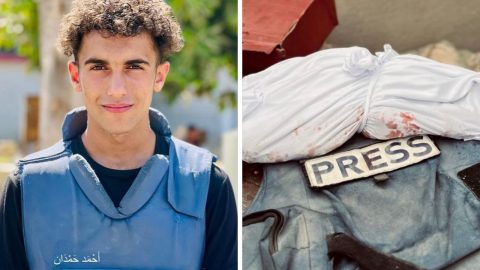
Palestinian Information Center – October 6, 2024
GAZA – Another Palestinian journalist was killed in an Israeli airstrike in northern Gaza, bringing the death toll of martyred media workers since last October 7, 2023 to 175, Gaza’s Government Media Office (GMO) said on Sunday.
In a statement, GMO identified the new slain journalist as Hasan Hamad, who works for Media Town, saying he was martyred following an Israeli airstrike on his house in Jabalia refugee camp in northern Gaza.
GMO strongly denounced the targeting, killing, and assassination of Palestinian journalists by the Israeli occupation forces, calling on the international community and its organizations to “deter the occupation and prosecute it at international courts for its ongoing crimes.”
Why Israel Can’t Win
Endgame: Masada 2.0
By Kevin Barrett | October 6, 2024
“Israel” is quite proficient at killing people. In less than a year they have killed 40,000 civilians in Gaza, and last week killed 2,000 more in Lebanon. Unofficial estimates of the real death toll in Gaza, as opposed to the officially recovered, counted, and identified bodies, exceed 200,000.
As they slaughter vast numbers of women and children under the flimsiest excuses, the Zionists also kill the political and diplomatic leaders with whom wiser leaders would be negotiating. They apparently have not considered that for each civilian they kill, dozens of furious survivors and onlookers become long-term anti-Zionist combatants-in-waiting. And they don’t seem to realize that martyring political and diplomatic leaders gives fighters added incentive to up their game, and leaves them no option but to do so. That’s why, in the wake of the assassination of Hassan Nasrallah, Israel’s attempted invasion of Lebanon has been shockingly (to the Zionists) unsuccessful.
Randomly murdering tens of thousands of civilians, or assassinating a handful of leaders, superficially looks like tactical success. Richie Allen seemed to think that Israel’s terrorist attack on non-combatants associated with Hezbollah via exploding pagers was an impressive achievement.* As I told him, just about anybody who really wants to randomly murder that number of people, or more, can do so if they so choose. The fact that Israeli leaders employed such an elaborate Rube Goldberg scheme to mass murder noncombatants—to counterproductive strategic effect—reveals the Israelis as psychopathic idiots and shameless war criminals, not geniuses.
The appearance of tactical success achieved by Israel’s pointless murders conceals a colossal strategic failure. The root of that failure is simple: Netanyahu has no idea what he is trying to achieve, other than keep the war going so he can stay in office and out of prison. His extremist coalition parters, Smotrich and Ben Gvir, do have a vision—“exterminate Amalek”—but since this is 2024, not the Bronze Age, that isn’t going to happen. Israel can kill a small fraction of today’s “Amalek” but for every Amalek they kill, ten or a hundred more will spring up. Long before Israel killed even 5% of its current Amalek enemies it would have transformed most of the world’s 8 billion non-Jews into a new, even more angry and determined Amalek.
Netanyahu’s official war aims in Gaza are (1) eliminate Hamas, and (2) use military force to bring back the Israeli hostages alive. Both are obviously impossible, as Israel’s military and intelligence leaders have reiterated. Hamas is just a current name for Islamic resistance to Zionist genocide, and that resistance is an idea that can’t be eliminated by military means. And military attempts to snatch back hostages will almost always lead to the deaths of those hostages.
Since he has set impossible war aims, and has no realistic ones, Netanyahu is bogged down in a war on Gaza that he, and Israel, will inevitably lose. And now he is making an even worse mistake by invading Lebanon and stepping into an even bigger quagmire. Once again, Netanyahu has declared goals that cannot be realized: (1) Defeat Hezbollah, which like Hamas is simply the local form of Islamic resistance to genocide, an idea that cannot be defeated militarily, and (2) Change the military equation so that Zionist settlers can return to the occupied northern territories. But unlike in 2006, when Hezbollah defeated Israel with only a tiny fraction of the arsenal and army it now possesses, the Lebanese anti-terror group now has long-range rockets that can hit those northern territories from anywhere in Lebanon (and from parts of Syria and Iraq for that matter). Obviously there is no evident military path to enabling the northern settlers to return.
Endgame: Masada 2.0
Since the officially-declared vision of what Israeli “victory” would look like is impossible, while a conventional military defeat of “Israel” also seems unlikely due to the Zionists’ advantage in heavy weapons, how can this war possibly end? The most likely ending will involve some form of Masada 2.0. The original Masada, which of course is a myth not a historical reality, involved a civil war in which fanatical Jews were slaughtered by even more fanatical Jews, who then committed mass suicide rather than surrender to the Romans.
Masada 2.0 will similarly pit Jewish fanatics (the remnants of Labor Zionists) against even loonier ultra-fanatics (Ben-Gvir, Smotrich, and the rest of the messianic-millenarian maniacs). The moment of truth will come when Israelis collectively wake up and realize that Israel is bogged down in two hopeless quagmires, and that Netanyahu’s stated war aims are a pipe dream: The Israeli captives will never be brought back alive by military means, Hamas is still around and will remain so, Hezbollah can keep raining missiles on “Israel” indefinitely, and the settlers won’t return to the north without a peace agreement that would amount to an Israeli surrender (given the impossible declared war aims).
At this point the Zionists capable of rational strategic thinking will come into conflict with those who are not so capable—the Smotriches and Ben-Gvirs who imagine that if they only commit enough abominations their messiah will magically appear to save them. The strategic Zionists will see and accept the inevitability of a strategic retreat, while the messianic-millenarian lunatics will see that as a betrayal of all that is holy. The “sane Zionists” (I know that’s an oxymoron) will recognize that Israel’s only path to long-term existence as a “Jewish state” would be to somehow revive the two-state solution involving withdrawal from 1967-occupied territories. But the messianic-millenarian fanatics and the half-million settlers on those territories, like the ultras in the Masada legend, would rather die than compromise. When push comes to shove, and Netanyahu is finally scapegoated and sacrificed for his war failures, open fighting is likely to break out between the two factions. It may involve targeted assassinations, as happened to Yitzhak Rabin in 1995. Mob violence, possibly on a grand scale, is another possibility.
If the strategic Zionists win, and the war ends with at least the illusion of an Israeli return to “normalcy” featuring a promised and apparently viable path to a Palestinian state including all of the 1967-occupied land with East Jerusalem as its capital, more than a few of the millenarian lunatics may very well commit mass suicide, whether by their own hands or in a “suicide by cop” scenario when they are removed from the Occupied Territories by the IDF. And thus Masada 2.0 would take the “mass suicide rather than surrender” motif from myth into history.
If the messianic-millenarian lunatics win again, as they did with their assassination of Rabin in 1995, “Israel” will descend into chaos. Frenzied mobs will go berserk, awaiting their Messiah to lead them to ultimate victory over the gentiles. Almost all competent Israelis will have long since left, while the ten-children-per-family ultra-religious Zionists who don’t know how to do anything except bake unleavened bread and sit around all day chanting the Torah and poring over the Talmud will be all that remains. Economic collapse and political chaos will ensue. Military defense against the world’s two billion Muslims, who will never forgive or forget the Zionist genocide, will become impossible, especially as the US empire’s influence recedes. Ultimately the Holy Land will be absorbed back into the Islamic world.
The above assessment may sound partisan, given my sympathies for the Islamic resistance. But my prognosis is widely shared by well-informed people across the ideological spectrum. Indeed, I have merely spelled out the unspoken parts of what the well-informed segment of the world’s Zionist leadership knows all-too-well. Thomas Friedman, who calls Netanyahu “the worst leader not only in Israeli history, but in Jewish history” has been bemoaning the current Israeli leadership’s colossal strategic failures since last October. And Friedman is not an outlier. He represents the views of Zionist leaders, both in “Israel” and the West, who have thought things through.
So why are the majority of Zionists, including most of the Zionist-dominated media, reflexively supporting Netanyahu’s doomed non-strategy? Mainly because most of them are not as well-informed as Thomas Friedman. Zionists, whose partisanship has infused media and decision-making circles, inhabit a propaganda bubble that bears little relation to reality. High on their own supply, they almost involuntarily cheer for Israel whenever they see it under attack, drooling and growling on command like a pack of Pavlov’s dogs. Like their millenarian-messianic fanatic counterparts, secular Zionists are blinded by tribal loyalty. They are very good at not seeing things they don’t want to see.
When Israel implodes into Masada 2.0, the collective blindness of the larger Jewish tribe, not just its most extreme fanatics, will be the reason.
*Richie Allen: Hasn’t Hezbollah been severely dented, and maybe that’s putting it mildly, after this daring and brazen series of attacks against its leaders with the booby-trapped pagers and walkie-talkies?… I mean, that was an incredible coup that by the Israelis, love them or hate them. It’s kind of to be admired really how they pulled that off.
Kevin Barrett: Well, that’s certainly not the view from Lebanon or anywhere else in the region, including here in Morocco. Israel slaughtered a whole lot of civilians. Those pagers were not used by military people. Those pagers were only used by the civilian wing of Hezbollah. It’s the equivalent of targeting the post office and the welfare department and the hospital bureaucracy in the UK. It’s like if they blew up the pagers of the National Health Service in the UK and the UK post office. It didn’t even touch the military. It didn’t scratch the military wing of Hezbollah. Now, that said, the bombings have. But first, let’s be clear that this pager attack and radio attack was a mass murder of civilians and among the worst acts of terrorism in the history of the world…
You’re listening to Kevin Barrett just briefly on the pager. So let’s just say you’re right then, that it had little or no impact on the military wing of Hezbollah. It’s still an incredibly brave, not brave at all, it’s cowardly. It’s an incredibly brazen thing to do, Kevin, and a bit of a coup for Mossad, right?…
Richie, that’s ridiculous. “Brazen,” and you’re admiring it! I mean, if I wanted to kill a few thousand Americans, I could do it very, very easily. I know how to poison water supplies if I want to. I mean, it’s not very hard. It’s easy to kill a lot of civilians.
That’s all Israel did, right? I mean, their people have been poisoning people’s wells for thousands of years. And this is just more well poisoning and meaningless, non-strategic slaughter of civilians. It’s moronic. One individual like me or anybody else could kill that many civilians if we were enough of a jerk to want to, like those Zionists are.
‘Crimes beyond comprehension’: US doctors recount horrors of Israeli war on Gaza
Press TV – October 5, 2024
A group of 99 American physicians, who volunteered to work in Gaza, rejected Israeli allegations of military activity in the territory’s hospitals, calling on the Biden administration to immediately halt all military, economic, and diplomatic support for the Tel Aviv regime.
In a letter to President Joe Biden and Vice President Kamala Harris, the volunteers, who collectively dedicated 254 weeks to Gaza’s healthcare facilities, recounted dire humanitarian conditions amid ongoing Israeli offensives, describing their experiences as witnessing “crimes beyond comprehension.”
“We wish to be absolutely clear: not once did any of us see any type of Palestinian military activity in any of Gaza’s hospitals or other healthcare facilities,” they stated in the letter.
Previously, Hamas had dismissed Israeli claims regarding the al-Shifa hospital, once the largest medical facility in Gaza.
Izzat al-Rishq, a member of the political bureau of Hamas, stated that the Israeli allegations that the Gaza-based resistance group is using the hospital for military purposes lack credibility.
The physicians called attention to Israel’s systematic destruction of Gaza’s healthcare system, stating that their colleagues were targeted with “torture, disappearance, and murder” in the besieged area.
The letter detailed the suffering faced by Gazan women and children in hospitals, highlighting severe malnutrition and a critical shortage of medical supplies.
The doctors referenced a July study from the medical journal Lancet that said the death toll in Gaza has already surpassed 118,000, marking more than 5% of its population.
“Every day I saw babies die. They had been born healthy. Their mothers were so malnourished that they could not breastfeed, and we lacked formula or clean water to feed them, so they starved,” Asma Taha, a pediatric nurse practitioner, recounted.
“Gaza was the first time I held a baby’s brains in my hand. The first of many,” Dr. Mark Perlmutter, an orthopedic and hand surgeon, reflected in the letter.
The doctors condemned “Israel’s continued, repeated” displacement of the malnourished and sick population of Gaza, particularly children, into areas devoid of basic necessities like water and sanitation, calling it “absolutely shocking.”
“It is impossible that such widespread shooting of young children throughout Gaza, sustained over the course of an entire year, is accidental or unknown to the highest Israeli civilian and military authorities,” they said.
The doctors urged the Biden administration to support an international arms embargo on Israel until a permanent ceasefire is established.
They also requested a meeting with Biden and Harris to discuss their observations and advocate for a fundamental shift in American policy regarding West Asia.
Additionally, the signatories reiterated their earlier calls from their July 25 letter, including reopening the Rafah crossing to allow humanitarian aid, including water and medical supplies, into Gaza.
“Every day that we continue supplying weapons and munitions to Israel is another day that women are shredded by our bombs and children are murdered with our bullets,” they said.
Israel has killed at least 41,825 Palestinians, mostly women and children, in Gaza since October 2023.
The Israeli war machine ignited its genocidal campaign by targeting helpless Palestinians trapped in the coastal territory.
It was after the Palestinian resistance movement Hamas conducted surprise Operation Al-Aqsa Storm against the occupying entity in response to the regime’s decades-long campaign of bloodletting and devastation against the Palestinians.
Ukraine hails car bomb that killed Russian nuclear plant worker
RT | October 4, 2024
A senior security staff member of the Zaporozhye Nuclear Power Plant – the biggest facility of its kind in Europe – was killed in a car explosion on Friday morning, the Investigative Committee of Russia has said. Ukraine’s military intelligence hailed the incident on Telegram, while stopping short of openly claiming responsibility for it.
According to Russian investigators, an improvised explosive planted under the personal vehicle of Andrey Korotky, a senior security official at the plant, exploded. Korotky succumbed to his injuries at a nearby clinic.
Ukraine’s military intelligence agency (HUR) immediately commented on the incident on Telegram, branding Korotky a “war criminal” and a “collaborationist” for his decision to “voluntarily” cooperate with Russia. It also accused him of organizing “events in support of the Russian… army,” and of joining the United Russia party.
The agency also published a video showing the moment of the explosion and vowed “vengeance” against anyone it deems to be a “war criminal.”
The Zaporozhye station confirmed its staff member’s death and informed the International Atomic Energy Agency (IAEA) about the incident, the plant’s communications director, Evgenia Yashina, told TASS. Station director Yury Chernichuk condemned the incident as a “horrifying, inhumane terrorist act,” and demanded those behind it be brought to justice.
“Attacking the staff members responsible for the security of a nuclear facility is a reckless step beyond any bounds,” Chernichuk stated. The UN nuclear energy watchdog has not yet commented on the incident.
The Investigative Committee said it has opened a criminal case for murder. It did not name any suspects.
The Zaporozhye Nuclear Power Plant has been under Russian control since March 2022. Throughout the conflict, Moscow and Kiev have repeatedly accused each other of shelling the facility, and the Russian Defense Ministry has said that several attempts by Ukrainian assault units to retake it have been repelled.
Zaporozhye Region officially joined Russia, along with three other former Ukrainian territories, in the autumn of 2022. The IAEA has a permanent monitoring mission at the nuclear facility.
In late August, senior Russian diplomat Rodion Miroshnik said staff members at the plant had been facing blackmail. People working at the facility had allegedly been coerced into cooperating with Kiev and passing sensitive data or even committing terrorist acts under the threat of their relatives in Ukraine being killed.
Israel says Iran’s attack on its air bases failed because it didn’t kill any civilians
Killing civilians is Israel’s measure of success
Laura and Normal Island News | October 4, 2024
Now that Israel has assessed the damage, it has announced that Iran’s missile attack was an embarrassing failure, despite what you might have seen on social media. Please let me explain:
The nation that created a generation of orphans measures success in terms of how many civilians you kill, and Iran killed an embarrassing zero. Israel, on the other hand, kills an average of 35 civilians per bomb, which is yet another reason why the IDF is the world’s most moral army.
The IRGC explained it targeted military infrastructure in order to comply with international law, so we’re pretending it didn’t hit anything significant. All those videos you saw on the internet were imaginary. Therefore, you are under strict instruction to memory hole them, otherwise you will be deemed a thought criminal.
We can’t have people dwelling on the truth for too long, otherwise they might notice the absurd contradictions, and this would be embarrassing for the empire.
Iran’s hypersonic missiles cut through the iron dome like it was a piece of wet toilet paper, hitting several of Israel’s air force bases, or as Prime Minister Starmer calls them, civilian targets. Thankfully, Israel didn’t harm any civilians because those missiles missed, and… oh bollocks, we’re getting ourselves in a horrible mess here, aren’t we?
Terrorist lovers say the Nevatim air base was struck 32 times and its stock of 36 F-35 Lightning II fighter jets was wiped out, but Israel is not saying anything. Worryingly, these are among the best fighter jets in the world and they could be gone, just like that. Don’t panic though, Israel got revenge by blowing up a hospital and an orphanage in Lebanon. It then wiped out another tent city in Gaza for good measure. This is how self-defence works.
Despite its setback, which definitely never happened, Israel explained that in a war with Iran, it would win by killing the most civilians. An Iranian spokesperson said: “We don’t want to kill your civilians, we just want you to stop doing genocide and accept a two-state solution”. Iran is such a fucking loser.
As much as Iran is weak and pathetic, it’s also a terrifying monster that leaves Israelis living in fear and might one day conquer the world… No, this is not a massive contradiction, shut up! We are only two weeks away from Iran having a nuke, just like we have been for the past 20 years.
Obviously, it would be terrible for the country that has not invaded anyone for 300 years to have a nuke. But if the country that bombs five countries in a day has a vast arsenal of nukes, that is totally fine.
Prime Minister Netanyahu has reassured us that war with Iran would be brilliant for the Middle East. The man who said invading Iraq would be brilliant for the region is famously never wrong. Thankfully, the US has reluctantly agreed to fight Israel’s war instead of doing healthcare. Obviously, the UK will do whatever the US tells it to because we don’t have our own foreign policy. No wonder Netanyahu strutted into the war room today and said: “Looks like I’m not going to jail after all, lads”.
Just know that when war kicks off, Israel is not going to fight because it can’t face a handful of Hezbollah militants in the desert without running away. Some IDF soldiers have been taken out of action by bee stings, for god’s sake. Therefore, I’m excited to reveal that you will be fighting for Israel! What do you mean, you’re 47 and have arthritis? If 60-year-olds can fight for Ukraine, I’m pretty sure 47 year olds can fight for Israel. Stop being so lazy!
When the iron dome runs out, Israel is gonna need an awful lot of meat shields, and let’s be honest, that’s all you’re good for! Please stop murmuring about your reservations. If you don’t support war with Iran, you must hate the Iranian women we’re about to blow up, you fascist!
Israel has done everything it can for those Iranian women because it has a proud track record of protecting civilians. For example, the civilian casualty rate in Gaza is only 90%. We can extrapolate this from the number of dead children so please don’t question my figures.
Israel’s careful strategy was “de-escalation through escalation”, but disgracefully, Iran responded with unprovoked violence. The IRGC launched a military response to reduce Israel’s ability to further escalate. Just who do these people think they are? Thankfully, Israel is planning a massive attack on Iran’s oil facilities which would cause an environmental catastrophe. I’m old enough to remember when we condemned Saddam Hussein for this sort of behaviour, but let’s not talk about that…
President Biden said he’s unfortunately powerless to stop Israel, so instead, he’s helping them plan the attack and he’s supplying the bombs. The fact an oil attack would significantly impact the Chinese economy definitely did not factor into the equation.
Just know that if Iran responds to a strike on non-military infrastructure with a strike on military infrastructure, this would count as terrorism. Are you keeping up here? No? Don’t worry, that’s the point of propaganda!
You’re not supposed to understand why our politicians do Israel’s bidding, but Boris Johnson let slip Netanyahu once hid a wiretap in his bathroom. You can imagine all the embarrassing shit Johnson was getting up to, can’t you? Now imagine how many other leaders Netanyahu has wiretapped. Imagine how easy it would be to send that information to their wives. No wonder the ones who are funded by AIPAC do as they’re told. You can’t beat the carrot and stick approach, can you?
US vice presidential candidate Tim Walz said he considers the “expansion of Israel” to be a “fundamental necessity” and he’s a moderate. I’m just relieved we’re openly talking about this now because it makes my life so much easier. (I have a horrible habit of accidentally letting the truth slip out.)
You would think Israel’s scheme of bribery and blackmail means World War III would be a walk in the park, but sadly, our puppets in the Middle East have thrown a spanner in the works. Crushing Iran might not be as straightforward as we had hoped…
Outrageously, Saudi Arabia, Qatar, the UAE, Bahrain, and Kuwait will not allow the US to use their airbases because they’re worried about siding with the loser. Plus, ending the influence of the country that subjugates the region would be a massive win for them. It’s gonna be so awkward if they switch sides, isn’t it?
You might think this is unlikely because historically, Saudi Arabia and Iran have not been friends, but the Saudi foreign minister is telling Iran he wants to “permanently close the chapter on our differences.” This is fucking terrifying if you’re an imperialist.
Iran has the ability to destroy the lightly-guarded US bases in Iraq and Syria, and its submarines have the ability to sink ships that get too close. Just know that when the empire incurs heavy losses, it will all be worth it.
The horrible alternative is that Biden stops arming Israel and forces it to accept peace. And peace doesn’t bear thinking about, does it?
‘Biggest West Bank massacre in decades’: Israel bombs crowded Tulkarem café
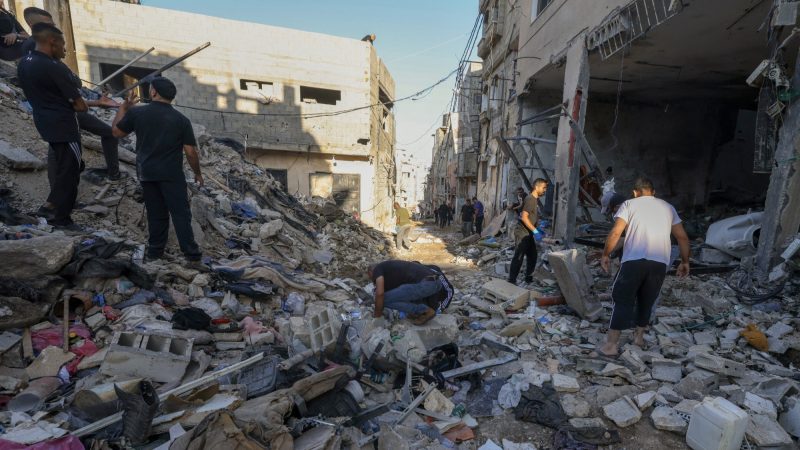
(Photo credit: AFP/Jaafar Ashtiyeh)
The Cradle | October 4, 2024
Israel bombed a café in the occupied West Bank city of Tulkarem late on 3 October, killing at least 20 in what is being described as the worst massacre in the territory since the Second Intifada.
Among those killed were a woman, her husband, and their child.
A Quds Brigades commander, Ghaith Radwan, and a member of Hamas’ Qassam Brigades, Zahi al-Aoufi, were killed in the indiscriminate attack on Tulkarem.
“In the attack, a number of key operatives who were also active in the terrorist infrastructure in Tulkarem were eliminated,” the Israeli army and Shin Bet security service said in a joint statement.
Aoufi was reportedly the head of Hamas’ organization structure in Tulkarem. “He provided weapons to terrorist operatives in the area and planned to carry out numerous attacks on settlements in the West Bank and deep inside Israel,” according to Yedioth Ahronoth.
Israeli warplanes fired at least one missile at the café in Tulkarem’s Hamam neighborhood on Thursday night as it was packed with civilians, according to WAFA news agency’s correspondent.
Civil defense teams and ambulances immediately rushed to transport the casualties to the city’s Thabet Thabet Government Hospital.
WAFA news agency referred to it as the biggest massacre in the occupied West Bank in over 24 years.
The Israeli army launched a massive operation against several West Bank cities on 28 August. The camps of the West Bank witnessed numerous military incursions, indiscriminate airstrikes and massacres, and assassinations.
Abu Shujaa, the late commander of the Quds Brigades’ Tulkarem branch, was assassinated by Israel on 29 August.
The latest massacre in Tulkarem comes as Israel continues its brutal assault across Lebanon, which has killed around 2,000 and displaced over a million.
Hours before the attack, the US State Department warned that Israeli escalation in Lebanon could lead to a tense situation in the occupied West Bank.
Massive Israeli air raid on residential area in Beirut’s Suburb
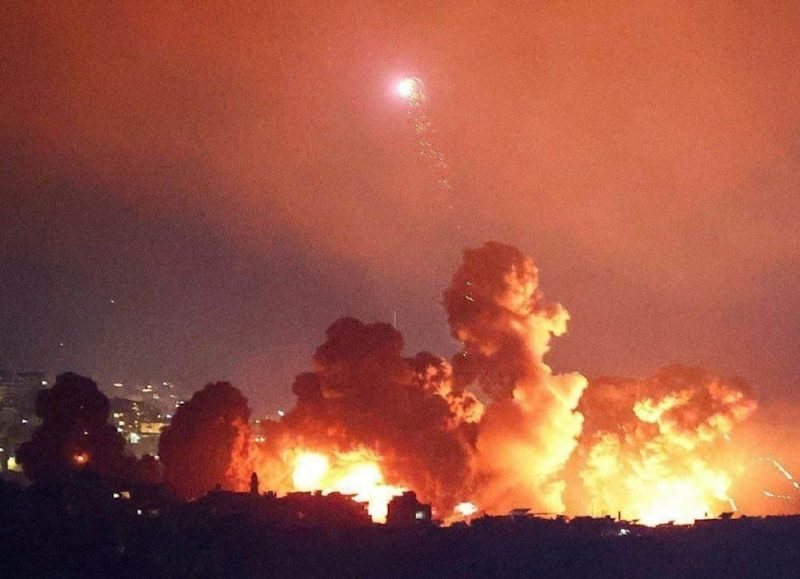
Al Mayadeen | October 4, 2024
Dozens of loud explosions were heard in the Mrayjeh area in the southern suburb of Lebanon’s capital Beirut, just past midnight on Friday, due to an Israeli air raid.
Residents of Sidon and Tyre in southern Lebanon heard the loud explosions, which speaks to the magnitude of the strikes launched by Israeli warplanes, Al Mayadeen’s correspondent reported.
The targeted site is in close proximity to the Beirut International Airport, which can be seen in the background of circulating footage of the strikes.
It is worth noting that the targeted area is a heavily populated residential area in Lebanon. Al Mayadeen’s correspondent said that residential areas suffered extensive damage as a result of the Israeli strikes.
Several other strikes targeted different neighborhoods in the suburb, including a residential area near a school in the Hadath area.
Nearing 3:00 am (local time), Al Mayadeen’s correspondent reported that the site of the massive Israeli airstrikes remains ablaze, as Israeli drones fly overhead.
A few hours after the strikes occurred, our correspondent said that the targeted area hosted health facilities, emergency services facilities, and schools, adding that this has been one of the most destructive strikes since the beginning of the aggression.
Israeli airstrikes on Lebanon have intensified in recent days, as nearly 20 were launched only a day earlier. In particular, the Israeli Air Force has concentrated its strikes after midnight, terrorizing civilians throughout the nighttime.
These strikes and air raids have also been paired with multiple attempts of incursions into Lebanese border towns. However, the Islamic Resistance in Lebanon has been able to ambush and eliminate invading forces, including 17 on Thursday alone. On Wednesday the Israeli military command admitted that nine of its officers and soldiers were killed in battles with Hezbollah Resistance fighters, most of whom are part of the special forces Egoz Unit.
Lebanese soldier killed after Israel bombs Red Cross convoy

Israeli attack on Sohor, Lebanon – September 24, 2024
The Cradle | October 3, 2024
At least one member of the Lebanese Armed Forces (LAF) was killed and four paramedics were injured on 3 October when the Israeli air force bombed a Red Cross convoy traveling near the village of Taybeh in south Lebanon as they were evacuating wounded people from the region.
The Lebanese Red Cross announced that the humanitarian convoy was targeted despite coordinating its movements with the UN Interim Force in Lebanon (UNIFIL).
The LAF said a second soldier was injured in the attack.
“One soldier was killed and another injured in an attack by Israeli forces while conducting an evacuation and rescue mission in collaboration with the Lebanese Red Cross in the town of Taybeh, Marjaayoun,” the LAf said in their statement.
The indiscriminate Israeli attack came just hours after an Islamic Health Authority team was hit by an airstrike in central Beirut, killing seven paramedics, rescue workers, and volunteers.
Israel reportedly used internationally-banned white phosphorus munitions in the attack, leaving behind a foul, acidic smell across Beirut.
Nearly 2,000 have been killed by Israel in Lebanon since the start of cross-border clashes last year. About half of the toll has been recorded over recent weeks after Tel Aviv significantly expanded its war against the Levantine nation.
About one million people have been displaced inside the small country, with hundreds of thousands fleeing to neighboring Syria.
Last month, reports in western media showed that Israeli airstrikes have become the leading cause of death for humanitarian workers across the world since 7 October, as the Israeli army is responsible for more than 75 percent of the deaths of aid workers over the past year.
In Gaza, Israeli strikes on humanitarian convoys have become commonplace over the past year, as the army has intentionally targeted aid groups that share their coordinates with authorities regularly.
Later on Thursday, the LAF confirmed another soldier was killed in an Israeli attack on a military post in the Bint Jbeil area of southern Lebanon.
Russia concerned over Israeli signs of possibly striking Iran: Ryabkov
Al Mayadeen | October 3, 2024
Russia has expressed concern over “Israel’s” signals suggesting a potential “retaliatory strike” on Iran, which could involve targeting Iranian nuclear facilities.
In a statement to Sputnik on Thursday, Russian Deputy Foreign Minister Sergey Ryabkov emphasized that considering such scenarios is unacceptable.
He expressed deep concern, highlighting that any escalation of the current war could lead to severe consequences.
“I also want to say that nuclear facilities as such, in any case, should always be taken out of any conflict,” Ryabkov stressed.
He also emphasized the need for the international community, including the IAEA and its leadership, to speak out and condemn the mere consideration of such scenarios.
This comes shortly after Israeli media reported, citing Israeli officials, that “Israel” might respond to Iran’s significant ballistic missile attack on Tuesday by targeting strategic infrastructure, such as gas or oil rigs, or by directly striking Iran’s nuclear sites.
Words kill: Why Israel gets away with murder in Gaza and Lebanon

By Ramzy Baroud | MEMO | October 1, 2024
The official Israeli army version of why it targeted civilian areas during the intense and deadly bombardment of southern Lebanon on 20 September is that the Lebanese are hiding long-range missile launchers in their homes. This official explanation was meant to justify the killing of 492 people and the wounding of 1,645 in a single day of Israeli air strikes.
This off-the-shelf explanation will be repeated throughout the Israeli war in Lebanon, however long it takes. Israeli media is now citing these claims and, as usual, US and western media are parroting the same narrative. Keep this in mind as you reflect on earlier statements made by Israeli President Isaac Herzog on 13 October last year when he argued that there are no civilians in Gaza, and that, “There is an entire nation out there that is responsible [for 7 October ].”
Israel does this in every war it launches against the Palestinians or any Arab nation.
Instead of removing civilians and civilian infrastructures from its target bank, it immediately turns the civilian population into the main targets for its bombs.
A quick glance at the number of civilians killed in the ongoing war and genocide in Gaza should be enough to demonstrate that Israel targets ordinary people as a matter of course. According to the Palestinian Health Ministry in Gaza, children and women constitute the largest percentage of the war’s victims at 69 per cent . If we factor in the number of adult males who have been killed — including doctors and other medical staff, civil defense workers and numerous other categories — it will be obvious that the vast majority of all of Gaza’s victims of Israeli brutality were civilians.
Only Israeli media, and their allies in the west, continue to find justifications for killing Palestinian and now Lebanese civilians in large numbers.
Compare the following two statements, which received much attention in the media, by Israeli military spokesperson Daniel Hagari regarding both Gaza and Lebanon: “Hamas systematically uses hospitals to wage war and consistently uses the people of Gaza as human shields,” said Hagari on 25 March. Then he claimed on September 27, “Hezbollah’s terror headquarters was intentionally built under residential buildings in the heart of Beirut, as part of Hezbollah’s strategy of using human shields.”
For those who routinely give Hagari and other Israeli spokespeople the benefit of the doubt, just review what has taken place in Gaza in the past year. For example, Israel claimed that the massacre at Al-Ahli Baptist Hospital was not of its doing, and that it was a Palestinian rocket that killed the nearly 500 displaced refugees and wounded hundreds more on 17 October 2023. All evidence, including investigations by well -respected rights groups, concluded the opposite. However, the false Israeli claims still dominated the media headlines.
The Baptist Hospital episode was repeated with other lies on numerous occasions. In fact, the lies started on 7 October, not 17 October, when Israel made claims about decapitated babies and mass rape. Even though much of that has been proven conclusively to be wrong, some in the media, and pro-Israel officials, continue to speak of it as if it is a proven fact.
Moreover, although no Hamas headquarters were ever found under Al-Shifa Hospital, the unsubstantiated Israeli claims continued to be repeated as if they were the full truth of the matter, and thus justified the death and destruction at Gaza’s main medical facility.
The same logic is now being applied to Lebanon, where Israel claims that it does not target civilians and, when civilians are killed, that it is the Lebanese themselves who should be blamed for supposedly using civilians as human shields.
The Gaza playbook is now the Lebanon playbook.
Of course, many are playing along, not because they are irrational or unable to reach proper conclusions based on the obvious evidence. They do so because they are happy to be part of the Israeli narrative, not neutral storytellers or honest journalists.
Even the BBC plays its part within that narrative, as it uses Israeli claims as the starting point of any conversation on Palestine or Lebanon. “Israel has said it carried out a wave of pre-emptive strikes across southern Lebanon to thwart a large-scale rocket and drone attack by Hezbollah,” reported the corporation on 26 August. That’s just one example of many.
Israel gets away with its lies pertaining to the mass killings in Gaza, and now in Lebanon, because Israeli propaganda is welcomed, in fact, embraced by western officials and journalists. Thus, when US National Security Advisor Jake Sullivan described the 20 September air strikes on Lebanon as “justice served”, he was telling mainstream media that its coverage should remain committed to that official assessment.
Imagine the outrage if the tables were turned, and Israeli civilians were slaughtered in their own homes by Lebanese bombs. There would be no need to have to explain the reactions of the US or western media, as they would be obvious to anyone who is paying attention.
Lebanon is a sovereign Arab state. Gaza is an occupied territory, and its people are protected under the Fourth Geneva Conventions. Neither Lebanese nor Palestinian lives are without worth, and their mass murder should not be allowed to take place for any reason, especially based on lies communicated by an Israeli military spokesperson and repeated by complicit media.
Perpetuating Israeli lies is dangerous, not only because truth-telling is a virtue, but also because words kill. Dishonest reporting can, in fact, succeed in justifying genocide, which is why Israel gets away with murder in Gaza and Lebanon.
Jerusalem Post deletes article claiming Lebanon is part of Israel’s ‘promised land’
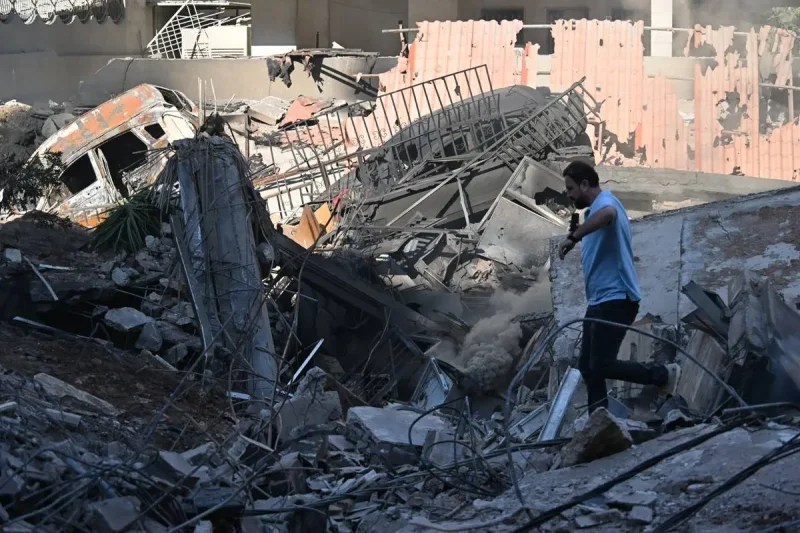
A man walks over debris of the building, where Hezbollah’s Secretary-General Hassan Nasrallah lost his life, after Israeli army’s airstrike, carried out by F-35 fighter jets, in Dahieh, Beirut, Lebanon on September 29, 2024 [Houssam Shbaro – Anadolu Agency]
MEMO | October 1, 2024
The Jerusalem Post has prompted a controversy after publishing then swiftly deleting an article suggesting that Lebanon and several other Middle Eastern countries are part of Israel’s “promised land”.
“Is Lebanon part of Israel’s promised territory?” was published on 25 September, coinciding with Israel’s assault on Lebanon and subsequent ground invasion. The timing and content of the piece have been viewed by critics as evidence of Israel’s expansionist ambitions in the region.
In the now-deleted article, Mark Fish claimed that the land “promised by God” to the “children of Israel” includes parts of modern-day Israel, the West Bank, Gaza, Lebanon, Syria, Jordan, Iraq and even Turkey. Fish cited religious texts to support its claims.
“The Torah provides clear guidelines regarding the areas we were commanded to conquer when taking possession of the land,” he wrote. He elaborated further on the concept of “Greater Israel”, suggesting that the Biblical boundaries stretch “from the ‘River of Egypt’ [interpreted by some as the Nile or a smaller river in Sinai] to the Perat River [Euphrates].”
The Jerusalem Post removed the article following a backlash on social media, with many accusing the newspaper of promoting expansionist ideology under the guise of religious justification. However, the article has been archived and continues to circulate online.
Notably, the author provides Torah-based justifications for holding onto occupied land. He said that “Hashem [God] tells us that we are granted every land we will conquer within the borders mentioned,” suggesting that God has sanctioned territorial expansion and occupation. This is an argument that aligns with a core tenet of Zionist ideology, which often cites Biblical prophecy about God’s promise to the Jews as justification for claiming Palestine and surrounding areas.
“Every place where the sole of your foot will tread shall be yours — from the wilderness and the Lebanon, from the river — the Euphrates River — until the western sea shall be your boundary,” wrote Fish. “This promise from the Creator clearly places the land of Lebanon within the Promised Land of Israel, or what some refer to as ‘the Complete Land of Israel’, or ‘The greater Israel’.”
Critics argue that the publication of such content, especially during another Israeli invasion of Lebanon, serves to legitimise Israel’s ongoing colonisation efforts in the Middle East. They contend that it reflects a broader ideology within certain Israeli circles that seeks to justify territorial expansion based on religious beliefs.
The controversy has reignited debates about the role of Israel’s religious claims to Palestine and the potential consequences of such rhetoric in an already volatile region. Like the early Zionists who concealed their true intention about ethnic cleansing and the complete colonisation of all of Palestine, Israeli leaders tend to avoid commenting on the concept of Greater Israel.
As of the time of writing, the Jerusalem Post had not issued an official statement regarding the publication and subsequent removal of the article.
Israeli strikes on homes, tents, school kill dozens in Gaza
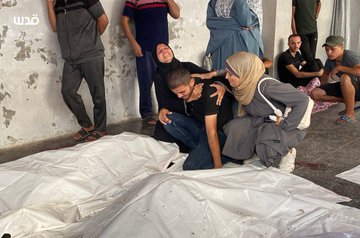
The Cradle | October 1, 2024
At least 25 civilians were massacred, and others injured early on 1 October after Israeli forces bombed homes in central Gaza’s Nuseirat camp, a school in the Tuffah neighborhood east of Gaza City, and a tent in Khan Yunis in the south.
WAFA news agency reported that according to local sources, Israeli bombs destroyed a three-story house in Nuseirat camp belonging to the Al-Durrah family, killing seven children and three women.
Two women were also killed in another Israeli airstrike on a home in Nuseirat belonging to the Abu Ataya family.
In Gaza City, an Israeli bombing killed seven civilians and injured others sheltering in the Shuja’iyya school.
Israeli forces also blew up residential buildings in the city of Rafah, while targeting the Zeitoun and Sabra neighborhoods in Gaza with artillery.
Reuters reports that in the city of Khan Yunis, in southern Gaza, an Israeli air strike on a tent housing displaced people killed six people, local medics said.
At the same time, the armed wings of Hamas, the Islamic Jihad, and other Palestinian resistance factions reported their fighters attacked Israeli forces operating in several areas of Gaza with anti-tank rockets, mortar fire, and explosive devices.
The ongoing Israel campaign to destroy Gaza, ethnically cleanse it of Palestinians, and make way for renewed Jewish settlement, has now lasted almost 12 months and killed at least 41,638 people, most of them children and women.
Thousands of victims are still under the rubble and on the roads, as Israeli forces regularly prevent ambulance and civil defense crews from reaching them.
Israel has continued to massacre Palestinians in Gaza even as it carries out a massive bombing campaign in Lebanon, including in the capital, Beirut.
“The eyes of the world now are on Lebanon while the occupation continues its killing in Gaza. We are afraid the war is going to go on for more months at least,” Samir Mohammed, 46, a father of five from Gaza City, told Reuters.
“It is all unclear now as Israel unleashes its force undeterred in Gaza, Yemen, Syria, Lebanon, and God knows where else in the future,” he stated.
Featured Video

HE SAVED LIVES. NOW HE FACES PRISON.
or go to
Aletho News Archives – Video-Images
From the Archives
NATO Sanctions and the Coming Global Diesel Fuel Disaster
By F. William Engdahl – New Eastern Outlook – 11.04.2022
Amid the ongoing global inflation crisis, NATO heads of state and mainstream media repeat a mantra that high energy prices are a direct result of Putin’s actions in Ukraine since end of February. The reality is that it is the western sanctions that are responsible. Those sanctions including cutting SWIFT interbank access for key Russian banks and some of the most severe sanctions ever imposed, are hardly having an impact on the military actions in Ukraine. What many overlook is the fact that they are increasingly impacting the economies of the West, especially the EU and USA. A closer look at the state of the global supply of diesel fuel is alarming. But Western sanctions planners at the US Treasury and the EU know fully well what they are doing. And it bodes ill for the world economy.
While most of us rarely think about diesel fuel as anything other than a pollutant, in fact it is essential to the entire world economy in a way few energy sources are. The director general of Fuels Europe, part of the European Petroleum Refiners Association, stated recently, “… there is a clear link between diesel and GDP, because almost everything that goes into and out of a factory goes using diesel.” … continue
Blog Roll
 Aletho News
- Trita Parsi: Middle East Unraveling — Are We on the Path to World War?
- Iran FM meets with US envoy on UN meeting’s sidelines at American side’s insistence: Report
- Qatar PM calls for Gulf security framework with Iran, says war must be ‘wake-up call’
- China condemns US extortion of Iranian airlines, rejects Washington’s ‘illegal’ sanctions threats
- Italy to move military personnel from Taif base after missile strike
- Finland’s Stubb tells European leaders to calm down
- Defeating Russia on battlefield impossible – Fico
- Finland’s Gender Clinic Reversal
- Massachusetts Wants Mental Health Visits, Why Does Government Use ‘Health’ to Enter Our Homes & Families?
- US lawmaker admits American people footing bill for Trump’s failed aggression against Iran
- If Americans Knew
- Sanctions are collective punishment: immoral and self-defeating
- Phosphorus Munitions Fired by Israel Burn Groves, Orchards in Southern Lebanon
- Israel Carries Out New Ceasefire Violations Across Gaza
- AI – Emphasis on the ‘I’: Israel Is Funding AI Chatbot Propaganda
- Israel Blocking Hundreds of Wheelchairs for Injured Children From Entering Gaza
- Israel Is Expanding and Upgrading Compounds for Palestinian Militias in Gaza
- The Palestinian-American Residents of This West Bank Town Are Wondering: Where Is Trump?
- Gaza desperately needs tents, wheelchairs, fuel… and everything else (Israel blocks it all) – Daily Update
- Israeli Attacks in Gaza Kill at Least Seven Palestinians Over Three Days, including Woman and Child
- Trump’s militarization of Washington DC as he pursues Israel’s war against Iran
- No Tricks Zone
- New Study: Earth And Venus Surface Warmth Largely Explained By Convection And Lapse Rate, Not CO2 Or Radiation
- 2025 Nature Paper Claiming Worsening Global Drought Gets RETRACTED …Heavily Flawed
- New Study: ‘Global Drought Shows No Detectable Recent Acceleration Under Climate Warming’
- Economic Masterminds: German Socialists Suggest Taxing Productivity Gains Stemming From Using AI
- The South China Sea Has Not Been Cooperating With The Climate Change Narrative
- Energy Crisis: Germany Enters Heating Season With Historically Low Gas Reserve Fill Levels
- New Study: The Antarctic Ice Sheet Gained Mass From 2020-2024 Due To Staggering Snow And Ice Accumulation
- Study: Ocean Heating Rates From Thousands Of Years Ago ‘Dwarf’ Modern Ocean Heating Rates
- Climate Extremists Target, Attack Large-Scale Power Grid Infrastructure In Germany!
- New Study: Antarctic Ice Melt Has Contributed Less Than 1 Centimeter To Sea Level Rise In The Last 30 Years

