Vaccine Rollout Correlates With 25% Spike in Cardiac Arrest Emergency Calls for Young Adults, Study Finds
By Will Jones | The Daily Sceptic | April 29, 2022
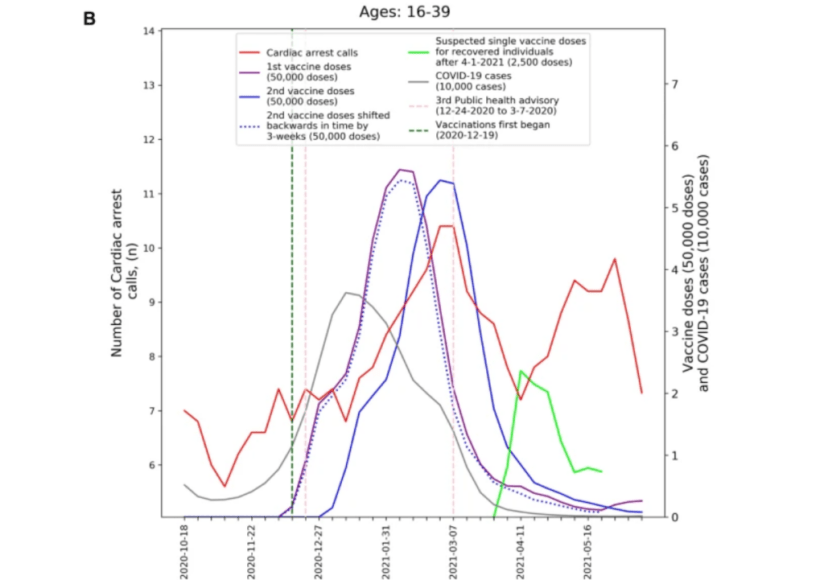
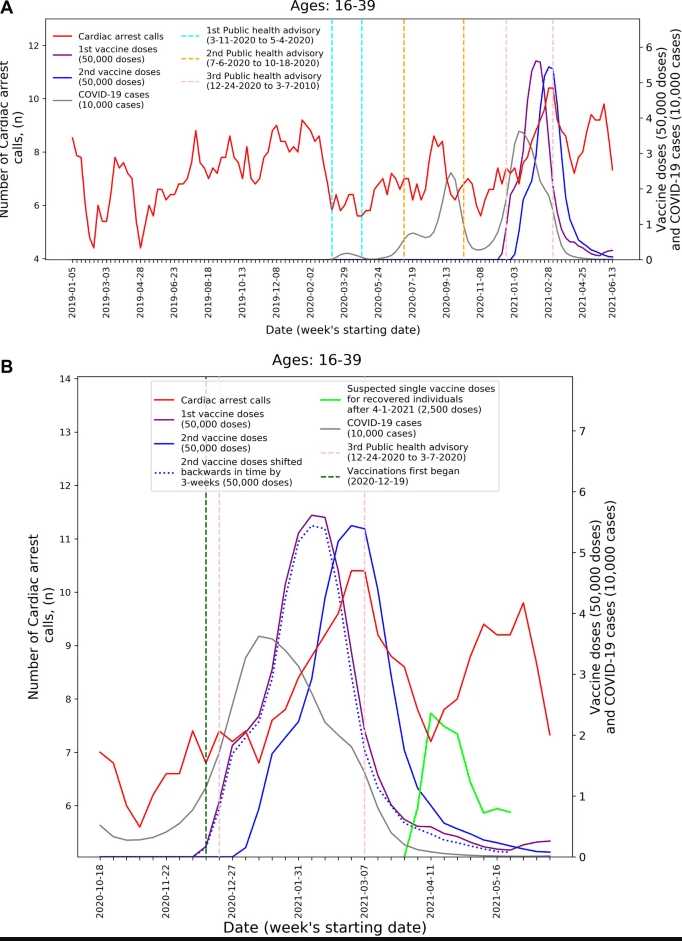
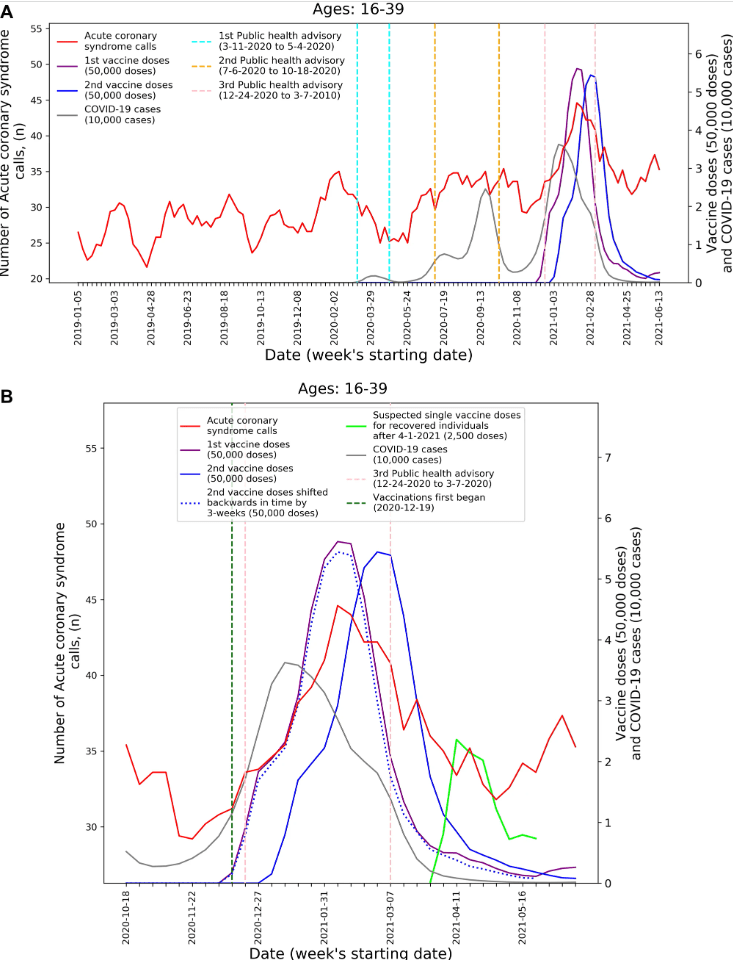
Emergency calls for cardiac arrest and acute coronary syndrome in young people in Israel were significantly associated with the vaccine rollout, both first and second doses, spiking 25% higher than in earlier years, but not with COVID-19 prevalence, a study in the Nature journal Scientific Reports has found.
Using data from the Israel National Emergency Medical Services (EMS) from 2019 to 2021, the study looked at the volume of cardiac arrest and acute coronary syndrome EMS calls in the 16-39 year-old population. It found an increase of over 25% in both call types during January-May 2021, compared with 2019-2020, but no significant increase in calls correlating with COVID-19 infection rates.
The main finding of this study concerns with increases of over 25% in both the number of CA [cardiac arrest] calls and ACS [acute coronary syndrome] calls of people in the 16-39 age group during the COVID-19 vaccination rollout in Israel (January-May, 2021), compared with the same period of time in prior years (2019 and 2020). Moreover, there is a robust and statistically significant association between the weekly CA and ACS call counts, and the rates of first and second vaccine doses administered to this age group. At the same time there is no observed statistically significant association between COVID-19 infection rates and the CA and ACS call counts. This result is aligned with previous findings which show increases in overall CA incidence were not always associated with higher COVID-19 infections rates at a population level, as well as the stability of hospitalisation rates related to myocardial infarction throughout the initial COVID-19 wave compared to pre-pandemic baselines in Israel. These results also are mirrored by a report of increased emergency department visits with cardiovascular complaints during the vaccination rollout in Germany as well as increased EMS calls for cardiac incidents in Scotland.
While several studies have found severe myocarditis to be a rare adverse effect of the vaccines, the study authors note that myocarditis is often missed, and in fact has been found to be likely responsible for 12-20% of unexpected deaths in adults under 40 in normal times.
Myocarditis is a particularly insidious disease with multiple reported manifestations. There is vast literature that highlights asymptomatic cases of myocarditis, which are often underdiagnosed, as well as cases in which myocarditis can possibly be misdiagnosed as acute coronary syndrome (ACS). Moreover, several comprehensive studies demonstrate that myocarditis is a major cause of sudden, unexpected deaths in adults less than 40 years of age, and assess that it is responsible for 12-20% of these deaths. Thus, it is a plausible concern that increased rates of myocarditis among young people could lead to an increase in other severe cardiovascular adverse events, such as cardiac arrest (CA) and ACS. Anecdotal evidence suggests that this might not be only a theoretical concern.
The results, shown visually in the following graphs, are unmistakable, with clear corresponding spikes in vaccination numbers and emergency calls.
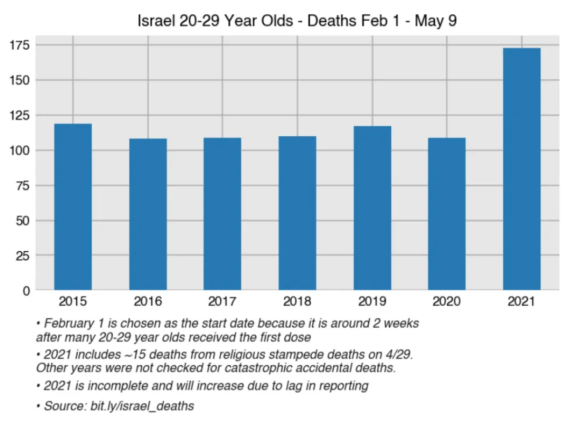
The study does not look at death rates in the age group, but data elsewhere show a clear spike in deaths during the period.
SPR/CBS
Surely it’s well past time these experimental vaccines (in Israel’s case, Pfizer), rushed to market in record time, are withdrawn for younger people.
1.2 Million Reports of Injuries After COVID Vaccines, VAERS Data Show
By Megan Redshaw – The Defender – April 29, 2022
The Centers for Disease Control and Prevention (CDC) today released new data showing a total of 1,247,131 reports of adverse events following COVID-19 vaccines were submitted between Dec. 14, 2020, and April 22, 2022, to the Vaccine Adverse Event Reporting System (VAERS). VAERS is the primary government-funded system for reporting adverse vaccine reactions in the U.S.
The data included a total of 27,532 reports of deaths — an increase of 183 over the previous week — and 224,766 serious injuries, including deaths, during the same time period — up 1,930 compared with the previous week.
Excluding “foreign reports” to VAERS, 810,171 adverse events, including 12,672 deaths and 80,743 serious injuries, were reported in the U.S. between Dec. 14, 2020, and April 22, 2022.
Foreign reports are reports foreign subsidiaries send to U.S. vaccine manufacturers. Under U.S. Food and Drug Administration (FDA) regulations, if a manufacturer is notified of a foreign case report that describes an event that is both serious and does not appear on the product’s labeling, the manufacturer is required to submit the report to VAERS.
Of the 12,672 U.S. deaths reported as of April 22, 16% occurred within 24 hours of vaccination, 20% occurred within 48 hours of vaccination and 59% occurred in people who experienced an onset of symptoms within 48 hours of being vaccinated.
In the U.S., 572 million COVID-19 vaccine doses had been administered as of April 23, including 338 million doses of Pfizer, 215 million doses of Moderna and 19 million doses of Johnson & Johnson (J&J).
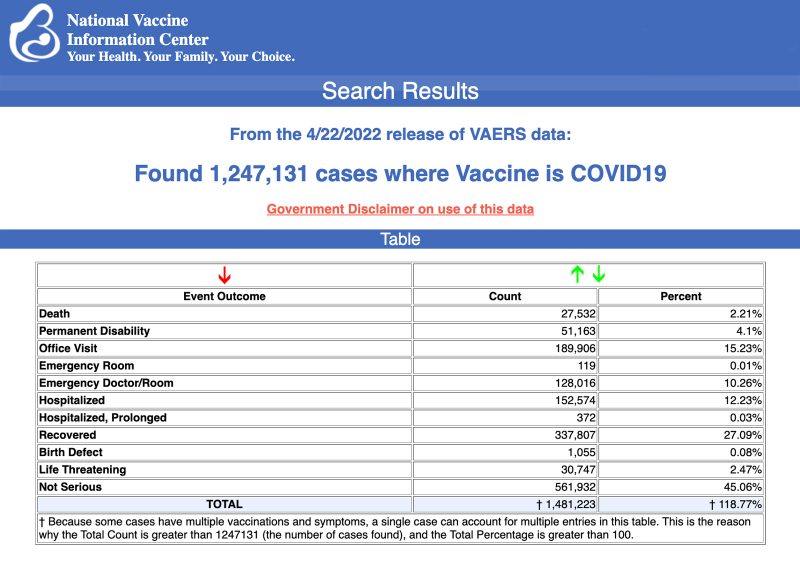
Every Friday, VAERS publishes vaccine injury reports received as of a specified date. Reports submitted to VAERS require further investigation before a causal relationship can be confirmed.
Historically, VAERS has been shown to report only 1% of actual vaccine adverse events.
U.S. VAERS data from Dec. 14, 2020, to April 22, 2022, for 5- to 11-year-olds show:
- 10,348 adverse events, including 256 rated as serious and 5 reported deaths.
- 19 reports of myocarditis and pericarditis (heart inflammation).
The CDC uses a narrowed case definition of “myocarditis,” which excludes cases of cardiac arrest, ischemic strokes and deaths due to heart problems that occur before one has the chance to go to the emergency department.The Defender has noticed over previous weeks that several reports of myocarditis and pericarditis have been removed by the CDC from the VAERS system in this age group. No explanation was provided. - 42 reports of blood clotting disorders.
U.S. VAERS data from Dec. 14, 2020, to April 22, 2022, for 12- to 17-year-olds show:
- 31,455 adverse events, including 1,803 rated as serious and 44 reported deaths. The most recent reported death involves a 14-year-old girl from Tennessee (VAERS I.D. 2238618) who died after receiving her second dose of Pfizer’s COVID-19 vaccine. According to the VAERS report, the girl had a previous history of cancer but was hospitalized 29 days after receiving her second dose of Pfizer with severe COVID-19 and COVID pneumonia. She became “critically ill,” developed respiratory failure and bradycardia and later died.
- 65 reports of anaphylaxis among 12- to 17-year-olds where the reaction was life-threatening, required treatment or resulted in death — with 96% of cases attributed to Pfizer’s vaccine.
- 649 reports of myocarditis and pericarditis — two fewer than last week — with 637 cases attributed to Pfizer’s vaccine.
- 165 reports of blood clotting disorders — 1 fewer than last week — with all cases attributed to Pfizer.
U.S. VAERS data from Dec. 14, 2020, to April 22, 2022, for all age groups combined, show:
- 20% of deaths were related to cardiac disorders.
- 54% of those who died were male, 41% were female and the remaining death reports did not include the gender of the deceased.
- The average age of death was 73.
- As of April 22, 5,460 pregnant women reported adverse events related to COVID-19 vaccines, including 1,709 reports of miscarriage or premature birth.
- Of the 3,630 cases of Bell’s Palsy reported — three fewer than last week — 51% were attributed to Pfizer vaccinations, 40% to Moderna and 8% to J&J.
- 870 reports of Guillain-Barré syndrome, with 42% of cases attributed to Pfizer, 30% to Moderna and 28% to J&J.
- 2,343 reports of anaphylaxis — 12 fewer reports than last week — where the reaction was life-threatening, required treatment or resulted in death.
- 1,678 reports of myocardial infarction.
- 13,826 reports of blood-clotting disorders in the U.S. Of those, 6,199 reports were attributed to Pfizer, 4,925 reports to Moderna and 2,661 reports to J&J.
- 4,152 cases of myocarditis and pericarditis with 2,544 cases attributed to Pfizer’s, 1,415 cases to Moderna’s and 181 cases to J&J’s COVID-19 vaccine.
Megan Redshaw is a staff attorney for Children’s Health Defense and a reporter for The Defender.
© 2022 Children’s Health Defense, Inc. This work is reproduced and distributed with the permission of Children’s Health Defense, Inc. Want to learn more from Children’s Health Defense? Sign up for free news and updates from Robert F. Kennedy, Jr. and the Children’s Health Defense. Your donation will help to support us in our efforts.
FDA Rubber-Stamps Remdesivir for Infants Without Evidence of Safety, Efficacy
By Madhava Setty, M.D. | The Defender | April 27, 2022
The U.S. Food and Drug Administration (FDA) on Monday approved the use of the antiviral therapy, remdesivir, to treat COVID-19 in infants four weeks and older.
Dr. Patrizia Cavazzoni, director of the FDA’s Center for Drug Evaluation and Research, said in a press release:
“As COVID-19 can cause severe illness in children, some of whom do not currently have a vaccination option, there continues to be a need for safe and effective COVID-19 treatment options for this population.
“Today’s approval of the first COVID-19 therapeutic for this population demonstrates the agency’s commitment to that need.”
According to the press release, the FDA’s decision to approve the therapy, marketed under the name Veklury, is supported by a clinical study conducted on infants 4 weeks and older weighing a minimum of 6.6 pounds.
The study is underway and will not be completed until February 2023. There are no published results.
However, Gilead Sciences, maker of remdesivir and sponsor of the study, provided the following details in a company press release:
- A total of 53 hospitalized pediatric patients were enrolled in the clinical study.
- 72% suffered adverse events.
- 21% suffered serious adverse events determined to be unrelated to the drug.
- Three children died from either underlying conditions or COVID-19.
Nevertheless, Gilead Science assured that “no new safety signals were apparent for patients treated with Veklury.”
The study was of single-arm, open-label design.
A single-arm study has no control group, making it impossible to compare its effectiveness against standard of care.
Open-label means participants and investigators were aware they were receiving the drug, making it impossible to separate placebo from drug effect.
Studies show little or no benefit
Beyond the absence of any publicly available data on the efficacy and safety of this drug in humans of this age, available studies on older subjects indicate remdesivir offers no more than a meager benefit to those who survive its use.
In fact, this is why the World Health Organization (WHO) in November 2020 recommended against the use of remdesivir to treat COVID-19. The WHO only recently (April 22, 2022) updated its recommendation to support the drug’s use in patients who are at high risk for hospitalization.
Nevertheless, the FDA explains its long-standing support of remdesivir use in adults here, citing six studies that had the greatest impact on the agency’s position.
Here is a summary of the findings of each study from the FDA’s webpage:
- ACTT-1 Trial: Time to clinical recovery was shortened from 15 days to 10 through the use of remdesivir. There was no difference in mortality. The drug was no better than placebo when administered to patients who required high-flow oxygen, non-invasive respiratory support, mechanical ventilation or extracorporeal membrane oxygenation at baseline. A benefit was seen only in patients who required low levels of supplemental oxygen.
- Discovery Trial: There was no clinical benefit of remdesivir in hospitalized patients who were symptomatic for >7 days and who required supplemental oxygen. There was no difference in mortality between remdesivir and standard of care. Investigators judged three of 429 participants who received remdesivir died from the drug.
- WHO Solidarity Trial: Remdesivir did not decrease in-hospital mortality or the need for mechanical ventilation compared to standard of care. Four hundred and forty patients in this study were also enrolled in the Discovery trial above.
- Journal of the American Medical Association (moderate disease): After 10 days of treatment with remdesivir, clinical status was not significantly different from standard of care.
- New England Journal of Medicine (severe disease): No difference between five and 10 days of remdesivir treatment. No placebo group, thus “the magnitude of benefit cannot be determined.”
- PINETREE study: Three consecutive days of IV remdesivir resulted in an 87% relative reduction in the risk of hospitalization or death when compared to placebo.
As demonstrated, the first five studies used to justify the FDA’s approval of remdesivir showed little, if any, benefit to hospitalized patients with moderate or severe disease.
This is in contrast to the sufficiently proven benefit of off-label use of the previously licensed medications hydroxychloroquine and ivermectin.
Only the PINETREE study investigated the benefit of remdesivir for outpatient use. In that study, the drug provided a substantial benefit in preventing hospitalization when given in three separate doses over three days.
However, only eight individuals under the age of 18 were enrolled in the study, and none were younger than 12.
The primary endpoint, a composite of COVID-19-related hospitalization or death from any cause, did not occur in the under-18 group.
In other words, the study — funded by Gilead Sciences — showed the drug offered no benefit in this cohort.
Nevertheless, in reporting on the FDA’s approval of remdesivir for infants and young children, CNN found someone to support the FDA’s decision.
CNN wrote:
“The FDA’s approval of remdesivir for young children is ‘great,’ said Dr. Daniel Griffin, an instructor in clinical medicine and associate research scientist in the Department of Biochemistry and Molecular Biophysics at Columbia University.”
Safety ‘not established’ in pediatric patients
Not only is there scant evidence that remdesivir is an effective treatment for COVID-19, the drug’s safety is debatable.
With regard to its use in infants, even the FDA must acknowledge nobody knows how safe it is.
After all, the manufacturer’s label states:
“The safety and effectiveness of VEKLURY (remdesivir) have not been established in pediatric patients younger than 12 years of age or weighing less than 40 kg.”
With regard to pharmacokinetics (where the drug distributes in the body) the label states:
“The pharmacokinetics of VEKLURY in pediatric patients have not been evaluated.”
An indictment of the drug regulatory process
Let’s reflect on what the director of the FDA’s Center for Drug Evaluation and Research said regarding the approval of remdesivir for treating COVID-19 in infants 4 weeks and older:
“As COVID-19 can cause severe illness in children, some of whom do not currently have a vaccination option, there continues to be a need for safe and effective COVID-19 treatment options for this population. Today’s approval of the first COVID-19 therapeutic for this population demonstrates the agency’s commitment to that need.”
To summarize:
- Some children do not have a vaccination option.
- They need a safe and effective treatment.
- The FDA meets that need by approving a drug with no safety and efficacy record in children.
Safety and efficacy apparently can be conveniently established by fiat, not evidence.
In the end, the FDA’s approval of remdesivir is not an assurance of the drug’s safety and efficacy but an indication the agency is no longer interested in protecting the public from potentially harmful and ineffective therapies — or, in other words, in doing its job.
There will undoubtedly be doctors like Griffin who welcome this approval.
However, I don’t believe every pediatrician will accept the FDA’s guidance so readily.
It’s not easy to place an intravenous line to administer remdesivir in the tiny vein of an irritable baby coming from home with a positive rapid test. And then do it again the next day. And the day after that.
At some point, clinicians’ sensibilities will be challenged enough to compel them to actually examine how the FDA arrived at its conclusions.
Guidelines are meaningless if doctors choose not to abide by them.
Madhava Setty, M.D. is senior science editor for The Defender.
© 2022 Children’s Health Defense, Inc. This work is reproduced and distributed with the permission of Children’s Health Defense, Inc. Want to learn more from Children’s Health Defense? Sign up for free news and updates from Robert F. Kennedy, Jr. and the Children’s Health Defense. Your donation will help to support us in our efforts.
New Zealand Used Selective Science and Force to Drive High Vaccination Rates
By J.R. Bruning | Brownstone Institute | April 26, 2022
We expect that knowledge produced and applied in a health emergency will produce information that is protective of health. But it is increasingly apparent that over the last two years New Zealand’s Ardern government has designed policy, regulation, and information to coercively steward citizens to accept a drug under provisional consent.
Strict lockdowns were promised to end when 90% of the population was vaccinated. This was unprecedented: policy endpoints required population-level uptake of novel technology, no matter whether the individual was at risk or not.
In addition, data production was contracted by the department intent on a 90% vaccination rate. For decades governments have promoted ‘evidence-based science’ as the gold standard for public reasoning and risk deliberation. What we saw was internally produced and contracted science that focused on case rates, while (inconvenient) information in the published scientific literature on vaccine risk, waning and breakthrough was ignored.
This produced a tightly controlled scope of knowledge production that then failed to adhere to long-established democratic and public health principles. Responsible risk governance requires that governments must be responsive to data that indicates a technology is not as effective or is possibly more harmful than estimated, – for a democratic government’s primary role is the protection and safety of all citizens. Technology must not be valorized, and uncertainty set aside, in order to achieve policy ends.
Universal Vaccination Assumed from April 2021
New Zealand’s Unite Against Covid-19 ‘elimination’ strategy was confirmed in the first quarter of 2020. Policy, propaganda and legislation predominantly centred around the case, or infection rate, rather than the fatality rate as the measure of risk.
Even though the clinical trials did not demonstrate that the vaccine prevented transmission and infection, the Government promoted ‘the jab’ as a way to protect families in the Unite Against Covid-19 campaign. Persistent reporting of case rates fostered a perpetual state of fear and uncertainty among the population, who perceived infection from the SARS-CoV-2 virus to be something more like Ebola.
The Ardern government’s intention for the entire population to get the mRNA vaccine was declared through the signing of a supply agreement. This intention was then embedded in policy and regulation via the Traffic Light system, designed to nudge the population over 12 into compliance.
It was known by July 2021 that the vaccine waned and was leaky. Breakthrough infections were relatively common and for many. The clinical trials remain incomplete, lacking long-term safety data. The trials did not demonstrate that the vaccine prevented hospitalization and death.
However, in April 2022 in New Zealand, mandatory vaccinations remain compulsory for border workers, and workers in health and disability; corrections; defence; Fire and Emergency New Zealand (FENZ) and Police. These professions must be vaccinated and have received a booster vaccination against COVID-19.
At ‘Traffic Light Orange’ Kiwis ‘must wear a face mask’ in retail businesses, on shared and public transport, in government facilities and when visiting a healthcare service. This is despite the fact that Omicron ripped through New Zealand in February.
In the first week back at school and university after the summer holidays –the obedient mask-wearing young friends of my kids, including my son, from Otago and Canterbury down on the South Island up to the capital Wellington and Auckland – were locked down with Omicron in their first weeks back at university. No evaluation of Omicron and mask efficacy has been provided by the state.
The Risk Modellers
Government policy processes have persistently excluded uncomfortable knowledge that suggested uncertainty or risk. First, the policy accompanying and justifying Covid-19 legislation and Orders, and modelling by the contracted institution Te Pūnaha Matatini (TPM) contained narrow reasoning central to the state’s claims, locking in the narrative that infection was the predicator of risk, modelling wave after wave of infection.
Second, policy supporting the legislation excluded consideration of age-stratified risk and failed to address common principles of infectious disease management embedded in the New Zealand Health Act. Third, reviews of the scientific literature that could publicly identify and communicate risk relating to vaccine-related harm and issues relating to efficacy simply never occurred.
The gaps are considerable. The Government’s Covid-19 Unite campaign failed to communicate age-stratified risk of hospitalization and death as the pandemic evolved. New evidence on infection fatality rates were not reported to the public. In modelling papers, TPM used old infection fatality rate statistics that overestimated death rates.
The potential for the vaccine to wane or for breakthrough infection to occur was ignored in a major policy paper focussed on elimination and by the modellers at TPM. The role of natural infection in producing a broader, and protective structural response, assisting populations to shift to herd immunity status was downplayed. While herd immunity was recognized, testing and data modelling was undertaken to identify naturally derived herd immunity in the population. Later modelling exclusively associated herd immunity with vaccination.
Perhaps the problems addressed here are not surprising, when most modelling was undertaken outside of New Zealand’s public health institutions. Instead, number-crunching was carried out by data analysts, mathematicians affiliated with TPM, with scarce few infectious disease epidemiologists trained in public health ethics participating. And of course, the science and data modelling were directly funded by the government departments and Ministries dedicated to over 90% vaccine compliance.
Global vaccination policies ignored the fact that infection-related risk always centered on the aged and infirm and those with complex multimorbid conditions. Disconcertingly, the clinical trial data had conceded that vaccine efficacy remained uncertain for the most at-risk of harm from Covid-19 – the immunocompromised, autoimmune and people who were frail, and those with inflammatory conditions (see p.115). In addition, as coronaviruses readily mutate, it was highly probable the vaccine would have a short shelf life.
Early Treatments Sidelined
Governments are entrusted with an overarching obligation to protect health – this includes putting populations directly at risk through bad policy. There was always a role for safe, established drugs with a long history of safe use that had undergone complete testing before launching onto the market.
Early treatments could have been integrated as a major tool to prevent hospitalisation and death. Early treatments avoid the dilemma of mutating variants while acting to protect at-risk groups whose immune systems might not be as responsive to a vaccine.
Conventionally doctors are at liberty to repurpose drugs for their patients, such as antivirals with a long history of safe use. However, in July 2021, the government locked in approved drugs for treatment.
From at least October, New Zealand doctors were instructed to ‘not use any other antiviral outside of a clinical trial’ while Medsafe warned against use of the safe antiviral Ivermectin for a respiratory virus. Yet the clinical guidelines were intended as last resort medicine for the hospitalized, rather than designed as protective nor preventative at home therapies.
These directives have fractured the practice of informed consent, which forms the basis of trust in the doctor-patient relationships. Even the New Zealand Medical Council, the organisation that grants licences to practice medicine, declared that there was ‘no place for anti-vaccination messages in professional practice.’ These actions may unwittingly undermine trust in vaccines and the doctor-patient relationship for years to come.
The implications of silencing doctors, some who have had their medical licenses suspended, when observed alongside the above-mentioned data gaps, are extraordinary.
Ethical questions continue to be sidelined. The principle of proportionality, embedded in the 1956 Health Act, has been effectively dropped. Proportionality, which allows for individual risk, is a core consideration in public health. Medicine is a technology, and the space where biology meets technology – including medicine – is never constant, and requires value-based judgement. Risk management of a medical intervention for a pregnant woman, young person or child requires significantly different deliberation to a 75-year-old.
Democratically Unaccountable Legislation
Since January 2020, a tsunami of rights-limiting has been rolled out purposefully and consistently. There was scant citizen consultation with public input limited to a few short days in most cases. The unprecedented barrage of rules and orders released by the Ardern government entrenched requirements for almost everybody to get the mRNA vaccine.
By mid-2021 – before most mandates – the scientific literature was revealing that the vaccine waned; that breakthrough infection occurred and that there was extensive evidence that it produced a wide range of side effects, and even death. This knowledge should have invalidated any workforce vaccine mandate, but instead by October, the state doubled down and locked in mandates and regulations that would legally and socially coerce most of the population over 12 into accepting the shot.
It’s probable that the mountain of legislation produced over the last two years never fulfilled democratic norms of accountability and transparency. For science in a pandemic to be harnessed to serve the public interest, the institutions that set those terms of reference must be guided by principles that protect health.
The failure of government agencies to draw on peer-reviewed scientific literature while prioritizing internal modelling is clear from tracking the literature stored online with the relevant agencies. Most compellingly, it is documented in the policy supplied in support of the unprecedented quantity of law-making.
It appears that from late 2019, institutional interests anticipated that there would be hesitancy around vaccine safety. Yet there was no public forum. Instead, groups who sought to question the safety of the novel mRNA vaccine remained outside ‘accredited’ media, possibly due to the chilling effect of unprecedented Covid-19 funding and advertising boosts which effectively captured mainstream media.
That the New Zealand state mandated not-at-risk people accept a novel technology, creating rules (as nudge policies) that limited economic and social life for the non-vaccinated when there was early evidence the vaccine was leaky and potentially harmful, will take years to unpick. As mandates continue, injured groups continue to face barriers to justice following vaccine injury and death.
Ultimately, practices such as this raise nagging doubts concerning the state’s capacity to honor broader obligations to protect health and the public interest in future emergency situations. New Zealand’s response to the Covid-19 pandemic serves as a case study – a precedent, for future health emergencies.
A deeper dive on this discussion can be found in the paper, Covid-19 Emergency Powers and on Rumble. The paper is offered to assist academic and legal experts, citizens and communities to consider use of policy and science by the Ardern Government from 2020-2022. I question the potential for the New Zealand state to navigate future pandemics, and future techno-controversies, in the public interest.
J.R. Bruning is a consultant sociologist (B.Bus.Agribusiness; MA Sociology) based in New Zealand. Her work explores governance cultures, policy and the production of scientific and technical knowledge. Her Master’s thesis explored the ways science policy creates barriers to funding, stymying scientists’ efforts to explore upstream drivers of harm. Bruning is a trustee of Physicians & Scientists for Global Responsibility (PSGR.org.nz). Papers and writing can be found at TalkingRisk.NZ and at JRBruning.Substack.com and at Talking Risk on Rumble.
Kiev says ready to attack Crimean Bridge at first opportunity
By Lucas Leiroz | April 25, 2022
The Ukrainian government seems to be willing to further increase its military actions just to continue a conflict in which it has no chance of winning. On April 21, a Kiev official announced that they are about to bomb and destroy the Crimean Bridge.
In a recent speech, Secretary of the National Security and Defense Council, Oleksiy Danilov, revealed that Kiev’s armed forces are ready to attack the bridge at any time, having plans to act at the first possible opportunity. His words during an interview with Radio NV leave no doubt about the Ukrainian intentions: “If we had the ability to do it, we would have already done it. If there is an opportunity to do it, we will definitely do it”. Danilov also commented on the reasons behind the plan, mentioning the strategic value of the bridge, which destruction would largely obstruct the movement of Russian troops.
There are many problems with Danilov’s statement. In fact, it is possible to speak of a “strategic value” in its destruction of the Crimean Bridge, but this is far from implying any justification. Many anti-humanitarian measures have “strategic value” but should be avoided simply because they are legally and ethically wrong procedures. For example, it is precisely to avoid unreasonable civilian casualties and damage to historical heritage that Moscow refrains from excessive use of air force during the special military operation in Ukraine. No doubt there would also be strategic value in escalating the use of air force.
Carefully measuring one’s own acts to avoid mass victims should be the attitude of any side during a conflict. And this is what should be expected of Kiev, considering that the destruction of the bridge would cause civilian casualties, since non-military people still circulate in the region and would completely obstruct the flow of goods between Crimea and the rest of the Russian territory, which could lead to large supply deficits and social crises.
But, apart from the humanitarian and ethical argument, the main factor is another: Kiev is announcing military attacks on the sovereign territory of the Russian Federation. Both Kerch and Taman, cities connected by the bridge, are part of Russia, so the attack would hit a non-border Russian zone and its respective marine territory, generating a serious provocation. The risk of escalating the conflict into Russia’s sovereign territory may be too high for the Ukrainian side.
The words of Dmitry Medvedev, deputy chairman of the Russian Security Council, confirm this prediction of reaction in the event of an attack: “I hope he [Oleksiy Danilov] understands what Russia would target in retaliation”. Earlier, Kremlin spokesman Dmitry Peskov had already announced that Moscow would interpret a bombing of the bridge as a terrorist attack and announced that Moscow is already acting to prevent any Ukrainian action in this regard: “Such a statement [about the potential bombing of the Crimean Bridge] is nothing but an announcement of a possible terrorist act; this is unacceptable (…) All the necessary security measures and precautions by the relevant service are being taken around the bridge and all strategic facilities”.
Still, it is necessary to emphasize the omission of Western countries and international organizations in this case. Kiev announces that it is organizing terrorist-like attitudes and Moscow condemns it, but with no statement of the rest of international society. Ignoring Kiev’s threats seems to have become standard, commonplace action in recent years while, on the other hand, actions of the Russian army are automatically condemned.
Finally, Kiev is on the verge of an escalation of the conflict in which it will not be able to deal with the consequences. If there’s really a plan going on to destroy the bridge, the best thing to do is to abort it.
Lucas Leiroz is a researcher in Social Sciences at the Rural Federal University of Rio de Janeiro; geopolitical consultant.
‘Traitors’ collaborating with Russia will be executed – Ukrainian governor
Samizdat | April 25, 2022
Vitaly Kim, who serves as the governor of Ukraine’s Mykolaiv Region, warned that citizens helping Russian forces would face extrajudicial execution. He revealed the chilling fate awaiting “traitors” during a live broadcast on Ukraine 24 TV channel last Thursday.
Kim made the comment after the presenter brought up claims made earlier by officials in Kherson, according to which, information about pro-Ukrainian activists, veterans who had fought in the Donbass, as well as journalists living in the city had been leaked to Russian forces.
Kim, in turn, cited the recent killing of a pro-Russian blogger in the city, who was shot dead on April 20, as proof that “Kherson is Ukraine,” and that “there are guerrilla fighters there.”
Moreover, Kim warned that “traitors will be executed,” adding that he is “not afraid of this word.”
The Ukrainian official expressed absolute certainty that “it will be like that.”
In response, the presenter cited a top Ukrainian official who had previously said that a special force had been established which would be eliminating traitors.
Kim interjected, assuring the anchor that this secret force was in fact already operating. The presenter, in turn, urged everyone listening to the broadcast to keep this fact in mind.
The governor also claimed that Ukraine had developed superior tech and IT capabilities which allowed its special services to track down practically anyone. Kim concluded that “no one will be able to hide from justice.”
US food production threatened by mysterious fires in meat plants
Free West Media | April 25, 2022
More and more food processing plants are going up in flames in the US. Sixteen such incidents have been recorded so far. The background is unclear, but terrorism is being ruled out.
The fact is, however, that the basic needs of the population are massively threatened in some places by these attacks on infrastructure while authorities downplay the incidents.
Throughout the past year, but especially since February 2022, a series of devastating fires in the United States and Canada have destroyed or severely damaged food processing plants – mostly meat plants (slaughterhouses, hog and poultry farms), but also silage and large-scale grain production plants. As a result, there could be food shortages and price increases in many areas.
Devastating damage
The damage is catastrophic: an employee of an affected factory in Texas estimates that 50 to 100 truckloads of onions were destroyed there alone. A factory in Oregon was completely destroyed by a boiler explosion and all 244 employees had to be laid off. A fire in California had to evacuate 2 700 people around the affected factory.
Food prices are already at record highs in the US. The Rockefeller Foundation released an analysis of when a “massive, immediate food crisis” could start, and added that it would probably be “in the next six months”. The foundation shares the outlook of the World Economic Forum (WEF), advocating for the “Great Reset”.
Fires and explosions: possible connections
Officially, there are various reasons for the fires: the authorities downplay the possibility of any connections, and the Homeland Security Department does not assume terrorist attacks. At least one fire in Georgia last week was caused by a plane crashing onto a factory site. Since fires and explosions on factory premises and similar events repeatedly broke out for unknown reasons, some experts also suspect the likelihood of serial perpetrators and targeted attacks.
Conceivable would be militant animal or nature conservationists, climate activists or enemies of industrial food production, who are resorting to increasingly uncompromising means in the US just as they are in Europe.
Food crisis is getting worse
It is undisputed that the never-ending series of incidents will further exacerbate the food crisis, which is also noticeable in the US, as a result of supply chains that are already strained. In any case, the extent of the damage caused by the destruction in this sensitive key sector cannot yet be quantified; it also depends on how quickly the damaged or completely destroyed facilities can be repaired.
The FBI’s Cyber Division meanwhile published a warning about increased “cyber-attack threats” on agricultural cooperatives.
“Ransomware actors may be more likely to attack agricultural cooperatives during critical planting and harvest seasons, disrupting operations, causing financial loss, and negatively impacting the food supply chain,” the notice read, adding 2021 and early 2022 ransomware attacks on farming co-ops could affect the current planting season “by disrupting the supply of seeds and fertilizer”.
The agency warned, “A significant disruption of grain production could impact the entire food chain, since grain is not only consumed by humans but also used for animal feed … In addition, a significant disruption of grain and corn production could impact commodities trading and stocks. ”
Berlin Senate tries to hush dramatic increase in heart complaints and strokes in 2021
Free West Media | April 20, 2022
The Berlin SPD member of parliament Robert Schaddach inquired in March with a parliamentary question to the Senate’s internal administration about the development of relevant fire brigade incidents that suggest the suspicion of vaccination consequences. Schaddach said: “The aim of the question is to determine the development of the Berlin fire brigade’s deployment figures with regard to heart complaints and strokes over the past four years.”
The answer of the senate administration gives cause for concern. Under the headings of “Heart Complaints/Implanted Defibrillator” and “Chest Pain/Other Chest Complaints”, the number of logged deployments in 2021 increased by 31 percent to a total of 43,806 deployments compared to the averages from 2018/2019. Similarly, the number of logged deployments under the keywords “Stroke/Transient Ischaemic (TIA) Attack” increased by 27 percent to a total of 13,096 deployments compared to the averages from 2018/2019.
However, the Berlin Senate Administration does not want to comment on this development. It writes evasively in its response of April 7: “Changes in the frequency of use of the main complaint protocols ‘Heart complaints/Implanted defibrillator’ as well as ‘Chest pain/Other complaints in the chest’ within the framework of the standardised emergency call query may be related to more intensive protocol use, the classification of symptoms, the further development of quality management, but also changes in the number of emergency rescue deployments, for example due to population growth or demographic change.”
While the Berlin Senate administration is trying to keep the information out of the public eye, its response was received with all the more interest by the Feuerwehrgemeinschaft Berlin, an association of several hundred firefighters critical of vaccination. A spokesperson for the association explained: “Such rates of increase need to be explained.” He also said it was striking that the highest rates of increase are occurring precisely in the age groups that are not commonly understood to be vulnerable groups.
It is now necessary to “examine whether there is a causal connection here with the vaccination side effects caused by the Corona vaccine, which have increasingly come into the media spotlight”, according to the fire brigade community. It therefore “urges the management of the Berlin fire brigade to initiate a scientific and open-ended investigation of a possible connection in cooperation with the experts of the Robert Koch Institute (RKI) and the Paul Ehrlich Institute (PEI)”.
Until meaningful results are available, the “facility-based vaccination obligation”, which is still in force, must be suspended.
Migratory birds of mass destruction

Albatross, famous migratory bird, is also a love bird. It is known for being monogamous, forming long-term bond with one partner that is rarely broken. Mated pairs never split up until one bird dies.
BY M. K. BHADRAKUMAR | INDIAN PUNCHLINE | APRIL 21, 2022
The UN Security Council held an extraordinary event on April 6 under the rubric Arria Formula Meeting on Biological Security regarding the biological activities in countries including Ukraine. Predictably, the US and UK representatives didn’t show up at the event and the western media also blacked out the proceedings. But that does not detract from the profound significance of what transpired.
The highlight of the Security Council proceedings lasting over two hours was the disclosure by General Igor Kirillov, chief of the Radiation, Chemical and Biological Defense Forces of the Russian Armed Forces, that Washington is creating biological laboratories in different countries and connecting them to a unified system.
He said the US has spent more than $5 billion on military biological programs since 2005 and detailed that in territories bordering Russia and China alone, about 60 facilities have been modernised during this period. The Ukrainian network of laboratories is designed to conduct research and monitor the biological situation consisting of 30 facilities in 14 populated locations.
Highly sensitive materials from the Ukrainian biological laboratories were exported to the US in early February just before the Russian special operation began, and the rest were ordered to be destroyed lest they fell into Russian hands. But the cover-up was only partially successful. Indeed, Russia is in possession of highly incriminating evidence.
Previously also, Russia had released a number of documents related to the biological military activities of the Pentagon, which pointed toward a worldwide project to set up biological laboratories in rival countries with the goal of developing targeted viral weapons against those countries.
The proceedings of the Security Council conference on April 6 are in the public domain and are accessible. See the video below:
Russia has made specific allegations, pointing finger at:
- Pentagon funding for the bio-labs in Ukraine;
- Location of these bio-labs(not only in Ukraine but in 36 countries around the world);
- Diseases and epidemics on which research work is going on, focusing on the means for their release, the countries where they are being tested (even without the knowledge of the governments of these countries); and, of course,
- Experiments relating to coronavirus (and bats used to transmit this virus).
However, the US has so far point-blank refused to accept any supervision and verification of such incriminatory evidences and has stonewalled the demand for a verification mechanism. It is unlikely that the US will permit an international verification process that holds the potential to expose it as indulging in crimes against humanity — although there are appropriate frameworks in place including the Biological Weapons Convention (BWC) and the UN, to hear the clarifications from the relevant country in a fair and impartial manner.
A mind-boggling “discovery” that Russian forces in Ukraine stumbled upon is the use of numbered birds by the Pentagon-funded labs. This almost falls out of science fiction and Sir Alfred Hitchcock could have made an epic movie out of it where deception mixes with innocence and man’s cruelty to nature becomes unbearably grotesque. The project works like this:
To begin with, the Pentagon accesses the scientific data available with environmental specialists and zoologists after studying the migration of birds and observing them throughout the seasons, relating to the path these birds take each year on their seasonal journey from one country to another and even from one continent to another.
On the basis of this data, groups of migratory birds are caught, digitised and capsules of germs are attached to them that carry a chip to be controlled through computers. The birds are then released to the flock of the migratory birds in those target countries toward which the US intelligence has malevolent intentions.
Of course, these migratory birds travel great distances. The wandering albatross, for instance, is known to migrate at least 8500 km eastward across the South Pacific to the coast of South America, and many shy albatrosses migrate westward across the Indian Ocean to the coast of South Africa.
During the long flight of the birds that have been digitised in the Pentagon bio-labs, their movement is monitored step by step by means of satellites and the exact locations are determined. The idea is that if the Biden Administration (or the CIA) has a requirement to inflict harm on, say, Russia or China (or India for that matter), the chip is destroyed when the bird is in their skies.
Plainly put, kill the bird carrying the epidemic. Sadly, my mind goes back to the novel by the American author Harper Lee To Kill a Mocking Bird, the haunting story of innocence destroyed by evil.
To return to reality, once the “digitised” bird is killed and the capsule of germs it carries is released, the disease spreads in the “X” or “Y” country. It becomes a highly cost-effective method of harming an enemy country without any need of war or coup d’état or colour revolution.
The Russians have made the shocking claim that they are actually in possession of such migratory birds digitised in the Pentagon’s bio-labs.
International law expressly forbids the numbering of migratory birds because they freely criss-cross the blue sky and air of other countries. By supplying them with germs, these birds become weapons of mass destruction. What human ingenuity! But the US enjoys total immunity from international law.
The bottom line is that only the US intelligence — and President Biden, perhaps, if he remembers — would know where all humans have been infected so far in this century by the Birds of Mass Destruction. Was Ebola that devastated Africa a test case and precursor of things to come?
What about Covid-19, which is known to have originated from funded laboratories that were administered by the US? It is very likely that the US might have used migratory birds to kill Chinese citizens. Clearly, the US in its desperation to reverse its global decline is pulling out all the stops to restore its hegemony in a world order that is inexorably moving toward multipolarity.
Featured Video

Dan Dicks with James Corbett on Solutions Watch
or go to
Aletho News Archives – Video-Images
From the Archives
$1.5bn up in smoke: US THAAD missile stockpile dries up defending Israel against Iran
By Ivan Kesic | Press TV | July 2, 2025
According to American media, defense news outlets, and independent analysts, the 12-day Israeli military aggression against Iran significantly depleted the US stockpile of THAAD (Terminal High Altitude Area Defense) interceptor missiles.
Citing official sources, American magazine Newsweek reported on Friday that the US transferred a substantial portion of its advanced missile defense capabilities to support the Israeli regime, an effort with questionable results and a critical impact on US strategic reserves.
THAAD, developed by Lockheed Martin arms manufacturing company, is a key component of Israel’s multi-layered air defense architecture. It is designed to intercept medium-range ballistic missiles, including those launched from Iran and Yemen.
The US-made system is capable of targeting short-, medium-, and intermediate-range ballistic missiles during their terminal phase, whether inside or outside Earth’s atmosphere.
THAAD uses a “hit-to-kill” method, relying on kinetic energy rather than explosive warheads to destroy incoming threats, intercepting at altitudes of up to 150 km and ranges between 150-200 km.
Operated exclusively by American personnel, the US military maintains eight THAAD batteries with an estimated 350–400 interceptors in total. The eighth battery was activated during the June 20 Israeli aggression against Iran and is capable of intercepting hypersonic missiles. … continue
Blog Roll
 Aletho News
- Zionist Bought Senate Blocks Information About American Citizens Killed By Israel
- While Gaza dominates the UN, these are the people keeping it alive
- New Report: “Scholasticide and Genocide in Gaza: Assessment, Testimonies and Legal Analysis”
- ‘THAAD Delusion’: Iran war exposes US missile shield limits – The Atlantic
- Moscow issues warning to NATO over Russian exclave
- Yes, the Iran war has destroyed Trump’s presidency
- The fallacy of US delusions about Iran’s economic collapse
- Hezbollah denies Syria cell link, warns of Israeli plan to sow discord
- The legacy of US sanctions, war, and occupation in Iraq
- Iraqi resistance group rejects disarmament, vows to maintain support for Lebanon
- If Americans Knew
- Mamdani releases plan to combat antisemitism and hate crimes in New York City
- Iran’s Revolutionary Guards Publish Letter to the American People
- DMFI launches $1 million ad campaign supporting Virginia’s Elaine Luria
- US Senate blocks resolution seeking report on Americans killed by Israel
- Israeli Attacks Kill Ten Palestinians in Gaza
- Massacre at Minab: The School That Became a Grave
- Israeli media: The IDF Shows It Doesn’t Turn a Blind Eye; It Actively Emboldens Settler Havoc
- As settlers ravage West Bank, Israeli forces kill 10 in Gaza – Daily Update
- New Report: “Scholasticide and Genocide in Gaza: Assessment, Testimonies and Legal Analysis”
- Ex-Biden officials are desperate for a Gaza scapegoat
- No Tricks Zone
- Green Energy Debacle: German Expert Professor Fritz Vahrenholt Warns Of Severe Economic And Social Consequences
- Two More Paleo Reconstructions Affirm Meters-Higher Sea Levels Across Ireland, Brazil 7000-6000 Years Ago
- New Study: Earth And Venus Surface Warmth Largely Explained By Convection And Lapse Rate, Not CO2 Or Radiation
- 2025 Nature Paper Claiming Worsening Global Drought Gets RETRACTED …Heavily Flawed
- New Study: ‘Global Drought Shows No Detectable Recent Acceleration Under Climate Warming’
- Economic Masterminds: German Socialists Suggest Taxing Productivity Gains Stemming From Using AI
- The South China Sea Has Not Been Cooperating With The Climate Change Narrative
- Energy Crisis: Germany Enters Heating Season With Historically Low Gas Reserve Fill Levels
- New Study: The Antarctic Ice Sheet Gained Mass From 2020-2024 Due To Staggering Snow And Ice Accumulation
- Study: Ocean Heating Rates From Thousands Of Years Ago ‘Dwarf’ Modern Ocean Heating Rates

