Turkish-backed militants steal electricity poles, transmission towers in Syria’s Hasakah: SANA
Press TV – August 31, 2020
Turkish-backed Takfiri militants have stolen electricity poles and transmission towers in the northern sector of Syria’s northeastern province of Hasakah, as they continue to commit various crimes against local populations.
Syria’s official news agency SANA, citing local sources, reported on Monday that the militants have dismantled utility poles as well as pylons in the villages of Matleh, Lazqa and Tal Sakhir in the eastern countryside of the key border town of Ra’s al-Ayn, and transported them to their warehouses in order to sell them to Turkish scrap metal merchants.
The development came only a day after Turkish-sponsored militants stole agricultural machinery, power generators and submersible pumps from farmers in Abah village, which lies southwest of Ra’s al-Ayn.
On October 9, 2019, Turkish forces and Ankara-backed militants launched a long-threatened cross-border invasion of northeastern Syria in a declared attempt to push Kurdish militants affiliated with the so-called People’s Protection Units (YPG) away from border areas.
Ankara views the YPG, which is supported by the White House, as a terrorist organization tied to the Kurdistan Workers’ Party (PKK), which has been seeking an autonomous Kurdish region in Turkey since 1984.
Raqqah homeowners fight against illegal confiscation of their properties
Elsewhere in the northwestern Syrian city of Raqqah, homeowners are battling the illegal confiscation of their properties by US-sponsored militants affiliated with the so-called Syrian Democratic Forces (SDF).
Wael, a local man who fled the city for Homs in 2014 when Daesh Takfiri terrorist group took over Raqqah as its de facto Syrian capital and ruled it with an iron fist under a self-proclaimed caliphate, told London-based online news outlet Middle East Eye that he cannot work out why the house he had lived in for 30 years has now been confiscated by SDF officials.
“I asked some of my neighbors to ask the authorities to give me my house back, but their response was: ‘Why does he live in Homs? Tell him to come, and we can protect him from Daesh’,” he said.
“The ironic thing is that the family who now live in my house is the family of one of SDF’s judges. So if the people who are supposed to be responsible for justice act like this, what hope do we have from the rest of those in power?” the 50-year-old Christian wondered.
Maher, a neighbor who has been trying to help Wael get back his house, said the local population continues to suffer under the SDF’s control.
“The SDF has started to make the same mistakes that Daesh made before them. For example, in our neighborhood alone, SDF has seized 25 out of 64 civilians’ apartments,” he stressed.
Every armed group that takes control of Raqqah is worse than the one before it, Maher said, adding that it was the civilians who bore the greatest brunt of the war.
“SDF started confiscating civilians’ houses about a year and a half ago. These are the same violations that Daesh and the [so-called] Free Syrian Army had carried out in the past,” the father of three noted.
Security conditions are reportedly deteriorating in SDF-controlled areas in Hasakah, Dayr al-Zawr and Raqqah provinces of Syria amid ongoing raids and arrests of civilians by the militants.
Local Syrians complain that the SDF’s constant raids and arrest campaigns have generated a state of frustration and instability, severely affecting their businesses and livelihood.
Residents accuse the US-sponsored militants of stealing crude oil and refusing to spend money on service sectors.
Local councils affiliated with the SDF have also been accused of financial corruption.
UN: Israel Must Immediately Allow Entry of Fuel, Other Essential Items into Gaza
Palestine Chronicle | August 31, 2020
United Nations Humanitarian Coordinator Jamie McGoldrick today called on Israel to immediately allow entry of fuel and other essential goods into the besieged Gaza Strip to avoid a humanitarian catastrophe.
“The deterioration witnessed in recent weeks in the Gaza Strip is of grave concern,” he said in a statement, explaining that with an escalation of hostilities in the area, “Israel has limited the transfer of certain goods into the blockaded coastal enclave, reduced the permissible fishing area and prevented fuel deliveries, including the UN-facilitated fuel for Gaza’s sole Power Plant. As a result, the Gaza Power Plant ceased operations on 18 August, sharply reducing electricity provision to nearly 2 million Palestinians,” said the UN official.
“In addition, and marking a significant deterioration in the health situation, on 24 August, the first cases of COVID-19 outside the quarantine facilities were confirmed. Thus far, there are 280 known active cases, 243 of which are from community transmission.”
He added: “At present, people have access to rolling electricity supply for a maximum of four hours per day, a difficult situation at any point, but especially serious given efforts to contain the outbreak of COVID-19. The situation is hindering the provision of services in the quarantine facilities and the capacity of the health system to cope with the increased demands, such as the ability to detect new COVID-19 cases. Power outages in hospitals are having serious repercussions, with patients in intensive care, chronic and emergency cases particularly vulnerable.
“The reduction in electricity supply is also severely undermining other critical infrastructure, including the operations of all water wells, sewage pumping stations, wastewater treatment plants, and some desalination plants. The supply of clean water and wastewater treatment is impacted. There is now a high risk of sewage flooding populated areas, increased pollution into the Mediterranean Sea and along the coast, and further pollution to the aquifer.”
McGoldrick warned that following 13 years of the Israeli blockade and a dire humanitarian situation in Gaza, swift action is required to alleviate the humanitarian situation, prevent further deterioration and increase respect for international humanitarian law and international human rights law, calling on Israel “to immediately allow the resumption of fuel into the Gaza Strip, in line with its obligations as an occupying power, to ensure that the basic needs of people are met and to prevent a collapse of basic services.”
In August, Israel has cut fuel imports into Gaza since last week as part of punitive measures over the alleged launch of incendiary balloons from the strip.
Israel has also closed the Karam Abu Salem crossing with Gaza and completely closed the Strip’s fishing zone due to the alleged breach of the security truce.
Gaza, with a population of 2 million, has been under a hermetic Israeli siege since 2006, when the Palestinian group Hamas won the democratic legislative elections in occupied Palestine. Since then, Israel has carried out numerous bombing campaigns and several major wars, that resulted in the death of thousands of people.
UAE intelligence agents training YPG militants in northern, eastern Syria: Report
Press TV – August 30, 2020
The United Arab Emirates (UAE)’s spy agency has reportedly been training Kurdish militants affiliated with the anti-Damascus People’s Protection Units (YPG) in areas under their occupation in northern and eastern Syria over the past few years.
Turkey’s official Anadolu news agency, citing multiple sources, reported on Sunday that Signals Intelligence Agency (SIA) officers held secret talks with the Kurdish militants back in 2017, and were dispatched to YPG-held areas in Syria the following year.
The report added that SIA agents purportedly train YPG militants to carry out espionage and counter-espionage operations, acts of sabotage as well as assassinations. The Kurdish militants are also being taught how to conduct signal intelligence, information security and cryptography on communication networks.
Such training missions are said to be underway in the Kurdish-populated northeastern Syrian city of Qamishli as well as major cities of Hasakah and Dayr al-Zawr.
Anadolu further noted that Emirati intelligence officers have even established a secret direct hotline with YPG militants.
The UAE has long been accused of sponsoring the militant groups, which have been operating across Syria since early 2011 to topple the Damascus government.
The YPG — the backbone of the so-called Syrian Democratic Forces (SDF) — has America’s support in its anti-Damascus push. The Kurdish militants seized swathes of land in the northern and eastern parts of Syria from the Takfiri Daesh terror group in 2017, and are now refusing to hand their control back to the central government.
Turkey views the YPG as a terrorist organization tied to the homegrown Kurdistan Workers’ Party (PKK), which has been seeking an autonomous Kurdish region in Turkey since 1984.
On October 9, 2019, Turkish forces and Ankara-backed militants launched a cross-border invasion of northeastern Syria in an attempt to push YPG militants away from border areas.
Two weeks after the invasion began, Turkey and Russia signed a memorandum of understanding that asserted YPG militants had to withdraw from the Turkish-controlled “safe zone” in northeastern Syria, after which Ankara and Moscow would run joint patrols around the area.
Back on June 14, an unnamed security source at the Kurdish Regional Government (KRG) told the London-based al-Araby al-Jadeed newspaper that the UAE had allegedly provided financial aid to PKK militants in Iraq’s northern semi-autonomous Kurdistan region.
The source said KRG authorities had imposed limitations on money transfers coming from the Persian Gulf state, and that the measure applied to all exchanges in Erbil, Duhok and Sulaymaniyah.
Iranian Axis Of Resistance Falls Victim To US-Israeli Covert Campaign
South Front | August 25, 2020
A large explosion rocked the Arab Gas Pipeline in Syria on August 24 causing a blackout in the country’s capital Damascus and multiple other cities and towns.
The explosion occurred between the towns of Ad Dumayr and Adra the a result of a ‘terrorist attack’, according to Minister of Petroleum and Mineral Resources Ali Ghanem. The incident led to a pressure drop and cascading shutdowns of the country’s power stations. Authorities almost immediately extinguished the fire, but as of August 25 morning blackouts were still seen in many towns and even in the capital, with some power restored to hospitals and government buildings.
This is the sixth time that stretch of the gas pipeline has been hit by an explosion over the course of the Syrian conflict, Kharboutli added, refusing to speculate about possible causes of the latest blast. The US envoy for Syrian affairs James Jeffrey insisted that the explosion was likely an attack by ISIS.
Earlier, ISIS claimed responsibility for several drone and rocket attacks on Syria’s oil and gas infrastructure in the Homs desert. In April, a mysterious explosion also erupted on a natural gas pipeline near al-Shadadi in the province of al-Hasakah. This area is in the hands of the Kurdish-dominated Syrian Democratic Forces and the US-led coalition. Then, some sources also accused ISIS cells operating in the area. However, there are many more than just one suspect.
In January, Damascus said divers had planted explosives on offshore pipelines belonging to the Banias refinery on the Mediterranean coast, but the damage had not halted operations. This attack was likely conducted by Israeli forces.
The terrorist attack in Syria took place two days after a top Iranian nuclear official has for the first time described the July 2nd fire at the Natanz nuclear facility as sabotage.
“The explosion at the Natanz nuclear facility was a result of sabotage operations,” Behrouz Kamalvandi, a spokesman for Iran’s Atomic Energy Organization said adding that “Security authorities will reveal in due time the reason behind the blast.”
The fire at Natanz caused severe damage, setting back the development of advanced uranium enrichment centrifuges. On top of this, Iran was targeted by a series of strange explosions and fires at various military and industrial sites across the country.
These developments together with the attacks in Syria and the blast in the Lebanese capital, Beirut, raise more and more concerns that Iran and countries from the Iranian-led Axis of Resistance became a target of a major Israeli-led or even US covert destabilization campaign.
UNRWA calls for unimpeded passage into Gaza for vital goods
MEMO | August 25, 2020
The UN Relief and Works Agency for Palestine Refugees in the Near East (UNRWA) called on Tuesday for all vital goods to be granted unimpeded passage into the besieged Gaza Strip, including fuel for electricity. UNRWA made the appeal against the background of 14 years of an illegal blockade and the socio-economic impact of the COVID-19 pandemic.
“The agency in Gaza is extremely concerned about the closure of the lone power plant since last Tuesday, 18 August,” UNRWA said. “The closure of the plant has caused the power feed to decline to two or three hours per day, followed by 20 hours of interruption.”
This, explained UNRWA, will have a negative impact on the wellbeing and safety of the people of Gaza and devastating effects on the Strip’s vital services, including hospitals. “Thus, this puts at risk the lives and health of nearly two million people, including 1.4 million registered Palestine refugees.”
The official statement from the UN agency pointed out that, “Under international humanitarian law, the passage of all relief consignments, in this case fuel for electricity, should not be prevented.”
Commenting on the situation in the Gaza Strip, the Director of UNRWA Affairs in the Palestinian territory, Matthias Schmale, said that the call is being made to all concerned parties to maintain a supply of electricity that is sufficient to meet the basic needs of the civilian population. “UNRWA is, furthermore, concerned about other measures perceived as punitive to the civilian population, such as closing down the fishing zone, as well as the escalating tensions and military activities.”
Gaza, Schmale pointed out, has now been hit by air raids for more than ten nights in a row. “All parties must show utmost restraint and protect the civilian population with full respect for their dignity and human rights.”
US Benefits From Terrorist Efforts to Disrupt Syria’s Reconstruction, Russian MoD Says
By Ilya Tsukanov – Sputnik – 25.08.2020
The Russian military has repeatedly accused the Pentagon of training ‘former’ terrorist militants to continue the fight against Damascus at the at-Tanf base in southern Syria, and has cited intelligence reports on US forces’ evacuation of Daesh (ISIS) commanders from the country. Washington has strongly denied the allegations.
Terrorists operating in the vast desert area of central Syria continue to disrupt the region’s reconstruction, and the US is the primary beneficiary of this state of affairs, as it allows Washington to justify its continued illegal military deployment in the country’s northeast, a spokesman for the Russian military grouping in Syria announced in a briefing Tuesday.
“Through their actions, the terrorists disrupt the process of socio-economic reconstruction of Syria and the establishment of relations between local Arab tribes and Damscus. Such a situation primarily benefits the United States, and allows them to justify their presence in the country’s east,” the spokesman said.
Pointing to a recent uptick in terrorist activity in the Syrian Desert, a vast region accounting for about 55 percent of the Arab Republic’s total area, the spokesman said it could be attributed to an ‘amnesty’ program for former militants by Washington’s Kurdish allies.
“Over the past month, the Syrian Desert area has seen a significant increase in the activity of militants consisting of former Daesh terrorists. Most of these militants appeared in this area following the ‘amnesty’ conducted by so-called ‘Autonomous Administration of North and East Syria’,” the spokesman said.
The spokesman also pointed to efforts by the militants to commit acts of sabotage. Earlier this month, a Russian major general was killed after an improvised explosive device (IED) laid by militants went off, he recalled.
“By sabotaging transport communications and carrying out acts of sabotage against Syrian oil and gas industry facilities, by attacking patrols and the posts of Syrian Army units, militants are destabilizing the situation in the region. On August 18, an explosion of an IED planted by terrorists in Deir ez-Zor province killed senior Russian military advisor Maj. Gen. Vyacheslav Gladkikh,” the spokesman said.
Gladkikh was killed and two other servicemen were injured after the vehicles they were traveling in were hit by an IED near the At-Taim oil field, about 15 km outside the city of Deir ez-Zor.
Combined Russian-Syrian Operation to Clear Desert of Terrorists
The spokesman said that Russian forces and their Syrian allies conducted an operation to clear the Syrian Desert region of the terrorist remnants in a major operation conducted between August 18 and 24, and promised that the operation would continue until the complete destruction of all US-controlled armed groups in the area.
According to the official, the operation by Russian and Syrian air power, combined with artillery and work by reconnaisance and special operations forces, has led to the elimination of 327 militants, 134 of their hiding places, 17 observation posts, 7 warehouses and 5 underground weapons and ammunition storage facilities.
Russian Military’s Allegations of US Support for Terrorists
The Russian military and media have repeatedly accused the US of training as many as 1,200 former terrorist militants at the at-Tanf garisson in the southern Syrian province of Homs, with Moscow alleging that the US intended to use these fores to create a so-called ‘New Syrian Army’ to continue to destabilize the war-torn country after Daesh was defeated. The Pentagon has dismissed the allegations as “false and absurd.”
In 2018, Gen. Valery Gerasimov, the Chief of Staff of the Russian Armed Forces, pointed to at-Tanf as being one of two staging areas for the continuation of an armed struggle against Damascus by the jihadists, with the other said to be located at Camp Shaddadi, under the control of US-allied Kurdish forces operating in the northeast.
In addition to these training facilities, the Russian, Syrian and Iranian militaries have accused the US anti-Daesh coalition of evacuating Daesh commanders and members of their families by helicopter. In March 2018, late Quds Force Commander Qasem Soleimani urged Iranian officials to ‘slap the West in the face’ with Iranian intelligence on alleged US cooperation with the terrorists, and to inform Washington that Tehran knows what the US is up to in Syria and Iraq. Soleimani, who assisted both Syrian and Iraqi forces in their battle against Daesh, was killed in a US drone strike in Baghdad in January 2020.
Reports say the explosion at Iranian nuclear plant had a criminal cause
By Lucas Leiroz | August 25, 2020
A new focus of tensions and uncertainties appears to be emerging in Iran. Recent reports from the Iranian authorities have concluded that the explosion at the Natanz nuclear plant had a criminal cause, most likely caused by a sabotage operation. Not many details have yet been provided about the completion of the investigations. The Iranian government has announced that more information about the case will be released soon but made clear the authorities’ certainty about the criminal nature of the plant’s fire.
In July, a major explosion hit the Iranian nuclear power plant at Natanz, used especially for enriching uranium – an essential activity for the development of nuclear technology. The explosion sparked a huge fire that caught the attention of the media around the world at the time. After the incident, no fatalities or leaks of radioactive materials were reported in the region, so the damage was considered low.
Immediately after the explosion, several rumors were spread about the real nature of the event, as it is common on such occasions. Some of the rumors claimed that Israel had triggered the explosion with the intention of damaging Iran in its nuclear development plans. At the time, all rumors were denied and no “conspiracy theory” was highlighted. Now, after the result of the investigations, such rumors have surfaced, but the Iranian government remains silent about them, stating that the investigations’ data will be revealed later.
Despite the uncertainties surrounding the case, the proximity of the date of the explosion in Natanz with other similar events in Iran brings us intriguing reflections and leaves many questions unanswered. In fact, since June, a series of repeated explosions at Iranian plants has been reported. In June, there was a major explosion at the nuclear power plant at Parchin’s military base in Tehran. This plant is the largest explosive factory for Iranian forces and is therefore a place of great strategic value for the country. Shortly thereafter, there was the event in Natanz, after which, in July, another major explosion occurred at the Isfahan power plant in central Iran. Still, not only plants have been victimized by mysterious explosions in Iran, but also several other facilities: on June 30, an explosion at a clinic in Tehran left 19 dead; in July, two people died in an explosion at a factory also in Tehran; also in July, a major fire in the port of Bouchehr destroyed several vessels, but left no victims. All these incidents have had no well-defined explanation and are therefore the subject of rumors.
The most curious thing is to note that the explosions occurred shortly after Iran intensified its uranium enrichment project. The withdrawal of the US from the 2015 nuclear agreement led Tehran to reconsider the national nuclear plan and to announce the resumption of the uranium enrichment program in the first half of June, on a date coincidentally close to the beginning of the series of explosions. Whether or not there is a causal relationship between both facts, the proximity of the dates is minimally interesting and justifies the suspicions and hypotheses raised by several experts. This is not a mere “conspiracy theory”: the possibility that foreign powers are sabotaging Iran’s nuclear program through some secret operations is quite plausible, regardless of whether it is factual or not.
Since the resumption of the uranium enrichment program, Iran has received several accusations from other countries, mainly from Israel, that it is planning to acquire an atomic bomb. Tehran vehemently denies such accusation, as it has done on many other occasions – according to various statements by Shiite religious leaders, the building of a nuclear bomb is condemnable according to the Islamic religion, so Iran, as an Islamic Republic, could not undertake such project. However, Iranian military progress remains intense and the results are visible. The country recently announced the development of a new long-range ballistic missile, causing even more negative reactions in the West and Israel, where the speech about a possible Iranian nuclear bomb is gaining strength.
In fact, we should expect the Iranian authorities to provide more information about the case and only then express opinions about it. For the time being, the most interesting thing to note is the war of narratives around Iran: even with several pronouncements denying the accusations, the United States and Israel maintain the claim that Tehran is building an atomic bomb as an official state discourse; on the other hand, the opinion of experts on possible sabotage against strategic installations of the Iranian government is classified as a “conspiracy theory” or “false rumor” and is immediately rejected.
There is, of course, an information war around the case. We do not know if it was foreign sabotage – and we may never know – but we do know that such subversive activities really exist and often happen.
Lucas Leiroz is a research fellow in international law at the Federal University of Rio de Janeiro.
After Hiroshima and Nagasaki: U.S. and Australian Brutalisation of Women on the Japanese Mainland
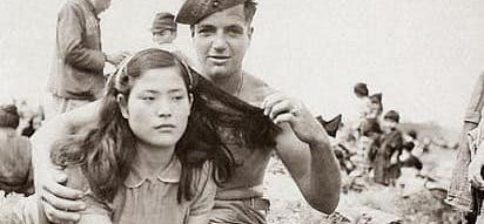
By A.B. Abrams for The Saker Blog | August 24, 2020
Over a year ago I published the book Power and Primacy: The History of Western Intervention in the Asia-Pacific, which was an attempt to fill what I saw as a gap in scholarship on the subject. I found that while several scholars had covered individual cases of Western powers intervening in the region, from David Easter and Geoffrey B. Robinson’s works on the Western-engineered coup and massacres in Indonesia of an estimated 500,000 to 3 million people[1] – to Bruce Cumings and Hugh Deane’s works on the Korean War, there were no major works assessing broader trends and consistencies in Western intervention. Power and Primacy was thus written to show the consistencies in Western designs towards the region and the means used to achieve them over a period of more than 70 years, from the Pacific War which began in 1941 to Western policies towards China and North Korea today.
This month marks the 75th anniversary of the dismantling of the Japanese Empire, and the famous declaration by General Douglas MacArthur that, with the region’s only non-Western military power and the world’s only non-Western naval power now defeated, ‘The Pacific is now an Anglo-Saxon lake.’ While the U.S. and its allies portrayed themselves as a benevolent and democratising force in the region, the darker aspects of East Asia’s time under the new hegemon, which starkly contradict this, have seen very little discussion or coverage. It is notable, for example, that after the Japanese Empire’s fall not only did living standards in southern Korea fall dramatically after it was placed under the rule of an American military government, but mass rapes, the use of comfort women, and serious human trafficking – the very things used by many to justify the American embargo on Japan which had started hostilities in 1941 – not only continued but were expanded under U.S. control. The government of Syngman Rhee, the Princeton-educated Christian radical the U.S. placed in power, killed 2% of its population at the most conservative estimate within five years, placing hundreds of thousands more in concentration camps and exercising a level of brutality not seen even under the Japanese Empire.
With Japan today having seen 75 uninterrupted years with tens of thousands of Western soldiers based on its territory, where they appear set to remain indefinitely, this is a suitable time to reflect on the nature of the relationship between the country and the West – which is very far from that of equal sovereign powers with shared goals and ideals. Evidence for this has ranged from massive involvement of American intelligence in the political process, including funding pro-Western political parties and supporting their election campaigns,[2] to the testimonies of multiple officials. Former Prime Minister Yukio Hatoyama, for example, noted regarding his country’s inability to reach a deal with Russia over the Kuril Islands due to an effective American veto over all major foreign policy decisions: “I think it represents a big problem that when making foreign policy decisions, Tokyo is always guided by the United States’ approach. Japan depends on America.” He further stated: “The Japanese media and government… always take America’s side. Tokyo is dependent on the US’ views … Japan will continue to side with America and the G7 countries.”[3] Prime Minister Ichiro Hatoyama, who in the 1950s had also sought to resolve the dispute with Moscow and sign a peace treaty on the basis that Japan would receive two of the four islands, was harshly threatened by the U.S. and was ultimately forced to concede to Washington’s demands not to go through with an agreement. Prime Minister Yoshiro Mori came to a similar conclusion regarding the country’s lack of effective sovereignty in an interview with Russian state media in 2018. [4]
Beyond these political indicators, however, are more human indicators of the nature of America’s place in post-war Japan which cannot be overlooked, and which contrast very strongly with portrayals in the vast majority of Western media including both documentaries and popular media. An extract from the book Power and Primacy, pages 66-69, given below, recently reached over 3 million viewers on social media and highlighted the true consequences for Japan’s population of subjugation by the United States. The full references are provided in the book itself. Perhaps most importantly, this is not presented as an isolated set of cases of U.S. and Western conduct towards an East Asian population placed under their power – rather it is part of a much wider trend which if anything was considerably more extreme in Vietnam and in both South and North Korea – the latter of which was briefly occupied by U.S. forces in 1950. An understanding of the past is key to comprehending the nature of Western involvement in the Asia-Pacific region today, which is why I found that this project was particularly essential now in light of the ‘Pivot to Asia,’ the North Korean nuclear crisis, the Trump administration’s recent ‘Tech War’ on China and other key events which have increasingly placed the region at the centre of determining the future of world order.
Text Start:
There was a far darker side to the U.S. and allied occupation of Japan, one which is little mentioned in the vast majority of histories – American or otherwise. When Japan surrendered in August 1945, mass rapes by occupying forces were expected… [despite setting up of a comfort women system which recruited or otherwise trafficked desperate women to brothels] such crimes were still common and several of them were extremely brutal and resulted in the deaths of the victims. Political science professor Eiji Takemae wrote regarding the conduct of American soldiers occupying Japan:
‘U.S. troops comported themselves like conquerors, especially in the early weeks and months of occupation. Misbehavior ranged from black-marketeering, petty theft, reckless driving and disorderly conduct to vandalism, assault, arson, murder and rape. Much of the violence was directed against women, the first attacks beginning within hours after the landing of advanced units. In Yokohama, China and elsewhere, soldiers and sailors broke the law with impunity, and incidents of robbery, rape and occasionally murder were widely reported in the press [which had not yet been censored by the U.S. military government]. When U.S. paratroopers landed in Sapporo an orgy of looting, sexual violence and drunken brawling ensued. Gang rapes and other sex atrocities were not infrequent […] Military courts arrested relatively few soldiers for their offences and convicted even fewer, and restitution for the victims was rare. Japanese attempts at self-defense were punished severely. In the sole instance of self-help that General Eichberger records in his memoirs, when local residents formed a vigilante group and retaliated against off-duty GIs, the Eighth Army ordered armored vehicles in battle array into the streets and arrested the ringleaders, who received lengthy prison terms.’
The U.S. and Australian militaries did not maintain rule of law when it came to violations of Japanese women by their own forces, neither were the Japanese population allowed to do so themselves. Occupation forces could loot and rape as they pleased and were effectively above the law.
An example of such an incident was in April 1946, when approximately U.S. personnel in three trucks attacked the Nakamura Hospital in Omori district. The soldiers raped over 40 patients and 37 female staff. One woman who had given birth just two days prior had her child thrown on the floor and killed, and she was then raped as well. Male patients trying to protect the women were also killed. The following week several dozen U.S. military personnel cut the phone lines to a housing block in Nagoya and raped all the women they could capture there – including girls as young as ten years old and women as old as fifty-five.
Such behavior was far from unique to American soldiers. Australian forces conducted themselves in much the same way during their own deployment in Japan. As one Japanese witness testified: ‘As soon as Australian troops arrived in Kure in early 1946, they ‘dragged young women into their jeeps, took them to the mountain, and then raped them. I heard them screaming for help nearly every night.’ Such behavior was commonplace, but news of criminal activity by Occupation forces was quickly suppressed.
Australian officer Allan Clifton recalled his own experience of the sexual violence committed in Japan:
‘I stood beside a bed in hospital. On it lay a girl, unconscious, her long, black hair in wild tumult on the pillow. A doctor and two nurses were working to revive her. An hour before she had been raped by twenty soldiers. We found her where they had left her, on a piece of waste land. The hospital was in Hiroshima. The girl was Japanese. The soldiers were Australians. The moaning and wailing had ceased and she was quiet now. The tortured tension on her face had slipped away, and the soft brown skin was smooth and unwrinkled, stained with tears like the face of a child that has cried herself to sleep.’
Australians committing such crimes in Japan were, when discovered, given very minor sentences. Even these were most often later mitigated or quashed by Australian courts. Clifton recounted one such event himself, when an Australian court quashed a sentence given by a military court martial citing ‘insufficient evidence,’ despite the incident having several witnesses. It was clear that courts overseeing Western occupation forces took measures to protect their own from crimes committed against the Japanese – crimes which were largely regarded as just access to ‘spoils of war’ at the time by the Western occupiers.
As had been the case during the war, underreporting of rapes in peace- time due to the associated shame in a traditional society and inaction on the part of authorities (rapes in both cases occurred when Western militaries were themselves in power) would lower the figures significantly. In order to prevent ill feeling towards their occupation from increasing, the United States military government implemented very strict censorship of the media. Mention of crimes committed by Western military personnel against Japanese civilians was strictly forbidden. The occupying forces ‘issued press and pre-censorship codes outlawing the publication of all reports and statistics “inimical to the objectives of the Occupation.”’ When a few weeks into the occupation Japanese press mentioned the rape and widespread looting by American soldiers, the occupying forces quickly responded by censoring all media and imposing a zero tolerance policy against the reporting of such crimes. It was not only the crimes committed by Western forces, but any criticism of the Western allied powers whatsoever which was strictly forbidden during the occupation period – for over six years. This left the U.S. military government, the supreme authority in the country, beyond accountability. Topics such as the establishment of comfort stations and encouragement of vulnerable women into the sex trade, critical analysis of the black market, the population’s starvation level calorie intakes and even references to the Great Depression’s impact on Western economies, anti-colonialism, pan-Asianism and emerging Cold War tensions were all off limits.
What was particularly notable about the censorship imposed under American occupation was that it was intended to conceal its own existence. This meant that not only were certain subjects strictly off limits, but the mention of censorship was also forbidden. As Columbia University Professor Donald Keene noted: ‘the Occupation censorship was even more exasperating than Japanese military censorship had been because it insisted that all traces of censorship be concealed. This meant that articles had to be rewritten in full, rather than merely submitting XXs for the offending phrases.’ For the U.S. military government it was essential not only to control information – but also to give the illusion of a free press when the press was in fact more restricted than it had been even in wartime under imperial rule.
By going one step further to censor even the mention of censorship itself, the United States could claim to stand for freedom of press and freedom of expression. By controlling the media the American military government could attempt to foster goodwill among the Japanese people while making crimes committed by their personnel and those of their allies appear as isolated incidents. While the brutality of American and Australian militaries against Japanese civilians was evident during the war and in its immediate aftermath, it did not end with occupation. The United States has maintained a significant military presence in Japan ever since and crimes including sexual violence and murder against Japanese civilians continue to occur.”
Text End
For Full Manuscript of Power and Primacy
- https://www.peterlang.com/view/title/68124?format=PBK
- https://www.ebooks.com/en-ms/book/209664887/power-and-primacy/a-b-abrams/
- https://www.peterlang.com/view/title/68124
- https://www.amazon.co.uk/Power-Primacy-History-Intervention-Asia-Pacific/dp/1788746120/ref=sr_1_fkmrnull_2?keywords=power+and+primacy+abrams&qid=1553942549&s=gateway&sr=8-2-fkmrnull
https://www.facebook.com/100803698404263/photos/a.101111128373520/106347284516571/
For A. B. Abrams’ upcoming work, scheduled for publication in October 2018, titled Immovable Object: North Koreans 70 Years at War with American Power:
- https://www.amazon.com/Immovable-Object-North-Koreas-American/dp/1949762300
- https://www.claritypress.com/product/immovable-object-north-koreas-70-years-at-war-with-american-power/
- ‘Indonesia’s killing fields,’ Al Jazeera, December 21, 2012. ‘Looking into the massacres of Indonesia’s past,’ BBC, June 2, 2016. ↑
- Weiner, Time, ‘C. I. A. Spent Millions to Support Japanese Right in 50’s and 60’s,’ New York Times, October 9, 1994. ↑
- ‘Stationing American troops in Japan will lead to bloody tragedy – ex-PM of Japan,’ RT, (televised interview), November 6, 2016. ↑
- ‘Ex-Japan FM: I Told Putin We Follow U.S. Policy as We’re Surrounded by Nuke States,’ Sputnik, May 22, 2018. ↑
Turkey’s Erdogan Cuts off Water to One Million Syrian Civilians in the Blazing Summer Heat
By Steven Sahiounie | Mideast Discourse | August 24 ,2020
Turkish President Erdogan has sought to create an image for himself as the champion of religion. The Islamic State of Iraq and Syria (ISIS) also tried to claim they were following a religion, yet both used water as a weapon of war.
Water in Islam
Turkey is almost 100% Muslim and has made world headlines converting Christian cathedrals into Mosques. Turkish President Erdogan has been converting a secular democracy in Turkey, founded by Ataturk, into a Muslim Brotherhood haven, which follows Radical Islam as a political ideology, which is the same ideology as ISIS.
Water in Islam is considered as a gift from God, belonging to all equally, which has to be distributed equally among all living beings, humans, animals, and plant life, according to Cherif Abderrahman Jah, an Islamic academic and humanist.
The ISIS terrorists have often used water as a weapon of war in Iraq and Syria by cutting off supplies to villages that resisted their rule and as a tool to expand their control over the region’s water infrastructure.
They wanted to seize the water to prove they were building an actual state. In 2014 ISIS besieged the Syrian town of Kobane to secure a piece of the border with Turkey.
6 years later, 2020, the same scenario plays out, and in the same area, but ISIS has been defeated, and the Erdogan regime in Turkey has taken their place. Many experts feel ISIS and Turkey have been connected in their use of Radical Islam as a political tool, devoid of any connection to Islam, which is a religion.
ISIS was using water as a weapon, according to Tobias von Lossow of Berlin’s Institute for International and Security Affairs. He said, “IS uses water systematically and consistently. IS uses the entire range of possibilities and variations of water warfare.”
Death without water
A person can survive without water for about 3 days; however, a person living in a very hot climate will sweat, causing them to lose more water, which leads to dehydration, causing extreme thirst, fatigue, and ultimately, organ failure and death. A person living in a hot place, like Hasaka, and having to perform laborious activities such as taking care of animals, or small children, could die in only a few days without water.
The role of the SAR in the crisis
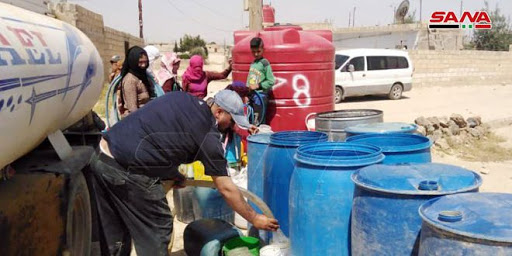
Friday marked the ninth consecutive day without water in Hasaka. The Turkish occupation forces, and their Radical mercenaries, are endangering the lives of more than a million civilians.
The SAR water authorities continue to try to provide clean drinking water, with cooperation from the Hasaka City Council and civil society groups, who used many water tankers to provide the locals with drinking water from Nafasha and al Himah Water Projects.
Chairman of Hasaka City Council Adnan Khajou, said that the daily quantity of water to be transported is 300,00 liters, which came from shallow wells dug by the locals, but is not drinkable and used only for cleaning.
The Turkish Army of occupation and its terrorist mercenaries in Ras-al-Ayn countryside continue to stop the operation of Alouk water project and to cut off the drinking water from Hasaka city, threatening one million persons with thirst and causing them to suffer from the spread of Coronavirus (COVID-19).
General Director of Hasaka Water Establishment Mahmoud Ukla said that since the Alouk Water Station was shut off by the Erdogan regime army, and their mercenaries, the summer temperatures have soared and water demand has increased, with the devastating additional threat of the COVID-19 pandemic, which needs water for hygiene.
Aziz Michael, geologist and water specialist, said that the Alouk water station is essential for water and it should be reopened.
The role of Turkey in the crisis
Turkey has a long history of using water as a weapon of war in Syria. In 1998 Erdogan had threatened to shut off water to Syria, which brought the two countries close to military conflict.
In May the water supply to 460,000 civilians in northeastern Syria was cut off by Turkey for the sixth time.
Syrian Observatory activists have reported Friday that residents have been protesting in Ras al-Ain, which is under Turkish Army occupation, and were calling for water, and electricity to be restored.
The role of the UN
On Friday, Ambassador Bashar al-Jaafari, Syria’s Permanent Representative at the UN, called on the UN Secretary-General Antonio Guterres to intervene immediately and to exert all his efforts to stop the Erdogan regime’s crime of cutting off drinking water for nearly one million Syrian citizens in Hasaka. In the phone call between al-Jaafari and Guterres, the Ambassador stressed that the Turkish aggression constitutes a war crime and a crime against humanity.
He said that the situation caused by this crime is exacerbated by hot weather and the threat of the COVID-19 pandemic.
Guterres said that he has tasked the UN team in Syria and his Special Envoy Geir Pedersen with taking steps to address this matter, resolve it urgently, and deliver humanitarian aid to affected people. He said he will exert his best efforts by contacting the Turkish government to put pressure and resolve this matter.
Guterres has asked Pedersen to meet the representatives of the US, Russia, and Turkey in Geneva on Monday, as the committee for drafting a new Syrian constitution meets, which is part of the UN 2254 resolution which will pave the way to a peaceful solution to the Syrian conflict.
The SAR and AANES (Autonomous Administration of North and East of Syria)
The Northeast section of Syria is split by various groups. The SAR based in Damascus controls areas, and has forces, checkpoints, and provides free health care and education to those areas it controls. The AANES is a separate group of Kurds, following a communist political platform, and they have become known to foreigners as “Rojava”. They have a military wing, the SDF, which was aligned with the terrorist group PKK, and they were in a coalition with the US military, who are now illegally occupying parts of the region while tasked with stealing Syrian oil by the Trump regime.
Covid-19 danger
“Turkish authorities’ failure to ensure adequate water supplies to Kurdish-held areas in Northeast Syria is compromising humanitarian agencies’ ability to prepare and protect vulnerable communities in the COVID-19 pandemic,” Human Rights Watch said in a report published late March.
What is the solution?
The Kurdish leaders of the ‘Rojava’ area, and the central government of the SAR in Damascus, are in complete agreement that the solution of the water crisis in Hasaka must be the removal of all Turkish occupation forces, and their Radical terrorist mercenaries. The SAR is a secular government, and this is what the Kurdish leadership of ‘Rojava’ also claim as a core value of their administration. With so much in common, and both ‘Rojava’ and the SAR facing the same enemy, Turkey, and the possible resurgence of ISIS, it appears they may soon form renewed cooperation to re-take the land from occupation forces and defend the borders from all enemies.
Steven Sahiounie began writing political analysis and commentary during the Syrian war, which began in March 2011. He has published several articles, and has been affiliated with numerous media. He has been interviewed by US, Canadian and German media.
US Bombing of a Syrian Army Checkpoint in Hasaka Countryside Kills a Soldier
By Khaled Iskef | American Herald Tribune | August 17, 2020
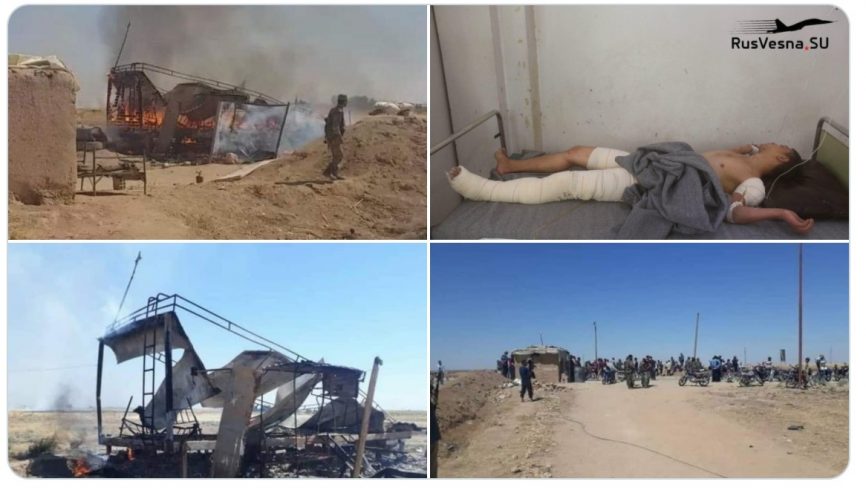
A US army bombed a Syrian army checkpoint in the village of Tal al-Dahab, southeast of Qamishli in the countryside of Hasakah today’s morning, resulting in killing a soldier and wounding two others.
Private sources reported that the American warplane flew over the checkpoint on the outskirts of Tal al-Dahab for a short period, and bombed it, before immediately leaving the area.
The sources said that targeting the checkpoint came after its members prevented an American patrol from passing through it, as verbal affinities occurred at the checkpoint, before the patrol withdrew without passing, followed by the arrival of the aircraft that carried out the bombing.
The information received indicated that one of the wounded Syrian soldiers holds the rank of officer, without receiving confirmed information about the size of the injuries they suffered as a result of the US bombing.
In the past months, the countryside of Hasaka has witnessed a series of events related to the American presence in the region, especially in terms of preventing American patrols from moving in those areas through the Syrian army checkpoints, as those patrols have always tried to provoke the army checkpoints by insisting on passing, which was refused firmly by the Syrian checkpoints.
The Syrian army prevention of the American patrols passage was often accompanied by popular support in the countryside of Hasakah, who always supported the Syrian army in the face of American moves.
Khaled Iskef is a journalist working for Almayadeen TV.
Featured Video

Can the U.S. Afford to Annihilate Iran?
or go to
Aletho News Archives – Video-Images
From the Archives
Sanctions, War and the Policy of Dual Containment
By SASAN FAYAZMANESH | March 17, 2008
It is now nearly three decades since the Unites States adopted the policy of dual containment of Iran and Iraq. While much has been written about the containment of Iraq, there has been very little in-depth analysis of this policy when it comes to Iran. In a book that is going to be released on March 31, 2008, entitled The United States and Iran: Sanctions, Wars and the Policy of Dual Containment (Routledge), I attempt to address this shortcoming by investigating when and why the US policy of containment of Iran came about, how it evolved, and where it stands today.[1] To the extent that Israel has been involved in US policy making, the study will also include the role that Israel has played in the containment of Iran. Also, since the fate of Iran has been inextricably linked to that of Iraq, occasionally the investigation will overlap with the containment of Iraq.
The policy of dual containment of Iran and Iraq originated during the Carter Administration, but it was not until the Clinton Administration that the expression “dual containment” became popular. … continue
Blog Roll
 Aletho News
- Can the U.S. Afford to Annihilate Iran? /Seyed M. Marandi
- Elmo Sold mRNA Jabs to Your Toddler. Now They Are “Off-Label.”
- British state targets Palestine Action with yet another crooked trial
- Americans are paying the price to preserve Israel’s nuclear hegemony
- Resistance factions are necessary to ensure a permanent US Iraq withdrawal
- How Israel destabilizes the Middle East: Denying sovereignty and the right to exist
- Europe’s Establishment Is Embracing War – and Losing Voters
- NATO chief advocates war of aggression
- No Vote, No Representation, No State: Democracy, Israeli Style
- Zionist Bought Senate Blocks Information About American Citizens Killed By Israel
- If Americans Knew
- Israeli Soldiers Abduct At Least 22 Across Occupied West Bank
- Eight Palestinians Killed in Israeli Attacks on Gaza
- Israeli former leaders and security chiefs threaten legal action over ‘Jewish terrorism’
- Israel map in LA Times ad includes all land from the river to the sea
- Inside Lebanon’s 200-page dossier on Israeli war crimes
- Flydubai, genocide, settler violence, Trump abuse of power to deport – Daily Update
- Counting Antisemitic Incidents: What the ADL Audit Reveals — and Obscures
- Mamdani releases plan to combat antisemitism and hate crimes in New York City
- Iran’s Revolutionary Guards Publish Letter to the American People
- DMFI launches $1 million ad campaign supporting Virginia’s Elaine Luria
- No Tricks Zone
- Green Energy Debacle: German Expert Professor Fritz Vahrenholt Warns Of Severe Economic And Social Consequences
- Two More Paleo Reconstructions Affirm Meters-Higher Sea Levels Across Ireland, Brazil 7000-6000 Years Ago
- New Study: Earth And Venus Surface Warmth Largely Explained By Convection And Lapse Rate, Not CO2 Or Radiation
- 2025 Nature Paper Claiming Worsening Global Drought Gets RETRACTED …Heavily Flawed
- New Study: ‘Global Drought Shows No Detectable Recent Acceleration Under Climate Warming’
- Economic Masterminds: German Socialists Suggest Taxing Productivity Gains Stemming From Using AI
- The South China Sea Has Not Been Cooperating With The Climate Change Narrative
- Energy Crisis: Germany Enters Heating Season With Historically Low Gas Reserve Fill Levels
- New Study: The Antarctic Ice Sheet Gained Mass From 2020-2024 Due To Staggering Snow And Ice Accumulation
- Study: Ocean Heating Rates From Thousands Of Years Ago ‘Dwarf’ Modern Ocean Heating Rates

