US airlifts Lebanese-American accused of torture, murder from Lebanon
MEMO | March 20, 2020
Lebanese-American Amer Fakhoury, accused of torturing and murdering prisoners while serving in the Israeli-backed south Lebanon army, has been airlifted from Beirut by the US, Senator Jeanne Shaheen announced yesterday.
A US Marine Osprey was seen landing at the US Embassy in Beirut, hours before Fakhoury’s release was announced.
Shaheen said she had spoken with Fakhoury on the phone soon after his release, adding that “anytime a US citizen is wrongfully detained by a foreign government, we must use every tool at our disposal to free them”.
In a statement later yesterday, US President Donald Trump said that he was “very grateful to the Lebanese government. They worked with [the US]”.
Fakhoury was detained on 12 September when he arrived in the country to visit family after more than two decades.
The former member of the south Lebanon Army has been accused of being the “Butcher of Khiam” over allegations that he oversaw the torture and murder of detainees during his tenure as a prison guard.
Former detainee Abbas Qabalan told local media Naharnet that “not a single person held in Khiam was spared physical and psychological torture”. At least ten people died at the prison while Fakhoury was working there.
The charges against Fakhoury were initially dropped on Monday, when he was acquitted because the alleged offences took place more than ten years ago.
However, a military judge ordered a re-trial after Judge Ghassan Khoury asked the Military Court of Appeals to overturn the acquittal. A court order forbidding Fakhoury from travelling internationally for two months was announced later.
In the wake of Fakhoury’s release, the head of the Military Tribunal Brigadier General Hussein Abdallah announced his resignation from the post this morning, the Daily Star reported.
Abdallah said he resigned “out of respect for my oath and military honour” adding the military tribunal had become a place where “the application of the law equals to the release of an agent of pain”.
Tensions between the US and Lebanon have risen dramatically as a result of Fakhoury’s detention, with Senators Shaheen and Cruz tabling legislation in February which would invoke sanctions against Lebanese officials and associates which are deemed to have been involved in the illegal detention of a US citizen.
The Trump administration have threatened to withhold aid to the country and sanction the Lebanese military.
From Cluster Bombs to Toxic Waste: Saudi Arabia is Creating the Next Fallujah in Yemen

A collection of unexploded ordnance recovered by the UNDP’s YEMAC project in Yemen. Courtesy | YEMAC
By Ahmed AbdulKareem | MintPress News | March 20, 2020
AL-JAWF, YEMEN — As the world’s focus turns to the rapidly-spreading COVID-19 pandemic, Yemenis are reeling from their own brewing tragedy, contending with the thousands of cluster bombs, landmines and other exploded munitions that now litter their homeland. Just yesterday, a young child was killed and another was injured in the al-Ghail district of al-Jawf when a landmine left by the Saudi military exploded, witnesses told MintPress. Outraged and terrified by the presence of these unexploded ordnances, Ahmed Sharif, a father of 9 who owns a farm in the district called the unexploded ordnances “a significant threat to our children.”
Earlier this week, thousands of cluster bombs containing between dozens and hundreds of smaller submunitions were dropped by air and scattered indiscriminately over large areas near Ahmed’s farm. A large number of those munitions failed to explode on impact, creating a new threat to residents already reeling from 5 years of war, famine and an economic blockade. The use, production, sale, and transfer of cluster munitions is prohibited under the 2008 Convention on Cluster Munitions, an international agreement recognized by over 100 countries, but rejected by Saudi Arabia and the United States.
Saudi Arabia is estimated to have dropped thousands of tons of U.S.-made weapons in al-Jawf over the past 100 days alone. Al-Jawf is an oil-rich province that lies in Yemen’s north-central reaches along the Saudi border. The aerial campaign is likely a last-ditch effort to stem the tide of battlefield success by local volunteer fighters who teamed with Houthi forces to recapture large swaths of al-Jawf and Marib provinces. That campaign, for all intents and purposes, has failed.
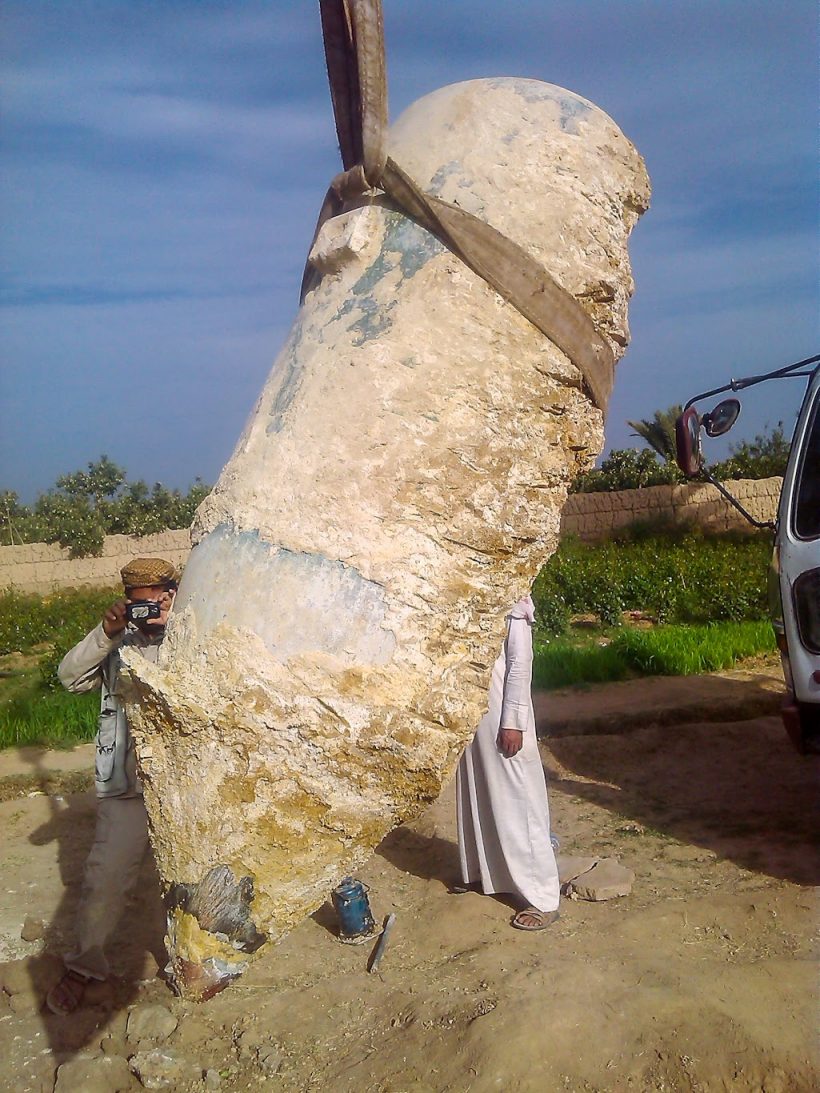
An unexploded bomb dropped by a Saudi warplane is recovered from a pomegranate farm in the Jamilah district in Sadaa. Courtesy | YEMAC
On Wednesday, the Houthis announced that their military operation – dubbed “God Overpowered Them” – was complete and that al-Jawf was free of Saudi occupation. According to Houthi sources, more than 1,200 Saudi-led coalition fighters were killed or injured during the operation and dozens of Saudi troops, including officers, were captured. The Houthis also struck deep into Saudi territory in retaliation for the more than 250 Saudi airstrikes that were carried out during the campaign. In multiple operations, ballistic missiles and drones were used to target facilities inside Saudi Arabia, according to officials.
Saudi losses haven’t been limited to al-Jawf either. Last week, Marib province, which lies adjacent to Yemen’s capital of Sana’a, was recaptured following heavy battles with Saudi forces. Local tribal fighters were able to clear strategic areas in the Sirwah District with the assistance of Houthi forces and take control of the town of Tabab Al-Bara and the strategic Tala Hamra hills that overlook Marib city. Both the Saudi-led coalition and its allied militants initially admitted defeat but later described their loss as a tactic withdrawal.
Marib is now the second Yemeni governorate adjacent to Saudi Arabia to fall under the control by Yemen’s resistance forces in the last month, al-Jawf being the first. Both provinces have strategic importance to Saudi Arabia and could serve as a potential launch point for operations into Saudi Arabia’s Najran province.
“Saudi [Arabia] and America have planted our land with death”
The highly populated urban areas of Sana’a, Sadaa, Hodeida, Hajjah, Marib, and al-Jawf have been subjected to incomprehensible bombing campaigns during the Saudi-led war on Yemen, which turns five on March 26. The sheer scale of that campaign, which often sees hundreds of separate airstrikes carried out every day, coupled with its indiscriminate nature, has left Yemen one of the most heavily contaminated countries in the world.
Since 2015, when the war began, coalition warplanes have conducted more than 250,000 airstrikes in Yemen, according to the Yemeni Army. 70 percent of those airstrikes have hit civilian targets. Thousands of tons of weapons, most often supplied by the United States, have been dropped on hospitals, schools, markets, mosques, farms, factories, bridges, and power and water treatment plants and have left unexploded ordnances scattered across densely populated areas.
A significant proportion of those ordnances are still embedded in the ground or amid the rubble of bombed-out buildings, posing a threat to both civilians and the environment. As Man’e Abu Rasein, a father who lost two sons to an unexploded cluster bomb in August of 2018 puts it: “Saudi [Arabia] and America have planted our land with death.” Abu Rasein’s sons, Rashid, ten, and Hussein, eight, were grazing their family’s herd of sheep in the village of al-Ghol north of Sadaa, far from any battlefield. They spotted an unusual looking object and like most curious young boys, picked it up to investigate. But the object they found was no toy, it was an unexploded cluster munition dropped by a Saudi jet. After hearing an explosion, the boys’ family went to investigate and found them lying dead, covered in blood.
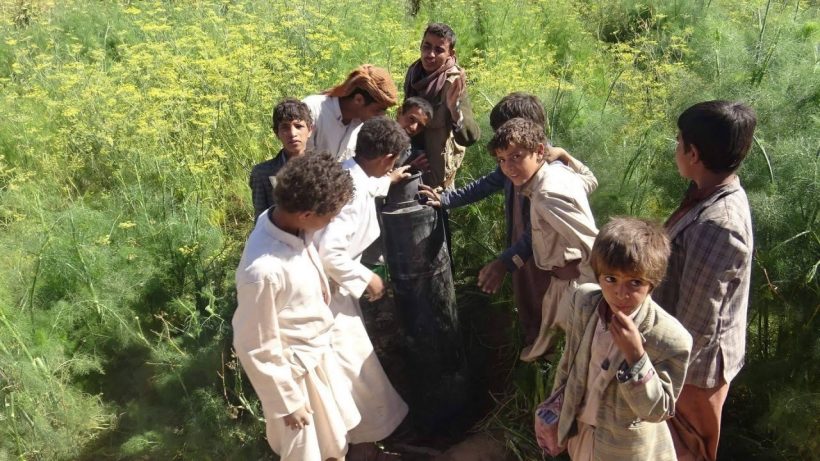
A group of children in Sahar district inspects a cluster bomb dropped by a Saudi warplane at a farm in Sadaa, March 18, 2019. Abdullah Azzi | MintPress News
Since March of 2015, Human Rights Watch has recorded more than 15 incidents involving six different types of cluster munitions in at least five of Yemen’s 21 governorates. According to the United Nations Development Program’s Emergency Mine Action Project, some of the heaviest mine and ERW (explosive remnants of war) contamination is reported in northern governorates bordering Saudi Arabia, southern coastal governorates and west-central governorates, all areas surrounding Houthi-dominated regions of Yemen. Since 2018 alone, the UNDP has cleared nearly 9,000 landmines and over 116,000 explosive remnants in Yemen.
From the Yemeni war of 1994 to the six wars in Sadaa, Yemenis have suffered several wars over the last three decades. Yet thanks to saturation of U.S. weapons, the ongoing war has brought death on a toll not seen in Yemen for hundreds of years. In Sadaa, the Saudi coalition has a significant legacy of unexploded ordinances, up to one million according to figures provided to MintPress by the Yemeni Executive Mine Action Center (YEMAC), an organization backed by the United Nations.
The Project Manager of YEMAC identified heavy cluster munition contamination in Saada, al-Jawf, Amran, Hodeida, Mawit, and Sanaa governorates, including in Sanaa city. Contamination was also reported in Marib. For the time being, YEMAC is the only organization working throughout the country during the ongoing war. Their teams are confronted with a very complex situation, disposing of both conventional munitions and bombs dropped from airplanes, including explosive remnants of war rockets, artillery shells, mortars, bombs, hand grenades, landmines, cluster bombs, and other sub-munitions and similar explosives.
Saudi Arabia’s toxic legacy
In addition to killing and injuring hundreds of civilians, American-made weapons have exposed Yemen’s people to highly toxic substances on a level not seen since the now-infamous use of radioactive depleted uranium by the United States in Fallujah, Iraq, which to this day is causing abnormally high rates of cancer and birth defects.
The hazardous chemicals from Saudi Coalition military waste, including radioactive materials, fuel hydrocarbons, and heavy metals, has already led to outbreaks of disease. Vehicles abandoned on battlefields, usually in various states of destruction, contain toxic substances including PCBs, CFCs, DU residue, heavy metals, unexploded ordnances, asbestos and mineral oils. Hundreds of these military scraps remain publicly accessible in Nihm, al-Jawf, Serwah, Marib and throughout Yemen.
Aside from the threat they pose to life and limb, unexploded ordnances contain toxic substances like RDX, TNT, and heavy metals which release significant levels of toxic substances into the air, soil and water. According to both the Ministry of Water and Environment and the Ministry of Health, which have undertaken environmental assessments on the impact of urban bombing, high levels of hazardous waste and air pollutants are already present in a populated areas.
Alongside the still unknown quantities of more conventional weapons remnants in Yemen, the waste from the cleanup of bombed-out buildings has been found to be especially contaminated with hazardous materials, including asbestos which is used in military applications for sound insulation, fireproofing and wiring among other things. Fires and heavy smoke billowing over heavily populated civilian areas following Saudi bombing runs also pose an imminent threat to human health. A common sight in many Yemeni cities since the war began, these thick clouds of toxic smoke sometimes linger for days and coat both surfaces and people’s lungs with hazardous toxins like PAHs, dioxins and furans, materials which have been shown to cause cancer, liver problems and birth defects.
Before the war began, most hazardous materials were trucked to Sanaa where they were separated and disposed of properly at the sprawling al-Azragein treatment plant south of the capital. But that plant was among the first targets destroyed by Saudi airstrikes after the war began. After it was bombed, puddles and heaps of toxic material were left to mix with rainwater and seep into surrounding areas. Yemeni researchers are still trying to grasp the scale of pollution from biohazardous chemicals at the site.
Although a comprehensive nationwide environmental assessment of the impact of urban bombing in Yemen has yet to be completed, high levels of hazardous waste and air pollutants have been recorded by many hospitals and environmental agencies. Some idea of the long-term effects can also be gleaned from studies carried out in areas where similar toxins have been used, particularly by the United States in Fallujah, Iraq and in Vietnam, where scientific assessments have shown increased cases of birth defects, cancer and other diseases, including in U.S. veterans.
In southern Yemen, where Saudi Arabia and the United Arab Emirates operate largely unchallenged, the coalition has been disposing of military waste in large trenches devoid of any measures to mitigate potential toxic fallout. Waste is dumped into large holes and either detonated or simply buried, inevitably contaminating soil and groundwater according to data from the UN Environment Program.
Yemen’s coastline hasn’t been immune either. The country’s General Authority for Environmental Protection said Wednesday that the Saudi-led coalition is dumping toxic and polluted waste on the shores of Yemen and in Yemeni regional waters, causing great damage to the marine environment, the deaths of fish and marine organisms, and in some cases, actually changing the color of the sea to a toxic green. The agency stated that in addition to dumping toxic waste, the coalition was allowing unsafe fishing practices such as marine dredging and the use of explosives by foreign ships, destroying the marine environment and coral reefs.
One hundred years to safety
Thousands of displaced Yemenis cannot fathom returning home due to the large number of explosives potentially hidden in and around their houses. Removing them all would require an end to the U.S.-backed war and economic blockade. Special equipment and armored machines such as armored excavators would need to be brought in, a slim prospect in a country unable to secure even the basic staples of life.

The remnants of a cluster bomb dropped by Saudi-led coalition warplanes inside a Yemeni home. March 18, 2020. Abdullah Azzi| MintPress News
Explosive remnants do not just impact lives and limbs, they prevent the use of potentially productive agricultural land and the rebuilding of important infrastructure. Like many border areas in Saada and Hajjah, fertile soil in al-Jawf and Marib has become so environmentally polluted since the war began that it could take decades to recover. Explosive remnants also prevent access to vital resources like water and firewood, cripples the movement of residents, including children traveling to school, and prevents aid from reaching those in need.
Even if the Saudi-led coalition were to stop the war immediately and lift the blockade, its legacy of indiscriminate bombing on such a massive scale will be felt for years to come. Due to the intensity of the bombing, experts at the United Nations Development Program’s Yemeni Executive Mine Action Center estimate that clearance could take at least 100 years in larger cities. Despite these dangers, desperate families with nowhere to go do not waste a lull in the barrage of Saudi airstrikes or a short-lived ceasefire to attempt to return home.
Ahmed AbdulKareem is a Yemeni journalist. He covers the war in Yemen for MintPress News as well as local Yemeni media.
These sickening videos of Australian SAS troops murdering unarmed Afghan civilians are a disgrace to my country
By Damian Wilson | RT | March 18, 2020
The graphic footage, filmed by body cameras worn by the elite troops and broadcast on national television, must lead to the soldiers being tried for murder.
Australians always look forward to celebrating Anzac Day, but this year it will be different because a pall of shame has fallen over our armed forces thanks to a jaw-dropping TV expose aired this week that showed elite Aussie soldiers murdering Afghan civilians in cold blood when they were supposed to be protecting them from the Taliban.
While a four-year inquiry into the behavior of its soldiers in Afghanistan, by the Inspector General of the Australian Defence Force, is still to deliver on its investigation, the chances of alleged war crimes being swept under the rug thanks to lying soldiers misguidedly protecting their comrades, misinformation from witnesses, or from a political cover-up, have just been blown out of the water.
Thanks to whistleblower Braden Chapman, a former army intelligence officer who witnessed the atrocities first hand in 2012, no one can ignore the reality of what happened as the Aussie Special Air Services Regiment (SAS) stormed the dusty villages of Afghanistan in search of those it considered legitimate targets.
Among the alleged crimes, Chapman says he witnessed an army dog handler allowing his charge to chew on the head of a newly-murdered man, another where an elite troop punched a child in the face and a third showing a soldier seemingly in the grip of ‘blood lust’ firing indiscriminately and throwing thermal grenades from close range into a mud hut occupied by several Afghan combatants.
Then there is the execution of a young, apparently unarmed Afghan man in a quiet wheat field. Shot from a distance of around two meters, his killer seems indifferent to the fact that his act was being filmed.
Somehow, those involved in several of the incidents explored in the documentary had already faced investigation over their actions but were found to have acted lawfully. Looks like they might have some further questions to answer now.
The culprits will regret that alongside their modern-tech weapons and armor they wore high definition body cameras that caught some of the inhumanity, and equally grim audio commentary, during their operations to flush out enemy combatants.
Several of the worst offenders, caught clearly on camera apparently murdering Afghans with thermal grenades, guns and through severe beatings, are still serving in the ADF. Though probably not for much longer thanks to their grinning murderous faces being caught for posterity on 4K video.
As an Australian, I am deeply ashamed by these disgraceful, impossible to deny scenes.
Our armed forces, and particularly their courageous, selfless behavior abroad while on active duty have always been a source of immense pride to Aussies.
Anzac Day (April 25) is a national holiday in our country, initially instituted to celebrate the contribution of Australian and New Zealand soldiers toward the ultimately futile Gallipoli campaign in the First World War that cost the lives of nearly 12,000 soldiers from the two nations among an Allied total of 56,000. The day of remembrance later widened its scope to include the sacrifices by soldiers from Down Under in all wars.
Nowadays, far from being a relic of the past, Anzac Day is celebrated by an increasing number of young Australians, many of whom attend ceremonies swathed in Aussie flags, wearing green and gold T-shirts and beanies and with national flag temporary tattoos on their cheeks.
Across the country, dawn ceremonies are held in memory of the time of the original landing on the Gallipoli peninsula, after which many take a traditional ‘gunfire breakfast’ – coffee with added rum – in memory of the sustenance taken by Aussie soldiers before battle.
It’s all highly symbolic and reflective stuff. Not taken lightly nor ever mocked even by the usually irreverent Aussies.
So to have the reputation of Australian fighting men and women representing the nation abroad dragged through the mud by rogue murderers in disgraceful scenes, all caught on camera and broadcast on the national broadcaster’s foremost investigative affairs programme on a Monday evening, is a devastating blow to national pride.
To realise that some of these animals are still serving in the ADF takes your breath away. It’s as simple as Braden Chapman says: “You can’t shoot unarmed people and not call that murder.”
Damian Wilson is a UK journalist, ex-Fleet Street editor, financial industry consultant and political communications special advisor in the UK and EU.
Democratic Front for the Liberation of Palestine delegation meets with Russian foreign minister
MEMO | March 18, 2020
On Tuesday a delegation from the Democratic Front for the Liberation of Palestine (DFLP) met with Russian foreign minister, Sergey Lavrov, and special presidential representative for the Middle East and Africa and deputy foreign minister, Mikhail Bogdanov, in the Russian capital of Moscow.
According to a statement issued by the DFLP, the two sides discussed the general situation in the Middle East, specifically the Palestinian issue and the Palestinian people’s national rights. This came in light of the repercussions of US President Donald Trump’s endeavour to liquidate the cause of the Palestinians and confine the Palestinian state to a series of isolated patches of land ghettos, under the hegemony of the occupation state and its apartheid laws.
The DFLP stated that the two parties agreed that Trump’s vision violates international standards to solve the Palestinian issue, and constitutes a complete disregard for international legitimacy resolutions, as well as a threat to the stability of the region, in addition to paving the way for the emergence of more conflicts.
The two sides described the Israeli policies in the occupied areas as violations of international legitimacy resolutions, rising to the level of war crimes.
The two parties agreed that the United Nations, the International Council for Human Rights Policy (ICHRP) and the International Criminal Court (ICC) are required to assume their political, legal and moral responsibilities towards the Palestinian people.
The two sides stressed the necessity to end the division among Palestinian political actors, and reunite the Palestinian front in the face of the occupation and settlement, as well as Trump’s plan.
The two parties reaffirmed the Palestinian people’s right to fight for a fully sovereign independent state with Jerusalem as its capital, and to resolve the refugee issue in accordance with Resolution 194, which grants them the right of return.
Pompeo slams Iran’s ‘biological defense’ against Covid-19, sidesteps Khamenei’s ‘biological attack’ claims
RT | March 13, 2020
US Secretary of State Mike Pompeo has criticized Iran’s efforts at “biological defense” against Covid-19, but conspicuously avoided addressing Ayatollah Khamenei’s claim that the virus was a “biological attack.”
Khamenei all but accused the US of weaponizing coronavirus in a speech on Thursday, announcing the establishment of a military “Health and Treatment Base” to fight the disease. He declared that the facility “may also be regarded as a biological defense exercise… given the evidence that suggests the likelihood of this being a ‘biological attack.'”
Khamenei repeated the inflammatory claim in a series of tweets, echoing the words of Islamic Revolutionary Guard Corps chief Hossein Salami, who last week floated the “possibility” that coronavirus was the “product of a biological attack by America which initially spread to China and then to Iran and the rest of the world.”
But instead of responding to the cleric’s accusations, Pompeo merely chided him for not “telling the Iranian people the truth about the Wuhan virus when it spread to Iran from China” in a tweet on Friday, suggesting Tehran missed an opportunity for “the best biological defense” when it failed to curtail flights from Wuhan and “jailed those who spoke out.” He made no mention at all of the virus as a “biological attack” – American or otherwise.
Other Iranian officials have avoided openly accusing Washington of deploying the virus as a weapon, focusing instead on how US sanctions have contributed to the epidemic’s devastating effects. Foreign Minister Mohammad Javad Zarif slammed the Trump administration’s “medical terrorism” earlier this week, pointing out that artificially-induced shortages have put a major strain on hospitals’ resources. More than two dozen Iranian officials have fallen ill with the coronavirus in the weeks since it first surfaced in Iran in what appears to be an especially virulent form.
While the virus now known as Covid-19 first gained international attention in Wuhan, where it was thought to have originated in an open-air meat market, further research appears to disprove that hypothesis – opening the matter to speculation. And the Iranians are not alone in suggesting US responsibility for the epidemic, which has spread to 116 countries and killed over 5,000 people globally as of Friday.
Chinese Foreign Ministry spokesman Zhao Lijian came forward on Thursday to suggest that a US military delegation had brought the virus to Wuhan in October during the World Military Games, tweeting as his “proof” a video of the director of the US Centers for Disease Control admitting that some patients thought to have died of the flu later tested positive for the coronavirus.
Israel kills 10,000th Palestinian since 2000, US media largely ignore it
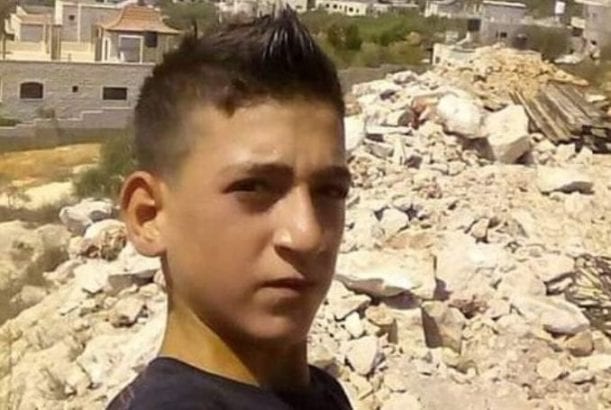
Mohammed Hamayel, 15, killed by an Israeli sniper on March 11, 2020. (Credit: Palestine Chronicle )
By Alison Weir | If Americans Knew | March 11, 2020
Israeli forces invading Palestinian Territory have just killed a 15-year-old unarmed Palestinian boy. A sniper shot him in the head with an expanding bullet. This is the 10,000th Palestinian killed by an Israeli since the round of violence that began in fall 2000. The boy was reportedly shot in the face.
During the same period, Palestinians have killed 1,270 Israelis. See the list and details on this Timeline of Israeli and Palestinian deaths.
Because US media rarely cover Palestinian deaths, while often emphasizing Israeli deaths, most Americans are unaware that Israeli forces have killed far more people than Palestinian resistance groups, and that Israel kills first in nearly all cycles of violence.
If the situation were reversed, and a Palestinian military force invaded an Israeli town and shot a teenager in the head, it would in all probability be front page news across the U.S.
US news reports also fail to mention that the violence began when colonizers began moving to Palestine in the early 1900s with the intention of taking over the land for a Jewish state, and that Israel was established through a war of what an Israeli historian terms “ethnic cleansing.”
Once again, U.S. news media are largely ignoring Israel’s latest killing of a Palestinian youth. Other than an automatic Associated press feed buried on their websites, there don’t seem to have been any reports on the death by NPR, CNN, the New York Times, Washington Post, PBS, etc.
Source: IsraelPalestineTimeline.org
Alison Weir is executive director of If Americans Knew, president of the Council for the National Interest, and author of Against Our Better Judgment: The Hidden History of How the U.S. Was Used to Create Israel.
Maiming Palestinians for Sport is a War Crime
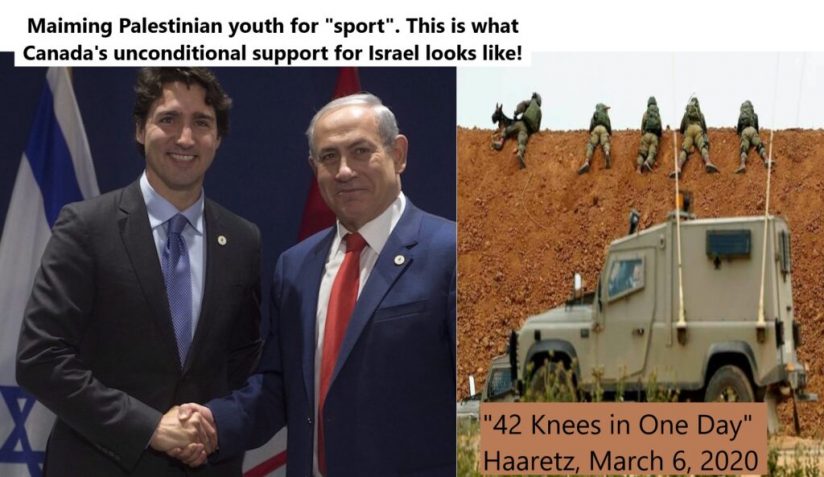
By Marion Kawas | Palestine Chronicle | March 10, 2020
The new Haaretz report entitled “42 Knees in One Day” is a difficult and painful read, and many people of conscience have responded with disgust and rage.
For those few who have not seen the report, it details in chilling fashion the accounts of 6 Israeli snipers who were stationed at the border with Gaza during the Great Return March protests. The report is long and gruesome; I had to put it down and then return to it several times. The “42 knees” reference is the “high count” for how many Palestinians were maimed by a single sniper team in one day.
The overall message is one of devastating impunity and disregard for the sanctity of Palestinian life. Palestinians and their long-time supporters have always known this was the mentality at play, but to see it all compiled in one place, in black and white, in the soldiers’ own words, was damning. Especially here in Canada, where barely a week earlier, it was revealed that the Trudeau government had called on the International Criminal Court not to investigate war crimes accusations against Israel.
“Canada’s longstanding position is that it does not recognize a Palestinian state… In the absence of a Palestinian state, it is Canada’s view that the Court does not have jurisdiction in this matter under international law,” Canada’s Foreign Ministry reportedly told various media outlets.
This is the same Canadian government that is busy traveling the world trying to get (or buy) votes for a UN Security Council seat. That has sent Joe Clark, a former Prime Minister, to visit multiple Arab countries looking for support; the Joe Clark that pioneered the idea of moving Canada’s embassy from Tel Aviv to Jerusalem back in 1979, an election promise that he was later forced to abandon.
The same government whose Deputy PM and former foreign minister, Chrystia Freeland, informed an Israeli audience in late 2018 that Canada would be an “asset for Israel” at the UN Security Council if it got one of the non-permanent member seats.
Canada, and other governments, must understand that there is a direct trajectory from their unconditional support for Israel to the continuation of Israeli war crimes against the Palestinian people.
Hampering the ICC investigation, refusing to accept your own court’s decision on labeling of Israeli settlement wines, smearing pro-Palestinian advocates as “anti-semitic” as happened at York University last year, all of this enables the Israeli government and military to feel they are immune to any sort of accountability.
This new report on Israeli sniper violence against Palestinians is most profound in what lies in the shadows: the Israeli military’s crude but effective approach. Promoting the concept that maiming these Palestinian youth is somehow “more humane” than killing them outright. But permanently disabling them in a poor society with few resources for the healthy let alone the injured, is an equally cruel fate. And a poignant and daily reminder to the rest of that society of the price to be paid for rebellion.
Most of the sniper accounts demonstrated a total lack of appreciation of the consequences or severity of their actions. One said, when talking about the other soldiers and their initial reaction to maiming their victims:
“He has fulfilled himself just now, it’s a rare moment. Actually, the more he does it, the more indifferent he’ll become. He will no longer be especially happy, or sad. He’ll just be.”
The snipers work in a team with a locator and the “42 in one day” soldier, related how he suggested to his locator to take over the shooting when they were getting close to the end of their shift because “he didn’t have knees”.
And “you want to leave with the feeling that you did something”. (Note its just “knees”, not Palestinian lives or limbs.) The parallel here with how sports teams allow rookie players to be involved at the end of a game that they know they are winning, is unmistakable. And it also highlights that these snipers didn’t seem to feel threatened and had few concerns about their own safety.
I realize that the Israeli snipers are themselves indoctrinated kids. But I hate the system and ideology that brought them to this, that placed them on those dirt embankments overlooking the people of Gaza, that made them think this was all “sport” or a video game where the player with the most points wins.
And if I feel such rage thousands of miles away, I can only imagine (and will never judge) how the youth of Gaza and their families must feel.
– Marion Kawas is a member of the Canada Palestine Association and co-host of Voice of Palestine.
Mounting concern over SAS operations in southern Syria
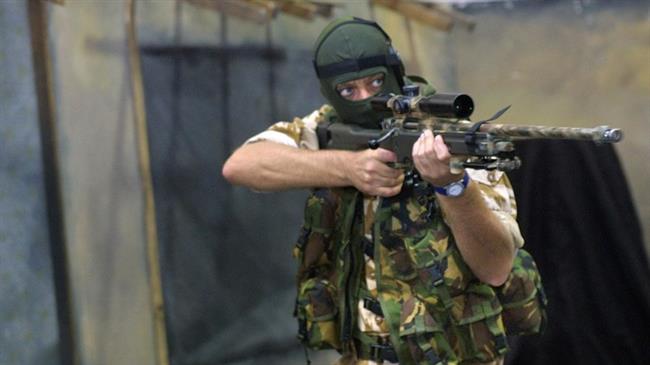
British SAS or SBS soldier in action in Syria
Press TV – March 8, 2020
There is mounting concern in the region about the nature and scale of British Special Forces deployment to southern Syria.
The concern comes in the wake of an exclusive report by the Daily Mirror (March 05) that two RAF Chinook helicopters “packed with special forces” troops and medics had “swooped” into southern Syria to rescue a wounded Special Air Service (SAS) operative.
According to the Mirror, the casualty was airlifted from “deep inside the warzone” to a medical facility in Erbil, northern Iraq.
Whilst the Mirror doesn’t say exactly where in southern Syria the SAS soldier was operating, the reference to “warzone” would suggest Deraa province, in the southwest of the country.
There have been clashes in recent days between Syrian government forces and terrorist groups controlling parts of the town of Al-Sanamayn, situated 50 kilometers south of the capital, Damascus.
Based on the realities on the ground, there is mounting speculation that Britain’s elite SAS could be lending a helping hand to anti-government forces in and around Al-Sanamayn.
British Special Forces, both in the form of the SAS and its allied unit, the Special Boat Service (SBS), have been operating in Syria for seven years.
According to the Mirror, more than 30 British special operatives have been injured in Syria. There has been at least one combat fatality, that of Sergeant Matt Tonroe, who was killed in a joint US/UK operation in March 2018.
Late last year it was reported that British Special Forces in Syria were beating a hasty retreat following US President, Donald Trump’s decision to pull out of Syria.
The latest incident appears to indicate that the SAS and SBS continue to operate in Syria based on the needs of allied Syrian rebel and terrorist groups.
The exfiltration of the injured SAS soldier will cause huge concern as the rescue operation involved RAF choppers taking off from RAF Akrotiri in Cyprus before flying through Israeli airspace to northern Jordan and onto southwestern Syria.
This brazen violation of Syrian sovereignty is likely to aggravate Britain’s outlaw status in Damascus, where both the Syrian government and people take a dim view of Britain’s hostile interference in their internal affairs.
Featured Video
10K More U.S. Troops Deploy as Trump Weighs New Iran Strikes
or go to
Aletho News Archives – Video-Images
From the Archives
Genetic baloney in thick slices
MAYBE COULD BE INC.
By Jon Rappoport | No More Fake News | July 8, 2021
Gene research companies tend to come and go. They start out banging and popping like fireworks in the sky, and then they fade out—selling themselves to larger outfits who’ve hired better liars…
Once upon a time, it sounded easy. Start with a disease, find the gene responsible for the disease, and correct the problem.
Then, researchers wondered, was disease the result of one gene or a group of genes acting together?
Either way, the proof would be in devising cures for diseases using gene therapy. “Not yet, but soon…”
And regardless, the major need was: money. Lots and lots of money.
This need required good PR people. “We have to pump up the idea that we’re on the edge of tremendous breakthroughs. We’re always on that edge…”
This hype also needed to obscure the fact that there wasn’t (and isn’t) ANY gene cure for ANY disease. … continue
Blog Roll
 Aletho News
- Von der Leyen gifts her spin doctor a job for life
- 10K More U.S. Troops Deploy as Trump Weighs New Iran Strikes /Suliaman Ahmed
- Iranian crew declared Dena training vessel ‘unarmed’ to US warship before deadly torpedo strike: Report
- Iran’s NPT debate moves beyond parliament
- Houthis condemn Saudi claims of attack on Medina
- Fatuous False Flags
- Are Europe’s Smallest Nations Dragging the Continent into War?
- EU draws up contingency plans for possible Merz exit
- G7 caves to US blackmail, announces ‘massive’ release of diesel reserves
- Reporting of the RAF Fairford arrests blows the idea of a ‘free press’ out of the water
- If Americans Knew
- The Israeli Right Portrays Islam as Murderous. It Serves a Political Purpose
- Jordan Has Had Enough: King Abdullah’s Scathing Warning to Israel
- Israeli Colonizers (i.e. Settlers) Kill Palestinian Man Near Salfit
- New Google Maps images reveal massive scale of devastation in Gaza
- Jewish supremacy, anti-Palestinian bigotry on display in Israel – Daily Update
- Israeli Soldiers Abduct At Least 22 Across Occupied West Bank
- Eight Palestinians Killed in Israeli Attacks on Gaza
- Israeli former leaders and security chiefs threaten legal action over ‘Jewish terrorism’
- Israel map in LA Times ad includes all land from the river to the sea
- Inside Lebanon’s 200-page dossier on Israeli war crimes
- No Tricks Zone
- Green Energy Debacle: German Expert Professor Fritz Vahrenholt Warns Of Severe Economic And Social Consequences
- Two More Paleo Reconstructions Affirm Meters-Higher Sea Levels Across Ireland, Brazil 7000-6000 Years Ago
- New Study: Earth And Venus Surface Warmth Largely Explained By Convection And Lapse Rate, Not CO2 Or Radiation
- 2025 Nature Paper Claiming Worsening Global Drought Gets RETRACTED …Heavily Flawed
- New Study: ‘Global Drought Shows No Detectable Recent Acceleration Under Climate Warming’
- Economic Masterminds: German Socialists Suggest Taxing Productivity Gains Stemming From Using AI
- The South China Sea Has Not Been Cooperating With The Climate Change Narrative
- Energy Crisis: Germany Enters Heating Season With Historically Low Gas Reserve Fill Levels
- New Study: The Antarctic Ice Sheet Gained Mass From 2020-2024 Due To Staggering Snow And Ice Accumulation
- Study: Ocean Heating Rates From Thousands Of Years Ago ‘Dwarf’ Modern Ocean Heating Rates

