Russia quizzes US on coronavirus’ parentage
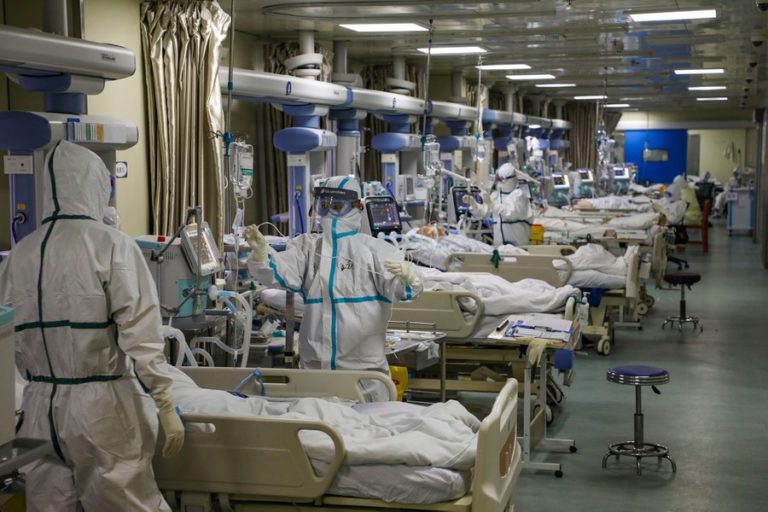
Medical workers in protective suits attend to coronavirus patients at the Intensive Care Unit of a designated hospital in Wuhan, China, February, 2020.
By M. K. BHADRAKUMAR | Indian Punchline | March 30, 2020
All through the recent weeks since US President Donald Trump coined the epithet “China virus” to rename Coronavirus, Moscow kept a deafening silence.
Finally, on Sunday, March 29, Moscow broke that silence. That the first Russian statement came at the level of the Russian foreign ministry makes this particularly significant.
In an exclusive remark, a “source in the Russian Foreign Ministry” told the state news agency Tass :
“In order to unambiguously answer the question about the origin, about where the first case emerged, major research needs to be carried out. So, Washington’s accusing tone in comments against China arouses blatant bewilderment.”
The source then went on to touch on the allegation made in China —namely, that a team of American military personnel had visited Wuhan, China, previously before the outbreak. The Russian Foreign Ministry source said:
“As for “US trace” in the COVID-19 outbreak, we don’t have this data today. However, for a long time we have been watching with concerns the US military and biological activity carried out in direct proximity with our borders. In other words, there are indeed questions for the US.”
Now, a few things must be said right at the outset. Any longtime observer of the Russian state system, media culture and Russian diplomacy would know that Tass, which functions under the supervision of the Kremlin is not in the business of lapping up stray remarks by a moonlighting Russian source.
As for Russian diplomats, even the dumbest of them know better than to casually chat up a Tass correspondent. And, of course, Tass will never put out as lead story a stray remark of such significance without clearance from a high level, possibly even from the Kremlin.
What it adds up to is that Russia is signalling that it knows something about coronavirus’ parentage that is explosive in its impact on world politics and international security. Russia has highly privileged intelligence sharing arrangements with China. The Kremlin is the only interlocutor with which President Xi Jinping’s office maintains an institutionalised system of sharing vital information and coordination.
All these factors come into play while assessing yesterday’s Tass report.
Suffice to say, one plausible explanation for the Tass report today is that Moscow has alerted Trump to something that he may not yet be aware of.
Indeed, no attempt has been made by the US so far to disprove the Chinese allegation. There has been a media cover-up instead. Meanwhile, experts have opined that it is unlikely that coronavirus has been used by anyone as a biological weapon but it cannot be ruled out that during research, the virus might have “escaped”.
Interestingly, the Russian “source” drew a pointed comparison with covert attempts by the US military to indulge in “biological activity” near Russia’s borders as well.
Trump is on record that his “china virus” reference was an instinctive reaction to the Chinese allegation. Trump since added that he has stopped using that expression. In fact, he has more than made up by making a telephone call to Chinese President Xi Jinping to bury the hatchet.
After their conversation on March 27, Trump seemed relieved that Beijing is agreeable to bury the past and to look forward to a future of joint effort to combat coronavirus. Trump tweeted in unusually empathic language, even expressing his “respect” for the Chinese system:
“Just finished a very good conversation with President Xi of China. Discussed in great detail the Corona Virus that is ravaging large parts of our Planet. China has been through much & has developed a strong understanding of the Virus. We are working closely together. Much respect!”
Xinhua carried an unusually detailed report on the conversation which highlighted that a serious discussion took place between Trump and Xi and made it clear that POTUS quizzed Xi closely and held out reassuring words:
“Stressing that China’s experience is very illuminating to him, he said he will make personal efforts to ensure that the United States and China can ward off distractions and concentrate on cooperation against COVID-19.”
The references here to “personal efforts” and “distractions” merit particular attention. Has Xi taken Trump into confidence? The Russians have broken their silence within 2 days of the conversation between Trump and Xi.
However, this isn’t the end of the story. The orphan who appeared in Wuhan late last year may be establishing its parentage by reaching the US and creating an apocalyptic situation in New York. The big question will continue to haunt the world community: Was the coronavirus originally conceived in the womb of a Pentagon lab developing biological weapons?
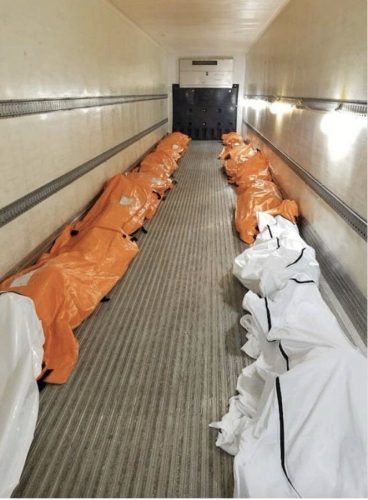
Harrowing imagine from the inside of a truck in New York City. All victims of the coronavirus for disposal. Image taken by a local nurse, New York, March 29, 2020
Russia now says it has information to that effect. Was the Pentagon conducting tests of potential biological weapons on the two big powers that the Deep State in America regards as the US’ principal adversaries and existential threats?
Moscow has a way of drawing the White House’s attention to sensitive issues through such modes at a time when the direct communication channels remained hopelessly clogged. Moscow knows fully well from past experiences that the POTUS may not always be kept briefed on the shenanigans of the cold warriors in the US intelligence and defence establishment.
The military-industrial complex and the ‘Deep State’ have been historically a law unto themselves. Remember the farewell speech by President Dwight Eisenhower on 17 January, 1961 when he forewarned the nation to be on guard against the potential influence of the military-industrial complex (a term he is credited with coining). Eisenhower said:
“In the councils of government, we must guard against the acquisition of unwarranted influence, whether sought or unsought, by the military-industrial complex. The potential for the disastrous rise of misplaced power exists and will persist. We must never let the weight of this combination endanger our liberties or democratic processes. We should take nothing for granted. Only an alert and knowledgeable citizenry can compel the proper meshing of the huge industrial and military machinery of defense with our peaceful methods and goals, so that security and liberty may prosper together.”
Eisenhower was drawing deep into the bitter experience during his presidency that despite his profound military background and being the only general to be elected president in the 20th century, the military-industrial complex torpedoed his efforts to initiate detente with the USSR.
In the wake of the famous U-2 spy plane incident on May 1, 1960 (just days before a summit meeting between Eisenhower and Soviet leader Nikita Khrushchev in Paris), which infuriated the Kremlin, Eisenhower had to abandon a planned Moscow visit in June to flesh out his pet foreign-policy project of detente with the USSR, which the highly decorated World War 2 general had deeply cherished would be his finest presidential legacy.
Turkish forces, allied militants cut off drinking water to Syria’s Hasakah, environs
Press TV – March 29, 2020
Turkish forces and allied Takfiri militants have once again cut off drinking water supply to people in Syria’s northeastern city of Hasakah and surrounding areas, only a few days after the Damascus government complained to the United Nations and the Security Council over the issue.
Director General of Hasakah Water Company, Mahmoud al-Ukla, told Syria’s official news agency SANA in a statement on Sunday that the Turkish troops and their allies stopped the pumping of water from the Allouk water station at 10 p.m. local time (1900 GMT) last night, and have refused to reverse their decision.
He emphasized that the measure has deprived up to a million people in the Hasakah region of the essential resource.
Ukla then described the cut in water supply to the Hasakah region as a blatant violation of human rights, an appalling crime against the population of Hasakah, and an act in a way that increases the sufferings of the locals.
Allouk water station is located near the border town of Ra’s al-Ayn, which the Turkish troops and their allied militants seized in October 2019 during the so-called Peace Spring Operation.
“Turkish occupation forces and affiliated terrorists cut off drinking water from Allouk water station and feeding wells deliberately and systematically, depriving more than 600,000 Syrian citizens, mostly women and children, from drinking water,” the Syrian Ministry of Foreign Affairs and Expatriates said in identical letters sent to United Nations Secretary-General António Guterres and the rotating President of the UN Security Council Zhang Jun on Thursday.
The Syrian ministry noted that the Turkish forces shelled the water station during their cross-border military operation last October, putting it out of service.
Syrian officials, accordingly, briefed the UN Security Council on February 27, informing the international body of a water outage in Hasakah.
“But unfortunately the Security Council, its General Secretariat or relevant international organizations failed to condemn the Turkish forces’ bombing of such a critical civilian facility and their use of water as a weapon against civilians,” the letters pointed out.
The Syrian Foreign Ministry finally called on the Security Council to condemn the crimes being perpetrated by Turkish soldiers, and obligate Ankara to stop its violation of the international law and humanitarian principles, besides its support for terrorist groups wreaking havoc inside Syria.
Turkey has beefed up its military presence in Syria’s northwestern province of Idlib, the last militant bastion in a nine-year foreign-backed war, where several anti-Damascus terrorist outfits receive Turkey’s support in their persisting militancy against the Syrian government.
Last week, a United Nations official said interruption to the key water station in Syria’s northeast puts thousands of lives at risk as efforts ramp up to stop the outbreak of the novel coronavirus there.
UNICEF Representative in Syria Fran Equiza said the interruption “during the current efforts to curb the spread of the coronavirus disease puts children and families at unacceptable risk.”
He underlined that the station is the main source of water for around 460,000 people in Hasakah city, the town of Tal Tamer as well as al-Hol and Areesha camps.
The Syrian government has applied a series of measures, as cases of COVID-19 infection have been found in the war-ravaged Arab country.
The measures include suspending schools, universities, as well as some ministries and closing marketplaces and restaurants.
The government also stopped public transportations nationwide.
Coronavirus: the Reactionaries from USA
By Viktor Mikhin – New Eastern Outlook – 29.03.2020
Coronavirus is spreading to more and more countries and leaving an increasing number of deaths in its wake. It is about time experts and the common men asked legitimate questions: “Where did this deadly virus come from, in what laboratories was it created, and who is behind the pandemic?”. We will try to answer them as objectively as possible.
The first country where the novel coronavirus was detected and that actively began to stop its spread was China. When residents of the city of Wuhan began to get infected and die, the Chinese authorities warned the global community about the danger and started its full-on battle against the virus.
Many nations in the world immediately offered to help China and quickly began working on the cure for COVID-19.
But what did the current U.S. administration do in the wake of the outbreak? Some U.S. media outlets started accusing China of unleashing the virus. A number of articles followed pointing to China as the origin of the virus. The author was left with the impression that either these journalists had witnessed its creation or they had been carefully instructed as to what to write. A seafood market in Wuhan was also mentioned as the source of the virus. There were also stories suggesting that the unexpected appearance of the novel coronavirus hinted at it being man-made, and that people could have used the theory the virus had come from animals to hide the true nature of its origins.
People who think they are intelligent and astute know for sure that only thieves and fraudsters make the biggest noise as they flee from those who they have stolen from or deceived. And this is exactly what some U.S. conspiracy theorists did, out of sheer stupidity, as they do not care about being objective and, instead, only strive for publicity and wider reach. Then, in the author’s opinion, more serious analytical articles were published insinuating that the new virus was created by biologists from the military and originated in U.S. laboratories.
In short, they said that as a result of experiments, the coronavirus genome appeared to contain “HIV virus-like insertions”. According to the biologists responsible for the research, the virus was not a product of evolution or mutation even theoretically speaking. Hence, they concluded it could have been man-made. Dr. Eric Feigl-Ding also addressed this issue by posting: “I am absolutely not saying it’s bioengineering nor am I supporting any conspiracy theories with no evidence. I’m simply saying scientists need to do more research + get more data. And finding the origin of the virus is an important research priority”. A professor of Molecular Biology in New Delhi’s Jawaharlal Nehru University, Anand Ranganathan, and his colleagues published a preprint (which has not been peer-reviewed as yet) about their research on the novel coronavirus (2019-nCoV). They discovered a possible link between it and other similar known coronaviruses circulating in animals (such as bats and snakes), and found HIV virus-like insertions in 2019-nCoV. No other well-studied coronaviruses have such a structure. Hence, their research hints at the possibility that the virus was designed and could be used to wage biological warfare.
In light of these recent developments, it seems apt to remind our readers that a fierce, take-no-prisoners type of trade war is currently ongoing between the United States and China. And in the midst of this confrontation, as if by a wave of a magic wand, the coronavirus outbreak started in the PRC, which has already caused enormous damage to the Chinese economy and considerably weakened Beijing’s bargaining position at the negotiating table.
Even before the coronavirus pandemic, many experts reported that, recently, Washington, in contravention of international law, was actively developing biological weapons in its numerous laboratories located in the United States as well as abroad. Apparently, there are more than 200 U.S. biological laboratories worldwide: in Azerbaijan, Armenia, Georgia, Kazakhstan, Moldova, Uzbekistan and Ukraine.
Incidentally, the author has come across articles published by Ukrainian media outlets claiming that local authorities have no oversight of such facilities. It seems that the situation in a number of other countries where U.S. biolabs are located is similar.
DTRA (the Defense Threat Reduction Agency), which collaborates with the Richard Lugar Center for Public Health Research in Georgia, is suspected of involvement in an incident that occurred in Chechnya in spring 2017. Locals reported seeing a drone that appeared to be spreading a white powder near Russia’s border with Georgia.
Ethnic bioweapons (biogenetic weapons), “is a type of theoretical bioweapon that aims to harm only or primarily people of specific ethnicities or genotypes”. Although there have never been any reports confirming that research on such weapons exists, documents that the author has come across show that the United States is gathering information about certain ethnic groups, first and foremost Russians and the Chinese. After all, Washington has labelled Russia and China as its main rivals recently. The author believes that the U.S. Air Force has been collecting Russian RNA (ribonucleic acid) and sinus tissue samples from a federal initiative. Apparently, information about this can be found in the Federal Procurement Data System. According to Article 8 of the Rome Statute of the International Criminal Court biological experiments are deemed as war crimes. However, the United States is not a member of the Court and has a tendency to evade responsibility for war crimes.
From the author’s perspective, there is a hidden motive behind the coronavirus pandemic. And as some have already guessed, it is not the Great Plague of the XXI century but a highly contagious disease that appeared at just the right time. In other words, the pandemic is part of a far-reaching disinformation campaign aimed at creating panic and chaos. According to Chinese conspiracy theories, the virus appeared in Wuhan during the Military World Games, which U.S. and British servicemen took part in. The author believes that there were many agents from the CIA and MI6 who could have released the coronavirus at the time thus putting everyone’s lives at risk. Incidentally, the British could have played an important role in this mission as they have already gained similar experience by spreading biological agents from the Porton Down science park near the city of Salisbury. The poisoning of Sergei Skripal and his daughter Yulia lends further credence to the author’s theory as they managed to survive the ordeal.
There are over 400,000 confirmed COVID-19 cases globally, and millions more are worried about the pandemic. What is curious to the author is that not only are the common men in a panic but so are authorities and officials who are preparing to take unprecedented quarantine measures in Russia, China, Iran and other nations that are known to choose their own path. The information war has served as a catalyst to the crisis that could have been smaller in scale but thanks to manipulation of mass consciousness, this is no longer the case.
The author thinks that the current disinformation campaign accompanying the coronavirus pandemic is the beginning of the “heist of the century”. As a result of this con, assets and savings of many nations, companies and individuals will end up in the hands of the current oligarchy, more specifically hundreds of the richest and most powerful families. The substantial portion of global wealth they already own will only increase as the rich always want more. From the author’s point of view, the United States is accustomed to robbing other countries and people of their wealth, and their allies are no exception, take Italy for example.
On COVID-19 and Curtis LeMay
By Robert S. Griffin • Unz Review • March 26, 2020
As I write this in late March of 2020, the world is under attack from a deadly strain of coronavirus called COVID-19. Thus far, there have been around 18,000 deaths world-wide, including 550 deaths in the United States where I live. My country has come to a halt: schools and businesses are shut down and people have been warned to stay in their houses or apartments hunkered down in the face of this menacing enemy. We’re in a war, that’s how it is being described in the media. The president has said he is like a war-time president.
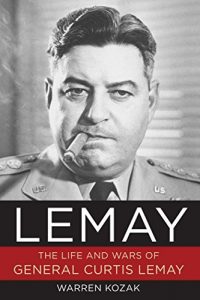
Speaking of war, tonight, hunkered down as I usually am in this very late stage of life—I didn’t need to be directed to hide out on this leather couch I’m sitting on at the moment—I read a biography of an American World War II-era air force general by the name of Curtis LeMay (LeMay: The Life and Times of General Curtis LeMay by Warren Kozak, Regnery, 2009). As I was reading along, it hit me that COVID-19 has a long way to go before it’s in a league with General LeMay as a killing machine. Back in 1945, in less than three hours, LeMay got way, way more killing done than COVID-19 has been able to accomplish in three months.
And it’s more than just in the sheer number of deaths that LeMay comes out on top in the comparison.
COVID-19 has been bad at snuffing out the lives of children and people who aren’t already sick with something. With LeMay, young and old, sick and well, he put them all in their graves.
And LeMay wasn’t limited to primly killing people lying quietly in hospital beds with rubber tubes running into them as COVID-19 has been. He set them on fire, deprived them of air to breathe, and heated them up like pot roasts. Imagine that action!
More, COVID-19 seems only to be proficient at x-ing out human life in cold weather; no good in the summer. LeMay demonstrated in both Europe and Asia that he was a man for all seasons, as it were—he was as effective cancelling someone’s existence in July as January.
Plus, Curtis LeMay didn’t just kill people; he also totally leveled the areas they lived in. COVID-19 has accomplished nothing in this regard.
In addition, Curtis LeMay had style and pizzazz—he had a snappy uniform and chewed on a big cigar. COVID-19, tiny and round with little spikes, no snappy uniform, no big cigar, nothing, lacks presence entirely.
Even more, Curtis LeMay was miles ahead of COVID-19 in public relations. He did his killing and came off looking good and got fawned over and invited to dinner parties, while COVID-19 does its killing and comes off looking bad and is shunned and people are brewing up poison to slip into its margarita. No contest there either.
The one area where COVID-19 comes out ahead of LeMay is in the ability to make the stock market plunge. LeMay was lacking in that area, though in fairness to him, he wasn’t dedicated to getting that accomplished—total destruction and super high death counts were his only priorities.
Assuming you don’t know about him, General Curtis LeMay conceived and ordered an incendiary bombing raid—fire bombs, they set everything aflame—on the civilian population of Tokyo, Japan, March 9th, 1945. Here’s a description of how it went down drawn from the LeMay biography I just read:
Across Tokyo, residents looked up in amazement. They had never seen the “B-sans” [B29 bomber airplanes] so low, nor had they ever seen so many at once. German Catholic priest, Father Gustav Bitter, who was there, later wrote, “The fire falling from the sky reminded me of tinsel hung on a Christmas tree. The red and yellow flames reflected from below onto the silvery undersides of the planes in the upper darkness gave them the appearance of giant dragon flies with jeweled wings. I watched as if I were in a trance.”
With sudden fury, tranquility became horror as the incendiaries hit home. They created tornadoes of fire. They sucked away oxygen; people couldn’t breathe and suffocated. Masuko Harino, a factory worker, reported, “Intense heat came from the firestorm. My eyes seemed about to pop out. People’s clothes were on fire. They were writhing in torment.” A young woman described a school that had become a three-story oven: every human being inside it was cooked to death. Strewn everywhere, some in batches, the incinerated bodies were black; they looked like logs from a distance. There was a dreadful sameness about the dead, no telling men from women or adults from children. If they could walk, survivors wandered about like ghosts, silent. Those still alive were left to die in agony; there was no medicine, food, or drinking water for them.
The raid lasted two hours and forty minutes. Sixteen square miles of Tokyo, one of the most densely populated areas in the world, was transformed into a moonscape of twisted reddish-black iron, roasted sheet metal, and rubble. Not a single man-made structure still stood. An estimated 100,000 people died in Tokyo that night. More than a million were left homeless. The grisly retrieval of bodies took weeks. At least 70,000 people were buried in mass pits. A U.S. Strategic Bombing Survey concluded, “More persons lost their lives in Tokyo that night than in any equivalent period of time in the history of mankind.”
How did what Curtis LeMay pulled off that March night in 1945 go over? It went over really big. And LeMay himself went over really big. I read The New York Times every morning, and it’s been non-stop trashing COVID-19 for weeks, not one positive word, and there’s been all kinds of commiserating with the dead and dying. With LeMay, the Times jumped up and down like cheerleaders. Hurray for our hero! The paper pointed out that those people in Tokyo LeMay set on fire, asphyxiated, and baked had it coming—women, children, and infants, every last one of them–because “the people, factories, and small establishments all contributed to Japan’s war effort.” The Times celebrated LeMay’s admirable deed as the start of really good things: to wit, Japanese cities becoming “no more than holes in the ground.” Though the newspaper cautioned readers that the Japanese “have done their deadliest fighting from holes in the ground,” so we need to be diligent and thorough with the killing.
Following the bombing raid, New Yorker magazine had a glowing profile of LeMay. And he was on the cover of Time magazine and given an effusive write-up in its pages. Nothing like that for COVID-19. But then again, COVID-19 hasn’t done the bang-up job of extinguishing human life that LeMay did, and it’s not anihilating the people who most richly deserve to die like LeMay was so good at doing.
LeMay got a promotion to Chief of Staff of the United States Air Force, and in 1968, ran for vice-president on a third-party ticket, garnering a hefty 13% of the vote. COVID-19 couldn’t come by a janitor’s job or get on the ballot for dogcatcher.
LeMay got an elementary school named after him, and . . . oh, you get my point. LeMay had it all going, and my best guess is that no matter how good COVID-19 does in the future—including getting up to speed with killing little children—it’s never going to measure up to him.
After 5 years, Saudi Arabia is finally on the verge of defeat in Yemen
By Omar Ahmed | MEMO | March 26, 2020
Exactly five years ago, the US-backed, Saudi-led Arab coalition carried out its first air strikes on Yemen in an effort to reinstate the disgraced, exiled President Abdrabbuh Mansur Hadi. He is a statesman in name only who I have argued previously has neither power, authority nor legitimacy. The strikes targeted the Houthi movement, which is supported by the Yemeni armed forces, and the war, claimed the Saudis, was supposed to be over in a matter of weeks.
The war’s devastating effects have claimed over 112,000 lives and created the world’s worst humanitarian crisis. The steadfast and resilient Yemeni people have prevented the coalition from toppling the Houthi-aligned government in the capital, Sanaa.
After five years, in fact, it is fair to say that the Saudis and their mercenaries are on the verge of defeat. The Yemeni armed forces and “popular committees” which include Houthi forces are continuing their advances with their sights set firmly on the stronghold of Marib and the pro-Hadi, Islah militia which makes up the coalition-backed force on the ground.
The province of Marib is currently facing onslaughts on several main fronts: from the Nahm district of Sanaa province to the west; much of the recently-liberated Al-Jawf in the north; and from Sirwah district – a part of Marib already under Houthi control — and from the south in the Baydah province. Saudi air strikes continue in support of its mercenary ground forces although, as the years of conflict have shown, they are strategically ineffective.
The terrain, internal divisions among the mercenary forces, local distrust of Hadi and the relative ease of establishing relations in tribal areas captured by the Houthis are also reasons for their advance. Developments in missile defence systems which, according to the Yemeni armed forces, have been effective against some Saudi air strikes, coupled with more pre-emptive cross-border operations targeting Saudi military and economic interests are likely to change the direction of the war.
The Saudis know that the stakes are high in Marib, and losing it would be the end of the Saudi ground war against the Houthi-Yemeni army forces, which is why there have been fierce counterattacks, especially in Al-Jawf, which until recently had been in the hands of pro-Hadi fighters for the past five years. The province not only shares a border with Saudi Arabia, but the region is also rich in natural resources. Decades of Saudi policy, though, have ensured that Yemen has remained poor and unable to exploit its own oil reserves fully.
It is clear that the so-called Riyadh Agreement has failed to prompt a concerted effort among Saudi and UAE proxies to set aside their political differences and refocus their attention on the Houthis in the north. Clashes between the Saudi-backed Islah militia forces and those aligned with the UAE-supported separatist Southern Transitional Council (STC) are now routine, and have intensified in recent days in the southern port city of Aden.
The Sanaa-based government has made it clear that it will confront the coalition and its mercenaries in the country’s south and east. This not only implies fighting in the de-facto STC-held Aden, which was under the control of the Houthis back in 2015 before they were driven out, but also the oil-rich Shabwa province.
Having control of most of the population and the capital Sanaa; having a lot of the Yemeni military, including the Republican Guards, on their side; and with potential access and control of Yemen’s resources, the Houthi-aligned National Salvation Government (NSG) may finally get international recognition at the expense of the “legitimate” UN-recognised Yemeni government in exile under Hadi in Riyadh. At the moment, the NSG only has diplomatic relations with Iran and Syria.
Earlier this week, the Houthi-aligned Yemeni military spokesman, Brigadier General Yahya Saree, told a press conference that there have been more than 257,000 coalition air strikes over the past five years and warned that the sixth year “will be harsher and more painful”. In doing so he affirmed that Yemen is not in the same position militarily that it was at the start of the conflict.
In light of the Houthi forces’ strategic advances and superior political resolve, it is thus possible that we will see a political agreement to end the war, if not this year then next. In a promising sign, a leading member of the Supreme Political Council, Mohammed Ali Al-Houthi, tweeted that he welcomed Saudi Arabia’s decision to support a ceasefire at the behest of the UN Secretary-General due to the coronavirus pandemic.
It remains to be seen, therefore, how much longer the Saudis will continue their disastrous and illegal intervention in Yemen, especially with the oil war and looming bankruptcy as oil prices fall, not to mention domestic political crises between de facto ruler Crown Prince Mohammad Bin Salman and his rivals. The Saudis will soon find that they have neither the will nor the wealth to carry on.
That being said, the fall of Marib to the Yemeni military and its Houthi allies might be the catalyst to bring about an end to the war, but there are reports of thousands of civilians being displaced as a result of the current escalations. There is also the brutal siege of the port of Hudaydah by the coalition that needs to be addressed; the UAE occupation of Socotra; and — arguably the most worrying — the direct Saudi military presence in the eastern province of Al-Mahrah.
Earlier this month I speculated how the resistance movement in Al-Mahrah may soon turn into an armed struggle against a Saudi occupation. This materialised several days later, with the Southern National Salvation Council (SNSC) announcing a call for armed resistance against the foreign forces.
Following the coalition defeat, the future of the NSG and the alliance between the Houthi movement and Yemeni military will be tests of the stability and security of Yemen. Alliances tend only to serve a purpose against a common enemy. That’s an issue for the future, though; for now, that enemy is on the verge of defeat.
Sanctions on Iran, Others Facing Coronavirus Must Be Urgently Re-evaluated: UN
Al-Manar | March 25, 2020
The United Nations rights chief says any sanctions imposed on Iran, among other countries grappling with the coronavirus pandemic, should be “urgently re-evaluated” to support lives of millions of people worldwide.
“At this crucial time, both for global public health reasons, and to support the rights and lives of millions of people in these countries, sectoral sanctions should be eased or suspended,” Michelle Bachelet said in a statement on Tuesday.
She warned, “In a context of global pandemic, impeding medical efforts in one country heightens the risk for all of us.”
She stressed the importance of giving broad and practical effect to humanitarian exemptions from sanctions measures “with prompt, flexible authorization for essential medical equipment and supplies.”
Bachelet pointed in particular to the case of Iran, one of the hardest-hit countries by the pandemic, and said the COVID-19 outbreak was also spreading to neighboring Afghanistan and Pakistan.
She said even before the pandemic, human rights reports had repeatedly emphasized the impact of sectorial sanctions on Iran’s access to essential medicines and medical equipment, including respirators and protective gear for healthcare workers.
Nearly 500,000 people worldwide have been infected and over 17,000 have died of the viral disease, according to the latest tallies.
Iranian Health Ministry spokesman Kianoush Jahanpour said on Tuesday that the number of coronavirus deaths had risen to 1,934 and the total infections to 24,811 during the past 24 hours.
“There have been 122 new deaths and 1,762 new infections since Sunday,” he said. Jahanpour further put the number of patients who have recovered from the viral disease at 8,913.
US President Donald Trump reinstated Washington’s sanctions on Iran in May 2018 after he unilaterally left the 2015 nuclear deal, known as the Joint Comprehensive Plan of Action (JCPOA), signed between Iran and major world powers.
The International Court of Justice (ICJ) — known as the World Court — has ordered the White House to lift the sanctions it has illegally re-imposed on humanitarian supplies to Iran.
The US claims the bans do not get in the way of food and medicine exports to Iran, but the Islamic Republic says Washington has been working to make problems for a Swiss humanitarian channel launched to enable the transfer of commodities to Iran.
In a phone conversation with Tunisian President Kais Saied on Monday, Iran’s President Hassan Rouhani said the United States’ move to prevent the dispatch of medical and humanitarian aid and the facilitation of banking interactions to meet the Iranian people’s needs suffering from the deadly new coronavirus contravenes human and the United Nations regulations.
Rouhani said the US administration has intensified its cruel measures and sanctions against the Iranian people even under the current difficult conditions caused by the virus outbreak.
On This Day in 1999: NATO Bombing of Yugoslavia in Numbers
Sputnik – March 24, 2020
21 years ago today, on March 24, 1999, NATO began a massive bombing campaign of Yugoslavia, bombarding the country with thousands of cruise missiles and bombs in what would become the largest military assault in Europe since the Second World War.
- NATO’s campaign of air and missile strikes against the Federal Republic of Yugoslavia, which consisted of Serbia and Montenegro, lasted 78 days, ending on June 10, 1999.
- During the campaign, dubbed ‘Operation Noble Anvil’ by NATO, alliance warplanes carried out some 2,300 sorties against 995 facilities, firing nearly 420,000 missiles, bombs and other projectiles with a total mass of about 22,000 metric tonnes.
- The campaign included multiple violations of the laws of war, including the use of cluster bombs (37,000 of them), and depleted uranium projectiles, which led to major spike in oncological diseases, including juvenile cancer rates, after the war. According to Serbian doctors, the most widespread consequences of the use of such weapons have been thyroid disorders, cancers and foetus mutations. In 2017, Serbian scientist Ljubisa Rakic calculated that the amount of DU dropped on Yugoslavia was equivalent to about 170 Hiroshima bombs.
- According to Serbian estimates, the strikes on Yugoslavia left as many as 5,700 people dead, with 12,500 injured.
- NATO casualties included a US AH-64 Apache, an F-16C fighter, an AV-8B Harrier and an F-117A Nighthawk stealth bomber (the first and so far only case of a stealth fighter jet being destroyed in combat). On the Yugoslav side, military and police casualties included 631 troops and 325 policemen dead, with more than 50 missing. Due to the effective use of maskirovka or ‘military deception’ doctrine, The Yugoslav army was able to limit losses of military hardware (93 tanks lost out of an estimated 600), and other armoured vehicles, artillery and anti-aircraft systems.
- The bombing is estimated to have caused as much as $100 billion in damage, destroying or damaging some 25,000 residential buildings, 470 km of roads, and 595 km of railway infrastructure. 14 airports, 19 hospitals, 20 health centers, 69 schools, 18 kindergartens, 176 cultural monuments and 38 bridges were destroyed. The bombing included a targeted raid on Radio Television of Serbia, which claimed 16 lives, and the accidental bombing of the Chinese Embassy, which killed 3 Chinese nationals. All told, Serbian officials estimate that over a third of NATO’s targets were civilian.
- NATO’s official justification for the strikes was its desire to protect Kosovar Albanians from ethnic cleansing and “a humanitarian catastrophe.” Before the war began, Albanian separatists allied to radical Islamist forces clashed with Serbian army and police forces in Kosovo, attacking authorities and attempting to drive ethnic Serbs out of the region. After the bombing campaign was completed and NATO troops entered the breakaway Serbian region in June of 1999, the separatists continued their campaign of violence against Serbs, in spite of NATO commitments to disarm the Kosovar militants.
- In 2008, the province unilaterally declared independence from Serbia. This forced over 200,000 ethnic Serbs to leave their homes. Belgrade, Russia, and many other countries have refused to recognize the breakaway republic. NATO troops, meanwhile, have remained in the province since 1999, establishing Camp Bondsteel, the second-largest US military base in Europe.
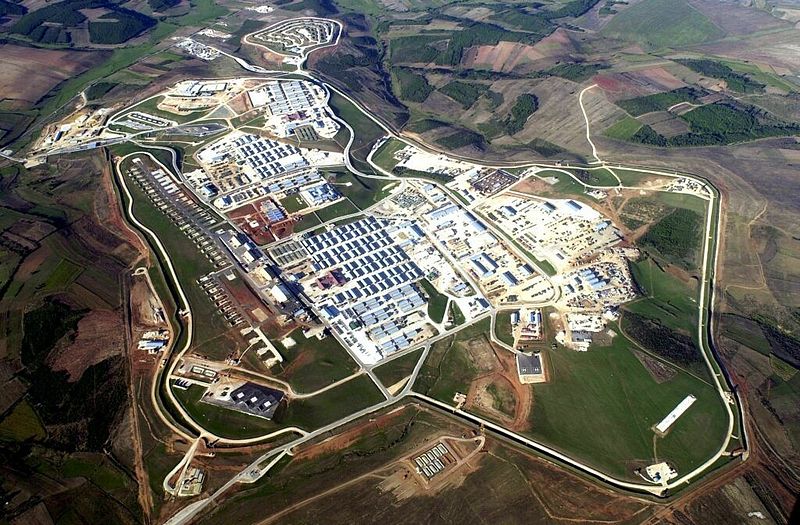
© Photo : public domain Camp Bondsteel in Kosovo
- In 2015, NATO Secretary-General Jens Stoltenberg expressed his “sincere regret” over the deaths and suffering of Serbian civilians. However, three years later at an event in Belgrade, the NATO chief emphasized that the bombing was not aimed against ordinary Serbs, but actually meant “to protect civilians and stop the Milosevic regime.” According to Stoltenberg, Serbs should “look to the future” and continue to shore up the “excellent relationship” between Belgrade and the bloc.
Collective punishment has always been the stated goal of Iran sanctions hawks
By Eli Clifton | Responsible Statecraft | March 23, 2020
The coronavirus pandemic’s impact in Iran, which already claimed over 1,800 lives and infected more than 23,000 people, is one of the world’s more troubling examples of widespread infection, with insufficient medical resources to treat the victims and a staggering anticipated death toll.
While public health experts and human rights advocates all point to the Trump administration’s “maximum pressure” sanctions regime against Iran as contributing to the public health crisis, sanctions advocates in the Trump administration and at two ultra hawkish think tanks claim that the “humanitarian trade” sanctions exemption is sufficient to address Iran’s medical needs.
But the reality is that advocates of an expansive sanctions campaign have been working to deny Iranians the staples of daily life in pursuit of bringing the regime to its knees or fomenting regime collapse. And it’s likely why to this day, the Trump administration, and its pro-Iran war/regime change allies are reluctant to relent to massive domestic and international pressure to relieve sanctions on Iran.
Indeed, remarks and actions from sanctions hawks in the State Department, the Foundation for Defense of Democracies (FDD), and United Against Nuclear Iran (UANI) illustrate their desire to inflict collective punishment on Iran as a means of generating political instability and state collapse.
Amid the crisis, on March 17, Secretary of State Mike Pompeo announced new sanctions against Iran, telling reporters, “We have an open humanitarian channel to facilitate legitimate transactions even while ensuring our maximum pressure campaign denies terrorists money.”
But that assessment of the humanitarian channel isn’t widely shared and, despite Pompeo’s repeated assertions that the Trump administration offered Iran help to deal with the coronavirus crisis, he hasn’t provided details of what those offers entail.
“Our research showed that in practice, humanitarian exemptions in the U.S. comprehensive sanctions regime have been ineffective in offsetting the strong reluctance of companies and banks to conduct trade with Iran, including the humanitarian trade that is presumably legal,” Human Rights Watch Iran researcher Tara Sepheri Far told Responsible Statecraft. “The Iranian healthcare system, both in terms of access to specialized medicine and also with regards to access to medical equipment, has taken a toll as a result of sanctions,” she added.
Even Pompeo acknowledged that collective punishment and threat of a humanitarian crisis were very much part of the sanctions strategy he was pursuing.
“The leadership has to make a decision that they want their people to eat,” said Pompeo in 2018. “They have to make a decision that they want to use their wealth to import medicine and not use their wealth to fund [Iran’s Quds Force commander] Qassem Soleimani’s travels around the Middle East, with causing death and destruction.”
Two of the most prominent groups advocating for “maximum pressure” against Iran, even in the face of the coronavirus epidemic, have repeatedly called for collective punishment against Iranians.
Mark Dubowitz, the CEO of FDD, a think tank that has regularly called for harsh sanctions and preventive military action against Iran, has repeatedly called for punitive measures against Iran’s entire population.
In a Wall Street Journal op-ed last April, Dubowitz urged lawmakers to “build a sanctions wall” with the goal of “crippl[ing] key sectors of the [Iranian] economy and lead to larger protests.” He added, “[T]he resulting economic and political instability could be leverage for a better, comprehensive deal.”
In a September Fox News appearance, Dubowitz again argued that widespread collective punishment of Iranians was a desirable strategy in bringing pressure on Iran’s leadership to negotiate with the Trump administration about their nuclear program.
“I think the Iranians are in a situation where they are running out of foreign exchange reserves, they’re not going to have the money to pay for imports that they need to run their factories, with factories closing they’re going to have massive unemployment, and so their situation is getting worse every day,” said Dubowitz. “And I think the administration, with a few moves, could actually bring about that kind of economic collapse which will then put the regime in a position where they’ll have to choose between negotiations and the survival of its regime.”
This mentality isn’t a recent phenomenon. Squeezing the Iranian people has been a goal for some time. FDD “freedom scholar” Michael Ledeen made this argument even more bluntly back in 2012 when he openly celebrated ordinary Iranians being unable to afford chickens, claimed this was largely the effect of sanctions, and applauded the fact that Iranians were blaming their leadership for hardships that were largely out of the government’s control.
“[T]here are a lot of very angry Iranians, who not surprisingly are blaming their government for this foul state of affairs,” wrote Ledeen. “In part, the government is blameless, since the cost of imports and the cost of feed grain have been driven up by the sanctions. But then again, the behavior of the government provoked the sanctions in the first place, and the singularly incompetent economic policies of the regime probably constitute the most important cause of the crisis.”
A U.S. senator at the time was even more explicit in promoting the strategy of denying Iranians basic foodstuffs. “It’s okay to take the food out of the mouths of the citizens from a government that’s plotting an attack directly on American soil,” said then-Sen. Mark Kirk (R-Ill.) in reference to sanctions that might impose food shortages on Iranians.
Kirk now serves on the advisory board of UANI, a group that has engaged in a lengthy campaign to pressure all companies, including those engaged in U.S. government licensed humanitarian trade with Iran, to halt their business with the Islamic Republic. (Kirk’s former foreign policy adviser, Richard Goldberg, later went to work at FDD where he promoted military options against Iran. And in an unusual arrangement, he later went to work in Trump’s National Security Council while FDD continued to pay his salary and travel expenses. There Goldberg advocated for an expansive sanctions regime against Iran.)
UANI applauded the Trump administration’s “maximum pressure” strategy for “wreaking maximum havoc on Iran’s economy” Its CEO Mark Wallace, endorsed “economic isolation … to the point of being unbearable.”
Indeed, both UANI and FDD’s fondness for imposing collective punishment on Iranian civilians in order to pressure Iran’s leadership to make concessions on its nuclear program is also reflected in statements from some of their biggest donors.
GOP and Trump megadonor Sheldon Adelson contributed at least $1.5 million to FDD by 2011 (FDD claims he is no longer a funder) and contributed nearly one-third of UANI’s 2013 budget, sending $500,000 to the group.
Adelson told an audience at Yeshiva University in October 2013 that Obama should launch a preventive nuclear attack on a swath of uninhabited Iranian desert and threaten that Iran will be “wiped out” if the country’s leadership doesn’t dismantle their nuclear program.
UANI’s top funder, billionaire Thomas Kaplan, is an investor whose companies have looked to profit from “political unrest” in the Middle East. At UANI’s 2018 conference, Kaplan was presented with a framed Iranian rial by Wallace to recognize his support of UANI and their shared efforts to devalue Iran’s currency.
The calls for economic collapse, military strikes, cheering food shortages, and demanding more “maximum pressure” come at a severe humanitarian cost. But for many in the Trump administration and their allies, that’s precisely the point, which explains why, up until now at least, that President Trump has refused to suspend U.S. sanctions on Iran.
“During last year’s nearly-nationwide flood relief, problems with licenses required for transferring funds to Iran slowed down the relief efforts,” said Far. “The COVID-19 outbreak is more of a serious threat by order of magnitude. There’s a collective responsibility to ensure Iran’s access to resources they need to protect the health of millions of Iranians.”
The War in Vietnam: John Wayne Was Wrong
By Marko | The Voluntaryist Reader | 12/10/2012
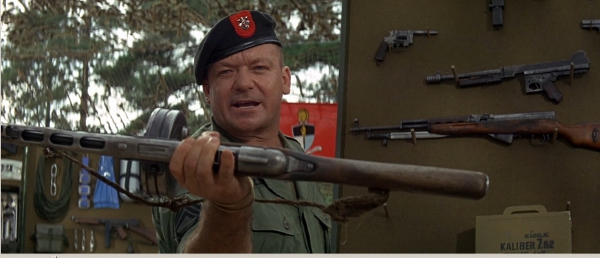
John Wayne’s Vietnam-era pro-war classic, The Green Berets opens with a scene of a press conference. It starts off with a group of Green Berets introducing themselves to the press, which is followed by a Q&A session with two Green Berets sergeants who have been assigned to answer questions. The scene reaches a crescendo when a reporter asks one of the sergeants if the war in Vietnam does not seem like a war between the Vietnamese and if the Americans should therefore stay out of it. Hearing this, the visibly irritated sergeant proceeds to pick up captured Vietnamese firearms from a display board nearby, and drops them in front of the reporter one by one, all the while explaining in a voice laden with hostile emotion that the weapons are Chinese-made, Soviet-made and Czechoslovakian-made respectively.
The implication is clear. The war in Vietnam is not merely an internal Vietnamese affair, because quite aside from the American factor in the war there is also the Soviet, the Chinese, even the Czechoslovakian factor. It is therefore on the account of this involvement of foreign Communist powers in Vietnam that the United States has to involve itself on the other side.
Now it is easy to see the inadequacy of that argument. Providing war material, even on a vast scale, is in no way comparable to a direct military intervention carried out with an occupation force of half a million soldiers, which is how many the United States had in Vietnam at the time The Green Berets aired in 1968.* Clearly the American involvement in Vietnam went far beyond what was necessary to balance out the involvement of the Soviets, the Chinese, or the Czechoslovaks, on the side of Hanoi.
But is it even true the American involvement was a reaction, perhaps an exaggerated reaction, to the Soviet, etc involvement? What were the actual cause and effect, in life rather than on film? Were the Americans in Vietnam because Soviet shipments of weaponry were going there, or were the Soviets shipping weaponry to Vietnam because the Americans had come there? How does this and other claims of war propagandists of the time stack up against what we know from the works of historians today?
In fact, where the Soviets are concerned their relationship with the Vietnamese before the American intervention in Vietnam was at its nadir precisely because the Soviet Union would not support DRV (North Vietnam) in reunifying Vietnam by military means. Soviet aid to DRV in this period, that is when the North was facilitating the struggle of the NLF (“Viet Cong”) in the South and before direct American involvement on a great scale, was relatively small and almost exclusively economic, not military.
When the unifying elections called for by the Geneva Accords of 1954 that had ended the French War in Vietnam did not come about, Hanoi gradually resolved to wage a military campaign to oust the American-backed government in the South. In this, however, it did not have the support of Moscow.
The Soviets feared American intervention which would have to result in an American-Soviet confrontation that would interfere with their policy line of “peaceful coexistence” with the Capitalist bloc. They made it clear to Hanoi they supported its struggle to reunify Vietnam only in as much as it was pursued by diplomatic means and encouraged Hanoi to pursue a peaceful strategy.
Vietnamese Communists shared many of the concerns being voiced by Moscow, but ultimately pressed on regardless. Both the Vietnamese and the Soviets were acutely aware that waging a violent struggle for reunification could result in an American invasion in Vietnam. They were both uneasy about this prospect and regarded it as highly undesirable, even disastrous. The difference was that the Vietnamese were ultimately willing to accept a confrontation with the Americans if they stood in the way of the reunification of their country, but the Soviets were not.
It was not until the time of the Gulf of Tonkin Resolution which marked the official entry of the United States into the war in Vietnam that the USSR begun to provide DRV with military assistance. The Soviets had held back on providing Vietnamese Communists with war material because this would encourage them to wage war in the South, which could in turn result in an American intervention. Now that Americans had intervened regardless, the Soviets no longer had a reason to continue to hold back. Whatever they did, the Americans were already in Vietnam. Now they would provide the Vietnamese with aid, because that was the only way these could hope to prevail against the Americans.
An additional reason for the Soviet reversal on the question of military assistance was to regain the influence they had lost with North Vietnam to China. In 1954 Moscow and Beijing had pressured the Vietnamese Communists into signing the Geneva Accords, which ended the French War in Indochina, but also split Vietnam in half.** Since then both China and the Soviet Union acted as a moderating force on Hanoi. They encouraged the Vietnamese to pursue the goal of reunification by peaceful means only, even after these had clearly shown themselves to be ineffectual when unifying elections called for by the Accords failed to materialize.
Following the Sino-Soviet split, however, Beijing gradually moved away from this position and came to see a military struggle could complement diplomatic and propaganda efforts. In time, the Chinese position would become further radicalized and they would reject the notion that negotiations could be of any use at all. It is important to understand, however, that Beijing came to approve of the armed struggle of the Vietnamese only in 1961, fully two years after the Vietnamese had gone ahead with it.
The change in the position of the PRC and the resultant increase in assistance to Vietnam enabled the Chinese-Vietnamese relationship to thrive. In the context of the Sino-Soviet confrontation within the Communist camp North Vietnam was now aligning ever more closely to China. That is, until the American intervention in the war caused the Soviets to launch a giant, Lend Lease-like program of military assistance to the DRV and regain their lost influence with Hanoi.
The key thing to take from here is that it was not the case that the Vietnamese fell under China’s influence which directed them to pursue the goal of unification of their country with military means. The Vietnamese were orienting themselves to that of the two Communist powers which would support them in their own policy line on South Vietnam. Chinese-Vietnamese relations could thrive precisely because China had come to adopt Hanoi’s view of peaceful means to reunify Vietnam as inadequate. The Soviet Union in turn could regain its influence over DRV and pull it back from the Chinese camp only when it had dropped its opposition to the military struggle of the Vietnamese.
The presence of Soviet and Chinese-made firearms in Vietnamese hands did not in fact point to the latter being simply the agents of monolithic Communism with designs over the entire globe as John Wayne wanted Americans to believe in 1968. In actuality, by going to war the Vietnamese Communists had defied the Kremlin and had frustrated its plans. It was precisely by opting for a military struggle that the DRV leadership had demonstrated its freedom of action. It was also the case that the USSR did everything it could to spare the US its calamitous war in Vietnam.
The Soviets attempted to dissuade the Vietnamese leadership from waging a military struggle even at the cost of losing nearly all its influence in Hanoi and seeing North Vietnam slide into the Chinese camp. If the mistake the Soviets committed was failing to appreciate just how important it was to the Vietnamese to reunify their country, it was a mistake the Americans tragically made as well. In part, due to propagandists like John Wayne who put out the idiotic drivel of the Vietnamese struggle for reunification as a matter of “world Communist domination”.
~ Marko
Source: Mari Olsen, Soviet–Vietnam Relations and the Role of China, 1949–64: Changing Alliances (New York: Routledge, 2006)
*Albeit by the time The Green Berets aired this was no longer the case, the Chinese also stationed troops in Vietnam, specifically in the Communist-run Democratic Republic of Vietnam (North Vietnam), but on a far smaller scale. In all 320,000 Chinese anti-aircraft and engineer troops served in Vietnam in comparison to 2.7 million Americans. The Chinese deployed in North Vietnam in mid 1965, in response to the Americans landing in the South. They evacuated in early 1968, having suffered about 1100 dead, mainly in the American bombing of the North.
**The two powers went as far as to signal the Viet Minh that rejecting the Accords may result in their ending their material assistance to the movement’s struggle.
COVID-USA: Targeting Italy and South Korea?
By Larry Romanoff | Global Research | March 21, 2020
A high-level Italian virologist, Giuseppe Remuzzi, has published papers in the Lancet and other articles in which he states facts not hitherto known. (1)
The doctor stated that Italian physicians now recall having seen:
“a very strange and very severe pneumonia, particularly in old people in December and even November [2019]. This suggests that the virus was circulating, at least in Lombardy, and before we were aware of this outbreak occurring in China.“(2)
Chinese medical authorities have determined the same underlying phenomenon, that the virus had been circulating among the population for perhaps two months before it finally broke out into the open.
Further, according to the Italian National Health Service (ISS):
“It is not possible to reconstruct, for all patients, the chain of transmission of infection. Most cases reported in Italy report an epidemiological link with other cases diagnosed in Lombardy, Emilia Romagna and Veneto, the areas most affected by the epidemic.” [translation from Italian] (3)
The above statement is of crucial importance since it supports in itself the assertion of several simultaneous infection clusters and several ‘patients zero’. There are cases in Lombardy that could not be placed in an infection chain, and this must also be true for other areas. (see below) Given that the virus broke out separately in disparate regions of Italy, we can expect the identification of independent infectious clusters in those regions as well. That would mean Italy was hit by at least several individual ‘seedings’ of the virus.
China’s outbreak of consequence was primarily in the city of Wuhan but with multiple sources in the city and multiple patients zero, with a minor outbreak in Guangdong that was easily contained. China had multiple clusters in Wuhan. There was no single source, and no patient zero has been identified which is similar to those of Italy.
The mystery of Italy’s “Patient No. 4”
Was the Italian outbreak caused by infections from China? Yes, and no.
Before February 20, 2020, there were only three cases of coronavirus infection in Italy, two tourists from Wuhan, China, confirmed on January 30th, and an Italian man who returned to Rome from Wuhan on February 6th. These were clearly imported cases with Italy experiencing no new infections during the next two weeks.
Then suddenly there appeared new infections that were unrelated to China. On February 19, the Lombardy Health Region issued a statement that a 38-year-old Italian man was diagnosed with the new coronavirus, becoming the fourth confirmed case in Italy. The man had never traveled to China and had no contact with the confirmed Chinese patients.
Immediately after this patient was diagnosed, Italy experienced a major outbreak. In one day, the number of confirmed cases increased to 20 and, after little more than three weeks, Italy had 17,660 confirmed cases.
The Italians were not idle in searching for their patient zero. They renamed the “patient 4” “Italian No. 1”, and attempted to learn how he became infected. The search was apparently fruitless, the article stating that “America’s pandemic of the century has become the subject of suspicion by Italians“.(4)
The mystery of South Korea’s “Patient No. 31”
South Korea’s experience was eerily similar to that of Italy, and also to that of China. The country had experienced 30 imported cases which began on January 20, I believe all of which were traceable to contact with Hubei and/or Wuhan.
But then South Korea discovered a “Patient No. 31”, a 61 year-old South Korean woman diagnosed with the new coronavirus on February 18. This ‘local’ patient had no ties to China, had had no contact with any Chinese, and no contact whatever with any of the infected South Koreans. Her infection was a South Korean source.
Just as with Italy, the outbreak in South Korea exploded rapidly after the discovery of Patient 31. By the next day, February 19 (Italy was February 21, for comparison), there were 58 confirmed cases in South Korea, reaching 1,000 in less than a week. After little more than three weeks, South Korea had 8,086 confirmed cases. It would now seem likely (yet to corroborated) that South Korea and Italy could have been ‘seeded’ at approximately the same time.
Like the Italians, South Korea performed a massive hunt for the source of the infection of their “Korean No. 1”, combing the country for evidence, but without success. They discovered the confirmed cases in South Korea were mainly concentrated in two separate clusters in Daegu and Gyeongsang North Road, most of which – but not all – could be related to “Patient 31”. As with Italy, multiple clusters and multiple simultaneous infections spreading like wildfire – and without the assistance of a seafood market selling bats and pangolins.
For both Italy and South Korea, I could also add that there is no supposed “bio-weapons lab” anywhere within reach (as was claimed for China), but that wouldn’t be accurate. There are indeed bio-weapons labs easily within reach of the stricken areas in both Italy and South Korea – but they belong to the US Military.
Korea is particularly notable in this regard because it was proven likely that MERS resulted from a leak at the American military base at Osan. The official Western narrative for the MERS outbreak in South Korea was that a Korean businessman became infected in the Middle East then returned to his home in Gyeonggi Province and spread the infection. But there was never any documentation or evidence to support that claim, and to my best knowledge it was never verified by the South Korean Government.
Pertinent to this story is that according to the Korean Yonhap News Service, at the onset of the outbreak about 100 South Korean military personnel were suddenly quarantined at the USAF Osan Air Base. The Osan base is home to the JUPITR ATD military biological program that is closely related to the lab at Fort Detrick, MD, both being US military bio-weapons research labs.
There is also a (very secretive) WHO-sponsored International Vaccine Institute nearby, which is (or at least was) managed by US military biological weapons personnel. At the time, and given the quarantine mentioned above, the event sequence accepted as most likely was that of a leak from a JUPITR biowarfare project. (5) (6)
The Korean path is similar with that of Italy. If we look at a map of the virus-stricken areas of Italy, there is a US military base within almost a stone’s throw of all of them. This is of course merely a case of circumstance arousing suspicion, and by no means constitutes proof of anything at all.
However, there is a major point here which cannot be overlooked, namely the fact of simultaneous eruptions of a new virus in three different countries, and in all three cases no clear epidemiology, and an inability to identify either the original source or a patient zero.
Multiple experts on biological weapons are in unanimous agreement that eruptions in a human population of a new and unusual pathogen in multiple locations simultaneously, with no clear idea of source and cases with no proven links, is virtually prima facie evidence of a pathogen deliberately released, since natural outbreaks can almost always be resolved to one location and one patient zero. The possibility of a deliberate leak is as strong in Italy and South Korea as in China, all three nations apparently sharing the same suspicions.
Larry Romanoff is a retired management consultant and businessman. He has held senior executive positions in international consulting firms, and owned an international import-export business. He has been a visiting professor at Shanghai’s Fudan University, presenting case studies in international affairs to senior EMBA classes. Mr. Romanoff lives in Shanghai and is currently writing a series of ten books generally related to China and the West.
He is a Research Associate of the Centre for Research on Globalization (CRG).
He can be contacted at: 2186604556@qq.com
Notes
(A) This is an aside, but Italy has experienced a fatality rate nearly twice that of Wuhan, but there may be an external contributing factor. Observations were made that, in most cases especially among the elderly in Italy, ibuprophen was widely used as a painkiller. The Lancet published an article demonstrating that the use of ibuprophen can markedly facilitate the ability of the virus to infect and therefore to increase the risk of serious and fatal infection. (YY)
https://www.thelancet.com/journals/lanres/article/PIIS2213-2600(20)30116-8/fulltext
(B) “The mean age of those who died in Italy was 81 years and more than two-thirds of these patients had . . . underlying health conditions, but it is also worth noting that they had acute respiratory distress syndrome (ARDS) caused by . . . SARS-CoV-2 pneumonia, needed respiratory support, and “would not have died otherwise.”
(3) https://www.iss.it/web/guest/primo-piano/-/asset_publisher/o4oGR9qmvUz9/content/id/5293226
(4) http://dy.163.com/v2/article/detail/F7N756430514G9GF.html
(5) https://www.21cir.com/2015/06/south-korea-mers-emerged-out-of-the-pentagons-biowarfare-labs-2/
(6) https://www.businessinsider.com/almost-200-north-korean-soldiers-died-coronavirus-2020-3
Copyright © Larry Romanoff, Global Research, 2020
Featured Video
10K More U.S. Troops Deploy as Trump Weighs New Iran Strikes
or go to
Aletho News Archives – Video-Images
From the Archives
Genetic baloney in thick slices
MAYBE COULD BE INC.
By Jon Rappoport | No More Fake News | July 8, 2021
Gene research companies tend to come and go. They start out banging and popping like fireworks in the sky, and then they fade out—selling themselves to larger outfits who’ve hired better liars…
Once upon a time, it sounded easy. Start with a disease, find the gene responsible for the disease, and correct the problem.
Then, researchers wondered, was disease the result of one gene or a group of genes acting together?
Either way, the proof would be in devising cures for diseases using gene therapy. “Not yet, but soon…”
And regardless, the major need was: money. Lots and lots of money.
This need required good PR people. “We have to pump up the idea that we’re on the edge of tremendous breakthroughs. We’re always on that edge…”
This hype also needed to obscure the fact that there wasn’t (and isn’t) ANY gene cure for ANY disease. … continue
Blog Roll
 Aletho News
- Von der Leyen gifts her spin doctor a job for life
- 10K More U.S. Troops Deploy as Trump Weighs New Iran Strikes /Suliaman Ahmed
- Iranian crew declared Dena training vessel ‘unarmed’ to US warship before deadly torpedo strike: Report
- Iran’s NPT debate moves beyond parliament
- Houthis condemn Saudi claims of attack on Medina
- Fatuous False Flags
- Are Europe’s Smallest Nations Dragging the Continent into War?
- EU draws up contingency plans for possible Merz exit
- G7 caves to US blackmail, announces ‘massive’ release of diesel reserves
- Reporting of the RAF Fairford arrests blows the idea of a ‘free press’ out of the water
- If Americans Knew
- The Israeli Right Portrays Islam as Murderous. It Serves a Political Purpose
- Jordan Has Had Enough: King Abdullah’s Scathing Warning to Israel
- Israeli Colonizers (i.e. Settlers) Kill Palestinian Man Near Salfit
- New Google Maps images reveal massive scale of devastation in Gaza
- Jewish supremacy, anti-Palestinian bigotry on display in Israel – Daily Update
- Israeli Soldiers Abduct At Least 22 Across Occupied West Bank
- Eight Palestinians Killed in Israeli Attacks on Gaza
- Israeli former leaders and security chiefs threaten legal action over ‘Jewish terrorism’
- Israel map in LA Times ad includes all land from the river to the sea
- Inside Lebanon’s 200-page dossier on Israeli war crimes
- No Tricks Zone
- Green Energy Debacle: German Expert Professor Fritz Vahrenholt Warns Of Severe Economic And Social Consequences
- Two More Paleo Reconstructions Affirm Meters-Higher Sea Levels Across Ireland, Brazil 7000-6000 Years Ago
- New Study: Earth And Venus Surface Warmth Largely Explained By Convection And Lapse Rate, Not CO2 Or Radiation
- 2025 Nature Paper Claiming Worsening Global Drought Gets RETRACTED …Heavily Flawed
- New Study: ‘Global Drought Shows No Detectable Recent Acceleration Under Climate Warming’
- Economic Masterminds: German Socialists Suggest Taxing Productivity Gains Stemming From Using AI
- The South China Sea Has Not Been Cooperating With The Climate Change Narrative
- Energy Crisis: Germany Enters Heating Season With Historically Low Gas Reserve Fill Levels
- New Study: The Antarctic Ice Sheet Gained Mass From 2020-2024 Due To Staggering Snow And Ice Accumulation
- Study: Ocean Heating Rates From Thousands Of Years Ago ‘Dwarf’ Modern Ocean Heating Rates

