US court dismisses Yemen drone strike wrongful death suit
RT | July 1, 2017
A US appeals court has upheld a decision dismissing a lawsuit brought by a Yemeni man whose family was killed by a US drone strike. The plaintiff alleges that his family members were innocent bystanders when they were struck by the missile.
The US Court of Appeals for the DC Circuit, which consisted of a three-judge panel, came to an agreement with lower courts that stated they, too, did not have the authority to judge government military actions. An August 2012 drone strike in Yemen, which killed, among others, Salem bin Ali Jaber and Waleed bin Ali Jaber, is what this case is based upon.
Faisal bin Ali Jaber is a Yemeni engineer. He and his family sued the US government for the deaths of Salem, his brother-in-law, and Waleed, his nephew. Jaber made the claim that the deadly strike was in violation of the Torture Victim Protection Act and the Alien Tort Statute.
Jaber’s family members were killed by a “signature strike,” which target individuals through information and data obtained from electronic devices such as mobile phones.
In 2015, the families of the two deceased men brought a case against the US government, then-President Barack Obama and other US officials, for “wrongful deaths.”
Judge Janice Rogers Brown wrote a rare separate opinion, although she also wrote the decision in the case as the three-judge panel was unanimous.
“Of course this begs the question, if judges will not check this outsized power, then who will?”
The outcome that Jaber and his family wanted for the case was a declaratory judgement, which would make the court admit that the US violated international law governing the use of force when killing his family members with the drone strike.
Court documents from 2015 say the family made the claim that the hellfire missile attack by a US drone, which was deployed in the Yemeni village of Khashamir, which killed their family members, was unlawful.
Judge Brown didn’t hesitate to question some of the US government’s practices in the case.
“Of course this begs the question, if judges will not check this outsized power, then who will?” She continued, “the spread of drones cannot be stopped, but the US can still influence how they are used in the global community – including, someday, seeking recourse should our enemies turn these powerful weapons 180 degrees to target our homeland. The Executive and Congress must establish a clear policy for drone strikes and precise avenues for accountability,” Brown said in her opinion of the case.
Brown also stated that US congressional oversight is a “joke” and that “our democracy is broken.”
The other two judges on the panel did not join in Brown’s separate opinion, Reuters reported.
Read more:
$700bn Pentagon bill funds US presence in E. Europe & weapons for Ukraine
RT | June 29, 2017
A Senate committee proposal for the 2018 military budget would further boost Pentagon spending on troops and equipment, make the US presence in Eastern Europe a persistent feature, and supply lethal weapons to Ukraine, among other things.
Adopted in the Senate Armed Services Committee by a vote of 27-0, the 2018 National Defense Authorization Act (NDAA) would add $97 billion to the total military budget proposed by President Donald Trump last month.
Citing the need to “deter Russian aggression,” committee chairman John McCain (R-Arizona) shifted the funding for US deployments in Eastern Europe to the base Pentagon budget, and renamed it the European Deterrence Initiative (EDI). The NDAA also requires the Pentagon to submit future plans for the EDI, “including an assessment of permanently stationing troops in Eastern Europe.”
“In an unparalleled attack on our core interests and values, Russia engaged in an active, purposeful campaign to undermine the integrity of American democracy and affect the outcome of the 2016 presidential election,” said the summary version of the bill, published late on Wednesday. “The committee believes the United States must do more to deter Russian aggression, whether across its borders or in cyberspace.”
The $500 million earmarked for “security assistance” to the government of Ukraine includes “defensive lethal assistance.” However, half of this funding will be conditional on “substantial action” by Kiev to “make defense institutional reforms critical to sustaining capabilities developed using security assistance.” This would have to be certified by the US secretary of defense.
The 2018 NDAA extends the prohibition of military cooperation with Russia first imposed in 2014 – which, among other things, prevents the US-led coalition from coordinating operations against Islamic State (IS, formerly ISIS/ISIL) in Iraq and Syria. It also bans the Pentagon from using software developed by Kaspersky Lab, “due to reports that the Moscow-based company might be vulnerable to Russian government influence.”
Arguing that a massive increase in funding is necessary to “restore readiness, rebuild capacity, and modernize the force for future challenges,” the NDAA codifies a policy that the US Navy should have at least 355 ships of “the optimal mix” and calls for the construction of 13 ships next year, five more than in the White House request.
It also funds 94 new F-35 Lockheed Martin Joint Strike Fighters – 60 for the Air Force, 24 for the Marines and 10 for the Navy – altogether 24 more than Trump’s budget requested.
The Senate markup calls for an additional 15,000 soldiers and 1,000 marines over Trump’s budget request and authorizes a 2.1 percent across-the-board pay raise for members of the US Armed Forces.
By far the biggest increase in funding relates to cooperative missile defense programs between the US and Israel, which would get $558.5 million more than Trump requested for a total of $705 million.
An earlier markup released by the House Armed Services Committee was $4 billion less, but still higher than Trump’s original budget proposal of $603 billion. All three proposals are much higher than the $549 billion spending cap under the 2011 Budget Control Act, and will require a deal with the minority Democrats to get passed.
Moscow warns Washington against ‘incendiary, provocative action’ in Syria
RT | June 28, 2017
Moscow has warned the US against taking unilateral action in Syria, as there is no threat from the Syrian military, Russia’s Foreign Ministry said. The statement comes after the US accused Syria of preparing for a chemical attack, without giving any evidence.
Asked if Russia had warned the US administration against any unilateral action in Syria, Russia’s deputy foreign minister, Gennady Gatilov, replied that Russian officials have “always spoken about that, including in relation to their [US] latest strikes on Syrian armed forces.”
“We believe that it’s unacceptable and breaches Syria’s sovereignty, isn’t caused by any military need, and there is no threat to the US specialists from the Syrian Army. So it’s incendiary, provocative action,” Gatilov said, as cited by RIA Novosti.
On Monday evening, the White House claimed that Syrian President Bashar Assad was preparing a chemical attack and warned that the Syrian government would “pay a heavy price” if the attack was carried out, as cited by AP.
Hours later, the Pentagon said it had detected activity by the Syrian authorities in preparation for the attack. Pentagon spokesman Navy Captain Jeff Davis said that the US had seen “activity” at Shayrat airfield that showed “active preparations for chemical weapons use.”
The US government failed to provide any further details or proof of such claims, while the State Department’s spokesperson, Heather Nauert, said it was “an intelligence matter.”
When confronted by a journalist that Washington uses the phrase to justify anything that suits it, Nauert answered: “I’m not going to get into that one with you, but this is a very serious and great matter.”
On Wednesday, though, the US suggested that the Syrian leadership had swiftly changed its mind about planning an alleged attack. Defense Secretary Jim Mattis, as cited by Reuters, said: “it appears that they [Syria’s authorities] took the warning seriously. They didn’t do it.”
The Syrian government, as well as Russian authorities, have denied any allegations against them, with Russian President Vladimir Putin’s spokesman Dmitry Peskov saying that “such threats to Syria’s legitimate leaders are unacceptable.”
In the latest statement, Deputy Foreign Minister Gatilov said that Russia doesn’t rule out that “there may be provocations” following the announcement from Washington.
The statements by the US administration complicate the [peace] negotiations in Astana and Geneva, and Moscow believes such attempts to boost the tensions around Syria are unacceptable.
“The statements on Syrian armed forces getting ready to use chemical weapons is complete nonsense… These assumptions aren’t based on anything, no one provides any facts,” the Russian diplomat said.
“If the aim is to ramp up the spiral of tension, we think it’s unacceptable. It complicates the process of negotiations undertaken in Astana and Geneva,” Gatilov underlined.
“We’ve seen this in the past. Of course there are many ill-wishers, who want to undermine the process [of negotiations]. So any provocations are possible,” the deputy foreign minister added.
Earlier, Russia’s Foreign Ministry issued another official statement, saying: “We consider all these insinuations about chemical weapons which are being carried out in the worst traditions of the 2003 NATO intervention in Iraq as an ‘invitation’ for terrorists, extremists, and the armed opposition in Syria to carry out another large-scale provocation, which will result in the ‘unavoidable punishment’ of President Assad, according to Washington’s plans.”
In April, US President Donald Trump launched an attack on Syria with 59 Tomahawk missiles, which targeted Shayrat Airbase near the city of Homs. The strike was in response to what the US claimed was a chemical weapons attack in Khan Shaykhun, orchestrated by Syria’s government – something Damascus repeatedly denied.
70,000 Tonnes of Hubris
By Craig Murray | June 27, 2017
There is no defensive purpose to an aircraft carrier. Its entire purpose is to move aircraft to a position where they can attack other countries. As soon as they are equipped with attack aircraft, these carriers will spend most of their time around the Middle East, including at the UK’s brand new naval base in the vicious despotism of Bahrain. Having spent £7 billion on these behemoths, politicians will seek to enhance their prestige and demonstrate that they control a nation which is a “major power”, by using them. The very fact of their existence will make bombing attacks such as those we saw on Syria, Libya and Iraq more likely.
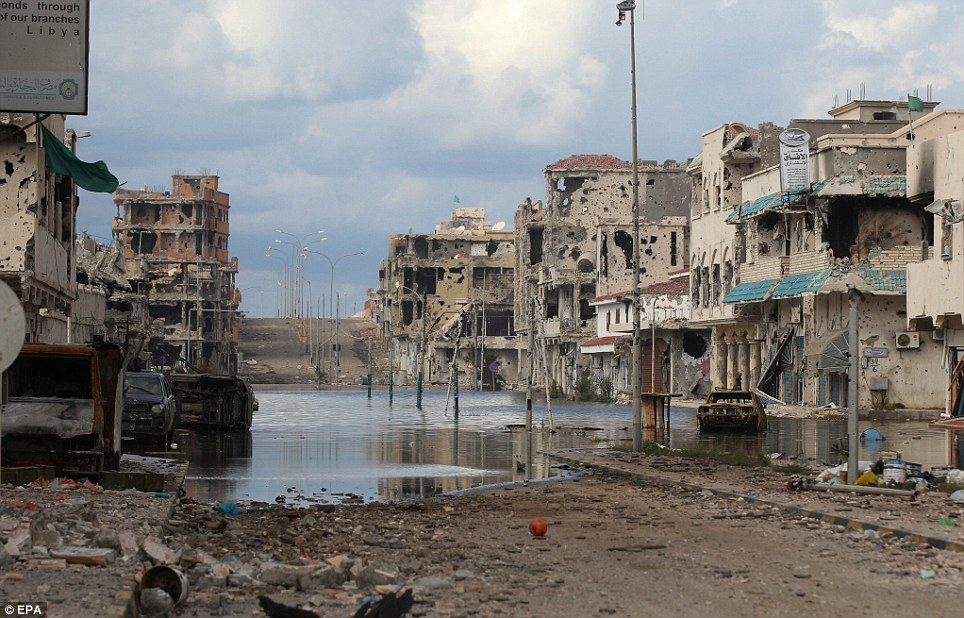
Sirte, Libya, after NATO bombing
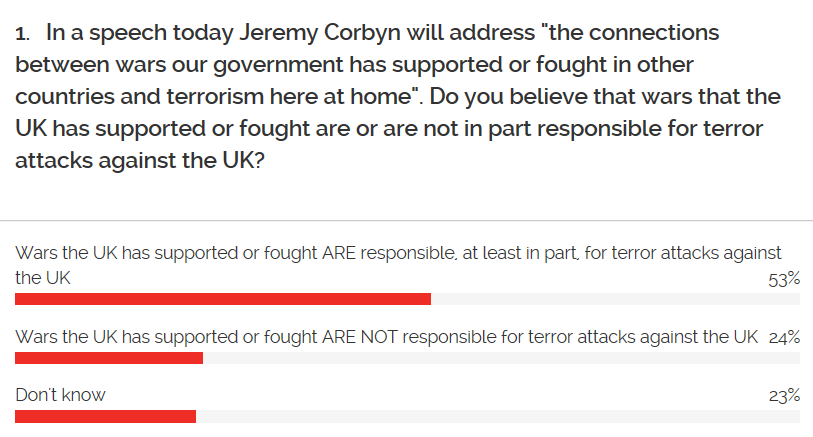
That further twist in the cycle of violence will lead to more terrorist attacks in the UK. There is no sense in which this aircraft carrier is anything to do with defending the United Kingdom. It is a device to attack foreign countries. The result is it makes us a lot less safe at home.
When they think about it, people understand that, as YouGov demonstrated during the recent election campaign. The politicians will be trying to whip up feelings of jingoism and national pride around this huge hunk of floating hubris, to stop us thinking about that.
There is no money for our schools and hospitals, but unlimited sums for the armaments industry. The United Kingdom is not just a dysfunctional state, it is a rogue state and a danger to the peace of the world.
US to keep arming Syria Kurds after Raqqah: Mattis
Press TV – June 27, 2017
Defense Secretary James Mattis says the United States will continue to provide weapons to Kurdish fighters in Syria after the campaign to dislodge Daesh (ISIL) terrorists from Raqqah is over, an announcement that would further infuriate Turkey.
Speaking to reporters traveling with him to Germany on Monday, Mattis said the US would try to recover the weapons supplied to the Syrian Kurds, but added it would depend on when or where the next mission is.
“We’ll do what we can,” he said when asked if all the weapons would be returned.
The comments marked the first time the Pentagon chief has publicly talked about the US pledge to take back the arms from the Kurdish People’s Protection Units (YPG).
In a letter to his Turkish counterpart Fikri Isik on Thursday, Mattis sought to ease Turkey’s security concerns, saying the US would provide Ankara with a monthly list of weapons and equipment supplied to the YPG.
Mattis also reassured Turkish officials that arms given to the Syrian Kurds would be taken back.
The Trump administration’s decision last month to arm the YPG roiled Turkey, which views the fighters as an extension of the Kurdistan Workers’ Party (PKK) fighting for an autonomous region inside Turkey since 1984.
The initial arms deliveries began at the end of May, with the Pentagon saying they included small arms and ammunition. But officials have indicated that 120 mm mortars, machine guns, and light armored vehicles were also likely going to Syria.
Early this month, the so-called Syrian Democratic Forces (SDF), which the YPG is a major component of, launched an operation to drive Daesh out of the northern city of Raqqah, the de facto capital of the terror group in Syria.
“We’re going to equip them for the fight. If they have another fight and they need, you know, the light trucks that they’ve been using … we’ll get them that,” Mattis said.
The provision of arms depends, he said, on the battle and what weapons the Kurds need. “When they don’t need certain things any more, we’ll replace those with something they do need.”
Turkey fears the weapons provided to the Kurdish fighters in Syria will end up in the hands of PKK militants operating in Turkey. The US also considers the PKK a terrorist organization and insists it would never arm that group.
Mattis said the battle against Daesh was growing more complex as it moved into the Euphrates River Valley, underscoring the importance of maintaining communication with Russia.
So-called “deconfliction” hotlines have been used by the US and Russia to notify each other where they are operating in order to avoid accidents.
In recent weeks, the Russians have threatened they would not use the deconfliction lines after the US shot down a Syrian government warplane.
Mattis said communications with Russia were taking place at several military levels to insure that aircraft and ground forces were safe.
‘US won’t be drawn into Syria war’
Despite the increasingly complicated battlefield, the Pentagon chief asserted that the US would not be drawn into the Syrian conflict. “We just refuse to get drawn into a fight there in the Syria civil war, we try to end that one through diplomatic engagement.”
The US will not fire “unless they are the enemy, unless they are ISIS,” Mattis said, using another acronym for the Daesh terror group.
The comments came shortly before White House spokesman Sean Spicer accused the Syrian government of making “preparations” for a chemical attack against civilians.
Spicer warned that Syrian President Bashar al-Assad and the Syrian military would “pay a heavy price” if they went ahead with the alleged plan.
State Department officials, who would “typically” be consulted before such statements are made, told the Associated Press that they had been caught “completely off guard” by the statement.
The AP report also said that the content of Spicer’s statement “didn’t appear to be discussed in advance with other national security agencies.”
A US-led coalition has been active in Syria since late 2014, bombing purported Daesh targets and training local militants to carry out assaults against the group as well as pro-government forces.
US protects Syria terrorists from aerial bombardment: Moscow
Press TV – June 26, 2017
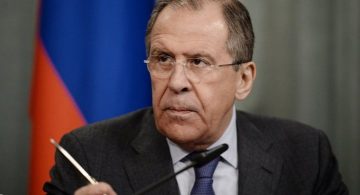 Russian Foreign Minister Sergei Lavrov has accused the United States of assisting terrorists in war-torn Syria, saying Washington is protecting the terror groups, including the Takfiri Fateh al-Sham terrorist group, formerly known as al-Nusra Front, from airstrikes.
The Russian top diplomat, as reported by Lebanon-based al-Manar television network, made the remarks on Monday, during a joint press conference with his Ethiopian counterpart, Workneh Gebeyehu, in Moscow, where they answered questions regarding combating terrorism.
Lavrov added that the US sponsorship of terrorists had recently came into light, when it was revealed that the White House helped Fateh al-Sham terrorists evade aerial bombardment conducted by Moscow and Damascus, without giving further details.
He noted that the alleged move by Washington violated all international conventions and laws, stressing the necessity of eliminating double standards and ambiguous ideas in the fight against terror groups.
Back in May, former Afghan president, Hamid Karzai, made similar comments, when he said that Washington had created the Takfiri Daesh terrorist group, another notorious terror organization active in Syria. “Daesh is a US product,” he said.
The ex-Afghan leader added that he had received regular reports of unmarked helicopters airdropping supplies to Daesh militants active on the Afghanistan-Pakistan border.
Lavrov’s comments came some eight days after a US Navy F/A-18 Super Hornet shot down a Syrian SU-22, which was conducting an operation against Daesh terrorists on the outskirts of the city of Raqqah.
In two other occasions in June and May, US warplanes attacked a Syrian military position near At-Tanf, killing an unspecified number of people and causing some material damage.
Reports say that many Daesh terrorists were initially trained by the CIA in Jordan in 2012 to destabilize the Syrian government.
In August last year, US President Donald Trump, then a presidential nominee, said that then US president, Barack Obama, and former secretary of state, Hillary Clinton, together “founded” the Daesh terror group.
South Korea’s impeached President planned violent regime change for Pyongyang
By Adam Garrie | The Duran | June 26, 2017
A recent report from the Japanese outlet Asahi Shimbun appears to confirm a hypothesis recently published in The Duran that America’s recent fervor over North Korea has a great deal to do with the internal politics of South Korea, more so in many cases than it has to do with events in the DPRK (North Korea).
Impeached former South Korean President Park Geun-hye was known to be an avidly right-wing, anti-North Korean, militant leader. It was under her now disgraced leadership that South Korea agreed to house America’s THAAD missiles, a move that remains deeply unpopular among millions of South Korean citizens.
Now, Asahi Shimbun claims to have obtained documents from South Korea indicating that former President Park Geun-hye signed a document authorizing violent regime change in Pyongyang.
According to the report seen by the Japanese national newspaper, the Park regime was considering attempts at arranging deadly car accidents or train wrecks in order to kill North Korean leader Kim Jong-Un. Attempts at fomenting a violent coup in North Korea were also considered.
In light of these revelations, it is no wonder that North Korea has taken precautionary measures to defend its sovereignty against these violent threats of illegal regime change from its heavily armed and economically powerful neighbor.
According to the Japanese source, these plans have been taken firmly off the table by President Moon Jae-in, a man who is generally far more peace minded than his deeply militant predecessor.
America’s most bellicose posturing against Pyongyang came in the month prior to the South Korean special Presidential election which saw the peace minded Moon come to power in early May of 2017.
Although America still offers harsh rhetoric on all matters pertaining to North Korea, it was after the election of President Moon that America’s most violent rhetoric seemed to give way to talk of working with international partners including and especially China in order to resolve concerns over North Korea without the threat of military engagement.
These revelations which appear to be credible, demonstrate that Washington’s actions in respect of North Korea have as much to do with the developments in Seoul as they do with developments elsewhere.
READ MORE:
Trump ignored intel, launched Tomahawks in Syria based on media – Pulitzer winner Seymour Hersh
RT | June 25, 2017
US President Donald Trump ignored reports from US intelligence that said they had no evidence Syria had used sarin to attack a rebel-held town, Pulitzer-winning investigative journalist Seymour Hersh says.
Hersh is most famous for exposing the My Lai Massacre and its cover-up during the Vietnam War. He also uncovered the abuse of prisoners by US personnel at the Abu Ghraib prison in Iraq. In a report published by the German newspaper Die Welt on Sunday, he describes how the Trump administration mishandled the media frenzy after the Syrian bombing of the rebel-held town Khan Sheikhoun in April.
Trump chose to ignore reports compiled by American intelligence and the military that contradicted the prevailing media narrative accusing Damascus of using sarin gas to kill civilians, the report says. Instead, he ordered his military to prepare options for a response, which they did.
The subsequent Tomahawk attack on the Syrian Shayrat Air Base did less damage that the White House claimed, as was apparently intended by the military planners of the operation, Hersh said. The US mainstream media failed to question the government’s narrative of the situation, instead giving Trump what appears to be the pinnacle achievement of his presidency so far.
“None of this makes any sense,” one US officer told colleagues upon learning of the White House decision to retaliate against Syria. “We KNOW that there was no chemical attack… the Russians are furious. Claiming we have the real intel and know the truth… I guess it didn’t matter whether we elected Clinton or Trump.”
Special weapon
Hersh’s report is based on interviews with several US advisers and evidence they provided, including transcripts of real-time communications that immediately followed the Syrian attack on April 4. According to the advisers, the Syrian Air Force’s attack on Khan Sheikhoun targeted a meeting of several high-value leaders of jihadist groups, including Ahrar al-Sham and Al-Nusra Front, which has changed its name to Jabhat al-Nusra.
The US was informed of the operation in detail beforehand as part of a conflict prevention arrangement with Russia. The two-way information sharing in place in Syria at the time helped the US-led coalition and Russia-backed Damascus to avoid accidental encounters in the air, protect intelligence assets on the ground, and coordinate with each other when planning missions.
“They were playing the game right,” a senior US adviser is cited by Hersh as saying regarding the pre-mission notice from Russia.
“It was a red-hot change. The mission was out of the ordinary – scrub the sked,” the adviser said. “Every operations officer in the region” – in the Army, Marine Corps, Air Force, CIA, and NSA – “had to know there was something going on. The Russians gave the Syrian Air Force a guided bomb and that was a rarity. They’re skimpy with their guided bombs and rarely share them with the Syrian Air Force. And the Syrians assigned their best pilot to the mission, with the best wingman.”
The special weapon used in the bombing was mentioned in Syrian communications collected before the attack by a US ally. The interception was widely reported in the Western media as an indication that Damascus had used a chemical weapon.
“If you’ve already decided it was a gas attack, you will then inevitably read the talk about a special weapon as involving a sarin bomb,” the adviser told Hersh. “Did the Syrians plan the attack on Khan Sheikhoun? Absolutely. Do we have intercepts to prove it? Absolutely. Did they plan to use sarin? No. But the president did not say: ‘We have a problem and let’s look into it.’ He wanted to bomb the shit out of Syria.”
Fertilizers & decontaminants
The target of the Syrian bombing was described as a two-story cinder-block building. According to Russian intelligence, the jihadists used the second floor as a command and control center. The first floor housed a grocery store and other businesses. The basement was used as a warehouse for weapons, ammunition, and goods, including chlorine-based decontaminants and fertilizers.
“The rebels control the population by controlling the distribution of goods that people need to live – food, water, cooking oil, propane gas, fertilizers for growing their crops, and insecticides to protect the crops,” a senior adviser to the American intelligence community told Hersh.
According to a US assessment of the morning airstrike cited by Hersh, the 500-pound Russian bomb triggered secondary explosions. The heat could have evaporated the chemical products in the basement, producing a toxic cloud that spread over the town, pressed close to the ground by the dense morning air.
The scenario is consistent with the accounts of patients who reported a chlorine odor in interviews with Medecins Sans Frontieres. It could also explain the symptoms of nerve agent poisoning that were attributed to sarin, but may have been caused by organophosphates used in many fertilizers, Hersh said.
Meanwhile, US intelligence had no evidence to indicate the presence of sarin gas at or near the Shayrat Air Base, from which the bombing mission was launched.
“This was not a chemical weapons strike,” the journalist cites a source as saying. “That’s a fairy tale. If so, everyone involved in transferring, loading and arming the weapon – you’ve got to make it appear like a regular 500-pound conventional bomb – would be wearing Hazmat protective clothing in case of a leak. There would be very little chance of survival without such gear.”
“Military grade sarin includes additives designed to increase toxicity and lethality. Every batch that comes out is maximized for death. That is why it is made. It is odorless and invisible and death can come within a minute. No cloud. Why produce a weapon that people can run away from?” the adviser added.
The Trump Show
The Trump administration quickly adopted the rebel narrative, which accused President Bashar Assad’s government of conducting a sarin gas attack on Khan Sheikhoun. Top US officials went on to condemn Damascus and accuse Russia of complicity in the bombing. Trump ordered the national defense apparatus to prepare a response within hours of seeing photos of poisoned children on TV, Hersh’s report cites a senior adviser as saying.
“No one knew the provenance of the photographs. We didn’t know who the children were or how they got hurt,” the adviser said. “Sarin actually is very easy to detect because it penetrates paint, and all one would have to do is get a paint sample. We knew there was a cloud and we knew it hurt people. But you cannot jump from there to certainty that Assad had hidden sarin from the UN because he wanted to use it in Khan Sheikhoun.”
“The president saw the photographs of poisoned little girls and said it was an Assad atrocity,” he added. “It’s typical of human nature. You jump to the conclusion you want. Intelligence analysts do not argue with a president. They’re not going to tell the president, ‘if you interpret the data this way, I quit.’”
At a national security meeting at Mar-a-Lago on April 6, Trump was offered four options for responding to the Syrian incident, ranging from doing nothing and to assassinating President Assad, the report said. Eventually, the US president chose to attack the Syrian air base, which Hersh’s source described as “the ‘gorilla option’: America would glower and beat its chest to provoke fear and demonstrate resolve, but cause little significant damage.”
Of the 59 Tomahawk missiles fired at Shayrat, as many as 24 missed their targets because the initial strikes hit gasoline storage tanks, triggering a huge fire and a lot of smoke that interfered with the guidance systems of the following missiles. Only a few actually penetrated the hangars, and these only destroyed nine aircraft that were apparently not operational and could not be moved during the window of opportunity between the US warning of the looming attack and the strike itself.
“It was a totally Trump show from beginning to end,” the senior adviser told Hersh. “A few of the president’s senior national security advisers viewed the mission as a minimized bad presidential decision, and one that they had an obligation to carry out. But I don’t think our national security people are going to allow themselves to be hustled into a bad decision again. If Trump had gone for option three [a massive attack on Syrian military facilities], there might have been some immediate resignations.”
Trump trapped by own mistake
The reaction to the show of force in the US media was probably everything the Trump administration could have hoped for. MSNBC anchorman Brian Williams described the sight of Tomahawks being launched at the Syrian base as “beautiful.” CNN host Fareed Zakaria reacted by saying that Trump finally “became president of the United States.”
According to Hersh, of the top 100 American newspapers, 39 published editorials supporting the bombing in its aftermath, including the New York Times, Washington Post, and Wall Street Journal.
Five days later, the White House briefed the national media on the operation and the US response to Russia’s assertion that Syria has not used sarin gas. The Trump administration’s insistence that a chemical attack actually did happen was not challenged by any of the reporters present.
The following US coverage of the situation accused Russia of trying to cover up the alleged chemical attack, Hersh says. The New York Times described “declassified information” released during the press briefings as coming from a “declassified intelligence report,” though no formal report from US intelligence stated that Syria had used sarin, Hersh notes.
“The Salafists and jihadists got everything they wanted out of their hyped-up Syrian nerve gas ploy,” the senior adviser told him. “The issue is, what if there’s another false flag sarin attack credited to hated Syria? Trump has upped the ante and painted himself into a corner with his decision to bomb. And do not think these guys are not planning the next faked attack. Trump will have no choice but to bomb again, and harder. He’s incapable of saying he made a mistake.”
Read more:
Featured Video

The Search for Truth: Charlie Kirk’s Assassination One Year Later
or go to
Aletho News Archives – Video-Images
From the Archives
The 9/11 “Double-Cross” Conspiracy Theory
BY LAURENT GUYÉNOT • UNZ REVIEW • SEPTEMBER 6, 2022
Is it true that “9/11 was an inside job”? Yes, insofar as Israel is “inside” the U.S. But for the 9/11 truthers who have identified Israel as the main perpetrators, “9/11 was an inside job” is at best a half-truth, and at worst an integral part of the Zionist operation, like a secondary flag sewn as a lining under the false flag of Islamism. Victor Thorn (1963-2017) wrote in his book 9/11 made in Israel: The Plot Against America (2011): “In essence, the ‘9-11 truth movement’ was created prior to Sept. 11, 2001 as a means of suppressing news relating to Israeli complicity. . . . The slogan ‘9-11 was an inside job’ was quite possibly the greatest example of Israeli propaganda ever devised.” In milder terms, it is “controlled opposition”.
A genuine truth movement would have pointed to Israel as the prime suspect from the start. From day one, it was obvious who would benefit. … continue
Blog Roll
 Aletho News
- Europe’s mounting social chaos… chickens coming home to roost for proxy war against Russia
- US-Russia Diesel Deal Becomes Massive Defeat for Ukraine
- Hormuz and the Looming Economic Catastrophe
- Dhubab offensive, media blitz and the rapid unraveling of Saudi-backed coalition’s new gambit
- Putin Conveys to Trump Iran’s Vision on Possible Conflict Resolution – Kremlin
- The Search for Truth: Charlie Kirk’s Assassination One Year Later
- ‘Harsh reality’: Iran says France seeks monopoly on power and intimidation, not peace for all
- When Will This White House Madness End?
- Huckabee aide goes to ‘unusual lengths’ to portray ‘Israel’ positively
- Trump Announces Diesel Supply Deal With Putin Following Phone Call
- If Americans Knew
- Israeli forces kill another child in Gaza – Daily Update
- Gaza ceasefire exists in name only, say more than 100 organizations
- Nearly 2 Million in Gaza Need Urgent Shelter Assistance as Winter Looms: IOM Chief Warns
- Suppressing Palestinian resistance: US charity under fire for AI monitoring of Gaza classrooms
- Thousands Are Held in Israeli Torture Camps. This Is What Happens Inside
- Israel puts Gaza’s sick, injured, newborn in peril – Daily Update
- Report claimed Mark Levin used by Israeli government to influence Trump
- Over 2,000 Gazans have died awaiting medical evacuation amid Israel’s continued siege
- How a U.S. Diplomat Suppressed and Altered Reports Critical of Israel
- 5 Palestinians Die from Israeli Strikes in Gaza as Relentless Attacks Continue
- No Tricks Zone
- New Study: 50 Years Of The Most Aggressive ‘Net Zero’ Policies Can Only Affect The Global Climate By 0.03°C
- US September “Heat” Was No Record…Many Records Set Decades Ago
- Latest European Green Energy Debacle; Portugal’s Largest Flagship Solar Park Insolvent!
- Green Energy Debacle: German Expert Professor Fritz Vahrenholt Warns Of Severe Economic And Social Consequences
- Two More Paleo Reconstructions Affirm Meters-Higher Sea Levels Across Ireland, Brazil 7000-6000 Years Ago
- New Study: Earth And Venus Surface Warmth Largely Explained By Convection And Lapse Rate, Not CO2 Or Radiation
- 2025 Nature Paper Claiming Worsening Global Drought Gets RETRACTED …Heavily Flawed
- New Study: ‘Global Drought Shows No Detectable Recent Acceleration Under Climate Warming’
- Economic Masterminds: German Socialists Suggest Taxing Productivity Gains Stemming From Using AI
- The South China Sea Has Not Been Cooperating With The Climate Change Narrative

