To err is Human, to Intervene and Destroy is Policy
By Salman Rafi Sheikh | New Eastern Outlook | 09.12.2016
The nature of international politics is often considered to be such that it continuously defies clear and absolute judgement; however, notwithstanding the complexity of inter-state relations, very often we come across such instances where understanding of the policy of a state, or of an alliance, does not defy understanding and judgement. From the very beginning of the crisis, it has been absolutely clear that the US and its allies are pursuing a regime-change policy in Syria—a policy that not only is still valid but also continues to define their strategy. Materialization of this objective pits the US against Syria and its allies and engages both parties in war—and in war soldiers are killed. Therefore, the US clarification about striking Syrian soldiers due to the so-called “human error” is only an attempt on its part to mystify the actual nature of its objectives in Syria. Nothing else can better explain the strike that killed around 80 soldiers than the fundamental reason for the US’ military engagement in Syria i.e., execution of regime change policy in Syria.
While one strike in itself was, and always is, far from sufficient to achieve this objective, a strike, however, does convey to its targets and to those who observe it the objective being pursued. In this case, the immediate objective was to inflict heavy damage on the Syrian army and render it vulnerable to attacks by other, western supported, militant groups. The objective was, to an extent, achieved. This is evident from the developments taking place immediately after the US-led strike. A weakened Syrian army unit enabled an ISIS advance on a hill overlooking the air base, which was specifically targeted by the US-led coalition. While the objective of this co-ordinated operation was to quickly capture the base, it was thwarted by timely action on the part of Russian warplanes that were called in to hit ISIS positions.
Had the attack been successful, it might have caused massive destruction. ISIS had, prior to the attack by the coalition, repeatedly attacked and failed to capture the government-held air base, which is an isolated enclave deep in extremist-held territory. The government controls the air base and parts of Dayr az Zawr city, while ISIS controls the entire province by the same name. An ISIS advance in Dayr az Zawr would have, and would still, endanger the lives of tens of thousands of civilians living in government-held areas and force the Syrian army out of the territory.
What would have such a scenario implied for the over-all situation of Syria is not so difficult to grasp. While the US has now stated it “regrets” the bombing, it has not, in any way, apologized to Syria for this wanton act of mayhem, thus confirming its unchanged position vis-à-vis Syria, which continues to remain a clear cut target of the regime-change conspiracy—a policy that has been applied by NATO in many countries since the end of the Second World War. The most recent cases of Afghanistan, Iraq, Libya and Syria confirm that this policy has remained unchanged.
The latest confirmation to the unabated continuation of this policy has come from one of the most important NATO allies, Turkey. On November 29, Turkey’s self-styled “caliph” said, reiterating NATO’s long held objective, that the Turkish military had launched its operations in Syria to end the rule of (the cruel) Syrian President Bashar al-Assad.
He further said, “Why did we enter? We do not have an eye on Syrian soil. The issue is to provide lands to their real owners. That is to say we are there for the establishment of justice. We entered there to end the rule of the tyrant al-Assad who terrorizes with state terror. [We didn’t enter] for any other reason.”
While this statement has come as a surprise to Russia, leading Kremlin spokesman Dmitry Peskov to say that they were hoping “our Turkish partners will provide us with some kind of explanation about this”, the move itself not only largely reflects the dual game Turkey is playing in Syria but also shows how the former fundamentally continues to adhere to NATO’s central objective in Syria, thus debunking the myth of Turkey’ estrangement with the US or the EU or the NATO itself.
The tacit continuity of co-operation between Turkey and the US is not limited to the perusal of identical objectives. On the contrary, it is co-operation on the ground that speaks volumes about Turkey’s actual position and policy vis-à-vis Syria. For instance, Turkey’s operation Euphrates Shield, which begun in August and which is supposedly aimed at rolling back ISIS from the Syrian region bordering Turkey, had actually begun, succeeded and territorially spread under the protection, assistance and advice provided by the US military. The US advisers assisted the operation from inside Turkey, while US warplanes conducted airstrikes alongside Turkish ones in support of the offensive. Could we still say that Turkey and the US were, or are, on a collision course since the failed coup attempt in Turkey in July 2016?
This co-ordinated attack was followed, in September, by a welcome note by the NATO chief about Turkey’s enhanced role in Syria against “terrorism” and attacks of all kinds.
The continued co-operation between Turkey, which had initially officially sent troops to Syria to fight ISIS, and the US and Erdogan’s recent claim that they are in Syria to send Assad home unambiguously show the way this alliance is working in the region. With Turkey’s operation Euphrates Shield expanding into operation occupation, and with Turkey equally seeking to enlist US support to capture al-Bab, there remains hardly any room to doubt that the US and Turkey are seeking to achieve what the ISIS had earlier achieved, and then lost, in terms of capturing Syrian territory.
With ISIS being itself unable to withhold the Syrian offensive being backed the Russian forces and Iran backed militias, Turkey and the US, as also their Arab and Western allies, were left with no other choice but to directly intervene in Syria to deny the Syrian army the opportunity to have the whole of Syria under its control.
This being the case-scenario of Syria, the Pentagon’s clarification about the September strike being a result of “human error” is erroneous. What, on the contrary, perfectly corresponds with the US policy and objectives it is pursuing in Syria is not this clarification but the strike itself—something that, had it been successful, might have allowed IS to bring an entire province under its sole control and considerably damage the Syrian army.
What this scenario reveals is that the earlier policy of bringing regime change in Syria through proxy groups is now being replaced by a policy of direct intervention and gradual insertion of NATO in the conflict via Turkey. Conflict in Syria is therefore not ending, only its dynamics are changing from in-direct to direct intervention.
Conflict instigators must foot humanitarian crises bills – Russian Emergencies Minister to UN
RT | December 9, 2016
The head of Russia’s Emergencies Ministry has proposed a new economic model of humanitarian assistance and reparation payments to victims of war zones, recommending that initiators of conflict pay for the destruction and suffering caused by their policies.
“The Russian Federation proposes to build a new economic model of international humanitarian aid,” Vladimir Puchkov told the UN General Assembly in New York. The model is quite simple, according to Puchkov, who said that nations which initiate, incite and sponsor conflicts in other states should be “obliged to bear primary responsibility, including financial” for providing aid to refugees and persons internally displaced as a result.
The need to create a new mechanism arises from the lack of funding for international humanitarian relief budgets. Currently only around 5 percent of the funds required to remedy the widespread destruction and suffering are available, the Russian minister said.
To reduce the financial burden on the international humanitarian aid system, associated with the rise of terrorism and waves of refugees, Puchkov also stressed the need to focus on conflict prevention.
“We believe that settlement and conflict prevention is the best approach to reducing the burden on the international humanitarian system,” the minister said in a report at the 71st session of the UN General Assembly.
In order to improve the quality of international aid the minister also offered to take additional measures and help develop local crises response capabilities in conflict-torn countries.
“Instead of trying to provide for the millions of refugees in Europe, it is necessary to create opportunities for them to stay at home, or at least in the same region,” Puchkov noted.
Among other things, Puchkov urged that the international community intensify efforts to improve the international legal and contractual framework which would allow aid to quickly reach affected areas. Meanwhile developing countries, the minister said, should also recognize their responsibility and not remain “passive recipients.”
Speaking about the Russian contribution to global humanitarian aid missions, Puchkov highlighted that this year Russia participated in over 40 missions across the globe, offering aid to over 10 countries. Besides Syria and Ukraine, some of the recent recipients of Russian aid include countries such as Yemen and Afghanistan, in addition to western states such as Italy and Portugal. Overall, Russia engaged in over 450 missions across the globe over the last quarter of a century.
In addition, over the last three years, Moscow has sent more than $250 million to battle humanitarian crisis in a number of countries, by sending emergency food and medical assistance to populations affected by conflict and natural disasters.
The UN Office for the Coordination of Humanitarian Affairs (OCHA), which coordinates international humanitarian relief efforts said that last year more than 76 million people from 31 countries needed assistance. The UN office also noted in 2015 some 51 million people were displaced worldwide, which is the highest number since WWII.
2017 NDAA ups aid to Ukraine, gives arms to Syrian rebels & lets Trump sanction the world
RT | December 8, 2016
Congress has authorized $618.7 billion for the 2017 military budget. The bill ups aid to Ukraine by $50 million and allows the transfer of missiles to Syrian rebels. However, it omits controversial provisions about drafting women or religious exemptions for contractors.
The 2017 National Defense Authorization Act (NDAA) passed in the Senate on Thursday with 92 votes in favor and seven opposing. It already cleared the House last Friday in a 375-34 vote. With the annexes, appendices and the conference report harmonizing the two chambers’ versions, the final document is 3,076 pages long.
Absent from the NDAA is the proposal to allow female Americans to register for the Selective Service system, which replaced the Vietnam War-era draft but currently only applies to men aged 18-25. That proposal was sent to the Government Accountability Office for further study.
Lawmakers also abandoned the so-called Russell Amendment, which would have created a religious freedom exemption from the Obama administration executive order mandating nondiscrimination from federal contractors. Obama threatened to veto the bill with this amendment.
Buried in the bill, in Section 1224, was the provision to allow Man-Portable Air Defense Systems (MANPADS) to Syrian rebels appropriately vetted by US intelligence. The law requires the Pentagon and the State Department to file extensive documentation with Congress, including details of the weaponry provided, the recipient’s location and the intelligence assessment, including “a description of the alignment of such element within the broader conflict in Syria.” The report would need to include a justification for supplying the MANPADs, “including an explanation of the purpose and expected employment of such systems.”
“We appreciate the bicameral and bipartisan support in the US Congress for Ukraine in our fight against the ongoing Russian aggression,” Ukraine’s embassy in Washington said on Thursday, commenting on the fact that the NDAA increased military aid to the government in Kiev to $350 million, $50 million more than in 2016.
What could potentially have the biggest long-term impact is the provision allowing the application of the 2012 “Magnitsky Act” to anyone in the world, rather than just the Russian Federation and Moldova.
Sections 1261-65 authorize the US president to sanction anyone responsible for “extrajudicial killings, torture, or other gross violations of internationally recognized human rights committed against individuals in any foreign country” who seek to expose illegal activity carried out by government officials” or to “obtain, exercise, defend, or promote internationally recognized human rights and freedoms.”
Authorized sanctions include denying entry to the US or revoking an existing US visa; seizure of any property and interests that are located in the US “or come within the possession or control of a United States person.” The provision would sunset six years after the NDAA’s enactment.
Of further interest are the provisions allowing the establishment of the US Cyber Command as a fully separate combat command (Section 923), capping the size of the National Security Council staff at 200 – down from 400 or so it currently employs (Section 1085).
The NDAA maintained the prohibition of using any funds to close the detention camp at Guantanamo Bay, Cuba, or transfer any of the remaining 59 detainees onto US soil.
Obama grants waiver for military support of foreign fighters in Syria – White House
RT | December 8, 2016
President Barack Obama has ordered a waiver of restrictions on military aid for foreign forces in Syria, deeming it “essential to the national security interests” of the US to allow exceptions from provisions in the four-decades-old Arms Export Control Act.
A White House press release Thursday announced that foreign fighters in Syria supporting US special operations “to combat terrorism in Syria” would be excused from restrictions on military assistance.
“I hereby determine that the transaction, encompassing the provision of defense articles and services to foreign forces, irregular forces, groups, or individuals engaged in supporting or facilitating ongoing U.S. military operations to counter terrorism in Syria, is essential to the national security interests of the United States,” President Obama affirmed in the presidential determination and waiver.
The order delegates responsibility to the US secretary of state to work with and report to Congress on weapons export proposals, requiring 15 days of notice before they are authorized.
Obama announced a similar waiver of the Arms Export Control Act in September 2013, following the Ghouta chemical attack in August of that year. That order facilitated the transfer of US military weaponry to “select vetted members” of opposition forces battling Syrian President Bashar al-Assad, while Thursday’s order appears less narrow in scope.
The challenge of differentiating between terrorist forces, such as Al-Nusra, and more moderate forces in Syria has been acknowledged by press secretaries in recent State Department briefings.
Ukrainian officers charged with deliberate shelling of Russian territory
RT | December 6, 2016
The Russian Investigative Committee has charged two Ukrainian military commanders, whose units shelled Russian territory in 2014, with attempted murder of military servicemen and law enforcement officers.
Svetlana Petrenko, the spokesperson for the Russian Investigative Committee, told reporters on Tuesday that the committee has brought charges against Andrey Grishenko, head of the “South” Operational Command of the Ukrainian Armed Forces, and Valeruy Ismailov, commander of Ukraine’s 27th Rocket Artillery Regiment. Russian investigators believe that both men were involved in organizing the repeated artillery attacks against Russian territory that took place from June to August in 2014.
Petrenko told reporters that Russian investigators had established that in these artillery raids, the Ukrainian military used heavy weapons, such as multiple-launch missile systems and self-propelled cannons, and as a result of these illegal and indiscriminate actions, many people were wounded and one elderly man was killed.
Investigators have already conducted dozens of inspections, about 140 examinations, and have spoken with about 1000 witnesses.
“In some cases, the actions of the Ukrainian military resembled terrorist tactics, such as repeated covert strikes on places with large gatherings of people. For example, when a group of Investigative Committee agents were studying the area of an artillery strike in Russia’s Rostov Region, they became targets of mortar fire. And the grouping of shots was becoming tighter, which is a sign that the mortar battery was using a spotter,” the spokesperson said. She also noted that the attack took place on Russian territory, about 1,500 meters from the Russian-Ukrainian border.
In August, the Investigative Committee launched criminal cases against the Ukrainian defense minister and several top military commanders over charges of using prohibited means of warfare in civilian areas in the conflict in Donbass. The agency stated that it had obtained sufficient proof that crimes against civilians in the self-proclaimed republics of Lugansk and Donetsk had been committed on the orders of top Ukrainian military commanders.
The Investigative Committee also stated that Ukraine had repeatedly violated the ceasefire agreement signed on February 15, 2015, with Ukraine’s National Guard using heavy artillery to deliberately destroy civilian infrastructure, and indiscriminately using heavy weapons in populated areas, killing and injuring civilians, including children.
In September, the Investigative Committee launched additional cases against Ukrainian military commanders over the attempted genocide of Russian-speakers in the self-proclaimed Donetsk republic.
In August 2015, the Investigative Committee presented a major report on war crimes committed by Kiev military and volunteers in Donbass, dubbed the ‘White Book.’ It was based on evidence collected by the agency during probes into cases where Ukrainian authorities and volunteers were suspected of using outlawed methods of warfare. The evidence includes testimony of eyewitnesses and participants of these events, photos and various materials presented by international organizations.
Moscow slams West for staying silent on Russian hospital bombing
RT | December 5, 2016
The Russian Foreign Ministry has criticized western leaders after none appeared to condemn the shelling of a mobile Russian hospital by militants in Syria. Two Russian medics were killed after around a dozen of shells hit the facility in Aleppo.
“On December 5, a Russian military medic died as a mortar shell fired by militants directly hit the reception ward of a Russian mobile military hospital set up in Aleppo. Two medical specialists were also severely injured and one of them later died,” the ministry said.
“However, no words of condemnation can be heard from western capitals,” it added, criticizing western governments for their “politicized approach” to the assessment of the situation in Syria.
“We call on our partners to abandon the politicized approach and finally join the counter-terrorist efforts in Syria as well as the search for a political solution to the Syrian crisis” instead of waging a smear campaign in the media, the ministry said in its statement.
It then went on to criticize Paris and London, saying they are waging a “propaganda campaign” – in particular over the delivery of humanitarian aid.
“Our ‘concerned’ French and British colleagues cannot but know that such aid is already rendered to the Aleppo residents … by the Russian side through the Russian Reconciliation Center in Syria and the Russian Emergencies Ministry,” the foreign ministry said.
It also slammed western governments for their repeated calls to stop the government operation in Eastern Aleppo, which “increasingly resembles the last desperate attempt to shield and save the terrorists and extremists supervised by [the West], who are on the losing side in the Aleppo [battle].”
The ministry said again that armed groups that the West attempts to support “use civilians as human shields, [and] shell and mine civilian infrastructure and humanitarian corridors.”
About 11 shells landed on the territory of the Russian hospital leading to its total destruction, Vladimir Savchenko, the head of the Russian Reconciliation Center in Syria told journalists earlier on Monday.
The Russian Defense Ministry urged for the international community to condemn the attack and said that the incident would be investigated and all responsible would be held to account.
The ministry also said that it attributes blame for the hospital shelling to “terrorists and their patrons in the US, the UK and France.”
“It is beyond doubt that the shelling was conducted by the ‘opposition’ militants. Moscow understands who gave the Syrian militants the coordinates of the Russian hospital right at the moment when it started working,” the Defense Ministry’s spokesman, Major General Igor Konashenkov said.
The US State Department, which is usually quick to comment on reports of attacks on medical facilities in Syria, found it difficult to confirm and therefore specifically condemn the shelling of the Russian hospital.
“I’ve seen the reports we’ve not been able to confirm; it’s difficult to do obviously, given the fighting and given our lack of access to what’s happening on the ground,” spokesperson Mark Toner told RT’s Gayane Chichakyan. “But to answer your question – of course we condemn any attack on a hospital or healthcare facility.”
RT has requested comment on the shelling of the Russian hospital from the office of the UN High Commissioner for Human Rights, as well as the Red Cross, Human Rights Watch, Human Rights First, and Amnesty International.
In response to a request from RT, Amnesty International said it is trying to check whether it is “able to comment on this.”
“But usually if we have not documented and been able to verify details for ourselves it can be tricky for us to provide a comment on specific attacks,” the emailed response reads.
“Repeated attacks on healthcare and other civilian infrastructure throughout Aleppo” indicated that “all sides to the conflict in Syria are failing in their duties to respect and protect healthcare workers, patients and hospitals, and to distinguish between them and military objectives,” the Red Cross told RT in a comment following the shelling of the hospital.
“Healthcare infrastructure, medical personnel and the sick and wounded are protected under international humanitarian law (IHL). They must not be attacked,” the Red Cross stressed, adding that “when hospitals come under fire, countless numbers of people are deprived of life-saving healthcare.”
New report reveals spread of US war on Al-Qaeda to six new countries
RT | December 5, 2016
A White House report on efforts to target so-called extremists abroad shows a broadening use of war powers in the fight against Al-Qaeda, beyond military operations in Afghanistan, Iraq and Syria.
The 60-page report shows deployments in over half a dozen new areas – including Somalia, Yemen, Jordan, Niger, Cameroon, Central Africa, the Red Sea, Somalia and South Sudan – with troops on the ground, regular air strikes, and surveillance efforts, all in the name of counterterrorism.
In a presidential memorandum released on Monday, the White House said US military operations are grounded in the October 7, 2001 Authorization for the Use of Military Force (AUMF), by which Congress approved military operations and counterterrorism combat operations against Al-Qaeda. Since August 2014, those have expanded to include operations against Islamic State (IS, formerly ISIS/ISIL), which was “formerly known as Al-Qaeda in Iraq.”
The Obama administration’s broad use of the 2001 resolution has raised concerns about how President-elect Donald Trump might use the authority.
The memo includes some new details about how the Obama administration determines which regions are “areas of active hostilities” or war zones, taking into account not only whether a war has been declared there but also the size and scope of the threat, the scope of US involvement, and threats posed to US forces in the area.
President Barack Obama has called for the report to be updated and released publicly on an annual basis.
“The United States has deployed combat-equipped forces to a number of locations in the US Central, Pacifica, European, Southern and African Command areas of operation,” said the White House. “Such operations and deployments … consistent with Public Law and the War Powers Resolution, and operations and deployments remain ongoing.”
“It is not possible to know at this time the precise scope or the duration of the deployments of the US Armed Force necessary to counter terrorist threats to the United States,” the memo added.
Among its broadening efforts, the US identified Al-Shabaab in Somalia as Al-Qaeda for the first time, but provides no justification for the change. The administration believes it can target Al-Shabaab because it “seeks to establish a strict Islamic emirate.”
“United States advises, assists, and occasionally accompany regional forces … during counterterrorism operations … conducted airstrikes [in Somalia] on June 21, July 20, July 31, August 31, September 25 and September 28, 2016,” said the memo.
The US has deployed “a small number of military personnel in Yemen to support operations against Al-Qaeda in the Arabian Peninsula (AQAP)” and carried out 18 airstrikes since June 13, 2016.
In Africa, the US has a base of operations in Djibouti and has conducted airstrikes against Islamic State targets in Libya. The US is also conducting military operations in Niger, where it has deployed approximately 575 personnel, and is sharing intelligence with French forces. There are another 285 US troops in Cameroon, conducting intelligence and surveillance operations. Washington has also deployed troops in Central Africa, conducted military operations in the Red Sea, and assigned 700 military personnel to Egypt.
Further in the memorandum, the White House said it had deployed over 2,300 military personnel to Jordan “to support counter-ISIL operations,” and to provide security to the country.
The prison camp inside the naval base in Guantanamo Bay, Cuba is still holding 59 detainees.
The Obama administration said it had tried to apply “rules, practices and policies long used in traditional warfare” to a new type of conflict embodied by extremist groups who often “do not wear uniforms ore respect geographic boundaries” and show little regard for the rules of war.
“To say that a military tactic is legal, or effective, is not to say that is wise or moral in every instance,” the White House said, according to AP, which obtained a copy of the memo and report.
‘Opposition backers bear responsibility for militants’ attack on Russian hospital in Aleppo’

© Lizzie Phelan / Twitter
RT | December 5, 2016
Syrian opposition supporters bear responsibility for the casualties from the shelling of a Russian mobile military hospital, said writer Abdel Bari Atwan. It seems the rebels have been given advanced weapons particularly for such attacks, he added.
Extremists have shelled a Russian military hospital in Aleppo, killing two paramedics and injuring several service personnel. An RT Arabic producer was also wounded in the leg in the attack.
The attack on the Russian military hospital comes as the Russian Foreign Minister disclosed some of the details of the terms for the withdrawal of militants from eastern Aleppo proposed by US Secretary of State John Kerry.
RT: What do you think of the attack’s timing, as it came after Russia and the US agreed on the terms of withdrawal for the militants in eastern Aleppo amid huge gains by the Syrian army in the city?
Abdel Bari Atwan: I believe the Aleppo battle is nearing its end. The Syrian army is controlling more than 60 percent of the eastern quarters of Aleppo. Now the negotiation is on its way between Russia and the US to evacuate the armed men – whatever they are, Islamist or moderate, to declare the end of the war in that part of Syria. The situation is moving towards the entrance of the Syrian government and their allies, Russian allies in particular. So it is a matter of time. I wouldn’t be surprised if the whole of Aleppo surrenders before the end of this year…
RT: Russia’s Defense Ministry said it knows where the so-called ‘opposition’ got the coordinates of the hospital.* Do you think it’s fair that both the militants and their backers are blamed?
ABA: … A week ago there were huge cries from the West, the US, all the Arab countries who are supporting the armed opposition about hospitals in Aleppo, or eastern Aleppo in particular, [being] bombed by Russian and by Syrians warplanes. Despite the denial, they still continue to blame the Russian and the Syrian warplanes. Now we can see that a Russian hospital that is taking care of injured people in that part of the world is bombed.
I do agree that definitely, the backers of this armed opposition bears the responsibility for these kinds of casualties…Also, it seems that the rebels received highly advanced weapons in order to carry out this kind of attack deliberately against the hospital, which is a new chapter of escalation…. The armed opposition is like a wounded tiger now, they are hitting everywhere, and they are trying to kill as many as they can, or destroy as much as they can from the Syrian side and the Russian side. It is obvious, but I believe their days are numbered in that part of Aleppo.
* “Without any doubt, the shelling was carried out by militants from the opposition. We understand where they got the exact coordinates of a specific Russian hospital from, the moment it started working. This means the responsibility for the deaths and injuries of our paramedics who were helping the children of Aleppo lies not only with the militants. The blood of our service personnel is also on the hands of those who created, fostered and armed these animals, calling them ‘opposition’ to justify this to their conscience and voters” — Igor Konashenkov, Russian Defense Ministry spokesperson.
Israel Appoints Eyal Karim as the Israeli Army Chief Rabbi in Spite of His Response to Allow Soldiers Raping Palestinian Women

American Herald Tribune | December 5, 2016
Brig. Gen. Eyal Karim officially took his position as chief rabbi of the IDF Thursday evening after a change of command ceremony at the IDF headquarters in Tel Aviv attended by Chief of Staff Gadi Eisenkot.
During the ceremony, the chief of staff said, “The appointment of chief rabbi of the IDF is an extremely significant event in the army. Unfortunately, the ceremony took place a week late,” added Eisenkot. “I was convinced months ago that we are choosing Rabbi Eyal Karim for the job. He is the most fitting and appropriate choice for command and rabbinic authority in the IDF. I had no doubts.”
Following his official promotion, Karim spoke at length, saying, “During this journey of thousands of years, Israel drew its strength and spirit from the Torah—all its laws, values and morality. These are the foundation stones of the Jewish people. David Ben-Gurion, who asked Rabbi Goren to be chief rabbi, understood that the army has to address a wide range of people without creating a split in the army. He understood that there had to be a way for all soldiers to have a fulfilling service in the IDF together.”
Comments Karim made in 2003 when he was a civilian resurfaced after his appointment. In a column called “Ask the Rabbi” at Kipa.co.il, a popular Hebrew-language website catering to religious Jews, Karim responded to a number of anonymous letters inquiring about specificities of Jewish religious law, including a question about rape in times of war.
“Is it allowed nowadays for an IDF [Israeli army] soldier, for example, to rape girls during battle, or is such a thing forbidden?” Karim was asked. He answered: “Even though fraternizing with a gentile woman is a very serious matter, it was permitted during wartime … the Torah permitted the individual to satisfy the evil urge.”
Karim’s comments first attracted notice in 2012, when dissident Israeli journalist Yossi Gurvitz first published them in English at +972 Magazine. Gurvitz says that when he asked the military to comment on Karim’s statements, he was rebuked by an army spokesperson and told that his query “disrespects the IDF, the State of Israel and the Jewish religion.”
The Journalist, David Shenn, noted recently that “the army is hardly the only sector of Israeli society from which sexual assaults emanate. But rape culture in the military is especially disconcerting, as its soldiers have access to deadly weapons and the license to use them. And now its chief rabbi is a man who once gave Jewish soldiers sanction to rape Palestinian women until he was shamed into retracting it.”
Karim’s defenders insist that his comments on rape were misunderstood and that he couldn’t possibly have permitted sexual assaults against Palestinian women. But threats of rape have been wielded by Israeli occupation forces against Palestinians.
Featured Video
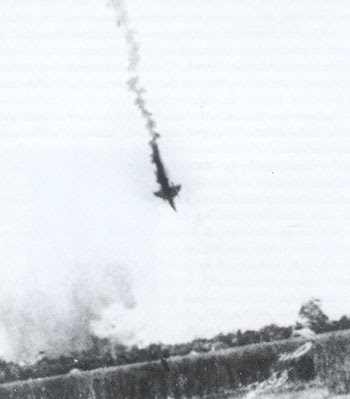
The Failed Air War Over Vietnam
or go to
Aletho News Archives – Video-Images
From the Archives
USS Liberty Massacre: A Pivotal Moment in the Hostile Takeover of America
By Kevin Barrett | Crescent | Dhu al-Qa’dah 24, 1445
In corporate America, hostile takeovers are commonplace. They occur when an aggressor—a larger corporation or rich individuals—seizes control of a smaller corporation without asking permission.
What few recognize is that the United States itself has been subjected to a hostile takeover. Since the aggressor, the illegitimate settler colony known as “Israel,” is much smaller than the US, the takeover has necessarily been surreptitious.
As of June, 2024, Israel’s gradual takeover of the US has become obvious and undeniable—a proverbial “elephant in the living room.” … continue
Blog Roll
 Aletho News
- Yemeni Armed Forces Warn Airlines Against Using Saudi Airports, Exempt Mecca and Medina
- Iran security chief says powers greater than US tried to conquer Iran but ended in ‘dustbin of history’
- Europe’s mounting social chaos… chickens coming home to roost for proxy war against Russia
- US-Russia Diesel Deal Becomes Massive Defeat for Ukraine
- Hormuz and the Looming Economic Catastrophe
- Dhubab offensive, media blitz and the rapid unraveling of Saudi-backed coalition’s new gambit
- Putin Conveys to Trump Iran’s Vision on Possible Conflict Resolution – Kremlin
- The Search for Truth: Charlie Kirk’s Assassination One Year Later
- ‘Harsh reality’: Iran says France seeks monopoly on power and intimidation, not peace for all
- When Will This White House Madness End?
- If Americans Knew
- For three years, Israel has killed a child in Gaza every 71 minutes – Daily Update
- Israeli forces kill another child in Gaza – Daily Update
- Gaza ceasefire exists in name only, say more than 100 organizations
- Nearly 2 Million in Gaza Need Urgent Shelter Assistance as Winter Looms: IOM Chief Warns
- Suppressing Palestinian resistance: US charity under fire for AI monitoring of Gaza classrooms
- Thousands Are Held in Israeli Torture Camps. This Is What Happens Inside
- Israel puts Gaza’s sick, injured, newborn in peril – Daily Update
- Report claimed Mark Levin used by Israeli government to influence Trump
- Over 2,000 Gazans have died awaiting medical evacuation amid Israel’s continued siege
- How a U.S. Diplomat Suppressed and Altered Reports Critical of Israel
- No Tricks Zone
- Germany’s Green Energy Debacle: High Energy Costs Force Kahla Porzellan to Close After 182 Years!
- New Study: 50 Years Of The Most Aggressive ‘Net Zero’ Policies Can Only Affect The Global Climate By 0.03°C
- US September “Heat” Was No Record…Many Records Set Decades Ago
- Latest European Green Energy Debacle; Portugal’s Largest Flagship Solar Park Insolvent!
- Green Energy Debacle: German Expert Professor Fritz Vahrenholt Warns Of Severe Economic And Social Consequences
- Two More Paleo Reconstructions Affirm Meters-Higher Sea Levels Across Ireland, Brazil 7000-6000 Years Ago
- New Study: Earth And Venus Surface Warmth Largely Explained By Convection And Lapse Rate, Not CO2 Or Radiation
- 2025 Nature Paper Claiming Worsening Global Drought Gets RETRACTED …Heavily Flawed
- New Study: ‘Global Drought Shows No Detectable Recent Acceleration Under Climate Warming’
- Economic Masterminds: German Socialists Suggest Taxing Productivity Gains Stemming From Using AI

