US Bombing Syrian Troops Would Be Illegal
By Marjorie Cohn | June 22, 2016
In an internal “dissent channel cable,” 51 State Department officers called for “targeted military strikes” against the government of Bashar al-Assad in Syria, a proposal that President Barack Obama has thus far resisted. However, were he to accept the cable’s advice, he would risk a dangerous – possibly catastrophic – confrontation with Russia. And, such a use of military force in Syria would violate U.S. and international law.
While the cable decries “the Russian and Iranian governments’ cynical and destabilizing deployment of significant military power to bolster the Assad regime,” the cable calls for the United States to protect and empower “the moderate Syrian opposition,” seeking to overthrow the Syrian government.
However, Assad’s government is the only legitimate government in Syria and, as the sovereign, has the legal right to seek international support as it has from Russia and Iran. There is no such legal right for the United States and other countries, such as Saudi Arabia and Turkey, to arm Syrian rebels to attack Assad’s government.
The dissent cable advocates what it calls “the judicious use of stand-off and air weapons,” which, the signatories write, “would undergird and drive a more focused and hardnosed US-led diplomatic process.”
Inside Syria, both the United States and Russia are battling the Islamic State (also known as ISIS) as ISIS and other jihadist groups seek to overthrow the Assad government. But while the U.S. is supporting rebel forces (including some fighting ISIS and some fighting Assad), Russia is backing Assad (and waging a broader fight against “terrorists,” including Al Qaeda’s Nusra Front). Reuters reports the U.S. has about 300 special operations forces in Syria for its “counter-terrorism mission against Islamic State militants but is not targeting the Assad government.”
The policy outlined in the dissent cable would change that balance, by having the U.S. military bomb Syrian soldiers who have been at the forefront of the fight against both ISIS and Nusra. But that policy shift “would lead to a war with Russia, would kill greater numbers of civilians, would sunder the Geneva peace process, and would result in greater gains for the radical Sunni ‘rebels’ who are the principal opponents of the Assad regime,” analyst James Carden wrote at Consortiumnews.com.
Journalist Robert Parry added that the authors of the cable came from the State Department’s “den of armchair warriors possessed of imperial delusions,” looking toward a Hillary Clinton administration which will likely pursue “no-fly-zones” and “safe zones” leading to more slaughter in Syria and risking a confrontation with Russia.
As we should have learned from the “no-fly zone” that preceded the Libyan “regime change” that the U.S. government engineered in 2011, a similar strategy in Syria would create a vacuum in which ISIS and Al Qaeda’s Nusra Front would flourish.
Violating U.S. and International Law
The strategy set forth in the cable would also violate both U.S. and international law.
Under the War Powers Resolution (WPR), the President can introduce U.S. troops into hostilities, or into situations “where imminent involvement in hostilities is clearly indicated by the circumstances,” only (1) after a Congressional declaration of war, (2) with “specific statutory authorization,” or (3) in “a national emergency created by attack upon the United States, its territories or possessions, or its armed forces.”
None of three conditions that would allow the president to use military force in Syria is present at this time. First, Congress has not declared war. Second, neither the 2001 Authorization for the Use of Military Force (AUMF), which George W. Bush used to invade Afghanistan, nor the 2002 AUMF, which Bush used to invade Iraq would provide a legal basis for an attack on Syria at the present time. Third, there has been no attack on the United States or U.S. armed forces. Thus, an armed attack on Syria would violate the WPR.
Even if a military attack on Syria did not run afoul of the WPR, it would violate the United Nations Charter, a treaty the U.S. has ratified, making it part of U.S. law under the Constitution’s Supremacy Clause. Article 2(4) of the Charter says that states “shall refrain in their international relations from the threat or use of force against the territorial integrity or political independence of any state.”
The Charter only allows a military attack on another country in the case of self-defense or when the Security Council authorizes it; neither has occurred in this case. Assad’s government has not attacked the United States, and the Council has not approved military strikes on Syria.
Indeed, Security Council Resolution 2254, to which the cable refers, nowhere authorizes the use of military force, and ends with the words, “[The Security Council] decides to remain actively seized of the matter.” This means that the Council has not delegated the power to attack Syria to any entity other than itself.
If the U.S. were to mount an armed attack on Syria, the Charter would give Assad a valid self-defense claim, and Russia could legally assist Assad in collective self-defense under Article 51 of the Charter. Moreover, forcible “regime change” would violate Article 1 of the International Covenant on Civil and Political Rights, which the U.S. has also ratified.
Although it’s true that the “dissent” cable eschews the use of U.S. “ground forces,” its recommendation that the U.S. should bomb Assad’s government would involve U.S. military personnel who would fly the bombers or fire off the missiles. And, such an operation would invariably necessitate at least a limited number of U.S. support troops on the ground.
Opposition to Violent ‘Regime Change’
Many commentators have warned of dangers from a U.S. military attack on Syria, risks that are either ignored or breezily dismissed by the “dissent” cable.
Jean Aziz cautions in Al-Monitor, “the recommendation of military strikes against the Syrian government – no matter how well intentioned – is, in the end, escalatory, and would likely result in more war, killing, refugees, less humanitarian aid reaching civilians, the empowerment of jihadis and so on.”
The United States is already empowering jihadis, “going out of its way to protect the interests of al-Qaeda’s closest and most powerful ally in Syria, Ahrar al-Sham,” Gareth Porter wrote in Truthout. Porter reported that Ahrar al-Sham, which works closely with the Nusra Front, “is believed to be the largest military force seeking to overthrow the Assad regime in Syria, with at least 15,000 troops.”
So, in seeking Assad’s ouster, the U.S. has terrorist bedfellows. So much for the “global war on terror.”
As CIA Director John Brennan recently told the Senate Intelligence Committee, “Our efforts have not reduced [Islamic State’s] terrorism capability and global reach,” adding, “The branch in Libya is probably the most developed and the most dangerous.”
No wonder President Obama told Fox News “the worst mistake” of his presidency was not planning for the aftermath of U.S. regime change in Libya, although he stubbornly maintains that ousting President Muammar Gaddafi was “the right thing to do.”
The Center for Citizen Initiatives, a group of U.S. citizens currently on a delegation to Russia in order to increase understanding and reduce international tension and conflict, issued a statement in strong opposition to the “dissent” cable. Retired Col. Ann Wright, anti-war activist Kathy Kelly and former CIA analyst Ray McGovern are part of the group.
“It is not the right of the USA or any other foreign country to determine who should lead the Syrian government,” the statement says. “That decision should be made by the Syrian people.”
The statement urges the State Department “to seek non-military solutions in conformity with the UN Charter and international law.” It also urges the Obama administration to “stop funding and supplying weapons to armed ‘rebels’ in violation of international law and end the policy of forced ‘regime change’.” Finally, the statement calls for “an urgent nation-wide public debate on the U.S. policy of ‘regime change’.”
This is sage advice in light of the disasters created by the U.S. government’s forcible regime change in Iraq and Libya, which destabilized those countries, facilitating the rise of ISIS and other terrorist groups. There is no reason to believe the situation in Syria would be any different.
Instead of saber-rattling against Assad, Russia and Iran, the Obama administration should include them all in pursuing diplomacy toward a political, non-military settlement to the Syrian crisis.
Marjorie Cohn is professor emerita at Thomas Jefferson School of Law, former president of the National Lawyers Guild, and deputy secretary general of the International Association of Democratic Lawyers. A member of the national advisory board of Veterans for Peace, Cohn’s latest book is Drones and Targeted Killing: Legal, Moral, and Geopolitical Issues.
Clinton’s Likely DoD Secretary Pick Vows US Troops in Syria to Topple Assad
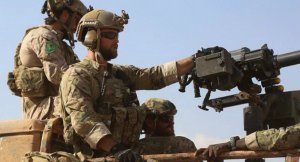
Sputnik – 22.06.2016
Michele Flournoy, the US civil official predicted by many to head the Pentagon if Democratic frontrunner Hillary Clinton wins the US presidency in November, said she would alter American strategy to battle Daesh by assisting armed militias, called by Washington “moderate rebels,” to crush the legitimate Syrian president Bashar al-Assad.
Speaking at a Center for New American Security (CNAS) think tank conference on Monday, Flournoy, a senior fellow of the organization, urged the US military to put boots on the ground in Syria to assist in toppling the al-Assad government, recently successful in reclaiming large areas of the country from Daesh.
To accelerate the defeat of the legitimate Syrian government, Flournoy introduced the notion of a “no bombing” zone for the moderate rebels. These so-called moderates are widely accepted as being, in reality, the US-backed armed militias that have been tearing the country apart since the beginning of the civil war in 2011.
To justify her hawkish proposals, Flournoy took the traditional path, resorting to the Russian factor. She claimed that Moscow’s engagement since September 2015 in the war, at the invitation of the Syrian government, does not “support the kind of negotiated conditions we would like to get to.”
The “conditions” she was talking about remain unclear, especially in light of positive results brought about by the contribution of international militaries, including Russia, in stripping Daesh in recent months of 45 percent of the Iraqi territories and 20 percent of the Syrian lands it seized in 2014. Currently, the liberation of the crucial cities of Raqqah and Mosul from Daesh is being prepared, and is expected to inflict extensive damage on the extremists, according to Iraqi Foreign Ministry spokesman Ahmad Jamal.
The Pentagon, however, appears to have other plans in mind for Syria and Iraq. According to a CNAS report, prepared in cooperation with an “ISIS Study Group” co-chaired by Flournoy, Washington must “go beyond the current Cessation of Hostilities.” By that, the paper means a so-called no-bomb-zone, which suggests US retaliation against the Assad government, if Damascus continues to resist the American-backed militants. Proposed retaliation measures include airstrikes on “security apparatus facilities in Damascus.”
“If you bomb the folks we support, we will retaliate using standoff means to destroy [Russian] proxy forces, or, in this case, Syrian assets,” Flournoy told Defense One.
At the same time, the report sensibly cautioned against hitting Russian airbases in Syria.
Flournoy, who served as undersecretary of defense for policy during Obama’s first term in office, has consistently criticized the current US-anti Daesh policy, claiming that using an “under-resourced” military to battle extremists in the Middle East, and offering “underdeveloped” political solutions for the crisis has been ineffective, at best.Earlier, she called for increasing the number of combat missions against Daesh, sending more advisors to train Iraqi soldiers and allocating more weapons to Sunni tribes and the Kurds in Iraq. She also called for maintaining the infamously inadequate train-and-equip program that graduated just five moderate rebels, and cost US taxpayers over $500 million.
According to Washington Post columnist David Ignatius, Flournoy is now on the “short, short” list for the job of US Secretary of Defense.
Read more:
How ‘Neocon-Hopeful’ Hillary Clinton Planned to Topple Assad
Russia, U.S. “Losing Patience” With One Another Over Syria
By Brandon Turbeville – Activist Post – June 20, 2016
As the recent standoff between Russian and American jet fighters over Syria still simmers in the headlines, both sides are claiming a loss of patience with the other regarding the support and opposition for Western-backed terrorist forces and the government of Bashar al-Assad.
Not even a week before the standoff, the United States via war criminal and Skull and Bones member John Kerry warned the Russians, Iranians, and the Syrians that U.S. patience is “not infinite.” Notably, Kerry’s comments were more heavily directed at Russia than any other power.
“Russia needs to understand that our patience is not infinite. In fact it is very limited with whether or not [Bashar] al-Assad is going to be held accountable,” Kerry said.
But while the United States claims that its patience is “not infinite,” an interesting point to make since the entire crisis in Syria was the handiwork of the U.S. (perhaps Kerry means “patience with obstructing the U.S. plans for the destruction of Syria?”), Russia is now warning the U.S. that it too is running out of patience.
“It is us, not Americans who are losing patience concerning the situation in Syria. We are fully meeting our commitments and agreements on securing the ceasefire and national reconciliation in Syria,” Head of the Russian General Staff Valery Gerasimov told reporters on Monday.
Gerasimov claims that Russia has been sending coordinates of Russian bombing targets but said that the United States has yet to determine which groups are “moderate” terrorists (aka Syrian “opposition”) and which are extremist terrorists.
“As a result, terrorists are actively restoring their strength and the situation is escalating again,” he said.
In the aftermath of the recent aerial standoff between two nuclear world powers, the rhetoric suggesting patience coming to an end is concerning to say the least. This is particularly the case when one of the parties to hostilities is the initiator of the aggression and the crisis to begin with and one that shows no signs of willingness to back away from its tragic and foolish foreign adventure.
It is time that the United States and NATO cease their obsession with the destruction of Syria not only on moral grounds but also out of self-preservation. If they do not, then it may well be the American people and the rest of the world that suffers the consequences.
Brandon Turbeville is the author of seven books, Codex Alimentarius — The End of Health Freedom, 7 Real Conspiracies, Five Sense Solutions and Dispatches From a Dissident, volume 1 andvolume 2, The Road to Damascus: The Anglo-American Assault on Syria, and The Difference it Makes: 36 Reasons Why Hillary Clinton Should Never Be President.
US Seeks Direct Confrontation with Russia in Syria
By Ulson Gunnar | New Eastern Outlook | June 21, 2016
The US has recently accused Russia of bombing what it calls “US-backed rebels” in southern Syria. CBS News in their article, “Russia ignores warnings, bombs U.S.-backed Syrian rebel group,” would claim:
On Friday, Defense Secretary Ash Carter called out Russia for bombing a Syrian rebel group that’s backed by the U.S.
The attack by Russian fighter bombers on American-backed opposition forces appeared to be deliberate and to ignore repeated U.S. warnings.
More alarming is what the US claimed happened next. CBS News would further claim:
Two American F-18 jet fighters were dispatched to provide air cover for the troops on the ground as they tried to evacuate their casualties. By the time the F-18s arrived, the Russian planes were headed away, but were still close enough to see.
But when the F-18s broke away to refuel, the Russians returned for a second bombing run. Another call went out to the Russian command center in Syria, demanding that the planes wave off.
The crew of an airborne command post tried to contact the Russian pilots directly but got no response. The Su-34s conducted another bombing run, leaving a small number of opposition fighters dead on the ground.
Neither CBS News nor the US Department of Defense ever explained why the US believes it is entitled to send armed militants over the borders and into a sovereign nation, or why it believes a sovereign nation and its allies are not entitled to confront and neutralize them or why US aircraft are entitled to fly over Syrian airspace without the authorization of the Syrian government.
In other words, the US is vocally complaining about its serial violations of international law and norms finally (allegedly) being confronted and put to an end by Russian military forces.
But Did Russia Even Attack America’s Armed Invaders?
Russia however, has denied US accusations. CNN’s article, “Russia denies bombing U.S.-backed Syrian rebels near Jordan border,” states:
Russia’s Defense Ministry denied bombing U.S.-backed Syrian opposition forces in a recent military operation near the Jordanian border, according to a statement released on Sunday.
The Kremlin response comes after U.S. and Russian military officials held a video conference to discuss Thursday’s strikes.
As is characteristic of all US claims regarding its multiple, ongoing foreign acts of military aggression, the most recent row in Syria is heavy on rhetoric and light on evidence. Had Russia attacked armed militants invading Syrian territory, it would have been well within its rights to do so, however it has claimed it hasn’t. The burden of proof is on the US.
Why Would the US Lie About This?
But when one considers a recent US State Department “internal memo” calling for more direct US military action to oust the Syrian government from power, it is clear such a call cannot be answered without an accompanying justification or provocation. It appears that the US-Russian row in southern Syria conveniently constitutes just such a provocation.
CNN’s article, “State Department officials call for U.S. military action against Assad regime,” claims:
More than 50 State Department officials signed an internal memo protesting U.S. policy in Syria, calling for targeted U.S. military strikes against the regime of Bashar al-Assad and urging regime change as the only way to defeat ISIS.
Claiming that US military strikes against the Syrian government, or that “regime change” is the only way to defeat the self-proclaimed Islamic State (IS) is indeed far fetched and is in and of itself a fabricated justification for an otherwise entirely self-serving geopolitical objective the US has set for itself in Syria.
It was US-led “regime change” in Libya in 2011 that has led to the country becoming a bastion for, not against IS and other notorious terrorist groups. Libya, it should be mentioned, has existed in a perpetual state of failure since the 2011 US military intervention, triggering one half of a massive refugee crisis facing the European continent, with no signs of abating any time in the foreseeable future.
In other words, the US desire for “regime change” in Syria will create another Libya, but on a scale larger than that in North Africa, all while compounding the chaos in North Africa further.
Therefore, justifying greater military aggression by the US in Syria appears to be a “hard sell” for American policymakers, media and politicians. Militants in southern Syria were likely designated for this ploy specifically because they have the greatest chance of being separated and distinguished from US-backed militants in northern Syria.
US-backed militants in Syria’s north are described even by the US itself as “intermingled” with extremists including Al Qaeda and even IS and have become increasingly difficult to defend diplomatically and politically as Syrian and Russian forces work on rolling them back.
Undoubtedly US-backed militants in Syria’s south are likewise”intermingled” with overt terrorist groups, but because the conflict in the south has been neglected by not only US and European news agencies, but also Russian and other Eastern news services, there lingers an unwarranted “benefit of the doubt.”
Can Anything Stop US Military Escalation?
Many in America’s foreign policy circles are nostalgic for the days of NATO’s intervention in Yugoslavia where inferior Russian forces were unable to deter NATO aggression and were eventually relegated to a subordinate role in “peacekeeping operations.” At one point, NATO even contemplated striking Russian forces as a means of neutralizing any obstacle to NATO ambitions during the conflict.
It is therefore possible that these same US policymakers envision using what CNN’s article called “stand-off and air weapons” to induce a similar stand-down from Russia before proceeding with and accomplishing their much desired “regime change” in Syria.
However, the Russian military of the 1990’s is not the Russian military of today. The fact that Russia is present and operating in Syria, far beyond the confines of Eastern Europe and its traditional sphere of influence is proof enough of that.
Russia’s performance in Syria alongside Syrian forces is the primary factor in what is now clearly IS’ decline and retreat. Russian air defenses have been deployed across the country and capabilities to confront US and US-allied aggression are clear and present. Since IS had no air forces of any kind, it is clear that Russian air defenses placed in Syria were one part of deterring the sort of US aggression characterized in the recent alleged US State Department memo.
The US would have to rely entirely on the assumption that Russia would rather concede Syria in the face of US military aggression than escalate toward a direct war with the United States.
Creating the conditions both diplomatically and on the ground in Syria to deter US military commanders from following any order to essentially attempt to trigger a war with nuclear-armed Russia is now essential. Raising the stakes for any sort of escalation of US aggression in Syria is also essential.
While the UN seems content with ignoring the serial international crimes of the US as it flaunts sovereign Syrian airspace, violates its borders by sending armed militants over them intent on destabilizing, destroying and overthrowing the Syrian state and presiding over the dismemberment of not only Syria, but the region itself, other international organizations could fill this expanding void.
The Shanghai Cooperation Organisation (SCO), for example, could conceivably put together “peacekeeping” forces of its own, placed along Syria’s borders deterring the transit of armed militants and forcing the hands of both Jordan and Turkey to be exposed in the backing of some of the most toxic militant organizations engaged in Syria’s conflict.
The presence of Chinese, Russian, and even Iranian troops in this capacity could make it clear that no matter what act of aggression the US commits to, Syria’s fate would remain in the hands of its government, its people, and its allies. Tying these efforts into the distribution of aid would hamstring US attempts to hide its war-making behind “humanitarianism.”
Such a move, however, by the SCO would be unprecedented, costly and difficult to coordinate. And because of its unprecedented nature, unforeseen challenges may even make this option a complication rather than an asset toward fending off US aggression and the resolution of the costly ongoing Syrian conflict.
Regardless, it is clear that as IS and other terrorist organizations who have constituted the bulk of what the US regularly refers to as “opposition” beings to collapse, US desperation to conclude the Syrian conflict in its favor (not in favor of Syria or its people) is becoming increasingly palpable.
Another point opponents of US aggression must focus on is the ongoing chaos in Libya, a burning example of where US’s suggested “regime change” in Syria will inevitably lead. US success in Syria will essentially be an extension of Libya’s chaos, bolstering, not serving to “defeat” IS.
US still aiming to oust Assad, dismember Syria: Analyst
Press TV – June 19, 2016
“The US still has only one motive, which is to oust Assad and convert Syria from a front-line state against Israel into a failed, broken and dismembered state no matter what,” Professor Dennis Etler says.
America’s position on Syria is shrouded in double-speak as Washington has accused Russia of violating the ceasefire while it still calls for Syrian President Bashar al-Assad’s ouster, says Professor Dennis Etler, an American political analyst who has a decades-long interest in international affairs.
Etler, a professor of Anthropology at Cabrillo College in Aptos, California, made the remarks in an interview with Press TV on Sunday, after the Pentagon called on Russia not to target US-backed militants in southern Syria.
US military officials “expressed strong concerns about the attack on the coalition-supported counter-ISIL forces at the At-Tanf garrison, which included forces that are participants in the cessation of hostilities in Syria,” Pentagon Press Secretary Peter Cook said on Saturday, after they held talks with Russian military officials on a video link.
“The Pentagon asks Russia not to bomb US-backed militants in Syria while the State Department calls for US military intervention to oust Assad,” Professor Etler said.
“The two faced nature of US intervention in Syria has been clearly illustrated by recent events. On the one hand they coddle anti-government insurgents who are said to be US trained anti-Daesh militants, while on the other hand John Kerry expresses sympathy for US State Department functionaries who brazenly call for direct US military strikes to help the insurgents overthrow the Assad government. The US position is shrouded in double-speak,” the analyst noted.
Russian airstrikes turned the tide of Syrian battle
“The ineffectual US attacks against Daesh are heralded as the main reason for the setbacks that Takfiri terrorists have recently suffered, totally ignoring the fact that it is Russian airstrikes and Syrian army ground offenses that have turned the tide of battle,” Professor Etler said.
“The false narrative disseminated by the US asserts that it is US backed and trained militants who have been attacking Daesh and inflicting heavy losses on them while the Russian and Syrian government forces have been attacking ‘moderate’ rebel groups supported by the US,” he stated.
“In fact it is the exact opposite. The Russians and Syrians have decimated Daesh while the US has protected anti-government militants who work hand in glove with terrorists of the al-Qaeda affiliated al-Nusra Front. Syrian forces with Russian air support are the ones who have thwarted an al-Nusra offensive against the Syrian city of Aleppo not the US-backed ‘militants’ who are closely integrated with al-Nusra even though the US says its clients are targeting both it and Daesh,” he pointed out.
‘Good’ and ‘bad’ terrorists have one goal
“The US has its fingerprints over all elements of the Syrian opposition, having trained and equipped the various terrorist groups which have morphed into a variety of contending factions often fighting amongst themselves. It is nearly impossible to distinguish between so-called ‘moderate’ opposition groups and other terrorists that have proliferated in both Syria and Iraq,” Professor Etler said.
“This has allowed the US to muddy the waters and declare that there are ‘good’ and ‘bad’ terrorists when in fact they all have the same goal of overthrowing the legitimate government of Syria headed by Bashar al-Assad,” he pointed out.
“The Russian brokered ceasefire that the US signed onto has been breached by US intransigence in continuing to call for the ouster of Assad and the transition to a government that the US deems satisfactory. The recently leaked internal State Department memo signed by 51 mid-level State Department functionaries and endorsed by US Secretary of State John Kerry calls for direct US military intervention in Syria to oust the Syrian government,” he noted.
“This is in direct contravention to the agreement for cessation of hostilities which makes no mention of regime change. To then accuse the Syrians and Russians of breaking the ceasefire for attacking opposition forces that the US wants to use against the Syria government is the height of hypocrisy,” he added.
Is US planning more direct military intervention?
“The State Department memo takes to task the Obama administration’s attempt to mediate the Syrian conflict, but Obama’s policy is more apparent than real. The US media is trying to make it seem that there is internal discord among the foreign policy makers regarding Syria, that there is a ‘war party’ and a ‘peace party,’” Professor Etler said.
“But US policy has always been on a dual track, feigning a desire to achieve a peaceful resolution to the conflict while doing all in its power to inflame and spread it. Now that the Russian and Syrian forces are gaining the upper hand the US is doing everything possible to spread disinformation and outright lies in order to give the US more freedom of action, laying the groundwork for more direct military intervention under a new administration after the upcoming presidential election,” he stated.
“The US will do everything in its power to continue the conflict so that it can send in troops on the ground and launch air strikes against Syrian ground forces after the election,” he noted.
“The US still has only one motive, which is to oust Assad and convert Syria from a front-line state against Israel into a failed, broken and dismembered state no matter what,” the academic concluded.
US Underestimates Civilian Death Toll in Iraq and Syria by 95%
teleSUR | June 17, 2016
The United States-led coalition that is bombing Iraq and Syria may be under-reporting the civilian toll of that war by as much as 95 percent, according to a new report released Friday by the monitoring group Airwars.
The U.S.-led coalition, which includes nations such as Britain, France and the Netherlands, has been bombing Islamic State group targets in Iraq and Syria since 2014, carrying out more than 13,121 airstrikes, or just over 19 a day. The vast majority of the strikes are carried out by the U.S., according to Airwars—68 percent in Iraq and and 82.5 percent in Syria—with an estimated civilian death toll of at least 1,312 people.
Over the past six months it’s gotten worse, according to Airwars. “Between December and May, in both Iraq and Syria, there was a marked increase in the number of alleged casualty incidents and civilian death attributed to coalition actions,” it says. In Iraq, the group reports that between 297 and 518 civilians were killed by coalition airstrikes in this time. In Syria, between 197 and 274 civilians were killed, “a 38 percent increase in likely civilian deaths above the previous six months.
The U.S. has admitted to killing just 20 civilians. Its allies have admitted to none. “If correct, Airwars data suggests the coalition may be under-reporting civilian deaths by more than 95 percent,” the report says.
The worst incident for civilians occurred on March 19 in the Islamic State-occupied city of Mosul, when at least 25 innocents were killed when coalition airstrikes hit Mosul University in the middle of the day. As teleSUR reported at the time, such a strike on a civilian institution—confirmed by the U.S. Department of Defense—may constitute a breach of international law.
The U.S. and its coalition allies are not the only foreign governments reportedly killing civilians in the region. Of 630 alleged incidents where civilians died in Syria as a result of international airpower, 91 percent have been attributed to Russia, according to Airwars, killing between 2,792 and 3,451 civilians between December 2015 and May 2016, largely as the result of airstrikes targeting non-Islamic State forces and civilian areas, “particularly in and around Aleppo.”
The Russian government says its airstrikes have not killed any civilians since they began in Sept. 2015.
Saudi repeats call for US strikes on Syrian government
Press TV – June 17, 2016
The Saudi foreign minister has repeated Riyadh’s call on the US to carry out airstrikes against the Syrian government, echoing a similar request by dozens of US diplomats who broke ranks with the White House to push for military action against Damascus.
During a press briefing at the Saudi Embassy in Washington on Friday, Adel al-Jubeir said the Arab monarchy has long been pushing for a US military campaign to overthrow Syrian President Bashar al-Assad.
The Saudi minister added that from the very start of the crisis in Syria, Riyadh has strongly favored “a more robust policy, including air strikes, safe zones, a no fly zone, a no drive zone.”
He went on to say that the kingdom had called for arming Syria’s so-called “moderate opposition” with ground-to-air missiles and reiterated an offer to deploy Saudi special forces as part of any US-led operation against the Damascus government, which has been making back-to-back gains against the Daesh Takfiri group.
Jubeir’s comments came after 51 US State Department officials signed an internal document, known as the “dissent channel cable”, this week, calling for targeted military strikes against the Syrian government.
“Failure to stem Assad’s flagrant abuses will only bolster the ideological appeal of groups such as Daesh, even as they endure tactical setbacks on the battlefield,” reads the cable, critical of US President Barak Obama’s policies towards the Syrian crisis.
The State Department has acknowledged the existence of the cable as confidential diplomatic communication, but did not comment on its contents.
Russia’s reaction
Meanwhile, Russia slammed the so-called internal document and warned that such attempts to oust Assad would not “contribute to a successful fight against terrorism.”
Kremlin spokesman Dmitry Peskov further said that “this could plunge the region into complete chaos.”
Russian Deputy Foreign Minister Mikhail Bogdanov also censured the proposed attacks against Damascus, saying they would be “at odds with the UN resolutions.”
“We need to negotiate and reach a political resolution on the basis of international law, which was agreed upon at the UN Security Council,” Bogdanov added.
The United States and its allies formed a coalition that has been conducting airstrikes against what are said to be Daesh terrorists inside Syria since September 2014 without any authorization from Damascus or a UN mandate. The coalition has repeatedly been accused of targeting and killing civilians. It has also been largely incapable of fulfilling its declared aim of destroying Daesh.
Daesh Takfiri terrorists, who were initially trained by the CIA in Jordan in 2012 to destabilize the Syrian government, are engaged in crimes against humanity in the areas under their control.
Syria has been grappling with a deadly conflict it blames on certain foreign states for over five years. UN special envoy for Syria Staffan de Mistura estimates that over 400,000 people have been killed in the conflict, which has also displaced over half of the Arab country’s pre-war population of about 23 million. The militancy has also taken a heavy toll on the country’s infrastructure.
Russia: US strikes on Assad will plunge Mideast into chaos
Press TV – June 17, 2016
Russia has warned against a call by US State Department officials for strikes against the Syrian government, saying Moscow is opposed to a military solution.
The Kremlin said on Friday such a move would plunge the entire region into complete chaos.
Dozens of State Department officials have signed an internal document that calls for targeted military strikes against the Syrian government, according to the Wall Street Journal.
US Secretary of State John Kerry said on Friday that the internal memo on Syria signed by more than 50 US diplomats is an “important statement” that he would discuss when he gets back to Washington.
“It’s an important statement and I respect the process, very, very much. I will … have a chance to meet with people when I get back,” Kerry told Reuters during a visit in Copenhagen.
The memo is sharply critical of US policy in Syria, calling for military strikes against the Assad government.
An unnamed US official familiar with the document said the internal cable may be an attempt to shape the foreign policy outlook of the next US administration.
“It is not a secret to us that there are political forces in the US who favor a military solution [to the Syrian crisis]. But this is not our method,” Russian Foreign Ministry spokesperson Maria Zakharova said on Friday.
The United States and its allies have been conducting airstrikes against what are said to be Daesh terrorists inside Syria since September 2014 without any authorization from Damascus or a UN mandate.
The attacks have largely failed to fulfill their declared aim of destroying Daesh but killed civilians and targeted the Syrian infrastructure in many cases.
Washington has consistently refused to join forces with Russia in Syria against Daesh ever since Moscow launched its campaign of airstrikes in September last year.
On Thursday, a senior US defense official accused Russia of carrying out airstrikes in southern Syria against US-backed forces.
The accusation came a day after Kerry said the US was losing patience with Russia over its support for the Syrian government.
“Russia needs to understand that our patience is not infinite. In fact it is very limited with whether or not al-Assad is going to be held accountable,” he said.
Responding to those remarks, Russia’s Foreign Minister Sergei Lavrov said he believed the US might hope to use al-Qaeda’s branch in Syria to unseat President Assad’s government.
Lavrov said in St. Petersburg on Thursday that the reluctance of US-backed opposition groups to distance themselves from the Nusra Front has been a major reason behind continuing fighting.
The US could be “playing some kind of game here, and they may want to keep al-Nusra in some form and use it to topple the regime,” Lavrov said.
NATO Could Use Conventional Weapons to Respond to Cyberattacks
Sputnik – June 16, 2016
The North Atlantic Alliance apparently views conventional weapons as a viable means to deal with cyberthreats to its networks and communications systems. NATO’s Secretary General Jens Stoltenberg said as much when he mentioned that the bloc could deploy conventional arms to respond to cyberattacks in the future.
NATO’s networks are targeted on a daily basis, but this measure will likely only apply to the most serious security breaches that could trigger the collective defense clause under Article 5.
“A severe cyberattack may be classified as a case for the alliance. Then NATO can and must react,” Reuters quoted Stoltenberg told as telling the German newspaper Bild. The bloc’s chief was vague on how exactly the alliance plans to respond, saying only that the strategy “will depend on the severity of the attack.”
Stoltenberg appeared not to mention how the alliance plans to determine the assault’s origin, which is a major challenge when it comes to sophisticated operations since hackers are capable of launching and routing attacks worldwide.
“The question of how to respond to cyberattacks is a thorny one. Attribution for the attacks can often be murky, making it very hard to prove accurately the original source. Even if the location of an attack is identified, a nation can claim that the attacks came from a rogue individual and not a government,” Aaron Mehta observed.
NATO has already confirmed that it will recognize cyberspace as an operational domain at the bloc’s upcoming summits in Poland, Warsaw, and will invest heavily into building up defenses to its computer networks just like it has beefed up its military capabilities when it comes to air, sea and land operations.
Featured Video

Seyed M. Marandi: US-Iran War Inevitable: Kuwait and Bahrain May Fall
or go to
Aletho News Archives – Video-Images
From the Archives
Oil and the Israel Lobby
Reknowned economist M. Shahid Alam offers this excellent critique of Noam Chomsky’s defective analysis of the relative influence of Oil versus the Israel lobby over US foreign policy: … continue
Blog Roll
 Aletho News
- ICC ignored ‘very well-documented’ NATO crimes – ex-Libyan minister
- SNSC secretary dismisses US response to Iran’s conditions as ‘inadequate’
- Sanaa says Taiz roads open, secure for residents, warns Saudi forces
- Iraqi resistance group urges Saudi leadership to admit defeat, lift Yemen siege
- Trump’s Retreat: How Al-Aqsa Flood Took Down the US Empire
- Israel’s Military Actions in Lebanon Grossly Violate International Law — Lavrov
- Seyed M. Marandi: US-Iran War Inevitable: Kuwait and Bahrain May Fall
- Leaders Condemn Ansarallah Attack on Saudi Arabia While Ignoring Illegal War Against Yemen
- Leaked: Britain’s Covert Iraqi Psyops Network
- Yemeni Armed Forces Warn Airlines Against Using Saudi Airports, Exempt Mecca and Medina
- If Americans Knew
- After Oct 7, IDF policy allowed civilian casualties for even the lowest-ranking targets
- Israel’s Destruction of Southern Lebanon Intensified After the Cease-Fire
- The Last-Minute Decision That Gave Israel Its Name
- The American Conservative: How Trump Made the World Go Nuclear
- Meet the US generals and admirals advancing Israeli policy
- Opinion: Why news organizations should boycott Israel
- The Israeli witch hunt of Sami Abu Shehadeh exposes the lie of the ‘Jewish and democratic’ state
- No state has a ‘right’ to exist – least of all Israel
- Testimonies about Gaza’s civilian death toll expose Israel’s atrocities – Daily Update
- How Israel Conquered the Latin American Right
- No Tricks Zone
- New Study Suggests Large Regions Of The Pacific Ocean Have Been Cooling For The Last 80 Years
- Germany’s Green Energy Debacle: High Energy Costs Force Kahla Porzellan to Close After 182 Years!
- New Study: 50 Years Of The Most Aggressive ‘Net Zero’ Policies Can Only Affect The Global Climate By 0.03°C
- US September “Heat” Was No Record…Many Records Set Decades Ago
- Latest European Green Energy Debacle; Portugal’s Largest Flagship Solar Park Insolvent!
- Green Energy Debacle: German Expert Professor Fritz Vahrenholt Warns Of Severe Economic And Social Consequences
- Two More Paleo Reconstructions Affirm Meters-Higher Sea Levels Across Ireland, Brazil 7000-6000 Years Ago
- New Study: Earth And Venus Surface Warmth Largely Explained By Convection And Lapse Rate, Not CO2 Or Radiation
- 2025 Nature Paper Claiming Worsening Global Drought Gets RETRACTED …Heavily Flawed
- New Study: ‘Global Drought Shows No Detectable Recent Acceleration Under Climate Warming’

