Net Zero: The Mystery of the Falling Fertility
By Tomas Furst | Brownstone Institute | July 8, 2025
In January 2022, the number of children born in the Czech Republic suddenly decreased by about 10%. By the end of 2022, it had become clear that this was a signal: All the monthly numbers of newborns were mysteriously low.
In April 2023, I wrote a piece for a Czech investigative platform InFakta and suggested that this unexpected phenomenon might be connected to the aggressive vaccination campaign that had started approximately 9 months before the drop in natality. Denik N – a Czech equivalent of the New York Times – immediately came forward with a “devastating takedown” of my article, labeled me a liar and claimed that the pattern can be explained by demographics: There were fewer women in the population and they were getting older.
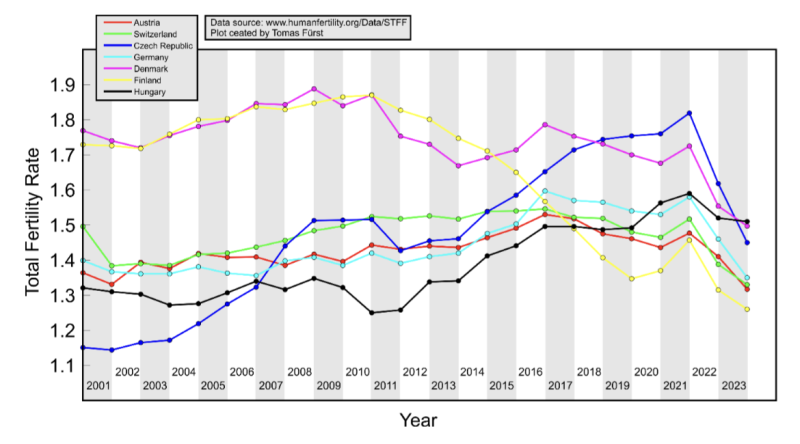
To compare fertility across countries (and time), the so-called Total Fertility Rate (TFR) is used. Roughly speaking, it is the average number of children that are born to a woman over her lifetime. TFR is independent of the number of women and of their age structure. Figure 1 below shows the evolution of TFR in several European countries between 2001 and 2023. I selected countries that experienced a similar drop in TFR in 2022 as the Czech Republic.
So, by the end of 2023, the following two points were clear:
- The drop in natality in the Czech Republic in 2022 could not be explained by demographic factors. Total fertility rate – which is independent of the number of women and their age structure – dropped sharply in 2022 and has been decreasing ever since. The data for 2024 show that the Czech TFR has decreased further to 1.37.
- Many other European countries experienced the same dramatic and unexpected decrease in fertility that started at the beginning of 2022. I have selected some of them for Figure 1 but there are more: The Netherlands, Norway, Slovakia, Slovenia, and Sweden. On the other hand, there are some countries that do not show a sudden drop in TFR, but rather a steady decline over a longer period (e.g. Belgium, France, UK, Greece, or Italy). Notable exceptions are Bulgaria, Spain, and Portugal where fertility has increased (albeit from very low numbers). The Human Fertility Project database has all the numbers.
This data pattern is so amazing and unexpected that even the mainstream media in Europe cannot avoid the problem completely. From time to time, talking heads with many academic titles appear and push one of the politically correct narratives: It’s Putin! (Spoiler alert: The war started in February 2022; however, children not born in 2022 were not conceived in 2021). It’s the inflation caused by Putin! (Sorry, that was even later). It’s the demographics! (Nope, see above, TFR is independent of the demographics).
Thus, the “v” word keeps creeping back into people’s minds and the Web’s Wild West is ripe with speculation. We decided not to speculate but to wrestle some more data from the Czech government. For many months, we were trying to acquire the number of newborns in each month, broken down by age and vaccination status of the mother. The post-socialist health-care system of our country is a double-edged sword: On one hand, the state collects much more data about citizens than an American would believe. On the other hand, we have an equivalent of the FOIA, and we are not afraid to use it. After many months of fruitless correspondence with the authorities, we turned to Jitka Chalankova – a Czech Ron Johnson in skirts – who finally managed to obtain an invaluable data sheet.
To my knowledge, the datasheet (now publicly available with an English translation here) is the only officially released dataset containing a breakdown of newborns by the Covid-19 vaccination status of the mother. We requested much more detailed data, but this is all we got. The data contains the number of births per month between January 2021 and December 2023 given by women (aged 18-39) who were vaccinated, i.e., had received at least one Covid vaccine dose by the date of delivery, and by women who were unvaccinated, i.e., had not received any dose of any Covid vaccine by the date of delivery.
Furthermore, the numbers of births per month by women vaccinated by one or more doses during pregnancy were provided. This enabled us to estimate the number of women who were vaccinated before conception. Then, we used open data on the Czech population structure by age, and open data on Covid vaccination by day, sex, and age.
Combining these three datasets, we were able to estimate the rates of successful conceptions (i.e., conceptions that led to births nine months later) by preconception vaccination status of the mother. Those interested in the technical details of the procedure may read Methods in the newly released paper. It is worth mentioning that the paper had been rejected without review in six high-ranking scientific journals. In Figure 2, we reprint the main finding of our analysis.
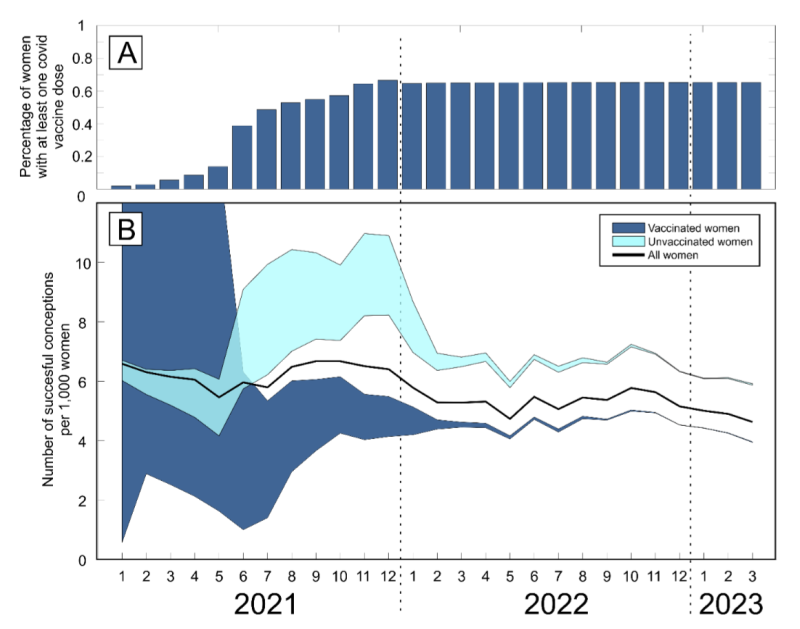
Figure 2 reveals several interesting patterns that I list here in order of importance:
- Vaccinated women conceived about a third fewer children than would be expected from their share of the population. Unvaccinated women conceived at about the same rate as all women before the pandemic. Thus, a strong association between Covid vaccination status and successful conceptions has been established.
- In the second half of 2021, there was a peak in the rate of conceptions of the unvaccinated (and a corresponding trough in the vaccinated). This points to rather intelligent behavior of Czech women, who – contrary to the official advice – probably avoided vaccination if they wanted to get pregnant. This concentrated the pregnancies in the unvaccinated group and produced the peak.
- In the first half of 2021, there was significant uncertainty in the estimates of the conception rates. The lower estimate of the conception rate in the vaccinated was produced by assuming that all women vaccinated (by at least one dose) during pregnancy were unvaccinated before conception. This was almost certainly true in the first half of 2021 because the vaccines were not available prior to 2021. The upper estimate was produced by assuming that all women vaccinated (by at least one dose) during pregnancy also received at least one dose before conception. This was probably closer to the truth in the second part of 2021. Thus, we think that the true conception rates for the vaccinated start close to the lower bound in early 2021 and end close to the upper bound in early 2022. Once again, we would like to be much more precise, but we have to work with what we have got.
Now that the association between Covid-19 vaccination and lower rates of conception has been established, the one important question looms: Is this association causal? In other words, did the Covid-19 vaccines really prevent women from getting pregnant?
The guardians of the official narrative brush off our findings and say that the difference is easily explained by confounding: The vaccinated tend to be older, more educated, city-dwelling, more climate change aware…you name it. That all may well be true, but in early 2022, the TFR of the whole population dropped sharply and has been decreasing ever since.
So, something must have happened in the spring of 2021. Had the population of women just spontaneously separated into two groups – rednecks who wanted kids and didn’t want the jab, and city slickers who didn’t want kids and wanted the jab – the fertility rate of the unvaccinated would indeed be much higher than that of the vaccinated. In that respect, such a selection bias could explain the observed pattern. However, had this been true, the total TFR of the whole population would have remained constant.
But this is not what happened. For some reason, the TFR of the whole population jumped down in January 2022 and has been decreasing ever since. And we have just shown that, for some reason, this decrease in fertility affected only the vaccinated. So, if you want to argue that a mysterious factor X is responsible for the drop in fertility, you will have to explain (1) why the factor affected only the vaccinated, and (2) why it started affecting them at about the time of vaccination. That is a tall order. Mr. Occam and I both think that X = the vaccine is the simplest explanation.
What really puzzles me is the continuation of the trend. If the vaccines really prevented conception, shouldn’t the effect have been transient? It’s been more than three years since the mass vaccination event, but fertility rates still keep falling. If this trend continues for another five years, we may as well stop arguing about pensions, defense spending, healthcare reform, and education – because we are done.
We are in the middle of what may be the biggest fertility crisis in the history of mankind. The reason for the collapse in fertility is not known. The governments of many European countries have the data that would unlock the mystery. Yet, it seems that no one wants to know.
France, Italy, Greece must explain allowing ‘safe passage’ to ICC-wanted Netanyahu to US: UN expert
Press TV – July 9, 2025
UN Special Rapporteur Francesca Albanese says Rome Statute member states—France, Italy, and Greece—must explain why they provided “safe passage” to Israeli Prime Minister Benjamin Netanyahu en route to the United States.
Netanyahu is an internationally wanted suspect under an arrest warrant issued by the International Criminal Court (ICC) for war crimes and crimes against humanity committed in Gaza.
In a post on X, Albanese said the three European countries — all signatories to the Rome Statute, which established the International Criminal Court (ICC) in 2002 — violated the international legal order by allowing Netanyahu to transit through their airspace despite an active ICC arrest warrant.
As ICC members, she said, they were theoretically “obligated to arrest” Netanyahu.
“Italian, French, and Greek citizens deserve to know that every political action violating the international legal order weakens and endangers all of them. And all of us,” she wrote.
Albanese was responding to a post by human rights lawyer Craig Mokhiber, who said the countries had “breached their legal obligations under the treaty [Rome Statute], have declared their disdain for the victims of genocide, and have demonstrated their contempt for the rule of law.”
Netanyahu is currently on his third US visit since President Donald Trump took office on January 20.
During a previous trip in February, his plane was forced to take a detour to avoid flying over countries that might enforce the ICC arrest warrant. The United States is not a party to the Rome Statute and therefore not bound by its provisions.
In June, Trump’s administration imposed sanctions on four judges at the International Criminal Court over the war tribunal’s issuance of an arrest warrant for Netanyahu.
3 killed in ‘barbaric’ Ukrainian drone strike on public beach – governor
RT | July 8, 2025
A Ukrainian drone struck a public beach in the city of Kursk in western Russia on Tuesday, killing three people and injuring seven others, regional governor Aleksandr Khinshtein said.
The victims, including two women and a five-year-old boy, were hospitalized with burns and shrapnel wounds, Khinshtein wrote on Telegram. At least one is in critical condition.
Ukrainian troops deliberately targeted civilians in a “barbaric” attack as people gathered on the beach to mark the Day of Family, Love and Fidelity, a holiday celebrated on July 8, the governor said.
Russian Foreign Ministry spokeswoman Maria Zakharova condemned the strike, criticizing the countries providing military aid to Ukraine. “Those supplying weapons to the Kiev regime should understand that they are being used to kill children,” she wrote on Telegram.
The Kursk region, which borders Ukraine, has frequently come under drone and missile attacks since the conflict erupted in 2022. Earlier on Tuesday, a drone struck a house in the village of Karyzh, injuring one person.
Khinshtein added early Wednesday morning that two more people were injured in the city of Rylsk, where Ukrainian drones damaged an infectious disease center and an EMS station, and caused a fire at an office building of a farming complex.
In August 2024, Ukraine carried out a large-scale incursion into the region, capturing dozens of villages and the border town of Sudzha. Ukrainian leader Vladimir Zelensky said the offensive aimed to gain leverage during negotiations with Moscow. However, the Ukrainian gamble ultimately failed, as Russian forces had fully liberated the entire Kursk region by April.
American emergency doctor, Dr. Mimi Syed on her work in Gaza under ongoing Israeli genocide
“I had 18 documented cases of children that came in with gunshots to the head, neck, abdomen, chest”
Dr. Mimi Syed is an American emergency doctor who has twice worked in Gaza during the ongoing Israeli genocide of Gaza: she spent four weeks each in the Gaza Strip in August and in December 2024.
She spoke to me about her child patients, many of whom were shot in the head or chest by the Israeli army; about Israel’s preventing doctors from bringing aid or vital medical equipment with them into Gaza, hindering doctors’ ability to save Palestinian lives; about the (preventable) malnutrition and starvation she saw amongst Palestinian civilians, as well as the preventable water and sanitation-related diseases contributing to “indirect deaths” in Gaza.
Also on ODYSEE
Follow her:
On Instagram: drmimier
On X: https://x.com/Memers1st
Related Links:
[over 80% of my patients were children ]
https://x.com/Memers1st/status/1939417407296270396
[Mira whom I treated when I was in Gaza who had a bullet lodged in her head. When I showed the CT image to the world, I was accused of fabricating it.
https://x.com/Memers1st/status/1940278942604398678 ]
[Against all odds, she is ok but is now being starved due to the blockade. Her story was featured on Al Jazeera Fault Lines “kids under fire”. I recommend any tax paying American watch this film.]
~5 min, Mira shown
https://www.youtube.com/watch?v=t-0zrQZWwDE
https://x.com/Memers1st/status/1940443774850891902
Ala’a Wafi is a 9-year-old girl I treated during my last trip to Gaza. Her skull was blown off by shrapnel. Against all odds, she survived, but there are thousands like her who didn’t. This is not self-defense. This is who we treated in Gaza: children.
https://x.com/Memers1st/status/1940664281798005142
Ukrainian attacks on civilians in Donbass reflect Kiev’s desperation
By Lucas Leiroz | Strategic Culture Foundation | July 7, 2025
The escalation of Ukrainian attacks on civilian areas in Donbass reveals not only the criminal nature of Kiev’s conduct but also the regime’s growing desperation in the face of the Russian forces’ imminent victory. In a new chapter of this terror strategy, recent bombings hit residential neighborhoods in the cities of Donetsk and Gorlovka, killing innocent civilians, destroying essential infrastructure, and with no military value present at the sites.
According to the Investigative Committee of the Russian Federation, an attack that took place in the Petrovsky district of Donetsk was carried out by Ukrainian armed formations using, apparently, American-made HIMARS rockets. Fragments found at the site point to high-precision cluster missiles, which are currently undergoing technical analysis. The attack targeted a peaceful residential area with no troops or military equipment present, killing four civilians who were in a passenger car as part of a funeral procession. Nearby houses were also hit, causing significant material damage, with the number of victims possibly increasing as investigations continue.
A few days earlier, in the Voroshilovsky district, also in Donetsk, another deliberate attack struck exclusively civilian areas. The Russian investigation states that the missiles used were Storm Shadows – long-range cruise missiles supplied to the Ukrainian army by the United Kingdom. Among the targets were a public market, a bank branch, residential buildings, and even civilian vehicles in transit. One woman died at the scene, and a child was seriously injured. According to eyewitnesses, although air defense systems intercepted some missiles, others managed to hit the urban area.
On the same day, the city of Gorlovka – one of the most important urban centers in the Donetsk People’s Republic – was hit by an aerial assault carried out by Ukrainian explosive drones. One building was completely destroyed, while at least a dozen others suffered varying degrees of structural damage. In addition to residential buildings, healthcare units, pharmacies, and essential service establishments were also affected, demonstrating that the targets chosen were clearly civilian in nature. This pattern of bombardment reinforces the perception that the intention behind these actions is to provoke social disorder and weaken Russian administrative control in the region.
It is noteworthy that this intensification of attacks coincided with the official confirmation of the full retaking of the Lugansk People’s Republic by Russian forces. With the complete withdrawal of Ukrainian troops from the area, a prolonged period of instability has come to an end – a development strongly celebrated by the local population. However, this achievement appears to have triggered a hostile response from Kiev, which began venting its frustration on the population centers of Donetsk, still close to the front lines and thus more vulnerable to such offensives.
Faced with its inability to reverse Russia’s military gains on the battlefield, the Ukrainian government has adopted a tactic of reprisal against civilians – a form of psychological and political pressure aimed at halting the Russian advance through fear and social exhaustion. However, this approach has produced results contrary to Kiev’s expectations. The local communities are increasingly aligned with Moscow’s military efforts, realizing that only the complete defeat of the Kiev regime can ensure lasting peace.
Russia’s response has been both strategic and proportional. Precision strikes have targeted key elements of Kiev’s operational capacity, including logistical depots and command centers, even in areas far from the contact line, such as the Ukrainian capital. These actions undermine the enemy’s war infrastructure and limit its ability to continue offensives against civilian targets.
Ultimately, the facts point to an unavoidable conclusion: the worsening of attacks against the Donbass population is a direct reflection of the Ukrainian government’s military and political weakness. Far from intimidating the residents of the liberated regions, these brutal actions only strengthen their conviction that full liberation – led by Russian forces – is the only viable path to restoring normalcy and security in the region.
BRICS leaders demand ceasefire in Gaza, condemn strikes on Iran
Al Mayadeen | July 6, 2025
Leaders of the BRICS bloc, comprising 11 emerging economies, issued a strong and unified call on Sunday for an immediate, permanent, and unconditional ceasefire in Gaza, as the war enters its 22nd month.
In the final declaration of their summit held in Rio de Janeiro, BRICS leaders urged all parties to engage in good-faith negotiations to halt the war on Gaza and demanded a full withdrawal of Israeli forces from the Strip and all other parts of the occupied Palestinian territories.
“We exhort the parties to engage in good faith in further negotiations to achieve an immediate, permanent and unconditional ceasefire,” the 11-nation bloc said in a final summit statement.
The statement comes as indirect truce negotiations between the Israeli occupation and Hamas resumed in Doha, with international pressure mounting for a resolution to the war.
BRICS condemns strikes on Iran
The summit also addressed the recent escalation between Iran and “Israel”, during which the latter launched an unprovoked 12-day war on the Islamic Republic, culminating in US airstrikes on Iranian nuclear facilities in June.
“We condemn the military strikes against the Islamic Republic of Iran since June 13, 2025,” the statement read, without directly naming the United States or “Israel”.
It added, “We express serious concern over deliberate attacks on civilian infrastructure and peaceful nuclear facilities, which constitute a violation of international law.”
BRICS demands Israeli withdrawal from Lebanon
Moreover, the statement called for a ceasefire in Lebanon and for all “parties to strictly adhere to its terms and fully implement UN Security Council Resolution 1701,” adding, “We condemn the ongoing violations of the ceasefire, as well as the violations of Lebanon’s sovereignty and territorial integrity.”
“We urge Israel to respect the terms agreed upon with the Lebanese government and to withdraw its occupying forces from all Lebanese territory, including the five remaining sites in southern Lebanon.”
BRICS demands Israeli withdrawal from Syria
Regarding Syria, the BRICS leaders reaffirmed their commitment to the independence, sovereignty, and territorial integrity of the country, calling on “Israel” to withdraw troops from Syrian territory without delay, according to the statement.
“We reaffirm our commitment to the sovereignty, independence, unity, and territorial integrity of Syria and call for a peaceful and inclusive Syrian-led and Syrian-owned, UN-facilitated political process, based on the principles of Security Council Resolution 2254 (2015), in a manner that ensures the security and well-being of the civilian population, without discrimination,” it read.
The statement further condemned the threat posed by foreign terrorists in Syria and the risk of the spread of terrorists from Syria to regional countries.
“Syria should firmly oppose all forms of terrorism and extremism and take concrete actions to respond to concerns of the international community about terrorism,” it added.
The BRICS leaders welcomed the lifting of sanctions on Syria and expressed their hope that the country’s economy will be rebuilt.
It is worth noting that the next BRICS summit will be held in India in 2026, a final declaration of the Rio De Janeiro summit said.
BRICS encourages diplomatic efforts on Ukraine
On the Ukrainian issue, the leaders expressed hope that ongoing diplomatic efforts, including the African Peace Initiative and the Group of Friends for Peace, would lead to a sustainable resolution, advocating for dialogue and diplomacy to this end.
“We recall our national positions concerning the conflict in Ukraine as expressed in the appropriate fora, including the UN Security Council and the UN General Assembly. We note with appreciation relevant proposals of mediation and good offices, including the creation of the African Peace Initiative and the Group of Friends for Peace, aimed at peaceful resolution of the conflict through dialogue and diplomacy. We expect that current efforts will lead to a sustainable peace settlement,” the statement read.
Criticism of Trump’s trade policies
In addition to Middle East affairs, the summit took aim at US economic policy. BRICS leaders expressed “serious concerns” over US President Donald Trump’s recent wave of unilateral tariffs, calling them “indiscriminate” and damaging to global trade.
“We voice serious concerns about the rise of unilateral tariff and non-tariff measures which distort trade and are inconsistent with WTO rules,” the statement said.
The bloc warned that these actions could “disrupt global supply chains” and increase economic uncertainty, particularly as Trump has threatened new tariffs on trading partners unless “deals” are reached by August 1.
Lula urges BRICS action on Gaza
In his opening remarks at the summit, Brazilian President Luiz Inácio Lula da Silva drew a parallel with the Cold War’s Non-Aligned Movement, a group of developing nations that resisted formally joining either side of a polarized global order.
“BRICS is the heir to the Non-Aligned Movement,” Lula told leaders. “With multilateralism under attack, our autonomy is in check once again.”
BRICS nations now represent more than half the world’s population and 40% of its economic output, Lula noted in remarks on Saturday to business leaders, warning of rising protectionism.
“If international governance does not reflect the new multipolar reality of the 21st century, it is up to BRICS to help bring it up to date,” Lula added in his opening remarks.
Furthermore, he defended the integrity of Iran’s borders, following the Israeli war and the US bombing of Iranian nuclear facilities, highlighting the failure of US-led wars in the Middle East.
“We cannot remain indifferent to the genocide carried out by Israel in Gaza, the indiscriminate killing of innocent civilians and the use of hunger as a weapon of war,” Lula told fellow BRICS leaders, including those from China, India, and other key emerging economies.
The renewed BRICS stance comes as Israeli Prime Minister Benjamin Netanyahu prepares to meet with Trump at the White House on Monday. Trump has been pushing for an end to the war and expressed hope for a ceasefire agreement in the coming week.
Putin calls era of liberal globalization ‘obsolete’
In his video statement, Russian President Vladimir Putin proposed the formation of a new BRICS investment platform to be developed through the New Development Bank.
“This is a matter of jointly developing harmonized tools to support and raise funds for the economies of our countries and those of the global South and East,” Putin stated, underlining the growing use of national currencies in intra-BRICS trade and calling for further expansion of this practice to reduce dependence on external systems.
Growing global influence
Putin noted that BRICS’ global authority and influence continue to grow each year, surpassing the G7 in terms of purchasing power parity.
“The authority and influence of our association in the world are growing from year to year. BRICS has rightfully established itself among the key centers of global governance,” he said.
He added that BRICS has many like-minded partners in the Global South and East and that the shift away from a unipolar world order is accelerating.
Speaking via video link to the summit in Rio de Janeiro, Putin told BRICS leaders that the era of liberal globalization was obsolete and that the future belonged to swiftly growing emerging markets, which should enhance the use of their national currencies for trade.
“Everything indicates that the model of liberal globalization is becoming obsolete,” Putin said, adding, “The center of business activity is shifting toward the emerging markets.”
Putin also called on the BRICS countries to step up cooperation in a range of spheres, including natural resources, logistics, trade, and finance.
Araghchi mourns Iranians killed by ‘Israel’ in BRICS speech
At the BRICS summit, Iranian Foreign Minister Abbas Araghchi delivered a moving speech where he mourned the Iranians killed by the recent Israeli aggression on Iran.
Araghchi expressed gratitude to fellow BRICS members who recognized the seriousness of recent escalations and condemned the aggression, detailing the destruction of residential areas, military sites, and civilian infrastructure.
The attacks, he said, resulted in the deaths of off-duty soldiers, scientists, university professors, and civilians, including women and children.
Particularly alarming, he noted, was the targeting of Iran’s peaceful nuclear facilities, which are under strict International Atomic Energy Agency (IAEA) oversight. The foreign minister accused the US of direct involvement in the strikes, reinforcing its complicity in what he called “Israel’s” broader campaign of occupation, apartheid, and regional destabilization.
He warned that these attacks not only inflicted human and infrastructural damage but also delivered a “lethal blow” to diplomacy and the international rule of law, occurring just days before a scheduled round of nuclear talks between Iran and the United States.
Calling for international accountability, the top Iranian diplomat urged BRICS leaders to recognize the dangerous precedent set by what he described as unprovoked, lawless aggression by two nuclear-armed states.
Over 6,000 People Killed or Injured in Iran During Conflict With Israel
Sputnik – 06.07.2025
TEHRAN – More than 6,000 people have been killed or injured in Iran as a result of the 12-day active phase of the Iran-Israel conflict, Iranian Foreign Minister Abbas Araghchi said on Sunday.
“The Israeli regime’s aggression against Iran was a clear violation of Article 2, item 4 of the UN Charter and an act of aggression. More than 6,000 innocent people have been killed or injured in these unlawful attacks, and our infrastructure, residential areas and nuclear facilities have been severely damaged,” Araghchi was quoted as saying at the BRICS summit in Rio de Janeiro in his social media.
On June 25, Hossein Kermanpour, a spokesman for the Iranian Health Ministry, said that a total of 627 people had been killed and 4,870 wounded as a result of Israeli attacks on the Iranian territory.
On the night of June 13, Israel launched an operation against Iran, accusing it of implementing a secret military nuclear program. Iran rejected the accusations, responding with its own attacks. The parties exchanged strikes for 12 days, which were joined by the United States, which carried out a one-time attack on Iran’s nuclear facilities on the night of June 22. The following evening, Tehran launched missile strikes on the US base Al Udeid in Qatar. US President Donald Trump said on June 23 that Israel and Iran had agreed to a ceasefire to end the “12-day war.”
Iran denies the military dimension of its nuclear program. The IAEA has not seen concrete evidence that Iran has an active nuclear weapons program, Director General Rafael Grossi said on June 18.
Nvidia expands in ‘Israel’ amid outcry over Gaza genocide
Al Mayadeen | July 6, 2025
US tech giant Nvidia has unveiled controversial plans to expand its footprint in “Israel” with the construction of a sprawling new campus spanning up to 30 acres, despite growing international outcry and BDS movement in the aftermath of the ongoing genocide in Gaza, which has so far claimed the lives of more than 56,000 Palestinians.
According to the company, the project is expected to triple its local workforce over the coming years, marking one of Nvidia’s most significant international expansions to date.
Currently employing around 5,000 people in its Israeli Research and Development Center, its largest outside the United States, Nvidia’s latest move underscores its deepening integration into the Israeli tech sector.
The company made the announcement on Sunday, issuing a Request for Information (RFI) seeking land purchase proposals for the new site. Submissions are due by July 23.
The future campus is slated to rise near Nvidia’s existing headquarters in Yokneam, located in the north of the occupied Palestinian territories, reportedly offering proximity to major transportation infrastructure and tech corridors.
$500M data center and supercomputing infrastructure
The expansion follows Nvidia’s $500 million investment announced in January to construct a 10,000-square-meter data center, which will become the largest of its kind in “Israel”. The facility, dedicated exclusively to Nvidia’s internal operations, is part of a broader strategy to scale its artificial intelligence and hardware development capacity.
Nvidia already operates Israel-1, a supercomputer designed and developed locally, which in 2024 ranked 34th on the global TOP500 list of the world’s most powerful supercomputers. While currently reserved for internal use, the system is expected to “later serve the local high-tech industry,” according to the company.
The upcoming campus will reportedly host hundreds of labs and systems, supporting a wide array of engineering teams working on AI, communication hardware and software, CPU architecture, and other advanced technologies. The expansion is also viewed as a continuation of Nvidia’s growing presence following its 2020 acquisition of Mellanox Technologies, a key turning point in solidifying its R&D presence in “Israel”.
Wider context
The Israeli military has increasingly relied on artificial intelligence (AI) systems to generate targets with minimal human intervention. While the extent of direct involvement by foreign tech companies remains unclear, it’s evident that these firms provide much of the essential infrastructure, ranging from advanced computer chips to software and cloud computing, that enables such programs to function.
Despite the use of AI in the ongoing genocide in Gaza, major US tech corporations continue to engage with “Israel” without interruption. This ongoing collaboration is far from new. For decades, Silicon Valley has supported the Israeli entity, providing both technological tools and financial investments that bolster its economy and sustain its occupation of Palestine.
Big Tech’s role in enabling the occupation and oppression of Palestinians has taken many forms. Most notably, these companies have facilitated widespread surveillance of Palestinians living under occupation.
Protesters in London defy ban to rally in support of Palestine Action

Palestine Action supporters outside London’s High Court in London, July 4, 2025. (Reuters)
Press TV – July 5, 2025
In a direct challenge to the British government’s new ban, protesters have gathered in central London to show solidarity with the pro-Palestinian campaign group, Palestine Action.
The group, which uses direct action against Israeli weapons factories in the UK and their supply chain, was officially designated a “terrorist organization” after a late-night legal bid to delay the move failed on Friday. The proscription came into force on Saturday.
Under the new legislation, membership of or public support for the group is now a criminal offense in the UK, punishable by up to 14 years in prison.
Protesters on Saturday gathered at Parliament Square, defying a warning from the Metropolitan Police, who said expressing support for the group “is a criminal offence.”
The demonstration, organized by campaign group Defend Our Juries, however, saw protesters holding signs and chanting in support of the pro-Palestine group.
Pictures from the rally showed protesters holding placards reading, “I oppose genocide, I support Palestine Action” in Westminster.
Police had warned that chanting slogans, wearing clothing, or displaying flags and signs in support of the group could lead to arrest under the Terrorism Act.
The Met said more than 20 people have been arrested in London.
In a letter addressed to Home Secretary Yvette Cooper, protesters said that they “refuse to be cowed into silence by your order.”
Palestine Action has focused much of its campaign on Elbit Systems UK, which it accuses of manufacturing and supplying weapons to the Israeli military amid the regime’s genocidal war on Gaza.
In its most recent action, activists stormed Guardtech, a subcontractor the group says provides “essential clean room services” to Instro Precision—a subsidiary of Elbit Systems, Israel’s largest arms producer.
Protesters blocked the company’s only entrance on Wednesday and covered it in red paint, symbolizing the blood shed by the Israeli regime in the Gaza Strip.
Palestine Action says Instro Precision cannot operate without Guardtech’s services, which are used to maintain the controlled environments necessary for producing radar kits and targeting systems.
Reacting to the ban on the group, a spokesperson for Palestine Action said, in a statement, “While London is rushing through Parliament absurd legislation to proscribe Palestine Action, the real terrorism is being committed in Gaza.”
It said that the activist group “affirms that direct action is necessary in the face of Israel’s ongoing crimes against humanity of genocide, apartheid and occupation, and to end British facilitation of those crimes.”
‘Act of terrorism’: Iran urges formation of fact-finding group for 1982 abductees in Lebanon
Press TV – July 5, 2025
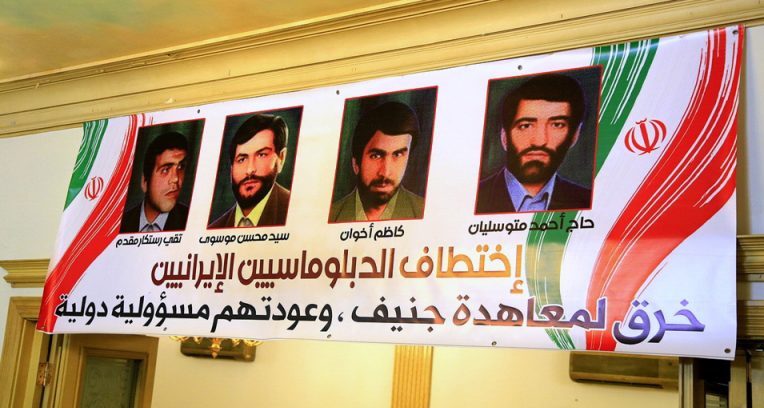
The Iranian Foreign Ministry has decried as an “act of terrorism” the 1982 kidnapping of four Iranian diplomats in Lebanon, reiterating the Islamic Republic’s call for the formation of a fact-finding group to determine the fate of the abductees.
The ministry said in a statement on the occasion of the 43rd anniversary of the abduction of the Iranian diplomats that the Israeli regime is responsible for the abduction and hostage-taking of its citizens, and continues to seriously pursue the matter with relevant international authorities.
On July 4, 1982, Ahmad Motovasselian, a military attaché at Tehran’s Embassy in Beirut, Mohsen Mousavi, the Iranian chargé d’affaires in Lebanon, Taqi Rastegar Moqaddam, an employee of the Embassy, and Kazem Akhavan, a photographer for the Islamic Republic News Agency (IRNA), were abducted by Israeli-affiliated armed groups.
“There is ample evidence, as repeatedly stated, and copious indications proving that the Iranian diplomats were abducted by an armed group inside Lebanon during the occupation of Lebanese soil by the Zionist regime, handed over to the occupying forces, and transferred to the occupied territories,” the statement said.
“The abduction of Iranian diplomats on July 4, 1982, in Beirut was not only an act contrary to international law and a flagrant violation of the 1961 Vienna Convention on Diplomatic Relations, but also constitutes an act of terrorism according to the Convention Against the Taking of Hostages (1979).”
The statement also expressed Tehran’s gratitude for the Lebanese government’s cooperation in following up on the status of the four abducted Iranian diplomats, including Beirut’s registration of the issue through correspondence with the then secretary-general of the United Nations in September 2008.
The Iranian Foreign Ministry, as the statement said, once again calls on the authorities of the Lebanese government, as well as the Secretary-General of the United Nations and the International Committee of the Red Cross and other competent international bodies, to fulfill their legal and humanitarian responsibilities in pursuing the case and to exert all their efforts to clarify the status of the abducted Iranian diplomats.
“In this framework, the proposal for the formation of a joint fact-finding committee between Iran and Lebanon, with the cooperation of the International Committee of the Red Cross, to pursue the matter and clarify the status of the abducted Iranian diplomats is once again emphasized,” the statement said.
The Iranian Foreign Ministry has repeatedly called for the Lebanese government, the UN, and the International Committee of the Red Cross to investigate the incident and determine the fate of the missing diplomats.
Lebanese militiamen from the Lebanese Forces Group admitted to the 1982 kidnapping of the four Iranian nationals who were on a diplomatic mission in North Lebanon. Investigations show that they were last handed to Israel at the time.
Although there is information about those who abducted the Iranian diplomats and their whereabouts, the fate of these Iranians is still shrouded in mystery, with their families and Iranian authorities believing they are still alive and languishing in Israeli jails.
Hezbollah: Israel poses strategic threat to region and beyond
Press TV – July 3, 2025
Sheikh Naim Qassem, the leader of Hezbollah, declared Israel not only an occupier of Palestine but a strategic threat to Lebanon, Egypt, Syria, Jordan, the broader region, and global stability.
In a televised address on Wednesday, Qassem emphasized that Israel’s ideology, actions, and ambitions endanger Muslims, Christians, and Jews alike, destabilizing both regional and global peace.
He noted that the regime’s ideology, behavior, and vision endanger both regional stability and global peace.
Qassem said that since the ceasefire agreement between Lebanon and Israel took effect, the regime has not stopped its aggression and has violated the agreement more than 3700 times.
He stressed that the regime must adhere to the terms it agreed upon with Lebanon and stop its acts of aggression.
The Hezbollah leader said the movement will not be swayed by threats, nor will it accept surrendering its weapons to Israel.
Qassem firmly rejected calls for Hezbollah to disarm, asserting that Lebanon’s defense and sovereignty are internal matters, immune to external pressures.
“We will not submit to humiliation, abandon our land, or compromise under threats,” he stated, stressing that discussions about Hezbollah’s weapons are a domestic issue, with no role for Israel in dictating terms.
Qassem said Hezbollah’s resistance is a defense against a strategic threat impacting multiple nations, including Palestine, Lebanon, Egypt, Syria, and Jordan.
Describing Israel as an existential danger, Qassem noted, “Israel’s threat is not limited to Muslims; it endangers Christians and Jews as well.”
He criticized the regime’s ideology and actions as a risk to global peace and called on those who avoid confronting Israel to resist on humanitarian grounds.
“Coexisting with an expanding, invasive danger is impossible,” he warned, emphasizing Hezbollah’s resistance as rooted in human, Islamic, and national values for future generations.
Lebanese state must address ongoing violations
In late June, Qassem stated that Israel’s continued aggression, including attacks on Nabatieh, the targeting of civilians in southern Lebanon, and strikes on the money exchange sector, is now the Lebanese state’s responsibility to address.
“The state must apply pressure and fulfill its duties,” he urged, rejecting claims that Hezbollah provides pretexts for Israeli attacks.
He cited Israel’s occupation of 600 km² of Syrian territory, destruction of capabilities, and attacks on Iran as evidence of unprovoked aggression.
“You must understand this cannot continue,” Qassem told the public. “Do you imagine we will remain silent forever? All of this has limits.”
Featured Video

Racist Seinfeld Dances for Joy as Bibi Unveils His New Map
or go to
Aletho News Archives – Video-Images
TV Drama Review
Japanese drama projects Japan’s wartime atrocities onto Chinese characters

Global Times | October 25, 2026
By portraying Chinese characters as perpetrators of ruthless violence while casting Japanese Self-Defense Forces (SDF) intelligence operatives as defenders, the season 2 of the Japanese drama Vivant has recently drawn criticism from Chinese netizens, who argue that its depiction turns historical reality on its head while ignoring Japan’s wartime atrocities.
The TBS drama series – a spy suspense story in which an alleged unofficial intelligence unit of the SDF operates across the globe — has attracted a passionate fanbase. Its currently airing season 2 opened with a household rating of 18.8 percent, the highest for a TV drama this year, according toa commentary article by Japanese media Toyo Keizai.
What draws attention is the portrayal of the enemies in the series, the article noted. Scenes in which the Chinese organization subjects kidnapped members of the SDF unit to brutal torture are repeated with unrelenting intensity.
It is rare for Japanese TV dramas to explicitly portray a real-life country as the enemy, the article noted.
Japanese Prime Minister Sanae Takaichi also made a reference to the drama, saying that she has been recording Vivant and hopes to binge-watch it over the year-end and New Year holidays, according to Japanese media outlets.
China’s CCTV News report on Sunday revealed that the drama features scenes in which Chinese personnel cut off the fingers of and stab Japanese intelligence operatives in the abdomen. Such acts bear striking similarities to the torture inflicted on Chinese nationals by invading Japanese troops during the World War II.
The drama distorts the truth by attributing these atrocities to modern Chinese characters. Beneath the surface, it subtly glorifies Japan’s cross-border overseas operations, blurs the functional boundaries of the SDF and implicitly promotes an expansionist narrative, per CCTV News. … continue
Blog Roll
 Aletho News
- Netizens condemn Japanese drama for projecting Japan’s wartime atrocities onto Chinese characters
- Racist Seinfeld Dances for Joy as Bibi Unveils His New Map
- A West Bank War for Netanyahu’s Election Campaign, Could It Backfire?
- Yemen denounces European Parliament’s ‘hypocritical’ push to blacklist Ansarullah
- Qalibaf: UAE’s UN bid aims to ‘clear the runway’ for ‘Greater Israel’, whitewash genocide
- Pakistan reopens Iran border after boosting security: Report
- Why are so many Brazilians voting for Flávio Bolsonaro?
- Democrats Put Anti-Russia Agenda Ahead of American Workers
- Elijah Magnier: Yemen’s Strikes Are Shattering Saudi Arabia’s Long-Term Strategy
- Pentagon designates Chinese cultural centers national security threat
- If Americans Knew
- Latest updates from Israeli assault on West Bank
- Tourism Ministry launches free food truck tour in US
- “So Much Worse Than People Realize”: Never-Before-Seen Images Reveal Damage at U.S. Bases as Troops Describe Being Abandoned
- UK Bell Review Confirms Only Anti-Israel Attitudes Are Rising, Not Antisemitism
- DAILY UPDATE: Latest essential news on Palestine, Israel, & region
- DAILY UPDATE: Latest essential news on Palestine, Israel, & region
- Damning report shows the media must confront its failures on Gaza
- BBC senior broadcaster speaks out on Gaza coverage
- Netanyahu vows vast West Bank invasion in response to 20-minute skirmish that left 2 Israeli soldiers and 2 Palestinian fighters dead
- Tied up and tortured: Israel using US-made electroshock weapons on Palestinian detainees
- No Tricks Zone
- Sudden Stratospheric Warming, Powerful El Niño Combination May Lead To Extreme Europe Cold, Energy Crisis!
- Two New Studies Find Thwaites Glacier Melt Cannot Be Driven By Human Activity Or A Warming Ocean
- E-Cars Reduce CO2 Emissions By Only 41% Compared To Internal Combustion Engine Vehicles
- Predictions Made By Renowned Climate Professor Over Past Decades Have Been Proven To Be Poor
- New Study Suggests Large Regions Of The Pacific Ocean Have Been Cooling For The Last 80 Years
- Germany’s Green Energy Debacle: High Energy Costs Force Kahla Porzellan to Close After 182 Years!
- New Study: 50 Years Of The Most Aggressive ‘Net Zero’ Policies Can Only Affect The Global Climate By 0.03°C
- US September “Heat” Was No Record…Many Records Set Decades Ago
- Latest European Green Energy Debacle; Portugal’s Largest Flagship Solar Park Insolvent!
- Green Energy Debacle: German Expert Professor Fritz Vahrenholt Warns Of Severe Economic And Social Consequences

