Russell Tribunal aims to hold the international community to account
Frank Barat, The Electronic Intifada, 1 March 2010
Today, the first session of the Russell Tribunal on Palestine (RTP) will be held in Barcelona. The RTP is a peoples’ tribunal focusing not on Israel’s obligations under international humanitarian law (IHL) such as the Fourth Geneva Convention, but on the obligations of the international community of signatory states which sustain and enable Israel’s continuous violations of international law.
Israel has violated more than 60 UN resolutions and countless legal and diplomatic calls to abide by international law in relation to the expansion of illegal settlements, denial of the right of return and the continuing occupation of the West Bank, including East Jerusalem, the Gaza Strip and the Syrian Golan Heights. Dozens of reports, investigations and inquiries have produced evidence of alleged Israeli war crimes and crimes against humanity, including massacres, collective punishment, home demolitions and extrajudicial killings on a cyclical scale over the past 62 years.
In 2004, the International Court of Justice (ICJ) issued an advisory opinion finding Israel’s wall in the West Bank illegal and contrary to international law. The opinion was the key tenet of a 54-page document covering illegal settlements, the appropriation of natural resources and Israel’s violation of the Fourth Geneva Convention over the past 40 years, and reminded that IHL signatory states had an obligation “not to recognize the illegal situation resulting from the construction of the wall and not to render aid or assistance in maintaining the situation created by such construction” and “to ensure compliance by Israel with international humanitarian law as embodied in that Convention.”
The ruling sparked hopes in the Palestinian community and international solidarity movements that finally, not only had Israeli violations been legally judged but that the responsibilities of the states which enable Israeli impunity to continue would be put to the test. Six years and 500 kilometers of wall on, the continued construction of the wall casts a shadow over international law.
Or does it?
The RTP is an independent initiative which intends to generate a public literacy in international law and the possibilities for the rule of law if respected to dismantle and disempower the reproduction of the occupation as a military, cultural and economic movement.
Israel is an international entity, kept afloat not just financially and politically by international state partners and supporters, but “legally” by the continued legitimization of illegal acts and “facts on the ground” by these states. Israel’s most important market is not economic or military — it is the market of legitimacy, the permission it receives to normalize crimes against humanity to its own citizens and the international community. This can only happen with the complicity of non-IHL compliant states. The RTP is a way of publicly pointing the finger at these states and mobilizing public opinion towards holding them accountable for the ongoing human rights violations in Palestine.
The RTP is composed of four sessions. The first in Barcelona from 1-3 March, focuses on establishing whether the European Union as an entity has fulfilled its obligations under international law. At the end of 2010, a London session will scrutinize the complicity of corporations in normalizing and perpetuating Israel’s violations of international law as well as labor rights in Palestine/Israel. In mid-2011, a session in South Africa will examine the applicability of the crime of apartheid in the context of Israel. The final session will be held in the United States in late 2011 and will analyze the role of the US within the United Nations and decision-making processes on issues of violating international law.
The RTP is not a talking shop. For too long Israel has been the focus of international campaigning as if it alone is responsible for the oppression of the Palestinian people, and as if it has been acting alone. The RTP is about making the links between the crimes committed on the ground in Palestine and their international sponsors. If we want to popularize the notion of “normalization” of the occupation as a key obstacle to a just peace, then understanding how this “normalization” operates on an international legal level in the corridors of Washington, Brussels and London, as well as Tel Aviv, is a vital part of challenging it.
As Israeli think tanks and lobby groups bemoan the rise of “delegitimization” of Israel on a popular level within Europe, the actual, pragmatic delegitimization of Israeli criminal policies is still unrealized and unimplemented by countries that have not just the means but the obligations to do this. The RTP contributes to the growing movement for boycott, divestment and sanctions by popularizing the facts behind the arguments for why states have a responsibility to implement sanctions against Israel, and for companies to withdraw from illegal projects and for the public to boycott Israeli institutions, goods and the normalization of apartheid.
The Geneva Conventions were created and agreed upon by the countries of the world in 1949, under popular pressure, as the legal means to ensure that crimes against humanity committed around the world during the Second World War would never happen again. The principles and tenets of these laws are being violated by Israel continuously. These laws stem from liberation struggles and sacrifices of movements in the past, and are on our side, the side of the people. We can use these laws as guides to build the conditions for genuine justice and universal human rights, and a world based on solidarity and equality.
Frank Barat is coordinator of the Russell Tribunal on Palestine (http://www.russelltribunalonpalestine.com). A live streaming of the session can be viewed here: http://www.bcnsolidaria.tv/tv/ and a list of jury members as well as experts and witnesses participating in the tribunal is available for download (PDF)
Israeli Unaccountability and Denial: Suppressing the Practice of Torture
By Stephen Lendman | The Peoples Voice | February 24, 2010
The Public Committee Against Torture in Israel (PACTI – stoptorture.org) “believes that torture and ill-treatment of any kind and under all circumstances is incompatible with the moral values of democracy and the rule of law.” Yet it’s systematically practiced by the Israeli Police, General Security Service (GSS), Israeli Prison Service (IPS), and Israeli Defense Forces (IDF).
In December 2009, PACTI published its latest report titled, “Accountability Denied: The Absence of Investigation and Punishment of Torture in Israel,” explaining “the many layers of immunity that protect” the guilty, specifically the GSS, the focus of this report.
Immunity insures that GSS interrogation torture and abuse complaints never become criminal investigations, indictments, or legal hearings. Israel’s State Attorney and Attorney General assure it “under a systemic legal cloak” giving torturers “unrestricted protection.”
Since 2001, victims submitted over 600 torture complaints to authorities. None were investigated – “the first step” before indictments, prosecutions, and convictions. As a result, GSS interrogators have blanket immunity to operate freely “behind closed doors (making) torture an institutionalized method of interrogation in Israel, enjoying the full backing of the legal system.” As in America, torture is official Israeli policy.
Torture in Israeli Law – A Barrier of Loopholes
Israel’s Supreme Court ruling in Public Committee against Torture in Israel et al v. the Government of Israel et al (the HCJ Torture Petition) established the current legal basis, even though international law prohibits it unequivocally, at all times, under all conditions, with no allowed exceptions – a matter universally binding even on non-signatory states. Israel, however, signed and ratified the 1984 Convention against Torture. Yet no Israeli law explicitly bans it, except for several provisions relating to torture, including assault, abuse of defenseless persons, and the explicit prohibition of force or threats by a public employee toward interrogees.
However, Israeli court rulings ban torture, and the Supreme Court interpreted the Basic Law: Human Dignity and Liberty to mean torture is unacceptable and prohibited. Earlier, “psychological pressure (and) a moderate degree of physical pressure” were permissible, based on the Landau Commission’s recommendations that GSS interrogators may commit such acts on the basis of necessity.
The Commission condemned the practice but approved using it to obtain evidence for convictions in criminal proceedings, saying coercive interrogation tactics were necessary against “hostile (threats or acts of) terrorist activity and all expressions of Palestinian nationalism.”
This notion protects defendants in a criminal trial “for an act that was required in an immediate manner in order to save his life, liberty, person, or property or those of another from danger of grave injury accruing from a given situation at the time of the act when he had no course of action other than to commit this act.”
In its 1999 ruling, Supreme Court President Aharon Barak established a milestone in the struggle against torture by recognizing its prohibition in international law, calling it “absolute (with) no exceptions and no balances.”
Yet the High Court of Justice (HCJ) legitimized coercive interrogations in three 1996 cases – by plaintiffs Bilbeisi, Hamdan and Mubarak for interim injunctions against abusive GSS practices. Ones cited included violent shaking, painful shackling, hooding, playing deafeningly loud music, sleep deprivation, and lengthly detainments. After due consideration, the HCJ ruled painful shackling illegal, but not the other practices.
The Court’s 1999 ruling went further, but equivocated by adding loopholes to allow torture, so effectively its prohibition was empty. Although it reversed the Landau Commission’s recommendations, it ruled that pressure and a measure of discomfort are legitimate interrogation side-effects provided they’re not used to break a detainee’s spirit. It also sanctioned physical force in “ticking bomb” cases, in violation of international laws allowing no exceptions ever. Moreover, Israeli security forces routinely claim detainees are security threats enough to justify abusive interrogations.
In his ruling, Court President Barak justified physical force to save lives, saying interrogators may employ the “necessity defense” to justify them. In so doing, he authorized sweeping use of the most abusive practices, while at the same time prohibiting torture “absolute(ly with) no exceptions and no balances.”
The Court let “the Attorney General….guide himself concerning the circumstances (to assure) interrogators who are alleged to have acted in an individual case from a sense of ‘need’ are not to be prosecuted.” These guidelines thus “serve as a priori authorization” to practice torture freely. In other words, the Court wanted to “have its cake and eat it too: to declare an absolute prohibition of torture,” yet let it continue.
The Necessity Defense
Despite the Israeli High Court’s equivocal position, international law prohibits torture under all conditions with no exceptions. The notion of “no other alternative” is false, disingenuous, criminal, and illogical as experts say torture doesn’t work and isn’t used for information.
The US Army Field Manual 34-52 Chapter 1 says:
“Experience indicates that the use of force is not necessary to gain the cooperation of sources for interrogation. Therefore, the use of force is a poor technique, as it yields unreliable results, may damage subsequent collection efforts, and can induce the source to say whatever he thinks the interrogator wants to hear.”
US experts, including generals, CIA and FBI interrogators, diplomats, politicians and others concur. So do foreign officials and Israeli experts. Yet the practice persists, not for information but to abuse and punish maliciously. The “necessity” rationale is a red herring.
Yet shortly after the HCJ’s ruling, Israel’s Attorney General and State Attorney’s Office Criminal Department head published two key documents:
“GSS Interrogations and the Necessity Defense – A Framework for the Discretion of the Attorney-General (and) Circumstances in Which GSS Interrogators Who Acted out of a Sense of ‘Need’ Are Not to be Prosecuted.”
They establish guidelines authorizing abusive practices to gain “vital information to prevent tangible danger or grave injury to state security or to human life, liberty, and integrity, and when there is no other reasonable means in the circumstances of the matter to prevent this injury, the Attorney General will consider refraining from instigating criminal proceedings.”
In other words, anything goes, anytime, for any reason under the “necessity defense” even though torture is justified nor does it work.
Yet in 2006, a GSS interrogator told Haaretz writer Nir Hasson that “authorization to use force in interrogations is given at least by the head of the interrogation team, and sometimes comes directly from the head of the GSS.”
GSS, in fact, openly admits that a priori permission is granted for it – the result of legal loopholes permitting it in violation of international law.
Torture, Lies and No Investigation
The Officer in Charge of GSS Interrogee Complaints (OCGIC) is responsible for handling them together with his counterpart in the State Attorney’s Office. Yet Israel has no policy for responding and one in place undermines the process.
GSS’ “culture of lying” began with the April 1984 “Bus (or Kav) 300” affair referring to a bus highjacking by Palestinians and the allegation that GSS agents executed two of them taken captive. A secret commission was appointed to investigate. Those testifying lied. The commission determined that blows to the head killed the two detainees, but no one was held responsible.
GSS head Avraham Shalom claimed he acted “with authority and permission.” Prime Minister Yitzhak Shamir said nothing, but President Chaim Herzog pardoned four GSS official to quash further actions – the first time in Israeli history that the president pardoned someone before being tried and convicted, even though the investigation revealed lawless acts including torture.
This and other findings led to the Landau Commission’s formation and its revelations that GSS personnel lied to courts, denied using torture, and the coverup included top officials, mindful of their lawless acts. The Commission quoted an internal 1982 GSS memorandum instructing interrogators to lie, yet recommended no criminal action.
Public discussion, however, led to two amendments to the Police Ordinance – Amendment No. 12 in 1994 and No. 18 in 2004. The first one extended Police Investigation Department (PID) authority to include investigating GSS employee offenses during or in connection with interrogations.
The second one allowed investigations of all suspected GSS offenses in the performance of their duties, including those unrelated to interrogations. However, while police personnel investigations are submitted directly to the PID, the Attorney General must authorize whether GSS ones will be sent there. As a result, complaints about them have never been investigated, and justice has consistently been denied.
“In hindsight….the amendments created a hermetic barrier preventing criminal investigation(s), since the Attorney General has chosen not to forward even a single case (to) the PID (and) the Israel Police has not opened a single investigation in this field.”
In addition, since a GSS official is authorized to investigate complaints, in practice, a clear conflict of interest exists, and it’s evident in consistent whitewashings. From January 2001 – December 2008, PACTI submitted 598 interrogee complaints to the State Attorney’s Office. None were forwarded for criminal investigation. For example, in 2007:
— OCGIC opened 47 examinations;
— as of June 20, 2008, processing for 30 were completed; but
— “not a single complaint relating to a GSS investigator was forwarded for investigation and no steps (including disciplinary action) were taken against the interrogators.”
The years 2005, 2006 and earlier ones were no different. On October 20, 2009, PACTI submitted a freedom of information request to the Ministry of Justice for pertinent 2008 and 2009 information. As of yearend 2009, no reply was received. It appears torture and abuse aren’t serious enough to warrant investigation and disciplinary action. As a result, it continues unpunished and unabated.
Past Department of Special Tasks responses have been brief and obstructionist with “formulaic phrases” like:
— “The complaints in your letter are baseless.
— The interrogation was pursued in accordance with the procedures.
— After the interrogators have been questioned and the complainant’s claims have been examined one by one, the Attorney General has reached the conclusion that no defect occurred in the interrogators’ behavior. Accordingly, there is no cause to take any legal action against them.”
No clarifications were given, and at times, responses had no relevance to the complaints or why they were dismissed. PACTI concluded that thorough investigations weren’t undertaken, and whatever was done was “laundered,” making the conclusions reached worthless.
Worse still, lawyers may not represent complainants (no longer suspects) during interrogations or prepare them in advance. They occur without prior notification. The atmosphere is tense, and PACTI learned about complainants being shackled and having no rights, “whose words are to be regarded with great suspicion.” In other words, their complaints may do more harm than good. Submitting them may make them a future target, and GSS accounts are always accepted as factual, no matter how false and inaccurate.
The Illogic of Letting the Abuser Be the Investigator
How can “a body responsible for investigating torture and improper means of interrogation” be the one responsible for the abuse. “Such a body cannot operate as a substitute for a criminal investigation; the investigation must be transparent and open to public criticism.” Doing otherwise discredits the entire process and “defies common sense, Israeli law and international law….”
Also, letting torturers investigate their own crimes discourages complainants. Why bother under a fundamentally unfair system, one with further harmful implications for the abused.
The system is rigged to fail. Abuse gets rubber-stamp approval, and authorization goes right to the top, granting sweeping immunity for the most grievous offenses, justice always being denied. By order of the Attorney General and State Attorney’s Office (via Prime Ministerial authorization), “an impenetrable barrier (shields) criminal investigation(s)” and GSS prosecutions.
Grave consequences result. Abuses and a culture of lying persist as well as a “disrespect for the rule of law and for the values of human rights. It denies relief to victims seeking to repair the physical and psychological damage they have suffered, and it also imposes an obstacle, preventing (them) from securing their right to claim compensation through a civil proceeding.”
Being Palestinian under Israeli control carries great risks, best attested to by victims.
The Legal Obligation to Investigate Abuses and Penalize Those Responsible
Numerous international laws prohibit torture, including the Covenant on Civil and Political Rights, the Convention against Torture, Geneva Conventions and Common Article 3, the Nuremberg Principles, the Universal Declaration of Human Rights, the Rome Statute of the International Criminal Court, and others.
The prohibition is sweeping, applies universally, and no exceptions are allowed. Israel committed to observe it, yet systematically is in violation.
The Convention against Torture defines it as follows:
“any act by which severe pain or suffering, whether physical or mental, is intentionally inflicted on a person for such purposes as obtaining from him or a third person information or a confession, punishing him for an act he or a third person has committed or is suspected of having committed, or intimidating or coercing him or a third person, or for any reason based on discrimination of any kind, when such pain or suffering is inflicted by or at the instigation of or with the consent or acquiescence of a public official or other person acting in an official capacity. It does not include pain or suffering arising only from, inherent in or incidental to lawful actions.”
Actions not meeting the definition of torture come under the definition of “cruel, inhuman, or degrading treatment or punishment,” otherwise called abuse, but the line between the two is thin and often crossed.
The Obligation to Investigate
The Convention against Torture obligates member states to investigate and punish torturers. The same is true for the UN Committee against Torture (responsible for implementing the Convention), the UN Human Rights Committee (responsible for implementing the Covenant on Civil and Political Rights), and the main international tribunal rulings – all requiring independent, impartial, efficient, effective and reliable action to hold those responsible accountable.
The UN Special Rapporteur on Torture is also mandated to investigate torture globally, including complaints and legal issues as well as regular fact-finding missions to specific countries under conditions of free inquiry, unrestricted movement, and the ability to conduct confidential interviews with victims, witnesses, human rights defenders, and NGOs, after which reports are prepared for the Human Rights Council and made available to the public.
The European Court of Human Rights and Inter-American Committee of Human Rights stipulated that states must report their investigatory results to complainants and publish them. The Istanbul Protocol includes the most detailed publication requirements, stating:
“A written report, made within a reasonable time, shall include the scope of the inquiry, procedures and methods used to evaluate evidence as well as conclusions and recommendations based on findings of fact and on applicable law. On completion, this report shall be made public. It shall describe in detail specific events that were found to have occurred and the evidence upon which such findings were based, and list the names of witnesses who testified with the exception of those whose identities have been withheld for their own protection. The State shall, within a reasonable period of time, reply to the report of the investigation, and, as appropriate, indicate steps to be taken in response.”
In addition, prosecuting guilty parties must occur in compliance with Article 12 of the Convention. Also, integrating torture offenses comes under under the provisions of Article 4(1) and definition in Article 1. Minimum penalties aren’t established, but recommendations range from six to 20 years, depending on the severity of the offense. Under no circumstances should pardons be granted. Doing so violates the Convention’s Article 2(1) and encourages recurrences.
Israel is a signatory to the Convention against Torture and is obligated to observe its provisions. Yet as early as 1994, the UN Committee against Torture, in a departure from its usual practice, demanded that Israel submit a special report following the HCJ ruling explicitly permitting “physical pressure” against interrogees. After examining the report, the Committee concluded that GSS interrogation methods constitute torture in violation of fundamental international law, including so-called “ticking bomb” cases.
In its most recent May 2009 report, the Committee addressed Israeli violations with respect to conditions of detention and imprisonment, protracted isolation, illegal facilities, detaining minors, and using force during military operations. Concern was also raised about failure to include torture in Israeli law, and that:
“….the ‘necessity defense’ exception may still arise in cases of ‘ticking bombs,’ i.e., interrogation of terrorist suspects or persons otherwise holding information about potential terrorist attacks….The Committee is concerned that GSS interrogators who use physical pressure in ‘ticking bomb’ cases may not be criminally responsible if they resort to the necessity defense argument.”
The Committee against Torture’s unequivocal recommendation was for Israel to “completely remove necessity as a possible justification for the crime of torture.” The UN Special Rapporteur on Torture and Human Rights Committee expressed the same view, including that “all allegations of torture and ill-treatment are promptly and effectively investigated and perpetrators prosecuted and, if applicable (appropriate) penalties….imposed.”
Of great concern was that none of the 600 torture complaints against GSS interrogators from 2001 through 2008 led to a criminal investigation and prosecution. It called Israel’s behavior particularly grave and urgently in need of change. Everyone up the chain of command is responsible, including commanders, the Attorney General, and others materially involved.
Torture and inhumane treatment are crimes under international law. In armed conflict, they’re war crimes, and when civilian populations are attacked, they’re crimes against humanity. Defendants may be tried by their home countries, or in others under the universal jurisdiction principle, an obligation borne by all Geneva Convention parties. They may also be tried in the International Criminal Court in the Hague, a permanent tribunal to prosecute individuals for genocide, crimes against humanity, war crimes, and the crime of aggression.
Culpable persons include planners, order issuers, and assistants. Vicarious liability is also recognized and may be imposed on commanders and civilian leaders based on crimes committed by their subordinates on explicit or implicit orders given.
To prove guilt, it must be established that they either knew or should have known about crimes, yet they made no effort to stop them, or when committed, punish offenders.
Institutionalized torture can’t be maintained without higher up authorization and tacit or explicit approval of the practice. In the case of the Bush administration, culpability went right to the top, documented in revealed torture memorandums, memos, findings Executive Orders, and National and Homeland Security Presidential Directives.
In sum, states are obligated to investigate torture complaints and hold guilty parties accountable. “The State of Israel has failed to meet these requirements, to which it is obligated under international law.” The UN Committee against Torture noted this lawlessness for years. Israel did nothing to address it. To date, the practice continues unabated, authorized by the highest government officials and IDF commanders in violation of fundamental international law.
According to PACTI:
“There can be no doubt that all branches of (Israel’s) government – the executive, the legislature, and the judiciary – have provided GSS interrogators with multiple layers of protection. There can also be no doubt that (they) exploited these (protections) to emerge unscathed after committing unconscionable actions in moral and legal terms. (It’s) essential to end the era in which torturers enjoy immunity in Israel or elsewhere.” Nothing less is tolerable or acceptable.
Stephen Lendman is a Research Associate of the Centre for Research on Globalization. He lives in Chicago and can be reached at lendmanstephen@sbcglobal.net.
Knesset member calls for assassinating Haneyya
Palestine Information Center – 24/02/2010

OCCUPIED JERUSALEM — Member of the Israeli parliament (Knesset) Yariv Levin has called for liquidating Ismail Haneyya, the Palestinian premier in the Gaza Strip, similar to what happened to Qassam leader Mahmoud Al-Mabhouh.
The head of the parliamentary committee in the Knesset voiced his call when the Knesset was debating a proposal by an Arab member demanding a discussion into the involvement of the Mossad, Israel’s foreign intelligence, in the assassination of Mabhouh. The proposal was rejected.
Meanwhile, Al-Jazeera net website quoted the former Israeli army chief of staff Dan Halutz as hailing the assassination crime of Mabhouh.
He said in a lecture at Tel Aviv university that any person like Mabhouh should think a thousand times before embarking on any activity such as travel.
Halutz described the assassination of Mabhouh and that of Emad Mughniye, the Lebanese Hizbullah military commander, as deterrent acts, in a clear indication that Israel was the one that masterminded those murders.
Israel refuses to help Britain with inquiry into fake passports
‘No proof’ of Israeli part in killing of a Hamas leader, says foreign minister
By Ben Lynfield | The Independent | February 23, 2010
Israeli foreign minister Avigdor Lieberman yesterday flatly rebuffed David Miliband’s request for cooperation with an investigation into the use of forged British passports in the assassination of a Hamas leader.
The request for assistance came as the total number of fake British passports believed to have been used in last month’s assassination rose from six to eight. But private discussions on the sidelines of an EU meeting in Brussels – and an identical request from Irish foreign minister Micheál Martin – yielded no concessions on the Israeli side.
A statement from Mr Lieberman’s office reiterated that there was “no proof” of Israeli involvement in the affair. “If someone would present information beyond articles in the media, we would relate to it,” he is said to have told Mr Miliband. “But since there is no such information, there is no need to deal with the matter.”
Mr Miliband, meanwhile, said simply that he had “set out for the foreign minister the seriousness of the issue”. Israel also came under pressure from a joint statement by the EU foreign ministers that “strongly condemned” the use of forged passports, although it did not mention Israel by name.
Israel’s position forces the UK to decide whether tensions over the passport use will escalate into a crisis that could affect bilateral relations. The Israeli assumption is that Britain has no such intention. Mr Miliband’s references to “the profound concern that exists not just in Britain but all over Europe about this incident” were not matched by any concrete steps.
The British inquiry into the use of passports belonging to dual British-Israeli nationals was announced by Gordon Brown last week after authorities released details of suspects in the killing of a Hamas official, Mahmoud al-Mabhouh, in Dubai. Police there believe the hit squad were from Israel’s intelligence agency, Mossad.
Mr Lieberman suggested to Mr Miliband and Mr Martin that the killing may have been the result of inter-Arab feuding. “There is an Arab tendency to blame Israel for everything. In the Middle East there are many internal struggles within states and bodies that aren’t democratic like Israel,” he said, according to the spokesman.
The EU’s statement said that the assassination raised “profoundly disturbing” issues. But Hamas spokesman Sami Abu Zuhri criticised its wording. “Condemning the use of passports was insufficient,” he said. “The statement did not indicate any condemnation of the crime, Mabhouh’s assassination.”
In the House of Commons, Europe minister Chris Bryant said that Dubai authorities yesterday forwarded the details of two additional fraudulent documents. The names on the documents were not immediately available. All six of the names released by Dubai police belong to dual UK-Israeli nationals living in Israel. The Dubai police have named 11 of what they say was an 18-member assassination squad.
Israeli Brig-General likens IOF to worms
Urbicide by worming: the zionist entity’s cutting edge in military strategy.
_______
Israeli assassinations: crime against humanity?
By Rachel Rudolph | Palestine Telegraph | February 21, 2010
Dominating the world news, even in the United States, is the Al-Mabhouh assassination. Israel has a long history of engaging in targeted killings and assassinations, so why has this one sparked media frenzy? Many outlets are focusing on the use of fake passports, while others are condemning the lack of action by those governments whose passports were used. Very few are actually focusing on the act of assassination itself and its consequences under international law. While targeted killings of specific individuals with government approval are permissible under international law under certain conditions, assassinations (an attack on an individual who believes there is no need to fear the attacker) are not. Was the murder of Al-Mabhouh an assassination? If so, is this another Israeli crime against humanity?
While I am sure Palestine Telegraph readers are well acquainted with the murder, a little background should be given to help understand the applicability of international law. Born in the Jabalya camp in the northern Gaza Strip on Feb. 14, 1960, Mahmoud Al-Mabhouh was murdered on Jan. 20 at a hotel in Dubai. There was no reason to suspect that this trip would be his last, as Al-Mabhouh had travelled to Dubai in the past and never encountered any problems. However, while he had no problems travelling to Dubai, Israel’s Mossad had attempted to take his life three times in the past: in 1991, 2004 and 2008. The last attempt followed the Israeli assassination of Imad Mughniyeh, a top military leader with the Lebanese Hizbullah organization. (He was blamed for the kidnapping of Western hostages in Beirut – including the Briton Terry Waite – and a 1983 bombing that killed 240 U.S. marines in the Lebanese capital.)
Al-Mabhouh was murdered by a team consisting of 11 agents. The team of agents changed hotels, arrived from different locations and changed their clothes to thwart identification. All of them had Austrian mobile numbers and conducted encrypted calls from Dubai to Austria. None, however, had prior contact with one another, as all communication went through the Austrian office. Austrian authorities said they intended to open an investigation. Dubai also detained two Palestinian Fatah security officials in connection with the murder.
The team of 11 also used fake passports. Mossad has a history of using foreign passports to carry out its activities. In 1987, Margaret Thatcher deported 13 Israeli diplomats after the assassination of a Palestinian cartoonist in London. In 1997, Israeli agents traveling with fake Canadian passports were arrested in Amman after attempting to assassinate Khaled Meshaal, the elected head of the Hamas politburo. In 1998, Labour’s MP Galloway stated that four members of the UN weapons inspection team in Iraq were Mossad agents working under false names and papers.
Israel’s response to Mossad’s involvement in the Al-Mabhouh murder was noncommittal. Israeli Foreign Minister Avigdor Liberman said there was no evidence of Israeli involvement, but in any case, Israel never responds, never confirms and never denies. This response or lack thereof was to be expected given Israel’s policy on Mossad actions.
Prior to Efraim Havely becoming the ninth director of Mossad, the prime minister’s approval for such operations was needed. Havely disagreed with this policy, arguing that the prime minister needs “deniability” and must be insulated from any failures as well. While the procedure for selecting targets has not been made public, the overall sense of how decisions are made has emerged. According to Steven R. David (2003), Israeli intelligence agencies rely on the testimony of collaborators to identify those who pose a threat to security. A report on the target’s activities is complied and the potential for him or her to engage in future attacks is assessed. A recommendation is then made to target the individual, which is approved or disapproved by the Israeli government. Once approval is given, no further permission is sought for the operation in terms of timing, location, etc.
History of Israeli Assassinations
The history of Israeli assassinations actually predates the declaration of statehood by Israel. Nachman Ben-Yehuda (1997) examines the political assassinations carried out prior to and after the establishment of the State of Israel. According to his findings, up until 1988, 90 percent of the political assassinations occurred between 1939 and 1948 and were conducted by Hagana, Etzel or Lehi. Most of them (73 percent) targeted Jews rather than Brits or Arabs, motivated by revenge or the target’s reputation as “squealers” or “traitors.” The charge of “traitor/squealer” was used 91.2% of the time. Moreover, Ben-Yehuda’s research finds that the assassinations were all deliberate and planned in advance.
The policy of sanctioning targeted murder did not stop with the establishment of the state of Israel. In the 1970s, there was a wave of killings of pro-Palestinian individuals in Paris, Nicosia, Beirut and Athens; and, in 1978, a member of the Popular Front for the Liberation of Palestine was killed. In 1988, during the first Intifada, the PLO’s Khalil al-Wazir was assassinated.
In the 1990s, there were three major waves of Israeli assassinations. Two of the prominent political targets were Fathi Shikaki and Yahya Ayyash. There was also the attempted assassination of Khaled Meshaal. Another wave began in 2000, following the second Intifada. Some of the high-ranking individuals targeted include Abu Ali Mustafa (PFLP), Raed al-Karmi (Tanzim Movement), Salah Shehada (a commander of the military wing of Hamas), Sheikh Ahmed Yassin (one of the founders of Hamas) and Abdel Aziz Rantisi (the leader of Hamas in Gaza in 2004). Then, in 2008, Mossad assassinated Imad Mughniyeh. There were many other figures targeted, but these were the most high-profile. All, including those not listed, were killed without any trial or due process. It should also be noted that in the past, Israel’s policy of systematically targeting individuals has been condemned by Arab countries, Europe, the United Nations and even the United States (David, 2003). In 2002, the European Union even threatened sanctions.
Following the political murder of Mahmoud Al-Mabhouh, however, there have been no calls for an investigation or threats of sanctions by the International community. It was not until it was revealed that foreign passports were used to carry out the attack that foreign governments –namely, the British, French and Irish governments — called on Israel’s ambassadors to explain the situation. The UK and France have also increased pressure on Israel to provide them with information on the assassination. Britain has also launched an investigation due to the violation of its security and affront to its integrity. The investigation is to be led by the Serious Organised Crime Agency, which will work closely with the Emirati authorities. British politicians have also called on Israel to launch an investigation into the matter.
Israeli press commentary suggests that there is no need to be concerned over the “unpleasantness with [the] governments,” since the “State of Israel will emerge from this affair unblemished and the Mossad will continue enjoying a reputation of fearless determination and nearly unstoppable capabilities.” Mossad’s strategy, according to Efraim Havely, is to think outside the box, including penetrating organizations it deems enemies and exploiting the differences between factions, movements and political parties. But is Israel’s systematic practice of political assassinations and willful disregard of the other states’ sovereignty consistent with international law?
Systematic Murder under International law
International law is complex in terms of the protection, rights and treatment of non-state actors, especially when they are the target of state violence. Official state actions are governed by the UN Charter. Article 2 of the charter specifically prohibits the aggressive use of force by states. The only exception to this prohibition is Article 51, which authorizes military action for self-defense. This right, however, can only be invoked when the threat of aggression is imminent and force is necessary as a last resort. If force is used, the state’s response must be proportionate.
It is hard to argue Israel’s applicability of Article 51 in the case of Al-Mabhouh’s murder. First, Israel’s actions were not taken against another state actor. Second, he posed no imminent danger. Al-Mabhouh lived in Syria and was traveling on a diplomatic mission for Hamas. Threat of imminent aggression was not present. Israel, however, argues that it is involved in an ongoing armed conflict with the Palestinians, especially with the political movement Hamas. Therefore, it says, there is a constant, imminent threat of aggression. However, this argument is a stretch for the Al-Mabhouh murder because he was not living inside the Palestinian Territories. This fact in itself reduces the imminent nature of any perceived threat he may have been. Third, Article 51 states that force is to be used only as a means of last resort. The Israeli agents could have subdued and arrested Al-Mabhouh or contacted the Emirati authorities to seek his arrest. The use of force was not proportionate.
In addition, Israel violated Article 2 of the UN Charter. Article 2 requires that states respect the sovereignty of other countries. The use of fake passports of another country and the carrying out of murder on another state’s territory, without its permission, is a clear violation of this article. Israel also violated the sovereignty of Austria, given that its territory was used as the command center for carrying out the attack. There is no plausible argument that Israel can give to justify this violation, particularly since Al-Mabhouh posed no imminent threat.
However, while Article 51 of the UN charter is not plausibly applicable to the Al-Mabhouh murder, the United States has set a precedent in its so-called war on Al-Qaeda. Due to the U.S. targeting of Al-Qaeda, the definition of a non-international conflict has been extended to include one between a state and non-state actor outside the state’s territory. Thus, Article 3 (as well as the Provisions of Additional Protocol II) of the Geneva Conventions are applicable when a state engages in violence against a non-state actor outside of its territory or the territories in which there is ongoing conflict.
Given this U.S. precedent, there are several other criteria that must be met. First, the individuals targeted must be of the armed forces of the non-state actor. And while there is no obligation to attempt to arrest members of the armed forces before they are targeted, combatants can only be killed when they cannot be prevented from perpetrating an attack that endangerw the lives of others. In all other circumstances, combatants should be arrested, prosecuted and punished for their crimes under law. Second, those who play a purely political role for a non-state group cannot be targeted. Third, targeting must meet the requirement of proportionality under customary international law. Fourth, permission must be sought from the government on whose territory an attack is believed to be imminent.
Israel did not seek the permission of the UAE to carry out an attack on its territory and there has been no evidence presented that Al-Mabhouh was planning to perpetrate an attack. Moreover, the Israeli agents were able to locate him at his hotel. Even if Israel attempted to make the weak argument that he was planning to perpetrate an attack, there is no plausible argument that he could not have been prevented from carrying it out. Al-Mabhouh could have been arrested, prosecuted and punished for whatever so-called crimes that Israel claims he violated. Nothing changes the fact that he deserved due process and Israel violated his rights granted under international law. Israel willfully murdered Al-Mabhouh. The question now is whether the murder was in fact an assassination.
Targeted Killing versus Assassination
Targeted killing is the intentional slaying of a specific individual or group of individuals undertaken with explicit government approval. It is permissible to target combatants under international law, especially when a state is in armed conflict. For a targeted killing to be permissible, the targets must be combatants or part of the military chain of command; they must pose an imminent threat to the security of the state; and, the means used must not be “treacherous.” A targeted killing must be an option of last resort and arrest not possible. Finally, when conducted in a foreign territory, permission must be obtained for it to be legal under international law. If it is not, then the act is in violation of Article 2 of the UN Charter. This is even the case when the individual targeted is a non-state actor. Therefore, even if Al-Mabhouh’s murder is considered a targeted killing and not an assassination, Israel violated Article 2 because permission was not granted by the UAE. Given the means used to carry out the murder, it is questionable whether it was in fact a targeted killing.
Assassination is defined as “murder by treacherous means”; therefore, the method used is important for determining the legality of the action. Treachery is an attack on an individual who believes there is no need to fear the attacker, especially in incidents when the attacker pretends to be a non-combatant civilian. There was no reason to believe that Al-Mabhouh feared the attackers, who knocked on his hotel room door. The woman who knocked was dressed as a hotel employee and the other agents were all dressed in civilian clothing. Thus, the means used were treacherous and it was an assassination, not a targeted killing. It is clear from the press photos released that Al-Mabhouh was treated in a cruel, humiliating and inhumane way. Article 3 of the Geneva Conventions prohibits cruel, humiliating and degrading treatment.
A Crime Against Humanity?
A crime against humanity is one that is part of a systematic or widespread pattern of attacks against a civilian population. In addition, if an assassination that targeted a particular person was part of a broader plan to destroy the individual’s entire group, it could be viewed as genocide. As has been demonstrated, there was a systematic use of murder and political assassination carried out before and after the establishment of the state of Israel. Since Israel’s declaration of independence, the Israeli government has engaged in a systematic and widespread pattern of attacks on Palestinian civilians. Moreover, it has engaged in a systematic pattern of assassinations that target particular persons in a group.
Therefore, Israel has engaged in crimes against humanity and genocide. Israel has continuously and systematically violated international law. The British, French, Irish, Austrian and Emirati governments, as well as the international community, have a duty to do more than call for an investigation into Israeli action. Condemnation and sanctions are necessary.
Rachael M. Rudolph, PhD
__________________________
Sources:
Ezzedine al-Qassam Brigades-Information Office
BBC News, “Dubai suspects on Interpol list,” 18 February 2010.
BBC News, “UK inquiry into ‘fake ID’ murder, 17 February 2010.
BBC News, “Arab press glee at ‘Mossad exposed,” 18 February 2010.
Havely, E. (2006). Man in the Shadows, St. Martin’s Press.
BBC News, “UK: ‘Undercover Mossad agents in UN team,” 3 November 1998.
David, S (2003). “Israel’s Policy of Targeted Killing,” Ethics and International Affairs.
Ben-Yehuda, N (1997). “Political Assassination Events as a Cross-Cultural Form of Alternative Justice,” International Journal of Comparative Sociology.
BBC News, “Long History of Israel’s covert killing,” 29 January 2010.
BBC World Service, “Dubai Hamas killing: ‘fraudulent’ passports fuel Mossad suspicion,” 17 February 2010.
BBC News, “UK ‘outrage’ at passport killing, 18 February 2010.
BBC News, “Israel press on Hamas killing,” 18 February 2010.
Cullen, P (2008). “The Role of Targeted Killing in the Campaign Against Terror,” JFQ: National Defense University.
Israel’s contemptuous response to Goldstone findings
By Sayed Dhansay, The Electronic Intifada, 22 February 2010
 |
| Israel’s investigation into the war crimes committed during the assault on Gaza, including the killing of 320 children, lacks credibility. (Wissam Nassar/MaanImages) |
After Israel’s devastating attack on Gaza last winter, the UN-commissioned Goldstone fact-finding team and subsequent report accused both Israel and Hamas of committing war crimes and possible crimes against humanity. Released in September 2009, the Goldstone report recommended that both parties conduct impartial, independent investigations into these accusations within six months, failing which, the matter would be referred to the International Criminal Court (ICC).
While both parties to the conflict were cited for possible war crimes, the Goldstone report reserved the majority of its condemnation for Israel because of the vast difference in casualties on the two sides — more than 1,400 Palestinians were killed, and 13 Israelis. Four Israeli civilians were killed by rocket fire from Gaza, while more than 900 unarmed Palestinian civilians, including some 320 children, were massacred in Gaza.
Submitted to the UN on 29 January, the Israeli government’s response falls far short of a credible investigation however, and continues Israel’s long-standing policy of refusal to investigate and convict those responsible for crimes committed during its military campaigns.
A fundamental flaw of this “investigation” is that Israel has a military justice system for its armed forces. As stated in the report, Israel’s Military Advocate General’s Corps is “responsible for enforcing the rule of law throughout the IDF [Israeli military].” The three main organs of Israel’s military justice system are the Military Advocate General’s Corps, the Military Police Criminal Investigation Division (MPCID) and the Military Courts — all branches of the Israeli military.
While the Israeli government’s report goes to great lengths to argue that these bodies are “professionally independent” of the armed forces, the fact remains that they are all part of Israel’s overall military establishment, and therefore share a common interest. Furthermore, the fact that Israel’s military courts are located in military bases raises great doubt over whether the same rules of evidence and due process apply as would in public civilian criminal proceedings. Indeed, many human rights organizations have documented that Israel’s military court system does not come close to respecting international norms of justice.
This situation creates a clear conflict of interest, and practically renders the impartiality of such an investigation impossible — the Israeli military is certainly not going to incriminate and punish itself and its leaders. The final decision to institute criminal investigations regarding all complaints against the army rests with the Military Advocate General (MAG). The indisputable bias created by this self-regulating system is obvious throughout Israel’s report.
For example, the Israeli report claims that seven separate incidents were investigated in which “a large number of civilians not directly participating in hostilities were harmed.” According to the report, in four of these incidents, the MAG “found no grounds to open a criminal inquiry.” Included in these four incidents are the bombing of senior Hamas leader Nizar Rayyan’s home, killing Rayyan and 15 other civilians, and the shelling of the house of Dr. Izzedin Abu al-Aish, which resulted in the deaths of his three daughters and niece. The remaining three incidents are still “undergoing investigation.”
The Israeli government attempts to justify these indiscriminate attacks on civilian targets by claiming that it made thousands of phone calls and dropped leaflets on areas in which the army was operating. The Goldstone report found however that due to the deep shock and widespread damage caused by hundreds of air strikes during the first week of Israel’s campaign, Gaza residents were faced with “the dilemma of not only where to go, but whether it was safe to leave at all.”
The Goldstone report concludes that civilians in Gaza had no objective basis on which to believe that they would be safer elsewhere, because many of the central areas which Israel had instructed civilians to move toward, had suffered “intense aerial bombardment and destruction.”
On 15 January 2009, Gaza City’s al-Quds Hospital was struck by a number of white phosphorous shells. The ensuing fires caused widespread panic and chaos among the sick and wounded, necessitated two evacuations of the hospital under extremely perilous conditions and caused huge financial losses. As a result of the destruction of the hospital’s infrastructure, an eight-year-old girl who had been shot by an Israeli sniper could not receive the requisite care and died. Contrary to claims made by the Israeli government, the Goldstone commission found no evidence that Palestinian resistance fighters used the hospital’s premises to launch attacks against Israeli forces.
The Goldstone report also notes the destruction of three ambulances by Israeli tank fire and heavy damage to a nearby ambulance depot in the same attack. It concludes that by using white phosphorous to directly attack a civilian hospital and ambulances, the Israeli military breached the Fourth Geneva Convention, and violated international law.
The Israeli report devotes just one line to these allegations. While it mentions that there were allegations of ten incidents of its forces opening fire on medical facilities and buildings, it simply concludes that “the MAG found no basis to order criminal investigations of the ten incidents under review.”
Although the Goldstone report notes that white phosphorous is not proscribed under international law for concealing troop movements, the commission labeled Israel’s repeated use of the substance on civilian targets as “reckless.” After noting the horrific injuries and number of deaths caused by its use in Gaza, the commission actually called for serious consideration to be given to banning white phosphorous as an obscurant.
The Israeli government initially repeatedly denied that its armed forces were using white phosphorous. Now, the report says rather casually that “The MAG found no grounds to take disciplinary or other measures for the [Israeli military’s] use of weapons containing phosphorous, which involved no violation of the Law of Armed Conflict.”
One of the main incidents detailed in the Goldstone report regarding indiscriminate attacks by Israeli forces against civilians in Gaza is the shelling of al-Fakhura Street in Jabaliya, where the UN agency for Palestine refugees (UNRWA) had opened a school for fleeing civilians to take refuge. UNRWA confirmed to the Goldstone commission that the Israeli army was “fully aware” that more than 1,300 civilians were taking refuge in the school.
However, on 6 January 2009, four Israeli mortar shells were fired into the street outside the school, killing 35 civilians, including 11 members of the al-Deeb family. Witnesses described scenes of “chaos and carnage” as at least 40 more persons were injured by the blasts, the situation exacerbated by the difficulties in reaching ambulance services at the time. This incident, like several others, is not even mentioned in the Israeli response.
The Goldstone report devotes an entire chapter to Israeli attacks on the foundations of civilian life in Gaza. It finds that Israeli forces were responsible for premeditated and systematic destruction of food production facilities, water and sanitation services and construction industries, thereby violating the civilian population’s fundamental human rights to food security, means of subsistence and adequate housing. The Goldstone report notes that 324 factories were either partially or completely destroyed, resulting in the loss of 40,000 jobs, and notes that none of these attacks were necessary for the achievement of military objectives.
Following a typical pattern, the Israeli response glosses over these accusations with limited detail and factual evidence. It states that of the 34 major incidents discussed in the Goldstone report, only nine are the subject of ongoing criminal investigations by the MPCID, without disclosing which incidents these claims refer to. In its rebuttal of the Goldstone report’s claims that the Israeli army systematically destroyed Gaza’s civilian infrastructure, the report states simply: “Regarding certain incidents … the MAG has reviewed the entire record and concluded that there was no basis for a criminal investigation.”
The report then lists three incidents of damage to civilian infrastructure, which it claims were the subject of investigations. The Namar Wells, which supplied more than 25,000 persons with drinking water, were completely destroyed by several Israeli air strikes. The Goldstone commission reported that no evidence existed to suggest that Hamas used the wells for military purposes. The Israeli report claims it to be a legitimate target because it was a “Hamas military compound” and the incident thus unworthy of a criminal investigation.
Similarly, the Israeli report claims that the area surrounding the al-Bader flour mills, one of Gaza’s few remaining food production facilities, was “hit by several tank shells when responding to Hamas fire in the area.” This was proven untrue, when several news outlets reported that a UN bomb disposal team had in fact found the remnants of an MK-82 bomb used by the Israeli Air Force in the mill. This incident was also deemed unworthy of a criminal investigation by the Israelis.
The Hamas investigation, also effectively an internal probe, faces the same issue of lack of impartiality. It should be noted however, that while Israel has the deaths of more than 900 civilians to answer for, Hamas is responsible for four Israeli civilian casualties. Furthermore, Hamas strictly abided by the Egyptian-brokered ceasefire for four months preceding Israel’s attack, drastically reducing rocket fire into the country’s south. This resumed only when the Israeli army broke the ceasefire and assassinated six Hamas members on 5 November 2009, in an attempt to lure the group back into hostilities, thereby justifying its upcoming offensive.
In its conclusion, the Israeli report claims to have launched investigations into 150 separate incidents, including 36 criminal cases. More than one year after the offensive however, there have been no criminal convictions or legal cases of note. Aside from two soldiers who were “disciplined” for exceeding their authority by authorizing the firing of explosive shells in populated areas, the Israeli report makes no other specific mention of guilty verdicts.
Israel’s feeble response to the Goldstone report continues the country’s long and consistent history of impunity and unaccountability regarding serious allegations of war crimes made against it. In 1983, the Israeli Kahan Commission found Israel “indirectly responsible” for the massacre at the Palestinian Sabra and Shatila refugee camps in Beirut the previous year. Ariel Sharon, the architect of the Israeli invasion of Lebanon and then defense minister, was found to bear “personal responsibility” for ignoring and not preventing the massacre. Although he reluctantly resigned as defense minister, he remained in Israel’s Cabinet and would return almost two decades later to become the country’s prime minister, never facing any criminal charges.
And after the Israeli army’s invasion and destruction of the Jenin refugee camp in 2002 — which then UN envoy Terje Roed-Larsen described as “horrific beyond belief” — and allegations of war crimes from a number of human rights organizations, the UN Security Council voted unanimously to send a fact-finding mission to the camp. In another callous move to evade international scrutiny, then Israeli prime minister Sharon arrogantly declared that the composition of the UN team was “unacceptable to Israel.” After failing to twist the UN’s arm on the composition of the team and its terms of reference, Israel prevented its entry into the country.
More recently, after the 2006 shelling of Beit Hanoun in Gaza, the UN Human Rights Council established a fact-finding mission led by former South African Archbishop and Nobel Peace laureate Desmond Tutu. The mission was denied access to Gaza by the Israeli government on three separate occasions. When it finally reached Beit Hanoun almost two years later, the mission concluded that the Israeli attack possibly constituted a war crime. Tutu sharply criticized not only the incident, but also Israel’s “lack of an adequate investigation into the killings.”
The Israeli report into its conduct in Gaza last winter appears to be a haphazard excuse of an investigation, using dual tactics of denial and delay, purely to stave off pressure from the international community. Blatant violations of human rights and humanitarian law are shamelessly denied in the report. In other cases, few details are given about the numerous “ongoing investigations.” The high number of incidents that were merely discarded by the MAG indicates that international standards required for a proper investigation into violations of international law have not been met. Lending further doubt to Israel’s process is the fact that several incidents were not criminally investigated, but probed through internal Israeli army operational debriefings.
The Israeli investigation, conducted without public scrutiny, and entirely within the realm of the army’s structures, lacks credibility, consistency and transparency. An army accused of serious violations of law cannot be expected to impartially investigate itself. Throughout its history, Israel has demonstrated time and again its belligerent disregard for Palestinian human rights and contempt of international law. Its outright refusal to cooperate with the Goldstone commission came as no surprise, and continues a consistent pattern of impunity and unaccountability for egregious war crimes. It is imperative that the international community view the Israeli response to the Goldstone report as a blatant attempt to whitewash its crimes in Gaza, and refer the matter to the ICC without further delay. To do otherwise will only continue to encourage Israeli intransigence and its crimes against the Palestinian people.
Sayed Dhansay is a South African human rights activist and independent freelance writer. He volunteered for the International Solidarity Movement (ISM) in the Israeli-occupied West Bank in 2006 and is an organizer of the South African delegation for the Gaza Freedom March. He blogs at http://sayeddhansay.wordpress.com.
‘Netanyahu authorized Dubai assassination’
Press TV – February 21, 2010
Israeli Prime Minister Benjamin Netanyahu has reportedly authorized the assassination of senior Hamas official Mahmoud al-Mabhouh early January in Tel Aviv.
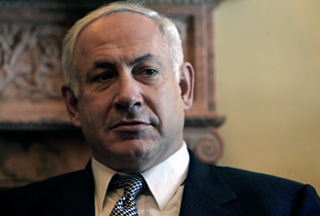 According to a report published by Times Online Netanyahu held a meeting with Mossad chief Meir Dagan in early January inside the briefing room of the headquarters of the spy agency where “some members of a hit squad” were also present.
Citing Mossad sources, the report said “as the man who gives final authorization for such operations, Netanyahu was briefed on plans to kill Mahmoud al-Mabhouh.”
Sources said Mossad had received intelligence that the Hamas commander was planning a Dubai trip and they started preparing for an operation to assassinate him.
“The team had already rehearsed, using a hotel in Tel Aviv as a training ground without alerting its owners,” according to the report.
Thanks to Dubai’s extensive system of CCTV cameras, the work of the assassination team was revealed.
Dubai police released the identities of 11 people carrying European passports, including six Britons, three Irish and two French and German, who allegedly were Mossad agents carrying fake European documents.
Interpol has issued “red notices” for the 11 suspects to help find and arrest them anywhere in its 188 member countries.
Dubai police also threatened earlier to arrest Netanyahu, if it determined that Mossad was behind the assassination.
Poland tightens military alliance with Israel
Ewa Jasiewicz, The Electronic Intifada, 17 February 2010
The Polish army’s announcement that it will buy seven Aerostar Unmanned Aerial Vehicles (UAVs) from Israel’s Aeronautics earlier this month was heralded as a step forward for Poland’s “stabilization” mission in Afghanistan. The UAV, or drone, has long been a key tool in the military arsenals of both the United States and Israel. The US leads the export market, followed by Israel, which as of last year was the planet’s third-biggest arms exporter, arming regimes around the world to the tune of $6.75 billion in 2009
The drone is more than simply a flying camera; it is killing machine in itself. American-made “Predator” and “Reaper” drones are currently used above Afghanistan and Pakistan and carry a payload of 200 kilograms — the weight of three adult men. In January 2010 alone, Predators killed 123 innocent civilians in Pakistan. During this period only two missiles hit their intended targets, in the extrajudicial killings of three al-Qaeda leaders.
Israel’s “Hermes 450” drone was used extensively during the invasion of Gaza last winter, dubbed “Operation Cast Lead” by the Israeli military. Like its American counterparts, the Hermes can also fire missiles, including the “Spike” missile which weighs up to 150 kilograms. Despite being defined as a “battlefield reconnaissance” weapon, drone-launched missiles were the biggest single cause of death during the 23-day invasion. According to Palestinian human rights organization Al Mezan, 519 persons — more than a third of the total casualties — were killed by UAVs. The next closest were 473 Palestinians killed by Israeli warplanes, including American-made F-16s.
The majority of Palestinians killed during the invasion were civilians. Palestinian medics reported a preponderance of civilian deaths by drones — families like the Berbakhs in Rafah who lost five members or the Abed Rabbo family’s six members who were killed by UAV-launched missiles. During the fighting it was common to find the mangled bodies of unarmed men cut down in the streets at night — victims of Israel’s UAV-enforced “aerial curfew.”
Poland’s military has embarked on a “Polonization of Israeli technology” drive, coupling Israeli weapons-manufacturing technology with Polish manpower and raw materials. Poland’s Bumar Group has a 10-year offset deal worth $400 million with Israel’s Rafael Advanced Defense Systems to produce Spike missiles for drones and helicopter gunships. Under the deal, Rafael must accept Polish components in its own weapons.
The Spike missiles are currently produced at the ZM Mesko factory in southern Poland. During the Second World War Mesko was occupied by German forces and both Jewish Polish and Polish slave-workers manufactured ammunition for the Third Reich. According to the Israeli Embassy’s Defense Attache here, the venture at Mesko represents the most successful example of the Polonization of Israeli technology. He told this writer, “Now, 60 years after the Holocaust, this company is providing Israeli technologies with Polish manpower for the benefit of the whole world.” The residents of Afghanistan, Palestine and West Papua wouldn’t agree.
The current round of UAVs being sold to Poland are unarmed but will be used to guide F-16 bombing missions in Afghanistan. Poland, with 2,600 troops occupying the country is one of the US’s top ten biggest recipients of Foreign Military funding. Following the completion of a $3.8 billion contract for delivery of 42 F-16s in 2003, the US Air Force has been training Polish pilots how to use the new planes. According to Colonel Timothy Burke, Chief of the Office of Defense Cooperation at the US Embassy in Warsaw, “The pilots should be qualified in the next few years. Once training has been completed, they will be using the F-16s for aerial missions” armed with laser-guided, GPS-enabled “smart-weapons.”
The first Polish S-70i Blackhawk helicopter is also ready to roll this year. It is the product of a trilateral geopolitical military alliance comprised of Israel’s Elbit Systems, the US’s United Technology Corporation and Poland’s PZL Mielec. This alliance is expected to deepen in the coming years.
Israel has also given regular strategic and technical advice to the Polish military command. According to the Polish Ministry of Defense, between 1995 and 2009 there were more than 200 activities including mutual trainings of military units, exchange of expertise, courses, seminars and symposiums organized by the Polish-Israeli Working Group. The working group is comprised of officials from the Ministries of Defense and Foreign Affairs of both countries.
Last autumn, Poland’s Chief of Staff Gen. Franciszek Gagor participated in a training session with Israeli defense specialists on lessons learned from “Cast Lead” and “how to deal with the headlines.” According to the Israeli government, “Information warfare is one of the most developed issues of the past two decades. We have built a structure in the Israeli Defense Forces which includes information warfare. Coping with media challenges is one of our biggest issues.”
The Polish Ministry of Defense’s Vision of the Armed Forces 2030 Plan has a similar structure including “Information Forces” to police enemy media. According to the plan, “The enemy shall use a broad range of mass media in order to support its actions. By diffusing images displaying inhumane aspects of military operations, suffering of the civilian population, including children and persons advanced in years, the enemy shall try to preserve perception of the intervention forces as occupying troops which do not respect human rights. Based on the ideology or religion, it will instill fear, feed hatred and strive for mobilization of the local and international public opinion against military forces and states fulfilling mandate of international organizations.”
By equating the broadcast of the horrific realities of war and particularly its effects on a civilian population with “propaganda” and de facto enemy activity, this policy risks censoring and criminalizing investigative journalism and respect for human rights and international law. We journalists and human rights activists could be the enemy. And if we step out of line, the “Information Forces” could whip us into shape as “The units shall be intended for offensive and defensive actions carried out in order to get information predominance over the enemy and to achieve expected military [political] results of the conducted operation.”
As modern warfare takes on an ever more aerial, alienated and indiscriminate approach to “the enemy,” governments are forcing us to keep our distance. Whether it is soldiers in bunkers guiding UAVs with joysticks or keeping the men, women and children being bombed by our militaries out of our sight through media gagging orders, it is ever more urgent that this distance be closed and those in charge of military policy be held accountable for their devastating results.
Ewa Jasiewicz is a co-Editor of Le Monde Diplomatique Polish Edition where a version of this article was originally published.
British MP Demands Israel Explain Role in Hamas Killing
Al-Manar | February 17, 2010
A senior British lawmaker called Wednesday for Israel’s ambassador to London to be summoned to the Foreign Office to explain how fake British passports were linked to the killers of a top Hamas figure.
Menzies Campbell, a member of the foreign affairs committee of the House of Commons, said answers were needed over “speculation” about the involvement of Israel’s Mossad secret service in the killing in Dubai last month.
“If the Israeli government was party to behavior of this kind, it would be a serious violation of trust between nations,” said Campbell, a former leader of Britain’s third biggest party, the Liberal Democrats.
“If legitimate British passport holders were put at risk it would be a disgrace… Given the current speculation, the Israeli government has some explaining to do and the ambassador should be summoned to the Foreign Office to do so in double-quick time.”
Another British lawmaker, Hugo Swire of the main opposition Conservatives, also demanded a “full investigation”. “These allegations against the Israeli government need to be answered… I have no evidence one way or another. I have read all the allegations and the denials. It is an easy allegation to make,” he said.
“This is not something that can just be swept under the carpet because of the bad feeling it is going to create in the Arab world. You cannot conduct foreign policy at this extremely sensitive time by this sort of illegal behavior,” he added.
Chilling memories of US mass murder
By Linda S. Heard | Online Journal | February 17, 2010
February 13 marked 19 years since the US bombing of Baghdad’s two-storey Al Amiriya bomb shelter when 480 civilians were literally incinerated by two American 2,000 pound laser-guided “smart bombs,” designed to penetrate multiple layers of concrete. Most of the victims were Iraqi, but there were also a number of Syrians, Jordanians, Palestinians and Egyptians who were consumed by the blasts.
It was 4:30 in the morning on February 13, 1991, when the pilots of two stealth bombers released their deadly cargo. Until then, the women, children and elderly inside had felt they were safe in the purpose-built facility designed to protect against nuclear attack — and equipped with bunk beds, televisions, bathrooms, kitchens and a clinic. Their spirits were high after celebrating Eid Al Fitr the previous evening, but some were worried about fathers, brothers and husbands who had remained in their homes to ensure that there was enough room in the shelter for their loved ones.
In the event, their own lives were tragically cut short. Those sheltering on the upper floor were burnt to death; in some instances their silhouettes — carbonised by high temperatures — were eerily seared onto the walls, including that of a woman clutching onto her baby. Most of those in the lower hall were killed by boiling water that gushed from the shelter’s two enormous water tanks following the impact of the bombs.
Only 14 survived, but they could hardly be considered the lucky ones since the majority sustained terrible injuries from the blasts. Rescuers who rushed to the scene were frustrated by a lack of electricity to power their equipment and a thick steel door that was so hot it was glowing. All they could do was listen to the screams and the cries of the dying.
The US government initially claimed that it had received intelligence reports that the bunker was not a civilian shelter, but one of Saddam Hussain’s military command centres.
However, the US Department of Defence later admitted that they knew the facility had previously been used for civil defence purposes. No evidence that the site had been used by the military was ever found, but that didn’t deter the White House from accusing Saddam of using “select civilians” as a cover for the facility’s true mission. Like many other US accusations this turned out to be untrue.
Today, Al Amiriya shelter stands as a monument to the dead; its walls adorned with photographs of victims, commemoratory brass plaques, prayers and flowers. Visitors who must steel their emotions before entering often emerge traumatised. Writing about the experience Na’eem Jeenah relates: “A feeling of revulsion and disgust towards these creatures we call human beings and for the ease with which we allow ourselves to become less than human.”
Ebrahim Alloush says anyone with “one-tenth of a heart and one percent of a conscience will shake with rage and anguish as they try to hold back the tears.”
Outside Iraq and the Middle East, the story of Al Amiriya was soon forgotten as the world celebrated St Valentine’s Day just hours after the attack. Now, a young Moroccan-born French filmmaker based in Dubai is determined to keep alive the memories of those who died such a terrible death.
Fervent hope
For her first short film, Faces of Wrath, that focused on the horrors in Gaza, Siham Jouhari received an award from Al Jazeera’s fifth International Documentary Film Festival 2009 in the category ‘New Horizon.’ It is her fervent hope that her second — and much more ambitious — film, Al Amiraya: The Shelter, will be completed in time to commemorate the 20th anniversary of the Al Amiriya tragedy.
The script is a simple, uncomplicated yet poignant account of real people who lost those they cared for most, such as Abu Ali and his wife Saoussan who were robbed of their four children. It also recounts the story of a taxi driver Yousuf who lost his entire family, save one son, and Ahmad, a young man in love, whose burns were so severe that he had to be sent abroad for treatment, but who never stops searching for his beautiful childhood sweetheart Bouchra.
We will never know what extraordinary accomplishments these ordinary people could have achieved had they been allowed to continue with their lives, but they deserve to be acknowledged and remembered — firstly, as a reminder to mankind to never again sink to such depths and, secondly, to honour their memories and the memories of all the innocent victims of Iraq.
For some, Al Amiraya: the Shelter may be hard to watch, but its essence is one of hope and courage. Those of us who are appalled at the callous way big powers write-off innocent deaths as “collateral damage” can only wish Jouhari well with her respectful and loving mission to ensure that there’s one American valentine signed in blood that we must never ever forget.
Linda S. Heard is a British specialist writer on Middle East affairs. She welcomes feedback and can be contacted by email at heardonthegrapevines@yahoo.co.uk.
US forces kill ‘eight bystanders’ in Iraq
Press TV – February 13, 2010
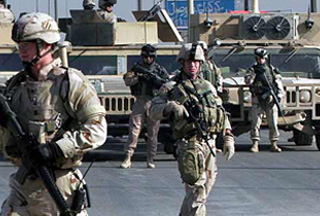 US forces have shot eight Iraqi people, most of them ‘innocent bystanders,’ in a raid in a village southeast of Baghdad, Iraqi provincial officials say.
Iraqi provincial council officials described the US raid as slaughter and demanded financial compensation for the relatives of the victims.
Maysan province governor Mohammed Shia al-Sudany told state-run television that eight people were killed, one wounded and 12 arrested in the village 75 km (46 miles) north of the provincial capital of Amara.
“What happened this morning was a massacre in every sense of the word. Eight people were killed. Most of them were innocent,” Reuters quoted Sudany as saying.
The US military, however, said the raid was against suspected members of what it called a terrorist Iran-backed group.
“The joint security team was fired upon by individuals dispersed in multiple residential buildings … members of the security team returned fire, killing individuals assessed to be enemy combatants,” the US military said in a statement on Friday.
“While the number of casualties has not yet been confirmed, initial reports indicate five individuals were killed,” the statement added.
This is while Iraqi officials have called on US troops to release all those arrested during the raid and to apologize for the attack.
Featured Video
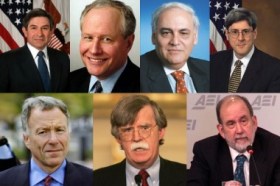
or go to
Aletho News Archives – Video-Images
New Documentary
“Inside Gaza” wins best documentary at Montreal’s Cinemania film festival
Palestine Information Center – November 16, 2026
MONTREAL – The documentary “Inside Gaza,” which chronicles the experiences of Palestinian journalists working with Agence France-Presse (AFP) while covering the Israeli war on the Gaza Strip, won the Best Documentary Award at the 32nd Cinemania International Francophone Film Festival held in Montreal, Canada.
Directed by Helene Lam Trong, the 72-minute film follows the daily lives of four AFP journalists who bear witness to the difficulties of reporting in a war-torn territory largely closed off to international media.
The film is compiled from material produced by the team on the ground, as well as from interviews conducted after they left.
The film also won the People’s Choice Award at the festival on Saturday. … continue
Blog Roll
 Aletho News
- Iran accuses NYT report of paving way for attacks on dams
- Brand ‘rape’ case just doesn’t add up. Was he framed?
- How The Jensen Huang Chinese Spy Hoax Is Russiagate 2.0
- Austria seeks to strip former foreign minister of citizenship over Russia ties
- “Inside Gaza” wins best documentary at Montreal’s Cinemania film festival
- Activists block German munitions plant over arms exports to ‘Israel’
- The Nasser Hospital attack and Israel’s relentless lies
- Could it be satan? No, Huckabee, just the Americans you work for
- AIPAC and more: Network of pro-Israel influence in US Congress
- Putin aide reveals Moscow’s stance on Europe at peace talks
- If Americans Knew
- An error has occurred; the feed is probably down. Try again later.
- No Tricks Zone
- Argentina’s Perito Moreno Glacier Joins Antarctica and Arctic In Defying Doomsday Melt Claims
- New Study: Barents Sea Temperatures Were Warmer And Sea Ice Less Extensive In The 1700s Than Today
- German Authorities Start Initiative To Evaluate Public Register For Climate “Disinformation” Spreaders!
- Zonal Asymmetry of Temperature Change in the Antarctic Circumpolar Current
- New Study: The Net Fossil Fuel Contribution To Rising Atmospheric CO2 Has Been Zero For 500 Years
- Germany’s Green Energy Transition Becoming Increasingly Expensive…Another 6 Trillion Euros!
- Sudden Stratospheric Warming, Powerful El Niño Combination May Lead To Extreme Europe Cold, Energy Crisis!
- Two New Studies Find Thwaites Glacier Melt Cannot Be Driven By Human Activity Or A Warming Ocean
- E-Cars Reduce CO2 Emissions By Only 41% Compared To Internal Combustion Engine Vehicles
- Predictions Made By Renowned Climate Professor Over Past Decades Have Been Proven To Be Poor

