Britain’s Foreign Office wimps surrender to Israeli thugs

By Stuart Littlewood – 17 December 2009
The British public must be wondering what has happened to the nation’s backbone – and its moral compass – when they see news items like these.
British Foreign Secretary David Miliband yesterday apologized to MK [Member of the Knesset] Tzipi Livni and Foreign Minister Avigdor Lieberman for the arrest warrant issued against Livni in London earlier this week. He also promised Lieberman to begin working immediately to change the UK laws that enable the issue of arrest warrants against Israeli officials accused of war crimes.
Who does this foreign secretary think he is, apologizing in our name for the operation of British law, especially when the warrant was issued to answer well-founded charges of war crimes?
Livni claims it was not personal. “It’s about the entire State of Israel and our ability to go on working together against common threats.”
What common threats? We have nothing in common. The threats Israel faces are caused by its racist expansion, land theft, general lawlessness and hateful attitude towards its neighbours, and by the lethal threat Israel itself presents to others in the region. Our government puts us in harm’s way by associating so closely with the regime and continually taking its side.
As for former night club bouncer Lieberman, a deranged loudmouth who lives in an illegal Jewish settlement in the Palestinian West Bank and thrives on extremist language, since when did he merit a British apology?
Miliband called the warrant intolerable and said he had spoken to Prime Minister Gordon Brown and Justice Minister Jack Straw to find an urgent solution. Prosor [the Israeli ambassador in London] chastised the British secretary saying it was time the British government took action.
Prosor “chastised” a Minister of the Crown and demanded a change to our laws? Your own laws need changing more than ours, Prosor.
Prime Minister Binyamin Netanyahu’s office also released a statement: “We will not agree to a situation in which [former Prime Minister] Ehud Olmert, [Defence Minister] Ehud Barak and [opposition leader and former Foreign Minister] Tzipi Livni will be summoned to the bench. We utterly reject the absurdity that is happening in Britain.”
Get your tanks off Palestine’s lawn, Netanyahu, and your squatters off Palestinian land before you criticize anyone else.
The Israelis’ arrogance is breath-taking. Livni would gladly repeat the atrocities in Gaza last December-January. Her office issued a statement saying she was proud of Operation Cast Lead. And speaking at a conference at Tel Aviv’s Institute for Security Studies, she said: ”I would today take the same decisions.”
Leave the law on arrest warrants alone
Miliband’s grovelling, especially to the Lieberman and Livni, is enough to make any red-blooded UK citizen cringe with shame. Few of us, surely, would touch these people with a barge-pole.
This abandonment of principle and descent into the abyss is explained in the Foreign Office statement: “The UK is determined to be a strategic partner of Israel.”
Why? I have always wanted to know how this serves our best interests.
The law on arrest warrants, of course, should be left undisturbed. It’s all quite simple. If Israel behaved in a civilized manner there would be no need for them.
This diplomatic ruckus helps us to see clearly the lunacy of stacking the British Foreign Office with Israel-lovers. There’s Miliband, of course, with his ethnic links. He voted enthusiastically for the Iraq war and against an investigation.
Then there’s our minister in charge of Middle East affairs, Ivan Lewis. He’s a former vice-chairman of Labour Friends of Israel. He too voted for the Iraq war and against any investigation. In January, with the sickening stench of Israel’s blitzkrieg on Gaza in the world’s nostrils, Lewis told a rally in Manchester: “This community stands shoulder to shoulder with the people of Israel in the good and the bad times. We do not apply double standards to Israel…”
The trouble is, his kind don’t apply any standards at all.
In July, with the blood of 1,400 dead Gazans (including 320 children and 109 women) on the hands of the Zionist devils, and with thousands more horribly maimed, the insensitive Lewis told the House of Commons: “Israel is a close ally of the UK and we have regular warm and productive exchanges at all levels.”
Lewis is also chief executive of the Manchester Jewish Federation and a trustee of the Holocaust Educational Trust. Along with Miliband, he is the face of British diplomacy in the explosive Middle East.
Add to the team Miliband’s Principal Private Secretary, Matthew Gould, just promoted as Britain’s first Jewish ambassador to Israel with effect from next year. Gould told Haaretz that he and his wife will keep a Jewish household and bring up their kids in the Jewish tradition.
The fact that I’m Jewish means I will come with a particular insight and sympathy and understanding, because the story of my family is in certain respects the story of the people of the State of Israel. But fundamentally I’m going as the British ambassador, to pursue British policies and advance British interests.
That’s difficult to believe, and some will point to a hopeless conflict of interests not only for Gould but also Miliband, Lewis and others who feel an affinity with the appalling “story” of Israel.
Presiding over all this is our disaster-prone prime minister, Gordon Brown, a Zionist sympathizer and patron of the Jewish National Fund, which is an organization set up to facilitate the confiscation and development of illegally occupied Palestinian lands.
As if to illustrate just how far Britain will go to appease Israel’s “Criminal Tendency”, the Jewish Chronicle reported a few days ago how the Foreign Office stamped on an initiative by the Department for Communities and Local Government to reassure the Muslim community that the British government did not support Israel’s actions in Gaza. Foreign Office officials considered it pandering to the Muslim community’s prejudices about Israel, especially when it was discovered that some Muslim leaders around the country wanted the government to recognize Hamas’s right to armed resistance. Tut-tut. Oh dear, no. Everybody knows that only Israel is entitled to self-defence. And Britain panders only to Israel.
British Jewish MP Sir Gerald Kaufman recently threw a bucket of cold water over this obscene Anglo-Israeli love-in by branding the Israeli government a gang of amoral thugs. These are the undesirables Miliband wants to accommodate with a change in the law. Well, I doubt if the British public would welcome the idea of such vile people, who think nothing of burning women and children to the bone with white phosphorus, coming and going as they please in our capital city.
These same thugs won’t even allow thousands of Palestinian students like Berlanty Azzam the freedom to travel within their own homeland to attend university and finish their degree.
Mr Miliband, your cruel friends are not welcome here.
Israel: Women’s Group Tells Livni to Turn Herself In
December 16, 2009
Bethlehem – Ma’an – The Women’s Coalition for Peace sent a letter on Wednesday to Israel’s former Foreign Minister, Tzipi Livni, calling on her to cooperate with international investigations into her role in the assault on Gaza last winter, after a British court issued an warrant for her arrest on Monday.
The Israeli organization wrote in the letter, which was attached to a translated copy of the Goldstone report on alleged war crimes in Gaza, “We are convinced that if you refer to the report you will understand why British citizens and organizations have turned to the courts with a request to issue a warrant for your arrest.”
The letter added that the Goldstone report directly refers to remarks by senior political figures in Israel which encouraged indiscriminate attacks on civilians, in contradiction of international law.
It is in this context that Livni was quoted as saying, on 13 January 2009, “We have proven to Hamas that the equation has been altered. Israel is a state that, when its citizens are shot at, will respond insanely. And that’s a good thing.”
Furthermore, the letter states, “The Goldstone Report details a long list of indiscriminate attacks against civilian populations … In addition, the report surveys the extent of the damage to industrial infrastructure, food production, water facilities, sewage infrastructure and residential buildings; the use of Palestinian civilians as human shields and the targeting of medical staff.
“The testimony of Israeli soldiers corroborates the allegations made in the Report that during Cast Lead heinous war crimes were committed,” the group added.
“The attention of the Goldstone commission was drawn to the way the military operations affected women particularly adversely … Women suffered most of all from the attack which you helped lead, and for which you served as the international spokesperson. “As a feminist organization active in Israel, we consider that only a process of legal investigation and prosecution of war criminals by the international community has the power to bring a measure of justice to the women and men of Gaza.
“ In our opinion the correct reaction on your part to the Goldstone report would be a coming to terms with the wholesale murder with which you collaborated freely as a senior minister in the Israeli government as part of an election campaign.
“We call on you to cooperate with any international investigation that may be opened against you and to counsel your colleagues in the government and military to do the same.”
Israel and the UK confirmed on Tuesday that a British court issued an arrest warrant against its former Foreign Minister Tzipi Livni for charges related to Israel’s winter war on Gaza.
The incident marks the first time an Israeli official faced arrest in the UK in connection with the Gaza conflict.
War crime case against Tony Blair now rock-solid

Neil Clark: A trial would be warmly welcomed by millions – so what happens next?
By Neil Clark – December 14, 2009
Tony Blair’s extraordinary admission on Sunday to the BBC’s Fern Britton – that he would have gone to war to topple Saddam Hussein regardless of the issue of Iraq’s alleged WMDs – is sure to give fresh impetus to moves to prosecute our former prime minister for war crimes.
The case against Blair, strong enough before this latest comment, now appears rock solid. Going to war to change another country’s regime is prohibited by international law, while the Nuremburg judgment of 1946 laid down that “to initiate a war of aggression”, as Blair and Bush clearly did against Iraq, “is the supreme international crime, differing only from other war crimes in that it contains within itself the accumulated evil of the whole”.
Blair’s admission, that he “would still have thought it right to remove him [Saddam]” regardless of the WMD issue, is also an acknowledgement that he lied to the House of Commons on February 25, 2003, when he told MPs: “I detest his [Saddam’s] regime. But even now he [Saddam] can save it by complying with the UN’s demand. Even now, we are prepared to go the extra step to achieve disarmament peacefully. I do not want war… But disarmament peacefully can only happen with Saddam’s active co-operation.”
The view that Blair is a war criminal is now mainstream: when comedian Sandi Toksvig, host of Radio Four’s News Quiz, called him one on air, the BBC, according to the Mail on Sunday, did not receive a single complaint.
But while it is easy to label Blair a war criminal, what are the chances of him actually standing trial – and how could it be achieved? Various initiatives have already been launched.
The Blair War Crimes Foundation, set up by retired orthopaedic surgeon David Halpin, has organised an online petition, addressed to the President of the UN General Assembly and the UK Attorney General, which lists 14 specific complaints relating to the Iraq war, including “deceit and conspiracy for war, and providing false news to incite passions for war” and violations of the Geneva Conventions by the occupying powers.
The campaigning journalist George Monbiot, who attempted a citizen’s arrest of the former US Ambassador to the UN, John Bolton, for his role in the Iraq war, said at the Hay Literary festival in 2008 that he would put up the first £100 of a bounty payable to the first person to attempt a non-violent citizen’s arrest of Blair.
Monbiot has also called for the setting up of national arrest committees in countries which, unlike Britain, have incorporated the ‘Crime.
US Wants to Expand Drone Strikes Into Major Pakistani City
Officials: ‘Real Discussion’ of Attacking Quetta

by Jason Ditz, December 13, 2009
Top US officials say there is a “real discussion” going on right now about launching drone attacks against the Balochistan capital city of Quetta. The comments are the latest in a series of threats against the city, one of Pakistan’s largest.
Though the Pakistani government has looked the other way and even provided behind the scenes support for the various US drone attacks against Pakistan’s tribal areas, officials say a strike on Quetta would be a deal-breaker.
“We are not a banana republic,” one official declared, adding that a US attack on Quetta “might be the end of the road.” Pakistan’s military has likewise repeatedly warned against attacks on the city.
The US threats are ostensibly designed to counter the Quetta Shura, a group of Afghan exiles supposedly running much of the insurgency from the city. Pakistan has repeatedly denied that the Shura even exists, though on Friday Defense Minister Ahmad Mukhtar insisted that security forces had degraded them to the point they no longer pose a real threat.
Blogger: US air strikes kill ‘exactly 30′ enemies every time
By Daniel Tencer –The Raw Story – December 11th, 2009
 When it comes to air strikes against the Taliban, there’s something about the number 30, says the Security Crank blog. The unnamed military affairs blogger has published a list of recent air strikes against militants in Afghanistan and Pakistan, and an amazing pattern has emerged: It seems that just about every time an air strike is reported in the news, the Taliban casualty figure cited is 30. Citing the Moon of Alabama blog, which made a similar argument this spring, Security Crank linked to 12 news reports of separate air strike incidents since the start of the year in which the number of Taliban or insurgent casualties was reported to be 30, in most cases citing US military officials. Not 29, not 31. Thirty. What does this mean? For the Security Crank, it means we just shouldn’t believe the numbers.
How could we possibly have any idea how the war is going, here or anywhere else, when the bad guys seem only to die in groups of 30? The sheer ubiquity of that number in fatality and casualty counts is astounding, to the point where I don’t even pay attention to a story anymore when they use that magic number 30. It is an indicator either of ignorance or deliberate spin … but no matter the case, whenever you see the number 30 used in reference to the Taliban, you should probably close the tab and move onto something else, because you just won’t get a good sense of what happened there.
Megan Carpentier, writing at Air America, believes there’s more to this than just fudged numbers. Carpentier points to a story in the Los Angeles Times this past summer that reports that the US has, or at least had, during the Bush administration, a policy of requiring the secretary of defense to sign off on any air strike that was likely to kill more than 30 civilians.
The Times reported:
In a grisly calculus known as the “collateral damage estimate,” US military commanders and lawyers often work together in advance of a military strike, using very specific, Pentagon-imposed protocols to determine whether the good that will come of it outweighs the cost.
We don’t know much about how it works, but in 2007, Marc Garlasco, the Pentagon’s former chief of high-value targeting, offered a glimpse when he told Salon magazine that in 2003, “the magic number was 30.” That meant that if an attack was anticipated to kill more than 30 civilians, it needed the explicit approval of then-Defense Secretary Donald H. Rumsfeld or President George W. Bush. If the expected civilian death toll was less than 30, the strike could be OKd by the legal and military commanders on the ground.
Carpentier posits that 30 remains the magic casualty number for the Pentagon to this day, and implies that the casualty numbers are being fudged so that they are “acceptable” to the public.
“That PR calculus of how many deaths matter to the average American has apparently carried over from the Bush Administration to the Obama Adminstration, at least insofar as ground commanders are concerned,” she writes.
But Carpentier’s argument raises as many questions as it answers. For one, the Rumsfeld-era casualty policy applied to civilian casualties, not insurgent casualties. Yet the series of news reports this year cite the 30 number for Taliban casualties, and cite varying figures for civilian casualties, if any are cited at all. It would be hard to argue that the Pentagon believes the American public can only stomach 30 Taliban casualties at a time.
So the likelier explanation is that the Pentagon doesn’t know how many insurgents were killed — perhaps because distinguishing insurgents from civilians is no easy task. And the 30 number seems like a safe bet: High enough to justify the air strike, but not so high as to seem suspicious or overblown.
Of course, that’s all just speculation. So long as military officials continue to insist that it’s destroying the Taliban exactly 30 insurgents at a time, there won’t be much the public will be able to glean from the gory reports of death and destruction in Central Asia.
CIA admits Blackwater presence in Pakistan
 |
|
US Central Intelligence Agency Director Leon Panetta
|
Despite repeated denials, the CIA has now confirmed that US security contractor Xe Services, formerly known as Blackwater, has been operating in Pakistan.
CIA spokesman George Little said that agency Director Leon Panetta has terminated a contract with Xe services that allowed the company’s employees to load bombs on CIA drones at secret airfields in Pakistan and Afghanistan.
Although the spokesman denied that Blackwater was currently involved in CIA operations in Pakistan and Afghanistan, his comments, contradicted past US assertions that the company does not operate in Pakistan.
Other than the US administration, the Pakistani government and Xe itself had denied that the company was operating in Pakistan.
Little did say, however, that the contractor still provides so-called security or support assistance to the US intelligence agency in the two countries. He did not elaborate further on exactly what that role involves.
While the New York Times published CIA’s claim that Blackwater employees no longer have an operational role in the agency’s covert programs in Pakistan and Afghanistan, the Guardian posted a quite different article.
Citing comments from an unnamed former US official, the British daily reported that Blackwater was still operating in Pakistan at a secret CIA airfield used for launching drone attacks.
According to the official, who has direct knowledge of the operation, Xe employees patrol areas surrounding the Shamsi airbase in Pakistan’s Baluchistan province.
Blackwater gained its notoriety mainly from its activities in Iraq and Afghanistan.
Iraqis have launched several cases against the company in US courts over violent attacks carried out by the company against unarmed people, including an unprovoked 2007 shooting spree in Baghdad that killed 17 civilians.
After the Baghdad incident Blackwater changed its name to Xe Services.
The company CEO Erik Prince also is facing allegations by a former US marine and a past employee that he organized the murder of witnesses that could have testified against his company during the hearings.
He has also been accused by the two witnesses, whose identities have not been disclosed by the courts for safety purposes, of having anti-Muslim sentiments, “encouraging and rewarding the destruction of Iraqi life”, and arms smuggling.
CIA confirmation of Xe involvement in Pakistan comes a day after the New York Times reported that links between Blackwater and the CIA in Iraq and Afghanistan have been closer than has yet been disclosed.
A US Congressional committee is apparently investigating links between Blackwater and American intelligence services.
The paper said that Blackwater staff had participated in clandestine CIA raids.
Blackwater is a sensitive subject in Pakistan where its name is associated with drone strikes, bombings and violent activities that have left hundreds of civilians dead.
Before the US avowal, some Pakistani TV stations had already aired images of what seemed to be “Blackwater houses” in Islamabad. Several papers had also published reports accusing certain US officials and journalists of being Xe operatives.
Pakistan’s interior minister, Rehman Malik, has even offered to resign if it is proven that Blackwater is present in Pakistan.
However, it remains to be seen whether he will keep that promise now that the CIA has confirmed that Blackwater is and was working in Pakistan.
Video: Afghans’ anger at Obama’s Nobel peace prize win
Al-Jazeera English
December 9, 2009
From Kabul, Steve Chao reports
Barack Obama received the Nobel Peace Prize at a ceremony in Oslo – days after he ordered an escalation of US involvement in the war in Afghanistan.
In making Obama the third sitting US President to win the award, the Norwegian Nobel Committee praised Obama’s co-operative approach to global issues.
But for many Afghans, Obama’s strategy of even more troops does not fit into their vision of what will bring peace.
Sound familiar? US refuses to allow UN inspectors to investigate its WMDs
By Agence France-Presse
December 9th, 2009
 The United States said Wednesday that it remained opposed to international inspections of biological weapon sites, even though it stressed its commitment to a UN treaty covering such arms and invaded Iraq in part over its alleged stalling of — UN weapons inspectors.
“When it comes to the proliferation of bio weapons and the risk of an attack, the world community faces a greater threat,” Ellen Tauscher, US Under Secretary of State on arms control and international security told state members of the Biological Weapons Convention.
“While the United States remains concerned about state-sponsored biological warfare and proliferation, we are equally, if not more concerned, about an act of bioterrorism, due to the increased access to advances in the life sciences,” she added, stressing the importance of bolstering the treaty.
However, the new US administration is still against an additional protocol that would authorize international inspections of biological weapons sites.
“The Obama Administration will not seek to revive negotiations on a verification protocol to the Convention,” said Tauscher.
“We have carefully reviewed previous efforts to develop a verification protocol and have determined that a legally binding protocol would not achieve meaningful verification or greater security,” she added.
At BWC talks in 2001, the Bush administration scuttled negotiations for such a protocol, saying that intrusive checks could compromise US security and trade secrets.
Outlining the new US administration’s strategy on the issue, Tauscher said Washington believed that compliance to the treaty could be encouraged through “enhanced transparency… and pursuing compliance diplomacy to address concerns.”
The 1972 Biological Weapons Convention, signed by 163 countries, bans the development, production and reserves of biological weapons.
Who will save Gaza’s children?
Never mind Copenhagen, an environmental catastrophe is going on right now – contaminated water is poisoning babies in Gaza
By Victoria Brittain
The Guardian
December 9, 2009
Among all the complex and long-term solutions being sought in Copenhagen for averting environmental catastrophe across the world, there is one place where the catastrophe has already happened, but could be immediately ameliorated with one simple political act.
In Gaza there is now no uncontaminated water; of the 40,000 or so newborn babies, at least half are at immediate risk of nitrate poisoning – incidence of “blue baby syndrome”, methaemoglobinaemia, is exceptionally high; an unprecedented number of people have been exposed to nitrate poisoning over 10 years; in some places the nitrate content in water is 300 times World Health Organisation standards; the agricultural economy is dying from the contamination and salinated water; the underground aquifer is stressed to the point of collapse; and sewage and waste water flows into public spaces and the aquifer.
The blockade of Gaza has gone on for nearly four years, and the vital water and sanitation infrastructure went past creaking to virtual collapse during the three-week assault on the territory almost a year ago.
What would it take to start the two UN sewerage repair projects approved by Israel; a UN water and sanitation project, not yet approved; and two more UN internal sewage networks, not yet approved? Right now just one corner of the blockade could be lifted for these building materials and equipment to enter Gaza, to let water works begin and to give infant lives a chance. Just one telephone call from the Israeli defence ministry could do it – an early Christmas present to the UN staff on the ground who have been ready to act for months and have grown desperate on this front, as on so many others.
Earlier this year, just one question face to face to the Israeli government, from Senator John Kerry after he visited Gaza, allowed pasta into Gaza. Who from Europe or the US will ask the Israeli defence minister the face-to-face question for the blue babies? Sarah Brown, the British prime minister’s wife, would be the perfect candidate – an independent person who has the ear of the powerful, a mother who knows something about grief for babies. And she could be accompanied by Lord Mandelson in case there was any bullying.
The science on all this is unchallenged. Last September a UN report spelled it out in stark detail, including the regional implications for Israel and Egypt if the shared aquifer is not “rested” and alternative water sources found. The United Nations Environment Programme estimated that $1.5bn could be needed over 20 years to restore the aquifer, including the establishment of desalination plants to take the pressure off the underground water supplies.
Gaza’s huge pale sandy beaches used to be society’s playground and reassurance of happiness and normality, with families picnicking, horses exercising, fishermen mending their nets, children swimming and boys exercising in the early morning, but these days they are mainly empty, and not just because it is winter. Between 50m and 60m litres of untreated sewage have flowed into the Mediterranean every day this year since the end of the Israeli invasion in January, the sea smells bad and few fish are available in the three nautical mile area Palestinians are allowed in. This resource seems as ruined as the rubble of Gaza’s parliament and ministries.
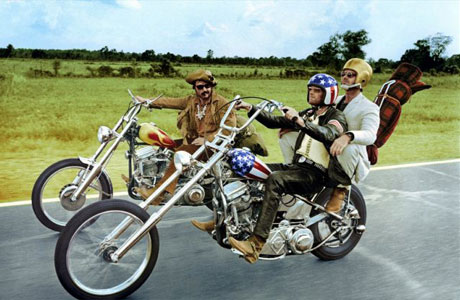
A visitor to Gaza could miss this underground disaster, seeing what the surreal economy of the tunnels from Egypt has brought in: a chic new coffee house, with new furniture and prints on the wall, which would not be out of place in Piccadilly, fish from Oman for restaurants, fat sheep and goats for the Eid feast, new cars reassembled after being cut into four, huge motorbikes straight out of Easy Rider, bustling markets full of foods, clothes, fridges, washing machines, pharmaceuticals, some brought in to order, and much more. Some people are getting very rich on both sides of the Rafah border.
But the tunnels are a small slice of the reality. “We have run out of words to describe how bad it is here,” says John Ging, director of operations for the United Nations Relief and Works Agency in Gaza. Ging heads a team of 10,000 mainly Palestinian workers who run the aid supplies that are all that stand between the vast majority of Gazans and destitution. “We have 80% unemployment, an economy at subsistence level, infrastructure destroyed, etc, but even worse than the humanitarian plight is the destruction of civil society.”
Ging’s great preoccupation is “the 750,000 children susceptible to an environment where things are moving rapidly in the wrong direction, where the injustice is bewildering, and every day worse”.
There is a big problem of insecurity and violence here, and it is getting worse. Most adults display stoic resilience, and cling to a belief in traditional values, but there is a compelling narrative by extremists which becomes ever more difficult to combat. Only lifting the siege would change the dynamic.
An international community that has accepted the “normalcy” of the degrading tunnel economy for Gaza, shames us all. Ending the water emergency should be the first step to breaking the blockade.
The Hidden Story of the Americans that Finished the Vietnam War
October 01, 2009

Graphics by Saatchi and Saatchi
Excerpts and adaptation:
The Soldier’s Revolt
by Joel Geier
Our army that now remains in Vietnam is in a state approaching collapse, with individual units avoiding or having refused combat, murdering their officers and noncommissioned officers, drug-ridden, and dispirited where not near-mutinous Conditions exist among American forces in Vietnam that have only been exceeded in this century by…the collapse of the Tsarist armies in 1916 and 1917.
Armed Forces Journal, June 1971
The most neglected aspect of the Vietnam War is the soldiers’ revolt–the mass upheaval from below that unraveled the American army. It is a great reality check in an era when the U.S. touts itself as an invincible nation. For this reason, the soldiers’ revolt has been written out of official history.
The army revolt pitted enlisted soldiers against officers who viewed them as expendable. Liberal academics have reduced the radicalism of the 1960s to middle-class concerns and activities, while ignoring military rebellion. But the militancy of the 1960s began with the Black liberation struggle, and it reached its climax with the unity of White and Black soldiers.
A working-class army
From 1964 to 1973, from the Gulf of Tonkin resolution to the final withdrawal of U.S. troops from Vietnam, 27 million men came of draft age. A majority of them were not drafted due to college, professional, medical or National Guard deferments. Only 40 percent were drafted and saw military service. A small minority, 2.5 million men (about 10 percent of those eligible for the draft), were sent to Vietnam.
This small minority was almost entirely working-class or rural youth. Their average age was 19. Eighty-five percent of the troops were enlisted men; 15 percent were officers. The enlisted men were drawn from the 80 percent of the armed forces with a high school education or less. At this time, college education was universal in the middle class.
In the elite colleges, the class discrepancy was even more glaring. The upper class did none of the fighting. Of the 1,200 Harvard graduates in 1970, only 2 went to Vietnam, while working-class high schools routinely sent 20 percent, 30 percent of their graduates and more to Vietnam.
College students who were not made officers were usually assigned to noncombat support and service units. High school dropouts were three times more likely to be sent to combat units that did the fighting and took the casualties. Combat infantry soldiers, “the grunts,” were entirely working class. They included a disproportionate number of Black working-class troops. Blacks, who formed 12 percent of the troops, were often 25 percent or more of the combat units.
When college deferments expired, joining the National Guard was a favorite way to get out of serving in Vietnam. During the war, 80 percent of the Guard’s members described themselves as joining to avoid the draft. You needed connections to get in–which was no problem for Dan Quayle, George W. Bush and other draft evaders. In 1968, the Guard had a waiting list of more than 100,000. It had triple the percentage of college graduates that the army did. Blacks made up less than 1.5 percent of the National Guard. In Mississippi, Blacks were 42 percent of the population, but only one Black man served in a Guard of more than 10,000.
The middle-class officers corps
The officer corps was drawn from the 7 percent of troops who were college graduates, or the 13 percent who had one to three years of college. College was to officer as high school was to enlisted man. The officer corps was middle class in composition and managerial in outlook.
Superfluous support officers lived far removed from danger, lounging in rear base camps in luxurious conditions. A few miles away, combat soldiers were experiencing a nightmarish hell. The contrast was too great to allow for confidence–in both the officers and the war–to survive unscathed.
Westmoreland’s solution to the competition for combat command poured gasoline on the fire. He ordered a one-year tour of duty for enlisted men in Vietnam, but only six months for officers. The combat troops hated the class discrimination that put them at twice the risk of their commanders. They grew contemptuous of the officers, whom they saw as raw and dangerously inexperienced in battle.
Even a majority of officers considered Westmoreland’s tour inequality as unethical. Yet they were forced to use short tours to prove themselves for promotion. They were put in situations in which their whole careers depended on what they could accomplish in a brief period, even if it meant taking shortcuts and risks at the expense of the safety of their men–a temptation many could not resist.
The outer limit of six-month commands was often shortened due to promotion, relief, injury or other reasons. The outcome was “revolving-door” commands. As an enlisted man recalled, “During my year in-country I had five second-lieutenant platoon leaders and four company commanders. One CO was pretty good…All the rest were stupid.”
Aggravating this was the contradiction that guaranteed opposition between officers and men in combat. Officer promotions depended on quotas of enemy dead from search-and-destroy missions. Battalion commanders who did not furnish immediate high body counts were threatened with replacement. This was no idle threat–battalion commanders had a 30 to 50 percent chance of being relieved of command. But search-and-destroy missions produced enormous casualties for the infantry soldiers. Officers corrupted by career ambitions would cynically ignore this and draw on the never-ending supply of replacements from the monthly draft quota.
Officer corruption was rife. A Pentagon official writes, “the stench of corruption rose to unprecedented levels during William C. Westmoreland’s command of the American effort in Vietnam.” The CIA protected the poppy fields of Vietnamese officials and flew their heroin out of the country on Air America planes. Officers took notice and followed suit. The major who flew the U.S. ambassador’s private jet was caught smuggling $8 million of heroin on the plane.
The war was fought by NLF troops and peasant auxiliaries who worked the land during the day and fought as soldiers at night. They would attack ARVN (Army of the Republic of Vietnam) and American troops and bases or set mines at night, and then disappear back into the countryside during the day. In this form of guerrilla war, there were no fixed targets, no set battlegrounds, and there was no territory to take. With that in mind, the Pentagon designed a counterinsurgency strategy called “search and destroy.” Without fixed battlegrounds, combat success was judged by the number of NLF troops killed–the body count. A somewhat more sophisticated variant was the “kill ratio”–the number of enemy troops killed compared to the number of Americans dead. This “war of attrition” strategy was the basic military plan of the American ruling class in Vietnam.
For each enemy killed, for every body counted, soldiers got three-day passes and officers received medals and promotions. This reduced the war from fighting for “the hearts and minds of the Vietnamese” to no larger purpose than killing. Any Vietnamese killed was put in the body count as a dead enemy soldier, or as the GIs put it, “if it’s dead, it’s Charlie” (“Charlie” was GI slang for the NLF). This was an inevitable outcome of a war against a whole people. Everyone in Vietnam became the enemy–and this encouraged random slaughter. Officers further ordered their men to “kill them even if they try to surrender–we need the body count.” It was an invitation to kill indiscriminately to swell a tally sheet.
Rather than following their officers, many more soldiers had the courage to revolt against barbarism.
Ninety-five percent of combat units were search-and-destroy units. Their mission was to go out into the jungle, hit bases and supply areas, flush out NLF troops and engage them in battle. If the NLF fought back, helicopters would fly in to prevent retreat and unleash massive firepower–bullets, bombs, missiles. The NLF would attempt to avoid this, and battle generally only occurred if the search-and-destroy missions were ambushed. Ground troops became the live bait for the ambush and firefight. GIs referred to search and destroy as “humping the boonies by dangling the bait.”
Without helicopters, search and destroy would not have been possible–and the helicopters were the terrain of the officers. “On board the command and control chopper rode the battalion commander, his aviation-support commander, the artillery-liaison officer, the battalion S-3 and the battalion sergeant major. They circled…high enough to escape random small-arms fire.” The officers directed their firepower on the NLF down below, but while indiscriminately spewing out bombs and napalm, they could not avoid “collateral damage”–hitting their own troops. One-quarter of the American dead in Vietnam was killed by “friendly fire” from the choppers. The officers were out of danger, the “eye in the sky,” while the troops had their “asses in the grass,” open to fire from both the NLF and the choppers.
When the battle was over, the officers and their choppers would fly off to base camps removed from danger while their troops remained out in the field.
Of the 543,000 American troops in Vietnam in 1968, only 14 percent (or 80,000) were combat troops. These 80,000 men took the brunt of the war. They were the weak link, and their disaffection crippled the ability of the world’s largest military to fight. In 1968, 14,592 men–18 percent of combat troops–were killed. An additional 35,000 had serious wounds that required hospitalization. Although not all of the dead and wounded were from combat units, the overwhelming majority were. The majority of combat troops in 1968 were either seriously injured or killed. The number of American casualties in Vietnam was not extreme, but as it was concentrated among the combat troops, it was a virtual massacre. Not to revolt amounted to suicide.
Officers, high in the sky, had few deaths or casualties. The deaths of officers occurred mostly in the lower ranks among lieutenants or captains who led combat platoons or companies. The higher-ranking officers went unharmed. During a decade of war, only one general and eight full colonels died from enemy fire. As one study commissioned by the military concluded, “In Vietnam…the officer corps simply did not die in sufficient numbers or in the presence of their men often enough.”
The slaughter of grunts went on because the officers never found it unacceptable. There was no outcry from the military or political elite, the media or their ruling-class patrons about this aspect of the war, nor is it commented on in almost any history of the war. It is ignored or accepted as a normal part of an unequal world, because the middle and upper class were not in combat in Vietnam and suffered no pain from its butchery. It never would have been tolerated had their class done the fighting. Their premeditated murder of combat troops unleashed class war in the armed forces. The revolt focused on ending search and destroy through all of the means the army had provided as training for these young workers.
Tet–the revolt begins
The Tet Offensive was the turning point of the Vietnam War and the start of open, active soldiers’ rebellion. At the end of January 1968, on Tet, the Vietnamese New Year, the NLF sent 100,000 troops into Saigon and 36 provincial capitals to lead a struggle for the cities. The Tet Offensive was not militarily successful, because of the savagery of the U.S. counterattack. In Saigon alone, American bombs killed 14,000 civilians. The city of Ben Tre became emblematic of the U.S. effort when the major who retook it announced that “to save the city, we had to destroy it.”
Westmoreland and his generals claimed that they were the victors of Tet because they had inflicted so many casualties on the NLF. But to the world, it was clear that the U.S. had politically lost the war in Vietnam. Tet showed that the NLF had the overwhelming support of the Vietnamese population–millions knew of and collaborated with the NLF entry into the cities and no one warned the Americans. The ARVN had turned over whole cities without firing a shot. In some cases, ARVN troops had welcomed the NLF and turned over large weapons supplies. The official rationale for the war, that U.S. troops were there to help the Vietnamese fend off Communist aggression from the North, was no longer believed by anybody. The South Vietnamese government and military were clearly hated by the people.37
Westmoreland’s constant claim that there was “light at the end of the tunnel,” that victory was imminent, was shown to be a lie. Search and destroy was a pipe dream. The NLF did not have to be flushed out of the jungle, it operated everywhere. No place in Vietnam was a safe base for American soldiers when the NLF so decided.
What, then, was the point of this war? Why should American troops fight to defend a regime its own people despised? Soldiers became furious at a government and an officer corps who risked their lives for lies. Throughout the world, Tet and the confidence that American imperialism was weak and would be defeated produced a massive, radical upsurge that makes 1968 famous as the year of revolutionary hope. In the U.S. army, it became the start of the showdown with the officers.
Mutiny
The refusal of an order to advance into combat is an act of mutiny. In time of war, it is the gravest crime in the military code, punishable by death. In Vietnam, mutiny was rampant, the power to punish withered and discipline collapsed as search and destroy was revoked from below.
Until 1967, open defiance of orders was rare and harshly repressed, with sentences of two to ten years for minor infractions. Hostility to search-and-destroy missions took the form of covert combat avoidance, called “sandbagging” by the grunts. A platoon sent out to “hump the boonies” might look for a safe cover from which to file fabricated reports of imaginary activity.
But after Tet, there was a massive shift from combat avoidance to mutiny. One Pentagon official reflected that “mutiny became so common that the army was forced to disguise its frequency by talking instead of ‘combat refusal.'” Combat refusal, one commentator observed, “resembled a strike and occurred when GIs refused, disobeyed, or negotiated an order into combat.”
Acts of mutiny took place on a scale previously only encountered in revolutions. The first mutinies in 1968 were unit and platoon-level rejections of the order to fight. The army recorded 68 such mutinies that year. By 1970, in the 1st Air Cavalry Division alone, there were 35 acts of combat refusal. One military study concluded that combat refusal was “unlike mutinous outbreaks of the past, which were usually sporadic, short-lived events. The progressive unwillingness of American soldiers to fight to the point of open disobedience took place over a four-year period between 1968-71.”
The 1968 combat refusals of individual units expanded to involve whole companies by the next year. The first reported mass mutiny was in the 196th Light Brigade in August 1969. Company A of the 3rd Battalion, down to 60 men from its original 150, had been pushing through Songchang Valley under heavy fire for five days when it refused an order to advance down a perilous mountain slope. Word of the mutiny spread rapidly. The New York Daily News ran a banner headline, “Sir, My Men Refuse To Go.” The GI paper, The Bond, accurately noted, “It was an organized strike…A shaken brass relieved the company commander…but they did not charge the guys with anything. The Brass surrendered to the strength of the organized men.”
This precedent–no court-martial for refusing to obey the order to fight, but the line officer relieved of his command–was the pattern for the rest of the war. Mass insubordination was not punished by an officer corps that lived in fear of its own men. Even the threat of punishment often backfired. In one famous incident, B Company of the 1st Battalion of the 12th Infantry refused an order to proceed into NLF-held territory. When they were threatened with court-martials, other platoons rallied to their support and refused orders to advance until the army backed down.
As the fear of punishment faded, mutinies mushroomed. There were at least ten reported major mutinies, and hundreds of smaller ones. Hanoi’s Vietnam Courier documented 15 important GI rebellions in 1969. At Cu Chi, troops from the 2nd Battalion of the 27th Infantry refused battle orders. The “CBS Evening News” broadcast live a patrol from the 7th Cavalry telling their captain that his order for direct advance against the NLF was nonsense, that it would threaten casualties, and that they would not obey it. Another CBS broadcast televised the mutiny of a rifle company of the 1st Air Cavalry Division.
When Cambodia was invaded in 1970, soldiers from Fire Base Washington conducted a sit-in. They told Up Against the Bulkhead, “We have no business there…we just sat down. Then they promised us we wouldn’t have to go to Cambodia.” Within a week, there were two additional mutinies, as men from the 4th and 8th Infantry refused to board helicopters to Cambodia.
In the invasion of Laos in March 1971, two platoons refused to advance. To prevent the mutiny from spreading, the entire squadron was pulled out of the Laos operation. The captain was relieved of his command, but there was no discipline against the men. When a lieutenant from the 501st Infantry refused his battalion commander’s order to advance his troops, he merely received a suspended sentence.
The decision not to punish men defying the most sacrosanct article of the military code, the disobedience of the order for combat, indicated how much the deterioration of discipline had eroded the power of the officers. The only punishment for most mutinies was to relieve the commanding officer of his duties. Consequently, many commanders would not report that they had lost control of their men. They swept news of mutiny, which would jeopardize their careers, under the rug. As they became quietly complicit, the officer corps lost any remaining moral authority to impose discipline.
For every defiance in combat, there were hundreds of minor acts of insubordination in rear base camps. As one infantry officer reported, “You can’t give orders and expect them to be obeyed.” This democratic upsurge from below was so extensive that discipline was replaced by a new command technique called working it out. Working it out was a form of collective bargaining in which negotiations went on between officers and men to determine orders. Working it out destroyed the authority of the officer corps and gutted the ability of the army to carry out search-and-destroy missions. But the army had no alternative strategy for a guerrilla war against a national liberation movement.
The political impact of the mutiny was felt far beyond Vietnam. As H.R. Haldeman, Nixon’s chief of staff, reflected, “If troops are going to mutiny, you can’t pursue an aggressive policy.” The soldiers’ revolt tied down the global reach of U.S. imperialism.
Fragging
The murder of American officers by their troops was an openly proclaimed goal in Vietnam. As one GI newspaper demanded, “Don’t desert. Go to Vietnam, and kill your commanding officer.” And they did. A new slang term arose to celebrate the execution of officers: fragging. The word came from the fragmentation grenade, which was the weapon of choice because the evidence was destroyed in the act.
In every war, troops kill officers whose incompetence or recklessness threatens the lives of their men. But only in Vietnam did this become pervasive in combat situations and widespread in rear base camps. It was the most well-known aspect of the class struggle inside the army, directed not just at intolerable officers, but at “lifers” as a class. In the soldiers’ revolt, it became accepted practice to paint political slogans on helmets. A popular helmet slogan summed up this mood: “Kill a non-com for Christ.” Fragging was the ransom the ground troops extracted for being used as live bait.
No one knows how many officers were fragged, but after Tet it became epidemic. At least 800 to 1,000 fragging attempts using explosive devices were made. The army reported 126 fraggings in 1969, 271 in 1970 and 333 in 1971, when they stopped keeping count. But in that year, just in the American Division (of My Lai fame), one fragging per week took place. Some military estimates are that fraggings occurred at five times the official rate, while officers of the Judge Advocate General Corps believed that only 10 percent of fraggings were reported. These figures do not include officers who were shot in the back by their men and listed as wounded or killed in action.
Most fraggings resulted in injuries, although “word of the deaths of officers will bring cheers at troop movies or in bivouacs of certain units.” The army admitted that it could not account for how 1,400 officers and noncommissioned officers died. This number, plus the official list of fragging deaths, has been accepted as the unacknowledged army estimate for officers killed by their men. It suggests that 20 to 25 percent–if not more–of all officers killed during the war were killed by enlisted men, not the “enemy.” This figure has no precedent in the history of war.
Soldiers put bounties on officers targeted for fragging. The money, usually between $100 and $1,000, was collected by subscription from among the enlisted men. It was a reward for the soldier who executed the collective decision. The highest bounty for an officer was $10,000, publicly offered by GI Says, a mimeographed bulletin put out in the 101st Airborne Division, for Col. W. Honeycutt, who had ordered the May 1969 attack on Hill 937. The hill had no strategic significance and was immediately abandoned when the battle ended. It became enshrined in GI folklore as Hamburger Hill, because of the 56 men killed and 420 wounded taking it. Despite several fragging attempts, Honeycutt escaped uninjured.
As Vietnam GI argued after Hamburger Hill, “Brass are calling this a tremendous victory. We call it a goddam butcher shop…If you want to die so some lifer can get a promotion, go right ahead. But if you think your life is worth something, you better get yourselves together. If you don’t take care of the lifers, they might damn well take care of you.”
Fraggings were occasionally called off. One lieutenant refused to obey an order to storm a hill during an operation in the Mekong Delta. “His first sergeant later told him that when his men heard him refuse that order, they removed a $350 bounty earlier placed on his head because they thought he was a ‘hard-liner.'”
The motive for most fraggings was not revenge, but to change battle conduct. For this reason, officers were usually warned prior to fraggings. First, a smoke grenade would be left near their beds. Those who did not respond would find a tear-gas grenade or a grenade pin on their bed as a gentle reminder. Finally, the lethal grenade was tossed into the bed of sleeping, inflexible officers. Officers understood the warnings and usually complied, becoming captive to the demands of their men. It was the most practical means of cracking army discipline. The units whose officers responded opted out of search-and-destroy missions.
An Army judge who presided over fragging trials called fragging “the troops’ way of controlling officers,” and added that it was “deadly effective.” He explained, “Captain Steinberg argues that once an officer is intimidated by even the threat of fragging he is useless to the military because he can no longer carry out orders essential to the functioning of the Army. Through intimidation by threats–verbal and written…virtually all officers and NCOs have to take into account the possibility of fragging before giving an order to the men under them.” The fear of fragging affected officers and NCOs far beyond those who were actually involved in fragging incidents.
Officers who survived fragging attempts could not tell which of their men had tried to murder them, or when the men might strike again. They lived in constant fear of future attempts at fragging by unknown soldiers. In Vietnam it was a truism that “everyone was the enemy”: for the lifers, every enlisted man was the enemy. “In parts of Vietnam fragging stirs more fear among officers and NCOs than does the war with ‘Charlie.'”
Counter-fragging by retaliating officers contributed to a war within the war. While 80 percent of fraggings were of officers and NCOs, 20 percent were of enlisted men, as officers sought to kill potential troublemakers or those whom they suspected of planning to frag them. In this civil war within the army, the military police were used to reinstate order. In October 1971, military police air assaulted the Praline mountain signal site to protect an officer who had been the target of repeated fragging attempts. The base was occupied for a week before command was restored.
Fragging undermined the ability of the Green Machine to function as a fighting force. By 1970, “many commanders no longer trusted Blacks or radical whites with weapons except on guard duty or in combat.” In the American Division, fragmentation grenades were not given to troops. In the 440 Signal Battalion, the colonel refused to distribute all arms. As a soldier at Cu Chi told the New York Times, “The American garrisons on the larger bases are virtually disarmed. The lifers have taken the weapons from us and put them under lock and key.” The U.S. army was slowly disarming its own men to prevent the weapons from being aimed at the main enemy: the lifers.
Peace from below–search and avoid
Mutiny and fraggings expressed the anger and bitterness that combat soldiers felt at being used as bait to kill Communists. It forced the troops to reassess who was the real enemy.
In a remarkable letter, 40 combat officers wrote to President Nixon in July 1970 to advise him that “the military, the leadership of this country–are perceived by many soldiers to be almost as much our enemy as the VC and the NVA.
After the 1970 invasion of Cambodia enlarged the war, fury and the demoralizing realization that nothing could stop the warmongers swept both the antiwar movement and the troops. The most popular helmet logo became “UUUU,” which meant “the unwilling, led by the unqualified, doing the unnecessary, for the ungrateful.” Peace, if it were to come, would have to be made by the troops themselves, instituted by an unofficial troop withdrawal ending search-and-destroy missions.
The form this peace from below took came to be called “search and avoid,” or “search and evade.” It became so extensive that “search and evade (meaning tacit avoidance of combat by units in the field) is now virtually a principle of war, vividly expressed by the GI phrase, ‘CYA’ (cover your ass) and get home!”
In search and avoid, patrols sent out into the field deliberately eluded potential clashes with the NLF. Night patrols, the most dangerous, would halt and take up positions a few yards beyond the defense perimeter, where the NLF would never come. By skirting potential conflicts, they hoped to make it clear to the NLF that their unit had established its own peace treaty.
Another frequent search-and-avoid tactic was to leave base camp, secure a safe area in the jungle and set up a perimeter-defense system in which to hole up for the time allotted for the mission. “Some units even took enemy weapons with them when they went out on such search-and-avoid missions so that upon return they could report a firefight and demonstrate evidence of enemy casualties for the body-count figures required by higher headquarters.”
The army was forced to accommodate what began to be called “the grunts’ cease-fire.” An American soldier from Cu Chi, quoted in the New York Times, said, “They have set up separate companies for men who refuse to go out into the field. It is no big thing to refuse to go. If a man is ordered to go to such and such a place, he no longer goes through the hassle of refusing; he just packs his shirt and goes to visit some buddies at another base camp.”
An observer at Pace, near the Cambodian front where a unilateral truce was widely enforced, reported, “The men agreed and passed the word to other platoons: nobody fires unless fired upon. As of about 1100 hours on October 10,1971, the men of Bravo Company, 11/12 First Cav Division, declared their own private cease-fire with the North Vietnamese.”
The NLF responded to the new situation. People’s Press, a GI paper, in its June 1971 issue claimed that NLF and NVA units were ordered not to open hostilities against U.S. troops wearing red bandanas or peace signs, unless first fired upon. Two months later, the first Vietnam veteran to visit Hanoi was given a copy of “an order to North Vietnamese troops not to shoot U.S. soldiers wearing antiwar symbols or carrying their rifles pointed down.” He reports its impact on “convincing me that I was on the side of the Vietnamese now.”
Colonel Heinl reported this:
That ‘search-and-evade’ has not gone unnoticed by the enemy is underscored by the Viet Cong delegation’s recent statement at the Paris Peace Talks that Communist units in Indochina have been ordered not to engage American units which do not molest them. The same statement boasted–not without foundation in fact–that American defectors are in the VC ranks.
Some officers joined, or led their men, in the unofficial cease-fire from below. A U.S. army colonel claimed:
I had influence over an entire province. I put my men to work helping with the harvest. They put up buildings. Once the NVA understood what I was doing, they eased up. I’m talking to you about a de facto truce, you understand. The war stopped in most of the province. It’s the kind of history that doesn’t get recorded. Few people even know it happened, and no one will ever admit that it happened.
Search and avoid, mutiny and fraggings were a brilliant success. Two years into the soldiers’ upsurge, in 1970, the number of U.S. combat deaths were down by more than 70 percent (to 3,946) from the 1968 high of more than 14,000. The revolt of the soldiers in order to survive and not to allow themselves to be victims could only succeed by a struggle prepared to use any means necessary to achieve peace from below.
The army revolt had all of the strengths and weaknesses of the 1960s radicalization of which it was a part. It was a courageous mass struggle from below. It relied upon no one but itself to win its battles.
The only organizing tools were the underground GI newspapers. But newspapers became a substitute for organization.
The hidden history of the 1960s proves that the American army can be split. But that requires the long, slow patient work of explanation, of education, of organization, and of agitation and action. The Vietnam revolt shows how rank-and-file soldiers can rise to the task.
Are They Really Oil Wars?
By Ismael Hossein-zadeh
July 9, 2008
A most widely-cited factor behind the recent U.S. wars of choice is said to be oil. “No Blood for Oil” has been a rallying cry for most of the opponents of the war. While some of these opponents argue that the war is driven by the U.S. desire for cheap oil, others claim that it is prompted by big oil’s wish for high oil prices and profits. Interestingly, most antiwar forces use both claims interchangeably without paying attention to the fact that they are diametrically-opposed assertions.
Not only do the two arguments contradict each other, but each argument is also wanting and unconvincing on its own grounds; not because the U.S. does not wish for cheap oil, or because Big Oil does not desire higher oil prices, but because war is no longer the way to control or gain access to energy resources. Colonial-type occupation or direct control of energy resources is no longer efficient or economical and has, therefore, been abandoned for more than four decades.
The view that recent U.S. military adventures in the Middle East and the broader Central Asia are driven by energy considerations is further reinforced by the dubious theory of Peak Oil, which maintains that, having peaked, world oil resources are now dwindling and that, therefore, war power and military strength are key to access or control of the shrinking energy resources.
In this study I will first argue that the Peak Oil theory is unscientific, unrealistic, and perhaps even fraudulent. I will then show that war and military force are no longer the necessary or appropriate means to gain access to sources of energy, and that resorting to military measures can, indeed, lead to costly, not cheap, oil. Next, I will demonstrate that, despite the lucrative spoils of war resulting from high oil prices and profits, Big Oil prefers peace and stability, not war and geopolitical turbulence, in global energy markets. Finally, I will argue a case that behind the drive to war and military adventures in the Middle East lie some powerful special interests (vested in war, militarism, and geopolitical concerns of Israel) that use oil as an issue of “national interest”—as a façade or pretext—in order to justify military adventures to derive high dividends, both economic and geopolitical, from war.
Has Oil Really Peaked—and Is It Running Out?
Peak oil thesis, as noted above, maintains that world oil reserves, having reached their maximum capacity, are now dwindling—with grave consequences of oil shortage and high energy prices. While this has led many to call for more vigorous conservation, it has led others to argue in favor of unrestrained exploration and extraction of oil reserves, especially those located in the Alaskan Wildlife regions.
Significant policy and/or political implications follow from the view that oil is running out. For one thing, this view provides fodder for the cannons of war profiteering militarists who are constantly on the look out to invent new enemies and find new pretexts for continued war and escalation of military spending. For another, it tends to disarm many antiwar forces that accept this thesis and, therefore, “internalize responsibility for U.S. foreign policy every time they fill their gas tank. Thus they own the wars.”[1]
The Peak Oil thesis serves as a powerful trap and a clever manipulation in that it lets the real forces of war and militarism (the military-industrial complex and the pro-Israel lobby) “off the hook; it is a fabulous redirection. All evils are blamed on a commodity upon which we are all utterly dependent.”[2]
The fact, however, is that there is no hard evidence that oil has peaked, or that global oil reserves are shrinking, or that the current skyrocketing price of oil is due to a supply shortage. (As shown below, there is actually an oil surplus, no shortage.)
Peak oil theory is not altogether new. It was originally floated around in the 1940s, arguing that world oil reserves would be exhausted within the next two decades or so. It then resurfaced in the 1970s and early 1980s in reaction to the oil price hikes of those years—which were, incidentally, precipitated not by oil shortages but by international political convulsions, revolutions and wars. But it died down once the price of oil fell back to pre-crises levels.
As recent geopolitical convulsions in the Middle East (especially the U.S. war on Iraq, and the resultant booming speculation in oil markets) have triggered a new round of oil price hikes, Peak Oil theory has once again become fashionable. The theory is being promoted not only by war profiteers and proponents of an unbridled domestic oil exploration and extraction, especially in Alaska, but also by some apparently antiwar liberals such as Michael T. Klare and James H. Kunstler.[3]
Peak oil theory is based on a number of assumptions and omissions that make it less than reliable. To begin with, it discounts or disregards the fact that energy-saving technologies have drastically improved (and will continue to further improve) the efficiency of oil consumption. Evidence shows that, for example, “over a period of five years (1994-99), U.S. GDP expanded over 20 percent while oil usage rose by only nine percent. Before the 1973 oil shock, the ratio was about one to one.”[4]
Second, Peak Oil theory pays scant attention to the drastically enabling new technologies that have made (and will continue to make) possible discovery and extraction of oil reserves that were inaccessible only a short time ago. One of the results of the more efficient means of research and development has been a far higher success rate in finding new oil fields. The success rate has risen in twenty years from less than 70 percent to over 80 percent. Computers have helped to reduce the number of dry holes. Horizontal drilling has boosted extraction. Another important development has been deep-water offshore drilling, which the new technologies now permit. Good examples are the North Sea, the Gulf of Mexico, and more recently, the promising offshore oil fields of West Africa.[5]
Third, Peak Oil theory also pays short shrift to what is sometimes called non-conventional oil. These include Canada’s giant reserves of extra-heavy bitumen that can be processed to produce conventional oil. Although this was originally considered cost inefficient, experts working in this area now claim that they have brought down the cost from over $20 a barrel to $8 per barrel. Similar developments are taking place in Venezuela. It is thanks to developments like these that since 1970, world oil reserves have more than doubled, despite the extraction of hundreds of millions of barrels.[6]
Fourth, Peak Oil thesis pays insufficient attention to energy sources other than oil. These include solar, wind, non-food bio-fuel, and nuclear energies. They also include natural gas. Gas is now about 25 percent of energy demand worldwide. It is estimated that by 2050 it will be the main source of energy in the world. A number of American, European, and Japanese firms have and are investing heavily in developing fuel cells for cars and other vehicles that would significantly reduce gasoline consumption.[7]
Fifth, proponents of Peak Oil tend to exaggerate the impact of the increased oil demand coming from China and India on both the amount and the price of oil in global markets. The alleged disparity between supply and demand is said to be due to the rapidly growing demand coming from China and India. But that rapid growth in demand is largely offset by a number of counterbalancing factors. These include slower growth in U.S. demand due to its slower economic growth, efficient energy utilization in industrially advanced countries, and increases in oil production by OPEC, Russia, and other oil producing countries.
Finally, and perhaps more importantly, claims of “peaked and dwindling” oil are refuted by the available facts and figures on global oil supply. Statistical evidence shows that there is absolutely no supply-demand imbalance in global oil markets. Contrary to the claims of the proponents of Peak Oil and champions of war and militarism, the current oil price shocks are a direct consequence of the destabilizing wars and geopolitical insecurity in the Middle East, not oil shortages. These include not only the raging wars in Iraq and Afghanistan, but also the threat of a looming war against Iran. The record of soaring oil prices shows that anytime there is a renewed U.S. military threat against Iran, fuel prices move up several notches.
The war also contributes to the escalation of fuel prices in indirect ways—for example, by plunging the U.S. ever deeper into debt and depreciating the dollar, or by creating favorable grounds for speculation. As oil is priced largely in U.S. dollars, oil exporting countries ask for more dollars per barrel of oil as the dollar loses value. Perhaps more importantly, an atmosphere of war and geopolitical instability in global oil markets serves as an auspicious ground for hoarding and speculation in commodity markets, especially oil, which is heavily contributing to the recently soaring oil prices.
As much as 60% of today’s crude oil price is pure speculation driven by large trader banks and hedge funds. It has nothing to do with the convenient myths of Peak Oil. It has to do with control of oil and its price. . . . Since the advent of oil futures trading and the two major London and New York oil futures contracts, control of oil prices has left OPEC and gone to Wall Street. It is a classic case of the ‘tail that wags the dog.’[8]
Wall Street financial giants that created the Third World debt crisis in the late 1970s and early 1980s, the tech bubble in the 1990s, and the housing bubble in the 2000s are now hard at work creating the oil bubble. By purchasing large numbers of futures contracts, and thereby pushing up futures prices to even higher levels than current prices, speculators have provided a financial incentive for oil companies to buy even more oil and place it in storage. A refiner will purchase extra oil today, even if it costs $115 per barrel, if the futures price is even higher.[9]
This has led to a steady rise in crude oil inventories over the last two years, “resulting in US crude oil inventories that are now higher than at any time in the previous eight years. The large influx of speculative investment into oil futures has led to a situation where we have both high supplies of crude oil and high crude oil prices. . . . In fact, during this period global supplies have exceeded demand, according to the US Department of Energy.”[10]
The fact that the skyrocketing oil prices of late have been accompanied by a surplus in global oil markets was also brought to the attention of President George W. Bush by Saudi officials when he asked them during a recent trip to the kingdom to increase production in order to stem the rising prices. Saudi officials reminded the President that “there is plenty of oil on the market. Iran has put some 30 million barrels of oil that it can’t sell into floating storage. ‘If we produced more oil, it wouldn’t find buyers,’ says the Saudi source. It wouldn’t affect the price at all.”[11]
And why producing more oil “wouldn’t affect the price at all”? Well, because what is driving the soaring oil prices is not shortage but speculation: “with so much investment money sloshing around in the commodities markets, the Saudis calculate they have no hope of controlling short-term price fluctuations. They blame the recent price run-ups on speculation and fear of shortages [not real shortages], factors they say are beyond their control.”[12]
War for Cheap Oil?
The widely-shared view that the U.S. desire for access to abundant and cheap oil lurks behind the Bush administration’s drive to war in the Middle East rests on the implicit but dubious assumption that access to energy resources requires direct control of oil fields and/or oil producing countries. There are at least three problems with this postulation.
First, if control of or influence over oil producing countries in the Middle East is a requirement for access to cheap oil, the United States already enjoys significant influence over some of the major oil producers in the region—Saudi Arabia, Kuwait, and a number of other smaller producers. Why, then, would the U.S. want to bring about war and political turmoil in the region that might undermine that long and firmly-established influence?
Let us assume for a moment that the neoconservative militarists are sincere in their alleged desire to bring about democratic rule and representational government in the Middle East. Let us further assume that they succeed in realizing this purported objective. Would, then, the thus-emerging democratic governments, representing the wishes of the majority of their citizens, be as accommodating to U.S. economic and geopolitical objectives, including its oil needs, as are its currently friendly rulers in the region? Most probably not.
Secondly, and more importantly, access to oil no longer requires control of oil fields or oil producers—as was the case in times past. For more than a century, that is, from the early days of oil extraction in the United States in the 1870s until the mid-1970s, the price of oil was determined administratively, that is, by independent producers operating in different parts of the world without having to compete with each other. Under those circumstances, colonial or imperial wars of conquest and occupation were crucial to the control of oil (and other) resources.
Beginning with the 1950s, however, that pattern of local, non-competitive price determination began to gradually change in favor of regional and/or international markets. By the mid 1970s, an internationally competitive oil market emerged that effectively ended the century-old pattern of local, administrative pricing. Today, oil prices (like most other commodity prices) are determined largely by the forces of supply and demand in competitive global energy markets; and any country or company can have as much oil as they wish if they pay the going market (or spot) price.[13]
To the extent that competitive oil markets and/or prices are occasionally manipulated, such subversions of competitive market forces are often brought about not so much by OPEC or other oil producing countries as by manipulative speculations of financial giants in New York and London. As was discussed earlier, gigantic Wall Street financial institutions have accomplished this feat through “innovative” financial instruments such as establishment of energy hedge funds and speculative oil futures markets in New York and London.[14]
It is true that collective supply decisions of oil producing countries can, and sometimes does, affect the competitively determined market price. But a number of important issues need to be considered here.
To begin with, although such supply manipulations obviously affect or influence market-determined prices, they do not determine those prices. In other words, competitive international oil markets determine its price with or without oil producers’ supply manipulations. Such supply managements are, however, designed not to create volatility in energy markets, or chronic oil price hikes. Instead, they are designed to stabilize global oil prices because oil exporting countries prefer stability, predictability and long-term planning for their economic development and industrialization projects. Here is how Cyrus Bina and Minh Vo describe this relationship:
As a result, we conclude that the global oil market is the prime mover [i.e., prime determinant of oil price] and OPEC indeed follows its trajectory accordingly and consistently. . . . When market price (both spot and futures) is falling, OPEC decreases its output; when market price is rising, OPEC attempts to increase its output; and when market price is steady, OPEC keeps its output unchanged. . . . And, this is a kind of oil market we have experienced after the dust settled following the crisis of de-cartelization and globalization of oil industry in the 1970s.[15]
Producers’ policy to sometimes curtail or limit the supply of oil, the so-called “limited flow” policy, is designed to raise the actual trading price above the market-determined price in order to keep high-cost U.S. producers in business while leaving low-cost Middle East producers with an above average, or “super,” profit. While for low-cost producers this limited flow policy is largely a matter of making more or less profits, for high-cost U.S. producers it is a matter of survival, of being able to stay in or go out of business—an important but rarely mentioned or acknowledged fact.
A hypothetical numerical example might be helpful here. Suppose that the market-determined, or free-flow, price of oil is $30 per barrel. Further, suppose this price entails an average rate of profit of 10 percent, or $3 per barrel. The word “average” in this context refers to average conditions of production, that is, producers who produce under average conditions of production in terms of productivity and cost of production. This means that producers who produce under better-than-average conditions, that is, low-cost, high productivity producers, will make a profit higher than $3 per barrel while high-cost, low efficiency producers will end up making less than $3 per barrel. This also means that some of the high-cost producers may end up going out of business altogether. Now, if the limited flow policy raises the actual trading price to $35 per barrel, it will raise the profits of all producers accordingly, thereby also keeping in business some high-cost producers that might otherwise have gone out of business.
Furthermore, supply manipulation (in pursuit of price manipulation) is not limited to the oil industry. In today’s economic environment of giant corporations and big businesses, many of the major industries try, and often succeed in controlling supply in order to control price. Take, for example, the automobile industry. Theoretically, automobile producers could flood the market with a huge supply of cars. But that would not be good business as it would lower prices and profits. So, they control supply, just as do oil producers, in order to manipulate price. During the past several decades, the price of automobiles, in real terms, has been going up every year, at least to the tune of inflation. During this period, the industry (and the economy in general) has enjoyed a many-fold increase in labor productivity. Increased labor productivity is supposed to translate into lower costs and, therefore, lower prices. Yet, that has not materialized in the case of this industry—as it has in the case of, for example, pocket calculators or computers.
Another example of price control through supply manipulation is the case of U.S. grain producers. The so-called “set aside” policy that pays farmers not to cultivate part of their land in order to curtail supply and prop up price is not different—nay, it is worse— than OPEC’s policy of supply and/or price manipulation.
It is also necessary to keep in mind that OPEC’s desire to sometimes limit the supply of oil in order to shore up its price is limited by a number of factors. For one thing, the share, and hence the influence, of Middle Eastern oil producers as a percentage of world oil production has steadily declined over time, from almost 40 percent when OPEC was established to about 30 percent today.[16] For another, OPEC members are not unmindful of the fact that inordinately high oil prices can hurt their own long-term interests as this might prompt oil importers to economize on oil consumption and search for alternative sources of energy, thereby limiting producers’ export markets.
OPEC members also know that inordinately high oil prices could precipitate economic recessions in oil importing countries that would, once again, lower demand for their oil. In addition, high oil prices tend to raise the cost of oil producers’ imports of manufactured products as high energy costs are bound to affect production costs of those manufactured products.
War for Expensive Oil?
Now let us consider the widely-shared view that attributes the Bush administration’s drive to war to the influence of big oil companies in pursuit of higher oil prices and profits. As noted, this is obviously the opposite of the “war for cheap oil” argument, as it claims that Big Oil tends to instigate war and political tension in the Middle East in order to cause an oil price hike and increase its profits. Like the “war for cheap oil” theory, this claim is not supported by facts. Although the claim has an element of a prima facie reasonableness, that apparently facile credibility rests more on precedent and perception than reality. Part of the perception is due to the exaggerated notion that both President Bush and Vice President Cheney were “oil men” before coming to the White House. But the fact is that George W. Bush was never more than an unsuccessful petty oil prospector and Dick Cheney headed a company, the notorious Halliburton, that sold (and still sells) services to oil companies and the Pentagon.
The larger part of the perception, however, stems from the fact that oil companies do benefit from oil price hikes that result from war and political turbulence in the Middle East. Such benefits are, however, largely incidental. Surely, American oil companies would welcome the spoils of the war (that result from oil price hikes) in Iraq or anywhere else in the world. From the largely incidental oil price hikes that follow war and political convulsion, some observers automatically conclude that, therefore, Big Oil must have been behind the war.[17] But there is no evidence that, at least in the case of the current invasion of Iraq, oil companies pushed for or supported the war.
On the contrary, there is strong evidence that, in fact, oil companies did not welcome the war because they prefer stability and predictability to periodic oil spikes that follow war and political convulsion: “Looking back over the last 20 years, there is plenty of evidence showing the industry’s push for stability and cooperation with Middle Eastern countries and leaders, and the U.S. government’s drive for hegemony works against the oil industry.”[18] As Thierry Desmarest, Chairman and Chief Executive Officer of France’s giant oil company, TotalFinaElf, put it, “A few months of cash generation is not a big deal. Stable, not volatile, prices and a $25 price (per barrel) would be convenient for everyone.”[19]
It is true that for a long time, from the beginning of Middle Eastern oil exploration and discovery in the early twentieth century until the mid-1970s, colonial and/or imperial powers controlled oil either directly or through control of oil producing countries—at times, even by military force. But that pattern of colonial or imperialist exploitation of global markets and resources has changed now. Most of the current theories of imperialism and hegemony that continue invoking that old pattern of Big Oil behavior tend to suffer from an ahistorical perspective. Today, as discussed earlier, even physically occupying and controlling another country’s oil fields will not necessarily be beneficial to oil interests. Not only will military adventures place the operations of current energy projects at jeopardy, but they will also make the future plans precarious and unpredictable. Big Oil interests, of course, know this; and that’s why they did not countenance the war on Iraq: “The big oil companies were not enthusiastic about the Iraqi war,” says Fareed Mohamedi of PFC Energy, an energy consultancy firm based in Washington D.C. that advises petroleum firms. “Corporations like Exxon-Mobil and Chevron-Texaco want stability, and this is not what Bush is providing in Iraq and the Gulf region,” adds Mohamedi.[20]
Big Oil interests also know that not only is war no longer the way to gain access to oil, it is in fact an obstacle to gaining that access. Exclusion of U.S. oil companies from vast oil resources in countries such as Russia, Iran, Venezuela, and a number of central Asian countries due to militaristic U.S. foreign policy is a clear testament to this fact. Many of these countries (including, yes, Iran) would be glad to have major U.S. oil companies invest, explore and extract oil from their rich reserves. Needless to say that U.S. oil companies would be delighted to have access to those oil resources. But U.S. champions of war and militarism have successfully torpedoed such opportunities through their unilateral wars of aggression and their penchant for a Cold War-like international atmosphere.
When Vladimir Putin first became president of Russia he was willing to allow American energy companies to continue with the one-sided contracts they had drawn up during Boris Yeltsin’s presidency. Putin built a seemingly trusting relationship with George Bush who looked into Putin’s soul and liked what he saw. The two leaders grew even closer in the aftermath of the 9/11 attacks on World Trade Centre and the Pentagon—when Russia provided “help for America’s invasion of Afghanistan.” Soon after this generous cooperation, however, “Bush repudiated the anti-ballistic missile treaty in the belief that America could develop the technology for winning a nuclear war. This posed a huge strategic threat to Russia.”[21]
Describing the heavy-handed, imperial U.S. policy toward Russia, Stephen F. Cohen writes: “The real US policy has been very different—a relentless, winner-take-all exploitation of Russia’s post-1991 weakness. Accompanied by broken American promises, condescending lectures and demands for unilateral concessions, it has been even more aggressive and uncompromising than was Washington’s approach to Soviet Communist Russia.”[22]
Bush’s withdrawal from the ABM treaty not merely posed an existential threat to Russia but was almost a betrayal of the trust that Putin had put in him. This led to Putin’s disenchantment with America. “Eventually he seems to have decided that every time America transgressed against Russian interests he would retaliate by stopping another American company from exploiting Russian resources.”[23]
During the past few decades, major oil companies have consistently opposed U.S. policies and military threats against countries like Iran, Iraq, and Libya. They have, indeed, time and again, lobbied U.S. foreign policy makers for the establishment of peaceful relations and diplomatic rapprochement with those countries. The Iran-Libya Sanction Act of 1996 (ILSA) is a strong testament to the fact that oil companies nowadays view wars, economic sanctions, and international political tensions as harmful to their long-term business interests and, accordingly, strive for peace, not war, in international relations.
On March 15, 1995 President Clinton issued Executive Order 12957 which banned all U.S. contributions to the development of Iran’s petroleum resources, a crushing blow to the oil industry, especially to the Conoco oil company that had just signed a $1 billion contract to develop fields in Iran. The deal marked a strong indication that Iran was willing to improve its relationship with the United States, only to have President Clinton effectively nullify it. Two months later, sighting “an extraordinary threat to the national security, foreign policy and economy of the U.S.,” President Clinton issued another order, 1259, that expanded the sanctions to become a total trade and investment embargo against Iran. Then a year later came ILSA which extended the sanctions imposed on Iran to Libya as well.
It is no secret that the major force behind the Iran-Libya Sanction Act was the America Israel Public Affairs Committee (AIPAC), the main Zionist lobby in Washington. The success of AIPAC in passing ILSA through both the Congress and the White House over the opposition of the major U.S. oil companies is testament to the fact that, in the context of U.S. policy in the Middle East, even the influence of the oil industry pales vis-à-vis the influence of the Zionist lobby.[24]
ILSA was originally to be imposed on both U.S. and foreign companies. However, in the end it was the U.S. companies that suffered the most due to waivers that were given to European companies after pressure from the European Union. In 1996 the EU pursued its distaste of ILSA by lodging complaints with the World Trade Organization (WTO) against the U.S. and through adopting “blocking legislation” that would prevent EU companies from complying with ILSA. Meanwhile, the contract that Iran had originally signed with Conoco was awarded to TotalFinaElf of France for $760 million; the deal also left the door open for Total to sign an additional contract with Iran for $2 billion in 1997 with their partners Gazprom and Petronas.
In May of 1997 major U.S. oil companies such as Conoco, Exxon, Atlantic Richfield, and Occidental Petroleum joined other (non-military) U.S. companies to create an anti-sanction coalition. Earlier that same year Conoco’s Chief Executive Archie Dunham publicly took a stance against unilateral U.S. sanctions by stating that “U.S. companies, not rogue regimes, are the ones that suffer when the United States imposes economic sanctions.” Texaco officials have also argued that the U.S. can be more effective in bringing about change in other countries by allowing U.S. companies to do business with those countries instead of imposing economic sanctions that tend to be counterproductive.
Alas, Washington’s perverse, misguided and ineffectual policy of economic sanctions for political purposes—often in compliance with the wishes of some powerful special interests—continues unabated. “Even with the increased pro-trade lobbying efforts of the oil industry and groups like USAEngage, whose membership ranges from farmers and small business owners to Wall Street executives and oilmen, the lack of support from Washington and the Bush administration could not allow them [major oil companies and other non-military transnational companies] to overtake or counteract the already rolling momentum of AIPAC’s influence on Middle East policy or the renewal of ISLA.”[25]
Despite the fact that oil companies nowadays view war and political turmoil in the Middle East as detrimental to their long-term interests and, therefore, do not support policies that are conducive to war and militarism, and despite the fact that war is no longer the way to gain access to oil, the widespread perception that every U.S. military engagement in the region, including the current invasion of Iraq, is prompted by oil considerations continues. The question is why?
Behind the Myth of War for Oil
The widely-shared but erroneous view that recent U.S. wars of choice are driven by oil concerns is partly due to precedence: the fact that for a long time military force was key to colonial or imperialist control and exploitation of foreign markets and resources, including oil. It is also partly due to perception: the exaggerated notion that both President Bush and Vice President Cheney were “oil men” before coming to the White House. But, as noted earlier, George W. Bush was never more than an ineffective minor oil prospector and Dick Cheney was never really an oil man; he headed the notorious Halliburton company that sold (and still sells) services to oil companies and the Pentagon.
But the major reason for the persistence of this pervasive myth seems to stem from certain deliberate efforts that are designed to perpetuate the legend in order to camouflage some real economic and geopolitical special interests that drive U.S. military adventures in the Middle East. There is evidence that both the military-industrial complex and hard-line Zionist proponents of “greater Israel” disingenuously use oil (as an issue of national interest) in order to disguise their own nefarious special interests and objectives: justification of continued expansion of military spending, extension of sales markets for military hardware, and recasting the geopolitical map of the Middle East in favor of Israel.
There is also evidence that for every dollar’s worth of oil imported from the Persian Gulf region the Pentagon takes five dollars out of the Federal budget to “secure” the flow of that oil! This is a clear indication that the claim that the U.S. military presence in the Middle East is due to oil consideration is a fraud .[26]
While anecdotal, an example of how partisans of war and militarism use oil as a pretext to cover up the real forces behind war and militarism can be instructive. In the early stages of the invasion of Iraq, when the anti-occupation resistance in Iraq had not yet taken shape and the invasion seemed to be proceeding smoothly, two of the leading champions of the invasion, Secretary of Defense Donald Rumsfeld and his deputy Paul Wolfowitz, often boasting of the apparent or pre-mature success of the invasion at those early stages, gave frequent news conferences and press reports. During one of those press reports (at the end of an address to delegates at an Asian security summit in Singapore in early June 2003), Wolfowitz was asked why North Korea was being treated differently from Iraq, where hardly any weapons of mass destruction had been found. Wolfowitz’s response was: “Let’s look at it simply. The most important difference between North Korea and Iraq is that economically, we just had no choice in Iraq. The country swims on a sea of oil.”[27]
Many opponents of the war jumped on this statement, so to speak, as corroboration of what they had been saying or suspecting all along: that the war on Iraq was prompted by oil interests. Yet, there is strong evidence—some of which presented in the preceding pages—that for the last several decades oil interests have not favored war and turbulence in the Middle East, including the current invasion of Iraq. Nor is war any longer the way to gain access to oil. Major oil companies, along with many other non-military transnational corporations, have lobbied both the Clinton and Bush administrations in support of changing the aggressive, militaristic U.S. policy toward countries like Iran, Iraq and Libya in favor of establishing normal, non-confrontational trade and diplomatic relations. Such efforts at normalization of trade and diplomatic relations, however, have failed time and again precisely because Wolfowitz and his cohorts, working through AIPAC and other war-mongering think tanks such as the American Enterprise Institute (AEI), Project for the New American Century (PNAC), and Jewish Institute for National Security Affairs (JINSA) oppose them.
These think tanks, in collaboration with a whole host of similar militaristic lobbying entities like Center for Security Affairs (CSA) and National Institute for Public Policy (NIPP), working largely as institutional façades to serve the defacto alliance of the military-industrial complex and the pro-Israel lobby, have repeatedly thwarted efforts at peace and reconciliation in the Middle East—often over the objections and frustrations of major U.S. oil companies. It is a well established fact that Wolfowitz has been a devoted champion of these jingoistic think tanks and their aggressive unilateral policies in the Middle East. In light of his professional record and political loyalties, his claim that he championed the war on Iraq because of oil considerations can be characterized only as demagogic: it contradicts his political record and defies the policies he has been advocating for the last several decades; it is designed to divert attention from the main forces behind the war, the armaments lobby and the pro-Israel lobby.
These powerful interests are careful not to draw attention to the fact that they are the prime instigators of war and militarism in the Middle East. Therefore, they tend to deliberately perpetuate the popular perception that oil is the driving force behind the war in the region. They even do not mind having their aggressive foreign policies labeled as imperialistic as long as imperialism implies some vague or general connotations of hegemony and domination, that is, as long as it thus camouflages the real, special interests behind the war and political turbulence in the Middle East.
The oil and other non-military transnational corporations’ aversion to war and military adventures in the Middle East stem, of course, from the logical behavior of global or transnational capital in the era of integrated world markets, which tends to be loath to war and international political convulsions. Considering the fact that both importers and exporters of oil prefer peace and stability to war and militarism, why would, then, the flow of oil be in jeopardy if the powerful beneficiaries of war and political tension in the Middle East stopped their aggressive policies in the region?
Partisans of war in the Middle East tend to portray U.S. military operations in the region as reactions to terrorism and political turbulence in order to “safeguard the interests of the United States and its allies.” Yet, a close scrutiny of action-reaction or cause-effect relationship between U.S. military adventures and socio-political turbulence in the region reveals that perhaps the causality is the other way around. That is, social upheavals and political convulsions in the Middle East are more likely to be the result, not the cause, of U.S. foreign policy in the region, especially its one-sided, prejudicial Israeli-Palestinian policy. The U.S. policy of war and militarism in the region seems to resemble the behavior of a corrupt cop, or a mafia godfather, who would instigate fights and frictions in the neighborhood or community in order to, then, portray his parasitic role as necessary for the safety and security of the community and, in the process, fill out his deep pockets.
No matter how crucial oil is to the world economy, the fact remains that it is, after all, a commodity. As such, international trade in oil is as important to its importers as it is to its exporters. There is absolutely no reason that, in a world free of the influence of the beneficiaries of war and militarism and their powerful lobbies (the armaments and the pro-Israel lobbies), the flow of oil could not be guaranteed by international trade conventions and commercial treaties.
Ismael Hossein-zadeh, author of the recently published The Political Economy of U.S. Militarism (Palgrave-Macmillan 2007), teaches economics at Drake University, Des Moines, Iowa.
References
[1] Ron Andreas, reporter/researcher, e-mail correspondence with the author.
[2] Ibid.
[3] Michael T. Klare, Resource Wars: The New Landscape of Global Conflict (New York: Holt paperbacks 2002); James Howard Kunstler, The Long Emergency: Surviving the Converging Catastrophes of the Twenty-first Century (Grove/Atlantic, 2005).
[4] Eliyahu Kanovsky, “Oil: Who’s Really Over a Barrel?” Middle East Quarterly (Spring 2003).
[5] Ibid.
[6] The Wall Street Journal (17 May 2001); cited in Eliyahu Kantovsky, Ibid.
[7] The Wall Street Journal (10 March 1998); cited in Eliyahu Kantovsky, Ibid.
[8] F. William Engdahl, “Perhaps 60% of Today’s Oil Price Is Pure Speculation,” financialsense.com (2 May 2008)
[9] Ibid.
[10] Ibid.
[11] Stanley Reed, “Help from the House of Saud: Why the leading oil producer wants to cool off the market,” Business Week (29 May 2008)
[12] Ibid.
[13] Cyrus Bina and Minh Vo, “OPEC in the Epoch of Globalization: An Event Study of Global Oil Prices,” Global Economy Journal, Vol. 7, Issue 1 (2007); for a discussion of the theory and history of oil price determination see also, Cyrus Bina, “The Rhetoric of Oil and the Dilemma of War and American Hegemony,” Arab Studies Quarterly 15, no. 3 (Summer 1993); also Cyrus Bina, “Limits of OPEC Pricing: OPEC Profits and the Nature of Global Oil Accumulation,” OPEC Review 14, no. 1 (Spring 1990).
[14] F. William Engdahl, “Perhaps 60% of Today’s Oil Price Is Pure Speculation,” financialsense.com (2 May 2008),
[15] Cyrus Bina and Minh Vo, “OPEC in the Epoch of Globalization: An Event Study of Global Oil Prices,” Global Economy Journal, Vol. 7, Issue 1 (2007).
[16] Gary S. Becker, “Why War with Iraq Is Not about Oil,” Business Week (17 March 2003): 30.
[17] Johnathan Nitzan and Shimshon Bichler. The Global Political Economy of Israel (London and Sterling, Virginia: Pluto Press, 2002).
[18] Melinda K. Ruby, “Is Oil the Driving Force to War?” unpublished Senior thesis, Dept. of Economics and Finance, Drake University, Des Moines, Iowa (spring 2004), 10.
[19] As quoted in Ruby, Ibid., P. 13.
[20] As cited by Roger Burbach, “Bush Ideologues vs. Big Oil: The Iraq Game Gets Even Stranger,” CounterPunch.
[21] Israel Shamir, The Writings of Israel Shamir, Contributor 45
[22] Stephen F. Cohen “The New American Cold War,” The Nation (10 July 2006); as quoted in Shamir, Ibid.
[23] Shamir, Ibid.
[24] Ruby, “Is Oil the Driving Force to War?” pp. 14-15; see also Herman Franssen and Elaine Morton, “A Review of U.S. Unilateral Sanctions Against Iran,” Middle East Economic Survey 45, no. 34 (26 August 2002), pp. D1-D5 (D section contains op eds. as opposed to staff-written articles).
[25] Ruby, “Is Oil the Driving Force to War?” pp. 16-17; see also David Ivanovich, “Conoco’s Chief Blasts Sanctions,” Houston Chronicle (12 February 1997).
[27] The statement was widely reported by many news papers and other media outlets. See, for example, The Guardian (4 June 2003)
Featured Video
How Many More Gulf States Get Dragged Into Trump’s Iran War?
or go to
Aletho News Archives – Video-Images
Villains of Judea
David Wurmser
A shadowy neocon strategist spent 30 years maneuvering Washington toward war with Iran
José Niño Unfiltered | November 17, 2026
As American forces clash with Iran in 2026, a decades-long campaign orchestrated from the shadows of Washington has finally reached its climax. Earlier this year, foreign policy strategist David Wurmser openly called for Washington to let Israel start a war of aggression against Tehran, portraying the conflict as a historic reckoning akin to the Soviet collapse. For avid critics of American foreign policy, the current war represents the ultimate triumph of a shadowy Jewish operative who spent over 30 years advancing Israeli strategic priorities inside the highest echelons of the United States government.
Born in Switzerland, David Wurmser earned three degrees from Johns Hopkins University, including a doctorate. He spent 11 years in Navy Reserve intelligence and reached the rank of lieutenant commander. During that service, the Defense Intelligence Agency mobilized him for its Iraq Intelligence Task Force in 1994, 1996 and 1998.
Yet his defining partnership was personal as much as institutional. His Israeli born wife, Meyrav Wurmser, wrote her doctoral dissertation on Revisionist Zionism. In 1998, she cofounded the Middle East Media Research Institute, known as MEMRI, with Yigal Carmon, a former colonel in the Israeli military. Carmon served in Israel Defense Forces intelligence from 1968 to 1988. He later advised prime ministers Yitzhak Rabin and Yitzhak Shamir on counterterrorism.
During the mid-1990s, Wurmser moved seamlessly between Washington institutions and Jerusalem policy circles. … continue
Blog Roll
 Aletho News
- How Many More Gulf States Get Dragged Into Trump’s Iran War? | Matt Bracken
- US-Iran escalation: The side effects and benefits of low intensity war
- Lebanon on the Brink: How Washington and Tel Aviv Turned the “Peace Process” into an Instrument of Pressure
- Before Laundering The Iran Dirty Bomb Hoax, Jake Tapper Was Israel’s Chief Propagandist For Genocide.
- Minuteman III Test at APEC Opening Aimed to Show US Remains a Dangerous Power – Ex-Pentagon Analyst
- Estonia’s border closure is collective punishment of ethnic Russians
- US Plan to Toughen Restrictions on Chip Exports to China After Nvidia Scandal – Reports
- Villains of Judea: David Wurmser
- Anthony Aguilar: The Point of No Return Has Been Reached
- Iran accuses NYT report of paving way for attacks on dams
- If Americans Knew
- An error has occurred; the feed is probably down. Try again later.
- No Tricks Zone
- Argentina’s Perito Moreno Glacier Joins Antarctica and Arctic In Defying Doomsday Melt Claims
- New Study: Barents Sea Temperatures Were Warmer And Sea Ice Less Extensive In The 1700s Than Today
- German Authorities Start Initiative To Evaluate Public Register For Climate “Disinformation” Spreaders!
- Zonal Asymmetry of Temperature Change in the Antarctic Circumpolar Current
- New Study: The Net Fossil Fuel Contribution To Rising Atmospheric CO2 Has Been Zero For 500 Years
- Germany’s Green Energy Transition Becoming Increasingly Expensive…Another 6 Trillion Euros!
- Sudden Stratospheric Warming, Powerful El Niño Combination May Lead To Extreme Europe Cold, Energy Crisis!
- Two New Studies Find Thwaites Glacier Melt Cannot Be Driven By Human Activity Or A Warming Ocean
- E-Cars Reduce CO2 Emissions By Only 41% Compared To Internal Combustion Engine Vehicles
- Predictions Made By Renowned Climate Professor Over Past Decades Have Been Proven To Be Poor