Iran warned Vance that Kushner, Witkoff used peace talks as cover for insider trading: Report
The Cradle | July 16, 2026
Iranian negotiators sent a private warning to US Vice President JD Vance earlier this year, saying that US special envoys Steve Witkoff and Jared Kushner were “abusing” their roles in the talks to profit from financial markets, Drop Site News reported on 16 July.
The Iranian negotiators sent the warnings to Vance through an intermediary during the late June talks in Lake Lucerne in Switzerland, telling him the pair cared more about profiting from insider knowledge of the negotiations than reaching a deal to end the war on Iran.
The negotiators also said that Kushner had been repeatedly leaking details of the talks to Israeli Prime Minister Benjamin Netanyahu, with one US official telling Axios that Witkoff and Kushner “talk almost every day to Netanyahu” and the head of Mossad.
The Vance outreach came after Tehran had already tried to alert the White House to the pair’s conduct, presenting evidence that “individuals close to [US] President [Donald] Trump” were abusing the war on Iran and diplomatic developments to manipulate financial markets, while warning of Witkoff’s “overall destructive role in the previous negotiation.”
Financial analysts have observed a pattern since the war began in late February of speculative bets and unusually large positions in war-linked markets – oil futures, energy stocks, and prediction markets – often preceded by Trump announcements timed just before Monday trading opens in the US, fueling public suspicion of insider trading.
Iran calculated the profits from these manipulations at around $9 billion by June and formally demanded in writing that half of it, $4.5 billion, be allocated to Tehran.
The official said the exchanged texts “will ultimately become part of the historical record.”
Financial disclosure forms released on 3 July revealed that President Trump’s income soared past $2.2 billion last year, largely built on cryptocurrency ventures that his own administration was regulating.
The Wall Street Journal reported Trump made around $1 billion from crypto deals, including a UAE state-linked investment in World Liberty Financial and proceeds from his $TRUMP memecoin, which later crashed in value by 97 percent.
Trump and those close to him have also profited from massive, highly suspicious trading spikes in oil futures and stock indexes occurring just minutes before the president issued major market-moving announcements on social media about the US war on Iran.
Economists, lawmakers, and market analysts have raised alarms over insider trading, data leaks, and market manipulation coming from the White House.
Almost $1 billion in oil futures trades were executed in early May in the minutes before an Axios report revealed a US-Iran memorandum aimed at ending the war.
Market observers noted the White House’s wild swings between war and peace rhetoric appeared to be little more than a vehicle for insiders to profit through coordinated trading on Polymarket and traditional commodities exchanges
Meanwhile, the Financial Times (FT) reported that the president’s sons, Eric Trump and Donald Trump Jr., were behind a $1.04-billion investment network funneling money into sectors championed by the White House, including drone companies pursuing Pentagon contracts.
The report also noted that Donald Trump Jr. serves as an advisor to Polymarket, where insider trading on US military action is reportedly rampant.
The Saudis Back Down
By Larry C. Johnson | SONAR21 | July 16, 2026
On Monday July 13, airstrikes hit the runway at Sanaa International Airport shortly after a Houthi delegation returned from the funeral in Iran for the late Ayatollah Ali Khamenei. Yemen’s Defense Minister Gen. Taher al-Aqili said on X that the runway was struck to stop a plane carrying the Houthi delegation returning from Khamenei’s funeral. The IRG defense ministry said it had exhausted diplomatic efforts to persuade Iran and the Houthis to stay out of Yemeni airspace, that it would respond to hostile aircraft “by all available means,” and held Iran responsible.
However, Israel’s mouthpiece on Axios, Barak Ravid, citing two US officials, reported that Trump gave Saudi leader MBS his backing for the strike in a phone call last Friday — MBS asked for support for military action against the Houthis and received it. The White House declined to comment directly and the Saudi embassy didn’t respond.
The proximate cause is aviation, not ground war. About ten days ago a Mahan Air flight landed in Sanaa — the first Iran–Sanaa flights in over a decade — and picked up a Houthi delegation traveling to the funeral of former Supreme Leader Ali Khamenei. Saudi Arabia blocked subsequent flights, fearing they’d be used to move weapons or Iranian military advisers to the Houthis. (Note the airport itself has been largely destroyed and out of action since Israeli strikes in May.)
Following the Saudi Attack on Sanaa, the Houthis retaliated by firing ballistic missiles and drones at Abha International Airport in Saudi Arabia’s southwestern Asir region — a mountainous area near the Yemeni border and a domestic summer destination. Saree claimed the strike. The Saudi-led coalition spokesman said air defenses “dealt with a threat from ballistic missiles” launched toward the southern region. No casualties reported.
This exchange marked the first Saudi Arabian attacks on the Houthis since the informal truce took effect in March 2022. I thought that the Saudis would retaliate on Tuesday or Wednesday for the Houthi strike on Monday … Thankfully, I was wrong. The Saudis did not follow up by launching new attacks at Houthi positions.
The Saudi attack was foolish and reckless. At present, the Saudis are able to export a bit of oil from Yanbu, a Saudi city that sits on the shores of the Red Sea. This attack on Yemen — albeit an airfield — carried the risk that the Houthis would attack the Saudi oil facility at Yanbu and close the Bab al Mandab Strait. Given the Saudi vulnerabilities if their operation in the Red Sea is suspended or closed, you would think that MBS government would be engaged in further confidence building exercises with Yemen. Nope!! The Saudis almost touched off a renewal of the war with the Houthis.
I don’t know who convinced MBS to put a full stop to further attacks on the Houthi-controlled portion of Yemen, but the Saudis have not attacked again. The Saudis are in no position financially to handle the simultaneous closure of the Strait of Hormuz and the Bab al Mandab strait. It appears that cooler heads in the Kingdom of Saudi Arabia prevailed… for now at least.
The monopoly of arms: Why the doctrine is enforced only where resistance exists
By Sondoss Al Asaad | Al Mayadeen | July 15, 2026
For decades, the slogan of “restricting arms to the state” has been presented as a universal principle of sovereignty and state-building. Yet a closer geopolitical examination reveals a striking inconsistency: the doctrine is aggressively promoted in countries like Lebanon and Iraq, while it is largely absent from discussions in surrounding countries such as Syria, Libya, or other fragmented states where multiple armed actors continue to exist.
This selective application raises an uncomfortable question: Is the objective truly the consolidation of state authority, or is the slogan primarily employed where armed movements challenge Israeli military superiority and American hegemony?
Political philosopher Carl Schmitt argues that sovereignty ultimately belongs to whoever decides the exception.
Modern geopolitical practice appears to confirm his observation. The international order invokes legal principles selectively, depending on whether they reinforce or undermine prevailing strategic interests. The debate over arms, therefore, is not merely legal; it is profoundly political.
The Lebanese case illustrates this contradiction with exceptional clarity.
Following the November 2024 ceasefire, “Hezbollah withdrew from the north of the Litani River and ‘accepted’ that decisions regarding war and peace would rest exclusively with the Lebanese state and its armed forces”. The expectation promoted by Western capitals was that this would allegedly strengthen Lebanese sovereignty and reduce tensions.
The reality unfolded differently; the Israeli enemy, unable to establish a lasting foothold inside southern Lebanese villages during sixty-six days of warfare, achieved after the ceasefire what military operations had failed to accomplish. It maintained positions inside Lebanese territory, continued near-daily airstrikes across Lebanon, and expanded targeted assassinations while facing little meaningful deterrence.
The sequence of events inevitably fuelled a renewed domestic debate. If sovereignty means that only the state possesses weapons, what happens when the state itself lacks the capacity to prevent violations of its own borders?
This dilemma reflects what Thomas Hobbes identified centuries ago as the fundamental purpose of political authority: providing security.
The legitimacy of the state rests not merely on possessing legal authority but on its ability to protect those living under its jurisdiction. When that capacity weakens, alternative security arrangements inevitably emerge.
The issue extends beyond Lebanon; In Iraq, international pressure consistently emphasizes integrating or dismantling armed resistance groups under the banner of state monopoly over force. Yet comparable urgency is rarely directed toward states where numerous militias continue to operate without challenging Israeli strategic dominance.
Syria offers another revealing comparison. Multiple foreign militaries, including American, Turkish, and Israeli forces, remain active on Syrian territory alongside various local armed factions.
Libya remains fragmented among competing military authorities and militias. Yet the international discourse seldom revolves around an immediate imperative to monopolize arms before broader political settlements are achieved.
Such inconsistencies have led many observers to conclude that the slogan itself is not universally applied but strategically deployed.
French philosopher Michel Foucault argued that power operates through discourse by defining what becomes accepted as common sense.
The phrase “arms outside the state” has increasingly become one such discourse. It transforms a complex security equation into a simplified legal formula while avoiding a more difficult question: Can sovereignty exist when a state cannot defend its territory?
Iran has no plans for negotiations, focused on defense: FM spokesman
Press TV – July 15, 2026
Iranian Foreign Ministry spokesman says the country has no plans to return to negotiations with the United States as long as Washington violates its commitments under the memorandum of understanding (MoU) signed between the two countries last month.
Esmaeil Baghaei said on Wednesday that Iran is currently focused on repelling and retaliating against US attacks on its territory.
“We currently have no plans for negotiations and are focused on defense,” Baghaei said in response to claims by the US that its ongoing attacks on Iran would force Tehran back to the negotiating table.
The spokesman said Iran no longer considers itself bound by the terms of the MoU signed with the United States on June 17, citing Washington’s repeated violations of its commitments under the agreement.
“An MoU is a set of mutual commitments, and in the event of a breach by the other party, we too will refrain from fulfilling our obligations; this is a principle, and this same path will be followed henceforth,” he said.
“The other party has engaged in bad faith and breach of promise (beginning) from the very first article (of the MoU).”
The diplomat said that everyone inside Iran is supporting the policy of standing up against the US and its bullying demands.
“… our armed forces will respond with full force to any aggressor. If they strike, they will be struck back,” he said.
The comments came amid ongoing US attacks on coastal areas in southern Iran, which Washington claims are carried out to weaken Iran’s ability to “target ships” in the Strait of Hormuz.
Iran has rejected the US accusations, saying responsibility for managing transit through the Strait of Hormuz, a waterway in the Persian Gulf that is critical to global energy supplies, has been delegated to Iran under Article 5 of the 14-point MoU agreed between Tehran and Washington.
Can Dems harness Iran war anger to sink Trump’s military budget?
Senate blocked defense bill Monday amid frustration with administration’s return to war and lack of transparency
By Blaise Malley | Responsible Statecraft | July 15, 2026
Congress returned to Washington DC this week after its July 4 recess. With President Donald Trump having recently declared the memorandum of understanding with Iran “over” and with the two countries exchanging attacks, the war has predictably taken center stage.
Congressional Democrats have been mostly unified against the war, but this week has presented opportunities for members to use new vehicles to express their opposition via the power of the purse. On Tuesday, every present Democratic Senator voted to block debate over the 2027 National Defense Authorization Act (NDAA), which authorizes the appropriation of Pentagon funds. The bill, which needed 60 votes to advance, failed by a 50-46 tally.
The NDAA typically proceeds in a relatively bipartisan manner, but the warning signs were apparent in June when nine Democrats voted against advancing the bill out of the Senate Armed Services Committee (SASC). Several Democrats framed their opposition as, in part, a rejection of the war in Iran.
In advance of the vote, Sen. Chris Van Hollen (D-Md.), said the bill would “effectively green light Trump’s illegal Iran war.” Sen. Brian Schatz (D-Hawaii), who noted that he typically votes in favor of the NDAA, said he would oppose it given that the legislature had not “even had an up or down vote to authorize this war in the first place.” Republicans charged Democrats with playing politics over the national security bill, with SASC chairman Roger Wicker (R-Miss. ) calling it a “new low.”
There were other considerations at play as well, including the Trump administration’s ask for a $1.5 trillion defense budget and the lack of transparency surrounding the cost of the war with Iran. On Tuesday, Jules Hurst, testifying to become the Pentagon comptroller, told SASC members that he did not have an update on the $29 billion price tag for the war, since he had not been performing the role since May 20, when his term as acting comptroller came to an end.
Sources said that Republicans’ approach to funding bills has created conditions in which Democrats may stall or even stop defense appropriations legislation.
With Democrats seemingly dug in on blocking the NDAA until the questions surrounding an Iran war authorization are settled, the must-pass bill’s future appears murky. “The Trump administration has not meaningfully consulted Congress on the Iran conflict or engaged Democrats on broader budget strategy, leaving its budget plans and legislative priorities stalled,” a senior congressional aide told RS. “Republicans now face the possibility of flat funding for the Department of Defense under a continuing resolution, or potentially an extended shutdown.”
Subscribe now to our weekly round-up and don’t miss a beat with your favorite RS contributors and reporters, as well as staff analysis, opinion, and news promoting a positive, non-partisan vision of U.S. foreign policy.
In addition, a group of Senators, led by Van Hollen and Sen. Bernie Sanders (I-Vt.), raised concerns about an amendment to the NDAA that would more deeply integrate U.S. and Israeli intelligence. They sent a letter to their colleagues last week urging them to block the legislation until they could hold further discussion regarding those measures.
But congressional sources said that the timing of the vote — shortly after Trump’s announcement that the agreement with Iran was dead — contributed to Democrats voting unanimously against the NDAA. Supporters of ending the war with Iran interpreted the vote as a signal that the war was increasingly unpopular and that Congress should keep up political pressure on the president.
“The war with Iran is incredibly unpopular with the American people and Democrats were right to pick up on that and use this opportunity to vote accordingly,” one senior Democratic Senate staffer told RS. In order to keep up pressure on the administration, the staffer argued, Democrats “should announce publicly that they won’t support any measure to advance the NDAA until Trump resumes negotiations with Iran and gets a deal done.”
National Iranian American Council president Jamal Abdi wrote a statement that urged members to not advance any “other major national legislation (…) as long as this unauthorized war continues without an explicit prohibition on funding it.”
That major legislation may include the administration’s roughly $88 billion DoD supplemental funding request, much of which is intended to fund the Iran war. The administration made the request late last month, though its future on the floor remains unclear as Republican members remain frustrated by a lack of information from the Pentagon regarding the request’s details. As the Stimson Center’s Julia Gledhill told RS in June, “the supplemental doesn’t even detail what weapons the Pentagon wants to buy.”
Up until this point, Democratic opposition has primarily been registered through a string of votes on war powers resolutions. Both the House and the Senate passed concurrent resolutions in June to push Trump to wind down the war absent authorization from the legislature. Congressional Democrats are reportedly considering taking the issue to the courts to compel the administration to comply. Sen. Adam Schiff (D-Calif.) has said that he will introduce a new War Powers Resolution this week.
The administration, for its part, informed Congress of the restarting of the war on July 10, which it says should also restart the 60-day war powers clock, though legal experts widely say that this is an incorrect interpretation.
Blaise Malley is a reporter for Responsible Statecraft. His writing has appeared in The Nation, The New Republic, The American Prospect, The American Conservative, and elsewhere.
Trump’s 3 failed options for reopening Strait of Hormuz: The Economist
Al Mayadeen | July 14, 2026
The memorandum of understanding that was meant to end the US war on Iran is unraveling, and Washington is left with the same three options it had before the deal existed, none of which reopens the Strait of Hormuz.
The Economist traces the collapse back to the MoU’s fifth paragraph, which commits Iran to “make arrangements” for safe passage of commercial vessels.
Washington reads this as an obligation to clear mines, while Tehran reads it as a right to administer traffic through the Strait. Washington has already revoked the sanctions waiver that let Iran sell oil, and Trump has said he will resume the naval blockade.
Option one: Continued limited attacks
The first path available to Washington is simply to keep doing what it has already been doing, attacking Iranian military sites and equipment on a limited basis. The Economist argues that this option has effectively already failed.
More than 300 such attacks over five nights have not shifted Iranian behavior in any meaningful way, and there is little reason to expect a sixth night, or a sixtieth, to succeed where the first fifty did not.
Part of the problem is geographic, as even if the US were able to bomb every coastal launcher Iran possesses, the country could keep firing on shipping from positions further inland, since many of its missiles and drones have ranges well beyond 1,000 kilometers.
Option two: Escalation
The second option is to escalate well beyond the current tit-for-tat, but The Economist notes that this path carries substantial risk without any assurance of a better outcome.
Attacking Iran’s core infrastructure directly would likely draw retaliation against Gulf states caught in the crossfire and could expose Washington to accusations of a war crime.
Deploying ground troops, meanwhile, is regarded as politically untenable in Washington under current conditions, making it a non-starter regardless of its theoretical military logic.
Trump has repeatedly floated occupying Kharg Island, the site of Iran’s main oil export terminal, but The Economist points out that this would do nothing to reopen Hormuz itself, since the island sits more than 600 kilometers from the strait.
Option three: Reimposing the blockade
The third option, reinstating the naval blockade, might look like the least disruptive choice, but The Economist argues it simply returns both sides to the standoff that existed before the MoU was signed, a staring contest over which side blinks first under economic pressure.
That earlier standoff is precisely what produced the interim deal now falling apart, which offers little confidence that repeating it would end differently.
There is also no guarantee Iran accepts a renewed blockade without retaliating against Gulf states this time around, and if it does escalate in response, Trump would be left choosing between all-out war and a retreat from his stated goals.
No outside help in sight
Britain and France have offered to help Oman clear mines from the strait, but Germany, Japan, Gulf states and China have all stayed on the sidelines, The Economist observes, leaving Washington with little meaningful outside support to draw on.
Tanker traffic through the strait has collapsed to its lowest level since May, and Brent crude has climbed roughly 20 percent since July 6, trading near $87 a barrel.
The Economist concludes that neither Washington nor Tehran has a military path to what it wants, claiming that the US cannot bomb the strait open, and Iran cannot profit while it stays shut, leaving the fragile MoU as the least bad option either side has left.
Yemen warns airlines to avoid Saudi airspace until Sana’a blockade is lifted
Press TV – July 14, 2026
The Yemeni armed forces have renewed their warning to all airlines against using Saudi airspace, urging carriers to take the advisory seriously until the blockade on Sana’a International Airport is lifted.
The warning was republished in Arabic and English on the social media platform X on Tuesday, reaffirming the Yemeni armed forces’ stance on the continued restrictions affecting the airport.
“We warn all airlines against crossing in Saudi airspace, and they should take our warnings seriously until the blockade of Sana’a International Airport is lifted,” the post read.
The warning came hours after the release of an audio-visual message addressed to Saudi Arabia titled “Siege for Siege.”
In a separate development on Tuesday, Yemeni armed forces spokesperson Brigadier General Yahya Saree said Yemeni air defenses shot down a Saudi Wing Loong 2 reconnaissance drone over Al-Bayda Governorate, located in south-central Yemen.
“The drone was carrying out hostile missions when it was intercepted at dawn using appropriate weaponry,” he said.
Saree reaffirmed the Yemeni armed forces’ readiness to respond to any violation of Yemen’s airspace and sovereignty.
He stressed that the armed forces would remain vigilant and would not stand idly by in the face of any aggression.
The latest developments follow a military operation carried out by the Yemeni armed forces on Monday targeting Saudi Arabia’s Abha International Airport with ballistic missiles and drones.
The operation followed multiple Saudi airstrikes on Sana’a International Airport, which were aimed at shutting down the country’s main gateway for humanitarian flights.
According to Yemeni officials, air defenses engaged the Saudi warplanes, preventing further strikes on the airport.
Yemeni authorities described the attack on Sana’a International Airport as the most serious cross-border aggression since 2022.
They warned that the strikes could bring an end to the unofficial four-year ceasefire between Saudi Arabia and the Sana’a-based Yemeni government.
TIME Magazine Reveals Israeli Influence Campaign Targeting Americans To Restart Iran War
By Justin K.P. | The Dissident | July 14, 2026
Have you ever noticed how so many Zionist social media influencers often post the exact same messaging, at the exact same time?
It turns out, according to a new investigation in Time Magazine, that these messages are part of a coordinated Israeli influence campaign targeting Americans.
The investigation profiled Brad Parscale, the former Trump campaign manager and current registered Israeli agent, whose firm, Clock Tower X, was hired last year “to conduct a digital campaign on behalf of the State of Israel”.
Parscale was paid by the Israeli government to “produce 100 original pieces of content each month, with at least 80% aimed at Gen Z audiences across TikTok, Instagram, YouTube, and podcasts” and to “amplify the campaign across social media and through ‘integration of narrative messaging into Salem Media Network properties and aligned distribution channels,’ referring to the Christian conservative broadcasting and publishing company where he serves as Chief Strategy Officer” and to “produce at least 50 million digital impressions per month, as well as influence how AI tools such as OpenAI’s ChatGPT, Anthropic’s Claude, and Google’s Gemini characterized Israel and the war”.
Brad Parscale admitted to Time that “the operation was intended to prevent young conservatives from drifting away from Israel”.
Trump administration officials speaking to Time Magazine revealed that Brad Parscale’s paid influencers were attempting to undermine the MoU with Iran.
The investigation wrote:
Online influencers in Trump’s MAGA movement were excoriating it (the MoU) on social media. One shared an Israeli op-ed titled, “You Could Have Been the Greatest President of All—But You Failed.” Several posted the same video of Qatar’s prime minister appearing to snub Vice President J.D. Vance in Israel, arguing it showed regional powers dismissing the Trump Administration’s “naivete.” Others accused Trump of surrendering before achieving his stated objective of eliminating Iran’s nuclear program. Many of the posts appeared almost simultaneously, with similarities in language and tone.
The official began collecting screenshots, and came to believe it wasn’t a coincidence. Tracing tweets by prominent members of the online right, the official came to believe there was an unlikely figure at the centerof all this criticism: Trump’s former presidential campaign manager and digital guru, Brad Parscale.
The investigation added:
Inside the White House, some officials were frustrated for a different reason. What had begun as an effort to keep the American right supportive of Israel, they believed, had evolved into an influence campaign that was colliding with the President’s political interests as Trump’s and Netanyahu’s war aims diverged, led by a figure trading on the perception that he remained close to Trump. They believed the very media ecosystem Parscale had promised to activate was now helping to circulate arguments that undercut Trump’s effort to end the war. “We’re talking about American influencers who are being paid by a foreign country, then trying to build momentum to change the President’s view, or the views of others around him,” says a senior U.S. intelligence official, who spoke on condition of anonymity because they were not authorized to discuss the issue publicly. “It can’t be dismissed as inconsequential by any means.”
Looking more closely at the conversation about the deal unfolding across the conservative internet, the official began noticing the same patterns: similar language appearing across seemingly independent accounts in rapid succession. “You have a person who is farming out this influencing task, who is being paid by a foreign element to the social media space,” the official tells TIME. “To me, this is a very, very dangerous thing.”
Describing the campaign, Time Magazine wrote, “Three people familiar with the campaign describe a messaging operation run through a network of interconnected firms overseen by Parscale or other firms he owns or created, such as Campaign Nucleus and Influenceable, in which he now owns a minority stake. Through private group chats, they say, conservative influencers receive suggested language for posts on social media sites such as X, Instagram and TikTok. They were then compensated based on the impressions and engagement their content generated. On its website, Clock Tower X says it has developed an ‘influencer ecosystem’ that includes ‘managed networks that amplify narratives through credible, distributed voices.’”
It identified the Zionist propagandist X account of “Eyal Yakoby” as one of the accounts on Parscale and Israel’s payroll, writing, “One of the conservative figures associated with the campaign was Eyal Yakoby, a recent college grad with a popular X account who began working with one of Parscale’s firms about a year ago, he says, after testifying before a House committee about antisemitism on college campuses. Yakoby confirms he was paid by Influenceable to fight antisemitism online.”
It added, “Another component involved a sprawling network of conservative influencers. According to a former participant, they received coordinated messaging through private group chats, synchronized the timing of their posts, and were compensated based on the reach they generated.”
This is just one of the many influence campaigns targeting Americans that was paid for by Israel.
Most recently O’Dwyer’s reported that :
Havas Media Germany has hired Piro Inc. to further the digital efforts of the Israel Government Advertising Agency to sway US public opinion.
Founded by Daniel Rosenberg and Tim Piper, New York-based Piro has produced branded entertainment for film, TV and digital media.
Rosenberg has collaborated with actors such as Denzel Washington, Julia Roberts, Robert DeNiro, Steve Martin, Al Pacino, Kevin Bacon and Jodie Foster.
Piper was called “one of the most influential people on the planet” by Time for for his branded content work. He is executive producer on “Odd Mom Out” for Bravo and “Farmed and Dangerous” on Hulu.
According to its June 2 Justice Dept. filing, Piro is engaged to provide digital content strategy, creative development, video production oversight, and campaign advisory services in connection with a pilot digital communications program.
Services include audience research, content architecture, scriptwriting, asset production, distribution planning, iterative performance analysis, and final program evaluation. Al content is developed for distribution via digital and social media platforms in the US.
Piro has received $900K for its effort.
At the time of Israel’s contract with Brad Parscale, the Israeli newspaper Haaretz reported that it was only one of several firms hired by Israel through Havas Media Germany to influence American public opinion.
Harretz reported that Israel also hired “Show Faith by Works, owned by Republican consultant Chad Schnitger, an evangelical operative connected to the Christian right” to “focus on ‘churches and Christian organizations in the western United States’ aimed at countering ‘declining support for Israel among evangelical Christians’ and ‘raising awareness of Palestinian ties to Hamas and support for terrorism’” and to advance, “‘biblically based arguments highlighting the importance of Israel and the Jewish people to Christians,’ while spreading messages that ‘the Palestinians chose Hamas… they murder Christian aid workers… they celebrated the October 7 massacre and shelter terrorists… Palestinians and Iran share genocidal intentions toward Israel’”.
It added, “The filings for the proposed campaign explain that the messages will reach their audience through ‘the largest geofencing campaign in U.S. history’ – a pitch to map the physical perimeters of every major church and Christian college in California, Arizona, Nevada, and Colorado during worship hours; identifying attendees using commercial data, tracking them, and continuing to target them with relevant ads.”
Israel also used Havas to hire SKDKnickerbocker, a firm close to the Democratic Party, to, “develop a ‘bot-based program on various social media channels that that `floods the zone` with the Ministry of Foreign Affairs’ pro-Israel message.”
Along with this, it noted that Israel hired “Bridges Partners, a Washington-based consulting firm owned by Yair Levi and Uri Steinberg” to “fund social-media influencers promoting Israel”.
TRUMP BLOCKS HORMUZ AGAIN /Prof Seyed Marandi Live from Tehran
Daniel Davis / Deep Dive – July 13, 2026
Trump’s “Memorandum of Surrender”: The art of the deal meets the fact of defeat
By Junaid S. Ahmad | MEMO | July 13, 2026
Donald Trump is not negotiating with Iran. He is negotiating with the humiliation of having failed to break it.
Beneath the ceasefires, memoranda, podium theatrics and sanctimonious appeals to “stability” lies a fact Washington cannot admit: the United States entered this confrontation expecting submission and emerged confronting its own limits.
It wanted Iran isolated, disarmed and politically obedient. It wanted its deterrence shattered, its regional influence dismantled and its sovereignty reduced to a flag, an anthem and nothing more. It failed.
Iran endured the pressure, preserved its strategic leverage and forced the most powerful empire on earth to negotiate with the country it had promised to bring to its knees.
That is not an American victory. It is the management of an American defeat.
Real diplomacy begins when both sides recognize that the other possesses interests, rights, red lines and power. Trump’s version begins from imperial theology: Washington has interests; Israel has rights; everyone else has obligations.
American coercion is called deterrence. Israeli aggression is called self-defence. Iranian resistance is called escalation.
Sovereignty is sacred when invoked by an American client and intolerable when asserted by an American enemy.
This is the fraud now being sold as peace in the Gulf: a ceasefire presented as capitulation, an interim agreement marketed as surrender and a renewed campaign of pressure repackaged as de-escalation.
Trump did not win the confrontation. He failed to produce the result he promised. Iran was not bombed into obedience. Its government did not collapse. Its strategic position was not erased. Its enemies discovered, once again, that destruction is not control and military superiority is not political mastery.
For an empire addicted to command, the inability to compel surrender is defeat.
Trump’s response is therefore not to honor the agreement, but to hollow it out. Accept the document. Rewrite its meaning. Violate its logic. Impose new demands. Then accuse Iran of sabotaging peace. It is diplomacy by battering ram.
The Strait of Hormuz is where this revisionism becomes geography. The attempt to reroute shipping through Omani waters is not a neutral administrative adjustment. It is an effort to strip Iran of the leverage that forced Washington to negotiate at all.
“Freedom of navigation” is merely the varnish.
The real demand is that Iran tolerate a hostile military order on its doorstep, surrender its principal strategic pressure point and accept that its sovereignty exists only when it is politically useless.
Iran may possess rights, provided it never exercises them. It may retain leverage, provided Washington decides when it may be used. It may remain sovereign, provided it behaves as a subordinate. This is not peace. It is coercion translated into diplomatic jargon.
The method is familiar: provoke, retaliate, moralize, escalate. Strangle the adversary economically. Threaten it militarily. Exhaust it politically. Then present concessions extracted under duress as the triumph of moderation.
Washington calls this “managed escalation.” The phrase is obscene. There is nothing managed about pushing an entire region toward catastrophe and congratulating oneself for controlling the speed. Nor does the strategy stop at Hormuz.
In Lebanon, the American-Israeli project is to transform Israeli security doctrine into Lebanese national destiny: isolate Iran, constrain Hezbollah and call the resulting submission “sovereignty.”
In Syria, fragmentation remains useful because a sovereign, territorially coherent state would obstruct the endless manufacture of pressure points. A wounded country is easier to penetrate, divide and punish.
The region is never allowed to heal because its wounds remain profitable. Different countries. Different instruments. The same imperial objective: reverse the political reality produced by war and reconstruct the appearance of American-Israeli supremacy after its material limits have been exposed. Israel’s role is not secondary. It is central, relentless and poisonous.
Its political machinery in Washington treats any durable Iranian power as an intolerable violation of the regional hierarchy. It does not seek security in any reciprocal sense. It seeks permanent superiority: Iran contained, Lebanon vulnerable, Syria fractured and the Gulf militarized without end.
Restraint may occasionally serve American interests. Permanent confrontation serves the Israeli project.
Trump is the ideal salesman for this arrangement because his greatest political talent is not victory, but the theatrical conversion of failure into triumph.
He needs a camera, a slogan and a captive press corps. If the battlefield will not produce surrender, the press conference must counterfeit it. A document is signed. Trump declares victory. The media repeats the phrase. The coercion resumes. The performance becomes the policy.
But Iran has already achieved what Washington was determined to prevent: it survived, preserved deterrence and forced the empire to confront the limits of its power.
That is a strategic victory. Not because Iran escaped damage. Not because the confrontation was costless. But because the central American objective — submission — was denied.
Iran did not merely resist an attack. It exposed the distance between imperial spectacle and imperial capacity. It demonstrated that the United States and Israel can devastate, sanction and threaten, but cannot automatically dictate the political outcome. That is the defeat Trump is trying to disguise.
Tehran must therefore treat any agreement not as a gift from Washington, but as a battlefield whose terms remain contested. An agreement that binds only Iran while leaving the United States free to reinterpret, pressure and punish is not diplomacy. It is an ultimatum disguised as diplomacy.
Restraint without reciprocity is not prudence. It is permission. Permission to rewrite the terms. Permission to escalate without cost. Permission to demand surrender after promising peace.
The central question is not whether Trump can stage another ceremony. It is whether the United States can tear up every agreement that fails to produce obedience.
Peace cannot be built on coerced submission and renamed stability. Victory cannot be manufactured at a podium while the balance of power says otherwise.
Trump wants Iran to surrender the leverage that defeated his strategy so he can announce that he won. Iran’s task is to deny him the fiction. To preserve its rights, consolidate its gains and make clear that the empire’s declaration is not reality. It is merely an empire issuing orders to history — and discovering, once again, that history does not obey.
Trump painted US into a tinderbox
By Trita Parsi | Responsible Statecraft | July 13, 2026
For all practical purposes, the U.S.-Iran Memorandum of (Mis)Understanding is over. The dispute over how to manage the Strait of Hormuz in the interim has pushed the two sides back into open war. But to what end?
There is little reason to believe another round of fighting can alter the fundamentals enough to change the reality from which the two sides must ultimately negotiate. If they are fortunate, the MOU’s collapse may yield another round of talks in which the allure of reshaping facts on the ground through force has finally faded.
As I have written elsewhere, the dispute over the Strait turns, at least on the surface, on Paragraph 5 of the MOU: whether Iran is responsible for safe passage throughout the Strait for the duration of the agreement, or only for the waterway’s northern corridor.
Beneath the surface, however, lies a more fundamental strategic disagreement. Even before the MOU was signed, Tehran believed Washington’s objective was to establish a southern shipping corridor through Omani waters that would gradually erode Iran’s control over the Strait. Such a corridor would require Oman’s cooperation, which may explain why Trump at one point threatened to bomb Oman unless it abandoned its proposal for joint management of the Strait, with administrative fees collected by Muscat and Tehran.
The corridor would remain operational even if war resumed and Iran sought once again to close the Strait. From Tehran’s perspective, Washington used the MOU to strengthen this alternative route, and the U.S. military’s escort of commercial shipping without coordinating with Iran marked a significant step in that direction. If successful, the strategy would deprive Iran of its most important source of leverage — which is precisely why it appeals to Washington.
This is why Tehran has insisted that all ships transiting the Strait — regardless of the corridor they use — coordinate with Iran, consistent with its reading of Paragraph 5 of the MOU. Washington, by contrast, argues that the MOU merely assigns Iran responsibility for ensuring the safe passage of commercial vessels, without granting it operational control over all maritime traffic.
Before the funeral of former Supreme Leader Ayatollah Khamenei, the two sides explored a compromise under which ships would coordinate their transit with both Iran and a designated Gulf Cooperation Council (GCC) state. As I wrote in my Substack, “Under such an arrangement, ships would notify Tehran while also reporting to a GCC maritime authority, balancing Iran’s demand for oversight with Washington’s desire to avoid granting Tehran exclusive control.” But no agreement was reached before diplomacy was suspended for the duration of the funeral.
Accounts of what transpired in Muscat over the weekend naturally differ, but three proposals emerged. Iran advanced a variation of the earlier compromise: a dual-notification system for all vessels transiting the Strait. Qatar proposed three channels—an Iranian corridor in the north, an Omani corridor in the south, and a neutral corridor in the middle. For Tehran, this was a nonstarter, as it would effectively restore the Strait to its pre-February status.
According to Tehran, the United States and Oman favored separate management of the Iranian and Omani corridors: Iran could require coordination for vessels using its corridor, while Oman’s would remain unrestricted.
Tehran saw this as an attempt to formalize what it had long suspected was Washington’s strategy: creating a southern corridor through the Strait beyond Iran’s influence, leaving Tehran no means of challenging it short of war with Oman. Iran also contends that Muscat advanced the proposal only under intense U.S. pressure, noting that Oman had previously supported a joint management system.
Washington disputes this account. U.S. officials maintain they were open to several arrangements, provided commercial vessels could transit the Strait safely. According to the American version, the talks unraveled only after Iranian Foreign Minister Abbas Araghchi consulted Tehran regarding a joint Iranian-Omani statement declaring the Strait open. From Washington’s perspective, negotiations had been progressing until Araghchi was overruled by hardliners in the IRGC, who chose confrontation over compromise.
Whether such a fracture proved decisive in this instance is unclear. What is clear is that the outlook of Iranian strategists has hardened markedly in recent weeks as they have become increasingly convinced that Trump intends to restart the war. Several developments have reinforced that belief. First, Trump’s rhetoric shifted dramatically: he called the Iranians “scum,” declared the ceasefire over, and said he might resume bombing to “finish the job.”
Second, as I argued here, Tehran believes Washington brokered the Lebanese-Israeli agreement — which contradicts the U.S.-Iran MOU by conditioning Israel’s withdrawal from Lebanon on Hezbollah’s disarmament — to enable Israel to retain key positions that would weaken Hezbollah’s ability to support Iran in the next war.
Third, White House officials leaked the U.S. demand that Tehran declare the Strait open and, at least implicitly, accept responsibility for attacks on shipping. Rather than seeing the leak as political posturing to make Trump appear tough, Tehran increasingly viewed it as a deliberate attempt to derail the talks and steer the crisis back toward military confrontation.
Taken together, these developments convinced Tehran that Washington was preparing to resume the war. From that perspective, Iran’s best option was to close the Strait immediately. Rather than an attempt to extract additional concessions or an instance of overplaying its hand, Tehran’s decision appears to have been driven by the fear of losing its most important source of leverage before the next round of fighting.
In the view of Iranian decision-makers, closing the Strait would not trigger war because war was already coming. (If their assessment was incorrect, however, Tehran’s own actions have likely created a self-fulfilling prophecy by taking actions that made a military response from Washington next to inevitable).
Still, much indicates that another round of war will not fundamentally change realities on the ground or the balance between the US and Iran. Trump, in particular, does not have time on his side when taking into account both economic and political realities, and even some military factors.
By almost every meaningful measure, the global oil inventory position is materially weaker today than it was before the February war. Since the end of February, observed global oil inventories have fallen by roughly 360–370 million barrels, with only about 21 million barrels rebuilt after the U.S.–Iran MOU — recovering just 5% of the wartime draw.
More importantly, the apparent recovery reflects oil in transit rather than replenished storage: oil on water increased by 117 million barrels, while onshore inventories fell by 96 million barrels. OECD inventories declined by another 62 million barrels in June alone, including roughly 44 million barrels released from government emergency stocks.
The United States also enters any renewed conflict with a substantially smaller strategic cushion. It has fallen from about 415 million barrels before the war to roughly 337 million barrels, while commercial crude, gasoline and distillate inventories all remain below their five-year seasonal averages. Consequently, Washington has significantly less capacity than in February to absorb another major disruption to global oil flows.
In addition, the United States is now only four months away from the midterm elections, dramatically shortening Trump’s economic and political pain threshold. In February, the administration could plausibly argue that the oil shock was temporary and that prices would normalize before voters went to the polls. A renewed conflict today would push its most visible economic consequences directly into the campaign: higher gasoline prices, inflation, interest rates, and rising food, airline, freight, and utility costs.
As a Pentagon source told me last year, Iran builds missiles faster than the United States produces missile interceptors. And while Washington must divide its attention and resources among multiple theaters — from Ukraine to Taiwan — Iran has only one.
Thus, although the United States could, given enough time, degrade Iran’s ability to threaten shipping in the Persian Gulf, there is little reason to believe it could do so before the economic and political costs became prohibitive for Trump. It is essentially the same strategic reality he confronted in February. The difference is that he lacked the benefit of hindsight then. Now he has it — though it does not appear to have mattered.
Trita Parsi is the co-founder and Executive Vice president of the Quincy Institute for Responsible Statecraft.
Featured Video
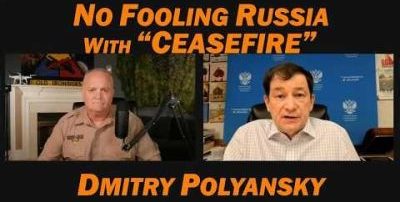
“Historic Russia”: The Land Putin Will Not Give Back
or go to
Aletho News Archives – Video-Images
From the Archive
How Ukraine Tortured and Slaughtered Donbass
By Kit Klarenberg | Al Mayadeen | July 11, 2024
Almost immediately after the proxy war erupted, ISIS-tier footage of the torture and murder of Russians in Ukrainian custody emerged.
On July 6th, the New York Times published an astonishing investigation: In Ukraine, Killings of Surrendering Russians Divide an American-Led Unit. The article documents in grim detail how Chosen Company, an international volunteer battalion for Kiev, routinely executes Russian prisoners of war. It is the very first mainstream admission that this practice – a brazen breach of the Geneva Conventions, and a grave war crime – is widespread among Ukraine’s fighters, both foreign and homegrown. … continue
Blog Roll
 Aletho News
- BRITAIN’S WARNING: PREPARE FOR WAR
- “Historic Russia”: The Land Putin Will Not Give Back
- How the Cambridge Analytica scandal still haunts Mark Zuckerberg
- The Ongoing Cancellation Campaign Against a Dissenting Academic in Norway
- Yemen and ‘the Houthis’: Challenging Sami Hamdi’s Narrative
- No, Christians did not invent Zionism
- AIPAC-led lobbying network opens branches in Cypriot, Greek parliaments
- Araghchi blasts ‘parasitic’ alliance as US taxpayers pay for Israel’s war on Iran
- Easy fix for Europe’s chaos? Stop fueling war against Russia
- Putin’s key remarks on peace talks and Europe’s ‘schizophrenia’
- If Americans Knew
- An error has occurred; the feed is probably down. Try again later.
- No Tricks Zone
- Two New Studies Find Thwaites Glacier Melt Cannot Be Driven By Human Activity Or A Warming Ocean
- E-Cars Reduce CO2 Emissions By Only 41% Compared To Internal Combustion Engine Vehicles
- Predictions Made By Renowned Climate Professor Over Past Decades Have Been Proven To Be Poor
- New Study Suggests Large Regions Of The Pacific Ocean Have Been Cooling For The Last 80 Years
- Germany’s Green Energy Debacle: High Energy Costs Force Kahla Porzellan to Close After 182 Years!
- New Study: 50 Years Of The Most Aggressive ‘Net Zero’ Policies Can Only Affect The Global Climate By 0.03°C
- US September “Heat” Was No Record…Many Records Set Decades Ago
- Latest European Green Energy Debacle; Portugal’s Largest Flagship Solar Park Insolvent!
- Green Energy Debacle: German Expert Professor Fritz Vahrenholt Warns Of Severe Economic And Social Consequences
- Two More Paleo Reconstructions Affirm Meters-Higher Sea Levels Across Ireland, Brazil 7000-6000 Years Ago

