Israeli nukes aimed at terrorizing world: Ralph Schoenman
Press TV interview with Ralph Schoenman | January 19, 2014
Press TV has conducted an interview with Ralph Schoenman, author of Hidden History of Zionism, from Berkeley, California, to discuss Israel’s use of nuclear bombs to terrorize and dominate populations with the help of the United States.
What follows is a rough transcript of the interview.
Press TV: First of all, with this report in, will there be any political or legal implications for those who assisted Israel in acquiring these nuclear weapons?
Schoenman: The question is really going to the relationship of imperialism to the Zionist [entity] from its inception, in specific terms now the issue of the use of nuclear weapons.
There is a book,The Unspoken Alliance: Israel’s Secret Relationship with Apartheid South Africa, by Sasha Polakow-Suransky, which details the joint development of nuclear weapons by including neutron bombs by Israel and South Africa, and their testing.
The well-known figure Mordechai Vanunu – who was kidnapped by the Israelis when he disclosed the evidence of the Israeli preparations for nuclear capacity and testing of weapons, indeed, with the full panoply of evidence pertaining to this – was kidnapped, taken to Israel and held in incommunicado for 18 years.
There is a very sorted and menacing history of the use of these weapons to menace peoples across the world. I want to give a specific example in illumination of this, namely ‘View of the Cameroon Disaster…’, which Dan Fisher wrote about in the Los Angeles Times on August 27, 1986.
Death occurred in which people were found frozen in place as if they have been killed by gas. This was an event in 1986 in Cameroon – it was immediately described as an event in which the Israelis were involved. The Israeli infantry troops were soon to be on the scene. In fact, Shimon Perez, who was the former Foreign Minister and Prime Minister of Israel, was quickly on the scene with a team.
Indeed, the evidence about this was documented by Dan Fisher in the Los Angeles Times, as I’ve mentioned, but also there was a detailed account by the Cameroonian journalists which specified the role of the Israelis and the evidence of a neutron weapon: ‘The Lake Nyos Disaster 20 Years After: Revisiting Israeli Connection’, by Dibussi Tande.
My wife and I had a role in this expose because after the time we flew to the big island of Hawaii where leading volcanologist in the island of Hawaii was involved in the report on what occurred in Cameroon, he confirmed that the claims that this was the result of gases emerging from a lake with presumptive latent volcano that emitted gases in Lake Nyos, those gases then reached the atmosphere in causing thousands of people to die in their tracks frozen, while no damage to property occurred, was quickly exposed as a myth.
In fact, what we’re dealing with here is a neutron weapon. One of the people who’s most associated with the neutron bomb, Sam Cohen, who was working with the RAND Corporation in the United States, has detailed the neutron weapon.
There is no question whatsoever, given what Vanunu has exposed, given what evidence there is in Cameroon, that neutron weapons have been used and tested by the Israelis with the approval and collusion of the United States and the imperial powers notably France.
This is not a new development. The story is important. It is the culmination of a series of documentations, revelations over a period of 20, 30 and 40 years. These are crimes against humanity.
These are ongoing threats to the peoples of the world. They define the relationship of Israel and the Zionist [entity] to imperialism and the utilization of the nuclear capacity and of neutron bombs and weapons of this nature to terrorize the populations they seek to dominate, whose sovereignty they wish to destroy.
Related article

FBI Arrests Michael Grimm’s Girlfriend; Meanwhile Another Congress Member Implicated

Diana Durand (L) has been arrested in connection with illegal campaign contributions allegedly made to the 2010 campaign of New York Republican Congressman Michael Grimm (R)
By Richard Edmondson | Fig Trees and Vineyards | January 18, 2014
Diana Durand, a Texas woman who apparently has been romantically involved with Congressman Michael Grimm, has been arrested and charged with illegally funneling money into the New York congressman’s 2010 campaign.
She is also accused of steering “straw donations” into the campaign of yet another congress member, Rep. Aaron Schock (R-IL), according to the New York Daily News.
A straw donation is a donation to a political campaign made by one person, though under another person’s name. It is a way of getting around legal limits on the amount of money that can be contributed to political candidates.
Schock, like Grimm, is an avid supporter of Israel.
Durand is 47-years old and was arraigned in federal court in Houston on Wednesday. She has hired an attorney, Stuart Kaplan, who is a longtime associate of Grimm, both having served in the FBI.
Grimm left the FBI in 2006, was elected to Congress in 2010, and in 2012 the FBI opened an investigation into him over possible illegal campaign donations to his 2010 congressional campaign made by supporters of Israeli Rabbi Yoshiyahu Pinto.
Durand is free on $50,000 bond and is scheduled to appear in court on January 30. The following is from the New York Daily News account:
The single mother of one worked with Grimm before his election when he launched a trucking company near Houston. Records list her brother and sister-in-law as executives at the firm.
Sources said Durand and Grimm, 43, who is divorced, were involved romantically, and that she visited him in Washington after his election.
Durand was busted Friday, nearly five months after a Brooklyn judge first ordered her arrest. Feds spent the intervening months in an unsuccessful bid to win her cooperation in an ongoing probe into allegations that Grimm and supporters encouraged donors to make illegal contributions to his 2010 campaign, people with knowledge of the case said.
As I reported previously, campaign donations totaling more than $500,000 were reportedly solicited on Grimm’s behalf by a top Pinto aide, Ofer Biton, who was arrested in 2012 for immigration fraud and who pled guilty to that charge last August.
The FBI had sought to have Biton turn state’s evidence against Grimm, but he has refused, and apparently Durand intends doing likewise. Also as I repoted before, Grimm has friends in high places—Israel—where he reportedly maintains close ties to Prime Minister Benjamin Netanyahu, and according to reports, the Israeli police have done their best to sabotage the FBI’s investigation.

Grimm with Benjamin Netanyahu
Schock would appear to be the second congress member implicated in what seems to be a widening investigation. According to the Chicago Tribune:
Schock, 32, is a prolific fundraiser serving his third term in Congress. He had more than $2.9 million in his war chest in September, when the most recent campaign-finance reports were filed.
The House Ethics Committee has been examining Schock’s fundraising after reports that in 2012, he solicited $25,000 for a super PAC, in excess of a $5,000 limit for lawmakers asking for money for that kind of independent-expenditure group.
The Tribune also reports on a statement issued by Schock’s office in which a spokesperson said, “This literally is the first our office has heard of this issue.”
In March of 2010, Schock and 326 other members of Congress signed onto a letter to Secretary of State Hillary Clinton affirming their “commitment to the unbreakable bond that exists between our country and the State of Israel and to express to you our deep concern over recent tension.”
The “recent tension” referred to by the signatories of the letter is an incident I referred to in my first article on the Grimm investigation. On March 9, 2010 the Israeli government announced the construction of 1,600 new homes, for Jews only, to be built in East Jerusalem. The announcement coincided with a state visit to Israel by US Vice President Joe Biden, and was viewed by many as insulting to America. Clinton referred to it as “deeply negative” for US-Israeli relations.
And as I also noted:
Coincidentally, simultaneous to the slight against Biden, the parents of Rachel Corrie were in Israel for the start of their civil trial charging the Israeli military in the wrongful death of their daughter.
Biden’s response to the announcement of the 1,600 new homes was to issue a servile statement in which he declared that “there is no space between the United States and Israel,” whereupon he boarded a plane and jetted home to America without offering any words of support to the Corrie family.
Schock and the other signers of the letter went on to state:
Our valuable bilateral relationship with Israel needs and deserves constant reinforcement. As the Vice-President said during his recent visit to Israel: “Progress occurs in the Middle East when everyone knows there is simply no space between the U.S. and Israel when it comes to security, none. No space.” Steadfast American backing has helped lead to Israeli peace treaties with Egypt and Jordan. And American involvement continues to be critical to the effort to achieve peace between Israel and the Palestinians.
We recognize that, despite the extraordinary closeness between our country and Israel, there will be differences over issues both large and small. Our view is that such differences are best resolved quietly, in trust and confidence, as befits longstanding strategic allies. We hope and expect that, with mutual effort and good faith, the United States and Israel will move beyond this disruption quickly, to the lasting benefit of both nations.
Born of Morrocon Jews, Pinto is one of the richest rabbis in Israel and is viewed by some as a religious and financial “guru” and a “wonder rabbi.” His adherents in the past have included some of the wealthiest oligarchs in the world and also Israeli political leaders:
In Israel, the list of those seeking Rabbi Pinto’s advice reads like a high-society gossip column: Multi-millionaires Lev Leviev and Nochi Danker, opposition leader Tzipi Livni and former Industry Minister Benjamin Ben Eliezer, who the rabbi supposedly brought out of a coma earlier this year. It is even rumoured that Prime Minister Benjamin Netanyahu consults him.
Now, however, he seems to be in hotwater with Israeli police, who have charged him with attempting to bribe a police official—apparently in a bid to sabotage the FBI’s investigation of Grimm. The FBI is hoping to have Pinto testify against Grimm, and reportedly is in possession of a wiretap audio in which Israeli police can be heard threatening the rabbi.
And finally, as I reported yesterday, Grimm apparently isn’t the only Congress member who has accepted donations from Pinto’s wealthy followers. House Majority Leader Eric Cantor is reported to have as well.
Cantor’s ties to Pinto have also been commented upon by blogger Richard Silverstein, who has written extensively on the FBI’s investigation of Grimm:
The key question is whether the techniques and solicitors used in Grimm’s campaign match those used by Cantor. If so, then the FBI is very interested in Cantor. If Cantor was smarter than Grimm and didn’t use mafiosi to collect cash as Grimm did, then he may not get into trouble. But the very fact that Cantor dipped into Grimm’s cookie jar so heavily is mighty suspicious. Who knows where it will lead?
Grimm, by the way, is not Jewish but of Italian descent, which makes us wonder why the Israelis are apparently so keen to protect him—and after all, there are plenty of Israel supporters in Congress. But as Silverstein notes, it’s insurance:
To be clear, I don’t have a smoking gun that points to Netanyahu involvement in sabotaging the FBI investigation. But I do have a series of strong circumstantial evidence that leads in that direction. But why would Bibi or Sara care about this enough to take such risky actions as agitating the FBI? Let’s return to that grand strategy of electing even more Israel-friendly GOP members of Congress. If Michael Grimm was their model to see whether Pinto was a new source of campaign cash, they needed to protect him if he might be going down. Rather than lose their investment and shut down this conduit for millions in new campaign funding, they’d go to the mat to help Grimm.
More background on Bibi’s strategy in dealing with the U.S. political process: he’s found that presidents may not like him because they are slightly more independent than members of Congress. But Congress is in his back pocket due to that campaign largess I mentioned earlier. Bibi is hated in the White House but loved (or feared) in Congress. When he can’t get an invitation to the White House, he goes over the president’s head and gets to address a Joint Session of Congress.
This is the same strategy he and the Lobby are following regarding the Iran sanctions legislation. The president doesn’t want new sanctions. Most sane members of Congress don’t want them either. But the Lobby and Israel do. They want a war with Iran. So they want to sabotage Obama’s strategy of negotiating his way out of the impasse. How best to do this? Don’t confront Obama head-on because he’s an immovable object on this matter. But do an end-around. Activate all those pro-Israel IOUs in Congress.
So the more Michael Grimms there are in Congress, the more Israel has its own interests guaranteed in the halls of Congress.
And of course, there’s no shortage of money. In fact, in a manner of speaking, there’s money to burn:

Rabbi Pinto, center, surrounded by oligarchs, including Israeli diamond billionaire Lev Leviev, far right.
Cantor Tied to Controversial Rabbi at Center of Probe


By Richard Edmondson | Fig Trees and Vineyards | January 17, 2014
Yesterday I posted an article on the FBI investigation of New York Congressman Michael Grimm in connection with campaign donations to his 2010 campaign made by supporters of Israeli Rabbi Yoshiyahu Pinto. If you haven’t read the article, it’s here.
Pinto is listed as one of the richest rabbis in Israel (he is rabbi to some of the world’s wealthiest oligarchs), and in the article I speculated on whether other supporters of Israel now serving in congress may have received donations from the same source.
Well, a news article posted in 2012 would seem to indicate that there are, and that one of them is Eric Cantor, one of the most powerful members of Congress, and a staunch supporter of the Jewish state (Cantor is himself Jewish). The article in question is posted at Al-Monitor. Here is an excerpt.
Indeed, detailed examination of federal campaign filings by Al-Monitor indicate that the top seven donors to Cantor’s 2008 campaign are followers or associates of Rabbi Pinto. Together, the group of close Rabbi Pinto associates that made up Cantor’s seven top donors in 2008 gave about $330,000 to the Virginia Republican–almost 10% of the $3.9 million total Cantor raised for the 2008 race. None of them are from Virginia, and some had not previously given to US political campaigns.
Josef Ben Moha of New Jersey donated $48,100 to Cantor’s Victory Fund on April 11, 2008 — his only campaign donation in US records. Moha is listed as managing director of Livono (or Livorno) Partners, whose CEO Ben Zion Suky also donated $48,100 to Cantor on the same date. Suky serves as the “right-hand man … translator, gatekeeper and conduit to the outside world” for Pinto, the Forward reported last year. He also owns property with Rabbi Pinto’s wife, as well as a porn DVD distribution business.
Haim Milo Revah, a real estate developer from California who has credited Pinto with offering successful business advice, donated $48,100 to Cantor on April 21, 2008, records show.
Real estate broker Haim Binstock, and his wife his wife, Gallya Binstock, together donated $91,600 to Cantor’s campaign on Oct. 31, 2008. Binstock’s business partner Ilan Bracha, and his wife, Mati Bracha, also donated $91,600 to Cantor’s campaign on the same date, campaign filings show. In 2008, Binstock and Bracha Manhattan property they planned to donate for use as a synagogue for Rabbi Pinto, they told The Wall Street Journal last year.
More recently, George Klein, described by The New York Times as a longtime Republican power broker who attends Pinto’s Shuva Israel congregation at 155 E. 58th St. in Manhattan, donated $50,000 to Cantor’s Victory Fund on Oct. 18, 2011, campaign filings show. Klein, who has donated to several other Republican candidates in smaller amounts, is also a member, with Cantor, of the Republican Jewish Coalition.
As I noted in yesterday’s article, Grimm is reportedly a close confidante of Israeli Prime Minister Benjamin Netanyahu, and the Israeli police seem to be trying to deliberately sabotage the FBI’s investigation of him.
The FBI is hoping to have Pinto testify against Grimm, but the rabbi has been charged in Israel with bribing a police official, a development which would compromise his credibility as a witness–presumably against Grimm or any other member of Congress who may have broken the law. A wiretap reportedly in the possession of the FBI has Israeli police threatening Pinto.
The case has been written about extensively by blogger Richard Silverstein, who has reported that among the allegations are that donors to Grimm’s 2010 campaign were promised green cards in return for their support (campaign contributions by non-citizens are illegal) and also that some of the donations exceeded the legal limit.
“There is no evidence of any impropriety in Cantor’s contacts with Rabbi Pinto,” notes the 2012 Al-Monitor report.
Related article

A New Year Just Like the Old Year
Jennifer Rubin Wants More War
By Philip Giraldi • The Unz Review • January 16, 2014
Israel’s friends frequently claim that critics hold Tel Aviv to a higher standard than they do other countries that have similar or worse records on human rights. Actually the truth is quite the reverse, with Israel frequently able to escape censure for actions that would normally result in the imposition of sanctions by the United Nations Security Council and condemnation by other international bodies. I am of course referring to the continued brutal Israeli occupation of much of what remains of Palestine and the ongoing colonization of land that is being appropriated illegally, activity that is only allowed to continue because of Washington’s willingness to protect Israel no matter what cost to other American interests.
Some of the gyrations that Israel’s supporters engage in would be describable as comic if the consequences of their obfuscation were not so serious. And there is no one better at throwing mud than Jennifer Rubin, the Washington Post’s designated “Right Turn” blogger who is one of those folks who believe that being in love with Israel is a core conservative value. Rubin can hardly write about any current issue without somehow turning the discussion to poor little Israel, or, alternatively, to evil Iran.
On January 5th, Rubin produced what for her might be considered a ruminative piece entitled “What mattered in 2013.” She found “two developments… more significant” than anything else that happened in the past year, namely gay marriage and the continued perfidy of those danged Muslims. Leaving the gay marriage issue aside, Jennifer sees “Iran and its junior partner Syria in ascendancy” while Bashar Al-Assad of Syria “murdered more than 130,000” of his own people and crossed red lines with “near impunity,” a “monstrous event [that] Elliott Abrams tells us, has ramifications far beyond Syria.”
Abrams, a convicted felon and notorious liar but true blue for Israel, believes that inaction in Syria “has been noted in Jerusalem” and will send a signal and encourage Moscow and Beijing to challenge Washington.
Hezbollah meanwhile has “expanded its missile cache” and obtained “a strategic victory” together with Iran and will win in Syria while the US president “thinks up reasons not to act.”
Iran is behind all the instability, benefiting from “advanced centrifuges” and “international acquiescence” it is “on the cusp of obtaining a nuclear arms capability” even as it “pursues terrorism.” Rubin notes that “Sanctions have not dislodged the regime nor caused it to rethink its nuclear arms ambitions” but then goes on to recommend that “Congress can pass sanctions over White House objections and thereby force Iran to capitulate” because “If Congress finds a nuclear-armed Iran horrifying and wants to avoid a Middle East war it will need to pass a final sanctions bill, the last chance to peacefully disarm that mullahs.”
In another blog item posted on the following day, Jennifer is at it again, describing “Middle East bedlam.” She excoriates Secretary of State John Kerry for his eminently sensible suggestion “that Iran might join Syrian peace talks in Geneva” which she describes as “rewarding bad behavior” before stating that Washington has “no will to check Iranian hegemonic ambitions in the region.”
Three hours later, Rubin was at it again explaining how “Iran sanctions opponents [are] desperate,” noting that as of that time 49 senators had signed on to the new Iran bill, which would put an end to talks intended to resolve outstanding issues relating to the Iranian nuclear program. Interestingly, she observes that four “traditionally pro-Israel democrats” had yet to sign, suggesting that she appreciates very well that all the rationalizations about how Iran is a threat to the US are bogus and that it is all about Israel, just as it always is for her.
Rubin observes that the “anti-sanctions crowd remains a gaggle made up of far-left activists, State Department sycophants and reluctant Democratic chairmen dragooned into opposing the measure by the White House.” The lefties, apparently, have been suborned into opposing the measure by a “hit squad and consistently anti-Israel gang” in the progressive media while the “small cadre of ex-State Department and intelligence community hacks” fill out the roster of those who hate American National Security, apparently a subset of American Exceptionalism. Thank God true American heroes like Senators Schumer, Gillibrand, Cardin and Menendez are “showing fortitude on sanctions” and doing what it takes to “dismantle [Iran’s] illegal nuclear weapons program.”
Three days later Rubin again describes how “Obama Iran gambit is unraveling.” She describes the negotiations in Geneva as “a giant stall by Iran to allow it to progress with its nuclear weapons program while getting sanctions relief.” How does she know that? She quotes no less an authority than Mark Dubowitz, a Canadian who claims to be an expert on the Middle East because he lived there but it turns out that he only resided in Israel. He is currently president of the neocon Foundation for Defense of Democracies and heads a staff of 32 dedicated to finding more punishing ways to sanction Iran. Dubowitz claims that “Iran is building an industrial-size nuclear infrastructure that will give it multiple overt and covert pathways to a bomb.” Rubin adds that “either president Obama was snookered or he is snookering us” before quoting Josh Block, a former AIPAC communications director currently heading The Israel Project, who claims that “the ‘interim deal’ is actually just another stalling tactic by Iran… [but] Congress is not fooled. The American people are not fooled. Iran is playing us for the fool.” Block, for what it’s worth, is an Israel Firster who believes that anyone who uses the expression Israel Firster is a “borderline anti-Semite.”
Rubin concludes by warning that “… Congress needs to step forward and exercise leadership. If not, Iran will have gotten the bomb, relief from sanctions, encouragement for its hegemonic ambitions and a nuclear blackmail card. In fact, it’s most of the way there.”
First of all, it is perhaps not surprising that everywhere one turns with Jennifer Rubin Israel comes up, but she lacks the integrity required to appreciate that most of the criticisms she levels against the feckless Arabs and Iranians would apply equally or even more to Israel’s behavior. I sometimes think that it would be a wake-up call for her and her associates if one were able to arrange for all 100 Senators to vote anonymously, without fear of being exposed, on whether or not they really think that Iran threatens the United States. I would bet that an overwhelming number would indicate “no.” But, unfortunately, congress does not vote secretly. A veto proof majority of Senators now appear to be willing to vote for new Iran sanctions, the result of “a massive phone campaign by Concerned Women for America (CWA), a 500,000-member Christian and Zionist conservative group” and by the Emergency Committee for Israel. The White House is correctly warning that voting for new sanctions equates to voting for war.
So the question becomes “Why is the United States inching away from a possible agreement with Iran, a country that has been unfairly designated enemy number one since 1978?” I would suggest that Jennifer Rubin and the hacks (her term) that she assembles to say what she wants to hear have been a major element in pressuring congress and the rest of the media to line up squarely behind Israel, no matter what the issue and no matter what the genuine US interests might be. Rubin proudly reports that former Senator Scott Brown recently e-mailed her “One of the things I miss most [since leaving the Senate] is not being able to fight for Israel.” One has to wonder why any American Senator should be saying anything like that, but the irony apparently eludes Rubin.
And Jennifer is not above repeating over and over again her basic themes: that Iran wants to destroy Israel, that it has a nuclear weapons program, and that its intentions are both aggressive and hegemonic. Unfortunately all of her power points are either flat out false or not demonstrated by available evidence. According to the US intelligence community, Iran abandoned plans for a nuclear weapon in 2003 and does not currently have a program to develop one. Even Israeli intelligence agrees that is so. And Iran has never actually threatened to attack Israel. In fact, it hasn’t attacked anyone since the seventeenth century.
When Rubin launches her diatribes, she assumes that the reader agrees that Iran has a nuclear weapons program and that it is a somehow a threat to the rest of the Middle East as well as to Europe and the United States. She piles surmise upon innuendo while making no real effort to explain how Iran with its miniscule military budget and surrounded by enemies is actually a threat, possibly because it is an impossible case to make. And as for poor beleaguered Israel, with its more than 200 secret nukes and delivery systems, she certainly must know that Iran could be destroyed in a matter of hours if Prime Minister Benjamin Netanyahu should choose to give the order. Given the fact that the breathtakingly belligerent Netanyahu is far nuttier than anyone running around loose in Iran, he is the real threat to peace that comes out of the Middle East, but it is a tale that Jennifer Rubin is unlikely to tell.
Related articles
Ariel Sharon: His Sabra and Shatila Legacy – An Eye Witness Account
By Felicity Arbuthnot and Dr. Ang Swee Chai | Palestine Chronicle | January 15, 2014
As Israel buried Ariel Sharon amid eulogies from world figures, Tony Blair, a Butcher of Baghdad, paid a tribute to the Butcher of Beirut which included the line that Sharon: “didn’t think of peace as a dreamer, but did dream of peace.” Also that: “ … he sought peace with the same iron determination” as he had fought (read slaughtered, across the Middle East.) Re-writing history does not come more blatant, but Blair was ever good at fantasy, think “weapons of mass destruction” and “forty five minutes.”
Surgeon, Dr Swee Chai Ang went to help the wounded of Beirut after the 1982 Israeli invasion and witnessed the Sabra and Shatila massacre of unarmed men woman and children, Palestinian and Lebanese, between the 15th-18th September,1982.
In her book “From Beirut to Jerusalem”, she describes the reality:
“As I walked through the camp alleys looking at the shattered homes (many of these houses had just been rebuilt following earlier bombardments by Israel) I wanted to cry aloud, but was too exhausted emotionally even to do that. How could little children come back to live in the room where their relatives were tortured and then killed? If the Palestinian Red Crescent Society could not function legally, who was going to look after the widows and orphans?
“Suddenly, someone threw his arms around me. It was Mahmoud, a little child who had broken his wrist while trying to help his father rebuild their broken home. He had survived and his wrist had mended, but now his father was dead. Mahmoud cried, but he was glad I was alive because, from his hiding place during the massacre, he had seen the soldiers taking us away. He thought they had killed me.
“Soon I was surrounded by a whole lot of children. Kids without homes, without parents, without futures. But they were the children of Sabra and the children of Shatila. One of them spotted my pocket camera, and wanted a picture taken. Then they all stood together, wanting their pictures taken. “They wanted me to show their picture to the people of the world. Even if they were killed and the camps were demolished, the world would know that they were the children of Sabra and Shatila, and were not afraid. As I focused my camera, they all held up their hands and made victory signs, right in front of their destroyed homes, where many had been killed. Dear little friends, you taught me what courage and struggle are about.”
Dr Swee Chai Ang founded Medical Aid for Palestine as a result of her experiences in Beirut and Sabra and Shatila. On the eve of Ariel Sharon’s burial, she wrote the following. It is published with her permission:
The passing of Ariel Sharon brought back the memories of the horrors of the Sabra Shatilla massacre of September,’82. I arrived in August that year as a volunteer surgeon to help the war victims of Lebanon. The people in Lebanon were wounded, made homeless and lost precious friends and families as the result of ten weeks of ruthless bombardment. That was the “Operation Peace for Galilee”, launched by Sharon who was then the Defence Minister of Israel in June 1982.
No one knew how many were killed as the result of that offensive – the London newspapers estimated a thirty thousand with many times more made homeless. When a ceasefire was agreed with the evacuation of the Palestine Liberation Organisation, Sharon broke that ceasefire and drove tanks under air-cover launching a land invasion into Lebanon’s capitol Beirut. Part of the tanks sealed Sabra Shatilla and prevented the helpless civilian victims from escaping, while sending in Israel’s allies into the camps to carry out the most brutal massacre of defenceless women, children and old people under Israel’s watch. The blame was quickly and deliberately shifted to the Lebanese as perpetrators of the massacres, so that today no one can mention that massacre without blaming the Lebanese Phalange, yet forgetting the Israeli organisers of that event.
I worked in Gaza Hospital in Sabra Shatilla during the massacre trying to save the lives of a few dozen people, but outside the hospital hundreds were killed. My patients and I knew that Sharon and his officers were in control, and without them the massacre would not be possible. The residents of Sabra Shatilla could at least have escaped. Now more than 30 years later, we know that the killers were brought in by Israeli armoured cars and tanks, obeyed Israeli commands, their paths lit by Israeli military flares, and some of them also wore Israeli uniforms. The mutilated bodies of the victims were thrown into mass graves by Israeli bulldozers.
This Sharon continued on to be Israeli Prime Minister, and built the Wall which imprisoned the Palestinians in the West Bank. Sharon’s Wall cut through their lands, separating people from their homes, children from their schools, farmers from their orchards, patients from hospitals, husbands from wives, and children from parents. He marched into the Al-Aqsa Mosque in Jerusalem 2000 with fully armed Israeli soldiers and tried to have the West believe that his intention was for peace.
He was responsible for other massacres such as in Jenin, Qibya and Khan Yunis just to name a few. The older generation in Khan Yunis in Gaza remembers that he killed all the grown men in the massacre of 1956 and left only the women and children to bury the dead.
I thought these facts should be publicised. Those who eulogise Sharon in his role of building Israel should also remember that he built his nation over the dead bodies of the Palestinian people, and the continued dispossession of those who are still alive.
– Dr Ang Swee Chai is the author of From Beirut to Jerusalem, Published by International Librarie, Beirut12 January 2014.
– Felicity Arbuthnot. is a journalist and activist who has visited the Arab and Muslim world on numerous occasions. She has written and broadcast on Iraq, her coverage of which was nominated for several awards. She was also senior researcher for John Pilger’s award-winning documentary Paying the Price: Killing the Children of Iraq.
Related articles
IRS Targets Cuba Solidarity Group
Weekly News Update on the Americas | January 12, 2014
The New York-based nonprofit Inter-religious Foundation for Community Organization (IFCO) announced on Jan. 6 that the US Internal Revenue Service (IRS) has recommended ending the group’s 501(c)(3) tax-exempt status. Founded in 1967 by the late Rev. Lucius Walker [see Update #1048], IFCO is the first national foundation in the US controlled by people of color. It is probably best known as the sponsor of Pastors for Peace, which for the past 22 years has organized the US-Cuba Friendshipment Caravan, an annual shipment of humanitarian aid to Cuba; Pastors for Peace has also provided humanitarian aid for Nicaragua, Haiti and other countries.
The IRS’s two-year investigation started with a letter to the service from two members of Congress—Rep. Brad Sherman (D-CA) and Rep. Sue Myrick (R-NC)—suggesting that IFCO was tied to terrorist organizations because of some $1.2 million in aid it sent to the people of Gaza through the Viva Palestina group in 2009. In its report, the IRS cites a “comprehensive report” by Steve Emerson’s notoriously inaccurate Investigative Project on Terrorism to suggest that some of the aid may have gone to the Hamas organization, which the US lists as a terrorist group. The IRS also charges that the Friendshipments and some aid for US medical students in Cuba may violate the 50-year US embargo against Cuba. In an appeal by New York attorney Martin Stolar, IFCO denies sending aid to Hamas; notes that the relevant US agency, the Office of Foreign Assets Control (OFAC), has never penalized it for the Friendshipments; and states that OFAC has licensed the medical students to spend money in Cuba.
IFCO has asked supporters to contact US Congress members “and let them know that we need their support. Ask them to contact the Treasury Department to ask them to stop this political persecution and harassment against IFCO.” Treasure can also be contacted directly by fax at 202-622-6415 or via internet at http://www.treasury.gov/connect/Pages/contact-us.aspx. (IFCO letter 1/6/14; Vice (Montreal) 1/8/14; Ahora (Cuba) 1/10/14 from Radio Havana)
Related articles


Flag of paradox
By Kinnan Zaloom | MEMO | January 13, 2014
All my life, the flag of Palestine has been ingrained deeply into my brain. From news reports that my father used to consume incessantly to the many protests I attended as a child, the bold colours of the flag are instantly recognisable to me. Recently, however, have I started to question the Palestinian flag. How is it that an unrecognised state, supposedly a state of non-people, has been able to identify itself with a national flag?
I could make this post into a diatribe on why flags should be obsolete, but I will focus on the one that is supposed to be most important to me. Personally, I find the flag repulsive. Everything from the harsh colours to the simplicity and lack of Palestinian identity makes me think: why this flag? Now, in order to justify my hate towards the blocks of colour that represent a nation, I took it upon myself to research its origins so as to have a legitimate reason to express my distaste towards it. And oh how I was rewarded.
The majority of Arabian flags, those that contain the colours black, green, red and white, are based on the flag of the Arab Revolt (1916–1918). For all those who believe in the beauty and meaning of the Palestinian flag, or in other similar Middle Eastern flags, they can owe their gratitude to Sir Mark Sykes for it was he who designed and produced the fag of the Arab Revolt. The same man who was undoubtedly instrumental in aiding the creation of the state of Israel on Palestinian land.
Sir Mark Sykes is infamous for his part in the secret Sykes-Picot Agreement between Britain, France and Russia (The Triple Entente) that determined their intended spheres of influence in the Middle East, should the Ottoman Empire be defeated in the First World War. The agreement led to France’s control over Syria, the formation of the Arab states and ultimately the creation of the state of Israel.
So what does Sykes have to do with the flag? During the First World War, the Triple Entente was up against the Central Powers, which included the Ottoman Empire. Now the British, not having enough influence in the countries surrounding the Ottoman Empire, sought to establish some sort of revolt to aid them in defeating one of the key players in the Central Powers. Sykes, then a diplomat, established a relationship with the Emir of Mecca, Hussein bin Ali. With the promise of an Arab state free of outside influence, whether Western or Ottoman, the Emir was persuaded to lead the Arab Revolt against the Ottomans. Sykes, seeking to establish a feeling of Arabness, a sense of nationality, took it upon himself to design the Flag of the Arab Revolt. Using the colours of previous Arabian caliphates, the production of flags by the British Army in Cairo began. And the only input any Arab had in the design was the Emir, who expressed his distaste towards the shade of red used.
Sure, some might argue that the Palestinian flag’s origins are now irrelevant, as the flag was adopted by the Palestinian struggle and has come to represent it. Of course, people use it as a sign of solidarity with the Palestinian effort in a true an honest manner, but surely a Palestinian, or any Middle Eastern identity, should be established free of all Western intervention? This should also apply to borders and constitutions, which the Western powers have influenced not only in the Middle East, but also worldwide.
An established identity and a solid cultural origin are vital in order to be effective in attaining Palestinian rights. Whether this means a respected constitution, true economic independence or a secure social order, we need to work stronger together. Whatever the political or social ideology, religious or racial background, we cannot work independently to attain a free Palestine. Furthermore, I believe an elevated sense of nationalism does not help. We must seek to clear corruption in the Middle Eastern conflicts, mainly from the West but also from Middle Eastern governments. Nationalism only serves a sense of selfish pride and visceral divisions.
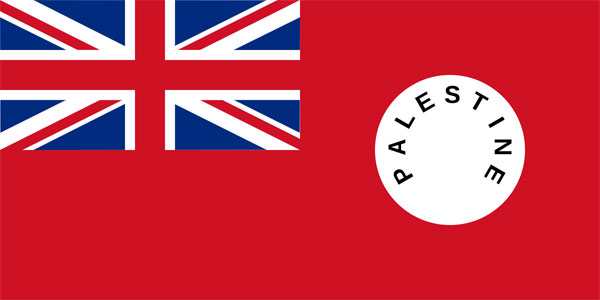 No composition of colour and shapes will help unless it was subliminally controlling, which in any case would be immoral to use anyway. So next time you decide to hoist a flag in solidarity with the Palestinian struggle, remember that it was Sir Mark Sykes who created it in order to advance the occupation. The flag of Palestine is a paradox. You might as well hoist up the flag of Mandatory Palestine, because unlike Israel it was not formed from the ideals of Mark Sykes.
70 NEOCONS PETITION CONGRESS TO EFFECTIVELY ALLOW ISRAEL TO SAY WHEN THE U.S. SHOULD ATTACK IRAN
By Damian Lataan | January 10, 2014
Seventy senior Israeli-centric neoconservatives have written an open letter to Congress imploring them to do more to ensure Iran complies with the conditions of any agreement finally reached with the P5+1 over Iran’s nuclear program.
While the neocons are ostensibly asking Congress to ensure compliance, it is clear that their real aim is to convince members of Congress to support the bill currently passing through the Senate which calls for tighter sanctions against Iran in the event of any waywardness on Iran’s part.
The neocons are eager to see the bill currently passing through the Senate with enough support to make it veto-proof, not so much because they are concerned about Iran’s so-called nuclear weapons program – there’s still not a skerrick of hard evidence that Iran has a nuclear weapons program – but, rather, because embedded within the bill is this clause:
…if the Government of Israel is compelled to take military action in legitimate self-defense against Iran’s nuclear weapon program, the United States Government should stand with Israel and provide, in accordance with the law of the United States and the constitutional responsibility of Congress to authorize the use of military force, diplomatic, military, and economic support to the Government of Israel in its defense of its territory, people, and existence…
Essentially, the clause is an automatic trigger for the US to attack Iran at any time the Israelis choose to launch a first strike – regardless of whether President Obama is in favour or not.
Partial list:
Elliott Abrams
James Kirchick
Dr. Fouad AjamiIrina Krasovskaya
Dr. Michael Auslin
Dr. William Kristol
Congresswoman Shelley Berkley
Dr. Robert J. Lieber
Josh Block
Senator Joseph I. Lieberman
Dan Blumenthal
Tod Lindberg
Max Boot
Mary Beth Long
Ellen Bork
Dr. Thomas G. Mahnken
Ambassador L. Paul Bremer
Dr. Michael Makovsky
Dr. Eliot A. Cohen
Ann Marlowe
Senator Norm Coleman
Clifford D. May
Ambassador William Courtney
Robert C. McFarlane
Seth Cropsey
David A. Merkel
Jack David
Thomas C. Moore
James S. Denton
Dr. Joshua Muravchik
Dr. Paula J. Dobriansky
Governor Tim Pawlenty
Dr. Michael Doran
Dr. Martin Peretz
Mark Dubowitz
Danielle Pletka
Dr. Colin Dueck
John Podhoretz
Dr. Nicholas N. Eberstadt
Arch Puddington
Ambassador Eric S. Edelman
Stephen G. Rademaker
Douglas J. Feith
Dr. Michael Rubin
Dr. Jeffrey Gedmin
Randy Scheunemann
Reuel Marc Gerecht
Dr. Gary J. Schmitt
Abe Greenwald
Dan Senor
Related articles
Official 9/11 story crumbling, Washington blames Saudis
By Michael Rivero | What Really Happened | January 7, 2014
The official story of 9-11 is collapsing almost as fast as the Obamacare website. Most Americans are now well aware of the strange collapse of WTC Building 7, the video that captures the sound of the actual explosion that initiates the collapse of WTC7, the very strange behavior of the Secret Service as President Bush read about goats at Booker Elementary School. We have all seen the photographs that confirm the remains of demolition “cutter charges” in the remains of the towers. And we all know how the BBC reported that Building 7 collapsed 26 minutes before it actually happened. indicating a script was being followed (but alas, not carefully enough).
With the official story in free fall, Americans are wondering just who did this heinous deed. With the US Government itself the prime suspect, many are asking if the US Government had help from an outside nation, one with a long track record of world-changing dirty tricks.
There is a great deal of evidence that implicates the nation of Israel as a co-conspirator with the Bush administration. First, there was the massive Israeli spy ring uncovered in the United States just before 9-11, and how some of the “Dancing Israelis” arrested after being seen cheering and dancing as the World Trade Towers collapsed turned out to be Mossad spies! Then there was the strange case of Odigo, an Israeli-owned company whose New York offices received a warning about the attacks before the planes used in the attacks had even left the ground! All four of the hijacked planes departed from airport gates whose security was provided by the same Israeli security company. Israel has a long track record of playing dirty tricks against the United States and other countries, including the Lavon affair (framed on Egypt), Israel’s attack on the USS Liberty (initially framed on Egypt), and Israel’s smuggling a radio transmitter into Libya that was used to send fake messages that tricked President Reagan into bombing Libya.
As people start to seriously examine the plethora of evidence regarding Israel’s numerous perfidies it comes as no surprise that recently we have seen Israel’s “useful idiots” launch a propaganda campaign to claim that Saudi Arabia was behind the 9-11 attacks, based on a lawsuit brought against Saudi Arabia by the families of the victims. But anyone can bring a lawsuit against anyone for anything. That does not mean the lawsuit allegations are true. Nonsense lawsuits are a reality of the modern US court system, as are lawsuits staged primarily as political and propaganda stunts, which is what this appears to be. At the very least this propaganda is intended to deflect interest away from Israel. At worst, it is the start of the campaign to justify military invasion of that country, just as Saddam’s nuclear weapons were the excuse to invade Iraq, and the more recently (and thankfully failed) attempt to justify invasion of Syria by claiming Syria’s government was gassing their own people.
As I have mentioned before, the best way to tell if you are being lied to is to look for what should be there but isn’t. In the case of the claim that Saudi Arabia was behind 9-11, what should be there and isn’t is a motive for Saudi Arabia to do something like that.
George Bush had a motive to do 9-11. He needed that “new Pearl Harbor” to enrage Americans into the century of war called for by the Project For The New American Century. Israel certainly had a motive to do 9-11 and frame Muslims for it, to trick Americans into siding with Israel’s continued land grabs and wars against Israel’s enemies, with Israel’s agenda being (as it was with the Lavon affair, the USS Liberty, and the Libyan radio hoax) that Americans fight those wars for them!
Saudi Arabia does not have a history of dirty tricks, nor a demonstrated ability to carry out such deceptions. More to the point, Saudi Arabia has no motive to attack the United States. The Saudi princes have grown very rich indeed through the Petrodollar arrangement. Saudi Arabia buys many American products and weapons ($61 billion in 2011), and unlike Israel, the American taxpayer does not have to give them the money first with which to buy those weapons. Whereas Israel constantly takes money out of the US, the Saudis pour it in! Private Saudi investment in the US economy is over $400 billion. Saudi Arabia is a major creditor to the US Government. Exact figures are hard to find but Saudi Arabia has loaned the US Government hundreds of billions of dollars.
Saudi Arabia is not going to risk an attack on the US because all that wealth would vanish. The Saudi wealth inside the US would be frozen or seized, and the outstanding loans to the US would never be repaid. The “useful idiots” trying to save Israel by blaming 9-11 on Saudi Arabia have yet to come up with a motive for the Saudis to do something like 9-11 that risks losing all that cash.
Remember that Saudi Arabia was being framed for 9-11 right from the start. One of the accused hijackers, a Saudi Pilot named Saeed Al-Ghamdi, was still alive after 9-11 and sued the US Government for defaming him.
And finally, here is some common sense that totally undermines the attempt to frame Saudi Arabia for 9-11. If Saudi Arabia really wanted to hurt the United States, they don’t need to fly airplanes into skyscrapers to do it. All they have to do is ask for their money back, all at once. The resulting damage to the US financial system would make 9-11 look like a minor inconvenience in comparison.
And it would be perfectly legal for Saudi Arabia to ask for their money back.
Which is why we know that the claim that Saudi Arabia was behind 9-11 has no more basis in fact than the claim that Saddam had nuclear weapons or that Assad gassed his own people right in front of the UN chemical weapons inspectors.
As the media tries to blame Saudi Arabia for 9-11, it is worth recalling that the Bush administration initially claimed that Iraq was behind 9-11 to sell the 2003 invasion, then later admitted Iraq had actually been innocent. So there is a pattern of the US simply using 9-11 as a “one size fits all” excuse to invade yet another oil rich nation.
Related article

Will US Senate crown Netanyahu emperor?
By Kevin Barrett | Press TV | January 7, 2014
The United States of America is supposed to be a democratic republic. Under its Constitution, the Congress decides whether to go to war, and the President serves as commander-in-chief.
Today, with nearly 1,000 military bases around the world, the USA looks more like an empire than a republic. But who is the emperor? Is the USA ruled by an “imperial presidency”? Or is the real emperor of America enthroned in Tel Aviv?
A bill introduced in the US Senate by Chuck Schumer (D-NY), entitled the “Nuclear Weapon Free Iran Act of 2013,” formally turns over American war powers to the State of Israel and its Prime Minister, Benjamin Netanyahu. According to a leading American Iran expert, Columbia University professor Gary Sick, “the bill outsources any decision about resort to military action to the government of Israel, by committing the United States in advance to support any military action by Israel.”
That effectively gives Netanyahu the war powers of both the US Congress and the US president. In effect, it makes Netanyahu emperor of the USA, empowered to lead America into any war he wants at the time and place of his choosing.
Yesterday, in an exclusive interview with Truth Jihad Radio, Gary Sick called for action against Schumer’s bill, “A very convincing case has to be made in Washington, and in the Congress, that this is a very bad idea. … Normally, I’m an analyst. I sit back and I look at issues. In this case, I think it is so important that I have been willing to get out in front and say ‘we need to do something.’”
How could the US Senate seriously be considering a bill that would give Israel the right to take America to war?!
The United States, especially in its higher echelons of power, has been thoroughly penetrated by agents of the state of Israel. In his landmark book October Surprise, Gary Sick (the top Iran expert on the National Security Council under three US presidents) discusses the vast power the Israeli spy service Mossad wields through its use of an army of “sayanim,” Jewish volunteers, throughout the world, “The availability of the sayanim, together with the ultra-professionalism and high motivation of the handful of experienced Mossad agents, meant that the Mossad, with relatively few people and a limited budget, could often match or surpass the performance of intelligence services may times its size. In many cases, money could not buy the kind of operational flexibility and cover that the Mossad enjoyed through the services of its unacknowledged brigades of willing volunteers.” (October Surprise, p. 65).
Is Senator Chuck Schumer, the descendant of Eastern European Jewish immigrants, a sayanim?
That depends how you define “getting paid.”
Sen. Schumer and most of his congressional colleagues take massive Israeli bribes euphemistically described as “campaign contributions.” So they are not really sayanim (unpaid volunteers for Israel). Schumer and most of the US Congress are, in effect, on the Israeli payroll.
Sayanim are people who do it for love. Schumer and the other traitors in Congress are doing it for money.
Schumer and his colleagues take payoffs from the likes of Las Vegas godfather Sheldon Adelson, the Republican Party’s biggest donor and the leading fundraiser for pro-Israel political action committees. Speaking at Yeshiva University in New York a little over two months ago, Adelson said the United States should drop a nuclear bomb on Iran – not to defend American interests, but in service to Israel.
Where does Israel (including its dual citizens, sayanim, and loyalists living abroad) get the money to buy the American political system? Adelson’s billions come from gambling – historically a key segment of organized crime, which has often, at its highest echelons, been dominated by Zionists. As the British newspaper The Guardian has confirmed, “of the seven oligarchs who controlled 50% of Russia’s economy during the 1990s, six were Jewish: Berezovsky, Vladimir Guzinsky, Alexander Smolensky, Mikhail Khodorkovsky, Mikhail Friedman and Valery Malkin.” These Russian criminal oligarchs, like so many in other countries, have strong links to Israel, the world’s leader per capita in human trafficking, human organ theft, and other rackets. Global organized crime is one of the key, often-unrecognized sources of Zionist money and power.
An even more important source of Zionist money-power is the international banking system. John Perkins the “economic hit man” has revealed that the biggest international banking organizations, including the World Bank, the IMF, and their constituent banks, run private intelligence services that regularly seize power over entire nations through usury, murder uncooperative heads of state in plane crashes, and strive to create the world’s first-ever truly global empire – which some have called the New World Order.
The key players in the New World Order international banking racket are disproportionately Zionist. This important fact, which nobody is allowed to notice upon pain of being called an anti-Semite, was underlined by Obama’s recent nomination of the rabid Zionist dual citizen Stanley Fischer as Vice-Chairman of the Federal Reserve.
In his article “AIPAC’s Fed Candidate Stanley Fischer on a Warpath against Iran,” Grant Smith writes, “While the doors of federal government have long swung open for Israel-lobby appointees focusing most – if not all – their energies on advancing the interests of a foreign state, any who were actually Israeli dual citizens have traditionally kept that a closely-guarded secret. Fischer’s long-term boosters, including the American Israel Public Affairs Committee (AIPAC), likely want to accustom Americans to openly dual citizens circulating between top roles in the US and Israeli governments.”
According to the US State Department website, “dual nationals owe allegiance to both the United States and the foreign country.” Why do Americans let people with declared loyalty to a foreign country overrun top positions in the US government?
The answer is that the USA today is neither a democratic republic nor a sovereign nation. As John Perkins explains, a new, global empire is arising, built by and for the international plutocrats. And that power structure has increasingly been dominated by hard-line Zionists like Stanley Fischer.
In the wake of 9/11, then-Israeli Prime Minister Ariel Sharon boasted to his cabinet, “We Jews control America!” Sharon, like Netanyahu today, fancied himself a sort of international emperor, and believed that the Israeli lobby completely controlled the USA.
Was Sharon right?
If the US Senate passes Schumer’s “Nuclear Weapon Free Iran” bill, Ariel Sharon should come out of his coma for a few seconds to whisper “I told you so” – and then shuffle off this mortal coil to face judgment for the countless horrors he unleashed on the world.
Related article
What will it take for the US to cut military aid to Egypt?
By Dr Sarah Marusek | MEMO | January 6, 2014
Ever since the 3 July military coup that ousted Egypt’s first democratically elected government, the world has stood back to witness the Egyptian authorities’ brazen attempt to cleanse an entire community from Egypt’s population.
As an American citizen I have to ask: how many Egyptians need to be killed, injured, arrested and tortured, and how many families torn apart and destroyed, before the US will take decisive action against Egypt’s post-coup military regime?
And I am not the only American asking this question.
On Friday, the Los Angeles Times newspaper published an editorial under the headline “Stop coddling Egypt’s military”. The editors argue that: “It’s increasingly evident that the military rulers of Egypt are determined to intimidate and silence their political opponents, whether they are members of the Muslim Brotherhood or secular Egyptians who believe the generals are betraying the spirit of the ‘Arab Spring’. Yet the Obama administration continues to entertain the pious hope that Egypt is on the road to an inclusive democracy.”
The editors criticise the US response to the continued crackdown as being “polite to the point of pusillanimity”, and conclude that, “Clearly the current policy of trying not to offend [Egypt’s military] isn’t working.”
One week earlier, the Washington Post newspaper published a similar editorial, in which the editors denounce the Egyptian authorities’ criminalisation of the Muslim Brotherhood. The movement was designated a terrorist organisation on 25 December.
The Post’s editors lament how “Egypt has abandoned the path to democracy,” calling this a “tragedy” and asserting that: “The time has come for stronger US protests and action. To remain timid in the face of repression will invite only more.”
So why is the Obama administration not acting? After all, the US is supposedly a global superpower, and we have spent billions of dollars buying Egypt’s friendship.
Well, if we take a closer look at the two countries relations, we see that Egypt has never really been a client state of the US, and in fact the relationship is quite the reverse.
Military aid and “peace”
In February 2012, when Egypt’s military-led government under SCAF indicted 16 Americans working for non-governmental organisations in Egypt on charges of receiving foreign funds to foment unrest, US officials were quick to decry the move, and threatened a halt to American military aid to Egypt. In fact, 40 senators sent a strongly worded letter of warning directly to the former head of Egypt’s military, Field Marshal Mohamed Hussein Tantawi. Senator Patrick Leahy, the chairman of the Senate Appropriations Committee’s subcommittee, warned the Egyptian military that, “the days of blank checks are over.”
And yet the following week, the rhetoric coming out of Washington was remarkably softened. According to the Atlantic magazine, officials had initially been so caught up in their outrage over the charges against Americans, including the son of the US Secretary of Transportation, that they did not think about how cutting Egypt’s military aid would have implications for their best friend in the Middle East, Israel.
Egypt is currently the fifth largest recipient of US aid in the world, and cumulatively second only to Israel. Foreign aid to Egypt was negligible until the mid-1970s and only ballooned after Egypt signed the Camp David Accords with Israel in 1978. Since the mid-1980s, Egypt has received annually about $1.3 billion in military aid, while Israel received $1.8 billion until the year 2000, after which military aid to Israel fluctuated between $2 to $3.1 billion.
According to the Washington Institute, military aid to Egypt was initially tied to US aid levels to Israel, which is why the figures remained proportional up until 2000, when the launch of the second Palestinian intifada altered the equation. Two other factors also contributed to the shift. The first is that by the turn of the millennium, Egypt was no longer isolated in the region as a result of its neighbourly relations with Israel. The second is that by then, the US had phased out its economic aid to Israel, allocating part of it instead for military use.
Is it aid or blackmail?
Still, continued US aid to Egypt remains an unwritten condition of the Camp David Accords, and since the January 2011 revolution in Egypt, the Israel Lobby has repeatedly voiced its concern that if the aid were to dry up, then the peace treaty would be in jeopardy.
So it is not surprising that despite being subject to the harshly worded threats, Egypt continued to prosecute the American NGO workers, a political slap in Washington’s face, all the while receiving US military aid. All 16 Americans, along with 27 of their Egyptian peers, were eventually convicted and sentenced in absentia in June 2013.
This case is interesting for two reasons. One is that it highlights how US aid to Egypt is meant first and foremost to please and protect Israel. The second is that the Egyptian military regime knows this, and thus acts with impunity. The case against the 16 American NGO workers illustrates that. But so does the history of US economic aid to Egypt.
The US has always employed its foreign aid as a political tool, and its economic assistance is handled by the US Agency for International Development (USAID). Both during the Cold War and in the neoliberal era, USAID projects have come with conditions strongly favouring free markets and privatisation. But interestingly, in the case of Egypt, scholar Bessma Momani argues that: “the Egyptian government perceived the aid programme as an entitlement for signing the Camp David Accord, where equality of treatment between Egypt and Israel was supposedly guaranteed. In consequence, USAID found that the aid at its disposal did not give the organisation any real influence to induce Egypt to alter its economic policies.”
Writing in 1997, scholar Duncan Clarke also noted that Egypt views the American funds as its entitlement for making peace with Israel, thus despite the massive amounts of US aid to Egypt, “The remarkable absence of vigorous, reliable Egyptian advocates of the US is particularly striking.” In 1991, the US and its allies even agreed to forgive half the $20.2 billion debt that Egypt owed to them, in thanks for Egypt’s support during the Persian Gulf War. Nevertheless, Momani suggests that during this time, the Egyptian government was still not willing to alter its economic policy enough for Washington’s liking.
Continually frustrated by Egypt’s unwillingness to “reform” its state driven economy, in 1993 the US decided to privatise its economic aid to Egypt. Momani describes how Cairo and Washington set up a “Presidents’ Council” consisting of 15 American and 15 Egyptian corporate representatives to manage private American investment in Egypt as an alternative to official US government aid. Oil executives along with major US multinationals comprised the American team, while companies that had well-established connections with the Egyptian elite and were close to former Egyptian President Hosni Mubarak made up the Egyptian team, which was headed by Mubarak’s son Gamal.
In this way Egypt’s rulers successfully transformed the US’s ideologically driven neoliberal policy into a crony trade relationship that directly profited the Mubarak regime.
How US aid to Egypt works
There are other aspects of the bilateral relationship that also limit Washington’s options.
All US military aid to foreign countries is deposited into an account at the Federal Reserve Bank of New York as part of the Foreign Military Financing programme, which is run by a division of the Pentagon called the Defence Security Cooperation Agency (DSCA). Nearly all countries have to spend the funds the US allocates each year, but Egypt is allowed to place orders on credit, which means that Egypt usually has a backlog of orders before the annual aid is even dispersed. The only other country granted this privilege is Israel.
The Washington Institute cites estimates that Egypt currently has about “$4 billion in outstanding contractual commitments to be paid by cash-flow financing”. In other words, Egypt has run up a $4 billion debt to satisfy its rapacious appetite for American-made weapons and military equipment, and all at the expense of US taxpayers, whose money is being funnelled into the pockets of American weapons manufacturers.
That’s why throughout the recent crackdown, the contracts never stopped coming in. According to the Politico web site, the day of the coup the US Army asked for information from contractors interested in building and upgrading F-16 bases in Egypt. And less than one week after the Egyptian security forces massacred and wounded thousands of anti-coup protesters in Rabaa Al-Adawiya and Al-Nahda Squares, “the US Air Force awarded a contract to General Electric to upgrade the Egyptian air force’s fighter jets. The deal, worth nearly $14 million, is to extend the lives of 18 engines used on F-16s and other fighters.”
The argument goes that cutting military aid to Egypt would mean that US companies would not get paid for the orders they are processing and this would negatively impact the US economy, resulting in job losses. However, maintaining the aid while stopping the delivery of the American-made weapons and military equipment is a possibility.
A report published by Businessweek magazine last August noted that, “Once the work is completed and the contractor is paid, it’s up to the DSCA to deliver the equipment to Egypt.” And according to the report, as of August the agency was not delivering anything.
This included helicopters, fighter aircraft and tank kits.
The magazine pointed out that: “This wouldn’t be the first time the US withheld military equipment it’s sold to a foreign country. In 1972, Libyan President Muammar Qaddafi paid $70 million for eight C-130 Hercules aircraft. After political tensions arose and relations between the US and Libya became strained, Washington simply decided not to deliver the planes. To this day the aircraft are still sitting outside Lockheed’s plant in Marietta, Ga.”
However, according to Al-Jazeera America, after the Obama administration announced in early October that it would suspend some military assistance to Egypt, “nearly 2,000 tons of critical US military equipment continued to flow to Egyptian ports.” Although there was a delay in the shipment of some fighter jets, other equipment, including several kinds of vehicles used for crowd control, missile systems and spare parts for tanks, helicopters and fighter jets, among other items, continued to depart from eastern US ports to Egypt.
And then there is “war on terror”
So if the aid was supposedly halted, what is the catch?
One problem is that the Obama administration has repeatedly vowed to continue its provision of weapons and military equipment to help the Egyptian authorities fight “terrorism” in the Sinai, which shares a border with Israel.
Another is that the shipments mainly contain spare parts. As Al-Jazeera America points out, during the 1980s and 1990s, US military aid “led Egypt to phase out its Soviet-made arsenal, replacing most of its military equipment with higher-end US products.” Since then, Egypt has amassed an arsenal of American-made weapons and equipment, including thousands of tanks and the fourth-largest fleet of F-16 fighter aircraft in the world.
“There’s no conceivable scenario in which they’d need all those tanks short of an alien invasion,” Shana Marshall of the Institute of Middle East Studies at George Washington University joked to American National Public Radio.
So while Egypt is not in need of more weapons, the existing equipment does get worn out and continues to require a constant supply of spare parts, which the US freely provides. And Marshall also told Al-Jazeera America that: “there’s a lot of pressure on Congress [from the defence industry] to maintain those production lines in their own districts.”
This helps to explain why so many members of Congress, including Eliot Engel of New York, the most senior Democrat on the House Foreign Affairs Committee, expressed “concern” when the Obama administration announced that it was withholding selected aid in October.
That said, some members of Congress did actively lobby to end military aid to Egypt while the country was under the leadership of President Mohammed Morsi. The Muslim Brotherhood, after all, always did entertain the possibility of rethinking the Camp David Accords. Of course, these officials failed to realise that during Egypt’s short-lived democracy, US military aid went directly to Egypt’s military, and not to the civilian government.
In any case, there is public support for an aid freeze. A Pew Research survey in August found that “51 per cent of Americans believe the US should cut off military aid to Egypt to pressure the government there to end the violence against anti-government protesters.” And this number would likely be higher if Americans knew that the dispersal of military aid to Egypt could continue while the deliveries of the weapons are halted, weapons which could then even be sold to other parties for a profit, thus ensuring that American jobs are not lost.
So what is the prognosis for US military aid to Egypt? Is it even possible for the US to follow the European Union’s moral lead and suspend the export of all equipment that could be used by the Egyptian military regime in its ongoing campaign of repression?
Although in October President Obama suspended the delivery of some military equipment to Egypt pending the election of a civilian government, Washington still refuses to call the events surrounding 3 July a “coup”, a determination that would automatically halt all US military aid to Egypt in accordance with US law. And significantly, right after President Obama announced the suspension, Egypt hired a new Washington lobby firm.
Thus it should be no surprise to hear that before going on winter recess, the Senate Foreign Relations Committee approved a bill on 18 December “that would allow the US to resume its full $1.6 billion aid relationship with Egypt by granting President Obama the power to waive [the federal law on the coup restriction] based on national security,” as reported by the Associated Press. Only a few days before the Senate committee passed this bill, three right wing House Republicans travelled to Cairo to visit General Abdel Fatah Al-Sisi: Louie Gohmert of Texas, Steve King of Iowa and Michele Bachmann of Minnesota.
Considering that for Washington, US national security is mainly defined by two key concerns, Israel and the global war on “terror”, and that the three House Republicans have a particular obsession with the Muslim Brotherhood, it is no wonder that Egypt’s interim authorities subsequently declared the movement a terrorist organisation.
And yet the new US law also aims to ensure that: “Egypt continues to implement the Egyptian-Israeli Peace Treaty, is fighting terrorism, is allowing the US Army to transit the territory of Egypt, is supporting a transition to an inclusive civilian government, is respecting and protecting the political and economic freedoms of all Egyptians, is respecting freedom of expression and due process of law, and finally, is abiding by the Nuclear Non-Proliferation Treaty,” according to the Egyptian newspaper Al-Ahram Weekly.
While none of these conditions are anything particularly new, Hussein Haridy, a former assistant to the Egyptian foreign minister, has declared the bill “a blatant interference in the domestic affairs of Egypt” that must be firmly rejected by the interim authorities.
So despite Egypt’s continued human rights abuses and the calls from the American media for Washington to take action, US military aid to Egypt will probably continue to flow. Indeed, considering that in November Egypt negotiated a multi-billion dollar weapons deal with Russia, financed by the petrol dollars of the monarchies in Saudi Arabia and the United Arab Emirates, as well as the historical imbalance of power between the US and Egypt in the latter’s favour, it seems more likely that if the aid were ever to be cancelled, then it would be the Egyptian authorities making that decision, not Washington.
Related articles
Forty-Seven Treasonous Senators Take Israel’s Word Over U.S. Intel Community
Maidhc Ó Cathail | The Passionate Attachment | January 7, 2014
If Americans ever assert their real national security and geopolitical interests by “shaking off” the longstanding occupation of Washington — “Israel’s most important occupied territory” — in a long overdue “American Intifada,” those who have engaged “in levying War against them, or in adhering to their Enemies, giving them Aid and Comfort” are helpfully leaving behind an extensive documentary record of their treason:
S. 1881
The Nuclear Weapon Free Iran Act of 2013
Below is a list of senators who have cosponsored or indicated their intention to cosponsor The Nuclear Weapon Free Iran Act of 2013.
47 Members Who Cosponsored
Lamar Alexander (R-TN)
Kelly Ayotte (R-NH)
Mark Begich (D-AK)
Richard Blumenthal (D-CT)
Roy Blunt (R-MO)
Cory Booker (D-NJ)
John Boozman (R-AR)
Benjamin Cardin (D-MD)
Bob Casey (D-PA)
Saxby Chambliss (R-GA)
Daniel Coats (R-IN)
Thomas Coburn (R-OK)
Susan Collins (R-ME)
Chris Coons (D-DE)
Bob Corker (R-TN)
John Cornyn (R-TX)
Ted Cruz (R-TX)
Joe Donnelly (D-IN)
Michael Enzi (R-WY)
Deb Fischer (R-NE)
Kirsten Gillibrand (D-NY)
Lindsey Graham (R-SC)
Kay Hagan (D-NC)
Orrin Hatch (R-UT)
Jim Inhofe (R-OK)
Johnny Isakson (R-GA)
Mike Johanns (R-NE)
Mark Kirk (R-IL)
Mary Landrieu (D-LA)
Mike Lee (R-UT)
Joe Manchin (D-WV)
John McCain (R-AZ)
Bob Menendez (D-NJ)
Jerry Moran (R=KS)
Lisa Murkowski (R-AK)
Rob Portman (R-OH)
Mark Pryor (D-AR)
James Risch R-ID)
Pat Roberts (R-KS)
Marco Rubio (R-FL)
Charles Schumer (D-NY)
Tim Scott (R-SC)
John Thune (R-SC)
Pat Toomey (R-PA)
David Vitter (R-LA)
Mark Warner (D-VA)
Roger Wicker (R-MS)
Maidhc Ó Cathail is an investigative journalist and Middle East analyst. He is also the creator and editor of The Passionate Attachment blog, which focuses primarily on the U.S.-Israeli relationship. You can follow him on Facebook and Twitter @O_Cathail.
Related article

Featured Video

New positive ivermectin evidence
or go to
Aletho News Archives – Video-Images
From the Archives
Fanatical Followers of the Covid Regime: A Jim Jones-Style Cult?
By Professor Roger Watson and Dr. Niall McCrae | The Daily Sceptic | November 15, 2021
As scholars at leading British universities over recent decades, we witnessed the replacement of critical thinking and debate by narrative: facts are discrimination and scientific method is imperialism; truth, instead, is derived from ‘progressive’ values. This educational trend may be a major contributory factor to the ease in which society has been inculcated to the Covid ‘new normal’ of masking, testing, and repeated doses of vaccines for a disease of similar risk to severe influenza.
One doesn’t need much critical reasoning to observe the flawed logic of some vaccination enthusiasts, such as people who respond to experiencing any side effects, however debilitating, by saying “at least I know it’s working”, or, after contracting the disease despite their promised inoculation (over 90% effective, according to initial drug company claims), “I’d have been worse off without the jab.” … continue
Blog Roll
 Aletho News
- ‘Grave, alarming’: Iran mission on Trump’s UNGA ‘annihilation’ threats
- Najaf airport to reopen to Iranian flights within 24 hours: Ambassador
- From ‘How Will This End For Iran’ to ‘When America Walks Away’: A tale of two Economist covers
- Tehran blasts ‘baseless’ speculation linking Iran to alleged bomb plot at UK air base
- The Rise And… Rise Of ‘Color Revolutions’
- The Coming GOP Bloodbath?
- Arctic Scare Stories Melt Away
- Wrong, Euronews: Climate Change Has Not Created a Food, Energy, and Economic “Meta-Crisis”
- New positive ivermectin evidence
- Met Office Caught Fabricating Daily Temperature Record Claims
- If Americans Knew
- Netanyahu Asked UAE Leader to Deny Report on Oct. 7 Warning in Secret Visit, Sources Say
- CNN Chief Int’l Correspondent Clarissa Ward on Journalists in Gaza
- Democratic Party Consultants Surround Troy Jackson with Pro-Israel Donors
- Christian Leader Responds To Netanyahu’s Claims Regarding Palestinian Christians
- In Gaza, ‘Whoever Survives the Bombing Won’t Survive the Rubble’
- Israel kills more Palestinians, amid push to resettle Gaza – Daily Update
- Israel forces Gazans to live in constant peril – Daily Update
- Deconstructing Netanyahu’s pants-on-fire UN rant – Daily Update
- Trump betrayed voters with his campaign lies and prioritized a foreign country once he took office
- Netanyahu calls Israel’s war in Gaza ‘opposite of genocide’ in UN speech to near-empty hall
- No Tricks Zone
- New Study: Earth And Venus Surface Warmth Largely Explained By Convection And Lapse Rate, Not CO2 Or Radiation
- 2025 Nature Paper Claiming Worsening Global Drought Gets RETRACTED …Heavily Flawed
- New Study: ‘Global Drought Shows No Detectable Recent Acceleration Under Climate Warming’
- Economic Masterminds: German Socialists Suggest Taxing Productivity Gains Stemming From Using AI
- The South China Sea Has Not Been Cooperating With The Climate Change Narrative
- Energy Crisis: Germany Enters Heating Season With Historically Low Gas Reserve Fill Levels
- New Study: The Antarctic Ice Sheet Gained Mass From 2020-2024 Due To Staggering Snow And Ice Accumulation
- Study: Ocean Heating Rates From Thousands Of Years Ago ‘Dwarf’ Modern Ocean Heating Rates
- Climate Extremists Target, Attack Large-Scale Power Grid Infrastructure In Germany!
- New Study: Antarctic Ice Melt Has Contributed Less Than 1 Centimeter To Sea Level Rise In The Last 30 Years

