Top secret documents have shown that the US National Security Agency targeted France’s Foreign Ministry for spying.
Documents seen by Germany’s Der Spiegel weekly show that the US spy agency spied on the electronic communications of the French Foreign Ministry by breaking into the ministry’s computer network.
The internal documents also show NSA agents installed bugs in French diplomatic offices in Washington and at the United Nations in New York.
According to the “top secret” document, dated June 2010, the NSA infiltrated computers used by French diplomats to communicate with the Foreign Ministry’s Paris headquarters through a virtual private network (VPN).
France’s “foreign policy objectives, especially the weapons trade” were of primary interest to the NSA, Spiegel reported.
Moreover, the German weekly said that the Qatari-funded broadcaster Al Jazeera had been another target of spying for the US government’s premier spy agency because the channel broadcast audio and video messages from al-Qaeda leaders for more than a decade.
Documents leaked by former intelligence contractor Edward Snowden have shed light on the scope and scale of US spying practices across the globe.
The documents have blown the lid on several US spying programs like PRISM and GENIE.
Under PRISM, US technology companies hand over user data pertaining to all people around the world after they receive orders from the Foreign Intelligence Surveillance Court.
GENIE is also a $652 million spying project under which US computer specialists infiltrate foreign networks in order to bring them under secret US control.
According to NSA budget documents obtained by the Washington Post, US spy agencies have also conducted 231 cyber attacks in 2011.
The latest revelations about the NSA’s spying on the French Foreign Ministry come as the Paris prosecutor’s office has launched a preliminary investigation into the NSA’s illegal access to personal email and phone communications of French citizens through its PRISM program.
The results of the preliminary investigation determine whether a formal investigation will be launched into the allegations that the NSA has violated data protection and privacy rules in France.
It is not difficult to understand the power-game being played in Syria and no decent human being should stand on the sideline in a conflict that will shape the future of our humanity. The global intifada (uprising) is spreading and it is rejecting war and hegemony and now even President Obama is reeling under pressure. It is an earthquake that is shaking the very foundation of post-WWII world order (what used to be referred to mistakenly as “the American century” when it was really the Zionist century). The British, French and American public long exposed to Zionist propaganda have joined the revolution. Politicians started to panic especially after the British parliament voted against war. This was the first major and stunning defeat to the US/Israel hegemony of British politics since WWII.
US President Obama was stuck after the British vote and the clear solid position of Lebanon, Syria, Iran, Russia, China and even overwhelming public opposion in the US despite the attempt to whip frenzy by Israel media stooges like Wolf Blitzer of CNN. Obama was also stunned by what his own intelligence services told him about potential repercussions of a military strike on Syria especially without UN mandate and without US public support. These repercussions included presence of strong defensive and offensive capabilities in Syria. There were intelligence leaks about a downed “test” incursion. But repercussions discussed include strengthening rather than weakening Iran (after all, this is what happened after Iraq!). President Obama spent countless hours talking with his Zionist and non-Zionist advisers and key government officials (there are no anti-Zionists in his group). Faced with no good option in trying to maintain Israel/US hegemony, Obama decided not to decide and shift the debate to Congress to buy time. Now it is up to the American people who overwhelmingly reject war on Syria to stand up and pressure the Israeli-occupied US congress to do what is good for US citizens not what they perceive to be good for Zionism.
The Russian president spoke of a number of key points that he called “common sense” while Obama just lied. Russia and the US had agreed to the parameters of a political conference in which all sides were invited. Russia talked the Syrian government into attending this Geneva conference (even though most Syrians opposed a dialogue with Western backed thugs and Western backed mercenaries). Under Israeli pressure, the US administration started to rethink their agreement and their stooges announced they cannot join discussion with their opponents unless their opponents are defeated and surrender! Syrian government forces then gained momentum against the Western and Israeli backed extremist rebels and cornered them in very few pockets. Syria was opening up and international inspectors were coming. Putin rightly points out that under such conditions: who has the benefit of using chemical weapons: the Syrian government or the rebels trying to provide excuses for Western defeat of a government they could not defeat themselves? It is common sense. Syria, Russia and China and all humanity ask logically: if the US has proof that the Syrian government used chemical weapons to attack its own people (including its own soldiers), then give us the proof. They rightly ask why the mandate of UN inspectors was limited to only find out if they were used but not to explore who might have used them. After the lies Israeli and US intelligence concocted to go the war on Iraq, they now seem rather reluctant to manufacture evidence again.
Obama lied about many other things and perhaps the only part of his speech that touched on reality is when he admitted that he is part of a system and that he cannot make a decision by himself. The military-industrial complex is now too entrenched in US politics for any president to challenge it. In fact, no one would be allowed to become president if they were to have even a slight chance of potential to challenge it. So Obama says: I am with the machine that was in place before I came to power and will always be with the machine. By this he showed that his campaign retorhic about “change” was just what American call “bull-shit”. That is why Obama is stuck. When President Obama paid tribute to Martin Luther King Jr just a week ago, he was being hypocritical. King had famously said that the US is the greatest purveyor of violence on earth. The US public can and must push Obama and Congress to change just like they pushed previous politicians to get civil rights, women’s right to vote, ending the war on Vietnam, ending US support for Apartheid South Africa and more.
The fact remains that the most destabilizing country in the Middle East is the one that receives unconditional billions of US taxpayer money. It is the state that caused millions of refugees and that introduced weapons of mass destruction including nuclear weapons to the Middle East. It is the state that used white phosphorous and depleted uranium on civilian populations. It is the state that started five wars and that lobbied successfully to get the US to go to wars in places like Iraq and Afghanistan that caused millions of lives lost and trillions of US taxpayer money spent. It is the state that fits all the criteria discussed in the International convention against the crimes of apartheid and racial discrimination.
The fact is that this latest Israel-inspired conflict is not about form of government in Syria. The US/Israel backed dictators in a dozen Arab countries are far, far worse than Bashar Assad of Syria. The fact remains that this is a clear attempt by the US through its secretary of state under influence from the Zionist lobby and with the support of puppet rulers in the Arab world to liquidate the Palestinian cause. The parameters of this are clear: liquidating Palestinian rights like the right of refugees to return to their homes and lands, limited Palestinian autonomy that Palestinian puppets can call a state in parts of the occupied West Bank in confederation with Jordan. This will ensure the “Jewishness” of the apartheid state of Israel. Gaza would be relegated to Egyptian administration or continuing to manage it as one Israeli official said “by putting Gazan’s on a diet”. To get this program through, resistance must be made to look futile. Israel set-up a high-level ministerial committee to fight boycotts, divestment, and sanctions. Israel told the US that the Hizballah-Syria-Iran axis must be destroyed. Potentially developing Arab countries will be broken up with sectarian and other conflicts (divide and conquer) beginning with Iraq. They thought Syria is the next weak link that can be removed in the same way that Libya was disposed of. They underestimated the level of rejection to their demonic schemes of divide and conquer.
What happened actually is the opposite. A strengthening block evolved starting in Iran, Iraq and Palestine and spreading globally. The counter-revolutionary efforts are failing and in some cases getting the opposite effect of unifying and strengthening resistance. The attempts by some to ignite sectarian strife in Lebanon failed miserably. The positions of China, Russia, Venezuela and other governments came to reflect the international consensus of resisting US/Israeli hegemony. No human being and no government can claim neutrality. Neutrality is rather meaningless when there is such an evel attempt to dominate the world for the benefit of just a few people at the expense of millions. The vast majority of people in all countries (Palestine, USA, Britain, France, Russia, China etc) stand on one side of this against the Zionist attempts to drag the world into yet one more destructive conflict. Clearly a win here is a win for Palestine and a win for all people of the world.
Before we talk about democracy in Syria, we must respect the fact that the vast majority of people on earth insist that Western governments respect their own citizens’ will instead of trying to smother them or shape them with propaganda or bypass them to serve the Israel lobby. Before we talk about democracy in Syria, we must end apartheid in Israel, and end the repressive regimes supported by the US especially those in the oil producing Arab countries. Perhaps this is the reason gulf states are pouring billions to fund murderers in the so called “Syrian rebels” (most of them turn out to be mercenaries). It is the same reason that Netanyahu and Obama are both very nervous. When the US/Israel program of liquidating the Palestinian cause and destroying Syria fails (and it will), all bets are off. People stand up to tyranny and stand up for human rights and that is why governments (US, Israeli, Saudi Arabia, Turkey etc) are starting to panic. They do have good reason to worry because people power is coming and each of us must be part of it. We ask you to join the global intifada which will liberate oppressors and oppressed alike and create a better world for all.
In a recent tweet Stephen Walt, professor of International Relations at Harvard and co-author of the seminal text The Israel Lobby and US Foreign Policy wrote, “Note to advocates of military action in Syria: please tell us ur endgame: where does using force lead and who’s in charge if Assad goes?”
I would answer, that from the perspective of the Israeli-guided Western imperialists the answer would be: nobody. Israel and its de facto puppet regimes in Ottawa, London, Paris and Washington want Syria to be a dysfunctional, ungovernable failed state, rather than a sovereign Arab state led by an intelligent, anti-Zionist strongman.
It ought to be kept in mind that the post-WWII US military doctrine for the Middle East was the Eisenhower Doctrine which promoted the fomentation of stability in the region to facilitate the flow of oil to Americans. This was fine if you were safely ensconced in Houston or Dallas with your oil companies raking in profits from Middle East oil fields but for Israel this policy was disastrous. The funneling of petro-dollars to Israel’s adversaries like Saddam Hussein, who fired scud missiles at Israel in 1991, and to the likes of President Assad was intolerable. Therefore a schism in the Empire soon emerged and two distinct US-Zionist visions for the Middle East crystallized.
From the perspective of anti-neocon Realists, such as Walt, the US has a vested interest in propping up Arab strongmen (like President Assad) who can create stability in their countries thus making them potentially hospitable for US corporations. For Zionist-neocons and their evil twin brothers, Liberal Interventionists, it is Israel’s regional dominance rather than US commerce which is of primary importance.
For the likes of Walt, Iran too is an obvious country for the US to engage with for commercial and geostrategic reasons. But this is not what the agents of Israel in North America want. They want a weakened, balkanized Middle East so as to ensure Israeli regional hegemony. The distinctiveness of these two schools of imperial thought was perhaps best expressed in the [Persian] Gulf War I when George H. W. Bush, after repelling Saddam from Kuwait, DID NOT proceed on to Baghdad despite much cheerleading for regime change in Iraq by Zionists. Why did Bush senior not oust Saddam in 1991? Because the then US president, an oil man, realized that invading Iraq would unleash sectarian civil war that would jeopardize stability and thus oil markets. For putting US interests over those of Israel he was demonized as an “anti-Semite” by Israeli agents in the US press. Bush senior represented a more benign form of imperialism than that promoted by the Zionists who want to create Rwanda-style civil wars in the Middle East to divide and rule. In Israeli-oriented foreign policy circles this is known as prioritizing “moral incentives” over economic incentives.
The Israeli-neocon 9/11 coup d’état allowed the pro-destabilization, Zionist faction of the US elite to seize the reins of power. Since then we’ve seen the implementation of the Destabilization Doctrine, which, as stated, is the polar opposite of the less malignant post-WWII Eisenhower Doctrine. The now notorious Oded Yinon plan, authored by the Israeli geostrategic analyst in 1982, offers the clearest manifesto for the Israeli destabilization of the Middle East. Yinon argued the following:
“Lebanon’s total dissolution into five provinces serves as a precedent for the entire Arab world including Egypt, Syria, Iraq and the Arabian peninsula and is already following that track. The dissolution of Syria and Iraq later on into ethnically or religiously unique areas such as in Lebanon, is Israel’s primary target on the Eastern front in the long run, while the dissolution of the military power of those states serves as the primary short term target. Syria will fall apart, in accordance with its ethnic and religious structure, into several states such as in present day Lebanon, so that there will be a Shia Alawi state along its coast, a Sunni state in the Aleppo area, another Sunni state in Damascus hostile to its northern neighbor, and the Druzes who will set up a state, maybe even in our Golan, and certainly in the Hauran and in northern Jordan. This state of affairs will be the guarantee for peace and security in the area in the long run, and that aim is already within our reach today.”
Thus many are naively asking “will it be the al-Qaeda affiliated opposition or President Assad’s government who will rule Syria?” From the perspective of the Zionist West the answer is neither. Israelocentric policy makers don’t want there to be a “Syria” to be ruled at the end of this chapter of history. It is the balkanization of the Middle East into microstates which is the long term goal, as expressed by Oded Yinon and his acolytes.
Certain Neocons have effectively argued for the Rothschildesque backing of both sides in Syria to perpetuate the carnage to the benefit of Israel. Neocon guru Daniel Pipes in a recently televised interview contended that in Syria the West should “keep them fighting each other,” adding “we are best off strategically when they are focused on each other.” This supports the contention that the Zionists want nobody to rule Syria. They want nobody to rule Iraq. They want nobody to rule Iran. They want sectarian civil war and carnage so Arabs, Persians and Muslims are fighting each other rather than the Zionist cuckoo in the nest.
“The objectives should be … to ensure that Assad’s chemical weapons no longer threaten … our allies in the region”
The names of the “experts” seeking a “decisive response” against Syria:
Karl Rove
Senator Joseph I. Lieberman
Ammar Abdulhamid
Ambassador Robert G. Joseph Elliott Abrams
Dr. Robert Kagan
Dr. Fouad Ajami
Lawrence F. Kaplan
Michael Allen
James Kirchick
Dr. Michael Auslin
Irina Krasovskaya
Gary Bauer
Dr. William Kristol
Paul Berman
Bernard-Henri Levy
Max Boot
Dr. Robert J. Lieber
Ellen Bork
Ambassador L. Paul Bremer
Tod Lindberg
Matthew R. J. Brodsky
Mary Beth Long
Dr. Eliot A. Cohen
Dr. Thomas G. Mahnken
Senator Norm Coleman
Dr. Michael Makovsky
Ambassador William Courtney
Ann Marlowe
Seth Cropsey
Clifford D. May
James S. Denton
Dr. Alan Mendoza
Paula A. DeSutter
David A. Merkel
Dr. Larry Diamond
Dr. Joshua Muravchik
Dr. Paula J. Dobriansky
Ambassador Andrew Natsios
Thomas Donnelly
Governor Tim Pawlenty
Dr. Michael Doran
Martin Peretz
Mark Dubowitz
Danielle Pletka
Dr. Colin Dueck
Dr. David Pollock
Dr. Nicholas Eberstadt
Arch Puddington
Ambassador Eric S. Edelman
Douglas J. Feith
Randy Scheunemann
Reuel Marc Gerecht
Dan Senor
Abe Greenwald
Ambassador John Shattuck
Christopher J. Griffin
Lee Smith
John P. Hannah
Henry D. Sokolski
Dr. Jeffrey Herf
James Traub
Peter R. Huessy
Ambassador Mark D. Wallace
Dr. William Inboden
Michael Weiss
Bruce Pitcairn Jackson
Leon Wieseltier
Ash JainKhawla
Yusuf Dr. Kenneth Jensen
Robert Zarate
Allison Johnson
Dr. Radwan Ziadeh
The Ziocons above were preceded by these self described “intellectuals” on 8 April 2013:
We, the undersigned, stand in solidarity with the millions of Syrians who have been struggling for dignity and freedom since March 2011. We call on people of the world to pressure the Syrian regime to end its oppression of and war on the Syrian people. We demand that Bashar al-Asad leave immediately without excuses so that Syria can begin a speedy recovery towards a democratic future.
Since March 2011, Asad’s regime has steadily escalated its violence against the Syrian people, launching Scud missiles, using weapons banned by the Geneva Convention such as cluster bombs and incendiary munitions, and using aerial bombardment. The regime has detained and tortured tens of thousands of people and committed untold massacres. It has refused political settlements that do not include Asad in power, and it has polarized the society through strategic acts of violence and by sowing seeds of division. The regime has also, since the early days of the uprising, sought to internationalize the crisis in order to place it within geopolitical battles that would only strengthen the regime. Staying true to the logics of an authoritarian regime, Asad could never accept the legitimate demands of the Syrian people for freedom and dignity. Thus, there is no hope for a free, unified, and independent Syria so long as his regime remains in power. … Full text
Frederic Jameson (Duke University, United States)
Tariq Ali (British Pakistani writer, journalist, and filmmaker, United Kingdom/ Pakistan)
Ilan Pappe (University of Exeter, United Kingdom)
Etienne Balibar (Columbia University, United States/ France)
Nigel Gibson (Emerson college, United States/ Britain)
Norman Finkelstein (American researcher and writer, United Sates)
John Holloway (Benemérita Universidad Autónoma de Puebla, United States/ Mexico)
Vijay Prashad (Trinity College, United States/ India)
Salameh Kaileh (Intellectual, Syria/Palestine)
Bill Ayers (University of Illinois at Chicago, United States)
Bernardine Dohrn (Northwestern University, United States)
Rashid Khalidi (Columbia University, United States/Palestine)
Lieven de Cuater (Philosopher, Belgium)
Jihane Sfeir (l’Université Libre de Bruxelles, Lebanon/ Belgium)
Jean-Pierre Filiu (Institut d’études politiques de Paris, France)
Farouk Mardam Bey (Intellectual, Syria)
Faraj Bayrakdar (Poet, Syria)
Ziad Majed (American University of Paris, Lebanon/ France)
Kamal Bandara (Intellectual, Tunisia)
Francois Burgat (CNRS, France)
Adam Shapiro (Activist, United States)
Razan Ghazzawi, (Activist, Syria)
Yassin el-Haj Saleh (Intellectual, Syria)
Thierry Boissière (Institut français du Proche-Orient, France)
Olivier Le Cour Grandmaison (universitaire, France)
Jens Hanssen (University of Tornoto, Canada/ Germany)
Ghassan Hage (The University of Melbourne, Australia/ Lebanon)
Hani al-Sayed (American University of Cairo, Syria/ Egypt)
Hazem al-Azmeh (Intellectual, Syria)
Sadri Khiari (Intellectual, Tunisia)
Oussama Mohamad (Film maker, Syria/ France)
Jihad Yazigi (Journalist, Syria)
Saad Hajo (Cartoonist, Syria)
Wendy Brown (UC Berkeley, United States)
R. Radhakrishnan (UC Irvine, United States/ India)
Ann Ferguson (Philosopher, United States)
Samir Aita (Le Monde Diplomatique editions arabes, Cercle des Economistes Arabes)
Santiago de Rico Alba (Philosopher, Spain)
Asef Bayat (University of Illinois, USA)
Chela Sandoval (University of California, Santa Barbara)
The twin crises in Syria and Egypt have marked the emergence of a new superpower coalition in the Middle East, the odd-couple alliance of Israel and Saudi Arabia, with Jordon serving as an intermediary and the Persian Gulf oil sheikdoms playing a supporting role.
The potential impact of this new coalition can barely be overstated, with Israel bringing to the table its remarkable propaganda skills and its unparalleled influence over U.S. foreign policy and Saudi Arabia tapping into its vast reservoir of petrodollars and exploiting its global financial networks. Together the two countries are now shaping international responses to the conflicts in Syria and Egypt, but that may only be the start.
Though Israel and Saudi Arabia have had historic differences – one a Jewish religious state and the other embracing the ultraconservative Wahhabi version of Sunni Islam – the two countries have found, more recently, that their interests intersect.
Both see Iran, with its Shiite rulers, as their principal regional rival. Both are leery of the populist Islamic movements unleashed by the Arab Spring. Both sided with the Egyptian military in its coup against the elected Muslim Brotherhood government, and both are pleased to see Syrian President Bashar al-Assad facing a possible military assault from the United States.
While the two countries could be accused of riding the whirlwind of chaos across the Middle East – inviting a possibility that the sectarian divisions and the political violence will redound negatively to their long-term interests – there can be little doubt that they are enjoying at least short-term gains.
In recent months, Israel has seen its strategic position enhanced by the overthrow of Egypt’s populist Muslim Brotherhood President Mohamed Morsi, a political change that has further isolated the Hamas-led Palestinians in Gaza. Meanwhile, in Lebanon, the Shiite movement of Hezbollah has come under increasing military and political pressure after sending militants into Syria to support the embattled Assad regime.
Assad is an Alawite, a branch of Shiite Islam, and has been a longtime benefactor of Hezbollah, the political-military movement that drove Israeli forces out of southern Lebanon and has remained a thorn in Israel’s side. The growing sectarian nature of the Syrian civil war, with Sunnis leading the fight against Assad, also served to drive a wedge between Hamas, a Sunni movement, and two of its key benefactors, the Syrian government and its Iranian allies.
In other words, Israel is benefiting from the Sunni-Shiite divisions ripping apart the Islamic world as well as from the Egyptian coup which further weakened Hamas by re-imposing the Gaza blockade. Now, Israel has a freer hand to dictate a political solution to the already-weak Palestinian Authority on the West Bank when peace talks resume.
A Method to Neocon Madness
Giving Israel this upper hand has long been the goal of American neoconservatives, although they surely could not have predicted the precise course of recent history. The idea of “regime change” in Iraq in 2003 was part of a neocon strategy of making a “clean break” with frustrating negotiations in which Israel was urged to trade land for peace with the Palestinians.
The plan to dump negotiations in favor of confrontations was outlined in a 1996 policy paper, entitled “A Clean Break: A New Strategy for Securing the Realm” and prepared by prominent neocons, including Richard Perle and Douglas Feith, for Benjamin Netanyahu’s campaign for prime minister.
In the document, the neocons wrote: “Israel can shape its strategic environment, in cooperation with Turkey and Jordan by weakening, containing, and even rolling back Syria. This effort can focus on removing Saddam Hussein from power in Iraq – an important Israeli strategic objective in its own right — as a means of foiling Syria’s regional ambitions.” [See Consortiumnews.com’s “The Mysterious Why of the Iraq War.”]
The neocons failed to persuade President Bill Clinton to invade Iraq in the late 1990s, but their hopes brightened when George W. Bush became president in 2001 and when the American people were whipped into a state of hysteria by the 9/11 attacks.
Still, it appears that the neocons believed their own propaganda about the Iraqis welcoming American troops as liberators and accepting a U.S. puppet as their new leader. That, in turn, supposedly was to lead Iraq to establish friendly ties with Israel and give the U.S. military bases for promoting “regime change” in Syria and Iran.
In 2002, as President Bush was winding up to deliver his haymaker against Saddam Hussein, neocons passed around a favorite joke about where to go next after conquering Iraq. Should it be Syria or Iran, Damascus or Tehran? The punch line was: “Real men go to Tehran!”
However, the Iraq War didn’t work out exactly as planned. Bush did succeed in ousting Hussein from power and enjoyed watching him marched to the gallows, dropped through a trapdoor and hanged by the neck until dead. But the U.S. occupation touched off a sectarian bloodbath with Hussein’s Sunni minority repressed by the newly empowered Shiite majority. Sunni extremists flocked to Iraq from around the Middle East to kill both Iraqi Shiites and Americans.
The end result of the Iraq War was to transform Iraq from a Sunni-ruled authoritarian state into a Shiite-ruled authoritarian state, albeit still a place where sectarian bombings are nearly a daily occurrence. Yet, one of the principal beneficiaries of the Iraq War was Iran with its Shiite theocratic government unexpectedly finding itself with a new Shiite ally replacing a longtime Sunni enemy, Saddam Hussein, all thanks to the United States.
Widening Violence
But the Iraq War had another consequence. It exacerbated sectarian tensions across the region. Saudi Arabia and other Persian Gulf oil states that had supported Hussein in his war with Iran in the 1980s, were shocked to see Iran now have a “Shiite crescent” of influence extending through Iraq and Syria to the Shiite enclaves in Lebanon.
The Saudi monarchy was shaken, too, by the popular uprisings known as the Arab Spring. Egypt’s President Hosni Mubarak, a longtime Saudi ally, was ousted and replaced by a democratically elected government led by the populist Muslim Brotherhood.
Though the Muslim Brotherhood was Sunni, too, the movement represented a mix of Islam and democratization, which posed a threat to the Saudi princes who live pampered lives of unimaginable wealth and privilege. On a personal level, these playboys confine their wives to humiliating conditions out of the Middle Ages while the men sample the pleasures of lavish European resorts or fly in Scandinavian prostitutes for parties.
Yet, while the Arab Spring sent shivers down the spines of the oil sheiks of the Persian Gulf – and even brought a Saudi military intervention to put down a Shiite-led democratic uprising in Bahrain – the political upheavals also presented an opportunity to Saudi geopolitical strategists, the likes of Prince Bandar bin Sultan, the former ambassador to the United States and now head of Saudi intelligence.
By supporting rebels and militants in Syria, for instance, the Saudis and the other oil sheiks saw a chance to reverse Iran’s geopolitical gains. And, by funneling billions of dollars to the Egyptian generals, the Persian Gulf monarchists countered any pressure for restraint from the United States.
Increasingly, too, the interests of Saudi Arabia and Israel began crisscrossing, sparking a relationship that the Jordanian monarchy helped broker and encourage. Jordan has strong security ties to Israel and is dependent on the largesse of the Persian Gulf royals, making it a perfect matchmaker for this unlikely hook-up.
According to intelligence sources, Jordan has been the principal site for bilateral contacts between Israelis and Saudis, a behind-the-scenes alliance that finally went public with their joint support for the Egyptian coup. While Saudi Arabia arranged the finances for Egypt’s new military regime, Israel deployed its potent lobby in Washington to dissuade President Barack Obama from labeling the coup a coup, which would have forced a shutoff of U.S. military aid.
New Superpower
Now, this new powerhouse combo is teaming up on Syria, where the Saudis and other Persian Gulf states have been financing the rebels seeking to destabilize and possibly overthrow the Assad government, while the Israelis have been deploying their political and propaganda assets to increase international pressure on Assad.
Both the Saudis and the Israelis stand to benefit from having Assad’s regime bled over time into either a weakened state or its demise. For Saudi Arabia, regime change in Syria that would mark a strategic victory against its chief rival Iran.
Israel also would like to see Iran undercut and isolated, but there is the additional benefit of hurting Hezbollah and further alienating the Palestinians from important sources of support, i.e. Iran and Syria. That gets Israel closer to the neocon vision of leaving desperate Palestinians with little choice but to accept whatever “peace” terms that Israel chooses to dictate.
There is, of course, a potential downside for Israel and the West. Since Saudi Arabia and the Gulf states are arming some of the most radical Islamists fighting in Syria, including groups affiliated with al-Qaeda, one outcome of the Syrian civil war could be a new haven for Islamic terrorism in the heart of the Middle East. In the 1980s, Saudi Arabia was the principal funder for Osama bin Laden and his jihadists who traveled to Afghanistan to fight the Soviets before turning their hatred and suicidal tactics against the United States.
The emerging Saudi-Israeli alliance also may have serious ramifications for global geopolitics. The combination of Saudi Arabia’s extraordinary financial and economic clout and Israel’s equally extraordinary capacity to pull political and propaganda strings, especially inside the United States, could mean that a new superpower has stepped onto the international stage.
Its arrival may be heralded by whether Saudi Arabia and Israel can jointly yank the United States into the Syrian civil war.
Investigative reporter Robert Parry broke many of the Iran-Contra stories for The Associated Press and Newsweek in the 1980s. You can buy his new book, America’s Stolen Narrative, either in print here or as an e-book (from Amazon and barnesandnoble.com).
In a recent article inPolitico, Anna Palmer pondered the question of why the Israel lobby is silent on Syria. After having spoken with a number of pro-Israel activists representing pro-Israeli organisations like the American Israel Public Affairs Committee (AIPAC) and the American Jewish Committee (AJC) she reports that most have kept quiet about the events in Syria for two main reasons: one is the uncertainty of what is going on in Syria and, two, not wanting to seem in any way influential about US foreign policy relating to affairs in the Middle East – especially after the disastrous invasion of Iraq which was strongly supported by most Israeli lobby groups on the basis that Saddam supported the Palestinian cause during the Second Intifada and had WMDs likely to be used against Israel.
Meanwhile, at Commentary online magazine, lead neocon propagandist Jonathan Tobin attempts to spin that the pro-Israeli groups in the US, better known as the Israel Lobby (‘so-called’ as Tobin would have it), don’t have a vested interest in the outcome of the Syrian war because, regardless of who wins, it will not, he says, be in Israel’s interests. He denies that the pro-Israeli organisations are not trying to keep a low profile for any nefarious reasons that they could take advantage of or that they are worried about public opinion if they supported intervention against al-Assad.
The reality, which Palmer has ignored and which Tobin would vehemently deny, is that the Israeli Zionists, including the neocons and those in AIPAC, the AJC and the other pro-Israeli organisations are hoping that the war in Syria where al-Assad is supported by Hezbollah and Iran, will spill out into Lebanon which will then provide Israel with an opportunity to attack Hezbollah. Further escalation may then even involve an attack against Iran by either Israel and/or the US.
Israel will play its usual game of provocation such as IDF incursions into Lebanon, drone flights over Lebanon, low level strike jet overflights into Lebanese airspace, shootings of Palestinians in the West Bank and Gaza Strip, etc., in the hope of provoking retaliation from the Palestinians and Hezbollah that would justify a full on attack against both. A US and allied attack against Syria might also provoke retaliatory attacks against Israel that would also justify Israeli action.
But, of course, none of this is likely to be talked about openly by Zionist Israelis or their representative Israel Lobby organisations are they? Hence the silence.
The recent acts of political violence in the Middle East’s Levant are not unrelated.
Car bombings in the predominantly Shia southern Beirut suburb of Dahiyeh; twin bombings targeting Sunni mosques in the northern Lebanese city of Tripoli; an alleged chemical weapons attack in the suburbs of Damascus blamed on the Syrian government; a secret IDF operation across the Lebanese border foiled by Hezbollah; rockets lobbed by an Al Qaeda-related group into Israel; an IDF airstrike on a pro-Damascus Palestinian resistance group base in Lebanon…
From one perspective, the common thread is the crisis in Syria, where a 29-month conflict has cemented divisions in the rest of the region and set the stage for an existential fight on multiple battlefields between two highly competitive Mideast blocs.
From another perspective, the common thread drawing these disparate crime scenes together is the “culprit” – one who has strong political interest, material capabilities and the sense of urgency to commit rash and violent actions on many different fronts.
In isolation, none of these acts are capable of producing a “result.” But combined, they are able to instill fear in populations, stir governments into action, and in the short term, to create the perception of a shift in regional “balances.”
And no parties in the Mideast are more vested right now in urgently “correcting” the regional balance of power than the Kingdom of Saudi Arabia and the state of Israel – both nations increasingly frustrated by the inaction of their western allies and the incremental gains of their regional rivals Iran, Syria, Hezbollah and now Iraq.
Worse yet, with every passing month the “noose of multilateralism” tightens, as rising powers Russia, China and others offer protective international cover for those foes. Israel and Saudi Arabia are keenly aware that the age of American hegemony is fast declining, and with it, their own regional primacy.
Common foes, common goals
At the helm of efforts to “correct” the imbalance is Prince Bandar bin Sultan bin Abdul Aziz al-Saud, the US’s longtime go-to man in Riyadh – whose 22-year reign as Saudi Arabia’s ambassador to Washington provided him with excellent contacts throughout the Israeli political and military establishment
Like Israel, Bandar has long been a vocal advocate of curtailing the regional influences of Iran and Syria and forging a neocon-style “New Middle East” – sometimes to his detriment.
When he all but disappeared from public view in 2008, one of the reasons cited for Bandar’s “banishment” from the royal circle of influence was that he had “meddled in Syrian affairs, trying to stir up the tribes against the Assad regime, without the king’s approval.”
The frustrated Bandar, who at the time officially headed Saudi’s National Security Council, was also notably absent when Saudi King Abdullah paid a highly visible visit to the Syrian president in late 2009 to renew relations after four years of bitter tensions.
All that changed with the Arab uprisings in early 2011. Regime-change in Syria – according to an acquaintance who visited various prominent Saudi ministers (all key royals) in 2012 – suddenly become a national priority for the al-Saud family. According to this shocked source, the Saudis had come to believe that if the battle for control over Syria “is lost,” the kingdom would lose its Shia-dominated Eastern Province where its vast oil reserves are concentrated.
That year marked Bandar’s return to influence in the kingdom, and within short order he was promoted to head the powerful Saudi Intelligence Agency, known for its myriad links into the underworld of global jihadis.
But the kingdom’s once-reliable western powerhouse ally, the United States, appeared to be withdrawing from the region. Highly sensitive to the fall-out over its aggressive interventions in Afghanistan and Iraq, Washington was shying away from the kind of overt leadership that the Saudis desperately needed to re-establish their equilibrium in the region.
Which is where Bandar comes into the picture. The former ambassador to Washington has the kind of relationships that go deep – no Saudi knows how to twist American arms better than he. But to push western allies in the desired direction, the Saudis were in need of an influential and opportunistic ally that was also passionately fixated on the same set of adversaries. That partner would be Israel.
“We have also picked up first hand accounts of intra-family tension over policy towards Israel. Some princes, most notably National Security Advisor Bandar Bin Sultan bin Abdulaziz, are reportedly pushing for more contact with Israel. Bandar now sees Iran as a greater threat than Israel.”
Bandar’s ascendancy to his current position suggests more than ever that the Saudis, at least for now, have put aside their reservations over dealing with Israel. And Iran’s election of a moderate new President Hassan Rouhani has brought urgency to the Saudi-Israeli relationship – both fearing the possibility of a US-Iranian grand bargain that could sink their fortunes further.
Putting wheels into motion
For Riyadh and Tel Aviv, Syria is the front-line battle from which they seek to cripple the Iranians in the region. None have been as ferocious in lobbying Washington on the issue of Syrian “chemical weapons use” and “red lines” as this duo – perhaps even setting up false flag operations to force its hand. Since last Winter, says the Wall Street Journal:
“The Saudis also started trying to convince Western governments that Mr. Assad had crossed what President Barack Obama a year ago called a “red line”: the use of chemical weapons. Arab diplomats say Saudi agents flew an injured Syrian to Britain, where tests showed sarin gas exposure. Prince Bandar’s spy service, which concluded in February that Mr. Assad was using chemical weapons, relayed evidence to the US, which reached a similar conclusion four months later.”
“By stating that Syrian President Bashar al-Assad had used chemical weapons, Brig. Gen. Itai Brun, the director of Israel’s Military Intelligence Research Department, cornered the Americans. Washington finally — and very tentatively — admitted that such weapons had been used. If Israeli Prime Minister Benjamin Netanyahu planned to ambush the Americans, it was a phenomenal success. From an Israeli standpoint, this was a chance to test America’s supposed “red line.”
The Russians, however, have stood in the way of every effort to draw the US into intervening directly in Syria. In the past year, the Saudis and Israelis have tag-teamed Moscow, by turns cajoling, threatening and dangling incentives to shift the Russians from their immovable position.
Just last month, Bandar beat a path to Moscow to test Russian President Vladimir Putin’s appetite for compromise. According to leading Lebanese dailyAs-Safir, a private diplomatic report on the Saudi prince’s visit claims that Bandar employed a “carrot-and-stick” approach to wrest concessions from Putin on Syria and Iran.
In what has to be the most delusional statement I’ve heard in a while, Bandar allegedly told the Russian president: “There are many common values and goals that bring us together, most notably the fight against terrorism and extremism all over the world.” He continued with a threat:
“I can give you a guarantee to protect the Winter Olympics in the city of Sochi on the Black Sea next year. The Chechen groups that threaten the security of the games are controlled by us, and they will not move in the Syrian territory’s direction without coordinating with us. These groups do not scare us. We use them in the face of the Syrian regime but they will have no role or influence in Syria’s political future.”
According to the report, Putin responded to Bandar thus: “We know that you have supported the Chechen terrorist groups for a decade. And that support, which you have frankly talked about just now, is completely incompatible with the common objectives of fighting global terrorism that you mentioned. We are interested in developing friendly relations according to clear and strong principles.”
Bandar ibn Israel: a terror Frankentein
Chechen jihadis have, of course, turned up in Syria to fight alongside their brethren from dozens of other countries against the government of Syrian President Bashar al-Assad in the past two years.
The Saudi links go beyond jihadis though. Seventeen months ago in Homs – and barely a month after the battle over Baba Amr – 24 Syrian rebels groups sent an email to the externally-based Syrian National Council, complaining about the rogue behavior of the Saudi-funded Al Farouq Battalion. This is the group to which the infamous lung-eating Syrian rebel once belonged.
Alleging that Al Farouq was responsible for killing at least five rebels and fomenting violence against civilians and other fighters, the group wrote:
“The basis of the crisis in the city today is groups receiving uneven amounts of money from direct sources in Saudi Arabia some of whom are urging the targeting of loyalist neighborhoods and sectarian escalation while others are inciting against the SNC. They are not national, unifying sources of support. On the contrary, mature field leaders have noted that receiving aid from them [Saudi Arabia] entails implicit conditions like working in ways other than the desired direction.”
In a reprisal of his role in Afghanistan where he helped the CIA arm the Mujahedeen – who later came to form the backbone of the Taliban and Al Qaeda – Bandar is now throwing funding, weapons and training at the very same kinds of Islamist militants who are establishing an extreme version of Sharia law in territories they hold inside Syria.
Says an analyst at a Beirut-based think tank:
“These fighters, many of whom are ideologically aligned with Al Qaeda, are much more pragmatic today. They are ready to take funding, facilities and arms from the Saudis (who previously they targeted). There is no concept of a main enemy – it could be the US, Russians, Iranians, Saudis, Muslim Brotherhood. Their only priority is to use the new situation of instability in the region to form a core territorial base. They now think in Syria they have a real opportunity to regenerate Al Qaeda that they didn’t have since their defeat in Iraq. In the Sinai too. Through a central Syrian base they are ready to converge with other regional actors from which they will move into Lebanon, Iraq and other places.”
“Some of them know Bandar for a long time,” says the analyst. “There have always been Saudi intelligence officers dedicated to oversee jihadist groups in Afghanistan, Bosnia, Kashmir, Chechnya.”
Though the Saudis tell Washington that their goal is to keep extremists out of power in Syria, elements in the US administration remain uncomfortable about where this could end. Says the Wall Street Journal, quoting a former official concerned about weapons flowing into jihadi hands: “This has the potential to go badly” – an understatement, if ever there was one.
Using Lebanon as a lever
Whereas western powers have sought to maintain stability on the Lebanese front, the Saudis – who lost influence in the Levantine state when Hezbollah and its allies forced the dissolution of a Riyadh-backed government in early 2011 – are not as inclined to keep the peace.
Paramount for Bandar’s Syria plans is halting the battlefield assistance Hezbollah has provided for the Syrian army in key border towns which had become supply routes for rebels.
To punish Hezbollah and weaken its regional allies, the Saudis have used their own alliances in Lebanon to hammer daily at the Shia resistance group’s role in Syria. One easy route is to sow sectarian tensions in multi-sect Lebanon – a tactic at which the conservative Wahhabi Saudis excel. Pitting Sunni against Shia through a series of well-planned acts of political violence is child’s play for Saudis who have decades of expertise overseeing such acts – just look at the escalation of sectarian bombings in Iraq today for example.
This does not necessarily mean that Riyadh is involved in planning these operations though.
Says the Beirut analyst: “The escalation may be Saudi-run, but not necessarily the deed itself. (When they back these Islamist extremists in Lebanon), they know the software of these people. They know they will attack Shia and moderate Sunni, use rockets, car bombs, etc. They empower these groups being conscious of the consequences. These guys are predictable. And the Saudis also have some trusted men among these groups who will act in a way that will conform to Saudi interests and projects.”
The diplomatic report on the Bandar’s Moscow visit concludes: “It is not unlikely that things [will] take a dramatic turn in Lebanon, in both the political and security senses, in light of the major Saudi decision to respond to Hezbollah’s involvement in the Syrian crisis.”
Two bombings: one, targeting a Shia neighborhood, the second aimed at Sunni residents. On another front, the IDF launches a secret mission across the Lebanese border, swiftly thwarted by a Hezbollah counterattack. Soon after, an Al Qaeda linked group called the Abdullah Azzam Brigades (AAB), which last year acknowledged its fight against the Syrian state, launches four rockets into Israeli territory. Israel does not retaliate against this Salafist militia though. The IDF choses instead to strike at the Popular Front for the Liberation of Palestine (PFLP), a group that supports the Resistance in Lebanon and Syria.
It appears that Israel, like the Saudis, has a message to relay to Lebanon: Hezbollah should stay out of Syria or Lebanon will bear the consequences.
The escalation of violence in the region – from Lebanon to Iraq – is today very much a Bandar-Israel project. And the sudden escalation of military threats by Washington against the Assad government is undoubtedly a result of pressures and rewards dangled by this duo.
While Putin may have told Bandar to take a hike when the he offered to purchase $15 billion in weapons in exchange for a compromise on Syria and Iran, the British and French are beggars for this kind of business. Washington too. With $65 billion in arms sales to the kingdom in process, the Obama administration is prostituting Americans for cold, hard cash.
Let there be no mistake. Bandar ibn Israel is going for gold and will burn the Middle East to get there.
Sharmine Narwani is a commentary writer and political analyst covering the Middle East. You can follow Sharmine on twitter @snarwani.
The liberal warhawks are groping around for a pretext they can call “legal” for waging war against Syria, and have come up with the 1999 “Kosovo war”.
This is not surprising insofar as a primary purpose of that US/NATO 78-day bombing spree was always to set a precedent for more such wars. The pretext of “saving the Kosovars” from an imaginary “genocide” was as false as the “weapons of mass destruction” pretext for war against Iraq, but the fakery has been much more successful with the general public. Therefore Kosovo retains its usefulness in the propaganda arsenal.
On August 24, the New York Times reported that President Obama’s national security aides are “studying the NATO air war in Kosovo as a possible blueprint for acting without a mandate from the United Nations.” (By the way, the “air war” was not “in Kosovo”, but struck the whole of what was then Yugoslavia, mostly destroying Serbia’s civilian infrastructure and also spreading destruction in Montenegro.)
On Friday, Obama admitted that going in and attacking another country “without a U.N. mandate and without clear evidence” raised questions in terms of international law.
According to the New York Times, “Kosovo is an obvious precedent for Mr. Obama because, as in Syria, civilians were killed and Russia had longstanding ties to the government authorities accused of the abuses. In 1999, President Bill Clinton used the endorsement of NATO and the rationale of protecting a vulnerable population to justify 78 days of airstrikes.”
“It’s a step too far to say we’re drawing up legal justifications for an action, given that the president hasn’t made a decision,” said a senior administration official, who spoke on the condition of anonymity to discuss the deliberations. “But Kosovo, of course, is a precedent of something that is perhaps similar.”
Ivo H. Daalder, a former United States ambassador to NATO, suggests that the administration could argue that the use of chemical weapons in Syria amounts to a grave humanitarian emergency, just as the Clinton administration argued in 1999 that “a grave humanitarian emergency” presented the “international community” with “the responsibility to act”.
This amounts to creative legality worthy of the planet’s number one Rogue State.
An Illegal War as Precedent for More War
The US/NATO war against Yugoslavia, which used unilateral force to break up a sovereign state, detaching the historic Serbian province of Kosovo and transforming it into a US satellite, was clearly in violation of international law.
In May 2000, the distinguished British authority on international law, Sir Ian Brownlie (1936-2010), presented a 16,000-word Memorandum, evaluating the war’s legal status for the Select Committee on Foreign Affairs of the British Parliament.
Brownlie recalled that key provisions of the United Nations Charter state quite clearly that “All Members shall refrain in their international relations from the threat or use of force against the territorial integrity or political independence of any State, or in any other manner inconsistent with the Purposes of the United Nations.”
Brownlie added that the alleged right to use force for humanitarian purposes was not compatible with the UN Charter.
During the past decade, the Western powers have invented and promoted a theoretical “right to protect” (R2P) in an effort to get around the UN Charter in order to clear the way for wars whose final purpose is regime change. The use of R2P to overthrow Gaddafi in Libya gave the game away, ensuring Russian and Chinese opposition for any further such manoeuvre in the UN Security Council.
Concerning the Kosovo war, in his Memorandum Professor Brownlie reached the following major conclusions:
– The primary justification for the bombing of Yugoslavia was always the imposition of the NATO plans for the future of Kosovo. It was in this context that the bombing campaign was planned in August 1998.
– The threats of massive air strikes were made in the same context and were first made public in October 1998. Neither the purpose of the planned air strikes nor their implementation related to events on the ground in Kosovo in March 1999.
– The cause of the air strikes was quite simple: given that Yugoslavia had not given in to threats, the threats had to be carried out.
– The legal basis of the action, as presented by the United Kingdom and other NATO States, was at no stage adequately articulated.
– Humanitarian intervention, the justification belatedly advanced by the NATO States, has no place either in the United Nations Charter or in customary international law.
– If the view had been held that the Permanent Members of the Security Council would recognise the need for humanitarian action, then no doubt a resolution would have been sought.
– The intentions of the United States and the United Kingdom included the removal of the Government of Yugoslavia. It is impossible to reconcile such purposes with humanitarian intervention.
– The claim to be acting on humanitarian grounds appears difficult to reconcile with the disproportionate amount of violence involved in the use of heavy ordnance and missiles. The weapons had extensive blast effects and the missiles had an incendiary element. A high proportion of targets were in towns and cities. Many of the victims were women and children. After seven weeks of the bombing at least 1,200 civilians had been killed and 4,500 injured.
– In spite of the references to the need for a peaceful solution to be found in Security Council Resolutions, the public statements of Mrs Albright, Mr Cook, Mr Holbrooke, and others, and the reiterated threats of massive air strikes, make it very clear that no ordinary diplomacy was envisaged.
The “Kosovo treatment”
As a final synopsis, Brownlie wrote a prophetic note on future use of “the Kosovo treatment”:
“The writer has contacts with a great number of diplomats and lawyers of different nationalities. The reaction to the NATO bombing campaign outside Europe and North America has been generally hostile. Most States have problems of separatism and could, on a selective basis, be the objects of Western ‘crisis management’. The selection of crises for the ‘Kosovo’ treatment will depend upon the geopolitical and collateral agenda. It is on this basis, and not a humanitarian agenda, that Yugoslavia is marked out for fragmentation on a racial basis, whilst Russia and Indonesia are not.”
He added: “Forcible intervention to serve humanitarian objectives is a claim which is only open to powerful States to make against the less powerful. The fate of Yugoslavia will have caused considerable damage to the cause of non-proliferation of weapons of mass destruction.”
The Brownlie Memorandum to the British Parliament is the most thorough assessment of the legal status of the Kosovo War. It is quite remarkable that the liberal warhawks around Obama talk of using that war as a “legal precedent” for a new war against Syria.
This amounts to saying that a crime committed once becomes a “precedent” to justify the crime being committed the next time.
How Many Times Can You Fool Most of the People?
If understood correctly, the Kosovo war was indeed a precedent that should act as a warning signal.
How many times can the United States use a false alarm to start an aggressive war? Non-existent “genocide” in Kosovo and Libya, non-existent weapons of mass destruction in Iraq, and now what looks to much of the world like a “false flag” chemical weapons attack in Syria.
The United States habitually announces the presence of a desired casus belli, dismissing demands for concrete evidence.
In Kosovo, the United States obtained withdrawal of international observers who could have testified whether or not there was evidence of “genocide” of Kosovars. The accusations escalated during the war, and when, afterwards, no evidence of such mass murder was found, the matter was forgotten.
In Iraq, there was never any proof of WMD, but the US went ahead and invaded.
In Libya, the pretext for war was a misquoted statement of Gaddafi threatening a “massacre of civilians” in Benghazi. This was exposed as a fake, but again, NATO bombed, the regime was toppled, and the pretext falls into oblivion.
Sunday, just as the Syrian government announced readiness to allow international inspectors to investigate allegations of chemical weapons use, the White House responded, “too late!”
A senior Obama administration official demanding anonymity (one can reasonably guess the official was Obama’s hawkish National Security Advisor Susan Rice) issued a statement claiming that there was “very little doubt” that President Bashar al-Assad’s military forces had used chemical weapons against civilians and that a promise to allow United Nations inspectors access to the site was “too late to be credible.”
In the world beyond the beltway, there is a great deal of doubt – especially about the credibility of the United States government when it comes to finding pretexts to go to war. Moreover, setting “chemical weapons” as a “red line” obliging the US to go to war is totally arbitrary. There are many ways of killing people in a civil war. Selecting one as a trigger for US intervention serves primarily to give rebels an excellent reason to carry out a “false flag” operation that will bring NATO into the war they are losing.
Who really wants or needs US intervention? The American people? What good will it do them to get involved in yet another endless Middle East war?
But who has influence on Obama? The American people? Or is it rather “our staunchest ally”, who is most concerned about rearranging the Middle East neighborhood?
“This situation must not be allowed to continue,” Prime Minister Benjamin Netanyahu said, expressing remarkable concern for Syrian civilians “who were so brutally attacked by weapons of mass destruction.”
“The most dangerous regimes in the world must not be allowed to possess the most dangerous weapons in the world,” Netanyahu added.
Incidentally, polls have been taken showing that for much of the world, the most dangerous regime in the world is Israel, which is allowed to possess the most dangerous weapons – nuclear weapons. But there is no chance that Israel will ever get “the Kosovo treatment”.
Rep. Eliot Engel (NY)*, the top Democrat on the House Foreign Affairs Committee, has said “this is time for us” to launch cruise missile strikes on Syria, and that the US government cannot afford to wait for the United Nations.
“The world is a better place when the United States takes leadership; this is time for us to do this. I hope we’ll do it soon,” the American lawmaker said on Fox News Sunday.
A growing number of Republicans and Democrats in Congress are urging the administration of President Barack Obama to approve military action against Syria after reports of a deadly chemical attack in the suburbs of Damascus emerged last week.
Engel said that the United States had to respond quickly and could not afford to wait for the United Nations.
“We could even destroy the Syrian Air Force if we wanted to… We have to move and we have to move quickly.”
Other senior US officials have also indicated that instead of seeking a UN approval for military action, Washington could work with its partners such as the North Atlantic Treaty Organization (NATO) or the Arab League.
“We’ll consult with the UN. They’re an important avenue. But they’re not the only avenue,” a senior administration official said.
The Syrian government has allowed UN inspectors to visit a site that allegedly came under chemical attack on Wednesday. Obama administration officials, however, have dismissed as too late the Syrian offer.
Although there is still no evidence to blame the chemical attack on the government of Syrian President Bashar al-Assad, a senior administration official said there was “very little doubt” that Damascus was behind the attack.
“Based on the reported number of victims, reported symptoms of those who were killed or injured, witness accounts and other facts gathered by open sources, the US intelligence community, and international partners, there is very little doubt at this point that a chemical weapon was used by the Syrian regime against civilians in this incident,” the unnamed official said in a written statement on Sunday, as reported by the New York Times.
The Syrian government and the army categorically denied any role in Wednesday’s chemical attack which killed hundreds of people. Russia, a key ally of Syria, insists that the attack was “clearly provocative in nature,” and that it was staged by foreign-backed militant groups to incriminate the Assad government.
In recent days, the Pentagon has moved more warships into place in the eastern Mediterranean Sea and American war planners have updated strike targets that include government and military installations inside Syria, officials said.
President Obama met with his national security advisers at the White House over the weekend to discuss “a range of options” for Syria, but officials said late Sunday that the president had yet to decide how to proceed.
Secretary of Defense Chuck Hagel reiterated Sunday that the Pentagon had prepared “options for all contingencies” is ready to use force if the president gives the green-light.
Meanwhile, the US top military leader is in Jordan to discuss possible strikes on neighboring Syria.
Chairman of the Joint Chiefs of Staff Gen. Martin Dempsey was set to meet with his Jordanian counterpart and other regional defense chiefs during his visit.
“The exchange is designed to increase the collective understanding of the impact of regional conflicts on nations, foster ongoing dialogue and improve security relationships,” Defense Department spokeswoman Lt. Col. Cathy Wilkinson said.
Obama said last year that the use of chemical weapons by the Syrian government would “cross a red line,” provoking a military response.
During my time in Congress, I have traveled to Israel many times, including the recent trip with President Obama, and I remain committed to the unbreakable bond between the United States and Israel. Not only are the U.S. and Israel close strategic allies in the dangerous Middle East, but we have a great deal in common. We are democracies and nations of immigrants from all corners of the globe. We are proud to embrace the highest ideals in our laws and policies, while generating an extraordinary caliber of science and culture, benefiting not only our two countries, but the entire world.
I firmly believe that we must stand with our ally, Israel, as it faces a variety of threats and challenges. Today, the most serious danger Israel must confront emanates from Iran. It is simply unacceptable that a country with a history of supporting terrorism and calling for the destruction of Israel could have a nuclear weapon. The Obama Administration has led the international community in imposing crippling sanctions on Teheran, and this process must continue in Congress and around the world until the Iranian regime reverses its nuclear program. While we must not take any actions off the table when it comes to the Iranian nuclear program, we must continue to show the mullah-led regime that continuing its program to build nuclear weapons will only lead to greater isolation.
Further, I am deeply concerned by the dangers of terrorism from Hamas in Gaza and Hezbollah in Lebanon. Israel should not have to live under the constant menace that thousands of unguided rockets could again rain down on the Jewish state. That is why I was the lead Democratic sponsor of a resolution condemning Hamas rocket attacks on Israel and why I have strongly supported American assistance to Israel to expand the effective Iron Dome and other missile defense systems.
Finally, I have long advocated a tougher policy toward Syria. As the author of the Syria Accountability Act, which imposed sanctions on Syria in 2003, I believe we must stand up against the Assad regime’s massacres of its own people. I believe that the time has come for the international community to impose serious sanctions on Syria and to begin supporting the opposition Free Syrian Army. I am aware that this strategy has risks and we must take concerns about widening the conflict seriously. But, today, the Iranians and Russians are openly supporting Assad’s massacre squads. The victims deserve a chance to fight back. Moreover, the collapse of Bashar’s government in Damascus would be a body blow to Iran and to Hezbollah, which gets its largess from Teheran through Syria. Syria has supported terror for too long. I think we need to stand against repression and support the rebels.
Engel is a supporter of recognizing Jerusalem as the capital of Israel.
Energy
In 2005, Engel introduced with Congressman Jack Kingston (R-GA) the Fuel Choices for American Security Act (H.R. 4409), later modified and reintroduced in 2007 as the DRIVE Act (H.R. 670) – the Dependence Reduction through Innovation in Vehicles and Energy Act – with more than 80 bi-partisan co-sponsors. It was designed to promote America’s national security and economic stability by reducing dependence on foreign oil through the use of clean alternative fuels and advanced vehicle technologies. It also called for increased tire efficiency – to increase a vehicle’s gas miles.[24]
Many provisions of the DRIVE Act were included in the Energy Independence and Security Act, which was signed into law on December 19, 2007, and became Public Law No. 110-140. This law mandates increased fuel efficiency standards from 25 miles per gallon to 35 miles per gallon by 2020. The law also requires improved energy efficiency standards for appliances, lighting and buildings, and the development of American-grown biofuels like cellulosic ethanol, biodiesel and biobutanol.
On July 22, 2008, Engel introduced with Congressmen Kingston, Steve Israel (D-NY) and Bob Inglis (R-SC) the Open Fuel Standards Act.[25] This bill requires 50 percent of new cars sold in the United States by 2012 (and 80 percent of new cars sold by 2015) to be flexible-fuel vehicles capable of running on any combination of ethanol, methanol or gasoline. Flex fuel vehicles cost about $100 more than the same vehicle in a gasoline-only version. This bill was resubmitted in the 111th United States Congress by Rep. Engel, Inglis, Israel and Roscoe Bartlett (R-MD). It was re-introduced in the 112th Congress with Rep. John Shimkus as the lead Republican. It will likely be re-introduced in the 113th Congress.
Controversies
Engel was criticized[67] for choosing to attend a July 2008 event hosted by the controversial pastor John Hagee, who has suggested that God sent Adolf Hitler to bring the Jews to Israel.[68]
Russian Foreign Minister Sergei Lavrov has warned US Secretary of State John Kerry over the “extremely dangerous consequences” of launching military action against Syria, the foreign ministry said Monday.
Russia, USLavrov told Kerry in a telephone call Sunday that Moscow was “deeply alarmed” by comments from US officials indicating a readiness to intervene in Syria over alleged use of chemical weapons which the Syrian government had strongly denied, it said in a statement.
“Sergei Lavrov drew attention to the extremely dangerous consequences of a possible new military intervention for the whole Middle East and North Africa region,” it added. Lavrov told Kerry that it appeared certain elements inside the United States wanted to launch military action in Syria outside of the United Nations to undermine joint US-Russia efforts to organize a peace conference.
The Russian minister urged his US counterpart “to refrain from using military pressure against Damascus and not to give in to provocations.” The ministry said Kerry promised to “attentively” study the arguments of the Russian side.
Russia underlined the necessity of an objective UN investigation into the claimed chemical attack and repeated its doubts that the Syrian government of President Bashar al-Assad was to blame. “There is mounting evidence that the incident was a pretence set up by the rebel opposition with the aim of accusing the Damascus government of everything,” the statement said.
Turkey’s policy is being smashed apart. It has no depth, no vision, no principle and no morality. It is not just a case of muddle or a failure of cynical opportunism. Rather, it is something which is completely inexplicable without there having been some sort of big bribe (probably of the “We will make you the regional big-wig” variety) for Erdogan, the Prime Minister.
Turkey had a clear, simple policy – be friends with all neighbors. It was a very sensible policy and, as a result, Turkey was able to build its economic and political strength and was increasingly being recognized as a regional leader. (Remember the deal arranged between Turkey, Brazil and Iran over 20% uranium enrichment which made Obama look like a fool, as he is?)
Importantly, Turkey was also seen as a successful example of how Islam and politics can integrate in a modern way.
But now look what has happened! History has many examples of countries, led by incompetent prime ministers, shooting themselves in the foot. However, in the case of Turkey, it’s an instance of shooting itself in both feet.
In Syria, no doubt dreaming of a huge territorial expansion under his benign rule, Erdogan went from friend to not just enemy but to being the worst thing of all – a vicious sectarian out to put the whole of the Middle East at each other’s throats. What a disgraceful turnabout for a man who was being held up as an example to the world!
And look at the consequences! Can anybody guess how many hundreds of thousands, even millions, of refugees will soon be living within Turkey’s borders? What is that going to do for Turkey’s economy?
Can anybody guess what will be the consequences for the unity of Turkey itself (which has a large Kurdish minority) given that the Kurds of Syria have to fight against the Takfiri throat-slitters supported by Turkey?
Will the Kurds in Turkey remain silent? And what about those throat-slitters in Syria (who also like a bit of head-chopping and gas-choking on the side)? Are they going to leave Turkey alone (since they have no intent of leaving anybody else alone)? Turkey is arming them and establishing secret routes for them, in fact, doing everything to ensure that Turkey itself is one day going to be attacked by them. How idiotic can you get?
Moreover, goodness me! What about Turkey’s middle class? They are enraged with Erodogan’s Syria policy and, as history teaches, politicians who upset the middle classes do so at their peril….
Erdogan has been doing some slimy creepy-crawling to the Israelis and Americans (after all, they were the ones promising that he would become the Big Caliph big-wig if he only did a bit of their bidding). But now, Erdogan is being given a nasty dose of reality – the last thing the USA and Israel want is a Big Caliph: rather, all they want is a Greater Israel (from the Mediterranean across to the River Euphrates and down to the Nile).
So, Erdogan is now accusing Israel of being behind Morsi’s ouster in Egypt which is a very reasonable accusation given that Israel (together with the USA and Saudi Arabia) is a member of the Axis of Evil which interferes everywhere in the Middle East. Of course, the USA is angry that anybody should even hint that Israel is behind anything but, then, the USA is another country regularly shooting itself in the foot and, in its case, the feet are very big, clumsy ones.
Thus, Turkey is finding out the hard way that it cannot rely on the USA or Israel as allies (and who, in their right mind, would think otherwise?)
Behind all this, of course, are some big geo-political realities one of which is that China, Russia and Iran are holding firm in backing Assad of Syria. Therefore, the USA is unlikely to intervene in Syria even though it wants to.
So, Turkey’s Syria policy is now down the drain and it’s beginning to look as if Turkey itself is going down the drain (although the country will probably push Erdogan down the drain before it gets near to going down itself….)
Where will Erdogan turn now? He is promoting sectarianism and, by doing so, has betrayed Islam.
The obvious thing to do would be to turn away from the West and Israel and look more to stronger relationships with Muslim countries. But to whom? Saudi Arabia? That would be another strategic mistake (and it is disgraceful that Erdogan has allowed a disgusting Saudi Arabia to become more influential.) Egypt? Unlikely. Iraq? Very unlikely …
Erdogan’s made a ripe mess, hasn’t he? He’s alone. Why should anybody trust him when he has betrayed everybody else? We can expect the Turkish people to be taking action soon.
While the terrible events in Egypt have delayed my plans to reply to ProPublica’s response to my critique of Sebastian Rotella’s report on the alleged build-up of Iran’s terrorist infrastructure in the Americas, Gareth Porter has written the following essay on a 2009 article by Rotella for the Los Angeles Times about an alleged bomb plot to blow up the Israeli Embassy in Baku, Azerbaijan, in 2008. It offers a very good illustration of some of the problems raised in my original critique of Rotella’s most recent work, notably the virtually exclusive reliance on sources that are clearly hostile to Iran with an interest in depicting it in the most negative light possible. But you be the judge.
It happened in Baku, transforming the capital of Azerbaijan into a battleground in a global shadow war.
Police intercepted a fleeing car and captured two suspected Hezbollah militants from Lebanon. The car contained explosives, binoculars, cameras, pistols with silencers and reconnaissance photos. Raiding alleged safe houses, police foiled what authorities say was a plot to blow up the Israeli Embassy in Azerbaijan, a former Soviet republic that borders Iran.
Thus begins the only detailed English-language press account of an alleged Iranian terror plot in Azerbaijan in 2008: a May 2009 article, written with a Paris dateline, by Sebastian Rotella for the Los Angeles Times.
But despite the sense of immediacy conveyed by his lede, Rotella’s sources for his account were not Azerbaijanis. Rather, the sources Rotella quoted on the details of the alleged plot, the investigation and apprehension of the suspects consisted of an unnamed “Israeli security official”, and Matthew Levitt, a senior fellow at the pro-Israel Washington Institute for Near East Policy (WINEP) and the author of a constant stream of articles, op-eds, and Congressional testimony reflecting the Israeli government’s interest in promoting the perception of a growing Iranian terrorist threat around the world.[1]
It was Levitt who described the alleged plot in Baku to Rotella as having been “in the advanced stages” when it was supposedly broken up by Azerbaijani security forces, an assertion echoed by the anonymous Israeli security official cited in the article:
”[Iran] had reached the stage where they had a network in place to do an operation,” said an Israeli security official, who requested anonymity for safety reasons. “We are seeing it all over the world. They are working very hard at it.”
So readers of the LA Times received a version of the plot that was filtered primarily, if not exclusively, through an Israeli lens.[2] Relying on Israeli officials and a close ally at a pro-Israel US think tank for a story on an alleged Iranian bomb plot against an Israeli Embassy is bound to produce a predictable story line where the accuracy can hardly be assumed at face value. Indeed, in this case, there were and remain many reasons for skepticism.
Yet, three years later, in a July 2012 article for ProPublica, he referred to the plot as though it was established fact.
Had Rotella sought an independent source in Azerbaijan, he would have learned, for example, that such alleged plots had been a virtual perennial in Baku for years. That is what a leading scholar of Azerbaijan’s external relations, Anar Valiyev, told me in an interview last November. “It’s always the same plot year after year,” said Valiyev, Dean of the School of International Affairs of the Azerbaijan Diplomatic Academy in Baku.
In fact, security officials in Azerbaijan had claimed the existence of a similar plot in October 2007 and January 2012 and only two months later, authorities arrested Azerbaijani suspects in two different allegedly Iranian-initiated plots to carry out terrorist actions against Western embassies, the Israeli Embassy and/or Jewish targets. In early 2013, prison sentences were announced in yet another alleged terrorist plot to attack the Eurovision song contest in Baku in 2012. Valiyev told me that those detained by Azerbaijani security officials are always charged with wanting to kill Israeli or US officials and subsequently tried for plots to overthrow the government, which carries the maximum sentence of 15 years in prison.
In a 2007 article in Jamestown Foundation’s Terrorism Focus, Valiyev observed that plots, assassination and coup-attempts were “thwarted” with regularity in Azerbaijan. “Periodically the government finds a scapegoat,” he wrote, to justify attacks on domestic critics, including “Wahabbis”, followers of Kurdish-Sunni scholar Said Nursi and/or Shiite radicals. Valiyev suggested that security officials might be “trying to show that radical Islamists could come to power… should the incumbent government lose the election.”
The Azerbaijani government and its security forces are not known for their devotion to the rule of law. The current president, Ilham Aliyev, is the son of Azerbaijan’s first president, Heydar Aliyev, who, in turn, was the head of the Soviet KGB before Azerbaijan’s independence. According to Jim Lobe, who visited Baku last year, dissidents regard the first Aliyev’s tenure as relatively liberal compared that of his son. A 2009 State Department cable described Ilham Aliyev as a “mafia-like” figure, likening him to a combination of Michael and Sonny Corleone in the “The Godfather”.
Valiyev observed that virtually nothing about the alleged plot made sense, beginning with the targets. According to Rotella’s story, the alleged Hezbollah operatives and their Azerbaijani confederates had planned to set off three or four car bombs at the Israeli Embassy simultaneously, using explosives they “intended to accumulate” in addition to the “hundreds of pounds of explosives” they had allegedly already acquired from “Iranian spies.”
But the Israeli Embassy is located in the seven-story Hyatt Tower office complex along with other foreign embassies, and no automobiles are allowed to park in close proximity to the complex, according to Valiyev. So the alleged plotters would have needed a prodigious amount of explosives to accomplish such a plan.
For example, the bomb that destroyed the eight-story US Air Force barracks at the Khobar Towers in Saudi Arabia in 1996 was estimated at 23,000 pounds of explosives detonated less than 100 feet away from the building. Valiyev told me that it is “practically impossible to find such components in Azerbaijan” because “Even a few kilograms of explosives would be tracked down by the ministry of national security.”
In his article, Rotella also referred — though only in passing — to the prosecutor’s charge that the alleged conspirators were planning to attack a Russian radar installation at Gabala (sometimes spelled Qabala) in northern Azerbaijan. But that part of the plot was also highly suspect, according to Valiyev. No reason was ever given for such a target, and it would have made no sense for either Hezbollah’s or Iran’s interests.
Built in 1984, the Gabala radar station was leased to the Russians until 2012, and 900 troops from the Russian Space Forces were stationed there. An attack on the station by Hezbollah or its supposed proxies in Azerbaijan would have represented a major provocation against Russia by Iran and Hezbollah, and was therefore hard to believe, as Valiyev pointed out in a July 2009 report for the Jamestown Foundation. Valiyev said it was far more plausible that the alleged plotters were simply carrying out surveillance on the station which, according to some reports, was being considered for possible integration into a regional US missile defense system.
Rotella failed to mention yet another aspect of the prosecution’s case that should arouse additional skepticism. The indictment included the charge that the leader of the alleged terrorist cell plotting these attacks was working simultaneously for Hezbollah and al-Qaeda. Even though it has been long been discredited, the idea of an Iran-al-Qaeda collaboration on terrorism has been a favorite Israeli theme for some time and one that continues to be propagated by Levitt.
Rotella’s account of how the suspects were apprehended also appears implausible. In May 2008, when the bombings were supposedly still weeks away, according to his story, the suspects realized they were under surveillance and tried to flee.
But instead of hiding or destroying incriminating evidence of their terrorist plot — such as the reconnaissance photos, the explosives, the cameras and the pistols with silencers — as might be expected under those circumstances, the two suspects allegedly packed all that equipment in their car and fled toward the border with Iran, whereupon they were intercepted, according to the official line reported by Rotella.
Somehow, despite the surveillance, according to anonymous “anti-terrorist officials” cited by Rotella, “a number of Lebanese, Iranian and Azerbaijani suspects escaped by car into Iran.” Only those with the incriminating evidence — including, most implausibly, hundreds of pounds of explosives — in their car were caught, according to the account given to Rotella.
Even Rotella’s description of the two Lebanese suspects, Ali Karaki and Ali Najem Aladine, as a veteran Hezbollah external operations officer and an explosives expert, respectively, should not be taken at face value, according to Valiyev. It is more likely, he said, that the two were simply spies working for Iranian intelligence.
Even the US Embassy report on the trial of the suspects suggested it also had doubts about the alleged plot. “In early October after a closed trial,” the reporting cable said, “an Azerbaijani court sentenced a group of alleged terrorists arrested the previous Spring and supposedly connected to Lebanese Hezbollah plot to bomb the Israeli Embassy in Baku AND the Qabala radar station in northern Azerbaijan” (emphasis in the original). It added, “In a public statement the state prosecutor repeated earlier claims that the entire plot was an operation of the Iranian Revolutionary Guard.”
Yet another striking anomaly about the alleged plot was the fact that nothing was published about it for an entire year. No explanation for the silence was ever made public. This silence is all the more significant because during 2009 and 2010, the Israeli government either publicly alleged or leaked stories of Iranian or Hezbollah plots in Turkey and Jordan about which the host country authorities either did not comment on or offered a different explanation. But despite the extremely close relationship between Azebaijani and Israeli intelligence services (confirmed by this US Embassy cable), neither the Israeli media nor foreign journalists were tipped off to the plot until the Israelis leaked the story to Rotella a year later.[3]
The complete absence of any leak by the Israelis for an entire year about an alleged Iranian plot to bomb the Israeli Embassy in Baku casts some circumstantial doubt on whether such a plot had indeed been uncovered in 2008, as claimed in the article.
Despite the multiple anomalies surrounding this story — the complete lack of any publicly available corroborating evidence; the well-established penchant for the Aliyev government for using such alleged plots to justify rounding up domestic critics; the US Embassy’s apparent skepticism, his failure to consult independent sources; and the 2009 publication by the Jamestown Foundation of Valiyev’s own critique of the “official” version of the case — Rotella has shown no interest in clarifying what actually happened. In fact, as noted above, he referred to the plot again in a July 2012 article for ProPublica as if there was not the slightest doubt with regard to its actual occurrence, identifying it, as he did in the original article, as an attempted retaliation for the assassination of a senior Hezbollah operative three months before:
Conflict with Israel intensified in February 2008 after a car bomb in the heart of Damascus killed Imad Mughniyah, a notorious Hezbollah military leader and ally of Iranian intelligence. Iranian Hezbollah publicly accused Israel and vowed revenge.
Within weeks, a plot was under way against the Israeli Embassy in Azerbaijan. Police broke up the cell in May 2008. The suspects included Azeri accomplices, a senior Hezbollah field operative and a Hezbollah explosives expert. Police also arrested two Iranian spies, but they were released within weeks because of pressure from Tehran, Western anti-terror officials say.[4] The other suspects were convicted.
As narrowly sourced as it was, Rotella’s original 2009 story thus helped make a dubious tale of a bomb plot in Baku part of the media narrative. More recently, he continued that pattern by promoting the unsubstantiated charge by Argentine prosecutor Alberto Nisman and various pro-Israel groups and right-wing members of Congress, such as Florida Rep. Ileana Ros-Lehtinen, that Iran poses a growing terrorist threat to the US in the Americas. While Jim has helped deconstruct that story line, I have recently marshaled evidence showing that Nisman’s charges about alleged Iranian involvement in the 1994 AMIA bombing and the 2007 JFK airport plot were tendentious and highly questionable.
[1] In one illustration of Rotella’s and Levitt’s long-time symbiosis, Levitt cited Rotella’s account of the alleged Baku plot as his main source about the incident in a 2013 article on alleged Hezbollah terrorism published by West Point’s Combating Terrorism Center (CTC).
[2] Rotella referred twice to “anti-terrorism officials” as sources for describing the surveillance of the alleged perpetrators that preceded their arrest and past work for Hezbollah. Of course, the phrase “anti-terrorism officials” does not exclude the possibility that they, too, were Israeli.)
[3] The first time the alleged plot’s details appeared in the Anglophone Israeli press was when Haaretz published a several hundred-word piece based virtually exclusively on Rotella’s account with the added detail, citing “Israeli sources,” that the “plotters also planned to kidnap the Israeli ambassador in Baku…”
[4] This account, incidentally, was the first to report the arrest in the case of “two Iranian spies”, another anomaly that may be explained by a flurry of media reports in 2010 that it was the two Lebanese who were released as part of a larger prisoner exchange that also included an Azerbaijani nuclear scientist arrested as a spy by Iran.
By Professor Roger Watson and Dr. Niall McCrae | The Daily Sceptic | November 15, 2021
As scholars at leading British universities over recent decades, we witnessed the replacement of critical thinking and debate by narrative: facts are discrimination and scientific method is imperialism; truth, instead, is derived from ‘progressive’ values. This educational trend may be a major contributory factor to the ease in which society has been inculcated to the Covid ‘new normal’ of masking, testing, and repeated doses of vaccines for a disease of similar risk to severe influenza.
One doesn’t need much critical reasoning to observe the flawed logic of some vaccination enthusiasts, such as people who respond to experiencing any side effects, however debilitating, by saying “at least I know it’s working”, or, after contracting the disease despite their promised inoculation (over 90% effective, according to initial drug company claims), “I’d have been worse off without the jab.” … continue
This site is provided as a research and reference tool. Although we make every reasonable effort to ensure that the information and data provided at this site are useful, accurate, and current, we cannot guarantee that the information and data provided here will be error-free. By using this site, you assume all responsibility for and risk arising from your use of and reliance upon the contents of this site.
This site and the information available through it do not, and are not intended to constitute legal advice. Should you require legal advice, you should consult your own attorney.
Nothing within this site or linked to by this site constitutes investment advice or medical advice.
Materials accessible from or added to this site by third parties, such as comments posted, are strictly the responsibility of the third party who added such materials or made them accessible and we neither endorse nor undertake to control, monitor, edit or assume responsibility for any such third-party material.
The posting of stories, commentaries, reports, documents and links (embedded or otherwise) on this site does not in any way, shape or form, implied or otherwise, necessarily express or suggest endorsement or support of any of such posted material or parts therein.
The word “alleged” is deemed to occur before the word “fraud.” Since the rule of law still applies. To peasants, at least.
Fair Use
This site contains copyrighted material the use of which has not always been specifically authorized by the copyright owner. We are making such material available in our efforts to advance understanding of environmental, political, human rights, economic, democracy, scientific, and social justice issues, etc. We believe this constitutes a ‘fair use’ of any such copyrighted material as provided for in section 107 of the US Copyright Law. In accordance with Title 17 U.S.C. Section 107, the material on this site is distributed without profit to those who have expressed a prior interest in receiving the included information for research and educational purposes. For more info go to: http://www.law.cornell.edu/uscode/17/107.shtml. If you wish to use copyrighted material from this site for purposes of your own that go beyond ‘fair use’, you must obtain permission from the copyright owner.
DMCA Contact
This is information for anyone that wishes to challenge our “fair use” of copyrighted material.
If you are a legal copyright holder or a designated agent for such and you believe that content residing on or accessible through our website infringes a copyright and falls outside the boundaries of “Fair Use”, please send a notice of infringement by contacting atheonews@gmail.com.
We will respond and take necessary action immediately.
If notice is given of an alleged copyright violation we will act expeditiously to remove or disable access to the material(s) in question.
All 3rd party material posted on this website is copyright the respective owners / authors. Aletho News makes no claim of copyright on such material.
Since March 2011, Asad’s regime has steadily escalated its violence against the Syrian people, launching Scud missiles, using weapons banned by the Geneva Convention such as cluster bombs and incendiary munitions, and using aerial bombardment. The regime has detained and tortured tens of thousands of people and committed untold massacres. It has refused political settlements that do not include Asad in power, and it has polarized the society through strategic acts of violence and by sowing seeds of division. The regime has also, since the early days of the uprising, sought to internationalize the crisis in order to place it within geopolitical battles that would only strengthen the regime. Staying true to the logics of an authoritarian regime, Asad could never accept the legitimate demands of the Syrian people for freedom and dignity. Thus, there is no hope for a free, unified, and independent Syria so long as his regime remains in power. … Full text

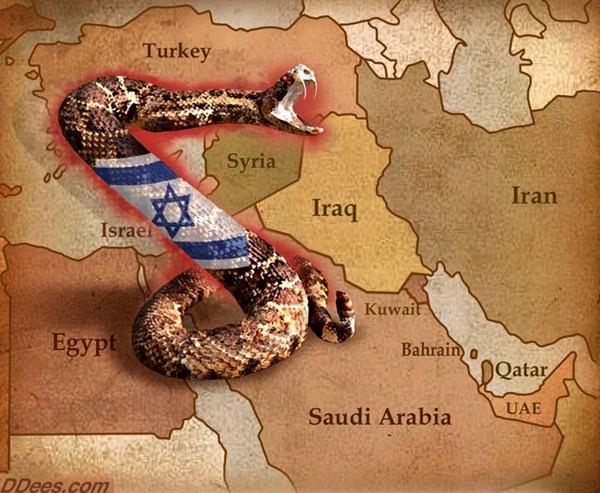
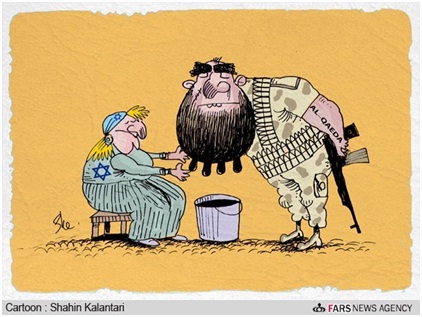

 Aletho News
