The new Iranian Foreign Minister Mohammad Javad Zarif is taking over the Ministry of Foreign Affairs of the Islamic Republic of Iran from his predecessor, Ali Akbar Salehi, at a time that the entire Middle East and North Africa from Syria to Egypt, from Tunisia to Libya, and also from Bahrain to Iraq and Lebanon, are grappling with various political and security crises. Iran’s nuclear case has been also relatively stagnant. In the meantime, the radical politicians in the United States as well as pro-Israeli lobbies in the US Congress and Senate are keeping up their loud cries for the intensification of sanctions against the Islamic Republic. On the verge of his official inauguration as the new Iranian foreign minister, in the following interview we have discussed with Mohammad Javad Zarif such important issues as the true meaning of moderation in Iran’s foreign policy, the new administration’s plans for the continuation of the nuclear negotiations, the possibility of transferring management of the nuclear case from the Supreme National Security Council to the Ministry of Foreign Affairs, Iran’s possible positions on radical moves taken by the United States and the pro-Israeli lobby, and the possibility of future direct talks between Tehran and Washington in the light of the existing political equations in the region.
Q: The issue of “moderation” was one of the main mottos of the “Administration of Foresight and Hope.” How do you define moderation in the area of foreign policy?
A: I personally believe that moderation means realism and creation of balance among various needs of a country for the advancement of the foreign policy and pursuit of the foreign policy goals through plausible and rational methods and a suitable discourse. Moderation does not mean to forget about the values or discard the principles. Moderation neither means to fall short of materializing the country’s rights. In other words, as I said in my address to the Majlis (Iranian parliament), moderation has its roots in self-confidence. The people who confide in their own ability, power, possibilities and capacities will tread the path of moderation. But those who are afraid and feel weak mostly go for radicalism. Radicals in the world are cowardly people and although their slogans may be different from one another, there are close and good relations among them. The world of today needs moderation more than anything else and the Islamic Republic of Iran, as a powerful country, can push ahead with a suitable foreign policy approach through moderation.
Q: In his first press conference after the inauguration ceremony, President [Hassan Rouhani] said resumption of the nuclear negotiations with the P5+1 group will be one of his priorities. Do you have any new plan or proposal for the resumption of these talks?
A: There have been discussions inside the administration with Mr. President about how to follow up on the country’s nuclear rights and reduce unjust sanctions which have been imposed against the Islamic Republic of Iran. The basis for our work is to insist on the rights of Iran and do away with logical concerns of the international community. As the Supreme Leader and the President have emphasized, it would be easy to achieve this goal provided that the main goal of all involved parties is to find a solution to the nuclear issue. We believe that finding a solution to the nuclear issue needs political will. On the side of the Islamic Republic of Iran, the election of Dr. Rouhani – in view of his past track records with regard to this case – proves that the Iranian people are willing for the nuclear issue to reach a final solution with power and strength and within a reasonable time frame. We wish the opposite side will also have the necessary political resolve for the resolution of the nuclear issue. In that case, we would have no concern with respect to assuring the world about the peaceful nature of our nuclear energy program because according to the fatwa [religious decree] issued by the Supreme Leader and based on the strategic needs of Iran, nuclear weapons have no place in our national security doctrine and are even detrimental to our national security.
Q: There have been rumors about the possibility of transferring the management of the nuclear case from the Supreme National Security Council to the Ministry of Foreign Affairs. Do you confirm such speculations or deny them and, basically, are there any specific plans for the transfer of this case?
A: I have not heard such a thing. This is a decision for the President to make. At any rate, in view of the experience I have in this regard, I will do my utmost to be of service for the advancement of the nuclear case in any position I am and to any degree possible. However, it is for the highest ranks of the Islamic Establishment to make the final decision about how to pursue the nuclear case, the form and framework of negotiations, and the best methods to be used in this regard.
The main issue is whether the necessary political resolve [among member states of the P5+1 group] will be present and whether the US government is ready to stand in the face of the interest groups and prevent the whole case to be steered by radical groups?
Q: We have witnessed the emergence of anti-Iran currents at both the US Congress and Senate concurrent with the election and inauguration of President Hassan Rouhani’s administration. On the other hand, Israelis claim in their propaganda campaigns that the administration in Iran has changed, but policies are the same as before. What is your plan to offset such radical moves?
A: The warmongering elements are apparently concerned about reduction of problems and are clearly doing their utmost to resort to any pretext in order to intensify the crisis with Iran. The important point is that decision-makers in Europe and the United States should come to grips with the real nature and goals of warmongers. On this basis, they should not allow a warmongering and tension-seeking agenda – which aims to put unjust pressures which have no place in international law on the Iranian nation – to prevent them from taking advantage of opportunities which can be used to find solutions to existing problems. The political agenda of radicalism clearly proves that radicals are cowards and are afraid of negotiations and dialogue. Therefore, such groups make recourse to hasty and ineffective methods in order to bar the progress of moderation. Such cowardly people usually fail to achieve their political goals as well.
Q: Will you agree to engage in bilateral direct talks with the United States if such a thing is proposed to you on the sidelines of such international meetings as the United Nations General Assembly sessions or negotiations with the P5+1 group?
A: The Supreme Leader has made his opinion about [direct] talks [with the United States] public time and time again. Negotiations, per se, is not an issue here, but the main issue is what topics are going to be discussed in such negotiations and how much political determination exists in the opposite side for the settlement of the existing problems. The main issue is will such a political resolve take shape and whether the US administration is actually ready to stand up to radical groups and prevent such radical groups from setting the course of the whole issue? This will be in fact a litmus test for the government of the United States to show its readiness to play a more serious role and pave the way for the achievement of a final solution.
Q: Don’t you think that bilateral talks between Tehran and Washington constitute the secret precondition for the improvement of relations between Iran and Europe?
A: In my opinion, political will is the precondition for the improvement of relations. The methods [to do this] can be discussed, but what is necessary is the emergence of such a political will and its manifestation in practice. In that case, various methods can be used to achieve goals. At a time that it is not still clear whether such a political will exists or not, the efficiency of using new methods cannot be clearly decided. In Iran, the election of Mr. Rouhani shows that people have made up their mind to engage in constructive interaction with the world. Mr. Rouhani, on the other hand, has shown through his words and deeds that he has the necessary political will to do this. Now, the important requisite is for such a political will to take shape on the other side of the equation.
Q: You are taking charge of the Ministry of Foreign Affairs at a time that the Middle East is going through a hectic period of its history. We are witnessing different crises from Syria to Egypt, and from Bahrain to Lebanon and Iraq. What are your priorities among these regional cases?
A: Conditions in the region have become hectic and inflammatory as a result of shortsightedness of certain political players – most of them coming from outside the region – during the past few years, and we need a collective effort to curb in the crisis. On the one hand, we are faced with fundamentalism while, on the other hand, we see how people’s votes are forgotten and downtrodden. And of course, we can see the clear hands of foreign interventionist powers that foment unrest in the region the result of which is the loss of thousands of innocent lives. Unfortunately, we have been witnessing a severe escalation of domestic conflicts in Egypt during the past few days in which hundreds of innocent people have lost their lives. As a result, it is not only incumbent on us to find a way to put an end to the ongoing crisis in Egypt, but a more serious need of the region and the world is to prevent further spread of radicalism by taking advantage of the indigenous models of democracy. I believe that the Islamic Republic of Iran will be able to play a crucial role in this regard, especially after the political epic that took place during the current [Iranian calendar] year [through the presidential election in the country].
It is perhaps one of those rare times that Israel openly clarifies its position regarding the Syrian crisis, and from the mouths of high-ranking officials: the Resistance cannot be allowed to win.
Tel Aviv is increasingly worried about the developments taking place in Syria. They want the West to be more involved, particularly as Washington seems less certain about how far it should go in supporting the opposition there.
This prompted Israel’s minister of war Moshe Yaalon to make his concerns known to his visitor from Washington, chairman of the Joint Chiefs of Staff Martin Dempsey, for all the media to hear: “The axis of evil, which extends from Tehran to Damascus and Beirut, cannot be allowed to win in the ongoing war in Syria.”
After explaining that the most important thing happening in the region is the change sweeping through many Arab countries, he asked Dempsey to consider Iran’s role and the threat it poses to Israel’s security.
“The lack of stability in the region,” Yaalon insisted, “is due to many reasons, at the top of which is the Iranian regime and its involvement in all the crises taking place in the Middle East.”
According to Israel Defense magazine, the minister said that he believed the Syrian crisis would continue for a long time and would not end even if Bashar al-Assad falls, noting that “there are bloody accounts to be settled between the Alawis and Sunnis, in addition to other minorities engaged in the fighting.”
Yaalon repeated statements he had made after the Syrian opposition’s defeat in Qusayr, that Syria is going through a period in which the state is breaking up, suggesting that the Assad regime, contrary to what recent developments suggest, is weakening.
“I don’t see a change [in the regime’s favor],” the minister maintained, “because in Syria there are many places where the opposition is hitting the regime hard, as in Aleppo and the Latakia area, in addition to the Golan. This suggests that the opposition controls more territory than before.”
In the same vein, a high-ranking Israeli official criticized the US administration’s policy, and the weakness it has shown in handling a number of files in the region. On the occasion of Dempsey’s visit to Israel, the official told Yedioth Ahronot that Washington’s hesitation “will only increase Russia’s influence in the area.”
“Israel is very worried about America’s position regarding the region,” the same source added. “The Russians are taking advantage of America’s weakness, and they are waging their battles like a superpower, therefore proving to the countries of the region and President Assad that they can be relied on, while the Americans abandon their allies and partners.”
Of more concern to the source is that the US’ weak stand extend to its confrontation with Iran, asking Washington not to fall into the trap of the country’s new president, Hassan Rouhani, and “to squeeze Iran until it surrenders.”
The source explained that Israelis are generally comfortable with what is going on around them, despite the upheaval taking place in Egypt: “We can work with the Egyptians, Jordanians and other countries, for we have common interests with many parties in the region, and Israel is the one holding up the tent these days.”
As predicted, tautologies based upon the speculative allegation that Iran is “pursuing a parallel track to a nuclear capability through the production of plutonium” are rapidly proliferating, just in case a deal is struck between Iran and the United States that alleviates concerns over Iran’s enrichment of uranium.
In an opinion piece in the New York Times, master–alarmistAmos Yadlin, former head of Israeli Military Intelligence and current director of Israel’s Institute for National Security Studies, repeats the tired talking points that we’ve heard again and again by now.
In an article entitled, “Iran’s Plan B for the Bomb” – a headline swiped almost verbatim from the Telegraph‘s February 26 report called “Iran’s ‘Plan B’ for a Nuclear Bomb” about the same exact thing – Yadlin and a colleague writes that, according to the IAEA, “Iran already has enough low-enriched uranium to produce several nuclear bombs if it chooses to further enrich the fuel,” adding that “Western experts like Graham T. Allison Jr. and Olli Heinonen estimate that if Iran decided to develop a bomb today, it could do so within three to five months.”
In fact, a recent article by Graham Allison in The Atlantic demonstrates exactly the type of disinformation, conventional wisdom and faulty assumptions that passes for expert analysis in the Western debate over the Iranian nuclear program.
Yadlin also cites a recent ISIS study, which “estimates that at the current pace of installation, Iran could reduce its breakout time to just one month by the end of this year. The report also estimates that at that pace, by mid-2014 Iran could reduce the breakout time to less than two weeks.”
Using the recent overwrought reporting on Iran’s nascent Arak reactor, Yadlin explains, “Some American and European officials claim that Iran could produce weapons-grade plutonium next summer” which he says means “Iran is making progress on this alternative track.” Yadlin goes on:
A functioning nuclear reactor in Arak could eventually allow Iran to produce sufficient quantities of plutonium for nuclear bombs. Although Iran would need to build a reprocessing facility to separate the plutonium from the uranium in order to produce a bomb, that should not be the West’s primary concern. Western negotiators should instead demand that Iran shut down the Arak reactor.
Hilariously, Yadlin then proceeds to try and justify the cause for concern, writing without irony, “Of the three countries that have publicly crossed the nuclear threshold since the Nuclear Non-Proliferation Treaty entered into force in 1970, two — India and North Korea — did so via the plutonium track.”
Catch the operative word there? Publicly.
Everyone knows that Israel crossed that very same threshold decades before India, Pakistan or North Korea. Yadlin is also clever enough to note 1970 as the beginning of his timeline, since Israel already had a fully-functional, undeclared nuclear weapons program by the late 1960s – a program still unacknowledged and unmonitored.
Yadlin concludes by demanding the United States continue its useless policy of “sanctions and a credible military threat” and warns that the “moderate messages” emanating from the Iranian leadership since the June election of Hasan Rouhani “should not be allowed to camouflage Iran’s continuing progress toward a bomb.”
For Israeli officials past and present, when it comes to Iran the lies never stop.
Without America’s support, Israel in all likelihood would not by now exist and, without the neoconservatives, there would in all likelihood be no American support for Israel.
The interests of Israel have always been neoconservatism’s primary concern and it has been American neoconservatives that have lobbied the hardest to ensure American support for Israel. They have done this by integrating themselves into all levels of American society where they can be of influence including in government, public service, academia, political and social commentary, journalism, and think-tank organisations. Most but not all neoconservatives are, not unsurprisingly, Jewish and most of those that are Jewish hold dual citizenship with Israel despite many of them having no connection to Israel other than actually being Jewish. (All Jews throughout the Diaspora have ‘right of return’ to Israel even if they or generations of their ancestors have no connection to Israel – unlike Palestinians, who were forced from their lands in order to make way for Jews migrating to Israel after WW2, who have no right of return.)
While neoconservative ideology predominately revolves around the interests of Israel, there are other interwoven ideas that neoconservatives have developed that have been designed to secure support from conservative Americans. One of the ideas taken up by neocons has been the notion of ‘America Exceptionalism’ which, in it’s neoconservative incarnation, promotes American nationalism and the American system of democracy and capitalism and holds these values up as being values that all the world, particularly the Middle East, should aspire to.
While neoconservatism for many remains a somewhat vague ideological concept, there are certain characteristics that are common to all neoconservatives and at the top of the list of those characteristics are: an unswerving loyalty to expansionist Zionism and the concept of a Greater Israel in which Arabs have no place. For some neoconservatives this is quite explicit but for most neoconservatives, particularly in the commentariat, the notion of a Greater Israel is presented only vaguely and usually only by inference. Neoconservatives prominent in government will, as a matter of policy, deny that Israel has any expansionist dreams. One, however, only needs to look at the quickly diminishing map of areas of the West Bank that are available to Palestinians and the growth of Israeli settlements in the West Bank and the already annexed Golan Heights to see the reality of Zionist dreams.
Israel’s modus operandi for realising its expansionist dreams is simple: Provoke Palestinians and Arabs in a myriad of small ways that don’t make headlines and then, when the Palestinians or Arabs retaliate, ensure that the retaliation makes the headlines around the world and pretend to be the victim thus justifying a militarily response which may include occupation and then retreat when things quieten down again giving the impression that occupation is only for ‘security purposes’, not territorial gain. This strategy of three steps forward and two steps back is played out over a long time until eventually there is a big enough war to justify permanent occupation, as in the West Bank, and eventual annexation, as in the Golan Heights.
After their success in the Golan Heights but failures in south Lebanon in the 1980s and again in 2006, the Zionists changed tack. They realise now that only a massive threat to their security can justify occupation. For the Israelis, the bigger the threat the better from now on – and there can be no bigger threat than an enemy nation threatening to ‘wipe you off the map with their nuclear weapons’. And Israel has no better ally than the neocons to perpetuate the myth of Iran ‘wiping Israel off the map with nuclear weapons’ thus providing the ultimate threat by which Israel, forever the victim, can react.
By attacking Iran, Israel hopes that the resulting turmoil created in a quickly escalating war that will drag in the US will provide enough cover for Israel to deal with all of its enemies including Hamas in the Gaza Strip, Hezbollah in Lebanon and any resistance in the West Bank. Israel will use such circumstances to massively occupy all of these places on a more permanent basis using the war to deport Palestinians out of the Gaza into the Sinai peninsula and possibly out of the West Bank into Jordan. Meanwhile, the Israelis will leave it to the Americans to effect ‘regime change’ in Iran and Syria. Egypt will be both threatened if it tries to intervene and rewarded financially by the US if it co-operates. Judging by the latest events in the Sinai peninsula, it seems the current Egyptian government that overthrew the elected Egyptian President Mohamed Morsi has opted to co-operate with Israel.
It is the neoconservatives who are driving the wars in the Middle East – and, while Americans are expected to pay for it, it is all only in Israel’s interests. And, in the end, it will be the people of the Middle East that suffer – Jews and Arabs alike – regardless of who wins or loses.
Representative democracies and autocratic dictatorships respond to profound internal crises in very distinctive ways: the former attempts to reason with citizens, explaining the causes, consequences and alternatives; dictatorships attempt to terrorize, intimidate and distract the public by evoking bogus external threats, to perpetuate and justify rule by police state methods and avoid facing up to the self-inflicted crises.
Such a bogus fabrication is evident in the Obama regime’s current announcements of an imminent global “terrorist threat”[1] in the face of multiple crises, policy failures and defeats throughout the Middle East, North Africa and Southwest Asia.
Internet ‘Chatter’ Evokes a Global Conspiracy and Revives the Global War on Terror
The entire terror conspiracy propaganda blitz, launched by the Obama regime and propagated by the mass media, is based on the flimsiest sources imaginable, the most laughable pretext. According to White House sources, the National Security Agency, the CIA and other spy agencies claimed to have monitored and intercepted unspecified Al-Qaeda threats, conversations by two Al Qaeda figures including Ayman al Zawahiri[2].
Most damaging, the Obama regime’s claim of a global threat by al-Qaeda, necessitating the shutdown of 19 embassies and consuls and a world-wide travelers alert, flies in the face of repeated public assertions over the past five years that Washington has dealt ‘mortal blows’ to the terrorist organization crippling its operative capacity[3] and citing the US “military successes” in Afghanistan and Iraq, its assassination of Bin Laden, the drone attacks in Yemen, Pakistan, Somalia and the US-backed invasion of Libya. Either the Obama regime was lying in the past or its current terror alert is a fabrication. If, as Obama and the NSA currently claim, Al Qaeda has re-emerged as a global terrorist threat, then twelve years of warfare in Afghanistan and eleven years of war in Iraq, the spending of $1.46 trillion dollars, the loss of over seven thousand US soldiers[4] and the physical and psychological maiming of over a hundred thousand US combatants has been a total and unmitigated disaster and the so-called war on terror is a failure.
The claim of a global terror threat, based on NSA surveillance of two Yemen-based Al Qaeda leaders, is as shallow as it is implausible. Every day throughout cyberspace one or another Islamist terrorist group or individual discuss terror plots, fantasies and plans of no great consequence.
The Obama regime fails to explain why, out of thousands of daily internet ‘conversations’, this particular one, at this particular moment, represents an ongoing viable terrorist operation. One does not need a million spies to pick up jihadist chatter about “attacking Satan”.
For over a decade, Al Qaeda operatives in Yemen have been engaging in a proxy war with Washington-backed regimes and over the same time the Obama regime has been engaged in drone and Special Forces assassination missions against Yemeni militants and opposition figures[5]. In other words, the Obama regime has magnified commonplace events, related to an ongoing conflict known to the public, into a new global terrorist threat as revealed by his spymasters because of their high powered espionage prowess!
It is more than obvious that the Obama regime is engaged in a global fabrication designed to distract world public opinion and, in particular, the majority of US citizens, from police state spying and violations of basic constitutional freedoms.
By evoking a phony “terrorist threat” and its detection by the NSA, Obama hopes to re-legitimate his discredited police state apparatus.
More important, by raising the specter of a global terrorist threat, the Obama regime seeks to cover-up the most disreputable policies, despicable “show trials” and harsh imprisonment of government whistle blowers and political, diplomatic and military defeats and failures which have befallen the empire in the present period.
The Timing of the Fabrication of the Global Terror Threat
In recent years the US public has grown weary of the cost and inconclusive nature of the ‘global war on terror’, or GWOT. Public opinion polls support the withdrawal of troops from overseas wars and back domestic social programs over military spending and new invasions. Yet the Obama regime, aided and abetted by the pro-Israel power configuration, in and out of the government, engages in constant pursuit of war policies aimed at Iran, Syria, Lebanon and any other Muslim country opposed to Israel’s erasure of Arab Palestine. The “brilliant” pro-war strategists and advisers in the Obama regime have pursued military and diplomatic policies which have led to political disasters, monstrous human rights violations and the gutting of US constitutional protections guaranteed to its citizens. To continue the pursuit of repeated failed policies, a gargantuan police state has been erected to spy, control and represses US citizens and overseas countries, allies and adversaries.
The “terror threat” fabrication occurs at a time and in response to the deepening international crisis and the political impasse facing the Obama regime – a time of deepening disenchantment among domestic and overseas public opinion and increasing pressure from the Israel Firsters to continue to press forward with the military agenda.
The single most devastating blow to the police state buildup are the documents made public by the NSA contractor, Edward Snowden, which revealed the vast worldwide network of NSA spying in violation of US constitutional freedoms and the sovereignty of countries. The revelations have discredited the Obama regime, provoked conflicts within and between allies, and strengthened the position of adversaries and critics of the US Empire.
Leading regional organizations, like MERCOSUR in Latin America, have attacked ‘cyber-imperialism’; the EU countries have questioned the notion of ‘intelligence cooperation’. Even dozens of US Congress people have called for reform and cutbacks in NSA funding.
The “terror threats” are timed by Obama to neutralize the Snowden revelations and justify the spy agency and its vast operations.
The Bradley Manning “show trial”, in which a soldier is tortured, often with forced nudity, in solitary confinement for almost a year, imprisoned for three years before his trial and publicly prejudged by President Obama, numerous legislators and mass media (precluding any semblance of ‘fairness’), for revealing US war crimes against Iraqi and Afghan civilians, evoked mass protests the world over. Obama’s “terror threat” is trotted out to coincide with the pre-determined conviction of Manning in this discredited judicial farce and to buttress the argument that his exposure of gross US war crimes “served the enemy” (rather than the American public who Manning repeatedly has said deserve to know about the atrocities committed in its name). By re-launching the “war on terror” and intimidating the US public, the Obama regime is trying to discredit Bradley Manning’s heroic revelations of documented US war crimes in Iraq and Afghanistan by focusing on nebulous Al Qaeda terror threats over the internet!
In the international political arena, Obama has suffered a series of repeated political and diplomatic defeats with far-reaching implications for his fanatical empire building project. The Obama-backed and Al Qaeda-led Islamist mercenary invasion of the sovereign nation of Syria has suffered a series of military defeats and his proxy jihadist ‘freedom-fighters’ have been denounced by most prestigious human rights groups for their massacres and ethnic cleansing of civilian populations in Syria (especially Christians, Kurds, Alevis and secular Syrians). Obama’s Syrian ‘adventure’ has backfired, and is clearly unleashing a new generation of Islamist terrorists, armed by the Gulf States – especially Saudi Arabia and Qatar, trained by Turkish and NATO Special Forces and now available for global terrorist “assignments” against US client states, Europe and the US itself. In turn the Syrian debacle has had a major impact on Obama’s NATO ally, Turkey, where mass protests are challenging Prime Minister Erdogan’s military support for Islamist mercenaries, based along the Turkish border with Syria. Erdogan’s savage repression of hundreds of thousands of peaceful protestors, the arbitrary arrest of thousands of pro-democracy activists and his own “show trials” of hundreds of journalists, military officials, students, intellectuals and trade unionists, has certainly discredited Obama’s main “democratic Islamist” ally and undermined Washington’s attempt to anchor its dominance via a triangular alliance of Israel, Turkey and the Gulf monarchies.
Further discredit of Obama’s foreign policy of co-opting Islamist “electoral regimes” has occurred in Egypt and is pending in Tunisia. Obama’s post-Mubarak policy in Egypt looked to a “power sharing” arrangement between the democratically elected President Morsi of the Muslim Brotherhood, the Mubarak-era military and neo-liberal politicians, like Mohamed El Baradei. Instead, General Sistani grabbed power via the army, overthrowing and jailing the civilian President Morsi. The Egyptian army under Sistani has massacred peaceful pro-democracy Muslim protestors and purged the parliament, press and independent voices. Forced to choose between the military dictatorship composed of the henchman of the former Mubarak dictatorship and the mass-based Muslim Brotherhood, US Secretary of State John Kerry backed the military take-over as a “transition to democracy” (steadfastly refusing to use the term ‘coup d’état’). This has opened wide the door to a period of mass repression and resistance in Egypt and severely weakened a key link in the “axis of reaction” in North Africa (Morocco, Algeria, Tunisia, Libya and Egypt).
Obama’s incapacity to deal with the new peace overtures by the recently elected President Rouhani in Iran was evident in the Administrations capitulation to a Congressional vote (420 – 20) in favor of further and more severe sanctions designed, according to the bill’s AIPAC authors, to “strangle the Iranian oil economy”. Secretary of State Kerry’s offer to “negotiate” with Iran, under a US-imposed blockade and economic sanctions, was seen in Teheran, and by most independent observers, as an empty theatrical gesture, of little consequence. Obama’s failure to check the Israeli-Zionist stranglehold on US foreign policy toward Iran and to strike a deal ensuring a nuclear-weapon-free Iran, ensures that the region will continue to be a political and military powder keg. Obama’s appointments of prominent Zionist zealots to strategic Middle East policy positions ensures that the US and the Obama regime have no options for Iran, Palestine, Syria or Lebanon– except to follow the options dictated by Tel Aviv directly to its US agents, the 52 Presidents of the Major American Jewish Organizations, who along with their insider Zionist collaborators, co-author the Middle East policy script for the US Congress and the White House.
The Obama regime’s Israeli-Palestine peace negotiations are seen by most observers as the most distorted and bizarre efforts to date in that cruel farce. Washington has purchased the leaders of the Palestinian ‘Authority’ with multi-million dollar handouts and given way to Israel’s accelerated land grabbing in the occupied West Bank and ‘Jews only’ settlement construction, as well as the mass eviction of 40,000 Bedouins within Israel itself.
To ensure the desired result – a total fiasco, Obama appointed one of the most fanatical of pro-Israeli zealots in Washington as its “mediator”, the tri-national Martin Indyk, known in diplomatic circles as “Israel’s lawyer” (and the first US Ambassador to be stripped of security clearance for mishandling documents.)
The breakdown of the negotiations is foretold. Obama, caught in the web of his own long-term reactionary alliances and loyalties and obsessed with military solutions, has developed a knack for engaging in prolonged losing wars, multiplying enemies and alienating allies.
Conclusion
The result of prolonged unpopular wars of aggression has been the massive build-up of a monstrous domestic police state, pervasive spying around the world and the commission of egregious violations of the US Constitution. This, in turn, has led to crudely concocted “terror plots” to cover-up the repeated foreign policy failures and to slander and persecute courageous whistle blowers and threaten other decent American patriots. The recent declaration of another vast ‘terror plot’, which served to justify the illegal activities of US spy agencies and ‘unify Congress’, produced hysteria lasting less than a week. Subsequently, reports began to trickle in, even in the obedient US mass media, discrediting the basis of the alleged global terror conspiracy. According to one report, the much-ballyhooed ‘Al Qaeda plot’ turned out to be a failed effort to blow-up an oil terminal and oil pipeline in Yemen. According to regional observers: “Pipelines are attacked nearly weekly in Yemen”[6] And so an unsuccessful jihadist attack against a pipeline in a marginal part of the poorest Arab state morphed into President Obama’s breathless announcement of a global terrorist threat! An outrageous joke has been played on the President, his Administration and his Congressional followers. But during this great orchestrated ‘joke’, Obama unleashed a dozen drone assassination attacks against human targets of his own choosing, killing dozens of Yemeni citizens, including many innocent bystanders.
What is even less jocular is that Obama, the Master of Deceit, just moves on. His proposed “reforms” are aimed to retrench NSA activities; he insists on continuing the “bulk collection” (hundreds of millions) of US citizens’ telephone communications (FT 8/12/13 p2). He retains intact the massive police state spy apparatus, keeps his pro-Israel policymakers in strategic positions, reaffirms his policy of confrontation with Iran and escalates tensions with Russia, China and Venezuela. Obama embraces a new wave of military dictatorships, starting, but not ending, with Egypt.
In the face of diminishing support at home and abroad and the declining credibility of his crude “terror” threats, one wonders if the ever-active clandestine apparatus would actually stage its own real-life bloody act of terror, a secret state supported ‘false-flag’ bombing, to convince an increasingly disenchanted and skeptical public? Such would be a desperate act for the State, but these are desperate times facing a failed Administration, pursuing losing wars in which the Masters of Defeat can now only rely on the Masters of Deceit.
The Obama regime is infested with the “toxic politics of terrorism” and this addiction has driven him to persecute, torture and imprison truth seekers, whistle blowers and true patriots who strive (and will continue to strive) to awaken the sleeping giant, in hopes that the people of America will arise again.
[1] ‘BBC News’ 8/16/13; Al Jazeera 9/16/13
[2] ‘La Jornada’ (Mexico City) 8/16/13, p. 22;FINANCIAL TIMES 8/10-11/13”T he exact threat to US missions has yet to be made public..”
[3] ‘Financial Times’ 8/8/13, p. 2 and ‘Financial Times’ 8/10-11 2013 p 2; ‘McClatchy Washington Bureau’ 8/5/13
General Martin Dempsey will meet with a number of senior IDF leaders to review ‘mutual security challenges’
The Chairman of the US Joint Chiefs of Staff arrived in Israel on Monday where he will be a guest of his Israeli counterpart, Israel Defence Forces Chief of Staff Benny Gantz. During his stay, General Martin Dempsey will meet with a number of senior IDF leaders to discuss means of cooperation between Israel and the US, and to review “mutual security challenges”. Dempsey will also meet with Israeli Prime Minister Benjamin Netanyahu and Defence Minister Moshe Ya’alon.
According to an article in Yedioth Ahronoth written by Nahum Barnea, the Israelis will use the opportunity to present to the US their vision of a solution for the dilemma that America is facing regarding the crisis in Syria. They will also address the debate between those who call for supporting the Assad regime to prevent the rise of extremist Islamists, like Al Qaeda and Jabhat Al Nusra, and those who believe in the need to topple Assad’s regime first, through reinforcing the Free Syrian Army.
Barnea said that Israel’s plan depends on two distinct phases. The first includes providing more assistance to the Free Syrian Army, especially weapons and equipment, along with a no-fly zone. Israel believes that the US is capable of imposing a no-fly zone on the Syrian Air Force at little cost.
The second phase would be implemented after Assad’s ouster. Israel wants the Americans to support Syria’s secularists in expelling jihadi movements out of the country. Although this is a theoretical solution with no guarantees, Barnea believes that Israel is convinced that it is possible.
Former Israeli Prime Minister Ehud Barak has called for the “free world” to support Egyptian Defence Minister General Abdul-Fattah Al-Sisi and liberal leaders such as Mohamed ElBaradie, he told CNN on Monday. Barak alleged that President Mohamed Morsi was ousted by his people after he had attempted to change Egypt into a religious-communist state.
Asked whether Israel is silently happy about the coup, he said: “We do not consider ourselves among the main players in these incidents, through which we see a dramatic development for the Egyptians.”
Although Israel’s support may well “embarrass” Al-Sisi, Barak insisted that he and “other” liberal leaders such as Al-Baradei deserve the support of the free world. “There were free elections but they were tools that were used to change the democratic elections into an extremist communist regime based on the Islamic Sharia,” he claimed. “This led to the popular rejection of Morsi.”
Calling for the US to deal with Morsi as it dealt with other autocratic Sunni leaders in the region, the former Israeli prime minister pointed out that America “neglected them when their people moved against them”.
In closing, Barak said that in return for external support the people of Egypt should hold free, democratic elections within a year.
“If one thing has become clear in the wake of last week’s military coup d’état against Egyptian President Mohamed Morsi, it’s that democracy promotion is not a core principle of neoconservatism,” writes the astute commentator Jim Lobe. Lobe points out that a few neocons (he cites only Robert Kagan) did stick with the pro-democracy position but “[a]n apparent preponderance of neocons, such as Daniel Pipes, the contributors to the Wall Street Journal’s editorial board and Commentary’s Contentions’ blog,” tended to sympathize with the coup.
Even Kagan’s support for democracy was far less than an endorsement of Morsi’s right to govern, which he labeled “majoritarian” rather than democratic. Kagan wrote: “He ruled not so much as a dictator but as a majoritarian, which often amounted to the same thing. With a majority in parliament and a large national following, and with no experience whatsoever in the give-and-take of democratic governance, Morsi failed in the elementary task of creating a system of compromise, inclusiveness, and checks and balances.” (“Time to break out of a rut in Egypt,” “Washington Post,” July 5, 2013
It should be pointed out that if democracy required compromise, inclusiveness, and checks and balances, it is hard to believe that many countries conventionally regarded as democracies would pass the test. Certainly, Israel, as a self-styled Jewish State, would not. (The Founding Fathers of the United States in creating the Constitution took steps to try to prevent the liberty of individuals from being oppressed by a “tyranny of the majority” —democracy itself being negative term—but this has not been the case in all modern democracies.)
Instead of a military coup, Kagan held that a better approach would have been to leave Morsi in office but to rely on international pressure to compel his government to change its policies. Kagan contended that Morsi “deserved to be placed under sustained domestic and international pressure, especially by the United States, the leading provider of aid to Egypt. He deserved to have the United States not only suspend its bilateral aid to Egypt but also block any IMF agreement until he entered into a meaningful, substantive dialogue with his political opponents, including on amending the flawed constitution he rammed through in December as well as electoral law. He ought to have been ostracized and isolated by the international democratic community.” In short, Kagan advocated the use of international pressure to essentially prevent the democratically-elected Morsi government from enacting measures in line with its election mandate–and the fact of the matter is that in all of the elections Islamist parties won a significant majority of the overall vote–and force it to attune its actions to the demands of the “international democratic community,” that is, the Western nations aligned with the United States. (None of the previous statements should be considered an endorsement of Morsi’s policies but only a recognition that his government was far more attuned to the democratic process than has been the military junta, with its dissolution of a democratically-elected parliament, arbitrary rule, mass arrests, and killing of protestors against which the neocons would react with scathing moral outrage if committed by Assad or the Islamic Republic of Iran.)
It should be pointed out that while few, if any, neocons actually sought a restoration of the democratically-elected Morsi government, there were different degrees of sympathy for the coup. Max Boot, for example, viewed the coup largely in pragmatic terms, as opposed to democratic ideals. The danger was that the removal of the Muslim Brotherhood might cause them to turn to violence. “On the other hand,” Boot wrote, “if the military didn’t step in, there would have been a danger that the Brotherhood would never be dislodged from power,” which would seem to have been in his mind the greater danger even if the Muslim Brotherhood and other Islamist parties commanded the great majority of votes. (“America’s Egypt Policy After Morsi,” Contentions, Commentary, July 5, 2013,
More affirmative on the coup was Michael Rubin of the American Enterprise Institute: “I never thought I would celebrate a coup, but the Egyptian military’s move against President Muhammad Morsi and his Muslim Brotherhood regime is something the White House, State Department, and all Western liberals should celebrate.” Rubin put something of a positive spin on the military’s goals: “The military isn’t seizing power for itself — but rather seeking a technocratic body to ensure that all Egyptian communities have input in the new constitution, a consultative process that Morsi rhetorically embraced but upon which he subsequently turned his back.” (“What Obama should learn from Egypt’s coup,” July 3, 2013, http://www.aei-ideas.org/2013/07/what-obama-should-learn-from-egypts-coup/)
A similar interpretation was offered by Jonathan S. Tobin in his Contentions Blog for “Commentary Magazine” (July 7, 2013, http://www.commentarymagazine.com/2013/07/07/obamas-second-chance-on-egypt-coup/): “[T]he coup wasn’t so much a putsch as it was a last ditch effort to save the country from drifting into a Brotherhood dictatorship that could not be undone by democratic means.” Tobin continues: “[R]ather than setting deadlines or delivering ultimatums to the interim government that has replaced Morsi and his crew, the United States should be demonstrating that it will do whatever it can to help the military snuff out the threat of Islamist violence and then to proceed to replace Morsi with a more competent government.” This “more competent government,” however, did not mean democracy. “In the absence of a consensus about democratic values,” Tobin wrote, “democracy is impossible and that is the case in Egypt right now.”
David Brooks likewise wrote on July 4 in his piece “Defense of the Coup” in the “New York Times”: “Promoting elections is generally a good thing . . . . But elections are not a good thing when they lead to the elevation of people whose substantive beliefs fall outside the democratic orbit. It’s necessary to investigate the core of a party’s beliefs, not just accept anybody who happens to emerge from a democratic process.” But Brooks shows little optimism about democracy in Egypt, holding that the “military coup may merely bring Egypt back to where it was: a bloated and dysfunctional superstate controlled by a self-serving military elite. But at least radical Islam, the main threat to global peace, has been partially discredited and removed from office.” And contrary to the neocons’ nation-building: “It’s not that Egypt doesn’t have a recipe for a democratic transition. It seems to lack even the basic mental ingredients.”http://www.nytimes.com/2013/07/05/opinion/brooks-defending-the-coup.html?_r=0)
While many commentators have portrayed the neocons as naïve adherents of universal democracy, which would make it appear that their positive presentation of the Egyptian coup, or at least failure to strongly criticize it, constituted a complete reversal in their thinking, in actuality, they never adhered to the fundamental tenets of democracy without significant qualifications. As I pointed out in “The Transparent Cabal” (which devotes an entire chapter specifically to this issue), the idea of instant democracy would seem to have been simply a propaganda ploy to generate public support for war. When writing at length on exporting democracy to the Middle East, the neocons generally argued that it was first necessary for the United States to “educate” the inhabitants of the Middle Eastern states in the principles of democracy before actually implementing it. For instance, in September 2002, Norman Podhoretz, one of the godfathers of neoconservatism, acknowledged that the people of the Middle East might, if given a free democratic choice, pick anti-American, anti-Israeli leaders and policies. But he held that “there is a policy that can head it off,” provided “that we then have the stomach to impose a new political culture on the defeated parties. This is what we did directly and unapologetically in Germany and Japan after winning World War II.” (Quoted in “Transparent Cabal,” p. 215). Similarly, in the book, “An End to Evil: How to Win the War” (2004), David Frum and Richard Perle asserted that establishing democracy must take a back seat when it conflicted with fighting Islamic radicals: “In the Middle East, democratization does not mean calling immediate elections and then living with whatever happens next.” (Quoted in “Transparent Cabal,” p. 216)
Max Boot, in the “Weekly Standard” in October 2001, argued “The Case for Empire.” “Afghanistan and other troubled lands today,” Boot intoned, “cry out for the sort of enlightened foreign administration once provided by self-confident Englishmen in jodhpurs and pith helmets.” (Quoted in “Transparent Cabal,” pp. 216-217) David Wurmser supported the restoration of the Hashemites and the traditional ruling families in Iraq as a bulwark against modern totalitarianism “I’m not a big fan of democracy per se,” exclaimed Wurmser in an October 2007 interview. “I’m a fan of freedom and one has to remember the difference. Freedom must precede democracy by a long, long time.” (Quoted in “Transparent Cabal,” p. 218) Paul Wolfowitz was enraged by the Turkish military’s failure to sufficiently pressure the Turkish government to participate in the war on Iraq. “I think for whatever reason, they did not play the strong leadership role that we would have expected,” Wolfowitz complained. Presumably, Wolfowitz would have preferred a Turkish military coup over the democratic repudiation of American policy goals. (“Transparent Cabal,” p. 219)
Regarding Israel itself, it would seem that if democracy were the neoconservatives’ watchword, they would work to eliminate Israel’s undemocratic control over the Palestinians on the West Bank and try to make the country itself more inclusive—and not a state explicitly privileging Jews over non-Jews. The neoconservatives would either promote a one-state democratic solution for what had once been the British Palestine Mandate (Israel, Gaza, and the West Bank) or else demand that Israel allow the Palestinians to have a fully sovereign, viable state on all of the West Bank and Gaza. Instead of taking anything approaching such a pro-democracy stance, however, the neoconservatives have done just the opposite, backing the Israeli Likudnik Right, which takes an especially hostile position toward the Palestinians with its fundamental goal being the maintenance of the exclusivist Jewish nature of the state of Israel and its control of the occupied territories.
As Jim Lobe correctly points out, it is not democracy but rather “protecting Israeli security and preserving its military superiority over any and all possible regional challenges” that is “a core neoconservative tenet.” Thus, the neocons used democracy as an argument to justify the elimination of the anti-Israel Saddam regime. And the neocons saw the elimination of Saddam as the key to the elimination of Israel’s other Middle Eastern enemies. They currently support democracy as an ideological weapon in the effort to bring down the Assad regime and the Islamic Republic of Iran. To repeat, the obvious common denominator among these three targeted countries is that they have been enemies of Israel.
The Egyptian military, in contrast, has been quite close to Israel (about as close as possible given the views of the Egyptian populace), whereas the Muslim Brotherhood, like other Islamic groups, has expressed hostility toward Israel, even though Morsi had not taken a hostile position toward the Jewish state. The fact of the matter is that neocons took a tepid approach to the 2011 revolution against Mubarak, though most retained their pro-democracy credentials at that time by expressing the hope that he would be replaced by liberal democratic secularists, and expressed the fear of a possible Muslim Brotherhood takeover. (See Sniegoski, “Neocons’ Tepid Reaction to the Egyptian Democratic Revolution,” February 4, 2011, http://mycatbirdseat.com/2011/02/neocons%E2%80%99-tepid-reaction-to-the-egyptian-democratic-revolution/) Since that fear actually materialized, it was not really out of character for the neocons to support the military coup.
While there were definite harbingers for the current neocon support for the overthrow of a democratic government, however, what does seem to be novel is the tendency on the part of some neocons to openly express the view that democracy was not possible at the present time, at least when applied to Egypt. This was hardly a new idea among the Israeli Right where, as pointed out in “The Transparent Cabal,” it was held that most Middle Eastern countries were too divided to be held together by anything other than the force of authoritarian and dictatorial rulers. Oded Yinon in his 1982 article, “A Strategy for Israel in the Nineteen Eighties” (translated and edited by Israel Shahak in a booklet entitled, “The Zionist Plan for the Middle East”) recommended that Israel exploit this internal divisiveness by military measures in order to enhance its national security. War that would topple an existing authoritarian regime would render a country fragmented into a mosaic of diverse ethnic and sectarian groupings warring among each other. If applied on a broad scale, the strategy would lead to a Middle East of powerless mini-statelets totally incapable of confronting Israeli power. (“Transparent Cabal,” p. 50)
Lebanon, then facing divisive chaos, was Yinon’s model for the entire Middle East. He wrote: “Lebanon’s total dissolution into five provinces serves as a precedent for the entire Arab world including Egypt, Syria, Iraq, and the Arabian peninsula and is already following that track. The dissolution of Syria and Iraq later on into ethnically or religiously unique areas such as in Lebanon is Israel’s primary target on the Eastern front in the long run, while the dissolution of the military power of those states serves as the primary short-term target.” (Quoted in “Transparent Cabal,” p. 51)
The eminent Middle East historian Bernard Lewis, who is a right-wing Zionist and one of the foremost intellectual gurus for the neoconservatives, echoed Yinon in an article in the September 1992 issue of “Foreign Affairs” titled “Rethinking the Middle East.” He wrote of a development he called “Lebanonization.” “Most of the states of the Middle East—Egypt is an obvious exception—are of recent and artificial construction and are vulnerable to such a process,” he contended. “If the central power is sufficiently weakened, there is no real civil society to hold the polity together, no real sense of common identity. . . . The state then disintegrates—as happened in Lebanon—into a chaos of squabbling, feuding, fighting sects, tribes, regions, and parties.” (Note that Lewis held that Egypt, which some neocons have emphasized lacks any domestic consensus, was an “obvious exception” to this problem.)
David Wurmser, in a much longer follow-up document to the noted “A Clean Break” study, entitled “Coping with Crumbling States: A Western and Israeli Balance of Power Strategy for the Levant,” emphasized the fragile nature of the Middle Eastern Baathist dictatorships in Iraq and Syria, and how the West and Israel should act in such an environment. (“A Clean Break,” which included Wurmser and other neocons among its authors, described how Israel could enhance its regional security by toppling enemy regimes.) (“Transparent Cabal,” pp. 94-95)
While some neocons now maintain that Egypt lacked the necessary national consensus for viable democracy, they still take a pro-democracy stance toward Syria and Iran, as they had earlier taken toward Saddam’s Iraq. But as the neocons’ own expert on the Middle East, Bernard Lewis, indicated, these countries would tend to be less hospitable to democracy than Egypt. Why would neocons take a position contrary to that of their own expert? One can only repeat what was said earlier: an obvious difference would be that these countries are enemies of Israel—the fragmentation of these enemies would advance the security interests of Israel. In contrast, the replacement of the democratically-elected Muslim Brotherhood with military rule would improve Israeli-Egyptian relations; therefore, it is necessary to portray the role of democratic voting in Egypt in a negative light—that is, it would lead to chaos. Thus, it is not so much that the neocons are naïve democratic ideologues, but rather that they use ideas as weapons to advance the interests of Israel, as those interests are perceived through the lens of the Likudnik viewpoint. In summary, the current positions taken by the neocons confirm what I, Jim Lobe, and a few others have pointed out in the past.
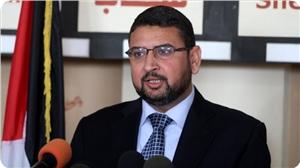
GAZA — The Hamas Movement strongly denounced a senior Egyptian army commander for claiming that the investigations revealed the involvement of Hamas individuals in the Sinai events.
This came in response to recent remarks made by the commander of Egypt’s second field army in Sinai Ahmed Wasif, in which he accused Hamas, without stating any evidence, of what had happened in Sinai.
Hamas spokesman Sami Abu Zuhri stressed that such accusations are blatant lies that include no numbers or names as usual.
“The Movement categorically denies that its members are involved in the Sinai events, and expresses its regret that such remarks were made in an attempt to reverse the equation and falsely convince the Egyptian people that the enemy is Hamas and not Israel,” Abu Zuhri underlined.
Israel’s Prime Minister Benjamin Netanyahu on Tuesday evening urged increasing pressure on Iran relating to her nuclear program and warned that “if the pressure will drop, nothing would deter Iran from achieving its nuclear goals” according to Israeli media reports.
During a meeting with a delegation of 36 American congressmen headed by Congressman Steny Hoyer, Netanyahu claimed that though Iran’s president said pressure wouldn’t help, in the last two decades pressure was the only thing that helped.
Addressing Iranian President Hasan Rouhani’s speech regarding the nuclear issue, Netanyahu said in a Tuesday statement that pressure on Iran had, in fact, been effective.
“Iran’s president said that pressure won’t work. Not true! The only thing that has worked in the last two decades is pressure,” the prime minister stressed.
“And the only thing that will work now is increased pressure. I have said that before and I’ll say it again, because that’s important to understand. You relent on the pressure, they will go all the way. You should sustain the pressure”.
In its latest measure against Iran, the US House of Representatives last Wednesday approved a bill to impose tougher sanctions on Tehran’s oil exports and financial sector.
The bill, which must be approved by the Senate and signed by President Barack Obama to become law, seeks to cut Iran’s oil exports by one million barrels per day over a year.
Meanwhile, Press TV reports that in his first press conference since he took office on August 4, Rohani expressed regret that the “warmongering group” in the US opposes constructive Tehran-Washington talks by serving the interests of “a foreign regime.”
The Iranian chief executive said Iran is closely monitoring all measures taken by the United States and will respond properly to Washington’s “practical and constructive” moves. He further expressed the Islamic Republic’s readiness to hold talks with any country within the framework of Iran’s national interests.
For 25 years now, Hezbollah has been engaged in a war with many powerful intelligence outfits from around the world. These intelligence agencies have devoted tremendous resources to collect information on the party, in addition to pursuing both its civilian and military activities, not to mention carrying out assassinations against its cadre and leadership.
Israel has played a key role in these efforts, but it is hardly alone. After the assassination of Rafik Hariri in 2005, Hezbollah was subjected to the most ferocious campaign against it, with former US ambassador to Lebanon Jeffrey Feltman admitting before Congress that Washington spent $500 million to undermine the party’s image.
After the outbreak of the Syrian uprising and Hezbollah’s open declaration of its involvement in the country’s fighting, the campaign intensified, with mounting threats to the party and its supporters that they may be subjected to revenge attacks.
First, the Resistance’s Dahiyeh stronghold was shelled with rockets. Similar attacks followed on many towns and villages in Baalbeck and Hermel. These were followed by roadside bombs targeting Hezbollah members on the main Lebanese highway to Syria, culminating in the massive Bir al-Abed blast in the heart of Dahiyeh.
Hezbollah is in a state of high alert due to the fact that it has been forced to fight simultaneously on two fronts. This has prompted Secretary General Hassan Nasrallah to tell the party’s cadre that they must be prepared for attacks that may involve both Syrian and Lebanese groups, without dropping their guard against their main enemy – Israel.
On the eve of Hezbollah’s engagement in the battle of Qusayr, it initiated a plan that involved:
– a series of practical steps to prevent the killing of Lebanese civilians held by the Syrian opposition in the north of the country;
– securing areas that may become targets of reprisals, including the border areas, Beirut, and South Lebanon.
The question today is: Who thought up an adventure of this kind against the Resistance? I wonder whether they thought about the party’s reaction.
Who are these people? Are they groups within the Free Syrian Army or the Salafi al-Nusra Front? Are they jihadi elements in Lebanon active in the North and Bekaa? Could they be Palestinians who have abandoned their cause to work as agents serving another agenda?
Who is helping them inside Lebanon? What are the Internal Security Forces (who take orders from the Future Party) doing about it? They seem to care little about people’s safety and are mainly concerned with collecting information on the Resistance.
In any case, Hezbollah has surprised friend and foe on more than one occasion in their intelligence capabilities. So, will the Resistance surprise us again by revealing who is behind these attacks?
Citing the latest hysterical analysis of Iran’s nuclear program by the Institute for Science and International Security (ISIS), David Albright’s Washington D.C.-based propaganda outfit, the Jerusalem Postexclaims that “Iran is expected to achieve a ‘critical capability’ to produce sufficient weapon-grade uranium by mid-2014, without being detected.”
While pretending to advocate merely for a stricter IAEA inspection regime and the limiting of the number of centrifuges Iran is allowed to install and operate, Albright & Co. cry that Iranian progress “is unlikely to be prevented simply by instituting better inspections, whether through increased inspection frequency, remote monitoring, or even implementation of the the Additional Protocol.” The report laments that, if the United States and Israel don’t launch an illegal, unprovoked military assault on Iran “out of fear of facing international opposition,” consequently “Iran could have time to make enough weapon-grade uranium for one or more nuclear weapons.”
Thus, the alarmists of ISIS conclude that “IAEA inaction or caution could make an international response all but impossible before Iran has produced enough weapon-grade uranium for one or more nuclear weapon.”
Meanwhile, a recent Al Monitor report exposes the agenda dripping from ISIS’ analysis. Earlier this month, IAEA Deputy Director Herman Nackaerts explained to reporter Barbara Slavin that “‘we would know within a week’ whether Iran was diverting uranium from declared sites and seeking to enrich it to weapons grade level.”
Nackaerts, who is also head of the IAEA’s Department of Safeguards, said that “[t]here are two to six IAEA inspectors on the ground in Iran every day…covering 16 Iranian facilities. On average, he said, that means that an inspector visits Iran’s enrichment plants at Natanz and Fordow once a week. If there are suspicions about any improper activities, they can go more often, he added.
In order to sufficiently hand-wring about the Iranian program, “ISIS has recommended that inspections should increase to at least twice per week at Iran’s enrichment facilities.”
Evelyn Gordon. Yes, really.
As expected, neoconservative Likudnik warmongers over at Commentary Magazine are licking their lips and using Albright’s nonsense to bolster their calls for mass murder and war crimes. Writing today, contributing blogger Evelyn Gordon calls the ISIS report the “best argument I’ve yet seen for bombing Iran’s nuclear facilities imminently.” Gordon is an American émigré to Israel, former Jerusalem Post reporter and current Visiting Fellow at the extreme right-wing Jewish Institute for National Security Affairs.
“Time is running out,” Gordon declares, echoing so many uninformed voices before her. In March 2006, NPR‘s national security correspondent Mara Liasson insisted on Fox News that “time is running out. Pretty soon, Iran is going to have the bomb.” By early 2011, Secretary of State Hillary Clinton claimed, “We have time, but not a lot of time.” The following year, a Weekly Standard opinion piece co-authored by Kristol declared, “Time is running out” and called “for Congress to seriously explore an Authorization of Military Force to halt Iran’s nuclear program.” Soon thereafter, Commentary Magazine‘s Jonathan Tobin warned that, without the United States issuing an explicit military threat, “time may soon run out on any chance for the West to stop Iran,” while this past March, Israeli Prime Minister Benjamin Netanyahu eloquently stated that “whatever time is left, there’s not a lot of time.”
“In short,” Gordon concludes, “either military action is taken in the coming months, or a nuclear Iran will be inevitable. There is no more time to waste.”
By Professor Roger Watson and Dr. Niall McCrae | The Daily Sceptic | November 15, 2021
As scholars at leading British universities over recent decades, we witnessed the replacement of critical thinking and debate by narrative: facts are discrimination and scientific method is imperialism; truth, instead, is derived from ‘progressive’ values. This educational trend may be a major contributory factor to the ease in which society has been inculcated to the Covid ‘new normal’ of masking, testing, and repeated doses of vaccines for a disease of similar risk to severe influenza.
One doesn’t need much critical reasoning to observe the flawed logic of some vaccination enthusiasts, such as people who respond to experiencing any side effects, however debilitating, by saying “at least I know it’s working”, or, after contracting the disease despite their promised inoculation (over 90% effective, according to initial drug company claims), “I’d have been worse off without the jab.” … continue
This site is provided as a research and reference tool. Although we make every reasonable effort to ensure that the information and data provided at this site are useful, accurate, and current, we cannot guarantee that the information and data provided here will be error-free. By using this site, you assume all responsibility for and risk arising from your use of and reliance upon the contents of this site.
This site and the information available through it do not, and are not intended to constitute legal advice. Should you require legal advice, you should consult your own attorney.
Nothing within this site or linked to by this site constitutes investment advice or medical advice.
Materials accessible from or added to this site by third parties, such as comments posted, are strictly the responsibility of the third party who added such materials or made them accessible and we neither endorse nor undertake to control, monitor, edit or assume responsibility for any such third-party material.
The posting of stories, commentaries, reports, documents and links (embedded or otherwise) on this site does not in any way, shape or form, implied or otherwise, necessarily express or suggest endorsement or support of any of such posted material or parts therein.
The word “alleged” is deemed to occur before the word “fraud.” Since the rule of law still applies. To peasants, at least.
Fair Use
This site contains copyrighted material the use of which has not always been specifically authorized by the copyright owner. We are making such material available in our efforts to advance understanding of environmental, political, human rights, economic, democracy, scientific, and social justice issues, etc. We believe this constitutes a ‘fair use’ of any such copyrighted material as provided for in section 107 of the US Copyright Law. In accordance with Title 17 U.S.C. Section 107, the material on this site is distributed without profit to those who have expressed a prior interest in receiving the included information for research and educational purposes. For more info go to: http://www.law.cornell.edu/uscode/17/107.shtml. If you wish to use copyrighted material from this site for purposes of your own that go beyond ‘fair use’, you must obtain permission from the copyright owner.
DMCA Contact
This is information for anyone that wishes to challenge our “fair use” of copyrighted material.
If you are a legal copyright holder or a designated agent for such and you believe that content residing on or accessible through our website infringes a copyright and falls outside the boundaries of “Fair Use”, please send a notice of infringement by contacting atheonews@gmail.com.
We will respond and take necessary action immediately.
If notice is given of an alleged copyright violation we will act expeditiously to remove or disable access to the material(s) in question.
All 3rd party material posted on this website is copyright the respective owners / authors. Aletho News makes no claim of copyright on such material.
 The new Iranian Foreign Minister Mohammad Javad Zarif is taking over the Ministry of Foreign Affairs of the Islamic Republic of Iran from his predecessor, Ali Akbar Salehi, at a time that the entire Middle East and North Africa from Syria to Egypt, from Tunisia to Libya, and also from Bahrain to Iraq and Lebanon, are grappling with various political and security crises. Iran’s nuclear case has been also relatively stagnant. In the meantime, the radical politicians in the United States as well as pro-Israeli lobbies in the US Congress and Senate are keeping up their loud cries for the intensification of sanctions against the Islamic Republic. On the verge of his official inauguration as the new Iranian foreign minister, in the following interview we have discussed with Mohammad Javad Zarif such important issues as the true meaning of moderation in Iran’s foreign policy, the new administration’s plans for the continuation of the nuclear negotiations, the possibility of transferring management of the nuclear case from the Supreme National Security Council to the Ministry of Foreign Affairs, Iran’s possible positions on radical moves taken by the United States and the pro-Israeli lobby, and the possibility of future direct talks between Tehran and Washington in the light of the existing political equations in the region.
 This came in response to recent remarks made by the commander of Egypt’s second field army in Sinai Ahmed Wasif, in which he accused Hamas, without stating any evidence, of what had happened in Sinai.


 Aletho News
