Sayyed Houthi: Arab Media Campaigns against Hezbollah Result of Normalization with ‘Israel’
Al-Manar | March 3, 2019
The leader of the Houthi Ansarullah revolutionary movement, Sayyed Abdul Malik al- Houthi, on Sunday stressed that the Warsaw conference was a mere announcement of normalizing ties between some Arab regimes and the Zionist entity at the expense of the Palestinian cause.
Sayyed Houthi stressed rejection of this normalization, considering that the Zionist occupation in any Arab area targets the entire Umma.
The Zion-American schemes aim at creating a new enemy for the Arabs he said, adding that media campaigns launched by some Arab regimes against Hezbollah and the Palestinian resistance is the direct result of normalizing ties with the Israeli entity.
Stressing that the Zionist entity is directly involved in the aggression on Yemen, Sayyed Al-Houthi reiterated the Yemeni’s support to the major causes of the Umma.
Yemen has been since March 25, 2015 under aggression by the Saudi-led coalition, which also includes UAE, Bahrain, Egypt, Morocco, Jordan, Sudan and Kuwait, in a bid to restore power to fugitive former president Abdrabbuh Mansour Hadi.
Tens of thousands of Yemenis have been injured and martyred in Saudi-led strikes, with the vast majority of them being civilians.
However, the allied forces of the Yemeni Army and popular committees established by Ansarullah revolutionaries have been heroically confronting the aggression with all means.
Hamas: Warsaw summit serves Israel only
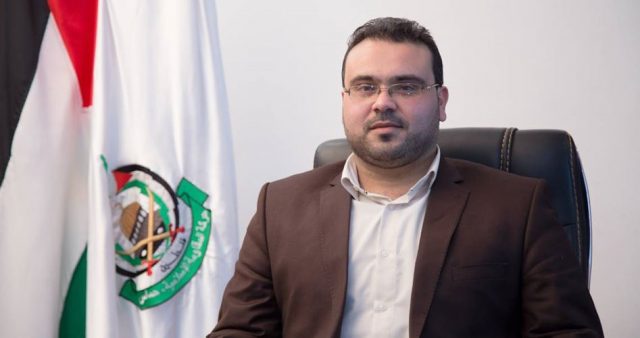
Hazem Qasem
Palestine Information Center | February 15, 2019
GAZA – Hamas’s spokesman Hazem Qasem on Thursday said that the US-led Warsaw conference serves the interests of Israel only.
Qasem said in a brief statement that the US administration seeks to integrate Israel into the regional community and liquidate the Palestinian cause.
“Warsaw conference portrays Iran as the most dangerous enemy instead of the Israeli occupation, which will lead to more divisions in the Middle East. All this is a free service offered by the US administration to Netanyahu,” he added.
Qasem pointed out that Warsaw conference is a thinly-veiled attempt by Israel and the US to pass the so-called Deal of the Century.
The conference will be attended by representatives from dozens of countries including Arab countries like Bahrain, Saudi Arabia, Morocco, and the UAE.
The gulf within GCC is only widening
By M. K. BHADRAKUMAR | Indian Punchline | December 10, 2018
The annual summit meeting of the Gulf Cooperation Council (GCC) in Riyadh on Sunday was particularly important for Saudi Arabia as a display of its regional leadership. But the short meeting of the GCC leaders behind closed doors, lasting for less than an hour, ended highlighting the huge erosion of Saudi prestige lately.
The litmus test was the participation by Qatari Emir Sheikh Tamim bin Hamad al-Thani. King Salman’s letter of invitation to the emir was perceived as some sort of an olive branch for reconciliation. But Qatar’s Minister of State for Foreign Affairs Sultan bin Saad Al Muraikhi represented the country at the summit.
The calculation by the hot headed crown princes of Saudi Arabia and the UAE that Qatar would pack up is turning out to be a historic blunder. Qatar had some trying times but it has successfully weathered the harsh embargo by Saudi Arabia and the UAE, and the boycott is now hurting its enforcers. Qatar “celebrated” the anniversary of the boycott in June by banning the import of goods from the UAE, Saudi Arabia, Bahrain and Egypt (which had cut diplomatic and transport ties on June 5, 2017.) Ironically, Iran has been a beneficiary as Qatar established diplomatic relations with Tehran and began importing Iranian products.
Qatar also strengthened its alliance with Turkey, which stepped in as provider of security for Doha. And Turkey checkmated any plans that Saudis and Emiratis might have had to use force to bring the Qatari emir down on his knees.
The emir’s absence from the summit in Riyadh yesterday underscores that he is not in a mood to forget and forgive. Equally, Kuwait and Oman also have issues to settle with Saudi Arabia and the UAE. There is tension between Kuwait and Saudi Arabia over two oil fields – Khafji and Wafra – that are jointly owned by the two states, which have a capacity to produce more than half a million barrels per day, but have been closed since 2014 and 2015, respectively. The dispute is over the sovereignty over the so-called Neutral Zone on their border, which has been undefined for almost a century.
The Saudis are not relenting. “We’re trying to convince the Kuwaitis to talk about the sovereignty issues, while continuing to produce until we solve that issue,” Saudi Crown Prince Mohammed bin Salman told Bloomberg in an interview in October. Similarly, Saudis and Emiratis have stationed troops in Yemen’s southern province of al-Mahra that borders Oman although the region has no presence of Houthi rebels. Oman considers the move an infringement on its national security. Interestingly, instead of the Sultan of Oman, Deputy Prime Minister for the Council of Ministers Sayyid Fahd bin Mahmood Al Said represented the country at the GCC summit.
To be sure, like Banquo’s ghost at Macbeth’s banquet in Shakespeare’s play, the killing of Jamal Khashoggi provided the backdrop to the GCC summit. The GCC states (including Qatar) have not criticized the Saudi Crown Prince Mohammed bin Salman (MBS) but they would know this is a developing story and it has dented Saudi prestige irreparably, especially with the US Senate is at loggerheads with the Trump administration. The big question for the Gulf region would be as to where Saudi Arabia is heading. (See the blog by Thomas Lippman What Now For U.S. Policy And The Crown Prince?)
Of course, if the GCC disintegrates due to these contradictions, Saudi Arabia will be the big loser, because it will be a reflection on its regional leadership. But do the Saudis understand it? The remarks by the Saudi Foreign Minister Adel Al-Jubeir at the end of the GCC summit showed no sign of remorse.
He said, “The members of the Gulf Cooperation Council are keen that the crisis with Qatar will have no impact on the Council (GCC). But this does not mean relinquishing the conditions imposed on Qatar.” Doha should stop supporting terrorism and extremism and avoid interfering in other countries’ affairs and needed to fulfill the Arab countries’ conditions to open the way for its return to the full-fledged work in the GCC. “The stance towards Qatar came to push it to change its policies,” he added.
The leading Saudi establishment writer Abdulrehman al-Rashed fired away at Qatar on the day of the GCC summit. In a column entitled Is it Time to end the GCC? in the Saudi daily Asharq Al-Awsat (owned by royal family members) he wrote:
“Qatar… has been putting obstacles in the GCC path and it has succeeded where Saddam and Iran have failed: It managed to destroy and rip it [GCC] apart… It organized an internal and external opposition against the United Arab Emirates. It is now the primary financier of the greatest attack against Saudi Arabia and it stands behind the politicization of Khashoggi’s murder… Today’s [GCC] summit could not conceal the dark political cloud hanging over its head. It also strongly poses a question over the future of the GCC as doubts rise over the value of this union… A wedge has been driven in the GCC.”
The disarray within the GCC undoubtedly calls attention to the decline of US influence in the Middle East region. At the end of the day, the Gulf states have not paid heed to repeated US entreaties for GCC unity. Ideally, GCC should have provided today for the US strategy a strong platform for launching the regime change project against Iran. On the contrary, GCC is split down the middle, with Qatar, Oman and Kuwait getting along just fine with Tehran. While addressing the summit in Riyadh on Sunday, the Emir of Kuwait, Sheikh Sabah Al Ahmad hit the nail on the head when he said, “The most dangerous obstacle we face is the struggle within the GCC.”
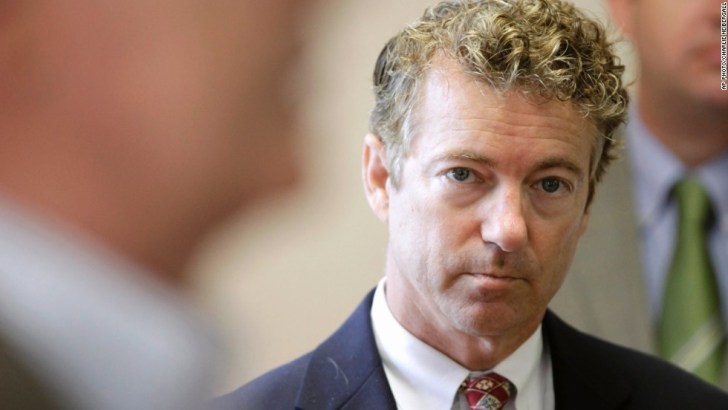
Pro-Israel groups attack Rand Paul for blocking $38 billion to Israel
If Americans Knew | November 27, 2018
Free Beacon reports that “pro-Israel groups in America are mobilizing against Sen. Rand Paul (R., Ky.) for blocking the continuation of U.S. aid to Israel.”
Paul has placed a “block” on legislation to give Israel $38 billion over the next 10 years – $23,000 per every Jewish Israeli family of four. This is the largest military aid package in U.S. history and amounts to $7,230 per minute to Israel, or $120 per second. A stack of $38 billion dollar bills would reach ten times beyond the international space station.
A block is a legislative procedure in which a senator calls on the floor leader not to move forward with a bill and indicates that the senator may filibuster against it.
Jewish News Syndicate reported last week that the American Israel Public Affairs Committee (AIPAC) had sent an action alert to its members calling on them to pressure Paul to remove his block on the bill, ‘‘S. 2497 Ileana Ros-Lehtinen United States-Israel Security Assistance Authorization Act of 2018.’
Now, according to Free Beacon, a right-wing pro-Israel website, AIPAC has also been purchasing advertisements on Facebook attacking Paul “as the primary Senate force blocking the reauthorization of the U.S.-Israel security pact.”
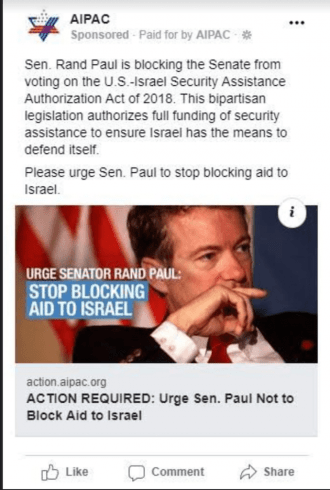
AIPAC Facebook ad against Rand Paul
Another pro-Israel group, Christians United for Israel (CUFI), has also reportedly organized an email blitz to pressure Paul to remove his hold, and has “invested heavily” in ads in Kentucky targeting Rand’s constituents.
According to Free Beacon, “Paul, a proponent of ending U.S. aid across the globe, has had multiple confrontations with the pro-Israel community over the years as result of his views. Paul has sought to hold up U.S. aid to Israel multiple times over the years, creating friction between him and top U.S. pro-Israel lobbying shops.”
Yesterday CUFI sent an email to supporters around the country saying: “Sen. Rand Paul is blocking the U.S.-Israel Security Assistance Authorization Act, S.2497. This bill is the cornerstone of U.S. support for Israel.”
In the message, CUFI calls Paul the “last obstacle to getting this bill signed into law.”
Free Beacon reports that Paul has also recently proposed suspending U.S. arms sales to Saudi Arabia and Bahrain over their attacks on what the Free Beacon calls “pro-Iran militants in Yemen.” Paul has long opposed U.S. support for the attacks on Yemen, which is on the brink of famine and has 50,000 dead.
Israel has long targeted Yemen as one of the countries that must be controlled in its quest for hegemony in the region.
Manama Invites Israeli Economy Minister to Visit Bahrain
Al-Manar | November 26, 2018
The Israeli Minister of Economy, Eli Cohen received an official invitation to visit Bahrain in mid-April next year, the Israeli Broadcasting Corporation (Makan) reported Sunday evening.
Cohen will participate in the Startup Nations Ministerial conference, an international high-tech conference organized by the World Bank.
Makan said the 3-day conference will discuss ways to promote economic growth with the participation of decision makers, entrepreneurs and investors from 170 countries.
Last week, the office of Israeli Prime Minister Benjamin Netanyahu revealed that Netanyahu will visit the Kingdom of Bahrain after having recently visited Oman.
Netanyahu and his wife Sarah visited in late October Oman and met Sultan Qaboos bin Said. Netanyahu said at the time that relations between Tel Aviv and a number of Arab countries are growing.
Symbolic outrage? US senators seek to stop arms sales to Saudis… after killing Bahrain ban bill

A boy stands next to a house destroyed by an air strike in the old quarter of Sanaa, Yemen. © Reuters / Khaled Abdullah
RT | November 15, 2018
A newly proposed bill in the US Senate would suspend the sale of weapons to Saudi Arabia and block refueling of Saudi warplanes bombing Yemen, as punishment for the death of a Washington Post columnist.
A group of senators on the Foreign Relations Committee, led by Bob Menendez (D-New Jersey) and Lindsey Graham (R-South Carolina) introduced the “Saudi Arabia Accountability and Yemen Act of 2018.” It was sponsored by three Democrats and two Republicans.
Menendez, who is the top Democrat on the committee, said that sanctions against 17 Saudi nationals introduced earlier on Thursday by the Trump administration were “not enough” to ensure a credible investigation of the murder of journalist Jamal Khashoggi, and pressure Riyadh into ending the war in Yemen.
“This legislation is an important way to hold Saudi Arabia accountable for various acts in Yemen as well as the death of Jamal Khashoggi,” said Graham.
“We are putting teeth behind these demands with regular oversight, sanctions and suspension of weapons sales and refueling support,” Menendez said.
The US currently supplies Saudi Arabia with billions of dollars’ worth of tanks, airplanes and ammunition, and offers in-flight refueling and other logistical support to the Saudi-led coalition operating in Yemen. Riyadh has waged war on its southern neighbor since March 2015, to overthrow the Houthi-led government, which Saudi Arabia accuses of being a proxy of Iran.
The bill introduced by Menendez and Graham would also impose US sanctions on anyone blocking humanitarian aid deliveries to Yemen, but also on anyone providing support to the Houthis.
Khashoggi, a Saudi journalist who lived in Turkey and was an outspoken critic of the Crown Prince Mohammed bin Salman, was last seen entering the Saudi consulate in Istanbul on October 2. Turkey quickly accused the Saudis of murdering Khashoggi, which Riyadh spent weeks denying until it eventually blamed it on a “fight” inside the consulate.
Earlier on Thursday, the Senate voted 77-21 to kill a proposal by Rand Paul (R-Kentucky) to block US arms sales to Bahrain, another member of the Saudi coalition. Menendez led the opposition to Paul’s proposal, arguing that Bahrain is a “critical ally” of the US and hosts the US Navy’s Fifth Fleet, and that the sale of multiple rocket launchers and missile systems had nothing to do with the war in Yemen.
‘Netanyahu Must Know His Probable Visit Would Be Confronted by All Bahrainis’
Al-Manar | November 8, 2018
Al-Wefaq Islamic Association in Bahrain on Thursday maintained that normalizing ties with the Zionist entity is a treason, stressing that Netanyahu and all the Israelis can never visit the Gulf country.
In a statement, Al-Wefaq considered that the media reports which mentioned that the Israeli prime minister Benjamin Netanyahu received an invitation from the Bahraini regime to visit Bahrain represents a new challenge which must be addressed by all the Bahrainis.
This challenge indicates that there is major shift in the regime’s policy, which would confiscate all the values, covenants and humanitarian as well as the Islamic commitments of Bahrainis to the Umma causes, especially that of the occupied Palestine, according to the statement.
Al-Wfaq also considered that the silence of the regime figures about the circulated reports indicates that Netanyahu’s visit is probable, stressing that Netanyahu must know that his visit to Bahrain is categorically rejected and will be confronted by all the Bahrainis.
Calling on all the Arabs and Muslims to denounce this provocative move, Al-Wefaq emphasized that all the forms of normalization with the Zionist entity are rejected.
US creating basis for regional conflagration in Middle East: James Petras
Press TV – September 29, 2018
The United States is creating the basis for the regional conflagration in the Middle East by fortifying its circle around Iran, American writer and academic James Petras says.
The US State Department has endorsed the proposed sale of more than 800 tactical missiles to Bahrain amid the Al Khalifah regime’s heavy-handed crackdown on pro-democracy campaigners and political dissidents in the tiny Persian Gulf country.
The approval includes Guided Multiple Launch Rocket System (GMLRS) Unitary Rocket Pods and Army Tactical Missiles System (ATACMS) Unitary missiles for an estimated cost of $300 million, the Arabic-language al-Khaleej al-Jadeed news website reported on Saturday.
“Well, it’s part of the US setting up the aggressive policy; mainly it is directed against the government in Iran. And it’s largely responsible for encouraging this aggression with the addition of its support of Israel and Saudi Arabia,” Professor Petras said.
“It’s creating the basis for the regional conflagration. I don’t think anyone is aware of any danger to the small (Persian) Gulf state. They’re mainly there to serve the US, and to enrich the oligarchies that run those countries,” he added.
“They have no defensive function. They have no positive role to play. And they are forever condemned for their repression of their dissident populations,” the analyst said.
“So I think this is an act by the Trump administration to fortify its circle around Iran. It’s likely to force Iran to increase its defenses and its alliances in the region,” he added.
“I don’t think it has any positive function for the US to continue meddling the Middle East and causing new wars, new terrorists, and new instability in the region,” the academic concluded.
UK doubles arms deals with governments on its own rights blacklist: Report
Press TV – July 19, 2018
The UK has almost doubled its arms deals with governments that it has blacklisted as violators of human rights, figures show.
The government of British Prime Minister Theresa May approved some £1.5 billion in arms licenses in 2017, up from £820 million it did the year before, the Campaign Against the Arms Trade (CAAT) pressure group reported Wednesday.
The licenses allowed weapons sales to 18 countries on Home Office blacklist, which includes Saudi Arabia, Bahrain, Egypt, Pakistan and the Israeli regime.
Arms deals with Saudi Arabia, which has been running a deadly military aggression against Yemen since March 2015, accounted for £1.13 billion of the total amount, the group said.
The ruling Tory government is “actively arming and supporting many of the regimes that even it believes are responsible for terrible human rights abuses,” CAAT’s Andrew Smith told The Independent.
“There is little oversight in the system, and no controls over how these arms will be used once they have left the UK,” he added.
“The arms sales being agreed today could be used to fuel atrocities for years to come. Right now UK-made fighter jets and bombs are playing a central role in the Saudi-led destruction of Yemen, and the government and arms companies have totally failed to monitor or evaluate how this deadly equipment is being used.”
“These arms sales don’t just provide dictatorships and human rights abusers with the means to kill, they also give them a huge degree of political support,” Andrews continued.
Saudi Arabia and its allies launched the war on Yemen in March 2015 to reinstall its former Riyadh-allied government. The military aggression has so far killed over 13,600 Yemenis.
The UK has increased its weapons sales by around 500 percent since the onset of the Saudi invasion, according to a report by The Independent. The UK has, so far, sold more than £6 billion worth of arms to the kingdom.
Israel second largest blacklisted buyer
With a total of £221 million of licenses granted, Israel was the second-biggest purchaser of UK arms last year to be featured on the Foreign and Commonwealth Office’s (FCO) human rights priority list.
In its latest version of the watch list, published this week, the FCO blasted Israel for violating the international law during its ongoing occupation of Palestinian lands in the West Bank, East Jerusalem al-Quds and Gaza.
It also slammed the Tel Aviv regime’s “systematic policy of settlement expansion,” despite constant calls by the UN, the European Union and many other international organizations to end them.
Bahrain became the third largest buyer on the list, acquiring £30.7 million of British arms in 2017, while Egypt imported £6.5 million and Pakistan, £11.2 million.
CAAT’s figures came amid efforts by British members of Parliament sitting on the Committees on Arms Export Controls (CAEC) to reform the UK’s arms export regime and stop arms sales to blacklisted governments.
In its latest report, the committee called on cabinet ministers to consider imposing a “presumption of denial” when weighing arms sales applications for such countries.
“We believe there must always be a more stringent process in place for any arms exports to such countries,” read the report.
3 Shia Bahraini clerics sentenced to death, 8 others to life imprisonment
Press TV – June 17, 2018
Bahraini regime officials have handed down death sentences to three Shia clergymen and condemned eight others to life imprisonment as the ruling Al Khalifah regime continues with its repressive measures and heavy-handed crackdown on members of the religious community.
Bahrain’s dissolved main opposition group, the al-Wefaq National Islamic Society, announced in a statement that Shia religious figures are being systematically subjected to arbitrary arrests, torture, trials, revocation of citizenship as well as forced deportation.
The statement added that al-Wefaq has recorded more than 347 cases of arrests, summons and various security prosecutions of Shia clerics in Bahrain.
It added that Bahraini security authorities have summoned more than 156 Shia clergymen over their speeches, ideological tendencies or political views. They have also arrested 99 religious scholars arbitrarily.
Al-Wefaq further pointed out that “harsh and unfair verdicts” have targeted more than 50 clerics, ranging from hefty fines and abolition nationality to life imprisonment and death penalty.
The statement went on to say that three Shia scholars have been sentenced to death, eight to life imprisonment and a number of others been stripped of their citizenship. Among those whose nationality has been revoked are prominent Ayatollah Sheikh Isa Ahmed Qassim and Sheikh Hussein Najati.
Al-Wefaq then dismissed the Al Khalifah regime’s policy of persecution and discrimination, stressing that authorities have no meaningful reform initiatives at the level of human rights, especially concerning freedom of religion and belief.
Thousands of anti-regime protesters have held demonstrations in Bahrain on an almost daily basis ever since a popular uprising began in the country in mid-February 2011.
They are demanding that the Al Khalifah dynasty relinquish power and allow a just system representing all Bahrainis to be established.
Manama has gone to great lengths to clamp down on any sign of dissent. On March 14, 2011, troops from Saudi Arabia and the United Arab Emirates were deployed to assist Bahrain in its crackdown.
Scores of people have lost their lives and hundreds of others sustained injuries or got arrested as a result of the Al Khalifah regime’s crackdown.
On March 5, 2017, Bahrain’s parliament approved the trial of civilians at military tribunals in a measure blasted by human rights campaigners as being tantamount to imposition of an undeclared martial law countrywide. Bahraini monarch King Hamad bin Isa Al Khalifah ratified the constitutional amendment on April 3 last year.
Egypt presidential decree allows Bahrain King to own villas in Sinai
MEMO | May 2, 2018
Egyptian President Abdel-Fattah Al-Sisi has issued a presidential decree permitting the King of Bahrain, Hamad Bin Isa Al Khalifa, to own two villas located in the South Sinai province of Sharm El-Sheikh, Egypt’s state’s official Gazette reported on Monday.
In accordance to the Sinai Development Law No.14/2012, any land on the peninsula can only be owned by Egyptian nationals.
However, a statement released on the State Information Service website claims that Al-Sisi issued a presidential decree approving treating Bahraini King Al Khalifa as an Egyptian citizen in 2016.
“The decree is also applicable to the possession of lands and villas in Naama Bay of Sharm El-Shiekh city for the purpose of residence,” the statement concluded.
The news comes just days after the announcement of a $15 billion project to develop the restive Sinai Peninsula that should be completed by 2022, with a presidential aide describing the scheme as “a project for national security”.
The project includes plans for a comprehensive network of roads, residential and industrial developments, four water desalination plants, hospitals and sewage networks. Funding sources for the initiative remain unclear.
Egypt is reportedly preparing to launch a significant military attack in upcoming days in the area bordering Gaza and Israel, with Egyptian forces amassing near the Rafah crossing.
However, last week, New York based watchdog Human Rights Watch expressed concern over the risk of a looming humanitarian crisis in North Sinai as a result of the Egyptian army’s military operation. Nearly 420,000 residents in four north-eastern cities are in urgent need of humanitarian assistance due to the ongoing battle.
According to the report, security forces have also imposed strict restrictions on the movement of goods and people throughout the governorate.
The report quoted local residents as saying that “the authorities have also banned the sale or use of gasoline for vehicle use in the area and cut telecommunication services for several days at a time. The government has cut water and electricity almost entirely in the most eastern areas of North Sinai, including Rafah and Sheikh Zuwayed.
Egypt has been facing a Daesh insurgency in the remote North Sinai region that has killed hundreds of soldiers and policemen in recent years.
Human rights organisations have, however, accused Egypt of using the fight against terror in Sinai as a ruse to cover up the extrajudicial killing of opponents and critics.
Featured Video
Yemen joins the war – Red Sea could be blocked next – Saudi regime at risk
or go to
Aletho News Archives – Video-Images
From the Archives
A superpower and “the world’s sickest warrior state”
By Paul J. Balles | March 8, 2010
Living through five or six major wars has hardened me to what I thought were the extremes of inhuman cruelty and brutality.
Two things made those extremes almost bearable: the brutality always revealed – at least according to the media coverage – the viciousness of the enemy. It was therefore quite understandable when our “brave men and women” pulverized the enemy.
Films of Japanese torturing captive Americans somehow justified holding Japanese Americans in internment camps during World War II; and only a small percentage of Americans found the bombing of Hiroshima and Nagasaki unreasonably vengeful at best, at worst, depraved.
The media giants in America portrayed the North Koreans as barbaric beasts with their captives, quite unlike their southern counterpoints – our allies during the Korean War. No one ever felt the need to explain how the South Koreans were a civilized breed while the North Koreans were absolute savages, at least according to the official line.
In Vietnam, our warriors justifiably (or so the media made us believe) dropped napalm on the North Vietnamese who had the gall to hide in villages and tunnels to ravage our invaders. At least it was accepted practice until some rogue photojournalist filmed a young girl screaming down a Vietnamese road in flames. … continue
Blog Roll
 Aletho News
- Russian tanker approaches Cuba despite US oil blockade
- Marandi: Yemen joins the war – Red Sea could be blocked next – Saudi regime at risk
- Pro-Palestinian French member of European Parliament denied entry to Canada
- Pakistan to Host US-Iran Talks
- How Indonesia’s tilt toward the US left it stranded in the Strait of Hormuz
- US has no choice but to retreat from Iranian borders: Top commander
- Iran Retaliation Strikes Chemical Plant Near Dimona
- AWACS’ Destruction is a Major Loss for US Military – Ex-DoW Analyst
- Israel’s Iran Strategy Uses US Military & Gulf States as Its Pawns
- Iran: Trump wanted regime change, now just begging for Hormuz to open
- If Americans Knew
- Israeli police block Catholic cardinal from entering Church of the Holy Sepulchre on Palm Sunday
- Israel is assassinating journalists again, more than any other nation, anywhere, ever – Not a ceasefire Day 170
- Over 300 US service members wounded, majority have brain injuries – Not a ceasefire Day 169
- Researchers at Human Rights Watch Resign Over Blocked Report on Palestinian Refugee Return
- Jewish Groups Are Backing a War Americans Don’t Want
- Eric Fingerhut Thinks He’s the President of the Jews
- Top Jewish Philanthropists, Rabbis Urge Israeli President to Take Action Against ‘Jewish Extremists’
- Don’t Be Fooled. Zionist Leaders Have Always Wanted to Control Southern Lebanon
- Israel’s widespread use of torture is a core element of its genocide against the Palestinian people
- In Israel’s War on Iran, Many Middle East US Bases Rendered “All But Uninhabitable”
- No Tricks Zone
- German Science Blog Accuses PIK Climate Institute Of Hallucinating Climate Tipping Points
- Devastating Assessment Of Comirnaty Vaccine By Former Senior Pfizer Europe Toxicologist
- New Study: CO2 Is ‘Effectively Negligible’ As An Explanatory Climate Change Factor Since 2000
- Former Pfizer Toxicologist Dr. Helmut Sterz Tells Bundestag Hearing Pfizer Vaccine Should Have Never Been Approved
- Energy Expert: Germany’s Nuclear Phaseout Was A “500 Billion Euro Mistake”
- New Research: South Australia’s Mid-Holocene Sea Surface Temperatures Were 4°C Warmer Than Today
- Storing Green Energy To Last Germany 10 Days Would Require A 60-Million Tonne Battery
- New Studies: UK Sea Levels Were 4 Meters Higher Than Today During The Mid-Holocene
- Destructive Green New Deal: German Energy And Metal Group Warns Of Drastic Crisis
- New Study Documents A 20-Year Pause In Arctic Sea Ice Decline – Driven By Internal Variability
 Aletho News