Beijing Cancels Meeting Between Chinese, US Defense Officials
Samizdat – August 5, 2022
Beijing has cancelled a meeting between Chinese and US defense officials following US House Speaker Nancy Pelosi’s recent visit to Taiwan.
The Chinese Foreign Ministry announced that Beijing has decided to cancel bilateral working meetings between US and Chinese defense officials and halt cooperation between the two countries on maritime safety.
The Foreign Ministry also said that China temporarily suspends cooperation with the United States on issues such as repatriation of illegal migrants, judicial assistance, transnational crime, and climate change.
On August 2, US House Speaker Nancy Pelosi arrived in Taiwan on a trip she claimed shows the US’ unwavering commitment to the island, as Reuters put it.
Pelosi’s visit, however, was met with outrage from China, as Beijing regards the island as an inalienable part of the country.
On August 4, shortly after Pelosi’s departure from the island, China launched live fire drills in several areas around Taiwan.
The United States officially supports Mainland China’s claim to the island.
‘US-led effort to isolate Russia failed’
Samizdat – August 5, 2022
The US-led drive to isolate Russia through sanctions has not succeeded, as half the countries in the Group of Twenty leading global economies refused to sign on, Bloomberg reported on Friday.
According to the publication, senior officials from leading Western nations are surprised by the lack of support within the wider G20, despite their efforts to make the case for restrictions against Russia.
Argentina, Brazil, China, India, Indonesia, Mexico, Saudi Arabia, South Africa, and Turkey have not joined the sanctions that were adopted by the US, UK, EU, and their allies Australia, Canada, Japan, and South Korea. Some nations, like China and South Africa, have openly criticized the restrictions. The G20 nations account for around 85% of global economic output.
According to Bloomberg, the reasons for the lack of support include strong trade ties, historical affinities to Moscow, and a distrust of former colonial powers.
China to test hypersonic missiles in Taiwan blockade drill
Samizdat | August 3, 2022
The large-scale military drills Beijing has launched near Taiwan in response to US House Speaker Nancy Pelosi’s visit to the island involve the “use of advanced weapons,” including state-of-the-art hypersonic DF-17 missiles, according to the state-run Global Times newspaper.
The ongoing exercises entail a “joint blockade, sea assault and land and air combat trainings,” the outlet reported on Wednesday, adding that Chinese J-20 stealth fighter jets were also taking part in the war games.
Even before the main stage of the exercise kicked off on Thursday, Global Times called them “unprecedented,” adding that Chinese missiles were expected to “fly over the island of Taiwan for the first time.” People’s Liberation Army (PLA) forces are also expected to enter the area within 12 nautical miles of the island, and could potentially surround the island “entirely,” it added, citing military “experts.”
The Chinese Armed Forces Eastern Theater Command said on Wednesday that the forces involved in the exercise had already conducted “realistic combat-oriented” drills to the north, southwest and southeast of the island.
The drills are expected to run at least until Sunday noon, Xinhua News Agency reported, adding that they will involve “live-fire drills in six large maritime areas and their air space surrounding the island of Taiwan.”
The DF-17 missiles mentioned by Global Times on Wednesday were first publicly demonstrated in action by the Chinese military on July 31, 2022. At that time, an official video celebrating the 95th anniversary of the PLA’s founding featured a launch of what the Chinese media described as a missile resembling the “aircraft carrier killer.”
DF-17, which stands for Dongfeng (East Wind), is said to be using a hypersonic glider as its warhead, which flies five times faster than the speed of sound and has an “unpredictable trajectory.” According to the Global Times, the missile is particularly good at hitting “slowly moving targets” like aircraft carriers.
The news comes as tensions around Taiwan are running high. On Tuesday, Nancy Pelosi visited the island that Beijing considers part of China’s sovereign territory. The House speaker, who is the third in line to the US presidency, has become the highest-ranking American official to do so since 1997. China previously repeatedly protested the move, calling it a provocation.
Beijing reacted to the trip by launching military exercises around Taiwan and warning the US that Pelosi’s visit would have “severe impact” on bilateral relations between Beijing and Washington.
Since 1949, Taiwan has been governed by nationalists defeated in the Chinese civil war, who evacuated from the mainland with US help. The government in Taipei calls itself the Republic of China (ROC) and never officially declared independence. Washington maintains close unofficial ties with the island and sells weapons to Taipei, despite officially recognizing Beijing as the sole legitimate authority in China.
Pelosi’s Taiwan visit has shown China diplomacy doesn’t work – now all bets are off
By Scott Ritter | Samizdat | August 4, 2022
In March of this year, Chinese President Xi Jinping chastised US President Joe Biden on Ukraine, noting that “it took two hands to clap” (a reference to the role played by the US in fomenting the Russia-Ukraine crisis), and declaring “He who tied the bell to the Tiger must take it off,” a Chinese aphorism which basically said it was up to the US to fix the problems it was responsible for instigating.
During that same conversation, President Xi likewise took his American counterpart to task for statements made by US officials–including Biden himself–which suggested that the United States was drifting away from its historical commitment to the ‘One China’ policy regarding Taiwan that had underpinned US-Sino relations for decades. Xi noted that the “direct cause” of the current strain on relations is that “some people on the US side have not followed through on the important common understanding reached by us.”
The US, Xi added, has failed to deliver on virtually all of its promises to China regarding the avoidance of conflict, simultaneously promulgating deep-seated notions of China as an “imagined enemy” while sending the wrong signal to “Taiwan independence” forces, something Xi characterized as “very dangerous.” Continuation of such a policy direction would, the president noted, have a “disruptive impact” on China-US relations.
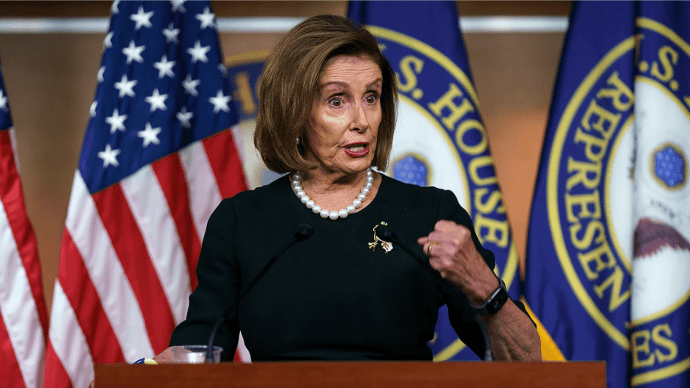
On August 2, the Speaker of the US House of Representatives, Nancy Pelosi, made an unannounced stop in Taiwan. This trip was made despite concerted warnings on the part of China that her visit would “lead to egregious political impact,” and that the Chinese military would “not sit idly by” if Pelosi landed in Taipei. The visit of Pelosi, number two in the line of succession to the Presidency of the United States, is a deliberately provocative move which appears to have been done independent of coordination with the State Department, the Department of Defense, or the White House.
I, together with other former US intelligence and national security officials, had advised President Biden to curtail her visit out of concern that it would set in motion events which could result in a Chinese invasion of Taiwan and direct US-Chinese military confrontation. The White House refused to interfere with what it deemed the operation of a separate branch of government.
There can be little doubt that China did everything in its power short of shooting Pelosi’s plane down to dissuade the Speaker of the House to forgo her Taiwan visit. From the standpoint of national credibility, China literally put it all on the line. For China to do nothing in the face of what is an obvious provocation on the part of the US, through Pelosi, is not a probable outcome.
The question now is what will China do? The current diplomacy card has, for all intents and purposes, been exhausted. While China has imposed certain economic sanctions on Taiwan, the reality is the sanctions card, as wielded by China, is insufficient to the task of responding to the Pelosi provocation.
This leaves a military response.
China has already engaged in an unprecedented mobilization of military resources, by some accounts assembling more than 40 brigades, along with significant air defense and ballistic missile forces, hundreds of aircraft, and scores of ships. By rough calculation, this amounts to some 250,000 troops, and it doesn’t appear as if the mobilization is complete. China has announced that it will be holding live fire exercises around the periphery of Taiwan, including some that encroach on what Taiwan considers to be its sovereign space, running from August 4, the day after Pelosi’s departure from Taiwan, through August 7.
There is considerable cost, both in terms of fiscal resources and political capital, attached to military exercises of this scale during times of crisis. By mobilizing this amount of military resources, China has created a “use it or lose it” situation, where the military viability of the assembled force dissipates over time. The key question that needs to be answered is will China be satisfied with simply sending a signal to Taiwan and return its forces to their respective barracks once the exercises conclude, or if the Chinese government has determined that a red line has been crossed, and as such orders its military to transition from a live fire exercise to an actual invasion.
The answer to this question may very well rest with any parallel diplomatic track China may establish with both Taiwan and the US. If both Taiwan and the US can provide meaningful reassurances that Pelosi’s visit was not reflective of current US and Taiwan policy, there may be a possibility for China to be satisfied with simply flexing its muscle.
However, the Pelosi visit is itself a byproduct of a policy trend in both the US and Taiwan built on the notion of Taiwanese independence. If this perception cannot be altered, then China is bound through its Constitution to take measures consistent with preserving Chinese sovereignty over Taiwan. This, of course, would mean war.
Let there be no doubt—Nancy Pelosi, by landing in Taiwan, tied the bell to the tiger. It is now up to Joe Biden to take it off.
The question now is whether the tiger will cooperate.
Chinese firm’s US plans paused over Pelosi
Samizdat | August 3, 2022
China’s CATL, the world’s largest battery maker, will delay a decision on building a multibillion-dollar factory in the US, due to the controversial visit by House Speaker Nancy Pelosi to Taiwan, Bloomberg reported on Tuesday.
Contemporary Amperex Technology Co (CATL) was expected to announce its choice for a site in the US in the coming weeks, but will now wait until September or October, Bloomberg quoted sources familiar with the matter as saying.
It was reported in May that CATL was in the final stages of vetting locations to build electric vehicle batteries that would supply Ford, Tesla and BMW. Potential sites were said to include South Carolina and Kentucky, where those automakers have assembly plants. Locations in Mexico are also reportedly under consideration.
Tuesday’s visit to Taiwan by US House of Representatives Speaker Nancy Pelosi was strongly condemned by China, which views the island as its sovereign territory. Beijing branded Taiwan and the US “destroyers of peace” on the same day.
Taiwan accuses Beijing of air and sea blockade
Samizdat | August 3, 2022
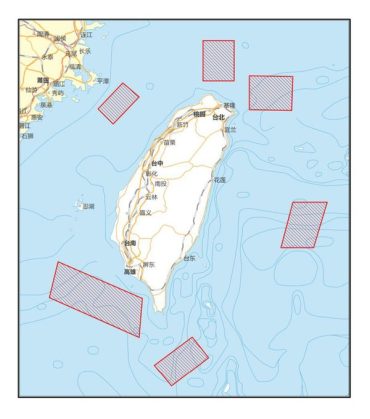 Taiwanese defense officials have accused Beijing of seeking to “invade” the island’s territorial waters and airspace, after China announced a series of “targeted military operations” in response to US House Speaker Nancy Pelosi’s visit to Taipei.
Military officials claimed on Wednesday that several exclusion zones around the island, where China intends to conduct live-fire drills and other military exercises later this week, overlap with “Taiwan’s territorial space.” According to the Guardian, a military spokesman accused Beijing of violating “UN rules” with what would amount to a de facto “blockade of Taiwan’s air and sea space.”
Accusing Beijing of waging “psychological warfare on Taiwan and citizens,” Taipei vowed to “firmly defend its national security” and boost its military preparedness to the highest level, while adhering to the “principle of not asking for a war.”
Pelosi arrived in Taipei late on Tuesday despite repeated warnings from Beijing against attempting to visit territory that it regards as an integral part of China.
“The Chinese People’s Liberation Army is on high alert and will launch a series of targeted military operations to counter this, resolutely defend national sovereignty and territorial integrity, and resolutely thwart external interference and ‘Taiwan independence’ separatist attempts,” China’s Defense Ministry spokesman Wu Qian said on Tuesday night, without providing further detail.
In a separate statement, China’s Eastern Theater Command announced joint military drills off Taiwan, live-firing in the Taiwan Strait and missile test-launches in the sea east of Taiwan. According to a map shared by state media, the military drills, set to begin on Thursday, after Pelosi’s departure, will take place in six large maritime areas and their airspace all around Taiwan.
US Should Withdraw All Nuclear Weapons From Europe: China’s UN Envoy
Samizdat – 02.08.2022
“The US should withdraw all its nuclear weapons from Europe and refrain from deploying nuclear weapons in any other region,” the director-general of the Chinese Foreign Ministry’s arms control department, Fu Cong, said during the 10th Review Conference on the Treaty on the Non-Proliferation of Nuclear Weapons at the United Nations.
He went on to say China is ready to cooperate with all countries to strengthen the Treaty on the Non-Proliferation of Nuclear Weapons (NPT).
“This April President Xi Jinping proposed a global security initiative … Guided by the initiative, China is ready to join hands with all countries to continuously strengthen the universality, authority and effectiveness of the NPT to inject stability and certainty into this era of turbulence and transformation and make a new contribution to world peace, stability and prosperity,” Fu said.
Notably, Fu further stressed that Beijing does not compete with other states in the quantity of nuclear weapons and is committed to the principle of no first use.
“China will under no circumstances be the first to use nuclear weapons,” he said.
The envoy added that China keeps its nuclear stockpile at a minimum level to ensure the protection of national security and does not compete with other countries in numbers and capabilities in this area.
Earlier, Russian President Vladimir Putin said in a greeting to the conference that Moscow always abides by the wording and spirit of the Treaty on the Non-Proliferation of Nuclear Weapons, noting that there could never be winners in a nuclear war and that it should never be started.
For his part, US President Joe Biden emphasized that Washington is now prepared to collaborate with Russia on talks to forge a new nuclear arms limitation agreement that would take the place of the Strategic Arms Reduction Treaty (also dubbed “New START”), which is scheduled to end in 2026.
However, the proposal was met with skepticism by Dmitry Medvedev, the deputy chairman of the Russian Security Council. The former president wondered in a Telegram post whether Russia “even need it,” since the world “has changed.”
Then, he claimed that although things are far worse now than they were during the Cold War, Russia is not to blame.
China to speed up Taiwan reunification process with comprehensive action
By Yang Sheng | Global Times | August 2, 2022
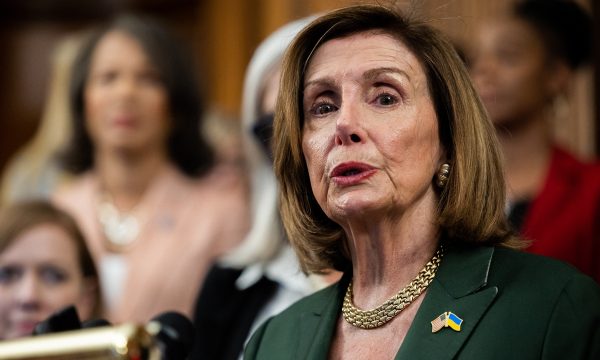
US House Speaker Nancy Pelosi is expected to arrive on the island of Taiwan on Tuesday night according to foreign media reports, with rising concerns and opposition over her trip within the island and increasing military activities by the Chinese mainland, the Taiwan authorities and the US military in the region. Analysts from both sides of the Taiwan Straits said this risky move will totally change the situation in the region, while the mainland will more actively dominate and speed up the reunification process with comprehensive measures including military and political actions, and these actions will let the US and the secessionist Democratic Progressive Party (DPP) authorities feel the pain.
There are many options on the table for China to speed up the reunification process. These could include striking Taiwan military targets, just as the PLA did in the previous Taiwan Straits crisis, pushing new legislation for national reunification, sending military aircraft and vessels to enter the island’s “airspace” and “water areas” controlled by the Taiwan authorities and ending the tacit cease-fire with the Taiwan military.
Whether Pelosi can make her trip to Taiwan happen or not, there is no reason for China to be nervous, because such a political show will not change the overwhelming advantages, especially the military one, held by the mainland against the Taiwan authorities and the US in the region. Nor will the trip provide any possibility of “Taiwan independence,” and it cannot change the unshakable hard fact that Taiwan is part of China, said experts, noting that what China needs to do is to use this incident to maximize its advantage and keep pushing the reunification process.
Hua Chunying, a spokesperson of the Ministry of Foreign Affairs, said at a routine press conference on Tuesday that “it was the US who takes the provocative action first and has caused the escalation of Taiwan Straits tension. The US should and must take full responsibility for this.”
Military preparations
Both aircraft carriers of the PLA Navy have reportedly moved out from their homeports respectively amid Pelosi’s possible visit to the island of Taiwan, which media reported could happen on Tuesday evening.
The aircraft carrier Liaoning on Sunday embarked on a voyage from its homeport in Qingdao, East China’s Shandong Province, and the aircraft carrier Shandong on Monday set out from its homeport in Sanya, South China’s Hainan Province, accompanied by a Type 075 amphibious assault ship, media on the island of Taiwan reported on Tuesday.
Foreign commercial satellite imageries obtained by the Global Times on Tuesday also show that the aircraft carrier Liaoning was not in its homeport on Sunday, a Type 075 amphibious assault ship was sailing in the South China Sea on Sunday, and the aircraft carrier Shandong was sailing in the South China Sea on Monday.
Some analysts said that as Pelosi’s aircraft may enter Taiwan’s self-claimed “air defense identification zone” along the east coast of Taiwan after departing Malaysia, the Chinese mainland vessels appeared earlier to get into position and are closely monitoring Pelosi’s route.
A military expert who asked for anonymity told the Global Times that with the participation of the aircraft carriers, the PLA could conduct more effective intercept operations, because it will take longer for fighter jets to be launched from airports in the mainland to arrive in the areas to the east or south of Taiwan island, while the shipboard aircraft will be more flexible as long as the fleets have arrived in the relevant region.
Citing an anonymous source, Reuters reported on Tuesday that several PLA aircraft flew close to the “median line” of the Taiwan Straits on Tuesday morning, and Taiwan-based outlets said two Chinese mainland guided-missile frigates and a survey ship sailed from north to south through Yonaguni Island waters, heading east of Taiwan island.
As of Tuesday noon, flights at airports in several cities in Fujian Province, including Xiamen, Fuzhou and Quanzhou, have been partially canceled, according to Xiamen Airlines, citing air traffic control.
US military forces are also taking actions. Four US warships, including an aircraft carrier, were positioned in waters east of the island on “routine” deployments, Reuters reported on Tuesday.
Aircraft carrier the USS Ronald Reagan (CVN-76) and big deck amphibious ship USS Tripoli (LHA-7), with Marine F-35B Lighting II Joint Strike Fighters embarked, are operating in the vicinity of Taiwan, on the edge of the South China Sea, according to the August 1 edition of the USNI News Fleet and Marine Tracker.
A Pentagon spokesperson told USNI News on Monday that the ships were operating normally in the region and would not detail force protection measures for the visit of the third-highest ranking US official to the region.
Concerns within the island
But there is still a possibility that Pelosi could eventually land on the island due to complicated reasons, as Taiwan media also reported that due to security concerns, the DPP authorities once withdrew the “invitation” to Pelosi, but due to Pelosi’s pressure, the authorities eventually compromised and make arrangement for her trip.
Many Taiwan web users complained how Pelosi could be so arrogant and bossy, to force Taiwan to play in a show with her. “After the show you will go back to the US, but what about the mess you leave here in Taiwan?” said a web user.
Hung Hsiu-chu, former chairwoman of the KMT, the major opposition party within the island, said there are two different views on Pelosi’s trip to Taiwan – one group do not want Pelosi to come and do not know why she would come as this could only add conflicts for the Chinese mainland, the US and Taiwan. Another group think that if Pelosi wants to support Taiwan secessionism, she could let the House pass an act to recognize “Taiwan independence,” so why would she come to the island to create such a big mess?
Some also consider that the US is tolerating Pelosi’s risky move to test the bottom-line set by the Chinese mainland, Hung said, noting that “God bless, hopefully nothing bad will happen.”
Taiwan Taoyuan International Airport received a threatening letter on Tuesday morning which claimed that “three explosive devices have been placed at the airport to stop the US House Speaker’s visit to Taiwan,” media reported. The New Party, a pro-reunification political party in the island, and some civil society groups plan to protest at the Grand Hyatt Hotel in Taipei where it is believed Pelosi will stay if she visits the island, according to media reports.
The DPP authorities and the many senior politicians are keeping silent without any high-profile preparation for welcoming Pelosi, as analysts said this reflects the high concerns within the island. Pelosi’s visit is creating great troubles but due to the weak position of the DPP authorities in front of the US, the island must cooperate and has no room to make independent decisions.
What the mainland can do
Chinese analysts said the struggle between China and the US at this point is about dignity and concrete strategic interests, but the latter is much more important, so China will not merely focus on playing a game of chicken and hawk with Pelosi, as changing the whole situation of the region is much more significant and valuable.
The Chinese mainland really knows the importance of “strategic patience,” just like when many people expected that China would crack down on the Hong Kong turmoil in 2019 with force when rioters attacked the central government’s liaison office, but the facts prove that China did not act in that way but eventually realized a land-slide victory to reinforce its governance in Hong Kong. “So this time, China will teach the US a lesson again, as it will use US mistakes to comprehensively change the Taiwan Straits situation, just as it did in Hong Kong in recent years,” said a Beijing-based senior expert on international relations who asked for anonymity.
Wang Jiangyu, a professor of law at the City University in Hong Kong, said China will use this incident to strengthen its sovereignty claim over Taiwan. “For instance, sending squadrons of military aircraft to enter the ‘airspace’ of Taiwan, or sending military vessels to enter the ‘water areas’ controlled by the Taiwan military,” he said.
These are unprecedented acts of declaring sovereignty over Taiwan, and if China can send its signal of determination to effectively contain the provocations made by the US and other Western countries, the situation will be in favor of the Chinese side in the future, Wang said.
Lü Xiang, a research fellow at the Chinese Academy of Social Sciences, told the Global Times on Tuesday that China’s reaction will not be just a momentary action but will consider the whole security mechanism of Taiwan.
“The Chinese mainland could exercise its sovereignty and rights of control over the airspace on the island and adjacent sea areas around the island, to make sure there will not be another case like ‘Pelosi’s visit’ that could happen again, and to better safeguard national sovereignty,” he said.
Song Zhongping, a Chinese military expert and TV commentator, said based on the experience of the previous Taiwan Straits crisis, the PLA will strike Taiwan military targets but will not directly fire at US targets, so it is possible that the PLA will strike some Taiwan military targets this time as well, and the mainland could also consider speeding up legislation for a national reunification law and even publish a timetable for reunification which will impose real pressure on the US and Taiwan authorities.
Is Pelosi’s Trip to Taiwan the ‘Pearl Harbour Moment’ Jake Sullivan Called for?
By Cynthia Chung | Strategic Culture Foundation | July 30, 2022
In October 2019, Jake Sullivan, who became U.S. National Security Advisor in 2021, stated in an interview that the U.S. needed a clear threat to rally the world and play the role of saviour of mankind and that China could be that organizing principle for U.S. foreign policy. In the 2019 interview, he acknowledges that the problem was that people were not going to believe that China is a global threat, that their view of China is too positive and that the United States would need a “Pearl Harbour moment,” a real focusing event to change their minds, something he calmly stated that “would scare the hell out of the American people.”
According to Sullivan, from the same man who called for Libyan and Syrian military interventionism, American exceptionalism needed “rescuing” and “reclaiming,” not of course with actual qualitative actions that would earn one’s position as a model of true democratic governance with American citizens and the world, but rather through ever aggressive PR and media shame-based social conditioning, labeling whoever points out the clear hypocrisy of these statements as “threats to national security.” Actors like Sullivan have shown that they are willing to do anything to achieve that “Pearl Harbour moment,” even if acts of terrorism on their own people are required in order to paint their “enemy” as a monster in the eyes of their citizens.
This is by no means a new strategy. Operation Gladio is a perfect example of how NATO conducted a decades-long secret war against its own European citizens and elected governments under the guise of “communist terrorism.”
In 1962, General Lyman L. Lemnitzer, head of the Joint Chiefs of Staff, proposed Operation Northwoods, which was a proposed false-flag operation against American citizens, which called for CIA operatives to both stage and actually commit acts of terrorism against American military and civilian targets and subsequently blame the Cuban government in order to justify a war against Cuba. The plan was drafted by General Lemnitzer specifically and has a striking similarity with NATO’s Operation Gladio.
The logic of Northwoods was the stripe of Gladio. The general staff inclined towards prefabricated violence because they believed benefits gained by the state count more than injustice against individuals. The only important criterion is reaching the objective and the objective was right-wing government.
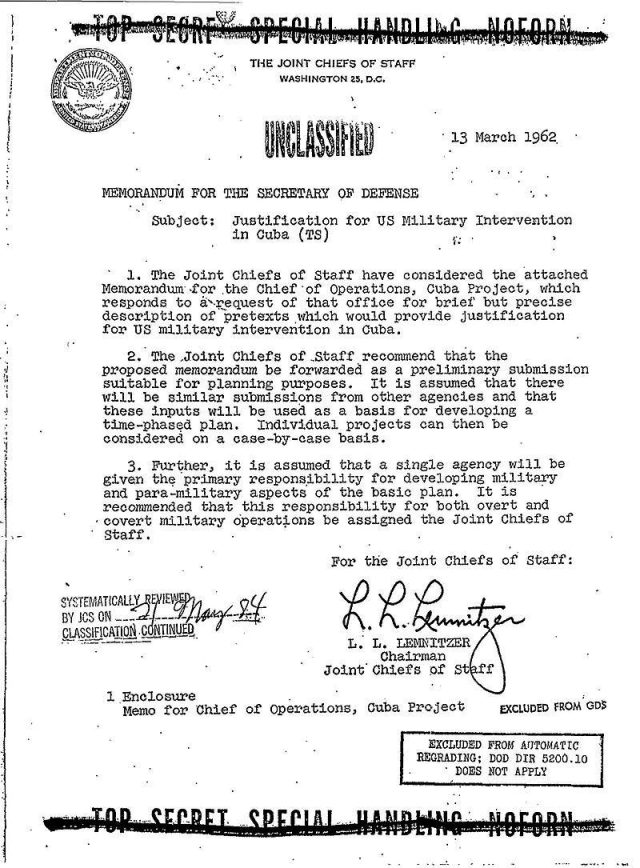
Operation Northwoods memorandum March 13, 1962.
There was not a single item in the Northwoods manual that did not amount to a blatant act of treason, yet the U.S. military establishment dispatched “Top Secret – Justification for U.S. military Intervention in Cuba” straight to the desk of Secretary of Defense Robert McNamara, for onward transmission to President Kennedy.
Needless to say, President Kennedy rejected the proposal and a few months later General Lemnitzer’s term was not renewed as chairman of the Joint Chiefs of Staff, having served from October 1st 1960 to September 30th 1962.
However, NATO lost no time, and in November 1962 Lemnitzer was appointed commander of U.S. European Command and as Supreme Allied Commander Europe of NATO, the latter to which he served from January 1st, 1963 to July 1st, 1969.
Lemnitzer’s was a perfect fit to oversee the cross-continental Gladio operations in Europe. Lemnitzer was a prime motivating force in setting up the Special Forces Group in 1952 at Fort Bragg, where commandos were trained in the arts of guerilla insurgency in the event of a Soviet invasion of Europe. Before long, the men who proudly wore distinctive green berets were cooperating discreetly with the armed forces of a string of European countries and participating in direct military operations, some of them extremely sensitive and of highly dubious legality.
The New American Century
Jake Sullivan’s statement that we need a “Pearl Harbour moment” is nothing new.
In September 2000 a report titled “Rebuilding America’s Defenses: Strategy, Forces and Resources For a New Century” was published by none other than The Project for the New American Century. In the report it is written (pg. 51):
“… the process of transformation, even if it brings revolutionary change, is likely to be a long one, absent some catastrophic and catalyzing event – like a new Pearl Harbor.”

Interestingly, within this same report, published by The Project for the New American Century, it is written (pg. 60):
“Although it may take several decades for the process of transformation to unfold, in time, the art of warfare on air, land, and sea will be vastly different than it is today, and ‘combat’ likely will take place in a new dimensions: in space, ‘cyber-space,’ and perhaps the world of microbes… advanced forms of biological warfare that can ‘target’ specific genotypes may transform biological warfare from the realm of terror to a politically useful tool.”
Richard Perle, called the “Prince of Darkness,” by his adversaries and the “Pentagon’s Brains” by his admirers was an acolyte of Albert Wohlstetter, you could say the “brains” behind the RAND Corporation (for more on this refer here). Paul Wolfowitz was another of Wohlstetter’s acolytes. The followers of Wohlstetter were so numerous, whom Perle said Donald Rumsfeld was among (1), that they called themselves “the St. Andrews prep” boys. (2)
Perle stated (3) the 2003 invasion of Iraq was “the first war that’s been fought in a way that would recognize Albert [Wohlstetter]’s vision of future wars. That it was won so quickly and decisively, with so few casualties and so little damage, was in fact an implementation of his strategy and his vision.”
In fact, this call for the need of a “Pearl Harbour moment” originally came from the Wohlstetters themselves.
A New Pearl Harbour Moment
In the mid-1950s, Roberta Wohlstetter, Albert’s wife and RAND peer, produced her seminal analysis of Pearl Harbour, recognised by the Pentagon as a definitive work of twentieth-century American military history. The study began as an internal RAND document based on unclassified documents drawn from the congressional record.
Warner Schilling noted in his perceptive review of Roberta’s work on Pearl Harbour that “The main concept that Mrs. Wohlstetter brings to bear on these events [is that]… the pictures of the world that government officials build from intelligence… are not so much a matter of the ‘facts’ their sources make available as they are a function of the ‘theories’ about politics already in their minds which guide both their recognition and their interpretation of said ‘facts’.”
The primary practical lesson of Roberta’s Pearl Harbour was that the United States should invest in rapid and aggressive means for responding to surprise attacks (for more on this story refer here).
On January 12, 2003, Los Angeles Times published an article titled “Agenda Unmasked,” where they write:
“In the hours immediately after the Sept. 11 attacks, long before anyone was certain who was responsible for them, Secretary of Defense Donald H. Rumsfeld reportedly asked that plans be drawn up for an American assault on Iraq…
At first consideration, Rumsfeld’s early targeting of Iraq seems odd. Too little was known, too much uncertain. But the Defense secretary’s desire to attack Iraq was neither impulsive nor reactive. In fact, ever since the first American war against Iraq in 1991, Rumsfeld and others who planned and executed that war have wanted to go back and finish what they started. They said so in reports written for then-Secretary of Defense Dick Cheney in the last years of the George H.W. Bush administration, and they continued the push when they were out of power during the Clinton years. In the spring of 1997, their efforts coalesced when Rumsfeld, Cheney and others joined together to form the Project for the New American Century, or PNAC, and began concerted lobbying for regime change in Iraq.
In an open letter to President Clinton dated Jan. 26, 1998, the group called for “the removal of Saddam Hussein’s regime from power,” and in a letter dated May 29, 1998, to then-Speaker of the House Newt Gingrich (R-Ga.) and then-Senate Majority Leader Trent Lott (R-Miss.)… Signatories to one or both letters included Rumsfeld; William Kristol, editor of the conservative Weekly Standard magazine and chairman of the PNAC; Elliott Abrams, the convicted Iran-Contra conspirator whom President Bush last year named director of Middle Eastern policy for the National Security Council; Paul D. Wolfowitz, now Rumsfeld’s deputy at the Pentagon; John R. Bolton, now undersecretary of state for arms control; Richard N. Perle, now chairman of the Defense Science Board; Richard Armitage, now Colin Powell’s deputy at the State Department; and Zalmay Khalilzad [another Wohlstetter acolyte(4)], former Unocal Corp. consultant and now special envoy to Afghanistan.
… They expected that the radical changes in U.S. military policy they favored would have to come slowly in the absence of, as the PNAC report “Rebuilding America’s Defenses” put it, a “catastrophic and catalyzing event – like a new Pearl Harbor.” On Sept. 11, 2001, they got their Pearl Harbor.”
As the Los Angeles Times article also observes, without 9/11 as their Pearl Harbor, their entire campaign against terror in the Middle East could never have been justified.
In fact, since the disastrous PR campaign of the Vietnam War, most Americans had become horrified at the prospect of entering any more foreign wars on the clearly false and hypocritical terms of bringers of “peace” and “freedom.”
9/11 changed all that.
Thus, when Jake Sullivan observes that there is not enough anti-China sentiment to bolster an image of the United States as a “saviour of mankind” against China and that America is in need of a “Pearl Harbour moment” I would be very wary.
The circus around Pelosi’s trip to Taiwan in the coming days, and evident glee that is coming forth from many of these neocons frothing at the mouth over this prospect is a clear sign that something incredibly reckless and stupid is about to happen.
Pelosi’s airplane might indeed be shot down on her completely irrelevant and unnecessary trip to Taiwan, and if it is, don’t be surprised if it was the Americans themselves who are behind it, who have shown they are willing to do anything for that “Pearl Harbour moment.”
China Unveils ‘Aircraft Carrier Killer’ Missile Amid Tensions Over Pelosi’s Indo-Pacific Trip
Samizdat – 31.07.2022
Beijing has for the first time unveiled a video featuring the launch of what appears to be a DF-17 hypersonic missile, which Chinese experts quoted by state media have described as an “aircraft carrier killer”.
The video, titled ‘The capabilities of the Chinese troops shown in 81 seconds’ was broadcast on China Central Television (CCTV) on Sunday, amid the ongoing tensions with the US over the possible visit to Taiwan of House of Representatives’ Speaker Nancy Pelosi.
The video was published a day before the 95th anniversary of the founding of the People’s Liberation Army (PLA).
A military expert quoted by Global Times said that potential enemies would have a “hard time” locating the new missile, which can be launched any time and anywhere.
Military observers have also said it is “almost impossible” to “intercept” the missile since it uses an “unpredictable trajectory”.
Further, experts have reckoned that the South China Sea, the Taiwan Strait and the north-east Asian region are located within “striking range” of the missile, which can also hit slow-moving targets such as aircraft carriers.
The video surfaced a day after the PLA held “live-fire drills” near the Pingtan Islands in the Taiwan Strait. The Maritime Safety Administration warned ships to avoid the area from 8am to 9pm on Saturday. Beijing also conducted naval drills in the South China Sea on 29 and 30 July.
The US Navy this week confirmed that an aircraft carrier, the USS Ronald Reagan, and a strike group is at present operating in the South China Sea amid tensions over Pelosi’s trip to the region.
Beijing has issued several warnings over the past week saying that Washington would “bear the consequences” if Pelosi, who is now on her trip around the Indo-Pacific, visits Taiwan which Chinese authorities say would violate the ‘One China Policy’.
The possible visit has been attracting attention since mid-July when the Financial Times reported the alleged plans of the US House Speaker.
On Sunday, Pelosi shared her itinerary to the Indo-Pacific, without mentioning Taiwan among the places she was going to visit.
Chinese President Xi Jinping warned US President Joe Biden against “playing with fire” over Taiwan during a telephone call lasting more than two hours on 28 July.
“Those who play with fire will perish by it. It is hoped that the US will be clear-eyed about this,” Xi said, adding that Beijing would “resolutely” defend China’s territorial integrity and sovereignty.
As part of the One China Policy, Beijing opposes all forms of official contact between Taiwan and foreign governments and has warned of “resolute measures” should Pelosi visit the self-governed island.
China vows to defend its ‘territorial integrity’
Samizdat | July 31, 2022
The Chinese Air Force will circle Taiwan with fighter jets if necessary to “safeguard national sovereignty and territorial integrity,” a spokesman said on Sunday. US House Speaker Nancy Pelosi is heading to the region, but it is not yet clear if she will go ahead with a controversial visit to Taiwan, which Beijing firmly opposes.
Speaking at a military airshow on Sunday, Air force spokesman Shen Jinke said that China has many kinds of aircraft capable of circling “this precious island of our motherland.”
China’s Air Force “has the firm will, full confidence, and sufficient capability to defend national sovereignty and territorial integrity,” Shen added, according to a Reuters report citing Chinese state media.
Shen’s statement came as US House Speaker Nancy Pelosi departed for Asia, announcing on Sunday that she would stop in Singapore, Malaysia, South Korea, and Japan for “high-level meetings.” Pelosi had planned on visiting Taiwan during this trip, but stopped short of confirming or denying whether she would go through with this plan in recent days.
Beijing considers Taiwan, which has been ruled by a separate government since the late 1940s, to be part of its territory, and opposes high-level diplomatic recognition of the island’s authorities. Washington officially recognizes, but does not endorse, Beijing’s sovereignty over the island.
Should Pelosi go through with her visit, she would be the first speaker of the House of Representatives to do so since Newt Gingrich made the trip in 1997.
Speaking to Biden by phone on Thursday, Chinese President Xi Jinping warned the US leader not to “play with fire,” cautioning him that a visit by Pelosi would be perceived as a challenge to the country’s national sovereignty and territorial integrity. Biden himself said last week that a visit by the speaker would be “not a good idea,” but did not directly advise her against going.
Pelosi’s Trip to Taiwan is Fraught With Risk of Military Escalation
Samizdat – 29.07.2022
House Speaker Nancy Pelosi is planning to travel to Taiwan, an island regarded by Beijing as an inalienable part of the People’s Republic of China (PRC), as a leg of a broader Asia trip. Even though Pelosi has yet to confirm the visit, tensions have escalated sharply between the US and the PRC.
“Remember what happened in 1983? Two days after 241 Marines were blown up in Lebanon, the USA invaded tiny Grenada. Overnight, the previous headlines disappeared. I think we are seeing the same today. NATO is losing badly in Ukraine and it’s going to be a long winter for the West. Pounding its imperial chest with Taiwan is now what the MSM is reporting, much less so Ukraine,” suggests Jeff J. Brown, author of “The China Trilogy,” editor at China Rising Radio Sinoland, and curator of the Bioweapon Truth Commission.
If Pelosi travels to Taiwan, this would be the first time a high-ranking US politician visits the place in 25 years. Last time it was Newt Gingrich, then-speaker of the US House of Representatives, who arrived on the island in 1997, ignoring the Chinese leadership’s discontent.
“I said firmly, ‘We want you to understand, we will defend Taiwan. Period,'” Gingrich told the press at the time, as quoted by The New York Times. However, Clinton administration officials made it clear that Gingrich “was speaking for himself.”
Likewise, it appears that Pelosi’s apparent visit to Taiwan is not in line with the Biden administration’s China policy, argues Francesco Sisci, a Beijing-based China expert, author, and columnist.
“American politics is not set like an omniscient Leviathan,” the China expert says. “The Congress, the Senate, the executive all move according to different agendas which do not often coincide and are in conflict with one another. The issue is that there is a growing anti-Beijing sentiment in America and this has sometimes bursts which aren’t fully sorted out. I believe the visit is an expression of a sentiment, rather than of a clear cut plan.”
According to CNN, Pelosi’s initiative has triggered concerns both in the Biden administration and the Pentagon, with US national security officials “quietly working to convince House Speaker Nancy Pelosi of the risks of her potential trip to Taiwan.” While in 1997 Beijing and Washington managed to solve the dilemma, this time the PRC leadership might opt for a harsher response, CNN and The Guardian have warned.
Washington has been fanning US-Sino tensions for quite a while, starting with Donald Trump’s tariff war against Beijing, which has yet to be halted by Joe Biden. In a candid phone conversation, Chinese President Xi Jinping warned his American counterpart against “playing with fire” over Taiwan and explained that any involvement would ultimately backfire on the US.
“A Chinese general has publicly declared that Pelosi’s visit could entail a military response from Beijing,” Brown says. “China’s Ministry of Foreign Affairs has repeated this. Now, with Xi’s ‘You get burned playing with fire’ metaphor, I think there would be a military response.”
Senior Colonel Tan Kefei, a spokesperson for China’s Ministry of Defense, stated on July 26: “If the US insists on taking its own course, the Chinese military will never sit idly by, and it will definitely take strong actions to thwart any external force’s interference.”
Tan highlighted that Pelosi’s visit to Taiwan would “seriously violate the one-China principle” and “seriously harm China’s sovereignty and territorial integrity, and seriously damage the political foundation of China-US relations.”
Meanwhile, Brown surmises that China’s hypothetical response “might include a declared no-fly zone.” However, there is a “much more elegant option,” according to the author:
“[China could] take over Taiwan’s Kinmen Island, which is only two kilometers from Xiamen, off China’s Fujian Province coast. It would take only a few hours. I do not think Beijing will strike any US targets, unless attacked first.”
The scholar also does not rule out that the Democratic People’s Republic of Korea’s (DPRK) remark, made earlier this week, that Pyongyang is “fully prepared” for any military conflict with the United States is no coincidence.
“Does Biden know that China and nuclear-armed North Korea have had a mutual defense treaty since 1961?” Brown asks rhetorically. “NATO is being bled dry in Ukraine and it is imperial folly, hubris or geopolitical brinkmanship to think it can fight East Asia’s biggest and most powerful military, which is only 200 km from Taiwan.”
For his part, Sisci believes that the PRC could opt for an asymmetrical non-military response. Still, the unfolding crisis is complicated by the fact that Washington is already involved in a confrontation with Russia, raising questions as to whether the US is capable of taking on Moscow and Beijing at once.
“I don’t think that either China or the US wants an escalation,” says Sisci. “The talk between Biden and Xi Jinping was to avoid an escalation.”
Brown also believes that Beijing’s warnings have been heard by Washington.
“Pelosi’s visit to Taiwan has been bandied about by Washington for months now,” he says. “A supposed Covid-19 infection scuttled the first trial balloon. After Biden’s phone call yesterday with Xi, I suspect another American ‘postponement’ is likely to occur. If not, then ‘Katy, bar the door!'”
Featured Video

ARE PATIENTS BEING PROPERLY INFORMED ABOUT OZEMPIC?
or go to
Aletho News Archives – Video-Images
From the Archives
Trans ‘milk’ as good as the real thing – NHS
RT | February 18, 2024
The drug-induced nipple secretions of trans women are as good as mothers’ breast milk for babies, the University of Sussex Hospitals NHS Trust claimed in a letter to campaigners made public in a report by British think tank the Policy Exchange on Sunday.
The healthcare trust’s medical director, Rachel James, argued that the off-label prescription drug cocktail men transitioning to female take in order to produce milk was “similar to the natural hormones which encourage lactation to develop when the baby is newly born.”
“The evidence which is available demonstrates that the milk is comparable to that produced following the birth of a baby,” James wrote in the letter, sent to Children of Transitioners last August.
Biological men who wish to lactate must first take hormones to grow milk glands and then take high doses of either domperidone or metoclopramide to stimulate milk production. Neither drug is approved for this use, though they are occasionally prescribed off-label to biological women who have trouble lactating.
However, domperidone’s own manufacturer, Janssen, warns patients the drug “may cause unwanted side effects affecting the heart in a breastfed baby” and “should be used during breastfeeding only if your physician considers this clearly necessary.” … continue
Blog Roll
 Aletho News
- 2025 Nature Paper Claiming Worsening Global Drought Gets RETRACTED …Heavily Flawed
- Your Milk Is Not the Problem
- The Truth About the Trump Shootings with Ken Silva
- ARE PATIENTS BEING PROPERLY INFORMED ABOUT OZEMPIC?
- US lawmaker blocks $2.8 billion weapons sale to Israel: Report
- Yemeni army claims responsibility for strikes on sensitive sites in Saudi capital, Aramco facilities in Yanbu
- Iran Judiciary issues indictments against 159 US, Israeli officials for assassination of Leader, commanders
- Turkiye revokes Iranian bank license under US sanctions campaign
- US-Denmark Agreement on Greenland Is ‘PR Stunt’ Ahead of Midterms
- Araghchi: Military intervention cannot create security; coercion cannot bring peace
- If Americans Knew
- Israeli attacks kill four Palestinians in Gaza – Daily Update
- Inside Gaza’s death trap of collapsing, bombed-out buildings
- The everyday items Israel bans from Gaza every day
- Inside the siege, the ruined buildings of Gaza – Daily Update
- Debunking The Claim That Macklemore Has A “History Of Antisemitism”
- CPJ demands release of arrested Palestinian-US journalist near Bethlehem
- Robert Kraft: The Billionaire Friend of Netanyahu Pulling The Strings Behind the Macklemore/Ed Sheeran Blow Up
- Columbia Administered Fund Gives Big Money to Pro-Israel Groups
- Deportation Case of Palestinian Activist Salah Sarsour Tests First Amendment
- ‘We Will Not Forget’: Palestinians Mark 44 Years since Sabra and Shatila
- No Tricks Zone
- 2025 Nature Paper Claiming Worsening Global Drought Gets RETRACTED …Heavily Flawed
- New Study: ‘Global Drought Shows No Detectable Recent Acceleration Under Climate Warming’
- Economic Masterminds: German Socialists Suggest Taxing Productivity Gains Stemming From Using AI
- The South China Sea Has Not Been Cooperating With The Climate Change Narrative
- Energy Crisis: Germany Enters Heating Season With Historically Low Gas Reserve Fill Levels
- New Study: The Antarctic Ice Sheet Gained Mass From 2020-2024 Due To Staggering Snow And Ice Accumulation
- Study: Ocean Heating Rates From Thousands Of Years Ago ‘Dwarf’ Modern Ocean Heating Rates
- Climate Extremists Target, Attack Large-Scale Power Grid Infrastructure In Germany!
- New Study: Antarctic Ice Melt Has Contributed Less Than 1 Centimeter To Sea Level Rise In The Last 30 Years
- Fear Of Debate: Alarmist German Climate Scientist Calls On Mainstream Media To Discredit Skeptic Voices
 Aletho News