For What Should We Fight Russia or China?
By Patrick Buchanon | Unz Review | April 6, 2021
Last Monday, in a single six-hour period, NATO launched 10 air intercepts to shadow six separate groups of Russian bombers and fighters over the Arctic, North Atlantic, North Sea, Black Sea and Baltic Sea.
Last week also brought reports that Moscow is increasing its troop presence in Crimea and along its borders with Ukraine.
Joe Biden responded. In his first conversation with Ukrainian President Volodymyr Zelensky, Biden assured him of our “unwavering support for Ukraine’s sovereignty and territorial integrity in the face of Russia’s ongoing aggression in the Donbass and Crimea.”
Though Ukraine is not a member of NATO, and we have no treaty obligation to fight in its defense, this comes close to a war guarantee. Biden seems to be saying that if it comes to a shooting war between Moscow and Kiev, we will be there on the side of Kiev.
Last week, Kremlin spokesman Dmitry Peskov answered that if the U.S. sends troops to Ukraine, Russia will respond.
Again, is Biden saying that in the event of a military clash between Ukrainians and Russians in Crimea, Donetsk or Luhansk, the U.S. will intervene militarily on the side of Ukraine?
Such a pledge could put us at war with a nuclear-armed Russia in a region where we have never had vital interests, and without the approval of the only institution authorized to declare war — Congress.
Meanwhile, off Whitsun Reef in the South China Sea, which Beijing occupies but Manila claims, China has amassed 220 maritime militia ships.
This huge Chinese flotilla arrived after Secretary of State Anthony Blinken put Beijing on notice that any attack on Philippine planes or ships challenging Beijing’s claim to rocks and reefs of the South China Sea that are in Manila’s exclusive economic zone will be backed by the U.S.
Our 70-year-old mutual security treaty with Manila covers these islets and reefs, said Blinken, though some are already occupied and fortified by China.
Apparently, if Manila uses force to assert its claims and expel the Chinese, then we will fight beside our Philippine allies. This amounts to a war guarantee of the kind that forced the British to declare war on Germany in 1939 over the invasion of Poland.
Two weeks ago, 20 Chinese military aircraft entered Taiwan’s air defense identification zone in the largest incursion yet by Beijing over the waters between Taiwan and Taiwan-controlled Pratas Islands. As national security correspondent Bill Gertz writes in today’s Washington Times:
“China is stepping up provocative activities targeting regional American allies in Asia … with an escalating number of military flights around Taiwan and the massing of more than 200 fishing ships near a disputed Philippines reef.
“China also raised tensions with Japan, announcing last week that Tokyo must drop all claims to the disputed Senkaku Islands, an uninhabited island chain that Japan has administered for decades but that Beijing recently claimed as its territory.
“The most serious provocation took place March 29. An exercise by the People’s Liberation Army air force that included 10 warplanes flew into Taiwan’s air defense zone is what analysts say appeared to be a simulated attack on the island. It came just three days after an earlier mass warplane incursion.”
While China appears clear about its aims and claims to virtually all of the islands in the South China Sea and East China Sea as well as Taiwan — it is less clear about its intentions as to when to validate those claims.
As for the U.S., does the present foggy ambiguity as to what we may or may not do as China goes about asserting its claims serve our vital interests in avoiding war with the greatest power on the largest continent on earth?
If red lines are to be laid down, they ought to be laid down by the one constitutional body with the authority to authorize or declare war — Congress. And questions need to be answered to avoid the kinds of miscalculations that led to horrific world wars in the 20th century.
Are the reefs and rocks the Philippines claim in the South China Sea, claims contradicted by China, covered by the U.S. mutual security treaty of 1951? Are we honor-bound to fight China on behalf of the Philippines, if Manila attempts to reclaim islets China occupies?
What is our obligation if China moves to take the Senkakus? Would the United States join Japan in military action to hold or retrieve them?
What, exactly, is our commitment to Taiwan if China attempts to blockade, invade or seize Taiwan’s offshore islands?
John F. Kennedy in the second debate with Richard Nixon in 1960 wrote off Quemoy and Matsu in the Taiwan Strait as indefensible and not worth war with Mao’s China.
With its warnings and threats, China is forcing America to address questions we have been avoiding for about as long as we can.
China is saying that it is not bluffing: These islands are ours!
Time to show our cards.
Copyright 2021 Creators.com
How China is Going to Reshape Asia
By Salman Rafi Sheikh – New Eastern Outlook – 01.04.2021
With China and Iran signing a multi-billion dollar deal for the next 25 years, there remains little gainsaying that the former is going to increase its footprint in West Asia/Middle East in a way that once was thought to be unimaginable for reasons that included China’s own economic policies and West Asia’s too close ties with the West to allow for any players. Forces of economic change that China is unleashing will not only become a massive boost for Iran, but Iran will become a gateway for China’s further expansion into the Middle East, including countries, such as Saudi Arabia and the UAE, that Iran rivals. For China, its presence and expansion in the Middle East is not merely about economic benefits; this presence is equally driven by the emerging US-China global rivalry and China’s desire to push back against erstwhile US hegemony and domination of the Middle East since the Second World War.
As such, when China’s foreign minister went on a tour to the Middle East last week, he was not merely looking to sign a deal with Iran; he was more interested in and largely focused on introducing new rules of the game that focus, first and foremost, on economic engagement and connectivity. Rather than traditional Gulf tensions. Therefore, while Wang Yi met Saudia’s Crown Prince, MBS, and supported Saudi stance to oppose any “interference” in the internal affairs by any external player, Wang also offered MBS, who is currently not on good terms with the Joe Biden administration, an opportunity to engage with China “to explore and find a path of development that fits its own conditions.” This path, as Wang emphasised in an interview with Saudia’s official news channel, Al Arabiya, can be found only when Gulf countries can “break free from the shadows of big-power geopolitical rivalry and [be able to] independently explore development paths suited to its regional realities.”
As it stands, China has offered Saudi Arabia the same path it has signed up with Iran. Therefore, China, while it does not want to get entangled in the cross-web of geo-political rivalries in the Persian Gulf, aims to chart a new course whereby countries in the region can stick to an agenda that maintains a strict separation between geo-economics and geo-political and/or ideological rivalries including those around Sunni & Shia faiths and organisations like Muslim Brotherhood.
Therefore, while China signed a multi-billion dollar deal with Iran that includes development projects and enhanced oil production and supplies, China’s growing ties with Saudi Arabia, too, include an increasing Saudi desire to enhance Saudi supply of oil to China and secure Chinese investment in fields ranging from petrochemical, nuclear energy and other energy fields, further expanding it into new fields such as 5G, telecommunication and digital technologies. Saudi Arabia, MBS affirmed, is also willing to make joint efforts with China to push forward the free trade negotiations between China and Gulf countries.
Therefore, by offering both rivals a somewhat similar paradigm of economic development that bypasses geo-political tensions and rivalries, China is building an economic landscape that would leave minimum room for external payers, like the US, to continue to manipulate the Gulf to its advantage as it has been doing for the past many decades.
As such, whereas Chinese investment in Iran offers the latter an opportunity to break economic shackles imposed by the US through economic sanctions, for Saudi Arabia, China offers an opportunity to reshape its ties with the US at a time when the Joe Biden administration appears unwilling to accept MBS as the future king.
By offering states in the Gulf an opportunity to diversify their external geo-economic ties and reduce dependence on the US, China is posing a serious challenge to the US position in West Asia, which has mostly relied on using the precarious geo-political scenario to keep itself militarily entrenched and maintain a relationship that served, first and foremost, the US military industrial complex. At the same time, for the Middle Eastern states, China’s economic path is a way out of their decades old reliance on oil as a primary source of national income.
For China itself, it is pivoting to the Middle East at a time when the Joe Biden administration is trying to assemble an anti-China coalition through the QUAD, a group of countries that includes the US, Japan, India and Australia. China, by simultaneously approaching rival countries like Saudi Arabia, Iran, Turkey and the UAE, is posing a counter-challenge to the US ambitions, making it more and more difficult for the US to realise its “containment” of China ambitions at the global level.
The fact that China’s multi-billion dollar deals have received a very warm reception speaks volumes about how the Gulf itself is keen to transform its geo-economic landscape. In this sense, China-Gulf ties become, unlike US-Gulf ties, a fruit of a path that converges to serve mutual interests.
China’s pact with Iran and its deepening ties with other Gulf countries, therefore, has the potential to completely upend the prevailing geo-economic scenario. With the Gulf countries’ ability to diversify their ties and radically reduce their over-dependence on the US, the region’s geo-political scenario could also undergo a dramatic change.
Therefore, it would be wrong to grasp China-Iran deal as an isolated event. The fact that Wang has toured Iran, Saudi Arabia, Turkey, Oman, and the UAE shows how China is embracing the region as a whole through a single framework of policy that is very largely underpinned by economic development. The fact that Saudi Arabia, to China’s utter joy, even refused to back the US campaign against China’s alleged “genocide” of Uyghur shows how China, to the disappointment of the US, continues to earn more and more acceptability.
Salman Rafi Sheikh is a research-analyst of International Relations and Pakistan’s foreign and domestic affairs.
Western Bullying of China No Longer Tolerated
By Stephen Lendman | March 29, 2021
The era of US-dominated Western hegemony over China is over, said Xinjiang government spokesman Xu Guixiang, stressing the following:
“China is no longer the China of 1840, and the era when Chinese people suffered from great power hegemony, and bullying will never return again,” adding:
A “century of humiliation” is over. Exploitation of China and its people by the West will no longer be tolerated.
Nor will the “big stick of sanctions” — the favored US, UK, EU weapon against nations unwilling to sacrifice their sovereign rights to higher powers in their capitals.
Xu’s remarks came in response to false US-led Western accusations of human rights abuses against Xinjiang Uyghur Muslims — phony claims about forced labor, re-education centers and other fabrications.
Last December — as part of its war on China by other means — the US banned imports of cotton and cotton products from the Xinjiang Production and Construction Corps — based on phony claims about human rights abuses by the world’s leading abuser of people worldwide USA.
It notoriously blames others for its own high crimes of war, against humanity, and other wrongdoing.
Its megalomaniacal drive for hegemony risks global war 3.0.
In response to Swedish clothing company Hennes & Mauritz’s (H & M) boycott of Xinjiang cotton, company stores were closed by Chinese mall operators.
The company was removed from major Chinese e-commerce apps.
On Monday, China’s Foreign Ministry slammed “manufactured lies and unreasonable accusations (by) the West.”
Over the weekend, the Ministry accused the US and its Western imperial partners of inventing a Xinjiang Uyghur issue to try “disrupt(ing) (and) contain(ing) China.”
The US doesn’t give a damn about Uyghurs or ordinary people anywhere.
US war on Islam is longstanding.
Jack Shaheen’s book “Reel Bad Arabs: How Hollywood Vilifies a People” documented how US filmmakers vilify them.
So do both right wings of the US war party.
For decades, Muslims have been disparaged and otherwise abused by the US.
They’ve been falsely portrayed as dangerous gun-toting terrorists.
Hate-mongering persists against independent, predominantly Muslim countries and their leadership.
Notably post-9/11, US-led imperial wars of aggression smashed Afghanistan, Yemen, Iraq, Libya, Syria and Somalia.
US wars by other means target numerous other countries, including predominantly Muslim Iran and Lebanon.
For years post-9/11, targeted Muslims in the US were hunted down, rounded up, held in detention, kept in isolation, denied bail, restricted in their right to counsel, tried on secret evidence, convicted on bogus charges, and given long sentences — for political reasons, not for any crimes committed.
Torture and other human rights abuses continue in Washington’s global gulag at home and abroad — Guantanamo the tip of the iceberg.
On all things related to US targeted individuals for politicized reasons, their habeas rights, due process, and equal protection under law is denied — guilt by accusation automatic.
Muslims imprisoned domestically for their faith, ethnicity, and nationality are segregated in Communication Management Units (CMUs).
The practice flagrantly violates US Prison Bureau regulations.
They prohibit discrimination on the basis of race, religion, national origin, sex, disability, or political beliefs.
So-called American exceptionalism, the indispensable state, and illusory moral superiority are belied by its viciousness on the world stage — against invented enemies, operating extrajudicially by its own rules, the rule of law long ago abandoned.
Notably from the Clintons to Bush/Cheney to Obama/Biden to Trump to Biden/Harris, the US is an unparalleled global menace.
It’s war on humanity at home and abroad risks destruction of planet earth by futilely trying to own it.
Beijing no longer tolerates its bullying and other lawless practices, its Foreign Ministry saying:
“We solemnly inform the US side that today’s China is neither Iraq nor Syria, still less the late Qing Dynasty downtrodden by the Eight-Power Allied Forces.”
“China is open and aboveboard.”
“All malicious lies and rumors against China will fall apart before facts and truths.”
“We have full resolution, determination and capability to firmly defend national sovereignty, security, dignity and honor.”
If Biden regime hardliners intend confrontation with China, they’ll get a bellyful more than they can handle in return.
It’s long past time for tepid Russia to match China’s unwillingness to tolerate US bullying and criminality.
Diplomatic outreach to its ruling regimes is a waste of time — toughness the only language they understand.
The same goes for the decadent West overall.
Following China’s playbook in dealings with their regimes is the only effective strategy. Softness assures failure.
Stoltenberg Comes Clean on China ‘Opportunity’ for NATO
By Finian Cunningham | Strategic Culture Foundation | March 28, 2021
In an unguarded moment, NATO’s secretary-general Jens Stoltenberg let the cat out of the bag when he described the rise of China as both a challenge and “an opportunity”. What he was admitting unintentionally is that a confrontational policy toward China gives the military alliance some badly needed new purpose.
Stoltenberg was giving an exclusive interview to Deutsche Welle to mark the first ministerial NATO summit attended by the Biden administration. The two-day summit held on March 23-24 at NATO headquarters in Brussels involved in-person participation of U.S. secretary of state Antony Blinken as well as other foreign ministers of the 30-nation military alliance.
The NATO meeting comes as the United States and its European allies are ramping up a coordinated policy of sanctions against China and Russia over alleged human rights issues. This week saw an unprecedented coordination by the U.S., Canada, Britain and the European Union in implementing new sanctions against Beijing and Moscow. It is no coincidence that this provocative development comes after high-profile international meetings, both in-person and via videoconferencing, by the Biden administration calling for allies to adopt a more adversarial and unified position toward China and Russia.
The Biden administration has changed tack from the predecessor Trump “America First” policy to vigorously advocate for a “revitalized” transatlantic relationship. Washington views a more unified U.S.-Europe axis as a more effective strategic way to challenge China and Russia. And NATO is providing a renewed coordinating vehicle.
But in seeking unity, the Biden administration is by necessity having to push a much more aggressive policy toward China and Russia, portraying them as greater threats. This means the American military alliance takes on greater responsibility for spearheading Washington’s policy. A NATO joint statement this week affirmed the alliance’s unity in the face of Russian “aggression”. Moscow slammed the statement, saying that Russia threatened no nation, and that NATO was trying to justify its existence.
Senior Russian lawmaker Leonid Slutsky said that NATO’s claims about being a defensive alliance are a “blatant lie”, pointing to wars and interventions it has launched in former Yugoslavia, Afghanistan, Iraq, Libya and Syria.
America’s top diplomat Antony Blinken this week claimed that China’s rise and Russia’s attempts to destabilize the West were “threats” that required NATO to come together. Blinken added disingenuously that the U.S. won’t force its allies into making an “us or them choice” with China. That’s exactly what the U.S. is doing.
Jens Stoltenberg and other European leaders have been swooning over the “new chapter” in transatlantic relations under the Biden administration. After four years of dealing with vulgar-mouth Donald Trump and his relentless hectoring over military budgets, some European leaders are sighing with relief at Biden’s seemingly dulcet assurances that “America is back”.
Of course people like Stoltenberg, a former Norwegian prime minister who has been the civilian head of NATO since 2014, are reliant on pushing a stronger alliance for their comfy livelihoods and no doubt for future sinecures at corporate-funded think-tanks. Stoltenberg is constantly striving to find a new vision and mission for NATO, an organization founded over 70 years ago at the start of the Cold War, and which has been expanding ever since despite the official end of the Cold War three decades ago. The buzz phrase he uses is to make the alliance “future-proof” – that is to find a permanent pretext for the U.S.-led military organization to continue its existence regardless of real-world security needs.
In his interview with Deutsche Welle this week, Stoltenberg commented on the rise of China. He said, inferring something menacing: “China is coming closer to us, investing in our critical infrastructure.”
Well maybe that’s because China is the world’s biggest trading partner with the European Union and a major foreign direct investor in European nations which have become bankrupt from decades of neoliberal capitalism and austerity.
Stoltenberg went on: “There’s no way we can avoid addressing the security consequences for our regional alliance of the rise of China and the shift in the global balance of power.”
And then the usually cautious, wooden Stoltenberg let it slip: China, he said, provided “a unique opportunity to open a new chapter in the relationship between North America — the United States — and Europe.”
Voila! So the real strategic value of China being presented as a “threat” or an “adversary” is to give a new purpose to the U.S.-led NATO bloc which subordinates Europe to Washington’s geopolitical objective of hegemony. The emphasis here is on China “being presented as a threat” and not what the real relationship actually is, that is, one of a vital economic partner. (Same for Russia and its vast energy partnership with Europe.)
The United States in pursuit of global dominance by its corporations and its capitalist order must, by definition, thwart a multipolar global political economy which the rise of China and Russia embody.
The fiendish political problem, however, is that Washington and its European surrogates cannot justify such a stance based on the normal and natural relations that exist. For in doing that, they would be seen as obnoxious, unwarranted aggressors. It is imperative therefore to conflate China and Russia as “security threats” to the presumed Western “rules-based order”.
Never mind that the Western “rules-based order” has seen NATO powers trashing rules and order by invading countries all around the world, waging criminal wars and subversions, killing millions of people and unleashing terrorism and other security threats stemming from collapsing nations and mass migration.
Forget about China, or Russia, being an alleged threat. They are in actual fact an “opportunity” for NATO and U.S. imperialism, which the alliance ultimately serves, to find an excuse for their criminal existence and conduct. Just ask the secretary-general Jens Stoltenberg (who, as the jokes goes, is more secretary than he is general).
Iran, China to sign cooperation document
IRNA – March 27, 2021
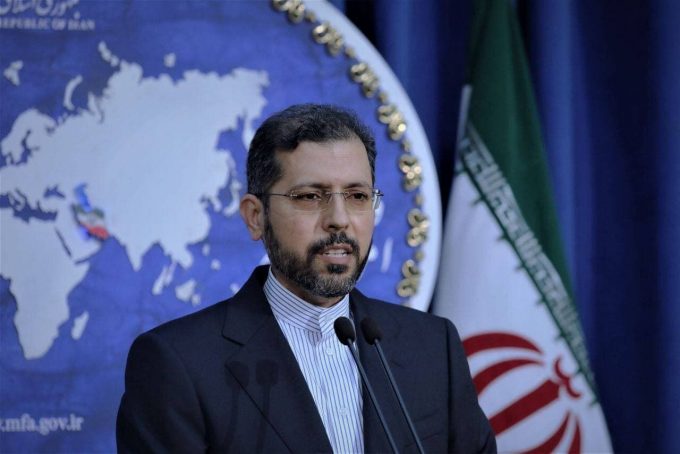
Tehran – Iran’s Foreign Ministry Spokesman Saeed Khatibzadeh said on Friday night that Iran and China would sign the 25-year Cooperation document on Saturday.
Speaking to IRIB TV Channel 1, Khatibzadeh said that China’s Foreign Minister Wang Yi is visiting Iran on the verge of the 50th anniversary of establishing diplomatic relations between the two countries and the document would be signed in this trip.
The Chinese Foreign Minister, who arrived in Tehran Friday night, is also going to have meetings with a number of Iranian authorities, according to the Spokesman.
He also said that the cooperation document was discussed in 2015, when the Chinese President Xi Jinping visited Iran, to lead bilateral ties to a comprehensive and strategic level.
“Relations between Iran and China are multi-layered, deep and having different dimension and this necessitates them to be included in a document. Therefore, the document has been exchanged between the two states for several times and it will eventually be signed on Saturday by Foreign Ministers,” Khatibzadeh went on to say.
The document has a comprehensive road-map, said the diplomat, adding that the economic dimension, as the main axis of the document, includes cooperation in different areas, as well as Iran’s participation in One Road, One Belt initiative and special focus on the private sector in both countries.
“No comprehensive strategic participation is established unless the exact cultural, popular and media basis is formed. This has been addressed in the cultural part of the document,” Iran’s Foreign Ministry Spokesman said, adding “We expect the document to serve as a road-map for Iran-China relations in the next 25 years.”
Blinken’s Pièce de Théâtre Failed; Its Script Was Passé
By Alastair Crooke | Strategic Culture Foundation | March 26, 2021
A Global Times editorial assessed that the China-U.S. Anchorage talks would come to be seen as “a landmark in history”. For the first time, U.S. hegemony was treated disdainfully; for the first time, the U.S. ‘right’ to claim its values – its ‘style’ of democracy – as universally applicable, was publicly and flatly contradicted. Even the posture of ‘speaking from strength’ was dismissed, and the U.S.’ pressure of an alliance ‘bloc’ system ‘despised’. All spoken with an air of impunity (you need us, more than we need you). Strong stuff; no wonder Blinken looked shell-shocked.
Yet, this was not ‘it’. Anchorage was, in practice, a play of several acts. Well before ‘Opening Night’, a supportive cast was being mobilised as chorus to the play’s anticipated moment of climax: The Quad (U.S., Japan, Australia, and India) were warmed up; NATO activated, and the Europeans co-opted.
Even before the audience could take their seats, a small early drama was enacted in Moscow. It set in place the scenery to the climactic Act that was expected at Anchorage. The EU High Representative who had travelled purposively to read the ‘Riot Act’ to Moscow for its treatment of demonstrators, and of Alexei Navalny himself, was completely nonplussed to find the tables entirely turned – it was the EU that was led to the Moscow dock, chastised for criminalising Catalonian leaders as seditionists, and presented with videos of European police heavy-handedness in dealing with demonstrators. The first crack to the mould appeared.
FM Lavrov later made it unmistakably clear that Moscow was more than a little browned-off with Europe. The EU, he said, had “destroyed” Russia’s ability to have relations with Brussels: “There are no relations with the EU as an organization. The entire infrastructure of these relations has been destroyed by unilateral decisions made from Brussels”.
As the day approached for the main theatrical ‘piece’, even before the curtain rose, one actor (playing Uncle Sam), strolled the forestage to ‘warm up’ the audience with a recitation of the villainy perpetuated by the anti-hero (China). That was the mood-setter – the crux to the pièce de théâtre. A rolled document was in his hand, but not shown to the audience. It was just possible to glimpse its title: The Longer Telegram.
Aahh! The audience took the hint; it made the connection – The Longer Telegram was a ‘play’ on an earlier 1946 work by George Kanaan, excoriating the USSR, and warning that Russia must never be allowed to side with China. The Longer Telegram however, identified China as chief villain, and assailed President Xi and the CCP precisely as fault-lines who should be reviled, and if possible, wedged and broken apart. Though the conclusion to both Telegrams at least remained unchanged: Russia and China must never be allowed to join forces with each other.
What made this work so tantalising was that no one knew who wrote it – his/her identity was concealed by the Atlantic Council. “The author of this work has requested to remain anonymous, and the Atlantic Council has honoured this for reasons we consider legitimate but that will remain confidential. The Council has not taken such a measure before, but it made the decision to do so given the extraordinary significance of the author’s insights and recommendations as the United States confronts the signature geopolitical challenge of the era” [i.e. China – does the phrasing sound familiar?].
Almost certainly, it was thought, a member of the Biden Administration was the author. But might it have been Blinken himself? No one knows, but The Longer Telegram was read in Beijing too.
So, as the night arrived, and the curtain started to rise, the actor-narrator prepared the seated audience for the key dénouement saying that the anticipated clash with the anti-hero Yang, would be a “once-off” climactic duel, rather than the ‘start of something’, adding that the prospective duel also would be opportunity for an “airing of grievances” about China’s terrible behaviour.
But, when it came to the main scene, it all went wrong. Blinken, having duly read out the prepared ‘grievances’ indictment, found that the anti-hero, Yang Jiechi, instead of being chastened and reproved, hit back. (He had read the Theatre promo, and was prepared). It was a disaster. The End of Act. The mould was broken. An editor at the U.S. Spectator surmises: “The United States, said Yang, in one of the most dismissive diplomatic rejoinders I have ever heard, does not have the ‘qualifications’ to address China ‘from a position of strength’. F, my dear Blinken, you”.
Then we come to a further scene, where the play’s two anti-heroes turn out not to be ‘anti-heroes’, but brothers-in-arms. It turns out that the Russian anti-hero’s patron had been earlier impugned as a soulless ‘killer’. Lavrov and Li seal a pact in Beijing after the talks. And China warns any regional actor who sides with Uncle Sam – against either of the brothers-in-arms – ‘would not succeed in standing alone’ against either brother, but to face them jointly would be unimaginable. “Anyone putting their faith in the U.S. would be disappointed. The U.S. is weakening”.
The mould is in pieces – and Russia and China have come together.
Last Act opens (a thunderstorm is heard in the background): The ‘Bloc’ strikes: The U.S., Canada, the UK and EU act in a co-ordinated strike on the ‘brothers’, for infringing Muslin human rights in Xinjiang Province (a fiercely contested claim). Within minutes of the EU sanctions being imposed on party officials in Xinjiang, Beijing retaliates with sanctions on European parliamentarians, the EU Council political and security committee, scholars and the human rights sub-committee. (It is the EU’s turn to be shell-shocked now).
Dismissing the EU’s move “as based on nothing but lies and disinformation”, a spokesman for the Chinese Foreign Ministry said, “the Chinese side urges the EU side to reflect on itself, face squarely the severity of its mistake and redress it. It must stop lecturing others on human rights and interfering in their internal affairs. It must end the hypocritical practice of double standards and stop going further down the wrong path. Otherwise, China will resolutely make further reactions”. Ouch … another convention lies shattered.
The U.S. and EU are unused to being treated with disdain; and their sanctions ignored and brushed aside, with a curt ‘China doesn’t care for your pressures’. Even more perplexing to the EU’s unremittingly mercantilist mindset, China is evidently reconciled to losing the January Investment Pact (CAI) signed with the EU, but not ratified by parliament, and now almost certainly lost to both parties. And Moscow too, seems not to care that Nordstream 2 might also be at greater risk now. EU leaders will be disturbed that its’ ‘400 million market’ may not be the ‘ace’ which it imagined it to be.
The EU faces a dilemma: It had been crying out for a return to so-called ‘multilateralism.’ It got it – the Bloc sanctioning of Xinjiang officials, Putin impugned, and Russia sanctioned, and paradoxically, the EU is now sanctioned itself – its foreign relations with the great powers of Eurasia lie mired in the mud. It faces economic losses in respect to the China Investment Pact, and in trade with Russia.
The scene then changes one final time: It has Brussels’ NATO HQ as its backdrop now. The actor-narrator steps again onto the theatre forestage to say that whilst a collective response to China’s coercive behaviour “which threatens our collective security and prosperity” was indeed the thrust of our script, the latter “doesn’t mean countries can’t work with China, where possible. The United States will. We can’t afford not to … The United States won’t force our allies into an ‘us-or-them’ choice with China”.
The Bloc cannot hold – the crystal snapped, emitting a sharp crack. The theatre play was all about re-legitimising (a ritual, one-off re-enactment) of the American myth of its innate moral quality for holding leadership of the world, and its right to mobilise allies against those (here the tone is of a man – Blinken – shocked at what he is about to say) that don’t share our values: “They actually try and undermine the international rules-based order”.
The curtain is down. The script didn’t gel. The play is critiqued and it revealed paradoxically, that the ‘the myth’ that it precisely intended to re-validate, in a post-Trump, ritual exorcism, is indeed date-expired – it is passé. It is a very different world, four years on.
‘Independent’ report claiming Uyghur genocide brought to you by sham university, neocon ideologues lobbying to ‘punish’ China
By AJIT SINGH · THE GRAYZONE · MARCH 17, 2021
Throughout March 2021, headlines in corporate media outlets from CNN to The Guardian blared about the release of the “first independent report” to authoritatively determine that the Chinese government has violated “each and every act” of the United Nations convention against genocide, and therefore “bears State responsibility for committing genocide against the Uyghurs.”
The report, published on March 8 by the Newlines Institute for Strategy and Policy, in collaboration with the Raoul Wallenberg Centre for Human Rights, follows a last-minute accusation made in January by the outgoing Trump administration, along with similar declarations by the Dutch and Canadian Parliaments. It was published shortly after the release of a remarkably similar report on February 8 that was commissioned by the US government-backed World Uyghur Congress, and which alleged that there is a “credible case” against the Chinese government for genocide.
CNN, The Guardian, AFP, and the CBC hailed the March 8 Newlines report as an “independent analysis” and a “landmark legal report” that involved “dozens of international experts.” Samantha Power, the Biden administration’s nominee to direct the US Agency for International Development (USAID), also promoted it: “This report shows how this [genocide] is precisely what China is doing with the Uighurs,” the notorious humanitarian interventionist stated.
The report’s authors have insisted that they are “impartial” and are “not advocating any course of action whatsoever.” But a closer look at the report and the institutions behind it reveals its authors’ claims of “independence” and “expertise” to be a blatant deception.
Indeed, the report’s principal author, Yonah Diamond, recently called on the Biden administration to unilaterally “confront,” and “punish” China for supposedly committing genocide, and expand sanctions against the country. Meanwhile, the think tanks behind the report have advocated fervently for the West to “combat” and sanction China, and have promoted US regime change policies targeting Syria, Venezuela, Iran, and Russia.
A majority of the report’s “expert” signatories are members of the Newlines Institute and the Wallenberg Centre. Others are members of the hawkish Inter-Parliamentary Alliance on China, former US State Department officials, and ardent supporters of US military interventionism. The report relies most substantially on the “expertise” of Adrian Zenz, the far-right evangelical ideologue, whose “scholarship” on China has been demonstrated to be deeply flawed, riddled with falsehoods and dishonest statistical manipulation.
The reliance on the voluminous but demonstrably fraudulent work of Zenz is not surprising, given that the report was financed by the Newlines Institute’s parent organization, the Fairfax University of America (FXUA). FXUA is a disgraced institution that state regulators moved to shut down in 2019 after finding that its “teachers weren’t qualified to teach their assigned courses”, academic quality was “patently deficient,” and plagiarism was “rampant” and ignored.
Just days before the Newlines Institute published its “expert” report accusing China of genocide, an advisory board to the US Department of Education recommended terminating recognition of FXUA’s accreditor, placing its license in jeopardy.
“New” report regurgitates old, discredited “evidence”
The Newlines report presents no new material on the condition of Uyghur Muslims in China. Instead, it claims to have reviewed all of “the available evidence” and applied “international law to the evidence of the facts on the ground.”
Rather than conducting a thorough and comprehensive review of “the available evidence,” the report restricted its survey to a narrow range of deeply flawed pseudo-scholarship along with reports by US government-backed lobbying fronts for the exiled Uyghur separatist movement. It was upon this faulty foundation that the report applies legal analysis related to the UN Genocide Convention.
Newlines’ report relies primarily on the dubious studies of Adrian Zenz, the US government propaganda outlet, Radio Free Asia, and claims made by the US-funded separatist network, the World Uyghur Congress. These three sources comprise more than one-third of the references used to construct the factual basis of the document, with Zenz as the most heavily relied upon source – cited on more than 50 occasions.
Many of the remaining references cite the work of members of Newlines Institute’s “Uyghur Scholars Working Group”, of which Zenz is a founding member and which is made up of a small group of academics who collaborate with him and support his conclusions.
As The Grayzone has reported, Zenz is a far-right Christian fundamentalist who has said he is “led by God” against China’s government, deplores homosexuality and gender equality, and has taught exclusively in evangelical theological institutions. A careful review of Zenz’s research shows that his assertion of genocide is concocted through fraudulent statistical manipulation, cherry-picking of source material, and propagandistic misrepresentations. His widely-cited reports were not published in peer-reviewed journals overseen by academic institutions, but rather, by a DC-based CIA cut-out called the Jamestown Foundation and “The Journal of Political Risk,” a publication headed by former NATO and US national security state operatives.
As his academic malpractice comes to light, Zenz has faced increasing scrutiny and embarrassment, as evidenced by his threat to take legal action against his scholarly critics.
In order to shore up the report’s credibility, and to deflect from its essential reliance on Zenz’s reports, its authors have emphasized their supposed “independence” and “impartiality.”
“This [is] not an advocacy document, we’re not advocating any course of action whatsoever”, stated Azeem Ibrahim, Director of Special Initiatives at Newlines Institute. “There were no campaigners involved in this report, it was purely done by legal experts, area experts and China ethnic experts.”
However, just weeks before the publication of the report, its principal author, Yonah Diamond, penned a bellicose call for the Biden administration to eschew the UN (which Diamond deems to be “beholden to the Chinese government”) and unilaterally confront China. Following the Trump administration’s declaration that China was committing genocide in Xinjiang, Diamond argued that the US is legally obliged to “punish” China and that “the Biden administration must now take concrete action to that end together with U.S. allies”.
The report attempts to construct an appearance of broad expert consensus supporting its conclusions, including a list of 33 “independent expert” signatories. Unsurprisingly, this list consists of individuals pushing for a New Cold War and confrontation with China, and who support separatist efforts to transform the mineral-rich, geopolitically important region of Xinjiang into a NATO-oriented ethno-state:
Irwin Cotler and Helena Kennedy — co-chairs, along with Marco Rubio, of the hawkish Inter-Parliamentary Alliance on China (IPAC). Composed almost exclusively of white Western lawmakers, IPAC formed in 2020 in order to mount a “common defence” against the “rise of the People’s Republic of China.” Members of the World Uyghur Congress executive, Erkin Ekrem and Rahima Mahmut, sit on IPAC’s advisory board and secretariat; Adrian Zenz also sits on the advisory board.
David Scheffer, Beth von Schaack, and Gregory H. Stanton — Scheffer and Schaack are both former US State Department Ambassadors-at-Large, while Stanton is a former US State Department official.
Lloyd Axworthy and Allan Rock — the former Canadian Minister of Foreign Affairs and former Canadian UN Ambassador, respectively.
Adrian Zenz –– founding member of Newlines Institute’s “Uyghur Scholars Working Group”
Rather than consult a wide range of authorities and academic experts, or subject its study to peer review, Newlines relied entirely on a narrowly focused community of like-minded ideologues. A majority of the signatories are members of the two think tanks behind the report, the Newlines Institute and the Wallenberg Centre. Far from “independent”, these organizations are deeply partisan, self-described “campaigners” that align closely with US and Western foreign policy goals, advocating for sanctions and intervention against China and other non-aligned nations across the Global South.
Newlines Institute: A collection of regime-change ideologues and “Shadow CIA” operatives
The supposedly independent report accusing China of genocide was published by the Newlines Institute for Strategy and Policy based in Washington, DC and known formerly as the Center for Global Policy. Founded in 2019, the think tank’s stated aim is “to enhance US foreign policy” with a “specialization in Muslim states and societies.”
With extensive ties to the US regime-change establishment, the Newlines Institute is a reliable repository of anti-China material. For example, it has featured the ramblings of Robert Spalding, the former Senior Director for Strategy to President Trump and one of the architects of the Trump administration’s 2018 national security doctrine, which formally reoriented US foreign policy from a focus on the so-called “global war on terror” towards great power competition with China and Russia.
The leadership of Newlines Institute includes former US State Department officials, US military advisors, intelligence professionals who previously worked for the “shadow CIA” private spying firm, Stratfor, and a collection of interventionist ideologues. Its contributors represent a who’s who of Syria regime changers who cheerlead for US military interventionism while intimidating and bullying any prominent figure that dared present a critical perspective on the proxy war.
Hassan Hassan, Director; Founder and Editor-in-Chief of Newlines Magazine — Ardent supporter of US imperialism, including wars on Iraq, Libya, Yemen and especially Syria. Along with Newlines contributor Michael Weiss, Hassan called for the US military to balkanize Syria, permanently occupy its oil-rich Jazira region and turn the country into “an American security protectorate.”
Azeem Ibrahim, Director — Adjunct Research Professor at the Strategic Studies Institute, US Army War College. Ibrahim is a co-author of the Newlines report.
Kamran Bokhari, Director — Previously served as the Central Asia Studies Course Coordinator at US Department of State’s Foreign Service Institute
Faysal Itani, Deputy Director — Former resident Senior Fellow at the US State Department-funded Atlantic Council, which functions as the semi-official think tank of NATO in Washington, DC.
Michael Weiss, Senior Editor – A veteran Israel lobbyist, neoconservative activist and anti-Muslim agitator-turned advocate of Islamist insurgents in Syria, Weiss has branded himself as an expert on Russia despite having never visited the country and speaking no Russian.

Michael Weiss with jihadist rebels in Aleppo, Syria in August 2012
Muhammad Idrees Ahmad, Senior Editor – In 2016, Ahmad phoned Grayzone editor Max Blumenthal unsolicited before Blumenthal published a two-part investigative exposé on the Syrian White Helmets, threatening him with severe consequences if he went ahead. (Listen to a recording of Ahmad’s threatening call here). A lecturer on digital journalism at Stirling University in the UK, Ahmad recently attacked Democracy Now! for hosting scholar Vijay Prashad for a discussion on the danger of a new Cold War with China.
Rasha Al Aqeedi, Senior Analyst — Iraq-born pundit who formerly worked as a research fellow at the neoconservative Foreign Policy Research Institute (FPRI), a neoconservative think tank originally founded by white supremacists and Cold War hardliners that has honored Iraq war advocates John Bolton and James Mattis. Like her colleague Ahmad, Aqeedi dedicates a significant portion of her time to smearing anti-war figures on social media.
Elizabeth Tsurkov, Non-Resident Fellow — Previously worked for a number of neoconservative and establishment think tanks, including the Atlantic Council, Foreign Policy Research Institute and Freedom House. Tsurkov served in the Israeli military, during Israel’s 2006 war on Lebanon. Throughout the Syrian proxy war, Tsurkov maintained friendly contacts with members of the Saudi-backed jihadist militia, Jaish al-Islam, and boasted about links both she and Israel’s military-intelligence apparatus maintained with Syria’s armed opposition.
Nicholas A. Heras, Senior Analyst — Previously a research associate at the US Department of Defense’s National Defense University, Heras is also a fellow at the arms industry-funded Center for New American Security. There, he proposed using “wheat [as] a weapon of great power… to apply pressure on the Assad regime.” In other words, Heras advocated for the mass starvation of Syrian civilians by occupying their wheat fields, a US policy that is currently underway in the country’s northeastern region.
Caroline Rose, Senior Analyst — Previously served as an analyst at Geopolitical Futures, headed by Stratfor founder, George Friedman. Stratfor is a private spying and intelligence firm commonly referred to as a “Shadow CIA.” It has contracted extensively with the US government, and has trained the radical wing of Venezuela’s opposition and advised them on destabilization tactics.
Robin Blackburn, Managing Editor — For 12 years, Blackburn served as a writer and editor with Stratfor.
Robert Inks, Editor — Previously served as Director of the Writers Group and Special Projects Editor at Stratfor.
Daryl Johnson, Non-Resident Fellow — Served in the US Army and previously worked as a senior analyst at the Department of Homeland Security. He is the founder of DT Analytics, a private consulting firm for police and law enforcement.
Eugene Chausovsky, Non-Resident Fellow — Lectures on the “geopolitics of Central Asia” at the US State Department’s Foreign Service Institute. Previously worked as Senior Eurasia Analyst at Stratfor for over a decade.
Imtiaz Ali, Non-Resident Fellow — Previously worked as a curriculum specialist at the US State Department’s Foreign Service Institute.
Ahmed Alwani is the founder and president of the Newlines Institute. Alwani previously served on the advisory board for the U.S. military’s Africa Command (AFRICOM) and is the Vice President of the International Institute of Islamic Thought (IIIT); his father, Taha Jabir Al-Alwani was one of IIIT’s founders.
Newlines Institute recently took steps to counter rumors of IIIT’s connections to the Muslim Brotherhood. In an internal email obtained by The Grayzone, dated November 17, 2020, Newlines Director Hassan Hassan addressed the “accusation” against the then-Center for Global Policy. Hassan wrote that while a different “older entity” was funded by IIIT, “[t]he current one has no relation to IIIT.” Hassan attempted to assuage concerns by downplaying Alwani’s connection to IIIT, claiming that Alwani “inherited the International Institute for Islamic Thought as Vice President as a sort of legacy”, following his father’s death in 2018.
Newlines Institute overseen by disgraced sham “university”
Newlines Institute is a branch of a disgraced educational institution that has repeatedly violated state educational standards, raising further questions about the quality of the think tank’s work.
Newlines Institute’s parent institution is Fairfax University of America (FXUA), a school also founded and led by Alwani, and formerly known as Virginia International University. FXUA is a private university in Fairfax, Virginia. Founded in 1998, FXUA’s short track record has been riddled with numerous academic scandals and efforts by state regulators to shut the institution down.
In 2019, the State Council of Higher Education for Virginia initiated proceedings to revoke FXUA’s (then known as Virginia International University) certificate to operate. The move came after state regulators found widespread noncompliance with state educational standards.
According to the Richmond Times-Dispatch, auditors determined that “teachers weren’t qualified to teach their assigned courses”, the academic quality and content of classes were “patently deficient”, and student work was characterized by “rampant plagiarism” that went unpunished.
“Unqualified students regularly submit plagiarized or inferior work; faculty turn a blind eye and lower grading standards (perhaps to avoid failing an entire class); and administrators do not effectively monitor the quality of online education being provided”, the audit said.
“That such substandard coursework could continue with no complaints from students, faculty or administrators raises concerns about the purpose of education at VIU [Virginia International University].”

A review of Fairfax University/VIU by an anonymous employee
Indeed, signs point to FXUA/VIU serving as a “visa mill” rather than a legitimate educational institution. As Inside Higher Ed explains, the term “visa mill” refers to a sham operation where an institution “offers little by way of educational value,” but instead lures international students through its ability to offer access to student and work visas, while exploiting them by charging exorbitant tuition costs. FXUA/VIU’s accreditor, the Accrediting Council for Independent Colleges and Schools (ACICS), has long faced accusations of certifying such institutions.
In 2019, Inside Higher Ed reported that FXUA/VIU’s “appears to exist primarily to enroll international students,” finding that over the previous five years, “the percentage of students from North America varied between 1 and 3 percent”. Auditors found that the the student body was largely comprised of international students with an “abysmally poor command” of the English language. The students were charged $2,178 per graduate class and $1,266 per undergraduate class to receive their “patently deficient” education.
Although Virginia International University reached an agreement with state regulators that allowed it to continue operating and has rebranded itself as Fairfax University of America, significant concerns remain about the university, along with its subsidiary Newlines Institute.
Just days before Newlines Institute’s report on China was released, its FXUA’s accreditation was once again in potential jeopardy. On March 5, an advisory board to the US Department of Education recommended terminating recognition for ACICS. The National Advisory Committee on Institutional Quality and Integrity voted 11-to-1 to recommend that ACICS lose the federal recognition it needs to operate.
The advisory committee made the same recommendation in 2016, leading to the ACICS’s recognition being revoked under the Obama administration, before recognition was restored to the troubled accreditor in 2018 by then-President Trump’s Secretary of Education, the infamous privatization activist and oligarch Betsy Devos.

Raoul Wallenberg Centre founder Irwin Cotler (L) with pro-Israel lawyer and Wallenberg fellow Alan Dershowitz
The Wallenberg Centre: A haven for anti-China hawks and regime-change lobbyists
Newlines Institute published its report in collaboration with The Raoul Wallenberg Centre for Human Rights. The report’s principal author, Yonah Diamond, is legal counsel for The Wallenberg Center, and many of the report’s signatories hold affiliations with the organization.
Based in Montreal, The Wallenberg Centre was founded by Irwin Cotler, former Minister of Justice and Attorney General of Canada. While often touted as a “human rights champion”, Cotler is, in fact, a champion of the “responsibility to protect” and “humanitarian intervention” doctrines, regularly invoked by Western states in order to justify imperial interventions in the global south.
Cotler routinely levels propagandistic accusations of human rights abuses, atrocities, and genocide in service Western imperialism, including interventions in Libya and Syria, Iran, and Venezuela, where Cotler served as legal counsel for far-right, US-backed Venezuelan coup leader Leopoldo López. Lopez’s wife, Lilian Tintori, holds an advisory position at The Wallenberg Centre.
Cotler is also active in Haiti, serving as the Minister of Justice in the Canadian administration that worked with the US and France to help overthrow former Haitian President Jean-Bertrand Aristide in 2004. In 2014, Cotler invited Maryam Rajavi, leader of the exiled Iranian MEK cult, to speak on Canada’s parliament hill. Four years later, he nominated US and UK-funded Syrian White Helmets for the Nobel Peace Prize.
Cotler is an ardent supporter of Israeli apartheid and longtime advisor to Moshe Ya’alon, former Israeli Defense Minister and Chief of Staff of the Israeli military. Cotler has played significant role in the Canadian government’s efforts to equate criticism of Israel with anti-Semitism and smear the nonviolent boycott, divestment and sanctions (BDS) movement for Palestinian rights.
Cotler has long harbored hostile sentiments towards China. For a number of years, Cotler served on the international legal team for Chinese anti-government dissident Liu Xiaobo, a right-wing ideologue who called for the privatization and “Westernisation” of China, ardently supported former President George W. Bush, and cheered on US wars on Vietnam, Afghanistan, and Iraq.
More recently, during the coronavirus pandemic, Cotler echoed calls of right-wing US lawmakers for international legal action and sanctions to punish China for supposedly causing the coronavirus pandemic.
In its mission statement, the Wallenberg Centre outlines its right-wing, Western imperial outlook in detail, explicitly identifying China, Venezuela, Iran, and Russia as countries that it is pushing to “combat” with sanctions.
The Wallenberg Centre has become a haven for anti-China hawks, including Senior Fellows David Kilgour, former Canadian Secretary of State, and David Matas, senior legal counsel for B’nai Brith Canada, a right-wing organization that describes itself as dedicated to “Israel advocacy”.
Kilgour and Matas have extensive ties to the far-right, anti-China religious cult Falun Gong. Both men are regularly contributors to the group’s propaganda arm, The Epoch Times, a media network that The New York Times has described as an “anti-China, pro-Trump media empire” and “leading purveyor of right-wing misinformation”. In 2019, an NBC News exposé found that The Epoch Times spent over $1.5 million on approximately 11,000 pro-Trump advertisements in just six months, “more than any organization outside of the Trump campaign itself, and more than most Democratic presidential candidates have spent on their own campaigns.”
In 2006, Kilgour and Matas were commissioned by Falun Gong to author a report which made sensational accusations that the Chinese government was secretly conducting a mass campaign of live organ harvesting Falun Gong disciples. In 2017, an investigation by The Washington Post determined that the claims made by Kilgour and Matas were unfounded, with experts commenting that their allegations were “not plausible” and “unthinkable.”
* * *
As Washington advances its new Cold War strategy, it has amplified accusations of genocide and other atrocities against the Chinese government, all focused on Beijing’s policy in Xinjiang. To broaden support for the dubious narrative, the US government has turned to a series of pseudo-academic institutions and faux experts to generate seemingly serious and independent studies.
Any critical probe of the reams of reports on Xinjiang and the hawkish institutions that publish them will quickly reveal a shabby propaganda campaign dressed up as academic inquiry. Western media’s refusal to look beneath the surface of Washington’s information war against China only highlights its central role in the operation.
Ajit Singh is a lawyer and journalist. He is a contributing author to Keywords in Radical Philosophy and Education: Common Concepts for Contemporary Movements (Brill: 2019).
Terminate NATO
By Jacob G. Hornberger | FFF | March 19, 2021
The Washington Post has published a long piece calling for NATO to take on a new official enemy — China. The piece is written by Sara Bjerg Moller, an assistant professor in the School of Diplomacy and International Relations at Seton Hall University. She argues that after 30 years since losing the Soviet Union as its official enemy and struggling to find a replacement to justify its continued existence, a perfect replacement would be China.
I’ve got a better idea. Let’s just put NATO out of its misery and terminate it.
After all, let’s not forget NATO’s original mission: to defend Europe from the possibility of an invasion by the Soviet Union, which had been America’s and Britain’s World War II partner and ally but which had been converted to their official enemy at the end of the war.
But the likelihood of a Soviet invasion of Europe was always nil. The Soviet Union had been decimated by World War II, especially as a result of the German invasion of the country. Even though the invasion was ultimately repelled and Germany was defeated, the Soviet Union’s industrial capacity had been destroyed, not to mention the millions of Russian citizens who had been killed. The last thing the Soviet Union wanted was another war, especially given that the United States possessed nuclear weapons and had shown a willingness to employ them against large cities.
The advocates of a national-security state in the United States, however, needed a new official enemy to replace Nazi Germany, especially to justify the conversion of the U.S. government from a limited-government republic to a national-security state, a type of governmental structure with omnipotent, non-reviewable powers. The Soviet Union and “godless communism” fit the bill perfectly. The American people were then inculcated with the notion that there was an international communist conspiracy to take over the United States and the rest of the world that was based in Moscow, Russia.
To convince Americans and western Europeans that the Soviet Union posed a grave threat to them, U.S. officials pointed to the postwar Soviet occupations of Eastern Europe and East Germany as examples of communist aggression. They apparently forgot that President Franklin Roosevelt had delivered such lands into the hands of Soviet leader Joseph Stalin, who FDR affectionately referred to as his “Uncle Joe,” at their wartime summit in Yalta. Was it really too surprising that Stalin accepted FDR’s gift, especially given that Eastern Europe and East Germany would serve as a buffer against another German invasion of the Soviet Union?
It was within this fervent anti-communist environment that NATO was formed. But in 1989, the Cold War suddenly and unexpectedly came to an end, which, needless to say, put the U.S. national-security establishment and NATO into a panic. After all, the Cold War was the justification for both of these institutions. With no Cold War, they could both be dismantled.
Instead, the national-security establishment simply went into the Middle East and began poking hornets’ nest, which ultimately brought terrorist retaliation, which in turn brought the “war on terrorism,” another racket that has kept the national-security establishment in high cotton.
Meanwhile, unwilling to let Russia go as an official enemy, NATO began gobbling up former members of the Warsaw Pact, with the aim of placing U.S. troops and missiles ever closer to Russia’s borders and with the hope of provoking a reaction, which ultimately came about in Ukraine.
As Moller argues, however, Russia poses no real threat to Europe and, therefore, cannot be seriously considered to be a justification for NATO. Instead, she argues, it’s time to replace Russia with China, owing to China’s rise as an international powerhouse. The reasoning is classic empire-think: If a nation starts to prosper and rise, it’s best to put it down before it gets too large and powerful.
How about just leaving China and Russia alone? What’s wrong with that? What’s wrong with other nations becoming prosperous? The fact is that NATO should never have been established in the first place. Moreover, the biggest mistake in U.S. history was to convert the federal government to a national-security state. The best thing American could do now is terminate NATO and restore a limited-government republic to our land.
Gazprom significantly boosts natural gas supplies abroad in 2021
RT | March 15, 2021
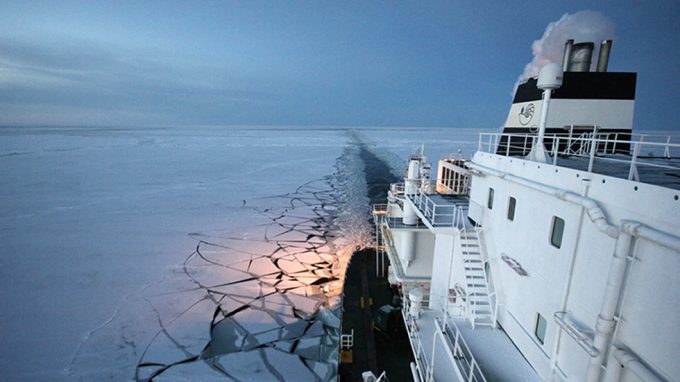
Russian energy major Gazprom’s gas exports to non-CIS (Commonwealth of Independent States) countries increased by 28.3% since the beginning of the year to 42.9 billion cubic meters, the company said.
That is “9.5 billion cubic meters more than in the first 2.5 months of last year,” according to Gazprom.
The company pointed out that the high demand for gas was due to the cold start of the calendar spring this year. “We continue to provide gas to domestic and foreign consumers on a full-scale basis,” it said.
Gazprom’s supplies particularly rose in Turkey (by 80.5%), Romania (77.7%), Finland (74.2%), Serbia (61.5%) and Bulgaria (52.1%). Gas deliveries to Germany and Greece also saw a boost of 28.7% and 24.5%, respectively.
The company said that in the first two weeks of this month, gas supplies to Turkey increased 11.5 times compared with the same period last year. Exports to China via the Power of Siberia mega gas pipeline regularly exceed Gazprom’s daily contractual obligations. The actual volume of supplies from March 1 to March 15 was 3.2 times more than in the same period of 2020, it said.
Featured Video
The Truth About the Trump Shootings with Ken Silva
or go to
Aletho News Archives – Video-Images
From the Archives
Trans ‘milk’ as good as the real thing – NHS
RT | February 18, 2024
The drug-induced nipple secretions of trans women are as good as mothers’ breast milk for babies, the University of Sussex Hospitals NHS Trust claimed in a letter to campaigners made public in a report by British think tank the Policy Exchange on Sunday.
The healthcare trust’s medical director, Rachel James, argued that the off-label prescription drug cocktail men transitioning to female take in order to produce milk was “similar to the natural hormones which encourage lactation to develop when the baby is newly born.”
“The evidence which is available demonstrates that the milk is comparable to that produced following the birth of a baby,” James wrote in the letter, sent to Children of Transitioners last August.
Biological men who wish to lactate must first take hormones to grow milk glands and then take high doses of either domperidone or metoclopramide to stimulate milk production. Neither drug is approved for this use, though they are occasionally prescribed off-label to biological women who have trouble lactating.
However, domperidone’s own manufacturer, Janssen, warns patients the drug “may cause unwanted side effects affecting the heart in a breastfed baby” and “should be used during breastfeeding only if your physician considers this clearly necessary.” … continue
Blog Roll
 Aletho News
- Seyed M. Marandi: U.S. Strike Imminent – Toward Total War in the Middle East
- Russia Voted Under Fire. Washington Is Loading the Tankers.
- 12 Things Your Oncologist Was Trained Not to Tell You
- Anthrax Attacks Paved Way for COVID-Era ‘Junk Drugs and Vaccines’
- How Real Is the Impact of Western Sanctions on Israel?
- France, You Are Guilty: How Paris Turned Western Sahara into the Maghreb’s Powder Keg
- 2025 Nature Paper Claiming Worsening Global Drought Gets RETRACTED …Heavily Flawed
- Your Milk Is Not the Problem
- The Truth About the Trump Shootings with Ken Silva
- ARE PATIENTS BEING PROPERLY INFORMED ABOUT OZEMPIC?
- If Americans Knew
- Salah Sarsour’s Legal Team Says DHS Has Not Met Its Burden to Prove He Is Deportable
- An analysis of tax forms by The Intercept show Kraft’s charity and LLC have donated to Friends of the IDF and AIPAC’s super PAC.
- Israeli attacks kill four Palestinians in Gaza – Daily Update
- Inside Gaza’s death trap of collapsing, bombed-out buildings
- The everyday items Israel bans from Gaza every day
- Inside the siege, the ruined buildings of Gaza – Daily Update
- Debunking The Claim That Macklemore Has A “History Of Antisemitism”
- CPJ demands release of arrested Palestinian-US journalist near Bethlehem
- Robert Kraft: The Billionaire Friend of Netanyahu Pulling The Strings Behind the Macklemore/Ed Sheeran Blow Up
- Columbia Administered Fund Gives Big Money to Pro-Israel Groups
- No Tricks Zone
- 2025 Nature Paper Claiming Worsening Global Drought Gets RETRACTED …Heavily Flawed
- New Study: ‘Global Drought Shows No Detectable Recent Acceleration Under Climate Warming’
- Economic Masterminds: German Socialists Suggest Taxing Productivity Gains Stemming From Using AI
- The South China Sea Has Not Been Cooperating With The Climate Change Narrative
- Energy Crisis: Germany Enters Heating Season With Historically Low Gas Reserve Fill Levels
- New Study: The Antarctic Ice Sheet Gained Mass From 2020-2024 Due To Staggering Snow And Ice Accumulation
- Study: Ocean Heating Rates From Thousands Of Years Ago ‘Dwarf’ Modern Ocean Heating Rates
- Climate Extremists Target, Attack Large-Scale Power Grid Infrastructure In Germany!
- New Study: Antarctic Ice Melt Has Contributed Less Than 1 Centimeter To Sea Level Rise In The Last 30 Years
- Fear Of Debate: Alarmist German Climate Scientist Calls On Mainstream Media To Discredit Skeptic Voices
 Aletho News