Beijing, the Five Eyes or Something Else? Who’s to Blame for the COVID Pandemic?
By Matthew Ehret | Strategic Culture Foundation | May 19, 2021
The oligarchy running the Trans Atlantic System certainly loves the centralized control found in the Chinese system, and they adore the behaviorist social credit stuff, but that is where the admiration ends, Matt Ehret writes.
Ever since the earliest days of the Coronavirus pandemic, evidence began to emerge that the virus was not a naturally occurring evolutionary phenomenon as asserted by the WHO, Nature, and editors at the Lancet, but had other origins.
Among the earliest of those who found themselves supporting this theory were the Chinese Foreign Ministry Spokesman Lijian Zhou who made international waves by sharing two articles by Larry Romanov on the possibility of “gene targeting” of the virus which was having a disproportionately bad effect on Iranians, Italians and various Asian genotypes. Zhou was soon joined by bioweapons experts like Francis Boyle, prominent virologists Luc Montagnier and Judy Mikovits, followed by a growing array of scholars, scientists and academics from around the world who all assessed that the virus’ apparent gene sequencing implied human handiwork. While all agreed that COVID appeared to have originated from a lab, it was still unclear whether that lab was Chinese or controlled by the USA.
Another obvious question arose with this lab theory: Was it an accidental leak or was it consciously deployed?
Since pandemic war game operations had become a normalized part of western geopolitical life from the early days of Dark Winter in 2000 to the Rockefeller Foundation’s 2011 Lock Step to the World Economic Forum’s Event 201 (and dozens more in between), the likelihood of conscious deployment was a very serious possibility.
Who had the motive, means and modus operandi to carry out such a global operation?
The Wuhan Theory Begins
By February 2020, the Wuhan lab leak hypothesis began to make headlines fed by evidence that Dr. Anthony Fauci had exported certain gain of function coronavirus experiments from U.S. bioweapons laboratories to Wuhan’s Institute of Virology – one of two BSL-4 labs in China equipped to conduct this sort of research in China.
When Sir Richard Dearlove (former head of MI6) became a loud proponent of the Wuhan lab leak hypothesis in June 2020, something seemed amiss. Dearlove certainly knew a thing or two about bioweapons. He knew very well of the Pentagon’s vast array of internationally extended bioweapons labs peppered across the world, and he certainly understood the art of misdirection being a byzantine shadow creature who operated at the highest echelons of British intelligence. Dearlove was after all in charge of the “yellowcake” dodgy dossier that launched an Iraq war, he knew of the fallacious reports of nerve gases used by the governments of Libya and Syria sponsored by MI6, had even overseen major components of Russiagate that drove a color revolutionary process in the USA. Dearlove also knew a thing or two about the Porton Down labs that manufactured Novichok used in the Skripal Affair.
While Dearlove’s cheerleading of the Wuhan lab theory raised alarm bells, as time passed, no smoking gun evidence surfaced that one could fully “take to court”. In this respect, Dearlove’s operation had the upper hand since receipts from Fauci’s NIH to the Wuhan Lab did make headlines. How convenient.
Before going into the next phase of the story, it is important to recall that the absence of empirical evidence is not by itself a proof of one party’s innocence, just as the existence of a piece of empirical evidence is not a proof of another party’s guilt. This was a sad discovery made far too late by Shakespeare’s Othello after Iago’s planted “evidence” of a handkerchief resulted in the foolish warrior to murder his loving wife.
Wuhan Lab Origins Go Viral Again
In recent weeks, the Wuhan lab leak hypothesis has once again become all the rage.
Rand Paul’s May 10 showdown with Fauci over this the latter’s funding of the Wuhan Institute of Virology added fuel to the fire. Sky News’ May 7 reporting of public Chinese policy papers discussing covid-based bioweapons have gone viral. On March 26, former Center of Disease Control head Robert Redfield asserted support for the Wuhan lab leak theory. While the scanned receipts of the funds transfer from the NIH to Wuhan via Eco Health Alliance ($600 thousand went to Wuhan) for coronavirus research, had been available since last February, one must wonder why it is now over a year later that this fact is being spread across the perception landscape on all levels.
Both mainstream and alternative media across the western world representing both the left and right have jumped on board the bandwagon blaming China for leaking the virus whether by accident or intent (though obviously, intent is the conclusion which anyone is being expected to draw. But again, I must ask: In a world of misdirection, psychological warfare and perception management, do the clues that we are being given force us to conclude that the Chinese government is behind the global shutdown?
Chinese Leaders Blame the CIA
Zeng Guang, a chief epidemiologist at China’s Center of Disease Control recently joined the conspiracy club on February 9, 2021 in an interview with Chinese media. While denying that the Chinese Wuhan lab is the source of the virus as so many in the west have claimed, Guang asserted that SarsCov2’s origins in a laboratory should not be discounted. Pointing to the 200 globally extended U.S. bioweapons labs littering the earth (and citing the USA’s proven track record of deploying bioweapons as part of its asymmetrical war arsenal since WWII), Guang asked:
“Why are there so many laboratories in the United States when biology labs are all over the world? What is the purpose? On many things, the United States requires others to be open and transparent, only to find that it is the United States itself that is often the most opaque. Whether or not the United States has any special fame on the issue of the new crown virus this time, it should have the courage to be open and transparent. The United States should take responsibility for proving itself to the world, rather than being caught up in hegemonic thinking, hiding itself from the virus and dumping others.”
Guang was himself joined by Chinese Foreign Ministry spokesman Hua Chunying who had also pointed to the Pentagon’s globally extended array of bioweapons laboratories saying:
“I’d like to stress that if the United States truly respects facts, it should open the biological lab at Fort Detrick, give more transparency to issues like its 200-plus overseas bio-labs, invite WHO experts to conduct origin-tracing in the United States, and respond to the concerns from the international community with real actions.”
Those who tend to avoid looking at the history and scope of Pentagon controlled bioweapon warfare tend to ignore the content of such remarks cited by those Chinese officials above for a multitude of reasons. For one: it is easy to believe that Fauci and Gates are corrupt, and this theory not only implicates both men but also ties them to a Chinese government which most westerners have come to fear and hate as a bastion of global debt-trappery, genocide, technocracy and imperialism.
After conducting a short review of some of the fundamental facts of recent world history alongside certain geopolitical realities of our present world order referenced by the head of the Chinese CDC, I believe that China’s Wuhan Lab is being set up. Here’s why…
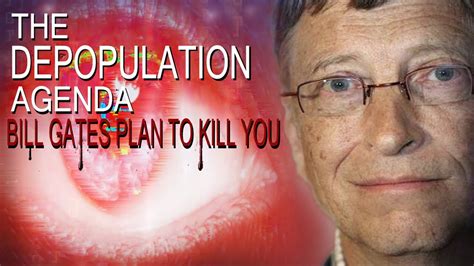
Fact #1) Depopulation Then and Now
While many people may wish to avoid looking at this fact, depopulation is a driving factor behind international unipolar policy today as it had been during the days of WW2 when Rockefeller Foundation, Macy Foundation, City of London and Wall Street interests gave their backing to both the rise of fascism as an economic miracle solution for the economic woes of the great depression and eugenics (the science of population control) as the governing religion of a new scientific priesthood.
Today, this agenda masquerades behind a new transhumanist movement, shaped by a words like “Fourth Industrial Revolution”, “decarbonized economies”, and “Great Resets”. The primary targets of this agenda remain: 1) the Institution of the sovereign nation state itself as it was the target a century ago when the Bank of England arranged the formation of the 1919 League of Nations, and 2) the “overpopulated zones” of the world with a focus on China, India, South America and Africa.
For anyone who would find themselves instinctively inclined to brush aside such claims as “conspiracy theorizing”, I would encourage a brief review of Sir Henry Kissinger’s infamous NSSM-200 report: Implications of Worldwide Population Growth for U.S. Security and Overseas Interests published in 1974. This declassified report went far to transform U.S. foreign policy from a pro-development philosophy to a new paradigm of population control. Kissinger warned that “if future numbers are to be kept within reasonable bounds, it is urgent that measures to reduce fertility be started and made effective in the 1970s and 1980s…. (Financial) assistance will be given to other countries, considering such factors as population growth… Food and agricultural assistance is vital for any population sensitive development strategy… Allocation of scarce resources should take account of what steps a country is taking in population control… There is an alternative view that mandatory programs may be needed….”
In Kissinger’s twisted logic, U.S. Foreign Policy doctrine had too often foolishly sought to end hunger by providing the means of industrial and scientific development to poor nations.
A true Malthusian through and through, Kissinger believed that aiding the poor to stand on their own feet would result in global disequilibrium as the new middle classes would consume more, and use the strategic resources found under their own soil, which would set the world system into greater disequilibrium and accelerated entropy.
This was deemed unacceptable to the mind of Kissinger and any misanthropic follower of Malthus who shared his views of humanity and government.
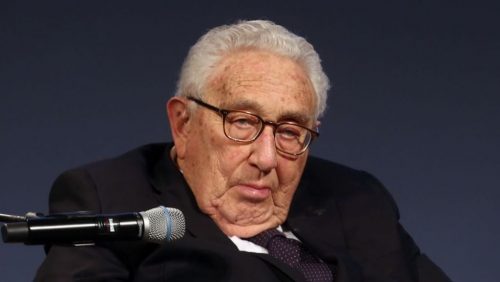
Kissinger’s Master-Slave Global Society
At the time of Kissinger’s ascent to power as Secretary of State under Nixon, a new grand strategy was unleashed designed to create a new “master-slave” dependency between the developed and undeveloped sectors of the world… with a special emphasis on the 13 nations targeted by NSSM 200 plus China.
China itself was only permitted to acquire western tech needed to start climbing out of abject poverty on the condition that they obeyed the Rockefeller-World Bank demands that one child policy programs were imposed to curb population growth.
Kissinger began organizing for this new set of relations in society around “Have”, post-industrial consumers and a massive “Have-Not” class of poor laborers with access to industry, but remaining stagnant, cheap and without the means of purchasing the goods they produced. The other darker skinned parts of the world would be even more worse off, having neither the means of production, nor consumption while remaining in constant states of famine, war and backwardness. These dark age zones would be largely made up of Sub Saharan Africa and would find their resource-rich lands exploited by the corporate middle men and financiers trying to run the world order above the “obsolete order” of nation states.
Kissinger’s model of a world order was absolutely static with no room for population growth or technological progress which would have any connection to increasing the powers of production. Mao and the Gang of Four which ran the cultural revolution appeared to be highly compatible with Kissinger’s agenda. But when Mao died and the Gang of Four were rightfully imprisoned, a new long-term strategy known as the Four Modernizations shaped by Zhou Enlai and carried out by Deng Xiaoping was launched. This program was far more foresighted than Kissinger realized.
Fact #2) China is currently a leading force of pro-population growth.
While the west has been accelerating into a decaying path on every measurable level, China is quickly moving in an opposing trajectory via extending long term investments and advanced tech development into its own society as well as to its neighbors through such comprehensive projects as the Belt and Road Initiative.
While its own population has not healed from the disastrous 1979 one child policy and is far from achieving the 2.1 children per couple needed for replacement fertility, it did lift the one child limit to two in 2015 and leading Bank of China economists have called for a total elimination of all limits immediately. Meanwhile, the top-down national orientation of China towards increasing the free energy needed to support and grow the economy is unlike anything we have seen in the closed-system western world for many decades.
A vital fact often forgotten is that together China and India were instrumental in sabotaging the December 2009 COP-14 program in Copenhagen which had promised to establish legally binding emission target cuts to guide the de-carbonization (and de-industrialization) of much of society.
The London Guardian had reported that “Copenhagen was a disaster. That much is agreed. But the truth about what actually happened is in danger of being lost amid the spin and inevitable mutual recriminations. The truth is this: China wrecked the talks, intentionally humiliated Barack Obama, and insisted on an awful “deal” so western leaders would walk away carrying the blame.”
Apparently China and India, along with African governments like Sudan (which had not yet been carved up on the careful watch of Rhodes’ Susan Rice) did not wish to sacrifice their industry and national sovereignty on the altar of climate change models and technocrats that had only weeks earlier been publicly exposed as frauds by East Anglia University researchers during the embarrassing Climategate scandal.
While China and India should be celebrated for having sabotaged this effort 11 years ago, very few people have been able to hold this drama in their memory, and fewer still realize how this fight over sovereignty was in any way connected to China’s 2013 creation of the Belt and Road Initiative as the vital force behind the Multipolar Alliance.
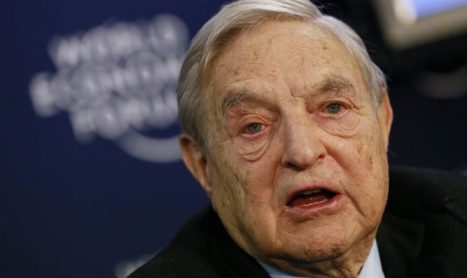
Fact #3) Soros at Davos 2020: The two greatest threats to Open Society: 1) Donald Trump’s USA and 2) Xi Jinping’s China.
During his January 2020 Davos speech, Soros took aim at both Trump and Xi Jinping as the two greatest threats to his Open Society who had to be stopped at all costs. In September 2019 (just as Event 201 was happening) Soros wrote in the Wall Street Journal :
“As founder of the Open Society Foundations, my interest in defeating Xi Jinping’s China goes beyond U.S. national interests. As I explained in a speech in Davos earlier this year, I believe that the social-credit system Beijing is building, if allowed to expand, could sound the death knell of open societies not only in China but also around the globe.”
Before becoming mired into the “China virus” narrative, Donald Trump had worked exceptionally hard to emphasize good relations with China and even managed one of the most important trade deals that had successfully moved into phase one the week Soros spoke at Davos. This first phase involved China creating a market to purchase U.S. finished goods as part of the program to rebuild America’s lost manufacturing sector that had been hollowed out over 5 decades of “post industrialism”. Where Kissinger called NAFTA “the most creative step toward a new world order taken by any group of countries since the end of the Cold War” Trump went far to renegotiate the anti-nation state treaty giving nation states a role to play in shaping economic policy for the first time in over 25 years.
While talking tough on China until 2020, Trump also resisted the war hawks pushing a total military encirclement of China begun under Obama’s Asia Pivot which is threatening nuclear war (same thing is happening on Russia’s perimeter). He took the fuel out of the THAAD missile encirclement of China which has justified its expansion based on the “North Korean threat” for over a decade – always denying the truth that the real target were both Russia and China. Trump’s push to build friendly relations with Kim Jong Un had much greater ramifications at changing U.S. Pacific military policy than many realized, although that fact was certainly not missed by the Chinese intelligentsia.
While the Soros/CIA-driven color revolutionary operations have so far failed to divide up China in Hong Kong, Tibet and Xinjiang, they have been successful in the USA.
Fact #4) The Pentagon’s Global Bioweapons Complex Is a Fact
While China is the proud owner of a total of TWO bioweapons labs (both within its borders), a vast array of dozens of Pentagon-run bioweapons labs litter the international landscape. Exactly how many is hard to estimate as Alexei Mukhin (Director General of Russia’s Center for Political Information) stated in a May 2020 interview:
“According to the Russian Ministry of Defense, in the post-Soviet space, 65 American secret bio-laboratories operate: 15 – in Ukraine, 12 – in Armenia, 15 – in Georgia, 4 – in Kazakhstan. In the United States, such activity is prohibited. Accordingly, the Pentagon, in its own laws, is engaged in illegal activities (in spirit, not in letter). The goal is the creation of biological weapons directed against the peoples who inhabited the territory of the USSR. Fortunately, biological material is “at hand.”
In 2018, investigative journalist Dilya Gaytandzhieva documented the Pentagon’s multibillion dollar budget that sustains bioweapons labs in 25 nations (and 11 within the USA itself) which grew exponentially since the December 2001 bioweaponized anthrax attack killed five Americans and justified a hyperbolic increase of bioweapon warfare to rise from $5 billion when Cheney’s Bioshield Act was passed in 2004 to over $50 billion today.
Additionally, an October 2000 policy document co-authored by William Kristol, John Bolton, Richard Perle, Dick Cheney, Paul Wolfowitz, Elliot Abrams, and Donald Rumsfeld titled Rebuilding America’s Defenses (RAD) explicitly stated that in the new American Century, “combat will likely take place in new dimensions: In space, cyber-space and perhaps the world of microbes… advanced forms of biological warfare that can “target” specific genotypes may transform biological warfare from the realm of terror to a politically useful tool”.
Fact #5) International Pandemic War Game Scenarios Laid the groundwork for the international response to Covid. Not China
The driving force behind such bioweapon war game exercises such as the June 2000 Operation Dark Winter, the May 2010 Rockefeller Foundation report Operation Lock step, and the World Economic Forum/Gates Foundation/CIA Event 201 pandemic exercises indicate to me that China is not the causal nexus.
All in all, I think these facts have persuaded me that China is being set up and is in fact a primary target for destruction.
How China would find itself the beneficiary of such an irresponsible unleashing of a novel virus that hammered its own economy, accelerated the blow out of the world financial bubble economy and led to a shut down of international stability is absurd to the extreme… especially considering the fact that everything China has done for the past decades has indicated a consistent desire to create stability, long term development and win-win cooperation with the international community. Nothing similar has been seen among members of the Five Eyes or their Trans Atlantic network of over bloated imperialists.
The oligarchy running the Trans Atlantic System certainly loves the centralized control found in the Chinese system, and they adore the behaviorist social credit stuff, but that is where the admiration ends. The Kissinger, Gates, Carney or Schwab- types hate and fear everything China has actually done for development, population growth, national banking, long term credit generation, building full spectrum industrial economies and defending sovereignty along with Russia whom they are tightly bonded with in the Eurasian Multipolar alliance.
Coronavirus: Bioterror And The US Military Laboratory In Kazakhstan – Investigation
By Yan Ostroumov | Rusvesna | March 17, 2021
China for the first time officially announced suspicions of US involvement in the spread of the coronavirus COVID-19 in the republic. Beijing referred to information about the appearance of the first infected in the United States long before the official date and, possibly, earlier detection of infection in Hubei.
The reports of the “American trail” in a pandemic seem insane, but this version begins to show solid evidence.
“Recently, a Kazakhstani resource Yvision reported that “a source among the staff of the Central Reference Laboratory (CRL) in Almaty confirmed that the deadly coronavirus was developed in this institution.”
This laboratory was created with the financial support of the US Army and is still controlled by representatives of Washington.
Preparation for biological warfare in the CIS
After the end of the Cold War, the US Department of Defense in the post-Soviet countries created several biological reference laboratories, of a high (third) degree of protection, designed to work with especially dangerous viruses and bacteria. These facilities operate in Kharkov, Tbilisi and Almaty.
“Their official goal is the fight against the spread of dangerous infections, the real one is to prepare for a possible biological war in the territory of the former USSR.”
Scientific research at the facilities is funded and supervised by the US Department of Defense, and is often carried out with the participation of researchers from the Institute of Military Medicine. Walter Reed US Armed Forces (Maryland) coming to the region.
For example, a detachment of military biologists worked under the command of Lieutenant Colonel Jamie Blow, who studied African swine fever, for a long time in the TsRL in Tbilisi. Shortly after the start of the work of this team, in 2013, an outbreak of this disease was recorded in the southern regions of Russia.
However, due to legal restrictions, CRLs are not objects of increased secrecy. Staff publishes articles and defends dissertations, which allows you to track some of their work on open sources.
Publications testify
The Viruses magazine (Viruses, 2019, 11, 356, doi: 10.3390 / v11040356) published in April 2019 the work of a group of American and Kazakh scientists about a new strain of coronavirus, the reservoirs of which are local bats. The work was carried out in the framework of the KZ-33 project of the US Department of Defense Threat Reduction Agency on the Almaty Central Defense League (Tropical Medicine and Infection Disease, 2019, 4, 136, doi: 10.3390 / tropicalmed4040136).
The project was led by Professor Gavin James Smith of Duke University (USA), closely associated with the National Institute of Health and the Center for Disease Control and Prevention of the US Department of Health.

The source of the Kazakh publication reported that the biosamples containing coronavirus delivered to the CRL in the winter of 2020
“at the molecular level, they completely coincide with the strain, the study of which was started in the laboratory about two years ago and which, according to his observations, should not all this time was to leave the TsRL.
It was a joint development led by scientists from the US Centers for Disease Control and Prevention as part of the final stage of training a large group of Kazakh epidemiologists. ”
According to the publication (Viruses, 2019, p.2), the mentioned American studies of coronavirus were carried out in April – May 2017, that is, strictly on time, called the source. Moreover, both the species studied in 2017 and COVID-19 belong to coronaviruses transmitted by bats.
Thus, the “anonymous stuffing” is increasingly beginning to resemble the message of a person who well knows the nature of working with coronavirus in recent years.

The coincidences are sufficient for a serious verification of the kinship of these diseases by biologists, and we will move further – in the wake of those who conducted this study.
Following the bat
A careful study of the materials of the American CRL in Kazakhstan raises many questions. The KZ-33 project is entitled “Middle East Respiratory Coronavirus Syndrome”, and it is completely unclear why it should be studied on bats in Central Asia.
Even stranger is the ability of the aforementioned Professor Gavin Smith to find bats carrying the coronavirus literally anywhere. In 2017, he published a study (Transboundary Emerg Dis, Dec; 64 (6): 1790–1800. Doi: 10.1111 / tbed.12568) on coronavirus bats in Singapore. Having arrived in Kazakhstan, he also found the same object of study, although the republic was not famous for such a disease before. You might think that his personal mouse flock with his own coronavirus flies behind him.
It is curious that the study involved the resources of the Research Institute for Biological Safety is located in the Kordai district of the Zhambyl region of Kazakhstan. In the same area lives a large community of Chinese-speaking Dungans, who are traditionally engaged in shuttle trade with the PRC, including smuggling.
“There is a suspicion that in Kazakhstan, bats were artificially infected with coronavirus, strains of which were obtained in the Middle East, in the natural distribution area of the disease.”
A genetically modified sample, later called COVID-19, could cross the border by accident or as a result of intentional manipulations.
The recent mass pogrom in the Dungan villages of the Kordai region can also be considered as an attempt to “clean up” witnesses of the work of American military biologists in the region in 2017-2019, their negligence or intentional actions to import COVID-19 to China.
Nobody seems to have cleaned up Professor Smith, but the Duke Institute, of which he is still an employee, seemed to have forgotten about its existence.
The coronavirus pandemic on the site of the scientific center is commented on by many researchers, but not by Gavin Smith, who has studied the spread of a very similar disease in East and Central Asia for at least four years.
Why such secrecy? Perhaps, in order not to remind once again about explorations in Almaty.
Basis for suspicion
Bioterrorism is a serious charge. But the facts gathered suggest a high probability of the involvement of a group of American and Kazakh biologists in the outbreak of coronavirus in China.
“We urge the Kazakh authorities to create a commission with the participation of representatives of WHO, as well as microbiologists from the PRC and CIS countries, with the aim of investigating the work of American specialists in the medical center and the Zhambyl region.”
We also urge international organizations, including UN agencies, to request information from the US Department of Defense about the nature of biological research in Kazakhstan funded by this agency.
The West pushes the Xinjiang issue hard, while ignoring the sustained slaughter of Palestinians
By Tom Fowdy | RT | May 14, 2021
Muslims allegedly being treated badly in China? Terrible human rights atrocities that need to be stopped. Muslims being bombed, murdered and driven from their homes in Gaza? Meh, they’re anti-Israel terrorists.
As Gaza burns and rages on, and Palestinians’ homes are turned into their graves, the West’s two-faced hypocrisy towards Muslims has never been clearer.
Unsurprisingly, despite the climbing death toll, condemnation from the West at Israel’s military action has been non-existent. The United States has blocked a UN Security Council Resolution over the matter, while its secretary of State, Antony Blinken, unironically tweeted a celebration of the Muslim Eid Festival.
In the absence of such condemnation, there was at the same time nonetheless a concerted and observable push by the mainstream media and US-affiliated organizations yesterday to put the Xinjiang autonomous region of China back on the agenda.
Several stories were tactically released, including a report from the National Endowment for Democracy-funded Uighur Human Rights Project accusing China of imprisoning Imams on trumped-up charges, while another from the US State and arms industry-funded Australian Strategic Policy institute accused them of demolishing mosques. At the same time, the US and its allies lobbed accusations at China in the United Nations and Blinken branded Xinjiang an “open-air prison”.
The West is pushing the Xinjiang issue hard and selectively, while ignoring long-term sustained atrocities regarding Palestine. They then wonder why Muslim countries largely offer support to Beijing on this matter and don’t take the West’s word for it. The answer is because, unwittingly, the Israel-Palestine conflict (like all the other Western-backed conflicts surrounding it), remains the primary wedge of geopolitical distrust between the Islamic world and the US and its allies.
These countries have no reason to take America’s human rights rhetoric seriously due to the devastation it has inflicted on the Middle East, and they subsequently share a common interest with China on the norm of defending “national sovereignty” from outside interference.
The West advocates to its own public an image of benevolence and sincere self-righteousness, masquerading and rebranding what was otherwise a longstanding history of imperialism, as a global force for good and justice. As what is deemed “morally correct” overlaps with what constitutes “political truth” in Western theory, few of its citizens question the utilization of human rights as an extension of politics or the idea such a premise could possibly be motivated by dishonesty, economic power or malign intent; to be honest about it is rendered a form of “blasphemy”. Thus, what is deemed “universal human rights” are not truly universal at all.
Countries in the Global South, especially in the Middle East, recognize this. In their experience, human rights have been persistently used as a pretext by Western countries to advance strategic and military goals in order to dominate them, as opposed to a truthful effort to improve people’s liberties and quality of life. And which are subsequently ignored when it suits the West, especially in matters of a much greater grievance to the Islamic world such as the Israel-Palestine conflict, which has been the keystone of anti-Western sentiment and ideology in the Middle East since the first Arab-Israeli war of 1948.
There have been many Western interventions in the region, mostly in a period between 1991-2012, justified on the grounds of human rights, such as Iraq, Libya and Syria. Concerning the latter, the West has accused Bashar Al-Assad of killing civilians in the decade-long civil war and called for his removal. Yet at the same time, the West has continually endorsed long-standing killings of civilians by Israel against Palestinians, and enabled that country’s expansionist policies in occupied territories, its unbridled aggression against many of its neighbours, and failed to resolve the seven-decade-long conflict.
In this case, if you are a Muslim country, why would you believe the US and its allies when they suddenly start crying atrocity, genocide and claiming they are standing up for the rights of a Muslim minority group in Xinjiang? Does this, for any Muslim country, have any real credibility?
The same countries who destroy Middle Eastern countries with war and bombings, and refuse to condemn Israel even modestly, now frame themselves as the guardians of Muslims? It’s no surprise that Muslim countries have not joined in the West’s chorus of condemnation, but have offered support to China’s policies. Even if they do not agree ideologically with China as an atheist, communist state, there’s one important point regarding Xinjiang that creates a space of common interest: defence of national sovereignty.
Irrespective of what they may think about events on the ground in Xinjiang, Muslim countries are largely post-colonial states which have suffered, and continue to suffer, from Western interference. Therefore, China’s norm of “non-interference in one’s internal affairs”, combined with its emphasis on defending sovereignty against Western intervention, is an attractive and logical solution to Muslim countries. Why would any such nation jump on the Xinjiang bandwagon and promote the idea that the West should be allowed to assault a country on the pretext of human rights? What might this mean for them?
Muslim countries support China on Xinjiang for a myriad of factors, have no good reason to trust the West, and recognize that the US, the UK and other such countries crying foul on this issue are doing so out of political motivations, as opposed to a sincere concern about the well-being of Islamic people.
As Gaza’s buildings are razed and its people slaughtered, the silence and indifference on this issue speaks louder than words concerning the West’s position on “human rights”. Let us end with this comparison: Palestine is an issue which Muslim countries are angry about, which is ignored by the Western elite; Xinjiang is an issue which the US-led alliance is angry about, that they desperately want Muslims to be furious about on the West’s behalf, but is rightly being ignored.
Tom Fowdy is a British writer and analyst of politics and international relations with a primary focus on East Asia.
US biolab transparency urged after smearing China over weaponizing COVID-19
Global Times | May 10, 2021
It is the US that is conducting biological warfare and bioterrorism using genetic engineering technology, rather than China, the Chinese Foreign Ministry said on Monday in response to a media report accusing China of weaponizing COVID-19.
The Chinese Foreign Ministry urged the US to be transparent on their biolabs and their ongoing bioweapons studies.
Quoting a so-called leaked document obtained by the US State Department, which is actually a book that is openly on sale, The Australian claimed China had been looking into whether it could weaponize the coronavirus five years before the COVID-19 pandemic, and even presented the document as evidence of China’s interest in bioweapons.
There are always some in the US who smear China either by hyping up facts or quoting so-called internal documents or reports, but it is usually a case of “the guilty party filing the suit first”, deliberate misinterpretation, presumption of guilt or merely spreading lies, Chinese Foreign Ministry Spokesperson Hua Chunying said on Monday at the press briefing.
Media reports said the so-called leaked document obtained by US officials is a published academic book, and not an internal secret document from the Chinese military, Hua pointed out.
The quote from former US Air Force colonel Michael J. Ainscough in the book said next generation bioweapons will be part of the US Air Force projects and aim to help the country better cope with weapons of mass destruction, indicating that the US is carrying out biological warfare and bioterrorism using genetic engineering technology, Hua said.
China has abided by its obligations under the Biological Weapons Convention, and is not developing, studying or producing bioweapons, while the US has been secretly working on their biolabs, Hua pointed out, urging the US to be transparent on the issue.
The US has set up biolabs in 25 countries and regions across the Middle East, Africa, Southeast Asia and former Soviet Union, with 16 in Ukraine alone. Some of the places where the labs are based have seen large-scale outbreaks of infectious diseases and other dangerous infectious diseases, the ministry said, citing media reports.
The Chinese foreign ministry spokesperson demanded that the US address international concerns: Why is the US building so many biolabs around the globe? How much sensitive biological resources and information has the US obtained from other countries? What kind of activities has the US carried out in its Fort Detrick laboratory and other biolabs, and what’s the relationship between these biolabs and its “next generation bioweapons”?
Global Times
All of liquified natural gas from Russia’s Arctic for next 20 years sold in advance
RT | April 28, 2021
Russia’s energy giant Novatek said on Wednesday it has inked 20-year agreements with the shareholders of its Arctic LNG 2 project on the sale and purchase of the entire volume of liquified natural gas.
The LNG sales from the plant’s first liquefaction train are planned to commence in 2023, according to the company.
The agreements “provide for LNG supplies from Arctic LNG 2 on FOB Murmansk and FOB Kamchatka basis with pricing formulas linked to international oil and gas benchmarks. The LNG offtake volumes are set in proportion to the respective participants’ ownership stakes in the project,” Novatek said.
The company’s chairman of the management board, Leonid Mikhelson, said that “The long-term offtake agreements between Arctic LNG 2 and its participants ensure the future revenue stream from LNG sales and de-risks the project. This represents one of the most important milestones in attracting the project’s external financing that will be completed in 2021.”
Mikhelson said earlier that the Arctic LNG 2 plant is 39% complete and will be launched as planned.
Arctic LNG 2 envisages constructing three LNG liquefaction trains of 6.6 million tons per annum each, as well as cumulative gas condensate production capacity of 1.6 million tons per annum. The total LNG capacity of the three liquefaction trains will be 19.8 million tons. The first train of Arctic LNG 2 is 53% ready and is scheduled to start operations in two years.
Novatek owns the majority stake (60%) in the project, with minority stakes held by foreign companies. The list of foreign investors includes French oil and gas company Total (10%), Chinese firms CNPC (10%) and CNOOC (10%), and the Japanese consortium of Mitsui and JOGMEC (10%).
As demand for natural gas skyrockets in booming China, Russia says it’s ready to meet Beijing’s needs
By Jonny Tickle | RT | April 21, 2021
China’s fast-growing economy has an insatiable need for natural gas, and Russia is ready to heavily ramp up its cross-border supplies. That’s according to Viktor Zubkov, the chairman of Russian energy giant Gazprom.
As things stand, gas is sent from Far-Eastern Yakutia to China through the Gazprom-operated Power of Siberia pipeline, which first became operational in December 2019. Its construction secured another economic partnership for Moscow, while its gas connections to Europe face increasing resistance.
On Wednesday, when speaking to Moscow news agency TASS, Zubkov revealed that China’s demand for gas increases every two years at the rate of the entire capacity of the Power of Siberia pipeline, which transports 38 billion cubic meters every year.
According to Zubkov, China has already become the largest importer and the third-biggest consumer of natural gas globally.
“It will remain the most promising gas market for the foreseeable future as well,” he said. “We are sure that China needs additional gas supplies from Russia, and Gazprom is ready to supply them.”
He also noted that Chinese gas consumption is growing at an accelerated, ‘double-digit’ rate and in the next 15 years could double from its current level.
In recent years, Russia and China started to move closer economically, with both countries sending a large volume of exports across their shared border. Beijing is now Moscow’s largest trading partner, with bilateral trade exceeding $100 billion annually.
“Asia acts as a locomotive in the development of the global economy,” Zubkov concluded. “In 2020, the world economy faced its worst pandemic crisis in recent memory, and it was Asia, with its strong growth, that laid the foundation for a global recovery from the downturn.”
On April 13, Gazprom approved the analysis of a project to build the Soyuz Vostok gas pipeline through Mongolia to China, another route that would send more fuel to Asia.
Another case of “vast fraud” in Israel’s ever-shady binary options industry
By Kathryn Shihadah | Israel-Palestine News | April 21, 2021
The Times of Israel disclosed today that the US Securities and Exchange Commission (SEC) has filed charges against SpotOption, an Israel-based binary operations company, alleging that it used “deceptive and manipulative” tactics to commit global fraud.
According to the SEC, SpotOption (more recently known as Spot Tech House Ltd) has defrauded US investors alone out of more than $100 million – worldwide, the number runs into the billions – offering products and services to brokerage firms which then marketed binary options worldwide.
The brokerage firms themselves, and SpotOption, were (covertly) the counterparties for all trades. That is, whenever an investor lost money, brokers and SpotOption made money.
SpotOption amassed partners by boasting of huge potential profits, as “the average investor lost 80% of their investment within five months.”
According to the SEC’s complaint, SpotOption served as a one-stop shop for “white label partners” who wished to start a binary options website. These partners directly marketed binary options to investors around the world without telling them that they were the counter-parties on all investor trades. In other words, the websites, and SpotOption, made money when investors lost money.
Its two largest shareholders, Malhaz Pinhas Patarkazishvili (also known as Pini Peter) and Ran Amiran are also named in the complaint.
Subsidized by Israeli government
Even as Israeli Prime Minister Netanyahu urged a worldwide ban on binary options, and after the Israel Security Authority banned the practice in Israel, the Israeli government was giving taxpayer money to SpotOption to enable it to expand its operations to China.
Times of Israel adds:
The fraudulent binary options industry flourished for over a decade, from 2007, until it was outlawed by the Knesset in 2017…Many of the Israeli firms have since relocated overseas and continued the scam.
Israel has not prosecuted any of the thousands of employees of the binary options industry. The US Department of Justice has prosecuted several key individuals, notably including Lee Elbaz, the CEO of Yukom Communications Ltd. who was sentenced to 22 years in prison in 2019. Her bosses, Yossi Herzog and Kobi Cohen, have both been indicted, and are still at large.
Chinese Foreign Ministry Calls for Promptly Starting Talks on Space Arms Control
Sputnik – 13.04.2021
BEIJING – China is calling on the global community to urgently start the negotiations on the space arms control, which should be based on a document proposed by Beijing and Moscow, the foreign ministry’s spokesman, Zhao Lijian, said on Tuesday.
“We are calling on the international community to start negotiations and reach agreement on arms control in order to ensure space safety as soon as possible,” Zhao said at a briefing, noting that the talks should be based on the draft agreement proposed by the two countries.
“China has always been in favor of preventing an arms race in space, it has been actively promoting negotiations on a legally binding agreement on space arms control jointly with Russia,” the diplomat added.
Just on Monday, Russian Foreign Minister Sergei Lavrov called for launching negotiations aimed at creating an internationalist instrument that would ban the deployment of any kinds of weapons in space. Lavrov proposed taking the Russian-Chinese draft document, introduced at the 2014 disarmament conference in Geneva, as a basis.
To stabilize the situation during a period when a multilateral document on non-militarization of space is being developed, Lavrov invited countries to join a Russian-promoted multilateral initiative on making a political commitment not to be the first to place weapons in outer space.
Beijing blames Washington’s aggression for Taiwan tensions
RT | April 8, 2021
The Chinese Foreign Ministry has dismissed accusations that Beijing is engaging in “intimidation” and “coercion” in Taiwan, and called on the US to recognize the one-China principle and refrain from coercive practices.
Speaking on Thursday, Chinese Foreign Ministry spokesman Zhao Lijian blasted Washington’s history of intimidation and international aggression as he questioned why the USS John S. McCain had transited through the Taiwan Strait on Wednesday.
“Do Chinese warships go to the Gulf of Mexico?” he asked, adding that China had never intended to intimidate anyone, but was not afraid of intimidation. He stated that the hat of “intimidation” and “coercion” does not sit on Beijing’s head.
Zhao claimed that the US has seen only 16 years of peace in its 250-year history and had frequently fought wars under false pretenses. “Back then, the United States fought over a bottle of washing powder and a fake video as evidence. In wars against the sovereign states of Iraq and Syria, they caused countless civilian casualties and the breakup of countless families.”
Turning his attention to Taiwan, the spokesman reiterated Beijing’s position that the island was a part of Chinese territory and that the People’s Republic of China was the sole legal government representing the whole of China.
Zhao called on Washington to recognize Chinese authority over Taiwan and stop sending the wrong signals about Taiwanese independence by “showing their muscles” in the South China Sea and provoking unrest. The spokesman said the one-China principle was an “an insurmountable red line.”
On Wednesday, the US Navy confirmed that the guided-missile destroyer the USS John S. McCain conducted a “routine” transit of the Taiwan Strait. At the same time, Taipei reported that 15 Chinese aircraft had flown over its airspace.
China has previously stated its opposition to the US military transiting through the Taiwan Strait.
Featured Video
The Truth About the Trump Shootings with Ken Silva
or go to
Aletho News Archives – Video-Images
From the Archives
Trans ‘milk’ as good as the real thing – NHS
RT | February 18, 2024
The drug-induced nipple secretions of trans women are as good as mothers’ breast milk for babies, the University of Sussex Hospitals NHS Trust claimed in a letter to campaigners made public in a report by British think tank the Policy Exchange on Sunday.
The healthcare trust’s medical director, Rachel James, argued that the off-label prescription drug cocktail men transitioning to female take in order to produce milk was “similar to the natural hormones which encourage lactation to develop when the baby is newly born.”
“The evidence which is available demonstrates that the milk is comparable to that produced following the birth of a baby,” James wrote in the letter, sent to Children of Transitioners last August.
Biological men who wish to lactate must first take hormones to grow milk glands and then take high doses of either domperidone or metoclopramide to stimulate milk production. Neither drug is approved for this use, though they are occasionally prescribed off-label to biological women who have trouble lactating.
However, domperidone’s own manufacturer, Janssen, warns patients the drug “may cause unwanted side effects affecting the heart in a breastfed baby” and “should be used during breastfeeding only if your physician considers this clearly necessary.” … continue
Blog Roll
 Aletho News
- Seyed M. Marandi: U.S. Strike Imminent – Toward Total War in the Middle East
- Russia Voted Under Fire. Washington Is Loading the Tankers.
- 12 Things Your Oncologist Was Trained Not to Tell You
- Anthrax Attacks Paved Way for COVID-Era ‘Junk Drugs and Vaccines’
- How Real Is the Impact of Western Sanctions on Israel?
- France, You Are Guilty: How Paris Turned Western Sahara into the Maghreb’s Powder Keg
- 2025 Nature Paper Claiming Worsening Global Drought Gets RETRACTED …Heavily Flawed
- Your Milk Is Not the Problem
- The Truth About the Trump Shootings with Ken Silva
- ARE PATIENTS BEING PROPERLY INFORMED ABOUT OZEMPIC?
- If Americans Knew
- Salah Sarsour’s Legal Team Says DHS Has Not Met Its Burden to Prove He Is Deportable
- An analysis of tax forms by The Intercept show Kraft’s charity and LLC have donated to Friends of the IDF and AIPAC’s super PAC.
- Israeli attacks kill four Palestinians in Gaza – Daily Update
- Inside Gaza’s death trap of collapsing, bombed-out buildings
- The everyday items Israel bans from Gaza every day
- Inside the siege, the ruined buildings of Gaza – Daily Update
- Debunking The Claim That Macklemore Has A “History Of Antisemitism”
- CPJ demands release of arrested Palestinian-US journalist near Bethlehem
- Robert Kraft: The Billionaire Friend of Netanyahu Pulling The Strings Behind the Macklemore/Ed Sheeran Blow Up
- Columbia Administered Fund Gives Big Money to Pro-Israel Groups
- No Tricks Zone
- 2025 Nature Paper Claiming Worsening Global Drought Gets RETRACTED …Heavily Flawed
- New Study: ‘Global Drought Shows No Detectable Recent Acceleration Under Climate Warming’
- Economic Masterminds: German Socialists Suggest Taxing Productivity Gains Stemming From Using AI
- The South China Sea Has Not Been Cooperating With The Climate Change Narrative
- Energy Crisis: Germany Enters Heating Season With Historically Low Gas Reserve Fill Levels
- New Study: The Antarctic Ice Sheet Gained Mass From 2020-2024 Due To Staggering Snow And Ice Accumulation
- Study: Ocean Heating Rates From Thousands Of Years Ago ‘Dwarf’ Modern Ocean Heating Rates
- Climate Extremists Target, Attack Large-Scale Power Grid Infrastructure In Germany!
- New Study: Antarctic Ice Melt Has Contributed Less Than 1 Centimeter To Sea Level Rise In The Last 30 Years
- Fear Of Debate: Alarmist German Climate Scientist Calls On Mainstream Media To Discredit Skeptic Voices
 Aletho News