Hong Kong protest ‘hero’ Joshua Wong trained alongside the cream of Western-backed colour revolutionaries
By Kit Klarenberg | RT | December 10, 2020
On 2 December, high-profile Hong Kong activist Joshua Wong was sentenced to over a year in prison for his involvement in an unauthorised protest outside the territory’s police headquarters in June 2019.
It marks the third time the 24-year-old has been jailed for his political activities, and follows an amazingly rapid ascent to international prominence, which began in 2014, when the group he founded, Scholarism, played a pivotal role in the Occupy Central protests that year.
Wong was subsequently listed among Time magazine’s Most Influential Teens of 2014 and nominated as its Person of the Year, declared one of the “world’s greatest leaders” by Fortune the following year, and even nominated for the Nobel Peace Prize in 2017.
He somehow also found time to establish and lead pro-democracy political party Demosisto – which called for “self-determination” from China – until its disbandment after the implementation of the city’s highly controversial national security law in June, and was instrumental in influencing US lawmakers to pass the Hong Kong Human Rights and Democracy Act in November 2019.
One would be hard pushed not to be awed by all Wong has achieved, or inspired by his indefatigable determination in the face of such risks to his liberty. That his campaigning efforts have captured the attention and imaginations of quite so many in the Western world is unsurprising.
However, there are strong indications that unseen forces surreptitiously helped Wong along every step of the way, and consciously groomed the young activist for many years for the position he now occupies.
“Davos for Dissidents”
In November 2014, the BBC’s Newsnight program broadcast an extraordinarily revealing report on the activities of the Oslo Freedom Foundation (OFF). The British state broadcaster dubbed it a place where “the aristocracy of activists” meet to “share ideas and learn about agitating for positive change over champagne and canapés.”
“In the basement of this four-star hotel, human-rights activists come to what feels a bit like a school for revolution,” intoned Laura Kuenssberg, then-Newsnight’s chief correspondent, now BBC News’s political editor. “This workshop? How to make sure your message – whether in Egypt, Ukraine, Hong Kong or North Korea – catches on. This may not evoke the spirit of the barricades, but the teaching here is that, to be successful, to topple a government for good, you have to be organized, and plan meticulously.”
She went on to note that activists present in the class had been involved “in organizing the current protests in Hong Kong,” strikingly revealing “their plan to put thousands on the streets of the territory was, in fact, hatched nearly two years ago.”
The report then cuts to an interview with Yang Jianli, who, in his mid-20s, was involved in the 1989 Tiananmen Square protests, and subsequently fled to the US. On his return to China in April 2002 on a friend’s passport to monitor labor unrest, he was arbitrarily detained for four years, then for another year for refusing to leave the country following his release.
On a table next to Yang is a laptop, via which he’s conducting a conversation with none other than Joshua Wong. Kuenssberg notes Yang has been talking to student activists in Hong Kong “on a daily, almost hourly basis,” and reiterates the fact that demonstrators in the territory were “trained, long before taking to the streets, to use non-violent action as a weapon of mass destruction.”
This segues into a brief interview with Jamila Raqib, Executive Director of the Albert Einstein Institution, which “advances freedom with non-violent action,” and has received funding from, among others, US government regime-change arm the National Endowment for Democracy (NED).
“Protesters were taught how to behave in a protest, how to keep ranks, how to speak to police, how to manage their movements, how to behave when arrested,” she says.
The report ends with clips of an ensuing bout of booze-fuelled revelry, Kuenssberg noting that “like at any good conference, the evenings see deals done over drinks.”
“Schmoozing for democracy! To say this is a strange event hardly begins to cover it,” she says without apparent irony. “There’s something deeply incongruous about North Korean defectors, Ukrainian freedom fighters, even hackers, trading information over glasses of champagne. They call it ‘Davos for Dissidents’ for a very good reason.”
Kuenssberg concludes that, while viewers will “never know” most of those in attendance at the OFF summit, “the next revolutionary, who will change their country, could just be in this room,” while members of Pussy Riot snap selfies with other attendees.
Oddly, days after broadcast,the BBC issued a clarification, stating that, while the report “may have given the impression the Hong Kong pro-democracy protests were planned by foreign activists,” in fact, “references to the demonstrations were intended to mean the planning was carried out in Hong Kong, with support from abroad.”
“Fostering awareness”
Kuenssberg’s reference to the blueprints for the Occupy Central protests being “hatched” two years prior to her report’s broadcast is conspicuous, given it was in 2012 that the aforementioned NED began funding the National Democratic Institute (NDI) in Hong Kong to the tune of US$460,000 annually.
The NDI’s objective was “to foster awareness regarding political institutions and constitutional reform … and develop the capacity of citizens – particularly university students – to more effectively participate in public debate … allowing students and citizens to explore possible reforms leading to universal suffrage.”
This sounds highly relevant to the Occupy Central protests, and, in September 2016, the NDI published a report on the progress of its “democratization” efforts in Hong Kong, which made repeated references to Wong, Scholarism, and Demosisto.
In the meantime, NED grants and the organization’s involvement with activists in Hong Kong grew apace, expanding to include groups such as the Institute of Human Resource Management, Confederation of Trade Unions, Journalists Association, Civic Party, Labor Party and Democratic Party. NED funding extended to these groups exceeded US$1.8 million from 2017 to 2020 alone – a period concurrent with ever-escalating levels of protest in Hong Kong.
In 2015, the US’s Freedom House, which works closely with the NED, honoured Wong alongside Martin Lee, the founder of the Democratic Party and another noteworthy figure in the 2014 Occupy Central protests.
The NED was founded in November 1983, and then-US Central Intelligence Agency (CIA) Director William Casey was at the heart of its creation. He wished to construct a public mechanism to support groups and individuals inside “enemy” countries that would engage in propaganda and political action, which the CIA had historically organized and paid for covertly, under the bogus aegis of democracy and human-rights promotion.
In 1991, senior NED official Allen Weinstein acknowledged that “a lot of what we do today was done covertly 25 years ago by the CIA.”
Seeing in colours
Intriguingly, the Agency also played a role in the creation of the Albert Einstein Institution, which was briefly featured in the Newsnight report.
In 1965, its founder, Gene Sharp, was recruited to Harvard’s Center for International Affairs, known colloquially as “the CIA at Harvard”. Its founders and staff were all prominent Cold War intellectuals, with intimate ties to the US national security state, the first co-directors being Henry Kissinger and Robert Bowie, future CIA deputy chief.
It was here that Sharp, who died in 2018, created many resistance methods that have influenced protest movements the world over ever since, earning him the nickname of the “Machiavelli of nonviolence.”
Sharp and the Albert Einstein Institution, through instructional writing and direct training, have helped out numerous revolutionary groups since the 1990s. They include Yugoslavia’s Otpor, which also received millions in NED funding, and whose members proceeded to found the Center for Applied Nonviolent Action and Strategies, which trained the various groups involved in the ‘colour revolutions’ that engulfed former Soviet states in the mid-2000s, as well as key Arab Spring activists.
“The bible of Pora has been the book of Gene Sharp … it’s called ‘From Dictatorship to Democracy’. Pora activists translated it themselves. We [wrote] to Sharp … he became very sympathetic towards our initiative, and the Institution provided funding to print over 12,000 copies of this book for free,” a member of Pora, a group central to Ukraine’s ‘orange revolution’, has said.
According to a 2006 US embassy cable published by WikiLeaks, protesters in Syria were tutored in Sharp’s writings. Another embassy cable the next year indicated Burmese officials feared Sharp was part of a “a vast internal and external alliance” that was trying to bring down the government.
The Albert Einstein Institution staffer featured in the Newsnight clip, Jamila Raqib, is a recurrent OFF speaker, to the point that she has a dedicated profile on the organization’s website. It notes she worked “closely” with Sharp and that, together, they authored ‘Self-Liberation’, which OFF states “has been used throughout the world as a practical guide for nonviolent resistance.”
If Raqib’s statements in the BBC report are accurate, she – and Sharp, whether directly or indirectly – had an intimate hand in training the Hong Kong protesters, even if remotely.
It’s unclear which other would-be insurrectionists have benefited from their collective expertise, although White Helmets chief Raed al-Saleh spoke at the Forum’s 2017 meeting, and self-avowed Belarusian president-in-waiting Svetlana Tikhanovskaya was guest-of-honour at OFF’s virtual 2020 summit.
Kit Klarenberg is an investigative journalist exploring the role of intelligence services in shaping politics and perceptions. Follow Kit on Twitter @KitKlarenberg
NATO says it is “United for a New Era” but is trying to resurrect 20th century policies
By Paul Antonopoulos | December 10, 2020
On December 3, Carnegie Europe hosted the public launch of the NATO 2030 Expert Group’s Report: “United for a New Era”. The report comes as U.S. President Donald Trump has many issues with NATO members for not committing to their military budget, Turkey continues its near daily military threats against fellow NATO member Greece, and French President Emmanuel Macron famously highlighted that NATO suffers from a “brain death.” NATO is struggling to find a reason for its existence since the collapse of European communism in 1991, but the report’s authors are confident that their suggestions can adapt NATO “for a New Era”.
What becomes evident from the report is that this “New Era” is not based on multipolarity. Rather it is an attempt to resurrect the U.S.-led unipolar world, suggesting that NATO actually has no strategy for the “New Era” of multipolarity.
But for NATO to justify its existence in the 21st century, they require a political consolidation of members who are divided. It appears that the authors hope that anti-Russian and anti-Chinese positions can unite NATO again towards a common goal.
“NATO must adapt to meet the needs of a more demanding strategic environment marked by the return of systemic rivalry, [and a] persistently aggressive Russia”, the authors said in their “Main Findings: Moving Toward NATO 2030”.
However, the old Russian enemy is also no longer a strong enough reason to justify the existence of NATO, which is why there is also a particular emphasis on China in the report.
“NATO must devote much more time, political resources, and action to the security challenges posed by China,” the report said, adding that NATO must “develop a political strategy for approaching a world in which China will be of growing importance through to 2030. The Alliance should infuse the China challenge throughout existing structures and consider establishing a consultative body to discuss all aspects of Allies’ security interests vis-à-vis China.”
The 67-page report however is mostly just theory, analytical considerations and suggestions. In practice, NATO is dominated by absolute indecision. Some so-called experts are not content with only Russia being the main focus of NATO in the 21st century and consider China a major enemy of the alliance. This is problematic as many NATO members, including countries like Greece that are traditionally subservient to the Alliance, are unwilling to jeopardize trade relations with China and are beginning to improve their ties with Moscow again.
NATO chief Jens Stoltenberg noted that important decisions will be taken in February during a meeting of defense ministers. This meeting will occur just weeks after we discover whether it will be Donald Trump or Joe Biden sitting in the White House on January 20.
A NATO emphasis against China or Russia will depend on whether it will be a Trump or Biden administration next year. For Trump, China is Washington’s main adversary. Biden certainly emphasizes China’s supposed threat, but in reality, the trade war will likely cool down as there are influential interest groups in both countries wanting to engage in business rather than a geopolitical struggle. However, a Biden presidency will certainly push NATO to become tougher against Moscow and encourage destabilization on Russia’s frontiers.
In support of destabilizing Russia’s borders and undermining its interests, the report urges NATO to “expand and strengthen partnerships with Ukraine and Georgia, seek to heighten engagement with Bosnia and Herzegovina”.
As the report states, NATO should “counter destabilization across the Western Balkans”. This is despite the fact that it was the Alliance that violently dissolved Yugoslavia in the 1990’s by supporting separatist forces in Kosovo, as well as jihadists from the Arab World and Chechnya to help break Bosnia off from Yugoslavia.
The fact that Russia is the main threat to Biden is very suitable for some NATO members and their allies like Ukraine, Georgia, Poland and Lithuania. If necessary, these countries could also turn against China if demanded so by NATO or Biden. These states will be more than satisfied as anti-Russian policies in today’s NATO is fanatically supported by Anglosphere and former Warsaw Pact countries.
Reading the new NATO report, which attempts to set a decade-long strategy for the Alliance, actually reveals the desperation to find relevance in the 21st century. Biden may say “America is back”, but that does not mean it will be able to return. Washington’s peak power occurred when the world became unipolar after the collapse of the Soviet Union. However, this short period has already passed and NATO is more obsolete than ever.
NATO, but especially the likes of the Anglosphere and former Warsaw pact states, tries to cling onto an inefficient past. It is for this reason that other NATO members are beginning to look outside of the Alliance to ensure their security without the cost of opposing Russia and China. An example of this is the emerging alliance between France, Greece, Cyprus, Egypt and the United Arab Emirates.
The 21st Century is incomparable to the previous century as new regional and global security threats have emerged under different geopolitical contexts. Insisting that Russia and China are the main adversaries to Anglo-American dominance, prevents NATO states from facing the reality that the 21st century is an era of multipolarity, thus limiting their own global influence as states are choosing to engage in new relations and alliances disconnected from demands made by third parties. NATO believes it can unite all member states “for a New Era” by opposing Moscow and Beijing, but this will only end in major disappointment and failure for the alliance as member states are becoming unwilling to adopt anti-Russian and anti-Chinese policies.
Paul Antonopoulos is an independent geopolitical analyst.
Beijing Sends Biden a Warning
By Pat Buchanan • Unz Review • November 20, 2020
Because of Donald Trump, Vice President Joe Biden thundered during the campaign, the U.S. “is more isolated in the world than we’ve ever been … America First has made America alone.”
Biden promised to repair relations with America’s allies. And he appears to have gone some distance to do so in the congratulatory phone call he received from Prime Minister Yoshihide Suga of Japan.
According to Suga, during the brief call, Biden said Article V of the U.S.-Japan Mutual Security Treaty of 1960 covers the Senkaku Islands in the East China Sea, islands Japan controls but China claims as its own.
“President-elect Biden gave me a commitment that Article 5 of the US-Japan security treaty applies to the Senkaku Islands,” said a delighted Suga. And what does Article V commit us to?
“Each Party recognizes that an armed attack against either Party in the territories under the administration of Japan would be dangerous to its own peace and safety and declares that it would act to meet the common danger…”
Message: The U.S. will treat a Chinese attempt to take the Senkakus, tiny rocky outcroppings in the East China Sea, as an attack on the USA, and America will fight China to secure Japan’s right to keep the islands.
Biden has removed any ambiguity that may have existed and given Tokyo a U.S. war guarantee that covers the Senkakus.
The response of China’s foreign ministry was to angrily lay claim to the islands they call the Diaoyus as “inherently Chinese” and to dismiss the U.S.-Japan security treaty as a “product of the Cold War.”
This diplomatic clash comes as Henry Kissinger was warning the Bloomberg Economic Forum: “America and China are now drifting increasingly toward confrontation, and they’re conducting their diplomacy in a confrontational way. … The danger is that some crisis will occur that will go beyond rhetoric into actual military conflict.”
Kissinger continued: “Unless there is some basis for some cooperative action, the world will slide into a catastrophe comparable to World War I.”
World War I was the worst calamity in Western civilization — until the next war to which it led inexorably: World War II.
Last week, we also learned that during Chinese military exercises in August, the People’s Liberation Army fired two missiles thousands of kilometers from the mainland that struck a targeted merchant ship sailing in the South China Sea. The missiles were the DF-21D and DF-26B.
Both missiles are known as “aircraft carrier killers.”
The U.S. routinely moves its carriers through these waters to underscore our contention that neither the South China Sea nor the Paracel and Spratly Islands within belong to China as Beijing claims.
Consistent with China’s toughening policies toward its neighbors, four members of the opposition in the Hong Kong legislature were ousted last week, which led to wholesale resignations that have left Hong Kong’s governing council under the total control of pro-Beijing hardliners.
The era of “one country, two systems” for Hong Kong, dating to the transfer of sovereignty by Great Britain, appears to be over. The dissidents and demonstrators who filled the streets just months ago appear to have been routed, and the city’s future looks less like the Hong Kong of yesterday than the Beijing of tomorrow.
These actions are consistent with the hard lines Beijing has taken on its “reeducation camps” for Uighurs in Xinjiang and its border dispute with India in the Himalayas.
While Secretary of State Mike Pompeo has lately sought to round up like-minded nations to stand up to China — Japan, Australia, India — there appears to be a reluctance, rooted in uncertainty as to whether Communist China or democratic America represents the future of Asia.
Trump’s “America First” policy asked the most basic of questions:
Are all these half-century old alliances, these commitments to go to war for Japan, South Korea, Taiwan and the Philippines, as in Joe Biden’s estimation, assets to be nurtured and even expanded to cover more territories like the Senkakus? Or are they liabilities that could drag us into wars the American people do not want to fight?
While we reject China’s claim to all the reefs, rocks and islets in the South China Sea and her claim to the Senkakus in the East China Sea, should we be obligated to go to war over these tiny parcels of land, especially when their legitimate owners are unwilling to fight for them?
Biden repudiates an “America First” foreign policy that puts U.S. security, sovereignty, liberty and vital interests above the interests of any other nation.
But what is it, then, that Biden puts first?
Globalism. A New World Order. A Crusade for Global Democracy.
Been there, done that.
Sixty years ago when Richard Nixon and John F. Kennedy faced off, the foreign policy debate was over whether the U.S. should fight Mao’s China to defend the tiny offshore islands of Quemoy and Matsu.
Kennedy thought not. Kennedy won.
Copyright 2020 Creators.com.
Pakistan Makes A Compelling Case That India Is A State Sponsor Of Terrorism
By Andrew Korybko | One World | November 15, 2020
This year’s Diwali celebration got off to a very symbolic start after Pakistan shined some light on the dark activities that it accused India of carrying out in the region. Islamabad released a detailed dossier during a press conference on Saturday strongly making the case that India is a state sponsor of terrorism whose intelligence services have weaponized this phenomenon as part of the proxy war that they’re fighting with respect to the UNSC-recognized international Kashmir dispute and against the China-Pakistan Economic Corridor (CPEC), the flagship project of Beijing’s Belt & Road Initiative (BRI). These claims aren’t anything new, but what’s novel is the amount of detail devoted to proving them this time around.
According to Pakistan, Indian diplomatic facilities in Afghanistan are being used to coordinate the training of various terrorist groups on that landlocked country’s territory, including efforts to unite relevant Baloch and Pashtun ones as well as create a new ISIS branch dedicated to attacking Pakistan. Islamabad mentioned names, dates, bank accounts, phone numbers, and other identifying information such as exposing the Indian mastermind of these regionally destabilizing activities to make its case that India is a rogue state whose behavior should be investigated by the international community, which might find it fitting to sanction the country through the Financial Action Task Force (FATF) and other related bodies.
Pakistan’s diplomatic masterstroke puts India in a very uncomfortable position because it had hitherto been the latter making such claims about the former and not the reverse. The comparatively muted reaction from the international community in the 24 hours since the dossier was revealed suggests that they feel uncomfortable about the accusations and aren’t too sure how to respond. India is a close military and economic partner of a growing number of influential players such as the US and “Israel” who might now be embarrassed for so closely associating with a country that’s been convincingly accused of such rogue behavior. At the same time, however, “birds of a feather flock together”, as they say.
For reasons of self-interest, it might turn out that the international community as a whole doesn’t react the same way to Pakistan’s accusations as they’ve done in the past whenever India made similar but much less detailed ones. Nevertheless, what’s most important to pay attention to is how these revelations might shape Chinese-Indian relations considering their clashes along the Line of Actual Control this summer and ongoing state of ever-intensifying cold war. The grand strategic interests of the People’s Republic are directly threatened by India’s Hybrid War of Terror on Pakistan, which aims to destabilize CPEC’s northern and southern access points in Gilgit-Baltistan and Balochistan respectively.
In fact, the timing of this dossier’s release might have been connected to those two countries’ rivalry. To explain, India was handily defeated by China during their clashes over the summer, which might be why it’s doubling down on its proxy war of terrorism against Pakistan in response. After all, Islamabad warned that New Delhi would soon seek to intensify its terrorist efforts in the coming future, so the dossier might have been intended to preemptively thwart that by exposing these plans in order to put pressure on India to reconsider its actions. Of course, it also took plenty of time to assemble all the details that were disclosed, but the timing was at least very convenient from the Pakistani perspective even if it was ultimately coincidental.
All told, the dossier heralds the advent of a new phase of Pakistani diplomacy where Islamabad confidently exposes India’s Hybrid War of Terror on the world stage. Since it can be assumed that China considers these claims credible considering the fact that its interests are directly threatened irrespective of the country’s public reaction (or potential lack thereof in line with its diplomatic traditions), the conclusion can thus far be made that this report already had a significant impact. It might very well end up being the case that Chinese-Indian relations will never return to their former friendliness, especially if Beijing begins to wonder whether Washington might be tacitly supporting New Delhi’s proxy war on CPEC.
Andrew Korybko is an American political analyst.
Russiagate disciple Michael McFaul upset that Putin hasn’t congratulated Biden for presumed election win
RT | November 8, 2020
Former US envoy to Russia Michael McFaul is unhappy that Moscow hasn’t declared Joe Biden the election winner without official results, apparently tossing aside years of hysteria about Kremlin “meddling” in US internal affairs.
McFaul, who became one of the most outspoken proponents of the debunked theory that Moscow “colluded” with the Trump campaign in 2016, expressed his disappointment on Twitter that Russian President Vladimir Putin has yet to offer his congratulations to the Democratic nominee, who declared himself president-elect on Saturday.
“Has Putin joined the chorus of world leaders in congratulating Biden yet? I haven’t see (sic) the statement. Do post if its (sic) out,” he wrote.
Over the past four years, McFaul has rarely passed up an opportunity to suggest that Moscow is somehow exerting shadowy influence over Washington. Now he is apparently disappointed that the Kremlin hasn’t chosen sides in a contested election. Several states are still counting votes, and recounts and lawsuits brought by the Trump campaign could make declaring a clear victor in the contest premature.
Biden claimed victory after media outlets projected that he would win Pennsylvania, overcoming Donald Trump’s previous considerable lead in the state. The Republican president has refused to concede.
Earlier in the day, Fijian Prime Minister Frank Bainimarama became the first world leader to offer his congratulations to the former vice president, expressing hope that Biden would help the world navigate a “climate emergency.”
By Saturday evening, governments from around the world issued statements recognizing Biden as the president-elect. Canadian Prime Minister Justin Trudeau said he was “looking forward” to working with Biden, while UK leader Boris Johnson said he was eager to begin cooperation with the Democrat’s new administration, a sentiment that was echoed by many European heads-of-state. All members of the Group of 7 (G7) economic organization have issued congratulatory messages to Biden.
Although it’s true that Putin has yet to recognize Biden’s projected win, he’s not alone. Chinese President Xi Jinping has said nothing on the subject, along with Turkey’s Recep Tayyip Erdogan.
In fact, some world leaders have even hinted that they don’t recognize Biden’s victory. Slovenian Prime Minister Janez Jansa on Wednesday declared Trump the victor, and then issued a follow-up statement insisting that the election should not be called until the courts rule on the matter. He wasn’t the only world leader to express unwillingness to recognize a winner in the contest. Mexican President Andres Manuel Lopez Obrador said on Saturday that he wanted to wait for legal challenges to finish before assuming a clear victor.
Similarly, Polish President Andrzej Duda congratulated Biden for running a “successful presidential campaign,” adding that his nation was waiting to see who would be declared the official president-elect by the Electoral College.
China condemns US for ‘whitewashing’ terrorist organizations after dropping Islamic extremist group’s designation
RT | November 6, 2020
Beijing has called on the US to reverse its decision to remove the East Turkestan Islamic Movement from its list of terrorist organizations, accusing Washington of ‘whitewashing’ militant groups.
Speaking at a press briefing on Friday, Foreign Ministry spokesperson Wang Wenbin said that “China deplores and firmly opposes the US decision” to drop the East Turkestan Islamic Movement (ETIM) from its list of designated terrorist groups.
Demanding the US reverse its decision, he strongly affirmed that “terrorism is terrorism” and urged America to “refrain from ‘whitewashing’ terrorist organizations or going backwards in international cooperation on counter-terrorism.”
The change in policy was made in a US State Department notice by Secretary of State Mike Pompeo, although the Trump administration did not immediately explain why they had delisted the group. The absence of an explanation led Wenbin to accuse the US of having “flip-flopped” on the designation and claiming it has exposed “the current US administration’s double standard on counter-terrorism.”
Removing ETIM from the list means that the group will no longer be subject to any US sanctions that were imposed, removing any limits on financial transactions or travel restrictions that had previously applied.
Beijing has been accused of detaining up to one million Uighurs and other Muslim minorities in internment camps in Xinjiang, which China terms “vocational training centers.”
The ETIM is an Islamic extremist group founded by Uyghurs in Western China who seek to create an independent Islamic state in Xinjiang, called East Turkestan. The group has been affiliated with Al-Qaeda and it has been listed as terrorist by the UN Security Council ISIL (Da’esh) and Al-Qaeda Sanctions Committee since 2002.
With an Eye on China, India Cuts Iran Loose & Embraces the US
By Salman Rafi Sheikh – New Eastern Outlook – 06.11.2020
India, tied as it to the US apron strings, has suffered a major strategic set-back in Iran where not only has it potentially lost exclusive development rights and control of the strategically important port of Chabahar, but has also been kicked out of Farzad-B gas field project. This has potentially meant a physical death of the ambitious 2013 ‘Tehran Declaration’, which had supposedly tied India and Iran in a strong strategic relationship. While India’s deliberate move away from Iran has taken place against the backdrop of US sanctions on Iran, imposed in the wake of Trump’s decision to force-scrap the JCPOA, these moves are fundamentally rooted in a strategic consensus with the US over Iran. It is for this reason that India has not pumped enough money even into the Chabahar port, which otherwise is exempted from US sanctions.
For India, getting close to the US was/is more important in the wake of its on-going military tensions with China than pursuing relatively low-level strategic interests in Iran. The path that the Indian policy makers chose to confront China at a broader level required sacrificing their interests in Iran. As it stands, Indian companies previously involved in Farzad-B are now engaged in a similar gas exploration project in Israel, indicating how India has largely moved to the anti-Iran camp.
India’s move away from Iran has allowed it to deepen its strategic relations with the US. Indeed, the immediate result has been the signing of “Basic Exchange and Cooperation Agreement” (BECA), the third so-called “foundational pact” after the “Logistics Exchange Memorandum Of Agreement” (LEMOA) and “Communication Compatibility and Security Agreement” (COMCASA) which collectively improve these countries’ military interoperability.
As an Indian news report explained, the BECA will help India get real-time access to American geospatial intelligence that will enhance the accuracy of automated systems and weapons like missiles and armed drones. Through the sharing of information on maps and satellite images, it will help India access topographical and aeronautical data, and advanced products that will aid in navigation and targeting.
While one may think that India’s close ties with the US have roots in Trump’s own aggressive China policy, the US policy towards India and India’s relevance for the US against China are unlikely to change even if Trump loses and Biden wins. Let’s not forget that Biden, when he was Obama’s vice president, was one of the main architects of the so-called “Asia Pivot” policy. India was as relevant to the “Asia Pivot” as it is to Trump’s “Indo-Pacific” strategy. “Indo-pacific” strategy is very much a continuation of “Asia Pivot” in as much as it aims at confronting and containing China and Russia in Asia and beyond.
According to Indian defense experts, the agreement signed will directly help India fight China in Ladakh, and Pakistan in Kashmir. Indian experts have been reported to have said that if the deal had been signed earlier, the situation at the Northern border of India could have been different.
Indeed, Mark Esper said that defense agreements between the US and India call for military cooperation and is a check on ‘Chinese aggression’, adding that “Based on our shared values and common interests, we stand shoulder-to-shoulder in support of a free and open Indo-Pacific for all, particularly in light of increased aggression and destabilizing activities by China.”
“Our leaders and our citizens see with increasing clarity that the [Chinese Communist Party] is no friend to democracy, the rule of law, transparency, nor to freedom of navigation, the foundation of a free and open and prosperous Indo-Pacific,” said Pompeo.
Pompeo further categorically said that America would “stand by India” in the fight against China, and paid tribute to the soldiers killed in Ladakh.
With China, rather than Modi-Trump bromance, being the central pillar of US-India strategic relations, it is, therefore, unlikely that the prevalent spirit of deep direct defense ties will die out even if Trump is voted out of the White House.
As India’s former army chief General Nirmal Chander Vij explained, “Over this period we have realized that Indian interests and American interests are [going] in the same direction and for the same purpose – and for that very reason, India has gone ahead and signed the foundational military agreements.”
What is more important for India in the wake of its on-going military tensions with the US is the realization about its lack of military preparedness vis-à-vis China. With no significant arms industry at home, the Indian policy makers see in the US a natural anti-China ally, one they would not find in Russia or anywhere else, and a key source of advanced military hardware.
To maintain and even deepen this alliance and to further the scope of the so-called 2+2 dialogue, Indian policy makers were not reluctant to tell Iran that their country wouldn’t be able to maintain the spirit of the ‘Tehran Declaration.’ It is for this reason that two consecutive visits of India’s foreign and defense ministers to Iran were quickly followed by Iran’s decision to kick India out of the Farzad-B gas project, realizing that India’s strategic realities are clearly at odds with its previously widely propagated and ambitious ‘look East’ policy, an idea that imagined a greater Indian reach to Central Asia and Afghanistan via Iran.
Salman Rafi Sheikh is a research-analyst of International Relations and Pakistan’s foreign and domestic affairs.
How a Wise Decoupling May Be a Good Thing for Both China and the West
By Matthew Ehret | Strategic Culture Foundation | November 5, 2020
Imagine a bird was led to believe that it was a fish. For a while it might get used to living under water, but it wouldn’t take long before it could sense that something was wrong. If the bird didn’t realize that its nature is to fly and breath the air in time, then its fate would be bleak indeed.
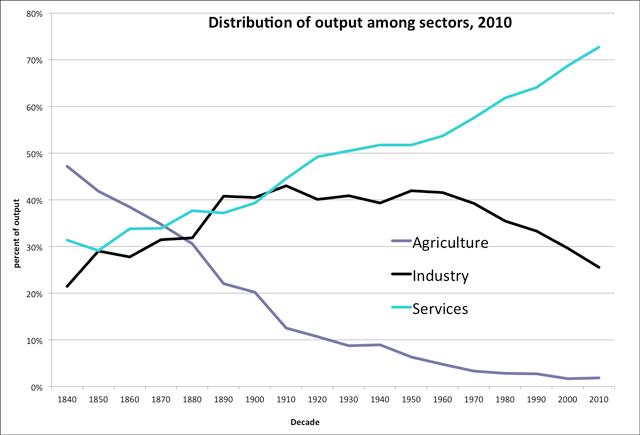
Since the world was taken off the gold reserve system way back in 1971, a new age of “post-industrialism” was unleashed onto a globalized world. Humanity was given a new type of system which presumed that both our nature and the cause of value itself were located in the act of consuming. The old idea that our nature was creative, and that our wealth was tied to producing, was assumed to be an obsolete thing of the past… a relic of a dirty old industrial age.
Under the new post-1971 operating system, we were told that the world would now be divided among producers and consumers.
The “have-not producers” would provide the cheap labor which first world consumers would increasingly rely on for the creation of goods they used to make for themselves. “First world” nations were told that according to the new post-industrial rules of de-regulation and market economics, that they should export their heavy industry, machine tools and other productive sectors abroad as they transitioned into “white collar” post-industrial consumer societies. The longer this outsourcing of industries went on, the less western nations found themselves capable of sustaining their own citizenries, building their own infrastructure or determining their own economic destinies.
In place of full spectrum economies that once saw over 40% of North America’s labor force employed in manufacturing, a new addiction to “buying cheap stuff” began, and a “service economy” took over like a cancer.
To make matters worse, the many newly independent nations struggling to liberate themselves from colonialism were told that they would have to abandon their dreams of development since those goals would render the formula of a producer-consumer stratified society impossible to create. Those leaders resisting this edict would face assassination or CIA overthrow. Those leaders who adapted to the new rules would become peons of the new age of “Economic Hitmen”.
As the great president William McKinley had observed long ago (1), nations who develop full spectrum economies also have higher quality, educated citizens using advanced technology which causes more costly goods… meaning no dollar stores and no sweat shops.
The Case of China: Producer for the World
When Henry Kissinger negotiated the opening up of China in the 1970s, the intention was much less benevolent than the story projected.
By the time Deng Xiaoping announced the “opening up” of China in 1978, Kissinger had already managed the economic paradigm shift of 1971, the artificial “oil shock therapy” of 1973 and authored his 1974 NSSM 200 Report which transformed U.S. Foreign Policy from a pro-development orientation towards a new policy of depopulation targeting the poor nations of the global south under the logic that the resources under their soil were the lawful possession of the USA.
Kissinger, and the hives of Trilateral Commission/CFR operatives to which he was beholden never looked on China as a true ally, but merely as a zone of abundant cheap labor which would feed cheap goods to the now post-industrial west under their new dystopic producer-consumer world order. It was in that same year that Kissinger’s fellow Trilateral Commission cohort Paul Volcker announced a “controlled disintegration of western society” which was begun in full with the Federal Reserve’s interest rate hikes to 20% that ensured a vast destruction of small and medium businesses across the board.
Believing China (then still largely an impoverished third world country) to be desperate enough to accept money and short-term salvation after years of trauma induced by the Cultural Revolution. Under Kissinger’s logic, China would receive just enough money to sustain a static existence but would never be able to stand on its own two feet.
Unbeknownst to Kissinger, China’s leaders under the direction of Zhou Enlai, and his disciple Deng Xiaoping had a much longer-term strategic perspective than their western partners imagined.
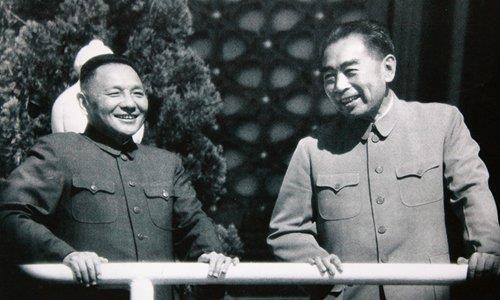
Deng Xiaoping and Zhou Enlai in 1962
While receiving much needed revenue from foreign exports, China began to slowly create the foundations for a genuine renaissance which would be made possible by slowly learning the skills, leapfrogging technologies and acquiring means of production which the west had once pioneered. Zhou Enlai had first enunciated this visionary program as early as 1963 under his Four Modernizations mandate (Industrial, agricultural, national defense and science and technology) and then restated this program in January 1976 weeks before his death.
This program manifested itself in the July 6, 1978 State Council Forum on the “Principles to Guide the Four Modernizations” informed by the findings of international exploratory missions conducted by economist Gu Mu’s delegations around various advanced world economies (Japan, Hong Kong, Western Europe). The findings of Gu Mu’s reports laid out the concrete pathways for full spectrum economic sovereignty with a focus on cultivating the cognitive creative powers of a new generation of scientists that would drive the non linear breakthroughs needed for China to ultimately break free of the rules of closed-system economics which technocrats like Kissinger wished the world adhere to.
Deng Xiaoping broke from the radical Marxism prevalent among the intelligentsia by redefining “labor” from purely material constraints and elevating the concept rightfully to the higher domain of mind saying:
“We should select several thousand of our most qualified personnel within the scientific and technological establishment and create conditions that will allow them to devote their undivided attention to research. Those who have financial difficulties should be given allowances and subsidies… we must create within the party an atmosphere of respect for knowledge and respect for trained personnel. The erroneous attitude of not respecting intellectuals must be opposed. All work. Be it mental or manual, is labor.”
Over the course of the coming decades, China learned, and like any student, copied, reverse engineered and reconstructed western techniques as it slowly generated capacities that ultimately allowed them press on the limits of human knowledge outpacing all western models.
Scientific and technological progress became the driving force of its entire economy and by 1986, the “863 Project for Research and Development” was announced which focused on areas of space, lasers, energy, biotechnology, new materials, automation and information technology. This project became the driver for creative innovation guided by the National Science Foundation and was upgraded to the 973 Basic Research Program in 2009 to: “1) support multidisciplinary and fundamental research of relevance to national development; 2) Promote frontline basic research; 3) Support the cultivation of scientific talent capable of original research; and 4) Build high-quality interdisciplinary research centers.”
Although China is often accused of intellectual theft, the reality is that it has begun to clearly outpace western nations becoming a pioneer on every level of science and technology. China now registers more patents than the USA, has become the cutting edge leader of high speed rail engineering with over 30 000 km, bridge building, tunneling, as well as water management, quantum computing, AI, 5G telecommunications, and even space science becoming the first nation to ever land on the far side of the moon with an intent to mine Helium 3 and develop permanent bases on the Moon in the coming decade.
All of these cutting edge fields of science and engineering are being organized by the ever-growing Belt and Road Initiative which has taken on global proportions and integrated itself into a deep alliance with Russia, Iran and over 135 nations who have signed onto the BRI Framework stretching from Latin America, Africa, the Middle East, Central Asia, Asia, and Europe.
This is the system which the USA and other western nations could have joined on multiple occasions, but which has instead been targeted as a global threat to western hegemony. According to the logic of those western utopians who refuse to let go of their old outdated 1971 script for a new world order, China’s New Silk Road must be subverted at all costs since it is very well understood that it would become the basis for a new world system as the old globalized paradigm comes crashing down faster than the Hindenburg.
So what can be done?
Amidst this anti-China war policy has emerged another policy which began as a “Trade War” and escalated to a potential “decoupling” of the USA from China under President Trump.
This decoupling would involve cutting off reliance on using China as a cheap labor exporter, and even industrial production source as well. Obviously, friendship and collaboration between the USA and China is vitally important for the long-term survival of civilization, but is this decoupling an intrinsically bad thing in the short term?
Maybe not.
If the USA is to survive the oncoming collapse and break free of its apocalyptic war agenda, then certain realities WILL have to occur. These realities include (but are not limited to):
1) Regaining its lost industrial potential, with an emphasis on the machine tool sector which the west once enjoyed as a world leader
2) Regaining the lost scientific and technological capacities which the USA once had when it still valued productive thinking under the days of JFK and NASA
3) Regaining a grasp of education which values productive citizens over consumer subjects
4) Regaining control over national credit under federal banking, dirigisme and other long-term investment practices that rely on regulating Wall Street speculation and other unproductive forms of banking.
How might these vital capacities be regained?
For one thing, protectionism will be necessary. China has used protectionist measures to a great effect, and every nation has the right, if not the duty, to apply protective tariffs in the defense of their economic sovereignty in order to ensure that it is more profitable to purchase locally than abroad. In fact, it was only by employing protective tariffs in the pre-Globalized past that the USA (or any other nation for that matter) built up their industrial capacities in the first place while these capacities were always lost whenever free trade, de-regulation policies were imposed.
Parity Pricing is vital if the USA is to rebuild the small and medium agro-industrial enterprises that once generated the vitality of society decades ago. Parity pricing was a common practice among western governments between 1945-1970 which imposed certain constraints on price variability of certain goods to ensure that prices never dropped so low that the manufacturers could afford to stay in business or rise so high that consumers cannot afford to buy said goods. Today’s agricultural crisis in the USA could only be reversed were such policies implemented quickly (2).
National banking is another vital pre-condition to a recovery. Under the period of 1791-1836, during the 1862-1869 greenback system, or during FDR’s 1933-45 use of the Reconstruction Finance Corporation, national credit was generated by acts of purchasing bonds via the Treasury and emitting loans directly to companies which would be mandated to carry out the jobs needed to build great infrastructure megaprojects (Erie Canal, transcontinental railway, or Tennessee Valley authority). Similar practices have been revived under China’s state banking system today which provides the majority of the loans to companies building the New Silk Road either in China itself or abroad.
While detractors call these sorts of policies “trade war” or “offenses to the laws of the World Trade Organization”, as I laid out in a 2018 lecture, they are exactly what is needed for any sort of recovery to occur.
Before the USA could ever possibly work as a reliable partner on the Belt and Road Initiative or any nation of the emerging multipolar alliance, it must learn to stand once again on its own two feet.
This transitionary process may have painful aspects to it, much like a drug addict trying to wean themselves off of heroine, but if the intent is genuine, and the means lawful, then it is certainly possible, even at this late date.
As the USA weans itself off of its addiction to China’s cheap goods, China will be better prepared to produce ever more high quality goods on a “fair trade basis” for markets which are also committed to full spectrum economic goals whether in Asia, Africa, or beyond.
Everything hinges on the upcoming U.S. elections
President Trump has outlined a series of measures that reflect a pro-industrial orientation which the mainstream media has worked very hard to cover up.
Over his first term, Trump not only rejected the precepts of laissez faire economics by cancelling the anti-China Trans Pacific Partnership (TPP) but renegotiated the nation-killing NAFTA giving nation states of North America the right to intervene into their economic destinies for the first time since 1994. He also broke with a 50 year anti-space tradition by giving full backing to a renewal of the space program with the Artemis Program and outlined a global cooperative space platform with the Artemis Accords. Just as JFK’s Apollo program generated over $10 for ever $1 invested in non-linear ways, so too will the current goal of creating a permanent lunar base and launch pad to Mars generate similar effects as new discoveries and inventions with immense industrial applications will come online. This was renewed in a GOP policy tweet of Oct. 23:

Trump has also called for a national re-industrialization program designed to bring back vital heavy industries to rust belt dead zones of America that have fallen into dark age conditions over the past 4 decades and in his current platform has called for a continental high speed rail system. For the Arctic, Trump has given federal endorsement to the Alaska-Canada railway which itself brings the long-overdue Bering Strait rail tunnel endorsed by both Russia and China ever closer to reality. This policy represents a total break from the Pentagon’s Arctic war policy also active in Alaska.
On economic diplomacy, Trump has broken from the anti-growth program launched by Obama’s technocrats by ending the moratorium on nuclear power investments by green lighting the International Development Finance Corporation’s investment into 2500 mW of nuclear energy for South Africa and another nuclear plant for Poland (which currently relies on 70% coal power and wants 9 GW of nuclear by 2040). This change in policy brings the USA into harmony with the modus operandi of both Russia and China who are the only other nations seriously investing in nuclear power within their own nations or Africa.
Similarly, Trump has won the ire of many regime changers by defunding CIA-front democracy movements like NED in Hong Kong, Ukraine and Belarus while introducing economic win-win diplomacy in helping to resolve the Serbia-Kosovo crisis via investments into rail, roads and infrastructure. This approach also complements the restoration of a non-interventionist defense strategy that began with Trump’s collaboration with Russia in Syria and continues with his withdrawal of troops from Afghanistan, Iraq and Syria over recent months.
In every category economic, military, diplomatic, space and beyond, two obvious paradigms are clashing represented by two opposing Americas.
If Trump is able to maintain control of the presidency over the coming weeks and months of storms (don’t fool yourself. It is unlikely that the results of the election will be finalized in November or even December) then there is a chance that the USA may find the moral fitness to survive by regenerating its lost industrial base and changing its behaviour in conformity with natural law.
Should this be done, then the USA will be able to re-acquire its claim of “independence” for the first time in decades. With that independence, will come the slow reconstruction of its decrepit infrastructure, intellectual and cultural decay and achieve the basis for a full spectrum sovereign economy. This hoped-for USA would be a very different creature from the one the world has known since the murder of JFK in 1963 and this would be a nation that could be trusted to act in its own true self interest as a partner to other like minded nations working for their own true self interests under the umbrella of international projects that benefit all participants.
The author can be reached at matt.ehret@tutamail.com
China Looks To Boost Oil Exploration, Expand Oil & Gas Storage
By Charles Kennedy | Oilprice.com | November 3, 2020
China plans to further increase oil and gas exploration and accelerate the construction of more oil and gas storage infrastructure, state news agency Xinhua reported on Tuesday.
Last week, China’s Communist Party adopted the principles of the five-year development plan 2021-2025.
China will also aim to build more oil and gas pipelines, according to its authorities.
China has been looking to increase its energy security in recent years, including by increasing domestic oil and gas production and expanding its storage facilities.
Over the past decade, China’s oil production has been falling while its oil demand has been soaring, increasing Beijing’s dependence on sourcing oil from abroad.
China’s dependence on crude oil imports has been growing in recent years as its domestic production has faltered, and the world’s top oil importer covered 73.4 percent of its oil demand with imported oil in the first half of 2020.
In the first half of 2020, China’s crude oil production did increase, by 1.7 percent year on year, according to data from the National Bureau of Statistics of China. The growth in production between January and June, however, was 0.7 percentage point slower than that of the first quarter, the bureau said.
Higher domestic production, however, will not be able to cover the rise in China’s oil and gas demand, so China will continue to be a key player on the global oil and gas markets and a critical gauge of oil and gas demand growth.
Meanwhile, China is set to increase its natural gas imports from Russia as Russian gas giant Gazprom has started constructing the extension of its gas pipeline to China, Upstream reported on Tuesday. The project is expected to be completed by the end of 2022 and is estimated to cost US$3.5 billion (280 billion Russian rubles), according to the Russian gas giant.
Why Canada Must Release Meng Wan Zhou
By K.J. Noh | Dissident Voice | October 30, 2020
 Few things are as dangerous as a poorly thought-out kidnapping. Kidnappings are serious business, often with unintended consequences. History is replete with dim-witted criminals who engaged in them on a whim, only to discover adverse outcomes far beyond their imagining. One dramatic example happened 90 years ago this week:
On October 24th, a mother with young children is kidnapped. She is the cherished wife of an important man whom the kidnapper’s group is in competition with. The plan of the kidnapper is that by kidnapping her, this will create unbearable psychological pressure on her husband, force him to capitulate, or at least damage his resolve.
The woman is first humiliated, then tortured, then killed. But the leader does not capitulate, break, or weaken. Instead, over the next nineteen years, he wages war without quarter on his enemies and eventually drives them into the sea. Decades later, he will write this poem for her:
The lonely goddess in the moon spreads her ample sleeves
To dance for these faithful souls in the endless sky.
Of a sudden comes word of the tiger’s defeat on earth,
And they break into tears of torrential rain
The poet, is of course, Mao Zedong. The kidnapped woman was the beloved wife of Chairman Mao, Yang Kai Hui, the mother of his three children. In the winter of 1930, the Kuomintang Fascists kidnapped her and her son, in order to demoralize Mao and put pressure on him to capitulate. She was executed in Changsha, on November 14th, in front of her children, at the ripe age of 29.
Though utterly helpless at the moment she was hostage, Mao never forgave the kidnappers for their depravity, cowardice, and misogyny—victimizing women and children as weapons in a war—and he ground his enemies into the dust, and then built a state where such atrocities could never occur or go unpunished again.
The State-directed, extraterritorial kidnapping of Huawei CFO Meng Wan Zhou is widely seen as a similar act of infamy, misogyny, and thuggery, by a similar class of disreputable individuals. “Lawless, reasonless, ruthless,… vicious” is the extraordinary official pronouncement of the Chinese government. It is certainly a violation of international law. How this will play out ultimately, and what retribution will be meted out remains to be seen, but retribution there will surely be for this “extremely vicious” act.
George Koo has pointed out the “rotten underpinnings of the case” in this article. Most people understand that Meng is not guilty of anything other than being the daughter of Ren Zeng Fei, the founder of Huawei. Huawei, as a global technological powerhouse, represents Chinese power and Chinese technical prowess, which the United States is hell-bent on destroying. Meng has been kidnapped as a pawn, as a hostage to exert pressure on Huawei and the Chinese government, and to curb China’s development. In a maneuver reminiscent of medieval or colonial warfare, the US has explicitly offered to release her if China capitulates on a trade deal—making clear that she is being held hostage. This constitutes a violation of the UN Convention on Hostages.
The outcome of this judicial kidnapping will determine US and Canada-Chinese policy for decades to come: whether a rapprochement is possible in the future, or whether relations will spiral into a cycle of acrimony, vengeance, and ultimately catastrophe.
What is on trial, of course, is not Meng, or Huawei, but the judicial system of Canada and the conscience, good sense, and ethics of its ruling class: whether it will uphold or undermine international notions of justice.
If the Canadian judiciary and its ruling classes fail this test, Canada risks being driven, metaphorically, into the sea by a determined Chinese leadership. The global community that upholds international justice could only concur.
Key Facts about the Meng Wan Zhou Case
The Canadian government arrested Meng Wan Zhou, the CFO of Huawei, on December 1st of 2018, as she was transiting Vancouver on a flight to Mexico. The arrest was made on the demand of the US government’s US District Court’s Eastern District of NY. The initial charge was “fraud and conspiracy to commit fraud to circumvent US sanctions on Iran”.
Of course, the US government knew rapidly that these allegations could not constitute an extraditable charge. The Canadians do not subscribe to US sanctions against Iran—they actively encourage trade with Iran–and therefore business dealings with Iran could hardly be a crime in Canada. In fact, the unilateral US sanction are actually a violation of international law. Furthermore, like most jurisdictions in the world, Canada also has a requirement of “double criminality”: unless the alleged crime is a crime in both jurisdictions, you cannot extradite.
So an alternate case had to be constructed. The case was that was concocted alleged that because Meng had lied to a bank, she must be extradited for fraud. Of course, the bank was British (HSBC), the “crime” happened in Hong Kong, the accused was a Chinese national, and the arrest was in Canada. Hence, she must be extradited to the US for “fraud”. As a set up for a lame joke this would not pass, and as legal argument it is beyond farce. The US court claimed standing to charge her because transactions with HSBC had, or would have transited US servers in New York for a few milliseconds.
Here are some key things to remember about this case:
1) Even if the allegations of so-called “fraud” were true, without the political pressures, such an issue would largely be a private matter between HSBC and Meng.
2) None of the transactions between HSBC and Meng occurred in the US. The funds only transited through the US system because of the way of the global banking system is set up for dollar clearance—this was the pretextual technicality used for jurisdiction and charging. (The funds could equally have been set up to transit through an alternate system, bypassing US servers and risk).
3) No non-US person has ever been charged for “causing” a non-US bank to violate US sanctions in the past. In similar cases, it’s usually a small fine to a corporation.
4) It’s been shown that the US attempted the abduction of Meng in 6 European and Latin American countries—all of which rejected US demands. The US decided on Meng’s momentary transit through Canada, because they considered the Trudeau government to be the most pliable and sycophantic to their cause.
5) Trump has made statements that Meng could be used as a bargaining chip in the US-China trade deal, showing the clearly political nature of the arrest. Confidential RCMP documents also note that the arrest was “highly political”. It’s widely suspected that the law-breaking John Bolton was the instigator behind the action.
6) HSBC was already under prosecution by the US government for prior unrelated violations; rather than doing due diligence in their loan or clearance processes or the law, it decided to collaborate with the US government to entrap Huawei and Meng.
7) The arrest itself involved massive abuses of process: irregularities in detention, notification, search, seizure, constituting themselves violations of international law and bilateral agreements.
8) The court case has been also full of abuses, including the hiding of key exculpatory documents (slides 6 & 16) by the prosecution; and denial of access to key documents to the defense (on the basis of national security and “damage to China-Canada relations”). Given the damage that has already happened to China-Canada relations by the abduction of Meng, one can only imagine what additional “damage” Canada’s Intelligence service is trying to prevent with a claim of National Secrets exemption.
9) The Trudeau government is going on with charade that it is a hapless damsel obliged to follow US strong-arm demands. But Section 23 of the Canadian Extradition Act gives the government the authority to terminate this case at any time. Extradition is made on the discretion of the government, and by refusing to act, the Trudeau administration is abdicating its responsibilities to the Canadian people and the cause of justice.
The Fraudulent Charge of Fraud
Meng Wan Zhou’s lawyer has argued, “It is a fiction, that the US has any interest in policing interactions between a private bank and a private citizen halfway around the world…It’s all about sanctions.”
The jurisprudence upholds this: for a fraud charge against Meng to stick, it would have to show 1) deliberate misrepresentation/deception to HSBC as well as 2) harm or risk of harm to HSBC. In other words, Meng’s lies would have put HSBC at risk for fines and penalities for sanctions busting.
Note, however, that the bank could not have been held liable, if it could be shown that they had been “deceived” into breaching US sanctions by Meng as alleged. If Meng had “lied” to the bank, no harm could have occurred to the bank. The bank would have needed to act deliberately to face any risk of liability.
On the other hand, documents, slides, and emails released later actually show that HSBC had been informed of the relationship between Skycom and Huawei before Meng’s testimony as well as during the meeting, so the allegation of deception doesn’t hold up. (Slides 6 & 16 used in Meng’s presentation to HSBC were omitted to make it seem as if Meng had deceived them, but in full context, show there was no deception).
The conclusion is simple: there was either no lie, or no harm. Regardless, there was no fraud.
In other words, the Canadian government had no case.
The Double Criminality of Heather Holmes
Canadian Justice Heather Holmes, presided over the interrogation. Like the fascist KMT warlord who had kidnapped and tortured Yang Kai Hui, she interrogated Meng Wan Zhou and her lawyer in sibilant tones. Tell me, about “double criminality”, she entreated gently, as if their arguments would be weighed in her judgement.
Meng’s lawyer, Richard Peck, answered with common sense: Because Canada doesn’t have sanctions against Iran, there would be no liability to the bank, hence, no risk to the bank, hence, no criminal “fraud”.
It also couldn’t constitute fraud in the US, since if what the government argued was true–that Meng had misrepresented facts to the bank–HSBC would not be liable because the bank would be an “innocent victim,” hence not liable for any sanctions.
“All risk is driven by sanctions risk in the US,” Peck stated.
Astonishingly, Justice Holmes ruled against Meng, claiming that one should not look for correspondence or equivalence between the statutes to determine “double criminality” in fraud. Instead, she claimed that one had to transpose the context and the coherence of the statues of the demanding country to render a decision. Even though Canada didn’t have sanctions against Iran (thus no illegality or risk of harm, and hence no fraud), she stated that she still had to interpret the demand for extradition by “transposing the environment” that led the US to make the demand. In other words, Canada had no sanctions on Iran, but she had to imagine “the environment”–i.e., “as if Canada had sanctions on Iran”–to render the decision. In so doing, she was able to smuggle in illegal US sanctions by installing a legal backdoor–into a country that had lifted sanctions.
In other words, the dubious, illegal “environment” of US sanctions overruled the clear, plain letter of Canadian law. At the same time, no consideration was given to the odious political “environment” driving the abduction.
Why did the good justice see fit to make a mockery of Canada’s own laws and sovereignty, and subjugate Canada to US extraterritoriality? Why did she contort herself to support the blatant illegality of US sanctions? Does she realize she has set the country barreling down the wrong lane of history?
It’s not known if Justice Holmes asked for the clerk to bring her a basin of Maple syrup to wash her hands after she passed judgement. But it would have been understandable for such a corrupt, consequential, and deeply catastrophic judgement.
Rogue State Canada
Canadian politicians and press like to intone robotically, that Meng’s kidnapping is strictly a by-the-books, “rule-of-law” procedure with Meng’s detention. They like to repeat the catechism, in that tiresome, hypocritical, Maple-washing fashion, that they are “a nation of laws” (insinuating the others are not). But the fact is, Canadians have an atrocious history of kidnapping innocents in general, and assisting the US with kidnappings in particular. There are many examples, but the best known is the story of Maher Arar, the Canadian engineer who was kidnapped and rendered as terrorist, and tortured unspeakably in Syria, where”the pain was so great, it makes you forget the taste of your mother’s milk” Of course, he was innocent of all charges.
It’s also well established that Canadian Police have an ugly habit of kidnapping Indigenous people who are drunk or homeless, and driving them far away from city and abandoning them where they are sure to die of hypothermia and exposure in the winter. These are called Saskatoon “Starlight tours”.
It’s equally well known that the Canadian government also kidnapped tens of thousands of Indigenous children, sometimes at gun point, and forced them into concentration camps (“residential schools”) where they were abused, tortured, raped, enslaved, and killed. Children kidnapped in these schools had a greater chance of dying than soldiers doing battle in WWII–some studies show a mortality rate of 40-60%. In other words, it committed genocide, through rule of law, of course.
In 2018, the UN Committee on Human Rights published a long series of incriminating findings on Canada, related to the torture, mistreatment, imprisonment, death and refoulement of immigrants, refugees, indigenous peoples, and other political prisoners.
On the other hand, the Canadian government has been known to fight tooth and nail to harbor war criminals and torturers–people who legitimately should be extradited. For example, it harbored several El Salvadoran death squad leaders in the 1980’s. These people were so toxic that the Salvadoran government could no longer have them in their country–so they gave them diplomatic postings to Canada. The Canadians, instead of doing the reasonable thing and extraditing them–as was demanded by human rights community around the world, bent over backwards to give them safe harbor and immunity.
Any hope that the settler-colonial Canadian justice system can play an even hand or follow basic human ethics in this case is belied by this atrocious history.
But Why is the US going after Huawei?
China has been designated the official enemy (“revisionist power”) of the US, because it poses a threat to US dominance. As such, the US is engaged in “multi-domain” hybrid warfare against China to attack and bring China down. The domains of warfare that involve the US assaults against Huawei are the domains of: tech war, trade war, economic war, lawfare, and cyber war. Huawei is one of the key pillars of China’s technological and economic strength. It is the world’s largest and most advanced telecom corporation, and in 5G it owns 1/5 of the base patents in the field.
Huawei is also building the digital infrastructure to accompany the Belt and Road Initiative (the “digital silk road”). This not only allows China’s economy to grow, but also prevents the effects of military blockade at the South China Sea. Its hardware makes it harder for US surveillance to tap.
These are the key reasons why it is being attacked and taken down. Aside from kidnappings, the US has been waging this warfare by trying to prevent other countries from signing deals for Huawei 5G infrastructure. It is alleging that Huawei would render these networks insecure: Huawei would spy on them for the Chinese government, or even open them for Chinese cyberwarfare.
Actually, the truth is exactly the inverse. A world-wide Huawei system could create problems for the US global panopticon upon which US “unipolar” dominance relies on: its ability to eavesdrop on individuals, corporations, the leaders of countries, as well as military communications. With non-Huawei routers, due to the subservience and mandated cooperation of US companies, cyberspace as a domain of warfare is always guaranteed to be permeable and amenable to US surveillance and attack.
In other words, the US taps routers globally to spy on individuals, companies, governments, and nations: “Routers, switches, and servers made by Cisco are booby-trapped with surveillance equipment that intercepts traffic handled by those devices and copies it to the NSA’s network”
Regarding specific allegations of Huawei’s “spying”, Huawei has been completely transparent and has handed over its source code to relevant Intelligence agencies for detailed analysis, year upon year. No spying or intentional backdoors have been found: For example, German Intelligence found no spying, and no potential for spying, and British Intelligence also found none.
On the other hand, the US NSA, in a program called Shotgiant, spied extensively on Huawei to look for links between Huawei and the PLA, evidence of backdoors and spying, and vulnerabilities that they could exploit. This extraordinary spying (revealed by Wikileaks) showed no evidence of backdoors, spying or connections with the PLA. The Shotgiant disclosures showed that US allegations were projection: NSA actions “actually mirror what the US has been accusing Huawei of potentially doing”. The NSA did, however, steal Huawei’s proprietary source code at the time, and had plans to spy on other countries by using this information and had sought to compromise security in general. Of course, these kinds of unethical exploits create dangers for everyone.
Theft and exploits notwithstanding, using Huawei hardware could still make it harder for the US to surveil networks–Huawei has declared it refuses to plant backdoors.
Guo Ping, the chairman of Huawei, was quoted in The Verge: “If the NSA wants to modify routers or switches in order to eavesdrop, a Chinese company will be unlikely to cooperate,”…Guo argues that his company “hampers US efforts to spy on whomever it wants,” reiterating its position that “Huawei has not and will never plant backdoors.”
Wired Magazine has also confirmed that Huawei is an obstacle to NSA surveillance: Telecom-equipment makers who sell products to carriers in the US “are required by law to build into their hardware ways for authorities to access the networks for lawful purposes”.
The only allegation of “Huawei vulnerabilities” with any backing evidence shown to date have been Bloomberg‘s “gotcha” article that alleged that in 2009, 2011 some telnet connections in Huawei equipment for Vodaphone in Italy were insecure. Vodaphone, however, refuted these allegations. Further technical analysis showed these allegations were completely implausible. The hardware (Baseboard Management Controller) that Bloomberg alleges is “insecure” cannot access any data in any normal configuration Furthermore, built-in Telnet access CLI connections are unexceptional, and did not pose meaningful risk.
Since then further allegations have been made by the US government (leaked to the WSJ ), but always without proof. These allegations may be recycled and refuted old allegations, or they may just be pure invention, which why they cannot issue the proof.
Of course, Huawei refutes these allegations and always demands proof. The proof is never forthcoming, because there is none.
Here is a solution that allows everyone to step back from the brink. Back off on the unsubstantiated, unverifiable “backdoor spying” canards. Stop the spying and harassment of Huawei, and stop the projection. Stop the interference with its global contracts: let each country evaluate them on their own merits. Stop the fraudulent prosecutions that recycle settled matters.
Above all, stop taking hostages: this is a violation of international law. Canada must release Meng Wan Zhou, immediately. And it must find ways to repair relations and find ways cooperate anew with China. The benefits of success will be tangible and immense. The consequences of failure, immeasurable.
K.J. Noh is a long time activist, writer, and teacher. He is a member of Veterans for Peace and works on global justice issues. He can be reached at: k.j.noh48@gmail.com.
Featured Video
The Truth About the Trump Shootings with Ken Silva
or go to
Aletho News Archives – Video-Images
From the Archives
Trans ‘milk’ as good as the real thing – NHS
RT | February 18, 2024
The drug-induced nipple secretions of trans women are as good as mothers’ breast milk for babies, the University of Sussex Hospitals NHS Trust claimed in a letter to campaigners made public in a report by British think tank the Policy Exchange on Sunday.
The healthcare trust’s medical director, Rachel James, argued that the off-label prescription drug cocktail men transitioning to female take in order to produce milk was “similar to the natural hormones which encourage lactation to develop when the baby is newly born.”
“The evidence which is available demonstrates that the milk is comparable to that produced following the birth of a baby,” James wrote in the letter, sent to Children of Transitioners last August.
Biological men who wish to lactate must first take hormones to grow milk glands and then take high doses of either domperidone or metoclopramide to stimulate milk production. Neither drug is approved for this use, though they are occasionally prescribed off-label to biological women who have trouble lactating.
However, domperidone’s own manufacturer, Janssen, warns patients the drug “may cause unwanted side effects affecting the heart in a breastfed baby” and “should be used during breastfeeding only if your physician considers this clearly necessary.” … continue
Blog Roll
 Aletho News
- Seyed M. Marandi: U.S. Strike Imminent – Toward Total War in the Middle East
- Russia Voted Under Fire. Washington Is Loading the Tankers.
- 12 Things Your Oncologist Was Trained Not to Tell You
- Anthrax Attacks Paved Way for COVID-Era ‘Junk Drugs and Vaccines’
- How Real Is the Impact of Western Sanctions on Israel?
- France, You Are Guilty: How Paris Turned Western Sahara into the Maghreb’s Powder Keg
- 2025 Nature Paper Claiming Worsening Global Drought Gets RETRACTED …Heavily Flawed
- Your Milk Is Not the Problem
- The Truth About the Trump Shootings with Ken Silva
- ARE PATIENTS BEING PROPERLY INFORMED ABOUT OZEMPIC?
- If Americans Knew
- Salah Sarsour’s Legal Team Says DHS Has Not Met Its Burden to Prove He Is Deportable
- An analysis of tax forms by The Intercept show Kraft’s charity and LLC have donated to Friends of the IDF and AIPAC’s super PAC.
- Israeli attacks kill four Palestinians in Gaza – Daily Update
- Inside Gaza’s death trap of collapsing, bombed-out buildings
- The everyday items Israel bans from Gaza every day
- Inside the siege, the ruined buildings of Gaza – Daily Update
- Debunking The Claim That Macklemore Has A “History Of Antisemitism”
- CPJ demands release of arrested Palestinian-US journalist near Bethlehem
- Robert Kraft: The Billionaire Friend of Netanyahu Pulling The Strings Behind the Macklemore/Ed Sheeran Blow Up
- Columbia Administered Fund Gives Big Money to Pro-Israel Groups
- No Tricks Zone
- 2025 Nature Paper Claiming Worsening Global Drought Gets RETRACTED …Heavily Flawed
- New Study: ‘Global Drought Shows No Detectable Recent Acceleration Under Climate Warming’
- Economic Masterminds: German Socialists Suggest Taxing Productivity Gains Stemming From Using AI
- The South China Sea Has Not Been Cooperating With The Climate Change Narrative
- Energy Crisis: Germany Enters Heating Season With Historically Low Gas Reserve Fill Levels
- New Study: The Antarctic Ice Sheet Gained Mass From 2020-2024 Due To Staggering Snow And Ice Accumulation
- Study: Ocean Heating Rates From Thousands Of Years Ago ‘Dwarf’ Modern Ocean Heating Rates
- Climate Extremists Target, Attack Large-Scale Power Grid Infrastructure In Germany!
- New Study: Antarctic Ice Melt Has Contributed Less Than 1 Centimeter To Sea Level Rise In The Last 30 Years
- Fear Of Debate: Alarmist German Climate Scientist Calls On Mainstream Media To Discredit Skeptic Voices
 Aletho News