Uruguay Halts COVID-19 Vaccine for Kids Under 13, Judge Demands Officials Turn Over Pfizer Contracts
By Megan Redshaw | The Defender | July 8, 2022
Uruguay suspended COVID-19 vaccines for children under 13 after a judge on Thursday issued an injunction halting vaccinations in that age group until government officials turn over its contracts with Pfizer.
Uruguayan government officials and Pfizer were ordered on Wednesday to appear in court after judge Alejandro Recarey gave them 48 hours to present detailed information on Pfizer’s COVID-19 vaccine while the court considered an injunction request to halt COVID-19 vaccinations for children 5 and older.
The government said a confidentiality clause in the contract prevents it from producing the documents, The Washington Post reported.
According to ABC News, the judge received answers to 18 questions about the safety and chemical composition of COVID-19 vaccines, signed by Health Minister Daniel Salinas, but did not turn over the contracts.
It is unknown whether the answers provided by government officials adequately addressed the questions posed by the judge, who ultimately ordered an injunction based on what was provided.
Salinas, after the court’s ruling, strongly defended the government’s vaccination plan and criticized the judge for questioning the safety of vaccines.
Alvaro Delgado, the secretary of the presidency, said the halt is a threat to public health.
“We’re convinced that it’s crazy to suspend voluntary vaccination because it has a strong scientific backing,” Delgado said at a news conference.
Vaccinations for those older than 13 will continue, the Health Ministry said in a statement.
The government plans to appeal the decision, according to ABC News.
As The Defender reported Wednesday, judge Recarey of the Administrative Litigation Tribunal used his inquisitorial powers to demand the Uruguayan Ministry of Public Health, State Health Services Administration and the President’s Office submit all information regarding the contracts for the purchase of COVID-19 vaccines, including contractual information related to any clauses of civil indemnity or criminal impunity of the suppliers in the event of adverse effects.
The judge is seeking, among other things, to know whether there are clauses in the contracts that promised pharmaceutical companies like Pfizer civil and criminal immunity for adverse effects caused by their vaccines.
Judge Recarey posed a series of questions to government officials and Pfizer regarding the chemical composition, efficacy and safety of COVID-19 vaccines, and required Pfizer to state whether it has “admitted, in any area, internal or external to it and its partners, the verification of adverse effects” of its COVID-19 vaccines in children.
© 2022 Children’s Health Defense, Inc. This work is reproduced and distributed with the permission of Children’s Health Defense, Inc. Want to learn more from Children’s Health Defense? Sign up for free news and updates from Robert F. Kennedy, Jr. and the Children’s Health Defense. Your donation will help to support us in our efforts.
Ontario stops showing COVID by vaccine status
By Mike Campbel | The Counter Signal | July 8, 2022
After months of off-brand COVID stats, Ontario’s official reporting database has stopped showing cases and hospitalizations based on vaccine status.
Now, why would they do that?
Well, the reason given is to prevent false impressions that the vaccine isn’t working:
“This data set reported the total number of patients in hospital by vaccination status without taking into consideration the number of people in Ontario who are vaccinated overall. Comparing groups using count data (such as the number of patients) is appropriate when the groups being compared are about the same size (i.e. around mid-2021). However, now that approximately 87% of eligible Ontarians are fully vaccinated (compared to 3% partially vaccinated and 10% unvaccinated) This comparison is no longer appropriate and may be misleading.”
In other words, they’re hiding behind the “base rate fallacy,” which occurs when categories with different population sizes are compared. For example, if there are 10x as many Americans as Canadians, comparing deaths needs to be done per 100,000 people to show a rate rather than the base numbers, wherein American death totals will be higher because of their larger population alone.
However, this reason for pulling the data appears to be a cop-out and is misleading.
At The Counter Signal, we’ve reported that the rates themselves have become unfavourable and disproportional for the vaccinated categories.
In Ontario, by April 5, those who had not received two doses of the COVID vaccine have a COVID death rate of 0.02 per capita, as did the fully vaccinated. However, those who had received booster shots had a COVID death rate of 0.03 per capita.
Additionally, those with a booster dose were also more likely to be infected with COVID-19 than any other group. Those with booster doses had 22.35 cases per capita, fully vaccinated had 15.47 cases per capita, and partially vaccinated or unvaccinated had 12.75 cases per capita.
As for Canada more broadly, during the week of April 10-17, 222 fully vaccinated individuals died from COVID compared to only one unvaccinated person (among the eligible population). 99% of COVID deaths were in vaccinated persons that week, a higher percentage than the 85-90% of eligible Canadians who’d been fully vaccinated.
That’s beyond base rate fallacy.
Moreover, between May 8 to 22 in Canada, the vaccinated with at least one booster population accounted for 82 per cent of new COVID deaths — despite making up only 48.6 per cent of the population.
The following two weeks were similar.
Between May 22 and June 5, the unvaccinated population in Canada (at 5+ years old) made up 10.7% of the eligible population in Canada yet only accounted for 8% of COVID deaths.
It appears we’ve gone from trusting the science to hiding it.
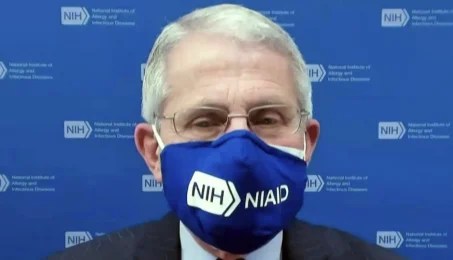
Anthony Fauci on day 26 of his Paxlovid- and vaccine-enhanced Corona experience
Says that he is “Close to if not at 100% the way I was before infection”
eugyppius – July 8, 2022
Despite not only following, but embodying, The Science, global vaccinator-in-chief Anthony Fauci caught Corona while attending his high school reunion on 11 June. While most Omicron infections resolve within a week, the quadruple-vaccinated NIAID director and blight upon human civilisation suffered Paxlovid rebound at the end of June and is now approaching a month of infection.
Yesterday, he ended his radio silence to give some press interviews:
I believe I’m about close to if not at 100% the way I was before infection. So I’m really fortunate that I’ve done very well. And I keep telling people when they ask me that, is that I was vaccinated, and doubly boosted, and I believe if I did not have that degree of background protection I would’ve had a much more serious course. My course was relatively light minor symptoms, and right now I’m completely without symptoms and I feel very good, very energetic.
Nonzero chance he rebounds again.
Stop the War on Doctors
My Rather Public Reply To The Threat Made Against Me By The American Board Of Internal Medicine
By Pierre Kory | July 2, 2022
Anyone in America who deviates from the group-think enforced by public health bureaucrats runs the risk of cancellation. Politicians, parents, comedians, teachers – now they’re even coming for the doctors.
As a lung and ICU specialist, I have practiced medicine for 14 years and successfully treated more than 450 patients during the pandemic. Long before anyone had heard of Covid-19, I was studying and implementing cutting-edge methods to treat critically ill patients. I’m the Senior Editor of a best-selling textbook in my field, now in its second edition, which has been translated into seven languages.
For my efforts, I now find myself on the receiving end of “disciplinary sanctions” from the American Board of Internal Medicine (ABIM), who sent me a letter threatening “suspension or revocation of board certification.”
The “sin” threatening to end my medical career was my unwillingness to go along with Fauci’s monolithic vaccines-above-all-else strategy. The failure of this approach is plain to see, and anyone with an ounce of curiosity knows there are many methods of treating the virus.
Ivermectin is one of them. This cheap, readily available generic medicine is approved by the FDA for certain uses in humans – but not for Covid-19, despite 85 controlled trials from around the world demonstrating its effectiveness. In Brazil, the largest study to date found a reduction in Covid mortality rate of 70%. In India, the second most populated country in the world, the drug has been credited with near eradication of the disease. Studies attempting to discredit ivermectin have been debunked again and again.
Other trials, such as the recent TOGETHER trial, are designed to fail from the start to drive a desired narrative. In the National Institutes of Health’s ACTIV-6, despite starting the majority of patients on treatment after five days of Covid-19 symptoms at a lower than recommended dose, they found a statistically significant reduction in the time to recovery, particularly among the most severely ill. Unsurprisingly, major newspapers reported that the study showed ivermectin was ineffective.
Despite ivermectin’s proven effectiveness, in the opinion of the ABIM, advocating for its usage is a form of “disinformation” and carries the penalty of losing one’s medical license and livelihood.
Throughout the pandemic, I’ve maintained an open mind, analyzed what works for patients, discussed strategies with fellow doctors, and conducted my own extensive research. When new data arose that changed my understanding, I admitted as much and changed course—like with the vaccines. If only the powers that be at the ABIM and our government could say the same.
Consider the evolution of accepted facts about Covid-19 safety measures from Fauci and his ilk. Despite government mandates, neither lockdowns nor cloth masks prevent transmission. They never have. It turns out former Surgeon General Jerome Adams had it right when he tweeted in March 2020 that masks are, “NOT effective in preventing general public from catching #Coronavirus” – a comment for which he was pilloried. We are only beginning to learn the impact of the societal costs of these early preventative measures, a price our children who were kept home from school will be paying for years.
Second, there is no evidence the vaccines stop Covid-19, despite the constant lecturing from the Biden Administration and the mainstream media. In the United States and globally, cases continue to rise and fall without any correlation to the pace or percentage of population vaccinated. This is not what we were promised. In 2021, Fauci said vaccinated people were “dead ends” for the virus, and President Biden declared, “You’re not going to get COVID if you have these vaccinations.” Today, approximately 110,000 cases are announced daily in America, where more than two thirds of the population is fully vaccinated.
There is a backlash brewing in America right now, and it goes beyond inflation rates and gas prices. People are tired of arrogant public officials and compromised institutions who believe they have all the answers but constantly get it wrong and make no apologies as they steamroll those who don’t support the current narrative. The ABIM’s sudden (and suspiciously well-funded) persecution of doctors who stray from the party line is only the latest example.
Doctors on the ABIM’s board and across the country need to stand up against this witch hunt. It’s demeaning to honest doctors and dangerous to the patients we’ve dedicated our careers to serving.
Pierre Kory, M.D., is president and chief medical officer of the Front Line COVID-19 Critical Care Alliance.
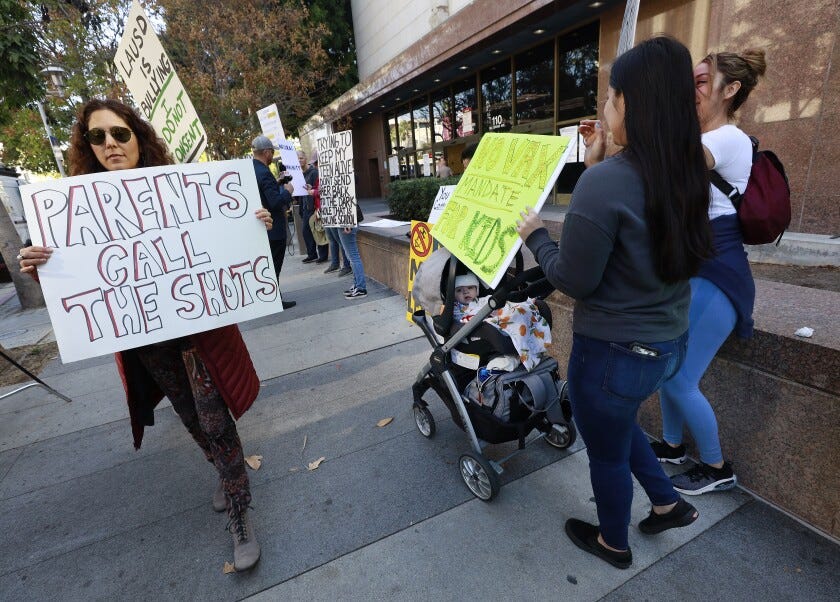
LA parents can now file for damages from the illegal COVID vaccine mandates
A judge has ruled that the LA Unified School District wasn’t authorized to mandate the COVID vaccines or force kids into independent study. If you were injured, I’ll help you recover damages.
By Steve Kirsch | July 5, 2022
An important decision on vaccine mandates was just signed and released this morning.
The case was filed by a father on behalf of his son who attends the Science Academy STEM LAUSD magnet school. The lawyer in this case was Lee Andelin.
LAUSD will likely appeal the decision, but it’s unlikely they will prevail.
The decision means that:
- LAUSD was wrong in requiring the COVID vaccines
- For all but ten vaccines, a personal belief exemption must be respected.
- LAUSD can no longer send kids away from their school and to independent study because they are not vaccinated.
- Only the Department of Public Health can mandate vaccines, not the schools
- The ruling applies to all students, not just the student filing the complaint
- Parents whose children were injured, either by having to have their child vaccinated (regardless of whether your child has a vaccine injury or not) or whose child was shifted into independent study, now have an opportunity to sue for monetary damages.
If you are in the last category, please register here and I’ll let you know how you can join with other parents to preserve your rights and to potentially recover monetary damages.
‘Why the Rush for Toddler Vaccines?’ Asks Wall Street Journal Editorial Board Member
By Susan C. Olmstead | The Defender | July 5, 2022
A Wall Street Journal (WSJ) editorial board member Monday called into question the motives behind the U.S. Food and Drug Administration’s (FDA) decision to extend Emergency Use Authorization of Pfizer and Moderna’s COVID-19 vaccines to toddlers and infants as young as 6 months old, writing that the decision was motivated by politics and pressure rather than science.
In her WSJ opinion piece — “Why the Rush for Toddler Vaccines?” — Allysia Finley wrote:
“The FDA standard for approving vaccines in otherwise healthy people, especially children, is supposed to be higher than for drugs that treat the sick.
“But the FDA conspicuously lowered its standards to approve COVID vaccines for toddlers. Why?”
Finley started her piece with a quote from President Biden, which praised the FDA’s recommendation: “This is a very historic milestone. The United States is now the first country in the world to offer safe and effective COVID-19 vaccines for children as young as six months old.”
She responded, writing, “In fact, we don’t know if the vaccines are safe and effective.”
She continued:
“The rushed FDA action was based on extremely weak evidence. It’s one thing to show regulatory flexibility during an emergency. But for children, Covid isn’t an emergency.
“The FDA bent its standards to an unusual degree and brushed aside troubling evidence that warrants more investigation.”
“Mr. Biden’s hypocrisy is hard to stomach,” she wrote, listing many reasons for caution in vaccinating young children against COVID-19, including:
- Children are at low risk of dying from COVID-19: Only 209 kids between 6 months and 4 years old have died from COVID-19 — about 0.02% of all virus deaths in the U.S. About half as many toddlers were hospitalized with COVID-19 between October 2020 and September 2021 as were hospitalized with the flu during the previous winter.
- The two children in Pfizer’s trial who got sickest with COVID-19 also tested positive for other viruses. It’s possible that many hospitalizations attributed to COVID-19 this winter were instigated or exacerbated by other viruses.
- The FDA authorized vaccines for toddlers based on a comparison of the antibodies they generated to the original Wuhan variant with those in young adults who had received two doses. But two doses offer little if any protection against Omicron infection in adults, and even protection against hospitalization is only around 40% to 60%.
- Vaccinated toddlers in Pfizer’s trial were more likely to get severely ill with COVID-19 than those who received a placebo. Most children who developed multiple infections during the trial were vaccinated.
“FDA granted the Pfizer and Moderna vaccines for toddlers an emergency-use authorization allowing the agency to expedite access for products that ‘prevent serious or life-threatening diseases or conditions,’” wrote Finley.
“While adult COVID vaccines clearly met this standard in late 2020, the toddler vaccines don’t.”
As to why the FDA “rushed” and “bent its standards,” Finley suggested, “perhaps [the FDA] felt pressure from the White House as well as anxious parents.”
White House COVID-19 response coordinator Ashish Jha repeatedly told parents that he expected vaccines for toddlers would be available in June, she wrote.
© 2022 Children’s Health Defense, Inc. This work is reproduced and distributed with the permission of Children’s Health Defense, Inc. Want to learn more from Children’s Health Defense? Sign up for free news and updates from Robert F. Kennedy, Jr. and the Children’s Health Defense. Your donation will help to support us in our efforts.
Vaxsplainers
German state media “debunks” eugyppius

eugyppius – July 6, 2022
I’m happy to report that my remarks on lower case rates in lesser-vaccinated East Germany, after being recycled by BILD, are now the subject of a long state media debunking in Tagesschau.
Why Are Case Rates Lower in the East? ask “science” reporter Anna Behrend and official state media “fact-finder” Pascal Siggelkow.
The nationwide seven-day incidence in Germany has been on the rise again for several weeks now. Health Minister Karl Lauterbach has already spoken of a summer Corona wave. But a look at the developments reveals that there are huge differences between the federal states:
While the incidences in Lower Saxony and Schleswig-Holstein have already passed the threshold of 900, the numbers in Thuringia and Saxony are still under 400. In general, it’s remarkable that all the East German states – with the exception of Mecklenburg-Vorpommern – are significantly below the national average incidence of of 687.7. And this is despite the fact that Saxony, Brandenburg and Thuringia have some of the poorest vaccination rates. In conspiracy-theory circles, people are already fantasising about “negative efficacy”, especially with regard to booster vaccinations, saying that the figures amount to proof that the vaccines are ineffective. But is there really a causal connection between the vaccination rate and the incidence?
Before they get into that, Siggelkow and Behrend light the incense and cycle through the familiar vaccinator nostrums. “Vaccination protects against severe outcomes and death,” even though the rise of Omicron has led to a great many “breakthrough infections.” Mysterious “studies,” which are never further characterised, are said to show “that vaccinated people … are slightly less contagious,” although they have to concede that “there isn’t enough data to conclude this decisively.”
Then, when they’re reasonably sure most people have stopped reading, comes an uncomfortable admission. Case incidences, the cornerstone of Tagesschau Corona reporting since 2020, are of, uh, “limited significance”:
If the vaccination rate … is not the decisive factor … how is it that the number of new infections in the East is comparatively low right now? First of all, it must be said that the current infection figures are only of limited significance. “One must always also consider that incidences are calculated on the basis of reported laboratory results,” says [virologist Johannes] Knobloch. As before, only positive PCR tests count in the RKI statistics. Willingness to be tested and the accessibility of PCR tests therefore have a very large influence on the measured incidence. … “The number of unreported cases is probably higher than in all previous phases of the pandemic.”
According to experts, the incidence continues to indicate whether the wave of infection is rising or falling. Caution is advised, however, when making regional comparisons, as the testing strategies and also the number of tests differ greatly across states. Fewer tests mean that fewer infections are detected. A high proportion of positive tests … indicates a high number of unreported cases …
Ah, so they just have super high positivity rates in the East then? That’s the explanation?
Ha no:
But it’s not the case that Eastern states have uniquely high positive rates compared to the others. So different testing patterns alone cannot explain the current low incidence there either.
It wasn’t that long ago that all manner of respectable journalists, especially those working for Pravda operations like Tagesschau, wrote long think pieces on the “global menace” of “vaccine scepticism,” complete with histrionics about the lower vaccination rates in Eastern Europe causing “much higher infection figures.” Lazy Googling yields many typical items, such as this piece from MDR in November, lamenting that the “incidence among unvaccinated in Sachsen-Anhalt is significantly higher than among the vaccinated.” This at a time when the vaccinated were exempt from most testing, while many unvaccinated had to submit to daily antigen tests before they could even go to work.
Now that these games no longer favour the vaccinated, though, we’re allowed to wonder about things like positivity rates. These certainly matter, but – unbeknownst to our crack fact-checking team – they’ve become totally meaningless in the era of lateral flow testing, as a plurality of PCR tests in Germany are conducted to confirm a positive antigen result, and nobody has any idea what the true rate of testing might be.
Frustrated on this front, Siggelkow and Behrend look for other signs that infections might really be higher in the East, even though the official incidence is lower there. More and more, you have the feeling of a desperate grasping after straws:
If the true incidence were in fact higher, you would expect to see this in ICU admissions …
Yet the proportion of Covid patients in ICU is currently not conspicuously high in the East compared to the rest of Germany.
Foiled again!
So were most people in the low-incidence states already infected and now immune? Those who become infected with the coronavirus usually form antibodies against it. How long and how well these antibodies protect against a new infection with the virus has not yet been conclusively researched.
However, if we assume that there is at least some protection for a while, one conceivable reason for the low incidence in some states would be that more people have already come into contact with the virus there and are therefore less likely to be infected now.
… It’s not known precisely how much of the population in which states has already recovered from infection. If you take the number of new infections … since the beginning of the year as a rough approximation of the circulation of Omicron, you find no confirmation of the assumption that the population of the East has had greater contact with the virus. …
How confusing. Do Tagesschau no longer stand by their dire proclamations, uttered just this past winter, that lower vaccination rates were to be blame for higher infections in the East? Is their position now that the East never saw higher rates of infection at all, even though the vaccines definitely protect against infection? Also too, why have we abandoned so soon our thesis that the incidence is of “limited significance,” can only tell us when cases are going up or down, and says nothing about how many cases there actually are? I thought regional comparisons of case numbers were bad?
Way down at the bottom, when Behrend and Siggelkow are triply sure nobody is reading anymore, they toss out the possibility that cases might indeed be lower in the East – not because of the vaccines, but because the new Omicron variants haven’t gotten there yet:
One reason the nationwide incidences are rising so sharply in the first place is the Omicron subtypes BA.4 and BA.5, which experts consider more contagious than the previously known “sister variants.” BA.5 is now dominant … It’s of course possible that some states are more affected by the new variants than others, where these variants have not yet arrived.
If BA.5 infects the vaccinated preferentially, and vaccination rates vary substantially across regions, there will be many places where BA.5 never quite seems to have arrived. Perhaps aware of this close brush with crimethink, our braintrust wraps things up with some cleansing mantras:
What is certain, though, is that there is no scientifically sound reason to assume that a high vaccination rate could be partly responsible for a high incidence. On the contrary: Scientific data show instead that people infected with Omicron are less likely to infect others than the unvaccinated.
Every conspiracy theory must first be ignored, then denied, and finally debunked, before it becomes true.
‘We Need to Be Allowed to Ask Questions,’ Says Canadian Prof Suspended for Questioning COVID Shots for Kids

By Julie Comber, Ph.D. | The Defender | July 5, 2022
A Canadian university professor suspended for comments he made during a December 2021 conference about COVID-19 vaccines in an interview this week with The Defender called for “openness, critical thinking and to stop believing what we are being told is the truth.”
“We need to be allowed to question again,” said Patrick Provost, Ph.D., an infectious and immune diseases researcher who learned June 13 that Laval University in Quebec City was suspending him for eight weeks without pay.
Laval University also suspended Nicolas Derome, Ph.D., a professor in the university’s biology department, for concerns he raised in November 2021 about Quebec’s campaign to vaccinate 5— to 11-year-olds.
In his interview with The Defender, Provost also discussed an article he wrote questioning COVID-19 policies, published June 22 on the Québecor media platform, then retracted a day later.
For the article, Provost used Quebec’s publicly available data to raise questions about the province’s management of the pandemic. The province of Quebec is home to about 8.5 million people, the second-most populous province in Canada.
“I was so happy when I found out my article was going to be published,” Provost told The Defender, “I really thought it would be a game-changer in the public debate about COVID-19 [in Quebec]. That finally, based on official public data, we could start to discuss the situation.”
However, by the next day, June 23, Québecor had removed Provost’s article from all of its websites.
Sébastien Ménard, publisher and editor-in-chief of the Journal de Québec, one of Québecor’s publications, tweeted (in French):
“Although we encourage debating ideas, we have decided to remove this letter [by Dr. Provost] from our websites. After verification, some of the elements it contained were inaccurate or could mislead the public, which we cannot support.”
Commenting on the retraction, Provost said:
“I’m really worried about the direction we are heading, about our democracy. Why hide the truth? These numbers are real, this was just my analysis of them. Maybe it’s a disturbing truth.”
Libre Média, a new Quebec-based independent media website, on June 24 published Provost’s article so it is still publicly available.
Libre Média prefaced the article with a note that it was publishing Provost’s article in full, “in accordance with its mission to protect freedom of the press.”
Criticism of COVID vaccines for young children led to suspension
Two days after Québecor removed his article, Provost went public with the news that Laval notified him on June 13 that the university was suspending him, effective June 14.
Provost filed a grievance through his union, the Union of Laval University Professors.
According to Provost, he sent an email to all his colleagues at Laval University last December, in which he urged them to engage in debates on COVID-19 vaccination and public health measures, because he felt public debate had been lacking.
In the email, he gave the example of a lecture he had given at a conference on Dec. 7, 2021, in which he criticized Quebec’s campaign to vaccinate 5- to 11-year-old children against COVID-19.
The conference was organized by Réinfo Covid Québec, a Quebec collective of caregivers, doctors and citizens “gathered around an idea: the need for a fair and proportionate health policy in Quebec and elsewhere in the world.”
“As a result of this, a professor from the faculty of medicine filed a complaint against me in January, outraged that I was raising questions,” Provost told The Defender. “In particular, that I said the risks of adverse effects [of Pfizer’s mRNA shot] outweighed the benefits for children.”
Provost said his suspension didn’t factor into Québecor’s decision this week to censor his article, as he had not made the news of his suspension public before the article was removed.
COVID mortality rate ‘greatly overestimated’ data show
In his article, Provost noted that the vaccine mandates for travel within Canada and for federal public servants had been suspended two days before, on June 20.
However, mandates could be reimposed, so Provost invited readers to consider a true portrait of the impact of COVID-19 in Quebec, based on the province’s own publicly available data.
As of June 19, when Provost accessed the cumulative data online, there were 15,462 deaths related to COVID-19 (Chart 2.1) out of a total of 1,077,256 confirmed cases of COVID-19 (Chart 1.1), for a calculated mortality rate of 1.44%.
Provost wrote:
“This mortality rate is greatly overestimated, mainly (i) by including, in the numerator, deaths with, and not because of, COVID-19, which were apparently as numerous, and (ii) by excluding, in the denominator, cases of asymptomatic or unreported infections, which were several times higher than the reported symptomatic infections.”
Provost then turned to official figures from the Institut de la statistique du Québec and the Institut national de santé publique du Québec (INSPQ), and made these five observations based on the data:
- There was no excess all-cause mortality since the beginning of the COVID-19 pandemic, except for people age 70 and over during the first wave (April to June 2020) and in January 2022, shortly after the lockdowns and curfews were imposed, which was also when the third vaccine doses were offered.
- More than 90% of people age 70 or older who died with or from COVID-19 had two or more pre-existing medical conditions (Table 2.2).
- 69.2% of the people who died were over the age of 80 (Figure 2.3), thus the average age of people who died with or from COVID-19 was beyond their life expectancy at birth.
- The number of deaths (Table 2.1) compared to the number of cases (Table 1.1) is 0.07% in people with no pre-existing conditions, 6 times higher in people with one pre-existing medical condition (0.4%), and 98 times higher in people with two or more pre-existing conditions (6 .9%), according to data last updated on May 2.
- Between 0 and 5 people under the age of 40 (with less than one pre-existing medical condition) have died in Quebec since the start of the pandemic (Table 2.2).
According to Provost, early on in the pandemic, the analysis of official government data showed two of the main risk factors for complications and death from COVID-19: “advanced age and the number of pre-existing medical conditions, in particular, obesity.”
“The threat of COVID-19 was very real,” wrote Provost, “but was it of the magnitude that we have been told?”
According to the public data available on the sites of INSPQ and of Quebec Data Partnership, from April 1, 2020, to March 31, 2021, there were 20,616 hospitalizations due to COVID-19 out of a total of 986,607 hospitalizations — so approximately 2.1% of hospitalizations were a result of COVID-19 infections.
At the worst point in the crisis, COVID-19 hospitalizations peaked at 5.9% of the total.
Given the above data, Provost asked if the public health measures taken were justified. He raised a series of questions, including:
- Did the data support imposing such severe and comprehensive health measures, rather than targeted ones that would protect those most at risk?
- Did the data justify not considering the collateral effects of restrictive health measures?
- Did the data justify preventing physicians from making individualized risk versus benefit assessments of a medical intervention (COVID-19 vaccination) with their patients?
Provost also asked if the data justified overriding the right of individuals to consent, in a free and informed manner, to an injection that is still experimental.
He questioned mass vaccination of the entire population for a disease that particularly affects the very old and sick, and of imposing vaccination on young people and workers.
Quebec used vaccine passports, and Provost asked if the data justified restricting the right to access public places and hindering the freedom of movement by train or plane of people who were not “adequately” vaccinated, “even though the shots do not prevent infection or transmission.”
With respect to governance, Provost said the government assumed power by self-proclaiming and perpetuating a state of health emergency and certain measures beyond the emergency period.
He noted that professionals and academics were muzzled if they were critical of health measures, through pressure from their professional organizations or their institutions, under penalty of losing their jobs.
He also pointed out that the polarized and polarizing media coverage sowed fear, anxiety and division, and that citizens were encouraged to discriminate against people who were not vaccinated against COVID-19.
As part of the remedy to what he viewed to be heavy-handed public health measures, Provost stressed the “importance of depoliticizing decisions that infringe on individual rights and freedoms by establishing, for example, by a Council of Scholars that is independent from the government, so that these decisions are based on science and are made more quickly.”
Provost closed his article by calling for a review of the management of the pandemic:
“An assessment of the management of this crisis, which has revealed the limits, even the flaws, of our system and our democratic life, is essential.
“We owe it to too many seniors whom we have failed to protect, as well as to those whose rights and freedoms have been violated for too long.”
Dozens of messages of support
Provost told the Defender that in the hours before his article was pulled, one idea was to have another professor write a rebuttal to his article.
But instead, Quebecor’s news sites simply deleted the article.
On Monday, Joel Monzée wrote an article in Libre Média about the censorship of Provost’s article and its implications for science. “Science is only science because it questions itself,” Monzée wrote.
Monzée said that with respect to the COVID-19 pandemic, “It is blithely claimed that there is a scientific consensus. However, this only exists because certain academic personalities seem to have enough influence over their colleagues to curb any questioning of the consensus, at least in public.”
Monzée asked, if there were inaccuracies in Provost’s article, then why not address them with a counter-analysis?
Provost is the supervisor of four Ph.D. students whose work has been affected by his suspension.
“Because of my suspension, I cannot go on the campus, enter the Research center or talk to them,” Provost said. “They are essentially left alone. They are collateral damage.”
Provost said that though the situation was difficult, in the past few days he had received dozens of messages of support, and also observed that a growing number of citizens “have a thirst for truth and openness.”
Provost told The Defender, “I would like to raise awareness about how our society is evolving, it’s not in a good direction. It is getting to the point where private interests will be directing our country, we will just be servants.”
© 2022 Children’s Health Defense, Inc. This work is reproduced and distributed with the permission of Children’s Health Defense, Inc. Want to learn more from Children’s Health Defense? Sign up for free news and updates from Robert F. Kennedy, Jr. and the Children’s Health Defense. Your donation will help to support us in our efforts.
Two and 3-year-old kids with seizures is “the new normal”
I’m getting multiple reports from nurse friends about 2 and 3 year-olds having seizures. It is only happening to vaccinated kids, and symptoms start 2 to 5 days after the COVID jab.
By Steve Kirsch | July 4, 2022
Doctors are mystified by a rash of seizures, rashes, etc. happening to 2 and 3-year-old kids.
The only thing these kids have in common is that they were given the COVID vaccine just days earlier (two to five days earlier).
The doctors cannot figure out what is causing the seizures (since it couldn’t be the vaccine since those are safe and effective). The medical staff is not permitted to talk about the cases to the press or on social media or they will be fired.
One nurse posted something to the effect of “how is this legal????” I had to paraphrase to protect the poster.
This is why you are hearing these reports from me. They can’t fire me.
There is nothing on the mainstream media about this since the nurses and doctors aren’t allowed to talk about it.
This will all come out some day, but for now, everyone is keeping quiet about it and the doctors are instructed to convince the parents that it isn’t vaccine related and that they are the only ones having the problem.
Because that’s how science works.
Financial Times Censors Criticism of Vaccine Article
BY TOBY YOUNG | THE DAILY SCEPTIC | JULY 5, 2022
Earlier today, the Financial Times removed a comment from a reader calling himself ‘Mykonos Mike’ underneath an article about why COVID-19 infection and vaccination are only partially effective – and, in some cases, completely ineffective after a certain period of time has passed – when it comes to reducing a person’s likelihood of becoming re-infected, infecting others, and ending up with a severe bout of the disease. The reason given for removing the comment, in spite of the fact that it was the most liked and commented on, was “violating our community guidelines”, although, needless to say, no more detail was provided.
In light of this, we thought it was only right to republish Mykonos Mike’s comment in full.
Is this the long winded drivel to explain how people who have taken four doses of a 95% effective vaccine can get infected multiple times? The science in the pandemic has been so wrong it entered fairy tale wonderland story telling level, almost from the beginning. This is volume 15 of series four of the story. I’ll provide a spoiler – nobody cares anymore. And the decisions made in relation to this virus were ineffective and have created massive social and economic problems that will last decades. Time to start calling it as it is FT, the media are hugely complicit in this nonsense. Governments, scientists, health authorities and pharmaceutical companies need to answer very direct questions.
You can read the FT article Mike is commenting on here. Here’s an excerpt.
A surge in COVID-19 hospital admissions driven by the BA.5 subvariant of Omicron, accompanied by the inability of vaccines to prevent reinfection, has prompted health policymakers to rethink their approach to boosters.
U.S. regulators last week recommended changing the design of vaccines to produce a new booster targeting Omicron — the first change to the make-up of shots since their introduction in late 2020. Research into immune imprinting, whereby exposure to the virus via either infection or vaccination determines an individual’s level of protection, is now driving the debate over the make-up of COVID-19 vaccines.
Immunologists say that, more than two years into the coronavirus pandemic, people have acquired very different types of immunity to the SARS-CoV-2 virus, depending on which strain or combination of strains they have been exposed to — leading to big differences in COVID-19 outcomes between individuals and countries.
“The effect is more nuanced than ‘more times you have it, less protection you get’,” said Professor Danny Altmann of Imperial College London, who is investigating the phenomenon with colleagues. “It’s more helpful to consider it as progressive fine-tuning of a huge repertoire. Sometimes this will be beneficial for the next wave, sometimes not.” …
A study of 700 U.K. healthcare workers by the Imperial team, published last month in the journal Science, found that Omicron infection had little or no beneficial effect of boosting any part of the immune system — antibodies, B-cells or T-cells — among people who had been imprinted with earlier SARS-CoV-2 variants.
The Daily Sceptic has addressed the claims being made about this study and the supposed loss of natural immunity with Omicron here.
Will Pfizer Be Charged for Mislabeling Vaccine Side Effects?
By Dr. Joseph Mercola | July 5, 2022
As the U.S. Food and Drug Administration continues to release Pfizer’s clinical trial documentation,1 we’re finding more and more evidence that very little has been done on the up-and-up, and the COVID jab trials may be among the most fraudulent in medical history.
Can All Serious Adverse Effects Be Written Off?
Importantly, Pfizer classified almost all severe adverse events that occurred during its Phase 3 trials as unrelated to the injection. As reported by The Defender, June 21, 2022:2
“The latest release by the U.S. Food and Drug Administration (FDA) of Pfizer-BioNTech COVID-19 vaccine documents reveals numerous instances of participants who sustained severe adverse events during Phase 3 trials. Some of these participants withdrew from the trials, some were dropped and some died.
The 80,000-page document cache includes an extensive set of Case Report Forms (CRFs) from Pfizer Phase 3 trials conducted at various locations in the U.S., in addition to other documentation pertaining to participants in Pfizer-BioNTech vaccine trials in the U.S. and worldwide …
The CRFs included in this month’s documents contain often vague explanations of the specific symptoms experienced by the trial participants. They also reveal a trend of classifying almost all adverse events — and in particular severe adverse events (SAEs) — as being ‘not related’ to the vaccine.”
The Defender article includes 11 examples3 of trial participants who experienced severe adverse effects that were classified as “unrelated” to the experimental gene transfer technology they’d received just days or weeks earlier.
A 2,566-page document4 catalogues the serious adverse events and six deaths that occurred during the trial. These events were all classified as “toxicity level 4,” which is the most serious, yet none of them were deemed related to the injection.
This simply isn’t believable. It’s completely unrealistic, especially when serious events occur in multiple participants. A handful of examples of Level 4 adverse events listed in this document — all of which were written off as “not related” to the mRNA injection — include:5
- Acute respiratory failure
- Cardiac arrest
- Brain abscess
- Adrenal carcinoma (adrenal cancer)
- Chronic myeloid leukemia (blood and bone marrow cancer)
The six deaths reported were listed as being caused by arteriosclerosis, cardiac arrest, hemorrhagic stroke and myocardial infarction.6 Many participants also dropped out or were excluded from the trial due to serious side effects involving the heart, cardiovascular system, cancer, stroke, hemorrhage and neurological impacts.
Examples of Level 3 Adverse Events
Most Level 3 adverse events were also dismissed as unrelated to the shot. As reported by The Defender, only a “small number” were listed as being related to the injection. Examples of Level 3 side effects include:7
- Deafness/hearing loss
- Tachycardia (disruption of the normal electrical impulses that control your heart rate — the very problem that underlies most cases of “sudden adult death syndrome” or SADS)
- Ventricular arrhythmia (abnormal heart rhythm that makes the lower chambers twitch rather than pump — another underlying cause of SADS)
- Neutropenia (low neutrophil level in your blood; neutrophils are a type of white blood cell made by your bone marrow that fight infections by destroying viruses and bacteria)
- Vertigo
45% Experienced One or More Adverse Events
Another document8 that raises suspicions of bias is one admitting that “40% to 45% of participants who received BNT162b1 and BNT162b2 across age groups and across dose levels reported one or more AEs [adverse events] from Dose 1 through 28 days (i.e., 1 month) after Dose 2.”
BNT162b2 was the candidate injection that went on to receive Emergency Use Authorization (EUA) from the FDA. Among those who got the highest dose (30 micrograms) of BNT162b2, 50% of younger participants 25% in the older age group reported one or more adverse events.
The most common adverse events were nervous system disorders, followed by musculoskeletal and connective tissue disorders. Yet despite high rates of side effects across dose levels, this document also insists that “most AEs were considered by the investigator as not related to study intervention.”
During the open-label period of the study, 12,006 participants were followed for a minimum of six months, and among those, 28.8% reported at least one adverse event at some point during that follow-up, and 2.1% reported one or more severe adverse events.
Incidence Rate in Treatment Group FAR Higher Than Placebo
As reported by The Defender :9
“The review provides data for participants from dose 3 … to the data cutoff date. The severe adverse event incidence rate (IR) was 6.0 per 100 PY (patient-years), with specific conditions reported including pulmonary embolisms, thrombosis, urticaria, a cerebrovascular accident and COVID-19 pneumonia.
Here, the review adds that the IR for original placebo participants who had at least 1 life-threatening AE from Dose 3 to the data cutoff date was 0.5 per 100 PY.
Only one such life-threatening event, an instance of anaphylactoid reaction, was considered to be related to the vaccination. Other life-threatening, serious adverse events included cardio-respiratory arrest, gastrointestinal necrosis, deep vein thrombosis and pulmonary embolism …
Notably, according to the review, ‘all … events of facial paralysis were considered by the investigator as related to study intervention.” [Editor’s note: these specifically refer to events that occurred during the open-label follow-up period when BNT162b2 Dose 3 or Dose 4 was offered to both placebo and initial treatment groups.]
Young Children Have Extremely Low Risk of Death From COVID
In the end, we all know what happened. Despite all the evidence to the contrary, Pfizer concluded the shot was safe and effective for everyone and the FDA went along with it. The vaccine manufacturers and the FDA have decided it isn’t even worth invoking the precautionary principle for the very youngest of children, which is nothing short of reprehensible, criminal maleficence.
In mid-June 2022, against strong objections from physicians, scientists and researchers, the FDA’s vaccine advisory panel — the Vaccines and Related Biological Products Advisory Committee (VRBPAC) — unanimously agreed to grant EUA to both Pfizer’s and Moderna’s COVID shots for infants and young children.10,11
Pfizer’s EUA is for a three-dose regimen (3-microgram shots) for children 6 months to 5 years old, while Moderna’s EUA is for a two-dose regimen (25-microgram shots) for children 6 months to 6 years.
According to the U.S. Centers for Disease Control and Prevention,12 an estimated 75% of American children ages birth to 11 already have some level of immunity, having been exposed to one of the several variants that have come into circulation over the past two-plus years.
This immunity level alone makes EUA for COVID shots questionable. CDC data also prove young children have a very low risk of hospitalization and death from COVID, which makes the EUAs even more questionable.
Data13 published in mid-March 2022 suggest babies and young children under the age of 4 have had a peak hospitalization rate for COVID of 14.5 per 100,000. That peak occurred after Omicron became predominant. The hospitalization rate for the Delta variant in this age group was 2.9 per 100,000.
In all, since March 2020, a total of 2,562 infants and young children (6 months to 4 years) have been hospitalized WITH COVID. Of those, 2,068 had COVID listed as the primary reason for admission (84.7% of the total), and only 624 required ICU admission.
The median length of hospital stay was 1.5 days (range: one to three days). Of the 2,562 children with suspected COVID infection, 16 of them (0.6%) died in the hospital. Death certificate data push that number a bit higher. The Vaccine Reaction notes,14 “According to death certificate data,15 202 deaths have been attributed to COVID-19 among children 6 months to 4 years of age through May 11, 2022.”
While any death is tragic, it’s worth noting that 923 (35.8%) of the children hospitalized with suspected COVID also had one or more underlying medical conditions.16 We don’t know for sure, but it’s quite possible that those who died with a COVID diagnosis actually died from whatever underlying condition was present or had brought them to the hospital in the first place.
What I’m trying to say is that 16 to 202 deaths over two-plus years aren’t cause for panic, and that’s true even if COVID was the primary cause of those deaths. The likelihood of your child getting injured by the mRNA shot is undoubtedly significantly greater than their risk of dying from COVID.
Jab More Likely to Put You in the Hospital Than Keep You Out
The same is true for adults, by the way. A June 2022 analysis17,18 of Pfizer and Moderna trial data found the shots are more likely to put you in the hospital than keep you out of it. As reported by The Daily Sceptic :19
“A new paper20 by BMJ Editor Dr. Peter Doshi and colleagues has analyzed data from the Pfizer and Moderna COVID vaccine trials and found that the vaccines are more likely to put you in hospital with a serious adverse event than keep you out by protecting you from COVID.
The pre-print (not yet peer-reviewed) focuses on serious adverse events highlighted in a WHO-endorsed ‘priority list21 of potential adverse events relevant to COVID-19 vaccines.’ The authors evaluated these serious adverse events of special interest as observed in ‘phase III randomized trials of mRNA COVID-19 vaccines’ …
Dr. Doshi and colleagues found that the Pfizer and Moderna mRNA COVID-19 vaccines were associated with an increased risk of serious adverse events of special interest of 10.1 events per 10,000 vaccinated for Pfizer and 15.1 events per 10,000 vaccinated for Moderna …
When combined, the mRNA vaccines were associated with a risk increase of serious adverse events of special interest of 12.5 per 10,000 vaccinated … The authors note that this level of increased risk post-vaccine is greater than the risk reduction for COVID-19 hospitalization in both Pfizer and Moderna trials, which was 2.3 per 10,000 participants for Pfizer and 6.4 per 10,000 for Moderna.
This means that on this measure, the Pfizer vaccine results in a net increase in serious adverse events of 7.8 per 10,000 vaccinated and the Moderna vaccine of 8.7 per 10,000 vaccinated.”
Doshi’s team wasn’t the first to reanalyze Pfizer’s trial data. The Canadian COVID Care Alliance has also published a clear and easy-to-read summary22 of the Pfizer trial results, and the many questions raised by it. As noted by Dr. Robert Malone:23
“The bottom line is that the Pfizer Phase 3 trial which was used by NIAID [the National Institutes of Allergy and Infectious Diseases], FDA and CDC to justify the emergency use authorization is pretty much a junk clinical trial which was inappropriately halted long before it even got close to meeting the intended follow up period, did not provide a sufficiently long follow up analysis of vaccination-associated adverse events, and in which the control group was intentionally eliminated.
This resulted in basically erasing any opportunity to ever get to the bottom of what the major true risks of the Pfizer mRNA inoculations were. In terms of more minor risks, the study was not powered (not big enough) to evaluate those.”
FDA and CDC Have Neglected Important Duties
Doshi and his coauthors also note the FDA also watered down results by including “thousands of additional participants with very little follow-up, of which the large majority had only received one dose.”
They then further diluted the appearance of risk by counting only the number of people affected rather than counting the total number of individual adverse events. This makes a big difference, as twice as many people in the treatment group reported multiple serious adverse events, as compared to the placebo group.
The FDA and CDC have both also failed to produce promised follow-up investigations. In July 2021, now a full year ago, the FDA said it would investigate four “potential adverse events of interest following Pfizer vaccination,” namely pulmonary embolism, acute myocardial infarction, immune thrombocytopenia and disseminated intravascular coagulation, but to date, no update has been issued.
Similarly, in early 2021, the CDC published a protocol on how to use proportional reporting ratios to detect signals in the U.S. Vaccine Adverse Event Reporting System (VAERS), but no study or report showing what that protocol might have found has ever been published.
As it turns out, the CDC hasn’t been looking for safety signals in VAERS — not with the proportional ratios protocol or any other. So, while they’ve publicly claimed they haven’t seen any signals of concern, the reason they haven’t seen any signals is very simple: They never looked at the data!24
That’s how ridiculous things are now. When a drug company or health agency claims they haven’t found a problem, you actually have to ask them, “where, when, how and how often did you look?” But of course, virtually no one would ever ask such questions because they would assume these agencies are competent, which of course is a false assumption.
Their Fraudulent Behavior Could Be Their Undoing
As you probably know, the makers of the COVID shots are indemnified against legal liability for any injuries and all deaths stemming from their products. No one is able to sue them for damages.
The only way to hold them responsible is to prove they’ve committed fraud. This would remove their liability immunity. As detailed at the beginning of the article, their consciously choosing to miscategorize adverse events during the initial trials and concealing the harms should be a slam dunk to convict them of fraud.
But there is also another fact they concealed: There’s evidence showing they knew the mRNA doesn’t stay in the injection site but, rather, distributes throughout the body,25 and this too could be a smoking gun that proves fraud. If convicted of fraud, Pfizer, Moderna and Janssen would likely face liabilities in the trillions of dollars in damages.
When I exposed Merck’s Vioxx scandal in 1999 in this newsletter, before they even released their drug on the market, I thought that was huge. Their drug killed more than 60,000 people, and they could have been liable for $25 billion in damages, but their clever lawyers reduced it to $5 billion.
Well, that catastrophe is a drop in the bucket compared to the COVID scam, which has likely killed between 600,000 and 750,000 Americans, disabled as many as 5 million, and injured an estimated 30 million Americans in one way or another.26,27 That’s just the estimated toll in the U.S., so you can imagine what the global numbers might be. It’s a catastrophe of unprecedented proportions. A June 2022 survey by Steve Kirsch also found:28
- 6.6% of COVID jabbed respondents suffered heart injury (about 10 million Americans, based on the national vaccination rate)
- 6.3% had to be hospitalized for their side effects (another 10 million Americans)
- 9.2% of those who took the jab had to seek medical help for their injury, which translated over the whole country would be about 18 million doctor’s visits
- People who got the shot were more likely to die from COVID than the unvaccinated
- 2.63% of the responders had lost someone in their household to COVID infection, and 2.03% had lost someone in their household to the COVID jab
Expect Depopulation
Whether intentional or not, mounting evidence now indicates the COVID-19 injections will result in depopulation through premature death and adverse effects on fertility in women and men alike. I’ve previously discussed the risk of pregnancy loss and infertility in women who get the shot, as the mRNA has an affinity for accumulating in the ovaries29 (as well as the adrenals, liver and bone marrow).
Research30,31 from Israel now also reveals the shot deteriorates sperm count and sperm motility in men for about three months. Considering the multidose mRNA shots are recommended at three-month intervals, you can see how this can really decimate a man’s prospects of fathering a child.
Fertility has been on a steady decline for decades in most parts of the world,32 but the worldwide COVID jab campaign may massively speed that up. Germany recently released data showing a 10% decline in birth rate during the first quarter of 2022.33

Other countries are also seeing a drop in birth rate, nine months after the start of the mass vaccination campaign against COVID. Between January and April 2022, Switzerland’s birth rate was 15% lower than expected, the U.K.’s was down by 10% and Taiwan’s was down 20%.34
What punishment could possibly be appropriate for company heads and health agency leaders responsible for causing massive depopulation worldwide through products that were based on fraudulent science and fictional claims? I doubt if there’s enough money in the world to set that right.
Future Trials To Be Skipped Altogether
As if matters weren’t already beyond horrible, the FDA is considering allowing manufacturers to reformulate their COVID injections in perpetuity without conducting any additional clinical trials!35 In other words, they’d allow drug companies to change the mRNA and/or other ingredients without any safety or efficacy testing whatsoever. As reported by Toby Rogers, Ph.D., in a June 27, 2022, article in The Defender :36
“FDA released a briefing document37 in connection with this scheme to end science as we know it in connection with future COVID-19 shots … The briefing document is 18 pages of text, 1.5 line spacing, with just 19 references — 9 of which are pre-prints or from the CDC’s in-house newsletter Morbidity and Mortality Weekly Report (MMWR) which means they are not peer-reviewed.
Any true believer in The Narrative(TM) could have written this in a few hours. To base the entire future of COVID-19 shots on this glorified undergrad term paper is madness …
The core argument of the briefing document is hilarious (or rather, it would be hilarious if it was not a plan to permanently institutionalize genocide and hide the evidence). In several places the FDA argues (colloquialisms mine):
1. These COVID-19 shots work great … Boosters too, total home run, the Israelis even have 10-weeks of data showing that they might help old people. What more evidence could you want?
2. Okay, well, it depends on what you mean by ‘work.’ These shots do not stop infection, transmission, hospitalization, or death, even though that’s why we licensed them. Any protection wears off fairly quickly, but It’s Not Our Fault(TM) because This Wily Virus(TM) mutates too fast and no one told us that it would ever mutate.
3. So these shots must be reformulated but we cannot possibly ask Lord Pharma to do proper clinical trials ever again because we already know that these shots work great (see point #1)!”
In short, the FDA argues that since there are time constraints, evaluation of effectiveness must rely on “measures other than actual health outcomes.” In other words, whether the shots actually lower your risk of severe illness, hospitalization and death will have no bearing.
The only measure they’ll take into account is whether or not the jab triggers a rise in antibody levels, which has never been proven to be beneficial. If anything, the increase in COVID antibodies actually increases your risk of infection. This also means that as long as antibody levels are through the roof, the death rate could be just about anything, because it’s not part of the safety equation.
Faith in Magic Has Officially Replaced Science
As noted by Rogers,38 “The ‘Future Framework’ is a plan to base the entire COVID-19 vaccine program on magical thinking rather than science.” Indeed, Dr. Deborah Birx recently confirmed that the whole vaccine push has been based in faith in magic.39
June 23, 2022, Birx answered questions from the House Select Subcommittee on the Coronavirus Crisis. Rep. Jim Jordan, R-Ohio, asked whether the government was lying or guessing when they stated that vaccinated individuals couldn’t catch or spread COVID. At first, she claimed she didn’t know, but when pressed, she replied, “I think it was hope that the vaccine would work in that way.”40
So, the government issued mandates and made unequivocal, absolute statements that were not allowed to be questioned because they HOPED the shots would work a certain way — all while insisting they were the ones following and trusting the science and anyone who questioned their logic was a dangerous nut job. Let that sink in. Hope is literally the diametrical opposite of science.
It’s an Insiders’ Plot
As explained by Rogers, the same old players are behind this brazen attempt to eliminate the need for clinical trials: CDC staffers, academics who are in the pockets of Bill Gates and the NIAID, the drug companies themselves and the World Health Organization. Rogers writes:41
“I did not understand until just yesterday (as I started to write this article) that this entire ‘Future Framework’ is actually coming from the WHO. The Bill & Melinda Gates Foundation is the biggest voluntary contributor to the WHO. So Gates is likely directing the play.
Gates requires that WHO use the McKinsey consulting firm so this is probably a McKinsey operation (and McKinsey also works for Pharma so this is a huge conflict of interest). As Naomi Wolf points out, the involvement of the WHO also raises troubling questions about the influence of the Chinese Communist Party over this process.
As far back as January, the WHO/Gates/McKinsey junta realized that these shots were terrible and so they decided to use that as an opportunity to seize even more power and control.
The WHO set up a Technical Advisory Group on COVID-19 Vaccine Composition (TAG-CO-VAC) to implement these Orwellian ‘Future Frameworks’ across the developed world to lower manufacturing costs for Pharma and avoid bothersome health data that might hurt profits. All the messaging we have seen from the FDA and leaked to the press was initially developed and released by TAG-CO-VAC.”
No doubt, we live in unprecedented, precarious times. Logic, reason, science and sanity itself has been tossed aside by those who claim the right to make decisions for all mankind. If the FDA goes forward with this “Future Framework” scheme, the only safe assumption is that COVID shots will become more and more dangerous.
Worse, we can expect other vaccines and drugs to be allowed on the market without clinical trials as well. It truly could change the science of medicine as we know it.
Of course the WHO also wants to seize control over health care worldwide, which would eliminate medical rights everywhere. It’s a nightmare scenario with no end in sight as of yet. All we can do is continue to push back, to inform ourselves, to speak out, share facts and data, and refuse to comply with unscientific recommendations based on little more than hope in fabricated conclusions.
Sources and References
- 1 PHMPT.org Pfizer Documents Released by FDA
- 2, 3, 5, 6, 7, 9 The Defender June 21, 2022
- 4 PHMPT.org 16.2.7.1 Adverse Events Legend
- 8 PHMPT.org 2.5 Clinical Overview for BNT162b2
- 10 The Defender June 15, 2022
- 11, 14 The Vaccine Reaction June 21, 2022
- 12 CDC MMWR April 29, 2022; 71(17): 606-608
- 13, 16 CDC MMWR March 18, 2022; 71(11): 429-436
- 15 FDA. Briefing Document on EUA amendment request for Pfizer-BioNTech COVID-19 vaccine for use in children 6 months […]. VRBPAC Meeting June 15, 2022
- 17, 20 SSRN June 23, 2022
- 18, 23 Robert Malone Substack June 22, 2022
- 19 The Daily Sceptic June 22, 2022
- 21 SPEAC October 26, 2021
- 22 Canadian COVID Care Alliance, More Harm Than Good
- 24 Jackanapes Substack June 16, 2022
- 25, 29 Paul Alexander Substack June 27, 2022
- 26 the New American June 27, 2022
- 27, 28 Steve Kirsch Substack June 25, 2022
- 30 Andrology June 17, 2022 DOI: 10.111/andr.13209
- 31 Expose June 26, 2022
- 32 Bloomberg June 21, 2022
- 33 Twitter Jikkyleaks June 26, 2022
- 34 SWPRS June 2022
- 35, 36, 38, 41 The Defender June 27, 2022
- 37 FDA Briefing Document June 28, 2022
- 39, 40 Daily Caller June 23, 2022
Internet Searches for “death after vaccine” Increased After Covid Injection Roll-out
By Ryan Matters | New Brave World | July 3, 2022
Google is the largest and most used search engine in the world with a desktop market share of over 85%!
Data from Google Trends shows a marked increase in people searching for “death after vaccine” immediately after Covid-19 injections were rolled out around the world.
Google Trends provides insights into the popularity of certain search terms within a given timeframe and locality. According to Google:
Google Trends provides access to a largely unfiltered sample of actual search requests made to Google. It’s anonymized (no one is personally identified), categorized (determining the topic for a search query) and aggregated (grouped together). This allows us to display interest in a particular topic from around the globe or down to city-level geography.
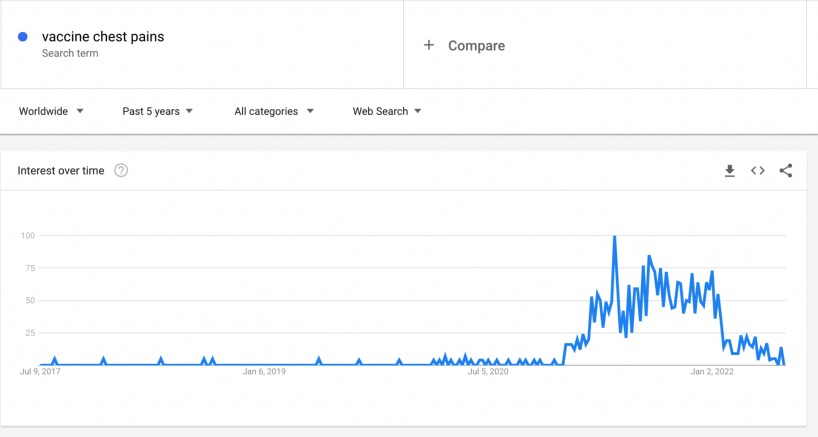
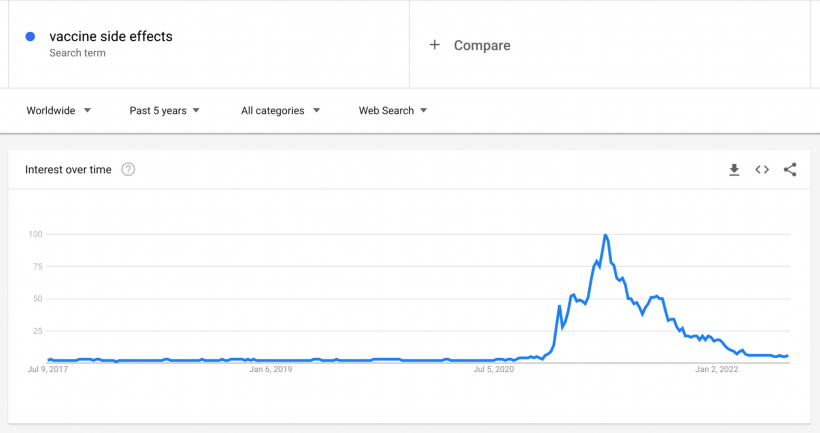
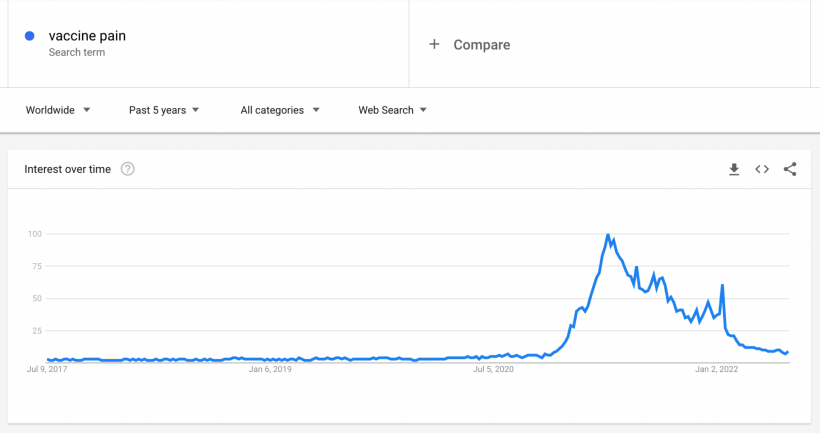
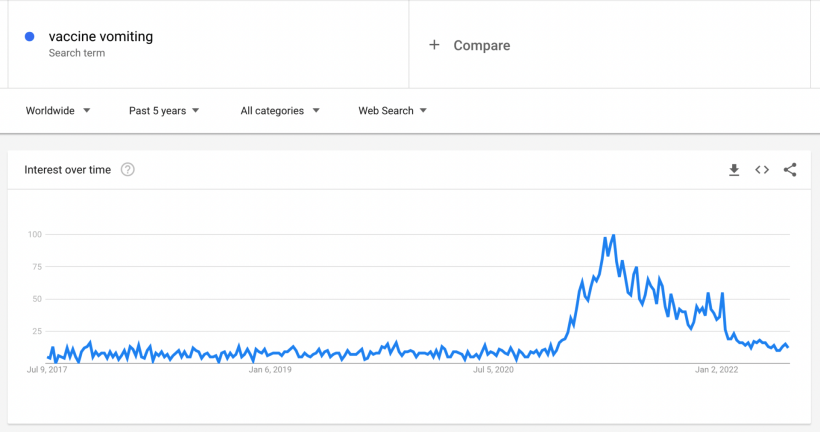
The Covid-19 injection roll out began in January 2021 (with trials being run for months before). Data from Google Trends suggests that searches for terms such as “death after vaccine”, “vaccine chest pains”, “vaccine side effects”, “vaccine pain” and “vaccine vomiting” increased at almost the exact same time.
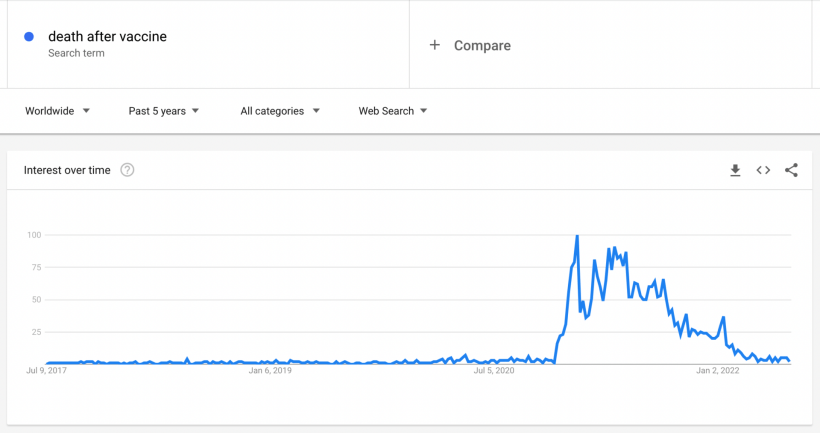
An increase in searches for the term “death after vaccine” could be interpreted as being due to people looking specifically for that kind of data. However, it could also be due to people knowing someone who died shortly after getting injected and looking for more information.
VAERS (the Vaccine Adverse Events Reporting System) provides further corroboration for this hypothesis. The reporting system has received almost 30,000 reports of death following Covid injections since December 14, 2020. (And it is important to keep in mind that vaccine adverse events are not required to be reported. In fact, they are criminally underreported, and many physicians are uneducated on how to use the platform).
According to a recent article on Children’s Health Defense:
VAERS data released Friday by the Centers for Disease Control and Prevention show 1,314,594 reports of adverse events from all age groups following COVID-19 vaccines, including 29,162 deaths and 241,226 serious injuries between Dec. 14, 2020, and June 24, 2022.
Noteworthy is that “death after vaccine” wasn’t the only term that saw an increase in searches. So did “vaccine chest pains”, “vaccine side effects”, “vaccine pain” and “vaccine vomiting”.
Featured Video

Houthis Don’t Have to Conquer Saudi Arabia to Make It Pay
or go to
Aletho News Archives – Video-Images
From the Archives
Newly Released FBI Docs Shed Light on Apparent Mossad Foreknowledge of 9/11 Attacks
By Whitney Webb | MintPress News | May 17, 2019
NEW YORK — For nearly two decades, one of the most overlooked and little known arrests made in the aftermath of the September 11 attacks was that of the so-called “High Fivers,” or the “Dancing Israelis.” However, new information released by the FBI on May 7 has brought fresh scrutiny to the possibility that the “Dancing Israelis,” at least two of whom were known Mossad operatives, had prior knowledge of the attacks on the World Trade Center. … continue
Blog Roll
 Aletho News
- MEP blasts ‘Euro-Gestapo’ for lecturing Russia on democracy
- Syria May Send Troops to Saudi Arabia Amid War with Ansar Allah
- UK whines about losing billions to ‘Putin tax’
- Baghaei to Rubio: Distorted narratives cannot erase US record of broken commitments
- Houthis Don’t Have to Conquer Saudi Arabia to Make It Pay
- MOE: Nearly 22,000 Students and Education Workers Killed
- Guterres in Islamabad: Genocide, cowardice, and the cage of Imran Khan
- Johnson, Marandi say Yemen holds upper hand over Saudi Arabia
- False flags won’t save aggressors, Iran FM spokesman says
- The Makkah Pact Enters Into Force: The End of American Dominance or Its New Form?
- If Americans Knew
- Report claimed Mark Levin used by Israeli government to influence Trump
- Over 2,000 Gazans have died awaiting medical evacuation amid Israel’s continued siege
- How a U.S. Diplomat Suppressed and Altered Reports Critical of Israel
- 5 Palestinians Die from Israeli Strikes in Gaza as Relentless Attacks Continue
- Report: Ceasefire Slows Killing but Leaves Devastation Intact
- Country Music Singer Zach Bryan Breaks Attendance Record at Robert Kraft’s Gillette Stadium While Wearing ‘Free Palestine’ Shirt for Second Night in a Row
- Three years of death and devastation: Israel’s war on Gaza in pictures
- Why Hamas believed the status quo was more dangerous than its 7 October gamble
- Debunking Israel’s latest list of ‘terrorist’ journalists in Gaza
- In Gaza, focus is on survival, “every step is a struggle” – Daily Update
- No Tricks Zone
- New Study: 50 Years Of The Most Aggressive ‘Net Zero’ Policies Can Only Affect The Global Climate By 0.03°C
- US September “Heat” Was No Record…Many Records Set Decades Ago
- Latest European Green Energy Debacle; Portugal’s Largest Flagship Solar Park Insolvent!
- Green Energy Debacle: German Expert Professor Fritz Vahrenholt Warns Of Severe Economic And Social Consequences
- Two More Paleo Reconstructions Affirm Meters-Higher Sea Levels Across Ireland, Brazil 7000-6000 Years Ago
- New Study: Earth And Venus Surface Warmth Largely Explained By Convection And Lapse Rate, Not CO2 Or Radiation
- 2025 Nature Paper Claiming Worsening Global Drought Gets RETRACTED …Heavily Flawed
- New Study: ‘Global Drought Shows No Detectable Recent Acceleration Under Climate Warming’
- Economic Masterminds: German Socialists Suggest Taxing Productivity Gains Stemming From Using AI
- The South China Sea Has Not Been Cooperating With The Climate Change Narrative

