My MP and an exercise in vaccine damage denial
By Nicholas Britton | TCW Defending Freedom | May 4, 2023
A few weeks ago I wrote to my MP to ask if he attended Andrew Bridgen’s debate in the House of Commons about the safety and effectiveness of the Covid vaccines. Of course, I knew he wasn’t among the handful of people who stayed in the chamber for the debate, but I wanted to convey my deep disappointment at the lack of interest by those elected by us and paid by us to represent us on such important issues.
I finally got a reply about a month later. He said he was in his constituency that day but was aware of Mr Bridgen’s speech. Below are some extracts from his letter. I have not identified him because this is not a name-and-shame exercise, but an illustration of how politicians are still in complete denial about this issue and are quite happy giving us misinformation in the form of the usual unsubstantiated slogans and tropes. I don’t know whether this MP believes any of what he wrote or whether he is just saying what he’s been told to say. I know he is a party loyalist who always falls in line with the leadership; he is not an independent thinker. Either way, I don’t like being lied to or hoodwinked.
It’s interesting that at no point does the MP refute anything Andrew Bridgen said, nor does he provide any evidence or argument to contradict his statements. That would be a tricky one, I guess, since Mr Bridgen was quoting from official figures. It’s also troubling to see such blatant denial of what is now being revealed around the world about the vaccines and which is even starting to creep into the MSM – I’ve recently noticed a few reports concerning vaccine injuries. Still, it remains an uphill struggle to convince some people that they are being lied to by the authorities. We are not trying to prove the existence of aliens or anything equally intangible, we are just trying to get those in authority to acknowledge what is screaming at them from their own official statistics. The result, as this letter shows, is for them to behave like recalcitrant children told to tidy their bedrooms, and to stick their fingers in their ears while loudly shouting ‘conspiracy theorist’, ‘misinformation’, or ‘anti-vaxxer’.
Here are the extracts (in bold) from the letter. I’ve added my thoughts below each.
‘I would point out that extensive independent research shows that COVID-19 vaccines are extremely successful at preventing deaths. They remain our best line of defence and the most effective way to enable us to live with the virus.’
‘Extremely successful’? Where is the independent evidence for that? I’d have thought he would be able to provide one or two examples of that ‘extensive independent research’ if he believes in it so fervently.
‘All vaccines must go through a rigorous testing and development process before authorisation to ensure that they meet the strict standards of safety, quality and effectiveness set by the independent medicines regulator, the Medicines and Healthcare products Regulatory Agency (MHRA).’
The Pfizer documents which the company wanted to keep under wraps for 75 years suggest more a rigorous cover-up than rigorous testing. As to quality, why have there been different rates of adverse events amongst different vaccine batches? In Japan, two men died after receiving shots from a batch contaminated with particles of stainless steel.
‘The independent Joint Committee on Vaccination and Immunisation (JCVI) provides the latest clinical and scientific evidence on vaccine safety and efficacy. Unfortunately, misinformation about Covid-19 vaccines has spread rapidly through social media and other platforms. It is crucial that we all rely on credible sources of information when it comes to vaccines. Misinformation causes harm and costs lives, and it does an incredible disservice to frontline workers who have been at the heart of the fight against coronavirus, working day and night to protect the NHS and save lives.’
He implies that the government and its ‘experts’ are the only credible sources of information and we should be trusting them alone. When were these people anointed the high priests of truth? Who in their right mind would trust Neil Ferguson and his dodgy computer models? There is indeed a vast amount of misinformation out there, most of it coming from those with connections to a certain wealthy sociopath with financial interests in the vaccine industry.
‘I reject baseless claims, including those which suggest vaccines are harming and killing many people, and that the damage is being covered up.’
As do many of us reject the government’s baseless, unevidenced, and politically-motivated claims that they are ‘safe and effective’ and that the damage is not being covered up.
‘The MHRA operates the Yellow Card reporting scheme, which allows individuals and health professionals to report any suspected reactions or side effects, even if the reporter is not sure they were caused by the vaccine. The nature of yellow card reporting means that reported events are not always proven side effects; some events may have happened anyway, regardless of vaccination.’
Ah yes, the Medical Homicide Racketeering Agency. That body which was once a gatekeeper ensuring the safety of medical products but which now calls itself an ‘enabler’. He is correct in saying that correlation is not proof of causation. However, the government deemed that a positive PCR test within 28 days of death was proof of death caused by Covid, even if you’d actually been flattened by a bus, so it seems that correlation can mean causation when it’s politically useful. The purpose of the Yellow Card system has historically been to flag up possible problems with medicines which need to be investigated. In the case of the Covid vaccines, there have been more red flags than at a Soviet Mayday parade, yet they have been ignored.
‘Where vaccine damage does tragically occur, it is right that individuals and their families can access payments via the Vaccine Damage Payment Scheme (VDPS). The VDPS is intended to support individuals and their families who have suffered severe disablement or bereavement as a result of having a vaccine. Covid-19 was added to this scheme in December 2020 and compensation payments under the scheme began last year.’
So why have the vaccine-injured been confronted with so many bureaucratic obstacles in their pursuit not just of the miserly £120,000 compensation but also recognition of their injuries, and of their need for practical help?
‘It is important to stress just how rare adverse reactions are. As with all vaccines and medicines, however, it is right that the safety of Covid-19 vaccines is continuously monitored.’
So why has the AstraZeneca vaccine, that triumph of British biotechnology, been quietly withdrawn in the UK and most other European countries? It has just been banned in Australia too. Switzerland has just removed recommendation for all Covid vaccinations for anybody, including the vulnerable. Surely it’s nothing to do with adverse reactions? The number of recorded adverse reactions for all Covid vaccines has vastly exceeded the total number for all other vaccine injuries over the past 30 years. Other vaccines and medicines have been withdrawn after far fewer recorded (suspected) adverse reactions.
***
I wonder how long politicians will keep up this pretence? I suspect they have dug themselves into such a deep hole they would have great trouble climbing out of it even if they eventually accept they have been complicit in the worst medical scam in history. My guess is they will keep digging because honesty and humility do not come easily to them.
Ivermectin ban lifted: Australia
The ban on off-label prescribing of the anti-viral drug has been in place for over 18 months
By Rebekah Barnett | Dystopian Down Under | May 3, 2023
Doctors will be free to prescribe ivermectin ‘off-label’ from 01 June 2023, the Therapeutic Goods Administration (TGA) announced today.
This is a reversal of a national ban on off-label prescribing of ivermectin, which the TGA enacted on 10 September 2021, in an attempt to prevent doctors from prescribing the drug to treat Covid.
At the time, the TGA stated that the restriction was necessary because:
- People would be at risk if they took ivermectin instead of getting vaccinated
- People who took ivermectin may choose not to get tested or to seek medical care if they had symptoms
- Social media posts were promoting higher doses of ivermectin than what is normally recommended for approved uses
- There had been a 3-4 fold uptake in ivermectin and the TGA was worried about a shortage disadvantaging vulnerable people who really needed the drug
So, instead of launching a nationwide education campaign and recommending that the Australian Government throw a few million dollars at bolstering the national stockpile of ivermectin, the TGA effectively banned the drug for all but a narrow set of uses.
The TGA has now relaxed the ban because, “there is sufficient evidence that the safety risks to individuals and public health is low when prescribed by a general practitioner in the current health climate.”
It would seem, though, that there was sufficient evidence of ivermectin’s safety all along. In July 2021, Rebecca Weisser wrote in Ivermectin. It’s as Aussie as Vegemite, for Spectator Australia:
As for safety, 3.7 billion doses of ivermectin have been used since 1987 and in 30 years, only 20 deaths following its use have been reported to the UN’s Vigi-Access database. Compare that to remdesivir, which has been given emergency use authorisation to treat Covid in Australian hospitals. In 12 months, there have been 551 deaths reported. Indeed, a study published in the prestigious Journal of the American Medical Association this week found remdesivir did not increase survival, just time spent in hospital.
The TGA’s stated concerns over ivermectin’s safety back in September 2021 seem incoherent when taken alongside its authorisation of remdesivir.
An Australian doctor, who prefers to remain anonymous, was suspended by industry regulator AHPRA for prescribing ivermectin off-label during the pandemic. He says,
“I think the restriction on prescribing ivermectin off-label was disingenuous from the start. It was always about coaching people toward the option of vaccination by removing a legitimate off-label therapeutic option. The decision effectively punished Australians for being self-educated and aware of the scientific evidence supporting ivermectin.
The reversal of the ban is a good step and it appears that doctors may be restored their full rights to off-label prescribing.
But, there remains the question of whether lives have in fact been lost due to the limitation of ivermectin through this policy.”
This is the question posed by Kara Thomas, Secretary of the Australian Medical Professionals’ Society, and Andrew McIntyre, Gastroenterologist and Coordinator of the Doctors Against Mandates legal action, in an op-ed from March this year, also for Spectator Australia. The article raises more questions than answers, but serves to highlight the disparity between the safety profiles of ivermectin (better) and Covid vaccines (worse), as well as a summary of the scientific evidence for ivermectin’s effectiveness.
The effectiveness of ivermectin in treating Covid is hotly argued in all corners of the internet, but it is worth noting that internationally renowned ICU doctor Paul Marik wept when his hospital enforced a policy preventing him from using it in combination with other therapeutics. There are numerous other frontline doctors who similarly expressed dismay at being prevented from administering the drug, after seeing lives saved under their care.
Though prescribing restrictions on ivermectin are to be lifted, the TGA does not endorse off-label prescribing of ivermectin for the treatment or prevention of Covid.
”A large number of clinical studies have demonstrated ivermectin does not improve outcomes in patients with COVID-19. The National Covid Evidence Taskforce (NCET) and many similar bodies around the world, including the World Health Organization, strongly advises against the use of ivermectin for the prevention or treatment of COVID-19.”
It will now be at the discretion of Australian doctors to make their best clinical judgement on a case by case basis.
Monash University, Melbourne, is running a blinded and randomised clinical trial to test ivermectin’s efficacy for Covid prevention. The trial is led by Dr Kylie Wagstaff, whose preliminary in vitro study in collaboration with the Doherty Institute (April 2020) found that ivermectin stopped the replication of the SARS-CoV-2 virus in cell culture within 48 hours.
Transplant surgery highlights evidence of vaccine deaths
By Guy Hatchard | TCW Defending Freedom | May 1, 2023
The writer is in New Zealand
More critical evidence of increased vaccine-induced strokes and deaths has come to light.
The Wellington Region health data leaked directly to me, on which I’ve reported here, shows that the incidence of strokes requiring hospitalisation in 2023 was up by 25 per cent on pre-pandemic levels. These rises in stroke incidence began in 2021, before the arrival of Covid in New Zealand, but after the vaccine rollout began. Despite this, published scientific papers continue to point to Covid-19 infection as the sole source of increased stroke incidence, in some cases, as in this paper, not even mentioning a possible role of Covid vaccination.
Accordingly, NZ Medsafe has been able to maintain that there have been only two vaccine-induced deaths, allowing politicians and health authorities to cling to the fiction that Covid vaccination is safe.
A pre-pandemic 2016 paper found that victims of fatal strokes are generally robust sources for organ transplant donation, especially if they are younger in age. The one exception was the need for caution with livers transplanted from those dying as a result of immune thrombocytopenia (ITP) whose recipients suffered poorer survival outcomes.
This paper published last month describes the case of an individual who in October 2021 died from a stroke caused by Covid vaccination, and whose organs were harvested for transplant. The paper notes in passing that: ‘Thrombosis combined with thrombocytopenia generally occurs in the first month following vaccination and can lead to fatal outcomes, even in young, previously healthy individuals. These young adults ultimately may become solid organ donors.’
In other words, young adults are dying following Covid vaccination in sufficient numbers to be appreciated by transplant surgeons as a new source of viable organs. In this single case, two harvested kidneys are still functioning well for the recipients. The authors leap from the one case study to a general conclusion: ‘Kidney allografts transplanted from vaccine-induced thrombosis and thrombocytopenia donors can have a good overall function with favourable outcomes.’
A September 2022 paper reports on kidney transplants from 16 (yes, 16) victims in Britain of Covid vaccine-induced immune thrombocytopenia and thrombosis (VITT) to 30 recipients. Five of the recipients had concerning test results following surgery and two of them lost the graft. The authors conclude: ‘The involvement of VITT could not be completely excluded in one of these cases.’They go on to describe these outcomes as ‘favourable’ (?)
This paper published in August 2022 studying four successful transplants from a single deceased donor following VITT, notes: ‘There are increasing reports of thrombotic complications with various Covid-19 vaccines such as the Pfizer-BioNTech mRNA, Moderna mRNA, AstraZeneca Oxford (serum institute), and Johnson & Johnson/Janssen vaccines.’
This paper from Italy reports two cases of VITT and subsequent successful transplants, but this letter to the American Journal of Transplantation in July 2021 presents a far more concerning picture. Ten donors likely to have died from VITT donated 27 organs in total. Three of these organs subsequently failed, two had impaired function, and one patient died of a cardiac arrest. In total there were seven major thrombotic or hemorrhagic postoperative complications among six recipients (22 per cent) within nine days of transplant.
The authors concluded that the potential risks of transplanting organs from donors with VITT are twofold. First, early major thrombosis or clinically significant bleeding. Second, possible transmission of pathogenic lymphocytes (anti-PF4), characteristic of blood clotting associated with strokes. In other words, VITT deceased donors may somehow pass on aspects of their vaccine-induced fatal illness to transplant organ recipients.
You are probably beginning to get the picture. Transplant surgeons are very excited to have more available young donors. They announce that the use of organs from VITT is probably viable based on some case studies with very mixed results, but completely fail to comment on the significance of the increased number of cases of vaccine-induced death.
Transplant surgeons are narrowly focused on their discipline. Despite being aware of increases in Covid vaccine-induced death, they wrote papers which failed to sound the alarm. But it is worse than that: medical authorities, the people who collate statistics of hospitalisation and death, failed to communicate to medical personnel and specialists in disparate fields that there were many categories of vaccine-induced illness, including not only strokes, but also cardiac disease, kidney disease, reproductive disease, cancer and neurological disease.
Since releasing the leaked data last month, I have heard from a number of practising health professionals. Their reports include descriptions of unprecedented increases in the incidence of rare conditions that they would not normally see, including cancers. There are also reports of test result scores which are off the chart, for example D-dimer scores in the 20,000 to 30,000 range. D-dimer tests are designed to monitor the formation of blood clots associated with deep vein thrombosis, pulmonary embolism and stroke, and a normal score is considered less than 0.50. It is notable that the leaked Wellington Region health data reports around 4 per cent of D-dimer test results for both men and women are registering at elevated levels.
Most health professionals and the public are still being left in the dark as far as the overall data picture is concerned. When you hear politicians such as Ardern and Hancock calling for more censorship of discussion, it has to ring alarm bells.
The revelations of widespread ill health contained in the Wellington Region data leak demonstrate how the reverse is true. Government policies restricting access to health data and suppressing open debate are the real drivers of health misinformation and poor pandemic health outcomes.
Texas Launches Investigation into Gain-of-Function Research and Misrepresentations by Covid-19 Vaccine Manufacturers
By Ken Paxton, Attorney General of Texas | May 1, 2023
Attorney General Paxton launched an investigation into the pharmaceutical companies Pfizer, Moderna, and Johnson & Johnson concerning whether they engaged in gain-of-function research and misled the public about doing so.
Paxton is also investigating whether the companies misrepresented the efficacy of their Covid-19 vaccines and the likelihood of transmitting Covid-19 after taking the vaccines in violation of the Texas Deceptive Trade Practices Act. The investigation will also look into the potential manipulation of vaccine trial data. This investigation concerns potentially fraudulent activity that falls outside the scope of legal immunity granted to manufacturers of the Covid-19 vaccine. It will also review the companies’ controversial practice of reporting the metric of “relative risk reduction” instead of “absolute risk reduction” when publicly discussing the efficacy of their vaccines.
In recent years, certain pharmaceutical companies have had record-breaking financial success, driven in part by sales made from products related to the Covid-19 pandemic. This vested interest in the success of these Covid-19 products, combined with reports about the alarming side effects of vaccines, demands aggressive investigation.
Texas’s investigation will force these companies to turn over documents the public otherwise could not access. Attorney General Paxton is committed to discovering the full scope of decision-making behind pandemic interventions forced on the public, especially when a profit motive or political pressure may have compromised Americans’ health and safety. Efforts by the federal government to coerce compliance with unjust and illegal pandemic interventions, even at the cost of citizens’ employment, means this investigation into the scientific and ethical basis on which public health decisions were made is of major significance.
Given the unprecedented political power and influence over public health policies that pharmaceutical companies now wield, it is more important than ever that they are held accountable if they take dangerous, illegal actions to boost their revenues.
“The development of the Covid-19 vaccine, and the representations made by and knowledge of Pfizer, Moderna, and Johnson & Johnson, are of profound interest to the public’s health and welfare. This investigation aims to discover the truth,” said Attorney General Paxton. “This pandemic was a deeply challenging time for Americans. If any company illegally took advantage of consumers during this period or compromised people’s safety to increase their profits, they will be held responsible. If public health policy was developed on the basis of flawed or misleading research, the public must know. The catastrophic effects of the pandemic and subsequent interventions forced on our country and citizens deserve intense scrutiny, and we are pursuing any hint of wrongdoing to the fullest.”
To read the CID for Pfizer, click here.
To read the CID for Moderna, click here.
To read the CID for Johnson & Johnson, click here.
State Covid Propaganda Destroyed Public’s Ability to Consent to Vaccines – Chairman of UK Council for Psychotherapy
BY DR CHRISTIAN BUCKLAND | THE DAILY SCEPTIC | APRIL 28, 2023
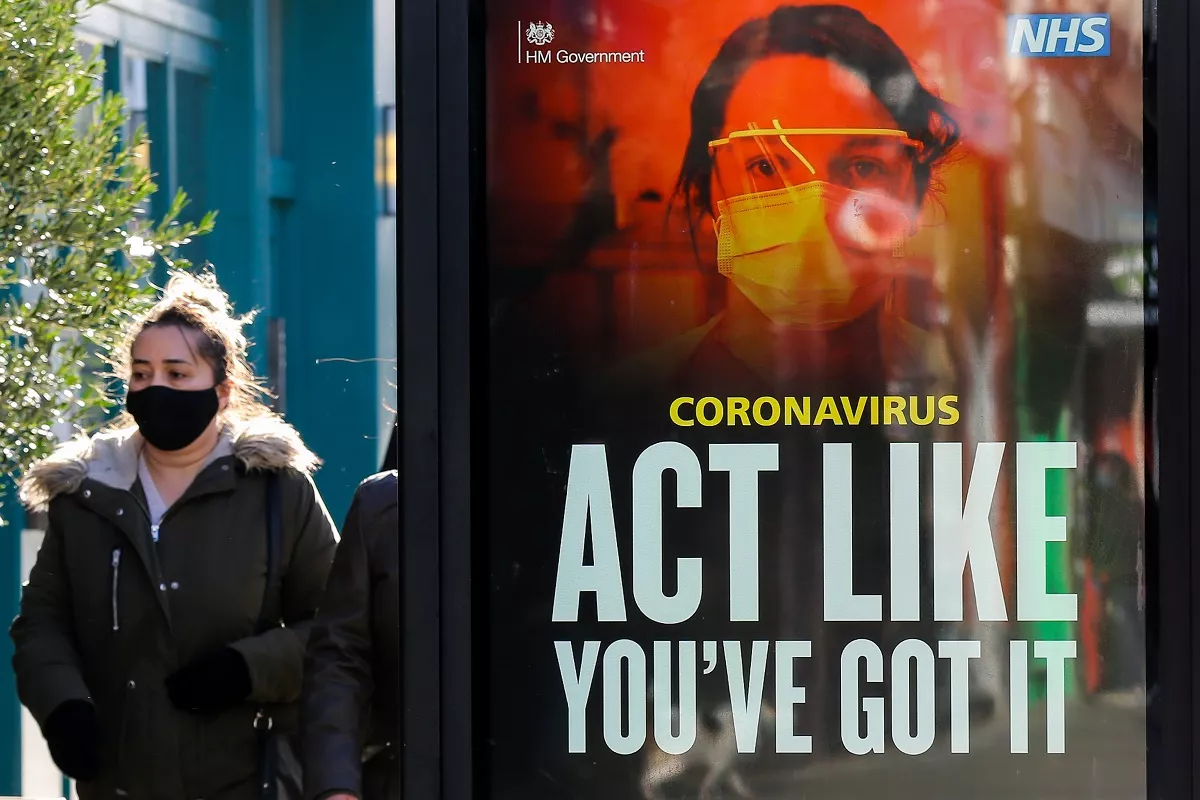
There follows an open letter from Dr. Christian Buckland, Chairman of the Board of the U.K. Council for Psychotherapy, to Prime Minister Rishi Sunak condemning the “use of unethical psychological techniques and behavioural science on the unknowing and non-consenting U.K. public”. Among numerous harms are that the use of techniques to increase fear, shame and guilt “materially undermined, if not removed, the U.K. population’s ability to give valid informed consent to taking a COVID-19 vaccine”.
April 28th 2023
Dear Prime Minister,
I am the Chairman of the Board of the U.K. Council for Psychotherapy (UKCP), one of the UK’s foremost psychological governing bodies. However, I write this open letter in my own capacity. I believe I have a professional obligation to write to you in an attempt to protect the public from any further harm caused by the unethical application of psychological research and practice.
I unreservedly condemn the U.K. Government’s use of unethical psychological techniques intended to elicit feelings of fear, shame and guilt, under the guise of behavioural science and insights which were designed to change the public’s behaviour without their knowledge and conscious participation. It is now clear that in 2020 the U.K. Government deliberately chose to artificially inflate the level of fear within the U.K. population by exaggerating the risk factors of COVID-19, and concomitantly downplaying the protective factors. We also witnessed the Government’s promotion of social disapproval and guilt messaging. These techniques were embedded into a multi-channel, co-ordinated public health campaign designed to change the public’s behaviour without their knowledge. Moreover, in tandem with the mainstream media, the Government also proactively suppressed, censored and ostracised any healthcare professional or scientist who suggested alternative responses to COIVD-19, or who simply questioned the messaging and measures being implemented by the Government.
Evidence of the recommendation of using unethical psychological techniques to gain behavioural change
The Government document titled ‘Options for increasing adherence to social distancing measures’ was written for the Government by the Scientific Pandemic Insights Group on Behaviours (SPI-B) which is a subgroup of the Scientific Advisory Group for Emergencies (SAGE).
The premise of the document was to provide options for changing the behaviour of the U.K. public without their knowledge. A passage within this document states: “A substantial number of people still do not feel sufficiently personally threatened”. It makes certain recommendations including:
- “The perceived level of personal threat needs to be increased among those who are complacent, using hard hitting emotional messaging”
- “Coercion”
- “Social disapproval”
The recommendations made by SPI-B included ones intended to elicit feelings of fear, shame and guilt. Psychological practitioners know that deliberately trying to frighten someone into change with erroneous or exaggerated information can easily cause long-term psychological damage. We also know that using social disapproval can create splits and divisions within society, and that inducing feelings of guilt can elevate the risk of suicide.
SPI-B also included a simple risk assessment matrix which acknowledges that the “spill over effects” of using media to increase the sense of personal threat and of using social disapproval “could be negative”. There is also a statement demonstrating there was a conversation regarding the spill over effects, although this does not appear to be fully documented. The risk factors and ethics of using fear, shame, guilt and coercion would almost certainly have been known to the members of SPI-B because several members were British Psychological Society (BPS) registered chartered psychologists. In an interview with one of the members of SPI-B, BPS registered educational psychologist Dr. Gavin Morgan, he refers to the use of fear by his SPI-B colleagues and says (as relayed by Laura Dodsworth, in A State of Fear pp. 262,263):
“Clearly using fear as a means of control is not ethical. What you do as a psychologist is co-construction. Using fear smacks of totalitarianism. It’s not an ethical stance for any modern government.” … Was it unethical to use fear, I asked? “Well I didn’t suggest we use fear.” But your colleagues did. What do you think of that? He paused. “Oh God.” Another reluctant pause. “It’s not ethical,” he said.
Like Dr. Morgan, any BPS registered psychologists within SPI-B would or should have recognised that recommending the Government uses fear as a means of controlling the public breached their professional code of ethics and conduct. An urgent investigation is required both by the U.K. Government and the BPS. Two specific points of the British Psychological Society Code of Ethics and Conduct (2021) that may have been broken are (with my emphasis):
3.3 Responsibility. Because of their acknowledged expertise, members of the Society often enjoy professional autonomy; responsibility is an essential element of autonomy. Members must accept appropriate responsibility for what is within their power, control or management. Awareness of responsibility ensures that the trust of others is not abused, the power of influence is properly managed and that duty towards others is always paramount. Statement of values: Members value their responsibilities to persons and peoples, to the general public, and to the profession and science of psychology, including the avoidance of harm and the prevention of misuse or abuse of their contribution to society. In applying these values, psychologists should consider:
- Professional accountability;
- Responsible use of their knowledge and skills;
- Respect for the welfare of humans, non-humans and the living world;
- Potentially competing duties.
3.4 Integrity. Acting with integrity includes being honest, truthful, accurate and consistent in one’s actions, words, decisions, methods and outcomes. It requires setting self-interest to one side and being objective and open to challenge in one’s behaviour in a professional context. Statement of values: Members value honesty, probity, accuracy, clarity and fairness in their interactions with all persons and peoples, and seek to promote integrity in all facets of their scientific and professional endeavours”.
Evidence that psychological techniques to induce fear, shame, guilt and coercion were used on the U.K. public
The SPI-B document in question demonstrates that the options of eliciting feelings of fear, shame, guilt and the use of coercion was recommended to the U.K. Government. There is evidence that those options were indeed subsequently deployed on the U.K. population.
In August 2022, you stated:
In every brief, we tried to say: let’s stop the ‘fear narrative’. It was always wrong from the beginning. I constantly said it was wrong… It was wrong to scare people like that.
Additionally, leaked WhatsApp messages from the former Health Minister at the time, Matt Hancock, published in the Daily Telegraph in March 2023, confirm that fear and guilt were used:
Hancock: We frighten the pants of everyone with the new strain. But the complications with that Brexit is taking the top line
Poole: Yep that’s what will get proper bahviour (sic) change
Hancock: When do we deploy the new variant …
Case: Ramping up messaging – the fear/guilt factor vital
The above are just two examples where senior Government Ministers recognised that fear and guilt was used as drivers for behavioural change of the UK population without their knowledge.
The existing literature
It is important to acknowledge that the above-mentioned psychological techniques were used on the U.K. population without their knowledge or consent, and that this in direct contradiction of long-established and carefully considered behavioural science advice which made clear that, in theory and practice, the consent of the public is paramount. According to a 2010 Institute for Government report:
The use of MINDSPACE (or other ‘nudge’ type policy tools) may require careful handling – in essence, the public need to give permission and help shape how such tools are used. (p10)
Continuing, the report states:
Policy-makers wishing to use these tools summarised in MINDSPACE need the approval of the public to do so. (p74)
Further literature supports that permission from the public is essential. David Halpern wrote in 2015:
If there is one great risk to the application of behavioural insights in policy, it is that the thread of public permission wears too thin. If governments, or indeed communities or companies, wish to use behavioural insights, they must seek and maintain the permission of the public to do so. (p365)
As there was no approval obtained, the options recommended and deployed were not in alignment with the principles of behavioural science.
It is important to highlight that the same kinds of techniques were used on children in relation to mask wearing, social distancing and vaccine uptake, with many techniques continuing into 2022. These techniques violated UNICEF’s recommendations from its ethical toolkit for behavioural science projects directed at children. The tool-kit states:
A core idea underlying the applied behavioural science approach is that interventions should not restrict choice and should transparently communicate project goals. When designing an intervention, practitioners should determine how transparent it will be to those affected by it. They should ensure that children and parents can easily opt out, and should design feedback mechanisms so that children and their parents can voice concerns, see the outcomes of their objections, and hold decision-makers to account.
The behavioural science literature also indicates a potential link between the misuse of behavioural psychology and an increased risk of suicide, stemming from an All Party Parliamentary Group Report on the Morse Review into the Loan Charge in 2020. One of the recommendations within the report demands:
An independent assessment and a suspension of HMRC’s use of behavioural psychology / behavioural insights, in light of the ongoing suicide risk to those impacted by the Loan Charge.
The literature highlights that approval from the public must be sought and maintained. Additionally, all behavioural science projects directed at children must have effective feedback mechanisms and methods of opting out, with decision makers able to be held accountable. There are also existing potential concerns that behavioural science may increase suicide levels. These important ethical aspects and safety signals appear to have been ignored. The lessons of history warn us that in times of existential crisis, whether real or only perceived, our ethics are at risk of being abandoned, and psychological knowledge can become misused by governments:
Under some historical conditions or circumstances and contexts, psychologists and psychological knowledge were in danger of being abused by political powers, largely for clandestine purposes, such as conducting torture or the persecution of political opponents. (Maercker A, Guski-Leinwand S, 2018)
It is of grave concern that the actions of the U.K. Government during the Covid era potentially fit into the category of abusing psychological knowledge and being absent of ethics, thus require serious investigation.
The impact of psychological pressure on informed consent
For the sake of brevity, I will not reiterate the multiple concerns already documented by others surrounding the consequences of the Government’s actions around lockdown, hospital discharges, school closures and mask mandates. I do, however, wish to highlight one extremely serious consequence that I believe has occurred as a direct result of the use of unethical psychological techniques and behavioural insights on the unknowing public: by adopting the techniques used, the Government significantly and materially undermined, if not removed, the U.K. population’s ability to give valid informed consent to taking a COVID-19 vaccine.
According to Public Health England:
Consent must be obtained before starting any treatment or physical investigation or before providing personal care for a patient. This includes the administration of all vaccines.
Also,
It is a legal and ethical principle that valid consent must be obtained before starting personal care, treatment or investigations.
Also,
For consent to immunisation to the (sic) valid, it must be given freely, voluntarily and without coercion by an appropriately informed person who has the mental capacity to consent to the administration of the vaccines in question.
From the above, it is clear that for medical consent to be valid it must be given without coercion. The Encyclopedia Britannica defines coercion as:
The threat or use of punitive measures against states, groups or individuals in order for them to undertake or desist from specified actions. In addition to the threat of or limited use of force (or both), coercion may entail economic sanctions, psychological pressures, and social ostracism.
The psychological techniques used by the U.K. Government fall under that definition of coercion. If follows that according to Public Health England’s statements and for the general public at least, consent to immunisation was invalidated by the behaviour of the U.K. Government. It is also important to highlight that there have been serious injuries and death directly linked to the COVID-19 vaccine. Many of those injured or who have died would not have taken a vaccine if they had not been psychologically pressured, feared being ostracised socially and were given accurate information.
The removal of the general population’s ability to give informed medical consent is of the gravest concern, and a severe and dangerous consequence of using behavioural insights and psychological techniques on an unknowing public.
Conclusion
The need to hold tightly to professional ethics, in particular to the ethical principle of informed consent, is not just an ‘academic’ issue. It is a matter of practical and fundamental importance to responsible government.
According to David Halpern, “Behavioural insights, like any other form of knowledge, can be used for good or bad” (p348). It is my opinion that the use of behavioural insights and psychological techniques designed to elicit feelings of fear, shame and guilt utilised by the U.K. Government since March 2020 has been unethical. The consequences are still unravelling but they appear to include serious damage to trust in government and its agencies, the NHS and the medical and scientific professions.
I propose that there be an immediate cessation of the use of all behavioural science techniques designed to elicit feelings of fear, shame and guilt used by the Government pending an urgent, open and independent inquiry. This inquiry should also have as an objective the re-establishment of ethical frameworks necessary to protect the public and to provide accountability. I would welcome a discussion on this most important of matters.
Most respectfully
Dr. Christian Buckland
Doctor of Psychology in Psychotherapy and Counselling
Is It Time for Unemployed Tucker Carlson to Enter the U.S. Political Fray?
By Robert Bridge | Strategic Culture Foundation | April 27, 2023
This week, Fox News axed without warning or explanation its highest-rated talk show host, Tucker Carlson. Tragic as that may be for his legion of listeners, Carlson now has a chance to not only question America, but to change it.
It looks as though the establishment – the Deep State, the Swamp, the Nursing Home for Octogenarian Ice Cream Lovers, call it what you will – has finally found a way to eliminate Tucker Carlson and his heretical views once and for all.
Just days after Fox News’ nearly billion-dollar settlement with Dominion Voting Systems over election-fraud allegations, Carlson was handed his walking papers. Here we have yet another case of a corporation inexplicably killing the goose that lays golden eggs. A bit like the Bud Light transgender advertisement, mega-corporations don’t willfully torpedo their bottom line without very good reason. For the left, the sacrifice was made on behalf of increasingly entrenched woke principles; on the right, the sacrifice was made to ouster a man who endangered American foreign policy, domestic policy, and everything in between.
Thus, the most likely explanation for Carlson’s termination is that he was making the wrong people, including his boss, Rupert Murdoch, very uncomfortable, and not just over rigged election claims. After all, many other personalities from the right-wing channel, like Sean Hannity and Linda Ingraham, also suggested in no uncertain terms that it was impossible that Joe Biden, an historically unlikable figure who mostly campaigned from his basement amid the Covid epidemic, could have attracted more votes than any other presidential candidate in U.S. history. Yet it was Carlson who got the boot, and that should come as no surprise.
For many years, Tucker Carlson, 53, remained a great enigma inside of the murky underworld of the U.S. mainstream media. While many of his colleagues were forced to wander aimlessly and sheepishly around a heavily patrolled, corporate-owned reservation, Carlson seemed to have been granted special privileges to freely speak his mind about the most taboo topics – from the sweeping Covid crackdowns to the blank-check policy for the Ukrainian “destroyer” Vladimir Zelensky. These outbursts of fierce criticism, far detached from the carefully crafted ideology of the establishment, allowed Carlson’s opponents to portray him somewhere between controlled opposition and a full-blown conspiracy theorist. Yet these attacks on his character did nothing to diminish his popularity in the eyes of the public.
It seems that Carlson’s popularity stems from the fact that audiences can see that this guy is the real deal. Although not perfect – who is? – he comes across as an honest and straight-shooting observer of the U.S. cultural and political scene, and totally fearless in calling out bullshit, even when it happens to be his own bullshit. In a recent interview, Carlson had harsh words not only for his odious trade, but for himself as well.
Looking back on his career, Carlson called the mainstream media a “control apparatus,” a disturbing conclusion that he made “only late in life.”
“They are working for a small group of people who actually run the world. They’re their servants, their Praetorian Guard, and we should treat them with the maximum contempt,” he said, while admitting to his own naïve assumptions early in his career.
“Not only are [the media] part of the problem, but I spent most of my life being part of the problem – defending the Iraq War, I actually did that!’
So in keeping with this article’s main thesis, that Carlson should now consider a political run, it must be noted that here is a man who can admit he was wrong. Very few journalists, not to mention politicians, have such strength, which so many view today as an actual weakness.
The second quality that sets Carlson apart from the pack is his courage, another essential attribute for a political career.
Back in 2020, following the death of George Floyd during an attempted arrest by a white cop, and the consequential street violence that erupted coast-to-coast, the former Fox host said what so many people were thinking, yet lacked the courage to articulate.
Carlson dared to say that the rioting and looting that destroyed thousands of homes and businesses during the BLM protests was “definitely not about black lives.” He went on to say that it was necessary to tell the truth when confronted by “the mob,” otherwise “they will crush you.”
Whenever it is suggested that Tucker Carlson possesses the personal qualifications to be a fine politician, the canned response is that he merely recites words on a teleprompter, not unlike so many other has-been politicians today. Yet just days before he was unceremoniously discharged from Fox News, Carlson gave an address to the Heritage Foundation on the occasion of the conservative organization’s 50th anniversary. Carlson’s oratory could have been a political stump speech, as it touched upon the greatest fears of the political right, and that is the power of wokeism to fundamentally alter, if not destroy, the United States.
Without once resorting to prepared notes or a teleprompter, Carlson spelled out with refreshing articulation – a political quality in short supply these days – the dangers facing the nation.
“I’m not calling for religious war,” Carlson began, “I’m merely calling for an acknowledgement of what we’re watching… I’m just noting what’s super obvious, like those of us who are in our mid-fifties are caught in the past in the way that we think about this. [The Left] doesn’t want a debate. Those ideas won’t produce outcomes that any rational person would want under any circumstances. Those are manifestations of some larger force acting upon us.”
Probably the very same “larger force” that was responsible for Carlson’s current unemployment status.
Ironically, Carlson’s very last guest on his eponymous show, aside from a pizza delivery guy who helped police make an arrest, was the vaccine skeptic Bobby Kennedy, who just last week launched his 2024 campaign for the Democratic nomination for president.
Here is what Kennedy had to say about Carlson’s firing:
“Fox fires @TuckerCarlson five days after he crosses the red line by acknowledging that the TV networks pushed a deadly and ineffective vaccine to please their Pharma advertisers. Carlson’s breathtakingly courageous April 19 monologue broke TV’s two biggest rules: Tucker told the truth about how greedy Pharma advertisers controlled TV news content and he lambasted obsequious newscasters for promoting jabs they knew to be lethal and worthless.”
Now if Kennedy were smart, which he certainly is, he’d be talking to Carlson right now about a possible joint run to unseat the Biden regime. Personally, I don’t see how it could possibly fail.
Event 201 Webpage Goes Missing
A Picture is Worth a Thousand Words
The Naked Emperor’s Newsletter | April 26, 2023
Event 201 – A high-level pandemic exercise held by The Johns Hopkins Center for Security in partnership with the World Economic Forum and the Bill and Melinda Gates Foundation. The exercise began on 18 October 2019, months before the Covid pandemic started and the very same day the World Military Games began in Wuhan.
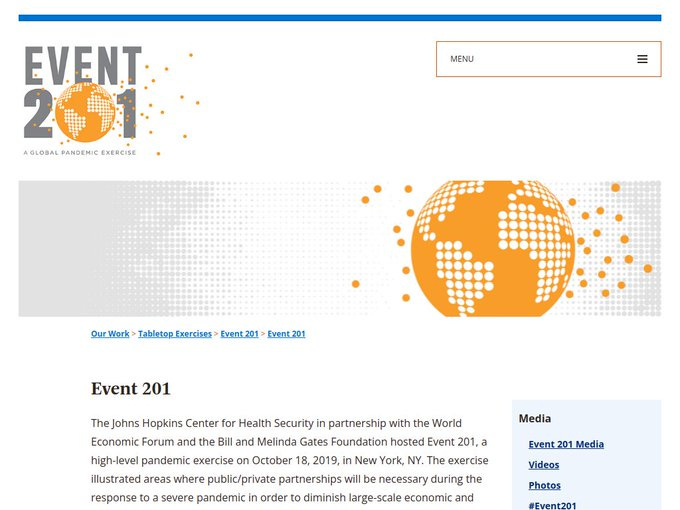
The website for the event has been available to view all the way through the pandemic but for some reason it has now been taken down. If you click on the web address, all you get is this:

But you can always view the archived version here.
Featured Video

or go to
Aletho News Archives – Video-Images
Book Review
The Maidan Killings and the False-Flag Case
By Freddie Ponton | 21st Century Wire | September 5, 2026
Before the killings that helped bring down Ukraine’s president in February 2014, American diplomats were discussing who should enter its government. In a leaked telephone call, senior State Department official Victoria Nuland told US ambassador Geoffrey Pyatt, “I think Yats is the guy,” referring to opposition leader Arseniy Yatseniuk. Washington had clear preferences and was working to advance them. Later that month, Yatseniuk became prime minister.
Ivan Katchanovski’s The Maidan Massacre in Ukraine examines the violence that preceded that transfer of power. Drawing on television footage, witness testimony, forensic examinations and Ukrainian court proceedings, he argues that elements of the opposition shot protesters and police in a false-flag operation. His case centres on evidence of protesters being shot from opposition-controlled locations, including Hotel Ukraina, overlooking the killing ground. … continue
Blog Roll
 Aletho News
- The Maidan Killings and the False-Flag Case
- Georgia’s Largest Healthcare System Will Fire Employees Who Refuse Flu Vaccine
- The Five-Year Fuel Crisis: Why the World Economy Is Paying for a War It Thinks Is Ending
- Trump’s Big Bluff on Iran
- Swiss scammed out of millions by Ukraine-linked call centers – media
- Germany facing potential ‘violent conflict’ with Russia – spy chief
- Ukraine’s EU neighbors reject new plea from Kiev – Politico
- British Transport Police Facial Recognition Trial Scanned 926,912 People With Zero Arrests
- House Bill Would Ban Federal Use of Flock ALPR Data
- Can a Spice Rival a Drug? 10 Head-to-Head Trials Put It to the Test.
- If Americans Knew
- “We See Our Homes Now From A Satellite, Like Strangers”
- Watch “Gaza: Doctors Under Attack”, originally censored by BBC
- NAZA: Israeli embassies in UK and US promote rival documentary to challenge Gaza genocide allegations
- David Ellison appoints Israeli to lead merged Paramount-Warner studios
- Turkish Red Crescent helps elderly Gaza man walk again after Israel confiscates his prosthetic limb
- Four Palestinians Killed in Israeli Attacks in Gaza
- Two Palestinian youths killed and village razed as Israeli attacks on West Bank continue
- Two more Christian women victims of Israeli raids on Gaza
- Cruelty, Deprivation, Indignity: A Journalist’s 22 Months in Israeli Prison
- New IDF Website Frames Slain Gaza Journalists as Terrorists
- No Tricks Zone
- Latest European Green Energy Debacle; Portugal’s Largest Flagship Solar Park Insolvent!
- Green Energy Debacle: German Expert Professor Fritz Vahrenholt Warns Of Severe Economic And Social Consequences
- Two More Paleo Reconstructions Affirm Meters-Higher Sea Levels Across Ireland, Brazil 7000-6000 Years Ago
- New Study: Earth And Venus Surface Warmth Largely Explained By Convection And Lapse Rate, Not CO2 Or Radiation
- 2025 Nature Paper Claiming Worsening Global Drought Gets RETRACTED …Heavily Flawed
- New Study: ‘Global Drought Shows No Detectable Recent Acceleration Under Climate Warming’
- Economic Masterminds: German Socialists Suggest Taxing Productivity Gains Stemming From Using AI
- The South China Sea Has Not Been Cooperating With The Climate Change Narrative
- Energy Crisis: Germany Enters Heating Season With Historically Low Gas Reserve Fill Levels
- New Study: The Antarctic Ice Sheet Gained Mass From 2020-2024 Due To Staggering Snow And Ice Accumulation

